Perfect 'pathogen' storm: Vibrio bacteria, Sargassum and plastic marine debris

A new study uncovers how the interplay between Sargassum spp., plastic marine debris and Vibrio bacteria creates the perfect “pathogen” storm that has implications for both marine life and public health. Vibrio bacteria are found in waters around the world and are the dominant cause of death in humans from the marine environment. For example, Vibrio vulnificus, sometimes referred to as flesh-eating bacteria, can cause life-threatening foodborne illnesses from seafood consumption as well as disease and death from open wound infections.
Since 2011, Sargassum, free-living populations of brown macroalga, have been rapidly expanding in the Sargasso Sea and other parts of the open ocean such as the Great Atlantic Sargassum Belt, including frequent and unprecedented seaweed accumulation events on beaches. Plastic marine debris, first found in surface waters of the Sargasso Sea, has become a worldwide concern, and is known to persist decades longer than natural substrates in the marine environment.
Currently, little is known about the ecological relationship of vibrios with Sargassum. Moreover, genomic and metagenomic evidence has been lacking as to whether vibrios colonizing plastic marine debris and Sargassum could potentially infect humans. As summer kicks into high gear and efforts are underway to find innovative solutions to repurpose Sargassum, could these substrates pose a triple threat to public health?
Researchers from Florida Atlantic University and collaborators fully sequenced the genomes of 16 Vibrio cultivars isolated from eel larvae, plastic marine debris, Sargassum, and seawater samples collected from the Caribbean and Sargasso seas of the North Atlantic Ocean. What they discovered is Vibrio pathogens have the unique ability to “stick” to microplastics and that these microbes might just be adapting to plastic.
“Plastic is a new element that’s been introduced into marine environments and has only been around for about 50 years,” said Tracy Mincer, Ph.D., corresponding lead author and an assistant professor of biology at FAU’s Harbor Branch Oceanographic Institute and Harriet L. Wilkes Honors College. “Our lab work showed that these Vibrio are extremely aggressive and can seek out and stick to plastic within minutes. We also found that there are attachment factors that microbes use to stick to plastics, and it is the same kind of mechanism that pathogens use.”
The study, published in the journal Water Research, illustrates that open ocean vibrios represent an up to now undescribed group of microbes, some representing potential new species, possessing a blend of pathogenic and low nutrient acquisition genes, reflecting their pelagic habitat and the substrates and hosts they colonize. Utilizing metagenome-assembled genome (MAG), this study represents the first Vibrio spp. genome assembled from plastic debris.

The study highlighted vertebrate pathogen genes closely related to cholera and non-cholera bacterial strains. Phenotype testing of cultivars confirmed rapid biofilm formation, hemolytic and lipophospholytic activities, consistent with pathogenic potential.
Researchers also discovered that zonula occludens toxin or “zot” genes, first described in Vibrio cholerae, which is a secreted toxin that increases intestinal permeability, were some of the most highly retained and selected genes in the vibrios they found. These vibrios appear to be getting in through the gut, getting stuck in the intestines and infecting that way.
“Another interesting thing we discovered is a set of genes called ‘zot’ genes, which causes leaky gut syndrome,” said Mincer. “For instance, if a fish eats a piece of plastic and gets infected by this Vibrio, which then results in a leaky gut and diarrhea, it’s going to release waste nutrients such nitrogen and phosphate that could stimulate Sargassum growth and other surrounding organisms.”
Findings show some Vibrio spp. in this environment have an ‘omnivorous’ lifestyle targeting both plant and animal hosts in combination with an ability to persist in oligotrophic conditions. With increased human-Sargassum-plastic marine debris interactions, associated microbial flora of these substrates could harbor potent opportunistic pathogens. Importantly, some cultivation-based data show beached Sargassum appear to harbor high amounts of Vibrio bacteria.
“I don’t think at this point, anyone has really considered these microbes and their capability to cause infections,” said Mincer. “We really want to make the public aware of these associated risks. In particular, caution should be exercised regarding the harvest and processing of Sargassum biomass until the risks are explored more thoroughly.”
Study co-authors represent the NIOZ Royal Netherlands Institute for Sea Research, the Japan Agency for Marine-Earth Science and Technology, the Ludwig Maximilian University of Munich, Germany, Emory University, the University of Amsterdam and the Marine Biological Laboratory.
This research was supported by the National Science Foundation (NSF) (grant OCE-1155671 awarded to Mincer), FAU World Class Faculty and Scholar Program (awarded to Mincer), NSF (grant OCE-1155571 awarded to Linda A. Amaral-Zettler, Ph.D., corresponding author, NIOZ), NSF (grant OCE-1155379 awarded to Erik R. Zettler, Ph.D., co-author, NIOZ), NSF TUES grant (DUE-1043468 awarded to Linda Zettler and Erik Zettler).


Read more →

Accuracy of genetically based disease predictions varies from individual-to-individual

Polygenic scores — estimates of an individual’s predisposition for complex traits and diseases — hold promise for identifying patients at risk of disease and guiding early, personalized treatments, but UCLA experts found the scores fail to account for the wide range of genetic diversity across individuals in all ancestries.
“Polygenic scores can estimate the likelihood of an individual having a certain trait by pulling together and analyzing the small effects of thousands to millions of common genetic variants into a single score, but their performance among individuals from diverse genetic backgrounds is limited,” said Bogdan Pasaniuc, PhD, a UCLA Health expert in statistical and computational methods for understanding genetic risk factors for common diseases.
The researchers’ analysis, published in Nature, shows that the accuracy of polygenic scores (PGSs) varies between individuals across a continuum of genetic ancestry — and this is true even in populations that are traditionally considered as ‘homogeneous,’ (e.g., Europeans) said Pasaniuc, the paper’s senior author.
Assessing PGS performance has commonly been done at the “population” level, such as in “Europeans,” clumping individuals of similar ancestries in a genetic-ancestry cluster, the authors said.
“Imposing artificial boundaries onto this continuum and ignoring the diversity, or ‘heterogeneity,’ within clusters can obscure variation within a group, conceal the similarities that may exist in individuals in different groups, and leave out individuals who do not fit neatly into a particular genetic ancestry,” said Yi Ding, a graduate student in bioinformatics at UCLA, a member of the Pasaniuc Lab, and the paper’s first author.
To provide a more precise estimate of PGS accuracy, the researchers developed a method to evaluate PGS accuracy at the individual level. To test it, they applied PGSs for 84 complex traits to data from more than 35,000 individuals in the UCLA ATLAS Precision Health Biobank, one of the most diverse biobanks in the world, in part because the Los Angeles area is home to one of the most ancestrally diverse populations globally.

The new tool’s “training” data came from a subset of individuals in the UK Biobank in the United Kingdom. As a substitute for discrete genetic ancestries, a continuous metric of “genetic distance” was used to establish the position of each individual in the ATLAS database on the genetic-ancestry continuum, essentially showing how similar or dissimilar a target (ATLAS) individual’s genome was to that from the UK training population.
“We found that the more dissimilar — or genetically ‘distant’ — a target individual’s genome was from the UK Biobank training data, the lower the accuracy of the PGS,” Ding said.
The accuracy of PGSs declined as genetic distance became greater even when the researchers looked specifically at genetic-ancestry groupings that have been considered homogeneous, such as among individuals of European genetic ancestries. Conversely, some individuals not identified with European ancestry could have higher levels of genetic similarity, showing that PGS performance could differ between two individuals from the same ancestry but be comparable for two people from different ancestries — depending on their genetic similarity.
“Our genetic-distance metric outperformed discrete clustering in identifying individuals who could benefit from PGSs,” said Pasaniuc, a researcher at the David Geffen School of Medicine at UCLA and the UCLA Health Institute for Precision Health.
The research team identified several factors — subjects for ongoing and future studies — that could impact PGS accuracy and usefulness, especially in people with “admixed” ancestries. These are usually defined as individuals with recent ancestry from two or more continental sources — such as African Americans and Latinos.
Pasaniuc, whose research focuses on improving genetic risk factor predictions for people with admixed ancestry, said these individuals have “mosaic” genomes, with segments of different continental ancestries at every region. With different portions contributed by different ancestries, it is extremely difficult to accurately classify these individuals using conventional ancestry labels.
“For PGSs to be equitably used,” he said, “the assessment of PGS accuracy should account for the full spectrum of genetic diversity.”

Read more →

Unions Accuse UPMC of Wielding Market Power Against Workers

A coalition of unions has filed an antitrust complaint with the Justice Department, accusing the Pennsylvania hospital system of suppressing wages and worsening working conditions.A coalition of labor groups on Thursday filed an antitrust complaint with the Justice Department against UPMC, the giant Pittsburgh-based hospital employer, accusing the system of using its enormous clout to depress wages and harm workers.In its complaint, the group, which includes S.E.I.U. Healthcare Pennsylvania, claims UPMC workers are subject to a “wage penalty” because of the health system’s dominance in local markets. The complaint describes nurses who are given heavier workloads than nurses at other hospitals, creating concerns over patient safety, and catalogs what the coalition considers to be labor law violations that it says illustrate the powerlessness of employees to improve working conditions.“We have watched UPMC grow and amass power,” said Matthew Yarnell, the president of the S.E.I.U. group there, which has long sought to organize workers at the health system, which is largely not unionized. After a series of acquisitions, it is Pennsylvania’s largest private employer with more than 40 hospitals, 800 doctors’ offices and clinics, and a health plan. With operating revenue of $26 billion last year, it employs about 95,000 people.While antitrust cases frequently address how powerful organizations can operate as monopolies and unfairly raise prices, a company can also be accused of operating as a monopsony in which it exerts unfair leverage over suppliers, including employees.Health care and legal experts say this is a novel legal approach to consider the effects on workers of widespread consolidation in the health industry.In the complaint, the unions claim that UPMC’s monopsony power has also prevented workers “from exiting or improving these working conditions through a draconian system of mobility restrictions and widespread labor law violations that lock in sub-competitive pay and working conditions.”Reached for comment, a spokesman for UPMC did not directly address the unions’ claim that it violated antitrust law, but defended its treatment of employees. The system “is among the best places to work in all the regions we served,” Paul Wood, UPMC’s chief communications officer, said in an email. He said the system’s average wage was more than $78,000 annually.“There are no other employers of size and scope in the regions UPMC serves that provide good paying jobs at every level and an average wage of this magnitude,” he added.He also said that the health system assigned nurses based on patient need and that there was no policy that would prohibit an employee who left one facility from being rehired at another one.But federal regulators have signaled an increased willingness to look at the effects of an employer’s market power on workers, and concern about how consolidation affects labor markets “is gaining a lot of momentum and attention,” said Jaime King, a law professor at the University of Auckland and an antitrust expert.“The problem is much bigger than a single merger in a single market,” said Marka Peterson, legal director for Strategic Organizing Center, a labor coalition formerly known as the Change to Win Federation.The Justice Department could decide whether to undertake its own investigation and whether any charges would be warranted.The Biden administration highlighted its concerns about the impact of concentration on labor markets in a 2021 executive order, and the Federal Trade Commission recently issued a proposed rule that would ban the use of noncompete agreements.Increasing consolidation in the health care industry has also focused some attention on fallout among the work force. Some research into hospital mergers has shown a reduction in nurses’ wages. “Health care stands out as being concentrated on both sides,” said Kate Bahn, an economist and research director at the Urban Institute.And health care workers, many of whom suffered severe burnout during the pandemic, are in short supply across the industry. The high workloads led to numerous strikes by nurses, including recent walkouts at New York City hospitals.UPMC has often been criticized for what some describe as anticompetitive conduct, and a report released earlier this year echoed some of the issues raised in the complaint.But whether the Justice Department will pursue action against the health system remains to be seen. While federal regulators may appear sympathetic to the theory underlying the unions’ complaint, these cases are challenging. “Monopsony cases are not new, but they are very hard to prove,” said Matthew L. Cantor, an antitrust lawyer and partner at Constantine Cannon.This would be the first case to rely primarily on the argument that a powerful health care employer is using its clout in ways that harm workers, and prosecutors must decide whether they have strong enough evidence to take action. “They’re not going to want to fight a case they don’t think they can win,” said Elena Prager, an economist at the Simon Business School at the University of Rochester who has served as a visiting scholar with the Justice Department.

Read more →

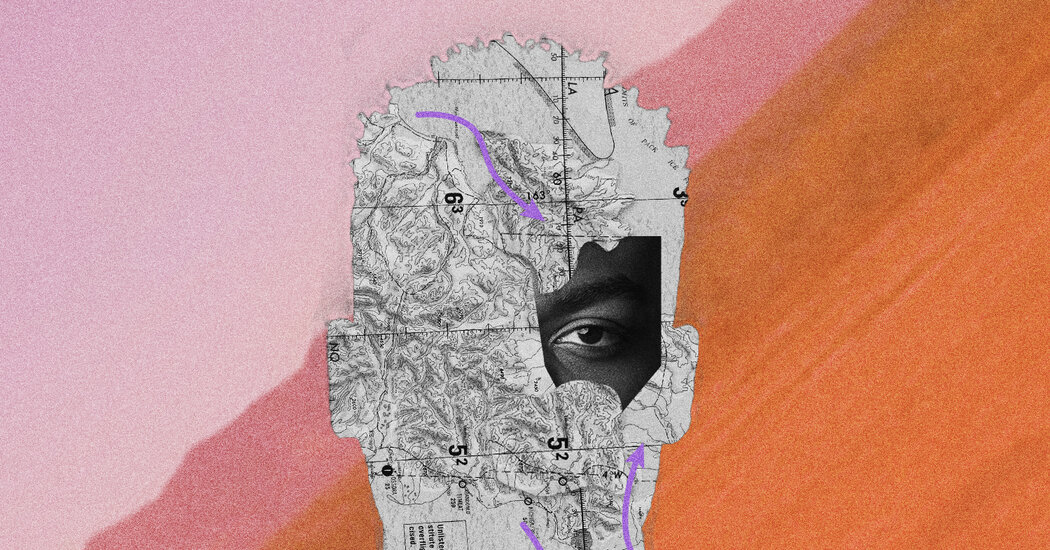
Black Men Don’t Do Therapy. Or So I Thought.

In 10th grade, a Jewish kid who had just gained admission to the high school I attended — a magnet school established to combat racial segregation by admitting students from across Los Angeles — showed up in my Japanese class. We were a cadre of Korean, Black and Latino kids who had been drawn to the class by curiosity about Japanese culture, and the sudden presence of a white student in the middle of the semester piqued our interest. In skinny jeans and sleek glasses, he reminded me of Rivers Cuomo; we became fast friends.So I don’t know why, when he and I were talking about afternoon plans, his casual mention that he was going to therapy irked me so much. Therapy? I’d known him long enough that I grasped the rough details of his family life — two professional parents and a younger sister living about a 20-minute drive north of my own family, on a quiet street in the Miracle Mile district. What did a white kid living that kind of life need with therapy?Thinking back on that exchange, I’m embarrassed by my presumptuousness, but also surprised at what it seemed to register. Some people definitely needed therapy, I realized, and did not seek it out; like my extended family, many of whom were haunted by drug addiction and the pain of gun violence. But seeking it out in the first place seemed, to me, like a blemish, an admission of defeat.My aversion to therapy was probably a result of a misunderstanding about what therapy is for. In my mind, it was a crutch for those whose minds and hearts were broken, who had something fundamentally wrong with them. I can’t say how I absorbed these thoughts, but one way or another it was clear to me that someone’s need for therapy was bound up in my perception of their strength and the integrity of their personhood. I admired my parents, a couple of latter-day Horatio Algers who grew up in South Los Angeles and Detroit at the height of the 1960s civil unrest and were witness to some of the most heinous, demoralizing, terrifying violence in this nation’s history. My parents experienced all this and came out on the other side, injured but proud. There was dignity in that, I felt, a quiet strength you exercised by biting your tongue, as hard as you needed to, even if you severed it.Unfortunately, my inner life didn’t match my parents’ steeliness. I was a moody kid, prone to melancholic jags. My mom loves to clown me about how, at 6 years old, I would put on an old Don McLean LP of hers — the “American Pie” album — and set the needle down on “Vincent,” McLean’s mournful paean to Vincent van Gogh’s volatility. Sitting in a chair next to the record player, I’d play the song over and over and over, listening tearfully. When my favorite TV characters died, I’d mourn them, staying in my feelings for days at a time. When I became a teenager, I spent flat, sunny L.A. days listening to Radiohead, trying to conjure a vibe that felt closer to my baseline emotional state. Culture became a prosthesis, a way to manage and explore my psychology. If I had no idea how to develop an intimate relationship with myself, art was an acceptable way to understand feeling.By the time I was an adult, this dissonance between how I was and how I wanted tobe — or how I thought I should be — weighed on me. Things came to a head in 2015. Mentally and emotionally exhausted after passing my qualifying exams during graduate studies at Cal Berkeley, I returned all my books to the campus library and lay down in bed for a week. I ate Trader Joe’s cookies and binged “Arrested Development” before decamping back home to Los Angeles, where I crawled into bed and ate Ben & Jerry’s while rewatching “Mad Men” for a few weeks more. What at first felt like luxuriating in success started to feel like misery, a desperation I was confused and embarrassed by. Something about the process of studying for the exams had lowered a screen between myself and the world. The obsessive, analytic frame that had been a boon in one part of my life became a burden in every other regard. It was like having a vindictive second head on my shoulder, a bummer party guest whispering clever skepticism into my ear. The anxiety over failure that characterized my year of preparation thickened instead of dissipating.I returned to Berkeley in the fall, my tongue between my teeth, worried about what admitting my difficulties might mean for academic progress. It turned out that a few of my friends — white women, mostly — had been having similar struggles and begun making use of university-approved therapists. When they told me about how they confided in these strangers, I politely listened, and even contemplated seeking out my own therapist. But I couldn’t quite shake my old reservations. I spent my days sitting in classrooms, reading in the California sun, taking notes in cafes. What did somebody like me need therapy for?As the fall wore on, though, ballooning distress compelled me to try. When I finally sat down with a handful of therapists, I was put off by what they asked me to explore: my childhood, my parents, my feelings — oh, God. Though I probably intuited that I needed a guide to help me explore my interior life, what I wanted was someone to help me troubleshoot what I interpreted as a malfunctioning brain, not plumb emotional depths that had been heretofore blocked. Eventually I met a therapist who practiced cognitive behavioral therapy, an approach whose orientation toward problem-solving suited me. C.B.T. gave me language and strategies that were comfortable, a tool kit for conquering the knotty thicket of my emotions.A few months into working with this therapist, I went back home and nervously told my family about my decision and what had precipitated it. I’d learned to register, name and acknowledge my feelings as a way of managing them rather than being overwhelmed. Immediately I recognized the sheer fear I felt in trying to communicate all this to my brother and parents. The crestfallen look on my mother’s face made me regret, briefly, telling them at all. Had she done something wrong as a parent? she asked me. As if I were undergoing treatment for an illness, she wondered how long I’d see my therapist. Sadness sneaked up on me as I tried to describe my emotional life to people who I knew loved me but with whom I communicated through a haze of mutual discomfort.My family and I, I realized, lacked the habits of thought and feeling that would let us be present for ourselves and one another. My therapist had pulled a sleight of hand, giving me the tools I wanted while knowing full well they would teach me how insufficient my understanding of therapy was, how much more work it would take to explore and understand myself. That haze I noticed was the damage inherent in the version of strength that my parents had modeled for me, and that I imagine their parents had modeled for them. That strength was a survival strategy in a world that had dealt us a thick history of loss; a generational coping mechanism far easier to adopt than self-knowledge, especially when that knowledge might confer heart-stopping grief. I couldn’t go about “fixing” myself any more than I could erase any of that loss. But I could learn to be in the world in a different way — to acknowledge and give voice to grief, and in the process, maybe, encourage my family to do the same.Ismail Muhammad is a story editor for the magazine. He has written about waves of migration to New York, diversity in publishing and the filmmaker Garrett Bradley. Trevor Davis is an artist, a designer and an arts educator in Brooklyn. He creates mixed-media collages using painting and hand-drawn elements, in work that reflects the Black American memory, family and culture.

Read more →

I Had to Quit Therapy to Finally Be Ready for It

I came to therapy as most people do: in desperation. After a sexual assault triggered my latent depression, I dropped out of college a semester before graduating. Over the next year, I grappled my way to the diploma. I knew I wasn’t well, but I still wanted to exercise some agency in my choice of treatment: Psychoanalysis sounded smart, flattering my vanity, and the institutes had lower fees for patients willing to undergo what they called a “full analysis.” The phrase shares a certain boastful intensity with “full throttle” and “full frontal,” and the program — four sessions per week laid up on the couch — was indeed demanding. If I was going to admit I needed therapy, the most rigorous version was probably the best. So I signed up. Dr. S was beautiful, warm and almost confrontational in her candor. I felt an immediate attachment.On the one hand, seeing a psychoanalyst was a good girl’s form of rebellion. For my whole life, both my parents have been involved in spiritual communities that emphasize collective devotion and mystical experience over and above self-examination. The ego was something to be transcended rather than indulged. In choosing analysis, I was doubling down on my atheistic position; I was asserting my own sensibility. I liked that Freud didn’t promise more than I believed any man or god could deliver; instead, we were in the territory of healing without cure, revolution without utopia. I liked the permission to play among dreams, wishes and accidents of language. But I also liked — and this has been harder to admit — feeling as if this particular kind of help revealed me to be a sophisticated, creative person; that it somehow dignified the mess I dragged from door to door.I should have recognized this feeling as a telltale symptom. Even though I’d been careful to choose the medicine myself, I was still relating to my treatment as if it were a professional-development program. I wanted to prove that I could succeed at transformation; which, of course, implied that it was possible to fail. When Dr. S wanted to talk about why I was late, or why I’d skipped a session two weeks in a row, I couldn’t shake the feeling that I was being reprimanded by an authority figure, and that no track record of commitment could counterbalance my slips and gaps. Yes, I had other priorities, and they sometimes took precedence, but did we have to pathologize every wish that exceeded the analytic situation? Couldn’t she see that I was already giving so much?I knew that the “transference” was working — that I was casting her in the role of my mother, teacher, supervisor — but, as Freud warned, “giving the resistance a name could not result in its immediate cessation.” I had promised myself that I would stay in analysis for two years; after that, I was free to leave if I felt like it. As the secret deadline approached, I chafed more and more against the frequent meetings, growing jealous of my time. Was I changing enough for the therapy to be “worth” the hours I “spent” in the room with Dr. S? Or was that logic a capitalist delusion I should deconstruct? If so, it seemed as if Dr. S were stuck there with me, urging maximum fidelity to the maximum number of sessions, as if the more hours I logged at the office, the “better” I’d become.Dr. S and I tried to work through the conflict. For me, she knew, dependency implied obligation and control — so I wouldn’t let her, or let myself, be close. I didn’t disagree, but how was I supposed to rescue my desire to be held from my fear of being crushed, my desire for love from my desire to please? How was I supposed to find a way through that wasn’t out? I experienced my imminent departure like a fact in my body, and any effort to explain it further filled me with a saturating boredom. Dr. S was not a boring person, and I didn’t think I was, either, so the boredom provoked our mutual suspicion. Still, I felt loyal to my malaise, like the child who refuses every doll, game or excursion — stubborn in the unhappy dignity of her disinterest.Dr. S knew better than to pressure me to stay, but she did not fulfill my fantasy of a reparative final session. I thought I wanted her to bless my departure. Instead, she spoke wistfully of all the work we might do if I kept coming back, as if the work we’d done already was not enough. When I left her office, tears blurred my vision, and the clouds above Central Park looked like faces pushing against fabric. I’d been afraid of disappointing Dr. S — and then I did. But the disappointment I perceived in her was different from the disappointment I so chronically endeavored to avoid with others. Together we had created a situation that I could abandon in favor of my own desire, however primitive, without recrimination.It must be strange, for the analyst, to exercise so little control over her patients: After years of tenderness, we might walk out the door without looking back. And yet, it is precisely this conscious renunciation of control that makes the analyst different from the other people in our lives, potentially transformatively so. Once I left, life quickly flooded the space where our sessions had been. I fell in love, I became a writer. I was waiting for a punishment, meanwhile, that never came, and the quietude diffused the guilt and shame of failure. I could feel, finally, the stirrings of an independence I did not have to justify by winning. Leaving Dr. S made it possible to imagine going back — both humbled and emboldened by our mutual capacity to abide the separation. To let it breathe.I was gone only for a little more than a year, and when I went back to Dr. S, we saw each other once a week. Six years have passed, and our relationship is now one of the most reliable — and mysterious — in my life. I told her recently that I’m not sure what analysis is for, or how and how much it’s made me better. “You’re still so ambivalent about it,” Dr. S observed. But I don’t think that’s quite true. I’m not ambivalent about my time with her: I know I want to be there, in the suspended circle of her attention. I’m just reluctant to articulate its purpose, especially in public, because analysis has become a refuge from the pervasive demand that I use my time productively, or render my life as a progress narrative for search committees, potential partners or the pages of a magazine. In analysis, I’m allowed to be uncertain and without the right words. This time, I haven’t decided how long it should last. I’m able to practice living without particular ends in mind — which is not the same, I’ve learned, as living without desire.Lately I’ve been reading the Puerto Rican feminist Luisa Capetillo, especially her 1911 manifesto on free love, repeating one line like a mantra: “querer es poder.” The translation I have renders it as “wanting is doing.” But I keep lingering over other possibilities: “wanting is power,” or, more modestly, “to want is to be able to.” Desire is the minimum condition for any true transformation. But desire cannot be demanded from us by others, or by the voices of others we’ve internalized to discipline our own spirits. We all have to figure out how to want the help we need. The choices we make about how to get it matter less than how close we can feel to the force of our choosing.Carina del Valle Schorske is a writer and a translator living in Brooklyn. Her first book, “The Other Island,” is forthcoming from Riverhead. Her essay for the magazine about New York’s plague-time dance floors won a National Magazine Award. Najeebah Al-Ghadban is a collage artist with a focus on how much we reveal or conceal about our internal worlds through the cutting away or transfiguration of an image.

Read more →

Ageing body scans to aid understanding of why diseases occur

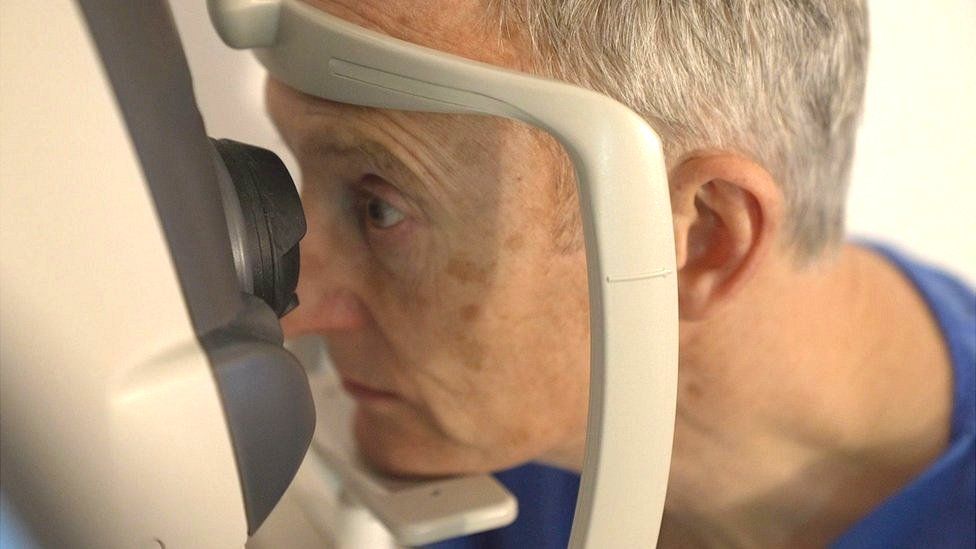
Published7 hours agoShareclose panelShare pageCopy linkAbout sharingBy Fergus WalshMedical editor The world’s biggest human imaging project is set to rescan the brains and bodies of 60,000 UK volunteers to find new ways of treating and preventing disease. By looking at how bodies age, the study could help predict those more likely to develop dementia or different cancers. The study has already led to a genetic test for people born with an increased risk of coronary heart disease.I was the first volunteer to be scanned nine years ago, and am back for more.Everything from my brain, to my heart, eyes and bone density will be analysed for a second time.Like me, all the volunteers are part of UK Biobank, and researchers in more than 90 countries are using the database for health-related studies.Having two sets of highly-detailed MRI and bone density images for thousands of people, taken several years apart, could open up huge new possibilities for spotting and preventing illnesses like dementia, cancer and heart disease.Chief scientist Prof Naomi Allen told the BBC: “Researchers will be able to look at changes in our organs as we get older that will help to develop biomarkers of disease, perhaps many years before a clinical diagnosis and symptoms.”There will also be many other potential insights from the research.It could also unearth who will respond best to treatments, and why some people seem to be so much more resilient to certain ailments than others, Prof Paul Matthews, head of UK Dementia Research at Imperial College London and chair of the Imaging Working Group for UK Biobank, told me.What is UK Biobank?First launched in 2006, UK Biobank set out to be the most comprehensive study of the nation’s health. It enrolled half a million adults – including me – to undergo medical checks, answer health and lifestyle questions and donate genetic samples, to be stored and studied for decades.All participants have had their genome – their entire DNA – sequenced. The imaging part of the project was started in 2014, and involves detailed scans of the brain, and the rest of the body. All the data gathered is anonymised and there is usually no feedback to participants. So what is in it for them, and me? Marian Keeling, 67, summed it up like this: “There’s a measure of altruism, and it’s a bit like being a blood donor, you do it for your fellow man.” Fellow volunteer Mary Wilson, 81, made a similar point: “It’s going to help future generations and help the health service. The longer you can stay healthy, the better it is.”Other biomedical databases exist, but they are either smaller, or have not been going as long as UK Biobank. It is already starting to help inform medicine. More than 7,000 peer-reviewed papers have been published, nearly a third of those last year alone, showing how its scientific value is increasing over time. In 2018, researchers devised a genetic test to detect people born with an increased risk of coronary heart disease by analysing genomic data from UK Biobank. “If you combine all your genetic variation across your genome, each variation has a small effect but, taken together, some individuals have quite a large genetic risk of developing heart disease or developing different types of cancers that we simply didn’t know beforehand,” said Prof Allen.Prof Paul Elliott, epidemiologist at the School of Public Health, Imperial College London, said the huge store of volunteers’ scans would improve understanding of how our genes and environment affect our risk of disease.”It builds on the ability of the NHS to follow people up through their health records, with consent, and is a pre-eminent example of the benefits of publicly-funded research,” he said.He said UK Biobank had become the “gold standard” internationally for this type of study. The imaging project is funded by the Medical Research Council, Wellcome Trust, British Heart Foundation and Dementias Platform UK.More on this storyScans aim to reveal Covid health legacyPublished11 March 2021Genetic test to detect heart attack riskPublished8 October 2018Related Internet LinksUK BiobankThe BBC is not responsible for the content of external sites.

Read more →

U.S. Recorded Nearly 110,000 Overdose Deaths in 2022

The number leveled off after two years of sharp increases, according to new data from the Centers for Disease Control and Prevention.Nearly 110,000 people died last year of drug overdoses in the United States, according to preliminary federal data published on Wednesday, a staggering figure that nonetheless represented a plateau after two years of sharp increases.The preliminary count of 109,680 overdose deaths was only slightly higher than the figure for 2021, when 109,179 people were estimated to have died, according to the Centers for Disease Control and Prevention. Overdose deaths had climbed significantly that year and the prior year, increasing by roughly 17 percent in 2021 and 30 percent in 2020.Dr. Rahul Gupta, the director of the White House’s Office of National Drug Control Policy, said in a statement on Wednesday that the Biden administration’s overdose strategies were working. “We’ve expanded treatment to millions of Americans, we’re improving access to naloxone to reverse overdoses and we’re attacking the illicit fentanyl supply chain at every choke point,” he said.Still, the newly released data offered the latest indication of the catastrophic effects of fentanyl, a synthetic opioid that is often mixed with stimulants and other drugs and can go undetected before a drug sample is ingested. Synthetic opioids contributed to about 75,000 overdose deaths last year, according to the C.D.C.The six-figure death toll was another signal that the nation’s efforts to unwind the damage from an increasingly complex and deadly drug supply are still far from complete. Drug overdoses have contributed to a decrease in life expectancy in the United States and are one of the nation’s leading causes of death. Other drugs in the nation’s supply that can be mixed with fentanyl, such as the cheap and addictive animal tranquilizer xylazine, have heightened the dangers of opioid use.The Office of National Drug Control Policy last month designated xylazine as an “emerging drug threat,” a move that requires the Biden administration to organize a governmentwide plan to respond to the drug’s spread.The count of overdose deaths in 2022 was an estimate and may change as the government reviews more death records from states, officials cautioned. A final count for 2022 will not be published until later this year or early next year, a C.D.C. spokesman said.Since the 1970s, the number of drug overdose deaths has climbed every year, with the exception of 2018. The sharp increases in 2020 and 2021 “were driven for the most part by the major changes of fentanyl availability around so many parts of the country,” said Dr. Wilson M. Compton, the deputy director of the National Institute on Drug Abuse, which is part of the National Institutes of Health.The new data showing deaths leveling off last year was a “potential bending of this historically high curve,” said Dr. Daniel Ciccarone, a professor of family and community medicine at the University of California, San Francisco.Still, Dr. Ciccarone said, “one can’t be utterly optimistic that this is a signal of a permanent change.” He warned of the continuing trend of overdose deaths among unsuspecting people using counterfeit pills laced with fentanyl.Many of the interventions that the Biden administration has called for in a bid to reduce overdose deaths are loosely organized in a strategy known as “harm reduction,” which encourages the use of tools that make drug consumption safer. President Biden is the first president to endorse the strategy.A key part of the strategy is naloxone, an overdose-reversing medication that can now be sold over the counter. Nabarun Dasgupta, a scientist at the University of North Carolina at Chapel Hill who has researched naloxone use in the United States, said some states that had been particularly aggressive in deploying the medication, such as Arizona, Utah and West Virginia, saw decreases in overdose deaths last year.An effective addiction treatment for opioid users that can be taken at home, buprenorphine, is now easier to prescribe. But the medication is still significantly underprescribed, including for Black patients, a recent study found.Drug checking tools, such as fentanyl test strips that alert users to the presence of the drug in a sample, have also saved lives, public health experts say.“When people know, they can make different choices or safer choices,” said Colleen Daley Ndoye, the executive director of Project Weber/Renew, an organization in Providence, R.I., that works with drug users and distributes fentanyl test strips.The group plans to open the first supervised drug consumption site legalized by a state early next year. Drug checking machines will most likely be a component of the site, Ms. Daley Ndoye said.

Read more →

Non-antibiotic treatment for women with persistent acne shown to be effective

A team of researchers led by the University of Southampton has shown that a cheap and readily available drug, used to treat high blood pressure, could help the thousands of women who suffer from persistent acne.
The SAFA study, funded by the National Institute for Health and Care Research (NIHR), is the first large-scale clinical trial to provide evidence that spironolactone is an effective treatment for the skin condition.
The results of the trial have been published in the British Medical Journal today (17th May).
It’s expected the results will change in the way acne in women is routinely treated — improving patient outcomes and reducing the large number of antibiotics currently prescribed for the condition.
“We hope the publication of these results will mean more GPs and dermatologists feel confident to prescribe spironolactone as a treatment for acne,” says Professor Miriam Santer, GP and Professor of Primary Care Research at the University of Southampton and co-lead of the trial. “The drug is already included in treatment guidelines for persistent acne in the US and Europe, and we hope this trial will lead to a change in the UK guidelines.”
A need for new treatments
Almost a third of women who have acne in adolescence continue to be affected in adulthood. This can be a huge physical and psychological burden to those who suffer from persistent outbreaks.

Topical treatments (creams and gels), available from a pharmacy or on prescription, are the first-line treatment for acne. They are effective for many people, but if they don’t work then GPs will often prescribe oral antibiotics to be used alongside the creams and gels. This can add to the growing burden of antibiotic resistance in the population.
“For several years, dermatologists have been prescribing a drug called spironolactone to treat severe acne,” says Professor Alison Layton from Harrogate and District NHS Foundation Trust and the Skin Research Centre at the University of York, and co-lead of the SAFA trial. “This is a cheap medication which has been used for decades in the treatment of high blood pressure. The drug also reduces the main hormone that leads to the development of acne.”
“However, previous studies of spironolactone for acne have been very small and there was no definitive proof that it actually worked.”
An effective treatment
The SAFA trial recruited over 400 women, aged over 18, with acne that had persisted for more than six months and where oral antibiotics would have normally been the next treatment. Half were randomly allocated to take spironolactone, while the other half were given a placebo.

The women were asked to complete questionnaires on their acne and quality of life relating to the condition at the start of the trial and then at 12 and 24 weeks into their treatment.
“The results showed that the women taking spironolactone saw a significant improvement in their acne after 12 and 24 weeks compared to those on the placebo,” says Professor Santer.
“A significantly higher proportion of people also reported that they felt satisfied that their skin had been helped compared with those receiving placebo, and any side effects were uncommon and very minor. These results show that spironolactone could offer an alternative to antibiotics for many women with persistent acne to use alongside topical acne treatments.”
Making a real difference
Kelly Cornick, 39, began suffering with severe acne in her teens and since then has been prescribed various creams and antibiotics as well as the contraceptive pill to try and control her skin.
“Nothing seemed to work,” says Kelly. “It might go away for a while, but then it would flare up again. It was sore, almost like blisters. I would get thick, red, lumps all along my jawline and at its worst it spread up onto the rest of my face. If I knocked a spot, it would really hurt and would bleed for ages. It was just horrible.”
The mum-of-three from Dorset says it had a huge effect on her both physically but also psychologically.
“It was embarrassing. People would stare and you almost feel that they’re looking at you like you’re dirty and don’t wash properly. I think the worst thing for me was when one of my nieces said: ‘have you got chicken pox’. She was only about two and kids are always quite honest, but that’s how bad it looked. It used to get me down. I’m a confident person but my skin just took over how I felt a lot of the time.”
Kelly was told about the SAFA trial by her dermatologist and contacted the trial team at Poole Hospital.
“Initially I started on the lower dose and there was an improvement. I then went onto the higher dose and within about three months everything was gone, all the spots had disappeared.”
Since finishing the trial, Kelly has been able to stay on spironolactone and has now been acne-free for over two years.
“Knowing how much it’s helped me, I hope that other people will now be given this treatment as an option instead of just trying the antibiotics. I want people to be able to experience it, because everyone should feel confident and happy, and not have spots.”
Positive results
Zina Eminton, Senior Trial Manager at the Southampton Clinical Trials Unit said: “This was a challenging trial which began just as the COVID-19 pandemic hit the UK. This meant we had to adapt to be flexible and agile in the way the trial was run, using social media to help recruit participants and conducting follow-up appointments virtually over video calls. Seeing these positive results published today is a fantastic achievement for everyone involved and we believe will benefit many more women in the future.”
Professor Andrew Farmer, Director of NIHR’s Health Technology Assessment Programme, said: “The findings from this important trial provide compelling evidence which could help thousands of women affected by persistent acne. The treatment provides a valuable alternative to antibiotics and ensures clinicians can also better avoid the harms that can arise from antimicrobial resistance.
“High quality, independently funded research like this is crucial in providing evidence to improve health and social care practice and treatments.”
The SAFA trial was run by the Southampton Clinical Trials Unit. It was funded by a Health Technology Assessment grant from the National Institute for Health and Care Research (NIHR) and was sponsored by the University of Southampton.

Read more →

Extremely hot days are warming twice as fast as average summer days in North-West Europe

New study analysed data on near-surface air temperatures recorded for North-West Europe over the past 60 years. The findings show that the maximum temperature of the hottest days is increasing at twice the rate of the maximum temperature of average summer days. The results highlight the need for urgent action by policy makers to adapt essential infrastructure to the impacts of climate change.
New research led by the University of Oxford has found that climate change is causing the hottest days in North-West Europe to warm at double the rate of average summer days. The difference in trends is most pronounced for England, Wales, and Northern France. Worryingly, while current climate models accurately predict the rate of warming for average days, they underestimate the rate at which the hottest days are warming compared to observations.
According to lead researcher Dr Matthew Patterson, from the University of Oxford’s Department of Physics, the results indicate that extreme heat events — such as the UK’s record-breaking heatwave last summer — are likely to become more regular. Dr Patterson said: ‘These findings underline the fact that the UK and neighbouring countries are already experiencing the effects of climate change, and that last year’s heatwave was not a fluke. Policy makers urgently need to adapt their infrastructure and health systems to cope with the impacts of higher temperatures.’
For the study, published today in Geographical Research Letters, Dr Patterson analysed data from the past 60 years (1960-2021) recording the maximum daily temperature, provided by the European Centre for Medium-Range Weather Forecasts.
Although the maximum recorded temperature varied between years, the overall trend clearly showed that the hottest days for North-West Europe had warmed at twice the rate of average summer days. For England and Wales, the average summer day increased by approximately 0.26°C per decade, whilst the hottest day increased by around 0.58°C per decade. However, this faster warming of the hottest days was not observed to this extent elsewhere in the Northern Hemisphere.
The reason causing this faster warming of the hottest days relative to average summer days is not yet understood. According to Dr Patterson, this may be due to the hottest summer days in North-West Europe often being linked to hot air transported north from over Spain. Because Spain is warming faster than North-West Europe, this means that air carried in from this region is ever more extreme relative to the ambient air in North-West Europe. The hottest days of 2022, for instance, were driven by a plume of hot air carried north from Spain and the Sahara. However, further research is needed to verify this.
Dr Patterson added: ‘Understanding the warming rate of the hottest days will be important if we are to improve climate model simulation of extreme events and make accurate predictions about the future intensity of such events. If our models underestimate the rise in extreme temperatures over the coming decades, we will underestimate the impacts this will have.’
Extreme heat has significant negative impacts on many different aspects of society, including energy and transport infrastructure, and agriculture. It also exacerbates conditions including respiratory and cardiovascular diseases, putting a strain on health services.
The current UK Government has been criticised by the Climate Change Committee (CCC) for failing to act quickly enough to adapt for the impacts of global heating. These new findings add even more urgency for policy makers to adapt infrastructure and systems vulnerable to extreme heat.

Read more →