Artificial intelligence catalyzes gene activation research and uncovers rare DNA sequences

Artificial intelligence has exploded across our news feeds, with ChatGPT and related AI technologies becoming the focus of broad public scrutiny. Beyond popular chatbots, biologists are finding ways to leverage AI to probe the core functions of our genes.
Previously, University of California San Diego researchers who investigate DNA sequences that switch genes on used artificial intelligence to identify an enigmatic puzzle piece tied to gene activation, a fundamental process involved in growth, development and disease. Using machine learning, a type of artificial intelligence, School of Biological Sciences Professor James T. Kadonaga and his colleagues discovered the downstream core promoter region (DPR), a “gateway” DNA activation code that’s involved in the operation of up to a third of our genes.
Building from this discovery, Kadonaga and researchers Long Vo ngoc and Torrey E. Rhyne have now used machine learning to identify “synthetic extreme” DNA sequences with specifically designed functions in gene activation. Publishing in the journal Genes & Development, the researchers tested millions of different DNA sequences through machine learning (AI) by comparing the DPR gene activation element in humans versus fruit flies (Drosophila). By using AI, they were able to find rare, custom-tailored DPR sequences that are active in humans but not fruit flies and vice versa. More generally, this approach could now be used to identify synthetic DNA sequences with activities that could be useful in biotechnology and medicine.
“In the future, this strategy could be used to identify synthetic extreme DNA sequences with practical and useful applications. Instead of comparing humans (condition X) versus fruit flies (condition Y) we could test the ability of drug A (condition X) but not drug B (condition Y) to activate a gene,” said Kadonaga, a distinguished professor in the Department of Molecular Biology. “This method could also be used to find custom-tailored DNA sequences that activate a gene in tissue 1 (condition X) but not in tissue 2 (condition Y). There are countless practical applications of this AI-based approach. The synthetic extreme DNA sequences might be very rare, perhaps one-in-a-million — if they exist they could be found by using AI.”
Machine learning is a branch of AI in which computer systems continually improve and learn based on data and experience. In the new research, Kadonaga, Vo ngoc (a former UC San Diego postdoctoral researcher now at Velia Therapeutics) and Rhyne (a staff research associate) used a method known as support vector regression to “train” machine learning models with 200,000 established DNA sequences based on data from real-world laboratory experiments. These were the targets presented as examples for the machine learning system. They then “fed” 50 million test DNA sequences into the machine learning systems for humans and fruit flies and asked them to compare the sequences and identify unique sequences within the two enormous data sets.
While the machine learning systems showed that human and fruit fly sequences largely overlapped, the researchers focused on the core question of whether the AI models could identify rare instances where gene activation is highly active in humans but not in fruit flies. The answer was a resounding “yes.” The machine learning models succeeded in identifying human-specific (and fruit fly-specific) DNA sequences. Importantly, the AI-predicted functions of the extreme sequences were verified in Kadonaga’s laboratory by using conventional (wet lab) testing methods.
“Before embarking on this work, we didn’t know if the AI models were ‘intelligent’ enough to predict the activities of 50 million sequences, particularly outlier ‘extreme’ sequences with unusual activities. So, it’s very impressive and quite remarkable that the AI models could predict the activities of the rare one-in-a-million extreme sequences,” said Kadonaga, who added that it would be essentially impossible to conduct the comparable 100 million wet lab experiments that the machine learning technology analyzed since each wet lab experiment would take nearly three weeks to complete.
The rare sequences identified by the machine learning system serve as a successful demonstration and set the stage for other uses of machine learning and other AI technologies in biology.
“In everyday life, people are finding new applications for AI tools such as ChatGPT. Here, we’ve demonstrated the use of AI for the design of customized DNA elements in gene activation. This method should have practical applications in biotechnology and biomedical research,” said Kadonaga. “More broadly, biologists are probably at the very beginning of tapping into the power of AI technology.”


Read more →

Drug significantly reduces chorea symptoms in patients with Huntington's disease

The drug valbenazine statistically improves chorea, a movement disorder commonly associated with Huntington’s disease, when compared to a placebo, according to a recent international study led by UTHealth Houston researcher Erin Furr Stimming, MD, who served as principal investigator on behalf of the KINECT-HD Huntington Study Group.
The study results — which were published online today and will appear in the June 2023 print issue of The Lancet Neurology — come one year after Furr Stimming, professor of neurology and Memorial Hermann Chair with McGovern Medical School at UTHealth Houston, presented an early abstract of the findings at the American Academy of Neurology 2022 Annual Meeting in Seattle.
“Positive study results remind us there is a reason for hope,” said Furr Stimming, who is also director of the Huntington’s Disease Society of America Center of Excellence at UTHealth Houston Neurosciences. “Chorea associated with Huntington’s disease can negatively impact quality of life and functional independence; therefore, studying additional medications to address this hallmark motor symptom is imperative.”
The Phase III, randomized, double-blind, placebo-controlled KINECT-HD study, which enrolled 128 participants, was designed to evaluate the efficacy of valbenazine as a once-daily treatment to reduce chorea associated with Huntington’s disease, as well as evaluate the drug’s safety and tolerability. Valbenazine is a selective vesicular monamine transporter 2 (VMAT 2) inhibitor that is not yet approved by the U.S. Food and Drug Administration. Chorea is an involuntary, irregular movement, and the cardinal motor feature of Huntington’s disease.
Compared with the placebo, valbenazine demonstrated a statistically significant reduction in chorea symptoms and improvement of overall chorea severity in patients with Huntington’s disease. Improvement was seen as early as the second week of the study, as participants completed the lowest study dose (40 mg), with consistently greater improvement compared to the placebo in all subsequent visits, as the dose was adjusted in intervals. By the end of the 12-week trial, 82% of valbenazine-treated participants were taking 80 mg.
Notably, KINECT-HD marked the first time the Huntington’s Disease Health Index (HD-HI) was implemented in a Phase III trial. HD-HI is a patient-reported outcome measure designed to evaluate clinically meaningful changes in Huntington’s disease function in response to therapeutic interventions. Patients who received valbenazine reported improved mobility and hand/arm function, as well as decreased burden from abnormal movements, compared to patients who received the placebo.
“We are incredibly grateful to the participants and care partners for their dedication to this study,” Furr Stimming said.
In December 2022, biopharmaceutical company Neurocrine Biosciences submitted a supplemental New Drug Application to the FDA for valbenazine as a treatment for chorea associated with Huntington’s disease. The organization is expected to respond to the submission by August 20, 2023. The results from this study were included in the filing.
Huntington’s disease is a rare, inherited disease that typically begins in a person’s 30s or 40s, causing nerve cells in the brain to break down over time. About 40,000 people living in the U.S. have the fatal disease, while another 200,000 are at risk for inheriting the disease. No cure exists, but medications and physical, speech, and occupational therapy can help manage symptoms.
KINECT-HD was conducted by the Huntington Study Group, a global not-for-profit organization, together with its wholly owned for-profit subsidiary, HSG Clinical Research, Inc., and in cooperation with the Clinical Trials Coordination Center at the University of Rochester Medical Center’s Center for Health + Technology, with funding from Neurocrine Biosciences.

Read more →

Why Do We Listen to Sad Songs?

When Joshua Knobe was younger, he knew an indie rock musician who sang sorrowful, “heart-rending things that made people feel terrible,” he recalled recently. At one point he came across a YouTube video, set to her music, that had a suicidal motif. “That was the theme of her music,” he said, adding, “So I had this sense of puzzlement by it, because I also felt like it had this tremendous value.”Listen to This ArticleFor more audio journalism and storytelling,

Read more →

Abortion: Pressure grows on Virginia as new bans arise in the south

Published8 hours agoShareclose panelShare pageCopy linkAbout sharingImage source, Getty ImagesBy Sam CabralBBC News, WashingtonAs North and South Carolina move to tighten abortion restrictions, women seeking to terminate pregnancies in the US south may be running out of options.As access has been severely curtailed, Virginia is poised to become the only state in the region to allow abortions after 12 weeks of pregnancy.The latest restrictions are expected to force even more out-of-state patients to seek abortions in Virginia.That is putting pressure on already strained in-state abortion providers.Whole Woman’s Health, which operates two brick-and-mortar clinics and a telemedicine resource that provides abortion pills by mail, was seeing more women cross state lines to access its services even before the Supreme Court overturned the right to terminate pregnancies last June.”It started when Texas passed its six-week ban in 2021,” said founder and CEO Amy Hagstrom Miller. “We started to see people – believe it or not – coming all the way from Texas into Virginia.”That is a distance of about 1,200 miles (2,000km) – and the number of women arriving from other parts of the country has risen by more than 10% in the 11 months since the court’s ruling, according to Mrs Miller.Several have come from Kentucky, Tennessee and West Virginia – all of which border Virginia and which have outlawed nearly all abortions.In North Carolina, which borders Virginia to the south, the Republican-controlled state legislature on Tuesday overrode the Democratic governor’s veto of a bill that bans most abortions after 12 weeks of pregnancy.The law will go into effect on 1 July.South Carolina’s legislature – which is also Republican-controlled – is seeking to prohibit nearly all abortions after six weeks, although it is likely to face court challenges. A similar six-week ban is making its way through state courts in Florida.North Carolina bans abortion after 12 weeksFlorida governor signs 6-week abortion ban into lawMore than 6,000 women from other parts of the country have phoned Whole Woman’s Health clinics since the start of the year.In anticipation of more patients, the organisation has been working to fill a shortage of providers by bringing in new physicians and nurse practitioners from the Washington DC and Baltimore areas, and even from as far as California.Over the past year, it is also leaning more heavily on its virtual tele-health programmes and has created other resources to ease the burden of out-of-state patients, including helping them with funding.”Almost 70% of people seeking abortions are already working parents,” Mrs Miller told the BBC. “We’ve got child-friendly waiting rooms with toys and changing tables – things that maybe we didn’t need to think about as much when we were just serving folks locally.””People are very confused. They’re uncertain about their rights, they’re uncertain about where they can get an abortion,” she added. “We’re doing our best to try to get clear information to people and help as many as we can.”For Supreme Court, the abortion battle is just beginningThe expected surge in women seeking an abortion in Virginia is perhaps even more concerning for Planned Parenthood, which operates six clinics across the state and anticipates thousands of additional patients will seek its services in the coming months.Jamie Lockhart, executive director of Planned Parenthood Advocates for Virginia, said abortion bans in neighbouring states will have “a ripple effect” on her state.”This influx of patients will lead to longer wait times for Virginians,” she said.”These providers of abortion care also provide a whole range of sexual and reproductive healthcare as well as primary care,” she added. “So when there’s an increased need for abortion access, it’s also going to have implications for other healthcare that they provide.”Virginia currently allows abortions in the first and second trimesters – or, more precisely, up to 26 weeks and six days of pregnancy – while also allowing them in the third trimester if at least three doctors certify that the woman’s health is at risk.This video can not be playedTo play this video you need to enable JavaScript in your browser.In January, Democrats in the state legislature blocked a 15-week abortion ban proposed by Republican Governor Glenn Youngkin.Two-thirds of Virginians in a Washington Post-Schar School poll in April said they opposed tightening access to abortion.The state’s residents should recognise, however, that they are “one election away” from having restrictions similar to those in North Carolina, Ms Lockhart said.After the Supreme Court decision, abortions in North Carolina soared by nearly 40% – the single biggest percentage increase in any state – as women from the region saw access to the procedure in their own states curbed.But after a state representative switched from the Democratic party to the Republican party last month, it handed Republicans the veto-proof majority they needed to push through their six-week abortion proposal over the objections of Governor Roy Cooper, a Democrat.By contrast, Governor Youngkin in Virginia has vowed to “happily and gleefully” sign anti-abortion legislation sent to his desk.While his previous effort was thwarted by an ultra-slim Democratic majority in the state Senate, every seat in the legislature will be on the ballot this November and, if the chamber flips to Republican control, Mr Youngkin will get his chance.More on this storyNorth Carolina bans abortion after 12 weeksPublished1 day agoFlorida governor signs 6-week abortion ban into lawPublished14 AprilFor Supreme Court, the abortion battle is just beginningPublished22 April

Read more →

Amputees feel warmth in their missing hand

An unexpected discovery about temperature feedback has led to new bionic technology that allows amputees to sense the temperature of objects – both hot and cold — directly in the phantom hand. The technology opens up new avenues for non-invasive prosthetics.
“When I touch the stump with my hand, I feel tingling in my missing hand, my phantom hand. But feeling the temperature variation is a different thing, something important… something beautiful,” says Francesca Rossi.
Rossi is an amputee from Bologna, Italy. She recently participated in a study to test the effects of temperature feedback directly to the skin on her residual arm. She is one of 17 patients to have felt her phantom, missing hand, change in temperature thanks to new EPFL technology. More importantly, she reports feeling reconnected to her missing hand.
“Temperature feedback is a nice sensation because you feel the limb, the phantom limb, entirely. It does not feel phantom anymore because your limb is back,” Rossi continues.
Researchers Silvestro Micera and Solaiman Shokur have been keen on incorporating new sensory feedback into prosthetic limbs for providing more realistic touch to amputees, and their latest study focuses on temperature. They stumbled upon a discovery about temperature feedback that far exceeds their expectations.
If you place something hot or cold on the forearm of an intact individual, that person will feel the object’s temperature locally, directly on their forearm. But in amputees, that temperature sensation on the residual arm may be felt… in the phantom, missing hand.

By providing temperature feedback non-invasively, via thermal electrodes (aka thermodes) placed against the skin on the residual arm, amputees like Rossi report feeling temperature in their phantom limb. They can feel if an object is hot or cold, and can tell if they are touching copper, plastic or glass. In a collaboration between EPFL, Sant’Anna School of Advanced Studies (SSSA) and Centro Protesi Inail, the technology was successfully tested in 17 out of 27 patients. The results are published in Science.
“Of particular importance is that phantom thermal sensations are perceived by the patient as similar to the thermal sensations experienced by their intact hand,” explains Shokur, EPFL senior scientist neuroengineer who co-led the study.
Towards realistic bionic touch
The projection of temperature sensations into the phantom limb has led to the development of new bionic technology, one that equips prosthetics with non-invasive temperature feedback that allows amputees to discern what they’re touching.
“Temperature feedback is essential for relaying information that goes beyond touch, it leads to feelings of affection. We are social beings and warmth is an important part of that,” says Micera, Bertarelli Foundation Chair in Translational Neuroengineering, professor at EPFL and SSSA who also co-led the study. “For the first time, after many years of research in my laboratory showing that touch and position information can be successfully delivered, we envisage the possibility of restoring all of the rich sensations that one’s natural hand can provide.”
Temperature feedback, from well-being to prosthetics

A few years ago, Micera and Shokur got wind of a system that could provide temperature feedback through the skin of healthy subjects, also developed at EPFL and spun-off by Metaphysiks.
Metaphysiks has been developing neuro-haptic technology, MetaTouch, which connects the body with digital worlds. MetaTouch combines touch and temperature feedback to augment physical products for well-being.
“This breakthrough highlights the power of haptics to improve medical conditions and enhance the quality of life for people with disabilities,” says Simon Gallo, Co-founder and Head of Technology at Metaphysiks.
The EPFL neuroengineers borrowed MetaTouch that provides thermal feedback directly to a user’s skin. With this device, they discovered the thermal phantom sensations and subsequently tested it in 27 amputees.
The Minitouch prototype and tests
For the study, Shokur and Micera developed the MiniTouch, a device that provides thermal feedback and specifically built for integration into wearable devices like prosthetics. The MiniTouch consists of a thin, wearable sensor that can be placed over an amputee’s prosthetic finger. The finger sensor detects thermal information about the object being touched, more specifically, the object’s heat conductivity. If the object is metallic, it will naturally conduct more heat or cold than, for instance, a plastic one. A thermode, one that is in contact with the skin on the amputee’s residual arm, heats up or cools down, relaying the temperature profile of the object being touched by the finger sensor.
“When we presented the possibility to get back temperature sensation on the phantom limb or the possibility to feel the contact with different materials, we obtained a lot of positive feedback. And eventually, we were able to recruit more than 25 volunteers in less than two years,” says Federico Morosato who was responsible for organizing the clinical aspect of the trials at Centro Protesi Inail.
The scientists found that small areas of skin on the residual arm project to specific parts of the phantom hand, like the thumb, or the tip of an index finger. As expected, they discovered that the mapping of temperature sensations between the residual arm and the entire projected phantom one is unique to each patient.
Bionic prosthetics for repairing the human body
Almost a decade ago, Micera and colleagues provided real-time sensory feedback about objects being grasped. They went on to improve touch resolution by providing feedback about an object’s texture and position information in a reliable way. Moreover, they discovered that amputees begin to embody their prosthetic hand if provided with sensory feedback directly into their intact nervous system. The added sensation of temperature feedback is yet another step towards building bionic prosthetics for repairing the human body. Fine-tuning temperature sensations and integrating these into a wearable device that can be mapped out to each patient are part of the next steps.

Read more →

FDA Panel

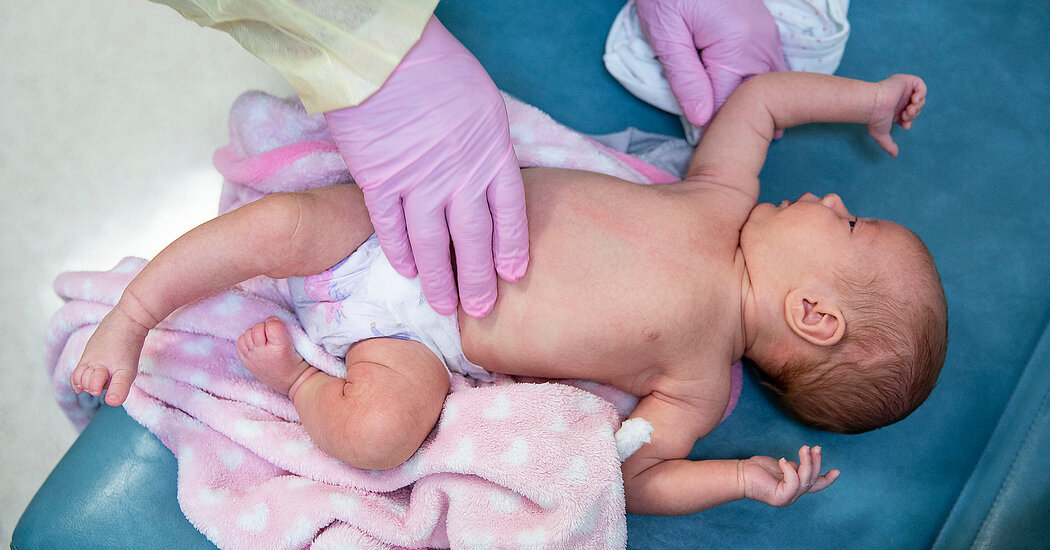
A committee of experts voted in favor of a new shot administered to pregnant women, one in a series of new ways to arm the very young against a life-threatening virus.An advisory panel to the Food and Drug Administration voted on Thursday in favor of approving a vaccine by Pfizer to prevent the severe respiratory virus that is a potentially deadly threat to infants.The vaccine would be the first to protect babies from respiratory syncytial virus, or R.S.V., which is the reason many infants are admitted to children’s hospitals each year and kills several hundred under 5 each year.Fourteen agency advisers unanimously agreed that the vaccine was effective, and the F.D.A. typically follows the recommendations of its advisory panels.Ten of the 14 agreed that the vaccine was safe, with some airing concerns about elevated rates — not all statistically significant — of preterm births among mothers who got the vaccine compared to those who received a placebo.The vote follows the F.D.A.’s earlier decision to approve the first R.S.V. vaccine for older adults in the United States. Several other options are still being evaluated.The Pfizer vaccine for pregnant women, called Abrysvo, is being reviewed ahead of another option submitted to the F.D.A. that would be given to infants — a monoclonal antibody shot meant to provide five months of protection.R.S.V. is a common ailment that is most severe in young infants and older adults. According to the Centers for Disease Control and Prevention, up to 80,000 children younger than 5 are hospitalized with the virus each year and up to 300 die. (As many as 160,000 adults 65 and older are hospitalized each year with the virus, and about 10,000 die.)The youngest infants face the greatest risk. Data presented at the meeting showed that infants 6 months or younger were twice as likely to be hospitalized compared with older babies or children. Efforts to test a vaccine in infants began in the 1960s but were abandoned when the vaccine caused more severe cases, said Dr. Bill Gruber, the head of clinical vaccine research and development at Pfizer.The prospect of having a large number of babies immunized in the fall, before the winter when R.S.V. rates are typically highest, would be “huge,” said Dr. Jonathan Miller, a pediatrician who sees children in the clinic and hospital for Nemours Children’s Health, Delaware Valley.“I’m thrilled about the prospect of this, as well as about the prospect of other R.S.V. vaccines in the pipeline,” said Dr. Miller, who is not an adviser to the agency. “This looks as if it will be the first one coming our way, and it’s a long time coming.”The vaccine under review Thursday was tested in about 7,300 women after the 24th week of pregnancy. About half received a placebo, and half were given the vaccine as a shot. For the first 90 days after birth, six infants in the vaccination group had a serious case of R.S.V., compared with 33 in the placebo group, translating to an efficacy of nearly 82 percent.The study, published in The New England Journal of Medicine, showed that for six months after birth, the vaccine was 69 percent effective. In the treatment group, 19 babies fell seriously ill compared to 62 in the placebo group.The main safety concern during the hearing was whether the vaccine was linked to preterm birth, a safety signal that led GSK to halt its trial of a similar R.S.V. vaccine that was being tested in pregnant patients, according to Dr. Hal Barron, a former company executive. The F.D.A. approved that vaccine, called Arexvy, for older adults earlier this month. (Like GSK, Pfizer tested the same vaccine formula in older adults and infants.)“We quickly halted the trial based on it confirming that the signal was real,” Dr. Barron said in a March 2022 presentation to investors, “but we are still puzzled as to exactly why this occurred.”The label for the GSK vaccine says that in tests of pregnant women, 6.8 percent receiving the treatment had preterm births, compared to 5 percent in the placebo group.In the Pfizer study, premature delivery was reported in 5.6 percent of the pregnancies in the treatment group, compared with 4.7 percent in the placebo group. Officials at the F.D.A. reported that the difference was not statistically significant.Pfizer said if the drug were approved, the company would conduct a post-approval study of real-world use of the vaccine, monitoring health records for the incidence of preterm birth and other possible problems. Agency advisers, though, expressed skepticism about a plan to use data generated from health care billing records to monitor vaccine safety. Several noted that such data could make it hard to link a parent who got the vaccine to the child.“I do feel like we should be setting the bar higher for review,” said one adviser, Dr. Amanda Cohn, the director of the division of birth defects and infant disorders at the C.D.C., adding that more data might help clarify questions about the effects on preterm birth.Dr. Hana El Sahly, the advisory committee chairwoman and professor of virology at Baylor College of Medicine, said the number of preterm births among those given the vaccine in a prior Pfizer study, in the main study under review and in the GSK study of a similar product were concerning, particularly given that the United States is not in the midst of an R.S.V. outbreak. She said the pattern should have been examined more carefully.“That was a big missed opportunity and I feel it’s unfair that we kicked the can down the road to the larger public,” said Dr. El Sahly, who voted “no” to the question about whether the safety data was adequate.There is another remedy under regulatory consideration, a monoclonal antibody shot developed by Sanofi and AstraZeneca, called nirsevimab. It is meant to be given at the hospital to babies who are born during the winter or in the fall, Jonathan Heinrichs, a Sanofi executive said in an interview.The medication is under F.D.A. review and was found in one study of nearly 2,500 infants to reduce cases of severe R.S.V. by 75 percent.

Read more →

Jynneos Vaccine Offers Protection Against Mpox, New Studies Confirm

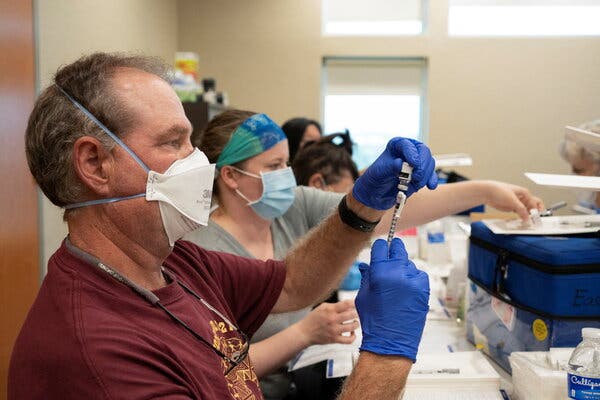
The NewsThe Jynneos vaccine provides real-world protection against mpox, and two doses seem to be more effective than one, according to three new observational studies published on Thursday.The effectiveness of two doses of the vaccine ranged from 66 percent to 88 percent, depending on the study, while the effectiveness of a single dose ranged from 36 percent to 75 percent. The researchers also concluded that what is known as intradermal dosing — which involves injecting the vaccine between layers of skin, rather than underneath it, and requires just one-fifth of the dose — provides protection roughly equivalent to the conventional, under-the-skin injection.The research was published in a weekly report by the Centers for Disease Control and Prevention and in The New England Journal of Medicine.Many questions remain about the vaccine, which had not been widely used before last summer’s outbreak of mpox, formerly called monkeypox, largely among men who have sex with men. None of the new studies were randomized controlled trials, and some of the analyses were small.More work is needed to determine how well the vaccine works in immunocompromised people, how long protection lasts and whether that varies depending on how the shots are administered.Preparing doses of the Jynneos mpox vaccine in a clinic in Tucson, Ariz., last summer.Rebecca Noble/ReutersWhy It Matters: A resurgence is possible.In the United States, there have been more than 30,000 mpox cases over the last year, with cases declining sharply after last summer’s peak. Mpox cases have fallen off globally, too, and the World Health Organization declared an end to the public health emergency earlier this month.“But the outbreak is not over, and we need to remain alert and continue our prevention efforts,” Dr. Christopher Braden, the mpox response incident manager at the C.D.C., said at a news briefing on Thursday.More than 1.2 million doses of the vaccine have been administered in the United States over the last year. But the number of doses administered has declined since last summer, and nationally just 23 percent of people who are considered to be at risk have been fully vaccinated, according to the C.D.C. There are also wide geographic, racial and ethnic disparities in vaccine coverage.And it is clear that the vaccine is not a silver bullet. In a new cluster of cases recently reported in Chicago, many of the patients were fully vaccinated.The Chicago Department of Health and the C.D.C. are currently investigating this cluster, which now includes 21 people, all of whom have had mild symptoms, Dr. Demetre Daskalakis, the White House national mpox response deputy coordinator, said at the briefing on Thursday.“What we do know, however, is that vaccination makes getting and spreading mpox less likely and importantly, may decrease the chances of severe illness, hospitalization and death, even if it doesn’t prevent infection,” he said.Background: The vaccine was largely unknown.Jynneos, which is manufactured by a small Danish company, is the safer of the two vaccines available for mpox. It was initially intended to be given as two doses, both injected underneath the skin, 28 days apart.Because supplies of the vaccine were limited, however, officials deviated from the intended regimen.Some began administering just a single dose of the vaccine, which some studies had suggested might provide considerable protection. Then, last August, federal officials provided an emergency authorization for intradermal dosing to help stretch the available supply.But there has been little evidence regarding the effectiveness of these strategies, which were based largely on research findings and not on the real experiences of patients. What’s Next: Officials prepare a new push for vaccination.Cases may increase in the coming weeks “as people gather for festivals and other events,” the C.D.C. has warned. Public health experts and officials are urging people who are at risk to get vaccinated before Pride events begin next month.“For me, the top-line message would be if you haven’t gotten one dose, get it now, because you do need to wait four weeks before you get your second dose,” said Dr. Jacqueline L. Gerhart, the chief medical officer at Epic Research and one of the lead investigators of the N.E.J.M. study.Additional studies of the vaccine, including research into how well it holds up over time, are currently underway, Dr. Daskalakis said.Sharon Otterman

Read more →

Cancer cells use a new fuel in absence of sugar

Researchers at the University of Michigan Rogel Cancer Center have discovered a new nutrient source that pancreatic cancer cells use to grow. The molecule, uridine, offers insight into both biochemical processes and possible therapeutic pathways.
The findings, published in Nature, show that cancer cells can adapt when they don’t have access to glucose. Researchers have previously identified other nutrients that serve as fuel sources for pancreatic cancer; this study adds uridine to the catalog.
Pancreatic tumors have few functioning blood vessels and can’t easily access nutrients that come from the bloodstream, like glucose. Costas Lyssiotis, Ph.D., Maisel Research Professor of Oncology and lead investigator of the study, explained that without the right nutrients, the cancer cells get hungry. “We know they still grow, obviously, but what are they using to grow?” he said. “These findings show that, under certain circumstances, uridine is one of those fuels.”
Asked about impact, Zeribe Nwosu, Ph.D., one of the co-first authors in the study, says “the ability of cancer to switch to alternative nutrients has fascinated me for a long time. Blocking such compensatory switches could lead us to new treatments and that’s the door we hope this study will open.”
Uridine is present in the tumor microenvironment, but its exact source, and how cancer cells access it, remains a mystery. “Part of the picture is it’s in the bloodstream, but we don’t know where it’s coming from specifically,” said Lyssiotis. “Likely, it’s coming from multiple places, and so far we haven’t been able to pin it to a single source.”
Events that Lyssiotis refers to as “times of crisis” — when cells don’t have enough nutrients, because of limited blood access and/or intense competition between cells — could be a clue as to why, and where, cells turn to uridine. “The cancer cells seem to be sensing the concentrations of glucose and uridine in the local environment to inform their adaptation,” says Matt Ward, another co-first author. Lyssiotis’ team recognize this unknown regulatory process, as well as a cancer-promoting mutation in the KRAS gene, which is common in pancreatic cancer, as two ways that cancer cells control their usage of uridine.
Lyssiotis and his team have been working on this research for nearly a decade alongside their collaborators in the Sadanandam lab at the Institute for Cancer Research in London. They used a technology that screens hundreds of different nutrients to see which ones support pancreatic cancer growth. Typically, researchers look at standard nutrients like sugar, protein and fat, but Lyssiotis’s team took an unbiased approach. “We used a large panel with over 20 pancreatic cell lines and around 200 different nutrients to assess different ways pancreatic cancer cells grow,” he explained. “What do they actually metabolize? This method led us to discover uridine.”
This method offers therapeutic insight, too. The findings showed that uridine is metabolized by the enzyme uridine phoshorylase-1, or UPP1. Blocking UPP1 had a major impact on the growth of pancreatic tumors in mice, findings that suggest the importance of testing drugs that block uridine as possible new treatment options.
“There’s potential to better understand and treat pancreatic cancer with new drug targets and new therapeutic approaches,” said Sadanandam, co-author on the study.
More research is needed to determine the best way to move this discovery to the clinic.

Read more →

10 pesticides toxic to neurons involved in Parkinson's

Researchers at UCLA Health and Harvard have identified 10 pesticides that significantly damaged neurons implicated in the development of Parkinson’s disease, providing new clues about environmental toxins’ role in the disease.
While environmental factors such as pesticide exposure have long been linked to Parkinson’s, it has been harder to pinpoint which pesticides may raise risk for the neurodegenerative disorder. Just in California, the nation’s largest agricultural producer and exporter, there are nearly 14,000 pesticide products with over 1,000 active ingredients registered for use.
Through a novel pairing of epidemiology and toxicity screening that leveraged California’s extensive pesticide use database, UCLA and Harvard researchers were able to identify 10 pesticides that were directly toxic to dopaminergic neurons. The neurons play a key role in voluntary movement, and the death of these neurons is a hallmark of Parkinson’s.
Further, the researchers found that co-exposure of pesticides that are typically used in combinations in cotton farming were more toxic than any single pesticide in that group.
For this study, published May 16 in Nature Communications, UCLA researchers examined exposure history going back decades for 288 pesticides among Central Valley patients with Parkinson’s disease who had participated in previous studies. The researchers were able to determine long-term exposure for each person and then, using what they labeled a pesticide-wide association analysis, tested each pesticide individually for association with Parkinson’s. From this untargeted screen, researchers identified 53 pesticides that appeared to be implicated in Parkinson’s — most of which had not been previously studied for a potential link and are still in use.
Those results were shared for lab analysis led by Richard Krolewski, MD, PhD, an instructor of neurology at Harvard and neurologist at Brigham and Women’s Hospital. He tested the toxicity for most of those pesticides in dopaminergic neurons that had been derived from Parkinson’s patients through what’s known as induced pluripotent stem cells, which are a type of “blank slate” cell that can be reprogrammed into neurons that closely resemble those lost in Parkinson’s disease.

The 10 pesticides identified as directly toxic to these neurons included: four insecticides (dicofol, endosulfan, naled, propargite), three herbicides (diquat, endothall, trifluralin), and three fungicides (copper sulfate [basic and pentahydrate] and folpet). Most of the pesticides are still in use today in the United States.
Aside from their toxicity in dopaminergic neurons, there is little that unifies these pesticides. They have a range of use types, are structurally distinct, and do not share a prior toxicity classification.
Researchers also tested the toxicity of multiple pesticides that are commonly applied in cotton fields around the same time, according to California’s pesticide database. Combinations involving trifluralin, one of the most commonly used herbicides in California, produced the most toxicity. Previous research in the Agricultural Health Study, a large research project involving pesticide applicators,had also implicated trifluralin in Parkinson’s.
Kimberly Paul, PhD, a lead author and assistant professor of neurology at UCLA, said the study demonstrated their approach could broadly screen for pesticides implicated in Parkinson’s and better understand the strength of these associations.
“We were able to implicate individual agents more than any other study has before, and it was done in a completely agnostic manner,” Paul said. “When you bring together this type of agnostic screening with a field-to-bench paradigm, you can pinpoint pesticides that look like they’re quite important in the disease.”
The researchers are next planning to study epigenetic and metabolomic features related to exposure using integrative omics to help describe which biologic pathways are disrupted among Parkinson’s patients who experienced pesticide exposure. More detailed mechanistic studies of the specific neuronal processes impacted by pesticides such as trifluralin and copper are also underway at the Harvard/Brigham and Women’s labs. The lab work is focused on distinct effects on dopamine neurons and cortical neurons, which are important for the movement and cognitive symptoms in Parkinson’s patients, respectively. The basic science is also expanding to studies of pesticides on non-neuronal cells in the brain — the glia — to better understand how pesticides influence the function of these critical cells.
Other authors include Edinson Lucumi Moreno, Jack Blank, Kristina M. Holton, Tim Ahfeldt, Melissa Furlong, Yu Yu, Myles Cockburn, Laura K. Thompson, Alexander Kreymerman, Elisabeth M. Ricci-Blair, Yu Jun Li, Heer B. Patel, Richard T Lee, Jeff Bronstein, Lee L. Rubin, Vikram Khurana, and Beate Ritz.

Read more →

One step closer to developing a potentially ultraprotective sunscreen from our own melanin

A new discovery about the structure of melanin has brought scientists one step closer to developing a new, potentially ultra-protective sunscreen derived from a biological substance found in nearly all organisms. Researchers from McGill’s Department of Chemistry, in collaboration with The Ohio State University and the University of Girona, have announced a major advance in understanding the fundamental structure of melanin and one of its components that turns light into heat, protecting the body from sun damage.
Melanin, the pigment that gives humans their skin, eye, and hair colour, is the body’s first and best natural defense against the sun’s harmful rays. Cosmetics companies have long tried to harness the protective powers of natural and synthetic melanin for use in chemical sunscreens and other personal care products. For example, melanin could, in theory, be used to produce a radiation barrier that augments skin care products by matching a more diverse range of natural skin tones. But melanin is so notoriously unstable and difficult to study that, thus far, scientists have not been able to see what it looks like at the molecular level, resulting in a slow, trial-and-error approach to its potential use in personal care products.
“As we gain a better understanding of the structure of melanin, we should be able to predictably make alternatives that perform better than what is currently available,” said Jean-Philip Lumb, one of the lead authors of the paper. The study found that the melanin component converted light into heat from all wavelengths, spanning the ultraviolet to the infrared, offering a broad spectrum of protection. The molecule was also remarkably small, which the researchers say has practical benefits because the number of atoms needed to provide this level of sun protection is fewer than anything reported up to now. “We’ve taken a major step forward in understanding a new mechanism for how melanin can serve as a sunscreen,” Lumb said.

Read more →