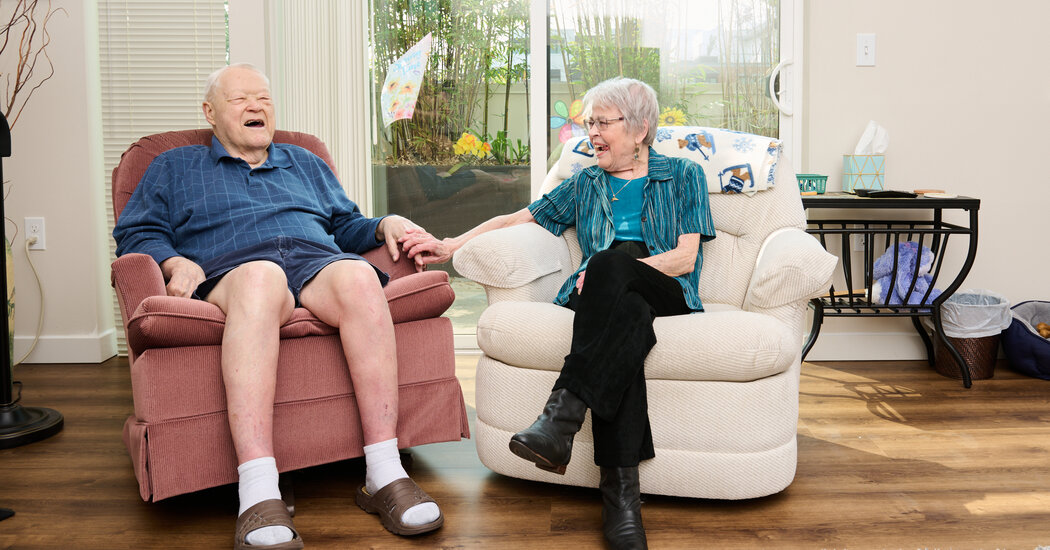
'Lost' immune cells partly to blame for reduced vaccine response in older people

Understanding the ways our immune response changes as we age holds the key to designing better vaccines and boosting protection for people most at risk. Research published by Dr Michelle Linterman and her group today in Nature Immunology has explained that the organisation of the germinal centre, which is vital to the generation of longer-lived protection following vaccination, is altered in ageing. By demonstrating that these age-related changes can be reversed in mice, the research sets the foundation for interventions that bolster an effective vaccine response.
After a vaccination our immune system reacts by creating specialised structures called germinal centres that produce the immune cells (B cells) that provide long-term protection through the production of antibodies. Due to an age-dependent impairment in antibody production, older people have lower levels of protection from vaccination which also wanes more quickly compared to younger people. Protection by vaccination is essential to protect older people who become more susceptible to infections with age. Therefore, understanding how the age-related decline of the immune system can be reversed or mitigated is an important part of securing better health in later years.
The correct function of the germinal centre response requires the coordination of cellular interactions across time and space. Germinal centres are made up of two distinct regions — the light zone and dark zone, with some cells located in specific areas, and others which move between the zones. B cells are shaped by their interactions in first the dark zone and then in the light zone.
Through a combination of mouse research, computer modelling and analysis of human vaccination data, the Linterman lab research team were able to show that changes to key interactors of B cells in the light zone of the germinal centre, T follicular helper cells, and also to light-zone specific cells called follicular dendritic cells (FDCs), were at the heart of the diminished vaccination response.
Dr Michelle Linterman, a group leader in the Institute’s Immunology programme, explains “In this study we looked at what was happening to different cell types in the germinal centre, particularly the structure and organisation of the germinal centre across its two functionally distinct zones, to try and understand what causes the reduced germinal centre response with age.
“What we found is that the T follicular helper cells aren’t where they should be and as a result, antibody-producing cells lose essential selection cues. Surprisingly we also uncovered an unknown role for T follicular helper cells in supporting the expansion of follicular dendritic cells in the light zone after vaccination.”
The team used 3D computer modelling to simulate the loss of Tfh cells from the light zone and a reduced FDC network, which recapitulate their findings and strengthened their hypothesis that these two factors were enough to be responsible for a suboptimal germinal centre response in aged mice.
Having identified the dependencies between the cell types, the researchers used genetically modified mice to control the location of Tfh cells in the germinal centre, demonstrating that the defective FDC response was caused by loss of Tfh from the light zone. Importantly, they were also able to correct the defective FDC response and boost the germinal centre response in aged mice by providing T cells that could correctly localise to the light zone.
The team also utilised data from human vaccination studies and found similar age-dependent changes in mice and humans.
“These findings give us a more complete picture of what the effects of age are on the germinal centre and vital insight into how we might address these in terms of developing effective strategies for enhancing vaccine response in older people” concluded Dr Linterman.

Read more →

Chronic Pain Linked to Brain Signals in Orbitofrontal Cortex

A new study linked chronic pain to activity in the orbitofrontal cortex, an area involved in emotion regulation, self-evaluation and decision making.Researchers have for the first time recorded the brain’s firing patterns while a person is feeling chronic pain, paving the way for implanted devices to one day predict pain signals or even short-circuit them.Using a pacemaker-like device surgically placed inside the brain, scientists recorded from four patients who had felt unremitting nerve pain for more than a year. The devices recorded several times a day for up to six months, offering clues for where chronic pain resides in the brain.The study, published on Monday in the journal Nature Neuroscience, reported that the pain was associated with electrical fluctuations in the orbitofrontal cortex, an area involved in emotion regulation, self-evaluation and decision making. The research suggests that such patterns of brain activity could serve as biomarkers to guide diagnosis and treatment for millions of people with shooting or burning chronic pain linked to a damaged nervous system.“The study really advances a whole generation of research that has shown that the functioning of the brain is really important to processing and perceiving pain,” said Dr. Ajay Wasan, a pain medicine specialist at the University of Pittsburgh School of Medicine, who wasn’t involved in the study.About one in five American adults experience chronic pain, which is persistent or recurrent pain that lasts longer than three months. To measure pain, doctors typically rely on patients to rate their pain, using either a numerical scale or a visual one based on emojis. But self-reported pain measures are subjective and can vary throughout the day. And some patients, like children or people with disabilities, may struggle to accurately communicate or score their pain.“There’s a big movement in the pain field to develop more objective markers of pain that can be used alongside self-reports,” said Kenneth Weber, a neuroscientist at Stanford University, who was not involved in the study. In addition to advancing our understanding of what neural mechanisms underlie the pain, Dr. Weber added, such markers can help validate the pain experienced by some patients that is not fully appreciated — or is even outright ignored — by their doctors.Previous studies had typically scanned the brains of chronic pain patients to observe changes in blood flow in various regions, an indirect measure of brain activity. Such research is restricted to laboratory settings, however, and requires patients to visit a hospital or laboratory several times.Composite brain schematics show the locations of implanted electrode contacts across the study’s participants (red dots). The anterior cingulate cortex is shown in purple and orbitofrontal cortex is shown in yellow, with example brain signal recordings from each region at bottom.Prasad ShirvalkarIn the new study, Dr. Prasad Shirvalkar, a neurologist at the University of California, San Francisco, and his colleagues instead used electrodes to measure the collective firing pattern of thousands of neurons in the electrodes’ vicinity.The researchers surgically implanted the recording devices into four people who had been living with pain for more than a year and had found no relief through medications. For three of the patients, the pain began after a stroke. The fourth had so-called phantom limb pain after losing a leg.At least three times a day, patients would rate the pain they were feeling and then press a button that would spur their implants to record brain signals for 30 seconds. By following patients daily, at home and at work, “this is the first time ever chronic pain has been measured in the real world,” Dr. Shirvalkar said.The researchers placed electrodes in two brain areas: the orbitofrontal cortex, which hasn’t been studied much in pain research, and the anterior cingulate cortex, a region involved in processing emotional cues. Many studies have suggested that the anterior cingulate cortex is important for perceiving both acute and chronic pain.The scientists fed the data on the patients’ pain scores and the corresponding electrical signals into machine learning models, which could then predict high and low chronic pain states based on brain signals alone.The researchers found that certain frequency fluctuations from the orbitofrontal cortex were the best predictors of chronic pain. Although that brain signature was common among patients, Dr. Shirvalkar said, each patient also showed unique brain activity. “Every patient actually had a different fingerprint for their pain,” he said.Given these variations and just four study participants, Tor Wager, a neuroscientist at Dartmouth College who was not involved in the study, suggested caution in dubbing orbitofrontal cortex signatures as biomarkers just yet.“We definitely want to corroborate this with other studies using other methodologies that can provide systematic coverage of the whole brain,” he said.The study’s authors also noted that other brain regions may be involved. “We’re just getting started,” said Dr. Edward Chang, a neurosurgeon at the University of California, San Francisco. “This is just chapter one.”The implants serve another purpose: deep brain stimulation. As part of a larger clinical trial to treat chronic pain, Dr. Shirvalkar and his colleagues are using mild electrical currents to stimulate the brain regions near the electrodes. In addition to the four patients in the study who are receiving this experimental therapy, the researchers aim to recruit two more people and eventually expand the study to 20 or 30 people. The researchers hope to relieve patients’ lingering pain by sending pulses through the electrodes to correct for any aberrant brain activity.

Read more →

Ireland to introduce alcohol label health warning

Image source, Getty ImagesPublished3 hours agoThe Republic of Ireland is set to become the first country in the world to introduce health warning labels on alcohol products.Stephen Donnelly, the Irish minister for health, signed new regulations into law on Monday but they will not come into force until 2026.Labelling will warn consumers about the risks of drinking alcohol as well as providing a product’s calorie content.The Irish government said the regulations would bring alcohol products into line with requirements for food packaging. Mr Donnelly said: “I welcome that we are the first country in the world to take this step and introduce comprehensive health labelling of alcohol products. “I look forward to other countries following our example.”Consumers will be warned about the dangers of drinking while pregnant as well as the risks of liver disease and fatal cancers.In January, Italy’s ambassador to Ireland told Irish broadcaster RTÉ that the plans were “totally disproportionate”.Image source, Getty ImagesWine production remains a major export industry in Italy.Ruggero Corrias said: “There is nothing wrong with the warnings, the point is the warnings should be proportionate and, in this case, since you’re talking about wine, saying that drinking alcohol on a bottle of wine causes liver disease is totally disproportionate.”Dr Sheila Gilheany, the chief executive of Alcohol Action Ireland, welcomed the regulation.She said: “This measure goes some way to ensuring consumers are informed about some of the risks from alcohol.”

Read more →

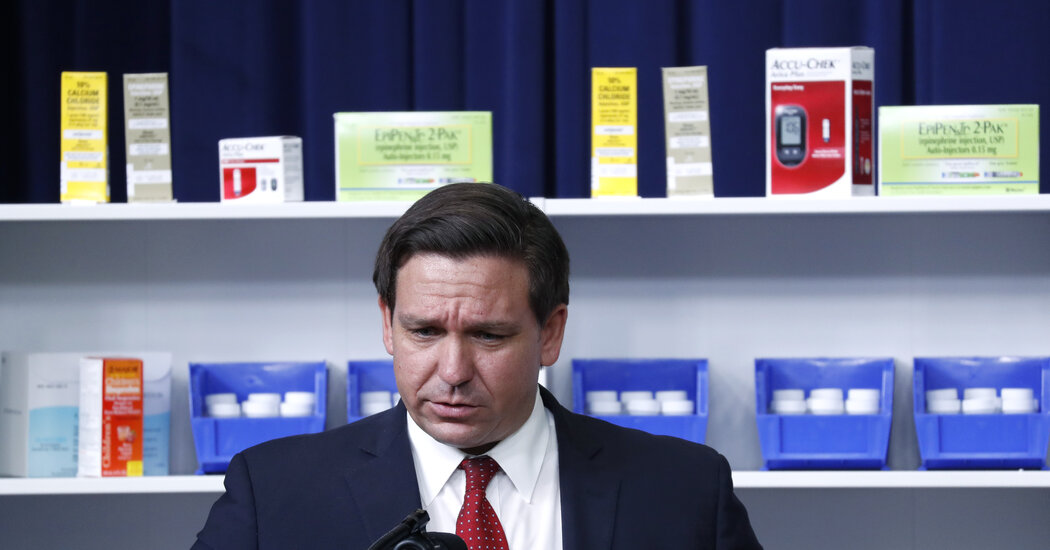
How DeSantis Is Trying to Lure Older Voters Away From Trump

The Florida governor is courting the large, politically influential group by pointing to his efforts to lower prescription drug prices. But his pitch can be lost on some voters.As a 44-year-old member of Generation X, Gov. Ron DeSantis of Florida might be an unlikely candidate to wrest his party’s older voters away from Donald J. Trump, a 76-year-old baby boomer.But he is trying anyway.As Mr. DeSantis closes in on the official rollout of a 2024 campaign for president, he is seeking to make early inroads with this large, politically influential group of voters, and doing so by appealing to their pocketbook concerns.He has focused especially on his efforts to lower prescription drug costs in Florida, including pushing the federal government for permission to import cheaper drugs from Canada. This month, he signed a bill that he says will bring down costs by regulating drug industry middlemen.“We think that health care is too expensive,” Mr. DeSantis said as he signed the bill in Palm Beach County. “Prescription drugs are too expensive.”“In our health care system,” he went on, “you see a lot of bureaucracy, red tape. And people are making money off this system that aren’t really providing value to the system.”As he travels the nation appearing at Republican fund-raisers, the governor has added a line about the new law to his stump speech.The attempts to highlight drug costs come as Mr. Trump, who would be Mr. DeSantis’s main Republican rival, has attacked him for having supported plans to restructure Social Security and Medicare — programs that are sacrosanct to many older Americans. (Mr. Trump himself has expressed similar sentiments in the past.)More than 60 percent of Republican and Republican-leaning voters are over 50 years old, according to the Pew Research Center. Older voters also powered DeSantis’s overwhelming re-election victory last year. He won 6 in 10 votes from those over 65, according to exit polling.The issue of prescription drugs, the prices of which have surged in recent years, reflects one of Mr. DeSantis’s advantages in a primary: the ability to promote a lengthy list of laws he has signed this year.More than 60 percent of Republican and Republican-leaning voters are over 50 years old, according to the Pew Research Center, making them an important constituency for any presidential contender in the party.Charlie Neibergall/Associated PressBut talking about drug costs also illustrates the potential messaging challenges that Mr. DeSantis could face as a candidate. The governor, who considers himself a policy expert, has sometimes struggled when trying to make the topic tangible for voters. Drug costs are far drier and more complicated than the red meat he has fed to his base on conservative causes like defunding diversity programs at state schools, banning gender-transition care for minors and restricting the ability of undocumented immigrants to find work and gain access to social services.And because he is signing so many new bills — including 37 in a single day — even some attentive Floridians are unaware of his latest attempt to bring down drug costs with legislation that regulates industry go-betweens called pharmacy benefit managers.Al Salvi, 61, is the kind of voter who would seem likely to know about the new law. Mr. Salvi, a cancer survivor who volunteers with AARP in Florida, traveled to Tallahassee from South Florida to testify about three bills during this year’s lawmaking session. In 2019, he appeared with Mr. DeSantis at an event promoting the initiative to import prescription drugs from Canada and other countries. But he hadn’t heard about the law targeting pharmacy benefit managers.“The hell is that?” Mr. Salvi said in an interview. “Every time I go to the pharmacy, I see a pharmacist. I’ve never seen a pharmacy benefit manager.”“The problem with the messaging,” he added, “is that people are not going to understand it, because they’ve got to know how the supply chain works.”Pharmacy benefit managers work with drug manufacturers, insurance plans and pharmacies to provide drugs to patients at a discount. But patient advocates question whether benefit managers pass enough savings onto consumers. All 50 states have sought greater oversight of them, according to the National Academy for State Health Policy.Lobbyists for the industry dispute that benefit managers are not helping consumers . And they say that Florida’s new law, which passed with broad bipartisan support, will not reduce drug costs.When Mr. DeSantis publicly discusses the issue, he can sometimes come off as opaque. He tends to talk briefly about how he believes that benefit managers hurt both consumers and neighborhood pharmacies, before diving into detailed explanations of practices that he disparages, using technical terms like “arbitrage opportunity” and “vertically integrated entities.” He often refers to pharmacy benefit managers by the acronym “P.B.M.s.”The governor’s office says that if voters don’t know about the policy changes, it is the news media’s fault.“Could it be possible that people miss the great things that Governor DeSantis does because media like The New York Times choose instead to amplify only those angles and stories that promote their leftist agenda?” Mr. DeSantis’s press secretary, Bryan Griffin, wrote in an email. (Mr. Griffin joined the governor’s political operation on Monday.) “We have had a news conference nearly every day for the last two weeks promoting the governor’s record number of legislative accomplishments from this session. The problem does not lie with us.”Those who study the issue say they believe Mr. DeSantis’s plan could have a real impact on drug prices and transparency, particularly in comparison with Mr. Trump’s efforts. When Mr. Trump was in the White House, he tried to end rebates for pharmacy benefit managers, arguing that they were driving up the prices of medicines. But he ultimately dropped the issue for most of his term.“Trump’s plan was substantial. But it ended up being more bark than bite,” said Antonio Ciaccia, the chief executive of 46brooklyn, an Ohio-based nonprofit group focused on drug-pricing education and research. “DeSantis’s plan is more bite than bark.”As a sitting governor, Mr. DeSantis is expected to emphasize his legislative record as a potential Republican presidential candidate.Rebecca Blackwell/Associated PressUnder Florida’s new law, a state advocate will field consumer and pharmacy complaints against the drug middlemen. And state regulators will have broad enforcement authority, including the ability to dole out hefty fines and even revoke a pharmacy benefit manager’s right to operate in Florida.The state will also be able to inspect contracts by benefit managers, who are involved in nearly every step of drug pricing. The three largest middlemen, CVS Caremark, Express Scripts and OptumRx, own a majority of the market. They are under common ownership with insurance plans and sometimes retail pharmacies. For example, CVS Health owns CVS Caremark, as well as the CVS retail pharmacy chain and the health insurance company Aetna.“The oversight should help shine a light into the black box of drug prices,” said State Senator Jason Brodeur, an Orlando-area Republican who sponsored the bill.President Biden, for his part, is popular with older voters and has pushed his own plans to cut drug prices. But his administration has blocked Florida and other states from bringing in Canadian drugs, leading Mr. DeSantis to sue the Food and Drug Administration last year. Florida passed its bill allowing for the import of Canadian drugs four years ago.“It’s been held up by the Biden administration and the F.D.A. because they say it’s not safe to purchase drugs from Canada,” Mr. DeSantis said recently. “They’re just running interference for the pharmaceutical companies.”Carly Kempler, a spokeswoman for the F.D.A., said the agency had a duty “to ensure that the proposed importation would pose no additional risk to the public’s health and safety while achieving a significant reduction in the cost of covered products to the American consumer.”For now, Mr. DeSantis still appears to be workshopping his messaging on prescription drugs.At a stop in rural Wisconsin, he briefly mentioned the law on pharmacy benefit managers.“We’ve moved to hold Big Pharma accountable by shining a light and reining in things like pharmacy benefit managers that cause you to pay more for expensive medication,” he said.The crowd reacted with mild applause, having burst into cheers moments earlier when Mr. DeSantis described a bill he signed allowing the death penalty for sexual battery against children.

Read more →

In ‘Fires in the Dark,’ Kay Redfield Jamison Turns to Healers

In “Fires in the Dark,” Jamison, known for her expertise on manic depression, delves into the quest to heal. Her new book, she says, is a “love song to psychotherapy.”Kay Redfield Jamison arrives punctually at a towering marble statue of Jesus Christ in the entrance of the old hospital building on Johns Hopkins Medical Campus. Next to it, two guest books are left open to receive the wishes and prayers of those who pass through these halls. “Dear God please help our daughter feel better. …” “Dear Lord, please heal my grandpa and let him live happily. …”This building, decorated with rows of oil paintings of Hopkins doctors and nurses through the ages, is redolent of the history of healing. The desperate, uncertain, even heroic attempt to heal is at the center of Jamison’s new book, “Fires in the Dark: Healing the Unquiet Mind,” out on May 23 from Knopf.“If I could have subtitled it ‘A Love Song to Psychotherapy,’ I would have,” she said.Jamison, 76, her blond hair cut into a bob, wears a colorful floral dress as she makes her way through hallways filled with people in scrubs to a quiet corridor reserved for psychiatry. She is the co-director of the Center for Mood Disorders and a professor of psychiatry. Her bookcase displays her many publications: her psychobiography of the poet Robert Lowell, which was nominated for the Pulitzer Prize, and her books on suicide, on exuberance and on the connection between mania and artistic genius. And, of course, her best-known work, “An Unquiet Mind,” a memoir she published in 1995 in which she went public with her own manic depression, at considerable personal cost.Jamison had been a thriving, sporty high school senior in the Pacific Palisades neighborhood of Los Angeles until suddenly, falling into a deep depression after a mild mania, “I couldn’t count on my mind being on my side,” she said. She was bewildered by what she was going through. Her high school English teacher handed her a book of poems by Robert Lowell, who had struggled all his life with manic-depression, and with whom she felt an instant connection. That same teacher also gave her “Sherston’s Progress,” by the English poet Siegfried Sassoon. More than fifty years later, Sassoon’s book would become one of the central inspirations of “Fires in the Dark.”Jamison’s symptoms subsided, and she made her way through college, then a Ph.D. program in clinical psychology. By the time she had a full manic break, she was 28 and an assistant professor of psychiatry at the University of California, Los Angeles. This time, she had no choice but seek help: In a psychotic state, she had racked up tens of thousands of dollars in debt, buying items like ultramodern furniture and a lifetime supply of snakebite kits.When she first walked into the office of her psychiatrist, Daniel Auerbach, she was shaking in fear. “I had no idea whether I would be able to work again,” she said.He diagnosed her with manic depression (she still prefers this term to the more current “bipolar disorder”) and prescribed her lithium, and their years of work together began. He never claimed that their task would be a simple one, she said. The proviso that getting well would be hard is one of the principles of healing that Jamison now holds dear.“You say to someone, look, it’s going to be difficult — but that’s the interesting part,” she said. “Because, at the end of it, you will have survived something, you will have created something and you will go into the rest of your life stronger for it.”Years after her diagnosis, and by then on the faculty of Johns Hopkins, she decided to tell the story of her manic depression. It was a difficult decision, in part because “I was brought up pretty WASP-y,” she said. “You didn’t talk about your problems.” Jamison also knew that going public would mean no longer treating patients: “I felt very strongly that a patient has a right to come into your office and deal with their issues and their problems, not what they perceive to be your issues and your problems,” she said.Her book would become a watershed.“There were all of these science books about bipolar illness and there were memoirs by people who had written about their illness, but there was no one who had been able to stitch all of it together in the way that she did,” said the writer Andrew Solomon, whose own approach to writing about his depression, in “The Noonday Demon,” was influenced by Jamison’s. She was, he noted, “the first person who was in the field of psychiatry who wrote about her own illness and the extended depths of it.”She also met with much rejection. When she went out on book tour, she received hundreds of letters expressing such sentiments as “May you die tomorrow,” and “Don’t have children, don’t pass along these genes,” she said.“There are a lot of people out there who really don’t like the mentally ill,” she said. “It’s wired into many species to be keenly aware of differences.”Still, “An Unquiet Mind” resonated for countless readers struggling with the same illness. Jamison’s niece, the writer Leslie Jamison, remembers when her aunt came to speak to her freshman class at Harvard. “She was brilliant and witty and everyone adored her, but what I remember most clearly was this man who had been cleaning the building,” she said. “He came up to her, really quickly, and said: ‘I just want to tell you that your book changed my life.’”She added, “It still gives me chills when I think about it, that sense that, beneath her fame and acclaim, there is this really powerful impulse towards human healing.”An “Unquiet Mind” unlocked Kay Jamison’s life as a writer. Ever since, she has drawn explicitly from her own experience. In her book “Night Falls Fast,” for instance, she writes about her own suicide attempt during a particularly bad stretch of her 20s.Now, in “Fires in the Dark,” her emphasis is on “psychotherapeutics,” which the English psychiatrist W.H. Rivers called “the oldest form of medicine.” “I wanted to get back into psychotherapy — into thinking about it, and being emotionally involved in it,” Jamison said.Her books include a psychobiography of the poet Robert Lowell, which was nominated for the Pulitzer Prize, as well as books on suicide, on exuberance and on the connection between mania and artistic genius. Schaun Champion for The New York TimesOver lunch at her light-filled farmhouse in the countryside outside Baltimore, which she shares with her husband, the cardiologist Thomas A. Traill, and their basset hound Harriet (named for Robert Lowell’s daughter), the conversation turns to Rivers.Born at the end of the 19th century, he trained and worked as an anthropologist before he served as an army doctor during World War I, treating the “shellshocked” soldiers. He didn’t like the term: The problem was psychological trauma, not concussive shock, he would later argue. In time, the diagnosis would be known as post-traumatic stress disorder. Rivers believed that “to be a healer was to make a patient’s ‘intolerable memories tolerable,’ to share in the darkness of the patient’s mind,” Jamison writes.Rivers’s best-known patient was the poet Siegfried Sassoon, whose vivid account of their sessions together had been lodged in Jamison’s mind since her high school teacher gave her Sassoon’s book. When Sassoon first met Rivers, in July 1917, the young poet had been diagnosed with “shell shock” after months of trench warfare and sent to Craiglockhart War Hospital in Edinburgh to recover. He met Rivers five minutes after arriving. “He made me feel safe at once, and seemed to know all about me,” Sassoon would write. “What he didn’t know he soon found out.” It was Rivers’s job, as an army doctor, to heal him — and send him back to fight.Their sessions aimed at “autognosis” — “to know oneself,” as Rivers put it. Sassoon returned to the front that November. The following year, he was shot in the head but survived. Rivers came to see him in the hospital. “Quiet and alert, purposeful and unhesitating, he seemed to empty the room of everything that had needed exorcising,” Sassoon later wrote in his semi-autobiographical book “Sherston’s Progress.” “This was the beginning of the new life toward which he had shown me the way.”Rivers is, for Jamison, an exemplar of a healer, a doctor who knew instinctively that “psychotherapy is a quest to find out who the patient is and how he or she came to be that way.” She encourages her residents at Hopkins to take the time to question their patients about particular symptoms, to understand the meaning behind them, not just to check a box. If the patient has racing thoughts, “What does it feel like? What do you experience?” are questions in the service of a larger inquiry, she said. “Where have you been? How can I help you? How can I know you better?”Along with Rivers, Jamison has included a swirling constellation of other healers, both professional and unofficial, including Dr. William Osler, the singer Paul Robeson and King Arthur. It is a kaleidoscopic vision of treatment and recovery that reflects her own passionately varied intellectual life. But one through-line in her book is the constant nearness of loss, of pain, of suffering.Jamison has known, and described, her own suffering and loss, but most of all, her work is replete with the kindnesses she has encountered in her long experience struggling with, and thinking about, mental illness. She still remembers a conversation she had with the chairman of her department at U.C.L.A. not long after the manic break that first started her life as a patient. His advice, as she recalls it, would shape her notion of healing and the rest of her career: Learn from it. Teach from it. Write from it.

Read more →

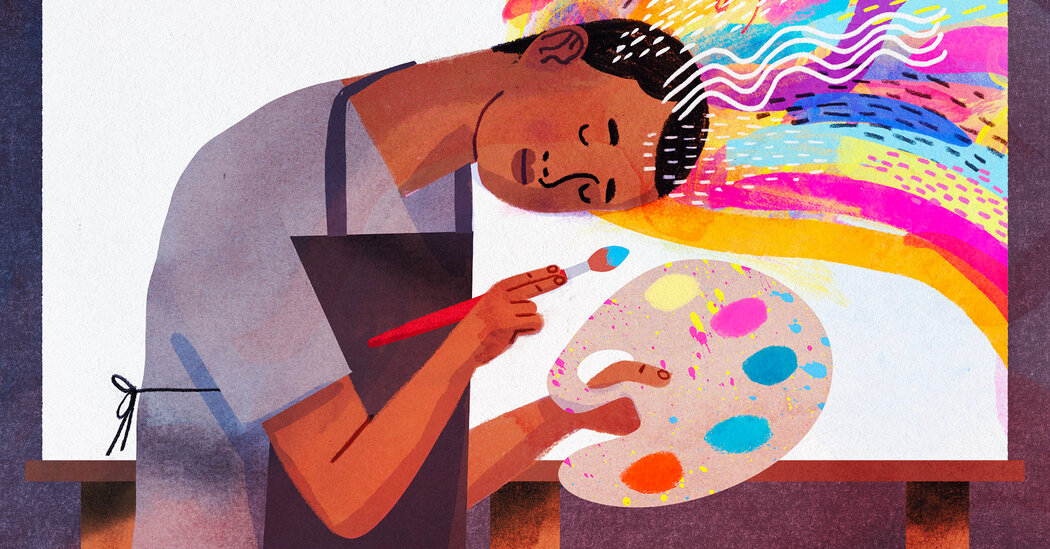
How Art Can Improve Your Mental Health

Drawing, music and writing can elevate your mood. Here are some easy ways to welcome them into your life.When Dr. Frank Clark was in medical school studying to be a psychiatrist, he decided to write his first poem.“All that chatter that is in my head, everything that I’ve been feeling, I can now just put it on paper and my pen can do the talking,” he said, recalling his thoughts at the time.Back then, he was struggling with depression and had been relying on a number of things to keep it at bay, including running, therapy, medication and his faith.“I had to find something else to fill the void,” he said. It turned out that poetry was the missing piece in his “wellness puzzle.”“I saw an improvement in my mood,” said Dr. Clark, who now sees patients in Greer, S.C. “It gave me another outlet.”The notion that art can improve mental well-being is something many people intuitively understand but can lose sight of — especially if we have become disconnected from the dancing, creative writing, drawing and singing we used to enjoy as children.But there’s a “really robust body of evidence” that suggests that creating art, as well as activities like attending a concert or visiting a museum, can benefit mental health, said Jill Sonke, research director of the University of Florida Center for Arts in Medicine.Here are a few simple ways to elevate your mood with the arts.Try the three-drawing techniqueDr. James S. Gordon, a psychiatrist and the founder of The Center for Mind-Body Medicine, pioneered something called the “three drawing technique.” It is featured in the new book “Your Brain on Art: How the Arts Transform Us.” “In my experience, art like this goes beyond words in helping us to understand what’s going on with ourselves and to understand what we should do with it,” Dr. Gordon says in the book.You don’t need to be good at drawing — stick figures are OK.Start by quickly drawing yourself; don’t overthink it. The second drawing should show you with your biggest problem. The third drawing should show you after your problem has been solved.This exercise is meant to encourage self-discovery and help give people agency in their own healing — and you can do it with or without a therapist, said Susan Magsamen, an assistant professor of neurology at the Johns Hopkins University School of Medicine and a co-author of the book.Color something intricateIf you are one of the many people who have turned to adult coloring books, it may not come as a surprise that research suggests this activity can help ease anxiety.Coloring within the lines — of an intricate pattern, for example — appears to be especially effective. One study that evaluated college students, and another that assessed older adults, found that spending 20 minutes coloring a mandala (a complex geometric design) was more helpful at reducing anxiety than free-form coloring for the same length of time. Susan Albers, a clinical psychologist at the Cleveland Clinic and the author of “50 Ways to Soothe Yourself Without Food,” described coloring as a “mini mental vacation.” When we focus on the texture of the paper and choose the colors that please us, it becomes easier to tune out distractions and stay in the moment, she said.“It’s a great form of meditation for people who hate meditation.”Enjoy more musicListening to music, playing an instrument or singing can all be beneficial, research shows.A 2022 study, for example, surveyed more than 650 people in four age groups and asked them to rank the artistic activities that helped them “feel better” during the 2020 pandemic lockdowns. The youngest participants, ages 18 to 24, overwhelmingly rated musical activities as most effective. Across all age groups, “singing” was ranked among the top activities.Other studies have found that singing reduces levels of cortisol, a hormone that the body releases when it is under stress. As one example, mothers who had recently given birth and regularly sang to their babies had less anxiety.Ms. Magsamen noted that music can be effective at reducing stress because things like rhythm and repetitive lyrics and chords engage multiple regions of the brain.“I sing in the shower,” Ms. Magsamen said. “I sing at the top of my lungs to the radio.”Write a poemDr. Clark has continued to write poetry since graduating from medical school and offered some tips for those interested in trying.First, banish any thoughts that you aren’t creative enough. “I think a lot of times we are our own worst critic,” he said. “I believe anybody can write poetry.” Start with a simple haiku, Dr. Clark suggested. Haikus consist of just three lines — the first and last lines have five syllables and the middle has seven. Consider involving your friends, too — a suggestion from a 2020 paper in the Journal of Medical Humanities that explored poetry’s “healing power.”As the authors wrote, “Simply by reading a poem once a week, sharing a poem with a friend, or spending five to ten minutes to free write about a favorite memory, a current idea, a worry or hope, can all be effective first steps in experiencing the benefits of poetry.”

Read more →

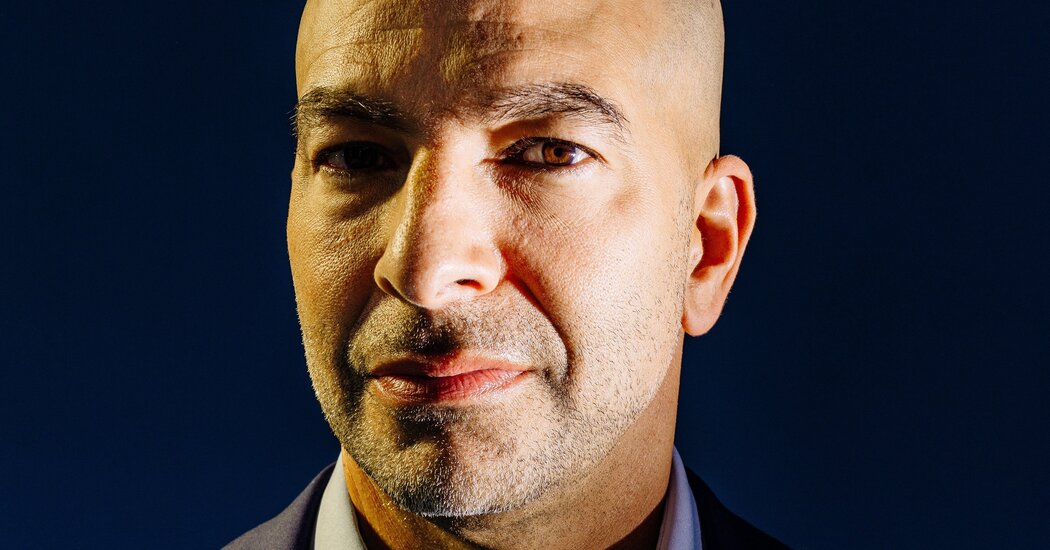
Want to Live Longer and Healthier? Peter Attia Has a Plan.

Modern medicine has been a miracle for healthy aging. But what if we’re still thinking about the subject of living better for longer all wrong? That’s the premise of Dr. Peter Attia’s book, “Outlive: The Science & Art of Longevity,” which he wrote with Bill Gifford and has been a runaway best seller since it was published this spring. In the book, Attia distinguishes between standard medical thinking, what he calls Medicine 2.0, and his approach, Medicine 3.0. In his telling, Medicine 2.0 is oriented toward addressing the four chronic diseases of aging that will probably be the cause of most of our deaths, but only after they become problems. (Those chronic diseases are heart disease, cancer, Alzheimer’s and related neurodegenerative diseases and Type 2 diabetes and related metabolic dysfunction.) Medicine 3.0, though, aims to proactively prevent those things for as long as possible and allow us to maintain better health deeper into old age. How exactly? Not through any techno-fantasies of biohacking or wonder-drug supplements but largely with highly rigorous, detailed and personalized monitoring and treatment of our nutrition, sleep, exercise and mental health. “When you’re at the end of your life, if your health has failed you, no amount of money is going to buy that back,” says Attia, who is 50. “Health is everything to us. As such, we have to accept the fact that it might take work to get it right.”

Let’s say someone reads your book and decides that they want to pursue a Medicine 3.0 approach to health. Then they go to their general practitioner, and their G.P. says, contrary to you, “Nah, we don’t need to get into the weeds of your glucose levels and lipids.” Then what? How do people operationalize Medicine 3.0 in a world of Medicine 2.0 doctors? Some of the work you can do on your own. The exercise — you don’t need a doctor for that. Nutrition, sleep, the emotional-health stuff — you don’t need an M.D. to help with that. But there is a big chunk of this that does require a physician. You need someone to order and check those labs, and you may need prescriptions as a result. But imagine you’re trying to sue a company that has wronged you. You’re going to talk to a bunch of attorneys until you find the person whose strategy makes sense to you. It’s the same with finding the right doctor. When you’re talking about who’s your attorney, who’s going to be your doctor, these are important decisions, and the exception is finding that person on the first chance, not the rule.

In my experience, and I think this applies to a lot of people, the doctor-patient dynamic is basically a parent-child one. The doctor gives information and guidance, and the patient obeys. But you’re implicitly calling for people to be much more hands-on in directing their medical care. Do you have a sense of what physicians might think about having that traditional doctor-patient dynamic upended? I can certainly tell you every time it annoyed a physician, because I hear about it! You’ve probably heard me harp on the importance of knowing your ApoE genome type. I get a lot of pushback on that from physicians saying, “Why would you want to burden a patient with that knowledge?” I welcome that debate because it opens a discussion: Do you or do you not believe that this a deterministic gene? If it’s not deterministic, the next most important question is: Is there a manner in which you can alter the outcome? I believe the answer is emphatically yes: It’s not deterministic, but it’s risk-associated, and you can alter your trajectory. Therefore, how would you not want to know this? Another area where I hear about a lot of pushback is on lipid stuff. I’m adamant about everybody knowing their Lp(a) and their ApoB. Cardiovascular disease — you’ve got to prevent early, and you have to know those metrics. You’d be amazed at how many doctors are like, “LDL cholesterol is fine, and this Lp(a) thing — I don’t even know what it is.” I say to patients: “Let your doctor’s response be a litmus test to the caliber of their thinking. You don’t have to agree with me on everything, but you have to disagree with evidence.”

When I read your book, I was thinking, this guy is advising me to pursue a fair bit of medical testing, which I doubt my insurance covers. There’s equipment he thinks I should probably buy. He’s suggesting psychotherapy. This stuff all costs money. So to put it crassly, is your method just for the rich? The biggest asset class a person needs is not financial; it’s time. It would be delusional of me to say that a single working mom with five kids in the inner city has the same amount of time that the wealthy mom in Beverly Hills has. Of course not. Unfortunately, the truth of it is that health is not fully democratized. There’s a certain income level and disposable time requirement that’s probably necessary. You don’t have to be wealthy, but you have to be above a certain threshold in terms of disposable time and income to spend on good food, gym memberships or exercise equipment at home and those things. I don’t know that dollar amount. I don’t think it’s that high. But it’s certainly higher than where many people are, unfortunately.

What would it run me to be one of your patients? I mean, it’s not cheap.

All right, we can leave it at that. If you were to say to someone, “If you don’t do anything else to increase your health span, at least start doing X,” what would X be? For most people, the answer is exercise more. Then within that, you can get into the weeds. Many people, I think, are underemphasizing strength training. There’s the sense that, Yep, I’m out there, I’m hiking, I’m walking. Those things are great, but the sine qua non of aging is the shrinkage or atrophy of Type 2 muscle fiber. That’s the thing we probably have to guard most against, and you can’t do that without resistance training. Count the number of times in human history when someone in the last decade of their lives said: “I wish I had less muscle mass. I wish I was less strong.” The answer is zero.

You’re asking people to pay a significant amount of attention to the specifics of their nutrition, physical activity and sleep. All of which are subjects that you say doctors typically don’t learn enough about nor pay enough attention to when it comes to patients’ long-term health. I’m sure that’s true, but don’t you think there’s a real danger of pathologizing these totally normal things by micromanaging them and linking them to potential risks? That’s possible. We also probably see extreme examples of excessive exercise. I’m aware of patients who, in the era of rampant sleep tracking, are overwhelmed by sleep data. The question is: What is the balance of benefit versus harm? We’re probably still in a world where a majority of people are not paying enough attention to those things, as opposed to too many people paying too much attention.

Dr. Peter Attia during a 20-plus-mile swim for cancer research in 2005.
Allen J. Schaben/Los Angeles Times, via Getty Images

Sorry, I remain curious: What does it cost to get into your practice? I’m not looking to get any patients into the practice. I would like it if maybe there wasn’t much of a focus on my practice. It’s small, it’s bespoke, and the intention is to keep it that way.

Fair enough. I can’t help wondering if your methods have an element of robbing Peter to pay Paul. If I decide to exercise two hours a day, become hyperfocused on well-being, get very particular about what I eat, in the hope that I’ll be healthier and have more quality time to spend when I’m older — but I could be using that time now! Why give away all this time and energy when I’m still relatively young and healthy? Do you not see any tension or contradiction there? I see it as an optimization problem. I’ll give you a personal example that happened today: My son in kindergarten had a thing at school. Parents come in, and from 9 to 9:30 the kids are going to read you the story that they wrote. This poses a challenge for my schedule, because from 6 until 7:15, when my kids go to school, I’m with my wife and kids. Then the second my kids leave until about 8, I’m getting as much work done as I can before I jump in the gym — I usually work out until 10:30. Then my day runs scheduled, 11 to 5. Well, today, not only do I have my son’s thing at 9, but then I have my skin exam at 10:30. Once a year, you’ve got to get the dermatologist to look you over for moles. So I had a choice to make, which was I could have punted on going to my son’s thing and got my full workout in, or I could have squeaked in a 45-minute workout, then gone to the dermatologist. I thought about this for two nanoseconds, and it was clear what the right thing was: I’m not going to miss this school thing, because that’s not the dad I want to be. That’s costing me a little in terms of fitness. Today was supposed to be a killer day: squats and dead lifts. It didn’t happen. I didn’t do my blood-flow restrictions. I missed stuff that I wanted to do, but that’s the trade-off I wanted to make. We have to think about those things constantly. I could say, “I am going to spend this summer in Ibiza, partying with my friends, never lifting a finger, and boy, will I have fun.” But the price I will pay with my health is too great.

One summer would be that bad? I’m not 25 anymore. I don’t want to suggest that I’m an old man, but when I was 40 I had a superhuman ability to exercise and recover. I don’t have that anymore. When I do a crushing workout today, I feel it for the rest of the day. Let’s give you another example. Do you want to eat like a monk every minute of every day? No. I love food. My days of being a freak around food are over. Now, I don’t think I’m as healthy as I was from 2011 to 2014, when I had the most restrictive diet in the history of diets. I was a physical specimen. Seven percent body fat. My biomarkers were out of this world. But if my kids made cookies, I couldn’t eat them. I couldn’t go to Italy and eat a thing. Whereas now, I could go to Italy and eat anything. I pay a little price for a week, but I can get back in the zone. Same with alcohol. There is zero reason to consume one gram of ethanol. I still probably have five or six drinks a week, because I really, really like tequila and mezcal.

So more specifically, how would you suggest people think about balancing adherence to what strikes me as your pretty demanding health strategy and not letting that plan get in the way of the pleasures that make life worth living in the first place? You have to think about it the way you think about retirement. Let’s pretend you’re making $100,000 a year, and you’re 40 years old. At some point, you’re going to find yourself at an age where maybe you don’t want to work as hard. You’re going to have to put money away for that time. You can do the math that says: This is how old I am, this is how much I make, this is the standard of living I want, this is how long I want to work, this is my risk appetite for how I invest, and therefore this is approximately what I need to do. What I’m saying is no different from that type of analysis. For me, I’m tethered to the marginal decade. I think about that all the time because I’ve seen too many examples of what a bad marginal decade looks like, and that’s not what I want. The beauty of the marginal decade is: I’m not going to be working, I’m not going to have any nonsense that’s going to bug me anymore. The only thing that matters is spending time with people you care about and the state of your health to enjoy those relationships — not being in pain, being able to travel, to play in a park. If you can’t do that, I don’t care how much you partied in Ibiza; it’s not worth it.

But saving for retirement has metrics that we can apply to help us achieve our goals. What are the analogous metrics when it comes to healthful aging? That’s what we do with patients. I’ll use my example: I have a paper where I draw my lifeline. So I’m at 50. Then I go out by decade: at 60, 70, 80, 90. So what is the game between 80 and 90? I have a specific list of things — probably more than 25 — that I want to be able to do in that decade. It’s not just like I want to be able to walk. It’s like I want to be able to walk at this speed for this duration; I want to be able to pull myself out of a pool if there are no steps; I want to be able to pull back on a compound bow with a 50-pound draw weight. Then we deconstruct each of those from objective measurements. What VO2 max is required to do that? What amount of leg strength? What amount of lower-leg variability? What grip strength? Then we ask, given the inevitable decline of all those features, if you want to have those parameters at 90, what do they need to look like at age 50? What do they need to look like at age 70? At 80? Just as we use a discount rate on future cash flows to figure out retirement, we’re doing the same thing on physiologic parameters. All of my training is geared toward performance 40 years from now.

Attia in the 2022 National Geographic series “Limitless With Chris Hemsworth.”
Craig Parry/National Geographic for Disney+

Does your wife have the same health regimen as you? I mean, my wife is a very healthy woman. She’s an amazingly fit human being, eats sensibly, sleeps well. Nobody meets her and thinks she’s a psycho.

Unlike you. [Laughs.] Yeah. People meet me and think I’m intense, and I keep telling them, I’m not actually that intense.

Do you think about your kids in terms of Medicine 3.0? I think about it. I’ll give you silly examples. My kids wear minimalist shoes and have standing desks at home. I know the damages of oversize running shoes, where basically they lose the proprioception of their feet. I know the damages of sitting. They have to sit at school. I can’t change that, but they’re not going to sit that much at home. If they’re watching TV, they’re going to do it standing. They’re going to wear minimalist shoes when they run around and play sports. We’re not crazy, but those are subtle things. They also come in the gym with me. They don’t really work out, but they see that Mom and Dad work out a lot. I bring them when I go for rucks. I think it’s mostly creating a mind-set around being healthy.

This is a somewhat random question, but in the book there’s an aside where you’re talking about trying to be more empathetic. And the scenario you give is being understanding about your wife being sharp with you because you realize, among other things, that maybe earlier in the day she was waiting in line at the deli counter to get your meat sliced a certain way. How exactly do you like your deli meat sliced? Oh, I am fanatical about it being microtomed. If you go up to the counter, you can get it really, really, really thin, but if you buy the prepackaged —

It’s too thick. And if the deli slices earlier in the day — you know how they’ll sometimes slice it earlier in the day? They do it too thick for my taste.

What does Esther Perel make of the work you do? I have never asked her that question. I understand why I initially got into this space. I got into this because I didn’t want to die. I wasn’t afraid of death; I was afraid of dying. I was afraid of not finishing what I knew I needed to do. I was afraid of being incomplete, not being a great fill-in-the-blank: father, husband, son, brother. Just thinking, I need more time to fix it. But I was never fixing it. I was just running. I don’t feel that way today. I don’t feel like I’m in this frenetic race to not die.

Can I share my theory about you? Of course.

I think as a young child, you had a deeply scarring, formative loss of control as a result of being abused, and you’ve since been compelled to carve out a life of total control, especially over your own body. It’s certainly possible. There’s no question that I was drawn at such a young age to boxing and training and exercising. It was like, there was nobody that was ever going to be able to harm me again. That to me is unmistakable. I’ve never really thought about the connection you’ve made, but I’m open to nonlinearity and orthogonal logic when it comes to that.

You do rationally understand that you probably won’t get to decide the terms of your decline and when and how you die, right? It’s all about controlling what I can control, which improves the odds that I will get the desired outcome. Look, there could be a cancer brewing inside me today that I’m unaware of that ends my life next year. I understand that. And if that’s the case and I’m on my death bed in a year, I won’t regret how hard I’ve worked to try to live a longer, better life. I’ll have given it my all.

This interview has been edited and condensed from two conversations.

David Marchese is a staff writer for the magazine and writes the Talk column. He recently interviewed Emma Chamberlain about leaving YouTube, Walter Mosley about a dumber America and Cal Newport about a new way to work.

Read more →

Nitrate: Healthy heart or cancer risk? Meet nutrition's Jekyll and Hyde

Despite our understanding of nutrition expanding remarkably in recent times, few aspects of our diet continue to confuse and divide the experts like nitrate.
For a long time nitrate has been viewed warily, with previous research showing it could potentially be linked to causing cancer.
However, subsequent research has revealed dietary nitrate also has various cardiovascular health benefits, which could help reduce the risk of related conditions such as heart disease, dementia and diabetes.
So, how can one dietary compound have such contrasting potential risks and benefits?
Edith Cowan University’s (ECU) Nutrition and Health Innovation Research Institute hopes to find out how and why nitrate such contrasting potential risks and benefits.
All about the source
Dr Catherine Bondonno led a review of nitrate research and says the key may lie in where it comes from.

“We get nitrate from three major dietary sources: meat, water and vegetables,” she said.
“Nitrate’s reputation as a health threat stems from 1970, when two studies showed it can form N-nitrosamines, which are highly carcinogenic in laboratory animals.
“However, no human studies have confirmed its potential dangers, and our clinical and observational studies support nitrate preventing cardiovascular disease if it’s sourced from vegetables.
“So the review looked to unpack all of that, identify new ways forward and ways that we can solve this puzzle, because it’s really time to address it: it’s been 50 years.”
Urgency required
Despite recent research indicating the source of nitrate may affect its health benefits and risks, current dietary guidelines relating to nitrate have been in place since the 1970s and don’t differentiate between nitrate from meat, vegetables and water.

Dr Bondonno said while the 1970s animal studies reported a small incidence of malignant tumours, there was evidence not all nitrates deserve to be “tarred with the same brush.”
“For instance, unlike meat and water-derived nitrate, nitrate-rich vegetables contain high levels of vitamin C and/or polyphenols that may inhibit formation of those harmful N-nitrosamines associated with cancer,” she said.
Dr Bondonno said it was vital more research was conducted so guidelines could be updated.
“The public are unlikely to listen to messages to increase intake of nitrate-rich vegetables, if they are concerned about a link between nitrate intake and cancer.”
However, she stressed while official guidelines hadn’t changed, the apparent benefits of nitrate had seen many people potentially put themselves at risk.
“We need to be sure nitrate-rich vegetables don’t actually have an increased risk of cancer if we consume a higher amount,” she said.
“High dosage nitrate supplements are already used to improve physical performance in sport, while vegetable nitrate extracts are being added to cured meat products with a “clean label” claim, purporting to be better for you.
“So we really need to get this right.”
What do we eat, then?
Given its divided experts in the field, Dr Bondonno said it’s understandable people may be confused as to whether nitrate is good or bad for them.
“They’re probably thinking, ‘If I can’t have a salad, what CAN I have?’,” she said.
Despite the debate, she said current evidence suggests people should aim to get their nitrate from vegetables — but there was no need to go overboard.
“Dark green, leafy vegetables and beetroot are good sources, our research shows one cup of raw, or half a cup cooked per day is enough to have the benefits on cardiovascular health,” she said.
“We know processed meat isn’t good for us and we should limit our intake, but whether it’s the nitrate in them that is causing the problem or something else, we don’t know.
“It just further emphasises the need to investigate dietary nitrate to clarify the message for people.
“The potential cancer link was raised 50 years ago; now it’s time to conduct an in-depth analysis to distinguish fact from fiction.”

Read more →

Population: When saying condom aloud became birth control ad in India

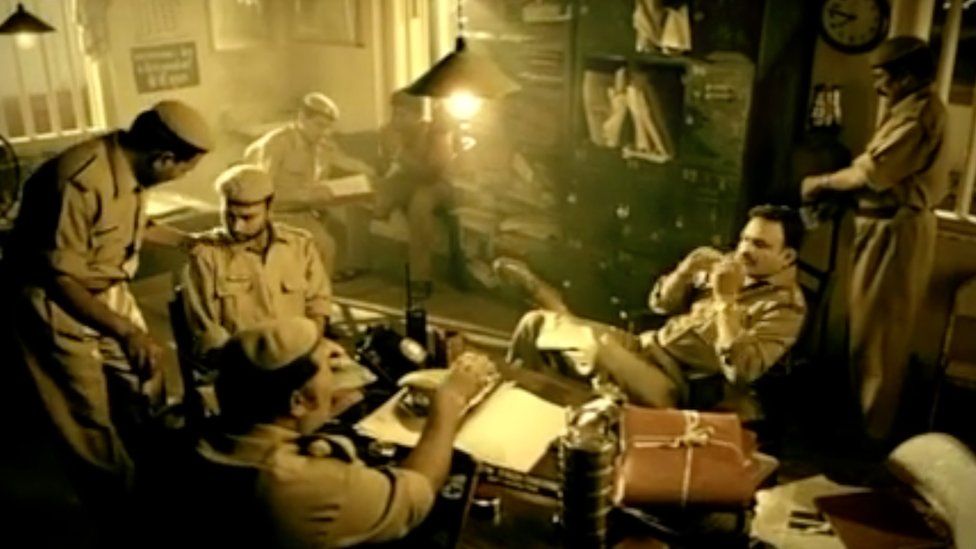
Published12 hours agoShareclose panelShare pageCopy linkAbout sharingThis video can not be playedTo play this video you need to enable JavaScript in your browser.By Zoya Mateen and Devang ShahBBC NewsHow do you teach millions of people family planning?By getting them to say the word condom again and again till it shatters any form of shame or stigma around its use. Risqué as it might sound, that is exactly what advertisement writer Anand Suspi did 18 years ago when his team at Lowe Lintas designed the Condom Bindass Bol (Say Condom Freely) campaign in India.Launched in 2006, the public awareness campaign made in collaboration with the Indian government was created to overturn a decline in the sales and use of condom in eight states in northern India which together comprised nearly half of the country’s condom market at the time. The campaign featured comical scenarios where a shy man – ranging from a sheepish cop getting some downtime at a dingy police station, to a grubby lawyer surrounded by men outside court – is encouraged by his peers to say condom, loudly and clearly, in public. Most populous nation: Should India rejoice or panic? “Bol, bindass bol (Just say it and say it freely),” one of the them would urge him till he finally blurted out the word.The advert – which went viral and even won a UN award – was among a series of campaigns on family planning in India which have used witty slogans and messages to emphasise problems of rapid population growth and promote healthy sex practices. The slogans first emerged sometime in the 1950s, when India opened a new department devoted to family planning – the first in the world – and aggressively began promoting the use of contraception and methods like sterilisation to bring down its burgeoning population. Catchy one-liners such as Hum Do Humare Do (We are Two, will have Two Children) and Chota Parivar, Sukhi Parivaar (Small Family is Happy Family) urging people to have fewer children were broadcast widely through TV and radio programmes, posters, and every other medium possible. Sometimes, even elephants were used to spread the message in the remote pockets of the country. The campaigns – which continue to this date – have become synonymous with the definition of family planning in India. Watch the full video on India’s family planning campaign hereExperts say they have also helped create a new vocabulary for sensitive topics like contraception and birth control, which are still considered taboo in vast swathes of the country. “Men everywhere crack the foulest jokes and find it funny but the minute you utter the word condom they get embarrassed,” says Mr Suspi. Studies have also found that Indian men identify shyness as the reason they are unwilling to speak about safe sex practices in their relationships.The lawyer who broke birth control taboos in IndiaIs India’s population policy sexist?Sashwati Banerjee, a public health expert who also worked on the campaign, says the idea behind Bindass Bol was simple: to get men to ask for a condom without hesitation. Because condom, she says, is not delicate word – a bad word – that needs to be wrapped in innuendos and said in hushed tones. Condoms are used by everyone, should be used by everyone.To execute this, the team partnered with over 40,000 condom marketers and chemists to enhance retail visibility of the contraceptive, so that men would generally become more comfortable about using it.”But what eventually worked was some good old humour – you first have a good laugh and then the message seeps in,” Mr Suspi says.Image source, Getty ImagesWhile the government and private organisations spent much time and money on the ad campaigns, not all of them were successful – and some even generated backlash. Critics say that a lot of the programmes were also ineffective because they focussed almost entirely on women and continued to keep men on the margins. “Back in the day, women had no agency when it came to the choice of contraceptive, if at all it had to be used,” says Radharani Mitra, the National Creative Director and Executive Producer of BBC Media Action. Why birth control is a woman’s burden in IndiaSo women ended up bearing the entire burden of contraception, but men – who actually control decision-making in most homes – remained clueless and resistant to family planning practices. It’s a trend that continues – between 2019 and 2021, nearly 38% of women surveyed nationwide for the fifth National Family Health Survey (NFHS) had undergone sterilisation, compared to just 0.3% of men who had undergone a vasectomy. Anand Sinha, a public health expert, says that “slogans cannot replace traditional counselling and the larger need for overall social development”. But they did help in changing social norms and creating a positive momentum, he adds. During the 1975 Emergency – when civil liberties were suspended – India’s family planning campaign suffered a setback. During this time, the government forced millions of women, men and even children to undergo sterilisation. “The measures gave the campaign a bad name and suddenly, people were scared of the very idea of contraception,” Mr Sinha says.For many years after that, the biggest challenge was to reimagine family planning and give it a “more acceptable, a warmer and a friendly face”. Around this time, private sector firms selling condoms began looking for more creative ways to sell contraceptives to young couples. As a result, campaigns became sexier and more relatable. A renewed and bigger marketing of contraceptive methods began from the late 1980s, when HIV/Aids became a huge threat in the West, sparking fears of its spread in a densely-packed country like India, says Ms MitraWill the world’s ‘first male birth control shot’ work?India’s dark history of sterilisation”The topic of sex was brought out more into the open and social campaigns on condoms became common.”The most memorable of these was the condom ringtone in 2008, which was part of a 360-degree “condom normalisation” campaign.The campaign, led by BBC Media Action and funded by the Bill and Melinda Gates Foundation, was part of the larger programme on safer sex for HIV prevention in India.It used a mobile ringtone in which the word “condom” was repeated over and over in rich, neatly stacked harmonies, giving it the feel of a catchy a cappella arrangement. The campaign also featured a funny video which showed an Indian man who is mortified when his phone begins to buzz with the condom ringtone at a wedding ceremony. Ms Mitra says the ringtone went viral and had nearly 480,000 requests for download, getting played by NPR in the US and across the world from Japan to Indonesia, from South America and even Europe. “It made the headlines all over the world, won awards everywhere, but it had real impact, which is what’s most important.”Ms Banerjee says that behaviour change is like a big jigsaw puzzle: “You kind of pull all the pieces together, and then a picture forms,” she says.”And sometimes, just sparking a conversation can help change attitudes.”BBC News India is now on YouTube. Click here to subscribe and watch our documentaries, explainers and features.More on this storyIndia’s dark history of sterilisationPublished14 November 2014Why birth control is a woman’s burden in IndiaPublished27 June 2022The lawyer who broke birth control taboos in IndiaPublished5 July 2022Most populous nation: Should India rejoice or panic?Published1 MayIs India’s population policy sexist?Published12 July 2011

Read more →

Moving Is a Monumental Task for Many Older Americans. These Organizers Can Help.

Senior move managers may spend weeks or months helping seniors and their families sort through belongings, pack and move into a new home.The four-bedroom house that Ray and Beth Nygren had lived in for 20 years in Auburn, Wash., measured about 2,400 square feet. The two-bedroom apartment that awaited them in a nearby independent- and assisted-living complex was less than half that size.They were moving — “maybe a little reluctantly,” said their daughter, Bonnie Rae Nygren — because each had undergone heart-valve replacement surgery last year, and Beth Nygren had suffered complications. The single step from living room to dining room, or down to the family room, had become difficult for her to manage using a walker.She’d already taken a fall. “They considered it a very minor thing, but it was really eye-opening for us,” said Bonnie Rae. “One more fall could make a huge difference in their lives.”The couple’s three children suggested that with Beth, 85, coping with multiple sclerosis and Ray, 87, contending with heart failure, “maybe it was time to downsize and move to a retirement community,” Bonnie Rae said.Earlier this year, the family began sorting through 65 years of possessions. “Digging in, we realized how much stuff they had,” Ms. Nygren recalled. “How many towels do you need? What dishes do you want to take? What pictures do you want on the walls? And, what about the things you can’t take?” The process felt overwhelming.The family had never heard of senior move managers until the retirement facility recommended a few, including RR Move Co. The elder Nygrens almost balked when owner Rebecca Ricards walked through their house, talked with them about their concerns, took lots of photos — and quoted a price of $5,400 for planning the move, packing their belongings and setting up the new residence, not including the moving van and movers.Bonnie Rae Nygren, left, with Rebecca Richards of RR Moving Co. in Ms. Nygren’s parents’ kitchen. Ms. Nygren said her parents were reluctant at first about the idea of hiring help for the move.Chona Kasinger for The New York TimesBut reassured by her experience and confidence, they hired her, with their son contributing a chunk of the costs.About 1,100 such companies belong to the National Association of Senior & Specialty Move Managers, which offers training and certification, and requires members to carry liability insurance and adhere to a code of ethics.Depending on the needs of clients, move managers’ services include sorting and organizing belongings, working with a moving company and using a floor plan to determine what can fit where in the new residence.They prepare the new home, from spices in the cabinets to towels on the racks; they can sell, donate or dispose of what’s left behind. Though Ms. Ricards charges by the job, most move managers charge $65 to $125 an hour, with big regional variations, said Mary Kay Buysee, the association’s co-executive director.That’s not within everyone’s means, but most clients are moving into private-pay senior living facilities, often after selling a house, and can afford the additional expense. Clients with smaller budgets may be able to purchase some services, not the whole package. Family members may also help shoulder the costs.“It’s not just packing and unpacking,” Ms. Buysee said. “It’s working with the clients and the family for weeks or months, going through a lifetime of possessions. You need to be a good listener.”Older people relocate far less frequently than younger ones. A Census Bureau report in 2022 found that from 2015 to 2019, about 6.2 percent of the population over age 65 had moved in a given year, compared with about 15 percent of the younger population. Still, senior migration topped three million adults a year. The rate increased among those over age 85 and those with a disability.The most common reasons for moving? Living closer to family members topped the list, especially among those 75 and older, according to a survey published in the Journal of the American Planning Association last year. Respondents also cited better neighborhoods and reduced housing costs.The entryway to the Nygrens’ new home.Chona Kasinger for The New York TimesThough senior move managers often work with adult children to help move their parents, the industry is seeing an uptick in younger seniors hiring managers for themselves, Ms. Buysee added.A New York native, Alissa Ballot had already downsized from a house in Florida to a Chicago apartment when, in 2021, she decided “it was time to move home.” But selling her place in Chicago while finding an apartment in New York during the pandemic became “nervous breakdown time,” said Ms. Ballot, 67, a retired lawyer. “There were all these balls up in the air — a few balls too many.”Dawson Relocation Services in Chicago charged her less than $1,000 (at $65 an hour) to coordinate the move. “I was able to set a date to get on a plane with a few suitcases and leave everything else to them,” Ms. Ballot said. “It was a miracle.”She unpacked on her own, but she didn’t have to return to clean out and close up her Chicago apartment. Marnie Dawson even helped her file claims when the movers dinged a couple of Ms. Ballot’s possessions.(Besides senior move managers, older movers may encounter real estate agents, attorneys, senior living staff and others who are “certified relocation and transition specialists.” About 1,000 individuals have passed this credentialing exam, said Donna Surges Tatum, chair of the Certified Relocation & Transition Specialist Certification Board. The National Association of Realtors also designates “senior real estate specialists.”)Relocating older adults involves particular challenges. Unlike younger movers, they’re generally shifting into smaller, not larger, spaces — after decades more time to accumulate stuff. And their families, for better or worse, are often involved.A move manager has to be a social worker in part. “We’re sometimes dealing with people with cognitive issues. Family dynamics come into play,” said Diane Bjorkman, whose company serving the Twin Cities, Gentle Transitions, is the country’s oldest and probably largest senior move management company.A nonjudgmental professional can often calm tensions. “It’s not you telling your mom, ‘Don’t take the torn recliner,’” Ms. Bjorkman said. “It’s someone else saying, ‘Maybe another chair would work better.’”Ms. Richards worked with Ray Nygren to detail where items should go in the new space. “Everything was in place,” said Ms. Nygren.Chona Kasinger for The New York TimesMy sister and I hired a senior move manager for our father, who was moving into an independent living apartment, when it became clear that discussing matters like precisely how many identical plastic flashlights he needed could consume months. We deferred to a third party.Still, in the end, the client decides. One woman who hadn’t cooked for 20 years insisted that she needed to hold on to a particular roasting pan, Ms. Bjorkman recalled. The woman also argued that, as someone who remembered the Depression, a freestanding freezer was a crucial source of comfort — even if it was full of expired food.The roasting pan could be disassembled to fit under the bed in the new apartment, Ms. Bjorkman said. The freezer — still packed with food — served as a living room side table.The Nygrens made no such unusual requests. Their children handled the weeks of sorting and paring, and Ray Nygren — a retired engineer — drew detailed schematics of the new apartment, showing where items should go.RR Move Co. did the rest, packing one day in March and moving them into their new apartment the next. At about 6 p.m., Ms. Ricards and her crew phoned the family to say they were ready for what she calls “the big reveal.”“We walked in, and it was like walking into your home,” Beth Nygren said, getting weepy on the phone. There were no boxes in sight. The move managers had made the beds, set the clocks, made sure Ray’s computer was operational.“Everything was in place: clothes in the closet, pictures on the wall, stuff in the drawers,” Ms. Nygren said. “You could just start living.”

Read more →