
How to keep safe from wildfire smoke in 80 seconds

Canada fires are sending smoke across the region and creating dangerous conditions.
Read more →
Canada fires are sending smoke across the region and creating dangerous conditions.
Read more →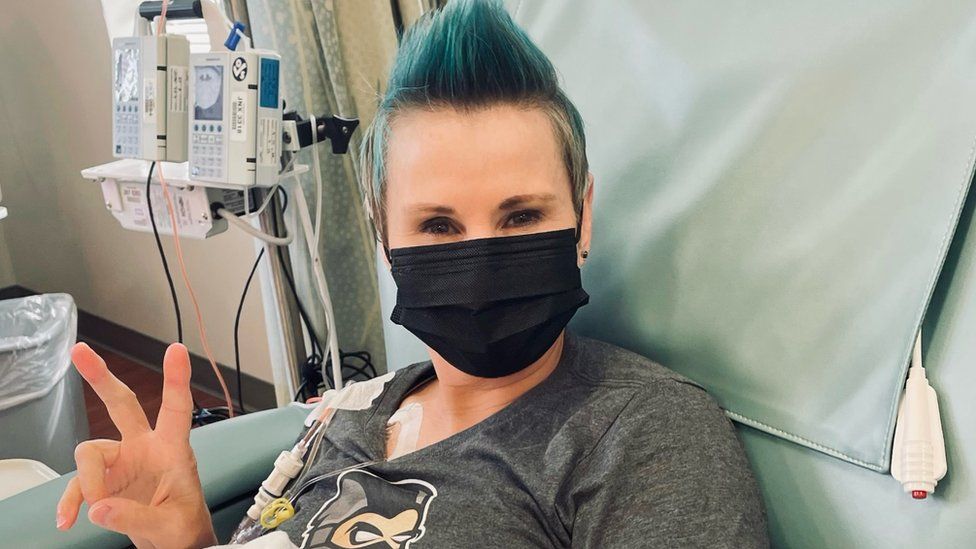
Published14 hours agoShareclose panelShare pageCopy linkAbout sharingImage source, Toni DezomitsBy Madeline HalpertBBC News, New YorkToni Dezomits, a 55-year-old retired law enforcement officer, is fighting a recurrence of her stage 4 ovarian cancer. She had already undergone several rounds of chemotherapy when her doctor told her she had some more bad news. Just a day before her third round of treatment last month, Ms Dezomits was told there was a nationwide shortage of the generic chemotherapy drug, carboplatin – one of three medications she was meant to receive.Forced to choose between going without the medication or swapping it for another with stronger side effects, the North Carolina native is finishing her final three chemotherapy sessions with only two of the recommended drugs. “You have these two sub-optimal choices,” she said. “I’m worried, because I know the drug I’m not getting is the one my cancer responded to very well [the first time].”Experts say the US is currently suffering one of the most severe shortages of chemotherapy drugs it’s seen for three decades.Ms Dezomits is one of as many as 100,000 patients who may have been affected over the past several months, according to Dr Julie Gralow, the chief medical officer at the American Society of Clinical Oncology. As of this week, the US Food and Drug Administration (FDA) said over 130 drugs were in short supply, 14 of which are cancer treatments. Experts say a myriad of factors have contributed to the shortages, which this time have heavily affected two front-line therapies – carboplatin and cisplatin – used to treat a host of cancers, including head and neck, gynaecologic and gastrointestinal cancers. The most recent shortage came after a plant in India – which supplied cisplatin materials for all US manufacturers – shut down due to quality concerns. This drove up demand for a substitute drug, carboplatin, said Dr Gralow. As a result, some providers have been forced to extend the time period between patients’ chemotherapy sessions, while some patients have had to drive several hours to get treatment at different cancer centres.When her local oncologist could not provide her carboplatin, Ms Dezomits tried a larger cancer centre in Texas where she had been before. But they told her they could not give her the drug because they were prioritising giving it to patients with better odds of being cured.”It’s like triage on the battlefield,” said Ms Dezomits, who was a soldier in the Persian Gulf war. “This country should be a little better than that. We should be able to get life-saving drugs that cost about $9 or $10 a dose.”Image source, Getty ImagesThe low cost of generic front-line cancer drugs has actually played a role in recurrent chemotherapy drug shortages, experts say. While the medications are cheap to manufacture, pharmaceutical companies are not incentivised to do so because they don’t bring in large profits, said Dr Karen Knudsen, CEO of the American Cancer Society. The drug shortage issue has also worsened as US life expectancy has increased, meaning more people are becoming ill with cancer.Blood test for 50 cancers excites scientists Scientists say million-year-old viruses help fight cancerTo help ease the supply chain crunches, the FDA began working with a Chinese manufacturer this week to import one of the chemotherapy drugs.The move will likely help solve some short-term supply constraints in the coming months, but it will do little to address a more cyclical problem of chemotherapy drug shortages, said Dr Knudsen.”An emergency solution is being put into place, but we are at a moment in time where there needs to be a more durable solution,” she said. Medical experts said the US government should work with the private sector to come up with more long-term solutions. The US government could use its drug purchasing dollars to create national strategic reserves of the critical medicines and incentivise more higher-quality pharmaceutical companies to manufacture them, said Dr Gralow. Patient Ms Dezomits fears that without more action, people across the US may continue to be put in challenging situations to find the cancer care they need. “It’s already stressful enough to deal with cancer and your own mortality,” she said. “This is just another obstacle in front of patients that now they’ve got to think about.” More on this storyAntibiotic supply has worsened, say pharmacistsPublished14 December 2022‘Blood test meant I was spared chemo’Published30 March
Read more →
The decision to fund medications to treat H.I.V.-AIDS patients in sub-Saharan Africa and the Caribbean flew in the face of expert advice. But the U.S. did it anyway.President George W. Bush with Bono, the lead singer of U2, in 2006. Bono was among the activists who lobbied Mr. Bush for antiretroviral medications people in sub-Saharan Africa and the Caribbean.Jim Watson/Agence France-Presse — Getty ImagesHere is something I don’t write about very often: a situation in which unpredictable, seemingly irrational politics saved millions of the poorest and most vulnerable people on earth.In a recent blog post, Justin Sandefur, a senior fellow at the Center for Global Development, a think tank based in Washington, D.C., examined the record of the President’s Emergency Plan for AIDS Relief, or PEPFAR. The program, started by President George W. Bush, paid for antiretroviral medications for millions of H.I.V. positive people in sub-Saharan Africa and the Caribbean, and is now seen as one of the most important foreign-aid efforts in American history, notable both for its generosity and its effectiveness.Setting it up at all flew in the face of many experts’ advice at the time.“The conventional wisdom within health economics was that sending AIDS drugs to Africa was a waste of money,” Sandefur wrote. It wasn’t that the drugs didn’t work: Antiretroviral therapy had achieved revolutionary results in controlling H.I.V.-AIDS, and had the potential to save the lives of infected people and prevent new infections. But the medications were extremely expensive, so experts believed that it would be more efficient to spend aid dollars on prevention instead. Money spent on condom distribution, awareness campaigns, or antibiotics to treat bacterial infections that made H.I.V. transmission more likely, data suggested, would save more lives per dollar than treatment would.In a now-infamous 2005 Forbes Op-Ed titled “Treating H.I.V. doesn’t pay,” Emily Oster, the Brown University economist who is now best known for her guides to parental decision-making, wrote that “as cold and callous as this may sound, after comparing the number of years saved by antiretrovirals with years saved by other interventions like education, I found that treatment is not an effective way to combat the epidemic.”She, like many other economic experts, assumed that policymakers were working with two constraints: a global health disaster on a massive scale, and a limited budget for addressing it. And because it was much more expensive to treat existing H.I.V.-AIDS patients than to prevent new infections, the grim conclusion was that to save the most lives possible, the best thing to do would be to focus on prevention — even though that would effectively mean letting infected people die.As it turned out, that argument was based on an erroneous assumption. In fact, the Bush administration was willing to find money for treatment that would never have otherwise been spent on prevention.The Bush administration had been the target of sustained political lobbying from interest groups and activists like Bono, the U2 frontman, and Franklin Graham, the son of the Rev. Billy Graham. Their reasoning was primarily moral, not economic, and they emphasized the plight of people who needed treatment. If antiretroviral medications existed, they argued, it was wrong for the wealthiest country in the world to leave poor people to die.So it turned out that the question was not just whether a dollar was most efficiently spent on treatment or prevention, but whether treatment or prevention would be the most politically compelling case for getting more dollars allocated. And on that latter question, treatment won hands down.Bush created PEPFAR, a new, multibillion dollar program to fund AIDS treatment in poor countries. And it ultimately not only saved lives, but also did so more cheaply than the initial cost-benefit analysis suggested. Over the course of the program, the cost of H.I.V. treatment fell rapidly — a change that may have been due partly to PEPFAR creating new demand for the medications, particularly cheaper generic drugs that came a few years later.Sometimes most efficient isn’t most effectiveWhen I asked Sandefur about the broader lessons, he said that sometimes an effective, easy-to-implement solution can be the best choice, even if it flies in the face of a cost-benefit analysis.“Close to home for me, working a lot on education, are school meals, which are, I think, fairly well demonstrated to be effective,” he said. “They help kids learn. They help get more kids in school. And they help with nutrition outcomes, clearly.” But programs like India’s midday meal scheme, which feeds more than 100 million school children each day, often come up short on cost-benefit analyses, because other programs are seen as a more efficient way to improve educational outcomes.Salience over scienceThe PEPFAR case also carries another lesson: Sometimes politics matter more than economics.The constituency for AIDS treatment included evangelical groups with a lot of political influence within the Republican Party. Having Franklin Graham make calls alongside Bono probably made it easier to get the Bush administration’s attention, but it also lowered the political costs of spending U.S. government money on a huge new foreign-aid program.In political science terms, saving the lives of H.I.V.-AIDS patients had better “salience”: activists connected with the cause emotionally, making it a priority for them.My anecdotal experience definitely bears that out: I was a student in that era, and I remember many passionate debates among my classmates about how best to get treatment for people in poor countries. I’m sure that, if asked, all of them would have supported prevention measures too, but that wasn’t where their energy was focused. The bulk of people’s excitement and urgency were focused on the issue of getting medications to people who would otherwise die. That felt like an emergency.So perhaps the bigger lesson here is just that policy is, at the end of the day, not divorced from politics. And that means that political costs and benefits will often beat out economic ones — even when that might seem irrational.Thank you for being a subscriberRead past editions of the newsletter here.If you’re enjoying what you’re reading, please consider recommending it to others. They can sign up here. Browse all of our subscriber-only newsletters here.I’d love your feedback on this newsletter. Please email thoughts and suggestions to interpreter@nytimes.com. You can also follow me on Twitter.
Read more →
Science lends itself to questions, changing hypotheses, and chance findings. Recently, in the White Lab at the Del Monte Institute for Neuroscience at the University of Rochester, Neuroscience graduate student Daxiang Na was reviewing data for one project but instead uncovered something unexpected. He discovered that where plaques associated with Alzheimer’s disease are found in the brain may contribute to hearing loss.
Na was conducting hearing tests on mice with amyloid beta, the main component of protein plaques and tangles found in Alzheimer’s. While looking at two different transgenic mouse models of the disease, he found for one model, called 5xFAD, the older mice had hearing changes similar to what is found in people with Alzheimer’s disease. The other model did not demonstrate these hearing changes, nor did younger mice in the 5xFAD group.
“It was a chance observation,” said Na, who is first author of a paper with these findings in Frontiers in Neuroscience. “Both mouse models had amyloid beta protein, but where we found the plaque varied, and that may be why hearing loss varied across the groups.”
Researchers found that the brains of older mice from both models had plaques in the hippocampus and auditory cortex. But the brain of mice with hearing changes also had a small amount of plaque on the auditory brainstem, suggesting this area may be sensitive to disruption from plaque found in Alzheimer’s. Researchers discovered that the plaque reduced the brainstem’s ability to coordinate responses to sound.
“This may explain why Alzheimer’s patients have auditory symptoms,” said Patricia White, PhD, professor of Neuroscience and senior author of the study. “We think the location of plaques may be more important to hearing decline. It could be a potential biomarker to track disease progression because it could be assessed with amyloid PET imaging. Our data also suggest that regular auditory Brainstem Response assessments could help with diagnosis.”
Additional authors include Jingyuan Zhang, PhD, Holly Beaulac, PhD, Dorota Piekna-Przybylska, PhD, Paige Nicklas, and Amy Kiernan, PhD, of the University of Rochester Medical Center. This research was supported by the National Institute of Health, the National Institute on Aging.
The risks of exposure to “forever chemicals” start even before birth, a new study confirms, potentially setting up children for future health issues.
Exposure toper- and polyfluoroalkyl substances (PFAS) during pregnancy was linked to slightly higher body mass indices and an increased risk of obesity in children, according to a new Environmental Health Perspectives study led by Brown University researchers.
While this link has been suggested in previous research, the data has been inconclusive. The new study, which was funded by theEnvironmental Influences on Child Health Outcomes program at the National Institutes of Health, involves a much broader data set with research sites across the country, said lead author Yun “Jamie” Liu, a postdoctoral research associate in epidemiology at the Brown University School of Public Health.
“The findings were based on eight research cohorts located in different parts of the U.S. as well as with different demographics,” Liu said. “This makes our study findings more generalizable to the population as a whole.”
ECHO is a nationwide research program supported by the NIH with the goal of understanding the effects of a broad range of early environmental influences on child health and development. The study used data collected over two decades from 1,391 children between the ages of 2 and 5 years and their mothers. They were enrolled in ECHO research sites in California, Illinois, Massachusetts, Colorado, New Hampshire, Georgia and New York.
Thousands of individual PFAS are used in oil- and water-repellant textiles, personal care products, firefighting foams, food packaging, medical products and many other household products. Toxic PFAS are incredibly durable and are thought to persist in the environment for thousands of years, which is how they’ve come to be known as “forever chemicals.”
The researchers analyzed the levels of seven different PFAS in blood samples collected from mothers during pregnancy. They then calculated each child’s body mass index, an approximate measure of body fat.
The researchers found that higher levels of PFAS in mother’s blood during pregnancy were related to slightly higher BMIs. Increased risk of obesity was seen equally for male and female children.
These associations were observed even at low levels of PFAS exposure, said senior author Joseph Braun, a professor of epidemiology and director of the Center for Children’s Environmental Health at Brown’s School of Public Health. This is important to note, Braun said, since PFAS exposures have changed over time as some manufacturers have voluntarily phased out their use in response to concerns of associated health effects as well as environmental persistence.
“The fact that we see these associations at relatively low levels in a contemporary population suggest that even though PFAS usage in products has decreased, pregnant people today could still be at risk of harm,” Braun said. “This means, according to our findings, that their children could also be at risk of PFAS-associated harmful health effects.”
Over the past 10 years, Braun has been involved with multiple studies on the effects of PFAS on children’s health. This type of data, he said, can help inform and influence environmental policy and safety guidelines.
“There is a continued interest in understanding the effects of low-level PFAS exposure on children’s health,” Braun said. “Studies like this one can help researchers and policymakers better understand the risks of PFAS in order to take effective actions to protect vulnerable populations.”
Liu said that future research will examine the associations between maternal PFAS exposure and obesity-related health outcomes in older children, and eventually teens and adults.
The research was supported by the ECHO program, the National Institute of Environmental Health Sciences and the National Institute of General Medicine Sciences.

As wildfire smoke blankets large swaths of the eastern United States, many people are experiencing physical symptoms, like prickling, stinging eyes; a scratchy throat; a runny nose; and some coughing. For those without underlying conditions, this will largely be a passing source of irritation. “You’ll be miserable a little bit, but you’ll be able to brush it off,” said Dr. Panagis Galiatsatos, a pulmonary and critical care medicine physician at Johns Hopkins Medicine.But for those who are most vulnerable, even brief exposures can have immediate ramifications, as exposure to toxins in the smoke can trigger inflammation and exacerbate existing health issues. This group includes children and adults with respiratory or cardiovascular conditions. “For vulnerable populations, the brevity of exposure may be enough to flare up underlying lung issues, or conditions overall,” Dr. Galiatsatos said. Babies, young children, older adults and pregnant women are also at higher risk of serious health effects.Governor Kathy Hochul of New York said that people with asthma are particularly at risk. “The bottom line is this: If you can stay indoors, stay indoors,” she said.Everyone may want to take precautions, but doing so is particularly critical if you are vulnerable. Here’s what health experts advise to minimize your risk:Monitor air quality.“Don’t let your eyes be the sole deciding factor” to determine the air quality, Dr. Galiatsatos said. Monitor the local Air Quality Index, which can be found at AirNow.gov.If the air quality is poor, stay inside as much as you can, said Dr. Samantha Green, a family physician at Unity Health Toronto. If the air quality is moderate and you have underlying conditions, you may want to continue to take precautions and minimize your time outside. Air Quality Index values above 100 mean that the air is unhealthy, and values between 51 and 100 are considered moderate.“These toxins — if you can avoid them, avoid them,” Dr. Galiatsatos said. “Staying at home, windows closed, that would be the most ideal situation.”Take precautions if you need to go outside.Don’t exercise or perform strenuous activity outdoors, said Laura Corlin, an assistant professor at Tufts University School of Medicine. If you need to go outside, wear a tightfitting mask, like an N95. When you return home, change your clothes, Dr. Galiatsatos said.The Centers for Disease Control and Prevention notes that dust masks, surgical masks and bandannas are not sufficient to protect children from smoke, and that N95 masks are typically not fitted for kids and may not provide adequate coverage. (Another well-fitting mask, like a KF94, can help.) The agency also said that breathing through a wet cloth would most likely not protect children from smoke.Make your indoor space as safe as possible.Experts advised keeping your windows closed. An air purifier like a HEPA filter can help, especially if it is in the room you spend the most time in. Dr. Corlin recommended minimizing activities that could interfere with indoor air quality: Don’t burn candles or use a fireplace, and don’t fry or boil meat.Limit time with large groups.Our immune systems work less effectively after we’ve been exposed to high levels of fine particulate matter in the air, said Dr. Francesca Dominici, a professor of biostatistics, population and data science at the Harvard T.H. Chan School of Public Health. If you are immunocompromised, you may want to limit unmasked indoor time with large groups of people, since you may be less able to fight off a virus someone passes to you.Monitor your health.Exposure to toxic air pollutants can raise the risk of heart attacks. If you are experiencing chest pain or shortness of breath, seek emergency attention.For people with underlying respiratory conditions, like asthma or chronic bronchitis, watch out for exacerbated symptoms, like difficulty breathing or more intense coughing, Dr. Dominici said. If you are experiencing heightened symptoms, contact your doctor, who might suggest increasing medication.Watch babies and young children to make sure that they are not struggling to breathe or excessively coughing, Dr. Dominici said. Parents may want to contact their children’s doctor if a child has asthma to see if they should alter their medication.
Read more →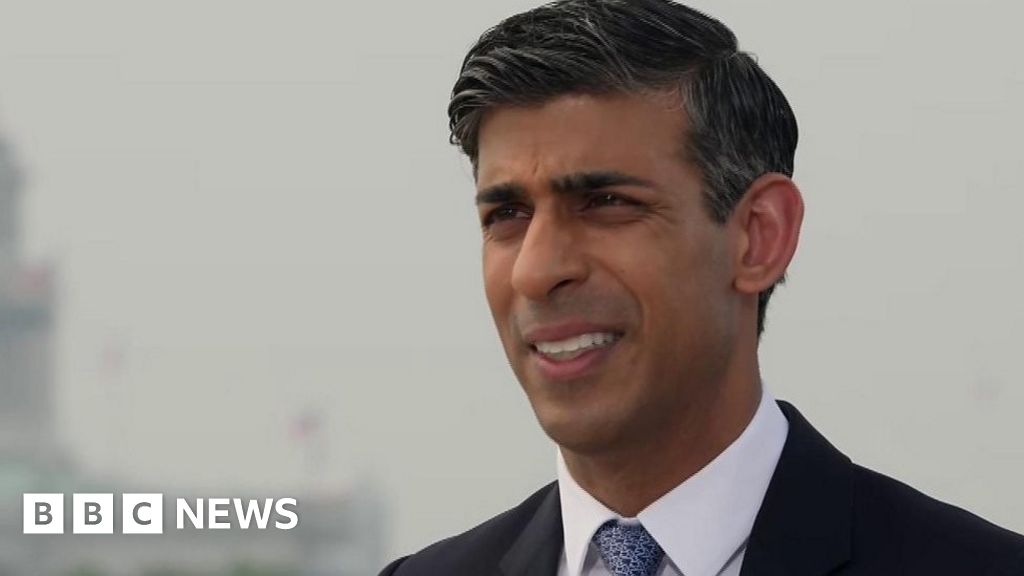
BBC political editor Chris Mason asked Rishi Sunak if the government was challenging the full release of messages between ministers and officials during the pandemic, to the Covid inquiry, because he was worried about something embarrassing him. The PM said: “Not at all”. He said it was “right that we learn the lessons of Covid” and he was “co-operating and providing information” to the inquiry. But on one issue, there was a legal matter he could not comment on.The inquiry will sit in public from next week, although the government has so far withheld some phone messages it has claimed were not relevant to its handling of the pandemic.I’m not worried about Covid inquiry messages, says Rishi Sunak
Read more →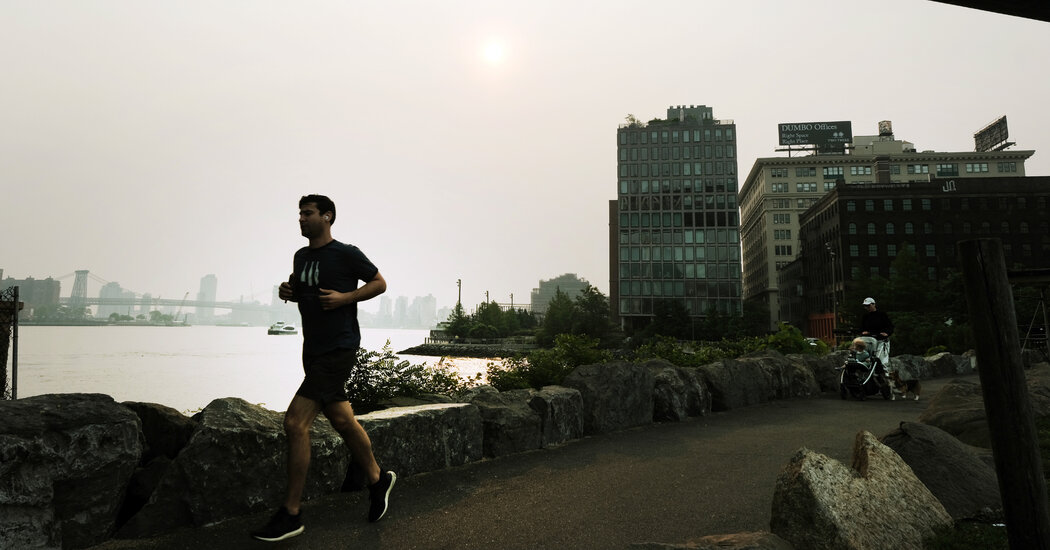
Yes, it’s Global Running Day. No, you probably shouldn’t go for a run today.The New York Road Runners canceled all its Global Running Day-related events on Wednesday as smoke from wildfires in Canada drifted over large parts of the United States. “If you’re in NYC or any affected area, please read and follow your city’s health advisory regarding air quality for June 7, and consider running another day.”On Tuesday, the running club had already urged people not to go for a run outside, and to log their outdoor miles after the skies had cleared. This is especially true for people who suffer from chronic respiratory conditions like asthma.A 2021 study by the European Heart Journal concluded as much, saying that an increase in exercise in a highly polluted environment “may adversely affect cardiovascular health.”“People should avoid exercising outdoors during smoky conditions,” California’s Air Resources Board advises. “Exposure and the resulting health effects depend on the amount of time spent outside, level of exertion, level of air pollution, and possible existing health conditions.”Smoke from wildfires includes a mix of particles. Some — like dust or smoke — are big enough to be seen with the naked eye. Others, however, are microscopic, about one-fifth to one-30th as wide as a human hair. Those tiny ones can travel deep into a person’s lungs and bloodstream. For runners, smoky conditions can also hinder visibility. During exercise, people largely breathe through their mouths instead of their noses. The mouth — unlike the nose — doesn’t have a natural filtration system for pollutants, which means more pollutants can enter the body, according to the American Lung Association. And the ultrafine particles aren’t exhaled during exercise.“If you’re a New Yorker with heart or breathing issues, be careful when you’re outdoors,” New York City’s mayor’s office advised. “Try to limit outdoor activities today to the absolute necessities.”On Tuesday, New York’s air quality rating briefly ranked as the worst of any city in the world, according to the IQAir World Air Quality Index.For competitive athletes, there may be another reason to postpone an outdoor run: Polluted areas may also cause you to run slower, a 2019 study found.If the conditions last, several days’ worth of polluted air could have a cumulative effect, Australia’s Sports Commission said, “lowering an athlete’s threshold for symptoms.”
Read more →
An arts program in a California state facility disproves the idea that “nobody dances in prison,” encouraging inmates to channel their lives and emotions into movement.Think of men in prison and you probably don’t think of dancing. But that’s what some at the California Institution for Men here were doing — dancing for invited guests.It might not have seemed like much: some walking, some running, a bit that resembled Duck Duck Goose. Yet the men were moving freely in an environment that restricts and regulates motion. They were moving together, suddenly vulnerable, physically open, trusting — in ways that regular prison culture and the lives that led them to prison had taught them not to be. The dance was allowing the men to be seen, and to see themselves, differently.The performance was the graduation ceremony for a new program called Embodied Narrative Healing, a class that is at once representative of changing norms in American prisons and quite unusual. From one angle, it’s part of a nationwide effort to turn away from retribution and punishment toward rehabilitation and healing, sometimes through the arts. In California, after a funding drought in the 2000s, arts programs in prisons have been expanding since 2013, with programs in all state facilities since 2017.What makes the class unusual is dance, which is much rarer than visual arts, theater and music in prison arts programs. One reason, offered by some of the men in Chino, is that dance goes against prison-culture codes of masculine behavior.Dance, one of the men in Chino said, goes against prison-culture codes of masculinity. From left, Webb, Griffin and Bolin (with beard).Michael Tyrone Delaney for The New York TimesAmie Dowling, a choreographer and professor at the University of San Francisco with more than 20 years of experience working in prisons, pointed to another possibility. “Dance has a sense of liberation and agency,” she said, and this can be threatening to “systems of control and containment, like prisons.”Yet the men in prison in Chino were dancing. How this came to be was both a consequence of shifting ideas about which opportunities should be offered to people in prison and a bit of an accident. Among those surprised by the changes were the two men who initiated the dance program from the inside and the French choreographer who was their unlikely collaborator.“NOBODY DANCES IN PRISON.” That’s how Kenneth W. Webb recalled responding to his friend Dimitri Gales’s suggestion that they start a dance class.They were incarcerated at California State Prison, Los Angeles County, in the desert city of Lancaster. In 2008, when Webb was 17, he shot and killed an 18-year-old after a party. He was convicted of first degree murder and premeditated attempted murder and sentenced to 50 years to life. Gales was 19 in 2011 when he was involved in a gang shooting during which someone was injured (not by Gales). Convicted of attempted voluntary manslaughter, he was sentenced to 18 years to life.By 2018, Webb and Gales were living on Yard A, the Progressive Programming Facility, where prisoners in the maximum security section earn admission through good conduct and gain access to rehabilitative classes.Gales, who also goes by Buddha and is a brother of the rapper YG, was trying to teach a friend a dance called the Reject when he got the idea to start a class. “It sounded super crazy,” he said, but he convinced Webb to join him and the two wrote a proposal emphasizing dance as rehabilitation. To their surprise, the proposal was approved.“We were going against a whole culture that defines dance as weak, like that’s not what men do,” said Dimitri Gales, who had the idea to start a class in prison.Michael Tyrone Delaney for The New York TimesDimitri Chamblas, a contemporary choreographer, began teaching a class at Lancaster Prison in 2019.Michael Tyrone Delaney for The New York TimesThey taught the class themselves, working out routines to hip-hop and R&B tracks for about 20 other inmates. This provoked jokes on the yard about twerking and “the skinny jean crew.” But Gales was undeterred.“We were going against a whole culture that defines dance as weak, like that’s not what men do,” he said. “People think we’re thugs, but it’s like ‘No, bro, I’m really a regular person, and this is what I like doing.’”Gales and Webb were also taking other classes. Some were organized by Bidhan Chandra Roy, an English professor at California State University, Los Angeles, who had been so moved by inmates’ stories that the mission of getting them out to the world had nearly taken over his life.Words Uncaged, an organization Roy founded in 2015, borrows techniques from narrative therapy (helping participants reflect critically on their life stories) and applies them to the aims of restorative justice (repairing harm) in several Southern California prisons.Many prison art classes are funded by the state through the California Arts Council. But hundreds more programs, like those of Words Uncaged, are run by volunteers and funded by private donations. These are often affiliated with institutions like universities, which provide subsidies and the kind of endorsement that helps gain approval from wardens.The men had wanted a hip-hop teacher for their dance class, but they got Chamblas, who brought with him a different kind of movement. Above, Kenneth Webb.Michael Tyrone Delaney for The New York TimesWords Uncaged spreads the writing and art generated in its classes through publications and exhibits. It had nothing to do with dance until Gales and Webb asked Roy to find them a teacher. “They wanted a hip-hop person,” Roy said. “But that would have just reinforced all the stereotypes we’re trying to get away from.” So instead, Roy brought them Dimitri Chamblas.CHAMBLAS WAS FAMILIAR with places where adult men don’t dance. He was born in one: a village in the French Alps. When some male ballet dancers from nearby Lausanne, Switzerland, visited his parents, he was fascinated by their globe-trotting lifestyle. He started taking dance classes in his village, the only boy, and when he was 10 left his family and home to attend the school of the Paris Opera Ballet.At 15, he transferred to the contemporary dance department of the National Conservatory in Lyon, where he became friends with later-to-be-famous classmates Benjamin Millepied and Boris Charmatz. As soon as Chamblas and Charmatz graduated, in 1992, they choreographed a rough-and-tumble duet called “Á Bras-le-Corps,” which they still perform.Their goal was to break the rules they had been taught — about concealing weight, fatigue and the sounds of effort. What Chamblas learned from this work, he said, was the importance of context. In one part, he rolled and sat on Charmatz’s passive, floor-bound body. This was a formal idea: one body active, the other inactive. But when they danced it at a symposium about AIDS/H.I.V., it became about the living and the dead.Chamblas at home in Los Angeles. He was so moved after teaching a class at Lancaster Prison that he came up with a reason to return: A class would create a dance with him and then perform it for visitors.Michael Tyrone Delaney for The New York TimesSkip through Chamblas’s successful career as a dancer, choreographer and producer to 2017, when he moved to Los Angeles to become dean of the school of dance at the California Institute for the Arts. In 2019, at Roy’s urging, Chamblas met with Webb and Gales and a few other inmates at Lancaster prison and jumped right into movement exercises in the mode of “Á Bras-le-Corps” — the inmates sharing weight with their eyes closed, trying to dance big in a small room.After that session, the men spontaneously started telling Chamblas their stories. He was so affected by their openness that he wanted a reason to keep returning. He came up with a long-term goal: A class of 10 would create a dance with him and put on a show for visitors. It was provisionally scheduled for April 2020.THE PROSPECT OF THIS SHOW is what brought me to Lancaster prison in March of that year. Chamblas had told me that his weekly class was precarious, sometimes canceled at the last minute because the prison was on lockdown for one reason or another. But on the day of my visit, my security clearance checked out and my clothes didn’t break any of the rules, so Chamblas and I were escorted through a series of double gates and across the sun-baked yard into the education building.Griffin being held upside down. In class, the men would respond to Chamblas’s prompts to stay physically connected without using their hands or to let vibrations inside their bodies expand outward.Michael Tyrone Delaney for The New York TimesAfter all that control and surveillance, all this carceral choreography, I was surprised that Chamblas and I were left alone with the participants in a classroom like you might find at an underfunded community college. Everyone greeted Chamblas with hugs.The men introduced themselves to me with their names and how many years they had been incarcerated, most in the 10 to 20 range. When I asked if Chamblas’s idea of dance was what they had been expecting, everyone answered at once: “No!”That released an explosion of laughter. Later, I would watch them gamely and creatively respond to Chamblas’s French-accented prompts to stay physically connected to one another without using their hands or to let vibrations inside their bodies expand outward. If hip-hop dancing had met ridicule on the yard, these exercises were even riskier.Webb, right, holding up Griffin.Michael Tyrone Delaney for The New York TimesThomas Bolin.Michael Tyrone Delaney for The New York TimesChamblas was pushing them, as Albert Jerome Beckley Jr. put it, “totally out of our comfort zone,” and they were grateful. What they most wanted to discuss was how the dance class, along with other Words Uncaged classes, had already changed them.“We were hardcore gang members,” said Beckley, who is serving a 50 years to life sentence for murder in a drive-by shooting. “But I’ve been able to find myself, and I like myself better now.”Beckley compared the class to a test. Daring to dance provoked taunts from other inmates, but where before he might have responded with violence, now he laughed it off. “If you can make it in this class, you have no fear of what anybody else thinks of you,” he said. “That’s proof of rehabilitation right there.”Some of this language could sound like a rehearsal for the parole board. But Webb, who talks like a philosopher and was not the only one to describe himself as shy, also spoke about the class as an extension of a community they were building to challenge the culture of prison and create “beacons of positivity.” Now inmates not in the class were asking how they might join.“It’s the hope that we have,” Rashan Greene, another class member, said. “They want that.”Words Uncaged classes had taught the men how to analyze their feelings; the effect of Chamblas’s class was physical. “We know we can be aggressive,” Beckley said, “but we had to dig deep into emotions that we have suppressed for so long. Sympathy, fear, sadness. And when I started embracing those emotions, my movements became more fluid. I was doing things I never thought I could do. I was superfly.”The dance work the men were creating with Chamblas borrowed choreography from their life in prison — the freezing on the floor when an alarm sounds, the periodic roll call. Sometimes they recited barbed phrases from their pasts, like “You are irredeemable.” But even the running and stopping, as in a game of Simon Says, and the carrying of one another was colored by the context.In class, Chamblas would push them, as one inmate put it, “totally out of our comfort zone.” And they were grateful. From left, Bolin, Webb, Americus de Orenday, Griffin, Duane West.Michael Tyrone Delaney for The New York TimesFlickering between ordinary and extraordinary, this dance might have made for a powerful performance. But a few days later, the whole project entered a stage of seemingly perpetual postponements, as the prison locked down in response to a threat outside its walls: a global pandemic.IN APRIL 2020, Gales told me over the phone how he and his classmates, now confined to their cells most of the day in the prison version of quarantine, continued working on dance moves that would fit those constricted spaces. “We really wish we could do TikTok,” he said. “We would take over the world.”That June, Webb told me that he and Gales could now sometimes dance together on the yard. He was also allowed to visit the art room, and throughout the year, some of his paintings were exhibited in Los Angeles galleries and online. His mother, Gina, responded to his art with amazement. “This is his pain that I have never seen,” she said.Through 2020 and much of 2021, plans to restart the dance class kept being canceled. One by one, most members of the group were transferred to other prisons. Because of Webb’s record of good behavior, he was moved to the lower-security facility in Chino. Gales, whose sentence had been commuted by the governor of California in recognition of the work he had done to transform himself, was released on parole in April 2022.In Chino, Webb asked Roy and Chamblas to restart the dance class there. In fall 2021, they did, this time teaching the course together. The focus shifted more to trauma and how it lives in the body. Chamblas recalled doing a trust exercise with a new student, who was supposed to close his eyes as Chamblas took his weight.“His body felt super agitated,” Chamblas said, “and afterward, he said his body wanted to beat me.” The exercise had released a repressed memory of childhood abuse.During a class I visited in September 2022, several men spoke of having been abused and of their discomfort with physical contact. “I couldn’t handle anybody touching me,” Thomas Bolin said. Convicted of murder in 1981, he had been a member of the Aryan Brotherhood for more than 40 years, violently enforcing racial divisions in San Quentin and other prisons.A Words Uncaged writing class, with, from left, Griffin, West and Webb.Michael Tyrone Delaney for The New York TimesBolin said that after making a promise to his wife while she was dying of cancer, he had enrolled in several rehabilitative programs. “But this is my No. 1,” he said. “It teaches you to have empathy for yourself, as well as others.”“I still get angry,” he added, but he described incidents on the yard “where the Tommy of a year ago would’ve put hands on somebody, and now I walk away.” Duane West, a Black classmate, said that he and Bolin now have a “strong bond” and hang out together in public.Bolin tearfully read aloud a letter addressed to his wife, reaffirming his promise. And then he put hands on his classmates, most of them Black or Latino — lifting them, cradling them, letting them put their hands on him.LAST NOVEMBER, the long-delayed show finally happened. The only original member performing was Webb, but among the 40 or so invited guests who filed into the Chino prison gym, was another: Gales. Looking a little stunned, he called it “a full-circle moment.”Although the performance was titled “Transformation,” much of it appeared mundane. Yet because these men were inmates wearing orange jumpsuits labeled “prisoner,” their walking past one another, occasionally jostling, took on an all-too-believable threat of violence. Similarly, the sight of a man running in big circles had a special impact in a place where such fast, free motion is normally against the rules.Every time the men touched one another or carried one another, they seemed to defy the environment where such expressions of trust and tenderness are rare, even dangerous. This had a brave beauty.After the performance, the men gathered with visitors and read aloud from the thoughtful, emotionally exposed writing they had done for the class. Visitors learned that some had been imprisoned for crimes (serious, terrible ones) committed when they were barely adults, and that some (like Bolin) were sentenced to life without the possibility of parole. The men spoke about their families, their regrets and how they had been working hard to change. Inmates cried. Listeners too.Chamblas, second from left, said about the men in his dance class: “These are the best people I know in L.A.”Michael Tyrone Delaney for The New York TimesWhat kind of transformation was this? The effects of prison arts programs can be hard to measure, but a 2021 report by California Arts in Corrections summarized findings about how such programs help participants learn coping skills and heal from trauma, reduce anxiety and anger, form communities within the isolation of incarceration and reintegrate with their communities on the outside after release.Brant Choate, the director of rehabilitative programs for the California Department of Corrections and Rehabilitation, said that while “there is no special sauce for keeping people out of prison,” arts programs “create a neutral zone” in places where people are usually divided by race or gang affiliation. And in that neutral zone, Choate said, they can change.For Denise Herz, a criminology professor at Cal State Los Angeles, the healing-centered approach of Words Uncaged allows inmates “to create a new narrative of who they are and how they want to give back,” she said. “Accountability turns into advocacy.”None of the more than 100 Words Uncaged participants who have been released from prison have been reincarcerated, Roy said. Many counsel young people. Webb said that this was his post-prison dream: “I can talk to kids. I can be of service.”But Dowling, the University of San Francisco professor, made a different point. “Why are we surprised there’s talent and imagination?” she asked. “We’ve been fed so much misinformation about people in prison. The rehabilitation is reciprocal, really. We on the outside need it too.”In the parking lot after the show, Chamblas looked a little wistful. Earlier, he had told me about being in Paris, directing a fashion video for Chanel, and flying back in the middle of the shoot so he wouldn’t miss the weekly class at the prison. “These are the best people I know in L.A.,” he said.Gales told me of his plans to break into the movie and fashion business and said he spent a lot of time with Chamblas’s family. (“That’s my boy, I’m always at his house.”)As I drove away, the image from the performance that replayed in my mind was of the man running in circles. Inside the prison, the freedom of that simple motion had felt shocking, and now the meaning rippled outward. The man was Webb. He is eligible for parole in 2031.
Read more →
Doctors make assumptions about a case — and those assumptions can sometimes cloud their judgment.The 61-year-old woman lifted the laundry basket, then grimly eyed the steps up from the basement. The climb seemed to get tougher every day. Before she was even halfway up, she could feel her racing heart and hear her ragged, rapid breathing. She gripped the wooden handrail in case she started to feel lightheaded again. Once she made it up to the main floor of her home, she dropped her burden and practically fell into the soft embrace of her living-room sofa.The woman first noticed that she often felt out of breath a few months earlier. She wondered if it was her weight. She liked the way she looked, but suspected that her usual care provider, a much-trusted nurse practitioner with a medical group at Yale School of Medicine, would be happy if she lost a few pounds. Her daughter worried that her shortness of breath could be a result of the Covid infection she had a couple of years earlier. She finally called her P.C.P.’s office when her right leg started to hurt. The combination of shortness of breath and leg pain made her nurse practitioner worry that the patient had a clot in her leg that had broken off and lodged in her lungs. She sent her to get an ultrasound of the leg. There was no clot, which was a relief, but she was still out of breath. Referral to the Long Covid CenterFrom that point on it seemed as if she had a video consultation just about every week. Each visit focused on the newest of her many varied symptoms. One week she was so dizzy it was hard for her to walk. The next week she shared her concerns about her recent weight loss: 10 pounds in just two weeks. Another time she saw the physician who worked with her nurse. As she faced her across the distance of their linked computers, the doctor suggested that the lightheadedness might come from not drinking enough water. Her shortness of breath and rapid heart rate were probably because of a lack of exercise. At the next video visit, her nurse practitioner said she might have POTS — short for postural orthostatic tachycardia syndrome. In this uncommon disorder, patients have a rapid heart rate, or tachycardia, whenever they stand up. It is sometimes seen in patients after they recover from a Covid infection. With every new concern, there were more tests. She had ultrasounds and chest X-rays; an echocardiogram showed that her heart was pumping normally; and something called a Holter monitor, a wearable device that tracks heartbeats for 24 hours, showed only that her heart sometimes beat rapidly. She had an M.R.I. of her brain, a CT scan of her chest and lots and lots of blood tests. After all this, the patient was frustrated and frightened that no one could explain why she suddenly felt so bad in so many ways. She was referred to a neurologist, a cardiologist and Yale’s Long Covid Multidisciplinary Care Center. She was seen first at the Long Covid Center, where I am the medical director. That April morning, she told me that she was out of breath all the time. She had to quit her job as a cashier. Her eyes grew shiny when she described her rapid decline. Her heart and lungs had already been evaluated extensively, and the only abnormality was seen in the Holter-monitor test. Like her nurse practitioner, I wondered if she had developed POTS. Certainly, POTS was something I saw regularly in patients with long Covid. A recent study estimated that up to 14 percent of patients developed POTS after recovering from Covid-19. This disorder can be diagnosed using something called the active-stand test. In this test, the patient’s heart rate and blood pressure are monitored when they are supine and then as they stand in place for 10 minutes. A diagnosis of POTS is made if the blood pressure remains stable while the heart rate increases by at least 30 beats per minute. When the patient was given the test, she became lightheaded and out of breath after only a few minutes, and the test had to be stopped early. Her heart rate had increased — to 140 from 101. POTS is not well understood but is thought to signify an injury to the autonomic nervous system. Normally the act of standing triggers a rapid increase in blood moving from the legs and lower body up to the heart so that it can be redistributed to the upper body and brain. In POTS, that doesn’t happen, and to get enough blood to the brain, the heart must beat faster — usually a lot faster. In this patient’s case, as in many others I’d seen, that increase in heart rate is inadequate and the patient feels lightheaded. POTS often appears after a viral infection. While there are medications that can help, the first line of treatment is to increase the amount of water stored in the body and to use compression garments to help get blood out of the lower extremities back to the heart. I wasn’t sure if all of this patient’s symptoms could be attributed to POTS but thought treating POTS was the right first step. I encouraged her to drink more water and prescribed the needed garments. Two weeks later, when she reported that her heart was still racing, I started her on a medication to slow it down. She returned to the office a couple of weeks after that. Her heart was better, she told me, but she was losing weight: “When I look in the mirror, I barely recognize my face.” Her normally plump, round cheeks looked flat and drawn. She had lost 25 pounds in three months. That stopped me. Weight loss was not a usual symptom of POTS. Had I gotten the diagnosis wrong? Photo illustration by Ina JangAn Essential Step SkippedSuddenly her symptoms took on an entirely different shape. I had been making assumptions about her case based on the fact that the doctors who referred her to our center thought her symptoms were a result of long Covid. But in truth, none of us really knew if she was suffering from long Covid. There is no definitive test that links present symptoms to a Covid infection experienced weeks, months or even years earlier. The first published reports of symptoms that outlasted the viral infection came in April 2020, just months after the virus arrived in the United States. And since then, a wide range of symptoms has emerged. But the links between the symptoms and the hypothesized cause was temporal. There is only the patient’s experience to suggest a connection. But as with so many of the disorders for which there are no definitive tests, this is a diagnosis that can be made only when other possibilities have been ruled out. In seeing this patient, I skipped that essential step. This was a middle-aged woman who had a racing heart, who became short of breath with any exertion, who was rapidly losing weight — a classic presentation of thyroid-hormone overload, a condition known as hyperthyroidism. This tiny gland located in the neck is part of a complex system that controls body metabolism. When too much thyroid hormone is released, the body’s engine revs as if someone had stepped on the gas and not let up. She had all the symptoms of hyperthyroidism, and I had simply not seen it. I sent her to the lab down the hall from my office. Within hours it was clear that her system was flooded with these hormones. I called the patient immediately to explain that, despite the positive active-stand test, she probably did not have POTS and that, instead, her thyroid had gone wild. This is usually a result of an autoimmune disorder known as Graves’ disease, in which antibodies bind to thyroid gland receptors, mistake these normal cells for attacking invaders and trigger a near-continuous release of its hormones. Even before the diagnosis of Graves’ was confirmed, the patient was started on a medication to block hormone production. I have spent the past 20 years writing and thinking about diagnostic errors. And I understand how this one happened. In medicine, most diagnoses are made through a process of recognition. We see something, recognize it and act on what we see. Most of the time we are right. Most of the time. I’ve asked this patient for a photograph to keep on my desk. A reminder, I hope, that the first diagnosis to come to mind can never be the only one considered.As for the patient, she feels much better since starting these medications. Her heart rate is down, and the basement stairs are getting easier. She tells me she stopped losing weight, but she won’t feel as if she is back to her old self until her cheekbones go back into hiding.Lisa Sanders, M.D., is a contributing writer for the magazine. Her latest book is “Diagnosis: Solving the Most Baffling Medical Mysteries.” If you have a solved case to share, write her at Lisa.Sandersmdnyt@gmail.com.
Read more →