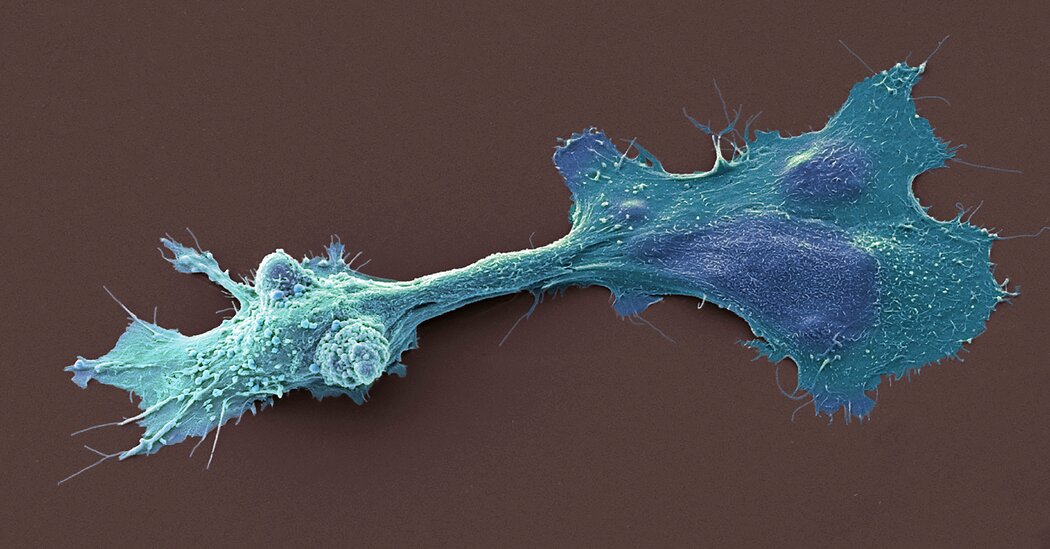
Unlocking the secrets of cell antennas

The non-specific lethal (NSL) complex is a chromatin-associated factor that has been shown to regulate the expression of thousands of genes in both fruit flies and mammals. Abrogation of the NSL genes leads to the death of the organism, and this phenotype gives rise to this complex’s curious name. Max Planck researchers have now identified the NSL complex as a “master” epigenetic regulator of intraciliary transport genes across multiple cell types and species. The study reveals that this class of genes is “turned on” by the NSL complex irrespective of whether a particular cell has cilia or not. Additionally, the researchers uncovered that this class of cilia-associated genes is in fact vitally important for the function of kidney podocytes, a highly specialized cell type that paradoxically does not carry cilia. These findings have important implications for ciliopathies and kidney disease.
Cilia are thin, eyelash-like extensions on the surface of cells. They perform a wide variety of functions, acting as mechanosensors or chemosensors, and play a crucial role in many signaling pathways. In the last few decades, the organelle has undergone a remarkable, but at the same time sinister, career transformation. It evolved from an organelle whose relevance was unclear to becoming a central player in the pathogenesis of a large group of diseases. These so-called ciliopathies are associated with a wide range of symptoms, including hearing loss, visual impairment, obesity, kidney disease, and mental disability. Different gene mutations impair cilia formation, maintenance, and function, resulting in these ciliopathies, which can sometimes be multi-organ, syndromic disorders.
The proper assembly, maintenance, and function of cilia rely on a process called “intraciliary transport.” Components of the intraciliary transport system “walk” on the microtubule to deliver cargo between the cell body and the ciliary tip to ensure a constant supply of materials. Mutation of genes encoding components within the intraciliary transport machinery could lead to ciliopathies. In their recent study in the journal Science Advances, the lab of Asifa Akhtar identified the NSL complex as a transcriptional regulator of genes known for their roles in the intraciliary transport system of cilia across multiple cell types.
The NSL complex enables intraciliary transport
The NSL complex is a potent epigenetic modifier that regulates thousands of genes in fruit flies, mice, and humans. However, most of the functions of the NSL complex remain mysterious and have only recently begun to be elucidated. “Previous research from our lab indicates that the NSL complex controls many pathways critical for organismal development and cellular homeostasis,” says Asifa Akhtar, Director at the MPI of Immunobiology and Epigenetics in Freiburg.
The complex comprises several proteins and is a histone acetyltransferase (HAT) complex that prepares the genes for activation. “Think of gene regulation as a team effort with different players. One important player is the NSL complex. It puts special marks on the histone proteins on which the DNA is wrapped around in the nucleus, like putting up green flags. These flags tell other regulators to switch on specific genes. We now found that the NSL complex does exactly this for a group of genes linked to moving materials within cilia,” says Tsz Hong Tsang, the first author of the study.
Without components of the NSL complex, the cell cannot build a cilium
The intraciliary transport system is essential because it is needed to build a functional cilium. The cell uses the intraciliary transport system to move material from the cilium base to the growing tip — similar to building a tower. In the study, the researchers used mouse cells to determine the functional consequences of the loss of the NSL complex in the cells.

Read more →

How being in space impairs astronauts' immune system

A new study led by researchers at Karolinska Institutet in Sweden has examined how T cells of the immune system are affected by weightlessness. The results, which are published in the journal Science Advances, could explain why astronauts’ T cells become less active and less effective at fighting infection.
The next steps in the exploration of space are human missions to the moon and to Mars. Space is an extremely hostile environment that poses threats to human health. One such threat is changes to the immune system that occur in astronauts while in space and that persist after their return to Earth. This immune deficiency can leave them more vulnerable to infection and lead to the reactivation of latent viruses in the body.
“If astronauts are to be able to undergo safe space missions, we need to understand how their immune systems are affected and try to find ways to counter harmful changes to it,” says study leader Lisa Westerberg, principal researcher at the Department of Microbiology, Tumor and Cell Biology, Karolinska Institutet. “We’ve now been able to investigate what happens to T cells, which are a key component of the immune system, when exposed to weightless conditions.”
In the study, the researchers have tried to simulate weightlessness in space using a method called dry immersion. This involves a custom-made waterbed that tricks the body into thinking it is in a weightless state. The researchers examined T cells in the blood of eight healthy individuals for three weeks of exposure to simulated weightlessness. Blood analyses were performed before the experiment started, at 7, 14 and 21 days after the start, and at 7 days after the experiment ended.
They found that the T cells significantly changed their gene expression — that is to say, which genes were active and which were not — after 7 and 14 days of weightlessness and that the cells became more immature in their genetic programme. The greatest effect was seen after 14 days.
“The T cells began to resemble more so-called naïve T cells, which have not yet encountered any intruders. This could mean that they take longer to be activated and thus become less effective at fighting tumour cells and infections. Our results can pave the way for new treatments that reverse these changes to the immune cells’ genetic programme,” says Carlos Gallardo Dodd, PhD student at the Department of Microbiology, Tumor and Cell Biology, Karolinska Institutet and shared first author with researchers Christian Oertlin and Julien Record at the same department.
After 21 days, the T cells had “adapted” their gene expression to weightlessness so that it had almost returned to normal, but analyses carried out seven days after the experiment ended showed that the cells had regained some of the changes.
The researchers now plan to use Esrange Space Centre’s sounding rocket platform in Kiruna, Sweden, to study how T cells behave in weightless conditions and how their function is affected.
The study was financed by the Swedish National Space Agency, the Swedish Research Council and Karolinska Institutet and was conducted in close collaboration with Claudia Kutter’s research group at Karolinska Institutet/SciLifeLab and collaboration partners at IBMP Moscow and New York University Abu Dhabi. There are no reported conflicts of interest.

Read more →

Researchers Dispute High-Profile Discoveries of Cancer Microbes

Three studies in elite journals found that tumors are littered with microbes. But several teams have been unable to replicate the work.Over the past few years, a flurry of studies have found that tumors harbor a remarkably rich array of bacteria, fungi and viruses. These surprising findings have led many scientists to rethink the nature of cancer.The medical possibilities were exciting: If tumors shed their distinctive microbes into the bloodstream, could they serve as an early marker of the disease? Or could antibiotics even shrink tumors?In 2019, a start-up dug into these findings to develop microbe-based tests for cancer. This year, regulators agreed to prioritize an upcoming trial of the company’s test because of its promise for saving lives.But now several research teams have cast doubt on three of the most prominent studies in the field, reporting that they were unable to reproduce the results. The purported tumor microbes, the critics said, were most likely mirages or the result of contamination.“They just found stuff that wasn’t there,” said Steven Salzberg, an expert on analyzing DNA sequences at Johns Hopkins University, who published one of the recent critiques.The authors of the work defended their data and pointed to more recent studies that reached similar conclusions. The unfolding debate reveals the tension between the potentially powerful applications that may come from understanding tumor microbes, and the challenge of deciphering their true nature. Independent experts said the current controversy is an example of the growing pains of a young but promising field.Biologists have known for decades that at least some microbes play a part in cancer. The most striking example is a virus known as HPV, which causes cervical cancer by infecting cells. And certain strains of bacteria drive other cancers in organs such as the intestines and the stomach.For decades, these links came to light slowly, because scientists lacked much of the technology available today. The search sped up drastically once researchers learned how to pull fragments of DNA from tumors. They then used computers to figure out whether the genetic material came from human cells or from other species.In 2019, a team of scientists at the New York University School of Medicine used these techniques in a study on pancreatic cancer they published in the journal Nature. In many tumors, they found DNA fragments from a few different species of fungi. Further research led them to conclude that the fungi were driving the growth of the tumors.These striking results attracted the attention of Dr. Peter Allen, a surgeon at the Duke University School of Medicine, who began looking for microbes in pancreatic tumors from his own patients.But after searching 140 tumors, Dr. Allen and his colleagues couldn’t find a significant amount of DNA from any microbes, including fungi. “We didn’t find any true signature,” he said.They then scrutinized the original study, whose genetic data had been uploaded to a public database. Dr. Allen’s team could not find a noticeable amount of fungal DNA in that data, either. They published their findings in Nature on Aug. 2.The New York University researchers defended their work. “My group still stands with what we found,” said Deepak Saxena, one of the authors of the original study. He pointed to other data in line with his results.In August, for example, researchers based at Tokyo Medical and Dental University reported finding fungi in pancreatic tumors from 78 out of 180 patients. And patients with tumors containing fungi were at greater risk of dying in the three years after their surgery, the study found.Other researchers are questioning a 2020 report in Science by a team at the Weizmann Institute of Science in Israel. Examining 1,500 tumors from seven types of cancer, the study found that each type of tumor had a distinct set of bacteria, with breast cancer harboring a particularly rich variety.But Jacques Neefjes, a microbiologist at Leiden University in the Netherlands, and his colleagues could not detect bacteria inside cancer cells using some of the Weizmann team’s methods in their own collection of 129 breast cancer samples. “We do not find a single case,” he said.In January, Dr. Neefjes’s group published a summary of their findings, which Science appended to the Israeli paper. They argued that bacteria found by the Weizmann team were byproducts of infections and are not, in fact, a normal part of breast cancer tumors.Ravid Straussman, the leader of the Weizmann research, said that his group had done further research and that “the results clearly confirm the presence of bacteria in cancer cells.” He also said it was impossible to evaluate the claims from Dr. Neefjes’s team because they provided few details about their own experiment.In a third study, published in Nature in 2020, researchers from the University of California, San Diego analyzed a government database of tumor DNA, called the Cancer Genome Atlas, and trained a computer to identify microbial DNA sequences from 18,000 tumors. The computer learned to recognize 33 different types of cancer based on their distinctive combinations of microbes.“It looked like an incredible proof of concept,” said Abraham Gihawi, a postdoctoral researcher at the University of East Anglia.But Dr. Gihawi and his colleagues changed their minds when they took a close look at the microbes that supposedly favored certain kinds of cancer. They seemed utterly out of place. Adrenal gland tumors appeared to host a virus that was previously only known to infect shrimp in the Gulf of Mexico. Bacteria only known to grow on seaweed seemed to prefer bladder cancer.“This is a sure sign that something is going wrong,” Dr. Gihawi and his colleagues wrote in a letter they published on Aug. 9 in the journal Microbial Genomics. They deemed the seaweed bacteria and other out-of-place species “nonsensical.”In a subsequent study with Dr. Salzberg, the researchers reanalyzed the data for themselves. “We’ve shown that the paper is wrong,” Dr. Salzberg said. The second analysis has been accepted by the journal mBio, he said.Dr. Salzberg and his colleagues pointed to several possible reasons for the seemingly inexplicable results. In order to identify microbial DNA from tumors, for example, it’s first necessary to remove as many human sequences as possible. The critics say the San Diego team left some human sequences behind.The critics also argue that errors can arise when scientists compare tumor sequences to microbial DNA to look for matches because some of that data is contaminated with human DNA. That’s how the DNA from a human cancer cell could appear to resemble the DNA from a seaweed microbe.The San Diego team, led by Rob Knight, has responded at length to these criticisms. Dr. Knight said that he and his colleagues had used the best resources they could for their 2020 paper, and they went on to improve their methods for a paper they published last year in the journal Cell with Dr. Straussman’s group.In that study, they used new techniques to remove more human DNA from their analysis. To predict different cancer types, they considered only bacteria with DNA that had gone through very rigorous inspection. “You still get tumor type-specific signatures,” Dr. Knight said.In 2019, Dr. Knight co-founded a company called Micronoma to develop cancer tests based on his microbe findings. (Dr. Straussman serves on its scientific advisory board.) So far, the company has raised $17.5 million from private investors.In January, Micronoma received a “Breakthrough Device” designation from the Food and Drug Administration for a lung cancer test, which will speed up its development for a clinical trial. Sandrine Miller-Montgomery, the chief executive of Micronoma, said that the trial would start in 2024.“These critiques have not led to any change in our company’s plans,” Dr. Miller-Montgomery said.Dr. Sven Borchmann, a physician-scientist at the University of Cologne, questioned whether the San Diego team was trying to turn its findings into a medical test too quickly, instead of doing more experiments to figure out what the results really meant. “I think they focused too quickly on application instead of understanding,” he said.Still, Dr. Borchmann suspected that Dr. Knight’s team did find a number of species that would hold up to scrutiny, despite the recent challenge. “It doesn’t ruin the whole claim,” he said.Qin Ma, a computational biologist at the Ohio State University, agreed that the new criticisms of the three papers didn’t change the overall weight of evidence gathered over the years. “Everyone agrees that microbes exist in tumors and are important,” he said.But Dr. Ma and others acknowledged that the field was still searching for a standard set of tools that would provide highly accurate results. The current debate is moving the field toward that goal, they said.“I would not be surprised if the disagreement causes both camps to innovate and push science further,” said Dr. Arturo Casadevall, a microbiologist at Johns Hopkins University School of Medicine who was not involved in any of the studies. “This is a story of the scientific process at work.”

Read more →

Tiny magnetic beads produce an optical signal that could be used to quickly detect pathogens

Getting results from a blood test can take anywhere from one day to a week, depending on what a test is targeting. The same goes for tests of water pollution and food contamination. And in most cases, the wait time has to do with time-consuming steps in sample processing and analysis.
Now, MIT engineers have identified a new optical signature in a widely used class of magnetic beads, which could be used to quickly detect contaminants in a variety of diagnostic tests. For example, the team showed the signature could be used to detect signs of the food contaminant Salmonella.
The so-called Dynabeads are microscopic magnetic beads that can be coated with antibodies that bind to target molecules, such as a specific pathogen. Dynabeads are typically used in experiments in which they are mixed into solutions to capture molecules of interest. But from there, scientists have to take additional, time-consuming steps to confirm that the molecules are indeed present and bound to the beads.
The MIT team found a faster way to confirm the presence of Dynabead-bound pathogens, using optics, specifically, Raman spectroscopy. This optical technique identifies specific molecules based on their “Raman signature,” or the unique way in which a molecule scatters light.
The researchers found that Dynabeads have an unusually strong Raman signature that can be easily detected, much like a fluorescent tag. This signature, they found, can act as a “reporter.” If detected, the signal can serve as a quick confirmation, within less than an hour, that a target pathogen is indeed present in a given sample. The team is currently working to develop a portable device for quickly detecting a range of bacterial pathogens, and has reported their results today in a special issue of the Journal of Raman Spectroscopy.
“This technique would be useful in a situation where a doctor is trying to narrow down the source of an infection in order to better inform antibiotic prescription, as well as for the detection of known pathogens in food and water,” says study co-author Marissa McDonald, a graduate student in the Harvard-MIT Program in Health Sciences and Technology. “Additionally, we hope this approach will eventually lead to expanded access to advanced diagnostics in resource-limited environments.”
Study co-authors at MIT include Postdoctoral Associate Jongwan Lee; Visiting Scholar Nikiwe Mhlanga; Research Scientist Jeon Woong Kang; Tata Professor Rohit Karnik, who is also the associate director of the Abdul Latif Jameel Water and Food Systems Lab; and Assistant Professor Loza Tadesse of the Department of Mechanical Engineering.

Read more →

Cluster of slightly unhealthy traits linked with earlier heart attack and stroke

Middle-aged adults with three or more unhealthy traits including slightly high waist circumference, blood pressure, cholesterol and glucose have heart attacks and strokes two years earlier than their peers, according to research presented at ESC Congress 2023.1
“Many people in their 40s and 50s have a bit of fat around the middle and marginally elevated blood pressure, cholesterol or glucose but feel generally well, are unaware of the risks and do not seek medical advice,” said study author Dr. Lena Lönnberg of Västmanland County Hospital, Västerås, Sweden. “This scenario, called metabolic syndrome, is a growing problem in Western populations where people are unknowingly storing up problems for later in life. This is a huge missed opportunity to intervene before heart attacks and strokes that could have been avoided occur.”
It is estimated that up to 31% of the global population has metabolic syndrome.2 Previous studies have shown that people with metabolic syndrome are at higher risk of diabetes, heart disease, stroke and premature death.3-5 This study investigated the link between asymptomatic metabolic syndrome in midlife and cardiovascular disease and death up to three decades later.
The study enrolled 34,269 adults in their 40s and 50s who attended a cardiovascular screening programme in 1990 to 1999 in the Swedish county of Västmanland. Participants went to their primary health care centre for a clinical examination by a nurse, which included measurements of height, weight, blood pressure, total cholesterol, blood glucose, and waist and hip circumference. They also completed a questionnaire about lifestyle habits, previous history of cardiovascular disease and diabetes, and socioeconomic factors such as education.
Individuals were classified as having metabolic syndrome if they had three or more of the following: 1) waist circumference of 102 cm or above for men and 88 cm or above for women, 2) total cholesterol 6.1 mmol/l or above, 3) 130 mmHg or higher systolic blood pressure and/or 85 mm Hg or higher diastolic blood pressure, 4) fasting plasma glucose 5.6 mmol/l or higher.
Participants with metabolic syndrome were matched for age, sex and date of health examination to two individuals without metabolic syndrome who served as controls. Data on cardiovascular events (myocardial infarction and stroke) and death were collected from national and local registers. The researchers analysed the associations between midlife metabolic syndrome and nonfatal cardiovascular events and all-cause mortality after adjusting for age, sex, smoking, physical inactivity, education level, body mass index, hip circumference and living alone or with family.
A total of 5,084 individuals (15%) met the criteria for metabolic syndrome and a control group of 10,168 individuals without metabolic syndrome was identified. Some 47% of participants were women. During a median follow-up of 27 years, 1,317 (26%) participants with metabolic syndrome died compared with 1,904 (19%) controls — meaning that those with metabolic syndrome were 30% more likely to die during follow-up than their counterparts without metabolic syndrome.

Read more →

Paper drinking straws may be harmful and may not be better for the environment than plastic versions

“Eco-friendly” paper drinking straws contain long-lasting and potentially toxic chemicals, a new study has concluded.
In the first analysis of its kind in Europe, and only the second in the world, Belgian researchers tested 39 brands of straws for the group of synthetic chemicals known as poly- and perfluoroalkyl substances (PFAS).
PFAS were found in the majority of the straws tested and were most common in those made from paper and bamboo, the study, published in the peer-reviewed journal Food Additives and Contaminants, found.
PFAS are used to make everyday products, from outdoor clothing to non-stick pans, resistant to water, heat and stains. They are, however, potentially harmful to people, wildlife and the environment.
They break down very slowly over time and can persist over thousands of years in the environment, a property that has led to them being known as “forever chemicals.”
They have been associated with a number of health problems, including lower response to vaccines, lower birth weight, thyroid disease, increased cholesterol levels, liver damage, kidney cancer and testicular cancer.
“Straws made from plant-based materials, such as paper and bamboo, are often advertised as being more sustainable and eco-friendly than those made from plastic,” says researcher Dr Thimo Groffen, an environmental scientist at the University of Antwerp, who is involved in this study.

Read more →

Half as many AF patients dying of heart attacks and strokes in the UK now

Patients living with one of the UK’s most common heart rhythm conditions are 50% less likely to die from a heart attack or stroke than they were at the start of the millennium, new research has found.
Analysis of the health records of more than 70,000 patients newly diagnosed with atrial fibrillation (AF) showed that mortality from related cardiovascular and cerebrovascular diseases more than halved over the 16-year study period.
AF is associated with an increased risk of stroke.
The research showed that dementia now accounts for more deaths within one year of an AF diagnosis than acute stroke, heart attack and heart failure combined, demonstrating the need for more research into the link between dementia and AF.
The study team believe the lower mortality rate can be attributed to better detection and treatment for AF, which, according to the British Heart Foundation, affects more than 1.5 million people in the UK.
But the findings reveal significant health inequalities, showing that the most socioeconomically deprived patients were 22% more likely to die from AF-related conditions than people from the most affluent group.
Additionally, patients are now more likely to be diagnosed with coexisting health conditions such as diabetes, cancer and chronic kidney disease, which have greater health implications for them than AF.

Read more →

Pros and cons of ChatGPT plugin, Code Interpreter, in education, biology, health

While West Virginia University researchers see potential in educational settings for the newest official ChatGPT plugin, called Code Interpreter, they’ve found limitations for its use by scientists who work with biological data utilizing computational methods to prioritize targeted treatment for cancer and genetic disorders.
“Code Interpreter is a good thing and it’s helpful in an educational setting as it makes coding in the STEM fields more accessible to students,” said Gangqing “Michael” Hu, assistant professor in the Department of Microbiology, Immunology and Cell Biology at the WVU School of Medicine and director of the Bioinformatics Core. “However, it doesn’t have the features you need for bioinformatics. These are technical issues that can be overcome. Future developments of Code Interpreter are likely to extend its use to many fields such as bioinformatics, finance and economics.”
Since its release in December 2022, the popular artificial intelligence chatbot ChatGPT has gained the attention of businesses, educators and the general public. However, it didn’t quite live up to the needs of people working in biomedical research including bioinformatics — the field where computer science meets biology — who eagerly awaited OpenAI’s Code Interpreter plugin hoping it would fill the gaps.
Hu and his team put Code Interpreter to the test on a variety of tasks to evaluate its features. Their findings, published in Annals of Biomedical Engineering, show the plugin breaks down some of the barriers, but not all of them.
For example, people without a science background will have an ease of access to coding, or computer programming, with Code Interpreter. Hu said it’s also cost-effective and sparks a curiosity for students to explore data analysis and boosts their interest in learning. He points out, though, users will need to understand how to interpret data and recognize whether the results are accurate and know how to interact with the chatbot.
Bioinformaticians rely on precise coding, computer software programs and internet access to store, analyze and interpret biological data such as DNA and human genome used for advancements in modern medicine.
Despite the need for improvements specific to bioinformatics, Hu said, Code Interpreter helps users determine whether a response is accurate or if it is a fictitious answer presented with confidence, known as a hallucination.

Read more →

Starch discovery reaps benefits for brewing, baking and milling industries

Research has brought clarity to the longstanding question of how starch granules form in the seeds of Triticeae crops — wheat, barley, and rye — unlocking diverse potential benefits for numerous industries and for human health.
Starch in wheat, maize, rice and potatoes is a vital energy-giving part of our diet and a key ingredient in many industrial applications from brewing and baking to the production of paper, glue, textiles, and construction materials.
Starch granules of different crops vary greatly in size and shape. Wheat starch (and those of other Triticeae) uniquely have two distinct types of granules: large A-type granules and smaller B-type granules.
The ratio of A- and B-type granules can affect the quality of wheat-based foods, such as bread and pasta. The two types of granules also present a problem for starch manufacturing industry because many of the smaller B-type granules are lost and therefore wasted during the milling process. Further, too many B-type starch granules in barley can cause a hazy or cloudy appearance in beer because they do not get digested and filtered out during the brewing process.
New research published in the journal The Plant Cell by the group of Dr. David Seung at the John Innes Centre have made a breakthrough in solving this problem.
The team used genomic and experimental techniques to show that A- and B-type granules are formed by two distinct mechanisms.
By identifying an enzyme involved in B-type granule initiation and by then using conventional plant breeding techniques to remove this protein, they were able to produce wheat with low or no B-granules — with no penalties on plant development and without reducing the overall starch content.

Read more →

Connections between drinking water quality and increased lung infections in people with cystic fibrosis

High levels of some minerals and metals in environmental water supplies may increase the risk of nontuberculous mycobacteria (NTM) pulmonary infections in people with cystic fibrosis, according to a new study from the National Institute of Allergy and Infectious Diseases, part of the National Institutes of Health. The study, appearing in Environmental Epidemiology, found the presence of the metals molybdenum and vanadium along with sulfate — a collection of mineral salts — in the U.S. municipal water system was associated with an increased incidence of NTM pulmonary infections, the leading cause of drinking-water associated illnesses.
Prior studies have shown that certain environmental conditions, including the presence of trace metals, likely contribute to a higher abundance of NTM in the water. Two of the most common forms of NTM bacteria in the U.S. are Mycobacterium avium complex (MAC) and M. abscessus. Both are linked to chronic lung infections in people with cystic fibrosis and other lung diseases. More than 35,000 people in the U.S. have cystic fibrosis, which causes the body to produce thick mucus, causing lung damage and trapping bacteria, increasing the likelihood of lung infection. This study measured whether the concentration of metals and minerals in the water had any influence on the probability of MAC and M. abscessus infection in people with cystic fibrosis.
The case-control, population-based study included Cystic Fibrosis Foundation Patient Registry data from 3,897 people with cystic fibrosis living in states that had trace metal water data available in at least 50% of counties: Arizona, California, Colorado, Connecticut, Maine, Massachusetts, Nevada, New Mexico, Rhode Island, Utah and Wyoming. The study revealed 484 people had MAC while 222 had M. abscessus. The presence of sulfate and vanadium was positively associated with MAC, and the presence of molybdenum was positively associated with M. abscessus.
Researchers said the study sheds light on how water-quality elements may increase the risk of bacteria-related pulmonary infections, but more studies are needed to establish a causal relationship between those conditions.

Read more →