New study reveals anti-cancer properties in Kencur ginger

You may know it as an aromatic spice to add flavor to your dishes or as a soothing herbal remedy to use for upset stomachs, but researchers from Osaka Metropolitan University have uncovered promising findings that Kencur, a tropical plant in the ginger family native to Southeast Asia, possesses anti-cancer effects.
Led by Associate Professor Akiko Kojima of the Graduate School of Human Life and Ecology, the researchers demonstrated that Kencur extract and its main active component, ethyl p-methoxycinnamate (EMC), significantly suppressed cancer cell growth at the cellular and animal levels.
While previous studies on EMC indicated its anti-cancer potential by decreasing the expression of mitochondrial transcription factor A (TFAM), which is associated with cancer cell proliferation, the exact mechanism remained unclear until now.
“The results of this study confirm the anti-cancer effects of Kencur extract and its main active ingredient, EMC. It is highly expected that TFAM will become a new marker for anti-cancer effects in the future as research advances in related fields,” Professor Kojima stated.
Their findings were published in Heliyon.

Read more →

Patrolling honey bees exposes spread of antimicrobial resistance

Bees could become biomonitors, checking their neighbourhoods to determine how far antimicrobial resistance (AMR) has spread, according to research by Macquarie University scientists.
At least 700,000 people die each year due to drug-resistant diseases, according to the World Health Organization (WHO), which estimates that 10 million people will die due to AMR by 2050. But we have few tools to keep track of its spread in the environment.
The study, published in Environmental Science and Technology, recruited honey bees, which can be a “crowdsourced” environmental proxy as they interact with contaminants in soil, dust, air, water and pollen while they forage.
“Bees interact with human environments, so they are a really good indicator of pollution that may present of risk of harm to humans,” says first author Kara Fry, an Adjunct Research Fellow at Macquarie University’s School of Natural Sciences and also Senior Research and Development Officer at the Environment Protection Authority Victoria (EPA).
“Bees only live for about four weeks, so whatever you’re seeing in a bee is something that is in the environment right now.”
Fry and lead author Professor Mark Taylor, who is the EPA Victoria Chief Environmental Scientist, examined 18 hives from citizen-scientist beekeepers who had hives across Greater Sydney in a mixture of land-use types.
She sampled eight bees from each hive to see what was in their digestive tracts.

Read more →

Australian woman found with parasitic roundworm in her brain caught from carpet python

The world’s first case of a new parasitic infection in humans has been discovered by researchers at The Australian National University (ANU) and the Canberra Hospital after they detected a live eight-centimetre roundworm from a carpet python in the brain of a 64- year-old Australian woman.
The Ophidascaris robertsi roundworm was pulled from the patient after brain surgery — still alive and wriggling. It is suspected larvae, or juveniles, were also present in other organs in the woman’s body, including the lungs and liver.
“This is the first-ever human case of Ophidascaris to be described in the world,” leading ANU and Canberra Hospital infectious disease expert and co-author of the study Associate Professor Sanjaya Senanayake said.
“To our knowledge, this is also the first case to involve the brain of any mammalian species, human or otherwise.
“Normally the larvae from the roundworm are found in small mammals and marsupials, which are eaten by the python, allowing the life cycle to complete itself in the snake.”
Ophidascaris robertsi roundworms are common to carpet pythons. It typically lives in a python’s esophagus and stomach, and sheds its eggs in the host’s faeces. Humans infected with Ophidascaris robertsi larvae would be considered accidental hosts.
Roundworms are incredibly resilient and able to thrive in a wide range of environments. In humans, they can cause stomach pain, vomiting, diarrhea, appetite and weight loss, fever and tiredness.

Read more →

Can’t Sleep? This Therapy Is Often Better for Insomnia Than Medication

Cognitive behavioral therapy for insomnia is considered the most effective treatment for people who continually struggle to fall or stay asleep.About one in four adults in the United States develop symptoms of insomnia each year. In most cases, these are short-lived, caused by things like stress or illness. But one in 10 adults are estimated to have chronic insomnia, which means difficulty falling or staying asleep at least three times a week for three months or longer.Sleep deprivation doesn’t just create physical health problems, it can also harm our minds. A recent poll from the National Sleep Foundation, for example, found a link between poor sleep health and depressive symptoms. In addition, studies have shown that a lack of sleep can lead otherwise healthy people to experience anxiety and distress. Fortunately, there is a well-studied and proven treatment for insomnia that generally works in eight sessions or less: cognitive behavioral therapy for insomnia, or C.B.T.-I.If you cannot find a provider, C.B.T.-I. instruction is easy to access online. Yet it is rarely the first thing people try, said Aric Prather, a sleep researcher at the University of California, San Francisco, who treats patients with insomnia.Instead, they often turn to medication. According to a 2020 survey from the Centers for Disease Control, more than 8 percent of adults reported taking sleep medication every day or most days to help them fall or stay asleep.Studies have found that C.B.T.-I. is as effective as using sleep medications in the short term and more effective in the long term. Clinical trial data suggests that as many as 80 percent of the people who try C.B.T.-I. see improvements in their sleep and most patients find relief in four to eight sessions, even if they have had insomnia for decades, said Philip Gehrman, the director of the Sleep, Neurobiology and Psychopathology lab at the University of Pennsylvania.Sleep aids can carry risks, especially for older people, who may experience problems like falls, memory issues or confusion as a result of using the medication. C.B.T.-I., on the other hand, is considered safe for adults of any age. It can even be adapted for use in children.What is C.B.T.-I.?Many people mistakenly assume that C.B.T.-I. is entirely focused on sleep hygiene — the routines and environment that are conducive to good sleep, said Shelby Harris, a psychologist with a private practice in the New York City area who specializes in C.B.T.-I.C.B.T.-I. does use a series of treatments to target behaviors that are inhibiting sleep, like daytime naps or using digital devices before bed, and replaces them with more effective ones, like sticking to a consistent wake time. But it also aims to address anxieties and negative beliefs about sleep.Much of the time, insomnia can lead to the feeling that sleep has become “unpredictable and broken,” Dr. Prather said. “Every day people with chronic insomnia are thinking about ‘How am I going to sleep tonight?’”C.B.T.-I. teaches people different ways to relax, like deep breathing and mindfulness meditation, and helps patients develop realistic expectations about their sleep habits.It is especially important that people with insomnia learn to view their bed as a place for restful sleep rather than associating it with tossing and turning. Patients undergoing C.B.T.-I. are asked to get out of bed if they are not asleep after around 20 or 30 minutes and do a quiet activity in dim lighting that doesn’t involve electronics. In addition, they are told to stay in bed only while drowsy or sleeping.“C.B.T.-I. leads to more consolidated sleep and shorter time to fall asleep which is a major gain for many,” Dr. Harris said.How do you find a provider?If you’re having problems sleeping, first visit your health care provider to rule out any physical problems (like a thyroid imbalance, chronic pain or sleep apnea) or a psychological issue such as depression that might require separate treatment, the experts said.You can search for a provider who is a member of the Society of Behavioral Sleep Medicine or use the Penn International CBT-I Provider Directory. Your primary care doctor may also provide a referral. If you’re using a general online therapist directory like Psychology Today, be wary of those who claim to offer insomnia treatment but do not have specific training in C.B.T.-I., Dr. Harris warned.Finding someone who specializes in C.B.T.-I. may prove difficult — especially one who takes insurance — because there are fewer than 700 clinicians trained in behavioral sleep medicine in the United States. And one 2016 study found they are unevenly distributed: 58 percent of these providers practicing in 12 states. The clinic where Dr. Prather works, for example, has hundreds of people on its waiting list.Can you try C.B.T.-I. without a provider?A review of clinical trials found that self-directed online C.B.T.-I. programs were just as effective as face-to-face C.B.T.-I. counseling. If you are self-motivated, there are several low-cost or free resources that can teach you the main principles.One option is the five-week program Conquering Insomnia, which ranges in price from about $50 for a PDF guide to $70 for a version that includes audio relaxation techniques and feedback about your sleep diary from Dr. Gregg D. Jacobs, the sleep and insomnia expert who developed the program.You can also check out Insomnia Coach, a free app created by the U.S. Department of Veterans Affairs that can be used by anyone. It offers a guided, weekly training plan to help you track and improve sleep; tips for sleeping; an interactive sleep diary; and personal feedback.Sleepio is another reputable app, Dr. Harris said. There are also free online resources from the A.A.S.M. and educational handouts from the National Institutes of Health, which include a sample sleep diary and a guide to healthy sleep.And for those who prefer to avoid technology entirely, more than one expert recommended the workbook “Quiet Your Mind and Get to Sleep” by Colleen E. Carney and Rachel Manber.

Read more →

Lisa Damour’s Tips For Navigating Teen Mental Health As School Begins

As adolescent mental health has worsened, the psychologist offers advice for parents about anxiety, academics and friend struggles.The author and psychologist Lisa Damour has become somewhat of a celebrity among many parents of teenagers.“I’ve been Damour-alizing myself big time for about a month now,” said Rebecca Gold, a mother of three in Great Barrington, Mass. “I love her so much that I just created a verb in her honor.”Ms. Gold, who has two teenagers and a 10-year-old, has been devouring Dr. Damour’s books, listening to her podcast and “basically trying to channel her.”In Seattle, Katie Eastwood, the parent of a 15-year-old and a 12-year-old, raved about “Untangled,” Dr. Damour’s guide to a girl’s seven developmental transitions, saying that the book “has saved me over and over again.”Dr. Damour, who is known for dispensing practical advice backed by scientific research, has counseled teenagers and their families for more than 25 years. Her latest book, “The Emotional Lives of Teenagers,” has become a New York Times best seller, following “Untangled” and “Under Pressure.”As the mother of two daughters, ages 12 and 19, Dr. Damour knows first hand that parenting is hard and sometimes scary. And that has been especially true over the last few years, as the mental health of children, particularly teenage girls, has suffered.But a reassuring thread runs through Dr. Damour’s work: You’ve got this, it seems to say. “Mental health is not about feeling good,” she writes in “The Emotional Lives of Teenagers.” “Instead, it’s about having the right feelings at the right time and being able to manage those feelings effectively.”We asked Dr. Damour how to support teenagers psychologically and emotionally as they navigate the new school year.Questions and answers have been edited and condensed for clarity.Lately, a lot of news stories have centered on the worsening mental health of teenagers. What should parents pay special attention to?Here’s what I want parents to watch out for: Low or angry moods that last more than a day or two. And what I call “costly coping,” where young people are using coping strategies that do bring relief but that will cause harm. Whether it’s abusing substances, using technology in unhealthy ways, being hard on the people around them, or taking things out on themselves.And, of course, I want parents to be alert if a teenager talks about feeling hopeless or wanting to harm themselves.How do you get your teenager to talk to you?Teens want to do things on their terms. That is the nature of being an adolescent. When adults are calling the meeting and setting the agenda — when we are saying, “How was your day, what happened?” — teenagers can sometimes bristle and feel cornered.But teenagers also want — and need — to be connected to loving adults. And they do tend to bring up topics that are close to their heart, often at times that are unexpected or even inconvenient.As a parent of adolescents myself, I try not to take it personally when they’re not in the mood to answer my questions, and I do my best to be receptive when they’re ready to talk, even if it comes at the cost of my own to-do list or sleep.Some families may feel as if those times aren’t cropping up naturally — that their kids just aren’t opening up.It’s important for teenagers to express their emotions. Verbalizing feelings and talking about their internal world is one way that they do that. But it’s not the preferred option for every teenager. We need to respect that sometimes teenagers “get their feelings out” by going for a run. Or by putting on a playlist that matches their mood so that they can deepen themselves into that mood and then speed their way out of it.The priority is that teenagers have ways to get their feelings out that bring relief and do no harm. The priority is not necessarily that they bare their souls in language. People’s coping strategies are highly personal.How do you respond when a teen tells you: ‘I’m an adult now. I don’t have to listen to your rules anymore.’You warmly respond: “The time will come when you are living independently. And you’ll get to make your own rules. For now, you’re a member of this household. And that means living with the rules we make.”It’s best if the adult in that conversation can underscore that the rules are organized around respectful treatment of one another and the teenager’s safety.And if the rules don’t fall into those two categories, they probably should be up for negotiation.Let’s talk about school-related fears and anxieties. What do you say when your child continually wants to stay home?Avoidance feeds anxiety. When we avoid the things we fear, the immediate effect is that we feel tremendous relief, which can actually reinforce the wish to continue the avoidance.By not going to school or going to the party, our fears become crystallized in amber because they are not tested against reality.Another concern is that when a student misses a day of school for any reason, they can’t help but fall behind a little academically and socially.The determination I want families to make is whether what their teenager is confronting is uncomfortable or unmanageable. Under most conditions — with the help of anxiety-reducing strategies — the teenager could engage at least a little bit in the thing that they fear. Going for part of the day is better than staying home.Several parents have told me that their children are facing anxieties related to academic achievement. How can we help teens alleviate some of that pressure?Parents and caregivers can be most useful when we make the distinction between healthy and unhealthy anxiety. Healthy anxiety is a safety system we all come equipped with that alerts us to threats. When a teenager has a big test that they have not started studying for, or a teenager is at a party that is out of control, those are both times when I would expect to see an anxiety response. And I would like for that anxiety response to help promote a course correction.Unhealthy anxiety occurs when there’s anxiety in the absence of a threat, or if the anxiety is out of proportion to the threat. In irrational anxiety, we tend to overestimate the threat and underestimate our ability to manage it.If a teenager is worried about how they’re performing academically, caring adults can talk with them about the possibility that they are overestimating the consequences. And perhaps underestimating their ability to take steps to address the things they’re worried about.The goal is not to rid teenagers of anxiety. That will never happen, nor should it. The goal is to make sure their anxiety is staying in the healthy range.How do we support a teenager who feels stressed about their demanding schedule?The real question is whether an adolescent has a sufficient opportunity to recover between intervals of stress.It’s similar to strength training. If people don’t rest between weight-lifting workouts, they can get injured. If they can rest between weight-lifting workouts, they gain strength.Are these demands so great that this teenager is not getting enough sleep? Has no time to see friends? If they’re saying yes to questions like that, the teenager’s schedule needs to be revisited.What about social distress? What should parents do when a friend turns ‘mean,’ or when their teen is cut from a friend group?Beyond empathizing about how painful it is to be mistreated or pushed away by friends, there are steps adults can take to help a hurting teen.First, we can note that friction and disagreements are a natural, if unwanted, aspect of relationships. The goal is to handle conflict well when it arises. Examples of poor conflict management include being mean, icing someone out, or gossiping with third parties about the problem.Instead, we want to encourage teens to try to be direct and fair with one another, or to create a polite distance if that hasn’t worked or won’t work.Conflict aside, friendships often shift and change in adolescence. This painful reality can be easier for teens to accept if we reassure them that just because a friendship doesn’t last forever doesn’t mean that it was never good.How do you know when to let your teenager work things out for themselves?Happily, there is a place parents can locate themselves between helicopter and hands-off: the role of coach.Of course, we want to help our kids and teenagers to manage the challenges that come their way. And our first response should be that we’re standing on the sidelines, so they can use us as a consultant for how they’re going to play things out.The situations kids are in can be so complex that there have been times when I’ve seen a well-meaning adult make things worse by wading in. The more that we can help teens build the skills to navigate independently, the more confident we can feel when it’s time for them to leave home.

Read more →

C.D.C. Sets New Standards for Hospitals to Combat Sepsis

The agency outlined “core elements” needed to detect and treat the condition, a factor in 1.7 million hospitalizations in the U.S. each year.On a Wednesday afternoon in 2012, 12-year-old Rory Staunton got a scrape during a middle-school basketball game. His gym teacher applied two Band-Aids to the cuts on his arm.By Thursday, Rory had a 104-degree fever, vomiting and leg pain, but the emergency room staff at NYU Langone Health suspected dehydration and gave him fluids and anti-nausea medicine.By Friday, the boy was critically ill. By Sunday, he was dead. Hospital records show the cause was severe septic shock.More than a decade later, Rory’s mother, Orlaith Staunton, believes that change may finally be coming, that there may fewer tragedies like this one in the future. The Centers for Disease Control and Prevention on Thursday released new guidelines to help hospitals quickly detect and treat cases of sepsis.The road map, a 35-page document outlining the “core elements” of a hospital sepsis program, is meant to help administrators bring together experts from various medical disciplines to detect and treat sepsis faster.Dr. Raymund Dantes, a C.D.C. medical adviser and one of the experts who designed the new guidelines, said they were intended to “complement clinical guidelines” by detailing the infrastructure needed to equip health care workers on the front lines.An interdepartmental sepsis group should “look something like hospitals’ other code teams,” said Dr. Chris DeRienzo, the chief physician at the American Hospital Association, at a news briefing on Thursday.He likened the teams to a “well-oiled NASCAR pit crew,” coordinated to act quickly at the first signs of sepsis.Sepsis is an extreme immune response to an infection, which sends a chain reaction through the body that can result in tissue damage, organ failure and death. About one in three people who die in a hospital had sepsis during their time there, according to the C.D.C. About 1.7 million adults in the United States develop sepsis each year, and about 350,000 of them die or are moved to hospice.Despite its prevalence, hospitals often misdiagnose the illness because it is masked by common symptoms, such as fevers and shivering, clamminess and shortness of breath, according to Dr. Hallie Prescott, a sepsis expert at the University of Michigan who helped develop the C.D.C. guidelines.Sepsis detection and care also require coordination across departments and disciplines, a weak point in many health care settings.A new survey of over 5,000 hospitals found that about 73 percent had sepsis teams, but only 55 percent had a leader with time allocated to manage the program. Only about half of hospitals integrate their sepsis programs with antibiotic stewardship initiatives, despite the fact that these drugs are the key to recovery.The C.D.C.’s guidance explores the best practices for sepsis programs in both large hospital systems and small rural facilities, including how to allocate personnel and financial resources, institute processes to improve case identification, and train staff members to look for symptoms.The agency now says that sepsis programs should include experts from the hospital’s antimicrobial stewardship, the emergency room, infectious disease department and even the pharmacy — and should be led by both a doctor and a nurse.Every hospital should have a well-rehearsed “code sepsis” protocol and a live dashboard for tracking various metrics in case management and outcomes.Dr. DeRienzo said hospital administrators should think of the C.D.C.’s road map not as a prescriptive plan but as “scaffolding” upon which to build a program that fits the local context.The C.D.C. also offered a detailed assessment tool to help apply the guidance to the local setting, as well as a list of first steps for the 1,400 hospitals in the United States that, according to the survey, must begin from scratch.Rory’s mother, Ms. Staunton, who started a foundation to combat sepsis with her husband, Ciaran Staunton, acknowledged the federal guidance didn’t go as far as the state regulations they championed the year after Rory died. (In 2013, New York became the first state to mandate that all hospitals adopt sepsis protocols, known as “Rory’s regulations.”)Still, after years of pleading with C.D.C. officials to take action, she is hopeful that the new guidance won’t slide to the bottom of the pile among hospital administrators’ tasks.“It’s too late for Rory,” but not for the three million others who are predicted to die of sepsis in the next decade, Ms. Staunton said in an interview. “He never got to graduate high school, or college, or have a girlfriend,” she said. “If the C.D.C. guidelines had been in place 11 years ago, when our son died at a major New York City hospital, maybe he would have.”

Read more →

5 Ways to Improve Air Quality in Schools

Skip to contentSkip to site indexHealthToday’s PaperAdvertisementSKIP ADVERTISEMENTSite IndexSite Information Navigation© 2023 The New York Times CompanyNYTCoContact UsAccessibilityWork with usAdvertiseT Brand StudioYour Ad ChoicesPrivacy PolicyTerms of ServiceTerms of SaleSite MapCanadaInternationalHelpSubscriptions

Read more →

Covid Closed the Nation’s Schools. Cleaner Air Can Keep Them Open.

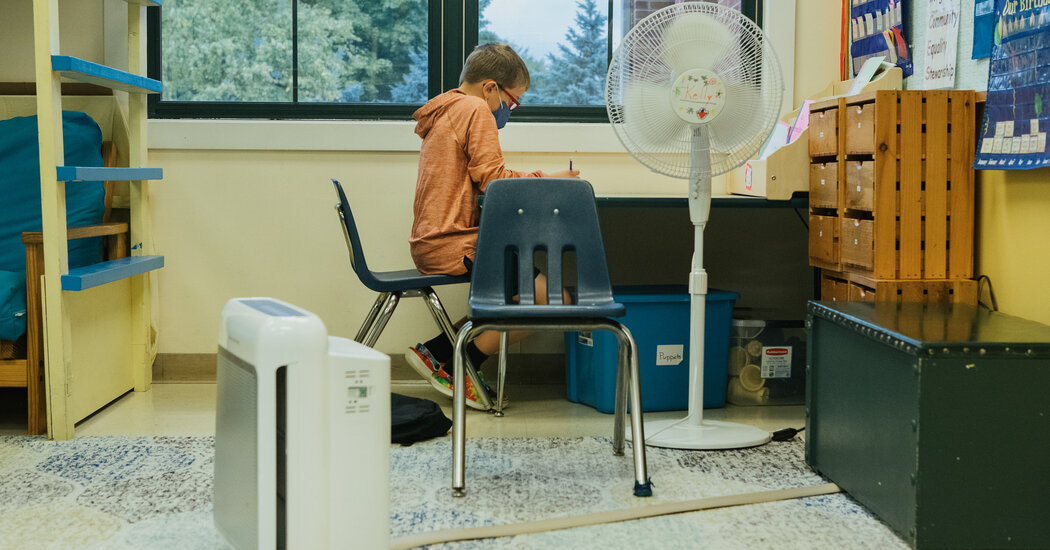
On a sunny afternoon in a cluttered music room at East High in Denver, two sophomores practiced violin while their music teacher, Keith Oxman, labored over a desk in an adjoining office.The ceiling fans were off to prevent the sheet music from scattering. The windows were sealed shut. East High is Denver’s largest high school and among the oldest, and there is no modern ventilation system.As the pandemic broke out, Mr. Oxman, 65 and a cancer survivor, feared getting sick or carrying the virus to his 101-year-old father. So he left the school when it first closed, in March 2020, and did not return for more than a year, staying home during later virus surges.“We were supposed to have the windows open,” he said. “But the windows don’t open.”Poorly ventilated spaces offer ideal transmission conditions for the coronavirus, and at the height of the pandemic, schools like East High were a searing point of controversy. An outbreak that began in November 2021 sickened more than 500 students — about one in five — and 65 staff members, one of whom died.The pandemic led to repeated closures at tens of thousands of schools across the nation. The shutdowns sent educational achievement tumbling, disrupted the lives of millions of American families, and set off a wave of anger, particularly among conservatives, that has not subsided.As the next presidential election gathers steam, extended school closures and remote learning have become a centerpiece of the Republican argument that the pandemic was mishandled, the subject of repeated hearings in the House of Representatives and a barrage of academic papers on learning loss and mental health disorders among children.But scientists who study viral transmission see another lesson in the pandemic school closures: Had the indoor air been cleaner and safer, they may have been avoidable. The coronavirus is an airborne threat, and the incidence of Covid was about 40 percent lower in schools that improved air quality, one study found.The average American school building is about 50 years old. According to a 2020 analysis by the Government Accountability Office, about 41 percent of school districts needed to update or replace the heating, ventilation and air-conditioning systems in at least half of their schools, about 36,000 buildings in all.Students lingering at East High at the end of the school day. Like other schools nationwide, it closed during Covid-19 surges.Stephen Speranza for The New York TimesAn air purifier in a hallway at East High. Many scientists believe that had the air in the nation’s schools been cleaner, closures could have been avoided. Michelle Gustafson for The New York TimesThere have never been more resources available for the task: nearly $200 billion, from an array of pandemic-related measures, including the American Rescue Plan Act. Another $350 billion was allotted to state and local governments, some of which could be used to improve ventilation in schools.“It’s a once-in-a-generation opportunity to fix decades of neglect of our school building infrastructure,” said Joseph Allen, director of the Healthy Buildings program at the Harvard T.H. Chan School of Public Health.Schoolchildren are heading back to classrooms by the tens of millions now, yet much of the funding for such improvements is sitting untouched in most states.Among the reasons: a lack of clear federal guidance on cleaning indoor air, no senior administration official designated to oversee such a campaign, few experts to help the schools spend the funds wisely, supply chain delays for new equipment, and insufficient staff to maintain improvements that are made.Some school officials simply may not know that the funds are available. “I cannot believe the amount of money that is still unspent,” Dr. Allen said. “It’s really frustrating.”The pandemic prompted the federal funding, but the problem is bigger than the coronavirus. Indoor air may be contaminated not just by pathogens, but also by a range of pollutants like carbon monoxide, radon and lead particles. Concentrations can be five times higher or more indoors than they are outdoors, according to the Environmental Protection Agency.And smoke is an increasing threat. A plume from Canadian wildfires closed schools across the Northeast in early June. Smoke closed 120 schools in California last September.The air in Denver was so fouled by wildfire smoke in May that the city briefly ranked as the second most polluted worldwide. Schools remained open, though many outdoor events were postponed.Nearly one in 13 American schoolchildren has asthma, which can be exacerbated by exposure to smoke; already it is the leading cause of absenteeism due to chronic illness. Asthma rates at several Denver public schools are higher than 20 percent, more than twice the national average.The principal of Garden Place Academy, Andrea Renteria, in the school gym. Until a cooling system was installed, temperatures sometimes reached the low 100s in classrooms.Stephen Speranza for The New York TimesThe view through windows in East High’s library. Denver, like many U.S. cities, regularly contends with wildfire smoke.Stephen Speranza for The New York TimesModern air-filtration systems can remove even the fine particulates that make smoke so unhealthy. And decades of research have suggested that improving air quality also can raise academic performance, increase test scores, bolster attention and memory, and decrease absences due to illness or other factors.“We would not accept drinking water that is full of pathogens and looks dirty,” said Linsey Marr, an expert in airborne transmission of viruses at Virginia Tech. “But we’ve been living with air that is full of pathogens and dirty.”Until recently, it wasn’t even clear to school officials how clean the air in school buildings should be. In May, however, the Centers for Disease Control and Prevention recommended that there should be five so-called air changes — the equivalent of replacing all the air in a room — per hour.In June, the American Society of Heating, Refrigerating and Air-Conditioning Engineers, an influential standards-setting organization, published its first-ever requirements for “pathogen-free air flow” in buildings, including combinations of filtration and ventilation technologies that building managers can ratchet up during outbreaks.“If I had to pick one place for pilot programs to invest money in layers for ventilation and filtration, school is the place to start,” said David Michaels, an epidemiologist at George Washington University who led the Occupational Safety and Health Administration during the Obama administration.There are tentative signs of progress. A C.D.C. survey last year found that 70 percent of 420 schools nationwide had evaluated their ventilation systems, although many implemented only low-cost improvements, like opening doors or windows.An agency survey published in April found that one in three school districts had completed or planned improvements in air quality, and that more than one-quarter had installed air cleaners or planned to do so. Several states are pursuing legislation intended to improve air quality in schools.Researchers at the C.D.C. and the Georgia Department of Public Health surveyed 169 elementary schools in Georgia at the end of 2020, after in-person learning had resumed in the state.Schools that improved ventilation had 39 percent fewer Covid cases, compared with schools that had not. Schools that combined better ventilation with filtration had 48 percent fewer cases.A music class taking place in an auditorium without windows at Garden Place Academy.Stephen Speranza for The New York TimesTerita Walker, the principal of East High, must juggle a number of priorities, including students’ safety and academic achievement. Stephen Speranza for The New York TimesA large study of schools in Italy estimated that students in classrooms equipped with ventilation systems or devices that deliver clean air had an at least 74 percent lower risk of infection than students in classrooms with open windows.C.D.C. researchers have estimated that air purifiers may decrease the exposure to aerosols — tiny floating droplets that might contain virus — by up to 65 percent.But with few trees, asphalt-covered yards and overcrowded buildings, many urban schools are struggling to cope with pathogens, pollution and climate change.Rising temperatures alone are straining their resources. Already this summer, students in Philadelphia and Baltimore were sent home because a lack of air-conditioning made school buildings unbearable, even dangerous.In the Denver district, 37 schools have no air-conditioning. Officials have installed new cooling systems in 11 schools over the past few years and plan to complete 13 more by the end of 2024.“Before we had the air cooling system, it was getting to the high 90s, low 100s in our classrooms,” said Andrea Renteria, principal of Garden Place Elementary School, on Denver’s north side. The school was established in 1904, and 92 percent of the student body are children of color.It still gets too hot in the school’s gym. With the floor-to-ceiling windows painted shut, the coach props open doors to let in air. But the school is barely a block away from the nexus of two major highways, so the outside air isn’t much healthier.Students of color more often attend schools close to highways and factories that spew air pollution, and heat waves are becoming more intense across the country.Several studies have found that hot classrooms result in a drop in test scores, which particularly affects students of color. That link alone accounts for roughly 5 percent of the racial achievement gap, according to a 2018 estimate by the National Bureau of Economic Research.Still, urban schools must juggle a host of competing priorities, including the safety, mental health and achievement of students. Air quality can seem less urgent.“Even in the times of Covid, there were things that were higher on the list for people than that,” Terita Walker, the principal of East High, said.Patchwork SolutionsIn an effort to find solutions to the indoor-air problem, researchers at the University of Colorado, Boulder, installed air quality monitors in dozens of Denver schools, including East High, before and after introducing classroom air purifiers.Mark Hernandez, an air quality expert at the university who leads the project, and his colleagues have found that in an average classroom with poor ventilation — about 1,000 square feet, a ceiling height of about eight feet and occupied by 25 students — two air purifiers can remove particulate matter that might trigger allergies and asthma, and double the air exchange rate.The data have prompted state officials to offer air purifiers to schools that most need them. The researchers now have a grant to install 2,400 air quality monitors in schools throughout the state, and will assess whether the improvements make a meaningful difference in absenteeism.An air purifier in a dining hall at Boulder High School, which began making investments in air quality long before the pandemic.Stephen Speranza for The New York TimesAn air quality sensor at Barnum Elementary in Denver. The device can give an approximate assessment of the air circulating in a room.Stephen Speranza for The New York TimesWithout guidance from experts like Dr. Hernandez, however, finding the right air filters — let alone overhauling an entire ventilation system — is daunting for school officials.“You’re asking school districts and facilities that really don’t understand the sort of fundamentals and mechanical systems to make decisions,” said Richard Corsi, dean of the College of Engineering at University of California, Davis. “It’s difficult for them.”In the absence of consistent federal guidance, school districts are cobbling together a patchwork of measures.Los Angeles schools invested in 55,000 commercial-grade air cleaners, while Seattle schools opted for less costly hand-held sensors. In Westchester County, N.Y., officials distributed more than 5,600 air purifiers to district schools. Boston Public Schools set up a district-wide system to monitor air quality.In many schools, however, spending on ventilation trails other priorities, like hiring staff, purchasing laptops and other equipment, or extra help for students who have fallen behind. Across the country, spending per school on air quality ranges widely, from just $67 to $2,675,000, according to a report in November.For districts that make it a priority, cleaner air can yield big payoffs. Less than 30 miles from East High, Boulder High School has air purifiers and sensors in nearly every classroom that can alert technicians when the air quality drops below acceptable levels.The Boulder schools made the improvements with a $576.5 million bond issued in 2014, long before the pandemic, and partnered with scientists to collect data before and after the installations.The research wrapped up early last year, and the results so far indicate that the network produced a 44 percent drop in carbon dioxide levels, often used as a proxy for air quality. The school had a coronavirus outbreak during the Omicron wave — seven staff members and 237 students — but arguably fared better than the county as a whole.A second-grade math class at State College Friends School in State College, Pa. The school has air purifiers in classrooms and keeps windows open; even in poor weather, students are regularly outside.Michelle Gustafson for The New York TimesEthan Long, a student, reading in a classroom at State College Friends School.Michelle Gustafson for The New York TimesIn State College, Pa., many schools shut down for days or weeks during Covid-19 surges because too many students or teachers were sick with the virus.But State College Friends School, a small Quaker institution, has remained open since the fall of 2020. The school identified just four cases of in-school transmission in the 2021-22 school year.The school was built in the 1960s, and every classroom opens to the outside. Large classroom windows remain open on all but the most frigid days, and each room is outfitted with air filters and fans.When the weather cooperates, students play outside on the lush grounds; when it doesn’t, they snack on camp chairs in covered patios outside their classrooms.Friends is an unusual school by most measures. It’s tiny, with just 120 students. The staff members and students wore high-quality masks until the number of local Covid cases dropped below 50 per 100,000 people this spring. And the school has gotten assistance from air quality experts at Penn State University, practically in its backyard.Not every school can look like Friends — nor is that necessary.Dr. Hernandez estimates that spending $65 per student per classroom per year on air purifiers could significantly reduce pathogens and pollution in classrooms.At East High in Denver, as in the rest of America, Covid is fast receding as a priority. Mr. Oxman, the music teacher, is back full time, but the pandemic doesn’t seem to have brought many lasting changes. East High is mostly the same.“Things are kind of going back to the way they were,” he said.

Read more →

Judge Allows Missouri’s Ban on Youth Gender Medicine to Take Effect

The NewsA state judge in Missouri on Friday denied a request to temporarily block a state law passed this year that restricts gender-related medical treatments for minors. The ruling was issued by Missouri Circuit Court Judge Steven Ohmer, three days before the ban is set to go into effect. A legal challenge to the ban brought by civil rights groups is ongoing.Protesters gathered at the Missouri Statehouse in March to protest the state’s ban on transition care for transgender minors.Charlie Riedel/Associated PressWhy It Matters: Adolescents and adults are likely to have difficulty accessing gender-related health care.Under Missouri’s law, clinicians will not be allowed to treat any minor who is not already receiving gender transition care, which includes drugs that suppress puberty; hormone treatments with estrogen or testosterone; and, in rare cases, surgeries. Minors currently receiving care can continue to do so.The law will also affect transgender adults, as it bans Medicaid coverage of gender transition care for people of all ages in the state. The law has a “sunset” provision and will be in effect for four years.The legal challenge to Missouri’s ban has been particularly high-profile. A whistle-blower from a pediatric gender clinic in the state, Jamie Reed, said earlier this year that doctors at the clinic had hastily prescribed hormones with lasting effects to adolescents with psychiatric problems. Ms. Reed filed an affidavit about her experience in February and testified on Tuesday in favor of the ban.Chloe Cole, a 19-year-old who has frequently testified to state legislatures about regretting gender treatments she received as a younger teenager in California, also testified on behalf of the state of Missouri against the injunction.The plaintiffs in the legal challenge include three transgender minors who are seeking medical care to transition and will no longer be able to do so once the law is in effect. The plaintiffs also include doctors in the state and two national L.G.B.T.Q. advocacy organizations. Doctors who violate the new law could lose their medical licenses or be sued.According to the Williams Institute, a research center at the U.C.L.A. School of Law, an estimated 2,900 minors in Missouri identify as transgender.Background: Legal challenges have seen mixed results recently.At least 20 states have banned or severely restricted transition care for transgender minors in a flurry of legislation, led by Republicans. Most of the bans were passed during this year’s legislative session.Legal challenges have been brought by civil rights groups in at least 13 states. In June, a judge struck down a ban in Arkansas — the first such law to be passed in the United States — arguing that the law unfairly singled out transition care and transgender children. The ruling was a significant victory for transgender minors and their families. On Friday, a state district court judge in Texas temporarily blocked a law that would ban gender-related treatments for minors.But a series of legal setbacks has clouded the picture. In August, a federal appellate panel ruled that a similar ban in Alabama could be enforced while the case proceeds. Other disagreements in the courts have signaled that these cases may ultimately be decided by the United States Supreme Court.The American Academy of Pediatrics last month reaffirmed its position that these types of medical treatments are beneficial for many youth, and has vehemently opposed any government interference in medical decisions that it says are best made by parents and doctors. But the group also took the unusual step of commissioning a review of medical research on the treatments.What’s Next: The legal challenge continues as the law goes into effect.The law will restrict any new patients from receiving gender affirming treatments while the case is heard in state court over the next year. And it will continue to prevent Medicaid coverage for the estimated 12,400 transgender people in the state.Judge Ohmer, who typically presides over juvenile cases, wrote that the science in support of gender-related medicine for youth was “conflicting and unclear,” adding that “the evidence raises more questions than answers.”In response to the ruling, the American Civil Liberties Union of Missouri said it would continue to fight to overturn the ban: “The case is not over and will go to a full trial on the merits.”

Read more →

Wegovy, the Weight Loss Drug, Relieves Heart Failure Symptoms: Drugmaker’s Study

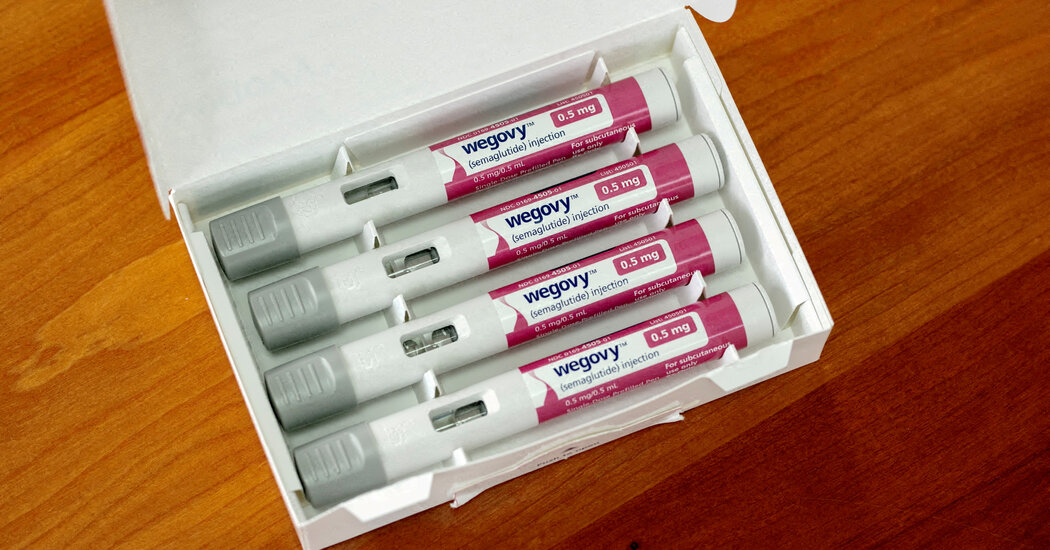
The drug Wegovy eased issues for people with a type of heart problem, adding to the treatment’s benefits beyond weight loss.One of the leading new obesity drugs, Wegovy, eased symptoms and raised the quality of life of patients with obesity and a common type of heart failure, a study funded by the drug’s maker found, adding to the evidence that the medications can produce health benefits beyond weight loss.The study, published on Friday in The New England Journal of Medicine, evaluated the drug in people with a condition known as preserved ejection fraction in which the heart pumps normally but has lost the flexibility needed to fill with blood. The condition accounts for roughly half of all heart failure cases.Patients given Wegovy in the trial showed greater improvements in physical fitness and in symptoms like fatigue and shortness of breath than those administered a placebo. The study, which included 529 participants and lasted for a year, was not designed to assess cardiac emergencies, but it found that 12 patients on the placebo and only one on Wegovy were hospitalized or required an urgent medical visit for heart failure.The drug showed more pronounced relief of heart failure symptoms than other treatments, the study said.“This is a huge patient population that is extremely symptomatic, for which we’ve had very few if any treatment options, and in which obesity is highly prevalent,” said Dr. Mikhail Kosiborod, a cardiologist at Saint Luke’s Mid America Heart Institute in Kansas City and the study’s lead investigator, who also consults for Novo Nordisk, the maker of Wegovy. “It’s going to be a true paradigm shift.”Cardiologists used to see obesity as a condition that simply coexisted with heart failure. But the new study strengthened the evidence of obesity being a main driver of the disease.“It’s a proof of concept that in many patients with this type of heart failure, where obesity is in fact causal, it needs to be treated as a root cause of heart failure and needs to be targeted as a therapeutic strategy,” Dr. Kosiborod said.Another study evaluating the drug in heart failure patients with obesity and diabetes is expected to wrap up this year. If that study, too, produces promising results, Novo Nordisk has said it could seek to have the drug formally recommended for the treatment of heart failure.Scientists who did not work on the trial said it would be important to study the drug over longer periods in more patients, allowing researchers to determine whether it actually reduced the likelihood of hospitalizations or deaths. But given the severity of physical limitations and symptoms in patients with this type of heart failure, the improvements on those measures alone were notable, they said.On a 100-point measure of quality of life and physical abilities, patients given Wegovy experienced a greater improvement of their symptoms by roughly eight more points than patients on the placebo, according to the study. People on Wegovy also showed greater gains on a six-minute walk test.“It’s a short trial, and so we can’t say much about long-term sustained benefits, but I think the magnitude of the benefit is impressive relative to what other interventions have shown in the same population,” said Dr. Daniel Drucker, a senior scientist at the Lunenfeld Tanenbaum Research Institute at Mt. Sinai Hospital in Toronto who has studied the new drugs. He has received fees from Novo Nordisk but was not involved in the latest trial.Wegovy and another version of the same drug for diabetes patients, Ozempic, have quickly become popular for the significant weight loss results they have shown — so much so that Novo Nordisk has struggled to meet growing demand.But the latest study built on other recent evidence that the drug does more than cut weight.The company, for example, announced this month that Wegovy also slashed the risk of heart complications by 20 percent among a different pool of patients in a large trial, a result that was seen as crucial for persuading more insurers to cover the new weight loss drugs. Researchers are waiting for the company to release the underlying data to the study to examine the topline results.“Obesity is associated with 200 other obesity-related diseases,” said Dr. Ania Jastreboff, an endocrinologist and obesity medicine specialist at Yale University who consults for makers of obesity drugs. “If we treat this one disease, we can potentially impact the health of so many patients in many different ways, and this is yet another important example.”Experts believe that weight loss on its own probably accounted for some of the improvements in patients’ heart health. But determining exactly how big a role weight loss played and what other factors may have contributed will require more research.The heart failure study released on Friday, for example, found indications that Wegovy may have reduced inflammation. Patients on the drug also had lower levels of an important marker of heart congestion, another sign that the drug is doing something that may have an effect on heart failure.“We still need to understand that better,” Dr. Kosiborod said.

Read more →