Air pollution has decreased across the US, but new research finds health burdens remain unequal among racial groups

Health benefits that have resulted from reductions in fine particulate air pollution aren’t distributed equally among populations in the U.S., a new Yale-led study finds. Racial and ethnic minorities — and Black people in particular — still experience disproportionately high rates of cardiovascular disease-related deaths caused by exposure to fine particulate matter, according to the research.
The findings were published Aug. 31 in Nature Human Behavior.
Fine particulate matter, also known as PM2.5, consists of particles or droplets smaller than 2.5 micrometers in diameter, or 30 times smaller than the width of a human hair. While some PM2.5 in the environment comes from natural sources, such as wildfires, the majority of particulate matter pollution in the U.S. is the result of human activities, including emissions from vehicles, power plants, and factories.
The small size makes PM2.5 harmful for human health, said Kai Chen, assistant professor of epidemiology at Yale School of Public Health and senior author of the study.
“When you inhale such small particles, they can get into your lungs and some smaller particles can even get into the blood stream and circulate around the body,” said Chen. “That can impact your heart, which leads to a lot of the cardiovascular disease we see today.”
Environmental efforts including the 1963 Clean Air Act and the Environmental Protection Agency’s (EPA) National Ambient Air Quality Standards for PM2.5, established in 1997, have helped bring down PM2.5 levels throughout the United States. This, in turn, has yielded benefits to human health. But it has remained unclear whether these health benefits are distributed equitably across racial and ethnic groups.
“We know that some minorities, especially Black and Hispanic people, are exposed to higher levels of PM2.5 than white people,” said Chen. “In our study, we wanted to go further and assess vulnerability to PM2.5 across different groups and see how that relates to mortality.”
For the study, the researchers collected data on cardiovascular disease deaths and monthly PM2.5 concentrations across 3,103 counties in the contiguous U.S. between 2001 and 2016. They then evaluated whether there was a link between increases in PM2.5 levels and changes in cardiovascular disease-related deaths.

Read more →

Study could help explain why certain brain tumors don't respond well to immunotherapy

A study led by researchers at the UCLA Jonsson Comprehensive Cancer Center sheds new light on why tumors that have spread to the brain from other parts of the body respond to immunotherapy while glioblastoma, an aggressive cancer that originates in the brain, does not.
In people with tumors that originated in other parts of the body but spread to the brain, treatment with a type of immunotherapy called immune checkpoint blockade appears to elicit a significant increase in both active and exhausted T cells — signs that the T cells have been triggered to fight the cancer. The reason the same thing doesn’t occur in people with glioblastoma is that anti-tumor immune responses are best initiated in draining lymph nodes outside of the brain, and that process does not occur very effectively in glioblastoma cases.
To date, immunotherapy has not been effective in treating glioblastoma, but it has been shown to slow or even eradicate other types of cancer, such as melanoma, which frequently metastasizes to the brain.
The new research, published in the Journal of Clinical Investigation, could help improve the effectiveness of immunotherapy for people with brain tumors and it could suggest new paths in the effort to help develop more effective therapies.
“If we’re going to try to develop new therapies for solid tumors, like glioblastoma, which are not typically responsive, we need to understand the tumor types that are responsive, and learn the mechanisms by which that happens,” said the study’s senior author, Robert Prins, a professor of molecular and medical pharmacology and of neurosurgery at the David Geffen School of Medicine at UCLA.
The researchers studied the immune cells obtained from nine people with metastatic brain tumors who had been treated with immune checkpoint blockade — which works by harnessing the body’s immune system to destroy cancer cells — and compared their observations with immune cells taken from 19 patients with brain metastases that not been treated with immunotherapy.
They used a technique called single-cell RNA sequencing to examine the genetic material in both sets of samples, and then compared the data to previously published analyses of 25 recurrent glioblastoma tumors to better understand the effect the immunotherapy had on T cells.

Read more →

Red blood cells exposed to oxygen deficiency protect against myocardial infarction

Red blood cells exposed to oxygen deficiency protect against myocardial infarction, according to a new KI study published in the Journal of Clinical Investigation. The study also shows that the protective effect is enhanced by a nitrate-rich vegetable diet.
Red blood cells carry oxygen from the lungs to all of the body’s cells and carbon dioxide back to the lungs. A new study, conducted at Karolinska Institutet in collaboration with Karolinska University Hospital, now shows that red blood cells have an intrinsic function of protecting against heart injury caused by myocardial infarction.
The effect is enhanced by a diet containing nitrate-rich vegetables, such as arugula and other green leafy vegetables.
“This effect was also shown in a clinical study in patients with high blood pressure who were randomly assigned to eat nitrate-rich vegetables or a diet low in nitrates,” says John Pernow, Professor of Cardiology at the Department of Medicine, Karolinska Institutet in Solna and senior physician at Karolinska University Hospital, and the study’s corresponding author together with Jon Lundberg, professor at the Department of Physiology and Pharmacology, Karolinska Institutet.
Part of the study was conducted through experiments with red blood cells from mice that were added to a myocardial infarction model with hearts from mice. Before the experiment, the red blood cells were exposed to low oxygen pressure, while nitrate was added to the drinking water.
In a clinical study, red blood cells were collected from patients with high blood pressure who were randomly assigned a nitrate-rich diet with green leafy vegetables or a diet with nitrate-poor vegetables. These red blood cells were given to the corresponding myocardial infarction model with hearts from rats.
“The results show both that the red blood cells convey protection against injury in the heart in the event of low oxygen levels, and how that protection can be enhanced through a simple dietary advice. This may be of great importance for patients at risk of myocardial infarction,” says the study’s first author Jiangning Yang, a researcher at the Department of Medicine, Solna, Karolinska Institutet.

Read more →

Precarious employment conditions can increase risk of early death

People without a secure job contract can reduce their risk of premature death by 20 per cent if they gain permanent employment, a study from Karolinska Institutet published in The Journal of Epidemiology and Community reports. According to the researchers, the results indicate that job security on the Swedish labour market needs to improve.
Precarious employment is a term that is used to describe jobs with short contracts (e.g. temping), low wages and a lack of influence and rights, all of which lead to a working life without predictability and security.
In the present study, the researchers have examined how this affects the risk of death.
“This is the first study to show that changing from precarious employment to secure employment can reduce the risk of death,” says the paper’s last author Theo Bodin, assistant professor at the Institute of Environmental Medicine, Karolinska Institutet. “It’s the same as saying that the risk of early death is higher if one keeps working in jobs without a secure employment contract.”
The researchers used registry data from over 250,000 workers in Sweden between the ages of 20 and 55 gathered over a period from 2005 to 2017. The study included people who worked under insecure working conditions and who then shifted to secure working conditions.
Those who switched from precarious to secure employment had a 20 percent lower risk of death, regardless of what happened afterward, compared to those who remained in precarious employment. If they remained in secure employment for 12 years, the risk of death decreased by 30 percent.
“Using this large population database allowed us to take account of many factors that could influence mortality, such as age, other diseases that workers can suffer from or life changes like divorce,” explains Nuria Matilla-Santander, assistant professor at the same institute and the study’s first author. “Because of the methods we used, we can be relatively certain that the difference in mortality is due to the precariousness of employment rather than individual factors.”
She continues: “The results are important since they show that the elevated mortality rate observed in workers can be avoided. If we reduce precariousness in the labour market, we can avoid premature deaths in Sweden.”
Dr Matilla-Santander says that the next stage of the research is to examine the specific causes of mortality in this regard.
The study was mainly financed by the Swedish Research Council for Health, Working Life and Welfare (Forte). The researchers report no conflicts of interest.

Read more →

Federal Officials Propose New Nursing Home Standards to Increase Staffing

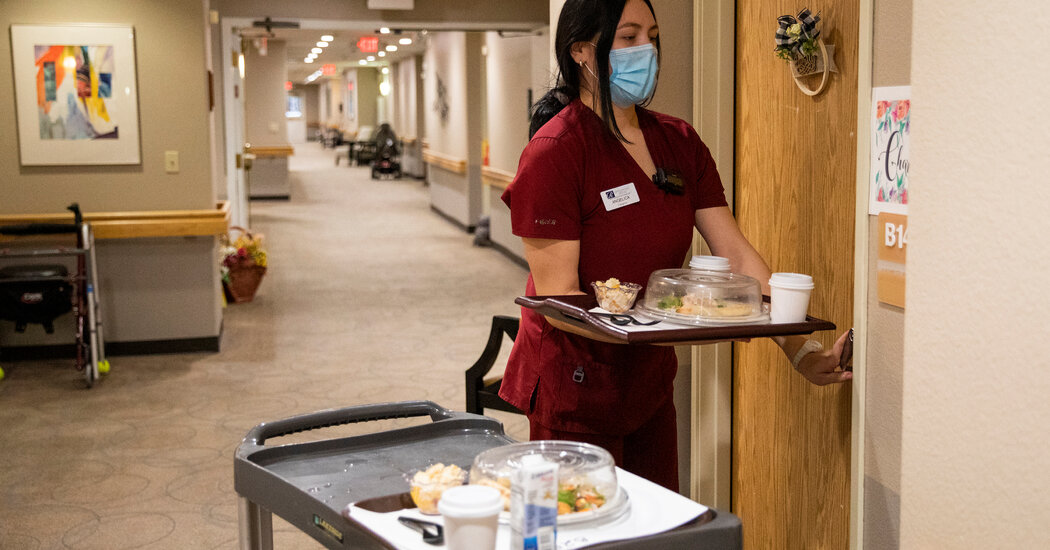
Citing worker shortages, nursing home operators said the standard could not be met without additional funding for higher wages.The nation’s most thinly staffed nursing homes would be required to hire more workers under new rules proposed on Friday by the Biden administration, the greatest change to federal nursing home regulations in three decades.The proposed standard was prompted by the industry’s troubled performance earlier in the coronavirus pandemic, when 200,000 nursing home residents died. But the proposal falls far short of what both the industry and patient advocates believe is needed to improve care for most of the 1.2 million Americans in nursing homes.The proposal, by the Centers for Medicare and Medicaid Services, would require all facilities to increase staff up to certain minimum levels, but it included no money for nursing homes to pay for the new hires.C.M.S. estimated that three-quarters of the nation’s 15,000 homes would need to add staff members. But the increases at many of those facilities would be minor, as the average nursing home already employs nurses and aides at, or very close to, the proposed levels.The government said it would exempt nursing homes from punishment if they could prove that there was a local worker shortage and that the facilities had made sincere efforts to recruit employees.“Fundamentally, this standard is wholly inadequate to meet the needs of nursing home residents,” said Richard Mollot, the executive director of the Long Term Care Community Coalition, an advocacy group based in New York.Executives in the nursing home industry said that without extra money from Medicare or Medicaid — the two federal insurers that pay for most nursing home care — the requirement would be financially unattainable.“It’s meaningless to mandate staffing levels that cannot be met,” Katie Smith Sloan, the president and chief executive of LeadingAge, an association that includes nonprofit nursing homes, said in a statement. “There are simply no people to hire — especially nurses. The proposed rule requires that nursing homes hire additional staff. But where are they coming from?”The new staffing standard would require homes to have daily average nurse staffing levels amounting to at least 0.55 hours per resident. That translates to one registered nurse for every 44 residents. But that is below what the average nursing home already provides, which is 0.66 hours per resident, a 1:36 ratio, federal records show.At least one registered nurse would have to be on duty at all times under the proposed plan — one of the biggest changes for the facilities, as they currently must have nurses for only eight consecutive hours each day.The proposed rule also calls for 2.45 nurse aide hours per resident per day, meaning a ratio of about one aide for every 10 residents. While the federal government sets no specific staffing requirements for nurse aides, the average home already provides 2.22 nurse aide hours a day, a ratio of about 1:11.“The federal minimum staffing standards proposed by C.M.S. are robust yet achievable,” the agency said in a statement. “The proposal also makes clear that the numerical staffing levels are a floor — not a ceiling — for safe staffing.”Registered nurses are at the top of the chain of command at nursing homes, overseeing assessments of residents and handling complex clinical tasks. Nurses delegate more straightforward clinical roles to licensed practical nurses.Certified nurse assistants, often called nurse aides, are generally the most plentiful in a nursing home and help residents with basic needs like bathing, getting out of bed and eating.On average, registered nurses make $37 an hour while licensed practical nurses earn $28 an hour, according to C.M.S. Aides often start at minimum wage or slightly above, earning $17 an hour on average.“People have more choice,” said Tina Sandri, the chief executive of Forest Hills of DC, a nursing home in Washington, referring to nursing home staff. “They can go to hospitals and make more and do less than they do here in a nursing home.”“We’ve lost staff to hospitals that had $20,000 signing bonuses,” she added, “and as a nonprofit, we can’t compete with that.”Nursing home officials say they cannot afford to pay higher wages because state Medicaid programs reimburse them too little. Patient advocates, however, note that some for-profit homes are providing substantial returns to investors.Medicare and Medicaid spent $95 billion on nursing home care and retirement community care in 2021, according to C.M.S. The agency estimated that the new standards would cost homes another $4 billion in three years, when all homes except those in rural areas would need to comply. Rural homes would have five years.Ellen Quirk, a retired certified nurse assistant in Hayes, Va., recalled that sometimes she would care for all of the residents on a single floor in the nursing home, which could be 20 or more people, by herself. It’s challenging for an aide to care for more than five to seven people at a time, she said.“If it’s more than that, then things aren’t done properly,” Ms. Quirk, 63, said. “Things are skipped over, like a bath or changing them every couple of hours or feeding them properly.”“I’ve seen patients that roll over and fall out of bed,” she added. “Sometimes they get bed sores because beds are saturated in urine for hours and hours.”The nursing home industry has been pressing federal and state governments to pay for a bevy of enticements to long-term care workers, including educational subsidies for those who have worked in nursing homes, loan forgiveness and career opportunities for certified nursing assistants working toward their nursing degrees.The administration said it would offer $75 million in scholarships and tuition as part of the new proposal. The administration is accepting comments for the next 60 days before it finalizes the new standard.

Read more →

Mitch McConnell May Be Experiencing Small Seizures, Doctors Suggest

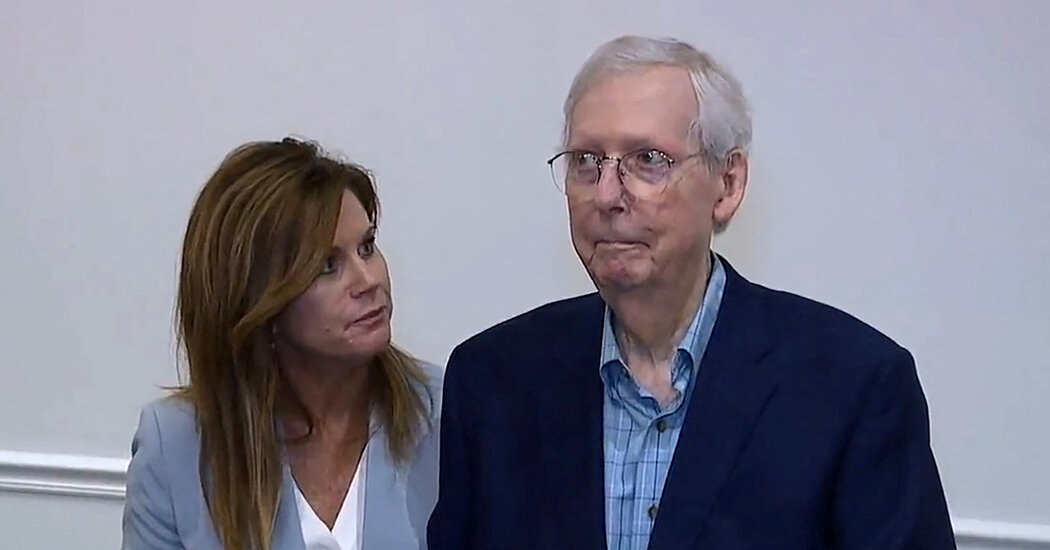
Two episodes, where the Republican senator froze and did not respond to some questions, may be symptoms of a serious illness, according to neurologists not involved in his medical care.A four-line letter, signed by the attending physician of Congress and released by Senator Mitch McConnell on Thursday, suggested that his recent spells of speechlessness were linked to “occasional lightheadedness” perhaps brought on by his recovery from a concussion last winter or “dehydration.”But seven neurologists, relying on what they described as unusually revealing video of Mr. McConnell freezing up in public twice recently, said in interviews Thursday and Friday that the episodes captured in real time likely pointed to more serious medical problems afflicting the longtime Republican leader.Some of the neurologists, while cautioning that they could not diagnose the minority leader from afar, said that the letter and other comments from Mr. McConnell’s office appeared to fall short of explaining why he abruptly stopped speaking during news conferences in late July and again on Wednesday.“If I gave that tape to a medical student and that was his explanation, I’d fail him,” said Dr. Orrin Devinsky, a professor of neurology at the NYU Grossman School of Medicine, referring to the account given by the attending physician of Congress on Thursday. “Medically, these episodes need to be taken seriously.”The neurologists said that the episodes justified close medical attention and could prompt treatment to keep them from recurring. While several possibilities were suggested, including mini-strokes, doctors said that the spells appeared most consistent with focal seizures, which are electrical surges in one region of the brain.The senator’s aides have not revealed what type of follow-up care Mr. McConnell may be receiving, and his office said on Friday it had nothing to add beyond the letter by the Congressional physician, Dr. Brian P. Monahan.More details about the medical history of Mr. McConnell, 81, including whether he has been having such episodes off camera, would also help rule out other possible explanations for the spells, neurologists said.Whether caused by seizures or mini-strokes or something else, spells like Mr. McConnell’s would not preclude most patients from working or socializing normally, doctors said.“Seizures have a stigma in our society, and that’s unfortunate because these are very brief electrical interruptions in behavior,” said Dr. Jeffrey Saver, a professor of neurology at U.C.L.A. “Between those rare episodes, which are usually well controlled with medicines, people function perfectly normally.”Still, experts said that seizures carried some elevated risk of cognitive or behavioral problems and could affect older patients differently.Rarely does the public get as complete a glimpse of a serious medical event in a public figure as it did twice in recent weeks with Mr. McConnell. For neurologists, videos like those showing Mr. McConnell from the moment he appeared to lose the ability to speak are far more than mere curiosities.They can help form the basis of a diagnosis, as homemade videos of everyday patients occasionally do in standard neurology practices.“They’re very helpful, because you’re not subject to the vagaries of someone’s description and you can capture the beginning of it, which is important especially for seizures,” said Dr. Anthony Kim, a professor of neurology at the University of California, San Francisco.Details as small as the direction in which people’s eyes are pointed during such an episode offer potential clues about the cause, Dr. Kim said.After watching Mr. McConnell’s symptoms play out — his abrupt stop in speech, his eyes fixed in the distance, his seeming recovery after about 30 seconds — Dr. Kim said that “the possibility at the top of my list would be a seizure.”That Mr. McConnell’s second spell so closely mirrored the first pointed even more strongly to a seizure, neurologists said.Mini-strokes, which result from a clot that reduces blood flow to the brain, can also cause brief periods of impaired speech. But they rarely produce the same constellation of symptoms each time they recur, given that clots are unlikely to travel at random to the same part of the brain twice.Focal seizures, on the other hand, are often triggered by an irregularity in one specific part of the brain, creating what doctors refer to as stereotypic symptoms. They are known to stop patients dead in their tracks, seeming to cut them off from their surroundings.Patients can often respond reflexively to questions during such an episode — as Mr. McConnell did on Wednesday, saying “yeah” when asked if he had heard a reporter’s question — even if they appear unable to voice their thoughts or engage with their environment.Mr. McConnell suffered a concussion in March, a risk factor for seizures. The seizures can be caused by a bleed in the brain or a scar from a traumatic head injury. Previous strokes or other kinds of damage to brain tissue can also lead to seizures in older people, who as a group experience the onset of seizures almost as often as children do.Some seizures are provoked by triggers like abnormal blood sugar levels. But if someone has had two seizures that cannot be explained in that way, neurologists said that would typically be enough for a diagnosis of epilepsy, a common neurological disorder affecting more than three million Americans that can arise at any age. They would generally prescribe anti-seizure medication.“Two seizures you definitely would want to treat,” said Dr. Sami Khella, the chief of neurology at Penn Presbyterian Medical Center. “You don’t want them to happen — they’re not good for you.”Many patients function completely normally and show normal brain wave activity between seizures, allowing them to remain active and working even as they are forced to forgo activities like driving.But they do cause patients to miss periods of time during episodes. A seizure at an inopportune moment, like when crossing the street, can be dangerous. And focal seizures involving one region of the brain can generalize, causing episodes characterized by jerking movements or epileptic spasms.Beyond that, one or two seizures can beget more, a cycle that neurologists try to interrupt with treatment. “The more the brain seizes, the more it learns to seize,” Dr. Khella said.Other complications can follow. A phenomenon known as sudden, unexpected death in epilepsy kills an estimated one in 1,000 people with epilepsy each year.“If you do get epilepsy as an elderly individual, there are concerns about things like memory, about cognitive function, because your resilience at 80 is going to be far less than when you’re 20 or 30,” said Dr. Devinsky, who directs NYU Langone’s Comprehensive Epilepsy Center.Neurologists said they could not rule out other possible explanations for Mr. McConnell’s episodes.Dr. Gavin Britz, a neurosurgeon at Houston Methodist, said he would want to exclude Parkinson’s disease, which can also cause freezing episodes.But neurologists agreed that suggestions that Mr. McConnell was merely lightheaded, while possible, were difficult to square with the video. Dehydration could exacerbate other conditions, they said, but such patients would be unlikely to stay upright or recover so quickly without fluids, as Mr. McConnell appeared to do.“We don’t have 100 percent information, so we’re kind of in the dark,” Dr. Devinsky said. “But we do have this very powerful clinical information, which is quite honestly how I have to diagnose seizures and epilepsy all the time, often without the video.”

Read more →

Critically ill UK teen in legal fight with NHS

Published37 minutes agoShareclose panelShare pageCopy linkAbout sharingImage source, Getty ImagesBy Michelle RobertsDigital health editorA critically ill 19-year-old and her family are fighting the NHS in court over plans to stop more treatment and proceed instead with end-of-life care. The former A-level student wants to go to Canada for an experimental therapy which she believes might help her rare genetic condition. The hospital says she is “actively dying” – she needs a ventilator to help her breathe and is fed through a tube. It will be up to the UK’s Court of Protection to decide her future. A hearing will decide whether NHS doctors continue to treat her.The teenager, referred to in the legal documents as ST, has a mitochondrial disease, similar to Charlie Gard – a baby whose life support was withdrawn after a high-profile legal case in 2017. The collective view of the doctors treating her is that ST is now in, or fast approaching, the final stage of her life because of her progressive disease. Despite all the physical difficulties ST has, she is able to communicate with her doctors with assistance from her mother and, on occasion, speech therapists.ST has said: “I want to die trying to live. We have to try everything.” She wanted to make that decision for herself, but the court has ruled she cannot. ST believes she can stay alive for long enough to go for experimental nucleoside therapy treatment abroad, despite there being no centre offering it to her yet and no guarantee it would help her. Hearing the case this week, Mrs Justice Roberts said treatment in Canada was “not an immediate option” because the trial has been paused as a result of funding constraints. “None of the material disclosed by the family or the trust in relation to potential treatment options in North America confirms that ST will be considered eligible,” she added.ST is aware that she has been in an intensive treatment facility for almost a year and that there is nowhere in the UK where her life can be supported outside an ITU. She knows and accepts that she would need to be weaned off ventilatory support before she was able to live outside the unit – it remains her goal to try.Doctors say her current breathing difficulties are due to her deteriorating mitochondrial disease weakening her muscles, rather than long-Covid or other infections that she has had. ST’s Christian family say they will continue to fight her case and have put in an application seeking existing reporting restrictions to be lifted so that they can publicise their daughter’s situation and raise money for her treatment. In a statement via their solicitor, the family said: “We are shocked to be told by the judge that our daughter does not have capacity to make decisions for herself after all the experts have said that she does. We are very distressed by this injustice, and we hope that, by Jesus’s grace, this will be corrected on appeal.”Charlie Gard: The story of his parents’ legal fightWhat is mitochondrial disease?It is an illness that can be present at birth or develop later in life, often in young adultsThe mitochondria are the engines of the body’s cells and provide energy for all metabolic processesIt causes debilitating physical, developmental and cognitive disabilitiesIt can affect different parts of the body, particularly those that require a lot of energy like the brain, heart and liverThe disease is progressive and has no cureMore on this storyThe story of Charlie GardPublished27 July 2017Archie’s mum highlights importance of new BBC dramaPublished13 JuneRelated Internet LinksCourt of ProtectionThe BBC is not responsible for the content of external sites.

Read more →

Cervical cancer: 'I avoided my smear test – don't avoid yours'

Published4 hours agoShareclose panelShare pageCopy linkAbout sharingImage source, Wendy ClarkeBy Chris RobinsonBBC North East and Cumbria”I still get letters inviting me for my smear test, but I haven’t got a cervix anymore.”Wendy Clarke lets out a loud defiant laugh. Eight months ago she was told she had terminal cancer.”There’s a really wicked streak in me that says, ‘should I go and book a test, turn up and scare the bejesus out of them when they do it?”But the mother of two admits her fear of having a smear test still outweighs that “wicked streak”.”I’m sure I get the letters more frequently than I used to but maybe I didn’t open them because I knew what they were?” she added.In January, the 46-year-old, from Fairfield, Stockton, was given the devastating news her cancer was terminal.She was given six months to live without treatment, or a year with it. Wendy chose the latter.Image source, Wendy ClarkeThe tumour in her groin is the size of a lime. Although a first round of chemotherapy reduced it by 11%, the second was not successful and it doubled in size.Although Wendy has had smear tests in the past after having children, she became fearful and embarrassed when it came to getting more.”I avoided it,” said Wendy, who has since been forced to retire from her job as a maths and English tutor.”It is the most personal and private part of your body – and it was not wanting to share that with somebody, a total stranger if you like. I felt violated.”Maybe some women can relate to that – maybe some chaps can relate to it too.”I suppose anyone who has an issue going to the dentist can relate, because of the intrusion and the fear, and apprehension.”Image source, Wendy ClarkeThere are around 3,200 new cervical cancer cases in the UK every year, according to Cancer Research UK. The majority of cases are preventable.Wendy is encouraging other women to get a smear test – and to talk about it too.While her campaign is small, she hopes any conversation out of it will grow.It was her own fight and determination which saw her nominated for BBC Radio Tees Make A Difference Award for bravery, which will be held on 11 September.This Twitter post cannot be displayed in your browser. Please enable Javascript or try a different browser.View original content on TwitterThe BBC is not responsible for the content of external sites.Skip twitter post by BBC Radio TeesAllow Twitter content?This article contains content provided by Twitter. We ask for your permission before anything is loaded, as they may be using cookies and other technologies. You may want to read Twitter’s cookie policy,

Read more →

Doctor clears Mitch McConnell after health scare

Published12 hours agoShareclose panelShare pageCopy linkAbout sharingThis video can not be playedTo play this video you need to enable JavaScript in your browser.By Nadine YousifBBC NewsRepublican Senate leader Mitch McConnell is “medically clear” to work, says a doctor, a day after the lawmaker suddenly appeared unable to speak for the second time this summer.Brian Monahan, the attending physician of the US Congress, said he had consulted with Mr McConnell and his neurology team about the matter. On Wednesday, Mr McConnell, 81, froze up for more than 30 seconds when asked if he would run for re-election. He had a similar lapse in July. During Wednesday’s press event in Covington, Kentucky, the senator was unable to answer questions, which had to be repeated by staff. This video can not be playedTo play this video you need to enable JavaScript in your browser.Mr McConnell made no comment about his health before leaving with aides, who later said he was feeling lightheaded. He suffered from a concussion after falling at an event in March, according to staff. Dr Monahan said in a statement on Thursday: “Occasional lightheadedness is not uncommon in concussion recovery and can also be expected as a result of dehydration.”Politico reported that a handful of Republican senators were weighing whether Mr McConnell should stay on as leader. Republican congresswoman Marjorie Taylor Greene, meanwhile, wrote in a post on social media that Mr McConnell was “not fit for office.” “Severe aging health issues and/or mental health incompetence in our nation’s leaders MUST be addressed,” Ms Greene said, also mentioning the age of US President Joe Biden, who is 80. Democratic congressman Dean Phillips called on social media for term limits for members of Congress and the Supreme Court. On Thursday, President Joe Biden said he had recently spoken with Mr McConnell and that he seemed well. “He’s a friend, and I spoke to him today. And you know, he was his old self on the telephone,” Mr Biden told reporters in Washington DC. Mr Biden added he did not have any concerns about whether Mr McConnell was fit enough to do his job. More on this storyMcConnell freezes for second time during press eventPublished15 hours agoMcConnell has had ‘multiple’ recent falls – reportsPublished27 JulyUS senator freezes in front of reporters. Video, 00:00:33US senator freezes in front of reportersPublished26 July0:33

Read more →

Digging deeper into how vaccines work against parasitic disease

Scientists have established the effectiveness of vaccines they developed to prevent the disfiguring skin disease leishmaniasis in animal studies, and Phase 1 human trial planning is in motion for the most promising candidate.
But in new work, the research team has determined how these vaccine candidates, created using mutated disease-causing parasites, prompt molecular-level changes in host cells that have specific roles in helping generate the immune response.
Despite using the same CRISPR gene-editing technique to make the vaccines, the two species of Leishmania parasites on which the vaccines are based produced very different effects in the immunized host: One enables the immune response to unfold by inhibiting a host metabolite that suppresses immune activity, and the other drives up activation of a chemical pathway in a way that primes immune cells to fight pathogens.
“I think it’s an important finding in the sense that we show that in the big picture, yes, these vaccines are protective, but at the molecular level the mechanisms can be totally distinct,” said Abhay Satoskar, professor of pathology in The Ohio State University College of Medicine and co-leader of the research team.
“This is not only conceptually important, but if you can find how these things are modulating the immune response in the right direction, and identify the pathways, then perhaps those pathways could be used for developing new interventions,” said Satoskar, a senior author of two new papers describing the findings.
The primary vaccine was made by editing the genome of Leishmania major, which causes cutaneous leishmaniasis in tropical and subtropical regions of the Eastern Hemisphere, and a backup vaccine was made using Leishmania mexicana, a more virulent species found in South, Central and North America.
The study findings on the metabolic effects of the L. major and L. mexicana vaccines were published Aug. 29, 2023, in the journal iScience.

Read more →