Guidelines follow advances in ALS gene discovery, ongoing gene therapy trials

Researchers at The Ohio State University Wexner Medical Center and College of Medicine led the creation of evidence-based consensus guidelines for genetic testing and counseling for patients with amyotrophic lateral sclerosis (ALS), a neurodegenerative disease that affects the cells in the brain and spine.
These evidence-based, consensus guidelines provide clinicians with a framework for the offer of genetic testing and outline the information that should be provided to persons with ALS before and after testing. In addition, the guidelines provide specific recommendations regarding test methods and reporting, thus providing guidance to both clinicians and testing laboratories in navigating the challenges of this technology,
The 35 guideline statements are published online in the journal Annals of Clinical and Translational Neurology and include the new recommendation that all persons with ALS be offered comprehensive genetic testing. This will facilitate access to genetic diagnosis and gene-targeted therapies, which are now being provided at the Ohio State University Wexner Medical Center ALS/Motor Neuron Disease Multidisciplinary Clinic and Translational Research Program.
ALS – also known as Lou Gehrig’s disease for the famous baseball who was forced to retire in 1939 because of the incurable neuromuscular disorder – affects more than 31,000 people in the United States, according to the Centers for Disease Control and Prevention.
Advances in ALS gene discovery, ongoing gene therapy trials, and patient demand have driven increased use of ALS genetic testing.
“Despite this progress, the offer of genetic testing to persons with ALS is not yet ‘standard of care’ and many people who desire access to genetic testing are not offered it. We developed ALS genetic counseling and testing guidelines to improve and standardize genetic counseling and testing practice among neurologists, genetic counselors or any provider caring for persons with ALS,” said corresponding author Jennifer Roggenbuck, MS, CGC a licensed genetic counselor and associate professor in the Division of Human Genetics in the department of Internal Medicine at Ohio State Wexner Medical Center.
Guideline recommendations were drafted and the strength of evidence for each recommendation was assessed to reach consensus among a group of content experts for each guideline statement. In summary, all persons with ALS should be offered single-step genetic testing, consisting of a C9orf72 assay, along with sequencing of SOD1, FUS, and TARDBP, at a minimum.

Read more →

Early treatment of child obesity is effective

The early treatment of obesity in children is effective in both the short and long term, researchers from Karolinska Institutet report in a study published in The International Journal of Obesity.
The researchers followed over 170 young children in Sweden who had received treatment for diagnosed obesity. The children were recruited to the randomised controlled study when they were between four and six years old via children’s clinics in Region Stockholm.
The children and their parents were randomly assigned to one of three treatment conditions: standard treatment, parental support group, or parental support group with follow-up telephone support.
The children and parents in the standard treatment group had meetings focusing on diet and exercise with a doctor, paediatrician and/or dietician. The two parental support groups did not involve the children and focused on how the parents could promote healthy lifestyles in the family in a positive way and without conflict.
“Such conversations can centre on how to set boundaries, how to teach children new behaviours and how to communicate with preschools, grandmothers, neighbours and other adults in the children’s world,” says principal investigator Paulina Nowicka, Associate Professor in Pediatric Science at the Department of Clinical Science, Intervention and Technology, Karolinska Institutet, and professor of Food studies, nutrition and dietetics at Uppsala University.
After attending the parental support groups, half of the participants were then randomly assigned a follow-up phone call.
Studies have been done on children who have been treated for obesity before,” says Professor Nowicka. “But most of them have only been followed up after six months or a year, so we have no data on how the children fared over a longer period than that.”
The study that she and her colleagues have now published suggest that early obesity treatment has a lasting effect.

Read more →

Why It Took So Long for the FDA to Tackle a Cold Medicine

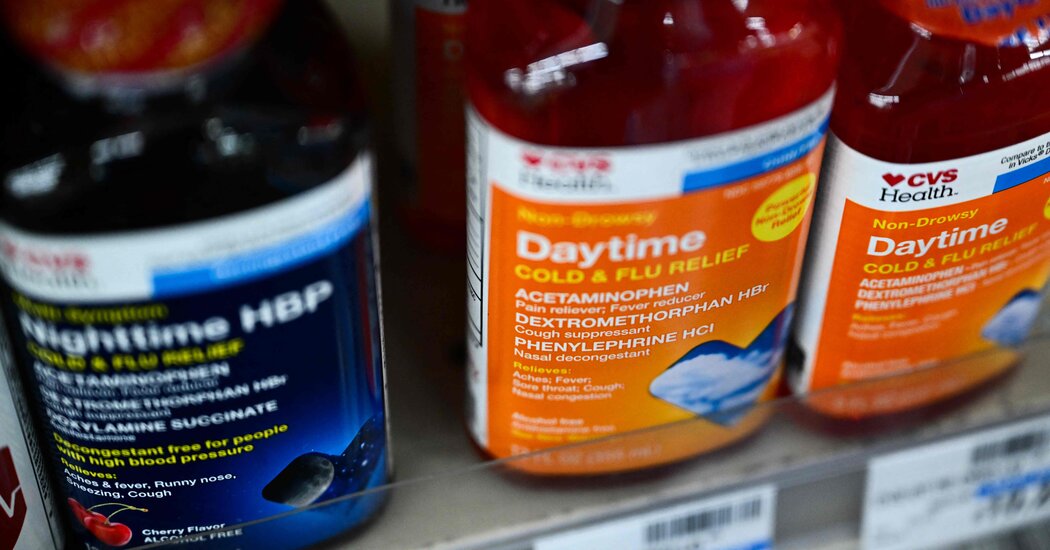
Pharmacists affiliated with the University of Florida have spent decades nudging the agency to pull a decongestant from over-the-counter medicines.Dr. Leslie Hendeles began prodding the Food and Drug Administration to reject a decongestant in cold medicines when he had a mop of curly red hair and Bill Clinton had just become president.By the time opposition to the drug had coalesced, Dr. Hendeles was appearing, at age 80, as an expert to testify before the agency’s advisers, his hair white and his overview of the ingredient spanning 50 years.His advocacy culminated in the advisory panel’s unanimous vote on Tuesday, when it concluded that the decongestant, a common ingredient in cold and flu remedies, is ineffective.Prompted by the news, consumers threw open their medicine cabinets upon learning that the decongestant, phenylephrine, was listed in more than 250 of their go-to drugs for congestion like some versions of DayQuil, Sudafed, Tylenol and Theraflu. And the decision has caused some confusion — experts say the ingredient still works in nasal sprays, just not when taken orally in pill or liquid form.Given that the drug is considered safe, experts say there is no need to throw away the products, which contain other ingredients that do work.Nothing will change immediately. F.D.A. officials have to review the panel’s decision, solicit public comments and most likely will give drug makers some time to adjust or swap out ingredients rather than face a decision to strip store shelves of so many consumer staples. Other delays could occur if the companies contest the actions in court. And some experts, notably Dr. Scott Gottlieb, a former F.D.A. commissioner, have long maintained that phenylephrine does work, to some extent. Some defenders of the drug may try to oppose any action that banishes the decongestant altogether.But how phenylephrine stayed on the market this long despite decades of studies and questions is a tangled story involving old drug standards dating back to a law signed by President Kennedy, the proliferation of meth labs using everyday cold remedies in the 1990s, and even the pandemic.Like other federal agencies, the F.D.A. can move glacially, at times hampered by antiquated rules and a morass of regulatory procedures.“There is no question that regulation of over-the-counter medications was broken for many years,” said Dr. Joshua Sharfstein, a former agency official and vice dean at the Bloomberg School of Public Health at Johns Hopkins. The latest moves, he said, indicate that the “agency is only now getting its handcuffs off.”One could argue the process of dissecting phenylephrine — a drug used for dilating eyes and calming hemorrhoids — took roughly six decades. The Kennedy era had ushered in a new law that required the F.D.A. to evaluate a drug’s effectiveness in addition to existing safety standards.President Kennedy gave a pen to Frances Oldham Kelsey of the F.D.A. after signing the Drug Industry Act of 1962, which required companies to demonstrate a drug’s safety and effectiveness before marketing it.Abbie Rowe/White House Photographs, John F. Kennedy Presidential Library and Museum, BostonIt wasn’t until 1976 that the F.D.A. began reviews of over-the-counter cold medicines, like phenylephrine, as a class of drugs.But by the early 1990s, the decongestant still hadn’t received a full approval, and the lengthy delays had attracted the attention of Dr. Hendeles and a group of pharmacy professors at the University of Florida.They would become the one constant in the last 30 years of phenylephrine’s history by putting pressure on the F.D.A. to do something.Dr. Hendeles published his first critique of the drug in 1993, noting that the agency had oversight of two more popular decongestants that were effective and a third that was not: phenylephrine. The medication was meant to constrict blood vessels and clear congestion in the nose. But it was destroyed in the stomach, he wrote in a medical journal. That meant most of the medication didn’t make it to the bloodstream — much less to the nose.By the 2000s, what would seem like an unrelated problem was surging: Illegal methamphetamine labs in rural areas on the West Coast were exploding, as was abuse of the illicit drug.Meth cooks’ ingredient of choice was one of the most common decongestants on the market at the time, pseudoephedrine, which could be found at any drugstore.By then, it was one of two decongestants available for congestion relief; a third had been pulled in 2000 after studies tied it to strokes.The meth crisis prompted the passage of state and federal laws to restrict sales of products containing pseudoephedrine, and consumers had to show identification and sign a ledger to buy it from behind the counter or a locked cabinet of a pharmacy.Concerned about losing sales, companies with medicines containing the popular meth additive turned to the last option authorized by the F.D.A.: phenylephrine.Dr. Hendeles said he was dismayed to see the ingredient in medicines lining pharmacy shelves, knowing patients were complaining that the replacement didn’t help them at all.He teamed up with a colleague, Dr. Randall Hatton, and they dug deeper, plumbing the data used in the 1970s for the drug’s initial approval.Dr. Hatton unearthed memos to the F.D.A. from the 1960s and 1970s that had not been peer-reviewed. He and colleagues ran the data in modern analysis software and concluded that the drug was no better than a placebo.As their research progressed, Dr. Hendeles tried to reach the F.D.A., where he had once been a visiting scientist. He was not breaking through, he said. So he turned to the office of U.S. Representative Henry Waxman, a crusading California lawmaker, for help.Dr. Leslie Hendeles, left, and Dr. Randall Hatton worked together to urge the F.D.A. to review the effectiveness of phenylephrine.UF News ServiceMr. Waxman fired off four letters, citing the professors’ findings and imploring the agency to act. “F.D.A. has a duty to arm Americans with the information they need so that they don’t waste their hard-earned money on medicines that do not work,” he wrote in a letter in 2006.The F.D.A. replied that same year, restating the findings of its 1976 decision. The letter suggested that if a consumer did not get relief from phenylephrine, “they have the option of not purchasing it.”Dr. Hendeles, the letter said, was free to petition the agency.And he did. Dr. Hendeles requested a dosing review and examination of use of the drug for children. That led to a public F.D.A. advisory hearing in 2007. There, the Consumer Healthcare Products Association, the business trade group that represents the makers of over-the-counter medicine, maintained that the drug worked.Dr. Hendeles recalled what he considered show-stopper testimony. Representatives for Schering Plough, at the time the maker of Claritin-D, which contained the restricted decongestant pseuodoephedrine, told advisers that they had studied its rival, phenylephrine, and found it had no effect. The company’s newspaper ads touted its “bold move” to keep the “powerful formula” for Claritin-D, a letter by Mr. Waxman noted.Still, the advisory committee voted 11 to 1 that “evidence is supportive” that phenylephrine “may be effective,” and called for more research.Eight years passed.Then Dr. Hendeles and colleagues pounced on a study that emerged from Merck, which had acquired Schering Plough. The company examined the drug at the authorized dose and at a dose four times as high, and again found it did not relieve symptoms. Merck also funded a study on a slow-release formula.But that stubborn head complaint — congestion — did not budge.(In 2014, Merck sold Claritin-D, which still contains pseudoephedrine, to Bayer.)The Florida pharmacists petitioned the agency for a ban, using the latest study as ammunition. But their efforts were stymied by what many former agency officials described as a beleaguered over-the-counter division, which had 31 staff members in 2018.The staff had to follow “an arcane process that handcuffed the agency and provided insufficient resources to clear a backlog,” said Dr. Peter Lurie, who was an associate commissioner at the agency through 2017.Dr. Scott Gottlieb called the advisory panel’s decision “a shame.”Eric Thayer for The New York TimesThe Florida team ran into other hurdles throughout the years.After this week’s vote, in posts on X, formerly known as Twitter, Dr. Gottlieb, who was the agency’s commissioner from 2017 to early 2019, called the panel’s decision “a shame.” He recalled that phenylephrine “was believed to be weakly active when we looked at this question around 2005/06. Now there may be no good, cheap, accessible options for consumers to get incremental relief.”In an interview on Friday, Dr. Gottlieb said he thought more study of the ingredient was needed. “I think it’s premature to say that it doesn’t work,” he said.Interest in the decongestant was renewed after pandemic legislation expanded agency staffing and overhauled the F.D.A.’s procedures for over-the-counter drugs so that decisions would be more aligned with those in its prescription drug division.Soon after, the F.D.A. team took up the longstanding issues with the decongestant, producing a painstaking, 89-page review of phenylephrine that the advisory panel combed as the basis for its decision. (The agency’s report confirmed the findings of Dr. Hendeles and his colleagues, and also noted apparent bias in some of the 1970s data that led to the drug’s initial acceptance.)“It was a joy to read,” Dr. Hendeles said.When he testified before the panel earlier this week, Dr. Hendeles talked about a study from 1971 involving modified scuba masks to measure nasal congestion — the first finding phenylephrine to be a dud.Other organizations including Public Citizen, the American College of Clinical Pharmacy and the National Center for Health Research also urged the panel to dispense with the ingredient. The industry association argued that the ingredient was effective and that low levels in the blood did not negate its effect. A statement from Kenvue, a spinoff of Johnson & Johnson, said products with phenylephrine are a small part of its business and it sells cold products without it.When agency advisers cast their 16-to-0 vote, Dr. Hendeles was thrilled. “Nothing was as exciting and exhilarating as the vote,” he said.Lawyers representing people who purchased cold and flu medicines containing phenylephrine are already announcing lawsuits against the drug makers, claiming the companies knew the decongestant was useless.For now, the products remain on the shelves. “We feel vindicated for something that we worked on for a long time,” Dr. Hatton said. “But it’s not over.”

Read more →

How the fentanyl crisis' fourth wave has hit every corner of the US

Published1 day agoShareclose panelShare pageCopy linkAbout sharingImage source, Kim BlakeBy Nadine YousifBBC NewsMore Americans than ever are dying from fentanyl overdoses as the fourth wave of the opioid epidemic crashes through every community, in every corner of the country.It was six years ago that Kim Blake’s son Sean died from an accidental fentanyl overdose in Burlington, Vermont. He was 27 years old.”Every time I hear of a loss to substance use, my heart breaks a little more,” Ms Blake wrote in a blog dedicated to her son in 2021.”Another family shattered. Forever grieving the loss of dreams and celebrations.”That year, the US witnessed a grim milestone: for the first time ever, drug overdoses killed more than 100,000 people across the country in one single year. Of those deaths, more than 66% were tied to fentanyl, a synthetic opioid 50 times more powerful than heroin. Fentanyl is a pharmaceutical drug that can be prescribed by a doctor to treat severe pain. But the drug is also illegally manufactured and sold by criminal gangs. Most of the illegal fentanyl found in the US is trafficked from Mexico using chemicals sourced from China, according to the Drug Enforcement Administration (DEA).In 2010, less than 40,000 people died from a drug overdose across the country, and less than 10% of those deaths were tied to fentanyl. Back then, deaths were mostly driven by the use of heroin or prescription opioids. The contrast is outlined in a study released this week by researchers at the University of California, Los Angeles (UCLA) that examines trends in US overdose deaths from 2010-21 using data compiled by the US Centers for Disease Control and Prevention. The data paints a clear picture of how fentanyl has redefined drug overdoses in America over the last decade.”The rise of illicitly manufactured fentanyl has ushered in an overdose crisis in the United States of unprecedented magnitude,” the study’s authors wrote. Virtually every corner of the US, from Hawaii to Alaska to Rhode Island, has been touched by fentanyl. The rise in fentanyl-related deaths was first observed in 2015, the data shows. Since then, the drug has spread across the US and death rates have grown sharply. “In 2018, around 80% of fentanyl overdoses happened east of the Mississippi river,” Chelsea Shover, an assistant professor at UCLA’s school of medicine and co-author of the study, told the BBC. But in 2019, “fentanyl becomes part of the drug supply in the Western US, and suddenly this population that had been insulated from it is exposed, and death rates start to go up,” Prof Shover said.In their study, the researchers sound the alarm on another growing trend: deaths related to the use of fentanyl and another stimulant drug, like cocaine or methamphetamine.This trend is being observed across the US, albeit in different ways owing to drug use patterns that differ from region to region. For example, researchers found higher death rates related to the use of fentanyl and cocaine in north-eastern US states, like Vermont and Connecticut, where cocaine has been traditionally more available. But for virtually everywhere else in the country, from West Virginia to California, deaths were primarily driven by the use of both methamphetamines and fentanyl. Ms Blake, who is also a trained physician, said her son sporadically used cocaine, though his toxicology report revealed only fentanyl in his system. She learned that many use fentanyl along with another stimulant for a prolonged high. “It’s no surprise to me that we’re seeing such an increase in stimulant-opioid combinations,” Ms Blake told the BBC. When fentanyl first arrived in the US as part of the illegal drug supply, “a lot of people did not want it”, Prof Shover said. But the synthetic opiate became widely available as it is cheaper to produce compared to other drugs. It is also highly addictive, meaning people who struggle with substance use and are exposed to it often seek it out to avoid painful withdrawals.Across the US, the study identified states like Alaska, West Virginia, Rhode Island, Hawaii and California as having the highest rates of overdose deaths involving fentanyl and another drug. These states have historically high rates of drug use, Prof Shover said. With the arrival of fentanyl, drug use in those areas has become more lethal. No longer just a ‘white problem’The opioid crisis has been traditionally portrayed as a “white problem”, Prof Shover said. Her study, however, revealed that African Americans are dying from a combination of fentanyl and other drug use at higher rates, across age groups and geographical lines.For Rasheeda Watts-Pearson, an Ohio-based harm reduction specialist, the data reflects what she has seen in her region. She has been doing outreach work with A1 Stigma Free, a grassroots organisation that was founded just eight months ago to tackle a notable rise of overdose deaths within the African-American community in Cincinnati. As part of her work, Ms Watts-Pearson frequently visits barbershops, bars and grocery stores to talk to people about the deadly impacts of fentanyl. She said she does this because of a lack of awareness, driven partly by historic healthcare disparities experienced by racial and ethnic minority groups.Even marketing campaigns made to bring awareness to the opioid crisis have not included the experience of black Americans, she said. “I can drive down Avondale right now, there is a billboard that says ‘Opioid Crisis’, but there’s two white people on that billboard,” Ms Watts-Pearson said.A big blind spot for her community has been fentanyl-laced street drugs, she said, which has led to people unknowingly using the deadly, synthetic opioid, and developing a dependency to it. “The coroner’s office is seeing people overdose and die off of cocaine, off of crack, off of pills, with traces of fentanyl,” she said. “It has been infiltrated in the black community now, and not enough people are talking about it.”Image source, A1 Stigma FreeA fourth waveThe lethal use of fentanyl in combination with other drugs has marked the “fourth wave” of the overdose crisis in the US, researchers have said. And experts like Prof Shover have cautioned that treatment options in the US for substance use have not kept up.”Our treatment system for substance use disorder is often focused on one drug at a time,” Prof Shover said. “But the reality is, many people who use drugs use more than one kind of drug.” To keep her son’s memory alive, Ms Blake has been outspoken about her loss and has helped other families go through their grief of losing a loved one to an overdose. “Everyone has a story, and for a parent who has lost a child, that is forever,” she said. Her son had been enrolled in treatment a few times during his battle with substance use disorder. The experience taught Ms Blake that care options vary from state to state, and in many cases, what is available is not enough. “Ideally, I think we would see something where people would get treatment rapidly, whenever they want it, and long-term,” she said. Ms Blake also raised the idea of overdose prevention sites, where people could use drugs safely and under supervision. Those sites are widely available in Canada – which has its own fentanyl crisis – but only two sanctioned sites exist in the US. Above all, Ms Blake has called for compassion and understanding for those who are struggling with substance use. “Most people I talk to, their kids did not want to die,” she said. You may also be interested in:This video can not be playedTo play this video you need to enable JavaScript in your browser.More on this storyFentanyl – a killer drug’s trail of destructionPublished1 AprilFewer US teens use drugs – but more are dyingPublished16 October 2022On America’s trail of destruction. Video, 00:13:34On America’s trail of destructionPublished24 October 201813:34

Read more →

Syphilis transmission networks and antimicrobial resistance in England uncovered using genomics

Scientists have used genomics to reveal distinct sexual networks for syphilis transmission, defined geographically or by sexual preference, among a background of wider circulation in England. They also show a presence of drug resistance in the majority of cases.
By grouping closely related strains of the bacterium that causes syphilis — Treponema pallidum -, researchers demonstrate how a large number of cases are linked together. Researchers from the Wellcome Sanger Institute and their collaborators at the UK Health Security Agency (UKHSA)*sequenced 237 whole genome samples and integrated this with epidemiological data to map the bacterium’s evolution and spread through a population. They show distinct transmission chains between individuals as well as significant resistance to a commonly prescribed class of antibiotics in England.
The findings, published today (15 September) in The Lancet Microbe, help demonstrate the utility of genomics to understand syphilis transmission patterns, revealing information beyond what standard epidemiological surveillance data can provide.
Unpacking STI trends using genomic surveillance could help identify high-risk areas or populations and inform targeted public health strategies to break the chains of transmission. The findings warrant further investigation into the role of genomics across different settings and STI-causing bacteria.
Cases of syphilis have tripled in the past decade in England, increasing from 2,648 diagnoses in 2010 to 7,982 in 2019. The increases are thought to be partially fostered through overlapping sexual networks of gay, bisexual and other men who have sex with men (GBMSM) as well as women. While routine epidemiological data provide insights into the current rise in syphilis rates, it struggles to show how the bacterium circulates within a population at national and regional levels. For example, a group of clustered syphilis cases — close in time and proximity — could represent a single outbreak and chain of transmission, but could also be the result of separate co-circulating networks.
Syphilis is a sexually transmitted infection caused by the bacterium, Treponema pallidum (T. pallidum). While the genomes of T. pallidum are highly conserved compared to other bacterial pathogens — as they tend to transmit more frequently than they mutate — subtle differences can still exist as it spreads through a population. By comparing how genetically related T. pallidum samples are between individuals with a syphilis diagnosis, scientists hope to pinpoint the source of syphilis outbreaks and construct networks that capture its spread.
In this new study, researchers from the Wellcome Sanger Institute and their collaborators set out to test the use of genomic surveillance to resolve local transmission chains for T. pallidum and better understand the genomic landscape for syphilis in England.

Read more →

Supporters of Aid in Dying Sue N.J. Over Residency Requirement

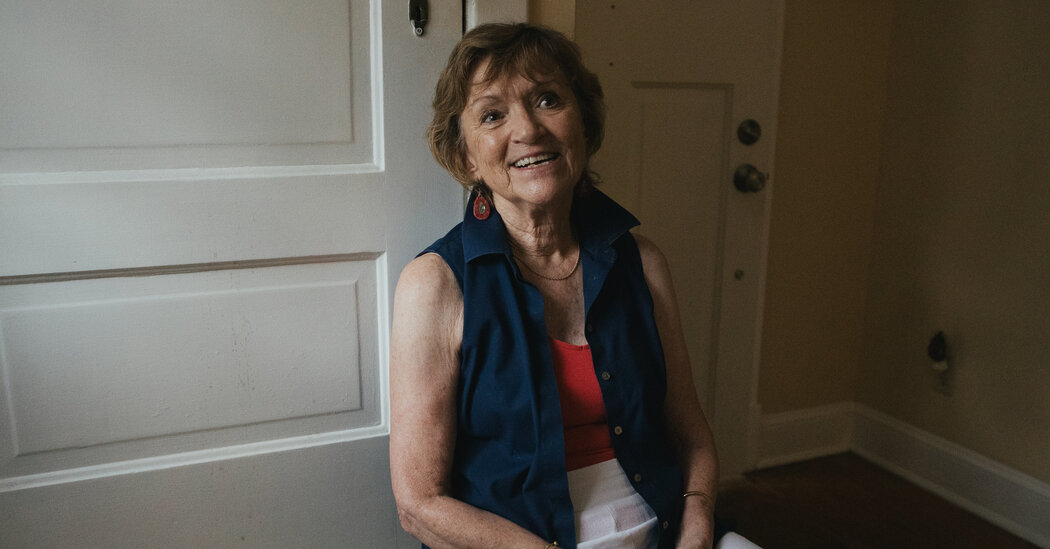
If the state were to change its course, aid in dying would become more accessible to millions of Americans.Judy Govatos has heard that magical phrase “you’re in remission” twice, in 2015 and again in 2019. She had beaten back Stage 4 lymphoma with such aggressive chemotherapy and other treatments that at one point she grew too weak to stand, and relied on a wheelchair. She endured several hospitalizations, suffered infections and lost nearly 20 pounds. But she prevailed.Ms. Govatos, 79, a retired executive at nonprofit organizations who lives in Wilmington, Del., has been grateful for the extra years. “I feel incredibly fortunate,” she said. She has been able to take and teach lifelong learning courses, to work in her garden, to visit London and Cape Cod with friends. She spends time with her two grandchildren, “an elixir.”But she knows that the cancer may well return, and she doesn’t want to endure the pain and disability of further attempts to vanquish it.“I’m not looking to be treated to death. I want quality of life,” she told her oncologist. “If that means less time alive, that’s OK.” When her months dwindle, she wants medical aid in dying. After a series of requests and consultations, a doctor would prescribe a lethal dose of a medication that she would take on her own.Aid in dying remains illegal in Delaware, despite repeated legislative attempts to pass a bill permitting it. Since 2019, however, it has been legal in neighboring New Jersey, a half-hour drive from Ms. Govatos’s home.But New Jersey restricts aid in dying to terminally ill residents of its own state. Ms. Govatos was more than willing, therefore, to become one of four plaintiffs — two patients, two doctors — taking New Jersey officials to federal court.The lawsuit, filed last month, argues that New Jersey’s residency requirement violates the Constitution’s privileges and immunities clause and its equal protection clause.“The statute prohibits New Jersey physicians from providing equal care to their non-New Jersey resident patients,” said David Bassett, a lawyer with the New York firm Wilmer Cutler Pickering Hale and Dorr, which brought the suit with the advocacy group Compassion & Choices.“There’s no justification that anyone has articulated” for such discrimination, he added. The suit also contends that forbidding New Jersey doctors to offer aid-in-dying care to out-of-state patients restricts interstate commerce, the province of Congress.The New Jersey Attorney General’s office declined to comment.“I’d like not to die in horrible pain and horrible fear, and I’ve experienced both,” Ms. Govatos said. Even if she enrolls in hospice, many of the pain medications used cause her to pass out, hallucinate and vomit.To be able to legally end her life when she decides to “is a question of mercy and kindness,” she said.It’s the third time that Compassion & Choices has pursued this route in its efforts to broaden access to aid in dying. It filed similar suits in Oregon in 2021 and in Vermont last year. Both states agreed to settle, and their legislatures passed revised statutes repealing residency requirements, Oregon in July and Vermont in May.The plaintiffs hope New Jersey, another blue state, will follow suit. “We hope we never have to go before a judge. Our preference is to negotiate an equitable resolution,” Mr. Bassett said. “That’s what’s important for our patient plaintiffs. They don’t have time for full-fledged litigation.”“It’s not the traditional process of trying to convince a state legislature that this is a good idea,” said Thaddeus Pope, a law professor at Mitchell-Hamline School of Law in St. Paul, Minn., who tracks end-of-life laws and court cases.Dropping residency requirements in New Jersey could have a far greater impact than it will in Oregon or Vermont. The sheer population density along New Jersey’s borders — there are almost 20 million residents in the New York metropolitan area alone — means medical aid in dying would suddenly become available to vastly more people, and much more quickly than it would through legislation.With a major airport and direct flights, “it’s easier to get to Newark than Burlington, Vermont,” Mr. Pope pointed out.Many states where aid in dying is legal have relaxed their statutes because of findings like those in a 2017 study, in which about a third of California patients who asked a doctor about aid in dying either died before they could complete the process or became too ill to continue it.But New Jersey still uses the stricter series of steps that Oregon first codified in 1994. That means two verbal requests to a doctor at least 15 days apart, a written request with two witnesses, and a consultation with a second physician; both must confirm that the patient is eligible. There’s a 48-hour wait after the written request before a prescription can be written.Even without having to establish residency, “it won’t be a walk in the park,” Mr. Pope said. “You can’t just pop over to New Jersey, pick up the drugs and go back.”Finding a doctor willing to prescribe can take time, as does using one of the state’s few compounding pharmacies, which combine the necessary drugs and fill the prescription.Although no official would check to see whether patients travel home with the medication, both Mr. Bassett and Mr. Pope advise that the lethal dose ought to be taken in New Jersey, to avoid the possibility of family members facing prosecution in their home states for assisting in a suicide.Still, preventing dying patients from having to sign leases and obtain government IDs in order to become residents will streamline the process. “Not everyone has the will, the financial means, the physical means” to establish residency, said Dr. Paul Bryman, one of the doctor plaintiffs and hospice medical director in southern New Jersey. “These are often very disabled people.”Bills recently introduced in Minnesota and New York don’t include residency requirements at all, Mr. Pope noted, since they seem likely to be challenged in court.“I think the writing’s on the wall,” he said. “I think all the residency requirements will go, in all the states” where aid in dying is legal. There are 10, plus the District of Columbia (though the legality in Montana depends on a court decision, not legislation).Despite the often heated wrangling over aid-in-dying laws, very few patients actually turn to lethal drugs in the end, state records show. Last year, Oregon reported that 431 people received prescriptions and 278 died by using them, just .6 percent of the state’s deaths in 2022.In New Jersey, only 91 patients used aid in dying last year. Roughly a third of those who receive prescriptions never use them, perhaps sufficiently reassured by the prospect of a swift exit.Fears of “death tourism,” with an onrush of out-of state patients, have not materialized, said John Burzichelli, a former state assemblyman who helped steer New Jersey’s statute through the legislature and now favors allowing eligible nonresidents to participate. “I don’t see lines of people at the tollbooths coming to take advantage of this law,” he said.If her cancer returns and New Jersey has balked at allowing out-of-staters to legally end their lives there, Ms. Govatos contemplates traveling to Vermont. She envisions a goodbye party for a few friends and family members, with poetry reading, music and “very good wine and lovely food.”But driving over the Delaware Memorial Bridge would be so much simpler. “It would be an incredible gift if I could go to New Jersey,” she said.

Read more →

Windows Installed in Skulls Help Doctors Study Damaged Brains

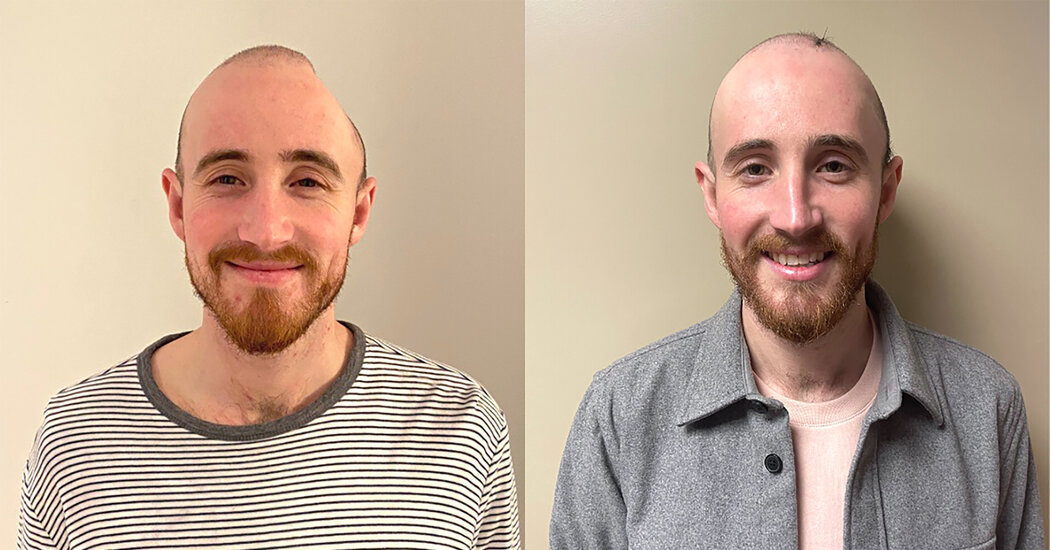
Some neurosurgeons are testing an acrylic prosthesis that lets them peer into patients’ heads with ultrasound.Tucker Marr’s life changed forever last October.He was on his way to a wedding reception when he fell down a steep flight of metal stairs, banging the right side of his head so hard he went into a coma.He’d fractured his skull, and a large blood clot formed on the left side of his head. Surgeons had to remove a large chunk of his skull to relieve pressure on his brain and to remove the clot.“Getting a piece of my skull taken out was crazy to me,” Mr. Marr said. “I almost felt like I’d lost a piece of me.”But what seemed even crazier to him was the way that piece was restored.Mr. Marr, a 27-year-old analyst at Deloitte, became part of a new development in neurosurgery. Instead of remaining without a piece of skull or getting the old bone put back, a procedure that is expensive and has a high rate of infection, he got a prosthetic piece of skull made with a 3-D printer. But it is not the typical prosthesis used in such cases. His prosthesis, which is covered by his skin, is embedded with an acrylic window that would let doctors peer into his brain with ultrasound.A few medical centers are offering such acrylic windows to patients who had to have a piece of skull removed to treat conditions like a brain injury, a tumor, a brain bleed or hydrocephalus.“It’s very cool,” Dr. Michael Lev, director of emergency radiology at Massachusetts General Hospital, said. But, “it is still early days,” he added.Advocates of the technique say that if a patient with such a window has a headache or a seizure or needs a scan to see if a tumor is growing, a doctor can slide an ultrasound probe on the patient’s head and look at the brain in the office. That way a patient can avoid costly, time-consuming and onerous CT scans or M.R.I.s. Instead of waiting for a radiologist to read the scan, a patient and a doctor can know right away what the patient’s brain looks like.Dr. Mark Luciano, a professor of neurosurgery at Johns Hopkins, is using ultrasound to monitor hydrocephalus patients, who have shunts in their brains to drain excess cerebrospinal fluid. Patients need regular CT scans to see if the fluid is draining properly.In an attempt to assess the windows, Dr. Luciano recently published a study of 37 patients who had the windows placed in their skulls, compared with a larger group of similar patients from the year before the method was developed.Over a one-year period, he saw no risk of infection. The challenge now, he said, is to make the images from ultrasound scans better and to quantify what they show, he said, as well as to monitor their safety for several years.But not everyone is won over.Dr. Ian McCutcheon, a professor of neurosurgery at the University of Texas MD Anderson Cancer Center, said the window “is an intriguing idea.” But, he said, before he uses it to assess brain tumor patients he’d need evidence from a rigorous clinical trial that ultrasound is as accurate as an M.R.I. in detecting changes, like a growing tumor.That trial, he said, “has not been done yet.”Research showed that some patients receiving the acrylic prostheses did not face greater infection risk.Lenox Hill HospitalBy enabling ultrasound scans, the windows into the skull may reduce the number of CT and M.R.I. scans needed by patients with damaged brains.Lenox Hill HospitalOthers, like Dr. Joseph Watson, director of the brain tumor program at Georgetown University, called the technique “frivolous.”“You are going through a small port,” he said. “It doesn’t give you enough of a picture of the whole brain” that he gets with a CT scan or M.R.I.But Mr. Marr’s doctor, Netanel Ben-Shalom, assistant professor of neurosurgery at Lenox Hill Hospital in New York, disagrees. In his experience, he said, “as long as the window is located above the tumor, the cavity is clearly demonstrated.”Dr. Ben-Shalom was won over from the moment he tried implanting a window a few years ago. He was a resident at Johns Hopkins, and his patient had a brain tumor.“It was amazing,” Dr. Ben-Shalom said. He could see the entire brain, he said, and all its structures.He moved to Lenox Hill in January 2022, became a consultant for Longeviti, the company that makes the windows, and has been implanting and using its clear polymethylmethacrylate windows ever since.Tucker Marr at left before a prosthetic piece of skull was installed, and after on the right. “I almost felt like I’d lost a piece of me,” he said.Lenox Hill HospitalOn an afternoon earlier this year, Mr. Marr sat on a wooden chair in a tiny office at Lenox Hill, grinning as Dr. Ben-Shalom slid an ultrasound probe over the window in his skull. A cluster of medical students looked on.For Mr. Marr, life was difficult after the removal of the piece of his skull to treat his swelling brain. His head was distorted, with a large dent. He was left with fatigue and dizziness because his brain was inadequately shielded from atmospheric pressure.During the scan, Mr. Marr’s brain looked perfect, Dr. Ben-Shalom said. The midline that separates the two hemispheres — and which had been pushed to one side after Mr. Marr’s injury — was exactly where it should be. The structures of his brain looked normal, Dr. Ben-Shalom said. The ultrasound even showed his brain’s pulsing.Mr. Marr is young and healthy but, Dr. Ben-Shalom said, anyone who has had brain surgery needs surveillance. If Mr. Marr comes in one day with nausea and vomiting or a severe headache, or if he had a seizure, his doctors would need to look at his brain. The acrylic window makes it easy, Dr. Ben-Shalom said.At the University of Southern California, Dr. Charles Liu and his colleagues are taking the ultrasound idea a step further. In a research project, he is studying the use of ultrasound as a simpler and cheaper way to do the sort of studies now done with f.M.R.I., a method that uses M.R.I. scanners to examine the brain’s activity.For the study, he needed a patient who required a skull restoration for medical reasons and who would volunteer to have one with a specially designed window. If the idea succeeded, he and the team thought they might some day be able to use the method on intact skulls.The hope is to detect tiny signals from changes in blood flow in different parts of the brain as patients perform different activities. That, Dr. Liu said, “could give unprecedented insights into brain functions.”He found such a patient — Jared Hager, 39, who had a traumatic brain injury when he crashed his skateboard. He had spent two and a half years with a large piece of his skull missing.Dr. Liu met Mr. Hager when he was admitted to Rancho Los Amigos National Rehabilitation Center in Downey, Calif., part of the Los Angeles County public safety net health system.When Dr. Liu met Mr. Hager, he was uninsured and homeless — he and his brother were living in a van. And Mr. Hager was missing a large chunk of skull. He was scheduled to have his skull restored, but Dr. Liu offered him a choice: a standard prosthesis or one with a specially designed window optimized for brain studies.Before his surgery, the Rancho Los Amigos Foundation provided free housing at a facility next to the hospital for patients and their families. But Dr. Liu worried about what would happen after Mr. Hager was discharged.“When you do this kind of surgery, it’s a big operation,” he said. “My goodness, what if we do surgery on this guy and he ends up in a van in downtown L.A.?”Through the Rancho Los Amigos Foundation Dr. Liu got Mr. Hager an apartment in Long Beach.Mr. Hager has become a regular presence in Dr. Liu’s lab, working with its scientists to discover as much about his brain as they can.“I’m never going to stop helping with anything Dr. Liu needs,” he said.

Read more →

MDMA Therapy for PTSD Inches Closer to U.S. Approval

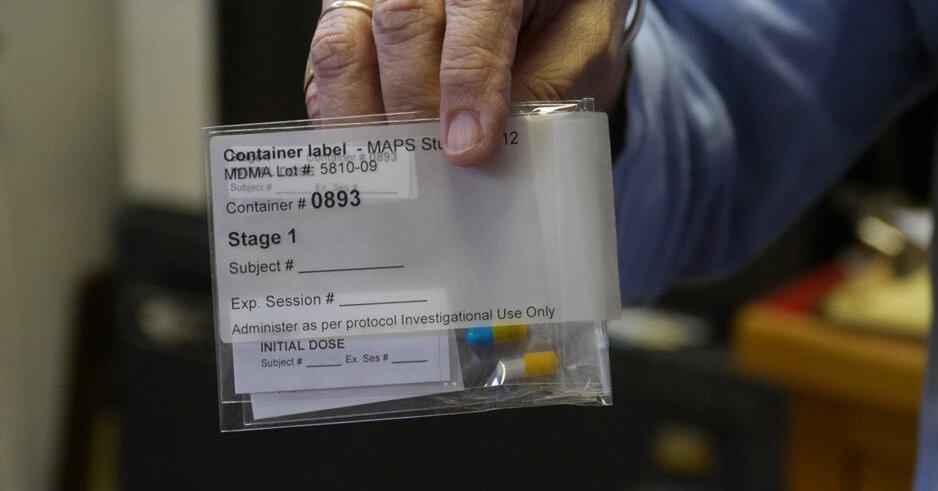
Results of a new study may offer regulators enough evidence to allow the psychedelic, also known as Ecstasy, to be considered for use as a PTSD treatment.MDMA-assisted therapy seems to be effective in reducing symptoms of post-traumatic stress disorder, according to a study published on Thursday.The research is the final trial conducted by MAPS Public Benefit Corporation, a company that is developing prescription psychedelics. It plans to submit the results to the Food and Drug Administration as part of an application for approval to market MDMA, the psychedelic drug, as a treatment for PTSD, when paired with talk therapy.If approved, “MDMA-assisted therapy would be the first novel treatment for PTSD in over two decades,” said Berra Yazar-Klosinski, the senior author of the study, which was published in Nature Medicine, and the chief scientific officer at the company. “PTSD patients can feel some hope.”PTSD affects about 5 percent of the adult population of the United States each year. But conventional therapies and medications only help, at best, around 50 percent of patients, said Dr. Stephen Xenakis, a psychiatrist and the executive director of the American Psychedelic Practitioners Association, who was not involved in the study.“My clinical experience is that too many men and women have lost hope with conventional treatments and therapies and feel the only ‘out’ for them is committing suicide,” Dr. Xenakis said. “We need to do something more to help them, and MDMA-assisted therapy offers a new, potentially lifesaving option when done thoughtfully and professionally.”MDMA, also known as Ecstasy or Molly, has been an illegal substance since 1985, when the Drug Enforcement Administration classified it as a Schedule 1 drug, placing it in the highest category for controlled drugs that the agency deems of no medical use and that have a high potential for abuse.Before that, MDMA was administered by an estimated hundreds of therapists in North America and Europe for couples counseling, personal growth and to address trauma.“The big tragedy to point out is that it was pretty clear in the late 1970s and early 1980s that MDMA had incredible therapeutic potential,” said Rick Doblin, founder of the Multidisciplinary Association for Psychedelic Studies (MAPS), a nonprofit group that owns MAPS PBC. “All the suffering since then, because MDMA was criminalized, is enormous.”Rick Doblin, founder of the Multidisciplinary Association for Psychedelic Studies.Tony Luong for The New York TimesMAPS has been advocating the legalization of MDMA-assisted therapy since 1986, and supporting research of its use in treating PTSD since 2001. The Heffter Research Institute, another nonprofit group, has been doing the same for psilocybin, the active ingredient in magic mushrooms, since 1993.The F.D.A. in 2017 granted “breakthrough therapy” status to MDMA-assisted therapy as a treatment for PTSD. The designation allows the development of promising experimental drugs to be fast-tracked. Psilocybin-assisted therapy for treatment-resistant depression was granted breakthrough status in 2018.The 104 participants in the new study had been diagnosed with moderate to severe PTSD and had lived with the condition for an average of 16 years. They included victims of childhood trauma, combat veterans, survivors of sexual assault and others. Many had a history of suicidal thoughts and also suffered from comorbidities such as depression and alcohol use disorder.Each participant worked with a two-person therapy team and received three 90-minute preparatory, talk therapy sessions followed by three treatment cycles, spaced one month apart. Each consisted of an eight-hour experimental session in which the participant took either MDMA or a placebo paired with talk therapy, and then attended three 90-minute talk therapy sessions.During the experimental sessions, 53 participants were given MDMA and 51 were given an inactive placebo. Neither the therapists nor the participants were informed which patients had received the MDMA.The participants in the group that were given MDMA experienced significantly greater reductions in their PTSD symptoms compared with those in the group that were given a placebo, according to the research article.By the end of the study, 86.5 percent of people in the MDMA group achieved a measurable reduction in severity of symptoms, researchers reported. About 71 percent in the MDMA group improved enough that they no longer met the criteria for a PTSD diagnosis. Of those who took the placebo, 69 percent improved and nearly 48 percent no longer qualified for a PTSD diagnosis.The findings were similar to the results of the first Phase 3 study of MDMA-assisted therapy for PTSD, published in Nature Medicine in 2021. For the 90 participants in that study, 67 percent in the group given MDMA no longer qualified for a PTSD diagnosis two months after treatment, compared with 32 percent in the placebo group.One notable difference in the most recent study was the diversity of participants, said Jennifer Mitchell, a neuroscientist at the University of California San Francisco and the lead author of both studies.More than a quarter of the participants in the new study were Hispanic or Latino and about 34 percent were nonwhite, whereas about 9 percent of participants in the 2021 study were Hispanic or Latino and 22 percent were nonwhite.“We worked long and hard to get a study population that’s more in line with the general population with PTSD,” Dr. Mitchell said. “This isn’t just privileged people with lots of time and resources.”Jennifer Mitchell, a neuroscientist at the University of California San Francisco.Anastasiia Sapon for The New York TimesThe increase in participant diversity coincided with an increase in the number of therapists of color, to 28 percent in the new study, up from 11 percent in 2021. MAPS PBC said it also offered participants transportation to and from study sites as well as stipends to make up for lost wages or to cover child or elder care.The diversity of participants is “certainly an improvement over prior studies,” said Albert Garcia-Romeu, a psychopharmacologist at the Johns Hopkins University School of Medicine who was not involved in the research. But he added that “it will be critical to see more Black and Indigenous folks enrolled, considering the substantial health disparities these groups face.”As in previous studies of MDMA-assisted therapy, the treatment was generally well-tolerated, according to the data presented about adverse events. Common side effects, primarily for those in the MDMA group, included muscle tightness, nausea, decreased appetite and sweating.Two participants in the MDMA group and one in the placebo group experienced serious suicidal ideation during the study, but no suicide attempts were reported.“People in both groups had certain adverse events that would be concerning, like suicidality, at comparable rates, though it’s notable that most people in the study were already struggling with those challenges beforehand,” Dr. Garcia-Romeu said.Seven participants overall also experienced cardiovascular issues, including faster heartbeats. According to Dr. Paul Summergrad, a professor of psychiatry at Tufts University School of Medicine who was not involved in the research, while these events “were generally not severe,” they might indicate that a cardiologist should evaluate older patients or ones with known heart problems before treatment with MDMA.MAPS PBC said it had worked closely with the F.D.A. to determine the study methods and the number of participants needed to assess the safety and efficacy of the new treatment.Most participants correctly guessed whether they had received a placebo or MDMA. This is a typical challenge across psychiatry research and is something “the authors acknowledge and did everything possible to mitigate,” said Dr. Steven Zalcman, chief of the adult pathophysiology and biological interventions development branch at the National Institute of Mental Health, who was not involved in the research.The researchers are now working on a follow-up study examining the long-term durability of the effects of MDMA-assisted therapy. Findings from Phase 2 studies sponsored by MAPS indicated that the benefits lasted at least 12 months for most participants who received the drug.MAPS PBC plans to submit a new drug application to the F.D.A. seeking approval for MDMA-assisted therapy. The agency, which does not comment on pending drug reviews, could reach a decision within a year.Some outside experts said they did not believe the study’s results would meet the F.D.A.’s criteria for approval.“The benefits in the active group were really not much greater than the benefits in the placebo group,” said Dr. Allen Frances, a professor emeritus of psychiatry at Duke University. “MDMA treatment would add huge costs to the treatment system while providing only a small, specific benefit — and thus result in a massive misallocation of already very scarce resources.”Dr. Akua Prieto Brown, the medical director of Alchemy Community Therapy Center in Oakland, Calif., who also was not involved in the study, criticized this “scarcity mind-set,” however, and said that the focus for health care professionals should instead be “on increasing treatment options for a condition that is notoriously difficult to treat.”Disagreements among mental health practitioners are to be expected, Dr. Xenakis said, adding that “tectonic shifts of this dimension are disruptive and can produce more fractures among the professionals than agreement.”Federal approval for MDMA-assisted therapy would also mean the drug would have to receive a less serious ranking for controlled substances by the D.E.A. and from states.Therapist training is another potential bottleneck. The company already oversees its own therapist education program and is working with other partners, including universities, to increase training.The specific standards and requirements that the F.D.A. might seek from prescribers, and what the agency would outline for the labeling instructions of MDMA-assisted therapy, are still open questions, said Amy Emerson, the chief executive of MAPS PBC.“Drug-assisted therapy hasn’t been approved before, so there’s not a lot of precedent,” she said.The company has not yet set a price for the drug, Ms. Emerson said, and it will not manage how much the therapy component will cost.But it is contacting insurance companies, Medicaid and Medicare to try to secure coverage, Ms. Emerson said. The group is also working on patient access programs to help those who do not have coverage and who cannot pay out of pocket to receive discounts or even free treatment.Given the hurdles that still lay ahead, “it feels a bit too early to really celebrate,” Dr. Doblin said. “But it’s been a long, long process, and it’s amazing that we are this far.”

Read more →

Newly discovered trigger of Parkinson's upends common beliefs

A new Northwestern Medicine study challenges a common belief in what triggers Parkinson’s disease.
Degeneration of dopaminergic neurons is widely accepted as the first event that leads to Parkinson’s. But the new study suggests that a dysfunction in the neuron’s synapses — the tiny gap across which a neuron can send an impulse to another neuron — leads to deficits in dopamine and precedes the neurodegeneration.
Parkinson’s disease affects 1% to 2% of the population and is characterized by resting tremor, rigidity and bradykinesia (slowness of movement). These motor symptoms are due to the progressive loss of dopaminergic neurons in the midbrain.
The findings, which will be published Sept. 15 in Neuron, open a new avenue for therapies, the scientists said.
“We showed that dopaminergic synapses become dysfunctional before neuronal death occurs,” said lead author Dr. Dimitri Krainc, chair of neurology at Northwestern University Feinberg School of Medicine and director of the Simpson Querrey Center for Neurogenetics. “Based on these findings, we hypothesize that targeting dysfunctional synapses before the neurons are degenerated may represent a better therapeutic strategy.”
The study investigated patient-derived midbrain neurons, which is critical because mouse and human dopamine neurons have a different physiology and findings in the mouse neurons are not translatable to humans, as highlighted in Krainc’s research recently published in Science.
Northwestern scientists found that dopaminergic synapses are not functioning correctly in various genetic forms of Parkinson’s disease. This work, together with other recent studies by Krainc’s lab, addresses one of the major gaps in the field: how different genes linked to Parkinson’s lead to degeneration of human dopaminergic neurons.

Read more →

New ways to predict outcomes of pregnancies with fetal growth problems

A team of scientists, led by researchers at UCL, have developed new methods to predict outcomes for pregnancies where there are issues with poor growth of the baby inside the womb.
The research, published in the Journal of Clinical Investigation, involved 142 women from the EVERREST Prospective Study who had severe early-onset fetal growth restriction (FGR) — meaning their babies were very small on ultrasound scans early in the second half of pregnancy (between 20 and 27 weeks).
Fetal growth restriction affects approximately 60,000 babies per year in Europe and the USA.
Some babies with FGR continue to grow and are born around their due date. However, many will either need extreme preterm delivery (before 28 weeks of pregnancy) or will not survive the pregnancy, resulting in stillbirth.
In England alone, it is estimated that the annual total costs of neonatal care are £262million.
Lead author, Dr Rebecca Spencer (UCL EGA Institute for Women’s Health and University of Leeds), said: “There is currently a lot of uncertainty for the families of unborn babies with early-onset fetal growth restriction and for their health-carers.
“We want to give them a better idea of what to expect if they are affected — as many people find uncertainty harder to cope with than definite bad news.

Read more →