In major breakthrough, researchers close in on potential preeclampsia cure

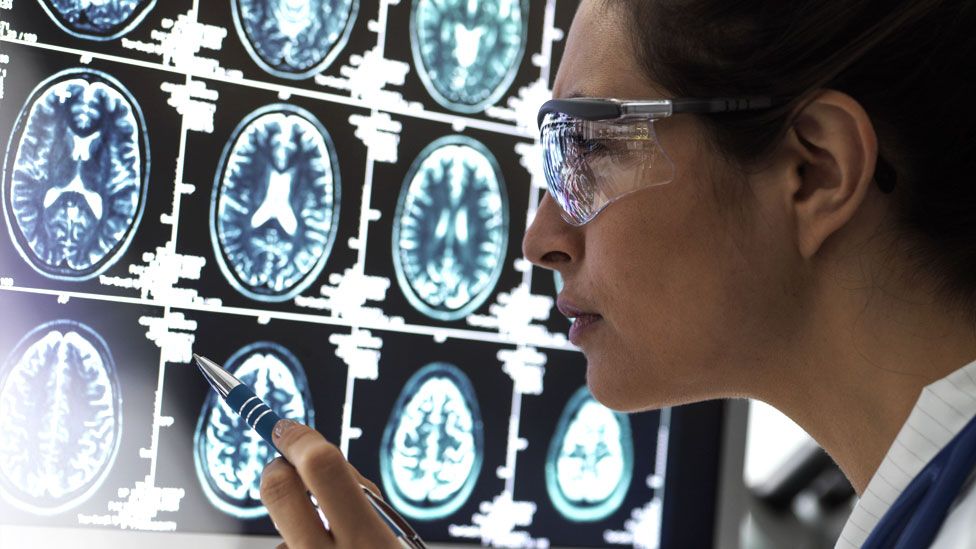
Researchers from Western and Brown University have made groundbreaking progress towards identifying the root cause and potential therapy for preeclampsia.
The pregnancy complication affects up to eight per cent of pregnancies globally and is the leading cause of maternal and fetal mortality due to premature delivery, complications with the placenta and lack of oxygen.
The research, led by Drs. Kun Ping Lu and Xiao Zhen Zhou at Western, and Drs. Surendra Sharma and Sukanta Jash at Brown, has identified a toxic protein, cis P-tau, in the blood and placenta of preeclampsia patients.
According to the study published in Nature Communications, cis P-tau is a central circulating driver of preeclampsia — a “troublemaker” that plays a major role in causing the deadly complication.
“The root cause of preeclampsia has (so far) remained unknown, and without a known cause there has been no cure. Preterm delivery is the only life-saving measure,” said Lu, professor of biochemistry and oncology at Schulich School of Medicine & Dentistry. Lu is also a Western Research Chair in Biotherapeutics.
“Our study identifies cis P-tau as a crucial culprit and biomarker for preeclampsia. It can be used for early diagnosis of the complication and is a crucial therapeutic target,” said Sharma, who recently retired from his Brown roles as a professor of pathology and laboratory medicine (research) and professor of pediatrics (research).
In 2016, Sharma, a leading preeclampsia researcher, and his team had identified that preeclampsia and diseases like Alzheimer’s had similar root causes related to protein issues. This research builds on that finding.

Read more →

Making AI smarter with an artificial, multisensory integrated neuron

The feel of a cat’s fur can reveal some information, but seeing the feline provides critical details: is it a housecat or a lion? While the sound of fire crackling may be ambiguous, its scent confirms the burning wood. Our senses synergize to give a comprehensive understanding, particularly when individual signals are subtle. The collective sum of biological inputs can be greater than their individual contributions. Robots tend to follow more straightforward addition, but Penn State researchers have now harnessed the biological concept for application in artificial intelligence (AI) to develop the first artificial, multisensory integrated neuron.
Led by Saptarshi Das, associate professor of engineering science and mechanics at Penn State, the team published their work on September 15 in Nature Communication.
“Robots make decisions based on the environment they are in, but their sensors do not generally talk to each other,” said Das, who also has joint appointments in electrical engineering and in materials science and engineering. “A collective decision can be made through a sensor processing unit, but is that the most efficient or effective method? In the human brain, one sense can influence another and allow the person to better judge a situation.”
For instance, a car might have one sensor scanning for obstacles, while another senses darkness to modulate the intensity of the headlights. Individually, these sensors relay information to a central unit which then instructs the car to brake or adjust the headlights. According to Das, this process consumes more energy. Allowing sensors to communicate directly with each other can be more efficient in terms of energy and speed — particularly when the inputs from both are faint.
“Biology enables small organisms to thrive in environments with limited resources, minimizing energy consumption in the process,” said Das, who is also affiliated with the Materials Research Institute. “The requirements for different sensors are based on the context — in a dark forest, you’d rely more on listening than seeing, but we don’t make decisions based on just one sense. We have a complete sense of our surroundings, and our decision making is based on the integration of what we’re seeing, hearing, touching, smelling, etcetera. The senses evolved together in biology, but separately in AI. In this work, we’re looking to combine sensors and mimic how our brains actually work.”
The team focused on integrating a tactile sensor and a visual sensor so that the output of one sensor modifies the other, with the help of visual memory. According to Muhtasim Ul Karim Sadaf, a third-year doctoral student in engineering science and mechanics, even a short-lived flash of light can significantly enhance the chance of successful movement through a dark room.
“This is because visual memory can subsequently influence and aid the tactile responses for navigation,” Sadaf said. “This would not be possible if our visual and tactile cortex were to respond to their respective unimodal cues alone. We have a photo memory effect, where light shines and we can remember. We incorporated that ability into a device through a transistor that provides the same response.”
The researchers fabricated the multisensory neuron by connecting a tactile sensor to a phototransistor based on a monolayer of molybdenum disulfide, a compound that exhibits unique electrical and optical characteristics useful for detecting light and supporting transistors. The sensor generates electrical spikes in a manner reminiscent of neurons processing information, allowing it to integrate both visual and tactile cues.

Read more →

Scientists take next big step in understanding genetics of schizophrenia

Genetically speaking, we are individuals different from each other because of slight variations in our DNA sequences — so-called genetic variants — some of which have dramatic effects we can see and comprehend, from the color of our eyes to our risk for developing schizophrenia — a debilitating psychiatric condition affecting many millions worldwide. For several years, scientists have studied the entire genomes of thousands of people — called genome-wide association studies, or GWAS — to find approximately 5,000 genetic variants associated with schizophrenia.
Now, UNC School of Medicine scientists and colleagues are figuring out which of these variants have a causal effect in the development of the schizophrenia. They are finding that some of genetic variants regulate or alter the expression of genes involved in the condition.
Published in the journal Cell Genomics, this research marks a big step forward in our understanding of the genetic basis of schizophrenia.
“Our findings not only provide insights into the intricate regulatory landscape of genes, but also propose a groundbreaking approach to decoding the cumulative effect of genetic variants on gene regulation in individuals with schizophrenia,” said senior author Hyejung Won, Ph.D., associate professor of genetics at the UNC School of Medicine. “This comprehension could potentially pave a path for more precise interventions and therapies in the future. Right now, therapeutic options are limited, and some people do not respond to drugs available.”
For this study, Won and first authors Jessica McAfee and Sool Lee, both UNC-Chapel Hill graduate students, led a team of researchers from UCLA, Harvard, the University of Michigan, and Human Technopole in Italy to explore the genetic variants already linked to the risk of schizophrenia through GWAS research. Their goal was to figure out a way to tease apart meaningless variants from those with potential for biological activity important for developing schizophrenia. This isn’t easy for a few reasons, one of which is that genetic variants are often inherited together from parents. So, right next to each other could be two genetic variants associated with the condition — one might be important for gene expression that plays a major role in the condition, but the other variant might not have any role in the condition.
To tackle this problem, the researchers used a special technique called a massively parallel reporter assay (MPRA) — essentially a genetic sequencing technique that can parse which variants trigger gene expression and which ones don’t. To use this method, the researchers introduced the 5,000 variants into human brain cells in a dish, cells that are essential for early brain development. These variants may or may not cause the expression of their downstream gene and genetic barcode. The barcode, a 20bp DNA sequence, is unique to each variant. This is what the group uses to distinguish the variant sequences. The MPRA revealed 439 genetic variations with actual biological effects, meaning they can alter expression of gene.
“Traditionally, scientists have used other epigenetic data, such as transcription factor binding and biochemically defined enhancers, to identify variants with biological effects,” Won said. “However, these conventional methods failed to predict a large portion of variants we identified to have biological effects. Our work points to a wealth of unexplored variants with biological effects.”
To understand how these variants work together to influence gene activity, Won and colleagues developed a new model that combines data from MPRA with chromatin architecture of brain cells — that is, the genetic information important for how brain cell DNA is organized. By doing this, the researchers could connect these 439 variants to how genes are turned on or off.
“Schizophrenia is a complex condition that is highly heritable,” Won said. “To find these 439 potentially causal variants is a big step, but we still have a lot of work ahead to figure out the complicated genetic architecture that leads an individual to develop this condition. With that information in hand, we could begin to understand the biological mechanism underlying this complex disorder, which may eventually lead to targeted therapies.”

Read more →

Judge to decide on ending critically ill baby girl's life support

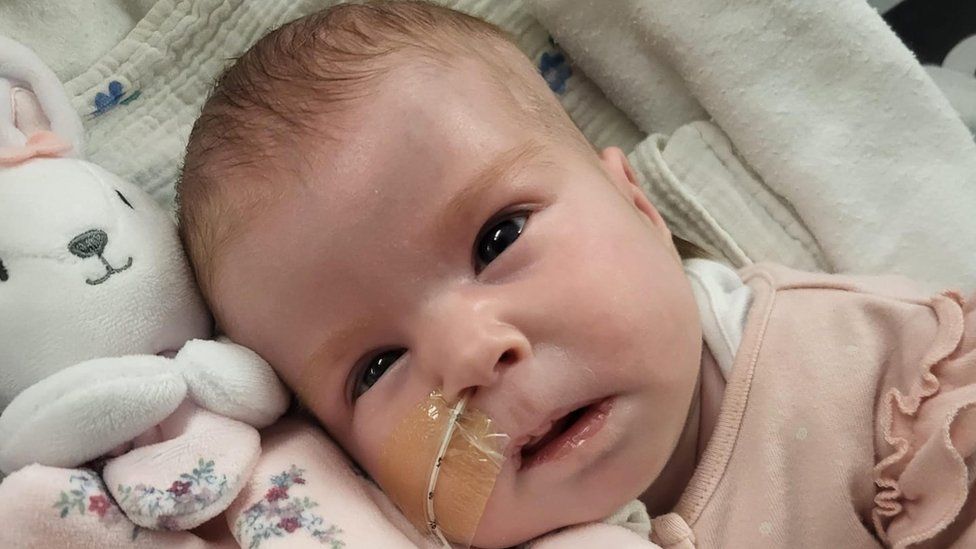
Published2 days agoShareclose panelShare pageCopy linkAbout sharingImage source, Family Handout/GoFundMeBy Dan Martin, Sharon Barbour & PA news agencyBBC NewsThe parents of a critically ill baby girl have asked a judge to prevent medics ending her life support.Six-month-old Indi Gregory has mitochondrial disease and is being cared for at the Queen’s Medical Centre (QMC) in Nottingham.The hospital has applied to the High Court to end her treatment and has said it can do no more for her.Her parents said they were devastated by the application and that their daughter deserved a chance at life.Image source, Family Handout/GoFundMeIndi’s father Dean Gregory, 37, from Ilkeston in Derbyshire, attended the High Court in London on Friday.He hopes to persuade Mr Justice Peel to refuse an application which Nottingham University Hospitals (NUH) NHS Trust said was in his daughter’s “best interests”. The judge relaxed statutory restrictions covering private family court hearings and said Indi, her parents and the hospital involved could be named in media reports.He was told Indi’s mother Claire Staniforth, 35, had remained by her daughter’s side in intensive care at the QMC where she has been treated for the rare genetic condition.Mitochondrial disease prevents cells in the body producing energy and the NHS says the condition is incurable.Image source, LDRSBarrister Emma Sutton KC, who led the trust’s legal team, told the judge that Indi was “critically” ill.”Since her birth, Indi has required intensive medical treatment to meet her complex needs and is currently a patient on the paediatric intensive care unit within Queen’s Medical Centre, Nottingham,” Ms Sutton said.”The case relates to the most difficult of issues, namely whether life-sustaining treatment for Indi should continue.”The court is asked to make that decision because Indi’s parents and those treating her cannot agree.” Ms Sutton said Indi had “devastating neurometabolic disorder” which is “exceptionally rare” and her case was extremely complex.’Unnecessary suffering’She said: “Sadly, patients who present at birth with this disorder have a life expectancy of a matter of months.”The trust seek a declaration that in the event Indi again deteriorates to a point where medical care and treatment is required to sustain her life, that it is not in Indi’s best interests to receive any critical care or painful interventions, and it is lawful for her treating clinicians to withhold the same.”The trust also seek a declaration that it is lawful and in Indi’s best interests to be cared for in accordance with the compassionate care plan and such other treatment and nursing care as her treating clinicians in their judgment consider clinically appropriate to ensure that Indi suffers the least pain and distress and retains the greatest dignity.”Ms Sutton told the court: “Although tragic, the trust say that the medical evidence is clear and is supported by second opinion evidence.”Whilst further invasive treatment may, for a short time, prolong Indi’s life, it will not improve its quality and will cause her further pain and unnecessary suffering.”She said the trust had prepared a care plan to make Indi’s death “as comfortable, pain-free and peaceful as possible”.Image source, GofundmeMr Gregory told the BBC before Friday’s hearing that he and his partner were devastated by the trust’s application, which he described as “disgraceful”.He said: “She’s disabled but she doesn’t deserve to be discriminated against.”It’s not their [the trust’s] child. They don’t see how she is. We see her every day. We are with her every day.”We see her progress and she’s a happy girl.” During the hearing, Mr Justice Peel told Mr Gregory, Indi was his “number one priority” and added: “It is all about her interests.”He adjourned the case to allow Mr Gregory to seek legal representation.’Extremely difficult case’Indi’s parents have started a fundraising page as part of their dispute with trust and supporters have so far donated more than £1,000.In a statement, NUH’s chief nurse Michelle Rhodes said: “We can confirm that the trust has made an application to the High Court to ensure that Indi’s best interests can be protected.””We wish to express our sympathies to Indi’s family at this very difficult time. “We know that this is an extremely difficult case for all involved and we continue to support Indi’s family and provide specialised care for Indi.”Cases like this are so difficult and we are of course saddened that we are unable to do more for Indi, but we will always act in the best interests of our patients and do all we can to advocate for them when needed.”The legal dispute echoes that of Charlie Gard who had encephalomyopathic mitochondrial DNA depletion syndrome and died in 2017 after a legal bid for experimental treatment was refused.Follow BBC East Midlands on Facebook, on Twitter, or on Instagram. Send your story ideas to eastmidsnews@bbc.co.uk.Related Internet LinksNottingham’s HospitalsRoyal Courts of JusticeThe BBC is not responsible for the content of external sites.

Read more →

Women receiving inflated risks from genetic testing could undergo unnecessary breast surgery

Women could be opting to have unnecessary surgery to avoid breast cancer, after being told they are at high risk from genetic test results which do not take family history into account.
The authors of new research led by the University of Exeter have warned that women who discover, outside of a clinical setting, that they carry a disease-causing variant in one of the BRCA genes (BRCA1 or BRCA2) may be told their risk of breast cancer is 60-80 per cent. In fact, the risk could be less than 20 per cent if they do not have a close relative with the condition.
The warning has emerged in a paper published today in the Lancet journal eClinical Medicine. Until recently, women who received BRCA results did so because they attended clinic due to symptoms, or a family history of disease. The likelihood of certain BRCA variants causing breast cancer has been calculated based on this already high-risk group. However, many people now pay for home DNA testing kits, or are given results as part of taking part in genetic research, without ever having any personal link with breast cancer. The new research, funded by the Medical Research Council, was conducted to get a better idea of the true risk level of these BRCA variants in the general population.
The authors analysed more than 454,000 participants recruited between the ages of 40 and 69 in the UK Biobank study, which collects DNA samples and asks participants to report illness in themselves as well as parents and siblings. They found that simply carrying a disease-causing BRCA variant was linked to a breast cancer risk of 18 per cent (for BRCA2) and 23 per cent (for BRCA1) by age 60. Having a close relative who has had the condition elevated the risk to 24 per cent (for BRCA2) and 45 per cent (for BRCA1) .
Lead author Dr Leigh Jackson, of the University of Exeter Medical School, said more women were choosing to have breast cancer surgery, particularly since actress Angelina Jolie shared her family history of the disease and subsequent genetic test and surgery. But he said: “Being told you are at high genetic risk of disease can really influence levels of fear of a particular condition and the resulting action you may take. Up to 80 per cent risk of developing breast cancer is very different from 20 per cent. That difference could well influence the decision you make around whether you have invasive breast surgery. Some women may decide to go ahead with that procedure knowing that the risk is 20 per cent, but we want them to make an informed decision. We’d urge that anyone communicating cancer risk does so based on a detailed family history, not just genetics alone.”
The research team found a similar result when looking at genetic risk of Lynch syndrome, a genetic condition which increases the risk of colon cancer and some other cancers. The authors also concluded that genetic screening for these conditions in the general population could result in large numbers of people being exposed to needless scans or further procedures.
Co-author Professor Caroline Wright, of the University of Exeter Medical School, said: “Our findings will not just apply to breast and colorectal cancer. All risk estimates of genetic disease have so far largely been based on relatively high-risk groups who attend specialist clinics, so they will not necessarily translate to the general population. This finding has important ramifications for population screening using genome sequencing. We need to ensure we are carrying out research to find the true risk level, and also to be responsible in how we communicate risk, to avoid unnecessary fear and distress which may lead to avoidable procedures.”
If you’re given a high genetic risk of any disease outside of a clinical setting, we’d advise you to speak to your doctor, who will be able to take into account a range of factors including family history to assess whether the risk may be worth investigating further.

Read more →

Living in a disadvantaged neighborhood affects food choices, weight gain and the microstructure of the brain

You are what you eat, according to the adage. But it’s not just the body that’s impacted. According to research from UCLA David Geffen School of Medicine, living in a disadvantaged neighborhood can affect food choices, weight gain and even the microstructure of the brain.
The study, appearing in Communications Medicine, a Nature journal, finds poor quality of available foods, increased intake of calories from foods high in trans-fatty acids, and environments that do not foster physical activity, all prevalent in disadvantaged neighborhoods, disrupt the flexibility of information processing in the brain that is involved in reward, emotion regulation, and cognition.
Previous research showed that living in a disadvantaged neighborhood can impact brain health, but in this study, researchers did a detailed analysis of the brain’s cortex to determine how living in a disadvantaged area can change specific areas of the brain that play different roles.
“We found that neighborhood disadvantage was associated with differences in the fine structure of the cortex of the brain. Some of these differences were linked to higher body mass index and correlated with high intake of the trans-fatty acids found in fried fast food,” said Arpana Gupta, PhD, co-Director of the Goodman-Luskin Center and Director of the Neuroimaging Core.
“Our results suggest that regions of the brain involved in reward, emotion, and the acquisition of knowledge and understanding might be affected by aspects of neighborhood disadvantage that contribute to obesity,” said Gupta, senior author. “This highlights the importance of addressing dietary quality issues in disadvantaged neighborhoods to protect brain health.”
Neighborhood disadvantage is defined by a combination of such factors as low median income, low education level, crowding, and lack of complete plumbing. This study included 92 participants — 27 men and 65 women — from the greater Los Angeles area. Demographic and body mass index information was collected, and neighborhood disadvantage was assessed as to its area deprivation index (ADI) using University of Wisconsin School of Medicine’s Public Health’s Neighborhood Atlas.
Earlier studies have found that people living in disadvantaged neighborhoods are at higher risk of obesity due to the poor quality of available foods, increased intake of calories from foods high in trans-fatty acids, and environments that do not foster physical activity.

Read more →

New parent? Night shift? New analysis suggests ideal nap strategy to survive all-nighters

New analysis of pilot studies on night shift naps conducted from 2012 to 2018 revealed the ideal snoozing strategy that might help counteract drowsiness and fatigue during a 16-hour overnight duty. The findings can also benefit new parents.
Reanalysis of data showed that when staying up all night, scheduling two nap sessions — a 90-minute one followed by a quick 30-minute shut-eye later — is the optimal choice over a single 120-minute snooze in putting off drowsiness and fatigue. The study was published in the journal Scientific Reports.
“A 90-minute nap to maintain long-term performance and a 30-minute nap to maintain lower fatigue levels and fast reactions, as a strategic combination of naps, can be valuable for early morning work efficiency and safety,” said study sole author Sanae Oriyama, a nursing science professor at Hiroshima University’s Graduate School of Biomedical and Health Sciences.
Shift work is a norm in emergency sectors such as healthcare where round-the-clock access to services can be life-saving. And working double shifts on nontraditional hours isn’t unheard of among medical professionals. However, night shift work is also known to increase the risk for sleep-related physical and mental health disorders and impair job performance.
During the daytime, our light-sensitive internal clock activates wakefulness. The opposite happens at nighttime when alertness dims as our biorhythm readies to switch off, elevating the likelihood of errors and accidents. In the medical field, this may inadvertently lead to serious harm to patients or to oneself. Naps are usually taken by shift workers to offset disruptions to the body clock.
In Japan, nurses are typically allowed to sleep up to two hours during 16-hour night shifts. Oriyama wanted to find out which napping schedule is the best in fighting off sleepiness and diminished cognitive function during such grueling work hours. And while at it, figure out how sleep quality factors in.
Single versus split naps
Oriyama reexamined past pilot studies she co-authored to compare alertness and cognitive performance after taking a nap and throughout a simulated 4 p.m. to 9 a.m. shift. The one-nap condition experiment was conducted in 2012, the two-nap in 2014, and the no-nap in 2018.

Read more →

Meditate to beat stress blood pressure, say guidelines

Published28 minutes agoShareclose panelShare pageCopy linkAbout sharingImage source, Getty ImagesBy Michelle RobertsDigital health editorPeople should try to meditate for around 45 minutes every day to cut stress-related high blood pressure, say new guidelines. Other tips from the International Society of Hypertension include taking time out to listen to music, doing yoga and practicing mindfulness. Established medical advice – quit smoking and cut down on salt – still stands. But experts say newer “body and mind” lifestyle goals can be recommended. According to the position paper which is published in the Journal of Hypertension, there is enough scientific evidence for some less conventional approaches. BBC Headroom – Mindfulness and MeditationNHS mindfulness tipsOne of the authors, UK blood pressure expert Prof Bryan Williams, said in an exclusive interview with the BBC: “It all sounds like it is a bit soft and fluffy and not as dynamic, for example, as taking drugs but these things make such an important contribution to reducing the effects of stress on the cardiovascular system and the evidence is accumulating.”There’s so much people can do for themselves. All of us need to take a step back and say, actually, I should be able to find half an hour in my day to have a little bit of time to myself and decompress and just relax – whether it’s listening to music, going for a walk or going to the gym and doing some exercise.”What can help lower blood pressure?Image source, Getty ImagesHigh blood pressure is a leading cause of premature death. It puts strain on the heart and blood vessels which, in the long term, can lead to heart disease, heart attacks and strokes. The panel of experts from 18 countries advise:Try daily stress-busting strategies like meditation, deep breathing, yoga and mindfulness Consider practicing gratitude by focusing on positive things you can be thankful for, and doing acts of kindness to gain a sense of wellbeingChill out to some calming music for at least 25 minutes, three times a weekTaking your mind off the daily grind has an important and cumulative stress-busting effect on your mind and heart, says Prof Williams.Other good habits are staying physically active and getting enough sleep – you might want to use fitness gadgets and apps to track your steps, sleep and progress, the advice says. Prof Williams, a specialist at University College London, said: “It’s not just the duration of sleep but it’s also the quality of sleep. And the evidence suggests that most people should be trying to achieve seven hours of good quality sleep to try and reduce the effects of the stress of not sleeping and not decompressing.”Streamers making big money by filming themselves sleepingFive hours’ sleep is tipping point for bad healthTikTok trendsHe said the guidelines were designed to emphasise is a more holistic approach to controlling blood pressure. Image source, Getty Images”What we have tried to do is look at all of the evidence for all of the different things that quite often pop up on social media and try and work out how much of it has a scientific basis and how much of it is a sort of fad.”The emerging evidence suggests:Eating fish or taking an Omega-3 fish oil supplement may be helpful Gut health is important too – and taking probiotics and eating plenty of fibre is a good idea Drinking some tea and coffee is fine, but consuming lots of energy drinks containing large amounts of caffeine is not recommendedBe careful with liquorice tea – this can raise blood pressureBeetroot and pomegranate juices may have the opposite effect and help lower blood pressure, perhaps because they contain nitrate compounds – doctors use nitrate in medications to dilate, relax or widen blood vesselsAnother tip, if you want to exercise outdoors, do a park run or stroll away from busy roads – because air pollution is bad for the heart and lungs. Prof Williams said: “Data is coming from a number of countries now showing that air pollution has an effect on cardiovascular function. It probably, based on the evidence, is contributing to the increased prevalence – if you like, the increased commonality – of risk factors for heart disease around the world.”Lifestyle changes should be the first-line approach to treating and preventing high blood pressure, but doctors can add in pills if needed, the guidance, endorsed by European Society of Hypertension, says. Hidden high blood pressure in young people revealedWall squats and planks best at lowering blood pressureWhat is a safe blood pressure range?How do you measure blood pressure? Dr Pauline Swift from Blood Pressure UK said one of the quickest ways to lower blood pressure, especially if you have high blood pressure, is to limit how much salt you consume. Even if you are not adding it to your meals, processed food can contain a lot.”If you eat too much salt, it causes extra water to be stored in your body, which raises your blood pressure. “Eating more fruit and vegetables and regular exercise, such as walking, jogging, cycling, swimming or dancing, also lowers blood pressure by reducing blood vessel stiffness so blood can flow more easily.”Jo Whitmore, Senior Cardiac Nurse at the British Heart Foundation welcomed the recommendations calling them “an authoritative breakdown” of how our lifestyles can influence our blood pressure. “Understanding our individual risk factors and how to manage them is key to maintaining a healthy blood pressure and this position paper provides detailed recommendations on how that can be achieved.”More on this storyWall squats and planks best at lowering blood pressurePublished26 JulyHidden high blood pressure in young peoplePublished28 AprilRoad noise makes blood pressure rise, study findsPublished28 MarchRelated Internet LinksJournal of HypertensionThe BBC is not responsible for the content of external sites.

Read more →

Scientists discover how brain cells die in Alzheimer’s

Published2 hours agoShareclose panelShare pageCopy linkAbout sharingImage source, Getty ImagesBy James GallagherHealth and science correspondentScientists in the UK and Belgium think they have figured out how brain cells die in Alzheimer’s disease.It has been a mystery and a source of scientific debate for decades.But the team, writing in the journal Science, connect the abnormal proteins that build up in the brain with “necroptosis” – a form of cellular suicide.The findings have been described as “cool” and “exciting”, as they give new ideas for treating the disease.Long-awaited cluesIt is the loss of brain cells, called neurons, that lead to the symptoms of Alzheimer’s, including memory loss.And if you look inside the brains of people with the disease you’d see the build-up of abnormal proteins called amyloid and tau.But scientists have not been able to join the dots between these key traits of the disease.This is what the researchers – at the UK’s Dementia Research Institute at University College London and KU Leuven in Belgium – now think is happening.They say abnormal amyloid starts to build up in the spaces between neurons, leading to brain inflammation, which the neurons do not like. This starts to change their internal chemistry.Tangles of tau appear and the brain cells start producing a specific molecule (it’s called MEG3) that triggers death by necroptosis. Necroptosis is one of the methods our bodies normally use to purge unwanted cells as fresh ones are made.The brain cells survived when the team were able to block MEG3.”This is a very important and interesting finding,” researcher Prof Bart De Strooper, from the UK’s Dementia Research Institute, told the BBC.”For the first time we get a clue to how and why neurons die in Alzheimer’s disease. There’s been a lot of speculation for 30-40 years, but nobody has been able to pinpoint the mechanisms.”It really provides strong evidence it’s this specific suicide pathway.”The answers came from experiments where human brain cells were transplanted into the brains of genetically modified mice. The animals were programmed to produce large quantities of abnormal amyloid.There has been recent success in developing drugs that strip amyloid out of the brain and they mark the first treatments to slow the destruction of brain cells. New drugs for Alzheimer’s hailed as turning pointI’ve got dementia – dementia hasn’t got meFiona Phillips: How common is early Alzheimer’s?Prof De Strooper says the discovery that blocking the MEG3 molecule can hold off brain cell death could lead to a “whole new line of drugs development”.However, this will take years of research.Prof Tara Spires-Jones, from the University of Edinburgh and the president of the British Neuroscience Association, told me “that is a cool paper”.She said it “addresses one of the fundamental gaps in Alzheimer’s research… these are fascinating results and will be important for the field moving forward.”However, she stressed that “many steps are needed” before knowing whether it could be harnessed as an effective treatment for Alzheimer’s.Dr Susan Kohlhaas, from Alzheimer’s Research UK, said the findings were “exciting” but still at an early stage.”This discovery is important because it points to new mechanisms of cell death in Alzheimer’s disease that we didn’t previously understand and could pave the way for new treatments to slow, or even stop disease progression in the future.”ONE OF THE GREATEST SCIENTIFIC THEORIES OF ALL TIME: Join Brian Cox and Robin Ince for a lesson on Einstein’s theory of General Relativity DESERT ISLAND DISCS, RE-SPUN: First broadcast in 1986, Elton John shares the soundtrack of his life in this classic edition More on this storyNew drugs for Alzheimer’s hailed as turning pointPublished17 JulyI’ve got dementia – dementia hasn’t got mePublished13 October 2021Fiona Phillips: How common is early Alzheimer’s?Published5 July

Read more →

Family provide free holidays in memory of son

A caravan named in memory of a three-year-old boy is providing free holidays in Filey for families affected by childhood cancer.Craig and Hayley Vaughan, from Morley, wanted to make the most of the time they had left when they learned their son Archie’s cancer was incurable.The family spent time together in Archie’s favourite place, the beach, and came up with the caravan idea to help others.Archie’s Caravan is used to give free holidays to families also affected by childhood cancer and the couple said they are setting up a charity to continue the work. Produced by Jess Grieveson-Smith, filmed by Jacob Tomlinson

Read more →