Who will have 'miracle' improvement of rheumatoid arthritis during pregnancy?

When women with rheumatoid arthritis (RA) plan to become pregnant, many anguish over whether to stop their medications, risking a flareup in their disease, or continue with medication and risk possible harm to the baby.worsen during pregnancyWhen women with rheumatoid arthritis (RA) plan to become pregnant, many anguish over whether to stop their medications, risking a flareup in their disease, or continue with medication and risk possible harm to the baby.
About 50% to 75% will see their disease naturally improve during pregnancy for not-yet-known reasons, while others may see a worsening of their RA. But they have had no way of knowing which would happen to them.
Now, Northwestern Medicine scientists have identified, for the first time, genetic markers before pregnancy that could predict who will improve and who will worsen.
The study was published this week in Arthritis Research & Therapy.
RA is an incurable disease that affects 1% of the adult world population and occurs three times more often among women. It leads to significant disability as a result of inflammation of the joints as well as destruction of cartilage and bone.
“When women with RA go through pregnancy, there often is a natural improvement,” said lead study investigator Damini Jawaheer, research associate professor of medicine in rheumatology at Northwestern University Feinberg School of Medicine. “They describe it as ‘a miracle.’ They say ‘I have never felt this good with any medication I have taken.’ But the cause of this improvement is a complete mystery.

Read more →

New cancer drug targets uncovered using base editing and chemical proteomics

Searching for new ways to block the growth of cancer cells is like looking for a needle in a haystack. Tumor cells rely on thousands of proteins to function, but only a few of those proteins can be precisely targeted by drugs to treat cancer safely and effectively. Now, a team at Scripps Research and the Broad Institute of Harvard and MIT has spearheaded a new method to hone in on new drug targets most likely to impact multiple cancers.
The research, published in Nature Chemical Biology on October 2, 2023, used a precise gene editing approach to alter more than 13,000 possible drug targets and see which edits affected cell growth. Integrating these data with chemical proteomic information pointed toward hundreds of possible drug targets, many of them never pursued in the past.
“This approach integrates two innovative methods that, together, form a target and drug discovery strategy for nominating new cancer treatments,” says senior author Benjamin Cravatt, Ph.D., the Norton B. Gilula Chair of Chemical Biology and chemistry professor at Scripps Research. “It provides preclinical information about which of the thousands of different protein sites are most likely to impact cancer cell growth.”
Over the past decade, research chemists and pharmaceutical companies have become excited about a class of drug that works by permanently binding to cysteines — one of the twenty amino acids that, in various combinations, make up all human proteins. The unique reactive chemistry of cysteines makes them easy and ideal drug targets, but because there are hundreds of thousands of cysteines scattered among human proteins, narrowing down which ones to target with drugs is extremely difficult. Even among the few thousand proteins that have been identified as critical to cancer cell growth, there are still more than 13,000 cysteines.
“We needed a way to narrow down the list to cysteines that have an important functional impact on cancer-relevant proteins,” says Haoxin Li, a postdoctoral research associate at Scripps Research and first author of the new paper.
As a graduate student, Li worked at the Broad Institute under the supervision of Stuart Schreiber, who uses human genetic variation to inform drug discovery. Inspired by this approach, Li wondered how he could combine precise genome engineering techniques and cutting-edge chemical proteomic tools to find the next generation of cancer therapeutics. When Li joined Cravatt’s lab at Scripps Research, he launched a collaboration with Broad Insitute core member David Liu, whose lab spearheaded the development of base editing (a method to precisely change DNA letters). Li then used base editing to create targeted amino acid changes in cancer cells. By introducing a variety of cysteine-targeted mutations, he hypothesized he could learn more about which cysteines were most relevant to cancer cells.
In the new paper, Li, Cravatt and colleagues edited 13,800 spots on more than 1,750 genes previously linked to cancer cell survival. In each case, the edit targeted a cysteine on the corresponding protein. They then tested how well cancer cells with the mutation grew. Moreover, they integrated their findings with new data on the “druggability” of these cysteines. They ultimately found that about 160 of the druggable cysteines, when edited, impacted cancer cell growth — suggesting that drugs binding to these cysteines could potentially work to treat cancer.

Read more →

New discovery may 'unlock' the future of infectious disease and cancer treatment

Researchers have identified a ‘guard mechanism’ for a protein which attacks microbes in infected cells, opening the possibility of new treatments for Toxoplasma, Chlamydia, Tuberculosis and even cancer.
A study, led by the University of Birmingham and published today (5th October) in Science has discovered the lock and key mechanism that controls the attack protein GPB1. GBP1 is activated during inflammation and has the potential to attack membranes within cells and destroy them.
The research has revealed how the attack protein is controlled through a process called phosphorylation, a process in which a phosphate group is added to a protein by enzymes called protein kinases. The kinase targeting GBP1 is called PIM1 and can also become activated during inflammation. Phosphorylated GBP1 in turn is bound to a scaffold protein, which keeps uninfected bystander cells safe from uncontrolled GBP1 membrane attack and cell death.
The newly discovered mechanism prevents GPB1 from attacking cell membranes indiscriminately, creating a guard mechanism that is sensitive to disruption by the actions of pathogens inside the cells. The new discovery was made by Daniel Fisch, a former PhD student in the Frickel lab working on the study.
Dr Daniel Fisch said: “This was a fantastic project to work on for the past six years and involved many research groups from all over the world. None of this would have been possible without help from our colleagues and friends at The Francis Crick Institute in London, EMBL in Grenoble (France), ETH Zurich (Switzerland) and Osaka University (Japan).”
Dr Eva Frickel, Senior Wellcome Trust Fellow at the University of Birmingham, who led the study explained: “This discovery is significant for several reasons. Firstly, guard mechanisms such as the one that controls GBP1 were known to exist in plant biology, but less so in mammals. Think of it as a lock and key system. GPB1 wants to go out and attack cellular membranes, but PIM1 is the key meaning GPB1 is locked safely away.”
“The second reason is that this discovery could have multiple therapeutic applications. Now we know how GBP1 is controlled, we can explore ways to switch this function on and off at will, using it to kill pathogens.”
Dr Frickel and her team conducted this initial research on Toxoplasma gondii, a single-celled parasite that is common in cats. Whilst Toxoplasma infections in Europe and Western countries are unlikely to cause serious illness, in South American countries it can cause reoccurring eye infections and blindness and is particularly dangerous for pregnant women.

Read more →

Study shows prior exposure to common virus shields against birth defects and miscarriage

Researchers at Tulane University have shown for the first time that mothers are much less likely to transmit a common virus known to cause miscarriages and birth defects if they are exposed to the virus prior to becoming pregnant. The study marks a significant step toward the development of a vaccine that could protect mothers and their babies.
Cytomegalovirus (CMV) is a common herpesvirus that most women contract unknowingly before reaching child-bearing age. It’s usually harmless except during pregnancy when, if passed on to the developing fetus, it is a leading cause of miscarriage and birth defects, including cerebral palsy and hearing loss.
Researchers have long known that the risk for complications is particularly high for women infected by CMV for the first time during pregnancy, but they haven’t fully understood why those who already carry the virus are less vulnerable.
The Tulane study reveals how pre-existing immunity to CMV effectively limits its transmission during pregnancy and protects against associated birth defects. The study, published in PLOS Pathogens, pinpoints the specific immune mechanisms responsible for that protection.
Researchers at the Tulane National Primate Research Center used a nonhuman primate model that closely mirrors human CMV infection and transmission. They observed that when pregnant mothers were initially infected with CMV during the first trimester, all of them transmitted the virus to their offspring, resulting in a high rate of miscarriage.
However, when nonhuman primates previously infected with CMV were reinfected during their pregnancies, their offspring were protected. The robust immune response observed in mothers upon reinfection resulted in only one out of five mothers passing the virus through the placenta, with no adverse health outcomes for any of the infants.
“Understanding how pre-existing immunity can protect against CMV transmission during pregnancy is crucial for developing an effective CMV vaccine that can safeguard all pregnant women and their unborn babies,” said Dr. Amitinder Kaur, principal investigator and professor of microbiology and immunology.
The findings show that if a mother already has CMV immunity before becoming pregnant, her immune system can effectively protect her baby from congenital CMV transmission if she is reinfected during pregnancy. This research could have highly significant implications for the development of a CMV vaccine to prevent infections in pregnant women, particularly in areas with a high prevalence of CMV.
This study was made possible with research provided by first author Matilda Moström, PhD, assistant director of flow cytometry core at Tulane National Primate Research Center, and resources supported by National Institutes of Health grants DP2HD075699, P01AI129859, and P51OD011104.

Read more →

Brain is 'rewired' during pregnancy to prepare for motherhood

Researchers at the Francis Crick Institute have shown that pregnancy hormones ‘rewire’ the brain to prepare mice for motherhood.
Their findings, published today in Science, show that both estrogen and progesterone act on a small population of neurons in the brain to switch on parental behaviour even before offspring arrive. These adaptations resulted in stronger and more selective responses to pups.
It is well known that while virgin female rodents do not show much interaction with pups, mothers spend most of their time looking after young. It was thought that hormones released when giving birth are most crucial for this onset of maternal behaviour.
But earlier research also showed that rats who have given birth by Caesarean section, and virgin mice exposed to pregnancy hormones, still display this maternal behaviour, suggesting that hormone changes already during pregnancy may be more important.
In the current study, the researchers found that female mice indeed showed increased parental behaviour during late pregnancy, and that exposure to pups wasn’t necessary for this change in behaviour.
They found that a population of nerve cells (galanin-expressing neurons) in an area of the brain called the medial preoptic area (MPOA) in the hypothalamus, associated with parenting, was impacted by estrogen and progesterone.
Brain recordings showed that estrogen simultaneously reduced the baseline activity of these neurons and made them more excitable, whereas progesterone rewired their inputs, by recruiting more synapses (sites of communication between neurons).

Read more →

The medicine of the future could be artificial life forms

Creating artificial life is a recurring theme in both science and popular literature, where it conjures images of creeping slime creatures with malevolent intentions or super-cute designer pets. At the same time, the question arises: What role should artificial life play in our environment here on Earth, where all life forms are created by nature and have their own place and purpose?
Associate professor Chenguang Lou from the Department of Physics, Chemistry, and Pharmacy, University of Southern Denmark, together with Professor Hanbin Mao from Kent State University, is the parent of a special artificial hybrid molecule that could lead to the creation of artificial life forms. They have now published a review in the journal Cell Reports Physical Science on the state of research in the field behind their creation. The field is called “hybrid peptide-DNA nanostructures,” and it is an emerging field, less than ten years old.
Lou’s vision is to create viral vaccines (modified and weakened versions of a virus) and artificial life forms that can be used for diagnosing and treating diseases.
“In nature, most organisms have natural enemies, but some do not. For example, some disease-causing viruses have no natural enemy. It would be a logical step to create an artificial life form that could become an enemy to them,” he says.
Similarly, he envisions such artificial life forms can act as vaccines against viral infection and can be used as nanorobots or nanomachines loaded with medication or diagnostic elements and sent into a patient’s body.
“An artificial viral vaccine may be about 10 years away. An artificial cell, on the other hand, is on the horizon because it consists of many elements that need to be controlled before we can start building with them. But with the knowledge we have, there is, in principle, no hindrance to produce artificial cellular organisms in the future,” he says.
What are the building blocks that Lou and his colleagues in this field will use to create viral vaccines and artificial life? DNA and peptides are some of the most important biomolecules in nature, making DNA technology and peptide technology the two most powerful molecular tools in the nanotechnological toolkit today. DNA technology provides precise control over programming, from the atomic level to the macro level, but it can only provide limited chemical functions since it only has four bases: A, C, G, and T. Peptide technology, on the other hand, can provide sufficient chemical functions on a large scale, as there are 20 amino acids to work with. Nature uses both DNA and peptides to build various protein factories found in cells, allowing them to evolve into organisms.

Read more →

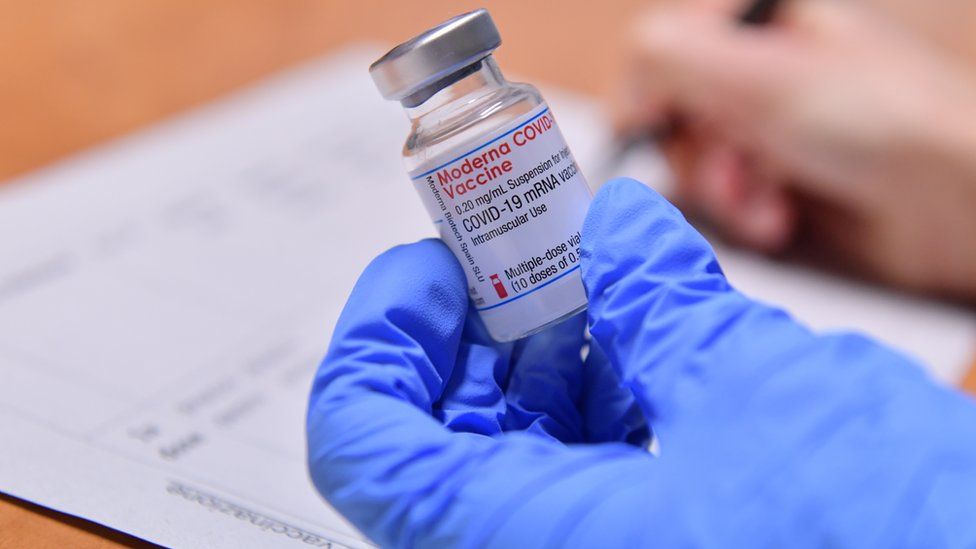
Covid jab could be available privately from 2024

Published36 minutes agoShareclose panelShare pageCopy linkAbout sharingImage source, ReutersBy Fergus WalshMedical editor Moderna is hoping to make its Covid jab available privately in the UK.Currently, it can be given only as part of the NHS autumn booster programme. But next year, the Covid vaccine’s licence is likely to be updated so High Street pharmacies and private clinics can sell it like the flu jab.Moderna chief executive Stephane Bancel told BBC News his teams were “working with governments to make this happen”.”People who want to be protected should be able to be protected,” he said. What you need to know about Covid as new variant risesCovid booster: Who can get another jab this autumn?Nobel Prize goes to scientists behind mRNA Covid vaccinesModerna is also hoping to launch a combined messenger ribonucleic acid (mRNA) flu and Covid vaccine in 2025.Interim data from early trials suggest it is as effective as separate doses of existing jabs. And Moderna hopes to have a triple vaccine, against flu, Covid and respiratory syncytial virus (RSV), ready for 2026. “Nobody wants to get two, three, four shots every winter,” Mr Bancel said:”So we are really obsessed at the company about how do we combine those products to end up getting one annual shot where you go to your pharmacy or doctors early in the fall”You get one shot – flu, Covid, RSV protection – and you can spend a healthy winter.” Considerably higherModerna’s Covid jab is already available privately in the US, for about £100 ($120). No price has been set for the UK – but it is likely to be considerably higher than the £12-20 cost of a flu jab.Pfizer, which also supplies Covid jabs to the UK, said it too was exploring providing them privately in the UK. But both companies said their current priority was to fulfil their commitments to supply the UK government with Covid vaccines. This week, two scientists who developed the technology that led to the first mRNA Covid vaccines were awarded the Nobel Prize for physiology or medicine. More on this storyWarning that Covid will ‘continue to surprise us’Published3 days agoNew Covid and flu dashboard launched for EnglandPublished26 SeptemberWho can get another Covid jab this autumn?Published19 September

Read more →

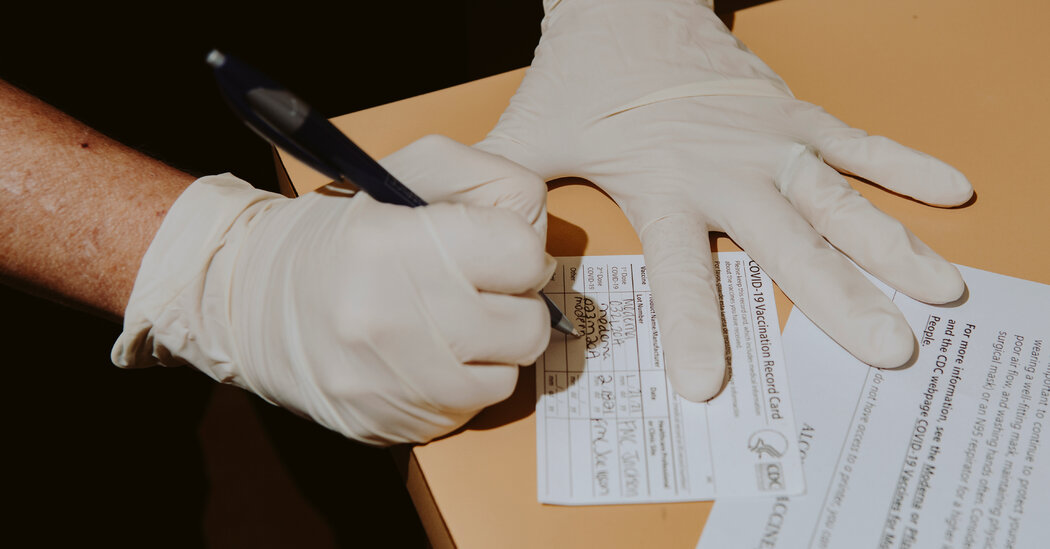
Paper Covid-19 Cards Are Going Away

The C.D.C. has stopped distributing the 3-by-4-inch cards, a mainstay of American wallets in the earlier days of the pandemic.The paper Covid vaccination cards were, for a time, a mainstay of American wallets — pulled out before bouncers, inspected at airport desks and shared with pride on social media accounts.But the days of the paper cards are over. The Covid-19 cards will “no longer be given out,” Dave Daigle, a spokesman for the Centers for Disease Control and Prevention, said in a statement Thursday, explaining that the distribution of the vaccine had transitioned from the federal government to commercial hands.People receiving vaccinations will still receive a fact sheet with information about the vaccine, he added, and state health departments will still hold a digital or paper copy.This makes the cards a relic of the bleaker days of the pandemic, when they were handed out as part of a mass vaccination campaign. They became a valuable document representing not only some physical protection against Covid 19 but also access to a myriad of social activities.Given after the first vaccination, the card detailed the manufacturer of a vaccine, the dose numbers, the date and location each shot was administered, and any follow-up shots.As vaccinations were administered across the United States beginning in December 2020, the cards became a coveted symbol for many recipients that they might avoid the worst symptoms of the virus. People took selfies with their card, sharing them online to support a public health campaign that some Americans were hesitant to embrace and that some outright rejected. (Some authorities warned people to stop sharing their card information online, saying that they were possibly giving valuable personal information to identity thieves.)In summer 2021, as officials began lifting lockdown restrictions on public venues, the paper cards took on extra meaning, becoming a ticket in some areas to social gatherings and to some international travel. Much like keys and IDs, they were a constant companion, flashed in front of bars, restaurants and concert venues that required them for entry. But the benefits they offered also raised questions of whether it would cause divisions in society between those were vaccinated and those who were not.In some communities, gyms mandated them to enroll in group classes, and sports stadiums added sections for the vaccinated. Airlines and cruise companies asked to see the cards before travelers could visit certain countries.And they created a market for opportunists: Scammers forged or stole copies of the cards, selling them illegally for up to $60 a piece. Other enterprising minds, cognizant that the 3-by-4-inch cards were slightly too awkward to fit unfolded in a wallet, came up with protective cardholders, both functional and bedazzled.The paper pass became increasingly outdated in the United States and abroad as digital health passes replaced them. And as travel restrictions were lifted in most places — the United States stopped requiring proof of vaccination for international travelers this May — even the digital health passes have largely been phased out.More than 270 million people have received at least one dose of a vaccination, according to the C.D.C.’s tracker. With updated Covid vaccines now on the market and a risk of a surge in infections this fall and winter, the C.D.C. last month recommended that all Americans 6 months and older receive at least one dose of the latest shots.Pharmacies have confirmed that people do not need to bring the old paper cards, long lost for many people, to receive a new vaccine. But the C.D.C. has also recommended keeping vaccination records when possible to give to health providers.Those with a paper card may still want to hold onto it — for practical, if not sentimental, reasons.

Read more →

Increased deep sleep benefits your heart

Sleep is a vital aspect of human life, with deep sleep being particularly crucial for overall health. The brain recovers during this sleep stage, and the rest of the body seems to regenerate then as well.
Recently, researchers at ETH Zurich and the University of Zurich have shown that increased deep sleep is of particular benefit to the cardiovascular system: targeted stimulation with brief tones during deep sleep causes the heart — in particular the left ventricle — to contract and relax more vigorously. As a result, it pumps blood into the circulatory system and draws it out again more efficiently. The left ventricle supplies most organs, the extremities, and the brain with oxygen-rich arterial blood.
When the heart contracts, the left ventricle is squeezed and wrung out like a wet sponge. The more immediate and more powerful this wringing action, the more blood enters the circulation and the less remains in the heart. This increases blood flow, which has a positive effect on the cardiovascular system.
An interdisciplinary team of heart specialists led by Christian Schmied, Senior Consultant for Cardiology at the University Hospital Zurich, used echocardiography (cardiac ultrasound examinations) to demonstrate that the left ventricle undergoes more intense deformation after nocturnal stimulation. This is the first time anyone has shown that an increase in brain waves during deep sleep (slow waves) improves cardiac function. The corresponding study was recently published in the European Heart Journal.
“We were expecting that stimulation with tones during deep sleep would impact the cardiovascular system. But the fact that this effect was so clearly measurable after just one night of stimulation surprised us,” explains project leader and sleep expert Caroline Lustenberger, SNSF Ambizione Fellow at the Neural Control of Movement Lab at ETH Zurich.
Heart specialist Schmied is also delighted: “We clearly saw that both the heart’s pumping force and its relaxation were greater after nights with stimulation compared to nights without stimulation.” Both factors are an excellent measure of cardiovascular system function.
Stimulation with pink noise
The study involved 18 healthy men aged 30 to 57, who spent three non-consecutive nights in the sleep laboratory. On two nights, the researchers stimulated the subjects with sounds; on one night, they did not.

Read more →

New findings pave the way for hearing loss therapies

As we age, many of us will eventually need hearing aids. In some cases, the reason for this may be a signaling pathway that controls auditory sensory cell function and is downregulated with age. Researchers at the University of Basel are uncovering clues.
Hearing loss eventually affects almost everyone: Loud noises or simple aging gradually cause the auditory sensory cells and their synapses in the inner ear to degenerate and die off. The only treatment option is a hearing aid or, in extreme cases, a cochlear implant.
“In order to develop new therapies, we need to better understand what the auditory sensory cells need for proper function,” explains Dr. Maurizio Cortada from the Department of Biomedicine at the University of Basel and University Hospital Basel. In collaboration with Professor Michael N. Hall’s research group at the Biozentrum, Cortada investigated which signaling pathways influence the so-called sensory “hair cells” in the inner ear. In the process, the researchers discovered a central regulator, as they report in the journal iScience.
This signaling pathway, known by researchers as the mTORC2-signaling pathway, plays an important role, among other things, for cell growth and the cytoskeleton. The role it plays for the hair cells in the inner ear has not previously been studied.
When the researchers removed a central gene of this signaling pathway in the hair cells of the inner ear of mice, the animals gradually lost their hearing. By the age of twelve weeks, they were completely deaf, the authors report in the study.
Fewer synapses
Closer examination indicated that the sensory hair cells in the inner ear lost their sensors without the mTORC2 signaling pathway: hair cells have protuberances similar to tiny hairs that are important for transducing sound into nerve signals. These “tiny hairs” were shortened, as the researchers determined with the use of electron microscopes. The number of synapses that transmit the signals to the auditory nerve was also reduced.
“From other studies, we know that the production of key proteins in this signaling pathway decreases with age,” Cortada explains. There may be a connection to the loss of synapses and the reduced function of the auditory sensory cells in the inner ear that leads to hearing loss with increasing age.
“If this is confirmed, it would be a possible starting point for future therapies,” says the researcher. The middle and inner ear, for example, would be readily accessible for locally-administered medications or gene therapies. The results could pave the way for the development of such treatment options.

Read more →