Psychedelics improve mental health, cognition in special ops veterans

One treatment each of two psychedelic drugs lowered depression and anxiety and improved cognitive functioning in a sample of U.S. special operations forces veterans who sought care at a clinic in Mexico, according to a new analysis of the participants’ charts.
The treatment included a combination of ibogaine hydrochloride, derived from the West African shrub iboga, and 5-MeO-DMT, a psychedelic substance secreted by the Colorado River toad. Both are designated as Schedule I drugs under the U.S. Controlled Substances Act.
In addition to relieving symptoms of post-traumatic stress disorder (PTSD), the combined treatment also alleviated cognitive impairment linked to traumatic brain injury — which stood out to researchers from The Ohio State University who led the chart-review analysis. Many special operations forces veterans seeking treatment for complex psychiatric symptoms do not respond to more traditional therapies.
“What sets this group apart from some other veterans and civilians is that often, they are exposed to repeated traumatic events as a routine part of their jobs. This build-up of exposure to these difficulties seems to produce a cluster of challenges that include traumatic brain injury, which we know in and of itself predisposes people to mental health problems,” said lead author Alan Davis, associate professor and director of the Center for Psychedelic Drug Research and Education (CPDRE) in Ohio State’s College of Social Work.
“So the fact that we saw that there were improvements in cognitive functioning linked to brain injury were probably the most striking results, because that’s something we didn’t predict and it’s very new and novel in terms of how psychedelics might help in so many different domains.”
The study is published in the American Journal of Drug and Alcohol Abuse.
Most of the veterans attending the clinic retreat program had been on active duty after 9/11 and reported seeking care for memory problems, brain injury, depression, anxiety, PTSD, sleep problems, anger and fatigue. Head injuries were reported by 86% of attendees, most of whom attributed memory problems, irritability, disordered sleep and ringing in the ears to those long-ago head traumas.

Read more →

And then there were 6 — kinds of taste, that is

Japanese scientist Kikunae Ikeda first proposed umami as a basic taste — in addition to sweet, sour, salty and bitter — in the early 1900s. About eight decades later, the scientific community officially agreed with him.
Now, scientists led by researchers at the USC Dornsife College of Letters, Arts and Sciences have evidence of a sixth basic taste.
In research published Oct. 10 in Nature Communications, USC Dornsife neuroscientist Emily Liman and her team found that the tongue responds to ammonium chloride through the same protein receptor that signals sour taste.
“If you live in a Scandinavian country, you will be familiar with and may like this taste,” says Liman, professor of biological sciences. In some northern European countries, salt licorice has been a popular candy at least since the early 20th century. The treat counts among its ingredients salmiak salt, or ammonium chloride.
Scientists have for decades recognized that the tongue responds strongly to ammonium chloride. However, despite extensive research, the specific tongue receptors that react to it remained elusive.
Liman and the research team thought they might have an answer.
In recent years, they uncovered the protein responsible for detecting sour taste. That protein, called OTOP1, sits within cell membranes and forms a channel for hydrogen ions moving into the cell.

Read more →

New research may make future design of nanotechnology safer with fewer side effects

A new study may offer a strategy that mitigates negative side effects associated with intravenous injection of nanoparticles commonly used in medicine.
The study was published today in Nature Nanotechnology.
“Nanotechnology’s main advantage over conventional medical treatments is its ability to more precisely target tissues, such as cancer cells targeted by chemotherapy. However, when nanoparticles are injected, they can activate part of the immune system called complement,” said senior author Dmitri Simberg, Ph.D., professor of Nanomedicine and Nanosafety at the University of Colorado Skaggs School of Pharmacy on the University of Colorado Anschutz Medical Campus.
Complement is a group of proteins in the immune system that recognize and neutralize bacteria and viruses, including nanoparticles which are foreign to the body. As a result, nanoparticles are attacked by immune cells triggering side effects that include shortness of breath, elevated heart rate, fever, hypotension, and, in rare cases, anaphylactic shock.
“The activation of the immune system after injection of nanoparticles can be challenging to understand and prevent. This research is one step closer to providing a better understanding and a solution for people to receive the benefits of nanoparticles without side effects,” said Simberg, who is also the co-director of the Colorado Center for Nanomedicine and Nanosafety Co-Director.
The researchers say while some progress has been made in mitigating adverse reactions through slow infusion and premedication with steroids and antihistamines, a significant number of people still experience reactions.
“The goal is to prevent, avoid and mitigate adverse reactions and immune activation,” Simberg adds.

Read more →

Dissociation Is Big on TikTok. But What Is It?

People are turning to social media to define dissociative disorders, but those portrayals aren’t always accurate. Here is a primer.Have you ever zoned out?Maybe you have experienced highway hypnosis, with no recollection of having driven from Point A to Point B. Or maybe you have zero memory of something you just read.These are mild forms of dissociation, which is the ability to disconnect from our thoughts, feelings, environment or actions.Dissociation can even help athletes do their jobs, for instance, because it “allows people to focus on the most salient or life-preserving aspects of a situation” without mental interference, said Janina Fisher, a psychologist who has been treating dissociative disorders for decades.But sometimes people experience a major form of dissociation, often in the aftermath of overwhelming trauma. In this case, the dissociative symptoms become more extreme and frequent.Public fascination with dissociation and its disorders has endured for many years — examples include the books “Sybil” and “The Three Faces of Eve,” both adapted into wildly popular feature films, each about a woman with “multiple personalities.”Now people are capturing their experiences with dissociation and posting them on social media. TikTok videos hashtagged #dissociativeidentitydisorder, or D.I.D., have been viewed more than 1.7 billion times and #dissociation has drawn more than 775 million views. Some show what it looks like to dissociate, or use visual effects to explain the eerie feeling of living outside your body. In others, people describe their different identities, also called alters or parts.Celebrities like the “Saturday Night Live” cast member Bowen Yang have also openly described struggles with dissociative disorders, as conversations about mental health continue to migrate into public forums.But research suggests that much of this content isn’t providing reliable information. We asked several mental health providers to explain more about dissociation.What are the dissociative disorders?Rather than fight or flee in a stressful or threatening situation, some people “freeze,” said Dr. Frank W. Putnam, a professor of clinical psychiatry at the University of North Carolina School of Medicine and an expert on dissociative disorders. “That’s the dissociative state where you shut down and you kind of go away.”Although dissociation can help a person mentally escape during a threat, it can interfere with daily life when people continue to dissociate during benign situations. Some people might find themselves in a new location without knowing how they got there, for example.Frequent experiences like that make dissociation pathological, Dr. Putnam said. It becomes a disorder when you space out and “lose time” long enough that it interferes with your life in a significant way, he added.The three most common and well-known dissociative disorders are: dissociative identity disorder, depersonalization/derealization disorder and dissociative amnesia.The common thread in each is a disruption of identity.The most severe is dissociative identity disorder, formerly known as multiple personality disorder. Those who experience D.I.D. report having two or more identities. Studies indicate that around 1 to 1.5 percent of the population has D.I.D. But some say the prevalence could be higher.“I think it’s way underdiagnosed,” said Dr. Judith Herman, a psychiatrist and pioneer in the field of trauma studies. That’s largely because “you still hear people in my field saying they don’t ‘believe in D.I.D.’”Despite the inclusion of D.I.D. in the D.S.M.-5., the American Psychiatric Association’s official manual of mental disorders, some psychiatrists and psychologists think that patients with symptoms of D.I.D. actually have borderline personality disorder. Others think it is a fad or that it can be induced by a provider.Experiencing severe childhood trauma at an early age, such as sexual abuse, is a predictor of developing D.I.D., several experts said.Dr. Fisher acknowledged that “it’s a hard-to-believe diagnosis unless you’ve seen it.” Patients show changes in body language, facial expression and cognitive ability, she added. “It is sort of dramatic and sounds almost fantastical.”Depersonalization/derealization disorder is thought to occur in about 1 to 2 percent of the population and is often associated with a history of verbal abuse, like shaming, that drives someone to want to disconnect from an emotionally traumatizing environment, Dr. Putnam said.According to the A.P.A., those who experience depersonalization can feel at times as though they are detached from their mind or body — estranged from themselves — like they are watching events happen to them. Derealization, on the other hand, refers to feeling detached from the environment as though the people and things in the world are not real, in some cases appearing like cardboard cutouts.The prevalence of dissociative amnesia is not well established. It occurs in response to a variety of different types of trauma, and involves having blocks of time where you lose your identity and are not able to recall important information about your life, such as your own name.Both dissociative amnesia and depersonalization/derealization symptoms commonly accompany D.I.D.Why are dissociative disorders attracting so much attention?“I had thought that the internet and app-based world would bring us all closer together. And it’s had exactly the opposite effect,” said Dr. David Spiegel, a Stanford University psychiatry professor who has worked with patients with D.I.D. for about 50 years. “It has fragmented us.”What he means, he explained, is that many of us have retreated into our own online echo chambers. Some people truly have D.I.D., or any number of mental health disorders, but others might be incorrectly labeling themselves because they are locked into a D.I.D. information loop — either by choice or via an aggressive social media algorithm.The idea of having alternate realities or different identities is one that may especially resonate during adolescence, experts said, a time when many teenagers struggle with the question “Who am I?”Dr. David Rettew, a child and adolescent psychiatrist and the medical director of Lane County Behavioral Health in Eugene, Ore., has worked with many adolescents who learned about dissociative disorders on social media and are now questioning whether they have them.Dr. Rettew encouraged anyone curious about a specific disorder to speak with an attentive and thoughtful health care provider, particularly one who understands trauma, to tease out what might be going on.“Just about everything in mental health is dimensional. It exists on a spectrum,” he said. “And that doesn’t make our conditions less real, but it does make them more complicated.”

Read more →

The Wegovy Shortage Drags On, Leaving Patients in Limbo

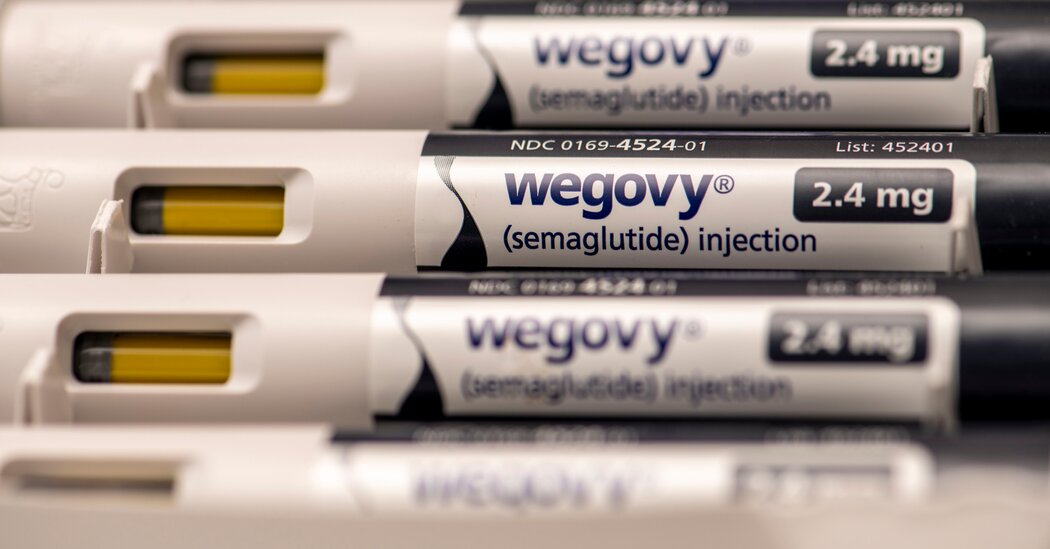
The situation has left many patients frustrated and unable to start taking the weight loss drug.When Mark Basa needed his next dose of Wegovy, he worked his way down a list of 10 CVS stores within a 25-mile radius of his Peekskill, N.Y., home — and struck out at every one. In the 10 weeks he couldn’t find the drug, he regained the eight pounds he had lost on the medication, and his blood sugar rose. He felt himself get out of breath more often. His shirts fit tighter.“It was anxiety-inducing,” Mr. Basa, 37, said. “It was like, ‘Well, I’m never going to lose this weight.’”Wegovy has appeared on the Food and Drug Administration’s drug shortage list since March 2022. But doctors and patients say that the situation has worsened in the months since Novo Nordisk, the Danish company that manufactures the drug, limited the availability of the three lowest doses of Wegovy. With demand climbing faster than supply can keep up, the move effectively slows the pace of people starting the drug, because patients must begin with a low dose that is gradually increased. The shortage has fueled widespread frustration among potential patients, as well as those like Mr. Basa who need to refill their prescriptions or risk regaining weight.“It’s created this living hell,” said Dr. Andrew Kraftson, a clinical associate professor in the division of metabolism, endocrinology and diabetes at Michigan Medicine.A Novo Nordisk representative wrote in an email that the drugmaker anticipates “ongoing supply disruption” for those three doses as demand continues to outpace production. The company did not have an estimate for how long they will continue to limit those doses.“The pipe is closed,” said Dr. Scott Hagan, an assistant professor of medicine at the University of Washington who studies obesity. Dr. Hagan sees patients with severe arthritis in need of hip and knee replacements who are above the body mass index threshold for surgery; Wegovy could help them lose enough weight to have surgery, he said, but not if they’re unable to start the drug.What happens when people can’t find Wegovy?Wegovy is an injectable version of a compound called semaglutide, which slows the emptying of the stomach and, in turn, makes people feel full faster and for longer. It also targets the areas of the brain that regulate appetite, reducing cravings and silencing what some people call “food noise.”New patients start by injecting themselves weekly with the lowest dose of Wegovy for a month; after that, they can increase the dose monthly until they reach a “maintenance dose.”When people stop taking Wegovy, they often regain weight. And when patients can only access the medication in fits and starts, they may end up “weight cycling,” a term researchers use to describe fluctuations in weight — which may increase the risk of cardiovascular disease.Some patients end up temporarily taking older weight loss medications like Saxenda as a stopgap, but those alternatives are far less effective and can come with new side effects, Dr. Kraftson said. Others may end up trying to source semaglutide from compounding pharmacies, which can introduce a host of dangers and complications. Patients may want to switch to Ozempic, but that, too, can be hard to find.Dr. Padmaja Akkireddy, an endocrinologist at Nebraska Medicine, said that when patients stop taking Wegovy for more than a month, she starts them back on a lower dose — which can be disappointing for people looking to lose more weight, and faster.Others, like Ali Husain, have tried to find workarounds. Mr. Husain, 51, started the medication in March to cut down on weight he had gained earlier in the Covid-19 pandemic. By June, he was only able to find higher doses in stock. When his pharmacy accidentally sent him the highest dose after he spent weeks without the drug, he decided to measure his own lower doses. But after he resumed taking the medication and reached a higher dose, the side effects rattled Mr. Husain, who vomited so intensely that his stomach ached for days.One reason that patients are advised to follow the strict dosing schedule is to stave off side effects.“With a higher dose, there’s more weight loss, but also more side effects,” Dr. Hagan said. People can also experience more side effects if they go on and off the medication, Dr. Akkireddy said, because their bodies struggle to recalibrate.Mr. Husain’s doctor decided to put him back on a lower dose to mitigate his side effects. Hours before he spoke with The New York Times, Mr. Husain received a text from Walgreens. It was out of stock.

Read more →

Rishi Sunak defends his plan to ban smoking for younger generation

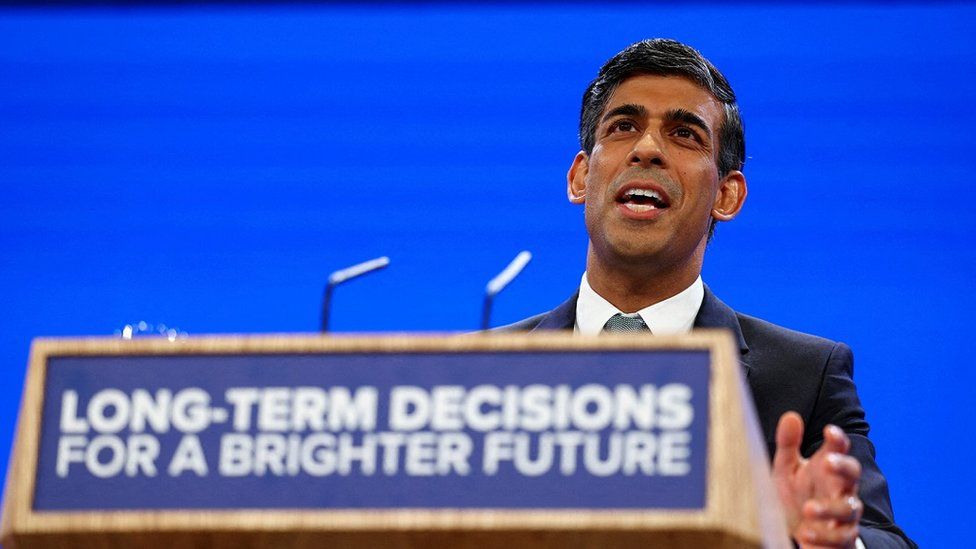
Published18 minutes agoShareclose panelShare pageCopy linkAbout sharingImage source, ReutersBy James GregoryBBC NewsPlans to phase out the sale of cigarettes in England will be the “biggest public health intervention in a generation”, Rishi Sunak has said.The PM told the BBC there was “no safe level of smoking” when asked about restricting people’s right to choose. His plan seeks to raise the legal age of smoking every year by a year so that eventually no-one can buy tobacco.Tory MPs will be allowed a free vote while Labour indicated it would back the policy.But some critics of the policy say it could lead to the creation of a “black market”.Last year, the tobacco industry raised more than £10bn in taxes, a 3% drop from 2021-22. Making the announcement in his keynote speech at the Conservative Party Conference, Mr Sunak said he believed it was the right step to tackle the leading cause of preventable ill-health.In an interview with Radio 4’s Today programme, Mr Sunak was challenged on why he was taking measures to ban the future sale of cigarettes but in June pushed back part of the government’s anti-obesity strategy, saying he believed in “people’s right to choose”.Originally scheduled for this month, plans to ban two-for-one junk food deals have been delayed by the government for another two years.But Mr Sunak told the BBC smoking cigarettes was not the same as eating crisps or a piece of cake because it could not be part of a balanced diet and there was no safe level of smoking.”Smoking is unequivocally the single biggest preventable cause of death, disability and illness in our society,” he said.”Everyone recognises this measure will be the single biggest intervention in public health in a generation.”He said measures to restrict choice were “never easy” but nobody would want their children or grandchildren to grow up to smoke.Smoking age should rise until it is banned – SunakThe facts have changed, says PM, as he scraps HS2 legRishi Sunak unleashes reset of his premiershipSix takeaways from Rishi Sunak’s speechSmoking increases the risk of strokes, heart disease, dementia and stillbirth as well as causing one in four deaths from cancer. Smoking rates have been falling since the 1970s. But there are still more than five million smokers in England and six million across the UK. Currently, one in nine 18 to 24-year-olds smokes, according to the Office for National Statistics. The idea of gradually increasing the smoking age was put forward last year by Javed Khan, the former Barnardo’s chief executive, who was asked by ministers to consider new approaches to tackling smoking.At the time, the government, which was led by Boris Johnson, said such a move was unlikely.But Mr Sunak has decided to throw his backing behind it as a way of meeting the government’s ambition for England to be smokefree by 2030 – defined as less than 5% of the population smoking.Sir Chris Whitty, the Chief Medical Officer for England, has said “the overwhelming majority of the medical profession, the nursing profession and all the health charities support this”.He described claims from the tobacco industry that the ban would not work as “bogus”.Speaking to the BBC, Sir Chris said: “As a doctor I’ve seen many people in hospital desperate to stop smoking because it’s killing them and yet they can not – their choice has been removed.”Labour said it would “not play politics with public health” and would lend the prime minister the votes to get the law passed – but the plan is likely to meet opposition from the libertarian wing of the Conservative Party.Earlier this week, former prime minister Liz Truss said the party needed to “stop banning things”. It is understood she will not vote in favour of the policy.Image source, Jonathan BradyChristopher Snowdon, head of Lifestyle Economics at the Institute of Economic Affairs think tank, told the BBC the policy if implemented would lead to “massive black markets”. “You’re going to have, almost certainly, a fairly large, informal market of smokers who are old enough to buy cigarettes selling cigarettes to people who are not old enough. “The problem with prohibition isn’t that it doesn’t have any effect whatsoever on consumption, the problem with prohibition is it leads to massive black markets and a lot of tax revenues gone.”Simon Clark, director of the smokers’ rights group Forest, accused the prime minister of “dumbing down” by treating future generations of adults like children.He added that Mr Sunak had taken a “wrecking ball to the principles of choice and personal responsibility”. But Cancer Research UK’s Michelle Mitchell said the announcement on the smoking age was a “critical step”.”If implemented, the prime minister will deserve great credit for putting the health of UK citizens ahead of the interests of the tobacco lobby.” Deborah Arnott, from campaign group Action on Smoking and Health (ASH), said what had been announced was an “unprecedented” set of measures which would hasten the day smoking is obsolete.Also in his interview with the Today programme, Mr Sunak: Did not directly answer whether he agreed with Home Secretary Suella Braverman who said immigration posed an “existential threat to the West’s way of life” and warning of an “invasion” and hurricane” – Mr Sunak said it was putting unsustainable pressure on the UKSaid the global investors he has spoken to were not concerned about the scrapping of the HS2 northern legWhile Mr Sunak undoubtedly hopes his plans to phase out smoking will be a legacy of his time in office, his first conference as PM was overshadowed by his decision, and the speculation in the days leading up to it, to axe the northern leg of the HS2 rail project. While critics reacted with anger to the decision, the PM insisted investments would instead be made in transport projects across the country.Are you a smoker or a parent? How do you feel about the proposed change? Get in touch by emailinghaveyoursay@bbc.co.ukPlease include a contact number if you are willing to speak to a BBC journalist. You can also get in touch in the following ways:WhatsApp: +44 7756 165803Tweet: @BBC_HaveYourSayUpload pictures or videoPlease read our terms & conditions and privacy policy

If you are reading this page and can’t see the form you will need to visit the mobile version of the BBC website to submit your question or comment or you can email us at HaveYourSay@bbc.co.uk. Please include your name, age and location with any submission. More on this storySmoking age should rise until it is banned – SunakPublished19 hours agoRishi Sunak unleashes reset of his premiershipPublished8 hours agoSix takeaways from Rishi Sunak’s speechPublished17 hours agoThe facts have changed, says PM, as he scraps HS2 legPublished14 hours agoA-levels to be replaced by new qualificationPublished16 hours agoWould Labour tax meat? And other Conservative claims checkedPublished16 hours agoWhy Rishi Sunak’s HS2 gamble may not pay offPublished48 minutes ago

Read more →

Smoking: Prof Sir Chris Whitty backs tobacco phase-out plan

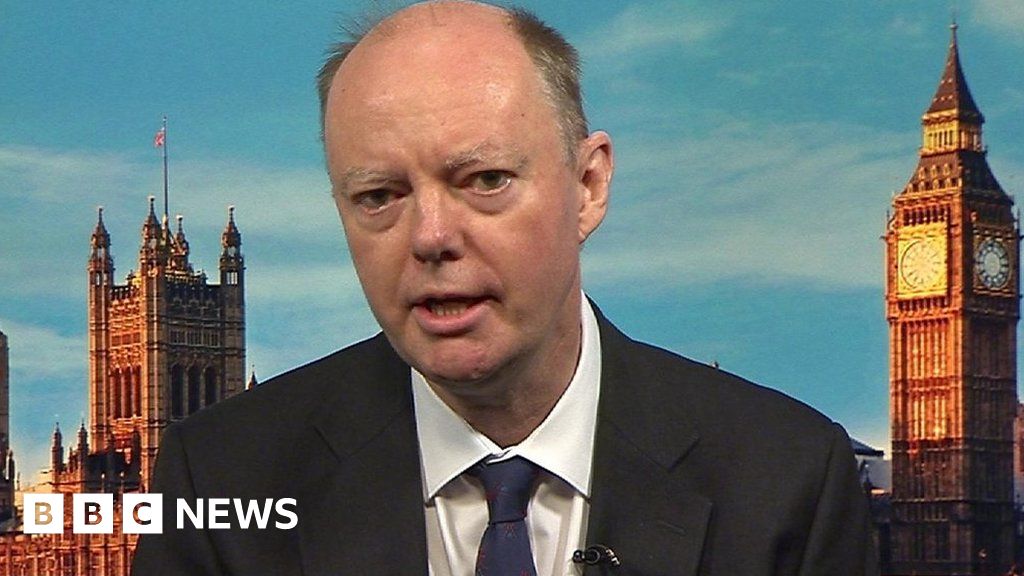
Prof Sir Chris Whitty, the Chief Medical Officer (CMO) for England, has welcomed Rishi Sunak’s plan to raise the legal age of smoking every year by a year so that eventually no-one can buy tobacco.He told the BBC: “As a doctor I’ve seen many people in hospital desperate to stop smoking because it’s something that is killing them.”

Read more →

Workers Exposed to Extreme Heat Have Few Protections

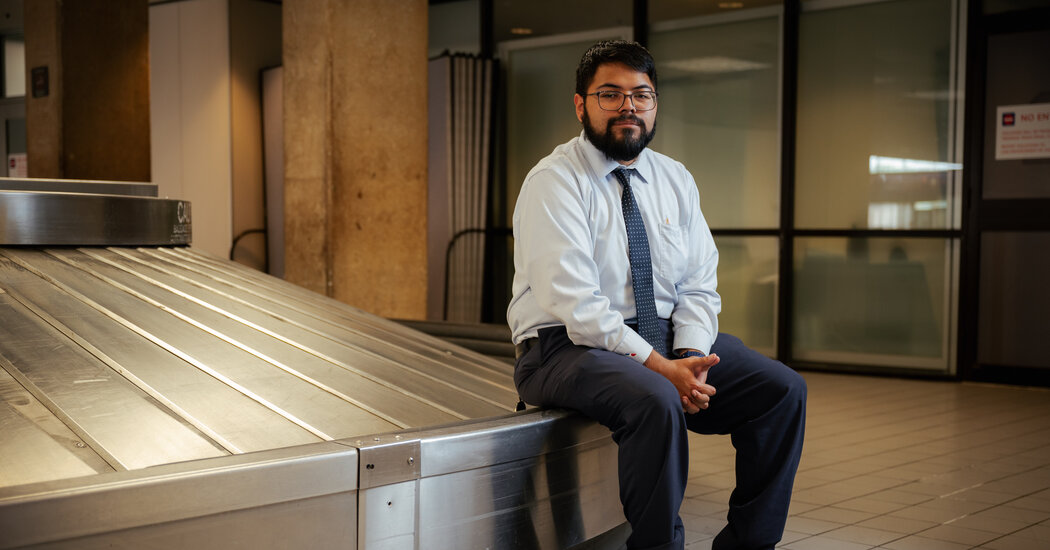
Tens of millions of Americans are struggling to cope with soaring temperatures. OSHA is developing new workplace safety standards, but they are not yet complete.Anthony Soto, a 22-year-old baggage claim employee at the Dallas Fort Worth International Airport, crumpled to the floor near gate C15 after a seizure last October that he attributed to hot indoor conditions and strenuous lifting. In record-setting heat in Texas this past summer, Mr. Soto, who has epilepsy, had four more seizures that left him speechless, his body unresponsive, he said.His blue button-down shirt was streaked with sweat on a recent sweltering day as the temperature again neared 105 degrees. Working in such heat “makes us feel unwanted, unhelpful and unworthy,” he said. “The only thing that matters is how long it takes to scan bags.”Scientists say the record heat this summer was fueled by climate change and that heat waves are likely to grow more intense. But there are few safeguards for tens of millions of workers increasingly exposed to rising temperatures on the job.The Biden administration is taking steps to create new rules for employers, with two key steps expected in the coming months. A handful of states have put in place standards for work in extreme heat, including California, which requires employers to allow outdoor workers to rest in the shade in temperatures above 80 degrees.But in other states, workers like Mr. Soto, who makes $15 an hour, continue to suffer as extreme heat spans the summer months and the early fall. Dallas endured a record number of September days with triple-digit temperatures.“The worst-performing states are just not going to do it on their own,” said Dr. Rosemary Sokas, an occupational health expert at Georgetown University who co-wrote a recent article in The New England Journal of Medicine on the dangers now faced by workers in absence of a federal regulations.Prodded in 2021 by President Biden, the Occupational Safety and Health Administration is drafting guidelines for indoor and outdoor work in heat, which could allow the federal government to fine employers that violate its recommendations.Henry Gomez took a break from removing a tree at a home in Houston last month.Adrees Latif/ReutersBut OSHA is still plodding through a labyrinthine rule-making process. The agency is required to go through nearly 50 steps, most of which are mandated by executive orders or by congressional legislation.By the end of October, officials expect to complete a consultation with small businesses that would be affected by the standards. Business groups have opposed the possible rule, saying it could be onerous and expensive. By early next year, the agency could lay out a timeline for a rule proposal.“That’s really a major milestone, because that’s the spot where the agency formally alerts the public that we are proposing a rule,” Andrew Levinson, OSHA’s director of standards, said in an interview.Mr. Levinson said that the agency was planning to publish indoor and outdoor standards together, since workers “may be shuffling between outdoor work environments and then going into a warehouse, or into some other equipment processing area.” He added that OSHA had to consider different varieties of hot weather, like dry and moist, and how they affect the body.The agency’s current guidance for employers, with little enforcement muscle, may offer clues to its formal heat standard. Among the guidelines, experts say, could be acclimatization — the practice of gradually easing workers into schedules that expose them to extreme heat. Many workers who have died from heat-related causes succumbed as they began a job.The agency could also require employers to offer workers access to breaks, shade and cold water. In a statement to The Times, Mr. Soto’s employer, Prospect Airport Services, said that he had been stationed in a cooler work area and that it had offered additional breaks to employees working in a baggage-handling space where the air-conditioning had been unreliable.Federal lawmakers introduced legislation over the summer that would require OSHA to publish an emergency rule within a year after the bill passes, a measure seen as unlikely to pass because of opposition in the Republican-controlled House.One of its chief backers, Representative Greg Casar, Democrat of Texas, held a “thirst strike” over the summer to urge the fast-tracking of an OSHA rule. “It’s critical a rule is laid out over the next year,” he said, adding, “If we want to make it permanent, we need to pass legislation.”Work on a light-rail line in Houston in July.Adrees Latif/ReutersDavid Michaels, an epidemiologist at George Washington University who led OSHA during the Obama administration, said that the agency’s current timeline suggested that new standards might not come by next year. Whenever it arrives, the rule “would be a game changer,” he said, adding: “There’s no question. And it will save lives.”Extreme heat especially afflicts low-wage earners like Mr. Soto. In higher temperatures, workers in poor counties lose more of their pay, researchers have found. And low-income Americans disproportionately suffer from chronic health conditions that make them more vulnerable to heat-related injuries.People with epilepsy are more prone to seizures in extreme heat. so Mr. Soto received permission from his supervisors to work in cooler baggage claim areas. The daily medication he takes has steadied him.Yet he is still anxious as he navigates the sun-drenched and unreliably air-conditioned airport five days a week, including the long walk to a staff room for lunch that he said eats up much of his break time. The airport’s heat, he said, “feels like you’re in the gym, in the sauna.”“You fully start sweating. I start looking at my hands and I think, How am I already sweating? I haven’t done anything,” Mr. Soto added. “My uniform, you can literally see the sweat on your back and stomach.”How heat injures the bodyDangerous heat waves are affecting more of the country, including states with typically milder climates.The costs to the economy are vast: In 2021, more than 2.5 billion hours of labor in the U.S. agriculture, construction, manufacturing and service sectors were lost to heat exposure, according to data compiled by The Lancet, the London-based medical publication. Productivity dips heavily in hot weather.Few states offer more vivid examples of these new perils than Texas. More than 40 people have died in Texas from heat-related causes since 2011, including a lineman and letter carrier over the summer.The risks to workers were apparent on a series of sweltering late summer days at DFW, where temperatures neared 110 degrees.Travun Watts makes $14 an hour cleaning American Airlines planes at the airport between 2 p.m. and 10 p.m. He fainted one afternoon in August as he waited in a jet bridge in hot weather.Desiree Rios/The New York TimesOver 650,000 Americans worked in commercial airports as of 2022, according to federal data compiled by the Service Employees International Union. Many have jobs that involve full or partial heat exposure, including wheelchair escorts, shuttle drivers and airplane cleaners that can ask for loitering in hot areas without adequate air-conditioning.Workers on the tarmac, such as baggage handlers, typically face the highest temperatures and most dangerous conditions. While some industries and employers have allowed workers to clock in early in the morning or late at night to avoid the worst of a day’s heat, flight schedules are fixed. Most airport workers cannot choose the time or place for their work.Travun Watts, a contractor who makes $14 an hour cleaning American Airlines planes at the airport between 2 p.m. and 10 p.m., fainted one afternoon in August as he waited in a jet bridge in scorching weather.Sitting in a baggage claim area on a recent afternoon before his shift, Mr. Watts, who has diabetes, recalled waking up at a Dallas hospital, uncertain about what had landed him there. “I felt like I was in a loop, incoherent,” he recalled.To assess the limits of work in extreme heat, scientists point to what is known as the wet-bulb temperature — a measurement of both temperature and humidity. Above 95 degrees, sweat cannot evaporate and the body cannot cool. Hours outdoors can be fatal.“When you have hot conditions, there’s increased demand on the heart to pump more blood to the largest organ in our body, which is our skin,” said Dr. Jonathan Patz, a scientist at the University of Wisconsin-Madison who has studied the environmental health effects of climate change.Extreme heat can wreak havoc on the body’s major organs. The heart and the kidneys can become deprived of blood and oxygen, leading to kidney failure. If the brain becomes overheated and oxygen-deprived, it can halt the signals to the body to cool itself, preventing sweat.Terminal C of the Dallas Fort Worth International Airport, where Mr. Watts works, is older than others at the airport, with crowded walkways, spotty air-conditioning and drinking fountains with lukewarm water.Desiree Rios/The New York TimesMr. Watts spent more than three days in the hospital, he said. A nurse still visits him at home once a week to check on him. His job had been unrelenting even after he returned, he added, often involving cleaning as many as 14 planes per shift.“Instead of giving me five to 10 minutes to set my insulin meter, they’d rush me, make me run from one plane to next, even when I told them it’s detrimental to my health,” he said.Airports are particularly risky settings for work, with concrete structures and tarmac that easily retain heat, Dr. Patz noted.Extreme heat can reduce the safety of indoor spaces by reducing airflow and raising the temperature of air-conditioned spaces. Terminal C, where Mr. Watts works, is older than others at the airport, with crowded walkways, unreliable air-conditioning and drinking fountains with lukewarm water.At 5:30 p.m. on a recent day, as the temperature hovered around 100 degrees, baggage employees rested their heads and arms on the ramps that funneled bags out of flights in Terminal A.“Any strenuous activity like throwing luggage on a conveyor belt takes a lot more out of you,” said Dr. Frank LoVecchio, an emergency physician who treated airport workers over the summer at the Valleywise Health Medical Center in Phoenix.“I’ve seen people super red. They look like they just jumped in a pool,” said Zach Bodine, who makes around $15 an hour helping passengers in wheelchairs at the Phoenix Sky Harbor International Airport. He recalled co-workers “throwing up in the bathroom nonstop.”Unofficial temperature displayed at the Sky Harbor International Airport in Phoenix in July.Matt York/Associated PressMr. Soto, the Dallas baggage claim worker, said that he had considered quitting, a move that could protect his health. But he recalled being a boy who was awe-struck watching planes land at DFW with his father — a feeling that led to his dream of becoming a pilot.Mr. Soto sometimes rides the airport’s outdoor tram system just to glimpse aircraft. “Everyone wishes they could fly,” he said.

Read more →

Eurostar introduces preventative measures amid Paris bedbug surge

Published3 hours agoShareclose panelShare pageCopy linkAbout sharingImage source, Getty ImagesBy James W KellyBBC NewsEurostar has said trains on its Paris-London service will have “preventative measures” in place amid bedbug outbreaks in the French capital.French social media users have posted videos of bugs found on the Paris train network in recent weeks.Transport for London said it is not aware of any outbreaks on its network. Professor Will Hentley, an expert on bedbugs, said the situation in France is unlikely to have any major impact in the UK.The blood-sucking insects have also been spotted in Parisian cinemas, hospitals and in private homes, with French authorities warning that the issue must be tackled before next summer’s Olympics. This video can not be playedTo play this video you need to enable JavaScript in your browser.A Eurostar spokesperson said: “The safety and wellbeing of our customers is always our number one priority, and the presence of insects, such as bedbugs, on our trains is extremely rare.”They said textile seats on their trains are “cleaned thoroughly” on a regular basis – including use of a hot-water injection cleaning system and extraction cleaning – which is “highly effective in eliminating bugs”.Transport for London said it would continue to monitor the network and maintain its “rigorous and thorough cleaning measures”.Prof Hentley, an academic with the University of Sheffield’s school of biosciences, told BBC London bedbugs are already “fairly prevalent” in the UK and the situation in Paris would be unlikely to have much additional impact.”There is limited risk in it getting any worse because the bedbugs are already here. They’re not going to suddenly come across the channel to the UK,” he said.Image source, Will HentleyProf Hentley said the insects are already “fairly prevalent in every major UK city”.Bedbugs being found on public transport in major urban areas is not a “new thing”, he added.Bedbugs have been on the rise globally, the BBC’s Paris correspondent Hugh Schofield reports, with factors such as international trade and travel being blamed.Prof Hentley said he could not be sure whether there has actually been a dramatic rise in outbreaks in France, or whether awareness has increased with viral social media videos. One factor for any rise, he said, could be the cost-of-living crisis, which means fewer people are able to afford pest control services. “Personally, I don’t think there’s any need to suddenly panic and start not going on public transport”It’s as safe as it ever has been.”Listen to the best of BBC Radio London on Sounds and follow BBC London on Facebook, X and Instagram. Send your story ideas to hello.bbclondon@bbc.co.ukMore on this storyBed bugs force pensioner to sleep in his carPublished12 SeptemberBedbug panic sweeps Paris as infestations soarPublished1 day agoUS man bitten by bed bugs in jail ‘died of neglect’Published23 May

Read more →

Gun Deaths Rising Sharply Among Children, Study Finds

Firearm injuries are a leading cause of death among young children and teenagers in the United States.Julvonnia McDowell was making dinner one evening when she got a call saying that her 14-year-old son, JuJuan — a gentle boy who loved animals, who was so generous that he gave a pair of shoes to a classmate who was being teased — had been shot.He was visiting a relative’s home when another teenager pulled a gun out from a drawer, where the firearm had been stashed under a T-shirt.“JuJuan told him to put it away, but the other teenager said that it wasn’t loaded, not realizing it was loaded,” said Ms. McDowell, who lives in Atlanta and has become an advocate for gun safety with the local chapter of Moms Demand Action. “He pulled the trigger, and it hit JuJuan in the chest. JuJuan died 17 minutes later.”Children are generally medically healthy, which is why accidental injuries pose the greatest threat to their lives. Car accidents have long accounted for the bulk of injury-related fatalities among children.But according to an analysis published on Thursday, the rate of firearm fatalities among children under 18 increased by 87 percent from 2011 through 2021 in the United States. The death rate attributable to car accidents fell by almost half, leaving firearm injuries the top cause of accidental death in children.The finding underscores additional data showing that firearm injuries are now the leading cause of death among Americans under 20, after excluding deaths of infants born prematurely or with congenital abnormalities.Some 2,590 children and teenagers under the age of 18 died of firearm injuries in 2021, up from 1,311 in 2011, according to the study, which was published in the journal Pediatrics. In other industrialized countries, guns are not even among the top three causes of death for children.Drug poisonings among children younger than 18 more than doubled, and suffocations increased by 12.5 percent, the researchers also found.Great strides have been made toward protecting children from car accidents and deaths, including mandatory seatbelts, booster seats and airbags, said Dr. Rebekah Mannix, the paper’s lead author and a pediatric emergency medicine physician at Boston Children’s Hospital.“The opposite is happening with firearms,” she added. “It’s just getting worse, and kids are dying at higher rates from firearms.”Dr. Mannix’s daughter, Cordelia Mannix, a high school senior, helped with the study, and she is an author of the new paper.Overall, the rate of nonfatal injuries dropped by more than half among children during the decade studied, from 11,592 per 100,000 to 5,359 per 100,000, while the rate of fatal injuries increased, from 14.07 per 100,000 children to 17.3 per 100,000, the study found.“Firearms and drug poisonings are both exceptions to this, in that both the nonfatal injuries and the fatal injuries increased,” Ms. Mannix, a student at Middlesex School in Concord, Mass., said.For both firearm injuries and opioid poisonings, “minutes count, and that’s why the fatality rate is high,” Dr. Toni Gross, medical director of the emergency department at Children’s Hospital New Orleans, said. A child injured by gunfire — in a drive-by shooting, for example, or by shots that pierce the walls of homes — is brought in to the hospital at least once a week, she said.Firearms can be modified to include safety features like trigger locks that require fingerprint identification, but the firearm industry “has not signed on to making safety modifications,” Dr. Gross said.And while many gun owners purchase firearms to protect themselves and their families, research has consistently shown that having a firearm dramatically raises the risk of gun death in the home, both homicides and suicides.Mark Oliva, a spokesman for the National Shooting Sports Foundation, which represents the firearm industry, said that it encouraged the safe storage of guns and had partnered with suicide-prevention groups to educate owners about the risk of self-harm.The firearms industry does not oppose design features that would make guns childproof but does oppose mandates to introduce such features, he said. The group is not currently doing research on making firearms safer.(One company, Biofire, is marketing a firearm that uses facial recognition and fingerprint technology to ensure that only authorized users can fire a gun.)State laws can help reduce suicides, according to another recent study carried out by a gun-violence prevention group. A report by Everytown for Gun Safety found that states that are considered leaders in firearm safety have seen a slight drop in the rates of suicides involving guns over the past 20 years. By contrast, states with lax or fewer gun safety laws experienced a 40 percent increase in gun suicide rates between 1999 and 2022.More than half of the roughly 45,000 gun deaths in the United States are suicides.The report also found that states with laws like those that hold gun owners accountable for securely storing firearms, or that allow law enforcement to remove guns from people in crisis, saw a 4 percent decline in suicide rates over that period.In states with the most protective secure storage laws, the gun suicide rate among children and young adults aged 10 to 24 was actually lower in 2022 than in 1999, the report found.By contrast, in states without secure storage laws or laws that apply only when gun owners recklessly or intentionally give a child a firearm, the gun suicide rate increased by 36 percent among young adults.More than 4.5 million children live in homes where at least one gun is loaded and not secured, Nick Suplina, Everytown’s senior vice president of law and policy, said. Almost half of suicides among children 10 to 17 years of age are carried out with firearms, Mr. Suplina said.“That’s exceptionally high, considering this age group is not allowed to possess firearms,” Mr. Suplina said. “We have a real opportunity to keep guns away from this age group by securely storing firearms.”

Read more →