Study identifies peptide as key mediator in heavy alcohol drinking

Alcohol is the most common addictive substance in the world. Every year in the U.S. excessive alcohol use costs $249 billion and causes approximately 88,000 deaths, as well as various chronic diseases and social issues. Alcohol use disorder, a highly prevalent, chronic, relapsing disorder, affects more than 14 million people in the U.S. alone, in addition to being severely under-treated, with only three modestly effective pharmacological therapies available.
Chronic exposure to alcohol has been shown to produce profound neuroadaptations in specific brain regions, including the recruitment of key stress neurotransmitters, ultimately causing changes in the body that sustain excessive drinking. The area of the brain known as the “bed nucleus of the stria terminalis” (BNST) is critically involved in the behavioral response to stress as well as in chronic, pathological alcohol use.
Researchers from Boston University Chobanian & Avedisian School of Medicine have identified that a peptide called pituitary adenylate cyclase activating polypeptide (PACAP), is involved in heavy alcohol drinking. In addition, they have discovered that this peptide acts in the BNST area.
Using an established experimental model for heavy, intermittent alcohol drinking, the researchers observed that during withdrawal this model showed increased levels of the stress neuropeptide PACAP selectively in the BNST, compared to the control model.
Interestingly, a similar increase was also observed in the levels of another stress neuropeptide closely related to PACAP, the calcitonin gene-related peptide, or CGRP. Both peptides have been implicated in stress as well as pain sensitivity, but their role in alcohol addiction is less established.
The researchers then used a virus in a transgenic model to block the neural pathways containing PACAP that specifically arrive to the BNST. “We found that inhibiting PACAP to the BNST dramatically reduced heavy ethanol drinking,” explained co-corresponding author Valentina Sabino, PhD, co-director of the School’s Laboratory of Addictive Disorders as well as professor of pharmacology, physiology & biophysics.
According to the researchers, these results provide evidence that this protein mediates the addictive properties of alcohol. “We found a key player, PACAP, driving heavy alcohol drinking, which can be targeted for the development of novel pharmacological therapies,” added co-corresponding author Pietro Cottone, PhD, associate professor of pharmacology, physiology & biophysics and co-director of the Laboratory of Addictive Disorders.
These findings appear online in the journal eNeuro.
Funding for this study was to grants number AA026051 (PC), AA025038 (VS), and AA024439 (VS) from the National Institute on Alcohol and Alcoholism (NIAAA), the Boston University Undergraduate Research Opportunities Program (UROP), the Boston University Micro and Nano Imaging Facility and the Office of the Director of the National Institutes of Health (S10OD024993).

Read more →

Can preeclampsia be prevented?

Preeclampsia is a mysterious condition that occurs in about one of 10 pregnancies without any early warning signs. After 20 weeks or more of normal blood pressure during the pregnancy, patients with preeclampsia will begin to experience elevated blood pressure and may also have increased levels of protein in their urine due to hypertension reducing the filtering power of the kidneys. Prolonged hypertension due to preeclampsia can lead to organ damage and life-threatening complications for mothers and fetuses.
There is no cure for the underlying causes of preeclampsia, so physicians focus on managing and monitoring patients’ blood pressure to allow for as close to a full-term gestation as possible. With severe disease, pre-term deliveries are necessary.
“For some patients who can make it to full term, a preeclampsia diagnosis is scary at first but ultimately a bump in the road,” says Jennifer McIntosh, DO, MS, associate professor of obstetrics and gynecology at the Medical College of Wisconsin (MCW). “For those who get it earlier on, it can be terrifying and life-changing, potentially including a long hospital stay before delivery and significant supportive care for the infant in the NICU afterwards.”
More research is needed into what causes preeclampsia to guide the development of potential new ways to diagnose, treat and prevent this common yet cryptic condition.
“The worldwide incidence of preeclampsia is rising, so research grows more important by the day,” Dr. McIntosh says. “Preeclampsia has existed for as long as women have been giving birth, and yet the only cure for it is delivering the baby. I believe we can be innovative and do better for our patients.”
MCW scientists published results on a study of one of the emerging theories for what causes preeclampsia in Science Advances in December 2023. The experiments focus on a particular layer of cells of the placenta called the syncytiotrophoblast (STB), which is a key part of the barrier between the mother and developing fetus. This blockade helps keep a mother’s fully formed immune system from reacting to the fetus and potentially responding as if the fetus was a foreign threat such as a viral or bacterial invader. The barrier also works in reverse to keep the fetus’s growing immune system from reacting to its mother’s cells and tissues. The study’s authors investigated the hypothesis that an abnormal amount of cellular and molecular stresses to the STB can damage the placenta and lead to preeclampsia.
“There is considerable evidence that these stresses accumulate, however, how and why it happens continues to be an open question,” says Justin Grobe, PhD, MCW professor of physiology and biomedical engineering and the co-corresponding author on the Science Advances manuscript with Dr. McIntosh. “We felt it was important to continue to validate the STB stress findings before advancing work on our hypothesis that elevated hormones of pregnancy contribute to the accumulation of stress by overstimulating the STB.”
The research team began by studying placentas donated for research purposes through the MCW Maternal Research Placenta & Cord Blood Bank. By comparing “normal” placentas with placentas from pregnancies where patients suffered from preeclampsia, investigators demonstrated that preeclampsia was associated with higher levels of cellular stresses in the STB layer on the placenta. Additionally, the researchers found a hyperactive level of activity of the G?q protein known to play a role in transmitting signals related to the levels of several hormones present in excessive amounts during preeclampsia.

“The donated human placenta samples were critical to identifying potential mechanisms of STB stress,” says Megan Opichka, PhD ’23, research and development scientist at BioSpyder Technologies and first author on the publication. “Because these samples are collected upon delivery, we then needed to develop an animal model to determine if these sources of stress may actually be causative.”
Based on the findings of hyperactive signaling through G-protein-coupled receptors (GPCRs) in samples from patients with preeclampsia, the scientists developed a new mouse model genetically engineered to enable the precise manipulation of GPCR signals within specific cell types. This allowed the researchers to activate the signaling pathways associated with preeclampsia within the STB layer of the mouse’s placenta. The team demonstrated that even a very brief activation of the identified signaling cascades during the early or middle portions of gestation led to significant consequences during the mouse pregnancy. These mice developed all the signature signs of preeclampsia, including high blood pressure, kidney damage and other anatomical and cellular changes. In some mice exposed to the preeclampsia inducing signals, the scientists tested the effects of a medicine that reduces stress on the mitochondria that generate energy within each cell. The drug provided substantial protection against developing the signs and symptoms of preeclampsia.
“With our unique model, we can study the effects of contributing factors to preeclampsia throughout pregnancy,” Dr. Grobe says. “We can test specific signaling cascades in specific cells and tissues at specific times to observe their effects. We have only scratched the surface on what we can learn.”
“This will absolutely be a springboard for future research,” Dr. McIntosh adds. “Because the drug we tested, MitoQ, is generally known to be safe, we’re working on plans for a clinical pilot study to test appropriate dosage and efficacy in advance of pursuing larger clinical studies of preeclampsia in the future.”
So, can preeclampsia be prevented? While today the answer is no, MCW scientists now are one step closer with these experimental results. And they are continuing to work as a team to achieve this goal through additional studies.
“What drives my research is my frustration about the lack of understanding of what causes preeclampsia,” says Dr. McIntosh. “We need to continue linking the bench and the bedside together so that we can understand the causes and use them to bring a cure to the bedside.”

Read more →

Pathogens use force to breach immune defenses, study finds

Similar to a burglar breaking a window to get into a house, Indiana University researchers have discovered a previously unknown process by which pathogens enter a cell with physical force, breaching the body’s immune defenses that prevent infection.
The work, published in the journal Proceedings of the National Academy of Sciences, introduces a potential game-changer in the fight against intracellular pathogens responsible for causing devastating infectious diseases, such as tuberculosis, malaria and chlamydia. These diseases are notoriously difficult to treat because the pathogens are protected inside host cells.
“Using the parasite Toxoplasma as our representative pathogen, our work shows that some intracellular pathogens can apply physical forces during their entry into host cells, which then allow the pathogens to evade degradation and to survive intracellularly,” said study lead author Yan Yu, professor in the College of Arts and Sciences’ Department of Chemistry at IU Bloomington. “This work suggests that targeting the motility of pathogens may be a new way to combat infection inside cells.”
Normally, when an invading pathogen encounters a phagocyte — a type of white blood cell responsible for destroying bacteria, viruses and other types of foreign particles — it is caught and ingested by the phagocyte. For pathogens that escape this process, it is commonly thought that those pathogens must release a “secret arsenal” to “paralyze” the degradative machineries in the cell.
However, Yu’s study shows that this common belief is not true. She and collaborators have found that pathogens can avoid being ingested within the immune cell by exerting a “propulsive force.” With this forceful entry, the pathogens are diverted into vacuoles that lack the ability to break down these infiltrators. A vacuole is a structure reserved for storage and digestion within a cell.
To conduct the research, Yu and colleagues introduced the disease-causing parasite Toxoplasma into mouse-derived cells, observing their behaviors through a fluorescence microscope. These live parasites forcefully entered and thrived within immune cells.
The biggest challenge then was to determine whether the live parasite escapes the immune defense with unknown chemical substances, or simply through force. To tackle this question, Yu and her team took an inventive approach: They created inactivated parasites that cannot exert force or create chemical substances. Unlike live parasites, these “zombie” parasites were swiftly degraded in the cell.

The researchers then employed magnetic tweezers to push the inactivated parasite into the immune cell to mimic the forceful entry observed in live Toxoplasma. The inactivated parasite, now subjected to simulated forceful entry, evaded degradation, akin to its live counterpart. This suggests that the force of entry, not chemicals, explains the pathogen’s survival, Yu said.
To manipulate the movement of the parasite in the second experiment, the researchers had to develop the “tweezer system” with magnetic nanoparticles. They also collaborated with a team at the University of Tennessee to develop computational models to simulate the behavior.
In addition, the researchers conducted the same experiments using yeast to confirm that the mechanism observed could also be found in other infectious agents, not just Toxoplasma.
“This study elucidates the contribution of physical forces in immune evasion and underscores the importance of targeting pathogen movement to combat intracellular infections,” Yu said. “We’re hopeful this work may ultimately contribute to new efforts to fight a variety of infections that are harmful to human health.”
Other IU researchers on the study were first author Zihan Zhang, as well as Jin Ou, Yanqi Yu and Qiong Zhou. Additional co-authors are Thomas K. Gaetjens and Steven M. Abel at the University of Tennessee. This work was supported by the National Institutes of Health and the National Science Foundation.

Read more →

Scientists in Discredited Alcohol Study May Advise U.S. on Drinking Guidelines

Two researchers with ties to beer and liquor companies have been named to a panel that will review the health evidence on alcohol consumption.Five years ago, the National Institutes of Health abruptly pulled the plug on an ambitious study about the health effects of moderate drinking. The reason: The trial’s principal scientist and officials from the federal agency’s own alcohol division had solicited $60 million for the research from alcohol manufacturers, a conflict of interest and a violation of federal policy.Now, that scientist and another colleague from the aborted study with alcohol industry ties have been named to a committee preparing a report on alcohol and health that will be used to update the federal government’s guidelines on alcohol consumption.The appointments of the two men, Dr. Kenneth Mukamal and Dr. Eric Rimm, both of Harvard, have not been finalized yet, according to Megan Lowry, a spokeswoman for the National Academies of Sciences, Engineering and Medicine, whose food and nutrition board formed the committee. Members of the public can submit comments on the tentative appointments through Wednesday, Dec. 6.Dr. Rimm, a professor of epidemiology and nutrition at the Harvard T.H. Chan School of Public Health, who has said in various financial disclosures that he has accepted money from the alcohol industry, has been nominated to chair the committee.Many public health researchers are outraged at the prospect of the men influencing a process that will result in official guidance on drinking.”It’s like putting the fox in charge of the henhouse,” said Dr. Michael Siegel, a public health researcher and visiting professor at Tufts University School of Medicine.The N.I.H, the nation’s top medical research agency, had halted the $100 million study, which was to be a decade-long international clinical trial of moderate drinking, after learning that officials from the National Institute on Alcohol Abuse and Alcoholism had lobbied beer and liquor companies to fund the trial and that Dr. Mukamal had gone to industry meetings where he described the proposed trial and indicated that the results would support moderate drinking. Dr. Mukamai denied any wrongdoing at the time and said he had never received funding from the industry.An internal N.I.H. investigation into the affair suggested the trial had been designed in a way that biased the study in favor of showing a beneficial effect from moderate drinking.Dr. Rimm has long voiced the view that moderate drinking protects against heart disease. Just last month, he said on a science and nutrition podcast that people could cut their risk of heart disease by changing their behaviors and eating a healthy diet that includes “a little bit of alcohol.”Asked to comment, Dr. Rimm said it was premature because the appointments were not final. Dr. Mukamal did not respond to a request for comment.Dr. Kenneth Mukamal, professor of medicine at the Harvard Medical School.Kayana Szymczak for The New York TimesThe new panel will review evidence about the relationship between drinking and a range of health issues, including obesity, cancer, heart disease, cognitive health and all-cause mortality. It will also examine the effects of drinking while breastfeeding, including the impact on postpartum weight loss; milk composition and quantity; and infant development.Although moderate drinking — particularly of wine, especially red wine — has long enjoyed something of a health halo, more rigorous research in recent years and concerns about bias in industry-funded research have raised doubts about the professed benefits.Cancer doctors say that even light drinking can slightly raise a woman’s risk of breast cancer, and also increase risk for a common type of esophageal cancer, while heavy drinkers face much higher risks of mouth and throat cancer, cancer of the voice box, liver cancer and, to a lesser extent, colorectal cancers.In 2020, when the U.S. dietary guidelines were last updated, the government rejected the advice of its scientific advisers to set lower targets for alcohol consumption. Citing a growing body of evidence that consuming higher amounts of alcohol is linked to an increased risk of death, the scientists wanted the guidelines to recommend daily alcohol consumption of no more than one drink a day for both men and women, instead of the current two drinks a day for men and one a day for women.Canadian health officials radically overhauled their guidelines for alcohol consumption earlier this year, declaring that no amount of alcohol consumption is healthy and recommending that people reduce drinking as much as possible. The new guidelines were a major shift from previous ones, which recommended that women consume no more than 10 drinks per week and that men limit themselves to 15.The new panel reviewing the evidence for the U.S. government will operate under the aegis of the National Academies of Sciences, Engineering and Medicine, a nongovernmental body that was allocated $1.3 million by Congress to do the work. Eventually, the Department of Health and Human Services will oversee the updating of the federal nutritional guidelines for both food and alcohol. But the legislation that allocated the funds says that the secretary of agriculture is responsible for ensuring that “the process is fully transparent and includes a balanced representation of individuals who are unbiased and free from conflicts of interest.”The Substance Abuse and Mental Health Services Administration, which is a part of H.H.S., will consider the committee’s report when it makes its recommendations about how much alcohol American adults should drink, in the next edition of the dietary guidelines, according to Joellen Leavelle, a spokeswoman for the H.H.S. division of health promotion and communication.Ms. Lowry said that the committee appointments were “currently provisional pending our consideration of any comments received during the current public comment period as well as a review and discussion of committee composition, balance, and potential financial conflicts of interest, per our standard procedures and policies.”

Read more →

China Respiratory Illness: U.S. Health Officials Say Cause is Known

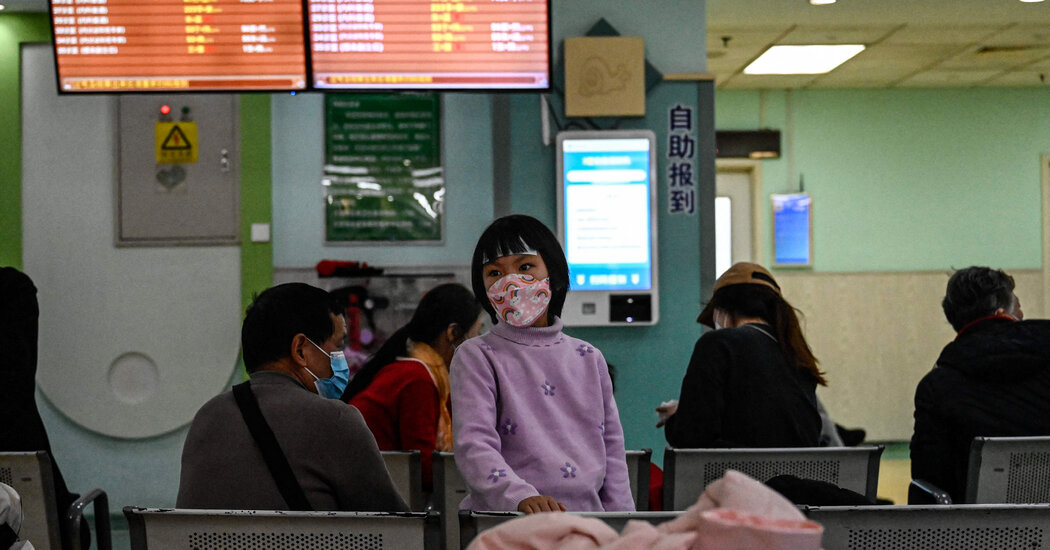
A surge of children has been hospitalized in China for respiratory illnesses, but international health authorities said the cause was common viruses and bacteria.A small group of Republican senators on Friday called on President Biden to ban travel from China to protect against an outbreak of respiratory illnesses in children there, even as scientists and global and American health officials said there were no signs of a threatening new pathogen.Instead, those experts said, the evidence so far pointed to a surge of age-old infectious agents such as influenza, driven by the colder weather and China’s emergence from stringent Covid lockdowns. The World Health Organization said last week that China had shared data about its outbreak, including laboratory results from infected children, that did not show any unusual pathogens.Dr. Mandy Cohen, the director of the Centers for Disease Control and Prevention, echoed that assessment on Friday. She said American officials had also been in touch with Chinese authorities, academic experts and health workers.“What we have all been able to ascertain is that there is no novel pathogen,” she said. “This is all related to upticks of known viruses and bacteria in their pediatric population.”What is sickening children in China?The W.H.O. said that the data China shared last week showed a rise in the number of children hospitalized with cold and flu viruses and respiratory syncytial virus, or R.S.V., since October. The agency also said infections with mycoplasma pneumoniae, a bacterium that generally causes mild illness, had been climbing since May.Those illnesses, together with Covid, accounted for a surge of respiratory disease in children, said Chinese health officials, who announced the rise in cases at a news conference in mid-November. Parents there have described waits of eight hours or more at children’s hospitals.Some of the same pathogens are already on the rise in the United States as winter takes hold, experts said, obviating the threat of imported cases from China.Mycoplasma pneumoniae, which sickens millions of Americans every year, tends to cause an increase in infections every three to seven years for reasons that are not well understood.“There isn’t a place in the world that doesn’t have mycoplasma, that doesn’t have rhinovirus and influenza virus,” said Dr. William Schaffner, a professor of infectious diseases at the Vanderbilt University School of Medicine. “They are the normal respiratory viruses and germs that we encounter as we normally grow up.”Why the surge?As countries have lifted Covid lockdowns in recent years, they have tended to experience surges of routine respiratory illnesses in children.That was true last year in the United States, where an earlier-than-expected wintertime “tripledemic” of Covid, flu and R.S.V. cases strained hospitals. Before that, Australia, too, suffered an especially bad flu season. Even this year’s respiratory illness season in the United States started a bit earlier than usual, Dr. Schaffner said.Scientists attribute those outbreaks to children’s immune systems being behind schedule after years of lost learning about how to fight off everyday viruses during Covid lockdowns. Kept from schools and day care centers, they were sheltered from pathogens that would otherwise have infected them sooner.“Then when they all got together,” Dr. Schaffner said, “whoo, the viruses had a field day.”Children in China were especially vulnerable because of the length and severity of lockdowns there, scientists said, potentially creating a more substantial post-lockdown boom in routine infections.Scientists have also reported elevated rates of resistance to mycoplasma pneumoniae antibiotics in China, a problem that could sharpen the severity of outbreaks and that W.H.O. officials said they were trying to learn more about.Is the United States having any unusual outbreaks?A county in Ohio this week reported “an extremely high number of pediatric pneumonia cases,” including some caused by cold viruses or mycoplasma pneumoniae. But health officials there said they did not believe that a new respiratory disease was responsible or that there was any link with outbreaks abroad.Dr. Cohen, the C.D.C. director, said that more than 80 percent of emergency rooms across the country make daily reports to health officials. In those reports, she said, “we are not seeing anything that is atypical in terms of pneumonia-related emergency department visits.”Ohio has not reported any deaths as part of its pediatric outbreak, Dr. Cohen said, and most children are receiving treatment and recovering at home.“Hospital capacity is fine, children are recovering at home — these are pathogens that are known to us,” Dr. Cohen said.What can Americans do?“Don’t fret about what’s happening in China,” Dr. Schaffner said. But, he said, “This afternoon, get yourself vaccinated.”Even if the outbreaks in China do not appear to pose a global threat, scientists said, familiar respiratory illnesses were spreading widely enough in the United States that those eligible should get vaccinated against Covid, the flu and R.S.V.By mid-November, fewer than four in 10 adults in the United States had received flu vaccines. Uptake of the updated Covid vaccines, too, has been sluggish.Meanwhile, American and global health officials said they would keep monitoring cases in China, which has faced intense scrutiny after covering up early cases of both the SARS virus in 2003 and Covid.While China has been more forthcoming about its latest outbreaks than about early Covid cases, Dr. Schaffner said, it could provide more public data about the age of those infected, the cities where illnesses were spreading and the causes of reported cases of severe pneumonia.Travel bans, though, would not help, Dr. Schaffner said. The W.H.O. has also said travel restrictions were not warranted.Sheryl Gay Stolberg

Read more →

Scientists work to bring tissue regeneration to replace root canal treatment

Want to avoid a root canal? In the future, you might be able to opt for tissue regeneration instead. ADA Forsyth scientists are testing a novel technology to treat endodontic diseases (diseases of the soft tissue or pulp in your teeth) more effectively. The study, “RvE1 Promotes Axin2+Cell Regeneration and Reduces Bacterial Invasion,” which appeared in The Journal of Dental Research, demonstrates regenerative properties of resolvins, specifically Resolvin E1 (RvE1), when applied to dental pulp. Resolvins are part of a greater class of Specialized Proresolving Mediators (SPMs). This class of molecule is naturally produced by the body and is exquisitely effective in the control of excess inflammation associated with disease.
“Pulpitis (inflammation of dental pulp) is a very common oral health disease that can become a serious health condition if not treated properly,” said Dr. Thomas Van Dyke, Vice President at the Center for Clinical and Translational Research at ADA Forsyth, and a senior scientist leading the study. “Root canal therapy (RCT) is effective, but it does have some problems since you are removing significant portions of dentin, and the tooth dries out leading to a greater risk of fracture down the road. Our goal is to come up with a method for regenerating the pulp, instead of filling the root canal with inert material.”
Inflammation of this tissue is usually caused by damage to the tooth through injury, cavities or cracking, and the resulting infection can quickly kill the pulp and cause secondary problems if not treated.
The study applied RvE1 to different levels of infected and damaged pulp to explore its regenerative and anti-inflammatory capacities. There were two major findings. First, they showed RvE1 is very effective at promoting pulp regeneration when used in direct pulp-capping of vital or living pulp (replicating conditions of reversible pulpitis). They were also able to identify the specific mechanism supporting tissue regeneration.
Second, the scientists found that placing RvE1 on exposed and severely infected and necrotic pulp did not facilitate regeneration. However, this treatment did effectively slow down the rate of infection and treat the inflammation, preventing the periapical lesions (abscesses) that typically occur with this type of infection. Previous publications have shown that if the infected root canal is cleaned before RvE1 treatment, regeneration of the pulp does occur.
While this study focused on this technology in treating endodontic disease, the potential therapeutic impact is far reaching. Dr. Van Dyke explained, “because application of RvE1 to dental pulp promotes formation of the type of stem cells that can differentiate into dentin (tooth), bone, cartilage or fat, this technology has huge potential for the field of regenerative medicine beyond the tissues in the teeth. It could be used to grow bones in other parts of the body, for instance.”
The study was funded by Alvin Krakow Harvard/Forsyth Research Fund (Y. Wu), and USPHS grant DE025020 from the National Institute of Dental and Craniofacial Research (NIDCR) (T.E. Van Dyke).
Study authors include Yu-Chiao Wu, Ning Yu, Carla Alvarez Rivas, Nika Mehrnia, and Alpdogan Kantarci.

Read more →

A patch of protection against Zika virus

A simple-to-apply, needle-free vaccine patch is being developed to protect people from the potentially deadly mosquito-borne Zika virus.
A prototype using The University of Queensland-developed and Vaxxas-commercialised high-density microarray patch (HD-MAP) has delivered a University of Adelaide-developed vaccine and elicited an effective immune response to Zika virus in mice.
UQ alum and Vaxxas researcher Dr Danushka Wijesundara said Zika virus was a risk to people across the Pacific, Southeast Asia, India, Africa and South and Central America.
“We can change the way we combat Zika virus with the HD-MAP patch because it is an effective, pain-free, simple to apply, and easy to store vaccination method,” Dr Wijesundara said.
“HD-MAP delivers the vaccine to immune cells beneath the skin’s surface with thousands of tiny microprojections.
“In our pre-clinical trial, the vaccine provided rapid protection against live Zika virus, targeting a specific protein called NS1 which is crucial to the virus’s survival.
“The vaccine patch evoked T-cell responses that were about 270 per cent higher than from a needle or syringe vaccine delivery.”
Zika virus generally causes a mild illness but infection in pregnancy can lead to miscarriage and stillbirths or infants born with congenital malformations.

In February 2016, the World Health Organization declared a Public Health Emergency of International Concern when Zika virus spread across 40 countries in Latin America, causing more than 1.5 million confirmed or suspected cases in a 6-month period.
The University of Adelaide’s Associate Professor Branka Grubor-Bauk said limited global surveillance shows Zika virus is active in at least 89 countries and territories but there is no currently licensed vaccine.
“This vaccine is unique because it targets a protein inside, rather than outside of the virus meaning it won’t enhance the symptoms of closely related viruses such as dengue fever, in people who’ve been vaccinated,” Dr Grubor-Bauk said.
Dr David Muller from UQ’s School of Chemistry and Molecular Biosciences said the microarray patch and the vaccine could have benefits beyond the ability to protect from Zika virus.
“Because the protein we’re targeting plays a central role in replication in a virus family known as flaviviruses, there’s the potential to apply our approach to target other flaviviruses such as dengue or Japanese encephalitis,” Dr Muller said.
“It could also deliver a vaccine mixture to target the whole family of viruses, providing greater protection.

“A major benefit of the HD-MAP delivery platform is vaccine stability at elevated temperatures — we found the patch retained vaccine potency when stored at 40 degrees Celsius for up to four weeks.
“This increases the reach of vaccines in low- and middle-income countries where refrigeration is challenging.”
The research team would like to acknowledge the National Health and Medical Research Centre (NHMRC) for funding awarded to Dr Muller and The Hospital Research Foundation Group Fellowship awarded to Dr Branka Grubor-Bauk, who supported the project.

Read more →

Replicating the structure of bird feathers

The eastern bluebird is a special bird. The blue of its feathers is unique. However, this colour is not based on pigments but on the special structure of the feather. Viewed under the microscope, the feathers are traversed by a network of channels with a diameter of just a few hundred nanometres. By way of classification, a nanometre is a billionth of a metre. The blue of the bluebird came to the attention of ETH researchers from the Laboratory of Soft and Living Materials led by former ETH Professor Eric Dufresne. So much so that they decided to replicate this material in the laboratory. They have now succeeded with a new method: they have developed a material that exhibits the same structural design of the bluebird feathers, while additionally offering potential for practical applications thanks to its nanonetworks.
Replicated from nature
The researchers used as a starting material a transparent silicone rubber that can be stretched and deformed. The scientists placed this rubber in an oily solution and left it to swell for several days in an oven at temperatures of 60 degrees Celsius. They then cooled it and extracted the rubber from the oily solution.
The researchers were able to observe under the microscope how the nanostructure of the rubber had changed during the procedure, and they identified similar network structures to those that give the bluebird feather its blue colour. The main difference is the thickness of the channels formed — the bird’s feather measured approximately 200 nanometres and the synthetic material 800 nanometres.
The principle behind the network formation is phase separation. This phenomenon can be observed in the kitchen with a salad dressing made of oil and vinegar. Mixing the two liquids is not easy and is best achieved by shaking vigorously. The liquids separate again as soon as the shaking stops. However, it is also possible to mix them by means of heating and then cooling them again to separate them. This is precisely the principle the researchers applied to mix the silicone rubber and oily solution. This resulted in the formation of an entire microscopic network of channels inside the rubber.
Lead author Carla Fernández Rico: “We are able to control and select the conditions in such a way that channels are formed during phase separation. We have succeeded in halting the procedure before the two phases merge with each other completely again.” This channel-?like structure is very similar to the structure of the bird’s feathers.
The advantage of this new method is that the new material is several centimetres in size and remains scalable. “In principle you could use a piece of rubbery plastic of any size. However, you’d then also need correspondingly large containers and ovens,” says Fernández Rico.

The novelty of this material processing method is generating a lot of interest in the physics community. “We have a simple system made of only two ingredients, but the final structure obtained is very complex and controlled by the properties of the ingredients,” says Fernández Rico. “We have been approached by several theoretical groups that are proposing the use of physical models in order to understand the key physical principles of this new process and to predict its outcome.”
Longer battery life and improved filtration
The new material offers potential for technical and sustainable applications. Batteries are one possible field of application. Ions in batteries typically move between electrodes through a liquid called the electrolyte. One of the main reasons batteries lose their charging capacity over time, or even end up failing, is because the ions react with the liquid electrolyte, which causes the two electrodes to establish physical contact and damage the battery. Liquid electrolytes could be replaced by solid electrolytes with a network structure of interconnected channels — such as the one shown by the ETH researchers, which would avoid physical contact between electrodes, while maintaining good ion transport through the battery.
Water filters could be another application. Good transport properties across the interconnected channels and large surface areas are advantageous here. The ratio of surface to volume is enormous in the case of channel-?like structures. This enables the efficient removal of contaminants such as bacteria or other particles from water.
Developing research in the direction of sustainability
“However, the product is still a long way from being ready for market,” says Fernández Rico. “While the rubbery material is cheap and easy to obtain, the oily phase is quite expensive. A less expensive pair of materials would be required here.”
Fernández Rico wishes to develop her future research with a view to sustainability: “Many natural polymers, such as cellulose or chitin, have a structure similar to the rubber used in our work.” However, working with a natural material such as cellulose is (more) environmentally friendly than with silicone rubbers derived from petroleum. The postdoctoral researcher therefore wishes to find out in future how such materials can be made more functional in order to exploit their potential.

Read more →

Researchers caution diabetes patients' use of fitness video games

The authors of a new study are warning people with type-1 diabetes to use fitness video games with caution.
The study by Staffordshire University and Federal University of Vale do Sao Francisco has found that ‘exergames’ can change people’s perceptions of how fatigued they are — which is potentially harmful for those with the condition.
Dr Pooya Soltani, Senior Lecturer in Games Technology at Staffordshire University, explained: “Type-1 diabetes patients need to control their blood glucose regularly, both before and after exercise, to prevent complications. As part of this, it is important to regulate the intensity of exercise, whether real or virtual.
“Most patients use a simple chart to measure how exerted they feel on a scale of 1 — 10, from hardly at all to using maximum effort. While this has proven to be effective for traditional exercise, we wanted to investigate whether this scale can also be used when exercising with video games.”
The trial assessed correlations between physiological measurements of exercise intensity, including metabolic equivalent (MET), oxygen consumption and heart rate in both real and virtual sessions.
Type-1 diabetes patients performed two 30-minute sessions of moderate-intensity exercise, either running or playing the Kinect Adventures! video game. A rate of perceived exertion (RPE) was measured on the 6 — 20 point Borg scale after the sessions.
The study’s co-author Jorge Luiz de Brito Gomes, from the Federal University of Vale do Sao Francisco, said: “The RPE and MET values were strongly correlated in real exercise but were moderately correlated during the virtual exercise session. Other metabolic and physiological variables were mostly low and lacked statistical significance during the virtual exercise.

“This highlights that it is crucial to exercise caution when extending use of the 6 — 20 point RPE scale to other types of exercise, especially virtual sessions, as they may not accurately reflect the physiological and metabolic intensity of the exercise.”
The researchers recommend that older measurement tools such as the 6 — 20 point RPE scale should be adapted to newer types of virtual game platforms.
Dr Soltani added: “Active video games and virtual reality are recent exercise trends that can provide motivation to participants and might increase their adherence to physical activity. Light to vigorous-intensity exergaming sessions may also benefit people with type-1 diabetes.
“But our research shows that the current 6 — 20 RPE scale needs to updated so that everyone can safely benefit from using immersive games. In the meantime, healthcare professionals who want to incorporate virtual sessions with exergames into their practice, should cautiously use methods like this which subjectively measure physical activity.”

Read more →

Experimental drug combination shows promise against hard-to-treat peripheral nerve sheath tumors

Combining a pair of experimental drugs may help treat malignant peripheral nerve sheath tumors with fewer harmful side effects, according to preliminary animal studies led by investigators at the Johns Hopkins Kimmel Cancer Center and Johns Hopkins Drug Discovery.
The study, published Dec. 1 in the journal Molecular Cancer Therapeutics, shows that combining an experimental drug that blocks the metabolism of the amino acid glutamine with a second experimental drug that blocks recycling of purines (building blocks of the genetic material DNA and RNA that tumors need to proliferate) reduced the size of peripheral nerve sheath tumors in mice and increased their rates of survival. The combination was less toxic than previously tested drug combinations.
“Using these broadly active metabolic inhibitors can help us better understand how these tumors are using nutrients to build what they need to make more tumor cells,” says lead study author Kathryn Lemberg, M.D., Ph.D., an assistant professor of oncology at Johns Hopkins.
Malignant peripheral nerve sheath tumors (MPNST) are rare cancers that originate in the lining of the nerves. Individuals with the cancer predisposition syndrome neurofibromatosis type 1 (NF1) have an elevated risk of these cancers. MPNST are the leading cause of death in people with NF1 under the age of 40, Lemberg explains.
“When patients with NF1 develop these tumors, there is, unfortunately, a risk of poor outcome based on whether the tumor can be completely surgically removed, whether it responds to conventional chemotherapy, and how widespread the cancer is,” Lemberg says. “We need better treatments for these tumors.”
Barbara Slusher, Ph.D., M.A.S., director of Johns Hopkins Drug Discovery and senior author on the study, and colleagues developed the glutamine antagonist JHU395 that blocks the utilization of glutamine. JHU395 is particularly well-suited for blocking glutamine metabolism in nerve-associated tissues.
“Glutamine is a building block for proteins and many other large molecules that cancer cells need to grow, proliferate, survive and potentially spread,” Lemberg says.

Previous studies by Lemberg, Slusher and colleagues showed that treatment of mouse MPNST with JHU395 yields a partial tumor reduction. The drug works by impairing one arm of purine production, the “de novo” pathway. However, with JHU395 treatment, the tumors can still access purine by a recycling or salvage pathway. Combining JHU395 with the classical purine antimetabolite 6-mercaptopurine (6-MP) produces a better anti-tumor response because 6-MP itself can cause liver and gastrointestinal toxicity based on the way the body metabolizes it to the active form.
Lemberg, Slusher and colleagues from the Institute of Organic Chemistry and Biochemistry (IOCB) of the Czech Academy of Sciences in Prague developed an alternate purine salvage-blocking prodrug called Pro-905. In experiments conducted in collaboration with scientists at Northwestern University, they showed that JHU395 and Pro-905 inhibit purine synthesis in human MPNST cells by distinct mechanisms, leading to decreased synthesis of new DNA and RNA. In mouse models of the condition, they found that Pro-905 in combination with JHU395 reduced tumor growth more effectively than 6-MP and with less toxicity.
“Collaboration is key to moving science forward, particularly for studies of rare tumor types that require the expertise of multiple researchers,” Lemberg says.
Now, Lemberg and colleagues want to see if this experimental drug combination is also effective in other types of tumors that use similar pathways to grow. They also want to test whether this combination might be effective in patients with malignant peripheral nerve sheath tumors or if Pro-905 might be used as maintenance therapy to prevent tumor regrowth, as 6-MP is. Lemberg also plans to collaborate with other Johns Hopkins researchers to determine if starving the tumors of glutamine and purines might also enable the immune system to kick in and fight the tumor.
Earlier research of JHU395 showed that cancer cells steal nutrients, including glutamine, to maintain their survival, starving surrounding cells such as immune cells. Using JHU395 to cut cancer cells off from their supply of glutamine strengthens immune cells, invigorating their response to cancer, Slusher says.
“Building on observations from one study and keeping the science moving forward can open up a lot of potential routes for future therapies for diseases that need better treatment options,” Lemberg says.
Study co-authors were Joanna Marie H. Aguilar, Jesse Alt, Diane E. Peters, Liang Zhao, Ying Wu, Naziba Nuha, Verena Staedtke, Christine A. Pratilas and Rana Rais of Johns Hopkins. Other investigators were from Northwestern University Feinberg School of Medicine in Chicago, Institute of Organic Chemistry and Biochemistry (IOCB) of the Czech Academy of Sciences in Prague, and Beth Israel Deaconess Medical Center in Boston.
The study was supported by a CureSearch for Children’s Cancer Young Investigator Award, a Maryland Innovation Initiative Award, an Allegheny Health Network Award, and the National Institutes of Health (grant R01CA229451).
Lemberg and Slusher hold a patent on prodrugs of 6-mercaptopurine. Slusher and Rais are co-inventors on Johns Hopkins University patents covering novel glutamine antagonist prodrugs and their utility. These patents have been licensed to Dracen Pharmaceuticals, Inc. Slusher and Rais are also co-founders of and hold equity in Dracen Pharmaceuticals. These arrangements have been reviewed and approved by The Johns Hopkins University in accordance with its conflict-of-interest policies.

Read more →