Rishi Sunak could miss NHS waiting list target over strikes, says Victoria Atkins

Published2 days agocommentsCommentsShareclose panelShare pageCopy linkAbout sharingThis video can not be playedTo play this video you need to enable JavaScript in your browser.By Sam Francis & Rachel RussellBBC NewsRishi Sunak may miss his target to cut NHS waiting lists if doctors go ahead with their plans to strike, the new health secretary has warned. Victoria Atkins said strikes by doctors and nurses had led to “1.1 million appointments having to be rescheduled”.Speaking to the BBC, she said avoiding a crisis was her “number one priority this winter”.The NHS could face extra pressure this winter, due to record waiting lists and warnings over fewer extra beds.Ms Atkins told BBC One’s Sunday with Laura Kuenssberg the government’s target to cut NHS waiting lists was one of the prime minister’s Rtop priorities.But she warned it may not be met, unless doctors dropped plans to take industrial action over the coming months.”We are very much looking to meet those targets [to cut waiting lists], but I need the consultants to pass this settlement that we’ve put forward [and] I hope very much that doctors in training will be able to reach a settlement with us as well,” Ms Atkins said. When asked whether Mr Sunak’s promise could be still achieved even if strikes went ahead, Ms Atkins said “we are doing everything we can”. “Again, I would very much ask consultants to look at the settlement because actually it’s a very modern contract which I hope they’ll find acceptable,” she said.One million on more than one NHS waiting listKuenssberg: Health secretary could decide Tory fateHave you been waiting a long time for an operation on the NHS? Get in touch.Email haveyoursay@bbc.co.ukWhatsApp: +44 7756 165803Tweet: @BBC_HaveYourSayUpload your pictures or videoPlease read our terms & conditions and privacy policyThe waiting list for planned NHS treatment in England rose to a record high of 7.77 million in September.Ms Atkins, appointed to the role at the recent reshuffle, went on to say that planning for winter “started much earlier than usual” as an extra 5,000 beds have been created.She said: “The NHS has been working very hard to prepare for this winter.”Research by the Health Foundation think tank suggested industrial action by consultants and junior doctors had lengthened the waiting list by around 210,000, which is 3% of the list.It comes as consultant doctors in NHS England are considering a deal that could potentially resolve the bitter pay dispute.Ms Atkins has struck a more conciliatory tone and suggested there could be progress in talks over non-pay issues like rotas and conditions.Her predecessor Stephen Barclay previously described the doctor’s union as taking a “militant” stance.Royal College of Nursing Chief Nurse Professor Nicola Ranger said: “Cold months bring particular challenges, but nursing staff are working in dire situations year-round.”She said staff “cannot deliver the care they want for their patients. They are battling against record waiting lists, longer waits for ambulances, and staff shortages on every shift.”NHS reformLib Dem treasury spokesperson Sarah Olney said the UK was “flying blind into another winter crisis and Atkins would not even deny it”.”This Conservative government has already broken its promise on recruiting new GPs, now it looks likely that the promise to cut waiting lists will also be broken,” she said.Shadow business secretary James Reynolds accused the government of planning “real terms cuts in the next parliament” for the NHS, as part of the recent Autumn Statement.Labour has promised a major workforce expansion to help cut waiting lists and improve care if it wins the next general election.Mr Reynolds said the health service also needs to be modernised as “one in five [NHS] trusts are still using the same diagnostic equipment, the same scanners, as they had put in in the last Labour government”. More on this storyKuenssberg: New health secretary could decide Tory party’s fatePublished3 days ago

Read more →

Why Anonymous Sperm Donation Is Over, and Why That Matters

A few years ago, when he was in his early 30s, Tyler Levy Sniff took a home DNA test he received as a gift. The results revealed a staggering truth: His father wasn’t biologically related to him. Levy Sniff confronted his parents, who explained that after years of trying and failing to have a baby, they turned to a sperm donor. Following the standard advice at the time, they decided not to tell him for fear of driving a wedge into their family.Levy Sniff felt as if he’d found a key to his identity that he was looking for. “It made sense of why I felt different from my family,” he said recently. He wanted more information about the person he called his “bio father” to understand his genetic heritage. “It was so important to me to know my bio father’s life story, his personality and talents and struggles,” Levy Sniff says.But by the time he found his donor, through relatives on two genealogy websites, the man had died — another revelation that shattered him, he says. To Levy Sniff, the value of knowing where you come from is self-evident. “A lot of influence comes from your biology,” he says.There’s plenty of support for this way of thinking. Recent findings in behavioral science show the role of genetics in shaping certain individual characteristics. Questionnaires from doctors routinely ask for generations of family medical history. And learning about your genetic ancestry can be emotionally powerful — one reason millions of people buy inexpensive at-home DNA tests and sign up for genealogy websites.Levy Sniff has helped found the U.S. Donor Conceived Council, a group that advocates for more transparency when it comes to donor anonymity. In a sense, it’s a battle that has already been won: For earlier generations of donor-conceived children, secrecy was commonplace, but today the widespread use of DNA technology has ended any guarantee of anonymity for donors. As a result, major sperm banks in the United States are requiring donors to agree to disclose their medical histories up front and reveal their identities when a child turns 18.Activists like Levy Sniff are pushing for a further step, however, beyond the practices of sperm banks in the private market. They want the government to ban anonymous donation. A year ago, they succeeded in making Colorado the first state to mandate that sperm and egg banks disclose donors’ identities to children who ask for the information once they turn 18. A bill introduced in the New York Senate last month would impose a similar requirement and also give parents of donor-conceived children access to a donor’s identifying information at birth.But in the view of other donor-conceived people and L.G.B.T.Q. groups, laws that require the end of anonymity pose an unanticipated threat. Lesbian couples and single parents make up 70 percent of the people who now use sperm donors, according to a 2022 study of an assisted-reproduction clinic. Some of these families fear that disclosure laws will open the door to recognizing biological donors in some way as parents — possibly granting them parental rights and more broadly undermining the legitimacy of L.G.B.T.Q. families.In sperm and egg donation, secrecy was the old-school choice — the one that seemed easier to many heterosexual couples as they raised their children. But now it’s nontraditional families who are most nervous about ending the practice of anonymous donation. It’s one thing for parents to choose transparency, but it’s quite another for the state to mandate it — enshrining into law, some fear, the notion that genetics are an essential part of being a family. ‘A Real Legal Risk’It’s easy to understand why nontraditional families feel threatened. Only seven states have language in their laws that fully protects families formed through nongenetic bonds, according to a report by several L.G.B.T.Q. groups. In a recent case in Oklahoma, a lesbian couple divorced after having a donor-conceived baby. A judge ruled that the nonbiological mother lacked parental rights because she hadn’t adopted the child — and granted the sperm donor parental rights alongside the biological mother.In many states, if you are part of a couple raising a child, and you never marry or you get a divorce, and your partner wants to sever the connection, you can be deemed a legal stranger to a child you helped raise but with whom you don’t share a genetic tie. “I worry that people may be acting in good faith but don’t understand the situations of these families,” says Douglas NeJaime, a Yale law professor who is working with L.G.B.T.Q. organizations and other academics on a joint statement of principles about access to a donor’s identifying information. “There’s a real legal risk in many places. And then there’s the idea these laws express, which is that biological ties are more important than other ties.”Malina Simard-Halm, 27, the donor-conceived daughter of a pair of gay fathers, is a former board member of Family Equality and Colage, two groups for L.G.B.T.Q. families that are part of a coalition calling to pause the passage of more disclosure laws. Simard-Halm is sympathetic to Levy Sniff, but she doesn’t want the state to suggest that it’s vital to seek out one’s donor. Not knowing who that person is doesn’t necessarily create a void, she says. Her fathers were frank about how she and her brothers were conceived — an approach that tends to strengthen parent-child relationships, research shows — and she didn’t experience a sense of loss. Simard-Halm remembers having to withstand the judgment of outsiders, who forced on her the assumption that nature counts more than nurture. “People would ask: ‘Who’s your mother? Where is she?’” Simard-Halm says. “Sometimes they would say flat out: ‘She’s your real parent. You need to be with her.’”This framing was used in the past in the fight against same-sex marriage. A 2010 survey, called “My Daddy’s Name Is Donor” and funded by the Institute for American Values, a conservative group, claimed that many donor-conceived children felt hurt and isolated by their origins. The study wasn’t peer reviewed, and other research has showed that donor-conceived children generally do as well as their peers. But for years in court, opponents of same-sex marriage argued that the children of gay couples would grow up worse off, feeling fatherless or motherless.L.G.B.T.Q. families are also concerned that some people who advocate for ending anonymity, including Levy Sniff, think children should be able to know their donor’s identity earlier than age 18 — at 16 or 14. They say this creates the possibility of conflicts between how teenagers define their families and how their parents do. Lowering the age “leaves family more legally vulnerable,” says Courtney Joslin, a law professor at the University of California, Davis. “And it impacts both the social perception of the family and maybe how kids and parents see each other.”Birth certificates have also become a battleground. In Britain, one of several countries that mandates disclosure at a child’s request at 18, the agency that regulates fertility treatments last month proposed including the name of every sperm or egg donor on a child’s birth certificate and allowing families to access the information beginning at birth. Birth certificates record legal parentage, which does not always accord with genetic parentage. (For example, when a woman has an affair and becomes pregnant while she’s married, her husband’s name routinely appears on the child’s birth certificate.) “Birth certificates have not been a system of biologically-based birth registration,” NeJaime says. “The idea that the state should use birth certificates to record genetic rather than legal parentage has been an argument of the right.”Photo illustration by Derek Brahney‘Family-Lite’For the L.G.B.T.Q. groups, the solution isn’t a return to secrecy but rather equal legal protection for families created through interpersonal bonds rather than genetic ones. They want states to pass the 2017 version of a model bill, the Uniform Parentage Act, which makes clear that a person who uses sperm or egg donation with the intent to be a parent is a parent, regardless of factors including genetic ties and marital status. The act also specifies that sperm and egg donors have no parental rights or responsibilities. (The provision makes explicit a distinction between donation and adoption, where birth parents have rights they choose to relinquish.) The L.G.B.T.Q. coalition supported Colorado’s disclosure law last year because the state had in place the legal protections they sought. That approach balances the importance of genetic ties with the security that equal status brings.Apart from the concerns about disclosure laws, some L.G.B.T.Q. parents and their children welcome the expanded sense of family that transparency can bring. If everyone involved consents, sperm banks can facilitate matches among “diblings” — the other offspring with whom a child shares a donor’s genes. And online, the Donor Sibling Registry matches almost 1,700 people a year.Estee Simmons, the 11-year-old daughter of a lesbian mother in Massachusetts, met one of her diblings for the first time a few years ago. The girls were astonished by how alike their hands looked. They grew close by discovering a shared sense of personal style and building social bonds over text messages and periodic visits. “It’s like having cousins, but more real,” Estee says. Her mother, who has her own friendship with the mother of Estee’s dibling, calls the relationships “family-lite.”Estee has nine diblings in all. Eight of them are in touch. They’ve decided together to wait until they’re all 18 to learn their donor’s identity and ask to meet him. For Estee, that will mean extra years of delay. That’s OK with her. She’s curious about her donor — but “he’s not that important,” she says.

Read more →

Fate of Billions for Opioid Victims From Sacklers Rests With Supreme Court

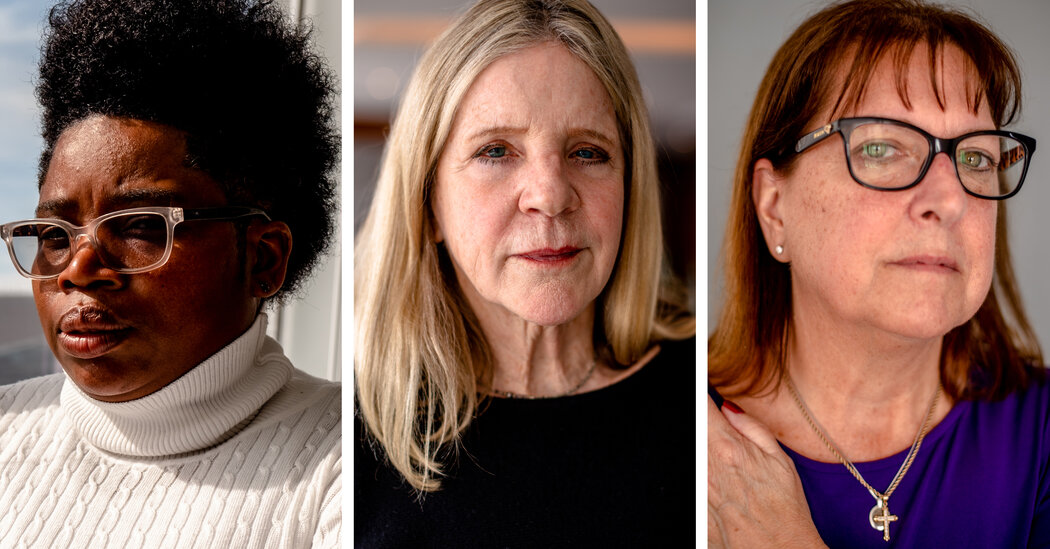
The court will decide whether Purdue’s owners can gain permanent immunity from future opioid lawsuits in exchange for payments up to $6 billion.In 2014, when the first opioid lawsuits were filed against Purdue Pharma, Tiffinee Scott’s daughter was still years away from her fatal overdose from addictive prescription painkillers, including Purdue’s OxyContin, which she was taking to manage sickle cell pain.That year, Dede Yoder’s teenage son was struggling with an addiction that began with an OxyContin prescription for a sports injury. He would die from an overdose in 2017, after attempting rehab eight times.It would be years before Gary Carter’s son, who had been filching his grandparents’ OxyContin, would die from an overdose of fentanyl, an illicit opioid that many people who became addicted to prescription painkillers eventually turned to over the past decade.The three families and others who have ended up suing Purdue shared their stories in letters to the Supreme Court, which will hear oral argument Monday on the remaining sticking point in the yearslong effort to settle litigation that has ballooned into nearly 3,000 cases. A multi-billion-dollar agreement is at stake.A ruling upholding the disputed provision would finally start the flow of payments from the company and its owners — members of the billionaire Sackler family — to cities, states, tribes and individuals to help them cope with the costs of the ongoing opioid crisis. It would also allow Purdue to emerge from bankruptcy restructuring as a public benefit company.A ruling against the measure could blow up the painstakingly negotiated settlement, leaving the fate of the company and the urgently sought payments up in the air.The court will consider the legality of a condition demanded by the Sacklers and approved by a bankruptcy judge: In exchange for paying up to $6 billion, the Sacklers insist on being shielded from civil lawsuits that anyone else might want to bring against them involving Purdue and opioids.That liability shield is standard for businesses that file for bankruptcy, as Purdue has done. But the Sacklers have not filed for bankruptcy. Still, they argue that because the Purdue settlement relies on their personal contributions, Purdue’s liability protection should also extend to them.The situation has created an agonizing irony for many who have lost loved ones to opioids. Desperate for funds to pay off their debts and address the addiction crisis, many support giving the Sacklers the sweeping legal pass.“NO ONE wants to see the Sacklers pay the full price more than me,” Cheryl Juaire, who organized grieving parents, wrote to the court. “I lost TWO SONS as a result of their actions. But the only thing that will make my personal tragedy worse is to know that others will suffer the way I do every day.”The Stamford, Conn., headquarters of Purdue Pharma, which is awaiting a Supreme Court ruling on whether nearly 3,000 opioid lawsuits against it can be settled.Frank Franklin II/Associated PressAn overwhelming majority of claimants reached that conclusion more than two years ago, voting in favor of the settlement plan, including liability immunity for the Sacklers. They said they feared that protracted litigation would devour money that they have long needed.But an arm of the Justice Department that monitors bankruptcy proceedings objected, along with a handful of other parties, arguing that precluding people from having their day in court was both unconstitutional and outside the power of a bankruptcy court.Last summer, after a federal appeals court upheld the Sackler shields, the Justice Department division, the U.S. Trustee Program, petitioned the Supreme Court to take up the matter.The speed with which the court scheduled the case may reflect its awareness of the opioid problem. But legal experts said its ruling would be unlikely to dwell on the public health crisis. The court, they said, will focus narrowly on the liability shield, an increasingly popular, though contentious, bankruptcy tactic.“I’m sure, though, that even if the opioid crisis doesn’t show up anywhere in the opinion, the court has to be bearing in mind that cities, states and individuals have been desperately waiting for these funds. They need to know the answer to this question so they can figure out what to do next,” said Adam Zimmerman, who teaches mass tort law at the University of Southern California’s Gould School of Law.Though numerous pharmaceutical companies have been sued for their roles in the opioid epidemic, the Sacklers and Purdue loom large in the story of the complex, decades-old crisis. Their signature drug, OxyContin, approved by the Food and Drug Administration in late 1995, became a game changer in a new market hungry for prescription painkillers. To the medical establishment that was then beginning to recognize pain as a “fifth vital sign,” long-acting OxyContin looked like a wondrous medication.Purdue became known for lavish sales conferences, at which pain medicine physicians, trained and hired by the company, would falsely claim that the risk of addiction to OxyContin was extremely low. By 2007, Purdue and three of its top executives had paid fines of $634.5 million and pleaded guilty to federal criminal charges for misleading regulators, doctors and patients about the drug’s potential for abuse.The steep fines did little to deter Purdue from continuing to aggressively market OxyContin.Eventually, attention became focused on the Sacklers themselves, some of whom served as Purdue board members and made large charitable donations to medical schools and museums. In exchange, the institutions renamed buildings after the Sacklers. But as the family saga became featured in books, television series and documentaries and their notoriety grew, most stripped the Sackler name from their properties and dissociated themselves from Purdue’s owners.The size of the Sacklers’ fortune from OxyContin has long been a mystery. An independent audit commissioned by Purdue for the bankruptcy court found that the Sacklers withdrew about $10.5 billion from Purdue between 2008 and 2017, of which they paid more than 40 percent in taxes. The $6 billion settlement offer, the Sacklers say, represents most of the profit from the drug during that period.As lawsuits against Purdue and the Sacklers rapidly accrued, in 2019 Purdue sought restructuring in bankruptcy court, a move that automatically suspended all lawsuits against the company. The tactic was the first step on the path leading toward the Supreme Court.Dan A. Polster, a federal judge in Cleveland, was assigned to manage thousands of opioid cases nationwide.Maddie McGarvey for The New York TimesMost other companies that have been sued over their role in the opioid crisis — drug manufacturers, distributors and retailers — have reached settlements and are starting to make payments. But the opioid tragedy has not receded. Though production of prescription painkillers slowed, cheap heroin and then fentanyl rushed in to fuel an ever-growing demand. During a 12-month period ending in June, overdose fatalities from opioids and other drugs, including cocaine and methamphetamine, were predicted to surpass 111,000, according to provisional federal data.Whether the billions of dollars in the Purdue settlement and others will have a meaningful impact on addiction and overdose fatality rates remains to be seen. In January 2018, Dan A. Polster, a federal judge in Cleveland assigned to oversee nationwide opioid settlements, asked whether a court was, in fact, the proper place to grapple with a public health crisis that had passed through the hands of federal and state regulators, physicians, hospitals and insurers as well as the pharmaceutical industry.“The federal court is probably the least likely branch of government to try and tackle this, but candidly, the other branches of government, federal and state, have punted,” he said.Now, nearly six years after his remarks, with the Supreme Court about to wade in, the national opioid litigation may be edging toward conclusion. But many health and legal experts believe it will not resolve the addiction crisis that it was intended to address.“It’s easy for people to think, ‘Hey, we’ll go to court, and we’ll solve the problem,’ but that also assumes that the way you solve a public health crisis is just by handing out money,” said Abbe R. Gluck, a Yale Law School professor and an author of a forthcoming article on unorthodox uses of bankruptcy.Congress and oversight agencies need to step up, Ms. Gluck said. “When it comes to opioids,” she added, “there’s a lot more that has to happen that litigation can’t touch.”

Read more →

‘Medical Freedom’ Activists Take Aim at New Target: Childhood Vaccine Mandates

Mississippi has long had high childhood immunization rates, but a federal judge has ordered the state to allow parents to opt out on religious grounds.For more than 40 years, Mississippi had one of the strictest school vaccination requirements in the nation, and its high childhood immunization rates have been a source of pride. But in July, the state began excusing children from vaccination if their parents cited religious objections, after a federal judge sided with a “medical freedom” group.Today, 2,100 Mississippi schoolchildren are officially exempt from vaccination on religious grounds. Five hundred more are exempt because their health precludes vaccination. Dr. Daniel P. Edney, the state health officer, warns that if the total number of exemptions climbs above 3,000, Mississippi will once again face the risk of deadly diseases that are now just a memory.“For the last 40 years, our main goal has been to protect those children at highest risk of measles, mumps, rubella, polio,” Dr. Edney said in an interview, “and that’s those children that have chronic illnesses that make them more vulnerable.” He called the ruling “a very bitter pill for me to swallow.”Mississippi is not an isolated case. Buoyed by their success at overturning coronavirus mandates, medical and religious freedom groups are taking aim at a new target: childhood school vaccine mandates, long considered the foundation of the nation’s defense against infectious disease.Until the Mississippi ruling, the state was one of only six that refused to excuse students from vaccination for religious or philosophical reasons. Similar legal challenges have been filed in the five remaining states: California, Connecticut, Maine, New York and West Virginia. The ultimate goal, according to advocates behind the lawsuits, is to undo vaccine mandates entirely, by getting the issue before a Supreme Court that is increasingly sympathetic to religious freedom arguments.No major religions, including Roman Catholicism, which strongly opposes abortion, have objected to vaccination. But the plaintiffs in these cases say their religious objections stem in part from the use of fetal tissue in vaccine development. A few childhood vaccines, including those that protect against chickenpox and rubella, were developed with cells obtained from aborted fetuses in the early 1960s. Those cells continue to grow in laboratories today.The legal push comes as childhood vaccine exemptions have reached a new high in the United States, according to a report released last month by the Centers for Disease Control and Prevention. Three percent of children who entered kindergarten last year received an exemption, the C.D.C. said, up from 1.6 percent in the 2011-12 school year.Idaho had the highest rate of exemptions, at 12.1 percent, while West Virginia had the lowest, at less than one-tenth of 1 percent. Mississippi’s rate was nearly as low, at two-tenths of 1 percent. At the time, Mississippi allowed exemptions for medical reasons, as all states do, but it did not yet allow parents to opt out on religious grounds.A broad majority of Americans continue to believe in the value of childhood vaccines. But in a Pew Research Center survey conducted in March, 28 percent of respondents said that parents should be able to choose not to vaccinate their children, up 12 percentage points from four years ago.In California, a group of parents backed by Advocates for Faith & Freedom, a nonprofit group devoted to religious liberty, filed suit in federal court in October seeking to restore the state’s “philosophical” exemption, which was eliminated after a measles outbreak in 2015. A federal judge recently allowed a similar case to go forward in Maine, which ended its religious exemption in 2021.Connecticut, which also did away with its religious exemption in 2021, has faced legal challenges backed by We the Patriots USA, a group based in Idaho. In August, a divided federal appeals court rejected a constitutional challenge to the state law, and on Friday, a federal judge dismissed a second lawsuit. Brian Festa, a founder of We the Patriots, said in an interview that his group would ask the Supreme Court to take up the question.“We’re looking for a broader ruling from the high court that says all children in the United States should be allowed exemptions to childhood vaccinations,” Mr. Festa said, adding that allowing exemptions for medical but not religious reasons was “a major constitutional problem.”MaryJo Perry said that her path into advocacy began after her youngest son, now 20, experienced seizures following routine vaccination.Imani Khayyam for The New York TimesPreventing DeathsPublic health experts regard vaccination as a singular triumph. The World Health Organization says up to five million deaths worldwide are prevented each year by vaccines for diseases like diphtheria, tetanus, pertussis, influenza and measles. In the United States, measles alone once killed 400 to 500 people each year and whooping cough deaths numbered in the thousands, while polio left more than 15,000 paralyzed, according to the C.D.C.If vaccination rates dip much below 95 percent, public health experts warn, those diseases will become more than just a memory.“It’s a dangerous game we’re playing,” said Dr. Paul A. Offit, the director of the Vaccine Education Center at Children’s Hospital of Philadelphia. “If we eliminate school vaccine mandates, measles will be the first vaccine-preventable disease to come back, and it will come roaring back. Why would we want to put children in harm’s way again?”The Mississippi case offers a window into the political forces shaping these trends. The plaintiffs in the case included members of Mississippi Parents for Vaccine Rights, a group founded in 2012 by MaryJo Perry, who said in an interview that her path into advocacy began after her youngest son, now 20, experienced seizures following routine vaccination.Seizures are a rare occurrence after vaccination. A large-scale study of more than 265,000 children identified 383 who had vaccine-related seizures, or less than two-tenths of 1 percent. Nearly all children who have post-vaccination seizures recover completely.Ms. Perry said that while her son had not had ongoing issues, the experience was terrifying. She said her son’s pediatrician repeatedly requested a medical exemption from the state health department but was refused. (Dr. Edney said that Mississippi’s current practice was to grant a medical exemption if a doctor requested one.)“I felt like it was a nightmare, like I was being terrorized by my own government,” Ms. Perry said.“About 99 percent of our kindergartners have been fully vaccinated, and Mississippi has not seen a case of measles in over 30 years,” said Dr. Anita S. Henderson, a pediatrician in Hattiesburg, Miss.Imani Khayyam for The New York TimesYears of ActivismMississippi had a religious exemption until the state’s Supreme Court struck it down in 1979, reasoning that protecting Mississippi schoolchildren “against the horrors of crippling and death” from polio and other infectious diseases superseded religious claims. The state has had high childhood vaccination rates as a result.“For many, many years, it was one of the few things that Mississippi has done well,” said Dr. Anita S. Henderson, a pediatrician in Hattiesburg and a past president of the state’s chapter of the American Academy of Pediatrics. “About 99 percent of our kindergartners have been fully vaccinated, and Mississippi has not seen a case of measles in over 30 years.”Ms. Perry and members of her group tried for years to change the law. They marched with signs and empty strollers around the State Capitol and held lobbying days to push Mississippi’s Republican-controlled Legislature to add a “personal belief” exemption to state law. But the legislation never passed.In 2016, Ms. Perry met Del Bigtree, a former television producer who had partnered on a documentary with Andrew Wakefield, the British doctor behind the discredited theory that vaccines are linked to autism. Their film, “Vaxxed,” took aim at the drug industry and was a hit with Ms. Perry’s group. Mr. Bigtree later traveled to Mississippi to testify on behalf of legislation that the organization was supporting to expand vaccine exemptions.In an interview, Mr. Bigtree said the success of the film prompted him to found the Informed Consent Action Network. The group, based in Texas and known by the acronym ICAN, says its mission is to give people “the authority over your health choices and those of your children” and to put an end to “medical coercion.” It funded the Mississippi lawsuit, and tax filings show it spends millions of dollars on legal work.Del Bigtree founded the Informed Consent Action Network, which says its mission is to give people “the authority over your health choices and those of your children.”Desiree Rios for The New York TimesMr. Bigtree says his work is nonpartisan. But on Jan. 6, 2021, he addressed a “medical freedom” rally not far from the pro-Trump crowd that stormed the U.S. Capitol.“I would stand on the stage at the Democratic National Convention if they would allow me,” he said in the interview, adding: “I don’t want mandates. It’s a free country. Everybody should be able to make whatever choice they want.”But public health experts say that the purpose of vaccination is to protect entire communities and that making immunization a personal choice puts vulnerable people, including those who cannot get vaccinated for medical reasons, at risk. Last year, a measles outbreak in Ohio infected 85 children, nearly all of them unvaccinated. No one died, but 36 children were hospitalized.States have long had the legal authority to require vaccination as a condition of school enrollment. As far back as 1905, the Supreme Court ruled in Jacobson v. Massachusetts that a state had the right to “protect itself against an epidemic” by requiring citizens to be vaccinated against smallpox or pay a fine.But the coronavirus pandemic, and in particular the arrival of Justice Amy Coney Barrett on the Supreme Court, brought a “dramatic shift” in public health jurisprudence — especially in cases involving religious liberty, said Wendy E. Parmet, an expert in public health law at Northeastern University.Ms. Perry believes vaccine mandates are a gift to drugmakers.Audra Melton for The New York TimesA Legal VictoryThe Mississippi case was filed last year, and Dr. Edney, the state health officer, was one of the defendants. Ms. Perry was not a plaintiff; her children are grown. But she connected some of her members with Aaron Siri, a New York lawyer who handles much of ICAN’s legal work.During a hearing in April in Federal District Court in Gulfport, Paul Perkins, a Baptist pastor, testified that the state’s vaccination requirement prevented him from enrolling his own daughter in the Christian academy that he runs. Jeana Stanley, a doctor of physical therapy, and Brandi Renfroe, a court reporter, testified that even though they and their husbands worked in Mississippi and considered that state home, they had moved just across the border to Alabama so their unvaccinated children could attend school.“I put my trust in God for healing,” Dr. Stanley wrote in an affidavit, adding that she and her children avoided “physicians, medications (both over the counter and prescription) and vaccines.”The case put Dr. Edney and the Mississippi State Board of Health at odds with the state attorney general, Lynn Fitch, a Republican who argued that an existing religious freedom law required the state to offer religious exemptions.At the hearing in April, the judge, Halil Suleyman Ozerden, an appointee of President George W. Bush, ordered the state to begin accepting requests for religious exemptions, setting a mid-July deadline for Dr. Edney to set up a process for offering them.“Freedom wins again,” Mr. Siri wrote on Twitter.The judge made his ruling final in August, finding that Mississippi’s vaccination requirement had violated the constitutional rights of the plaintiffs, who he said had “sincerely held religious beliefs about vaccination.” Dr. Edney said he decided not to appeal. He said he feared that the case would go to the Supreme Court and that the state’s vaccination requirement would be struck down entirely.Instead, he said, the state is working to ensure that parents seeking exemptions have “deeply held” beliefs, including by requiring them to watch an educational video about “the millions of lives that have been saved and continue to be saved” by vaccination.Mr. Bigtree hailed the suit as a “landmark, historic case.” In the wake of its victory, his group trumpeted its support for similar legal challenges in other states.Ms. Perry said Mississippi Parents for Vaccine Rights was working to elect candidates who are “pro-medical freedom.” She said she saw the court ruling as the culmination of a decade of her hard work, coupled with a new political climate.“We’ve had many parents for years wanting to sue, and it was just not the right time,” she said. “Covid kind of set the stage in the judiciary for it to happen.”

Read more →

Why Naga Munchetty is asking: ‘How are your periods?'

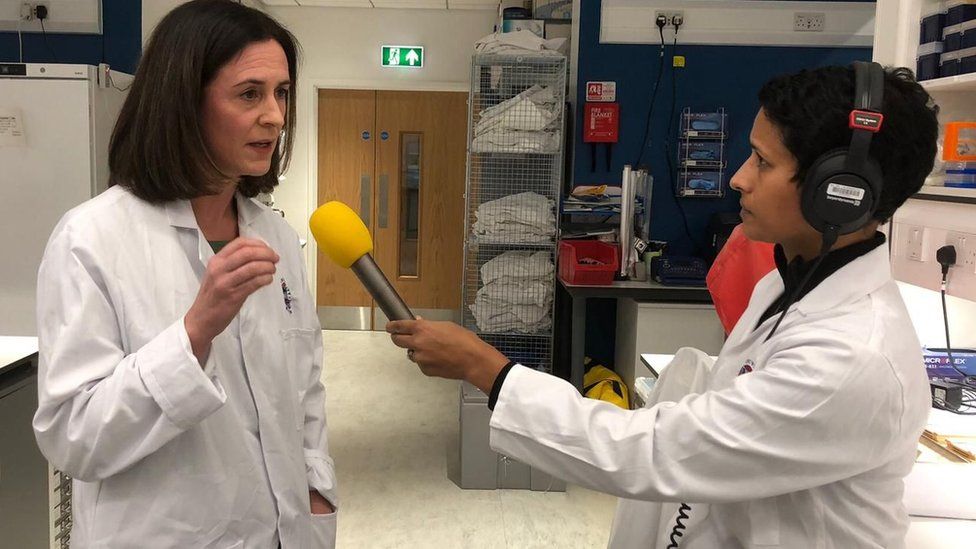
Published3 days agoShareclose panelShare pageCopy linkAbout sharingBy Naga Munchetty5 Live presenter”What’s wrong with me?” It’s a question we’ve all asked at some point. We know when something isn’t normal – we want to know why, and what can be done to make things better.For millions of women around the world who experience menstrual pain and heavy periods, it’s a question that can take years to answer. And in many cases the only thing that can be done to make things better is drastic: a full hysterectomy.On average, it takes around eight years to be diagnosed with endometriosis, a condition that sees tissue similar to the lining of the womb growing outside the uterus. That’s eight years of severe pain for many women.For adenomyosis, a similar condition in which the tissue grows inside the muscular wall of the uterus, it can take even longer. In my case, it took 32 years. More than three decades of pain so severe that I sometimes couldn’t sleep at all. Thirty-two years of, at times, incredibly heavy bleeding that would last for weeks; 32 years in which doctor after doctor struggled to work out what was wrong me and – in some cases – even told me there was nothing wrong at all.And I’m not alone. When I first spoke about my diagnosis on my BBC Radio 5 Live programme, I was overwhelmed by the stories I heard from women who had gone through something similar. They are stories that I’ve been hearing ever since. Stories of women in crippling pain for decades. Naga reveals womb disorder makes her scream in painNaga Munchetty told to suck it up by NHS doctorsSukhi, who spoke to me on air after texting the programme, told me she waited 20 years to be told she had endometriosis: “I was flooding. I couldn’t leave the house. I was having to use incontinence nappies just to get to work and back.”So why, given that 51% of us are women, isn’t it easier to find out what’s wrong with us? Why does diagnosis take so long, and frequently become a battle with medical professionals? Why don’t we have simple tests for a condition that’s thought to affect one in 10 women? And will we ever find an effective treatment short of a full hysterectomy?Those are the questions I took to Edinburgh this week, with my BBC Radio 5 Live programme, to meet some of the researchers and scientists trying to find answers.’Passing out every month’The Centre for Reproductive Health at the University of Edinburgh is one of the few places in the UK where conditions like adenomyosis are being actively investigated by researchers. Dr Kate Walker is one of the research assistants at the lab and when I meet her, she’s examining bottles of period blood provided by women. She is looking at why some women experience far heavier periods than others, and what that can tell us about their underlying conditions. “On average, blood loss in a period would be 30-40ml,” she tells me. One of the bottles she’s looking at contains 400ml. “This is more blood than you would be allowed to donate in three months, and this woman is losing this amount every month.”Jen Moore, 34, came with me to the lab in Edinburgh to see for herself what the scientists are working on. Her adenomyosis symptoms only stopped earlier this year when she underwent a full hysterectomy.”I was passing out every month and just thinking it was normal, and just telling myself ‘why can’t I deal with this like everybody else?'”It’s an issue that means a lot to Dr Walker, because it’s something she’s experienced herself. So did her mother. And so does her 12-year-old daughter.”Heavy periods affect one in three women at some point in their life. You would assume that we would talk about it more – that there would be more awareness and more funding for something that is very obviously an unmet clinical need.”Dr Walker’s work relies on funding, but that’s not straightforward. There are grants from charities, from pharmaceutical companies, and – in the UK – from two separate bodies, each funded by a different government department. Scientists, politicians and campaigners have all told me that they think research into conditions that specifically affect women has been, and still is, systemically underfunded.According to the most recent figures available, just 2.1% of public spending on medical research is dedicated to women’s reproductive health and childbirth.The Department for Health and Social Care says it has invested £53m into researching “women’s health issues” and will launch a dedicated policy research unit focusing on reproductive health in January.The funding challengeDr Jackie Maybin, a consultant gynaecologist at the centre in Edinburgh, says getting funding for medical research is difficult.”You need quite a lot of preliminary data to show that the investment of a million pounds is going to have something come out of it at the end of it. And what we sometimes struggle with in women’s health is that to generate those smaller grants and smaller amounts of data, there are fewer avenues to go down. “We see people coming in needing a blood transfusion because of their periods and to me we should never be getting to that stage. That is unacceptable.”Ring-fencing – specifically setting aside research funds for conditions like these – is an idea that comes up time and again in the conversations I have around this issue. Caroline Nokes. the Conservative MP who chairs the Women and Equalities Committee, which is currently looking into women’s reproductive health, agrees: “Recognise the scale of the problem and make sure that this becomes a priority and it’s not simply driven by the same old voices. “We know that when you shut women out of the decision-making process then you get bad decisions, that the things that impact women get overlooked.”The government-funded Medical Research Council, which focuses on high-impact research, tells me that they “receive relatively low numbers of applications to understand specific conditions that affect women, such as adenomyosis and endometriosis, even though they have an above-average success rate in securing funding”.So what’s going on? Dr Maybin tells me there are issues with attracting people to the specialism.Obstetrics and gynaecology, she says, is a particularly demanding specialism that requires researchers to keep up their clinical skills on a regular basis. She says it’s like “having two full-time jobs”.Asking simple questionsDame Lesley Regan, professor of obstetrics and gynaecology, and the government’s first ever Women’s Health Ambassador for England, says effecting change can be as simple as encouraging more conversations about what is, and isn’t “normal” about periods.”Most of us have 12 of them a year for nearly 40 years. So the fact that some girls or women can’t go to school or can’t go to work because they’re frightened of flooding or they’re in terrible pain is not acceptable, and we actually have to change this and we have to focus on asking all girls and women ‘how are your periods’?”One simple question. Could it really be that simple? But what about the potential for a diagnostic tool that could end the decades of pain for so many women, and give them an answer to the question: “What’s wrong with me?”Dr Marianne Watters is looking into whether menstrual blood itself can be used to diagnose adenomyosis or fibroids. She says that would allow the conditions to be picked up far, far earlier than they are at the moment.Dr Ishita Mishra is using AI and machine learning to help spot signs of adenomyosis.Dr Varsha Jain is looking at MRI scans. She says a change as simple as using colour scans instead of black and white, can make it far easier to see so-called adenomyosis “hot spots”. “This ability is available on every single MRI scanner in the country,” she says. “We need further funding to take this forward.”So there is hope. There are people out there working to make things better for women like Jen. Like Sukhi. Like me.But Dr Maybin says that optimism has to be tempered by the realities of medical research – some of the work is quite exploratory. It takes time, often years.”Often we can fail and have to start again. This is difficult work that we’re doing.”Jen is impressed. When I first spoke to her, before her hysterectomy, she told me that she lived every day with the feeling that she had a bowling ball inside her. It took her more than two decades to convince doctors that what she was experiencing wasn’t normal. “Being in this lab is so inspirational, so reassuring” she tells me. “All I can think of is ‘this is not what the patient experience is – this is not what millions of people around the world have’.”And she’s right. The real question is whether there’s the will from research scientists, from funding bodies, from healthcare professionals and from those in government with the power to change priorities, to take what’s happening here and turn it into effective treatments that will make a difference to the lives of so many people.We’re waiting.More on this storyNaga reveals womb disorder makes her scream in painPublished22 MayNaga Munchetty told to suck it up by NHS doctorsPublished18 OctoberAdenomyosis: ‘Period pain so bad it made me sick’Published14 December 2021Around the BBCBBC Radio 5 Live – Naga Munchetty

Read more →

Baby formula soaring costs: 'I struggle, but I won’t buy a cheaper brand'

Published3 days agoShareclose panelShare pageCopy linkAbout sharingImage source, Emma DaviesBy Sam Gruet and Ashleigh SwanBusiness reporters, BBC NewsSingle mum Emma Davies is struggling with the cost of baby formula for her 13-week-old daughter Nancy. But despite the expense, the 42-year-old says she won’t buy cheaper alternatives. “You just want the best for your children, you don’t want to give them a cheaper brand,” she says.Many new parents feel the same.Amy, 25, says she and her husband have skipped meals to ensure their children are fed, clothed and warm. The mum of two spends about £72 a month on formula milk. According to the Competition and Markets Authority (CMA), formula prices have risen by 25% over the past two years, generating high profit margins. The watchdog highlighted that parents could save £500 in the first year of a baby’s life by shopping around for alternative brands. Although there are many available, the market is still dominated by two big players. Danone, which owns the Aptamil and Cow & Gate brands, and Nestle, which owns SMA and Little Steps, have an 85% market share.Shoppers hit by escalating prices of branded goodsEmma feels like breastfeeding is not an option for her, after she contracted mastitis while breastfeeding her first child. When it comes to her weekly grocery shop, she says she will buy the cheapest possible own-brand products available and will often look for deals and damaged products that are discounted. “I’ve always been a single parent, so you budget,” she says.But for baby formula, she won’t change from a more expensive brand.”It’s a risk. I’d rather stick to what I’ve been told, obviously, by my parents, and what I’ve used with my older children. It’s what’s been reliable.”Some parents worry that cheaper brands are less nutritional than the more expensive ones. But Amy Brown, a professor in maternal and infant health at Swansea University, says that is not the case.”All infant formulas are tightly regulated to make sure they include the same carb, fat and protein levels and there is no evidence to say that one formula milk is better than the other.” She believes that parents may be reluctant to buy cheaper brands due to the idea that if a brand is more expensive, it must be better quality. “Parents want the best for their baby and so they will get the more expensive product. However, parents need to understand that the price does not reflect the quality,” she says. Image source, Paul EdwardsPart of the issue might be down to the law as well. In the UK, it is illegal to advertise infant formula – for babies up to six months – because it might discourage breastfeeding. Additionally, retailers cannot communicate special offers via any platform for infant formula, although they can with follow-on formula – for babies older than six months.Boots infant formula adverts broke rules – watchdogMany, including supermarket chain Iceland, want those rules to change.The frozen food chain’s boss Richard Walker has called them “archaic and outdated” and said it prevents Iceland from being able to accept loyalty cards, cash equivalents and High Street vouchers.”You can’t even donate to food banks with infant stage formula,” he said.Another factor may be that, although the CMA says savings can be made by shopping around, when it comes to baby formula, there aren’t that many own-brand products available, which are typically much cheaper than branded products.Currently, Aldi is the only supermarket that offers formula through its own brand Mamia. Campaigners have called for more retailers to do so to help ease the financial pressures on parents. Whatever the reason, experts agree that this is a huge issue. Sophie Livingstone, the chief executive of charity Little Village HQ, says she hears about “terrible choices” parents and carers are having to make every day. “Watering down formula to make it stretch further, nappy rationing and kids wearing shoes that are too small for them,” she says.The charity supports families with children under the age of five living in poverty across London.Ms Livingstone says increases in bills, rents, food and the price of formula has created a perfect storm. “The huge increase in demand for our help is a clear indicator of the increased pressure families are under. By August of this year, we’d helped 50% more families than the same time last year,” she adds.The CMA has said it is launching an investigation into the baby formula market, with an update expected around mid-2024. More on this storyShoppers hit by escalating prices of branded goodsPublished6 days agoBoots infant formula adverts broke rules – watchdogPublished23 August

Read more →

What to Know About Home Care Services

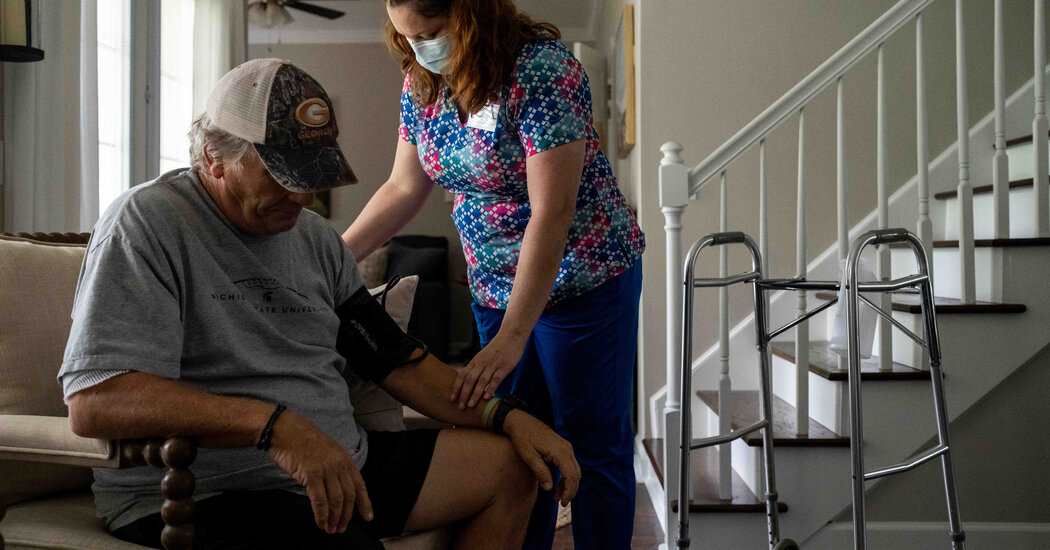
Finding an aide to help an older person stay at home safely takes work. Here’s a guide.Most older Americans want to live at home as long as they can, but finding and affording the help they need often isn’t easy. There are severe shortages of home health aides in many parts of the country. Hiring them is costly. And most middle-class people will have to pay for home care themselves if they will need it for the long haul. Here’s a guide to locating home care for an older person.What kind of home care do you need?After a fall or surgery, some older people will need short-term care at home from a nurse or therapist to help them recover. Medicare, the federal insurance program for those 65 and over, typically pays for this kind of home health care. A nurse can make sure a wound is healing properly, for example, while a physical therapist can help a person get back on their feet after a knee replacement.But millions of older Americans need assistance over months or years to stay in their homes safely instead of moving to an assisted-living facility or nursing home. They may require help getting out of bed, taking a shower or going to the bathroom; getting to the doctor; shopping for groceries or making meals. They need a home health aide or personal care assistant, who may not have much, if any, medical training.How do I find help?A wide range of services are available, whether it’s light housekeeping or hiring a private-duty nurse. Monica Moreno, senior director of care and support at the Alzheimer’s Association, suggests that you start by making a simple list of the kind of help you or your loved one needs and the number of hours each day or week required.To identify agencies and services available in your area, Ms. Moreno recommends looking through a database of community resources provided jointly by the association and AARP, the nonprofit group representing older Americans, that is searchable by location. A list of agencies and a brief description of what they provide can be found under the category of home care. AARP also has a guide to finding a home health aide.Laurie Gregory, a patient care aide at Interim HealthCare, with a client, Dan Missroon, at his home in Summerville, S.C.Desiree Rios/The New York TimesShould I use an agency?While Medicare certifies and gives star ratings to home health agencies, the businesses that provide home care services are not subject to federal oversight or required to be licensed in every state. But a good agency will run background checks on its workers and give them training and support. If an aide calls in sick or quits, the agency can find a replacement. Some businesses also bond and insure their caregivers.To choose an agency, Jennifer Battista, the chief operating officer for the Home Care Association of America, suggests inviting several of them to your home to conduct an assessment. Ask them how they vet their employees, whether they run criminal background checks, and whether their employees are required to know how to perform CPR or provide first aid. Be sure to ask for references for individual aides and talk to families who have employed them before.Once you pick an agency, you may want to try a few caregivers before finding the right one. The more information you share about your loved ones’ needs, the better the agency will be able to find an aide who’s a good fit. “It’s a lot like matchmaking,” Ms. Battista said.What about finding someone through word of mouth?Many families have success finding a caregiver by asking people they trust for recommendations, said Nicole Jorwic, a lawyer who is the chief of advocacy and campaigns for Caring Across Generations, an advocacy organization. “Cast a wide net, post on private social media and ask family and friends,” she said, noting that she found caregivers for her grandparents by asking people in her community.Churches and other religious institutions, local charities and community organizations may also have suggestions. A primary care doctor or local medical practice may have experience with specific home care agencies or know of individual caregivers. If you decide to hire someone privately, you should be sure to do a thorough background check and talk to families who have employed that person before. Family Caregiver Alliance, a California nonprofit group, provides a guide.Will Medicare cover the cost of an aide?Many home agencies erroneously say they can’t send a home aide and will tell a doctor’s office or patient that Medicare won’t pay for one. “This is a longstanding problem,” said Judith A. Stein, the executive director for the Center for Medicare Advocacy, a nonprofit legal group.While it’s true that Medicare doesn’t pay for long-term care, it may pay for an aide as part of a patient’s care plan if that person also qualifies for a home nurse or therapist for a time. Agencies often refuse to provide someone because Medicare pays a lump sum per patient, meaning the agency isn’t paid more for sending an aide in addition to the nurse or therapist. Talk to the doctor about whether an aide is necessary so one can be specified in the care plan presented to the agency.Medicare patients are getting fewer visits from an aide now than they did some 25 years ago, and the center is now appealing a judge’s dismissal of a lawsuit claiming that Medicare, under the U.S. Department of Health & Human Services, discouraged the use of aides for thousands of people. The judge did acknowledge that many people were not getting care.Robin Lee, center, who has had dementia for about a decade, took a walk through her yard with the help of her son, left, and a dementia care specialist, Ronnie Smalls, right.Desiree Rios/The New York TimesWill other insurance pay for an aide?Under Medicaid, the state-federal program for the poor that provides long-term care, the cost of an aide is often covered as an alternative to a nursing home. But the shortage of workers can make it difficult to find one even if you qualify. Families complain of frequent no-shows, and the low wages paid under the program mean that agencies often have high turnover among workers.Some private Medicare Advantage plans offer home care as a supplemental benefit, and it’s possible that some help will be covered under a long-term care insurance policy. If you or your loved one is a veteran, it’s worth checking with Veterans Affairs to see if it will pay for home care.How much will an aide cost?If you decide to pay privately, the hourly rates charged by agencies vary widely, and some agencies may not be able to fill a position for just a few hours a week. In San Jose, Calif., half of the agencies charged more than $37 an hour for a home health aide in 2021, according to Genworth, the long-term care insurer. Across the country, agencies are charging roughly $27 an hour with a little more than half of that going to pay their workers.There are no good estimates for how much people working for themselves may charge. You could save some money because there is no middleman taking a cut, but some independent caregivers charge roughly the same as an agency.How do I report a problem?If the agency you’re using is licensed by your state, you can check with the government office overseeing it if you run into a problem. You can also file a complaint with various state agencies, including the state health department.Where else can I get help?State or local government agencies that focus on aging or nonprofit groups can provide information. You can also try the eldercare locator. The Alzheimer’s Association also has some advice for finding caregivers, and it offers a 24-hour help line, 1-800-272-3900.What about respite care?Family caregivers should also think about taking advantage of respite care to give themselves a break from time to time. Depending on the circumstances, insurance may cover the cost, and there are local government and community groups that will also pay for an aide for a brief period. Churches and other organizations may also provide respite care.

Read more →

Climate Change Drives New Cases of Malaria, Complicating Efforts to Fight the Disease

The number of malaria cases rose again in 2022, propelled by flooding and warmer weather in areas once free of the illness.There were an estimated 249 million cases of malaria around the globe last year, the World Health Organization said on Thursday, significantly more than before the Covid-19 pandemic and an increase of five million over 2021. Malaria remains a top killer of children.Those new cases were concentrated in just five countries: Pakistan, Nigeria, Uganda, Ethiopia and Papua-New Guinea. Climate change was a direct contributor in three of them, said Dr. Daniel Ngamije, who directs the W.H.O. malaria program.In July 2022, massive flooding left more than a third of Pakistan underwater and displaced 33 million people. An explosion of mosquitoes soon followed. The country reported 3.1 million confirmed cases of malaria that year, compared with 275,000 the year before, with a fivefold increase in the rate of transmission.“With the very heavy monsoons we expected these consequences, but not up to this magnitude,” said Dr. Muhammad Mukhtar, director of Pakistan’s national malaria control program.While floodwaters have receded in some areas, vast tracts of standing water remain, and the malaria parasite is now well-established and circulating in communities that had little prior immunity, Dr. Mukhtar said.More than seven million bed nets were given out to displaced people, but people who are living in small tents or in big crowded halls have nowhere to hang them, Dr. Mukhtar said. The country is relying on insecticide spraying to try to control mosquitoes and mass administration of anti-malarial drugs.Pakistan has confirmed 2.3 million malaria cases so far this year and expects the total to be even higher than the total from 2022.“It will take another one to two years for the situation to become normal if, God forbid, there is not another natural disaster,” Dr. Mukhtar said.In Pakistan, as in other places where weather emergencies drove malaria’s spread, new mosquito habitat was only part of the problem. The floods damaged 2,200 health facilities, leaving millions of people without access to treatment in affected districts.The number of deaths from malaria worldwide stayed largely stable between 2021 and 2022, but at an estimated 608,000 it was still significantly higher than the total of 576,000 in 2019, before the Covid pandemic.Deaths had fallen steadily from 2000 to 2015, because of a wide push to make better diagnostics and treatments, as well as insecticide-treated bed nets, widely available across malarial areas in sub-Saharan Africa. But growing resistance to those drugs and insecticides, plus stagnating funding and changes in mosquito behavior, have combined to stall that progress. Covid has further disrupted both health services and supply chains.The changing climate was also at least partly responsible for a rise in malaria in Ethiopia (with 1.3 million more cases than it had the year before) and Uganda (with 600,000 more), Dr. Ngamije of the W.H.O. said. Highland areas that had long been too cool and dry to support the breeding of malaria-transmitting mosquitoes have started to report cases in those two countries.In Ethiopia, large civil conflicts that displaced millions of people also made them newly vulnerable to malaria. Conflict drove the spread of malaria in other areas, as well: Cases increased more than sevenfold in Myanmar, for example.And Ethiopia is among African countries where an invasive mosquito species, Anopheles stephensi, which thrives in urban areas once largely free of malaria, is now spreading the disease.In Uganda, there are also worrying signs that the malaria parasite is growing resistant to the main medication used to treat the disease.Nigeria, the country with the highest burden of malaria, also saw extreme flooding in 2022. The country managed to keep the rate of new infections stable, but its rapid rate of population growth meant there were an additional 1.3 million cases.Climate change is also driving malaria cases where people are displaced by drought, heat waves and storms, leaving them in substandard housing, Dr. Ngamije said. Weather disasters disrupt the supply chains of malaria tests, treatments and insecticides. Food insecurity, rising in sub-Saharan Africa because of floods and droughts, means more children are malnourished, and thus more susceptible to severe malaria. Repeated malaria infections keep children out of school, and wipe out the savings of the lowest-income families in affected countries.The malaria report did contain some good news. Azerbaijan, Belize and Tajikistan were all certified as malaria-free by the W.H.O. in 2022.More than two million children in Ghana, Kenya and Malawi had received at least one dose of a new malaria vaccine by the end of 2022. Vaccination coverage will be broadened to 12 more countries next year. There has been a 13 percent drop in child deaths over four years in the areas where the first malaria vaccine has been administered.Dr. Ngamije said he had hoped that the 2022 malaria data would show global cases falling rather than rising. But the W.H.O.’s approval of a second malaria vaccine that will rapidly increase supply, plus the growing availability of bed nets treated with multiple kinds of chemicals to counter the effect of insecticide resistance, make him optimistic that there will be significant progress next year.“If it turns out to be a normal year,” he said.

Read more →

Vitamin D supplements do not prevent bone fractures in children

A major clinical trial led by Queen Mary University of London and the Harvard T.H. Chan School of Public Health has found that vitamin D supplements do not increase bone strength or prevent bone fractures in children with vitamin D deficiency. The findings challenge widely held perceptions relating to the effects of vitamin D on bone health.
Around one-third of children have at least one fracture before the age of 18. This is a major global health issue, as childhood fractures can lead to life years of disability and/or poor quality of life. The potential for vitamin D supplements to improve bone strength has attracted growing interest in recent years, based on vitamin D’s role in promoting bone mineralisation. However, clinical trials designed to test whether vitamin D supplements can prevent bone fractures in children have not previously been conducted.
Working with partners in Mongolia, a setting with a particularly high fracture burden and where vitamin D deficiency is highly prevalent, researchers from Queen Mary and Harvard conducted a clinical trial to determine if vitamin D supplementation would decrease risk of bone fractures or increase bone strength in schoolchildren. The study, published today (1 December) in Lancet Diabetes & Endocrinology, is the largest randomised controlled trial of vitamin D supplementation ever conducted in children.
Over the course of three years, 8,851 schoolchildren aged 6-13 living in Mongolia received a weekly oral dose of vitamin D supplementation. 95.5% of participants had vitamin D deficiency at baseline, and study supplements were highly effective in boosting vitamin D levels into the normal range. However, they had no effect on fracture risk or on bone strength, measured in a subset of 1,438 participants using quantitative ultrasound.
The trial findings are likely to prompt scientists, doctors and public health specialists to re-consider the effects of vitamin D supplements on bone health.
Dr Ganmaa Davaasambuu, Associate Professor at the Harvard T.H. Chan School of Public Health, said:
“The absence of any effect of sustained, generous vitamin D supplementation on fracture risk or bone strength in vitamin D deficient children is striking. In adults, vitamin D supplementation works best for fracture prevention when calcium is given at the same time — so the fact that we did not offer calcium alongside vitamin D to trial participants may explain the null findings from this study.”
Professor Adrian Martineau, Lead of the Centre for Immunobiology at Queen Mary University of London, added:
“It is also important to note that children who were found to have rickets during screening for the trial were excluded from participation, as it would not have been ethical to offer them placebo (dummy medication). Thus, our findings only have relevance for children with low vitamin D status who have not developed bone complications. The importance of adequate vitamin D intake for prevention of rickets should not be ignored, and UK government guidance recommending a daily intake of 400 IU vitamin D remains important and should still be followed.”

Read more →

Swine flu: What's next after first confirmed case in UK?

Published4 days agoShareclose panelShare pageCopy linkAbout sharingImage source, Getty ImagesBy Michelle RobertsDigital health editorEarlier this week, UK health officials confirmed a person in North Yorkshire had been infected by a new genetic strain of flu that’s similar to one pigs get. The government agency in charge of protecting public health – the UKHSA – has now shared the full timeline of how events unfolded. It begins on Thursday 9 November, with a trip to see a GP.But the person seeking help will have caught it days before that.It takes about one to four days for symptoms to emerge. The patient went to their doctor complaining of “typical” flu symptoms, meaning they were probably feeling exhausted, with a temperature, cough and sore throat. How did they get it?It is still a mystery how they caught it – they have since confirmed that they do not work with pigs or keep any as pets.During the visit, the GP did a swab test. These are not routine in every surgery – only some practices do them and they are to help the UKHSA monitor population health rather than to diagnose individual patients. The results help experts keep checks on what diseases are circulating and how well vaccines are doing against them. That sample was sent off and processed in the usual way, which takes about two weeks. So, it was on the evening of Thursday 23 November – a fortnight after the GP visit – that experts in a UKHSA lab discovered it was a new virus.What is it?Officials are calling it influenza A(H1N2)v rather than swine flu.It is a type of flu – like the winter illness many people get vaccinated against – but it is a bit different. Image source, Getty ImagesIt is almost identical to one circulating in pigs in the UK at the moment, rather than the type humans normally get. Pigs can sometimes spread flu viruses to people, but that is rare. It is usually the other way round.The UKHSA’s chief scientific officer, Prof Isabel Oliver, told the media earlier this week: “We do know that occasionally we identify viruses like this one that are present in pigs, so often referred to as swine flu viruses. Occasionally there are cases detected in humans.”There has been one similar but not identical human “swine flu” case in the US this year, and about 50 cases reported globally since 2005. Could it take off in a big way in humans now? According to experts, although it could take off in humans, this is unlikely. They are keeping a close watch to see what risk, if any, this latest case may pose to the wider population.This first and – so far – only UK case was a mild one, although the person’s symptoms were nasty enough for them to seek medical help.They have since made a full recovery, but that fact alone does not really tell us anything about the transmission potential of the virus or the risk to vulnerable groups, says Dr Andrew Catchpole, a virus expert who works for a research organisation called hVIVO. “Details on the age and the overall health status of the infected person have not been released, so we do not know if this was an otherwise healthy individual whom we would expect to recover from flu without intervention,” he said.As soon as UKHSA got the test results back, it contacted the individual concerned and their close contacts. Fortunately, the person had not been out at any big events, so did not have a vast number of contacts to trace.These contacts were advised that they could potentially be infectious and should self-isolate pending a negative test result, the UKHSA told BBC News.However, there is no sign yet that the virus has or will spread easily between people. Typically viruses acquired from pigs do not spread easily from person to person. But the UKHSA says it will continue to investigate. Dr Will Welfare, UKHSA Incident Director, said: “This is the first time we have detected this virus in humans in the UK. As soon as we get such a result, we immediately start work with partners to learn everything we can about it. Our investigation is continuing at pace and we will publish further information in due course.”It’s thanks to our routine surveillance and genome sequencing that we have been able to detect this virus, putting us in a stronger position to understand its characteristics and reduce any potential spread.”Virus expert Dr Andrew Catchpole says pigs are a common source of newly emerging flu strains, because they can catch flu viruses from humans and birds which then mix and make new versions. Generally, however, these are not able to replicate and transmit efficiently in people.Prof John Edmunds, from the London School of Hygiene & Tropical Medicine, says it is right to be cautious: “Although these events usually result in viruses that struggle to transmit in their new hosts, there is always a danger that they can. These events need to be carefully investigated.”Could it cause a pandemic?Prof Isabel Oliver said that while there may have been some limited spread between people, that is entirely different to a big outbreak. “So far this is the only confirmed case. We are working to understand how this person acquired the infection… We have not identified a source of infection but our investigations continue,” she said.In 2009, there was a pandemic in humans caused by an influenza virus commonly referred to as “swine flu”. That was a different virus called influenza A H1N1(pdm09). It contained genetic material from viruses that were circulating in pigs, birds and humans in the 1990s and 2000s.It is no longer called swine flu and is now one of the many different flu viruses which circulate in people each year. The current annual flu shots that are offered on the NHS protect against it. The vaccines are not expected to provide much protection against the new virus that has just been found. New vaccines can be made though, if they are ever needed. More on this storyFirst human case of new swine flu strain found in UKPublished27 NovemberRelated Internet LinksWHOUKHSAThe BBC is not responsible for the content of external sites.

Read more →