Obesity slows progress against cancer deaths, study suggests

Cancer death rates have fallen dramatically in the United States, but factor in obesity, as researchers did at the University of North Carolina Gillings School of Global Public Health, and the picture changes.
In a study published May 10 in JAMA Network Open, researchers showed that obesity-related cancer deaths are improving, but at a slowing pace.
Based on mortality data for 50 million people, deaths from cancers not associated with obesity — that’s lung cancer and skin cancer, among others — are declining at a rate almost three times faster than cancers linked to obesity, such as stomach, colorectal, uterine, thyroid and postmenopausal breast cancer.
“These are cancers where we could see even larger mortality improvements with creative and practical tools to combat obesity,” said study senior author Hazel B. Nichols, associate professor in the Department of Epidemiology at the UNC Gillings School of Global Public Health.
Most Americans weigh more than recommended and being overweight or obese puts them at risk for certain cancers.
Extra weight can cause changes in the body that help lead to cancer, such as long-lasting inflammation and higher than normal levels of insulin and hormones that can fuel cell growth, according to the U.S. Centers for Disease Control and Prevention.

Read more →

Novel nanotech improves cystic fibrosis antibiotic by 100,000-fold, research shows

World-first nanotechnology developed by the University of South Australia could change the lives of thousands of people living with cystic fibrosis (CF) as groundbreaking research shows it can improve the effectiveness of the CF antibiotic Tobramycin, increasing its efficacy by up to 100,000-fold.
The new technology uses a biomimetic nanostructured material to augment Tobramycin — the antibiotic prescribed to treat chronic Pseudomonas aeruginosa lung infections in severe cases of CF — eradicating the infection in as little as two doses.
In Australia, cystic fibrosis (CF) affects one in 2500 babies — or one baby born every four days — causing severe impairments to a person’s lungs, airways and digestive system, trapping bacteria and leading to recurrent infections. Lung failure is the major cause of death for people with CF.
The UniSA research team, which includes Professor Clive Prestidge, Dr Nicky Thomas, and PhD candidate, Chelsea Thorn, says the discovery could transform the lives of people living with CF.
“CF is a progressive, genetic disease that causes persistent, chronic lung infections and limits a person’s ability to breathe,” Thorn says.
“The disease causes thick, sticky mucus to clog a person’s airways, attracting germs and bacteria, such as Pseudomonas aeruginosa, which leads to recurring infections and blockages.

Read more →

Scientists show how to attack the 'fortress' surrounding pancreatic cancer tumors

UNSW medical researchers have found a way to starve pancreatic cancer cells and ‘disable’ the cells that block treatment from working effectively. Their findings in mice and human lab models — which have been 10 years in the making and are about to be put to the test in a human clinical trial — are published today in Cancer Research, a journal of the American Association for Cancer Research.
“Pancreatic cancer has seen minimal improvement in survival for the last four decades — and without immediate action, it is predicted to be the world’s second biggest cancer killer by 2025,” says senior author Associate Professor Phoebe Phillips from UNSW Medicine & Health.
“But our latest advance means today I am the most optimistic and hopeful I have been in my career.”
Pancreatic cancer is notoriously difficult to treat because of the dense scar tissue surrounding tumours — the tissue acts like a fortress that blocks chemotherapy delivery.
“This scar tissue is produced by critical ‘helper cells’ — also called cancer-associated fibroblasts — which cancer cells recruit to support their growth and spread. Yet, these helper cells have been ignored in current treatment strategies,” A/Prof. Phillips says.
“Our approach hits both the tumour cells and the helper cells, so it’s ideal for overcoming the aggressiveness and drug resistance of the disease.”
In today’s paper, the team demonstrates their novel way to metabolically rewire helper cells by targeting one particular protein called SLC7A11, which in turn shuts off the cells’ tumour-promoting activity and reduces the scar tissue they produce.

Read more →

Obesity during adolescence linked to increased risk of stroke as an adult, study finds

Higher body mass index (BMI) in adolescence is associated with a significantly higher risk of first ischemic stroke in adults under age 50 regardless of whether they had Type 2 diabetes, according to new research published today in Stroke, a journal of the American Stroke Association, a division of the American Heart Association.
While rates of adolescent obesity and stroke among adults under the age of 50 years continue to rise around the world, the precise link between the two conditions is still not fully understood.
“Adults who survive stroke earlier in life face poor functional outcomes, which can lead to unemployment, depression and anxiety,” said study co-author Gilad Twig, M.D., M.P.H., Ph.D., an associate professor in the Medical Corps of the Israel Defense Forces and the department of military medicine, Faculty of Medicine of The Hebrew University in Jerusalem, Israel. “The direct and indirect costs attributed to stroke prevention and care are high and expected to keep increasing since the rate of stroke continues to rise.”
This study specifically analyzed adolescent BMI and first stroke before the age of 50 among 1.9 million men and women (ages 16 to 20; 58% men; 84% born in Israel) from two nationwide databases: the Israel Defense Forces and the Israeli National Stroke Registry. All the participants in the database had undergone one complete medical exam between 1985 and 2013.
Standard BMI groups are underweight (less than 5th percentile), low-normal BMI (5th to 49th percentile), high-normal BMI (50th to 84th percentile), overweight (85th to 94th percentile), and obese (greater than 95th percentile). Details on percentile BMI measures by gender are in the article.
During the follow-up period, for all 1.9 M participants between 2014 and 2018, researchers found:
Overall, 1,088 strokes occurred (921 ischemic strokes, 167 hemorrhagic strokes), and the average age at the time of the stroke was 41. Adolescent BMI was directly related to the risk of first ischemic stroke.

Read more →

Dental procedures during pandemic are no riskier than a drink of water, study finds

A new study’s findings dispel the misconception that patients and providers are at high risk of catching COVID-19 at the dentist’s office.
SARS-CoV-2 spreads mainly through respiratory droplets, and dental procedures are known to produce an abundance of aerosols — leading to fears that flying saliva during a cleaning or a restorative procedure could make the dentist’s chair a high-transmission location.
Ohio State University researchers set out to determine whether saliva is the main source of the spray, collecting samples from personnel, equipment and other surfaces reached by aerosols during a range of dental procedures.
By analyzing the genetic makeup of the organisms detected in those samples, the researchers determined that watery solution from irrigation tools, not saliva, was the main source of any bacteria or viruses present in the spatter and spurts from patients’ mouths.
Even when low levels of the SARS-CoV-2 virus were detected in the saliva of asymptomatic patients, the aerosols generated during their procedures showed no signs of the coronavirus. In essence, from a microbial standpoint, the contents of the spray mirrored what was in the office environment.
“Getting your teeth cleaned does not increase your risk for COVID-19 infection any more than drinking a glass of water from the dentist’s office does,” said lead author Purnima Kumar, professor of periodontology at Ohio State.

Read more →

Vacunas para la COVID-19: ¿debo ponerme la segunda dosis?

Algunas personas siguen postergando su segunda dosis o tienen dudas sobre si es necesario vacunarse. Pero la COVID-19 sigue siendo un riesgo mortal para todos, no solo para los más vulnerables.Hay demasiados estadounidenses que no parecen darse cuenta de la facilidad con la que se propaga el nuevo coronavirus y cuán terrible puede ser la COVID-19. La situación está provocando que demasiada gente a) evite vacunarse, b) no se ponga la segunda dosis si la primera fue de Pfizer o Moderna o c) suponga que la vacuna que se puso ahora le permite reunirse con otras personas, con toda libertad y sin tomar precauciones de salud pública.La covid sigue siendo una amenaza mortal no solo para las personas como yo, que estamos en las últimas décadas de nuestras vidas, sino también para casi cualquiera, sin importar cuán joven y saludable sea. Como la mujer embarazada de 37 años en Illinois que fue puesta en soporte vital después de que su bebé nació por una cesárea de emergencia. O el hombre de 26 años en Maryland que fue hospitalizado con oxígeno durante cinco días y ahora le cuenta a todo el mundo “lo grave que estuvo y lo aterrador que es”.Aunque las infecciones, las hospitalizaciones y las muertes han bajado en comparación con los espantosos picos de 2020, todavía nos falta mucho para lograr la inmunidad de rebaño, si es que alguna vez llegamos a ella.Un 61 por ciento de las personas en Estados Unidos vive en condados donde el riesgo de infección en la actualidad es muy alto o extremadamente alto y, cuando alguien contrae el coronavirus, puede aparecer una mutación que derive en una variante más peligrosa.Después de meses de incertidumbre relacionada con la seguridad y efectividad de cualquiera de las vacunas que surgieron de la Operación Máxima Velocidad (Warp Speed en inglés), los resultados finales y tranquilizadores de las pruebas a finales del año pasado con las vacunas fueron casi inimaginables. Los miembros del comité de asesoría para las vacunas que respaldó la autorización de la Administración de Alimentos y Medicamentos (FDA por su sigla en inglés) para el uso de emergencia de las vacunas son expertos con integridad y criterio independiente. Si el gobierno hubiera retrasado la distribución de la vacuna hasta tener la licencia completa, es probable que tanto la población como la economía habrían sufrido una devastación irreparable.Contuve el aliento hasta que me tocó ser inmunizada el invierno pasado y luego hasta que fueran elegibles esta primavera mis dos hijos, dos nueras y cuatro nietos. Todos estaremos completamente vacunados a final de mes, cuando nos reunamos por primera vez en casi dos años para celebrar mi cumpleaños número 80. Y todos seguiremos usando mascarillas y guardaremos la distancia apropiada cuando estemos en exteriores en entornos cerrados o en interiores en lugares públicos con gente que no conozcamos.En la recomendación que emitieron los Centros para el Control y la Prevención de Enfermedades (CDC, por su sigla en inglés), se menciona que la gente que esté completamente vacunada puede reunirse en interiores con otras personas que estén completamente vacunadas sin usar cubrebocas o guardar distancia física, y pueden viajar al interior del país sin hacerse pruebas ni autoaislarse. En la actualidad, también pueden “reunirse o realizar actividades al exterior sin usar una mascarilla, salvo en ciertos entornos o lugares llenos de gente”, como conciertos en vivo, desfiles o eventos deportivos.Sin embargo, la agencia advirtió a la gente no vacunada que corre más riesgo —y debería seguir usando cubrebocas— cuando va a ver una película a un lugar cerrado, come dentro de un restaurante o bar, participa en clases de ejercicio de alta intensidad en interiores o canta en un coro en un espacio cerrado. Rochelle Walensky, la directora de los CDC, señaló que en interiores el riesgo de transmisión del virus aumenta casi 20 veces.E incluso para la gente vacunada comentó que, “hasta que no haya más personas vacunadas y sigamos con más de 50.000 casos al día, usar mascarillas en interiores brindará una protección adicional”.Hay buenas razones para mantener las precauciones. Más de la mitad de la población, incluidos los niños, todavía no está inmunizada. No se sabe si la gente inmunizada puede contraer el virus y no tener síntomas, para luego propagarlo sin querer a otras personas vulnerables. No todos los que quieren vacunarse pueden hacerlo por razones logísticas o de salud, y las vacunas tal vez no protejan por completo a las personas con inmunodeficiencias.Además, aunque las vacunas autorizadas produjeran una respuesta inmunitaria más fuerte que la infección natural, todavía no sabemos cuánto durará su protección. El Excelsior Pass que obtuve en el estado de Nueva York da fe de mi estatus de vacunación, pero expira a mediados de agosto, seis meses después de mi segunda dosis, cuando tal vez necesitaré un refuerzo para mantener mi inmunidad.Hablando de eso, nadie debería dejar de ponerse esa segunda dosis de las vacunas de Pfizer o Moderna. Aunque es probable que demorar unas pocas semanas para recibir la segunda no sea demasiado importante, la respuesta inmune después de una dosis es relativamente débil y podría volver vulnerable a la gente, en especial frente a las variantes más virulentas que están circulando ahora.Dos dosis brindan un 90 por ciento de efectividad para prevenir una infección y se espera que esa protección dure mucho más tiempo. Te deben dar una cita para la segunda dosis cuando te inscribes a la primera dosis o cuando la recibes.Algunas personas dudan si deben ponerse la segunda dosis porque escucharon que los efectos secundarios pueden ser desagradables. No obstante, sin importar cuán desagradables sean, los efectos secundarios de la vacuna son breves y no están ni cerca de ser tan graves ni persistentes como la enfermedad de la que te protege. Después de la recuperación incluso de un caso leve de COVID-19, puede quedar una huella inquietante, como desorientación y fatiga crónica.Y, claro está, el virus también puede matar, incluso a personas relativamente jóvenes y libres de riesgos subyacentes de salud. En Estados Unidos, con base en más de 32 millones de casos confirmados, el índice de mortalidad de la COVID-19 es de un 1,8 por ciento. Para el 3 de mayo, se habían administrado más de 245 millones de dosis de las vacunas contra la covid, y una revisión federal de las reacciones adversas reveló que nadie había muerto a causa de la vacuna.Casi a todo el mundo le duele el brazo un tiempo debido a la vacuna, pero en el peor de los casos la gente puede tener síntomas de gripe que duran uno o dos días. Si tienes la opción, considera planear un día de descanso después de la segunda dosis en caso de que necesites tomarte las cosas con calma. La mitad de mi familia no tuvo ninguna reacción más que el esperado dolor de brazo. Una de mis nueras tuvo una fiebre de 38 grados y uno de mis hijos sufrió un cansancio inusual, pero al día siguiente yo estaba como el conejito de Energizer e hice el doble de lo que suelo hacer. ¡Quién lo diría!Si tienes un teléfono inteligente, te insto a que te apuntes al sistema de seguimiento de los efectos secundarios establecido por los CDC. Yo lo hice y me preguntaron repetidamente cómo me encontraba después de cada dosis de la vacuna. El sistema, llamado v-safe, puede alertar a las autoridades sanitarias de la frecuencia de los efectos secundarios y de cualquier complicación desconocida hasta ahora. También te recordará que te pongas la segunda dosis de la vacuna de Pfizer o de Moderna.Y una última cosa: si conoces a personas que todavía tienen dificultades para conseguir una cita para vacunarse, por favor, si puedes, intenta ayudarlos.Jane Brody es la columnista de “Salud personal” desde 1976. Ha escrito más de doce libros, incluyendo los éxitos de ventas: Jane Brody’s Nutrition Book y Jane Brody’s Good Food Book.

Read more →

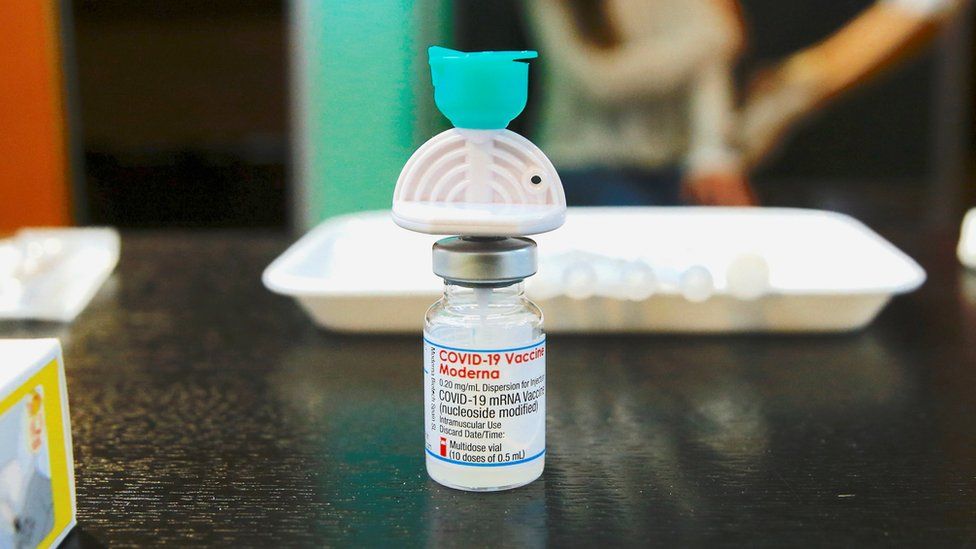
Covid: US-based Moderna to send 25m vaccine doses to Australia

SharecloseShare pageCopy linkAbout sharingimage copyrightReutersAustralia has secured 25 million doses of the Moderna Covid-19 vaccine as the government seeks to boost supplies to support its delayed vaccination drive.The government said 10 million doses of the mRNA vaccine are due to arrive by the end of the year, and 15 million shots in 2022.Australia’s rollout has lagged behind other nations after initial delays and caution over the AstraZeneca vaccine.The country has so far administered 2.8 million shots of a Covid vaccine.That is well short of the 50 million jabs needed to fully vaccinate its population. The country’s immunisation programme was recently opened to all Australians aged over 50.Australia had originally aimed to have its population vaccinated by October, relying heavily on the AstraZeneca vaccine. But this target was scrapped after concerns rose over the risk of rare blood clots, forcing the government in April to recommend that people under 50 receive a different jab.It is also using the Pfizer vaccine but there are only 20 million doses currently in stock. The government has placed an order for another 20 million doses. Australia now says it plans to have vaccinated all Australians who want the jab by the end of the year.AstraZeneca: Is there a blood clot risk?What’s gone wrong with Australia’s vaccine rollout?Covid vaccines: How fast is worldwide progress?The Moderna vaccine still requires approval by Australia’s Therapeutic Goods Administration but it is seen as a welcome boost to the country’s supplies, according to the government.”Whilst we know we have more than enough vaccine already ordered to cover our primary vaccination program this year, this provides some additional redundancy,” said top medical official Dr Brendan Murphy.Officials said the deal also included a potential pathway for the vaccine to be manufactured locally. Australia’s Labor opposition welcomed the Moderna deal but said it was overdue, noting that many other developed nations were already using the vaccine.”If the rest of the world struck deals with Moderna as early as last year for access to this state-of-the-art vaccine, why do Australians have to wait to the end of this year?” said Labor spokesman Jim Chalmers.Moderna said its second-round booster shots are still being tested, but are expected to neutralise different variants of the virus.Earlier this month, the US firm released positive results from the trials of a modified vaccine aimed at the South African and Brazilian variants.”We appreciate the partnership and support from the government of Australia with this first supply agreement for doses of the Moderna Covid-19 vaccine and our variant booster candidates,” Moderna chief executive Stephane Bancel said.What are the new virus variants?Australia also has a deal for 51 million doses of the Novovax shot, but that vaccine is still in clinical trials.Despite its vaccination rates being behind other nations, Australia is one of the few places in the world where there is no widespread community transmission of Covid-19.On Thursday, the nation had just five active cases of the virus in the community, and 171 cases in its hotel quarantine system for returning travellers.The country has managed to stave off a major outbreak on the scale seen in other nations, such as the US, UK and India, by shutting its borders and periodically enforcing snap lockdowns.

Read more →

Delaying second COVID vaccine dose may prevent deaths under certain conditions

Delaying the second dose of covid-19 vaccines, at least for people aged under 65, could result in up to 20% lower mortality, but only under certain conditions, finds a US study published by The BMJ today.
These conditions include a one dose vaccine effectiveness (efficacy) of 80% or higher and vaccination rates of 0.1% to 0.3% of the population per day. If these conditions apply, the researchers say the strategy could prevent between 47 and 26 deaths per 100,000 people, respectively.
Both the Pfizer and Moderna covid-19 vaccines in a standard two dose schedule are highly effective at preventing symptomatic infections and death. But immunity worldwide remains low, partly owing to low vaccination rates.
The longer it takes to effectively vaccinate the global population, the greater the likely risk of vaccine resistant strains developing. This has led to calls to prioritise single dose vaccination for as many people as possible, even if this means delaying a second dose beyond the studied time frame.
The justification for this relies on the assumption that meaningful protection against covid-19 can be achieved after a single dose of vaccine, but this is the subject of intense debate.
To explore this further, a team of US researchers set out to measure the impact of delayed second dose vaccine policies on infections, hospital admissions, and deaths compared with the current on-schedule two dose regimen.

Read more →