Long working hours killing 745,000 people a year, study finds

SharecloseShare pageCopy linkAbout sharingimage copyrightGetty ImagesLong working hours are killing hundreds of thousands of people a year, according to the World Health Organization (WHO).The first global study of its kind showed 745,000 people died in 2016 from stroke and heart disease due to long hours.The report found that people living in South East Asia and the Western Pacific region were the most affected.The WHO also said the trend may worsen due to the coronavirus pandemic.’I was working 72 hours a week – it was cult-like’Go ‘extra mile’ despite 95-hour week – Goldman bossGoldman Sachs bankers ask for 80-hour week capThe research found that working 55 hours or more a week was associated with a 35% higher risk of stroke and a 17% higher risk of dying from heart disease, compared with a working week of 35 to 40 hours.The study, conducted with the International Labour Organization (ILO), also showed almost three quarters of those that died as a result of working long hours were middle-aged or older men.Often, the deaths occurred much later in life, sometimes decades later, than the long hours were worked. You may also be interested in…While the study did not cover the period of the pandemic, WHO officials said the recent jump in remote working and the economic slowdown may have increased the risks associated with long working hours.”We have some evidence that shows that when countries go into national lockdown, the number of hours worked increase by about 10%,” WHO technical officer Frank Pega said.The report said working long hours was estimated to be responsible for about a third of all work-related disease, making it the largest occupational disease burden.’It’s been great to wear trousers again’Do Britons work some of the longest hours in Europe?The WHO suggests that employers should now take this into account when assessing the occupational health risks of their workers.Capping hours would be beneficial for employers as that had been shown to increase productivity, Mr Pega said.”It’s really a smart choice to not increase long working hours in an economic crisis.”

Read more →

India's Covid crisis hits Covax vaccine-sharing scheme

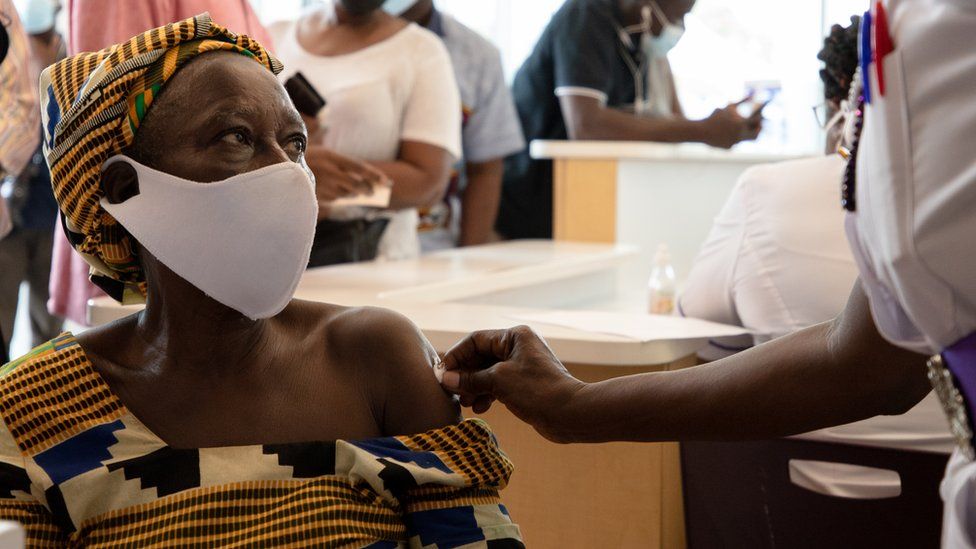
SharecloseShare pageCopy linkAbout sharingimage copyrightUnicef/KokorokoThe international scheme to ensure equal access to Covid-19 vaccines is 140 million doses short because of India’s continuing Covid crisis. The Serum Institute of India (SII), the largest single supplier to the Covax scheme, has made none of its planned shipments since exports were suspended in March. The UN children’s agency Unicef buys and distributes vaccines for Covax. It is urging leaders of G7 nations and EU states to share their doses.They are due to meet in the UK next month. How India’s vaccine drive went horribly wrongExtra $45bn needed for Covax plan to vaccinate poorTracking vaccine progress around the worldUnicef says data it has commissioned suggests that together this group of countries could donate around 153 million doses, while still meeting their commitments to vaccinate their own populations.’A huge concern’The SII was due to supply around half of the two billion vaccines for Covax this year but there were no shipments for March, April or May. The shortfall is expected to rise to 190 million doses by the end of June.”Unfortunately, we’re in a situation where we just don’t know when the next set of doses will materialise,” said Gian Ghandi, Unicef’s Covax co-ordinator for supply.image copyrightUnicef/Panday”Our hope is, things will get back on track, but the situation in India is uncertain… and a huge concern.”Unicef is calling on the G7 countries – Canada, France, Germany, Italy, Japan, the UK and the US, as well as the EU, to donate their surplus supplies urgently. Some countries have ordered enough to vaccinate their population many times over, including the UK, US and Canada.In February British Prime Minister Boris Johnson promised to donate most of the UK’s surplus supply to poorer countries but he has so far given no specific timescale. It is a similar story for the US. So far France is the only G7 country to donate doses in view of the crisis in India. Unicef said the rich and powerful G7 countries could make a huge dent in the vaccine deficit for poorer countries by donating 20% of their supplies in June, July and August, which would release around 153 million doses for the Covax scheme. France has pledged half a million doses by mid-June while Belgium has promised 100,000 from its domestic supply in the coming weeks. Spain, Sweden and the United Arab Emirates are some of the very few others pledging to share their supplies now. There are grave concerns that events in India could play out in other countries too – both near and far from the region. “Cases are exploding and health systems are struggling in countries like Nepal, Sri Lanka and Maldives… and also in Argentina and Brazil,” said Unicef director Henrietta Fore. “The cost for children and families will be incalculable.”Booster jab dilemmaCountries in Africa are some of the most reliant on doses through the Covax scheme. But, like in many parts of the world, there has also been hesitancy around receiving the vaccine among some communities. Another major challenge is physically getting the doses into people’s arms – all that requires health workers to be specially trained and the vials to be transported to far-flung parts of countries where infrastructure can be limited. Some nations are now facing the prospect of deciding whether to give second doses to the most vulnerable who have already been given one jab or continue vaccinating more people as planned in the hope that the next shipments turn up soon. “We’re in a situation now where healthcare workers and frontline workers in many countries in Africa are yet to be vaccinated,” said Gian Ghandi. “And yet higher-income countries are vaccinating lower-risk populations, such as teenagers.” Nations including Rwanda, Senegal and Ghana are already using some of their last remaining doses, according to the World Health Organization (WHO).Covax doses in AfricaSeven countries in Africa have used almost 100% of their Covax doses including Botswana, Ghana, Rwanda and Senegal Kenya and Malawi have used nearly 90% of their Covax doses Cabo Verde and the Gambia have used 60% of their Covax doses1.3 million doses have been redistributed from Democratic Republic of Congo to other parts of Africa because the country will not be able to use them all before their expiry date in June source: WHO”We really do sympathise with the situation in India,” said Dr Richard Mihigo, who heads up the immunisation and vaccine development programme for the WHO in Africa.”Most of our [18 million] Covax doses so far have come from India. “I think it’s very important [to keep] the global promise of solidarity for those countries that have enough vaccines – to distribute and share them because unless we stop the transmission everywhere, it will be very difficult to end this pandemic, even in places where people have been fully vaccinated.”What is Covax?Aim is to distribute two billion Covid-19 vaccine doses by the end of 2021No country to receive vaccines for more than 20% of their population before all countries have vaccinated at least 20% of the populationScheme has so far shipped around 60 million doses to 122 participants Co-led by the WHO and the vaccine alliance – Gavi and the Coalition for Epidemic Preparedness Innovations (Cepi)Unicef is the key delivery partner New deals with different vaccine suppliers and manufacturers are under way to try to get the Covax scheme back on track but none of those deals will help fill the shortfall from India in the coming weeks. The only way to fill the gaping hole for poorer countries right now is for richer countries to donate some of their supplies. “We have issued repeated warnings of the risks of letting down our guard and leaving low- and middle-income countries without equitable access to vaccines, diagnostics and therapeutics,” said Ms Fore.”We are concerned that the deadly spike in India is a precursor to what will happen if those warnings remain unheeded. The longer the virus continues to spread unchecked, the higher the risk of more deadly or contagious variants emerging.” More on fair access to vaccines: ‘Some countries can’t afford the Covid vaccine’Africa’s long wait for the Covid-19 vaccineWill countries be left behind in the vaccine race?Follow @tulipmazumdar on Twitter

Read more →

Robot in your home could free up hospital beds

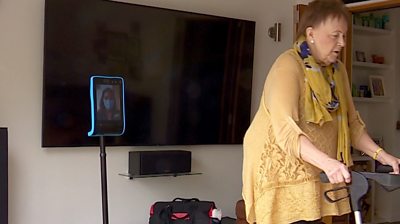
Virtual consultations with a robot are being trialled at Southmead Hospital in Bristol. The aim is to get patients home from hospital earlier.The robot is a tablet computer on wheels, plugged in and set up by hospital staff during a home visit, then operated by a doctor remotely from the hospital.Julia is one of the patients in the trial.

Read more →

In New Vaccination Push, Biden Leans on His ‘Community Corps’

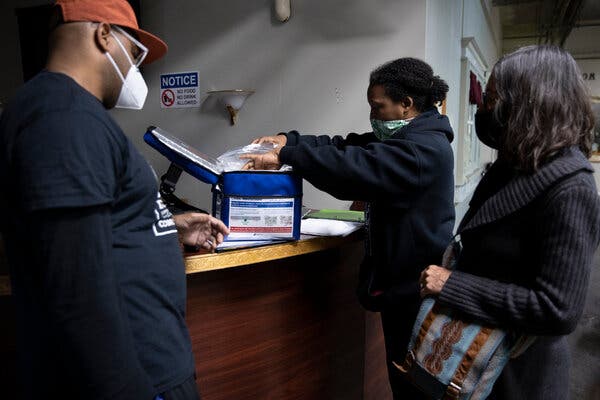
Frantic efforts to vaccinate people in an underserved area of Philadelphia underscore a difficult new stage of the nation’s vaccination campaign, as door-to-door efforts become the norm.PHILADELPHIA — Only a trickle of people had visited her community vaccination site seeking a first coronavirus shot last Monday when Dr. Ala Stanford, a local pediatric surgeon, seized on an unexpected opening.Across the street from the church parking lot where she had set up shop, a funeral home was holding a trio of services, including one for a victim of Covid-19. She mocked up new fliers, then delivered them to the funeral home. By the afternoon, several workers and guests had crossed the street to get inoculated, including Justin Larkin, a funeral attendant who stuck out his arm for the single-dose Johnson & Johnson vaccine, then hustled back to his job.The scene, at Victory Christian Center in southwest Philadelphia, underscored what the Biden administration has called a new phase of its vaccination campaign.The federal government has set up mass vaccination sites at stadiums, sent doses to pharmacies and clinics serving lower-income Americans, and, on Friday, enticed the unvaccinated with the prospect of finally being able to shed their masks.But with the ranks of the willing and able dwindling, the campaign has in many places already morphed into a door-to-door and person-by-person effort.“We’re in the recruiting phase,” Dr. Stanford said. After dropping off the fliers, she approached a man watering his backyard adjacent to the parking lot site, pleading with him through a chain-link fence. He declined.The Black Doctors Covid-19 Consortium, which Dr. Stanford leads, is one of about 11,000 members of what the Department of Health and Human Services is calling its Covid-19 community corps, a loose constellation of volunteers, corporations, advocacy groups and local organizations working to vaccinate Americans often left behind by the nation’s health care system.Dr. Faith Peterson, center, prepared vaccines for volunteers to distribute in-home vaccinations in Philadelphia.  Rachel Wisniewski for The New York TimesBegun last month, the network operates on the belief that once the people most eager for a shot were done, those left unvaccinated will prefer to get their shots by or around people they know. It holds weekly calls with department leaders in Washington to share tips on what is working to reach those still unvaccinated.The vaccination campaign has been flipped on its head, Dr. Stanford said last Monday. “People were going crazy. They were willing to trade things and pay for it,” she said of bigger events her group sponsored.A recent survey published by the Kaiser Family Foundation found that only 9 percent of respondents said that they had not yet gotten a shot but intended to do so right away, suggesting the nation could be approaching saturation.A slowdown in vaccinations has often been attributed to vaccine hesitancy, an opposition to or skepticism of vaccines. But a large group, about 30 million American adults, say they are open to getting a coronavirus vaccine but have not managed to do so, according to a U.S. Census Bureau estimate. Their ranks are larger than the outright hesitant.Andy Slavitt, a White House pandemic adviser, described in an interview last week three categories to organize the unvaccinated: those making a choice at their own pace, those who need easier access to a vaccine and those under 30 who are open to getting a shot but not rushing to.“The reality is many people exist along a spectrum. Some have access issues, some have awareness issues,” he said. “People are complex.”Even as some organizations publicize free beer and sports tickets for vaccinations, and as states increase their incentive-laden pleas — a weekly lottery in Ohio is giving five people $1 million each in return for being vaccinated — the quieter work of local leaders like Dr. Stanford will be key to reaching President Biden’s goal of 70 percent of adults partly vaccinated by July 4, federal officials say. (The rate now stands at more than 59 percent.)“Local is incredibly important. Respecting people’s decision-making process is very important, that people are not just cogs in a machine,” Mr. Slavitt said. “You can’t just say, ‘I want to fully process x number of people in a given day.’ You have to respect the fact that people have decision-making processes that are unique to them.”Dr. Ala Stanford, left, leads the Black Doctors Covid-19 Consortium, a member of a federal program composed of volunteers, corporations, advocacy groups and local organizations working to vaccinate Americans often left behind by the nation’s health care system.Rachel Wisniewski for The New York TimesDr. Stanford said Philadelphians who had struggled to find a time or place to get vaccinated but finally managed were “messengers for the next people.”Often a vaccine’s appeal turns on convenience, especially for those who cannot easily take time off from work. Consortium workers and volunteers last Monday discussed outings to vaccinate dialysis patients, then teens at a different church before they finish the school year. That morning, the group prepared vaccine kits they would take to homebound residents of the city, a core part of the group’s attempts to methodically expand the city’s pool of vaccine recipients.Dr. Stanford’s group has been prolific for a city-level organization, vaccinating nearly 50,000 people at almost 70 clinics. She said the federal government was talking to her about expanding to Baltimore, Virginia and Washington, D.C. Dr. Rachel Levine, Mr. Biden’s assistant secretary for health, visited the consortium last month and praised its vaccination efforts as a model for the country.Dr. Stanford said her group brought a vaccination site to the southwestern part of the city because of how little access it previously had to vaccines. Underneath tents in small rows of folding chairs, visitors had their choice of all three federally authorized vaccines, an indication of the nation’s staggering and still-growing surplus, with over 70 million doses delivered that have yet to be used. Without enough arms to deliver them to, mass vaccination sites at convention centers and sports stadiums have closed or announced plans to, including one federally run site in Philadelphia, which is scheduled to shutter by the end of the month.But in their pursuit of Mr. Biden’s objectives, which include fully vaccinating 160 million adults by July 4, administration officials say that a sizable chunk of the adult population is still reachable.Justin Larkin, left, signing up to receive the Johnson & Johnson vaccine on Monday. He planned to prod others in his life to get the shot, including the director of the funeral home.Rachel Wisniewski for The New York TimesAt the Temple of Praise, a predominantly Black church in southeast Washington, D.C., clergy, church volunteers and local doctors and pharmacists have worked to vaccinate more than 4,000 people, many in the congregation. The church is still using up its weekly allotments of the Moderna shot, with lines snaking through the parking lot every week leading to portable booths used for vaccinations.Church leaders were vaccinated from the pulpit this year, leading to a surge of interest, said Bishop Glen A. Staples. But he and other clergy members said after Sunday services this month that for those now getting the vaccine, Covid-19 was a component of a larger public health crisis.“It’s not just getting the shot,” he said. “It’s about developing faith and trust in the system.”Dr. Jehan El-Bayoumi, a professor of medicine at George Washington University and founder of the Rodham Institute, an organization working on health equity issues in Washington, has advised the church and its community. She said this phase of the vaccination campaign required a shift in the “locus of power” to sites like the church’s, where vaccine recipients were certain to be treated with patience and empathy about their health more generally.Dr. Stanford said that guests to her vaccine sites with otherwise little access to health care sometimes ask for help with medical problems unrelated to Covid-19.Dr. El-Bayoumi, who goes by Gigi, said simple tools of convenience — free Uber rides to a vaccine site or blood pressure cuffs donated to vaccine recipients — had been enough to draw in some of those looking to get a shot in Washington. The Temple of Praise serves tens of thousands of meals each week to community members, including to those who come to receive a vaccine.“The federal government is playing catch-up to what works,” she said. “People trust their spiritual leaders more than doctors and government leaders.”Scenes like those in Washington and Philadelphia have played out across the country, with a get-out-the-vote-like sweep. In southwestern Florida, Detroit, New Orleans and Kansas City, teams have gone door to door to explain the vaccines and how to get them, or even administered them in homes.A similar door-knocking effort began recently in Toledo, Ohio, where the city’s Fire and Rescue Department has used a roving medical unit to vaccinate people on the street. In Maine, medical interpreters have worked to inform immigrants and minority populations about the safety of the vaccines.Antoine Blount, an Amazon delivery driver who chose the Pfizer vaccine at the Philadelphia site, said he was skeptical of the vaccine at first — he had seen videos of people with difficult side effects — but was reassured by seeing family and friends get it. Amazon, he said, was offering bonuses to vaccinated employees.“A lot of people, they just don’t know about it,” he said of getting the shot.Nardea Smith, a chef, said she had been going back and forth in recent weeks while researching the vaccine. She chose Moderna’s vaccine after seeing her parents get it. She was eager to travel again to see family and wanted to protect her grandchildren.A group waiting after receiving coronavirus vaccinations in Philadelphia on Monday. About 30 million American adults say they are open to getting the vaccine but have not managed to do so, according to a Census Bureau estimate.Rachel Wisniewski for The New York Times“I want to make sure that they’re safe, first and foremost,” she said. “I feel more at ease.”Mr. Larkin, the funeral attendant, listened carefully to one of the vaccine site workers as she explained the different shots, then chose Johnson & Johnson’s for its one-and-done ease. He said that getting the vaccine was like getting a new phone, which required waiting some time to see how it worked for others. He planned to prod others in his life to get the shot, including the director of the funeral home.After getting the shot, Mr. Larkin put his suit jacket back on and raced across the street, helping arrange cars along a curb for one of the funeral services. “With all of the cases that we get, now I know that I can’t hardly get it,” he said, smiling.Kitty Bennett

Read more →

Learn To Skate This Summer

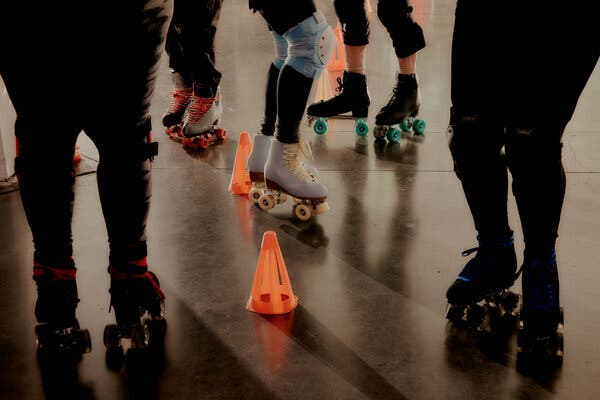
After a year spent largely indoors, adults are regaining a sense of balance on roller skates, bikes and skateboards. First came the walks — and then, seemingly all at once, the wheels.Back at the beginning of the pandemic with interminable lockdowns on the horizon, people broke up the monotony of their homestays with short jaunts on foot around the neighborhood just to get some sunlight and fresh air; or, as the writer Ruby Keane put it, “a stupid little daily walk just to feel something.” But with the arrival of warm weather came a collective need for (relatively more) speed, in the form of bicycles, skateboards, roller skates and the like. Global shortages arose as manufacturers struggled to keep up with demand for recreational wheels, and this year is shaping up similarly, with supply chains already feeling the crush of spring sales.Still, snagging these coveted items can be just the first hurdle to overcome. There has been a massive increase in first-time purchases of bikes, boards and skates, so many of the newly minted owners may need a little time to learn how to use the new equipment exactly right. Instagram lit up last summer with videos of beautiful people gliding gracefully around town on two or four wheels — often accompanied by a throwback soundtrack, in the vein of Instagram’s biggest roller-skating phenomenon, Oumi Janta — but simply staying upright is a challenge if you’ve never done it before.So whether you’re 7 or 70, thankfully there are dedicated professionals out there who are passionate about teaching people to be less wobbly on their new wheels.Act younger, feel younger.Tanya Dean, the founder of Skaterobics, a New York City-based skate school, can still remember the first time she laced up a pair of skates as a 20-something at a city roller rink in the ’90s. Packed as the venue was with experienced skaters, “the scariest part was getting on and off the floor without getting killed,” she recalled. Dean eventually figured out how to roll with the regulars, but these days she wants to make sure that her students have it easier than she did.The adult roller skating school Skaterobics has classes ranging from beginner to advanced skaters.Victor Llorente for The New York Times“Learning from people who just knew how to skate, they were showing you from their point of view,” said Dean. “Being an instructor and understanding body rotation, edges, weight transfer, control, balance and coordination is different.” Her adult clientele are a mix of people who skated during their youth but haven’t done it in decades, true first-timers, and those that can get around the rink but want to enhance their footwork.Dean is also a former boxing champion, personal trainer and motorcyclist, but she has a simple reason for personal and professional focus on roller skating: “It makes you feel like a kid.” Even so, recapturing a bit of childlike joy can be a fraught experience once adult anxiety sets in. “We’re all coming into a new environment, we’re nervous, we’ve got preconceived notions — I’m aware of all that,” she said. She advises new students to maintain a positive attitude and refrain from judgment — of themselves or others.Jitters and other concerns notwithstanding, instructors like Dean and O’Neal Ellerbe, a former professional skateboarder, find that adults continue to turn out in large numbers to conquer their fears on wheels. Ellerbe, the founder and lead coach of Skate-Everything School, has skateboarded with students up to age 60. “I think Covid was a big steppingstone for a lot of people,” he said. “It gave them the courage to step out of the box and try new things.”Ellerbe learned to skateboard as a high schooler in Harlem when he asked a friend to teach him. “The next day, he called me at 6 a.m. and said: ‘I’m outside your house. I have a board for you. You said you wanted to skate, right?’ And I’ve skated every day since.” Skateboarding provided Ellerbe with “an independent challenge” and “a way of being free, in a sense,” but above all else he aims to make the experience fun. Many of his classes end with the group competing in a butt-boarding race to the bottom of a gently sloped hill — a silly, exhilarating and low-stakes way to blow off steam after practicing Tic Tacs and kick pushes.After months of small group classes, Ellerbe is looking forward to bringing even more new skaters into the fold as social distancing measures in New York City loosen up. “I’m excited about bringing demos back, bringing some events to get the community stoked,” he said. Old stereotypes die hard, and Ellerbe knows that many still have a knee-jerk negative reaction to skate culture and its denizens, but he sees an increased interest in skateboarding as a chance to shift the sport’s perception. “Maybe this is the opportunity that’s been long needed,” he said. “This is a hobby to some, a love for some, a form of transportation,” he said. “It’s impacting millions, and I think it’s beautiful.”Skateboarders on Mother’s Day at McCarren Park in Williamsburg, Brooklyn.Sarah Blesener for The New York TimesJust relax and ride.While some instructors contend with unfavorable misconceptions about what their sport represents, Andree Sanders — also known as “Bike Whisperer NYC” — sees her work as more of a mental challenge than anything else. “I talk a lot about the amygdala and the frontal cortex and the different chemical balances of the brain, and how that affects our body and our mind-body connection,” she explained. “You are the eye and the brain of the bike, and the bike becomes your legs. And it’s that partnership and understanding, and that trust, that allows you to really be able to relax and ride.”Sanders was taught the basics of bike riding as a kid and rode throughout her childhood, but “not with the joie de vivre that one would expect.” It wasn’t until her future husband introduced her to mountain biking while they were dating that she rekindled her love of cycling. Over the years, Sanders estimates that she’s taught thousands of people from around the world, but she particularly enjoys working with adults. “Teaching an adult how to ride a bike is like handing over my superpower to them,” she said. “It gives them the sense of freedom and confidence to go places that they would never go before.”If you’ve made the decision to learn to bike, beware of programs that insist you can be taught in a set amount of time. Sanders is adamant about letting each and every client set their own pace when it comes to learning, as missing a predetermined mark can lead to frustration. “It’s a process, and nothing’s instantaneous. And everybody’s process is different.” Last year, Sanders taught her oldest client yet — a 78-year-old woman who was desperate to get out of the house — as well as a number of essential workers who needed to ride to work when commuting via subway wasn’t an option.“It’s the most amazing thing, because it allowed them independence, safety and control, which we didn’t have. Last year was so challenging because we had no control,” she said.Perhaps it’s that much-needed sense of self-determination that leads us to get on wheels, even as children — the feeling of being able to steer one’s own ship when most everything else is out of your hands. Of course, there are other perks that won’t necessarily dissipate once the world gets back to something like normalcy. Dean listed them while describing what her students get out of roller skating, but it could just as easily apply to skateboarding and biking, too. “It builds confidence, it builds community, it’s social networking … it’s exercise … so much stuff that contributes to our well-being,” she said — none of which has an age limit.

Read more →

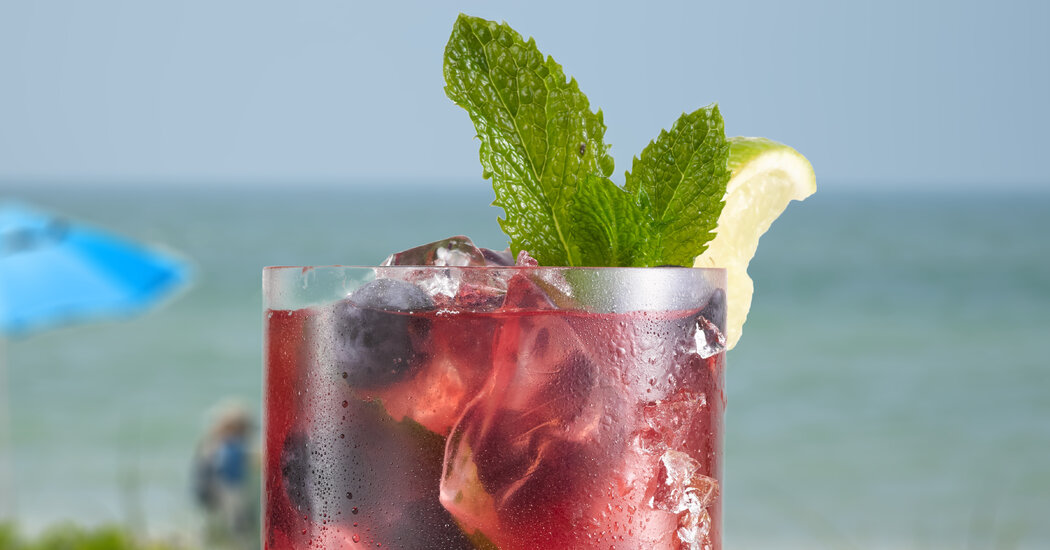
Mint Drink Recipes

Mint is a wonderful flavor to enrich warm-weather coolers. Mint has a great deal to say. This persistent perennial contributes refreshing coolness to food and drink, often with a bittersweet edge and sometimes spiked with notes of pepper. It’s not subtle like some herbs, and makes its presence known in everything from cocktails to candy, regardless of whether the context is savory or sweet. Frankly, it’s hard to overdo its use. Mint is also easy to grow in a window box or garden, allowing for leaves to always be on hand, especially come spring.There are various kinds of mint, but the default option is spearmint, which is less aggressive on the palate than peppermint. If you purchase cut mint at a produce counter or farmer’s market, just be sure it has a good aroma. As for dried mint on the spice rack, it’s often used in Persian cooking, but it’s a ghost of the fresh kind.Mint is a wonderful flavor to enrich warm-weather coolers. Among the best drinks on the cocktail menu at Cheeca Lodge, a resort in the Florida Keys, is a nojito, an alcohol-free mojito that’s so tart-sweet and fragrant you might not miss the rum. Mint also stars in Moroccan-style tea, usually served sugared and hot but also delicious iced, and can add a cool dimension to smoothies. Refreshment is on the way.Blueberry NojitoAdapted from Cheeca Lodge, Islamorada, Fl.Time: 10 minutesYield: 1 serving8 spearmint leaves3 tablespoons lime juice5 tablespoons simple syrup (see note)6 blueberries4 ounces club sodaLime wedge for garnish1. Lightly crush mint leaves and place in a cocktail mixing glass with lime juice and simple syrup. Fill with ice. Cover with shaker can and shake for 10 seconds.2. Pour into a tall glass (a Collins glass) and add blueberries. Top with club soda, garnish with lime wedge and serve.Note: To make simple syrup, simmer equal quantities sugar and water until the sugar dissolves. Keep refrigerated.Iced Moroccan-Style Mint TeaTime: 20 minutes plus 1 hour chillingYield: 4 servings1 tablespoon Chinese full-leaf green tea, preferably gunpowder½ cup spearmint leaves, packed, plus sprigs for garnish¼ cup honey, or more to taste1. Brew tea with 3 cups water in a teapot with a strainer, allowing it to steep 10 minutes.2. Place mint in a small bowl. Add 1 cup boiling water, and muddle the mint. Set aside to steep 5 minutes. Stir in honey. Strain into a 6-cup pitcher.3. Slowly pour brewed tea into the pitcher, holding the teapot at least a foot above the pitcher — this is the essential Moroccan technique to aerate the tea. Taste tea for sweetness and adjust the amount of honey if needed. Refrigerate at least 1 hour.4. Pour tea into ice-filled glasses, garnish with mint and serve.Cucumber-Mint Avocado SmoothieTime: 10 minutesYield: 1 to 2 servings½ cup spearmint leaves, packed1 cup chopped, peeled and seeded cucumber (about one regular cucumber)8 ounces pineapple juice1 ripe but firm Hass avocado, pitted, peeled and diced2 tablespoons lemon juice½ teaspoon ground white pepperPinch of salt1. Place mint, cucumber and pineapple juice in a blender and blend until smooth. Add avocado and blend again. Add lemon juice, pepper and salt. Blend briefly. To use a food processor instead of a blender, first turn on the machine and force the mint down the feed tube. Scrape the sides of the bowl, add the remaining ingredients and process until smooth.2. Pour into 1 or more glasses and serve.

Read more →

Researchers report first instance of COVID-19 triggering recurrent blood clots in arms

Researchers at Rutgers Robert Wood Johnson Medical School are reporting the first instance of COVID-19 triggering a rare recurrence of potentially serious blood clots in people’s arms.
The discovery, published in the journal Viruses, improves the understanding of how inflammation caused by COVID-19 can lead to upper extremity blood clots and how best to treat them. The case study is part of a larger Rutgers study of 1,000 hospitalized patients diagnosed with COVID-19 who were admitted and discharged between March and May 2020.
While there have been reports of lower extremity deep vein thrombosis following COVID-19, this is the first study in which COVID-19 triggered a recurrence in the upper arm of an active 85-year-old man who had a prior diagnosis of upper extremity blood clots.
“The patient presented to his primary care physician with complaints of swelling in his left arm and was sent to the hospital for further management where he was diagnosed with an upper arm blood clot and an asymptomatic COVID-19 infection,” said Payal Parikh, an assistant professor of medicine at Rutgers Robert Wood Johnson Medical School, who led the study along with Martin Blaser, director of the Center for Advanced Biotechnology and Medicine and a professor at Rutgers Robert Wood Johnson Medical School. “While his oxygen levels were not diminished, he was hospitalized for the management of the upper extremity deep vein blood clot. Often, blood clots are preceded by chronic inflammatory conditions exacerbated by immobility, and rarely do they occur in patients who are otherwise healthy and active at baseline.”
Most cases of deep vein thrombosis occur in the legs. Only about 10 percent of blood clots occur in the arms and of those cases only 9 percent recur.
“This is of concern since in 30 percent of these patients, the blood clot can travel to the lung and be possibly fatal,” said Parikh. “Other disabling complications include persistent swelling, pain and arm fatigue.”
The study suggests that clinicians should consider testing for deep vein thrombosis and COVID-19 in patients who present with complaints of unexplained swelling. People who test positive for COVID-19 should seek medical attention if they have declining oxygen levels, shortness of breath and any unexplained swelling.
“If you have been previously diagnosed with deep vein thrombosis or have chronic medical illness that predisposes you to blood clots, you have a higher risk for recurrence of a deep vein thrombus in the setting of a COVID-19 infection and thus, should be vigilant,” said Parikh.
Other Rutgers authors included Yesha H. Parekh, Nicole J. Altomare and Erin McDonnell.
Story Source:
Materials provided by Rutgers University. Original written by Patti Verbanas. Note: Content may be edited for style and length.

Read more →

Eula Hall, One-Woman Relief Agency in Appalachia, Dies at 93

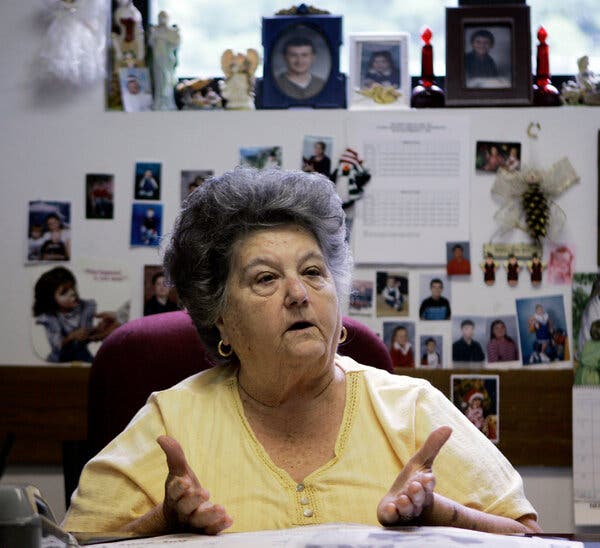
Calling herself a “hillbilly activist,” she started a health care clinic and offered other services in chronically underserved eastern Kentucky.Eula Hall was a tireless health care activist — so tireless that she wasn’t about to let an arsonist slow her down.Among many other things, Mrs. Hall operated the Mud Creek Clinic in eastern Kentucky for mountain people, many of them coal miners and members of their families. One night in 1982, someone looking for drugs set fire to the place. When her patients showed up the next morning to find that the clinic was gone, Mrs. Hall did not miss a beat. She and a doctor set up shop on a picnic table, had a phone installed on a nearby tree and kept their appointments.Her industriousness did not end there. She ran the makeshift clinic for three days before moving it into an elementary school, which was empty for the summer. The Appalachian Regional Commission, a federal development agency, then agreed to put up $320,000 to build a new clinic if she could raise $80,000.She organized charity quilt raffles, radio call-ins and potluck dinners and even staged roadblocks on the highway, where volunteers collected cash in buckets while the police looked the other way. She came up with $120,000. Her new clinic, with state-of-the-art equipment, opened in 1984. It is now called the Eula Hall Health Center.Mrs. Hall died on May 8 at her home in Craynor, Ky. She was 93. Her son Dean Hall said the cause was congestive heart failure.Mrs. Hall grew up in abject poverty and left school after the eighth grade — the high school was too far away for her to walk, and there were no school buses. But she was “exceptionally smart,” her son said in an interview, and she became a one-woman relief agency, transforming a chronically underserved portion of Appalachia through her clinic, which provided much more than health care.A young Eula in the 1930s. She left school after the eighth grade — the high school was too far away for her to walk, and there were no school buses — but she was, her son said, “exceptionally smart.”via Hall familyMrs. Hall, who called herself a “hillbilly activist,” was a social worker, counselor, psychiatrist and driver, picking up people who couldn’t get to the clinic on their own. Out of one room, she distributed free food at the end of each month, when people were running out of food stamps. She gave away clothes collected by churches.Many in the community contributed to her efforts; the Hall Brothers Funeral Home (no relation), for example, gave her a Chevy Suburban so she could deliver medicine to people who lived in roadless areas. She also ran the Mud Creek Water District, which she had helped organize, piping potable water to 800 homes.“Driven by her own experience with poverty,” Representative Hal Rogers, Republican of Kentucky, said in a statement after her death, “Eula dedicated her life to ensuring every person had access to medical care, regardless of their ability to pay for services or prescriptions.” She kept it afloat with grants, donations and, for a time, through a contract with the United Mine Workers of America.Her work brought her national recognition, and politicians liked to align themselves with her. “She had a good working relationship with President Johnson and gave Ted Kennedy a tour,” Mr. Hall said. “She got letters from President Clinton and George H.W. Bush. Jesse Jackson visited the clinic. And she had a good working relationship with Mitch McConnell,” the senior senator from Kentucky who is the Republican leader.A New York Times reporter, Peter T. Kilborn, visited her in 1991. “A slow-talking, soft-talking woman, she is an example of how a person with modest credentials, modest means and a homegrown vision keeps a distressed community afloat,” Mr. Kilborn wrote.“This is black lung country,” he added. “And in this remote coal-mining community of junked terrain, junked jobs and junked bodies, Mrs. Hall is a local legend who cuts red tape and badgers bureaucrats.”Mrs. Hall in 2007. She learned from a young age what it meant to speak truth to power, and she would do it throughout her life.Ed Reinke/Associated PressEula Riley was born on Oct. 29, 1927, in Greasy Creek, a coal town in Pike County, in eastern Kentucky. Her father, Lee, was a farmer and sharecropper. Her mother, Nanny (Keene) Riley, who was Lee’s third wife, had been a schoolteacher before she gave birth to seven children and later raised multiple nieces and nephews.One of Eula’s formative experiences occurred at the outbreak of World War II. She wanted to help the war effort, and when recruiters came to town she lied about her age, saying she was 18 when she was only 14, according to “Mud Creek Medicine” (2013), a biography of Mrs. Hall by Kiran Bhatraju, whose father was a doctor at the clinic.She landed work in a canning and munitions factory outside Rochester, N.Y. But she found the conditions unsafe and unfair and organized some of the workers to strike, unaware of the futility of making demands on the federal government in wartime.She was arrested and charged with instigating a riot. But the booking officer realized she was younger than she claimed and, instead of jailing her, sent her back to Kentucky. It was a trial run at speaking truth to power, which she would do throughout her life.Back home, she found work as a domestic, cooking, cleaning and taking care of children, all without benefit of electricity, plumbing or refrigeration.“Eula found solace in helping neighbors through tough times,” Mr. Bhatraju wrote.She married her first husband, McKinley Hall, a miner, in 1944. He was a heavy drinker who was more interested in making moonshine than mining coal, and he abused her physically, according to her biography. Her neighbors started looking after her, and she in turn started looking after them. She gradually became the local fixer for people in trouble.This included rushing a very pregnant neighbor to several hospitals, all of which turned the woman away because she didn’t have a primary doctor and couldn’t pay. At the last hospital, Mrs. Hall yelled at the intake nurse and threatened to call the local newspaper if the staff members wouldn’t help. They did, the birth went fine, and Mrs. Hall then took the woman’s plight to a meeting of hospital officials, where she unleashed a diatribe at them for allowing people to suffer.She read two influential books that reinforced her courage to speak out: “Night Comes to the Cumberlands: A Biography of a Depressed Area” (1963), by Harry Caudill, and “The Other America” (1962), by Michael Harrington. Both books helped inspire President Lyndon B. Johnson’s war on poverty — and Mrs. Hall.She participated in miners’ strikes throughout the region. She was elected president of the Kentucky Black Lung Association and organized frequent bus trips to Washington, where she lobbied for better benefits for miners and for widow’s benefits. She was often the only woman at the table.While establishing her clinic and trying to improve life in the hollers, Mrs. Hall was continually abused by her husband, according to “Mud Creek Medicine.” Despite a restraining order against him and their eventual divorce, Mr. Bhatraju wrote, he came back one night and beat her face so badly that she had to have plastic surgery, which her neighbors helped pay for.In addition to her son Dean, she is survived by two other sons, Troy and Danny Hall; a daughter, Nanetta Yates; eight grandchildren; 14 great-grandchildren; and five great-great grandchildren. Her second husband, Oliver Bascom Hall (no relation to McKinley Hall), whom she married in 1977, died in 2000.Mrs. Hall worked from home during the Covid pandemic, her son Dean said. Her latest plan was to start a nursing home.

Read more →

Fibre-optics used to take the temperature of Greenland Ice Sheet

Scientists have used fibre-optic sensing to obtain the most detailed measurements of ice properties ever taken on the Greenland Ice Sheet. Their findings will be used to make more accurate models of the future movement of the world’s second-largest ice sheet, as the effects of climate change continue to accelerate.
The research team, led by the University of Cambridge, used a new technique in which laser pulses are transmitted in a fibre-optic cable to obtain highly detailed temperature measurements from the surface of the ice sheet all the way to the base, more than 1000 metres below.
In contrast to previous studies, which measured temperature from separate sensors located tens or even hundreds of metres apart, the new approach allows temperature to be measured along the entire length of a fibre-optic cable installed in a deep borehole. The result is a highly detailed profile of temperature, which controls how fast ice deforms and ultimately how fast the ice sheet flows.
The temperature of ice sheets was thought to vary as a smooth gradient, with the warmest sections on the surface where the sun hits, and at the base where it’s warmed by geothermal energy and friction as the ice sheet grinds across the subglacial landscape toward the ocean.
The new study found instead that the temperature distribution is far more heterogenous, with areas of highly localised deformation warming the ice further. This deformation is concentrated at the boundaries between ice of different ages and types. Although the exact cause of this deformation remains unknown, it may be due to dust in the ice from past volcanic eruptions or large fractures which penetrate several hundred metres below the surface of the ice. The results are reported in the journal Science Advances.
Mass loss from the Greenland Ice Sheet has increased sixfold since the 1980s and is now the single largest contributor to global sea-level rise. Around half of this mass loss is from surface meltwater runoff, while the other half is driven by discharge of ice directly into the ocean by fast flowing glaciers that reach the sea.

Read more →