Machine learning platform identifies activated neurons in real-time

Biomedical engineers at Duke University have developed an automatic process that uses streamlined artificial intelligence (AI) to identify active neurons in videos faster and more accurately than current techniques.
The technology should allow researchers to watch an animal’s brain activity in real time, as they are behaving.
The work appears May 20 in Nature Machine Intelligence.
One of the ways researchers study the activity of neurons in living animals is through a process known as two-photon calcium imaging, which makes active neurons appear as flashes of light. Analyzing these videos, however, typically requires a human circling every burst of intensity they see in a process called segmentation. While this may seem straightforward, these bursts often overlap in spaces where thousands of neurons are imaged simultaneously. Analyzing just a five-minute video this way could take weeks or even months.
“People try to figure out how the brain works by recording the activity of neurons as an animal does a behavior to study the relationship between the two,” said Yiyang Gong, the primary author on the paper. “But manual segmentation creates a big bottleneck and doesn’t allow researchers to see the activation of the neurons in real-time.”
Gong, an assistant professor of biomedical engineering, and Sina Farsiu, a professor of biomedical engineering, previously addressed this bottleneck in a 2019 paper, where they shared the development of a deep-learning platform that maps active neurons as accurately as humans in a fraction of the time. But because videos can be tens of gigabytes, researchers still have to wait hours or days for them to process.

Read more →

AI spots neurons better than human experts

A new combination of optical coherence tomography (OCT), adaptive optics and deep neural networks should enable better diagnosis and monitoring for neuron-damaging eye and brain diseases like glaucoma.
Biomedical engineers at Duke University led a multi-institution consortium to develop the process, which easily and precisely tracks changes in the number and shape of retinal ganglion cells in the eye.
This work appears in a paper published on May 3 in the journal Optica.
The retina of the eye is an extension of the central nervous system. Ganglion cells are one of the primary neurons in the eye that process and send visual information to the brain. In many neurodegenerative diseases like glaucoma, ganglion cells degenerate and disappear, leading to irreversible blindness. Traditionally, researchers use OCT, an imaging technology similar to ultrasound that uses light instead of sound, to peer beneath layers of eye tissue to diagnose and track the progression of glaucoma and other eye diseases.
Although OCT allows researchers to efficiently view the ganglion cell layer in the retina, the technique is only sensitive enough to show the thickness of the cell layer — it can’t reveal individual ganglion cells. This hinders early diagnosis or rapid tracking of the disease progression, as large quantities of ganglion cells need to disappear before physicians can see the changes in thickness.
To remedy this, a recent technology called adaptive optics OCT (AO-OCT) enables imaging sensitive enough to view individual ganglion cells. Adaptive optics is a technology that minimizes the effect of optical aberrations that occur when examining the eye, which are a major limiting factor in achieving high-resolution in OCT imaging.

Read more →

Conservation success leads to new challenges for endangered mountain gorillas

A study published today in Scientific Reports suggests that new health challenges may be emerging as a result of conservationists’ success in pulling mountain gorillas back from the brink of extinction.
The study, the first species-wide survey of parasite infections across the entire range of the mountain gorilla, was conducted by an international science team led by the Institute of Vertebrate Biology, Czech Academy of Sciences; University of Veterinary Sciences Brno, Czech Republic; Gorilla Doctors; and the Dian Fossey Gorilla Fund. The work was conducted in collaboration with the protected area authorities of Rwanda, Uganda and the Democratic Republic of Congo (the Rwanda Development Board, the Uganda Wildlife Authority and l’Institut Congolais pour la Conservation de la Nature, respectively).
All mountain gorillas live in fully protected national parks in Rwanda, Uganda and DR Congo, where the potential for spatial expansion is extremely limited due to dense human communities living nearby. Consequently, as gorilla population densities within the protected areas increase, their susceptibility to infectious diseases may also.
The Virunga mountain gorilla population has not increased uniformly across its habitat, possibly due to varying ecological conditions that are linked to different vegetation types. Additionally, in areas of the Virunga Massif where some of the highest growth rates occurred, the mountain gorillas experienced major changes in their social structure, leading to a threefold increase in group densities.
Clinical gastrointestinal diseases linked to helminths, a type of parasitic worm, have been recorded in mountain gorilla populations in both the Virunga Massif and the Bwindi Impenetrable Forest, and may pose a threat to these endangered animals.
“Gastrointestinal disease from helminths is typically asymptomatic in wild non-human primates,” said first author Dr. Klara Petrzelkova, senior researcher at the Czech Academy of Sciences. “But host and extrinsic factors can alter helminth transmission and host susceptibility. This study has put a spotlight on these factors.”
The study elucidates the drivers and patterns of helminth infections and provides a comprehensive foundation for future assessments of the impact of these parasites on gorilla population dynamics. Strongylid and tapeworm infections were quantified in fecal samples collected from night nests and from individually identified gorillas living in five social groups using fecal egg counts.
“Detecting significant differences in parasite burdens among gorilla family groups is critical information for guiding our decisions in providing life-saving veterinary care for this endangered species,” said Julius Nziza, head veterinarian in Rwanda for Gorilla Doctors, which is a collaboration of the Mountain Gorilla Veterinary Project and the University of California, Davis’ Karen C. Drayer Wildlife Health Center.
Striking geographic differences in strongylid infections were detected, with higher egg counts measured mostly in gorillas living in areas where there has been a higher occurrence of gastrointestinal disease in gorillas. Differences in population growth rates across the Virunga Massif subpopulations and the Bwindi population, differences in the social structure of groups, especially in the Virungas, and differences in habitat characteristics (for example, vegetation types at altitudinal gradients) across the distribution range of mountain gorillas may explain observed differences in strongylid infections.
“The knowledge we acquired from this study will help develop future plans for protecting these endangered primates and their critical habitat” said Felix Ndagijimana of the Dian Fossey Gorilla Fund.
This highly collaborative study points to new challenges emerging as possible “side effects” of the remarkable conservation success of the past few decades. Unraveling the patterns of parasite infections in both gorilla populations, evaluating host exposure to infective parasite stages, and studying susceptibility to infection and its consequences on host health will be an important next step for the continued success and survival of this and other endangered animal species with small, isolated populations.

Read more →

China makes remarkable gains in maternal and child survival rates

China has made remarkable gains in reducing the number of women who die during childbirth and boosting child survival rates over the past 70 years, according to new review.
The Lancet report brought together China’s health research institutions alongside its international colleagues from Australia, the UK and the US to review the country’s progress in maternal, newborn, child and adolescent health and nutrition since 1949.
Murdoch Children’s Research Institute (MCRI) Professor George Patton, one of the international researchers, said over the past 70 years China had made a remarkable transition from where the survival of women and children was the priority to one where children and adolescents now have similar health profiles to young Australians.
“This progress has been driven by rapid socioeconomic development and reducing poverty, the country’s capacity for top-down leadership such as the reorganisation of social health insurance and systematic public health planning,” he said.
“China population policy over the past seven decades, including its previously one-child policy, has profoundly affected its age structure. But its growing focus on the health of children and young people reflects a need to invest in its next generation. This is something that we will increasingly see in other countries across the region including Australia.”
The study found rapid reductions in the maternal death ratio from about 1500 cases per 100,000 births in 1949 to 17.8 cases per 100,000 births in 2019. The infant death rate has lowered from about 200 cases per 1000 births in 1949 to 5.6 cases per 1000 births in 2019.

Read more →

U.K. Study Shows Power of Digital Contact Tracing for COVID-19

Credit: Adapted from Getty Image and Wymant C, Nature, 2021

There’s been much interest in using digital technology to help contain the spread of COVID-19 in our communities. The idea is to make available opt-in smart phone apps that create a log of other apps operating on the phones of nearby participants. If a participant tests positive for COVID-19 and enters the result, the app will then send automatic alerts to those phones—and participants—who recently came into close proximity with them.

In theory, digital tracing would be much faster and more efficient than the challenging detective work involved in traditional contract tracing. But many have wondered how well such an opt-in system would work in practice. A recent paper, published in the journal Nature, shows that a COVID-19 digital tracing app worked quite well in the United Kingdom [1].

The research comes from Christophe Fraser, Oxford University, and his colleagues in the U.K. The team studied the NHS COVID-19 app, the National Health Service’s digital tracing smart phone app for England and Wales. Launched in September 2020, the app has been downloaded onto 21 million devices and used regularly by about half of eligible smart phone users, ages 16 and older. That’s 16.5 million of 33.7 million people, or more than a quarter of the total population of England and Wales.

From the end of September through December 2020, the app sent about 1.7 million exposure notifications. That’s 4.4 on average for every person with COVID-19 who opted-in to the digital tracing app.

The researchers estimate that around 6 percent of app users who received notifications of close contact with a positive case went on to test positive themselves. That’s similar to what’s been observed in traditional contact tracing.

Next, they used two different approaches to construct mathematical and statistical models to determine how likely it was that a notified contact, if infected, would quarantine in a timely manner. Though the two approaches arrived at somewhat different answers, their combined outputs suggest that the app may have stopped anywhere from 200,000 to 900,000 infections in just three months. This means that roughly one case was averted for each COVID-19 case that consented to having their contacts notified through the app.

Of course, these apps are only as good as the total number of people who download and use them faithfully. They estimate that for every 1 percent increase in app users, the number of COVID-19 cases could be reduced by another 1 or 2 percent. While those numbers might sound small, they can be quite significant when one considers the devastating impact that COVID-19 continues to have on the lives and livelihoods of people all around the world.

Reference:

[1] The epidemiological impact of the NHS COVID-19 App. Wymant C, Ferretti L, Tsallis D, Charalambides M, Abeler-Dörner L, Bonsall D, Hinch R, Kendall M, Milsom L, Ayres M, Holmes C, Briers M, Fraser C. Nature. 2021 May 12.

Links:

COVID-19 Research (NIH)

NHS COVID-19 AppChristophe Fraser (Oxford University, UK)

Read more →

Soft X-ray method promises nanocarrier breakthroughs for smart medicine

Before the huge potential of tiny nanocarriers for highly targeted drug delivery and environmental clean-up can be realized, scientists first need to be able to see them.
Currently researchers have to rely on attaching fluorescent dyes or heavy metals to label parts of organic nanocarrier structures for investigation, often changing them in the process. A new technique using chemically-sensitive “soft” X-rays offers a simpler, non-disruptive way of gaining insight into this nano-world.
In a study published by Nature Communications, a research team demonstrates the capability of the X-ray method on a smart drug delivery nanoparticle and a polysoap nanostructure intended to capture crude oil spilled in the ocean.
“We have developed a new technique to look at nanocarrier internal structure, chemistry and environmental behavior without any labeling at all — a new capability that up to now has not been possible,” said Brian Collins, a Washington State University physicist and corresponding author on the study. “Currently, you need fluorescent tags to see inside nanocarriers, but this can modify their structure and behavior, especially if they’re made out of carbon-based materials. With this new technique, we’ve been able to look inside these nanocarriers, analyze their chemical identities and concentrations — and do this all in their fully natural state, including their water environment.”
Organic nanocarriers used for drug delivery are often created out of carbon-based molecules, which either love or loathe water. These so-called hydrophilic and hydrophobic molecules are bonded together and will self-assemble in water with the water-hating part hiding inside a shell of the water-loving segments.
Hydrophobic drugs will also insert themselves into the structure, which is designed to open up and release the drug only in the diseased environment. For instance, nanocarrier technology has the potential to allow chemotherapy that only kills cancer cells without making the patient sick, enabling more effective doses.

Read more →

Harnessing next generation sequencing to detect SARS-CoV-2 and prepare for the next pandemic

Researchers at the Vienna BioCenter designed a testing protocol for SARS-CoV-2 that can process tens of thousands of samples in less than 48 hours. The method, called SARSeq, is published in the journal Nature Communications and could be adapted to many more pathogens.
The COVID-19 pandemic has lasted more than a year and continues to impact our lives tremendously. Although some countries have launched speedy vaccination campaigns, many still await large-scale immunization schemes and effective antiviral therapies — before that happens, the world urgently needs to regain a semblance of normalcy.
One way to bring us closer to that point is massive parallel testing. Molecular tests that detect the presence of SARS-CoV-2 have become the best way to isolate positive cases and contain the spread of the virus. Several methods have come forward, some that detect viral proteins from nasopharyngeal swabs (such as antigen tests), and some that detect the presence of viral RNA from swabs, gargle samples, or saliva samples (such as reverse transcription and polymerase chain reaction tests, or RT-PCR).
Although antigen tests facilitate some logistical aspects of mass testing, their detection power is relatively weak — infected individuals carrying low amounts of virus remain undetected and can continue to infect other people. PCR tests, on the other hand, are more sensitive because they multiply fragments of the viral genome before scanning samples for the virus. However, they rely on the detection of fluorescent labels that tag viral sequences, which means that pooling samples coming from different people makes the process rather inefficient: if a pool tests positive, all the samples within the pool must be tested again individually to identify the source of the fluorescent signal. Too many machines needed, too expensive, too slow.
During the very first lockdown, scientists at the Vienna BioCenter were mulling over the situation: there had to be a way to scale up testing. Ulrich Elling, group leader at the Institute of Molecular Biotechnology of the Austrian Academy of Sciences (IMBA), and Luisa Cochella, group leader at the Research Institute of Molecular Pathology (IMP), decided to channel their frustration into an innovative solution. IMP group leader Alexander Stark and IMBA postdoc Ramesh Yelangandula joined their efforts, and the project took off.
Combining their expertise in genomics, RNA biochemistry and data analysis, they developed a method that could enable large groups to be tested for SARS-CoV-2 with the same sensitivity as regular PCR tests. SARSeq, or ‘Saliva Analysis by RNA sequencing’, achieves high sensitivity, specificity, and the power to process up to 36,000 samples in less than 48 hours. The method is now published in the journal Nature Communications.

Read more →

Moderna Says Its Covid Vaccine Is Effective for 12- to 17-Year-Olds

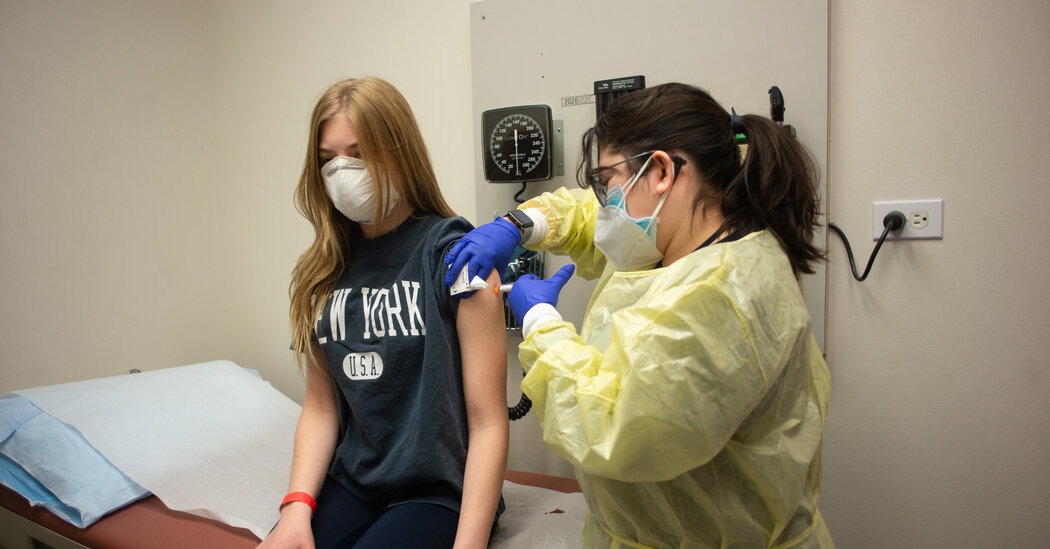
Moderna said on Tuesday that its coronavirus vaccine, authorized only for use in adults, was powerfully effective in 12- to 17-year-olds, and that it planned to apply to the Food and Drug Administration in June for authorization to use the vaccine in adolescents.If approved, its vaccine would become the second Covid-19 vaccine available to U.S. adolescents. Federal regulators authorized the Pfizer-BioNTech vaccine this month for 12- to 15-year-olds.The Pfizer shot was initially authorized for use in people 16 and older, while Moderna’s has been available for those 18 and up.Proof of the vaccines’ efficacy and safety for adolescents is helping school officials and other leaders as they plan for the fall. On Monday, Mayor Bill de Blasio said that all public school students in New York City, the largest school system in the United States, would return to in-person learning in the fall.New York’s move comes as several states have indicated that they will restrict remote learning, including Connecticut, Illinois, Massachusetts and New Jersey.The Moderna results, which the company announced in a statement, are based on a clinical trial that enrolled 3,732 people ages 12 to 17, two-thirds of whom received two vaccine doses. There were no cases of symptomatic Covid-19 in fully vaccinated adolescents, the company reported. That translates to an efficacy of 100 percent, the same figure that Pfizer and BioNTech reported in a trial of their vaccine in 12- to 15-year-olds.“These look like promising results,” said Dr. Kristin Oliver, a pediatrician and vaccine expert at Mount Sinai Hospital in New York. “The more vaccines we have to protect adolescents from Covid, the better.”Moderna also reported that a single dose of its vaccine had 93 percent efficacy against symptomatic disease.“Those cases that did occur between the two doses were mild, which is also a good indicator of protection against disease,” Saskia Popescu, an infectious disease epidemiologist at George Mason University, said in an email.The side effects were consistent with what has been reported in adults: pain at the site of the injection, headache, fatigue, muscle pain and chills. “No significant safety concerns have been identified to date,” the company said.The adolescents in the study will be monitored for a year after their second dose.The results were announced in a news release that did not contain detailed data from the clinical trial. And Dr. Rasmussen said that the vaccines’ efficacy can be trickier to evaluate in children, who are less likely to develop symptomatic disease than adults.Nevertheless, she said, the results are in line with what scientists expected and suggest “that adolescents respond to the vaccine comparably to adults who receive it.”Moderna said it planned to submit the data for publication in a peer-reviewed journal.

Read more →

Scientists Drove Mice to Bond by Zapping Their Brains With Light

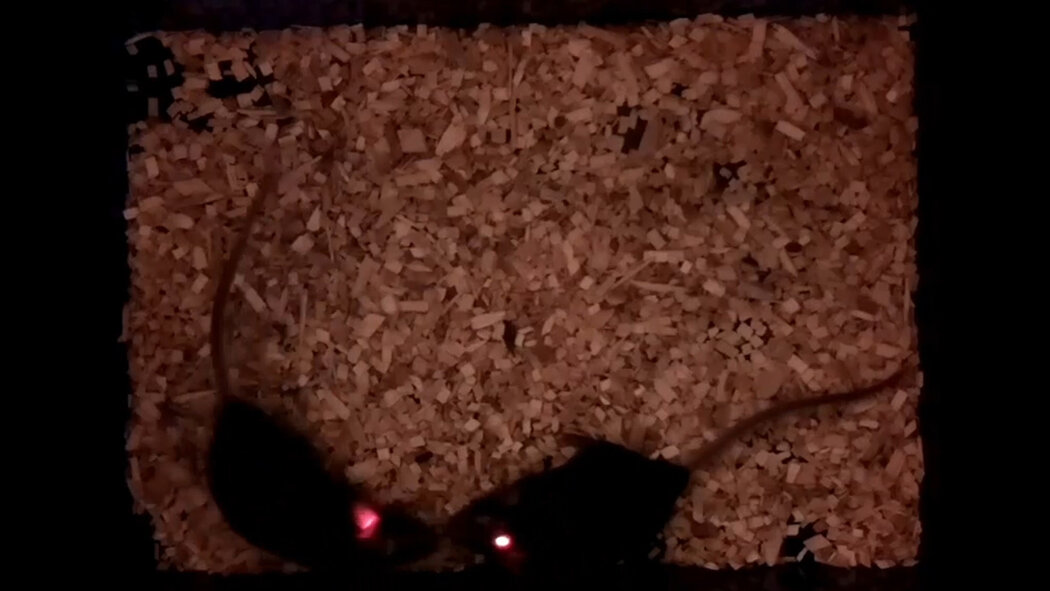
The study, a tour de force in bioengineering, comes after two decades of research on brain-to-brain synchrony in people.Mice with tiny devices implanted in their brains showed a great affinity to one another in an experiment when the signals were synchronized.Northwestern UniversityLate one evening last March, just before the coronavirus pandemic shut down the country, Mingzheng Wu, a graduate student at Northwestern University, plopped two male mice into a cage and watched as they explored their modest new digs: sniffing, digging, fighting a little.With a few clicks on a nearby computer, Mr. Wu then switched on a blue light implanted in the front of each animal’s brain. That light activated a tiny piece of cortex, spurring neurons there to fire.Mr. Wu zapped the two mice at the same time and at the same rapid frequency — putting that portion of their brains quite literally in sync. Within a minute or two, any animus between the two creatures seemed to disappear, and they clung to each other like long-lost friends.“After a few minutes, we saw that those animals actually stayed together, and one animal was grooming the other,” said Mr. Wu, who works in the neurobiology lab of Yevgenia Kozorovitskiy.Mr. Wu and his colleagues then repeated the experiment, but zapped each animal’s cortex at frequencies different from the other’s. This time, the mice displayed far less of an urge to bond.The experiment, published this month in Nature Neuroscience, was made possible thanks to an impressive new wireless technology that allows scientists to observe — and manipulate — the brains of multiple animals as they interact with one another.“The fact that you can implant these miniaturized bits of hardware and turn neurons on and off by light, it’s just mind-blowingly cool,” said Thalia Wheatley, a social neuroscientist at Dartmouth College who was not involved in the work.For centuries, she noted, most neuroscientists have been focused on the individual brain and the function of its various parts. “The whole field is built on looking at a brain in a jar — Where’s memory? Where’s vision?” Dr. Wheatley said. But to understand nuanced social behaviors, which by definition can’t be observed in isolation, “it’s very important that we’re beginning to look at more than one brain at the same time.”The new study also raises questions about a tantalizing phenomenon that has been observed in humans for decades, with potential implications for everything from social anxiety disorders to pandemic isolation: When two people interact, their brain patterns align in intriguing ways.An optogenetic device used a tiny LED light, implanted into the mice’s brains, to activate groups of neurons.Northwestern UniversityFrom ghosts to batsWhen research on so-called interbrain synchrony emerged in the 2000s, some scientists dismissed it as parapsychology, a trippy field of the 1960s and ’70s that claimed to find evidence of ghosts, the afterlife and other wonders of the paranormal.In 1965, for example, two ophthalmologists published in the prestigious journal Science an absurd study of 15 pairs of identical twins. Each twin, with electrodes on their scalps, was placed in a separate room and asked to blink on command. In two of the pairs, the study reported, one twin showed distinctive patterns of brain activity while the sibling was blinking in the other room. The doctors called it “extrasensory induction.”“The paper is hilarious,” said Guillaume Dumas, a social physiologist at the University of Montreal who has studied brain-to-brain synchrony for more than a decade. In that far-out era, he said, “there were many papers with methodologically questionable conclusions claiming to demonstrate interbrain synchronization with two people.”Since then, however, many sound studies have found brain synchronies emerging during human interactions, starting with a paper in 2002 that described how to collect and merge data from two brain scanners simultaneously as two people played a competitive game. This enabled researchers to observe how both brains were activated in response to each other. In a Science paper in 2005, this “hyperscanning” technique showed correlations of activity in two people’s brains when they played a game based on trust.In 2010, Dr. Dumas used scalp electrodes to find that when two people spontaneously imitated each other’s hand movements, their brains showed coupled wave patterns. Importantly, there was no external metronome — like music or a turn-taking game — that spurred the pairs to “tune in” to each other; it happened naturally in the course of their social interaction.“There’s no telepathy or spooky thing at play,” Dr. Dumas said. Interacting with someone else is complicated, requiring an ongoing feedback loop of attention, prediction and reaction. It makes sense that the brain would have some way of mapping both sides of that interaction — your behaviors as well as the other person’s — simultaneously, although scientists still know very little about how that happens.Later research showed that brain synchrony depended on the social relationship of the two people. Strangers and couples seem to have differing levels of brain synchrony, for instance. Another study found greater brain synchrony between a leader and a follower than between two followers.A test of the devices showing synchronized and desynchronized signals.Northwestern UniversityWeizhe Hong didn’t know about any of these human studies when, a few years ago, his team stumbled upon the same sort of synchrony while recording from brain cells of interacting mice. “For about six months, we were very puzzled by it,” said Dr. Hong, a neuroscientist at the University of California Los Angeles. “I just found it too good to be true, too surprising to me.”In most social interactions, after all, the two interacting animals aren’t doing the same thing at the same time; in a conversation, one person may listen while the other talks. So it did not immediately make sense to him why his mice would show such robust neural synchrony. But after digging into the scientific literature, he said, “I realized, oh actually, there’s 15 years of history of studying human synchrony.”In their experiments, Dr. Hong’s team recorded this synchrony in a part of the brain called the medial prefrontal cortex, which had been linked to a range of social behaviors. Certain neurons in each animal’s brain seemed to encode the animal’s own behavior, whereas other cells’ activity correlated with the behavior of the other animal. There was some overlap between the two groups, suggesting that certain cells were responsive to both animals. These findings could be related to previous studies of “mirror neurons,” which fire when an animal acts or when it observes that action in another animal, although that link is far from clear, Dr. Hong said. “Whether they’re mirror neurons or not is definitely something we’re very interested in,” he added.When his team went to the large Society for Neuroscience meeting to share their preliminary mouse data, in 2018, they discovered that scientists from the University of California, Berkeley, had found stunningly similar results in socially interacting bats. The mouse and bat studies were both published in Cell in 2019.“We were amazed and encouraged,” Dr. Hong said. “This hadn’t been done for years, and now somebody else did it in another species.”Manipulating miceWhen the signals were issued at a different frequencies, the mice showed far less interest in one another.Northwestern UniversityThe Northwestern researchers who carried out the new study in Nature Neuroscience were familiar with these human and animal experiments on interbrain synchrony. “It seemed interesting and a little bit strange,” Dr. Kozorovitskiy said. She thought the phenomenon could be further probed with a new tool they had developed to manipulate the brains — and activities — of animals.Their tool involves optogenetics, a technique that uses a tiny LED light, implanted into an animal’s brain, to activate discrete groups of neurons. (A gene that encodes a light-sensitive protein derived from algae is first inserted into the neurons of interest, to make them responsive.)But studying social behavior with optogenetics had historically been difficult because the light source was typically attached to the animal’s head through fiber-optic cables, which interfered with the animal’s normal behavior. So John Rogers, a biomedical engineer at Northwestern who specializes in bioelectronics, developed tiny wireless devices that, once implanted, can be controlled remotely by a nearby computer.“Because everything is implanted, mice can behave naturally and they can socially interact with one another naturally,” Dr. Rogers said. “You don’t have the cables that get tangled up, and there’s no head-mounted gear” for the mice to gnaw on.The tool also allowed researchers to independently control multiple devices — and multiple animals — at once. Dr. Rogers and Dr. Kozorovitskiy began looking for a way to test it. Dr. Kozorovitskiy had seen the Cell study showing that interacting mice produce synchronies in the medial prefrontal cortex. Perhaps, she thought, the optogenetic device could test the converse relationship: If two animals’ brains were synchronized, would the animals become more social?The answer, as Mr. Wu discovered that late night last spring, was yes. The results may suggest that brain synchrony is a causal driver of social behavior — and is more than just a byproduct of brains performing similar activities, or thinking similar thoughts, in a shared environment.But many more experiments will be needed before scientists can reach that conclusion with confidence. Almost all of the data in people, too, is ambiguous: Neural synchrony seems to be tightly linked with behavior, but that doesn’t mean it is the root cause. That uncertainty has led many researchers to wonder whether synchrony really matters.“There is an overwhelming amount of evidence that we synchronize our behaviors and physiological rhythms spontaneously, and when we do so, we cooperate more and like each other better,” said Ivana Konvalinka, a cognitive scientist at the Technical University of Denmark who studies two-person neuroscience. But, she said, “despite working within this field, I am still not entirely convinced that the fact that our brains sync up has any functional significance at all.”And yet, if brain-to-brain synchrony does turn out to be a real driver of social interaction, it could have some meaningful applications for people who struggle with social anxiety disorders, for example. Several noninvasive techniques, like transcranial magnetic stimulation, can stimulate people’s brain activity and are being tested as treatments for a range of psychiatric disorders.“I don’t want to be too prescriptive or fantastical about it, but the human sociality spectrum is very broad, and there’s probably a subset of people who wouldn’t mind if it was possible to influence their level of sociality,” Dr. Kozorovitskiy said, pointing out that many of us already do this every time we meet friends at a bar.Still, she said, “we cannot even start thinking about those kinds of experiments in clinical context until we understand much more about what’s happening.”

Read more →

Ramdev: Doctors furious over yoga guru's insulting Covid remark

SharecloseShare pageCopy linkAbout sharingimage copyrightGetty ImagesDoctors in India have hit out against yoga guru Baba Ramdev over his controversial statements against modern medicine. He recently said that tens of thousands died of Covid after taking modern medicines and mocked patients for trying to get oxygen cylinders.The guru withdrew his statement after the health minister criticised him. But he again took a swipe at modern medicine on Monday for not having a cure for some diseases. Modern medicine, also referred to as allopathy, is the backbone of India’s healthcare systems, but alternative therapies like ayurveda and homoeopathy are also hugely popular. Many gurus like Ramdev have launched successful businesses on the back of selling herbal medicines and products.India also has a Ministry of Ayurveda, Yoga & Naturopathy, Unani, Siddha and Homoeopathy (Ayush) to promotes traditional systems.The Indian Medical Association (IMA), an organisation that represents allopathy doctors in India, has criticised the guru for his “insensitive” remarks in the middle of the pandemic.Doctors the BBC spoke to said such statements from a guru with millions of followers were “irresponsible and demoralising”.What is the controversy?A video of Baba Ramdev mocking patients for trying to find oxygen went viral earlier this month. It’s not clear when he made the statement, but he is heard making references to oxygen shortages in several cities in April and May.”God has given us free oxygen, why don’t we breathe that? How can there be a shortage when God has filled the atmosphere with oxygen? Fools are looking for oxygen cylinders. Just breathe the free oxygen. Why are you complaining about shortage of oxygen and beds and crematoriums?” he said.The statement drew sharp criticism from doctors and families of Covid patients who demanded an apology. Baba Ramdev, Don’t Mock Those Gasping for Oxygen, Show Some Compassion |… https://t.co/Xp7zFwpuEe via @YouTube#ArrestRamdev— Dr.Aninda Debnath (@aninda12987) May 22, 2021
The BBC is not responsible for the content of external sites.View original tweet on TwitterTwo weeks later, another video emerged in which he can be heard criticising doctors and blaming Covid deaths on them.Many doctors took to Twitter to express their anger. Some even demanded his arrest. Such poisonous comments by Baba Ramdev have hurt our sentiments. We are proud of our health workers and the Medical research team working day in and day out to save our lives. Strict action should be taken against @yogrishiramdev#India_Against_Ramdev@NikhilHanda43— Dr Amarinder Singh Malhi MBBS/MD/DM@aiims_newdelhi (@drasmalhi) May 24, 2021
The BBC is not responsible for the content of external sites.View original tweet on TwitterBaba Ramdev is an excellent yoga teacher and practitioner. Yog is a way of life! He should stick to yoga. Please leave medicine practice to us.#COVIDEmergency— Dr Pragya Shukla (@drpragya_shukla) May 24, 2021
The BBC is not responsible for the content of external sites.View original tweet on TwitterAs pressure grew, India’s Health Minister Harsh Vardhan, who is also a doctor, issued a statement, asking the guru to withdraw his remarks.”Allopathy and the doctors attached to it have given new lives to millions of people. It’s very unfortunate for you to say that people died from consuming allopathic medicines. “We should not forget that this battle can only be won through united efforts. In this war, our doctors, nurses and other health workers are risking their lives to save people’s lives. Their dedication towards serving mankind in this crisis is unparalleled and exemplary.” On Sunday, Baba Ramdev withdrew his controversial statement in a tweet. But a day later, he issued a letter asking the IMA why modern medicine had no cure for 25 diseases, including diabetes and hypertension. This has again infuriated doctors. Prominent pulmonologist Dr A Fathahudeen, who has treated thousands of Covid patients, told the BBC that such statements cause lasting damage.”For more than a year, healthcare workers like me have been in a war-like situation. We have saved tens of thousand of lives. It’s really unfortunate, insulting and hurtful to read such statements,” he said.Dr Fathahudeen added that modern medicine had evolved over the years with constant research and studies. “We follow evidence-based practice. At any given time, thousands of researchers are working to come up with cures. Look at the progress we have made in cancer treatment. We have to constantly evolve and learn. It’s hard to trust any branch of medicine that offers absolute cure for every disease.”He also added that such statements create doubts in the mind of people when we need to have trust in medicines and vaccines in the middle of a raging pandemic. Who is Baba Ramdev?He shot to fame because of his televised yoga classes. Millions followed him and he received praise across the world for promoting yoga and healthy living.In 2006, he helped launch Patanjali Ayurveda to sell herbal medicines and a few years later, the business expanded to selling almost everything, from flour, jeans, soaps, oils, biscuits and even cow urine from stores in even the remotest corners of the country. He was successful in translating his popularity into building a business empire. The expansion of his business also coincided with the Hindu nationalist BJP coming to power in 2014.Baba Ramdev has openly supported both the BJP and Prime Minister Narendra Modi and even campaigned for the party. False Covid cure claimsPatanjali Ayurveda launched Coronil – a combination of herbs used in traditional Indian medicine – in June last year and claimed that it could cure Covid. But marketing of the product as Covid medicine had to stop after the government said there was no data to show it worked as a treatment. But it didn’t ban Coronil, and said that it could be sold as an “immunity booster”.Then in February, Patanjali supporters claimed that Coronil had been approved by the WHO – prompting it to issue a denial:.@WHO has not reviewed or certified the effectiveness of any traditional medicine for the treatment #COVID19.— WHO South-East Asia (@WHOSEARO) February 19, 2021
The BBC is not responsible for the content of external sites.View original tweet on TwitterDr Vardhan was criticised for attending an event with Baba Ramdev in February where claims about Coronil as a cure for Covid were repeated.Coronil was also found selling in some stores in the UK which led to the drug regulator there saying no such drug was authorised. In 2018, Baba Ramdev launched a messaging app calling it “a home-grown rival to WhatsApp”, but it was soon removed from app stores amid a furore over security flaws.

Read more →