Black fungus: Is diabetes behind India's high number of cases?

SharecloseShare pageCopy linkAbout sharingimage copyrightGetty ImagesAbout 12,000 cases of a condition known as “black fungus” have been reported in India, mostly in patients recovering from Covid-19.This severe infection is normally very rare and has a mortality rate of about 50%.Some medical experts have suggested India has seen cases growing because of the high prevalence of diabetes.But are other factors at work and what is happening in other countries?Which countries have got black fungus?Prior to the Covid pandemic, at least 38 countries around the world had reported cases of mucormycosis, more commonly known as black fungus.India and Pakistan had the highest rates with around 140 cases per million annually, according to Leading International Fungal Education.image copyrightGetty ImagesDr David Denning at the University of Manchester, an expert on fungal infections, says reported cases of black fungus in India were “masses more than any other part of the world” well before the pandemic.”Mucormycosis is strongly linked with poorly controlled diabetes and there’s a lot of it [diabetes] in India.”What is diabetes and how can you reduce risks?Deadly ‘black fungus’ cases alarm IndiaIn patients recovering from Covid-19, according to a recent research paper looking at cases globally, 94% of those who had the fungal infection also suffered from diabetes. And the majority (71%) of the reported cases of black fungus were from India.Is a link to diabetes seen in other countries?Of the top countries with a high per-capita prevalence of diabetes, others (apart from India) have reported cases of mucormycosis. India’s neighbours, Pakistan and Bangladesh, both have a high prevalence of diabetes in their populations, and have had mucormycosis cases – but not in especially large numbers. In Bangladesh, doctors have been treating one confirmed case of mucormycosis and are awaiting test results for another suspected case.Doctors told the BBC that both patients also had diabetes. Pakistan has also reported five cases of mucormycosis in recent weeks and four had died as of 12 May, according to media reports. Brazil has reported 29 cases so far, but it’s not yet clear how many of these had Covid and/or were diabetic.Russia has also reported “isolated” cases of mucormycosis in Covid patients recently – but it is unclear how many have been detected so far.The US has a very high prevalence of diabetes – 9.3% of the population is estimated to have the condition.It also has the highest number of Covid cases globally. But mucormycosis is very rare – diabetes cases there are largely managed with only 3% going undiagnosed, according to the US Centers for Disease Control. Why might diabetes be a risk factor?Experts say it’s not so much recorded cases of diabetes as the levels of undiagnosed diabetes that are the issue.The IDF estimates that about 57% of those with diabetes in India, Nepal, Bangladesh, Sri Lanka are undiagnosed cases – and nearly all of these are found in India.Pakistan is also estimated to have a high proportion of undiagnosed diabetes.”There’s a lot of uncontrolled diabetes in India because people don’t do regular health check-ups,” says Dr Hariprasath Prakash at the International School of Medicine in Kyrgyzstan.He says a large majority of diabetes cases are “discovered through other health complications” and remain untreated. Poorly controlled diabetes puts you at higher risk of certain infections, including some fungal ones. The Africa region also has a high proportion of undiagnosed diabetes at nearly 60%, but estimates show the incidence of mucormycosis there is low – only 3%. Dr Denning points out that “it could be because [mucormycosis] cases might be going undiagnosed… it is not the easiest thing to diagnose.” Studies have suggested that cases of black fungus go undiagnosed because of the difficulty in tissue sample collection and the lack of sensitivity of the diagnostic tests. What else might cause black fungus?Experts also suggest that the indiscriminate use of steroids for some Covid treatments could be linked to mucormycosis or other fungal infections. Two widely prescribed steroids – dexamethasone and methylprednisolone – are used for Covid patients in India to reduce the inflammation caused by the body’s immune response.image copyrightGetty ImagesHowever, with hospitals and doctors overwhelmed by a growing numbers of cases, there’s evidence that these steroids are being taken without medical supervision. The Indian authorities have recently warned against such self-medication, which can have seriously harmful consequences including, says Dr Denning, such as an increased the risk of developing mucormycosis.A UK-based trial conducted on around 2,000 Covid patients showed that dexamethasone helped reduce mortality in those with a moderate or severe infection, but could potentially be harmful for those with a mild infection. That study showed the efficacy of steroids when used in a hospital setting. However, some states in India are reported to have distributed dexamethasone to the public along with home isolation kits. “It is very clear (through studies) that more steroids is not better,” said Dr Denning. Read more from Reality CheckSend us your questions

Read more →

'I survived breast cancer and then Covid'

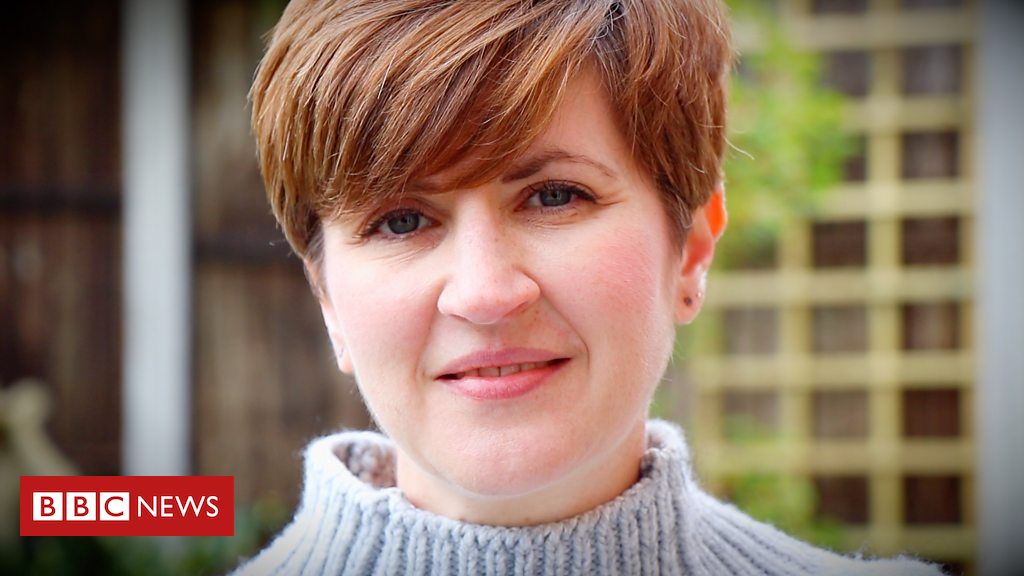
A woman who caught coronavirus after recovering from breast cancer has described how she felt so nervous she struggled to leave her house following her illness.Katy Meldrum, from Market Harborough in Leicestershire, saw her husband hospitalised after he tested positive with Covid-19 on Christmas Day.She and her daughters caught the virus in January.She said joining a breast cancer rehabilitation group helped her to regain her confidence.Video journalist: Chris WaringFollow BBC East Midlands on Facebook, Twitter, or Instagram. Send your story ideas to eastmidsnews@bbc.co.uk.

Read more →

Alzheimer’s Drug Poses a Dilemma for the F.D.A.

The Food and Drug Administration is on the verge of announcing one of its most contentious decisions in years: the fate of an Alzheimer’s drug that could be the first treatment approved after nearly two decades of failed efforts to find ways to curb the debilitating disease.On Monday, the agency will rule on the drug, aducanumab, which aims to slow progression of memory and thinking problems early in the disease. If approved, it would be the first new Alzheimer’s medication since 2003 and the first treatment on the market that attacks the disease process rather than just easing symptoms.It would become a blockbuster drug within several years, analysts predict, costing tens of thousands of dollars annually per patient and bringing a windfall to its manufacturer, Biogen.Patient groups, desperate for treatments, are pushing for approval. But greenlighting the drug would fly in the face of objections from several prominent Alzheimer’s experts and the F.D.A.’s independent advisory committee.In November, the committee voted overwhelmingly against recommending approval, saying data failed to demonstrate persuasively that aducanumab slowed cognitive decline. Three advisory committee members later wrote a point-by-point critique of the evidence. Other scientists, and an independent think tank, say aducanumab hadn’t shown convincing benefit to outweigh its safety risks.“This should not be approved, because substantial evidence of effectiveness hasn’t been shown,” said Dr. Lon Schneider, director of the California Alzheimer’s Disease Center at the University of Southern California and one of many site investigators who helped conduct one of the aducanumab trials. “There’s very little potential that this will address the needs of patients.”Beyond the status of this particular drug, some experts worry approval could lower standards for future drugs — an especially important question at a time when public trust in science is teetering.“I simply don’t see a path for approval because of the absence of evidence that’s been shared to date that this product works, and I think it would set a remarkably dangerous precedent — not only for the field of Alzheimer’s research but also for the broader regulation of prescription drugs in our country,” said Dr. G. Caleb Alexander, an F.D.A. advisory committee member and an internist, epidemiologist and drug safety and effectiveness expert at the Johns Hopkins Bloomberg School of Public Health.About six million people in the United States and roughly 30 million globally have Alzheimer’s, a number expected to double by 2050. Currently, five medications approved in the United States can delay cognitive decline for several months in various Alzheimer’s stages. About two million Americans have mild Alzheimer’s-related impairment, fitting criteria for aducanumab, a monthly intravenous infusion requiring regular imaging to detect potential brain swelling.Biogen officials declined to comment for this article, but in earnings calls, medical meetings and F.D.A. presentations, they have said the evidence shows cognitive benefit. Several Alzheimer’s experts whose experience includes consulting for Biogen wrote recently that aducanumab “achieves the standard of meaningful efficacy with adequate safety.”The Biogen headquarters in Cambridge, Mass.Cody O’Loughlin for The New York TimesDebate centers on two never fully completed Phase 3 trials that contradicted each other. One suggested that a high dose could slightly slow cognitive decline; the other showed no benefit. Biogen says that given the need for Alzheimer’s medications, the single positive trial, plus results from a small safety trial and aducanumab’s ability to reduce a key protein, should justify approval.The F.D.A. typically follows advisory committee recommendations and usually requires two convincing studies for approval, but it has made exceptions, especially for severe diseases that lack treatments.Two other medications now in trials appear more promising than aducanumab, experts say, but it could be three or four years before data would indicate whether they merit approval. Many families say that’s too long to wait.“There’s lots of issues with the data,” acknowledged Maria Carrillo, chief science officer for the Alzheimer’s Association, a patient advocacy group campaigning vigorously for approval. But she said her organization must “weigh the crushing reality of what people live with today” and support giving patients something to try instead of waiting several years for more conclusive positive results.The F.D.A. itself seems divided. In advisory committee presentations, a clinical analyst cited “substantial evidence of effectiveness to support approval.” But an F.D.A. statistician wrote that another trial was needed because “there is no compelling, substantial evidence of treatment effect or disease slowing.”And some experts, like Dr. Ronald Petersen, director of the Mayo Clinic’s Alzheimer’s Disease Research Center in Rochester, Minn., say they’re “on the fence.” He said he’d like to give patients a new option soon but “the data are iffy.”Aducanumab, a monoclonal antibody, targets a protein, amyloid, that clumps into plaques in the brains of Alzheimer’s patients. Many amyloid-reducing drugs failed to slow symptoms in trials, a history that, some experts say, makes it especially important that aducanumab’s data be convincing. If effective, it would support a long-held, unproven theory that attacking amyloid can help if done early enough.Excitement about aducanumab grew after a small early trial to evaluate safety showed amyloid reduction and hinted it might slow cognitive decline. The F.D.A., in a move some experts question, allowed Biogen to skip Phase 2 trials and conduct two Phase 3 trials of about 1,640 patients each.Both trials were stopped early, in March 2019, when an independent data monitoring committee said aducanumab didn’t appear to be working. Consequently, 37 percent of participants never completed the 78-week trials.But that October, Biogen announced it found benefit in one trial after evaluating data from 318 participants who finished before the trials were stopped but after the cutoff point for results the monitoring committee assessed.In that trial, Biogen said, the highest dose slowed cognitive decline by 22 percent, or about four months over 18 months. A lower dose in that trial and high and low doses in the other showed no statistically significant benefit over a placebo.“One study was positive, and one identically performed study was negative,” said Dr. David Knopman, a clinical neurologist at the Mayo Clinic and a site principal investigator for one trial. “I don’t think it takes a Ph.D. in statistics to see that that’s inconclusive.”Dewayne Nash, whose mother and brother died of Alzheimer’s, said that for his personal situation, he favored approval because he might decline before other treatments became available. But scientifically, “they really ought to do the studies” first, he said, adding that otherwise, “you’re giving people a drug that may help, but it may not.”Daniel Dreifuss for The New York TimesDr. Alexander added that Biogen’s interpretation of data using after-the-fact analyses was “like the Texas sharpshooter fallacy — the idea that the sharpshooter shoots up a barn and then goes and draws a bull’s-eye around the cluster of holes that he likes.” By contrast, Dr. Stephen Salloway, who has received research and consulting fees from Biogen but wasn’t paid for being an aducanumab trial site principal investigator, called himself a “passionate” supporter of approval. He considers the evidence sufficient because Alzheimer’s is so disabling.“I understand people’s concerns — the data set has issues, of course,” said Dr. Salloway, director of neurology and the Memory and Aging Program at Butler Hospital in Providence, R.I. “F.D.A. is in a tough spot, obviously.”But he favors giving patients the option. Of his 17 participants in both the safety trial and Phase 3, he said, 10 had remained relatively cognitively stable for several years, while seven had declined at typical rates.“It didn’t work for everybody,” he said, but “it just seemed like there were more people that were steady for longer than I’m used to.” One challenge with assessing impact is that many early-stage patients decline slowly anyway, Dr. Schneider said.Advocates and many patients say delaying deterioration even slightly is meaningful. But some experts say the single trial’s slowing of 0.39 on an 18-point scale rating memory, problem-solving skills and function may be imperceptible to patients’ experience and doesn’t justify approving a drug that floundered in another trial and carries risk of harm.“This product, even in the best of circumstances, would be not terribly effective at all, with significant safety risks,” Dr. Alexander said.The potential harm involves brain swelling or bleeding experienced by about 40 percent of Phase 3 trial participants receiving the high dose. Most were either asymptomatic or had headaches, dizziness or nausea. But such effects prompted 6 percent of high-dose recipients to discontinue. No Phase 3 participants died from the effects, but one safety trial participant did.Henry Magendantz, center, with his wife, Kathy Jellison, who believes his initial years on the drug helped slow his decline enough to allow him to help choose the assisted-living facility where he lives now. “It brought us some time,” she said. Kayana Szymczak for The New York TimesSome trial participants’ views reflect the situation’s complexity.Dewayne Nash, 71, of Santa Barbara, Calif., learned after the trial that he had received 18 months of a placebo, during which his cognitive scores improved — partly, he believes, because he lowered his cholesterol. Dr. Nash, a retired family physician, then received seven months of aducanumab, scaling up to the high dose, hoping it would slow decline, but “I didn’t notice any difference.”Dr. Nash, whose mother and brother died of Alzheimer’s, will resume aducanumab soon through Biogen’s study for previous participants. He said that for his situation, he would like it approved because he expects to decline before other therapies become available and is willing to risk “brain bleeding and stuff.”But scientifically, “I don’t like it when they rush drugs,” he said.“They really ought to do the studies that need to be done” before approval, he added. Otherwise, “you’re giving people a drug that may help, but it may not.”Dr. Salloway said one trial patient whose dementia had remained mild considerably longer than he’d expected was Henry Magendantz, a retired obstetrician-gynecologist in Providence, R.I. Dr. Magendantz, 84, started the safety trial after his wife, Kathy Jellison, noticed him having trouble following steps to assemble furniture.He received a year of placebo, then a year of lower-dose aducanumab, then two years of the high dose before the 2019 halt. During that time, Ms. Jellison said, he was “slipping a bit,” but she believes aducanumab slowed decline enough to allow him to participate in tasks like choosing an assisted-living facility, where he moved in October 2018.“It brought us some time,” she said. Debby Rosencrantz, a trial participant, hopes for Alzheimer’s treatments that work well enough to curb her dementia. “It just feels like there’s a blank in places where there shouldn’t be a blank in my brain,” she said.Kayana Szymczak for The New York TimesAnother issue with evaluating treatments is that some assessment scales, including in the aducanumab trials, involve reports from relatives or caregivers, who might miss subtle symptom progression.“It is squishy stuff,” said Susan Woskie, a professor emeritus in public health at the University of Massachusetts Lowell, whose wife, Debby Rosenkrantz, 68, participated in the trial. “This stuff is really difficult, I think, to compile into metrics that have any validity.”Ms. Rosenkrantz, a former social worker in Cambridge, Mass., said that while receiving roughly eight months of low-dose aducanumab in the trial, “I was really optimistic that there was a drug, and so for me it was like, yes, it’s working.”Since restarting infusions in Biogen’s study for previous participants last September, though, “I haven’t noticed any change,” she said.She experiences short-term memory loss and cannot follow recipes. “It just feels like there’s a blank in places where there shouldn’t be a blank in my brain,” she said.Dr. Woskie said the couple yearns for treatments but that if the F.D.A. told Biogen, “‘No, we don’t fast-track approve you; come back when you have more data,’ that wouldn’t surprise me, and it might make sense.”Some doctors who consider aducanumab’s evidence weak, including Dr. Knopman, say that if it is approved, they would tell patients their reservations but would feel ethically compelled to offer it. Still, Dr. Jason Karlawish, a co-director of the University of Pennsylvania’s Penn Memory Center and a site investigator on Biogen-sponsored studies, said, “Physicians like me, who would be prescribers, are saying, ‘I want an effective drug to prescribe to my patients — but this is not the drug.’”

Read more →

Blinded by Brighter Headlights? It’s Not Your Imagination.

The rising use of light-emitting diodes and the popularity of pickups and S.U.V.s have prompted complaints about the glare and intensity of headlights.The light-emitting diodes in the headlights of oncoming traffic became so intense for Shawn DeVries that he started habitually closing his left eye and keeping his right one open as he drove.

Read more →

Red Knots in Steepest Decline in Years, Threatening the Species’ Survival

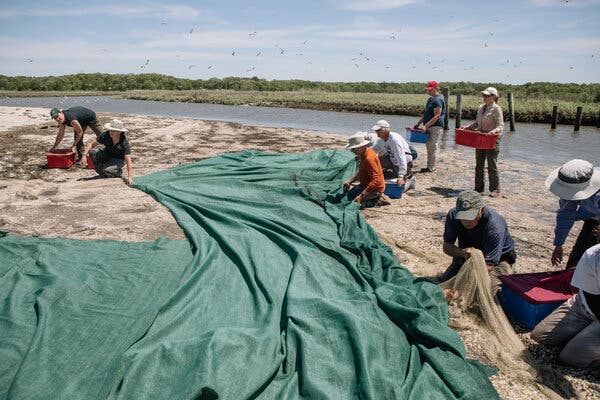
The annual count along the Delaware Bay beaches showed another severe drop in numbers of the shorebird, whose migration is one of the longest avian journeys in the world.The number of red knots visiting the Delaware Bay beaches during this spring’s northbound migration unexpectedly dropped to its lowest since tallies began almost 40 years ago, deepening concern about the shorebird’s survival and dealing a sharp setback to a quarter-century of efforts to save it.Conservationists found fewer than 7,000 of the bird’s rufa subspecies during extensive counts on land, air and water on the New Jersey and Delaware sides of the bay during May. The number is about a third of that found in 2020; less than a quarter of the levels in the previous two years; and the lowest since the early 1980s when the population was about 90,000.Numbers were already well below the level that would ensure the bird’s survival. An earlier decline had been halted by years of conservation efforts, including a ban by New Jersey on the harvesting of horseshoe crabs, whose eggs provide essential food for the birds on their long-distance migrations.The latest drop makes the rufa subspecies — which has been federally listed as threatened since 2014 — even more vulnerable to external shocks, such as bad weather in its Arctic breeding grounds, and pushes it closer to extinction, naturalists say.“I think that we need to think about the red knot as a species that is dying, and we really need emergency measures,” said Joanna Burger, a biologist at Rutgers University. She has studied the knot and other declining shorebirds such as ruddy turnstones and semipalmated sandpipers on the Delaware Bay since the early 1980s.She called for an immediate ban on the harvesting of horseshoe crabs for bait, an industry that is still active in Delaware, Maryland and Virginia, and which is subject to quotas by the Atlantic States Marine Fisheries Commission. Although the regulator does not permit the harvesting of female crabs, naturalists say the rule is not strictly enforced, resulting in the loss of some of the egg-laying animals and a consequent reduction in the birds’ food supply.The new decline also amplified naturalists’ calls for the pharmaceutical industry to stop using LAL, an extract from the crabs’ blood that is deployed to detect bacteria in vaccines, drugs and medical equipment. A synthetic alternative, rFC, is available, and is used by at least one pharmaceutical company, but the industry as a whole has been slow to adopt the new technique, resulting in continued demand for horseshoe crabs in the bay.Volunteers trapped shorebirds for counting and tagging at Reeds Beach in Middle Township, N.J., in 2019.Michelle Gustafson for The New York TimesAlthough the crabs are returned to the ocean after bleeding, conservationists estimate that up to a third die or are unable to breed. Ironically, there were plenty of crab eggs to eat on the bay beaches this year, but a long-term decline in the availability of eggs has severely dented the birds’ population, thinning any cushion that would enable the species to survive natural hazards.Larry Niles, an independent wildlife biologist who has trapped, monitored and counted shorebirds on the bay beaches of New Jersey for the last 25 years, said he had been expecting some decline in this year’s red knot count because of signs of a poor breeding season in 2020, but was shocked by the size of the drop.He said it’s likely traceable to low ocean temperatures in the mid-Atlantic during the 2020 migration. The cold water delayed the spawning of horseshoe crabs until early June, by which time the birds had already left the Delaware Bay in an attempt to complete their migration.Many of the birds, weighing only 4.7 ounces when mature, are already emaciated after flying from Tierra del Fuego in southern Argentina in one of the longest migrations in the avian world. Some fly nonstop for seven days before reaching the Delaware Bay where they typically stay for about two weeks to rest and regain weight.But last year, many were unable to find food on the bay, and so continued northward in an attempt to reach their breeding grounds. Dr. Niles estimated that around 40 percent of last year’s migrants died before they reached the Arctic, simply because they ran out of energy.This year, he also blamed predation by peregrine falcons, whose growing coastal population has been helped by the construction of nesting platforms by New Jersey. They frequently hunt over the bay beaches, making it harder for flocks of shorebirds to feed and put on weight.The best hope for the species to survive lies in a complete ban on harvesting female horseshoe crabs until the crab population recovers, Dr. Niles said.“Rufa knots, especially long-distance red knots, could be lost,” he said in a note to supporters. “We can’t stop bad winds or cold water, but we can expand the population of horseshoe crabs, so birds arriving in most of these conditions find an abundance of horseshoe crab eggs.”

Read more →

Computer simulations of the brain can predict language recovery in stroke survivors

At Boston University, a team of researchers is working to better understand how language and speech is processed in the brain, and how to best rehabilitate people who have lost their ability to communicate due to brain damage caused by a stroke, trauma, or another type of brain injury. This type of language loss is called aphasia, a long-term neurological disorder caused by damage to the part of the brain responsible for language production and processing that impacts over a million people in the US.
“It’s a huge problem,” says Swathi Kiran, director of BU’s Aphasia Research Lab, and College of Health & Rehabilitation Sciences: Sargent College associate dean for research and James and Cecilia Tse Ying Professor in Neurorehabilitation. “It’s something our lab is working to tackle at multiple levels.”
For the last decade, Kiran and her team have studied the brain to see how it changes as people’s language skills improve with speech therapy. More recently, they’ve developed new methods to predict a person’s ability to improve even before they start therapy. In a new paper published in Scientific Reports, Kiran and collaborators at BU and the University of Texas at Austin report they can predict language recovery in Hispanic patients who speak both English and Spanish fluently — a group of aphasia patients particularly at risk of long-term language loss — using sophisticated computer models of the brain. They say the breakthrough could be a game changer for the field of speech therapy and for stroke survivors impacted by aphasia.
“This [paper] uses computational modeling to predict rehabilitation outcomes in a population of neurological disorders that are really underserved,” Kiran says. In the US, Hispanic stroke survivors are nearly two times less likely to be insured than all other racial or ethnic groups, Kiran says, and therefore they experience greater difficulties in accessing language rehabilitation. On top of that, oftentimes speech therapy is only available in one language, even though patients may speak multiple languages at home, making it difficult for clinicians to prioritize which language a patient should receive therapy in.
“This work started with the question, ‘If someone had a stroke in this country and [the patient] speaks two languages, which language should they receive therapy in?'” says Kiran. “Are they more likely to improve if they receive therapy in English? Or in Spanish?”
This first-of-its-kind technology addresses that need by using sophisticated neural network models that simulate the brain of a bilingual person that is language impaired, and their brain’s response to therapy in English and Spanish. The model can then identify the optimal language to target during treatment, and predict the outcome after therapy to forecast how well a person will recover their language skills. They found that the models predicted treatment effects accurately in the treated language, meaning these computational tools could guide healthcare providers to prescribe the best possible rehabilitation plan.
“There is more recognition with the pandemic that people from different populations — whether [those be differences of] race, ethnicity, different disability, socioeconomic status — don’t receive the same level of [healthcare],” says Kiran. “The problem we’re trying to solve here is, for our patients, health disparities at their worst; they are from a population that, the data shows, does not have great access to care, and they have communication problems [due to aphasia].”
As part of this work, the team is examining how recovery in one language impacts recovery of the other — will learning the word “dog” in English lead to a patient recalling the word “perro,” the word for dog in Spanish?
“If you’re bilingual you may go back and forth between languages, and what we’re trying to do [in our lab] is use that as a therapy piece,” says Kiran.
Clinical trials using this technology are already underway, which will soon provide an even clearer picture of how the models can potentially be implemented in hospital and clinical settings.
“We are trying to develop effective therapy programs, but we also try to deal with the patient as a whole,” Kiran says. “This is why we care deeply about these health disparities and the patient’s overall well-being.”
Story Source:
Materials provided by Boston University. Original written by Jessica Colarossi. Note: Content may be edited for style and length.

Read more →

Ganga Stone, Who Gave Sustenance to AIDS Patients, Dies at 79

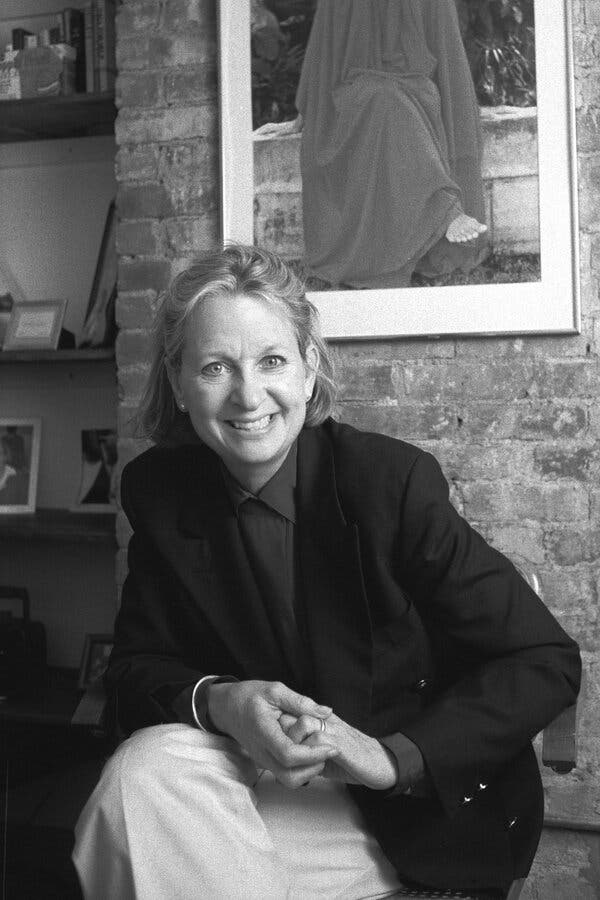
At the height of the AIDS epidemic, she started God’s Love We Deliver, a charity that brought hot meals to people who were too ill to cook.Ganga Stone, who survived on odd jobs in Manhattan until she discovered that her life’s mission was to bring free homemade meals to bedridden AIDS patients on her bicycle, then expanded her volunteer corps of cooks and couriers into an enduring organization called God’s Love We Deliver, died on Wednesday in Saratoga Springs, N.Y. She was 79.Her death, at a health care facility, was confirmed by her daughter, Hedley Stone. She said a cause had not been determined.In 1985, Ms. Stone was selling coffee from a cart on Wall Street and feeling unfulfilled. She came to the conclusion, she later told The New York Times, that “if my life were not useful to God in some direct way, I didn’t see the point in living it.”But while volunteering at the Cabrini Hospice on the Lower East Side, she had an epiphany. She was asked to deliver a bag of groceries to Richard Sale, a 32-year-old actor who was dying of AIDS. When she realized that he was too weak to cook, she rounded up friends, who agreed to bring him hot meals.“I had never seen anyone look that bad,” she recalled. “He was starving, and he was terrified.”Legend has it that when she returned to the neighborhood with food tailored to Mr. Sale’s nutritional needs, she ran into a minister, who recognized her. When she told him what she was doing, he replied: “You’re not just delivering food. You’re delivering God’s love.” (In another version of the origin story, Ms. Stone said she was brushing her teeth when she envisioned “We Deliver” signs on restaurant storefronts.)“It’s the perfect thing — it’s so nonsectarian it’s impossible to misunderstand,” she told The New Yorker in 1991.The fledgling organization — made up of Ms. Stone and a few friends, including her roommate, Jane Ellen Best, with whom she founded the organization — began by delivering meals, home-cooked or donated by restaurants, to mostly gay men who were too incapacitated by a then-mysterious disease to shop or cook. They left their orders on her answering machine.Not everyone wanted a gourmet meal.“One guy wanted a can of Cheez Whiz and saltines,” Ms. Stone said.In the first year alone, 400 of their clients died.As the epidemic spread, the group attracted publicity and support from religious groups, government agencies and celebrities. (Blaine Trump, the former wife of former President Donald J. Trump’s brother Robert, is the vice-chairwoman.)This year, God’s Love We Deliver, with a budget of $23 million, hopes to distribute 2.5 million meals to 10,000 people in the New York metropolitan area who are homebound with various diseases.Ms. Stone in 1993. “I’ve always been attracted to working with dying people,” she said, “since it seems to me that there’s no more important moment in a human life than that one.”Fred R. Conrad/The New York TimesIngrid Hedley Stone was born on Oct. 30, 1941, in Manhattan and raised in Long Island City, Queens, and the Bronx. Her father, M. Hedley Stone, a Jewish immigrant from Warsaw who was born Moishe Stein, was a Marxist who was an organizer for the National Maritime Union and later its treasurer.Her mother, Winifred (Carlson) Stone, a daughter of Norwegian immigrants, was a librarian (she established the library for the National Council on Aging), who suffered from Lou Gehrig’s disease when Ms. Stone was in her mid 20s.A graduate of the Fieldston School in the Bronx, Ms. Stone studied comparative literature at Carleton College in Minnesota and attended Columbia University’s School of General Studies, but never graduated.Her eclectic résumé of jobs included driving a cab and working as a morgue technician. She was hired as a waitress at the Manhattan nightclub Max’s Kansas City, where she met Gerard Hill, an Australian busboy. They married in 1970, but she left the marriage after 13 months, and the couple divorced in 1973.In addition to her daughter, her survivors include a son from that marriage, Clement Hill, and a sister, Dr. Elsa Stone.A self-described radical feminist, Ms. Stone was steered by her yoga instructor to the spiritual teachings of Swami Muktananda. In the mid-1970s, after sending her 6-year-old son to live with his father, she embarked on a two-year retreat to the swami’s ashram in Ganeshpuri, India. She cleaned laundry, washed floors and went nine months without speaking. The swami named her Ganga, for the Ganges River.When she returned to New York, Ms. Stone resumed her composite career until the mid-1980s, when she was inspired to start God’s Love.She retired as the organization’s executive director in 1995 and was succeeded by Kathy Spahn. The next year, Ms. Stone, who taught courses about dying, published “Start the Conversation: The Book About Death You Were Hoping to Find.” She lived in Saratoga Springs.“I’ve always been attracted to working with dying people, since it seems to me that there’s no more important moment in a human life than that one,” Ms. Stone told The New Yorker. “Everything else can go badly, but if that moment goes well, it seems to make a difference, and I wanted to make a difference in those moments for people.”She added, “My sense of my own role in life was to share with people what I know about the deathless nature of the human self, but you can’t comfort people who haven’t eaten.”

Read more →

Teens Are Rarely Hospitalized With Covid, but Cases Can Be Severe

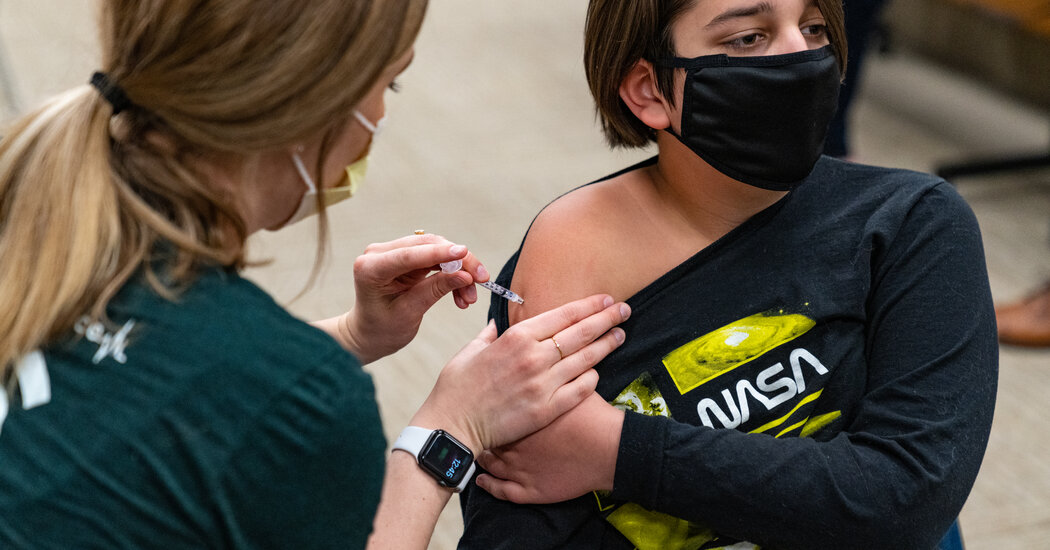
Adolescents were hospitalized with Covid three times as often as with flu, researchers reported. Nearly one-third wound up in I.C.U.s.Since the start of the pandemic, very few adolescents have become ill enough with Covid-19 to be hospitalized. But of those who did, about one-third were admitted to intensive care units, and 5 percent required ventilators, the Centers for Disease Control and Prevention reported on Friday.These findings underscore the importance of vaccinating children against the coronavirus, experts said. “Much of this suffering can be prevented,” Dr. Rochelle P. Walensky, the C.D.C. director, said in a statement. “Vaccination is our way out of this pandemic.”The data also run counter to claims that influenza is more threatening to children than Covid-19, an argument that has been used to reopen schools and to question the value of coronavirus vaccines for children.The number of hospitalizations related to Covid-19 among adolescents in the United States was about three times as high as hospitalizations linked to influenza over three recent flu seasons, the study found.“There’s a very strong case to be made for preventing a disease that causes hospitalizations and deaths, not to mention contributing to community transmission,” said Dr. Yvonne Maldonado, chair of the committee on infectious diseases at the American Academy of Pediatrics.Children have a much lower likelihood overall of becoming severely ill or dying from Covid-19, compared with adults, but the risks are thought to increase with age. According to the most recent data collected by the academy, nearly four million children have tested positive for the coronavirus since the pandemic began, compared with about 30 million cases among adults.Still, about 16,500 children have been hospitalized for Covid-19 since the pandemic began, and at least 322 have died, making it one of the leading causes of death among children, Dr. Maldonado noted.“It sounds like it’s not a lot of deaths,” especially compared with 600,000 dead in the United States, she said. But “it should still be horrifying that 300 to 600 kids are dying because of something that is preventable.”The new C.D.C. report focused on hospitalizations from Covid-19 among children ages 12 to 17. The rate of hospitalizations in that group was a small fraction of that among adults, but still higher than the rate seen in children ages 5 to 11, the report found.The researchers also tallied Covid-19 hospitalizations among children ages 12 to 17 from March 1, 2020, to April 24, 2021. The data came from Covid-Net, a population-based surveillance system in 14 states, covering about 10 percent of Americans.The number of adolescents hospitalized with Covid-19 declined in January and February of this year, but rose again in March and April. From Jan. 1, 2021, to March 31, 204 adolescents were likely hospitalized primarily for Covid-19. Most of the children had at least one underlying medical condition, such as obesity, asthma or a neurological disorder.The rate may have increased this spring because of the more contagious variants of the coronavirus in circulation, as well as school reopenings that brought children together indoors, and looser adherence to precautions like wearing masks and social distancing, the researchers said.None of the children died, but about one-third were admitted to the intensive care unit, and 5 percent required invasive mechanical ventilation. Roughly two-thirds of the hospitalized adolescents were Black or Hispanic, reflecting the greater risk posed by the virus to these populations.The researchers compared the numbers for Covid-19 with hospitalizations for flu in the same age group during the 2017-18, 2018-19 and 2019-20 flu seasons. From Oct. 1, 2020, to April 24, 2021, hospitalization rates for Covid-19 among adolescents were 2.5 to 3 times the rate for seasonal flu in previous years.The data lend urgency to the drive to get more teenagers vaccinated, said Dr. Walensky, who added that she was “deeply concerned” by the numbers.The Food and Drug Administration approved the Pfizer-BioNTech coronavirus vaccine for children ages 12 to 15 on May 12. The vaccine was approved for anyone older in December.Of the 24 million children ages 12 to 17 in the United States, about 6.4 million have received at least one dose of the vaccine, and only 2.3 million are fully vaccinated.

Read more →

Susan Cole, Advocate for Traumatized Children, Dies at 72

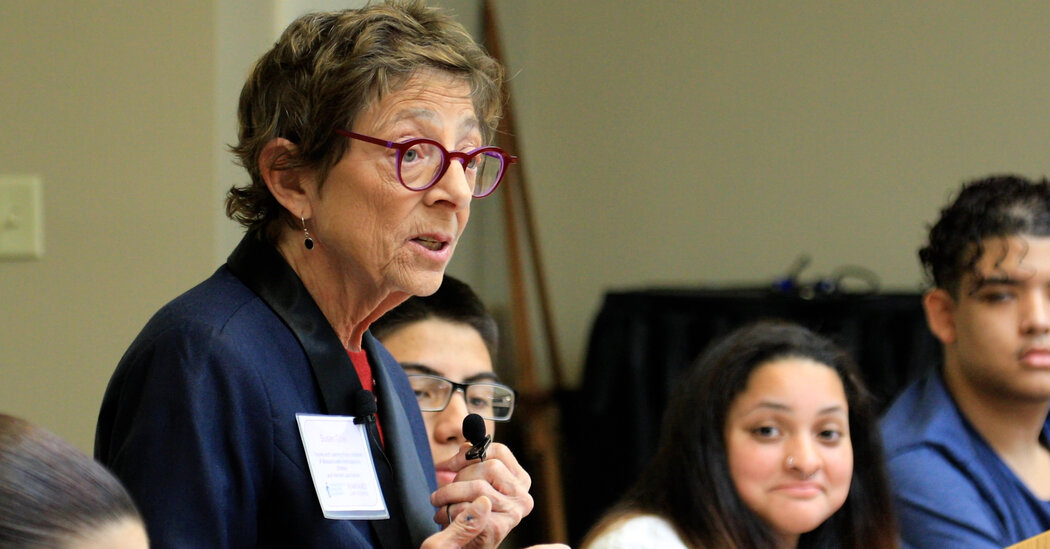
Ms. Cole examined the link between abuse at home and problems in the classroom, and sought to make schools “trauma sensitive.”At a time when many school officials thought the best way to deal with problematic students was to suspend or expel them, Susan F. Cole realized what may seem obvious now: Sometimes, trouble at school meant trauma at home.Beginning in the 1990s, she became a leading voice in the movement to create “trauma-sensitive schools” in her own state, Massachusetts, and elsewhere, ones where the staff understands that abuse, neglect, hunger and other disruptions can affect a student’s in-school experience and behavior.It was a new approach, said Michael Gregory, a clinical professor at Harvard Law School and the managing attorney of the Trauma and Learning Policy Initiative, which Ms. Cole founded in 2004.“When I first started working with Susan in 2004, no one in schools was talking about trauma,” Professor Gregory said in an email. “We were always in rooms where we had to fight to get this conversation on the table. Now, the discussion about trauma’s impacts on learning is happening everywhere — not only in the United States, but increasingly around the globe. She helped fundamentally shift people’s understanding of who children are and what they need from their schools.”Ms. Cole died of metastatic breast cancer on May 1 at her home in Cambridge, Mass., her son, Ben Eisen, said. She was 72.Ms. Cole’s eureka moment came in the mid-1990s, when she was working as a lawyer for Massachusetts Advocates for Children, which seeks to ensure equal access to education for students who have special needs or face racial, economic or other barriers. She was representing a 15-year-old who had been expelled two years earlier after a fight, at a time when Massachusetts had an unforgiving expulsion policy for disciplinary issues.The boy had been removed from his mother’s care for neglect and from his father’s for abuse and was in foster care. Hoping to have him classified for special-education services to get him back in school, Ms. Cole took him to a psychologist.“She said, ‘Drop all of those other diagnoses; this child has post-traumatic stress disorder,’” Ms. Cole recalled in a 2014 interview with the Harvard Law Bulletin.She began a decades-long examination of the links between education and childhood trauma, using her accumulating experience to identify “broader systemic failures that could not be addressed on a case-by-case basis,” as her husband, David Eisen, put it.Constant stress and fear were more than just a distraction for students; their effect, she learned, was neurological, activating the fight-or-flight survival instinct permanently.“The brain,” she explained to The Durango Herald of Colorado in 2016, “cannot focus when it’s not calm. Children have to feel safe enough to learn.”A report Ms. Cole co-wrote in 2005, along with two subsequent volumes, have served as a guide for schools to create supportive environments for students who have experience trauma.In 2005, the Trauma and Learning Policy Initiative, a collaborative effort between Massachusetts Advocates for Children and Harvard Law School, where Ms. Cole was a lecturer, published “Helping Traumatized Children Learn,” an influential report written by Ms. Cole, Professor Gregory and four others.A follow-up volume in 2013 focused more specifically on what schools could do about these issues, and Professor Gregory said a third volume was in the works. In 2014, Massachusetts approved a “safe and supportive schools framework” provision encouraging various trauma-sensitivity measures in schools.“She connected the dots,” Martha Minow, a professor at Harvard University and Harvard Law School and the law school’s former dean, said of Ms. Cole by email. “She showed how teachers and staff equipped with the right information and training can foster vital learning and growth rather than blaming the individual child’s academic and behavior challenges on them.”Susan Frances Cole was born on Aug. 4, 1948, in Chicago. Her father, Harvey, was a bacteriologist who later owned a toy store; her mother, Anne (Tucker) Cole, was a teacher. When Susan was 5 the family moved to Milledgeville, Ga., and later to Macon, Ga.Growing up Jewish in the segregated South impressed upon Ms. Cole “life’s inequities and their consequences,” her son said. After two years at the University of Georgia, she transferred to Boston University, earning a degree in sociology in 1970.Ms. Cole taught at the Fernald State School for people with developmental disabilities in Waltham, Mass., earned a degree in special education at the University of Oregon, and received a law degree from Northeastern University. She worked for the National Labor Relations Board before joining Massachusetts Advocates for Children.Ms. Cole looked not only at the many things — abuse, hunger, neglect, disruption from natural disasters — that might unsettle a child’s life, but also at the cognitive results.“When you come from a home that is very disorganized, sequence and cause and effect can be thrown off,” she told The New York Times in 2013. “This affects language development, memory and concentration. When teachers recognize this, it comes as a relief. Finally the scientists are explaining what they’ve seen firsthand!”But educating teachers and administrators was only the first step.“This is about changing the whole school environment,” she told The Times. “You can have a great trauma-sensitive classroom, but if the child goes into the hall or cafeteria and gets yelled at, he can get retriggered.”Ms. Cole married Mr. Eisen, an architect, in 1986. In addition to him and their son, she is survived by a brother, Stuart.In 2004 Ms. Cole founded the Education Law Clinic at Harvard, where law students learn to represent students who have experienced trauma and to promote relevant legislation.“She empowered not only law students and lawyers but also children themselves as advocates for safe and supportive schools — bringing their voices directly to legislators and other policymakers,” Professor Minow said.One life she changed was that of the 15-year-old she represented in that revelatory 1990s case. Some 20 years later he contacted her, and she sent an email to colleagues asking for suggestions on where she might take him and his new baby to lunch.“He called with gratitude,” that email said in part. “I can’t believe it … pinching myself. I am the one with gratitude. I guess these are the ‘bennies’ of our advocacy work.”

Read more →

Early warning system for COVID-19 gets faster through wastewater detection and tracing

Math continues to be a powerful force against COVID-19.
Its latest contribution is a sophisticated algorithm, using municipal wastewater systems, for determining key locations in the detection and tracing of COVID-19 back to its human source, which may be a newly infected person or a hot spot of infected people. Timing is key, say the researchers who created the algorithm, especially when COVID-19 is getting better at transmitting itself, thanks to emerging variants.
“Being quick is what we want because in the meantime, a newly-infected person can infect others,” said Oded Berman, a professor of operations management and statistics at the University of Toronto’s Rotman School of Management.
This latest research builds on previous work Prof. Berman did with co-investigators Richard Larson of the Massachusetts Institute of Technology and Mehdi Nourinejad of York University. The trio initially developed two algorithms for identifying choice locations in a sewer system for manual COVID-19 testing and subsequent tracing back to the source. Sewers are a rich environment for detecting presence of the disease upstream because genetic remnants of its virus are shed in the stool of infected people up to a week before they may even know they are sick.
The investigators’ new research refines and optimizes that initial work by more accurately modelling a typical municipal sewer system’s treelike network of one-way pipes and manholes, and by speeding up the detection/tracing process through automatic sensors installed in specific manholes, chosen according to an easier-to-use algorithm.
Under this scenario, a sensor sends out an alert any time COVID-19 is detected. Manual testing is then done at a few manholes further upstream, also chosen according to the algorithm, until the final source is located, be that a small group of homes or a “hotspot” neighbourhood. Residents in that much smaller area can then be contacted for further testing and isolation as needed, limiting potential new outbreaks.

Read more →