As Parents Forbid Covid Shots, Defiant Teenagers Seek Ways to Get Them
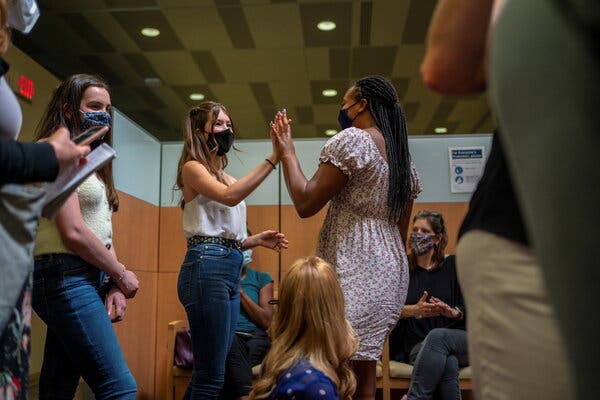
Most medical consent laws require parental permission for minors to get a vaccine. Now some places are easing restrictions for Covid shots while others are proposing new ones.Teenagers keep all sorts of secrets from their parents. Drinking. Sex. Lousy grades.But the secret that Elizabeth, 17, a rising high-school senior from New York City, keeps from hers is new to the buffet of adolescent misdeeds. She doesn’t want her parents to know that she is vaccinated against Covid-19.Her divorced parents have equal say over her health care. Although her mother strongly favors the vaccine, her father angrily opposes it and has threatened to sue her mother if Elizabeth gets the shot. Elizabeth is keeping her secret not only from her father, but also her mother, so her mom can have plausible deniability. (Elizabeth asked to be identified only by her middle name.)The vaccination of children is crucial to achieving broad immunity to the coronavirus and returning to normal school and work routines. But though Covid vaccines have been authorized for children as young as 12, many parents, worried about side effects and frightened by the newness of the shots, have held off from permitting their children to get them.A recent poll by the Kaiser Family Foundation found that only three in 10 parents of children between the ages of 12 through 17 intended to allow them to be vaccinated immediately. Many say they will wait for long-term safety data or the prod of a school mandate. But with many teenagers eager to get shots that they see as unlocking freedoms denied during the pandemic, tensions are crackling in homes in which parents are holding to a hard no.Forty states require parental consent for vaccination of minors under 18, and Nebraska sets the age at 19. (Some states carve out exemptions for teenagers who are homeless or emancipated.) Now, because of the Covid crisis, some states and cities are seeking to relax medical consent rules, emulating statutes that permit minors to obtain the HPV vaccine, which prevents some cancers caused by a sexually transmitted virus.Last fall, the District of Columbia City Council voted to allow children as young as 11 to get recommended vaccines without parental consent. New Jersey and New York Legislatures have bills pending that would allow children as young as 14 to consent to vaccines; Minnesota has one that would permit some children as young as 12 to consent to Covid shots.But other states are marching in the opposite direction. Although South Carolina teenagers can consent at 16, and doctors may perform certain medically necessary procedures without parental permission on even younger children, a bill in the Legislature would explicitly bar providers from giving the Covid shot without parental consent to minors. In Oregon, where the age of medical consent is 15, Linn County ordered county-run clinics to obtain parental consent for the Covid shot for anyone under 18. According to the National Conference of State Legislatures, which has been tracking Covid-related bills, some states, including Tennessee and Alabama, are working on legislation to prevent public schools from requiring Covid shots.The issue of who can consent to the Covid shots is providing fresh context for decades-old legal, ethical and medical questions. When parents disagree, who is the arbiter? At what age are children capable of making their own health decisions and how should that be determined?“Isabella wants it because her friends are getting it, and she doesn’t want to wear a mask,” said Charisse, a mother of a 17-year-old in Delray Beach, Fla., who asked that her last name be withheld for family privacy. Charisse fears the shot could have an effect on her daughter’s reproductive system (a misperception that public health officials have repeatedly refuted).“Isabella said, ‘It’s my body.’ And I said, ‘Well, it’s my body until you’re 18.’”Many teenagers see the Covid shot as unlocking freedoms denied to them during the pandemic. In New Orleans, Ava Kreutziger, 14, left, high-fives Croix Hill, 15, after Croix received her first dose.Kathleen Flynn/ReutersAs both the legal debates and family arguments unfold, those administering the vaccine at pharmacies, clinics and medical offices are trying to determine how to proceed when a young teen shows up for the Covid shot without a parent.“We may be in a legal gray zone with this vaccine,” said Dr. Sterling Ransone Jr., a family physician in Deltaville, Va. In his health system, a parent can send a signed consent form for a teenager to be vaccinated. But because the Covid vaccine is authorized only for emergency use, the health system requires a parent to be present for a patient under 18 to get that shot.Marina, 15, who lives in Palm Beach County, Fla., — and who, like others interviewed, asked not to be fully identified — longs for the shot. But her mother says absolutely not. The subject is not open for discussion.And so Marina has been excluded from the social life she covets. “Five of my friends are throwing a party and they invited me, but then they said, ‘Are you vaccinated?’” she said. “So I can’t go. That hurts.”As the pandemic ebbs, some teen social circles are reconstituting based on vaccination status. “I see my friends posting on social media — ‘Woo-Hoo I got it!’ — and now when I see them, they ask me things like, ‘Where have you been? Are you traveling a lot? Are you sure you don’t have Covid?’ It sucks that I can’t get the shot,” Marina continued.Increasingly, frustrated teenagers are searching for ways to be vaccinated without their parents’ consent. Some have found their way to VaxTeen.org, a vaccine information site run by Kelly Danielpour, a Los Angeles teenager.The site offers guides to state consent laws, links to clinics, resources on straightforward information about Covid-19 and advice for how teenagers can engage parents.“Someone will ask me, ‘I need to be able to consent at a vaccine clinic that is open on weekends and that is on my bus route. Can you help?’” said Ms. Danielpour, 18, who will begin her freshman year at Stanford in the fall.She started the site two years ago, well before Covid. The daughter of a pediatric neurosurgeon and an intellectual property lawyer, she realized that most adolescents know neither the recommended vaccine schedule nor their rights.“We automatically talk about parents but not about teens as having opinions on this issue,” she said. “I decided I needed to help.” Ms. Danielpour wrangled experts to help her understand vaccination and consent laws, and she recruited teenagers to be “VaxTeen ambassadors.”“I want teenagers to be able to say to pediatricians, ‘Hey, I have this right,’” added Ms. Danielpour, who gives talks at conferences to physicians and health department officials.In Los Angeles, Kelly Danielpour, 18, started VaxTeen.org, a site that lists state health care consent laws, vaccine clinic locations and advice for how teens can address vaccine hesitancy in their parents.Jessica Pons for The New York TimesElizabeth surreptitiously got her vaccine at a school pop-up clinic.After administrators at her boarding school informed parents they would be offering Covid shots, her mother gave permission. Her father forbade it. Upset, Elizabeth consulted the school nurse, who said she could not be vaccinated without approval from both. Elizabeth researched state laws, learning that she wasn’t old enough to consent on her own.She showed up anyway. At worst, she figured, the school would just turn her away.Apparently, they took note only of her mother’s consent. Saying nothing, Elizabeth stuck out her arm.Now she is in a pickle. The school is requiring students to be vaccinated for the fall semester and she says her father has begun warring with the administration over the issue. Elizabeth is afraid that if he learns how she was vaccinated, he will be furious and tell the school, which will discipline her for having deceived vaccinators, a stain on her record just as she is applying to college.Gregory D. Zimet, a psychologist and professor of pediatrics at Indiana University School of Medicine, pointed out the irony of an adolescent being legally prevented from making a choice that was strenuously urged by public health officials.Developmentally, he said, adolescents at 14 and even younger are at least as good as adults at weighing the risks of a vaccine. “Which isn’t to say that adults are necessarily great at it,” he added.In many states, young teenagers can make decisions around contraception and sexually transmitted infections, which are, he noted, “in many ways more complex and fraught than getting a vaccine.”Pediatricians say that even parents who have themselves been vaccinated are wary for their children. Dr. Jay Lee, a family physician and chief medical officer of Share Our Selves, a community health network in Orange County, Calif., said parents say they would rather risk their child having Covid than get the new vaccine.“I will validate their concerns,” Dr. Lee said, “but I point out that waiting to see if your child gets sick is not a good strategy. And that no, Covid is not just like the flu.”Elise Yarnell, a senior clinic operations manager for the Portland, Ore., area at Providence, a large health care system, recalled a 16-year-old girl who showed up at a Covid vaccine clinic at her school in Yamhill County.Her parents oppose the vaccine so she wanted to get it without them knowing, which she could do legally because Oregon’s age of consent is 15. She teared up when she saw the shots were not ready before she had to be home, but she was able to return that night without alerting her parents and was vaccinated.“She was extremely relieved,” Ms. Yarnell said.Isabella is the 17-year-old daughter of Charisse, the Delray Beach, Fla., mother who refuses to grant permission for the vaccine. Asked why she wanted the shot, Isabella gave a stream of reasons. “A lot of older people in my family are at risk for catching Covid and possibly dying,” she said. “I want to get the vaccine so I can be around them, and they’ll be safe. And then I can go out with my friends again, and they won’t be so much at risk either.”Although doctors have been trying to instill vaccine confidence in parents as well as patients, there’s not much they can do when parents object. Recently, Dr. Mobeen H. Rathore, a pediatrics professor at the University of Florida medical college in Jacksonville, told a patient whose mother refused consent that she couldn’t get the Covid vaccine until she turned 18, three weeks hence.“She got vaccinated on her birthday,” Dr. Rathore said. “She sent me a message saying that was her birthday gift to herself.”

Read more →

Cryonics During the Pandemic

The business of cryopreservation — storing bodies at deep freeze until well into the future — got a whole lot more complicated during the pandemic.When an 87-year-old Californian man was wheeled into an operating room just outside Phoenix last year, the pandemic was at its height and medical protocols were being upended across the country.A case like his would normally have required 14 or more bags of fluids to be pumped into him, but now that posed a problem.Had he been infected with the coronavirus, tiny aerosol droplets could have escaped and infected staff, so the operating team had adopted new procedures that reduced the effectiveness of the treatment but used fewer liquids.It was an elaborate workaround, especially considering the patient had been declared legally dead more than a day earlier.He had arrived in the operating room of Alcor Life Extension Foundation — located in an industrial park near the airport in Scottsdale, Ariz. — packed in dry ice and ready to be “cryopreserved,” or stored at deep-freeze temperatures, in the hope that one day, perhaps decades or centuries from now, he could be brought back to life.As it turns out, the pandemic that has affected billions of lives around the world has also had an impact on the nonliving.From Moscow to Phoenix and from China to rural Australia, the major players in the business of preserving bodies at extremely low temperatures say the pandemic has brought new stresses to an industry that has long faced skepticism or outright hostility from medical and legal establishments that have dismissed it as quack science or fraud.Jesse Rieser for The New York TimesIn some cases, Covid-19 precautions have limited the parts of the body that can be pumped full of protective chemicals to curb the damage caused by freezing.Alcor, which has been in business since 1972, adopted new rules in its operating room last year that restricted the application of its medical-grade antifreeze solution to only the patient’s brain, leaving everything below the neck unprotected.In the case of the Californian man, things were even worse because he had died without completing the normal legal and financial arrangements with Alcor, so no standby team had been on hand for his death. By the time he arrived at Alcor’s facility, too much time had elapsed for the team to be able to successfully circulate the protective chemicals, even to the brain.That meant that when the patient was eventually sealed into a sleeping bag and stored in a large thermos-like aluminum vat filled with liquid nitrogen that cooled it to minus 320 degrees Fahrenheit (minus 196 Celsius), ice crystals formed between the cells of his body, poking countless holes in cell membranes.Max More, the 57-year-old former president of Alcor, said that the damage caused by this patient’s “straight freeze” could probably still be repaired by future scientists, especially if there was only limited damage to the brain, which is often removed and stored alone in what is known in the trade as a “neuro” preservation.“I have always been signed up for a neuro myself,” Mr. More said. “I don’t really understand why people want to take their broken-down old body with them. In the future it’ll probably be easier to start from scratch and just regenerate the body anyway.”“The important stuff is up here as far as I am concerned,” he said, pointing to his sandy-blond crop of hair in a Zoom call. “That is where my personality lives and my memories are … all the rest is replaceable.”Max More, the former president of Alcor, is himself signed up for a “neuro” preservation: just the brain.Jesse Rieser for The New York TimesCryopreserving in a PandemicSupporters of cryonics insist that death is a process of deterioration rather than simply the moment when the heart stops, and that rapid intervention can act as a “freeze frame” on life, allowing super-chilled preservation to serve as an ambulance to the future.They usually concede there is no guarantee that future science will ever be able to repair and reanimate the body but even a long shot, they argue, is better than the odds of revival — zero — if the body is turned to dust or ashes. If you are starting out dead, they say, you have nothing to lose.During the pandemic, a heightened awareness of mortality seems to have led to more interest in signing up for cryopreservation procedures that can cost north of $200,000.“Perhaps the coronavirus made them realize their life is the most important thing they have and made them want to invest in their own future,” said Valeriya Udalova, 61, the chief executive of KrioRus, which has been operating in Moscow since 2006. Both KrioRus and Alcor said they had received a record number of inquiries in recent months.Jim Yount, who has been a member of the American Cryonics Society for 49 years, said he has often seen health crises or the death of a loved one bring cryonics to the front of people’s minds.“Something like Covid brings home the fact that they are not immortal,” said Mr. Yount, 78, during a recent stint working in the organization’s office in Silicon Valley.The American Cryonics Society has been offering support services since 1969 but stores its 30 cryopreserved members at another organization, the Cryonics Institute, near Detroit.Alcor, the most expensive and best-known cryonics company in the United States, said the pandemic forced it to cancel public tours of its Scottsdale operation. It has also been harder to reach clients quickly, both because of travel restrictions and limitations on hospital access.The operating room at Alcor.Jesse Rieser for The New York TimesBodies are stored at minus 320 degrees Fahrenheit.Jesse Rieser for The New York Times“Usually we like to get to the hospital beforehand if we have advance notice that the patient is terminal so we can talk to the staff, get to know the layout and how we are going to get the patient out of there as quickly as possible,” said Mr. More, who is now a spokesman for Alcor.The company stocked up on chemicals at the start of the pandemic, he said, “but actually we dodged a bullet for our members because fortunately we have had very few deaths.”After averaging about one cryopreservation a month in the 18 months before the pandemic, Alcor has dealt with just six since January 2020, perhaps through a combination of luck and clients heeding the company’s plea to avoid risky activities during the pandemic.KrioRus, the only operator with cryostorage facilities in Europe, was busier than ever and performed nine cryopreservations during the pandemic, according to Ms. Udalova, with some of the deaths caused indirectly by Covid.Visa and quarantine rules threatened delays of up to four weeks to reach their bodies, and the company often had to rely on small local associates to deal with its clients, who died in South Korea, France, Ukraine and Russia.Different problems have emerged in Australia, which has had some of the world’s most restrictive Covid border controls.Southern Cryonics, a start-up, was unable to fly in foreign experts to train its staff, forcing it to delay by a year the planned opening of a facility capable of storing 40 bodies.In China, the newest major player in cryonics, the Yinfeng Life Science Research Institute had to stop public visits to its facility in Jinan, the capital of Shandong province, which has made it difficult to recruit clients.The Cost of Maybe, Possibly Living a Bit LongerMore than 50 years after the first cryopreservations, there are now about 500 people stored in vats around the world, the great majority of them in the United States.The Cryonics Institute, for instance, holds 206 bodies while Alcor has 182 bodies or neuros of people aged 2 to 101. KrioRus has 80, and there are a handful of others held by smaller operations.The Chinese performed their first cryopreservation in 2017, and Yinfeng’s storage vats hold only a dozen clients. But Aaron Drake, the clinical director of the company, who moved to China after seven years as head of Alcor’s medical response team, noted that it took Alcor more than three times as long to reach that number of preserved bodies.Yinfeng has priced itself at the top of the market alongside Alcor, which charges $200,000 to handle a whole body and $80,000 for a neuro.Alcor has the largest number of people who have committed to paying its fees: 1,385, from 34 countries. (Fees are often funded with life insurance policies.) The Chinese have about 60 customers who have committed, while KrioRus said it has recruited 400 customers from 20 countries.A dummy body in the operating room at Alcor showing some of the procedures necessary to pack away real patients.Jesse Rieser for The New York TimesThe Cryonics Institute has a different business model, charging basic fees as low as $28,000 with up to $60,000 more required if the members want transport and rapid “standby” teams like Alcor’s.KrioRus is even cheaper, although it plans to raise its fees when it completes its current move from a corrugated metal warehouse 30 miles northeast of Moscow to a much larger facility being built in Tver, 105 miles northwest of the capital.Alcor’s fees are so much higher mostly because the company places $115,000 of its “whole body” fee in a trust to guarantee future care of its patients, such as topping up the liquid nitrogen. That trust is managed by Morgan Stanley and is now worth more than $15 million.Mr. Drake said he believes the Chinese are “hopeful that they will be able to outpace the American companies and they have built a program capable of doing that.”The strongest reason for believing China will come to dominate the field is not just its population of 1.4 billion people but its domestic attitude toward cryopreservation. Far from being confined to the scientific fringe, Yinfeng is the only cryonics group that is supported by government and embraced by mainstream researchers.“Our little business unit is owned by a private biotech firm that has about 8,000 employees and partners with the government on a lot of projects,” Mr. Drake said. He added that it is “well integrated into the hospital systems and cooperates with research institutes and universities.”The cooperation in China is a long way from the situation in Russia, where Evgeny Alexandrov, the chair of a Commission on Pseudoscience started by the official Academy of Sciences, has derided cryonics as “an exclusively commercial undertaking that does not have any scientific basis.”In the United States, the Society of Cryobiology, whose members study the effects of low temperatures on living tissues for procedures such as IVF, adopted a bylaw in the 1980s threatening to expel any member who took part in “any practice or application of freezing deceased persons in anticipation of their reanimation.”During the pandemic, a heightened awareness of mortality seems to have led to more interest in signing up for cryopreservation procedures.Jesse Rieser for The New York TimesThe society’s past president Arthur Rowe wrote that “believing cryonics could reanimate somebody who has been frozen is like believing you can turn hamburger back into a cow,” while another past president said the work of cadaver freezers edged more toward “fraud than either faith or science.”The society has since eased off, and while its formal position is that cryonics “is an act of speculation or hope, not science,” it no longer bans its members from the practice.Mr. More at Alcor said there is much less hostility from the medical and scientific establishments now than just five years ago, when there was often tension between rapid response teams and hospitals.“It was quite common for us to show up at a hospital, try to explain what we’re doing and they would say, ‘You want to do what? Not in my hospital you don’t!’” he said.“They wouldn’t let us in, so we would have to wait outside and it would slow things down, but that just doesn’t happen anymore. Usually the staff have seen one of the documentaries on science channels and they know something about what we do.”“Typically the reaction now is: ‘Oh, this is fascinating, I’ve never seen this happen.’”Peter Tsolakides, 71, a former marketing executive for Exxon Mobil and a founder of the Australian start-up Southern Cryonics, said he is grateful that people in the country “tend to have an open mind about new things.”“I don’t think any public resistance will crop up here, and the state department of health has been really positive and helpful,” he said.An important difference between Yinfeng and most other operators is the Chinese firm’s greater willingness to preserve people who die without having expressed any interest in being put on ice.This is seen as an important ethical question in the West, given that it could come as quite a shock for somebody to die, perhaps after coming to peace with their fate, only to wake up blinking at the ceiling lights of a laboratory a few decades or centuries later.“We don’t like to take third-party cases,” Mr. More said. “If someone phones up and says, ‘Uncle Fred is dying, I want to get him cryopreserved,’ we need to ask a bunch of questions before we even consider accepting that case.”“Is there any evidence that Uncle Fred actually was interested in being cryopreserved? Because if not, we don’t want to do it. Are there any family members who are really opposed to it? Because we don’t want to have to go into a legal battle.”Mr. Perry doing rounds at Alcor. “We are not talking about letting people live forever,” Mr. More said, “just maybe a few hundred years more, and that’s nothing compared to eternity.”Jesse Rieser for The New York TimesThe litigious bent in the United States make its cryonics firms especially twitchy. There have been many lawsuits by relatives of the deceased trying to stop the expensive cryonics procedure.“You have relatives who think, ‘Now you’re dead, I can overrule your wishes and just take your money,’” Mr. More said. “It’s amazing how often people try to do that.”The relatives of one client failed to inform Alcor that he had died and instead had him embalmed and buried in Europe. When Alcor found out a year later, it confirmed that his contract said he wanted to be cryopreserved no matter how much time had elapsed, so the company got a court order and had the body returned to Arizona.Mr. Drake said that the primacy that Western society places on an individual’s choice in such cases is “a big difference with Eastern culture.”“In China it has to do with what the family members want, just like with medical treatments,” he said. “Let’s say Grandpa gets cancer in China. Many times they won’t even tell Grandpa he has cancer, and the other family members will decide what treatments should be done.”“They might then say, ‘Let’s have Grandpa cryopreserved,’ and it has to be a unanimous agreement of the whole family — but not including the individual who actually goes through it.”Ms. Udalova said the Russian system is somewhere in the middle. Somebody who dies without leaving written proof of their intentions can still be cryopreserved if two witnesses testify that is what the deceased wanted.That may help explain an intriguing difference in the gender balance of people who have been preserved.Men outnumber women by almost three to one among Alcor’s clients, and the imbalance is even greater among people registered with the Australian start-up. But there is an almost even gender balance among KrioRus’s 80 patients.“That is because of a cultural situation here in Russia,” Ms. Udalova said from her office in northern Moscow.“Our clients are mostly men, but they often cryopreserve their mothers first, because Russian men are brought up only by their mothers.”When those male clients eventually join their mothers in the firm’s metal vats, the gender balance will likely tip toward more men, she said.The Chinese, like the Russian men who want to embark on any new life with their mothers by their side, are also baffled by the tendency of American men to plan a solo journey into the future.“In the States you get some family members signing up together, but you get a lot more individuals signing themselves up and the Chinese don’t really get that,” Mr. Drake said.“I think in almost all the cases in China so far, you’ve had a family member signing up their loved one who is near death.”If waking up alone in the future does not appeal, there is a growing trend in the United States of people paying tens or even hundreds of thousands of dollars to cryopreserve their pets, with the cost based largely on the animal’s size.Some people are also cryopreserving their pets.Jesse Rieser for The New York Times“If you want us to do your horse it is going to be different from your cat’s brain,” Mr. More said. “We seem to be having more pets than humans at the moment, and that’s fine with dogs but it’s kind of tricky for cats and anything smaller because of their tiny blood vessels.”“If you want to store a whole big dog, that’s going to cost about as much as a human because of its size. My wife and I had our dog Oscar cryopreserved. He was a large golden doodle, but we basically just had his brain stored to make it more affordable because I’m in neuro anyway.”In Russia, KrioRus’s preserved cats and dogs have been joined by five hamsters, two rabbits and a chinchilla.Life After the Deep FreezeTo smooth the jolt of trying to resume life in the future, most cryonics firms offer to store keepsakes, “memory books” and digital discs to help a revived patient rebuild memories or simply cope with nostalgia. Alcor uses a salt mine in Kansas for storage and is also working on options for putting money into a personal trust to finance a future life.A final edge the Chinese cryonicists enjoy is a more accommodating cultural environment, as Western religions tend to be more focused on the concepts of heaven and hell, and the body and brains being merely the repositories of an eternal soul rather than machines that can be switched off and on.Mr. More, for one, has little patience with religious critics of cryonics. “Where in the Bible or the Quran, or the Bhagavad Gita does it say, ‘Thou shalt not do cryonics’? It doesn’t. In fact in the Bible there are some people living for centuries.”“Remember,” he added, “we are not talking about letting people live forever, just maybe a few hundred years more, and that’s nothing compared to eternity.”When Christians complain that they would not like to be dragged back from heaven by having their body revived, Mr. More reminds them that they may be traveling from the other direction.“Are you sure you’re not going downstairs?” he asks. “And if so, don’t you want an escape clause? Cryonics might give you a chance to come back and do some good works so you will have a better chance of getting to heaven.”Ms. Udalova in Moscow said some of her clients cover their bases by opting for both cryonics and a church funeral.“Russian priests always agree to do the religious service,” she said. “You just have dry ice in the coffin in the church.”

Read more →

Edible Cholera vaccine made of powdered rice proves safe in phase 1 human trials, study suggests

A new vaccine to protect against deadly cholera has been made by grinding up genetically modified grains of rice. The first human trial has shown no obvious side effects and a good immune response. Researchers based at the University of Tokyo and Chiba University have published the peer-reviewed results of the Phase 1 clinical trial of the vaccine, named MucoRice-CTB, in The Lancet Microbe.
Vaccine manufacturing has made enormous strides in 2020, spurred on by COVID-19. However, the complexity of mRNA-based SARS-CoV-2 vaccines has highlighted the value of inoculations that can be made, transported and stored cheaply and without refrigeration.
The MucoRice-CTB vaccine is stable at room temperature from start to finish.
“I’m very optimistic for the future of our MucoRice-CTB vaccine, especially because of the dose escalation results. Participants responded to the vaccine at the low, medium and high doses, with the largest immune response at the highest dose,” said Professor Hiroshi Kiyono, D.D.S., Ph.D., from the Institute of Medical Science at the University of Tokyo who leads the MucoRice project. Dr. Kiyono is also a faculty member at Chiba University in Japan and the University of California, San Diego, in the U.S.
Thirty volunteers received a placebo and groups of 10 volunteers received a total of four doses spaced every two weeks of either 3 milligrams (mg), 6 mg or 18 mg each of the vaccine. Tests two and four months after receiving the last dose revealed that volunteers who responded to the vaccine had IgA and IgG antibodies — two types of proteins the immune system produces to fight infections — specific to cholera toxin B (CTB). Participants who received a higher dose of vaccine were more likely to have CTB-specific antibodies.
An independent review board found no evidence of significant side effects.

Read more →

Potential new CAR-T cell therapy for multiple myeloma

Researchers at Mayo Clinic Cancer Center are studying a potential new chimeric antigen receptor-T cell therapy (CAR-T cell therapy) treatment for multiple myeloma. Their findings were published on Friday, June 24, in The Lancet.
“CAR-T cell therapy is a type of immunotherapy that involves harnessing the power of a person’s own immune system by engineering their T cells to recognize and destroy cancer cells,” says Yi Lin, M.D., a Mayo Clinic hematologist and lead author of the study.
Dr. Lin says the Food and Drug Administration approved idecabtagene vicleucel, the first CAR-T cell treatment for multiple myeloma, in March. “Today, we are working toward another potential CAR-T cell treatment for multiple myeloma,” says Dr. Lin.
Dr. Lin says the CARTITUDE-1 study is a registration-phase 1B/II clinical trial. The trial tested B cell maturation antigen targeting CAR-T cell therapy, ciltacabtagene autoleucel (cilta-cel), in patients with multiple myeloma who received at least three previous lines of therapy with standard drugs, including proteasome inhibitors, immunomodulatory drugs and CD38 antibodies.
“Cilta-cel is made from patient’s own T cells that have been genetically engineered and administered as a single dose infusion,” says Dr. Lin.
Dr. Lin says the overall response rate to the treatment was 97%, while the complete response rate and progression-free survival rates were 67% and 77%, respectively. The overall survival rate was 89%.
“Updates on this study were also recently presented at the American Society of Clinical Oncology annual meeting, which occurred after our paper was accepted for publication in The Lancet,” says Dr. Lin. “Our ASCO presentation showed a continued deepening response for patients receiving this therapy, with a complete response rate of 80%,” says Dr. Lin. “These are very impressive results for myeloma patients who have already gone through many lines of therapy for their disease.”
Going forward, Dr. Lin says it will be important to better understand the clinical features of patients who have experienced durable remissions on this therapy and the mechanisms behind patients who relapse.
“While comparisons cannot be formally made across two separate single-arm studies of ide-cel and cilta-cel, the impressive high response rate and progression-free survival of patients treated with cilta-cel are very exciting,” says Dr. Lin.
She cautions, however, that the potential translation of this research into a clinical individualized therapy will require solving many logistical details, including ensuring that the transition from manufacturing for research to a commercial product remains reliable.
Story Source:
Materials provided by Mayo Clinic. Original written by Joe Dangor. Note: Content may be edited for style and length.

Read more →

Differences in human, mouse brain cells have important implications for disease research

A UCLA-led study comparing brain cells known as astrocytes in humans and mice found that mouse astrocytes are more resilient to oxidative stress, a damaging imbalance that is a mechanism behind many neurological disorders. A lack of oxygen triggers molecular repair mechanisms in these mouse astrocytes but not in human astrocytes. In contrast, inflammation activates immune-response genes in human astrocytes but not mouse astrocytes.
Although the mouse is a ubiquitous laboratory model used in research for neurological diseases, results from studies in mice are not always applicable to humans. In fact, more than 90% of drug candidates that show preclinical promise for neurological disorders ultimately fail when tested in humans, in part due to a dearth of knowledge about the differences in astrocytes and other brain cells between the two species.
Astrocytes are crucial to the development and function of the brain, and they play a substantial role in neurological disorders that, nonetheless, is not fully understood. Injury or infection causes astrocytes to go from a resting to reactive state in which they can aid in repairing the brain but can also increase detrimental inflammation.
The scientists studied developing cells purified from mouse and human brain tissue, as well as cells grown in serum-free cultures from astrocytes selected using an antibody-based method developed by the study’s corresponding author.
This technique was necessary because the conventional method of selecting astrocytes by growing them in serum — a mixture of proteins, hormones, fats and minerals — throws them into a reactive state similar to that caused by infection or injury. With the researchers’ strategy, they were able to examine the astrocytes in a healthy state and in controlled conditions of oxidative stress, lack of oxygen and excessive inflammation.
The findings have implications for basic and translational research into neurological disorders such as Alzheimer’s disease, Parkinson’s disease and amyotrophic lateral sclerosis — conditions whose underlying mechanisms include oxidative stress, lack of oxygen and excessive inflammation.
Because mouse astrocytes stand up to oxidative stress better, the authors suggest that laboratory models for neurodegeneration could be engineered to lessen that resistance, rendering them more human-like. In addition, the mouse astrocyte’s facility for repair in response to lack of oxygen may suggest a new avenue of stroke research. And neuroscientists can take a more informed approach to preclinical studies by accounting for differences in response to inflammation between mouse and human astrocytes, as well as metabolic differences identified in the study.
Story Source:
Materials provided by University of California – Los Angeles Health Sciences. Note: Content may be edited for style and length.

Read more →

Sleeper cells: Newly discovered stem cell resting phase could put brain tumors to sleep

Christopher Plaisier, an assistant professor of biomedical engineering in the Ira A. Fulton Schools of Engineering at Arizona State University, and Samantha O’Connor, a biomedical engineering doctoral student in the Plaisier Lab, are leading research into a new stage of the stem cell life cycle that could be the key to unlocking new methods of brain cancer treatment. Their work was recently published in the research journal Molecular Systems Biology.
“The cell cycle is such a well-studied thing and yet here we are looking at it again for the umpteenth time and a new phase pops out at us,” Plaisier says. “Biology always has new insights to show us, you just have to look.”
The spark for this discovery came through a collaboration with Patrick Paddison, an associate professor at the Fred Hutchinson Cancer Research Center in Seattle, and Dr. Anoop Patel, an assistant professor of neurological surgery at the University of Washington who is also involved in the Fred Hutchinson Cancer Research Center.
Paddison’s team called upon Plaisier to help analyze their brain stem cell data characterized through a process called single-cell RNA sequencing.
“That data turned out to be pretty amazing,” Plaisier says. “It mapped out into this beautiful circular pattern that we identified as all of the different phases of the cell cycle.”
O’Connor developed a new cell cycle classifier tool — called ccAF, or cell cycle ASU/Fred Hutchinson to represent the collaboration between the two institutions — that takes a closer, “high-resolution” look at what’s happening within the growth cycles of stem cells and identifies genes that can be used to track progress through the cell cycle.

Read more →

Study confirms the low likelihood that SARS-CoV-2 on hospital surfaces is infectious

A new study by UC Davis researchers confirms the low likelihood that SARS-CoV-2 contamination on hospital surfaces is infectious. The study, published June 24 in PLOS ONE, is the original report on recovering near-complete SARS-CoV-2 genome sequences directly from surface swabs.
“Our team was the first to demonstrate that SARS-CoV-2 virus sequences could be identified from environmental swabs collected from hospital surfaces,” said Angela Haczku, a respiratory immunologist and senior author on the study.
Changing cleaning and ICU protocols linked to lower SARS-CoV-2 contamination
In April 2020, a COVID-19 outbreak among hospital staff led an interdisciplinary team of UC Davis researchers to investigate if there was virus contamination of frequently used surfaces in patient serving ICU and staff meeting areas at the UC Davis Medical Center. At that time the role of fomites (surfaces) in spreading the disease was highly debated. They collected multiple samples during the first (April 2020) and the second (August 2020) waves of COVID-19 from surfaces and HVAC filters in the hospital.
The researchers analyzed the surface swabs for SARS-CoV-2 RNA and infectivity and assessed the suitability of the RNA for sequencing.
Despite a significant increase in the number of hospital patients with COVID-19 during the second surge, the team found that only 2% of swabs tested positive in August, compared to 11% of samples collected in April.

Read more →

Test distinguishes SARS-CoV-2 from other coronaviruses with 100-percent accuracy

Biomedical engineers at Duke University have demonstrated a tablet-sized device that can reliably detect multiple COVID-19 antibodies and biomarkers simultaneously.
Initial results show the test can distinguish between antibodies produced in response to SARS-CoV-2 and four other coronaviruses with 100% accuracy.
The researchers are now working to see if the easy-to-use, energy-independent, point-of-care device can be used to predict the severity of a COVID-19 infection or a person’s immunity against variants of the virus.
Having also recently shown the same “D4 assay” platform can detect Ebola infections a day earlier than the gold standard polymerase chain reaction (PCR) test, the researchers say the results show how flexible the technology can be to adapt to other current or future diseases.
The results appear online on June 25 in Science Advances.
“The D4 assay took six years to develop, but when the WHO declared the outbreak a pandemic, we began working to compress all of that work into a few months so we could explore how the test could be used as a public health tool,” said Ashutosh Chilkoti, the Alan L. Kaganov Distinguished Professor and Chair of Biomedical Engineering at Duke. “Our test is designed to be both adaptable and truly point-of-care, and this is clearly a scenario when a portable, fast and cost-effective diagnostic would be most useful.”
The technology hinges on a polymer brush coating that acts as a sort of non-stick coating to stop anything but the desired biomarkers from attaching to the test slide when wet. The high effectiveness of this non-stick shield makes the D4 assay incredibly sensitive to even low levels of its targets. The approach allows researchers to print different molecular traps on different areas of the slide to catch multiple biomarkers at once.

Read more →

Having the same nurse for home health visits may prevent rehospitalization for people with dementia

People with dementia receiving home health care visits are less likely to be readmitted to the hospital when there is consistency in nursing staff, according to a new study by researchers at NYU Rory Meyers College of Nursing. The findings are published in the journal Medical Care, a journal of the American Public Health Association.
Home health care — in which health providers, primarily nurses, visit patients’ homes to deliver care — has become a leading source of home- and community-based services caring for people living with dementia. These individuals often have multiple chronic conditions, take several medications, and need assistance with activities of daily living. In 2018, more than 5 million Medicare beneficiaries received home health care, including 1.2 million with Alzheimer’s disease and related dementias.
“Nurses play a pivotal role in providing home health care,” said Chenjuan Ma, PhD, MSN, assistant professor at NYU Meyers and the study’s lead author. “As the population ages and older adults choose to ‘age in place’ as long as possible, the demand for home health care for people with dementia is expected to grow rapidly.”
For most patients, their home health care often begins after being discharged from the hospital. Given that hospital readmissions are a significant quality, safety, and financial issue in healthcare, Ma and her colleagues wanted to understand if having continuity of care, or the same nurse coming to each home visit, could help prevent patients from being readmitted.
Using multiple years of data from a large, not-for-profit home health agency, the researchers studied 23,886 older adults with dementia who received home health care following a hospitalization. They measured continuity of care based on the number of nurses and visits during home health care, with a higher score indicating better continuity of care.
Approximately one in four (24 percent) of the older adults with dementia in the study were rehospitalized from home health care. Infections, respiratory problems, and heart disease were the three most common reasons for being readmitted to the hospital.

Read more →

People across the world favor paid parental leave, study finds

Although the United States is the only wealthy nation that doesn’t guarantee paid leave to mothers or fathers after the arrival of a new child, Americans endorse providing paid time off for parents nearly as much as people from other countries.
About 82% of Americans support paid maternity leave, just slightly less than the 86% who support it in 26 wealthy nations, a new study shows.
Where Americans differ from the rest of the world is that they are less supportive of government funding for paid leaves, prefer shorter leave times and are less supportive of paid leave for fathers.
“We find marked differences in how Americans want paid leave administered compared to the rest of the world — but very similar desires to have leave available,” said Chris Knoester, co-author of the study and associate professor of sociology at The Ohio State University.
Knoester conducted the study with Richard Petts, professor of sociology at Ball State University, and Amelia Li, a doctoral student in sociology at Ohio State. Their findings were published this week in the International Journal of Comparative Sociology.
The researchers analyzed data from 35,488 people who participated in the International Social Survey Programme 2012. The participants come from 26 wealthy countries, including the United States, that belong to the OECD, the Organisation for Economic Co-Operation and Development.

Read more →