Mixing Covid vaccines gives good protection, study suggests
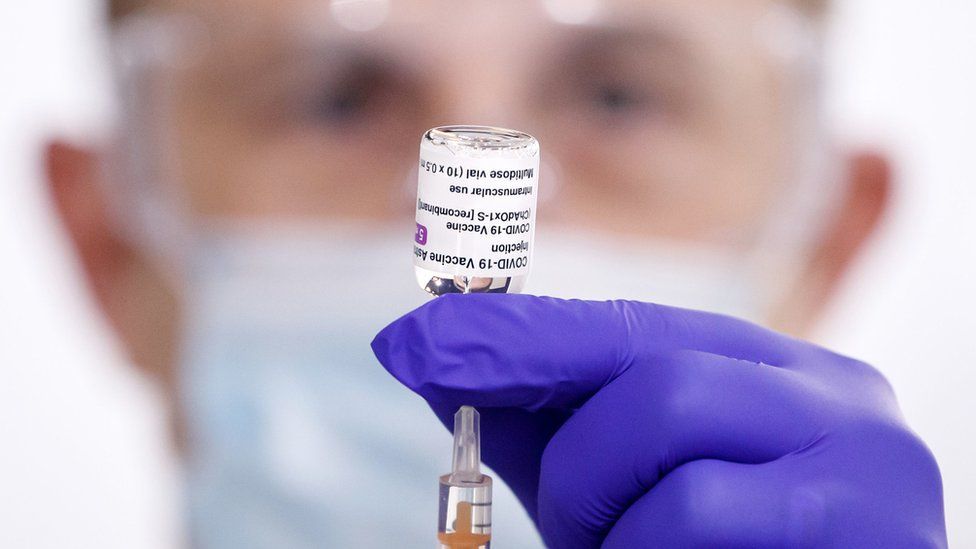
SharecloseShare pageCopy linkAbout sharingimage copyrightPA MediaA mix-and-match approach to Covid vaccines – using different brands of jab for first and second doses – gives good protection against the pandemic virus, a UK study has found.The Com-Cov trial looked at the efficacy of either two doses of Pfizer, two of AstraZeneca, or one of them followed by the other. All combinations worked well, priming the immune system.This knowledge could offer flexibility for vaccine rollout, say experts. The UK’s deputy chief medical officer, Prof Jonathan Van-Tam, said there was no reason to change the current successful same dose vaccine schedules in the UK, however, given vaccines were in good supply and saving lives.But he says it might be something to look at in the future: “Mixing doses could provide us with even greater flexibility for a booster programme, while also supporting countries who have further to go with their vaccine rollouts, and who may be experiencing supply difficulties.”Some countries are already using mixed doses. Spain and Germany are offering the Pfizer or Moderna mRNA vaccines as a second dose to younger people who have already received a first dose of the AstraZeneca vaccine, following concerns about rare but serious blood clots, rather than about efficacy.Rare blood clots – what you need to knowTwo doses are important to give the fullest protection and teach the body to make antibodies and T cells to block and kill Covid. The Com-Cov study, which looked at giving the doses four weeks apart in 850 volunteers aged 50 and above, found:AZ followed by Pfizer induced higher antibodies and T cell responses than Pfizer followed by AZBoth of these mixes induced higher antibodies than two doses of AZThe highest antibody response was seen after two doses of Pfizer, and the highest T cell response from AZ followed by PfizerLead investigator Prof Matthew Snape, from the University of Oxford, said the findings did not undermine the UK policy of giving people the same jab twice: “We already know that both standard schedules are very effective against severe disease and hospitalisations, including against the Delta variant when given at eight to 12 weeks apart.”He said the new results showed mixed dose schedules were also effective, even though the interval of four weeks studied was shorter than the eight to 12-week schedule most commonly used in the UK.”This longer interval is known to result in a better immune response,” he added. Mixed dose trial results for a 12-week jab interval will be available next month.Autumn booster dose?Meanwhile, another pre-print study, which also came out on Monday, suggests a third dose of AZ vaccine, given more than six months after the second, boosts the immune system.But experts say it is too early to know if people will need a booster dose this year ahead of winter. It is unclear yet how much immunity might wane over time. Prof Paul Hunter from the University of East Anglia said: “The big question at present is whether or not we will be being offered booster vaccines in the autumn. With the evidence available from this and other sources, I suspect that will be likely for those most at risk from the virus, either due to age or being clinically vulnerable.”He suggested people who have had a first course of AstraZeneca might be offered the Pfizer vaccine in as a booster rather than a repeat AstraZeneca, while people who had a Pfizer first course may not need an autumn booster, based on the evidence from the Com-Cov trial. Related Internet LinksCom-CoVThe BBC is not responsible for the content of external sites.

Read more →

Newly discovered sperm movement could help diagnose, treat male infertility

Scientists at The University of Toledo discovered new movement in sperm that provides innovative avenues for diagnostics and therapeutic strategies for male infertility.
The research published in Nature Communications finds that the atypical centriole in the sperm neck acts as a transmission system that controls twitching in the head of the sperm, mechanically synchronizing the sperm tail movement to the new head movement.
The centriole has historically been considered a rigid structure that acts like a shock absorber.
“We think the atypical centriole in the sperm’s neck is an evolutionary innovation whose function is to make your sperm move better,” said Dr. Tomer Avidor-Reiss, professor of biological sciences in the UToledo College of Natural Sciences and Mathematics. “Reproductive success depends on the ability of sperm to swim through female reproductive tract barriers while out-competing their rivals to fertilize the egg.”
The study led by Ph.D. candidate Sushil Khanal builds upon the lab’s previous groundbreaking discovery in human sperm that changed the dogma in reproductive biology: A father donates not one but two centrioles through the sperm during fertilization, and the newly discovered sperm structure called the atypical centriole may contribute to infertility, miscarriages and birth defects.
“Together, these studies call for a revision in our understanding of sperm centrioles both in sperm movement and in the early embryo,” Avidor-Reiss said.

Read more →

Trauma patients with COVID-19 face greater risk of complications and death

In addition to sickening and taking the lives of millions across the globe, COVID-19 complicated patient care in a range of less-direct ways, from increased incidence of heart attacks to decreased cancer screenings. The virus also increased the risk of complications and death among trauma patients with injuries from car crashes, falls or other accidents, or who were victims of violent injuries such as gunshots and stabbings, according to new research conducted by the Perelman School of Medicine at the University of Pennsylvania published recently in The Journal of Trauma and Acute Surgery.
The findings reveal that patients in trauma centers across the state of Pennsylvania who also tested positive for COVID-19 had six times higher risk of death than patients with similar injuries without COVID. COVID-positive patients also demonstrated double the likelihood of complications such as venous thromboembolism, renal failure, need for intubation, and unplanned ICU admission, as well as more than five times the odds of pulmonary complications. These risks were even greater in patients over age 65.
“COVID-19 had the largest impact on patients whose injuries were relatively minor, and who we would have otherwise expected to do well,” said lead author Elinore Kaufman, MD, MSHP, an assistant professor in the Division of Trauma, Surgical Critical Care and Emergency Surgery at Penn Medicine. “Our findings underscore how important it is for hospitals to consistently test admitted patients, so that providers can be aware of this additional risk and treat patients with extra care and vigilance.”
Researchers conducted a retrospective study of 15,550 patients admitted to Pennsylvania trauma centers from March 21, 2020, (when Governor Tom Wolf ordered the closure of non-essential businesses statewide) to July 31, 2020. Of the 15,550 patients, 8,170 were tested for the virus, and 219 tested positive. During this period, the researchers evaluated length of stay, complications, and overall outcomes for patients who tested positive for COVID, compared to patients who did not have the virus. They found that rates of testing increased over time, from 34 percent in April 2020 to 56 percent in July. Rates of testing varied substantially across centers, however, with a median of 56.2 percent and a range of 0 percent to 96.4 percent.
“First, we need to investigate how to best care for these high-risk patients, and establish standard protocols to minimize risks,” said senior author Niels D. Martin, MD, chief of Surgical Critical Care and an associate professor in the division of Trauma, Surgical Critical Care and Emergency Surgery. “Second, we need more data on the risks associated with patients who present symptoms of COVID, versus those who are asymptomatic, so we can administer proven treatments appropriately and increase the likelihood of survival with minimal complications.”
This research was supported by the Pennsylvania Trauma Systems Foundation.
Story Source:
Materials provided by University of Pennsylvania School of Medicine. Note: Content may be edited for style and length.

Read more →

Marr on catching Covid after being double vaccinated

SharecloseShare pageCopy linkAbout sharingI can’t be sure – but working back, I’m pretty clear I caught the Delta variant of coronavirus during the summit of G7 (Group of Seven) nations, in Cornwall, probably on Sunday 13 June. It was a long day – up well before 05:00, all the hassle and stress of an outside broadcast, with our guests resolutely refusing to move from their “ring of steel”, then great transport difficulties trying to return to London, meaning I wasn’t home until after 00:00.If I felt shattered on the Monday, it was hardly a surprise – but I carried on with life. By Tuesday, I felt I was coming down with a summer cold – sneezing, sore throat, slight headache. But in the middle of hay-fever season, it seemed nothing at all ominous.I had received two doses of the Pfizer-BioNTech vaccine long before. I wasn’t behaving recklessly – but I did feel pretty much invulnerable.I was wrong. The following day, the Wednesday, I took two lateral-flow swab tests. Both were negative and I carried on with life – errands, shopping, delivering pictures for my art show, in Bermondsey, south-east London.I still felt I had a bad cold. Candidly, had I not been working at Broadcasting House with younger colleagues who had not been vaccinated, I might well have continued and tried to host my next Sunday programme. Instead, I went to take a polymerase-chain-reaction (PCR) swab test at the north London site by the Neasden Temple. At 08:00 the following morning, I received a positive result and was told by NHS Test and Trace I must self-isolate for 10 days from the first symptoms – therefore, in my case, until late on Friday, June 25.I did. Nick Robinson, bless him, stood in at the last minute for me. Two days after my first symptoms, I began to feel seriously ill. I had a high temperature, muscle ache, the shakes, a bad headache and flu-like cold symptoms. I couldn’t smell anything – not aftershave, not coffee, nothing. I kept starting books and giving them up and creeping back to bed again for yet another sleep.I wasn’t even much interested in the news. One day, I would feel better, and the next worse again. I began to worry about “long Covid”.Anyway, for me, all ended happily. I recovered quite quickly and, it seems, completely. By the time my quarantine ended, I felt fine.But I have the following thoughts. First, early symptoms of this new strain, first identified in India, are very, very similar to those of a light cold – and it is incredibly infectious, so beware. Second, if in any doubt at all, take a PCR test. Third, with a positive result, for goodness’ sake self-isolate. You may think you have superpowers because you have been double vaccinated. And, yes, the vaccine seems does protect very well against admission to hospital – at no point did I have difficulty breathing. But that doesn’t mean you can’t become infected. And it doesn’t mean the illness, hiding behind those bland words, “mild and moderate symptoms”, won’t be unpleasant. In short, stay cautious, stay safe.SYMPTOMS: What are they and how to guard against them?TEST AND TRACE: How does it work?VACCINE: When will I get the jab?NEW VARIANTS: How worried should we be?COVID IMMUNITY: Can you catch it twice?

Read more →

Air Pollution’s Invisible Toll on Your Health

Children, pregnant women, the elderly and those with pre-existing heart or lung disease are the most vulnerable.President Biden’s proposed infrastructure plan calling for huge investments in clean energy, public transportation and electric vehicles would do a lot more than slow the rate of devastating climate change. It would also protect the health of every American, especially young children and older adults, by reducing the harmful effects of the invisible air pollutants inhaled year after year.Toxic substances like fine particulate matter, nitrogen dioxide and ozone form primarily when fossil fuels are burned and enter the atmosphere in the exhaust from motor vehicles, heating units and smoke from wildfires. Inhaling such pollutants can cause bodily damage that lasts for years, if not for life, and may even lead to death.Air pollution has long been recognized as a human health hazard, prompting the enactment of the Clean Air Act of 1963. Under the act, air quality standards are periodically revised by the Environmental Protection Agency. Though these standards are meant to be based on up-to-date research, they are subject to economic and political pressures, sometimes at the expense of public health.Those most vulnerable to illness and premature death related to air pollution include children, pregnant women, the elderly and those with pre-existing heart or lung disease. The risk is greatest among people who live in poor neighborhoods, many of which are close to major roads or near industrial sources of pollution.Since 1990, implementation of the amended Clean Air Act has resulted in about a 50 percent decline in emissions of key air pollutants. Still, new research has shown that this decline is not nearly enough to protect the most vulnerable Americans from the damaging effects of air pollution. A 17-year study based on hospital records of more than 63 million older adults has shown that as recently as 2016, as a group they faced serious health risks from breathing levels of pollutants even at pollution levels that are below current national and international guidelines. For example, for each unit increase in long-term exposure to fine particulates in the air (measuring 2.5 micrometers in diameter and invisible to the naked eye), 2,536 people were hospitalized with strokes.The report, published in the journal Circulation, found that years of breathing low concentrations of fine particulate matter, nitrogen dioxide and ozone “poses a significant risk to cardiovascular and respiratory health among the elderly population of the United States.” Translation: Older people are more likely to suffer a heart attack, stroke, atrial fibrillation and pneumonia because of air pollution, resulting in thousands of additional hospital admissions each year.A team of 12 scientists, headed by Mahdieh Danesh Yazdi of the Harvard School of Public Health, based this finding on an analysis of air pollution exposure and health outcomes among all fee-for-service Medicare beneficiaries aged 65 and older who were living in the United States between 2000 and 2016.“Each unit increase in levels of particulate matter, nitrogen dioxide and ozone were associated with thousands of additional admissions” to hospitals each year, the team reported. Dr. Yazdi, a professor and research fellow in environmental health, said in an interview that “hundreds of thousands of lives could be saved” by improving the quality of the air that Americans breathe.With half the population of the United States routinely exposed to levels of common pollutants shown to be hazardous in the study, the researchers concluded that “this issue should be of great concern to clinicians and policymakers alike.”By making the data on air quality and health outcomes publicly available, Dr. Yazdi said, the team hoped to give people “some power” to improve air quality and better protect public health.“Both clinicians and patients can be advocates and apply pressure on public officials to control the sources of pollution and improve the air we all breathe,” she said. “Even if air pollution can’t be fully mitigated, we should strive to do better. Levels of pollutants now considered safe can still have harmful effects and result in bad outcomes.”The team also suggested that people pay attention to the air quality where they live and do their best “to avoid harmful exposure over long periods of time.” There was a dramatic example of such avoidance last summer when wildfires burned across the state of California, forcing many people to remain indoors with windows and doors shut to minimize breathing smoke-related pollutants.According to the Environmental Protection Agency, “Larger and more intense wildfires are creating the potential for greater smoke production and chronic exposures in the United States, particularly in the West.”But while such extreme short-lived instances of severe air pollution are readily identified, so-called background levels remain unnoticed and unmonitored by the general public, leaving millions of people susceptible to the insidious damage they can cause. You can get a reasonable estimate of these levels by checking the Air Quality Index where you live each day, and avoiding prolonged or heavy exertion outdoors on days when air quality is poor.Worldwide, an international research team reported last year, air pollution “accounts for about 9 million deaths per year,” they wrote in Frontiers in Public Health. “The health of susceptible and sensitive individuals can be impacted even on low pollution days.”Particulate matter contains tiny liquid or solid droplets that are easily inhaled. In addition to damaging the lungs, these microscopic particles can enter the bloodstream and have damaging effects elsewhere in the body, including the brain.People over 75 in the new study were more likely to be hospitalized than those closer to 65, and whites faced a greater risk of admission than Black individuals from exposure to particulate matter. But exposure to nitrogen dioxide, also a product of burning fossil fuels, was shown to be more harmful to Blacks than to whites.Furthermore, for the study population overall, the greatest risk of hospital admissions occurred at lower concentrations of air pollutants, the team reported.Other studies have shown that even short-term exposure to low levels of pollutants can be hazardous to people with conditions like chronic obstructive pulmonary disease (COPD) and asthma. Exposure to air pollution early in life can result in respiratory, cardiovascular, mental and perinatal disorders, according to the United States Global Change Research Program.Air pollution can also have indirect health effects because of its close link to climate change. Pollutants increase the amount of sunlight that reaches the earth, warming it, and warmer climates increase the spread and intensity of infectious diseases that can result in epidemicsGiven that most of pollutants we inhale enter the atmosphere from sources like industrial machinery, power plants, combustion engines and cars, efforts to switch from fossil fuels to clean energy sources like wind power and powering vehicles with electric energy instead of gasoline and diesel can have a major impact on air quality.

Read more →

Pfizer and Moderna Vaccines Are Likely to Produce Long-Lasting Immunity, Study Suggests

Close examinations of more than a dozen vaccinated people found that immune cells were still organizing to fight the coronavirus months after inoculation.The vaccines made by Pfizer-BioNTech and Moderna set off a persistent immune reaction in the body that may protect against the coronavirus for years, scientists reported on Monday.The findings add to growing evidence that most people immunized with the mRNA vaccines may not need boosters, so long as the virus and its variants do not evolve much beyond their current forms — which is not guaranteed. People who recovered from Covid-19 before being vaccinated may not need boosters even if the virus does make a significant transformation.“It’s a good sign for how durable our immunity is from this vaccine,” said Ali Ellebedy, an immunologist at Washington University in St. Louis who led the study, which was published in the journal Nature.The study did not consider the coronavirus vaccine made by Johnson & Johnson, but Dr. Ellebedy said he expected the immune response to be less durable than that produced by mRNA vaccines.Dr. Ellebedy and his colleagues reported last month that in people who survived Covid-19, immune cells that recognize the virus lie quiescent in the bone marrow for at least eight months after infection. A study by another team indicated that so-called memory B cells continue to mature and strengthen for at least a year after infection.Based on those findings, researchers suggested that immunity might last for years, possibly a lifetime, in people who were infected with the coronavirus and later vaccinated. But it was unclear whether vaccination alone might have a similarly long-lasting effect.Dr. Ellebedy’s team sought to address that question by looking at the source of memory cells: the lymph nodes, where immune cells train to recognize and fight the virus.After an infection or a vaccination, a specialized structure called the germinal center forms in lymph nodes. This structure is an elite school of sorts for B cells — a boot camp where they become increasingly sophisticated and learn to recognize a diverse set of viral genetic sequences.The broader the range and the longer these cells have to practice, the more likely they are to be able to thwart variants of the virus that may emerge.“Everyone always focuses on the virus evolving — this is showing that the B cells are doing the same thing,” said Marion Pepper, an immunologist at the University of Washington in Seattle. “And it’s going to be protective against ongoing evolution of the virus, which is really encouraging.”After infection with the coronavirus, the germinal center forms in the lungs. But after vaccination, the cells’ education takes place in lymph nodes in the armpits, within reach of researchers.Dr. Ellebedy and his colleagues recruited 41 people — including eight with a history of infection with the virus — who were immunized with two doses of the Pfizer-BioNTech vaccine. From 14 of these people, the team extracted samples from the lymph nodes at three, four, five, seven and 15 weeks after the first dose.That painstaking work makes this a “heroic study,” said Akiko Iwasaki, an immunologist at Yale. “This kind of careful time-course analysis in humans is very difficult to do.”Dr. Ellebedy’s team found that 15 weeks after the first dose of vaccine, the germinal center was still highly active in all 14 of the participants, and that the number of memory cells that recognized the coronavirus had not declined.“The fact that the reactions continued for almost four months after vaccination — that’s a very, very good sign,” Dr. Ellebedy said. Germinal centers typically peak one to two weeks after immunization, and then wane.“Usually by four to six weeks, there’s not much left,” said Deepta Bhattacharya, an immunologist at the University of Arizona. But germinal centers stimulated by the mRNA vaccines are “still going, months into it, and not a lot of decline in most people.”Dr. Bhattacharya noted that most of what scientists know about the persistence of germinal centers is based on animal research. The new study is the first to show what happens in people after vaccination.The results suggest that a vast majority of vaccinated people will be protected over the long term — at least, against the existing coronavirus variants. But older adults, people with weak immune systems and those who take drugs that suppress immunity may need boosters; people who survived Covid-19 and were later immunized may never need them at all.Exactly how long the protection from mRNA vaccines will last is hard to predict. In the absence of variants that sidestep immunity, in theory immunity could last a lifetime, experts said. But the virus is clearly evolving.“Anything that would actually require a booster would be variant-based, not based on waning of immunity,” Dr. Bhattacharya said. “I just don’t see that happening.”People who were infected with the coronavirus and then immunized see a major boost in their antibody levels, most likely because their memory B cells — which produce antibodies — had many months to evolve before vaccination.The good news: A booster vaccine will probably have the same effect as prior infection in immunized people, Dr. Ellebedy said. “If you give them another chance to engage, they will have a massive response,” he said, referring to memory B cells.In terms of bolstering the immune system, vaccination is “probably better” than recovering from the actual infection, he said. Other studies have suggested that the repertoire of memory B cells produced after vaccination is more diverse than that generated by infection, suggesting that the vaccines will protect better against variants than natural immunity alone.Dr. Ellebedy said the results also suggested that these signs of persistent immune reaction might be caused by mRNA vaccines alone, as opposed to those made by more traditional means, like Johnson & Johnson’s.But that is an unfair comparison, because the Johnson & Johnson vaccine is given as a single dose, Dr. Iwasaki said: “If the J & J had a booster, maybe it will induce this same kind of response.”

Read more →

Outbreaks emerge across Australia in 'new phase' of pandemic

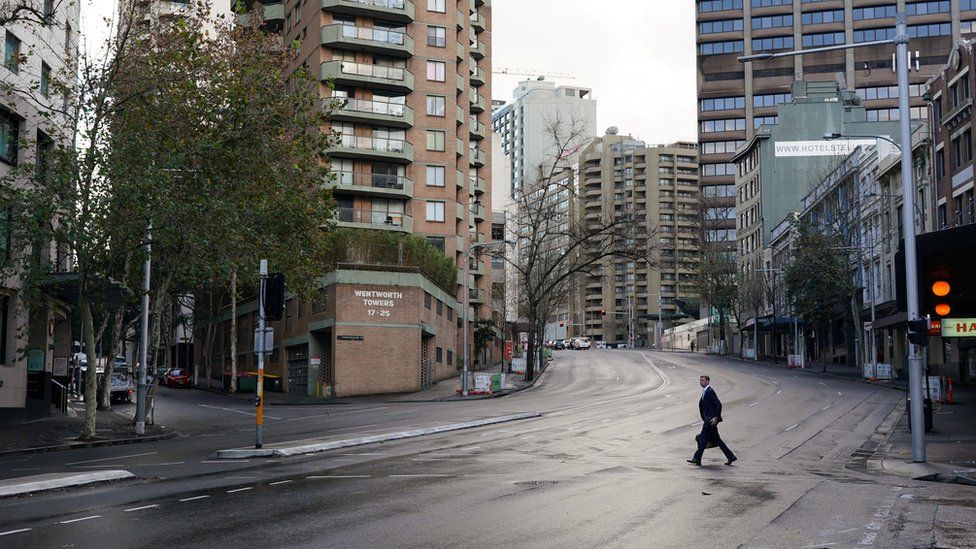
SharecloseShare pageCopy linkAbout sharingimage copyrightReuters Australian leaders will hold an emergency meeting on Monday after a spike in Covid infections. An outbreak in Sydney linked to the highly contagious Delta variant has grown to 128 cases.Cases have also been recorded in the Northern Territory, Queensland and Western Australia.Officials say it is a “critical time” for the country, which has kept case numbers low with border closures and lockdowns.This is the first time in months that cases have emerged in multiple parts of the country at the same time.”I think we’re entering a new phase of this pandemic, with the more contagious Delta strain,” Treasurer Josh Frydenberg told ABC News on Monday.The escalation in Covid infections has prompted lockdowns in the cities of Sydney and Darwin, as well as restrictions across four states.Sydney restricts movement amid ‘dangerous’ Covid outbreakThe battle to open up ‘Fortress Australia’The situation remains most concerning in Sydney, where some five million residents are subject to a stay-at-home order.The New South Wales (NSW) state government on Sunday expanded a lockdown to cover all of Greater Sydney, the Blue Mountains, Central Coast and Wollongong.image copyrightGetty ImagesMany businesses and venues have been ordered shut.NSW Premier Gladys Berejiklian on Monday reported 18 new cases, down from the 30 reported the previous day. Nearly 59,000 people had been tested in the past 24 hours.”We have to be prepared for the numbers to bounce around and we have to be prepared for the numbers to go up considerably because with this strain, we are seeing almost 100% of transmission within households,” she said.Dangerous variant exploiting Australia’s weaknessesFrances Mao, BBC News SydneyJust a week ago Sydney was still in near Covid-free bliss – with people packed into restaurants and dancing in clubs in the city.But the swift spread of Delta has upended months of the city, and the country’s ” new normal”. The strain is now linked to three of four clusters affecting Australia.Experts say the nation’s defences have been beaten, multiple times, by the powerful variant. It’s breached hotel quarantine several times raising concerns about air transmission.It’s also managed to break through relaxed distancing rules in society, latching onto unprotected workers. Mask-wearing is now back in almost every state in Australia.In Sydney, officials say the virus is infecting 100% of household contacts when it’s brought into a home. It’s too early to tell if this lockdown will contain it, according to experts.Low vaccination rates have also left Australians vulnerable.One expert told me it’s a “perfect storm” for “what is now easily the most dominant variant in the world”.NSW Health Minister Brad Hazzard has described the Delta variant which was first detected in India as a “very formidable foe”.”No matter what defensive steps we’re taking at the moment, the virus seems to understand how to counter-attack,” he said.Rapid spreadWhile the two cases in Western Australia have been traced to the Sydney outbreak, the positive cases in Queensland and the Northern Territory have been linked to people who became infected despite completing hotel quarantine.The remote Northern Territory has recorded seven cases, prompting authorities to extend a lockdown of the capital, Darwin on Monday until Friday.

Please wait

The Delta outbreak there had spread from a mining camp and now posed significant risk to the community, officials said.”For the first time, we do have public exposure sites in the Northern Territory,” said Chief Minister Michael Gunner.Authorities are also on alert after a member of cabin crew staff for Virgin Australia worked on five domestic flights while infected with the Delta variant. The airline has contacted all affected passengers and crew.Travel bubble suspendedThe outbreaks have prompted some inter-state and international border closures.New Zealand paused its quarantine-free travel bubble with all of Australia until at least Tuesday because of the latest outbreak.The travel corridor between the two neighbours was opened in April. Travel between New Zealand and specific Australian regions has been closed for short periods as outbreaks emerged, but this is the first time the bubble has been shut with all of Australia.image copyrightEPAAustralia has maintained very low rates of Covid transmission throughout the pandemic due to a closed-border policy, stringent quarantine and swift testing and tracing systems.It has recorded no deaths this year, but 910 deaths and 30,450 cases overall.The newer, more infectious Covid variants however, have strained the nation’s defences – with several small outbreaks this year.Asia’s Covid stars struggle with exit strategiesLessons from Australia’s hotel quarantine systemSydney’s outbreak first emerged two weeks ago in Bondi, the famous beach suburb, before spreading rapidly across the city.Its origin has been linked to an unvaccinated driver who transported international arrivals from the airport.Vaccination rolloutThe NSW government has urged people to get their vaccine – noting that in one of the Sydney clusters, 24 of 30 people at a party became infected and those who didn’t had been vaccinated.”If you’re vaccinated, you are much more likely to not be infected with Covid-19,” Mr Hazzard told reporters on Monday.The recent outbreaks have renewed criticism of the nation’s slow vaccination rollout – which falls under the federal government’s purview.So far, just under 5% of Australia’s adult population have been fully vaccinated under a phased rollout, and roughly 30% have received a first dose of either the Pfizer or AstraZeneca vaccine. However, significant levels of hesitancy have been recorded around the AstraZeneca vaccine due to its link to a rare blood clotting syndrome. Meanwhile, Pfizer supplies have been limited to certain age groups.Government critics have argued that cities would not need to endure lockdowns if a majority of the population was vaccinated.

Read more →

‘It all could have all ended for me that day'

Sean O’Hare regularly hikes for miles in Northern Ireland’s Mourne Mountains. It’s been a rapid period of recovery for the 45-year-old from Warrenpoint. Ten months ago he was rushed to Craigavon Area Hospital after suffering a debilitating double stroke. The school teacher had always been active, running a number of marathons, as well as playing and coaching in his local Gaelic team. He said: “I was in school last August and all of a sudden I just felt the power go out of my left side of my body and I could feel my face falling.” After being brought to hospital, doctors discovered he had been living with an undiagnosed hole in his heart. He was scheduled for surgery and has had months of therapy. “It could have all ended for me that day, but I didn’t want to let my stroke define me,” he added. There are more than 335,000 people in Northern Ireland living with a chest, heart or stroke condition. Catherine Murnin is director of care cervices for the charity Northern Ireland Chest Heart and Stroke.She said: “There’s a perception that a stroke is a condition that only happens to older people, but Sean’s story shows that’s simply not the case.” Video journalist: Niall McCracken

Read more →