Scientists discover how dengue vaccine fails to protect against disease

Developing a viable vaccine against dengue virus has proved difficult because the pathogen is actually four different virus types, or serotypes. Unless a vaccine protects against all four, a vaccine can wind up doing more harm than good.
To help vaccine developers overcome this hurdle, the UNC School of Medicine lab of Aravinda de Silva, PhD, professor in the UNC Department of Microbiology and Immunology, investigated samples from children enrolled in a dengue vaccine trial to identify the specific kinds of antibody responses that correlate with protection against dengue virus disease. In doing so, the researchers discovered that a small subpopulation of antibodies binding to unique sites on each serotype are linked to protection. The research, published in the Journal of Clinical Investigation, provides important information for vaccine developers to consider when creating a dengue vaccine, which has long eluded scientists.
The four dengue virus serotypes are mosquito-borne flaviviruses that infect hundreds of millions of individuals each year in Southeast Asia, western Pacific Islands, Africa, and Latin America. Nearly 100 million individuals report flu-like symptoms. Though rarely deadly, the virus can cause severe illness, especially when a person who was previously infected with one serotype (and recovers) is then infected by a second serotype. This happens because antibodies from the first infection help the virus replicate during the second infection through a process called antibody dependent enhancement. A dengue vaccine induced antibody response weighted towards a single dengue virus serotype can mimic this phenomenon.
Several vaccines have been in clinical development for years, and most show that they induce neutralizing antibodies against all four serotypes. Yet, research has also shown that the creation of neutralizing antibodies alone does not correlate to protection against clinical disease. The de Silva lab conducted experiments to compare the properties of antibodies against wild-type Dengue viruses and the properties of antibodies produced by a leading vaccine candidate — Dengvaxia — which the pharmaceutical company Sanofi Pasteur created using all four dengue virus serotypes in one formulation.
Experiments led by Sandra Henein, research associate in the UNC Department of Microbiology and Immunology, and Cameron Adams, a medical and graduate student in the UNC Medical Scientist Training Program (MD/PhD), showed that wild type infections induced neutralizing and protective antibodies that recognized a part of the virus — an epitope — unique to each serotype. The vaccine, though, mainly stimulated neutralizing antibodies that recognized epitopes common among all serotypes. In vaccine trials, these antibodies did not protect children from dengue. In the past, researchers have considered all dengue neutralizing antibodies to be protective in people. This appears to not be the case, according to this UNC-led research.
“Our results suggest that a safe and effective dengue virus vaccine needs to stimulate neutralizing antibodies targeting unique sites on each of the four dengue serotypes ,” Adams said. “Not merely the neutralizing antibodies against cross-reactive epitopes common to all four dengue types.”
Story Source:
Materials provided by University of North Carolina Health Care. Note: Content may be edited for style and length.

Read more →

Putting functional proteins in their place

Scientists have organized proteins — nature’s most versatile building blocks — in desired 2-D and 3-D ordered arrays while maintaining their structural stability and biological activity. They built these designer functional protein arrays by using DNA as a programmable construction material. The team — representing the U.S. Department of Energy’s (DOE) Brookhaven National Laboratory, Columbia University, DOE’s Lawrence Berkeley National Laboratory, and City University of New York (CUNY) — described their approach in the June 17 issue of Nature Communications.
“For decades, scientists have dreamed about rationally assembling proteins into specific organizations with preserved protein function,” said corresponding author Oleg Gang, leader of the Center for Functional Nanomaterials (CFN) Soft and Bio Nanomaterials Group at Brookhaven Lab and a professor of chemical engineering and of applied physics and materials science at Columbia Engineering. “Our DNA-based platform has enormous potential not only for structural biology but also for various bioengineering, biomedical, and bionanomaterial applications.”
The primary motivation of this work was to establish a rational way to organize proteins into designed 2-D and 3-D architectures while preserving their function. The importance of organizing proteins is well known in the field of protein crystallography. For this technique, proteins are taken from their native solution-based environments and condensed to form an orderly arrangement of atoms (crystalline structure), which can then be structurally characterized. However, because of their flexibility and aggregation properties, many proteins are difficult to crystallize, requiring trial and error. The structure and function of proteins may change during the crystallization process, and they may become nonfunctional when crystallized by traditional methods. This new approach opens many possibilities for creating engineered biomaterials, beyond the goals of structural biology.
“The ability to make biologically active protein lattices is relevant to many applications, including tissue engineering, multi-enzyme systems for biochemical reactions, large-scale profiling of proteins for precision medicine, and synthetic biology,” added first author Shih-Ting (Christine) Wang, a postdoc in the CFN Soft and Bio Nanomaterials Group.
Though DNA is best known for its role in storing our genetic information, the very same base-pairing processes used for this storage can be leveraged to construct desired nanostructures. A single strand of DNA is made of subunits, or nucleotides, of which there are four kinds (known by the letters A, C, T, and G). Each nucleotide has a complementary nucleotide it attracts and binds to (A with T and C with G) when two DNA strands are near each other. Using this concept in the technique of DNA origami, scientists mix multiple short strands of synthetic DNA with a single long strand of DNA. The short strands bind to and “fold” the long strand into a particular shape based on the sequence of bases, which scientists can specify.
In this case, the scientists created octahedral-shaped DNA origami. Inside these cage-like frameworks, they placed DNA strands with a particular “color,” or coding sequence, at targeted locations (center and off center). To the surface of proteins — specifically, ferritin, which stores and releases iron, and apoferritin, its iron-free counterpart — they attached complementary DNA strands. By mixing the DNA cages and conjugated proteins and heating up the mixture to promote the reaction, the proteins went to the internal designated locations. They also created empty cages, without any protein inside.

Read more →

Bigger may not always be better: Density governs receptor activation on immune cells

Scientists from within the Antibody and Vaccine Group at the University of Southampton have gained novel insights into how an important class of immune receptors called tumour necrosis factor receptors (TNFR) are activated.
The work, published in the journal Communications Biology, investigates a class of receptors present on immune cells called TNFR. These receptors, such as CD40, 4-1BB and OX40, are key in helping the immune system fight pathogens and cancer cells. Accordingly, antibody drugs which are designed to specifically target and activate these receptors (called agonists) have been developed for cancer treatment.
The mechanism by which these receptors are activated on the cell surface is important for designing optimal drug formats; however, to date it is not fully understood. Previous work showed that receptor clustering, redistribution of receptors dispersed over the cell surface into localised clusters, is essential for TNF receptor activation, and it is commonly believed that larger clusters induce more potent activation.
The current study, led by Dr Ben Yu and Professor Mark Cragg at the Centre for Cancer Immunology, with colleagues across the University and at ONI UK, employed a set of unique reagents developed at Southampton targeting CD40, 4-1BB and OX40, as well as a new super-resolution microscopy acquired through funding from from the Mark Benevolent Fund, to address how differential receptor clustering mediates receptor activity.
Results from the study confirmed that TNF receptor activation absolutely requires receptor clustering but interestingly, disproved the commonly held belief that larger clusters induce more receptor activation. Rather, the study finds that agonists that induced smaller clusters — but with higher receptor density — mediated better TNF receptor activity than those which induced larger clusters.
In addition to receptor size, the study reveals that one of the most potent antibody agonists targeting CD40 induced a novel rod-shaped clustering structure, which could potentially explain the super-agonistic nature of that antibody. These findings add significant insight into how TNF receptors cluster to mediate immune activation and will help guide future development of therapeutic antibodies targeting TNF receptors.
The study was funded by Cancer Research UK.
Story Source:
Materials provided by University of Southampton. Note: Content may be edited for style and length.

Read more →

Can a calculator predict your risk of dementia?

Canadian researchers at The Ottawa Hospital, the University of Ottawa, the Bruyère Research Institute and ICES have built and validated an online calculator that empowers individuals 55 and over to better understand the health of their brain and how they can reduce their risk of being diagnosed with dementia in the next five years.
Their process was published today in the Journal of Epidemiology and Community Health, and the calculator is available at projectbiglife.ca.
Dementia is an umbrella term for loss of memory and other thinking abilities severe enough to interfere with daily life. Every year, 76,000 new cases of dementia are diagnosed in Canada, a number expected to increase as the population ages.
There is no cure or treatment for dementia. However, about a third of dementia may be preventable through lifestyle factors like physical activity, healthy eating, reducing alcohol and tobacco use, and managing conditions like diabetes and high blood pressure.
The researchers based the dementia calculator on survey data from over 75,000 Ontarians.
“What sets this dementia risk calculator apart is that you don’t need to visit a doctor for any tests,” said Dr. Stacey Fisher, the lead author of the study who performed the research largely in Ottawa while she was a PhD student supervised by Dr. Doug Manuel and Dr. Peter Tanuseputro at The Ottawa Hospital. “People already have all the information they need to complete the calculator in the comfort of their home.” Dr. Fisher is currently a postdoctoral fellow at the University of Toronto and Public Health Ontario.
Factors in the Dementia Population Risk Tool (DemPoRT) include: Age Smoking status and lifetime exposure Alcohol consumption Physical activity Stress Diet Sense of belonging Ethnicity Immigration status Socioeconomic status of the neighbourhood Education Activities where assistance is needed Marital status Number of languages spoken Health conditionsThe calculator can be used by individuals to assess their dementia risk and help them modify their lifestyle. The researchers also have a goal for policy makers to use this algorithm to do the same thing for the general population.
Through this research, the team has developed the first predictive tool designed to predict dementia at a population level. It can predict the number of new cases in the community, identify higher-risk populations, inform dementia prevention strategies, and will be used to support Canada’s national dementia strategy. By using regularly collected health data and surveys, population health experts have all the information they need to use the algorithm.
“This tool will give people who fill it out clues to what they can do to reduce their personal risk of dementia,” said Dr. Peter Tanuseputro, senior author of the study, and scientist at The Ottawa Hospital, investigator at the Bruyère Research Institute, adjunct scientist at ICES and assistant professor at the University of Ottawa. “The COVID-19 pandemic has also made it clear that sociodemographic variables like ethnicity and neighbourhood play a major role in our health. It was important to include those variables in the tool so policy makers can understand how different populations are impacted by dementia, and help ensure that any prevention strategies are equitable.”
The dementia calculator will be added to a list of existing calculators on Project Big Life that help Canadians estimate their own life expectancy based on habits and lifestyle choices.
The calculator was based on data from the Statistics Canada Canadian Community Health Surveys housed at ICES. Currently designed for use in Canada, it can be adapted for any of the 100 countries around the world that collect health survey data.
Story Source:
Materials provided by The Ottawa Hospital. Note: Content may be edited for style and length.

Read more →

COVID-linked multi-system inflammatory syndrome in children diagnosed more in Black and Latino children

Multisystem Inflammatory Syndrome in Children (MIS-C) significantly affected more Black and Latino children than white children, with Black children at the highest risk, according to a new observational study of 124 pediatric patients treated at Children’s National Hospital in Washington, D.C. Researchers also found cardiac complications, including systolic myocardial dysfunction and valvular regurgitation, were more common in MIS-C patients who were critically ill. Of the 124 patients, 63 were ultimately diagnosed with MIS-C and were compared with 61 patients deemed controls who presented with similar symptoms but ultimately had an alternative diagnosis.
In the study, published in The Journal of Pediatrics, researchers provide insight into key features distinguishing MIS-C patients to provide a more realistic picture of the burden of disease in the pediatric population and aid with the early detection of disease and treatment for optimal outcomes. The COVID-linked syndrome has affected nearly 4,000 children in the United States in the past year. Early reports showed severe illness, substantial variation in treatment and mortality associated with MIS-C. However, this study demonstrated that with early recognition and standardized treatment, short-term mortality can be nearly eliminated.
“Data like this will be critical for the development of clinical trials around the long-term implications of MIS-C,” says Dr. Roberta DeBiasi, M.D., lead author and chief of the Division of Pediatric Infectious Diseases at Children’s National. “Our study sheds light on the demographic, clinical and biomarker features of this disease, as well as viral load and viral sequencing.”
Of the 63 children with MIS-C, 52% were critically ill, and additional subtypes of MIS-C were identified including those with and without still detectable virus, those with and without features meeting criteria for Kawasaki Disease, and those with and without detectable cardiac abnormalities. While median age (7.25 years) and sex were similar between the MIS-C cohort and control group, Black (46%) and Latino (35%) children were overrepresented in the MIS-C group, especially those who required critical care. Heart complications were also more frequent in children who became critically ill with MIS-C (55% vs. 28%). Findings also showed MIS-C patients demonstrated a distinct cytokine signature, with significantly higher levels of certain cytokines than those of controls. This may help in the understanding of what drives the disease and which potential treatments may be most effective.
In reviewing viral load and antibody biomarkers, researchers found MIS-C cases with detectable virus had a lower viral load than in primary SARS-CoV-2 infection cases, but similar to MIS-C controls who had alternative diagnoses, but who also had detectable virus. A larger proportion of patients with MIS-C had detectable SARS-CoV-2 antibodies than controls. This is consistent with current thinking that MIS-C occurs a few weeks after a primary COVID-19 infection as part of an overzealous immune response.
Viral sequencing was also performed in the MIS-C cohort and compared to cases of primary COVID-19 infection in the Children’s National geographic population. 88% of the samples analyzed fell into the GH clade consistent with the high frequency of the GH clade circulating earlier in the pandemic in the U.S. and Canada, and first observed in France.
“The fact that there were no notable sequencing differences between our MIS-C and primary COVID cohorts suggests that variations in host genetics and/or immune response are more likely primary determinants of how MIS-C presents itself, rather than virus-specific factors,” says Dr. DeBiasi. “As we’ve seen new variants continue to emerge, it will be important to study their effect on the frequency and severity of MIS-C.”
Researchers are still looking for consensus on the most efficacious treatments for MIS-C. In a recent editorial in the New England Journal of Medicine, Dr. DeBiasi calls for well-characterized large prospective cohort studies at single centers, and systematic and long-term follow-up for cardiac and non-cardiac outcomes in children with MIS-C. Data from these studies will be a crucial determinant of the best set of treatment guidelines for immunotherapies to treat MIS-C.
Story Source:
Materials provided by Children’s National Hospital. Note: Content may be edited for style and length.

Read more →

AI used to predict unknown links between viruses and mammals

A new University of Liverpool study could help scientists mitigate the future spread of zoonotic and livestock diseases caused by existing viruses.
Researchers have used a form or artificial intelligence (AI) called machine-learning to predict more than 20,000 unknown associations between known viruses and susceptible mammalian species. The findings, which are published in Nature Communications, could be used to help target disease surveillance programmes.
Thousands of viruses are known to affect mammals, with recent estimates indicating that less than 1% of mammalian viral diversity has been discovered to date. Some of these viruses such as human and feline immunodeficiency viruses have a very narrow host range, whereas others such as rabies and West Nile viruses have very wide host ranges.
“Host range is an important predictor of whether a virus is zoonotic and therefore poses a risk to humans. Most recently, SARS-CoV-2 has been found to have a relatively broad host range which may have facilitated its spill-over to humans. However, our knowledge of the host range of most viruses remains limited,” explains lead researcher Dr Maya Wardeh from the University’s Institute of Infection, Veterinary and Ecological Sciences.
To address this knowledge gap, the researchers developed a novel machine learning framework to predict unknown associations between known viruses and susceptible mammalian species by consolidating three distinct perspectives — that of each virus, each mammal, and the network connecting them, respectively.
Their results suggests that there are more than five times as many associations between known zoonotic viruses and wild and semi-domesticated mammals than previously thought. In particular, bats and rodents, which have been associated with recent outbreaks of emerging viruses such as coronaviruses and hantaviruses, were linked with increased risk of zoonotic viruses.
The model also predicts a five-fold increase in associations between wild and semi-domesticated mammals and viruses of economically important domestic species such as livestock and pets.
Dr Wardeh said: “As viruses continue to move across the globe, our model provides a powerful way to assess potential hosts they have yet to encounter. Having this foresight could help to identify and mitigate zoonotic and animal-disease risks, such as spill-over from animal reservoirs into human populations.”
Dr Wardeh is currently expanding the approach to predict the ability of ticks and insects to transmit viruses to birds and mammals, which will enable prioritisation of laboratory-based vector-competence studies worldwide to help mitigate future outbreaks of vector-borne diseases.
Story Source:
Materials provided by University of Liverpool. Note: Content may be edited for style and length.

Read more →

Small-scale engineering could bring big progress in medical care

Effective diagnostics, therapies and treatments for diseases and infections could increasingly involve re-engineering the body’s internal biomechanisms at their most basic chemical and molecular foundations.
Growing knowledge about the body’s biological processes is increasing the possibilities for restoring human health, says Xiao Wang, an associate professor of biomedical engineering in Arizona State University’s Ira A. Fulton Schools of Engineering. He and a team of researchers are exploring ways to trigger and control cell differentiation and transition to unlock properties that may change bioengineers’ approach to diagnostics, vaccine development and therapeutic treatments.
Recent research led by Wang and Alexander Green, an assistant professor of biomedical engineering at Boston University, reveals more about the potential for designing small add-on structures for biomolecules that can enhance their properties.
“There could be new and better kinds of applications for diagnostics, therapeutics and treatments, and for genome engineering,” Wang says. “These could be big contributions to biomedicine.”
The details about what the research may yield appear in the paper Predictable control of RNA lifetime using engineered degradation-tuning RNAs, published this week in the research journal Nature Chemical Biology.
Wang and Green’s focus is on messenger RNA, or mRNA, which carries genetic information from DNA, the molecule that contains the genetic blueprint needed to develop and maintain organisms — including humans.

Read more →

Delta Plus, a New Variant, Raises Concerns in India

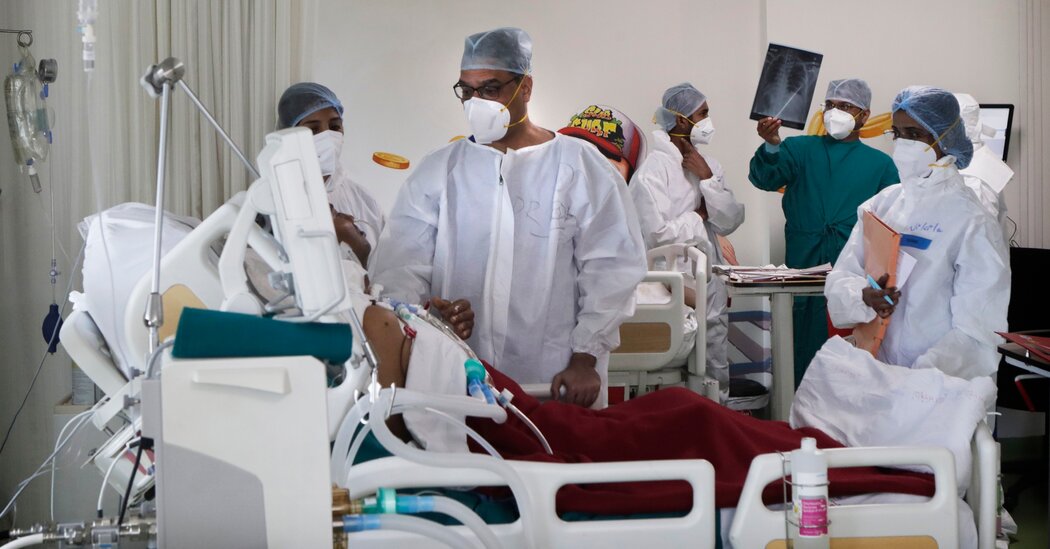
As India begins to reopen after a devastating second wave of coronavirus infections, concern among virologists is growing that another, possibly more virulent version of the virus could hasten the start of a third wave within just a few months.The version, which has become known locally as Delta Plus, is described by scientists as a sub-lineage of the highly contagious Delta variant that has spread rapidly through India, Britain, the United States and other countries. The new variant carries a spike protein mutation that is also found in the Beta variant, first identified in South Africa, which virologists say could make it more transmissible.Reports suggest that cases of Delta Plus have been found in nearly a dozen countries, including the United States. In India, Delta Plus was first detected in April in the western state of Maharashtra. The authorities in India this week declared it a new “variant of concern” after finding more than 40 cases across three states: Maharashtra, Madhya Pradesh and Kerala.The Indian Health Ministry said this week that Delta Plus had showed increased transmissibility. The states where the variant has been found have been asked to bolster testing, enhance surveillance and speed up contact tracing to try to prevent its spread.Because of its recent discovery, there have not yet been any studies of this particular variant, so scientists have limited information. They have begun to speculate about its ability to spread, however.“It is most likely capable of dodging immunities,” said Shahid Jameel, a virologist and director of the Trivedi School of Biosciences at Ashoka University in Sonipat, India. “That is because it carries all symptoms of the original Delta variant and also from its partner Beta variant.”Officials at the Indian Health Ministry emphasized that both Covid vaccines in wide use in the country — the AstraZeneca vaccine manufactured by the Serum Institute of India and the Covaxin shot made by the Indian company Bharat Biotech — are believed to be effective against variants, including Delta Plus..css-1xzcza9{list-style-type:disc;padding-inline-start:1em;}.css-3btd0c{font-family:nyt-franklin,helvetica,arial,sans-serif;font-size:1rem;line-height:1.375rem;color:#333;margin-bottom:0.78125rem;}@media (min-width:740px){.css-3btd0c{font-size:1.0625rem;line-height:1.5rem;margin-bottom:0.9375rem;}}.css-3btd0c strong{font-weight:600;}.css-3btd0c em{font-style:italic;}.css-w739ur{margin:0 auto 5px;font-family:nyt-franklin,helvetica,arial,sans-serif;font-weight:700;font-size:1.125rem;line-height:1.3125rem;color:#121212;}#NYT_BELOW_MAIN_CONTENT_REGION .css-w739ur{font-family:nyt-cheltenham,georgia,’times new roman’,times,serif;font-weight:700;font-size:1.375rem;line-height:1.625rem;}@media (min-width:740px){#NYT_BELOW_MAIN_CONTENT_REGION .css-w739ur{font-size:1.6875rem;line-height:1.875rem;}}@media (min-width:740px){.css-w739ur{font-size:1.25rem;line-height:1.4375rem;}}.css-9s9ecg{margin-bottom:15px;}.css-1jiwgt1{display:-webkit-box;display:-webkit-flex;display:-ms-flexbox;display:flex;-webkit-box-pack:justify;-webkit-justify-content:space-between;-ms-flex-pack:justify;justify-content:space-between;margin-bottom:1.25rem;}.css-8o2i8v{display:-webkit-box;display:-webkit-flex;display:-ms-flexbox;display:flex;-webkit-flex-direction:column;-ms-flex-direction:column;flex-direction:column;-webkit-align-self:flex-end;-ms-flex-item-align:end;align-self:flex-end;}.css-8o2i8v p{margin-bottom:0;}.css-12vbvwq{background-color:white;border:1px solid #e2e2e2;width:calc(100% – 40px);max-width:600px;margin:1.5rem auto 1.9rem;padding:15px;box-sizing:border-box;}@media (min-width:740px){.css-12vbvwq{padding:20px;width:100%;}}.css-12vbvwq:focus{outline:1px solid #e2e2e2;}#NYT_BELOW_MAIN_CONTENT_REGION .css-12vbvwq{border:none;padding:10px 0 0;border-top:2px solid #121212;}.css-12vbvwq[data-truncated] .css-rdoyk0{-webkit-transform:rotate(0deg);-ms-transform:rotate(0deg);transform:rotate(0deg);}.css-12vbvwq[data-truncated] .css-eb027h{max-height:300px;overflow:hidden;-webkit-transition:none;transition:none;}.css-12vbvwq[data-truncated] .css-5gimkt:after{content:’See more’;}.css-12vbvwq[data-truncated] .css-6mllg9{opacity:1;}.css-1rh1sk1{margin:0 auto;overflow:hidden;}.css-1rh1sk1 strong{font-weight:700;}.css-1rh1sk1 em{font-style:italic;}.css-1rh1sk1 a{color:#326891;-webkit-text-decoration:underline;text-decoration:underline;text-underline-offset:1px;-webkit-text-decoration-thickness:1px;text-decoration-thickness:1px;-webkit-text-decoration-color:#ccd9e3;text-decoration-color:#ccd9e3;}.css-1rh1sk1 a:visited{color:#333;-webkit-text-decoration-color:#ccc;text-decoration-color:#ccc;}.css-1rh1sk1 a:hover{-webkit-text-decoration:none;text-decoration:none;}India’s vaccination drive has gathered speed this week, with more than 6.7 million people nationwide receiving shots on Thursday, according to official data. Prime Minister Narendra Modi’s government has declared that the shots should be offered free to all adults, aiming to shore up an inoculation effort that had been hampered by mismanagement and a lack of supplies. About 5.5 percent of the population is fully vaccinated, and 18 percent have received at least one shot.In Maharashtra, one of the hardest-hit states, officials said that Delta Plus was becoming a significant concern and warned that they would reimpose restrictions if cases rose.“We are at the end of a second wave and we will be careful with how we unlock,” said Rajesh Tope, the state health minister. “The lessons we have learned dealing with the second wave are being used to stop the spread of any new variant.”Delta Plus was also identified this month by health officials in Britain, who called it Delta-AY.1. They wrote in a June 11 report that they had detected 36 cases, the first five of which were contacts of people who had recently traveled through Nepal and Turkey. Half of the 36 cases occurred in people who had not been vaccinated and none of the cases had led to death, but the report cautioned that there was “limited epidemiological information available” about the variant.

Read more →

Gibraltar Votes to Ease Abortion Restrictions

Voters decided by a wide margin to lift a near-ban on the procedure, which had been one of the strictest such laws in Europe.Residents of Gibraltar voted by a wide margin Thursday to ease one of the strictest abortion laws in Europe following an emotional campaign, lifting a near-ban on the procedure and aligning the tiny British territory more closely with British legislation.In a referendum, about 62 percent of voters approved changes in the law that will allow abortions within the first 12 weeks of pregnancy if a woman’s mental or physical health is considered by a doctor to be at risk, or later in cases of severe fetal abnormality.Until now, the law in Gibraltar had allowed abortion only to save a mother’s life. The law had set a potential criminal penalty of life imprisonment, though no such sentence had been imposed in recent history.In contrast, British law allows abortion in the first 24 weeks of pregnancy.Parliament set the stage for Thursday’s vote in 2019, when it adopted language intended to ease abortion restrictions that it passed along to voters for approval. A referendum was originally planned for March 2020 but had been put off by the coronavirus pandemic until Thursday.Gibraltar, a territory of 34,000 people at the tip of southern Spain, has maintained some significant legal distinctions from Britain. But the Gibraltar Parliament set the changes in motion after Britain’s Supreme Court warned in 2018 that Northern Ireland’s abortion ban was incompatible with the European Convention on Human Rights.Keith Azopardi, an opposition politician who was against easing the abortion restrictions, described the referendum campaign as “emotional and divisive.” The majority of Gibraltar’s residents are Catholic, and the bishop of Gibraltar had been among those who opposed an easing of the abortion law.Turnout among Gibraltar’s 23,000 eligible voters was 53 percent.Fabian Picardo, the leader of the government of Gibraltar, had supported the abortion changes. After casting his own ballot on Thursday, he retweeted a message from the London-based Royal College of Obstetricians and Gynecologists, which said that “restrictive abortion laws endanger women’s lives by forcing them to either travel out of country, or access unsafe and illegal care.”Early Friday morning, Mr. Picardo tweeted out a “We did it!” message and wrote that the government will “work to introduce the new services we will require to ensure counseling and safe and legal abortions.”The changes will take effect in 28 days. Until now, the law in Gibraltar had meant that women seeking an abortion normally traveled elsewhere, often to Britain and sometimes across the land border to neighboring Spain, where abortion was legalized in certain circumstances more than 30 years ago.Britain secured control of Gibraltar in the Treaty of Utrecht in 1713, though Spain has long contested British sovereignty. In December, negotiators struck a last-minute deal to avoid the possibility of travelers and goods being stranded at Gibraltar’s land border with Spain as Britain completed its exit from the European Union.While British voters endorsed leaving the E.U. in a referendum in 2016, an overwhelming majority of voters in Gibraltar voted against the decision, known as Brexit.

Read more →

Early findings of Alzheimer's study in diverse populations now available to researchers

A growing trove of data to help scientists understand the biology of Alzheimer’s disease among diverse populations within the context of sociocultural, behavioral and environmental factors is now available through the Institute for Translational Research at The University of North Texas Health Science Center at Fort Worth (HSC).
The research data is the result of the Health and Aging Brain among Latino Elders (HABLE) study launched in 2017 with $12 million in funding from the National Institutes of Health and headed by Sid O’Bryant, PhD, Executive Director of the Institute.
In 2020, the HABLE study received an additional $45 million from National Institute on Aging, part of the National Institutes of Health.
Dr. O’Bryant announced the availability of the research data in article published June 21 in Alzheimer’s & Dementia: Diagnosis, Assessment & Disease Monitoring, a national journal published by the Alzheimer’s Association.
“The data from this study is a first-of-a-kind for the field,” Dr. O’Bryant said. “We will for the first time be able to examine the biology of Alzheimer’s among Mexican Americans as well as non-Hispanic whites all within the context of sociocultural, environmental and behavioral factors. Scientists from across the globe can use this data to address health disparities and define new diagnostic and treatment opportunities for underserved communities.”
The percentage of Hispanics 65 and above in the U.S. will triple by the year 2050 and, when compared to other racial or ethnic groups, are expected to experience the largest increase in Alzheimer’s disease related dementias by 2060, according to the paper. About 65 percent of U.S. Hispanics are of Mexican decent.
However, Mexican Americans are severely underrepresented in Alzheimer’s research, resulting too few comprehensive studies of the biomarkers of the disease among this population. Early findings suggest that beta amyloid protein — one of the biomarkers of Alzheimer’s — is less common among Mexican Americans yet Mexican Americans seem to have a younger onset of cognitive loss.
About 1,000 Mexican Americans and 1,000 non-Latino whites over 50 from North Texas have enrolled in the study that gives participants reoccurring and free comprehensive interviews, functional exams, clinical laboratory tests, a brain MRI and state-of-the-art PET Scans.
The PET Scans allow researchers to observe the differences over time in the development of the biomarkers between Mexican Americans and non-Latino whites.
In December, HSC announced an additional $7 million investment that to add 1,000 African Americans to the study. Among people 65 and older,?African Americans have the highest prevalence of Alzheimer’s disease, followed by Hispanics and non-Latino?whites, according to the U.S. Center for?Disease Control and Prevention.
The project is the only comprehensive, large-scale Alzheimer’s research study into the three largest ethnic groups in the U.S. — Non-Hispanic whites, Mexican Americans and African Americans.

Read more →