Marked increase in Covid infections across UK

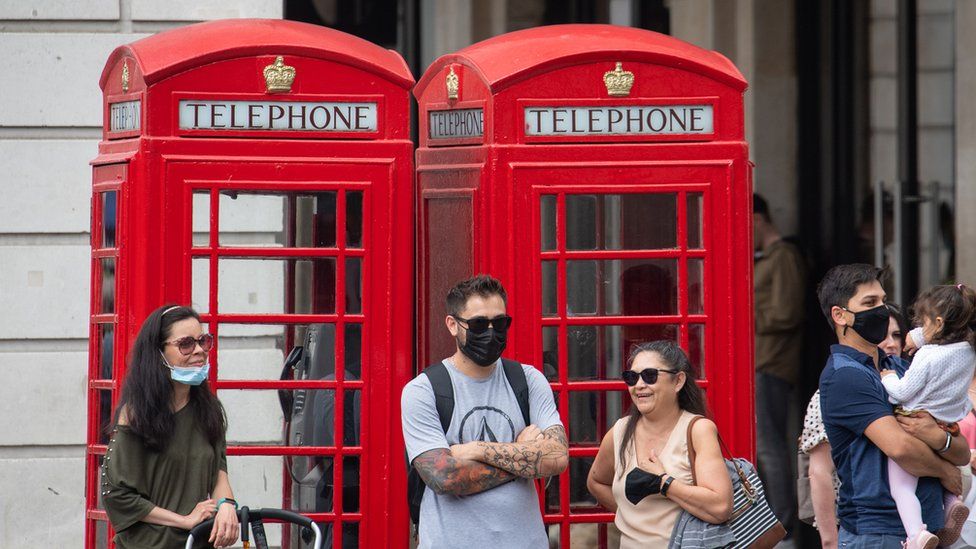
SharecloseShare pageCopy linkAbout sharingimage copyrightPA MediaThe UK is experiencing a marked increase in new Covid infections, say experts from the Office for National Statistics (ONS).Latest data from swab tests in the community suggests one in every 160 people has the virus. That is up from one in every 250 in the previous week. For England, it is the highest level since mid February.The more infectious Delta variant now accounts for 99% of cases, according to Public Health England. Around two-thirds of adults have now been double jabbed against the virus, and experts say this is helping prevent very big rises in Covid hospitalisations, although admissions are increasing. Many of the infections being seen are among teenagers and young adults. The final step of unlocking is expected to go ahead as planned on 19 July in England. It will be confirmed on 12 July after a review of data.How could life change on 19 July?I’m fully vaccinated, but how can I prove it?What happens if I’m ‘pinged’ by the app?Covid around the UKAccording to the ONS Infection Survey findings for the week to July 3:In England, one in 160 people had the virus – up from one in 260 in the previous week and the highest level since the week to February 19In Scotland, it was one in 100 people – up from one in 150 and the highest level since the week to January 16For Wales, it was one in 340 people – up from one in 450 and the highest level since the week to February 27In Northern Ireland it was one in 300 people – up from one in 670 and the highest since the week to April 3England’s coronavirus R number has risen slightly to between 1.2 and 1.5, which means that, on average, every 10 people infected will infect between 12 and 15 other people. Last week R was between 1.1 and 1.3.Sarah Crofts from the ONS said: “We are seeing marked increases in infections across all four UK countries driven by the Delta variant, which continues to be the most common across the UK.”As the vaccine rollout continues and restrictions are further lifted, it is crucial that we continue to closely monitor the data.”Dr Jenny Harries, chief executive of the UK Health Security Agency, said the sharp increase in cases being seen had not been followed by a similar increase in hospitalisation and death, suggesting the vaccines were working well. “Two doses of the available vaccines offer a high level of protection against the Delta variant. “Getting both jabs is the best way to ensure you and the people you love remain safe, so we once again urge everyone to come forward as soon as they are eligible.”As we approach the planned end of restrictions, we must remain cautious and careful. Cases are rising across the country, and whilst the vaccines offer excellent protection, they do not offer 100% protection. “Be sensible, and follow ‘hands, face, space, fresh air’ at all times and make sure to get tested if required.”Related Internet LinksCoronavirus Infection SurveyThe BBC is not responsible for the content of external sites.

Read more →

Helping Runners With Long Covid Get Back on Their Feet

At many of the Covid-19 recovery clinics that have sprung up around the country, patients’ goals include their athletic ambitions.At 17 years old, Nia Raquelle Smith enlisted in the Navy, and subsequently hurt her legs in a training accident, sustaining injuries that left her with nerve damage and on crutches for nine months. She was told that she’d never run again, and, determined to prove her doctors wrong, proceeded to run three marathons.Now, at 36, she is drawing on that experience as motivation to fight through her current setback: long-haul Covid symptoms so severe that until three months ago she could barely walk up a flight of stairs without needing an inhaler. Ms. Smith, who lives in Brooklyn, had planned to run in the 2020 New York City Marathon, which was eventually canceled; instead she has deferred that entry to the 2023 race.“This is going to be an even bigger challenge,” she said.As a veteran, she is being treated at the Margaret Cochran Corbin Campus of the VA New York Harbor Healthcare System and the New York University Veterans Clinic. There, as at many of the post-Covid-19 recovery clinics that have sprung up around the country, athletic ambitions are part of patients’ rehabilitation goals. Since the syndrome, sometimes known as post-Covid or long Covid, is still not well understood, doctors are throwing the kitchen sink at helping these patients get better — and get back to sport. They are adapting treatments used for other illnesses, and also — with permission — drawing data from athletes’ personal fitness trackers, like Apple Watches, Garmins and Fitbits, which endurance athletes use to tell them how fast and far they went. Some models also continuously track their heart rates to give clinicians a better look at how recovery is going, or not.The inability to be physically active can hamper recovery, too. “It can become a downward spiral of not feeling well to not being as active, to endurance dropping, so activity levels further drop,” said Dr. Benjamin Abramoff, director of the post-Covid Assessment and Recovery Clinic at Penn Medicine in Philadelphia, which opened in June 2020. Athletic patients have also lost a piece of their identity, as well as access to a valve for stress relief.“Running was how I managed my depression. It was the only time I was not thinking about everything that goes wrong in your life,” Ms. Smith said.Not being able to run has made coping with the lingering side effects of her illness, which include reduced lung capacity, cognitive delays, edema, neuropathy and post-traumatic stress disorder, much more difficult. In the past, “running was how I was able to escape,” she said.Patients with long Covid can present with a range of symptoms, including pain, breathing problems, heart abnormalities and fatigue. Nearly one-quarter of Covid patients have sought treatment for new health conditions one month or more post infection, according to a study from the nonprofit FAIR Health, which drew data from nearly 2 million patients’ private health insurance claims.To treat these patients, post-Covid clinics have formed around the country, 33 at last count, according to Becker’s Hospital Review.Penn’s clinic was the brain child of physical medicine and pulmonology specialists, with the idea of giving patients a medical home “where they can get an A-to-Z full evaluation, and we can track these patients when new research comes out,” said Dr. Abramoff, whose background is in treating spinal cord injuries. So far they’ve seen about 650 patients.Fatigue is a common complaint of their patients, he said. For athletes, it’s lost endurance. “There’s a good segment of patients who might feel OK while doing an activity but in the evening or days after, they feel lousy, can’t get out of bed and feel sick.”Until a few months ago, Ms. Smith needed an inhaler to get up the stairs. Now she carries it just in case she needs it.Desiree Rios for The New York Times“Running was how I managed my depression. It was the only time I was not thinking about everything that goes wrong in your life,” Ms. Smith said.Desiree Rios for The New York TimesPenn developed a physical therapy program, which varies according to the severity of each patient’s symptoms. “For some patients who were really seriously affected and can’t do any activities, how do we build back to the housework that you have to do on a daily basis? How do we pace that out across the course of the day so you don’t have to do everything at once?”For those with less severe symptoms, it’s a focus on gradually building back to activity, keeping the heart rate at 60 to 70 percent of their maximum at first. “If they tolerate it and are OK with it for a week or two weeks, we’ll build on that,” he said.Long-haul Covid patients tend to “have a honeymoon period, maybe two or three weeks after the acute illness,” said Dr. R. Kannan Mutharasan, a cardiologist at Northwestern Memorial Hospital in Chicago and co-program director of sports cardiology. “They’re finally feeling back to themselves and say ‘I’m going to go out for a run,’” he said. But afterward, they notice they’re not feeling the way they used to. A few weeks later, they may experience “things like lightheadedness, or a rapid heartbeat even when walking.”That’s what happened to one of his patients, Hannah Engle, 23, who was diagnosed with Covid-19 last July. She tried going for a run again in October, and her heart rate went up to 210 beats per minute. She is now on the “taking it slow” approach, but still hits setbacks if she overdoes it. In May, for example, she experienced chest pain and dizziness after what seemed like a simple workout with jumping jacks and stretching.Ms. Engle had always been an active person. As a child, she competed in diving, cheerleading and gymnastics, and even did gymnastics at the club level through college. After graduating, she continued to stay active through CrossFit, weight lifting and running 5Ks while working in Arlington, Va., to encourage people to go into the STEM fields — science, technology, engineering and math.Since long-haulers are still a new class of patient, Dr. Mutharasan is trying to take cues from treating patients with cardiac problems from conditions like postural orthostatic tachycardia syndrome (POTS), where problems with blood flow lead to abnormal heart rates, especially when sitting up or standing. That includes things like wearing compression socks to keep blood circulating to the head, and increasing salt intake to expand blood plasma volume. There’s no clinical data that this is effective with Covid long-haul patients, but anecdotally, Dr. Mutharasan said it’s helped about half his patients.He’s also looking at data: If patients wear any sort of fitness device, like an Apple Watch or a Garmin smartwatch, he asks to see their data from before and after their Covid-19 infection. Research published Wednesday in the journal JAMA Network Open underscores the role that fitness trackers can play in monitoring long Covid. Dr. Mutharasan particularly likes WHOOP, a fitness device that tracks heart-rate variability — the variation in time between heart beats.That number “will drop for a variety of reasons: overtraining, not enough sleep, too much alcohol, stress or where you are in your training cycle,” he said.The idea that higher heart rate variability generally means better cardiovascular health isn’t new; the new part is that patients can have that information themselves. “With the democratization of health care data and the ability for patients to have that data rather than just health care providers, anyone can get at this information with a smart watch,” Dr. Mutharasan said. It can also show that the body is taxed from something like long Covid, and how much.The goal is to make that number go up over time, which he said it typically does, even if it’s slowly.“Day to day you’re not going to notice the difference, and week to week you probably won’t notice, but month to month, you probably will,” he said.For Ms. Smith, the veteran, the slow pace of recovery has been challenging.At the time of her Covid infection in March 2020, she went to a hospital emergency room with double pneumonia. She was not considered sick enough to be admitted, but her long-haul symptoms have been severe. At a pulmonary fitness test in July 2020, her lungs showed the same capacity as someone with emphysema, despite no physical signs of lung damage on an X-ray.Making it up the stairs without needing to use an inhaler is a victory.Desiree Rios for The New York TimesShe is currently on four different medications, including Aricept (an Alzheimer’s drug), because of cognitive problems. On New Year’s Day, she and two friends from the NYC Bridge Runners, her running group, walked across the Brooklyn Bridge. What was formerly a small part of her regular running route took her nearly two hours to complete.But, she said, she is improving. She got a dog, a Havanese named Chuleta, early this year, which has forced her to go outside, no matter how bad her fatigue. Her medical team, orchestrated by a nurse practitioner, includes specialists in cardiology, pulmonology, rheumatology, speech pathology, physical therapy, neurological psychiatry, psychology and post-traumatic stress disorder.After a three-month leave of absence, she has returned to her job as a fund-raising manager for a nonprofit, and she started a new, gradual exercise program mid-June, beginning with yoga and stretching. Making it up the stairs without needing an inhaler is a victory, as well as a painful reminder of how far she has to go.Ms. Smith said she’s already been through so much, mentally and physically, because of her injury and then Covid, that she’s determined to return to running, and to run the New York City Marathon. “I can’t let this be taken away from me,” she said.

Read more →

Social Isolation in U.S. Rose as Covid Crisis Began to Subside, Research Shows

Many Americans felt socially isolated during the pandemic, cut off from friends and family as they hunkered down and kept their distance to try to protect themselves from infection.But new research released Thursday suggests many people’s sense of isolation increased even as the public health crisis in the United States began to abate, with communities opening up and the economy improving.While the level of social isolation declined during the spring of the pandemic after the initial shock of the crisis subsided, it then increased sharply over the summer months last year, according to researchers at Harvard, Northeastern, Northwestern and Rutgers universities, before leveling off during the fall.People began to feel less disconnected last December through April of this year, but the levels of social isolation measured by the researchers increased again this June.The findings suggest recovery from the pandemic may take a long time and could affect people’s view of their relationships over time. “There were cumulative effects from the social isolation,” said David Lazer, a professor of political science and computer sciences at Northeastern and one of the study authors.To determine social isolation, the researchers asked each person about the number of people they could count on to care for them if they got sick, to lend them money, to talk to about a problem if they were depressed, or to help them find a job. Someone who said they had only one person, or no one they could turn to, in a given category was considered socially isolated.The researchers polled a total of 185,223 individuals over 12 different surveys from April 2020 to June 2021.Even now, with many more people vaccinated against the coronavirus and much more actively engaged in their communities, people may be thinking differently about those they previously relied on for help. “That pause in life may be causing a lot of revisitation in our relationships,” said Dr. Lazer, who pointed to the unusual number of people deciding to leave their jobs as the pandemic ends. “It takes a while to heal the social fabric.”The increase in feelings of isolation even when the most severe restrictions were lifted “is striking,” said Mario L. Small, a professor of sociology at Harvard who was not involved in the study. People may have felt they had fewer people to lean on because they remained physically distant from a broad network of acquaintances and friends, he said, even when the lockdowns had eased.The researchers found people’s isolation increased last summer even though they were seeing people more. “Our findings show that recovering from social isolation is hard and does not simply stem from increased social contact,” the researchers concluded.The researchers also point to a strong association between social isolation, particularly for those people who said they lacked people they could turn to for emotional support, and moderate or severe depression.Many of those hardest hit by the pandemic, with lower incomes and less education, seem slower to improve, Dr. Lazer said. “We definitely do see a separation of fates in respect to socioeconomic status,” he said, with some groups experiencing a longer and more uneven recovery.

Read more →

El trastorno bipolar en los jóvenes: avances y retos

Al principio, los síntomas infantiles pueden ser confundidos con otras condiciones y los menores pueden sufrir angustia severa durante años.Justo estaba investigando y realizando entrevistas sobre el trastorno bipolar cuando comenzaron a sonar noticias en mi barrio de la ciudad de Nueva York sobre un hombre de 21 años que llevaba extraviado una semana. Los comunicados lo describían como “bipolar” y decían que “tal vez esté experimentando un episodio maníaco”.Leer estas noticias me transportó casi siete décadas atrás, a aquel día en que la policía estatal de Texas llamó a mi padre para informarle que habían encontrado a su hermano, mi tío favorito, deambulando en la carretera. Nunca supimos cómo llegó hasta ese lugar desde Nueva York. Al parecer, sufrió un brote psicótico y terminó en un hospital de salud mental del estado de Nueva York que, fuera de aplicar tratamientos con choques eléctricos, ofrecía pocas herramientas para ayudarlo a reincorporarse a la sociedad con efectividad.No fue sino varias décadas después que le dieron el diagnóstico correcto: tenía depresión maníaca o, como se le denomina en la actualidad, trastorno bipolar. Caracterizada por cambios bruscos en el estado de ánimo, la “enfermedad maníaco-depresiva” fue reconocida oficialmente por la Asociación Americana de Psiquiatría en 1952. Por desgracia, pasaron muchos años antes de que existiera un tratamiento efectivo (el fármaco litio, que ayuda al cerebro a estabilizarse cuando sufre episodios agotadores de manía y depresión graves) para ayudar a mi brillante tío a reanudar su vida con cierta normalidad.Por lo regular, el trastorno bipolar es un padecimiento que sufren miembros de una misma familia, y cada uno experimenta los síntomas en mayor o menor medida. Si uno de los padres padece el trastorno, el riesgo de sus hijos aumenta al diez por ciento. El hijo único de mi tío manifestó algunas características de conducta del trastorno bipolar de poca importancia, como aumento considerable en la velocidad de locución y actividad frenética, pero a pesar de ello pudo completar dos grados universitarios, casarse, ser padre de familia y tener una exitosa carrera de gran exigencia intelectual.El trastorno bipolar suele diagnosticarse al final de la adolescencia o al inicio de la edad adulta, y afecta aproximadamente al cuatro por ciento de la población en algún momento de su vida. Sin embargo, en décadas recientes se ha observado un notorio incremento en el diagnóstico de esta enfermedad en niños y adolescentes, aunque algunos expertos están convencidos de que hay sobrediagnóstico de este trastorno e incluso sobretratamiento con fármacos psiquiátricos potentes.Los síntomas observados en los niños en un principio pueden confundirse con otros padecimientos, como el trastorno por déficit de atención e hiperactividad (o TDAH) o el trastorno oposicionista desafiante (o TOD), lo que puede causarles gran angustia a los jóvenes tanto en casa como en la escuela durante años. Como señaló en nuestra entrevista David Miklowitz, profesor de Psiquiatría en la Escuela de Medicina de UCLA, todavía existe “un rezago de alrededor de diez años entre la aparición de los síntomas y la identificación del tratamiento adecuado”.A partir de un análisis del historial de varios pacientes, Boris Birmaher, profesor de Psiquiatría en la Escuela de Medicina de la Universidad de Pittsburgh, concluyó: “En casos que corresponden hasta al 60 por ciento de los adultos con trastorno bipolar, los síntomas anímicos comenzaron a manifestarse antes de los 20 años de edad. Por desgracia, el trastorno bipolar pediátrico en general no se identifica, y muchos jóvenes que padecen esta enfermedad no reciben tratamiento o se les atiende por afecciones comórbidas en vez del trastorno bipolar”.No obstante, Birmaher, quien se especializa en trastorno bipolar de inicio temprano, advierte lo siguiente: “El trastorno bipolar pediátrico afecta gravemente el desarrollo normal y el desempeño psicosocial, además de aumentar el riesgo de problemas de conducta, académicos, sociales y legales, así como de psicosis, abuso de narcóticos y suicidio. Mientras más se tarde en comenzar el tratamiento adecuado, peores serán las consecuencias en la edad adulta”.La detección temprana, que es más probable cuando hay antecedentes de trastorno bipolar en la familia, les da a algunos jóvenes afectados la opción de probar el tratamiento con terapia familiar y conductual y, si la respuesta es positiva, obviar el uso de medicamentos, sugirió Miklowitz.En general, es preferible evitar tratamientos con fármacos en el caso de los niños. Terence A. Ketter, profesor retirado de Psiquiatría de la Universidad de Stanford, afirmó que un problema es que cuando “las autoridades se topan con un grupo de niños con mala conducta, lo primero que piensan es que deben darles antipsicóticos para lograr que se comporten bien, pero pueden convertirse en una especie de zombis si se les aplica tratamiento innecesario”. Concordó con Miklowitz en que, “en promedio, los niños necesitan alrededor de una década y consultas con tres médicos distintos para recibir el diagnóstico y el tratamiento adecuados”.Otra dificultad para dar el diagnóstico y tratamiento adecuados es la inagotable energía y la impresionante productividad y creatividad que van ligadas a los episodios de manía. Es probable que un joven no reciba la atención médica que necesita hasta que la manía dé paso a una depresión grave o, como en el caso de mi tío, psicosis.Ronald Braunstein, director de la Orquesta Me2, que creó con Caroline Whiddon para apoyar a personas talentosas con enfermedades mentales, recordó que a los veintitantos años estaba montando en una ola frenética de logros artísticos cuando una depresión paralizante le provocó un colapso profesional y personal. Sin embargo, durante décadas no fue atendido adecuadamente y experimentó repetidos ciclos de grandes éxitos como director, seguidos de grandes fracasos.Le pregunté a Braunstein, que ahora tiene 65 años y durante los últimos 14 años al fin ha recibido un tratamiento eficaz para el trastorno bipolar, qué recordaba sobre los primeros signos de su enfermedad mental.“Todo parecía estar mal en mi adolescencia, no me sentía equilibrado emocionalmente”, dijo. “Las cosas eran más raras de lo que deberían haber sido cuando era adolescente. Mi padre una vez me llevó a un psiquiatra que me diagnosticó que tenía ‘nervios malos’”.Describió así uno de los primeros síntomas de la manía:“Quería aprender a volar, y pensé que si bajaba una colina lo suficientemente rápido e inclinaba las manos en cierto ángulo, habría volado. En la escuela secundaria les dije a mis compañeros de estudios que sabía volar y fui a lo alto de un edificio para hacer una demostración. Afortunadamente, me convencieron de no hacerlo”.Dijo: “No sabía qué estaba mal o si podía tratarse”. Añadió que para los padres de adolescentes, que pueden tener dificultades para reconocer el comportamiento anormal en los adolescentes, “a veces es difícil distinguir qué es una enfermedad y qué es una grandiosidad normal o una tristeza normal que podría haber sido causada por la ruptura con una novia”.Birmaher enfatizó que, aunque los jóvenes que padecen trastorno bipolar por lo regular sufren episodios repetidos de depresión grave, “los episodios depresivos no son indispensables para llegar a un diagnóstico”. En algunos casos, la manía es el principal síntoma.Cuando la depresión es el síntoma que lleva a los pacientes a buscar atención profesional, el diagnóstico correcto puede ser especialmente difícil. Como explicó Ketter, las personas con depresión en ocasiones no pueden recordar episodios anteriores de manía que se presentaron cuando no estaban deprimidas.Miklowitz mencionó que una de las primeras señales del trastorno bipolar es la “desregulación anímica, es decir, que el niño sienta enojo o depresión en determinado momento y al poco tiempo se sienta emocionado, feliz y lleno de ideas”.Hizo una lista de características que pueden ayudar a los padres a distinguir estos extremos de los altibajos normales de la adolescencia. Algunos de estos síntomas, muchos de los cuales deberían ser evidentes para quienes están alrededor, son “delirios de grandeza, menor necesidad de sueño, habla acelerada o apresurada y/o pensamiento ideofugitivo, frenesí de ideas, distracción, excesiva actividad enfocada en objetivos y comportamiento riesgoso e impulsivo”, indicó Miklowitz.En cuanto a los síntomas de depresión, sugiere observar si hay “algún deterioro en las actividades normales; por ejemplo, si el niño de repente comienza a ausentarse de la escuela o a llegar tarde, no termina la tarea, se queda dormido en clase, baja de calificaciones, no quiere comer con nadie más, habla de suicidio o se lastima”.Dependiendo de la gravedad del deterioro en cada caso, si se detectan en la adolescencia síntomas que no ponen en riesgo la vida, Miklowitz dijo que quizá sea posible comenzar con psicoterapia y evitar los medicamentos, que tienen efectos secundarios.“Sin embargo, si la vida del menor corre peligro, si no puede realizar sus actividades normales en casa o en la escuela, es posible que algún fármaco sea la respuesta correcta”, aclaró. “Evitar el uso de fármacos conlleva ciertos riesgos”.Cuando es necesario el uso de medicamentos, explicó, la dosis debe ser solo la suficiente para controlar los síntomas y no para sedar al paciente en exceso.Jane Brody es columnista de Personal Health, un puesto que ha tenido desde 1976. Ha escrito más de una decena de libros incluyendo los éxitos de ventas Jane Brody’s Nutrition Book y Jane Brody’s Good Food Book.

Read more →

Covid: Children's extremely low risk confirmed by study

SharecloseShare pageCopy linkAbout sharingimage copyrightGetty ImagesThe overall risk of children becoming severely ill or dying from Covid is extremely low, a new analysis of Covid infection data confirms.Data from the first 12 months of the pandemic in England shows 25 under-18s died from Covid.Those living with multiple chronic illnesses and neuro-disabilities were most at risk, though the overall risk remained low.The conclusions are being considered by the UK’s vaccine advisory group.Currently, under-18s are not routinely offered Covid vaccines, even if they have other underlying health conditions that put them at risk. Scientists from University College London, and the Universities of York, Bristol and Liverpool say their studies of children are the most comprehensive yet anywhere in the world. They checked England’s public health data and found most of the young people who had died of Covid-19 had underlying health conditions:Around 15 had life-limiting or underlying conditions, including 13 living with complex neuro-disabilitiesSix had no underlying conditions recorded in the last five years – though researchers caution some illnesses may have been missed A further 36 children had a positive Covid test at the time of their death but died from other causes, the analysis suggestsThough the overall risks were still low, children and young people who died were more likely to be over the age of 10 and of Black and Asian ethnicity.Researchers estimate that 25 deaths in a population of some 12 million children in England gives a broad, overall mortality rate of 2 per million children. Current data shows some 128,301 people in the UK have died within 28 days of a positive coronavirus test since the pandemic started. ‘Hospital stays rare’Separately, scientists considered all children and young people in England who had an emergency hospital admission for Covid up to February 2021:Some 5,800 children were admitted with the virus, compared to about 367,600 admitted for other emergencies (excluding injuries)About 250 required intensive care There were 690 children admitted for a rare inflammatory condition linked to Covid, called paediatric inflammatory multisystem syndrome (PIMS-TS)Though the absolute risks were still small, children living with multiple conditions, those who were obese, and young people with heart and neurological illnesses were most at riskLead researcher Prof Russell Viner said complex decisions around vaccinating and shielding children required input from many sources – not their work alone. But he said if there were adequate vaccines, their research suggested certain groups of children could benefit from receiving Covid jabs.He added: “I think from our data, and in my entirely personal opinion, it would be very reasonable to vaccinate a number of groups we have studied, who don’t have a particularly high risk of death, but we do know that their risk of having severe illness and coming to intensive care, while still low, is higher than the general population.”He said further vaccine data – expected imminently from other countries, including the US and Israel – should be taken into account when making the decision. What is the risk of schools spreading coronavirus?Will children get the coronavirus vaccine? Dr Elizabeth Whittaker, from the Royal College of Paediatrics and Child Health and Imperial College London, said it was encouraging they were seeing very few seriously unwell children in hospital. She added: “Although this data covers up to February 2021, this hasn’t changed recently with the Delta variant. We hope this data will be reassuring for children and young people and their families.”Related Internet LinksDeaths in Children and Young People in England following SARS-CoV-2 infectionRisk factors for intensive care admission and death amongst children and young people admitted to hospital with COVID-19 and PI.websiteWhich children and young people are at higher risk of severe disease and deathThe BBC is not responsible for the content of external sites.

Read more →

Study Details How Delta Variant Dodges Immune System

The Delta variant of the coronavirus can evade antibodies that target certain parts of the virus, according to a new study published on Thursday in Nature. The findings provide an explanation for diminished effectiveness of the vaccines against Delta, compared with other variants.The variant, first identified in India, is believed to be about 60 percent more contagious than Alpha, the version of the virus that thrashed Britain and much of Europe earlier this year, and perhaps twice as contagious as the original coronavirus. The Delta variant is now driving outbreaks among unvaccinated populations in countries like Malaysia, Portugal, Indonesia and Australia.Delta is also now the dominant variant in the United States. Infections in the country had plateaued at their lowest levels since early in the pandemic, though the numbers may be rising. Still, hospitalizations and deaths related to the virus have continued a steep plunge. That’s partly because of relatively high vaccination rates: 48 percent of Americans are fully vaccinated, and 55 percent have received at least one dose.But the new study found that Delta was barely sensitive to one dose of vaccine, confirming previous research that suggested that the variant can partly evade the immune system — although to a lesser degree than Beta, the variant first identified in South Africa.French researchers tested how well antibodies produced by natural infection and by coronavirus vaccines neutralize the Alpha, Beta and Delta variants, as well as a reference variant similar to the original version of the virus.The researchers looked at blood samples from 103 people who had been infected with the coronavirus. Delta was much less sensitive than Alpha to samples from unvaccinated people in this group, the study found.One dose of vaccine significantly boosted the sensitivity, suggesting that people who have recovered from Covid-19 still need to be vaccinated to fend off some variants.The team also analyzed samples from 59 people after they had received the first and second doses of the AstraZeneca or Pfizer-BioNTech vaccines.Blood samples from just 10 percent of people immunized with one dose of the AstraZeneca or the Pfizer-BioNTech vaccines were able to neutralize the Delta and Beta variants in laboratory experiments. But a second dose boosted that number to 95 percent. There was no major difference in the levels of antibodies elicited by the two vaccines.“A single dose of Pfizer or AstraZeneca was either poorly or not at all efficient against Beta and Delta variants,” the researchers concluded. Data from Israel and Britain broadly support this finding, although those studies suggest that one dose of vaccine is still enough to prevent hospitalization or death from the virus.The Delta variant also did not respond to bamlanivimab, the monoclonal antibody made by Eli Lilly, according to the new study. Fortunately, three other monoclonal antibodies tested in the study retained their effectiveness against the variant.In April, citing the rise of variants resistant to bamlanivimab, the U.S. Food and Drug Administration revoked the emergency use authorization for its use as a single treatment in treating Covid-19 patients.

Read more →

Citing the Delta Variant, Pfizer Will Pursue Booster Shots and a New Vaccine

Scientists were critical of the announcement, pointing to evidence that the current two-dose regimen is powerfully effective against the coronavirus.Pfizer and BioNTech announced on Thursday that they were developing a version of the coronavirus vaccine that targets Delta, a highly contagious variant that has spread to nearly 100 countries. The companies expect to begin clinical trials of the vaccine in August.Pfizer and BioNTech also reported promising results from studies of people who received a third dose of the original vaccine. A booster given six months after the second dose of the vaccine increases the potency of antibodies against the original virus and the Beta variant by five- to tenfold, the companies said.Vaccine efficacy may decline six months after immunization, the companies said in a news release, and booster doses may be needed to fend off virus variants.The data have not been published, nor peer-reviewed. The vaccine makers said they expected to submit their findings to the Food and Drug Administration in the coming weeks, a step toward gaining authorization for booster shots.But the companies’ assertions contradict other research, and several experts pushed back against the claim that boosters will be needed.“There’s really no indication for a third booster or a third dose of an mRNA vaccine, given the variants that we have circulating at this time,” said Dr. Céline Gounder, an infectious disease specialist at Bellevue Hospital Center in New York. “In fact, many of us question whether you will ever need boosters.”Federal agencies also sounded a dubious note on Thursday night. Generally, Americans who have been fully vaccinated do not need a booster shot at this time, the F.D.A. and the Centers for Disease Control and Prevention said in a joint statement.“We are prepared for booster doses if and when the science demonstrates that they are needed,” the agencies said.The Delta variant, first identified in India, is believed to be about 60 percent more contagious than Alpha, the version of the virus that tore through Britain and much of Europe earlier this year, and perhaps twice as contagious as the original coronavirus.The Delta variant is now driving outbreaks among unvaccinated populations in countries like Malaysia, Portugal, Indonesia and Australia. Delta is also now the dominant variant in the United States, the C.D.C. reported this week.Until recently, infections in the United States had plateaued at their lowest levels since early in the pandemic. Hospitalizations and deaths related to the virus have continued to decline, but new infections may be rising.It’s not yet clear to what extent the variant is responsible; a slowing vaccination drive and swift reopenings also are playing roles.Citing data from Israel, Pfizer and BioNTech suggested their vaccine’s efficacy “in preventing both infection and symptomatic disease has declined six months post-vaccination.” Noting the rise of Delta and other variants, the companies said that “a third dose may be needed within 6 to 12 months after full vaccination.”Health officials in Israel have estimated that full vaccination with the Pfizer-BioNTech offers only 64 percent efficacy against the Delta variant. (Efficacy against the original virus is greater than 90 percent.)But Israel’s estimates have been contradicted by a number of other studies finding that the vaccine is highly effective at preventing infection — against all variants. One recent study showed, for example, that the mRNA vaccines like Pfizer’s trigger a persistent immune reaction in the body that may protect against the coronavirus for years.“Pfizer looks opportunistic by hanging an announcement on the back of very early and undigested data from Israel,” said John Moore, a virologist at Weill Cornell Medicine in New York. “When the time is right for using boosters here, the decision isn’t theirs to make.”The companies described their plan to develop a new vaccine against Delta as a sort of backup effort in case boosters of the original vaccine should fail. The new vaccine will target the entirety of the spike protein, as opposed to one part, and the first batch has already been produced.The Delta variant does pose challenges to the immune system. In the journal Nature, French researchers reported on Thursday new evidence that the Delta variant can partly sidestep the body’s immune response because of alterations to the spike protein on its surface that make it more difficult for antibodies to attack.The team analyzed blood samples from 59 people after they had received the first and second doses of the vaccines. Blood samples from just 10 percent of people immunized with one dose of the AstraZeneca or the Pfizer-BioNTech vaccines were able to neutralize the Delta and Beta variants in laboratory experiments.“A single dose of Pfizer or AstraZeneca was either poorly or not at all efficient against Beta and Delta variants,” the researchers concluded. Data from Israel and Britain broadly support this finding, although those studies also suggested that one dose of vaccine was still enough to prevent hospitalization or death from the virus.But a second dose boosted efficacy to 95 percent. There was no major difference in the levels of antibodies elicited by the two vaccines.“If you receive two doses of an mRNA vaccine, you are very well protected against severe disease, hospitalization and death with respect to any of the variants,” Dr. Gounder said.The researchers also looked at blood samples from 103 people who had been infected with the coronavirus. Delta was much less sensitive than Alpha to samples from unvaccinated people in this group, the study found.One dose of vaccine significantly boosted the sensitivity, suggesting that people who have recovered from Covid-19 still need to be vaccinated to fend off some variants.Taken together, the results suggest that two doses of vaccine are powerfully protective against all variants, as is one dose for people who have recovered from Covid-19 and have some natural immunity.Some experts also questioned discussions about boosters for Americans while much the world is yet to receive even a single dose.“It’s impossible to ignore the global situation,” said Natalie Dean, a biostatistician at Emory University in Atlanta. “It’s hard for me to imagine getting a third dose when there are frontline workers treating Covid patients who still haven’t been vaccinated.”Every unvaccinated person offers the virus additional opportunities to mutate into dangerous variants, Dr. Gounder noted.“If we’re worried about variants,” she said, “our best protection is to get the rest of the world vaccinated, not to hoard more doses to give third doses of mRNA vaccines to people here in the U.S.”

Read more →

Quadriplegic driver makes Goodwood Festival racing debut

Former IndyCar driver Sam Schmidt was paralysed from the shoulders down in a racing accident in 2000.Now, 21 years later, he is making his debut at Goodwood Festival of Speed in a semi-autonomous car that is controlled with head movements for turns and “sip-and-puff” control for acceleration.Mr Schmidt founded and co-owns the Arrow McClaren SP, which has won 12 IndyCar races. In 2013, he partnered with a team of engineers at Arrow Electronics with the goal of getting him to drive a racing car again.

Read more →

Biomaterial vaccines ward off broad range of bacterial infections and septic shock

Current clinical interventions for infectious diseases are facing increasing challenges due to the ever-rising number of drug-resistant microbial infections, epidemic outbreaks of pathogenic bacteria, and the continued possibility of new biothreats that might emerge in the future. Effective vaccines could act as a bulwark to prevent many bacterial infections and some of their most severe consequences, including sepsis. According to the Centers of Disease Control and Prevention (DCD), “each year, at least 1.7 million adults in America develop sepsis. Nearly 270,000 Americans die as a result of sepsis [and] 1 in 3 patients who dies in a hospital has sepsis.” However, for the most common bacterial pathogens that cause sepsis and many other diseases, still no vaccines are available.
Now, as reported in Nature Biomedical Engineering, a multi-disciplinary team of researchers at Harvard’s Wyss Institute for Biologically Inspired Engineering and John A. Paulson School for Engineering and Applied Sciences (SEAS) developed a biomaterial-based infection vaccine (ciVAX) approach as a solution that could be broadly applied to this pervasive problem. ciVAX vaccines combine two technologies that are currently in clinical development for other applications, and that together enable the capture of immunogenic antigens from a broad spectrum of pathogens and their incorporation into immune cell-recruiting biomaterial scaffolds. Injected or implanted under the skin, ciVAX vaccines then reprogram the immune system to take action against pathogens.
“The protective powers of the vaccines that we have designed and tested so far and the immune responses they stimulated are extremely encouraging, and open up a wide range of potential vaccine applications ranging from sepsis prophylaxis to rapid measures against future pandemic threats and biothreats, as well as new solutions to some of the challenges in veterinary medicine,” said corresponding author David Mooney, Ph.D, who is a Founding Core Faculty member at the Wyss Institute and leads the Institute’s Immuno-Materials Platform. He also the Robert P. Pinkas Family Professor of Bioengineering at SEAS.
In their study, the researchers successfully tested ciVAX technology as a protective measure against the most common causes of sepsis, including Gram-positive S. aureus and Gram-negative E. coli strains. Highlighting the technology’s potential, they found that a prophylactic ciVAX vaccine, protected all vaccinated mice against a lethal attack with an antibiotic-resistant E. coli strain, while only 9% of unvaccinated control animals survived. In a pig model of septic shock induced by a different human E. coli isolate, a ciVAX vaccine prevented the development of sepsis in all four animals, while four unvaccinated animals developed severe and sudden sepsis within 12 hours. Finally, using an approach that mimicked a ring vaccination protocol in human or animal populations, a CiVax vaccine, when loaded with pathogen-derived material isolated from animals infected with one lethal E.coli strain, was able to cross-protect animals against a different lethal E. coli strain.
“Our method captures the majority of glycoprotein (and glycolipid) antigens from the pathogens, and presents these in their native form to the immune system, giving us access to a much larger spectrum of potential antigens than vaccines consisting of single or mixtures of recombinant antigens,” said co-first author and Wyss Lead Senior Staff Scientist Michael Super, Ph.D. “ciVAX vaccines against known pathogens can be fabricated and stored, but additionally, all components except the bacterial antigens can be pre-assembled from shelf-stable cGMP products. The complete vaccines can then be assembled in less than an hour once the antigens are available, which gives this technology unique advantages over other vaccine approaches when rapid responses are called for.” Super conceived the ciVAX concept with co-first author Edward Doherty, who as a former Lead Senior Staff Scientist worked with Mooney on the Wyss’ Immuno-Material platform on biomaterials-based vaccines for cancer applications.
Super and Wyss Founding Director Donald Ingber, M.D., Ph.D., who also authored the study, previously developed the pathogen capture technology used in ciVAX, which is based on a native human pathogen-binding opsonin — Mannose Binding Lectin (MBL) — that they fused to the Fc portion of an Immunoglobulin to generate FcMBL. Recombinant FcMBL binds to more than 120 different pathogen species and toxins, including bacteria, fungi, viruses and parasites. In earlier efforts, the team applied FcMBL to multiple diagnostic problems, and the technology is currently being tested in a clinical trial by the Wyss startup BOA Biomedical as part of a new sepsis treatment.
The second technology component of ciVAX component, the biomaterials-based vaccine technology, was developed as a conceptually new type of cancer immunotherapy by Mooney and his group at the Wyss Institute and SEAS, together with clinical collaborators at the Dana-Farber Cancer Institute. Validated in a clinical trial in human cancer patients, a specifically designed cancer vaccine stimulated significant anti-tumor immune responses. Novartis is currently working to commercialize the vaccine technology for certain cancer applications, and a related biomaterials-based vaccine approach is being pursued by the Wyss startup Attivare Therapeutics, with Doherty and former Wyss researchers Benjamin Seiler and Fernanda Langellotto, Ph.D., who also co-authored this study, as founding members.
To assemble ciVAX vaccines, the team used FcMBL on magnetic beads to capture inactivated bacterial carbohydrate-containing molecules, known as Pathogen Associated Molecular Patterns (PAMPs), from the pathogen of choice, and then simply mixed the complexes with particles of mesoporous silica (MPS) and immune cell-recruiting and activating factors. Under the skin, MPS forms a permeable, biodegradable scaffold that recruits dendritic cells (DCs) of the immune system, reprograms them to present fragments of the captured PAMPs, and releases them again. The DCs then migrate to nearby draining lymph nodes where they orchestrate a broad immune response against the bacterial pathogen. The team found that ciVAX vaccines rapidly enhanced the accumulation and activation of DCs at injection sites and the numbers of DCs, antibody-producing B cells, and different T cell types in draining lymph nodes, and thereby engineered effective pathogen-directed immune responses.
“Beyond the potential of reducing the risk for sepsis in and out of hospitals, our ciVAX vaccine technology has the potential to save the lives of many individuals threatened by a multitude of pathogens, in addition to potentially preventing the spread of infections in animal populations or livestock before they reach humans. It is a terrific example how Wyss researchers from different disciplines and experiences self-assemble around medical problems that urgently need to be solved to create powerful new approaches,” said Ingber who is also the Judah Folkman Professor of Vascular Biology at HMS and Boston Children’s Hospital, and Professor of Bioengineering at the Harvard John A. Paulson School of Engineering and Applied Sciences.

Read more →

Imaging test may predict patients most at risk of some heart complications from COVID-19

Researchers at Johns Hopkins Medicine have shown that a type of echocardiogram, a common test to evaluate whether a person’s heart is pumping properly, may be useful in predicting which patients with COVID-19 are most at risk of developing atrial fibrillation — an irregular heartbeat that can increase a person’s risk for heart failure and stroke, among other heart issues. The new findings, published online May 30 in the Journal of the American Society of Echocardiography, also suggest that patients with COVID-19 who go on to develop atrial fibrillation more commonly have elevated levels of heart-related proteins called troponin and NT-proBNP in blood test samples.
If further studies confirm the findings, “this could lead to new therapies to prevent strokes and heart attacks in certain COVID-19 patients who are at the highest risk,” says Allison Hays, M.D., medical director of echocardiography programs at The Johns Hopkins Hospital and senior author of the published paper.
The COVID-19 pandemic has affected more than 170 million people around the world, and previous studies of complications and long-term effects of SARS-CoV-2 infection have found that patients who are hospitalized with COVID-19 have more than double the rate of arrhythmias, including atrial fibrillation and atrial flutter, a similar rapid rhythm that can lead to heart failure and stroke.
But exactly how the virus causes these heart complications, and who is most at risk of developing atrial fibrillation because of COVID-19, has been poorly understood.
In this study, Hays and her colleagues compared 80 patients with COVID-19 with 34 patients who did not have COVID-19 who were also treated at The Johns Hopkins Hospital in the intensive or intermediate care units for respiratory issues. None of the patients had a history of heart arrhythmia.
In the study, carried out between March and June 2020, the researchers analyzed echocardiograms of hospitalized patients, applying a special kind of analysis called speckle-tracking strain to determine how well the left atrium of the heart moves with each heartbeat.

Read more →