Heart inflammation link to Pfizer and Moderna jabs

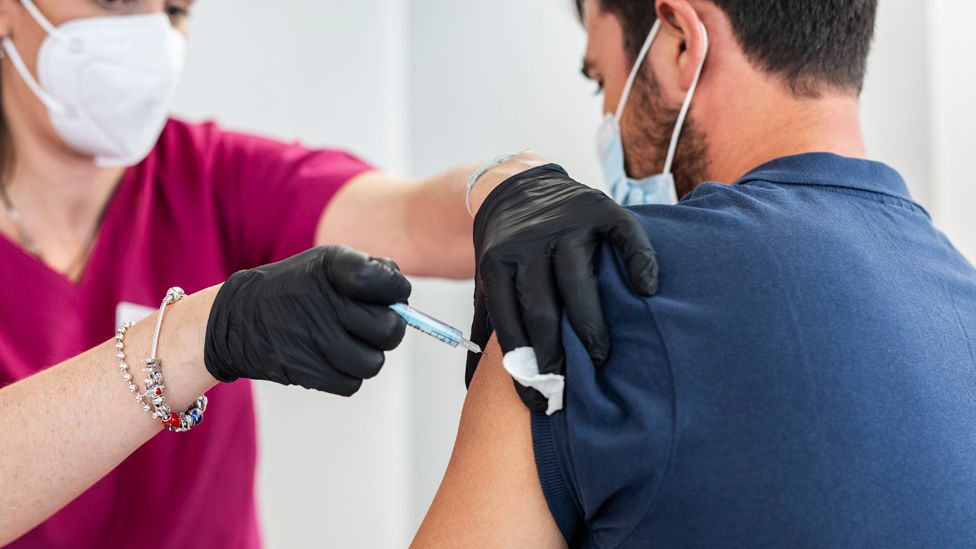
SharecloseShare pageCopy linkAbout sharingimage copyrightGetty ImagesHeart inflammation is a “very rare” side-effect of the Covid vaccines made by Pfizer and Moderna, according to regulators in Europe. The European Medicines Agency said the side-effects were more common in younger men.The medicines safety body said the benefits of Covid vaccines continue to far outweigh any risks. But doctors and patients have been advised to be aware of the symptoms of heart inflammation. These include chest pain, a feeling of breathlessness and a pounding or fluttering heartbeat. Anyone with these symptoms should see a doctor. Two conditions were linked to the vaccines – inflammation of the heart muscle itself, known as myocarditis, and inflammation of the fluid-filled sac the heart sits in, known as pericarditis. The EMA analysis of cases found:Pfizer-BioNTech – 145 cases of myocarditis and 138 cases of pericarditis out of 177m doses givenModerna – 19 case of myocarditis and 19 cases of pericarditis out of 20 million doses givenFive people died. The review said they were all either elderly or had other health conditions. The UK’s Medicines and Healthcare products Regulatory Agency (MHRA) has also been investigating the link. It reported: “A consistent pattern of cases occurring more frequently in young males and shortly after the second dose of the vaccines.”These reports are extremely rare, and the events are typically mild with individuals usually recovering within a short time with standard treatment and rest,” it added.Most cases are thought to be within 14 days of vaccination. While the risk is very rare, it is more likely to develop in young people – who are currently the focus on the vaccination campaign in the UK. Concerns about the side-effects have already played into the UK debate around vaccinating children, who are at lower risk of Covid.Myocarditis and pericarditis will be officially listed as side-effects in the UK and Europe, mirroring a move by the regulators in the US last month.”The chance of these conditions occurring is very low, but you should be aware of the symptoms so that you can get prompt medical treatment to help recovery and avoid complications,” the EMA said. The link with heart inflammation was found only in the vaccines that rely on mRNA technology to train the immune system. The was no link found for vaccines such as Oxford-AstraZeneca or Janssen, which use a genetically modified virus.However, the EMA has advised anyone with a history of capillary leak syndrome should not be given the Janssen vaccine. This is a rare but serious syndrome in which fluid leaks from blood vessels in the body.Follow James on Twitter

Read more →

C.D.C. to Issue New School Guidance, With Emphasis on Full Reopening

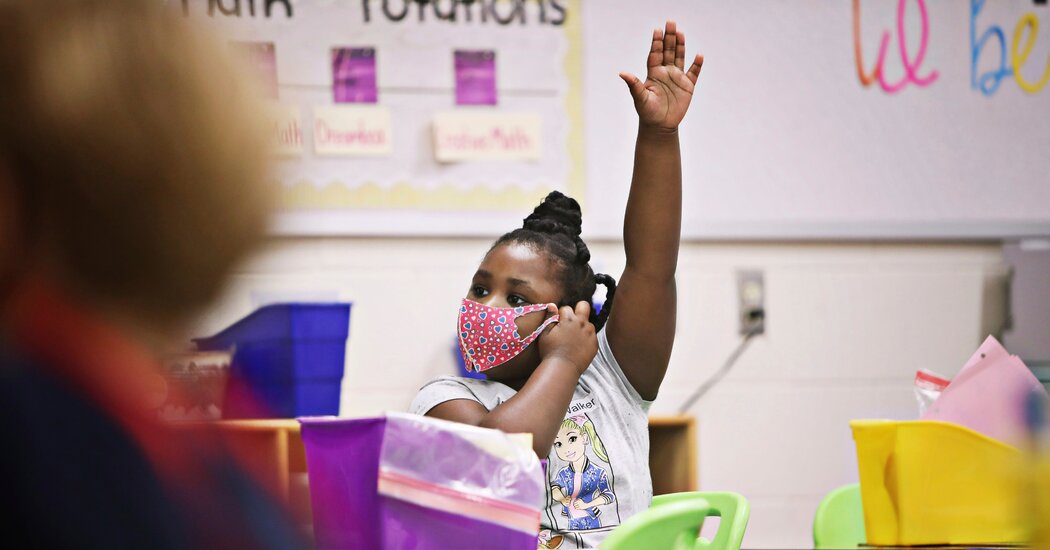
The guidance acknowledges that many students have suffered from months of virtual learning.The Centers for Disease Control and Prevention plans to release new guidance on Friday urging schools to fully reopen in the fall, even if they cannot take all of the steps the agency recommends to curb the spread of the coronavirus — a major turn in a public health crisis in which childhood education has emerged as a political flash point.The agency will also call on school districts to use local health data to guide decisions about when to tighten or relax prevention measures like mask wearing and physical distancing. Officials said they were confident this is the correct approach, even with the spread of the highly contagious Delta variant, and the fact that children under 12 are not yet eligible for vaccination.The guidance, which The Times has seen in draft form, is a sharp departure from the C.D.C.’s past recommendations for schools, bluntly acknowledging that many students have suffered during long months of virtual learning and that a uniform approach is not useful when virus caseloads and vaccination rates vary so greatly from city to city and state to state. The issue of school closures has been an extremely contentious and divisive topic since the outset of the pandemic, and advising school districts has been a fraught exercise for the C.D.C. Virtual learning has been burdensome not only for students but also their parents, many of whom had to stay home to provide child care, and reopening schools is an important step on the economy’s path to recovery.“This a big moment,” said Dr. Richard Besser, a former acting director of the C.D.C. “It’s also a recognition that there are real costs to keeping children at home, to keeping them out of school, that school is so important in terms of children’s socialization and development and it provides other supports as well” — including to working parents.The new guidance will continue to recommend that students be spaced at least three feet apart, but with a new caveat: If maintaining such spacing would prevent schools from fully reopening, they could rely on a combination of other strategies like indoor masking, testing and enhanced ventilation. The guidance recommends masks for all unvaccinated students, teachers or staff members.It also strongly urges schools to promote vaccination, which it called “one of the most critical strategies to help schools safely resume full operations.” Studies suggest that vaccines remain effective against the Delta variant.In previous recommendations, issued in March and reaffirmed in May, the agency said that all schools for students from kindergarten through 12th grade should continue to require masks through the end of the academic year. The agency also said that most students could be spaced three feet apart in classrooms — instead of six feet, which it had recommended earlier in the pandemic — as long as everyone was wearing a mask.“We know that in-person learning is really important for school, for children, for their educational, social and emotional well-being, and so we really want to get kids back in the classroom,” Erin Sauber-Schatz, a captain in the Public Health Service Commissioned Corps who helped lead the C.D.C. task force that wrote the guidance, said in an interview.“Physical distancing is still a recommended strategy,” she added, but she emphasized that if schools do not have sufficient space to keep all students three feet apart, “that should not keep children out of the classroom in the fall.”Socially distanced desks awaited students of the first day of classes in Stamford, Conn., last August.John Moore/Getty ImagesThe guidance relies heavily on the concept of “layered” prevention, or using multiple strategies at once. In addition to masking and social distancing, those strategies may include regular screening testing, improving ventilation, promoting hand washing, and contact tracing combined with isolation or quarantine.The recommendations call on local officials to closely monitor the pandemic in their areas, and suggest that if districts want to remove prevention strategies in schools based on local conditions, they should remove one at a time, monitoring for any increases in Covid-19.Captain Sauber-Schatz said the guidance, which the C.D.C. began drafting in May after the Food and Drug Administration authorized the Pfizer-BioNTech coronavirus vaccines for children ages 12 and older, had “really been written to be flexible.”Reactions among experts were mixed.Jennifer Nuzzo, an epidemiologist at Johns Hopkins University, said that while leaving decisions on school safety protocols to local officials might sound good in theory, it could prove “paralyzing” by putting prevention strategies up for negotiation and debate.“I really hoped they could issue very clear guidelines specifying what level of distance is required,” she said, “and not sort of like a meditative journey on the relative benefits of distance.”Others, including some who have been highly critical of the C.D.C.’s past school guidance, praised the new guidelines.“For the first time, I really think they hit it on the nose,” said Dr. Benjamin Linas, an infectious disease specialist at Boston University. “I think it’s science-based and right on the mark.”Dr. Linas said that he anticipated pushback to the recommendation that unvaccinated children wear masks, but that it still made sense.“I don’t want to send my 11-year-old to school without a mask yet, because Delta is out there,” he said, referring to the highly transmissible variant that now causes the majority of cases in the United States. “And even if she’s not going to get severe Covid from Delta, I’m not ready to take that risk.”Emily Oster, the Brown University economist and author of parenting books who waded last year into the contentious debate over school reopenings, using data to argue that children should return to school in person, said that she was generally pleased with the C.D.C.’s framework, which she said gave districts a road map to reopen without being too prescriptive.Though she had pushed for even more relaxed guidance — doing away with the three-foot rule altogether, for example — she said the new recommendations gave districts important flexibility.“This is, in some ways, the most positive I’ve been about their advice,” Dr. Oster said.Though there are far fewer cases overall than during the winter peak, including in children, they have increasingly made up a greater proportion of cases as the pandemic has gone on and, recently, as more adults have been vaccinated.Children have made up 14 percent of all cases to date, up from around 7 percent this time last year, according to the American Academy of Pediatrics, though serious illness and death among them remains rare.Around 2 percent or less of all coronavirus cases in children result in hospitalization, and even fewer — .03 percent of cases or less — result in death, according to the association’s research. Young children are also less likely to transmit the virus to others than are teens and adults.Still, scientists are concerned about a mysterious inflammatory syndrome that can emerge in children several weeks after they contract the coronavirus, including in those who did not have Covid-19 symptoms at the time of their infection. Some children may also experience lingering, long-term symptoms after being infected, a condition often known as long Covid.Elementary school students in Jersey City, N.J., returning for classes after lockdown in April.Seth Wenig/Associated PressThere are also questions about what role the more contagious Delta variant may play as children and teachers return to the classroom this fall. Captain Sauber-Schatz said that the prevention strategies that have worked for Covid-19 all along also work for the Delta variant, so for now the C.D.C. is “keeping a close eye on it” and will adjust its school guidance if necessary.Last summer, when former President Donald J. Trump was still in office, the White House tried behind the scenes to pressure the C.D.C. into playing down the risk of sending children back to school. The Trump White House also tried to circumvent the C.D.C. and find alternate data showing that the pandemic was weakening, The New York Times reported in September.In May, the agency created some confusion, including among parents and educators, in when it abruptly changed its guidance on mask-wearing and announced that vaccinated people could go without masks in most indoor and outdoor settings.The agency then clarified its advice for schools and recommended universal use of masks and physical distancing in the classroom through the end of the school year.The new guidelines still rely on quarantine as a prevention strategy for unvaccinated students when they are exposed to the virus, which Dr. Oster criticized as a significant hindrance for students and parents, even as research has consistently suggested that transmission in schools is low.“It’s really disruptive,” Dr. Oster said of quarantine requirements.In the previous guidelines, physical separation was contentious, and the new version may not resolve the debate. While the C.D.C. recommends that students be permitted to sit just three feet apart, it continues to call for teachers and other staff members to remain at least six feet away from students regardless of their vaccination status — and if they are unvaccinated, six feet away from one another.Captain Sauber-Schatz said those recommendations were rooted in science.“For the studies that have been done looking at the difference between three feet and six feet, those were all between students in the classroom, not between teachers and students,” she said. “We have the science and the evidence to make that recommendation, that three feet is permissible between students in the classroom. We don’t have that level of evidence for the staff.”

Read more →

Covid vaccines do work well in clinically vulnerable

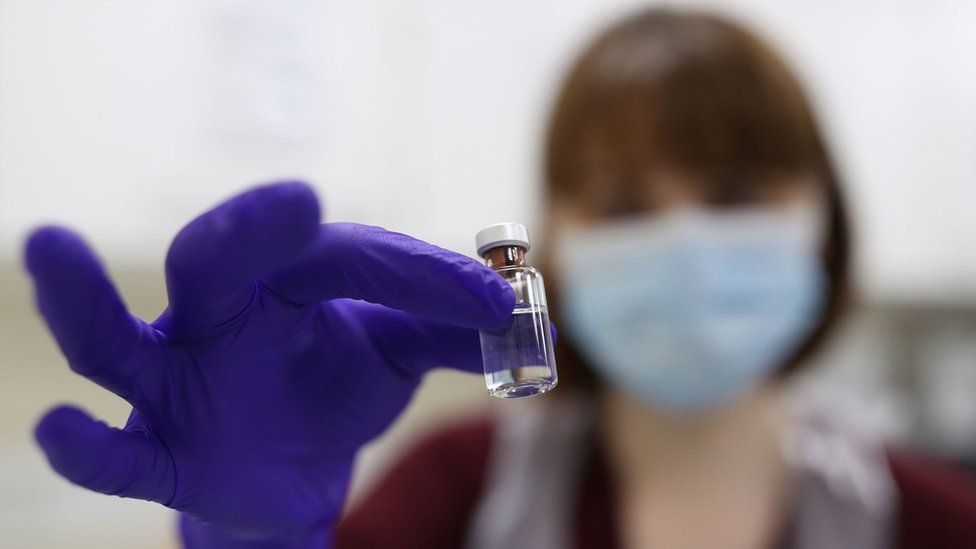
SharecloseShare pageCopy linkAbout sharingimage copyrightGetty ImagesCovid vaccines are highly effective in people with underlying health conditions who were advised to shield earlier in the pandemic, real-world UK data reveals. The study of more than a million people in at-risk groups shows two doses of the Pfizer or AstraZeneca vaccines are needed for this protection. Being double-jabbed reduced the risk of symptomatic Covid-19 by around 90%.One dose cut it by about 60%, says Public Health England (PHE).Covid-19: People share feelings on end of shieldingShielding teenager goes back to school after 450 daysIt takes a couple of weeks for the protection offered by a second to kick in. Protection against hospitalisation and death in at-risk groups is expected to be greater than protection against symptomatic disease, as has been seen in studies of the general population, although more data is needed to confirm this. The study findings also cover a time period when the Alpha, or UK, coronavirus variant was dominant, rather than the Delta one, which is behind most infections occurring now. But experts are increasingly confident that existing vaccines still work well against Delta. Dr Mary Ramsay, head of immunisation at PHE, said: “This real-world data shows for the first time that most people who are clinically vulnerable to Covid-19 still receive high levels of protection after two doses of vaccine.”It is vital that anyone with an underlying condition gets both doses, especially people with weakened immune systems as they gain so much more benefit from the second dose.”In the study, one dose of vaccine was, on average, only 4% effective in people with weakened immune systems. Efficacy increased to 74%, however, after two doses.

Read more →

Thyroid cancer now diagnosed with machine learning-powered photoacoustic/ultrasound imaging

A lump in the thyroid gland is called a thyroid nodule, and 5-10% of all thyroid nodules are diagnosed as thyroid cancer. Thyroid cancer has a good prognosis, a high survival rate, and a low recurrence rate, so early diagnosis and treatment are crucial. Recently, a joint research team in Korea has proposed a new non-invasive method to distinguish thyroid nodules from cancer by combining photoacoustic (PA) and ultrasound image technology with artificial intelligence.
The joint research team — composed of Professor Chulhong Kim and Dr. Byullee Park of POSTECH’s Department of Electrical Engineering, Department of Convergence IT Engineering and Department of Mechanical Engineering, Professor Dong-Jun Lim and Professor Jeonghoon Ha of Seoul St. Mary’s Hospital of Catholic University of Korea, and Professor Jeesu Kim of Pusan National University — conducted a research to acquire PA images from patients with malignant and benign nodules and analyzed them with artificial intelligence. In recognition of their significance, the findings from this study were published in Cancer Research.
Currently, the diagnosis of a thyroid nodule is performed using a fine-needle aspiration biopsy (FNAB) using an ultrasound image. But about 20% of FNABs are inaccurate which leads to repetitive and unnecessary biopsies.
To overcome this problem, the joint research team explored the use of PA imaging to obtain an ultrasonic signal generated by light. When light (laser) is irradiated on the patient’s thyroid nodule, an ultrasound signal called a PA signal is generated from the thyroid gland and the nodule. By acquiring and processing this signal, PA images of both the gland and the nodule are collected. At this time, if multispectral PA signals are obtained, oxygen saturation information of the thyroid gland and thyroid nodule can be calculated.
The researchers focused on the fact that the oxygen saturation of malignant nodules is lower than that of normal nodules, and acquired PA images of patients with malignant thyroid nodules (23 patients) and those with benign nodules (29 patients). Performing in vivo multispectral PA imaging on the patient’s thyroid nodules, the researchers calculated multiple parameters, including hemoglobin oxygen saturation level in the nodule area. This was analyzed using machine learning techniques to successfully and automatically classify whether the thyroid nodule was malignant or benign. In the initial classification, the sensitivity to classify malignancy as malignant was 78% and the specificity to classify benign as benign was 93%.
The results of PA analysis obtained by machine learning techniques in the second analysis were combined with the results of the initial examination based on ultrasound images normally used in hospitals. Again, it was confirmed that the malignant thyroid nodules could be distinguished with a sensitivity of 83% and a specificity of 93%.
Going a step further, when the researchers kept the sensitivity at 100% in the third analysis, the specificity reached 55%. This was about three times higher than the specificity of 17.3% (sensitivity of 98%) of the initial examination of thyroid nodules using the conventional ultrasound.
As a result, the probability of correctly diagnosing benign, non-malignant nodules increased more than three times, which shows that overdiagnosis and unnecessary biopsies and repeated tests can be dramatically reduced, and thereby cut down on excessive medical costs.
“This study is significant in that it is the first to acquire photoacoustic images of thyroid nodules and classify malignant nodules using machine learning,” remarked Professor Chulhong Kim of POSTECH. “In addition to minimizing unnecessary biopsies in thyroid cancer patients, this technique can also be applied to a variety of other cancers, including breast cancer.”
“The ultrasonic device based on photoacoustic imaging will be helpful in effectively diagnosing thyroid cancer commonly found during health checkups and in reducing the number of biopsies,” explained Professor Dong-Jun Lim of Seoul St. Mary’s Hospital. “It can be developed into a medical device that can be readily used on thyroid nodule patients.”

Read more →

Virtual learning may help NICU nurses recognize baby pain

Babies younger than four weeks old, called neonates, were once thought not to perceive pain due to not-yet-fully-developed sensory systems, but modern research says otherwise, according to researchers from Hiroshima University in Japan.
Not only do babies experience pain, but the various levels can be standardized to help nurses recognize and respond to the babies’ cues — if the nurses have the opportunity to learn the scoring tools and skills needed to react appropriately. With tight schedules and limited in-person courses available, the researchers theorized, virtual e-learning may be able to provide a path forward for nurses to independently pursue training in this area.
To test this hypothesis, researchers conducted a pilot study of 115 nurses with varying levels of formal training and years of experience in seven hospitals across Japan. They published their results on May 27 in Advances in Neonatal Care.
“Despite a growing body of knowledge and guidelines being published in many countries about the preventions and management of pain in neonates hospitalized in the NICU, neonatal pain remains unrecognized, undertreated, and generally challenging,” said paper author Mio Ozawa, associate professor in the Graduate School of Biomedical and Health Sciences at Hiroshima University.
The researchers developed a comprehensive multimedia virtual program on neonatal pain management, based on selected standardized pain scales, for nursing staff to independently learn how to employ measurement tools. The program, called e-Pain Management of Neonates, is the first of its kind in Japan.
“The aim of the study was to verify the feasibility of the program and whether e-learning actually improves nurses’ knowledge and scoring skills,” said paper author Mio Ozawa, associate professor in the Graduate School of Biomedical and Health Sciences at Hiroshima University. “The results of this study suggest that nurses could obtain knowledge and skills about the measurement of neonatal pain through e-learning.”
The full cohort took a pre-test at the start of the study, before embarking on a self-paced, four-week e-learning program dedicated to learning standardized pain scales to measure discomfort in babies. However, only 52 nurses completed the post-test after four weeks. For those 52, scores increased across a range of years of experience and formal education.
Ozawa noted that the sample size is small but also said that the improved test scores indicated the potential for e-learning.
“Future research will need to go beyond the individual level to determine which benefits are produced in the management of neonatal pain in hospitals where nurses learn neonatal pain management through e-learning,” Ozawa said. “This study demonstrates that virtually delivered neonatal pain management program can be useful for nurses’ attainment of knowledge and skills for managing neonatal pain, including an appropriate use of selected scoring tools.”
Story Source:
Materials provided by Hiroshima University. Note: Content may be edited for style and length.

Read more →

Exposure to light with less blue before sleep is better for energy metabolism

Extended exposure to light during nighttime can have negative consequences for human health. But now, researchers from Japan have identified a new type of light with reduced consequences for physiological changes during sleep.
In a study published in June 2021 in Scientific Reports, researchers from University of Tsukuba compared the effects of light-emitting diodes (LEDs), which have been widely adopted for their energy-saving properties, with organic light-emitting diodes (OLEDs) on physical processes that occur during sleep.
Polychromatic white LEDs emit a large amount of blue light, which has been linked with many negative health effects, including metabolic health. In contrast, OLEDs emit polychromatic white light that contains less blue light. However, the impact of LED and OLED exposure at night has not been compared in terms of changes in energy metabolism during sleep, something the researchers at University of Tsukuba aimed to address.
“Energy metabolism is an important physiological process that is altered by light exposure,” says senior author of the study Professor Kumpei Tokuyama. “We hypothesized that compared with LEDs, OLED exposure would have a reduced effect on sleep architecture and energy metabolism, similar to that of dim light.”
To test this hypothesis, the researchers exposed 10 male participants to LED, OLED, or dim light for 4 hours before they slept in a metabolic chamber. The researchers then measured energy expenditure, core body temperature, fat oxidation, and 6-sulfatoxymelatonin — which is a measure of melatonin levels — during sleep. The participants had not recently traveled or participated in shift work.
“The results confirmed part of our hypothesis,” explains Professor Tokuyama. “Although no effect on sleep architecture was observed, energy expenditure and core body temperature during sleep were significantly decreased after OLED exposure. Furthermore, fat oxidation during sleep was significantly lower after exposure to LED compared with OLED.”
In addition, fat oxidation during sleep was positively correlated with 6-sulfatoxymelatonin levels following exposure to OLED, suggesting that the effect of melatonin activity on energy metabolism varies depending on the type of light exposure.
“Thus, light exposure at night is related to fat oxidation and body temperature during sleep. Our findings suggest that specific types of light exposure may influence weight gain, along with other physiological changes,” says Professor Tokuyama.
Many occupations and activities involve exposure to artificial light before sleep. New information about the effects of different kinds of light on physical processes may facilitate the selection of alternative light sources to mitigate the negative consequences of light exposure at night. Furthermore, these findings advance our knowledge regarding the role of light in energy metabolism during sleep.
Story Source:
Materials provided by University of Tsukuba. Note: Content may be edited for style and length.

Read more →

Vocal music boosts the recovery of language functions after stroke

Research has shown that listening to music daily improves language recovery in patients who have experienced a stroke. However, the neural mechanisms underlying the phenomenon have so far remained unknown.
A study conducted at the University of Helsinki and the Turku University Hospital Neurocenter compared the effect of listening to vocal music, instrumental music and audiobooks on the structural and functional recovery of the language network of patients who had suffered an acute stroke. In addition, the study investigated the links between such changes and language recovery during a three-month follow-up period. The study was published in the eNeuro journal.
Based on the findings, listening to vocal music improved the recovery of the structural connectivity of the language network in the left frontal lobe compared to listening to audiobooks. These structural changes correlated with the recovery of language skills.
“For the first time, we were able to demonstrate that the positive effects of vocal music are related to the structural and functional plasticity of the language network. This expands our understanding of the mechanisms of action of music-based neurological rehabilitation methods,” says Postdoctoral Researcher Aleksi Sihvonen.
Listening to music supports other rehabilitation
Aphasia, a language impairment resulting from a stroke, causes considerable suffering to patients and their families. Current therapies help in the rehabilitation of language impairments, but the results vary and the necessary rehabilitation is often not available to a sufficient degree and early enough.
“Listening to vocal music can be considered a measure that enhances conventional forms of rehabilitation in healthcare. Such activity can be easily, safely and efficiently arranged even in the early stages of rehabilitation,” Sihvonen says.
According to Sihvonen, listening to music could be used as a cost-efficient boost to normal rehabilitation, or for rehabilitating patients with mild speech disorders when other rehabilitation options are scarce.
After a disturbance of the cerebral circulation, the brain needs stimulation to recover as well as possible. This is the goal of conventional rehabilitation methods as well.
“Unfortunately, a lot of the time spent in hospital is not stimulating. At these times, listening to music could serve as an additional and sensible rehabilitation measure that can have a positive effect on recovery, improving the prognosis,” Sihvonen adds.
Story Source:
Materials provided by University of Helsinki. Note: Content may be edited for style and length.

Read more →

Match matters: The right combination of parents can turn a gene off indefinitely

Evidence suggests that what happens in one generation — diet, toxin exposure, trauma, fear — can have lasting effects on future generations. Scientists believe these effects result from epigenetic changes that occur in response to the environment and turn genes on or off without altering the genome or DNA sequence.
But how these changes are passed down through generations has not been understood, in part, because scientists have not had a simple way to study the phenomenon. A new study by researchers at the University of Maryland provides a potential tool for unraveling the mystery of how experiences can cause inheritable changes to an animal’s biology. By mating nematode worms, they produced permanent epigenetic changes that lasted for more than 300 generations. The research was published on July 9, 2021, in the journal Nature Communications.
“There’s a lot of interest in heritable epigenetics,” said Antony Jose, associate professor of cell biology and molecular genetics at UMD and senior author of the study. “But getting clear answers is difficult. For instance, if I’m on some diet today, how does that affect my children and grandchildren and so on? No one knows, because so many different variables are involved. But we’ve found this very simple method, through mating, to turn off a single gene for multiple generations. And that gives us a huge opportunity to study how these stable epigenetic changes occur.”
In the new study, Jose and his team found while breeding nematode worms that some matings led to epigenetic changes in offspring that continued to be passed down through as many generations as the scientists continued to breed them. This discovery will enable scientists to explore how epigenetic changes are passed to future generations and what characteristics make genes susceptible to permanent epigenetic changes.
Jose and his team began this work in 2013, while working with nematode worms, Caenorhabditis elegans (C. elegans), a species often used as a model for understanding animal biology. The scientists noticed that worms bred to carry a gene they called T, which produces fluorescent proteins, sometimes glowed and sometimes didn’t. This was puzzling because the glowers and the non-glowers had nearly identical DNA.
“Everything began when we stumbled upon a rare gene that underwent permanent change for hundreds of generations just by mating. We could have easily missed it,” said Sindhuja Devanapally (Ph.D. ’18, biological sciences), a co-lead author of the study who is now a postdoctoral fellow at Columbia University.

Read more →

Recess quality influences student behavior, social-emotional development

Recess quality, not just the amount of time spent away from the classroom, plays a major role in whether children experience the full physical, mental and social-emotional benefits of recess, a new study from Oregon State University found.
“Not all recess is created equal,” said William Massey, study author and an assistant professor in OSU’s College of Public Health and Human Sciences. With schools returning to full-time in-person classes this fall, he said, “Now is a good time to rethink, ‘How do we create schools that are more child-friendly?’ I think ensuring quality access to play time and space during the school day is a way we can do that.”
Massey’s study, published this week in the Journal of School Health, involved in-person observation of third- and fifth-grade students at 25 schools across five states during the 2018-19 school year. The schools covered a wide range of socioeconomic status and racial and ethnic diversity.
Researchers measured recess quality on a number of factors, including whether the schoolyard offered physical and environmental safety; whether kids had opportunities to play and had the requisite space and equipment; whether there were opportunities for inclusion; and if they had diverse options for play.
A safe space with basic playground equipment might seem like a given, but that’s not always the case, Massey said.
“I’ve been on playgrounds where the kids go outside, and it’s a parking lot with high fences, no play structure, no balls, no jump-ropes, no chalk — they’re literally outside, and there’s nothing to do,” he said. He has also seen large holes from construction, broken glass, used condoms and needles in play spaces.

Read more →

Human cells: To splice or not to splice. ..

To splice or not to splice…
In an article published in the journal RNA, Karan Bedi, a bioinformatician in Mats Ljungman’s lab, Department of Radiation Oncology at the University of Michigan Medical School, investigated the efficiency of splicing across different human cell types. The results were surprising in that the splicing process appears to be quite inefficient, leaving most intronic sequences untouched as the transcripts are being synthesized. The study also reports variable patterns between the different introns within a gene and across cell lines, and it further highlights the complexity of how newly transcripts are processed into mature mRNAs.
Several processes take place to produce mature mRNAs that then can be exported to the cytoplasm and used as a template for protein synthesis. After initiation of transcription and the go-ahead of elongation to produce the pre-mRNA, introns need to be spliced out and the protein-coding exons connected. At first, pre-mRNA is made as a complementary sequence of the DNA but with slightly different chemistry and includes all the introns. Then the spliceosome machinery, made up of about 300 proteins, assembles “co-transcriptionally” at each intron junction as the RNA emerges from its synthesis. “Splicing is an incredibly complex process because of the great number of proteins involved that repeatedly need to assemble and disassemble at each junction. Also, the speed at which transcription generates RNA is quite fast so the splicing process has to be well organized. Many steps can go wrong and lead to various pathologies, which is why it is so important to have a better understanding of how splicing happens and how it is regulated,” said Bedi.
The team started their study by analyzing the large set of Bru-seq data that the Ljungman lab has accumulated over the last 10 years and settled on six cell lines that had deep enough data for a comprehensive analysis of splicing efficiencies genome-wide. The Bru-seq technology was developed in the Ljungman lab and is based on the selective capturing of newly synthesized RNA tagged with bromouridine. Once collected, the nascent Bru-labeled RNAs were sequenced at the University of Michigan Advanced Genomics Core, and Bedi used a custom-designed computational analysis pipeline to analyze the splicing efficiencies across these data sets.
“You have to be able to use samples with a sufficient read-depth to analyze the splicing efficiencies at the junctions between introns and exons,” explained Bedi. To do so, he combined sequencing data from many experiments.
In addition to the 300 proteins that remove the introns, other regulating factors participate in the splicing process. The authors identified a number of RNA-binding proteins that have been shown to have variable degrees of binding to introns, or the exon, or to the junction between them.
Bedi concluded his interview with a puzzling question opened for investigation: to have a protein, the cell needs mRNAs that are properly spliced. Why, then, would the cell waste so much energy into making RNAs that are imprecisely spliced? Ljungman points out that the inclusion of introns in our genes has served an important purpose during the evolution of higher eukaryotes in that it allowed for an increased protein diversity by the “re-shuffling” of the coding exon sequences. “If splicing was fully accurate and efficient every time, the diversity of protein-coding sequences would be much lower and thus, we believe, evolution must have shaped a certain degree of ‘sloppiness’ into the splicing process. Our study is the most comprehensive study of co-transcriptional splicing genome-wide to date and it clearly documents the variability of the splicing process across genes and cell types,” added Ljungman.
Splicing is an area of research where much is still to be explored and discovered. Fundamental biology questions and technology development go hand in hand to find answers that contribute to the understanding of the splicing process and for the development of cures for various diseases caused by aberrant splicing.
Mats Ljugman is Professor of Radiation Oncology and of Environmental Health Sciences, and director of the Bru-Seq lab. He is also co-director of the University of Michigan Center for RNA Biomedicine of which the Bru-Seq lab is one of its two core facilities. Areas of expertise of this lab are RNA isolation, cDNA library preparation, and sequencing data analysis. The Bru-Seq lab serves researchers from the University of Michigan, and other institutions in the United States and around the world.
Story Source:
Materials provided by University of Michigan. Note: Content may be edited for style and length.

Read more →