Covid: Woman aged 90 died with double variant infection

SharecloseShare pageCopy linkAbout sharingimage copyrightGetty ImagesIt is possible to catch two Covid variants at the same time, experts are warning after seeing a double infection in a 90-year-old woman who became sick with the Alpha and Beta types first identified in the UK and South Africa. The woman, who died in March 2021 in Belgium, had not been vaccinated. Her doctors suspect she contracted the infections from two different people. They believe it is the first documented case of its kind and, although rare, similar dual infections are happening. Her case is being discussed at this year’s European Congress on Clinical Microbiology & Infectious Diseases.In January 2021, scientists in Brazil reported that two people had been simultaneously infected with two types of coronavirus, one of them a variant of concern called Gamma. Researchers from Portugal, meanwhile, recently treated a 17-year-old who appeared to have caught a second type of Covid while still recovering from a different, pre-existing Covid infection. The 90-year-old, who was infected with the two “variants of concern” – the most worrying new versions of coronavirus that experts are tracking – had been admitted to hospital after experiencing some falls, but later developed worsening respiratory symptoms.What are Covid variants of concern? Is there a limit to how much worse variants can get? Laboratory tests on samples taken when she was admitted revealed she had Covid-19, caused by two different mutated versions of the pandemic virus, simultaneously – Alpha and Beta. Lead researcher Dr Anne Vankeerberghen, from the OLV hospital in Aalst, Belgium, said: “Both these variants were circulating in Belgium at the time, so it is likely that the lady was co-infected with different viruses from two different people. Unfortunately, we don’t know how she became infected.”She was a lady who lived alone, but she got a lot of helpers coming in to care for her. “Whether the co-infection of the two variants of concern played a role in the fast deterioration of the patient is difficult to say.”Viruses constantly evolve by mutating as they replicate. This creates new versions or variants. Covid has undergone some important changes that may give it an advantage – for example, by increasing its ability to replicate or dodge some of our existing immunity from past infection or vaccination. The most concerning ones are being closely monitored by scientists and are called variants of concern. Currently, in the UK, it is the Delta variant that is spreading the most. Experts are confident that existing vaccines offer good protection against it. Scientists are designing new Covid vaccines that will be an even better match for new variants, and could be used as boosters.Prof Lawrence Young, an expert in virology at the University of Warwick, said: “Detecting two dominant variants of concern in a single person is not a surprise – these could have been passed on by a single infected individual, or by contact with multiple infected people.”He said more studies were needed to determine whether such infections in any way compromise the efficacy of vaccination, or make for a worse case of Covid-19.

Read more →

For pediatric patients with Crohn's disease, factors associated with statural growth differ by sex

Growth impairment, a common complication of Crohn’s disease in children, occurs more often in males than females, but the reasons are unclear. Now, a physician-scientist from Weill Cornell Medicine and NewYork-Presbyterian and colleagues at eight other centers have found that factors associated with statural growth differ by sex. Their recent publication, identified as the “Editor’s Choice / Leading Off” article and receiving a mention on the cover of the June issue of Inflammatory Bowel Diseases, underscores the need for investigating and developing sex-specific treatment strategies for children with Crohn’s disease, an approach that is not currently part of the pediatric Crohn’s disease management algorithm.
The Growth Study is an ongoing prospective, multicenter, longitudinal cohort study investigating sex differences in growth impairment in children with Crohn’s disease. For their current analysis, lead author Dr. Neera Gupta, principal investigator for The Growth Study, director of research for the Pediatric Inflammatory Bowel Disease (PIBD) Program and an associate professor of pediatrics at Weill Cornell Medicine and a pediatric gastroenterologist at NewYork-Presbyterian Komansky Children’s Hospital, and colleagues examined a range of variables associated with statural growth by sex for 113 children with Crohn’s disease, such as disease characteristics, patient-reported symptoms at onset and the use of certain medications.
Among 41 female patients, an initial classification of IBD as Crohn’s disease or perianal disease at diagnosis were associated with better growth. However, patient-reported joint pain at symptom onset or the use of probiotics or azathioprine/6-mercaptopurine were associated with worse growth.
Variables associated with statural growth were markedly different for 72 male patients. Patient-reported poor growth at symptom onset or the use of infliximab, biologics, methotrexate or vitamin D were associated with better growth. In contrast, an initial classification of IBD as Crohn’s disease or patient-reported anorexia or mouth sores at symptom onset were associated with worse growth.
The authors noted that female patients appear to grow better independent of disease severity/inflammatory burden and medication interventions. Their findings suggest sex-specific molecular pathways lead to growth impairment in children with Crohn’s disease, and that there may be a difference in the response of these sex-specific molecular pathways to current medications used to treat pediatric Crohn’s disease. Sex will likely be an important future determinant of treatment decisions, which will represent a major advancement in clinical decision making for pediatric Crohn’s disease.
“Through the Growth Study, we aim to transform the care of pediatric patients with Crohn’s disease by providing an evidence-based approach for the appropriate early introduction of aggressive therapy in patients with high risk for each sex because there is only a narrow therapeutic window available for intervention to improve statural growth,” the authors wrote.
Story Source:
Materials provided by Weill Cornell Medicine. Note: Content may be edited for style and length.

Read more →

Dying cells protect their neighbors to maintain tissue integrity

To enable tissue renewal, human tissues constantly eliminate millions of cells, without jeopardizing tissue integrity, form and connectivity. The mechanisms involved in maintaining this integrity remain unknown. Scientists from the Institut Pasteur and the CNRS today revealed a new process which allows eliminated cells to temporarily protect their neighbors from cell death, thereby maintaining tissue integrity. This protective mechanism is vital, and if disrupted can lead to a temporary loss of connectivity. The scientists observed that when the mechanism is deactivated, the simultaneous elimination of several neighboring cells compromises tissue integrity. This lack of integrity could be responsible for chronic inflammation. The results of the research were published in the journal Developmental Cell on June 2, 2021.
Human epithelia are tissues found in several parts of the body (such as the epidermis and internal mucosa). They are composed of layers of contiguous cells that serve as a physical and chemical barrier. This role is constantly being put to the test by both the outside environment and their own renewal. Tissue renewal involves the formation of new cells by cell division and the elimination of dead cells. The mechanisms that regulate the ability of epithelia to maintain their integrity in contexts involving large numbers of eliminated cells remain poorly understood, despite the fact that this situation occurs regularly during embryogenesis or the maintenance of adult tissues. For example, more than ten billion cells can be eliminated every day in an adult intestine. How are these eliminations orchestrated to maintain tissue integrity and connectivity?
Scientists from the Institut Pasteur and the CNRS set out to identify the mechanisms involved in epithelial integrity and the conditions that can affect epithelial connectivity by using Drosophila (or vinegar flies), an organism studied in the laboratory with a similar epithelial architecture to humans.
Using protein-sensitive fluorescent markers, the research team revealed that when a cell dies, the EGFR-ERK pathway — a cell activation signaling pathway known for its involvement in the regulation of cell survival — is temporarily activated in the neighboring cells. The scientists observed that the activation of the EGFR-ERK pathway protected neighboring cells from cell death for approximately one hour, thereby preventing the simultaneous elimination of a group of cells. “We already knew that this pathway plays a key role in regulating cell survival in epithelial tissue, but we were surprised to observe such protective dynamics between cells,” comments Romain Levayer, Head of the Cell Death and Epithelial Homeostasis Unit at the Institut Pasteur and last author of the study.
The scientists’ research also shows that inhibiting this protective mechanism has a drastic effect on epithelial tissue: cell elimination becomes random and neighboring cells can be eliminated simultaneously, leading to repeated losses of connectivity. The elimination of groups of neighboring cells is never observed in epithelial tissue in normal conditions, when the EGFR-ERK pathway is not deliberately inhibited, even if a large number of cells are eliminated.
By using a new optogenetic tool that can control cell death in time and space and bypass the protective mechanism, the scientists confirmed that epithelial integrity was compromised when neighboring cells were eliminated simultaneously. “Surprisingly, epithelial tissue is highly sensitive to the spatial distribution of eliminated cells. Although it can withstand the elimination of a large number of cells, epithelial integrity is affected if just three neighboring cells are eliminated simultaneously,” explains Léo Valon, a scientist in the Cell Death and Epithelial Homeostasis Unit at the Institut Pasteur and first author of the study.
The scientists’ observations confirm that tissues need to develop mechanisms preventing the elimination of neighboring groups of cells. “These observations are important as they illustrate the incredible self-organizing ability of biological tissues, a property that enables them to withstand stressful conditions. So there is no need for a conductor to orchestrate where and when the cells should die; everything is based on highly local communications between neighboring cells,” adds Romain Levayer.
This process seems to have been conserved during evolution. The same protective mechanism based on local EGFR-ERK activation was discovered independently in human cell lines by the research group led by Olivier Pertz at the University of Bern in Switzerland (the results are published in the same journal2). The results of the other study suggest that the protective mechanism is conserved between species separated by hundreds of millions of years, indicating that it is a relatively universal mechanism.
Future research will reveal whether disruption to this cell death coordination mechanism and repeated loss of connectivity in epithelial tissue could be one of the roots of chronic inflammation, a phenomenon responsible for various diseases that are currently among the leading causes of death worldwide.
Story Source:
Materials provided by Institut Pasteur. Note: Content may be edited for style and length.

Read more →

I.M.F. Board Backs $650 Billion Aid Plan to Help Poor Countries

The expansion of emergency reserves to help fund vaccines and pay down debt is politically contentious in the United States.VENICE — The International Monetary Fund took a step on Friday toward easing widening global inequality and helping poor nations get access to vaccines, saying its executive board approved a plan to issue $650 billion worth of reserve funds that countries can use to buy vaccines, finance health care and pay down debt.The decision comes at a pivotal moment as Covid-19 infections continue to spread among populations that have not been inoculated and as more contagious variants of the coronavirus are posing new health threats. The pandemic has drained the fiscal resources of poor countries over the past year, and the I.M.F. projected this week that faster access to vaccinations for high-risk populations could save 500,000 lives in the next six months.The new allocation of so-called Special Drawing Rights would be the largest such expansion of currency reserves in the I.M.F.’s history. If approved by the group’s board of governors, as is expected, the reserves could become available by the end of next month.“This is a shot in the arm for the world,” Kristalina Georgieva, managing director of the I.M.F., said in a statement. “The S.D.R. allocation will help every I.M.F. member country — particularly vulnerable countries — and strengthen their response to the Covid-19 crisis.”Ms. Georgieva made the announcement as finance ministers and central bank governors of the Group of 20 nations were gathering in Venice to discuss international tax policy, climate change and the global economic response to the pandemic. The I.M.F., established in 1944 to try to broker economic cooperation, has warned of a two-track economic recovery, with poor countries being left behind while advanced economies experience rapid expansions.Ahead of the meetings, Treasury Department officials said expanding access to vaccines would be a central topic of discussion. It is also a potentially contentious one, as some developing countries have suggested that advanced economies are not doing enough to ensure fair distribution of vaccines.“The immediate priority for developing countries is widespread access to vaccines that match their deployment programs,” David Malpass, president of the World Bank, said in a speech in Venice on Friday.Mr. Malpass called on G20 countries to share doses and remove all trade barriers to exporting finished vaccines and their components. He noted that the pandemic had aggravated structural weaknesses that had dogged developing countries for years.“Even as that is accomplished,” Mr. Malpass said of expanded vaccine distribution, “development faces years of setback and struggle.”Narrowing the gap between the fortunes of advanced and developing economies was a central topic on the first day of the G20 meetings in Venice. Bruno Le Maire, France’s finance minister, told reporters on Friday that inequality was a risk to the stability and security of Europe that could lead to an influx of refugees. He argued that it must be urgently addressed.It remains to be seen how far the $650 billion will go to help developing countries as they race to vaccinate people before new variants of the virus take hold, including the Delta variant, which has plunged many countries back into a health crisis.The United Nations Conference on Trade and Development called this year for $1 trillion worth of Special Drawing Rights to be made available by the I.M.F. as a “helicopter money drop for those being left behind.”Jubilee USA Network, a nonprofit organization that advocates debt relief for poor countries, praised the move by the I.M.F. and called on wealthy countries to do more to help.“This is the biggest creation of emergency reserve funds that we’ve ever seen, and developing countries will immediately receive more than $200 billion,” said Eric LeCompte, executive director of Jubilee USA Network. “Wealthy countries who receive emergency reserves they don’t need should transfer those resources to developing countries struggling through the pandemic.”The I.M.F., the World Bank, the World Health Organization and the World Trade Organization have created a new vaccine task force and called for an additional $50 billion investment to broaden access to supplies. The groups have also called on G20 countries to set a goal of having 40 percent of their populations vaccinated by the end of this year and 60 percent by the middle of next year.The United States has thrown its support behind the expansion of the I.M.F. reserves, reversing a Trump administration policy and angering Republican lawmakers in the process.The Trump administration balked at the proposal last year and prevented it from moving forward. It argued at the time that boosting the emergency reserves was an inefficient way to provide aid to poor countries and that doing so would provide more resources to advanced economies that did not need the help, like China and Russia.Republican lawmakers have since accused the Biden administration of bolstering the fortunes of adversaries, while doing little to actually help developing nations. Although Republicans have introduced legislation that would put restrictions on how the I.M.F. reserves were used if they were authorized, such proposals are unlikely to pass with Democrats in control of Congress.Under Treasury Secretary Janet L. Yellen, the United States has taken a different view from the Trump administration, and the United States supports the allocation. Ms. Yellen believes that rich countries will have little use for the S.D.R.s but that developing economies will be able to use them to get enough money to vaccinate their people.Treasury Secretary Janet Yellen, center, arriving for the Group of 20 finance ministers and central bank governors meeting in Venice on Friday.Andrea Merola/EPA, via ShutterstockSpecial Drawing Rights work by allowing member countries of the I.M.F. to cash the asset in for hard currency. Their value is based on a basket of international currencies and is reset every five years.Each of the 190 countries that is a member of the I.M.F. gets an allotment of S.D.R.s based on its shares in the fund, which tracks with the size of a country’s economy. The new reserves would also be distributed under this formula, with the largest economic powers like the United States gaining the biggest tranche.The drawing rights cannot be used to buy things on their own, but they can be traded for currencies that can. If two countries agree, they can trade their Special Drawing Rights for cash, with the I.M.F. acting as a middleman to facilitate the trade.That has prompted some criticism that the program will not work unless rich countries voluntarily transfer their holdings to poorer nations.“It is a legitimate concern that new S.D.R.s will end up mostly in the hands of large and rich countries that have little use for them rather than in the hands of the smaller and poorer countries that really need them,” said Eswar Prasad, the International Monetary Fund’s former China chief. “A reallocation of S.D.R.s toward the latter group, in addition to increasing the overall volume of S.D.R.s, would be helpful in dealing with stresses to the global financial system.”To address some of those concerns, the I.M.F. is working to develop a new trust fund where rich countries can channel their excess S.D.R.s. The goal is to create a $100 billion pot of money that poor countries take loans from so they can expand health care systems or address climate change in conjunction with existing I.M.F. programs.The United States has previously indicated it will make available about one-fifth of its allocation, worth about $20 billion. At the urging of the United States, the I.M.F. is also working to create greater transparency around how the assets are being used so that it is clear that American adversaries are not benefiting from the proceeds.The I.M.F.’s board of governors is expected to hold its vote in early August.

Read more →

A New Alzheimer’s Drug Offers More Questions Than Answers

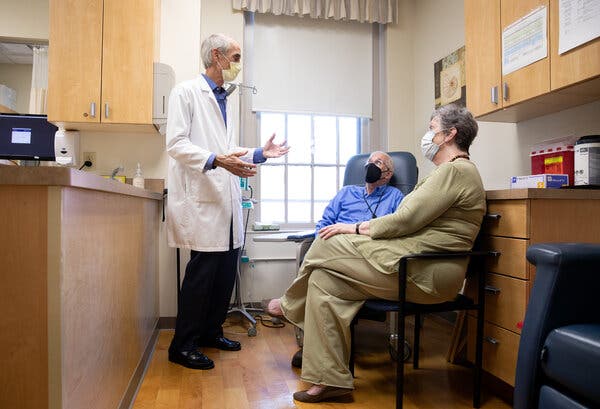
July 8: This article was updated to note a change in the F.D.A.’s recommended use for Aduhlem that was announced after it was first published.Dr. Kenneth Koncilja, a geriatrician at the Cleveland Clinic, saw the announcement from the Food and Drug Administration on June 7, on Twitter: The agency had approved Aduhelm (aducanumab), the first drug to treat Alzheimer’s disease to be approved in nearly 20 years.The calls from patients’ spouses and family members began within the hour, and have not stopped. “I was shocked at how fast the word spread — ‘Hey, is this something we can use? When can we get it?’” Dr. Koncilja recalled. “There’s a mix of excitement, anxiety and desperation.”His first call that morning came from Joan Morehouse, 78, who has been caring for her 71-year-old husband, James, in their home in North Perry, Ohio, since his Alzheimer’s diagnosis four years ago. She has watched him get lost on familiar drives and forget their grandchildren’s names.When her brother and her son both emailed her a news article about the F.D.A. action, she recalled, “I said, ‘Oh, my God, my prayers have been answered.’”It fell to Dr. Koncilja to explain the complexities: That Aduhelm is not yet widely available. That protocols determining which patients qualify have yet to be developed. That the clinical trial data was ambiguous and that the drug might bring no noticeable improvements in daily life. That its side effects include brain swelling and bleeding.And that its maker, Biogen, estimates the annual cost of monthly intravenous infusions at $56,000, plus expensive scans and tests.“It’s a more difficult question than I’ve ever had before,” Dr. Koncilja said. Patients ask him how their lives will change, “and I don’t know how to answer.”In the weeks since the F.D.A.’s action, which initially placed virtually no restrictions on prescribing the drug, geriatricians, neurologists and other doctors across the country have been fielding similar questions.Aduhelm has generated intense controversy. Biogen stopped two trials in 2019 because they demonstrated no benefit, then submitted an F.D.A. application after a later analysis of one trial showed slightly slower cognitive decline at high doses.In a letter to the F.D.A., the American Geriatrics Society argued that approval was “premature given the lack of sufficient evidence.” The Society for Post-Acute and Long-Term Care Medicine later came to a similar conclusion.The F.D.A.’s own advisory committee strongly recommended against approval, and three member scientists resigned in protest when the agency overrode its advice. A new survey of 200 neurologists and primary care doctors has found that most disagreed with the F.D.A. decision.Senators Elizabeth Warren, Democrat of Massachusetts, and Bill Cassidy, Republican of Louisiana, have called for a hearing, concerned that spending billions on Aduhelm could undermine Medicare. The House Committee on Oversight and Reform has announced an investigation into the drug’s approval and pricing.On Thursday, reacting to widespread criticism, the F.D.A. narrowed the drug’s recommended use to those with mild cognitive impairment or mild Alzheimer’s disease, noting that there was no data on its safety or effectiveness in later stages of dementia.Dr. Stephen Salloway talked with Henry Magendantz, a participant in Aduhelm’s clinical trial, and his wife, Kathy Jellison, at Butler Hospital in Providence, R.I.Kayana Szymczak for The New York TimesGiven all that, should older adults consider Aduhelm? “The F.D.A. has passed the determination along to the American family,” said Dr. Jason Karlawish, co-director of the Penn Memory Center, who, with a number of other doctors, publicly opposed the drug’s approval.Penn Memory doctors are receiving anxious inquiries, too. Geeta Simons, a musician in Philadelphia whose 80-year-old father has Alzheimer’s, messaged her father’s neurologist there. “I wanted to believe that this was that magical save,” she said.Such doctors face “a dilemma,” Dr. Karlawish said, “a moment when there’s no decision that resolves all the uncertainties and settles the ethical concerns.”“It puts us in a bad place,” agreed Dr. Karina Bishop, a geriatrician at the University of Nebraska Medical Center. Ethically, she added, “if this drug was available right now, I would not feel able to prescribe it.”Even as individual doctors grapple with advising patients, hospitals and health systems are devising protocols for when Aduhelm becomes more widely available, probably within weeks.At the Mayo Clinic, said Dr. Ronald Petersen, a neurologist who directs the Alzheimer’s Disease Research Center there, “we’re going to stick pretty close to the inclusion and exclusion criteria used in the trial.”That means only patients with mild cognitive impairment or early Alzheimer’s disease would qualify, after an M.R.I. to rule out certain conditions and risks, and a P.E.T. scan or lumbar puncture to confirm the presence of amyloid. The Mayo protocols, like the clinical trials, would exclude people taking blood thinners like Warfarin or Eliquis.“It’s not like you come in and say, ‘I’m a little forgetful,’ and we say, ‘Here’s this drug,’” said Dr. Petersen. But not every provider, he acknowledged, will employ such safeguards.Dr. Eric Widera, a geriatrician at the University of California, San Francisco, expressed a similar concern: “If doctors were extremely cautious and limited this drug to the very specific population included in the study, with very careful monitoring, it would be the first time in medicine that was ever done.”He pointed out another consequence of federal approval: a rift between some doctors and the Alzheimer’s Association, the national advocacy group, which this spring mounted a campaign it called More Time. Intended to demonstrate public support for approval of aducanumab, the effort included newspaper ads and social media posts.Now Dr. Widera, who has worked with a local chapter to train medical students and residents, is seeking an alternate source of information to which to refer patients. He has come to mistrust the Alzheimer’s Association, calling it “a big promoter, almost a marketer, for Biogen,” which, like other pharmaceutical firms, helps underwrite the organization and contributed $275,000 to it last year.The association said in an email that “history has shown us that approvals of the first drug in a new category will invigorate the field, increase investments in new treatments and generate greater innovation.”One major unpredictable factor in Aduhelm’s future: insurance coverage. Medicare could decide to authorize coverage as “reasonable and necessary,” to deny or limit it, or to delay a decision. A spokesman at the Centers for Medicare and Medicaid Services said it was reviewing the F.D.A.’s decision and would have more information soon.Given the drug’s announced price tag, a restrictive Medicare policy could put it beyond reach for most older Americans.Joan and James Morehouse of North Perry, Ohio, before the diagnosis. “We are on a horrible journey,” Ms. Morehouse said.Amber Ford for The New York TimesEventually, the F.D.A. might also take action against Aduhelm. Its “accelerated approval” process requires Biogen to undertake a new clinical trial; if that shows no benefit, the agency could withdraw approval. But Biogen has until 2030 to report those results; by then, thousands of hopeful patients might already be taking Aduhelm.For now, doctors are wrestling with how to respond.“One of my core principles is respect for patient autonomy, especially for this disease, which degrades a patient’s ability to exercise self-determination,” said Dr. Karlawish. Slightly softening his published opposition to Aduhelm, he said that he now would prescribe it, after extensive discussions with patients, “but I’d be a reluctant prescriber.”Several doctors described gently dissuading patients by noting the uncertainty that the drug would help, the potentially disabling side effects and the many unknowns. “They have been open to waiting and getting more information,” Dr. Bishop said.Ms. Morehouse, for instance, had heard nothing about Aduhelm before the F.D.A. acted. “We are on a horrible journey,” she said of her husband and herself. Perhaps with the new drug, “we could have maybe not a normal life, but a better life.”During their phone call, she listened as Dr. Koncilja noted that the science was exciting but that Aduhelm was no miracle drug. She heard for the first time about brain swelling or bleeding, “and that scared me,” she said. “Would I ever want to put Jim through that?” She was staggered by the price, which she cannot pay.Her excitement has abated. “But Dr. Koncilja didn’t take away all my hope,” she said. “He told me, ‘Let’s see the potential through the summer, and we’ll confer again in the fall.’”

Read more →

In Reversal, F.D.A. Calls for Limits on Who Gets Alzheimer’s Drug

The agency faced criticism for approving Aduhelm for all Alzheimer’s patients. Now it recommends that the drug be given only to those with mild symptoms.Under fire for approving a questionable drug for all Alzheimer’s patients, the Food and Drug Administration on Thursday greatly narrowed its previous recommendation and is now suggesting that only those with mild memory or thinking problems should receive it.The reversal, highly unusual for a drug that has been available for only a few weeks, is likely to reduce the approximate number of Americans who are eligible for the treatment to 1.5 million from six million.The approval of Aduhelm early last month was one of the most contentious F.D.A. decisions in years. Groups that represent Alzheimer’s patients had intensely lobbied the agency to sign off on the first new drug to treat the disease in 18 years — and the first ever designed to attack its biological underpinnings.But many scientists, as well as the F.D.A.’s independent advisory committee, said there was not convincing evidence that the drug worked.In addition, the agency’s recommendation that Aduhelm be available to all Alzheimer’s patients, not just those showing early symptoms, stirred up even more concern among medical experts, including those who had supported the drug’s approval.After the approval, three members of the advisory committee resigned in protest. One, Dr. Aaron Kesselheim, described it as “the worst approval decision” that he could remember.The drug’s maker, Biogen, said last month that it would charge $56,000 annually for the drug. Associated costs — such as for diagnostics and safety monitoring, since the drug’s side effects include brain swelling and bleeding — could add tens of thousands of dollars to each patient’s annual bill..css-1xzcza9{list-style-type:disc;padding-inline-start:1em;}.css-3btd0c{font-family:nyt-franklin,helvetica,arial,sans-serif;font-size:1rem;line-height:1.375rem;color:#333;margin-bottom:0.78125rem;}@media (min-width:740px){.css-3btd0c{font-size:1.0625rem;line-height:1.5rem;margin-bottom:0.9375rem;}}.css-3btd0c strong{font-weight:600;}.css-3btd0c em{font-style:italic;}.css-w739ur{margin:0 auto 5px;font-family:nyt-franklin,helvetica,arial,sans-serif;font-weight:700;font-size:1.125rem;line-height:1.3125rem;color:#121212;}#NYT_BELOW_MAIN_CONTENT_REGION .css-w739ur{font-family:nyt-cheltenham,georgia,’times new roman’,times,serif;font-weight:700;font-size:1.375rem;line-height:1.625rem;}@media (min-width:740px){#NYT_BELOW_MAIN_CONTENT_REGION .css-w739ur{font-size:1.6875rem;line-height:1.875rem;}}@media (min-width:740px){.css-w739ur{font-size:1.25rem;line-height:1.4375rem;}}.css-9s9ecg{margin-bottom:15px;}.css-uf1ume{display:-webkit-box;display:-webkit-flex;display:-ms-flexbox;display:flex;-webkit-box-pack:justify;-webkit-justify-content:space-between;-ms-flex-pack:justify;justify-content:space-between;}.css-wxi1cx{display:-webkit-box;display:-webkit-flex;display:-ms-flexbox;display:flex;-webkit-flex-direction:column;-ms-flex-direction:column;flex-direction:column;-webkit-align-self:flex-end;-ms-flex-item-align:end;align-self:flex-end;}.css-12vbvwq{background-color:white;border:1px solid #e2e2e2;width:calc(100% – 40px);max-width:600px;margin:1.5rem auto 1.9rem;padding:15px;box-sizing:border-box;}@media (min-width:740px){.css-12vbvwq{padding:20px;width:100%;}}.css-12vbvwq:focus{outline:1px solid #e2e2e2;}#NYT_BELOW_MAIN_CONTENT_REGION .css-12vbvwq{border:none;padding:10px 0 0;border-top:2px solid #121212;}.css-12vbvwq[data-truncated] .css-rdoyk0{-webkit-transform:rotate(0deg);-ms-transform:rotate(0deg);transform:rotate(0deg);}.css-12vbvwq[data-truncated] .css-eb027h{max-height:300px;overflow:hidden;-webkit-transition:none;transition:none;}.css-12vbvwq[data-truncated] .css-5gimkt:after{content:’See more’;}.css-12vbvwq[data-truncated] .css-6mllg9{opacity:1;}.css-qjk116{margin:0 auto;overflow:hidden;}.css-qjk116 strong{font-weight:700;}.css-qjk116 em{font-style:italic;}.css-qjk116 a{color:#326891;-webkit-text-decoration:underline;text-decoration:underline;text-underline-offset:1px;-webkit-text-decoration-thickness:1px;text-decoration-thickness:1px;-webkit-text-decoration-color:#326891;text-decoration-color:#326891;}.css-qjk116 a:visited{color:#326891;-webkit-text-decoration-color:#326891;text-decoration-color:#326891;}.css-qjk116 a:hover{-webkit-text-decoration:none;text-decoration:none;}Analysts expected that the drug’s widespread use would strain Medicare’s budget. By one estimate, it could leave taxpayers on the hook for $29 billion in new spending, more than the annual budget of the National Aeronautics and Space Administration.The new guidance does not prevent doctors from prescribing Aduhelm to patients with moderate or severe Alzheimer’s. But the about-face sends a strong message to doctors and insurers about who should receive the drug.It also substantially increases the odds that Medicare and private insurers will restrict coverage of the drug, which is given as a monthly intravenous infusion. That would mean that patients with moderate or severe Alzheimer’s would have to pay the five-figure annual costs out of their own pockets, which experts regard as unlikely to happen frequently.Michael Felberbaum, a spokesman for the F.D.A., said the agency had changed its recommendation after “confusion regarding the intended population for treatment.”Dr. Al Sandrock, Biogen’s head of research and development, said in a statement that the company was “committed to continue to listen to the community’s needs” regarding Aduhelm. Biogen’s stock has soared 29 percent since the drug was approved on June 7.When Biogen conducted clinical trials of Aduhelm, it included only people with early symptoms of cognitive decline. The drug appeared slightly effective, at best.In one late-stage trial, the highest dose of the drug appeared to slow patients’ cognitive decline by a fraction of a point on an 18-point scale that assesses their memory, problem-solving skills and function. But in an identically designed second clinical trial, the drug showed no benefit at all.The drug’s initial label said it could be appropriate for anyone with Alzheimer’s, encompassing about six million Americans. Under the revised label, about 1.5 million are likely to be eligible.Biogen, via Associated PressThe F.D.A. signed off on the drug under a framework known as accelerated approval. That allows drugs that have not yet shown they can help patients to be approved if they have a substantial effect on a biomarker of a disease.The agency acknowledged last month that there was not convincing evidence that Aduhelm slowed patients’ cognitive decline. Instead, it based its approval on the drug’s ability to reduce levels of a protein called amyloid, which clumps into plaques in the brains of Alzheimer’s patients.But many Alzheimer’s experts have said there is not solid evidence that reducing amyloid levels has any effect on people’s cognitive problems.At a forum last month sponsored by the Alzheimer’s Association, which had pushed for approval of Aduhelm, a panel of clinicians with varying views of whether the drug should have been approved were united in saying its use should be limited. The consensus was that Aduhelm should be only for patients in mild stages of the disease whose brains have high levels of amyloid and who don’t have medical conditions that could make them vulnerable to Aduhelm’s potentially dangerous side effects.On Thursday, Dr. Lon Schneider, director of the California Alzheimer’s Disease Center at the University of Southern California, said the F.D.A. should further narrow its guidelines — which are listed on the drug’s label — for who is eligible for the drug.Dr. Schneider, who worked on one of the clinical trials of Aduhelm and opposed its approval, said the trials had excluded people with diabetes and high blood pressure and those taking blood thinners. As a result, “we don’t know any extent of increased risk” for those patients, he said, adding that the drug’s label should include warnings about treating those patients with Aduhelm.The F.D.A. is being run by an interim commissioner, Dr. Janet Woodcock, because President Biden has not nominated a permanent leader. Before becoming interim commissioner in January, Dr. Woodcock was the longtime leader of the arm of the agency responsible for approving drugs. Officials said she was not involved in the Aduhelm decision, though she has defended it as “very solid.”Some experts said the F.D.A.’s quick reversal was a sign that it had mishandled its initial review and was now ending up closer to where it should have started.“The revision of this label is yet another piece of evidence that should cause the American public to be concerned about how F.D.A. is practicing its regulatory science,” said Dr. Jason Karlawish, a co-director of the University of Pennsylvania’s Penn Memory Center.The fallout from the initial approval of the drug is still spreading.In Congress, two House committees last month announced an investigation into Aduhelm’s approval and price. Senators from both parties have called for an investigation in that chamber, too.Researchers said such outside scrutiny was important because of the controversy swirling around the drug and the F.D.A.’s decision-making. “This event only adds to the importance of having those congressional hearings to figure out what’s going on at F.D.A. and why they’re doing this,” Dr. Karlawish said.Some analysts said the narrower eligibility for the drug could help Biogen deflect criticism from lawmakers. “This helps their case to say, ‘Hey, we’re not just completely pushing boundaries as hard as we can,’” said Brian Skorney, an analyst at Robert W. Baird & Company. He said he expected Aduhelm to generate $7.5 billion in revenue for Biogen in 2025.Biogen has not yet announced how many patients have received the drug, but its distribution is expected to be slow in the first months because of challenges administering it.The F.D.A.’s narrowed guidance only applies to when people start taking the drug. Mr. Felberbaum, the spokesman, said some patients on Aduhelm whose symptoms grow more severe “may benefit from ongoing treatment.”The caveat is that there is no scientific evidence that Aduhelm will help such people.

Read more →

F.D.A. Requests Federal Investigation of Alzheimer’s Drug Approval

The agency’s acting head said a review should look into whether any interactions between agency staff and the drug developer, Biogen, broke F.D.A. rules.The Food and Drug Administration on Friday called for a federal investigation of the process that led to the approval of a new drug for Alzheimer’s disease that has spurred sharp criticism from lawmakers and the medical community.In a letter to the Department of Health and Human Services’ independent Office of the Inspector General, the F.D.A.’s acting commissioner, Dr. Janet Woodcock, acknowledged the scrutiny the agency has faced about the approval process for the drug, known as Aduhelm. She pointed to interactions between representatives from the drug’s developer, Biogen, and the agency, saying that some “may have occurred outside of the formal correspondence process.”“To the extent these concerns could undermine the public’s confidence in F.D.A.’s decision, I believe it is critical that the events at issue be reviewed by an independent body,” Dr. Woodcock wrote. She noted that the review should look at whether any of the communication between the agency’s staff and Biogen’s representatives violated F.D.A. rules.The unusual request for an investigation of an agency’s own staff’s decision making process for an individual drug approval is likely to intensify the controversy that has surrounded the approval of Aduhelm. The F.D.A. approved the drug a month ago, overriding the fierce objections of its own independent advisers, who said there was insufficient evidence to know whether the drug was effective. After the decision, three of those experts quit an F.D.A. advisory panel.Dr. Woodcock’s request for an investigation came a day after the F.D.A. moved to narrow its recommendation about who should receive the drug. After originally recommending it for all Alzheimer’s patients, the agency’s new guidelines are that it should be prescribed only to people with mild cognitive problems.Biogen did not immediately return a request for comment.STAT, the medical news organization, first reported that in early May 2019, Dr. Billy Dunn, the head of the agency’s neuroscience division, held an off-the-book meeting with a Biogen executive, Dr. Al Sandrock. While it is not unusual for drug company executives to meet frequently with F.D.A. officials, it is unusual to present data that would be part of an F.D.A. application outside of a formal setting.A few months prior, Biogen had moved to halt two late-stage studies of the drug after an early analysis had found that the drug would not prove to be effective. But Biogen researchers analyzing the data soon concluded that the decision to halt the studies had been premature, and the drug might be effective after all.The meeting between Dr. Dunn and Dr. Sandrock was a first step in restarting the talks that led to last month’s approval.

Read more →

Anti-tumor agent from the intestine

It is believed to be involved in the development of chronic inflammatory intestinal diseases, to trigger diabetes, to be responsible for obesity, even neurological diseases such as multiple sclerosis and Parkinson’s could have their causes here — not to mention depressions and autistic disorders. We are talking about the microbiome — the vast collection of bacteria in the human gut. It is estimated that each person carries around 100 trillion bacterial cells in their digestive tract, belonging to several thousand species.
The microbiome has been the focus of research for 20 years — ever since a new technique made it possible to analyse these bacteria quickly and precisely: high-throughput sequencing. Since then, there has been an increasing body of findings that the microbiome, which is sometimes also referred to as the second human genome, is not only of central importance for digestion, but also influences, if not controls, at least a large number of body functions. The immune system is mentioned particularly frequently.
The microbiome influences the immune system
Scientists at the Universities of Würzburg and Marburg have now succeeded for the first time in experimentally demonstrating that bacterial metabolites are able to increase the cytotoxic activity of certain immune cells and thus positively influence the efficiency of tumour therapies. Ideally, the composition of the bacterial species in the microbiome could be used to control its influence on the success of the therapy.
The research team published the results of its study in the journal Nature Communications. Dr. Maik Luu, postdoc in the laboratory of Professor Michael Hudecek at the Medical Clinic and Polyclinic II of the University Hospital of Würzburg, was responsible for the finding. Another participant was Professor Alexander Visekruna from the Institute of Medical Microbiology and Hygiene at the Philipps University in Marburg, where Luu did research before moving to Würzburg.
Fatty acids increase the activity of killer cells
“We were able to show that the short-chain fatty acids butyrate and, in particular, pentanoate are able to increase the cytotoxic activity of CD8 T cells,” Maik Luu describes the central result of the now published study. CD8 T cells are sometimes also called killer cells. As part of the immune system, it is their task to specifically kill cells that are harmful to the organism.

Read more →

Scientists Press Case Against the Covid Lab Leak Theory

In a review of recent studies and comparisons to other outbreaks, a group of virologists contends that there is more evidence to support a natural spillover from animals to humans.In the latest volley of the debate over the origins of the coronavirus, a group of scientists this week presented a review of scientific findings that they argue shows a natural spillover from animal to human is a far more likely cause of the pandemic than a laboratory incident.Among other things, the scientists point to a recent report showing that markets in Wuhan, China, had sold live animals susceptible to the virus, including palm civets and raccoon dogs, in the two years before the pandemic began. They observed the striking similarity that Covid-19’s emergence had to other viral diseases that arose through natural spillovers, and pointed to a variety of newly discovered viruses in animals that are closely related to the one that caused the new pandemic.The back and forth among scientists is taking place while intelligence agencies are working with an end-of-summer deadline to provide President Biden with an assessment of the origin of the pandemic. There is now a division among intelligence officials as to which scenario for viral origin is more likely.The new paper, which was posted online on Wednesday but has yet to be published in a scientific journal, was written by a team of 21 virologists. Four of them also collaborated on a 2020 paper in Nature Medicine that largely dismissed the possibility that the virus became a human pathogen through laboratory manipulation.In the new paper, the scientists provided more evidence in favor of the virus having spilled over from an animal host outside of a laboratory. Joel Wertheim, a virologist at the University of California, San Diego, and a co-author, said that an important point in support of a natural origin was the “uncanny similarity” between the Covid and SARS pandemics. Both viruses emerged in China in the late fall, he said, with the first known cases popping up near animal markets in cities — Wuhan in the case of Covid, and Shenzen in the case of SARS.In the SARS epidemic, the new paper points out scientists eventually traced the origin to viruses that infected bats far from Shenzen.Based on the distribution of viruses similar to the new coronavirus across Asia, Dr. Wertheim and his colleagues predict the origin of SARS-CoV-2 will also be far from Wuhan.Since first surfacing in the final months of 2019, this pandemic’s viral culprit has yet to be found naturally occurring in any animal.In May, another team of 18 scientists published a letter arguing that the possibility of a lab leak needed to be taken seriously, because there was too little evidence to favor a natural origin of the coronavirus or a leak from a lab. Wuhan, where the pandemic was first documented, is home to the Wuhan Institute of Virology, or W.I.V. for short, where researchers have studied coronaviruses from bats for years.One of the signers of the May 2021 letter, Michael Worobey of the University of Arizona, became a co-author of the new paper arguing for a natural spillover.The Wuhan Institute of Virology.Hector Retamal/Agence France-Presse — Getty ImagesHe said his views have evolved as more information emerges. Among other reasons for Dr. Worobey’s shift was the growing evidence about the Huanan animal market in Wuhan. When the pandemic first arose in Wuhan, Chinese officials tested hundreds of samples from animals sold at the market and did not find the coronavirus in any of them.But last month a team of researchers presented an inventory of 47,381 animals from 38 species sold in Wuhan markets between May 2017 and November 2019. It included species like civets and raccoon dogs that can act as intermediate hosts for coronaviruses.Dr. Worobey called that study “a game-changing paper.”He also pointed to the timing of the earliest cases of Covid in Wuhan. “The Huanan market is right at the epicenter of the outbreak, with later cases then radiating outward in space from there,” Dr. Worobey said in an email.“No early cases cluster anywhere near the W.I.V., which has been the focus of most speculation about a possible lab escape,” he said.Other scientists, however, say that such arguments are speculative, and that the new review is mostly a rehash of what was already known.“Basically, it really boils down to an argument that because nearly all previous pandemics were of natural origin, this one must be as well,” said David Relman, a microbiologist at Stanford University who organized the May letter to Science.He noted that he does not object to the natural origin hypothesis as a plausible explanation for the pandemic origin. But Dr. Relman thinks the new paper presented “a selective sampling of findings to argue one side.”Dr. Worobey and his colleagues also presented evidence in their new paper against the idea that so-called gain-of-function research that intentionally alters the function of a virus might have played a role in the pandemic. The researchers argue that the genome of the coronavirus shows no compelling signatures of being manipulated. And the diversity of coronavirus scientists have been discovering in Asian bats could have served as the evolutionary wellspring for Covid-19.But Richard Ebright, a molecular biologist at Rutgers University and a persistent critic of attempts to diminish the likelihood of a laboratory leak, said that this was a straw-man argument.Dr. Ebright said it was possible that a W.I.V. lab worker might have contracted the coronavirus on a field expedition to study bats or while processing a virus at the lab. The new paper, he argued, failed to address such possibilities.“The review does not advance the discussion,” Dr. Ebright said.

Read more →