C.D.C. Director Warns of a ‘Pandemic of the Unvaccinated’
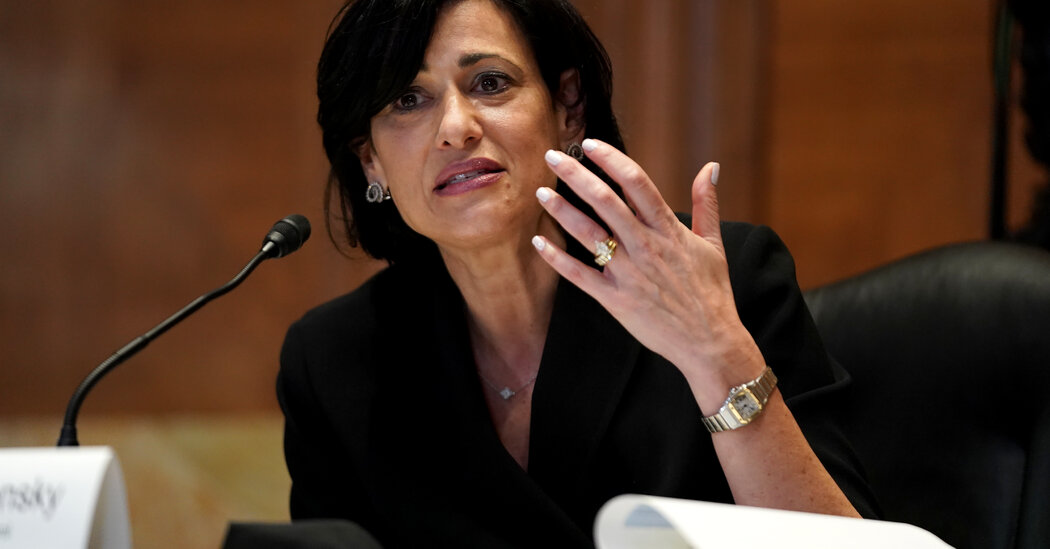
Cases, hospitalizations and deaths remain far below last winter’s peak, but the director urged people to get fully vaccinated.As the highly contagious Delta variant of the coronavirus fuels outbreaks in the United States, the director of the Centers for Disease Control and Prevention warned on Friday that “this is becoming a pandemic of the unvaccinated.”Cases, hospitalizations and deaths remain far below last winter’s peak, and vaccines are effective against Delta, but the C.D.C. director, Dr. Rochelle P. Walensky, urged people to get fully vaccinated to receive robust protection, pleading: “Do it for yourself, your family and for your community. And please do it to protect your young children who right now can’t get vaccinated themselves.”The number of new virus cases is likely to increase in the coming weeks, and those cases are likely to be concentrated in areas with low vaccine coverage, officials said at a White House briefing on the pandemic.“Our biggest concern is that we are going to continue to see preventable cases, hospitalizations and, sadly, deaths among the unvaccinated,” Dr. Walensky said. The nation surpassed 34 million cumulative cases on Friday, according to a New York Times database.Delta now accounts for more than half of new infections across the country, and case numbers have been rising in every state. Roughly 28,000 new cases are reported each day, up from just 11,000 a day less than a month ago.So far, data suggests that many of the vaccines — including the Pfizer-BioNTech, Moderna and Johnson & Johnson shots — provide good protection against Delta, especially against the worst outcomes, including hospitalization and death. (Receiving a single dose of a two-shot regimen provides only weak protection against the variant, however.) Nearly 60 percent of U.S. adults have been fully vaccinated, but fewer than 50 percent of all Americans have been; only those 12 and older are eligible.“We have come a long way in our fight against this virus,” Jeffrey D. Zients, the administration’s Covid-19 response coordinator, said at the briefing.The pace of vaccination has slowed considerably since the spring, and vaccine coverage remains highly uneven. Delta is already driving case numbers up in undervaccinated areas, including in parts of Missouri, Arkansas and Louisiana.Advertising a mass vaccination site in Pomona, Calif. On Thursday, Los Angeles County said it was reinstating an indoor mask mandate for everyone beginning this weekend, regardless of vaccination status. Mario Tama/Getty ImagesIn mid-May, when cases were on a decline, the C.D.C. said fully vaccinated people could go maskless in most scenarios, and on July 4, President Biden hosted an event for essential workers and others at the White House to tout progress against the virus. As cases increase, Americans may have to navigate seemingly diverging messaging, with local health officials advising something potentially different than the C.D.C.’s broad guidance.The World Health Organization recently repeated its recommendation that even vaccinated people should continue to wear masks, in part because of the global spread of Delta.The C.D.C. has stood by its mask guidance, however, with Dr. Walensky noting the W.H.O.’s global purview and the fact that wealthy nations have snapped up so many of the available shots. She has added that local officials in the United States can opt for more stringent measures to protect the unvaccinated.On Thursday, Los Angeles County said it was reinstating an indoor mask mandate for everyone beginning this weekend, regardless of vaccination status. On Friday, Dr. Walensky pointed out the heterogenous nature of the country and said “these decisions have to be made at the local level.”“If you have areas of low vaccination and high case rates, then I would say local policymakers might consider whether masking at that point would be something that would be helpful for their community,” she added.In New York City, Mayor Bill de Blasio said Friday there were currently no plans to reintroduce an indoor mask mandate for everyone citywide, nor did he think the move was needed. The city has reported a recent streak of more than 400 cases per day, up from about 200 per day on average just a few weeks ago. “We need to watch it like a hawk,” he said on a radio show, referring to the Delta variant.Health officials are focused on hospitalizations, he said, which have remained low in recent weeks. About 53 percent of city residents are fully vaccinated, according to city data. Should hospitalization rates rise, he said, the city will adapt.“We don’t have a plan to change course at this point,” he said. “If we see something that we need to change, we will say it immediately and will call people to arms.”After narrowly missing a self-imposed goal of having 70 percent of adults at least partially vaccinated by July 4, the Biden administration is making a renewed push to try to reach those who have still not gotten their shots. Officials have also recently announced the creation of “surge response teams” to help hard-hit states manage Delta-driven outbreaks. Missouri and Nevada have already requested assistance.

Read more →

Single cancer cells have different appetites for fatty acids

A new method developed by Institute for Systems Biology (ISB) and University of California, Riverside provides new insights into cancer biology by allowing researchers to show how fatty acids are absorbed by single cells.
Fatty acids, along with glucose and amino acids, are a major energy source for cellular growth and proliferation, and abnormal fatty acid metabolism is often seen in cancer. Dr. Wei Wei’s lab at ISB and Dr. Min Xue’s lab at UC Riverside have been collaborating for years to develop a series of chemical probes and analytical approaches for quantifying cellular glucose uptake, lactate production, amino acid uptake, and other cancer-related metabolites.
Unlike glucose and amino acids, however, the mechanisms underlying the uptake of fatty acids into cells have been lesser known and difficult to discern. The technical tools for measuring fatty acid uptake at the single-cell level are extremely limited.
“This work is the first example of profiling fatty acid uptake in conjunction with aberrant protein signaling in cancer cells at single-cell resolution and represents an important advance in the single-cell metabolic assay,” said ISB Assistant Professor Dr. Wei Wei, co-corresponding author of a just-published paper in the Journal of the American Chemical Society.
To profile the fatty acid uptake, the researchers chose a surrogate molecule that was structurally similar to natural fatty acids. This similarity tricked the cells into taking up these surrogates like the native ones. Then, using a unique dendrimer molecule — a tree-like polymer — the researchers achieved precise quantitation of those surrogates from single cells.
Applying this new single-cell tool to a brain cancer model, the researchers identified that fatty acid uptake was differentially regulated by two downstream effectors of the Mammalian Target of Rapamycin (mTOR) — a critical regulator of cell proliferation and protein synthesis. The results revealed a compensatory activation of fatty acid metabolism upon oncogene inhibition or attenuation of glucose metabolism in these brain cancer cells and uncovered a novel combination therapy that targets this bioenergetic flexibility to synergistically block the tumor growth.
“This novel tool opens new avenues for studying how fatty acid metabolism affects biological systems. It has also inspired us to develop more metabolic probes for single-cell analysis,” said UC Riverside Assistant Professor Dr. Min Xue, co-corresponding author on the paper.
Story Source:
Materials provided by Institute for Systems Biology. Note: Content may be edited for style and length.

Read more →

Common antibiotic no more effective than placebo in preventing COVID-19 symptoms among non-hospitalized

A UC San Francisco study has found that the antibiotic azithromycin was no more effective than a placebo in preventing symptoms of COVID-19 among non-hospitalized patients, and may increase their chance of hospitalization, despite widespread prescription of the antibiotic for the disease.
“These findings do not support the routine use of azithromycin for outpatient SARS-CoV-2 infection,” said lead author Catherine E. Oldenburg, ScD, MPH, an assistant professor with the UCSF Proctor Foundation. SARS-CoV-2 is the virus that causes COVID-19.
Azithromycin, a broad-spectrum antibiotic, is widely prescribed as a treatment for COVID-19 in the United States and the rest of the world. “The hypothesis is that it has anti-inflammatory properties that may help prevent progression if treated early in the disease,” said Oldenburg. “We did not find this to be the case.”
The study, which was conducted in collaboration with Stanford University, appears July 16, 2021, in the Journal of the American Medical Association.
The study included 263 participants who all tested positive for SARS-CoV-2 within seven days before entering the study. None were hospitalized at the time of enrollment. In a random selection process, 171 participants received a single, 1.2 gram oral dose of azithromycin and 92 received an identical placebo.
At day 14 of the study, 50 percent of the participants remained symptom free in both groups. By day 21, five of the participants who received azithromycin had been hospitalized with severe symptoms of COVID-19 and none of the placebo group had been hospitalized.
The researchers concluded that treatment with a single dose of azithromycin compared to placebo did not result in greater likelihood of being symptom-free.
“Most of the trials done so far with azithromycin have focused on hospitalized patients with pretty severe disease,” said Oldenburg. “Our paper is one of the first placebo-controlled studies showing no role for azithromycin in outpatients.”
Co-authors included Jessica Brogdon, MPH&TM; Cindi Chen, MS; Kevin Ruder; Lina Zhong; Fanice Nyatigo; Catherine A. Cook, MPH; Armin Hinterwirth, PhD; Elodie Lebas, RN; Travis Redd, MD, MPH; Travis C. Porco, PhD, MPH; Thomas M. Lietman, MD; and Benjamin F. Arnold, PhD, MPH, all of UCSF; senior investigator Thuy Doan, MD, PhD, with the UCSF Proctor Foundation, and Benjamin A. Pinsky, MD, PhD, of Stanford University.
The trial was supported by the Bill and Melinda Gates Foundation (INV-017026). Azithromycin and matching placebo were donated by Pfizer, Inc. (New York, NY). Thuy Doan was supported in part by a Research to Prevent Blindness Career Development Award. The authors had no conflicts of interest.
Story Source:
Materials provided by University of California – San Francisco. Original written by Elizabeth Fernandez. Note: Content may be edited for style and length.

Read more →

Overlooked No More: Rebecca Lee Crumpler, Who Battled Prejudice in Medicine

As the first Black woman to earn a medical degree in the United States, she persevered to make care accessible to women and Black communities, regardless of their ability to pay.This article is part of Overlooked, a series of obituaries about remarkable people whose deaths, beginning in 1851, went unreported in The Times.For more than 125 years, people trampled — unknowingly — across the grass where Rebecca Lee Crumpler rests in peace alongside her husband, Arthur, at Fairview Cemetery in Boston.Her burial plot was devoid of a gravestone even though she held a unique distinction: She was the first Black woman to receive a medical degree in the United States.It would take more than a century, from her death in 1895 until last year, for Crumpler to be given proper recognition by a group of Black historians and physicians. Were it not for them, she might still be languishing in anonymity.They had learned of Crumpler through the Rebecca Lee Society, a support group for Black women physicians in the 1980s, now believed to be defunct, that would occasionally roam the tree-lined grounds of the cemetery, near the edge of Mill Pond, in the Hyde Park neighborhood, looking for any evidence of her plot. People knew she had died in that neighborhood, and had consulted city records, but all they found was a brown patch of dirt where a gravestone should have been placed after interment.Since her death, Crumpler’s legacy has been muddled by incorrect information. Some mistakenly thought that she was the second Black woman to be awarded a medical school degree, after Rebecca Cole, but Cole graduated from the Woman’s Medical College of Pennsylvania three years after Crumpler earned her degree from the New England Female Medical College (now part of the Boston University School of Medicine) in 1864.Several books and articles have featured photographs of a woman purported to be Crumpler, even though no pictures of her are known to exist. In “Gutsy Women,” a 2019 book by Hillary and Chelsea Clinton that celebrates historically significant women, there is a photo alongside an entry on Crumpler — but it is actually a photo of Mary Eliza Mahoney, the country’s first Black licensed nurse.After the Civil War, Crumpler worked for the medical division of the United States Bureau of Refugees, also known as the Freedmen’s Bureau, an agency created by Congress during Reconstruction to provide services for emancipated slaves whom white physicians refused to see. But throughout her life, she was ignored, slighted or rendered insignificant, even invisible.Because of her race and gender, Crumpler was denied admitting privileges to local hospitals, had trouble getting prescriptions filled by pharmacists and was often ridiculed by administrators and fellow doctors. Still she persevered, with the knowledge that Black communities had an increased risk of illness because they were subjected to difficult living conditions and a lack of access to preventive care.“She focused on prevention, nutrition and attaining financial stability for one’s family, all relevant factors today,” Melody McCloud, an obstetrician-gynecologist in Atlanta, said by phone. “Dr. Crumpler was a pioneer who blazed a trail upon which many other Black female physicians have trod, and now tread.”McCloud, who urged Gov. Ralph Northam of Virginia to declare March 30, 2019, Dr. Rebecca Lee Crumpler Day — and who is trying to get a monument for Crumpler erected in Richmond, where she practiced medicine from 1865 to 1869 — was also a curator of an exhibition about Crumpler’s career at the Boston University School of Medicine.Rebecca Crumpler was born Rebecca Davis on Feb. 8, 1831, in Christiana, Del., to Matilda Weber and Absolum Davis. She explained her initial interest in healing in “A Book of Medical Discourses” (1883):“Having been reared by a kind aunt in Pennsylvania, whose usefulness with the sick was continually sought, I early conceived a liking for, and sought every opportunity to be in a position to relieve the sufferings of others.”After marrying Wyatt Lee, a Virginia laborer, in 1852, she relocated to Charlestown, Mass. She worked as a nurse there, assisting several doctors in the Boston area. They in turn supported her application to the New England Female Medical College, where she was awarded a state-funded scholarship.After two years, however, she took a leave of absence to care for her ailing husband, who died of tuberculosis in 1863. She returned seven months later to complete her final term but was nearly stymied after some faculty members expressed reservations regarding the amount of time it had taken her to complete her coursework.Several of the school’s patrons who were involved in the abolitionist movement offered their support. On March 1, 1864, the trustees voted to confer on her a “Doctress of Medicine” degree. She was 33.At the time, said Vanessa Northington Gamble, a physician, historian and professor at George Washington University, there were 54,543 physicians in the country; 270 of them were women — all white — and 180 were Black men.The New England Female Medical College would close in 1873 without ever conferring another medical degree on a Black woman.In 1865, Rebecca Lee married Arthur Crumpler, who had arrived in Boston three years earlier as a fugitive slave and later worked as a porter. The couple had one daughter, Lizzie Sinclair Crumpler, in 1870, but she is believed to have died young.The burial plot for Crumpler and her husband, Arthur, at Fairview Cemetery in Boston. Their graves were unmarked until a group of physicians and historians raised the money for their gravestones.Friends of the Hyde Park LibraryBy 1869, the Crumplers had moved back to Boston. They lived in the North Slope of Beacon Hill, then a predominantly Black community.“A cheerful home,” Crumpler wrote, “with a small tract of land in the country with wholesome food and water is worth more to preserve health and life than a house in a crowded city with luxuries and 20 rooms.”Her house, at 67 Joy Street, now has a plaque honoring her and is a stop on the Boston Women’s Heritage Trail.From that house, Crumpler treated mostly women and children, regardless of their ability to pay. Her book, dedicated to nurses and mothers, is seen as a precursor to “What to Expect When You’re Expecting” (1984), considered the prenatal bible for countless pregnant women. It is full of admonishments.“Children should not be asked if they like such and such things to eat, with the privilege of choosing that which will give them no nourishment to the blood,” Crumpler wrote. She also said, “Parents should hold onto their children, and children should stand by their parents, until the last strand of the silken cord is broken.”An article in 1894 in The Boston Globe described her book as “valuable” and Crumpler as “a very pleasant and intellectual woman” and “an indefatigable church worker.”Crumpler died of fibroid tumors on March 9, 1895. She was 64. Her husband died in 1910.In 2019 Vicki Gall, a history buff and president of the Friends of the Hyde Park Library, began a fund-raising campaign to have gravestones installed for them both. They were added at a ceremony on July 16, 2020, which Gall led.“I didn’t do this as a feel-good moment,” Gall said by phone. “It was a historical moment. She didn’t know the importance of what she was doing at the time, but we recognize it now.”There is no more trampled grass near the resting site of Rebecca Lee Crumpler. Instead, there is an awakening of her contributions to the medical community. As she wrote in “A Book of Medical Discourses”: “What we need today in every community is not a shrinking or flagging of womanly usefulness in this field of labor, but renewed and courageous readiness to do when and wherever duty calls.”

Read more →

It’s Hard to Search for a Therapist of Color. These Websites Want to Change That.

A number of new organizations aim to digitally connect patients with mental health providers who value and understand different cultures.Several years ago, while Charmain Jackman was going through a rough patch in her marriage, she started looking for a Black, female therapist. At the time, she said, she was desperate to find someone who would understand who she was, as a Black woman.“I wanted to come in fully as myself and not worry, ‘Is this person going to get it? Am I going to have to explain everything?’” she said.But even Dr. Jackman, a psychologist from Massachusetts with decades of experience, kept running into roadblocks. Her insurance carrier did not offer demographic data on any of her in-network providers. A search on Psychology Today, one of the most commonly used internet directories of mental health professionals, was returning results that did not include women of color. And, at the time, the website Therapy for Black Girls only had a couple of therapists in her state who took her insurance.“So,” she said, “I decided I would create the site that I would want to use.”In recent years there has been an expanding number of digital companies and nonprofits created to help people of color find a therapist they can trust — someone who is not only skilled in the best evidence-based treatments, but also culturally competent. In other words, a provider who is aware of their own world views, knowledgeable about diversity and trained to connect with different types of clients.The founders of these organizations say there has always been a need for such services, and even more so now that people are coping with the stressors of the pandemic and the racial reckoning that followed the killing of George Floyd by the Minneapolis police.Studies have shown that mental health treatments can be more effective when a client feels that their therapist values culture.“What we’re speaking to with cultural competence is not how much do you know about individual cultures, it is more how do you show up in any space in a way that allows other people to feel welcome, to feel heard and to feel understood,” said Alfiee M. Breland-Noble, a psychologist in Arlington, Va., who has taught cultural competence and multicultural counseling skills to mental health professionals for more than two decades.Dr. Jackman’s website, InnoPsych, which officially went live in January of last year, has a free, searchable directory of potential therapists. Users can filter providers by several categories, including their state; the type of insurance accepted; and the therapist’s availability, ethnicity and specialty.The list of therapists — all of whom are people of color — nearly numbers 450, and keeps growing.“Our goal is to feature 2,021 therapists of color in 2021,” she said.Other organizations go a step further and help patients set up therapy appointments. The nonprofit Black Men Heal, for example, offers up to eight free online counseling sessions. About 70 percent of clients choose to pay for additional sessions, said the executive director, Tasnim Sulaiman, a psychotherapist in private practice in the Philadelphia area who founded the organization in 2018.It can be difficult for people of color to locate a therapist with a shared cultural background. According to the Census Bureau, about 18 percent of people in the United States identify as Hispanic and 13 percent as Black, but an American Psychological Association report found that only 5 percent of psychologists are Hispanic and 4 percent are Black — 86 percent are white. A similar disparity exists among the country’s social workers and psychiatrists.Eric Coly, who formerly worked in finance, founded Ayana Therapy in 2020, about eight years after hitting “rock bottom” while facing anxiety and depression.Back then, he struggled to find a therapist who could understand the intersection of his different identities as a Black man and an immigrant from Senegal who has lived in different parts of the world.“This product was almost meant to heal my former self,” he said.Ayana, which means “mirror” in Bengali, asks users to fill out a questionnaire that is meant to capture “your many nuances,” Mr. Coly said, and then matches you with a culturally competent therapist. The cost of each online session is currently $60.Providers are vetted through a process that includes two interviews and reference checks.While Ayana was created for a multitude of races and cultures, as well as those who identify as L.G.B.T.Q., some websites cater to a more niche set of users like LatinxTherapy, Therapy for Black Girls, Therapy for Black Men, the Asian Mental Health Collective and the National Queer and Trans Therapists of Color Network. Melanin and Mental Health features a directory of therapists of color, many of whom are in Houston. The Black Emotional and Mental Health Collective, a wellness nonprofit that trains people to respond to mental health crises, has an online directory with a variety of Black practitioners including therapists, yoga instructors, doulas and mediators.Employers are also starting to recognize the need for culturally competent providers. The companies Indeed, Thumbtack and Critical Mass, which is part of Omnicom Group, have recently partnered with Therify, which uses artificial intelligence technology to match employees with providers in their state. Half of Therify’s nearly 300 online therapists are people of color and 20 percent specialize in serving clients who identify as L.G.B.T.Q., said the company’s chief executive, James Edward Murray, who interviews each provider.About four years ago, when Mr. Murray was searching for a therapist to process the trauma of having lost his father at a young age, he had seven consultations with different providers before finally landing on a therapist he felt comfortable with.“I had countless friends who just gave up, who needed care but didn’t get it because it was so hard to find a good fit,” said Mr. Murray, who founded Therify in November 2020.While racial matching can be helpful, he added, “the most important thing is someone who leads with empathy and understanding.”Hurdle, previously known as Henry Health, likewise does not select providers based on the color of their skin. The company is unique in that it not only vets its therapists, it also trains them using a cultural competence curriculum developed by Norma L. Day-Vines, an associate dean in the School of Education at Johns Hopkins University.“We look for therapists with a foundation in cognitive behavior therapy and trauma-informed care, and layer our technique over those techniques,” said Kevin Dedner, the chief executive of Hurdle. He founded the company in 2018 after struggling with depression for years.After a client registers for therapy, Hurdle sends them a link to an app, and the company’s customer service team assigns a therapist from a group of providers located in Washington, D.C., Maryland or Virginia. (Hurdle plans to expand into four more states this year.) Many types of commercial insurance are accepted, but if a patient is paying out of pocket, each session costs $99.Tips on finding a culturally competent therapistKeep in mind that online therapist directories do not always have the resources to verify licensing or vet the quality of the therapist, so it’s important to do your own due diligence. First, make sure that your therapist is licensed and in good standing with their licensing board. If you were researching a psychologist, for example, you would start by looking them up on the Association of State and Provincial Psychology Boards.After you’ve located someone promising, ask for a free “get to know you” session where you can interview the therapist about treatments and cultural competence, said Melanie M. Domenech Rodríguez, a professor at Utah State University and an expert in multicultural psychology.Dr. Rodríguez suggested asking the following questions:What is your approach to treating my issue?Do you use an evidence-based treatment? If so, what it is called?How often do you work with Black, Indigenous and other people of color?What challenges have you faced in providing services to people of color and how have you addressed them?When you eventually start seeing someone, the National Alliance on Mental Illness recommends asking yourself the following questions:Did my provider communicate effectively with me?Is my provider willing to integrate my beliefs, practices, identity and cultural background into my treatment plan?Was I treated with respect and dignity?Do I feel like my provider understands and relates well with me?If you can answer yes to each of these questions, you’re off to a great start.“Cultural competence matters,” Dr. Domenech Rodríguez said. “But it is defined by the clients, not the therapists.”

Read more →

Ford and Mellon Foundations Expand Initiative for Disabled Artists

The foundations are adding $5 million to the Disability Futures program, which will continue through 2025 with two more classes of 20 fellows each.The Disability Futures initiative, a fellowship established by the Ford and Andrew W. Mellon Foundations last fall to support disabled artists, is expanding. The foundations announced on Friday that they will commit an additional $5 million to support the initiative through 2025, which will include support for two more cohorts of 20 fellows.The fellowship, which was created by and for disabled individuals, was conceived as an 18-month initiative. It provided 20 disabled artists, filmmakers and journalists, selected from across the United States, with unrestricted $50,000 grants administered by the arts funding group United States Artists.But Margaret Morton, the director of creativity and free expression at the Ford Foundation, said it was clear from the beginning that it couldn’t just be a one-off venture.Projects undertaken by members of the first cohort will be showcased at the first Disability Futures virtual festival, on Monday and Tuesday, with programming from some of the country’s leading disabled artists, writers, thinkers and designers. It is free and open to the public.Among the highlights: A session on disability portraiture with the filmmakers Jim LeBrecht and Rodney Evans, the painter Riva Lehrer and the journalist Alice Wong; a conversation exploring the connections between climate justice and disability justice led by Patty Berne; and a virtual dance party hosted by the garment maker Sky Cubacub, with music by DJ Who Girl (Kevin Gotkin). Evening runway performances from models wearing items from Cubacub’s Rebirth Garments and a meditation experience with the initiative Black Power Naps, featuring Navild Acosta and Fannie Sosa, are also on tap.“It’s been really profound for me to see how much the fellows chosen in the first cohort were interested in elevating others in the community,” Emil J. Kang, the program director for arts and culture at the Mellon Foundation, said in an interview on Thursday.The next class of fellows will be announced in 2022. They are chosen by peer advisers who are themselves disabled artists.But the feedback from the first class, Morton said, was frank: Do even better in the selection process.“One of the fellows challenged us,” she said, about there being only one Native American fellow. “And we appreciated that and were challenged to get it right and make sure we have a deeper pool.”The grants offer flexible compensation options. The money can be distributed in a lump sum, in payments or even be deferred, depending on what works best for the artist.The fellowship “has made an incredible difference in my life and career,” the writer and photographer Jen Deerinwater said in an email. “It’s allowed me more financial freedom, without the risk of losing my disability and health care services, to pursue more artistic pursuits such as music.”The pandemic has made foundation leaders “deeply aware” of the challenges disabled professionals face, Morton said. About one in four adults in the United States has a disability, according to the Centers for Disease Control and Prevention.“We gained a deeper impression and perspective about what it’s like to navigate through the world,” she said.The program’s overarching goal is to help the artists make connections, Morton said.“Our biggest dream is visibility,” she said. For audiences to see the artists and for funders to see that “they should start investing in disabled practitioners.”

Read more →

No sign of COVID-19 vaccine in breast milk

Messenger RNA vaccines against COVID-19 were not detected in human milk, according to a small study by UC San Francisco, providing early evidence that the vaccine mRNA is not transferred to the infant.
The study, which analyzed the breast milk of seven women after they received the mRNA vaccines and found no trace of the vaccine, offers the first direct data of vaccine safety during breastfeeding and could allay concerns among those who have declined vaccination or discontinued breastfeeding due to concern that vaccination might alter human milk. The paper appears in JAMA Pediatrics.
Research has demonstrated that vaccines with mRNA inhibit transmission of the virus that causes COVID-19. The study analyzed the Pfizer and Moderna vaccines, both of which contain mRNA.
The World Health Organization recommends that breastfeeding people be vaccinated, and the Academy of Breastfeeding Medicine has said there is little risk of vaccine nanoparticles or mRNA entering breast tissue or being transferred to milk, which theoretically could affect infant immunity.
“The results strengthen current recommendations that the mRNA vaccines are safe in lactation, and that lactating individuals who receive the COVID vaccine should not stop breastfeeding,” said corresponding author Stephanie L. Gaw, MD, PhD, assistant professor of Maternal-Fetal Medicine at UCSF.
“We didn’t detect the vaccine associated mRNA in any of the milk samples tested,” said lead author Yarden Golan, PhD, a postdoctoral fellow at UCSF. “These findings provide an experimental evidence regarding the safety of the use of mRNA-based vaccines during lactation.”
The study was conducted from December 2020 to February 2021. The mothers’ mean age was 37.8 years and their children ranged in age from one month to three years. Milk samples were collected prior to vaccination and at various times up to 48 hours after vaccination.
Researchers found that none of the samples showed detectable levels of vaccine mRNA in any component of the milk.
The authors noted that the study was limited by the small sample size and said that further clinical data from larger populations were needed to better estimate the effect of the vaccines on lactation outcomes.
Co-authors are Mary Prahl, MD; Arianna Cassidy, MD; Christine Y. Lin, BA; Nadav Ahituv, PhD; and Valerie J. Flaherman, MD, MPH, all of UCSF.
The study was supported by the Marino Family Foundation; the National Institutes of Health (grant numbers K23AI127886 and K08AI141728); the Weizmann Institute of Science-National Postdoctoral Award Program for Advancing Women in Science; the International Society for Research in Human Milk and Lactation Trainee Bridge Fund; and the Human Frontier Science Program. Disclosures can be found in the paper.
Story Source:
Materials provided by University of California – San Francisco. Original written by Elizabeth Fernandez. Note: Content may be edited for style and length.

Read more →

When mad AIOLOS drags IKAROS down: A novel pathogenic mechanism

Primary immunodeficiencies, such as severe combined immunodeficiency disease (SCID), occur when the immune system does not work properly, leading to increased susceptibility to various infections, autoimmunity, and cancers. Most of these are inherited and have an underlying genetic causes. A team at TMDU has identified a novel disorder resulting from a mutation in a protein called AIOLOS, which functions through a previously unknown pathogenic mechanism called heterodimeric interference.
The gene family known as IKAROS zinc finger proteins (IKZFs) is associated with the development of lymphocyte, a type of white blood cell involved in the immune response — meaning that mutations in this family can be involved in immune system deficiencies. Most research so far has focused on IKAROS protein, encoded by the gene IKZF1, although the underlying mechanism by which IKAROS mutations cause the deficiencies is not yet fully understood. A mutation in AIOLOS — another member of the IKZF family that is encoded by the gene IKZF3 — has now also been revealed to cause a hereditary immune deficiency. In addition to not functioning properly itself, the resultant mutant protein interferes with the functioning of IKAROS protein.
TMDU researchers uncovered this new mechanism while investigating the cause of a previously undescribed inherited B cell deficiency observed in a family of patients. After sequencing all of the protein-coding genes, the team focused their research on AIOLOS as IKAROS is known to be the cause of B cell deficiency. They showed that the mutant form of AIOLOS that was present in this family did not just fail to function, but actively bound to a different DNA sequence than the normal version of the protein.
They went on to use a mouse model that harbors equivalent AIOLOS mutation identified in the patients to outline the underlying pathogenic mechanism. AIOLOS and IKAROS bind together to form a “heterodimer.” The mutant form of AIOLOS retained the ability to bind IKAROS but then interfered with the normal function of IKAROS, and led to the heterodimer being recruited to the incorrect regions of the genome.
“This is a novel pathogenic mechanism that we termed heterodimeric interference,” says lead author Motoi Yamashita, “where a mutant protein in a heterodimer hijacks the function of the normal partner protein.”
The team were then able to rescue some of the immune function in the mouse model by deleting the dimerization domain of the mutant AIOLOS.
“The fact we could rescue the phenotype in our mouse model indicates a potential therapeutic approach,” says Tomohiro Morio, senior author. “The deletion of the domain responsible for binding IKAROS in the mutant AIOLOS protein could ameliorate the immunodeficiency observed in the patients.”
The discovery of this new pathogenic mechanism, heterodimeric interference, may well help to shed light on many other disease processes such as autoimmunity and cancer development where mutant proteins act in the same way.
Story Source:
Materials provided by Tokyo Medical and Dental University. Note: Content may be edited for style and length.

Read more →

How micro-circuits in the brain regulate fear

Fear is an important reaction that warns and protects us from danger. But when fear responses are out of control, this can lead to persistent fears and anxiety disorders. In Europe, about 15 percent of the population is affected by anxiety disorders. Existing therapies remain largely unspecific or are not generally effective, because the detailed neurobiological understanding of these disorders is lacking.
What was known so far is that distinct nerve cells interact together to regulate fear responses by promoting or suppressing them. Different circuits of nerve cells are involved in this process. A kind of “tug-of-war” takes place, with one brain circuit “winning” and overriding the other, depending on the context. If this system is disturbed, for example if fear reactions are no longer suppressed, this can lead to anxiety disorders.
Recent studies have shown that certain groups of neurons in the amygdala are crucial for the regulation of fear responses. The amygdala is a small almond-shaped brain structure in the center of the brain that receives information about fearful stimuli and transmits it to other brain regions to generate fear responses. This causes the body to release stress hormones, change heart rate or trigger fight, flight or freezing responses.
Now, a group led by Professors Stephane Ciocchi of the University of Bern and Andreas Luthi of the Friedrich Miescher Institute in Basel has discovered that the amygdala plays a much more active role in these processes than previously thought: Not only is the central amygdala a “hub” to generate fear responses, but it contains neuronal microcircuits that regulate the suppression of fear responses. In animal models, it has been shown that inhibition of these microcircuits leads to long-lasting fear behaviour. However, when they are activated, behaviour returns to normal despite previous fear responses. This shows that neurons in the central amygdala are highly adaptive and essential for suppressing fear. These results were published in the journal Nature Communications.
“Disturbed” suppression leads to long-lasting fear
The researchers led by Stephane Ciocchi and Andreas Luthi studied the activity of neurons of the central amygdala in mice during the suppression of fear responses. They were able to identify different cell types that influence the animals’ behaviour. For their study, the researchers used several methods, including a technique called optogenetics with which they could precisely shut down — with pulses of light — the activity of an identified neuronal population within the central amygdala that produces a specific enzyme. This impaired the suppression of fear responses, whereupon animals became excessively fearful. “We were surprised how strongly our targeted intervention in specific cell types of the central amygdala affected fear responses,” says Ciocchi, Assistant Professor at the Institute of Physiology, University of Bern. “The optogenetic silencing of these specific neurons completely abolished the suppression of fear and provoked a state of pathological fear.”
Important for developing more effective therapies
In humans, dysfunction of this system, including deficient plasticity in the nerve cells of the central amygdala described here, could contribute to the impaired suppression of fear memories reported in patients with anxiety and trauma-related disorders. A better understanding of these processes will help develop more specific therapies for these disorders. “However, further studies are necessary to investigate whether discoveries obtained in simple animal models can be extrapolated to human anxiety disorders,” Ciocchi adds.
This study was carried out in partnership with the University of Bern, the Friedrich Miescher Institute and international collaborators. It was funded by the University of Bern, the Swiss National Science Foundation and the European Research Council (ERC).
Systems Neuroscience Group, Institute of Physiology, University of Bern
Neuronal diversity is a hallmark of cortical networks. In the hippocampus, distinct neuronal cell-types interact together by selective synaptic contacts and neural activity patterns. We investigate how different forms of emotional and cognitive behaviours emerge within intricate neuronal circuits of the ventral CA1 hippocampus, a brain region instrumental for context-specific emotional memories, anxiety and goal-directed actions. We hypothesize that distinct behavioural programs are implemented by the selective recruitment of micro- and large-scale neural circuits of the ventral CA1 hippocampus. To identify these circuit motifs, we are combining single-unit recordings of ventral CA1 GABAergic interneurons and projection neurons, selective optogenetic strategies, cell-type specific viral tracing and behavioural paradigms in rodents. The results of our experimental approaches will determine fundamental neural computations underlying learning and memory within higher cortical brain regions.
Story Source:
Materials provided by University of Bern. Note: Content may be edited for style and length.

Read more →

New theory suggests blood immune and clotting components could contribute to psychosis

A scientific review has found evidence that a disruption in blood clotting and the first line immune system could be contributing factors in the development of psychosis.
The article, a joint collaborative effort by researchers at RCSI University of Medicine and Health Sciences, Cardiff University and the UCD Conway Institute, is published in Molecular Psychiatry.
Recent studies have identified blood proteins involved in the innate immune system and blood clotting networks as key players implicated in psychosis.
The researchers analysed these studies and developed a new theory that proposes the imbalance of both of these systems leads to inflammation, which in turn contributes to the development of psychosis.
The work proposes that alterations in immune defense mechanisms — including blood clotting — lead to an increased risk of inflammation, which is thought to contribute to the development of psychosis.
The new theory further refines the prevailing ‘two-hit’ hypothesis, where early genetic and/or environmental factors disrupt the developing central nervous system (the “first-hit”) and increases the vulnerability of the individual to subsequent, late environmental disruptions (the “second-hit”).
“Early identification and treatment significantly improves clinical outcomes of psychotic disorders. Our theory may provide a further step to biomarkers of psychosis and allow the identification of therapeutic targets for early and more effective treatment,” said Dr Melanie Föcking, joint first author on the paper and Lecturer in Psychiatric Neuroscience at RCSI Department of Psychiatry.
“While the idea of psychosis resulting from some form of inflammation and immune activation is not new, our data suggest a new understanding and change of focus towards a combined function of the innate immune complement system and coagulation pathways to the progression to psychotic disorder,” said Dr Meike Heurich, joint first author on the paper and lecturer at School of Pharmacy and Pharmaceutical Sciences, Cardiff University.
“The works builds on our recent studies which increasingly implicate dysregulation of the complement and coagulation pathways both in and preceding psychotic disorder,” said Professor David Cotter, senior author of the paper and Professor of Molecular Psychiatry at RCSI Department of Psychiatry.
Story Source:
Materials provided by RCSI. Note: Content may be edited for style and length.

Read more →