Championing chrononutrition with protein, the morning elixir for muscle growth

Proteins constitute an essential dietary component that help in the growth and repair of the body. Composed of long chains of amino acids, proteins promote the growth of skeletal muscles, the group of muscles that help us move. Humans have been aware of the benefits of proteins for long. However, recent studies have shown that having the right amount of protein at the right time of the day is essential for proper growth. This is called ‘Chrononutrition,’ in which when you eat is as important as what and how you eat.
The reason behind this is the body’s internal biological clock, called the ‘circadian rhythm.’ This rhythm is followed by all cells and controls life functions like metabolism and growth. Interestingly, protein digestion and absorption have been found to fluctuate across day and night according to this clock. Moreover, earlier studies have reported that intake of protein at breakfast and lunch promotes skeletal muscle growth in adults. However, details on the effect of the time of protein intake on muscle growth and function have remained elusive till date.
Fortunately, researchers from Waseda University, led by Professor Shigenobu Shibata, recently endeavored to understand the effect of the distribution of protein intake through the day on muscles. They fed laboratory mice two meals per day containing either high (11.5% by proportion) or low (8.5% by proportion) protein concentrations. The researchers noted that protein intake at breakfast induced an increase in muscle growth, determined by assessing induced hypertrophy of the plantaris muscle in the leg, when compared with the effects of protein intake at dinner. Specifically, the ratio of muscle hypertrophy determined against the growth of the control muscle was 17% higher in mice fed 8.5% protein at breakfast, than that in mice fed 11.5% protein at dinner, despite the former group consuming a low proportion of protein overall. They also found that intake of a type of protein called the BCCA, short for branched-chain amino acids, early in the day increased the size of skeletal muscles specifically.
To confirm the association of these effects with the workings of the circadian rhythm, the researchers next engineered whole-body mutant Clock?19 or muscle-specific Bmal1 knockout mice lacking the genes that control the biological clock. They repeated diet distribution experiments on these mice but did not observe similar muscle change, which confirmed the involvement of the circadian rhythm in muscle growth in the context of protein intake.
Excited about the findings of their study published in a recent issue of the Cell Reports, Prof. Shibata emphasizes, “Protein-rich diet at an early phase of the daily active period, that is at breakfast, is important to maintain skeletal muscle health and enhance muscle volume and grip strength.”
To check if their findings were applicable to humans, the team recruited women in their study and tested if their muscle function, determined by measuring skeletal muscle index (SMI) and grip strength, varied with the timing of the protein-rich diet consumed. Sixty women aged 65 years and above who took protein at breakfast rather than at dinner showed better muscle functions, suggesting the possibility of the findings to be true across species. Additionally, the researchers also found a strong association between SMI and the proportion of protein intake at breakfast relative to total protein intake through the day.
Prof. Shibata is hopeful that the findings of their study will lead to a widespread modification in the current diet regime of most people across the Western and Asian countries, who traditionally consume low amounts of protein at breakfast. He therefore stresses, “For humans, in general, the protein intake at breakfast averages about 15 grams, which is less than what we consume at dinner, which is roughly 28 grams. Our findings strongly support changing this norm and consuming more protein at breakfast or morning snacking time.”
It seems, a simple change in our dietary regime can be our key to ensuring healthy muscles.
Story Source:
Materials provided by Waseda University. Note: Content may be edited for style and length.
Read more →

Repairing hearts with deadly spider venom: Study

A potentially life-saving treatment for heart attack victims has been discovered from a very unlikely source — the venom of one of the world’s deadliest spiders.
A drug candidate developed from a molecule found in the venom of the Fraser Island (K’gari) funnel web spider can prevent damage caused by a heart attack and extend the life of donor hearts used for organ transplants.
The discovery was made by a team led by Dr Nathan Palpant and Professor Glenn King from The University of Queensland (UQ) and Professor Peter Macdonald from the Victor Chang Cardiac Research Institute.
Dr Palpant, from UQ’s Institute for Molecular Bioscience (IMB), said the drug candidate worked by stopping a ‘death signal’ sent from the heart in the wake of an attack.
“After a heart attack, blood flow to the heart is reduced, resulting in a lack of oxygen to heart muscle,” Dr Palpant said.
“The lack of oxygen causes the cell environment to become acidic, which combine to send a message for heart cells to die.”
“Despite decades of research, no one has been able to develop a drug that stops this death signal in heart cells, which is one of the reasons why heart disease continues to be the leading cause of death in the world.”

Read more →

Mechanisms to separately regulate synaptic vesicle release and recycling

Chemical synapses transmit information within the nervous system. When a presynaptic cell is electrically excited, synaptic vesicles fuse with the presynaptic membrane causing messenger substances within the vesicles to be released into the synaptic cleft. These then bind to receptors in the postsynaptic cell where they trigger an electrical signal once again. The temporal and spatial sequence of the incoming signals determines how information is processed and transmitted in the brain. In order to sustain their function in the long term, chemical synapses need to recycle synaptic vesicles to make them available for renewed signal transmission.
Professor Carsten Duch and Professor Martin Heine and their respective research groups at Johannes Gutenberg University Mainz (JGU) are investigating how the release and recycling of synaptic vesicles are coordinated. “Exocytosis and endocytosis rates at chemical synapses need to be coordinated to achieve reliable signal transmission in the brain,” the biologists explained. Together with Dr. Ulrich Thomas, group leader at the Leibniz Institute for Neurobiology in Magdeburg, Duch and Heine have revealed in a PNAS paper how spatiotemporally separated presynaptic calcium signals independently regulate exocytosis and endocytosis of synaptic vesicles, i.e., their release and recycling.
Co-existence of different types of voltage-gated calcium channels at the presynapse
At chemical synapses, incoming electrical impulses are converted into chemical signals and relayed on to the next cell. The process entails calcium ions first flowing through voltage-dependent membrane channels into the presynapse, i.e., the upstream nerve cell that transmits the signal to the postsynaptic cell. This calcium influx is tightly constrained in both time and space and results in exocytosis of synaptic vesicles from a specialized vesicle reservoir. Presynaptic calcium signals also regulate synaptic vesicle recycling, but here the temporal and spatial requirements are different. One unresolved question is how presynaptic electrical activity can lead to calcium signals with different temporal and spatial profiles in the presynaptic terminal.
By combining genetic modifications with electrophysiological and optophysiological measurements at the neuromuscular synapse of the Drosophila melanogaster genetic model organism, the research team was able to demonstrate that the presynapse harbors two different types of voltage-gated calcium channels, Cav2 and Cav1. These, however, were found to be spatially segregated. Both types of channels open when electrical signals arrive, but only Cav2 channels, which reside in active zones of the presynapse, are required for exocytosis of synaptic vesicles. Cav1 channels are situated outside active zones and augment endocytosis of synaptic vesicles via activity-dependent calcium influx. Thus, knockdown of Cav2 by means of genetic manipulation prevents synaptic transmission, whereas knockdown of Cav1 decreases the rate of synaptic vesicle endocytosis, thereby enhancing synaptic depression during sustained activity. This is how calcium signals mediated by two different populations of largely independent voltage-gated calcium channels regulate two essential functions of the presynapse in response to neuronal activity, namely the release and recycling of synaptic vesicles.
Functional separation of Cav1 and Cav2 by means of a calcium pump
A key question was how calcium signals through different channels could be functionally separated at the nanometer scale of the presynaptic terminal, because calcium after all is a highly diffusible intracellular messenger. According to the researchers, different vital functions of calcium signals through Cav1 and Cav2 channels are separated by a membrane-anchored calcium buffer. Cav2 channels are found within presynaptic active zones at distances of 70 to 140 nanometers from readily releasable synaptic vesicles. This distinct localization of Cav2 results in the emergence of temporally and spatially tightly regulated calcium signals within so-called nano-domains during presynaptic electrical activity, and these are essential for temporally precise synaptic transmission. Cav1 localizes around active zones, in theory allowing calcium influx simultaneously through both types of channels to result in mixed signals with no measurable delay. However, mixed signals of this type are prevented by the plasma membrane calcium pump (PMCA). PMCA is located outside active zones and isolates them from the dynamic regulation of endocytosis achieved by Cav1-mediated calcium influx. Because Cav1, Cav2, and PMCA have been identified also at central synapses in the brains of mammals, these proteins may represent a conserved functional triad for separate activity-dependent regulation of exocytosis and endocytosis of synaptic vesicles.
Calcium channels and the regulation of essential synaptic functions
In the future, Duch’s and Heine’s research groups will continue to explore the interactions of calcium channels and their associated molecules at the presynapse. Calcium signals in the presynaptic terminal regulate other essential synaptic functions beyond exocytosis and endocytosis. These include the regulation of synaptic vesicle movements between distinct specialized reservoirs as well as the control of fixed synaptic transmission strengths, which are restored by compensatory mechanisms after perturbation. This homeostatic synaptic plasticity is essential for reliably processing information in the brain. As part of a project within Collaborative Research Center 1080 on Molecular and Cellular Mechanisms in Neural Homeostasis, Duch’s and Heine’s groups are investigating how spatiotemporally separated presynaptic calcium signals independently control exocytosis and endocytosis, the transport of vesicles between different reservoirs, and synaptic homeostasis. “Calcium signals are extremely well suited to precisely adapt a variety of vital synaptic functions to differing neuronal activities, but we are only just starting to work out the mechanisms that independently regulate these functions,” Duch and Heine commented on their neurobiology research.
Story Source:
Materials provided by Johannes Gutenberg Universitaet Mainz. Note: Content may be edited for style and length.

Read more →

Why identical mutations cause different types of cancer

Why do alterations of certain genes cause cancer only in specific organs of the human body? Scientists at the German Cancer Consortium (DKTK), the Technical University of Munich (TUM), and the University Medical Center Göttingen have now demonstrated that cells originating from different organs are differentially susceptible to activating mutations in cancer drivers: The same mutation in precursor cells of the pancreas or the bile duct leads to fundamental different outcomes. The team discovered for the first time that tissue specific genetic interactions are responsible for the differential susceptibility of the biliary and the pancreatic epithelium towards transformation by oncogenes. The new findings could guide more precise therapeutic decision making in the future.
There have been no major improvements in the treatment of pancreatic and biliary tract cancer in the last decades and no effective targeted therapies are available to date. “The situation for patients with pancreatic and extrahepatic bile duct cancer is still very depressing with approximately only 10% of patients surviving five years,” says Dieter Saur, DKTK Professor for Translational Cancer Research at TUM’s university hospital Klinikum rechts der Isar, DKTK partner site Munich.
DKTK is a consortium centered around the German Cancer Research Center (DKFZ) in Heidelberg, which has long-term collaborative partnerships with specialist oncological centers at universities across Germany.
“To discover novel therapeutic strategies that improve prognosis of these patients, it is essential to understand the fundamental genetic networks and interactions that drive these tumors in a tissue-specific fashion. This will allow highly precise molecular interventions in future.”
The research team looked at the development of biliary tract and pancreatic cancer in mice, replacing the normal “oncogenes” PIK3CA and KRAS with a version containing a mutation identical with that in human cancers. Expression of these oncogenes in the common precursor cells of the extrahepatic bile duct and the pancreas led to very different outcomes. Mice with the mutated PI3K gene developed mostly biliary tract cancer, mice with the mutated KRAS gene instead developed exclusively pancreatic cancer.
This was unexpected because both genes are mutated in both human cancer types. Subsequent analyses discovered the fundamental genetic processes underlying the differential sensitivity of the different tissue types towards oncogenic transformation.
“Our results are an important step toward solving one of the biggest mysteries in oncology: Why do alterations of certain genes cause cancer only in specific organs?” says Chiara Falcomatà the first author of the new publication. “Our studies in mice revealed how genes co-operate to cause cancer in different organs. We identified main players, the order in which they occur during tumor progression, and the molecular processes how they turn normal cells into threatening cancers. Such processes are potential targets for new treatments.”
In the mice, the team uncovered a stepwise process of genetic alterations, which drive the development of these cancer types. Some cooperating genetic events overactivate the PI3K signaling pathway, making them cancerous. Others disrupt regulators proteins, inactivating their ability to suppress cancer progression.
“Understanding the genetic interactions in different cancer types will guide more precise therapeutic decision making in the future” says Günter Schneider, Professor for Translational Cancer Research at the University Medical Center Göttingen. “Our ability to engineer specific genetic alterations in mice allows us to study the function of cancer genes and to model specific cancer subtypes. Such mouse models are also invaluable for testing anticancer drugs before using them in clinical trials.”
“What we showed is that the function of an oncogene is different depending on the tissue type and what other genes are altered,” says Roland Rad Professor at TUM and a DKTK researcher. “These oncogenes need to hijack the intrinsic signaling network of a specific tissue to allow cancer development. Interestingly, such networks exist only in specific tissue types making them susceptible for cancer development.”
These findings have important implications for therapeutic interventions. “The concept that multiple tissue-specific genetic interactions drive cancer progression demonstrates that no single gene can predict responsiveness of a cancer to a particular therapy,” says Saur. “In future, it is key to mechanistically understand the tissue specific determinants of therapeutic response and resistance to get precision medicine to the next level.”
Several of the authors including Dieter Saur and Roland Rad are based at TranslaTUM, TUM’s Center for Translational Cancer Research. In this interdisciplinary research institute, doctors work with colleagues from the fields of natural sciences and engineering on research into causes, diagnostics and potential treatments of cancerous diseases.

Read more →

COVID-19 antibodies persist at least nine months after infection, study shows

Testing of an entire Italian town shows antibody levels remain high nine months after SARS-CoV-2 infection, whether symptomatic or asymptomatic.
Researchers from the University of Padua and Imperial College London tested more than 85 percent of the 3,000 residents of Vo’, Italy, in February/March 2020 for infection with SARS-CoV-2, the virus that causes COVID-19, and tested them again in May and November 2020 for antibodies against the virus.
The team found that 98.8 percent of people infected in February/March showed detectable levels of antibodies in November, and there was no difference between people who had suffered symptoms of COVID-19 and those that had been symptom-free. The results are published today in Nature Communications.
Antibody levels were tracked using three ‘assays’ — tests that detect different types of antibodies that respond to different parts of the virus. The results showed that while all antibody types showed some decline between May and November, the rate of decay was different depending on the assay.
The team also found cases of antibody levels increasing in some people, suggesting potential re-infections with the virus, providing a boost to the immune system.
Lead author Dr Ilaria Dorigatti, from the MRC Centre for Global Infectious Disease Analysis and the Abdul Latif Jameel Institute for Disease and Emergency Analytics (J-IDEA) at Imperial, said: “We found no evidence that antibody levels between symptomatic and asymptomatic infections differ significantly, suggesting that the strength of the immune response does not depend on the symptoms and the severity of the infection.

Read more →

Mathematical models and computer simulations are the new frontiers in COVID-19 drug trials

Researchers are using computer models to simulate COVID-19 infections on a cellular level — the basic structural level of the human body.
The models allow for virtual trials of drugs and vaccines, opening the possibility of pre-assessment for drug and vaccine efficacy against the virus.
The research team at the University of Waterloo includes Anita Layton, professor of applied mathematics and Canada 150 Research Chair in mathematical biology and medicine, and Mehrshad Sadria, an applied mathematics PhD student.
The team uses “in silico” experiments to replicate how the human immune system deals with the COVID-19 virus. In silico refers to trials situated in the silicon of computer chips, as opposed to “in vitro” or “in vivo” experiments, situated in test tubes or directly in living organisms.
“It’s not that in-silico trials should replace clinical trials,” Layton said. “A model is a simplification, but it can help us whittle down the drugs for clinical trials. Clinical trials are expensive and can cost human lives. Using models helps narrow the drug candidates to the ones that are best for safety and efficacy.”
The researchers, one of the first groups to be working on these models, were able to capture the results of different treatments that were used on COVID-19 patients in clinical trials. Their results are remarkably consistent with live data on COVID infections and treatments.
One example of a treatment used in the model was Remdesivir, a drug that was used in the World Health Organization’s global “solidarity” trials. The simulated model and the live trial both showed the drug to be biologically effective but clinically questionable, unless administered shortly after viral infection.
The model might also work for current and future variants of concern. The researchers anticipate the virus will continue to undergo mutation, which could precipitate new waves of infection.
“As we learn more about different variants of concern, we can change the model’s structure or parameters to simulate the interaction between the immune system and the variants,” Sadria said. “And we can then predict if we should apply the same treatments or even how the vaccines might work as well.”
Layton and Sadria are part of a new team, led by researchers at the University Health Network (UHN), which recently received a rapid response grant from the Canadian Institute of Health Research on COVID variants.
The UHN team will conduct experimental studies and modeling simulations to understand the spread of COVID variants in Canada.
The study, “Modeling within-Host SARS-CoV-2 Infection Dynamics and Potential Treatments,” authored by Sadria and Layton, was recently published in the journal Viruses.
Story Source:
Materials provided by University of Waterloo. Note: Content may be edited for style and length.

Read more →

Deconstructing the infectious machinery of SARS-CoV-2

In February 2020, a trio of bio-imaging experts were sitting amiably around a dinner table at a scientific conference in Washington, D.C., when the conversation shifted to what was then a worrying viral epidemic in China. Without foreseeing the global disaster to come, they wondered aloud how they might contribute.
Nearly a year and a half later, those three scientists and their many collaborators across three national laboratories have published a comprehensive study in Biophysical Journal that — alongside other recent, complementary studies of coronavirus proteins and genetics — represents the first step toward developing treatments for that viral infection, now seared into the global consciousness as COVID-19.
Their foundational work focused on the protein-based machine that enables the SARS-CoV-2 virus to hijack our own cells’ molecular machinery in order to replicate inside our bodies.
From structure to function to solutions
“It has been remarked that all organisms are just a means for DNA to make copies of itself, and nowhere is this truer than in the case of a virus,” said Greg Hura, a staff scientist at Lawrence Berkeley National Laboratory (Berkeley Lab) and one of the study’s lead authors. “A virus’s singular task is to make copies of its genetic material — unfortunately, at our expense.”
Viruses and mammals, including humans, have been stuck in this battle for millions of years, he added, and over that time the viruses have evolved many tricks to get their genes copied inside us, while our bodies have evolved counter defenses. And although viruses often perform a long list of other activities, their ability to harm us with an infection really does come down to whether or not they can replicate their genetic material (either RNA or DNA, depending on the species) to make more viral particles, and use our cells to translate their genetic code into proteins.

Read more →

What You Don’t Know About Food Allergies

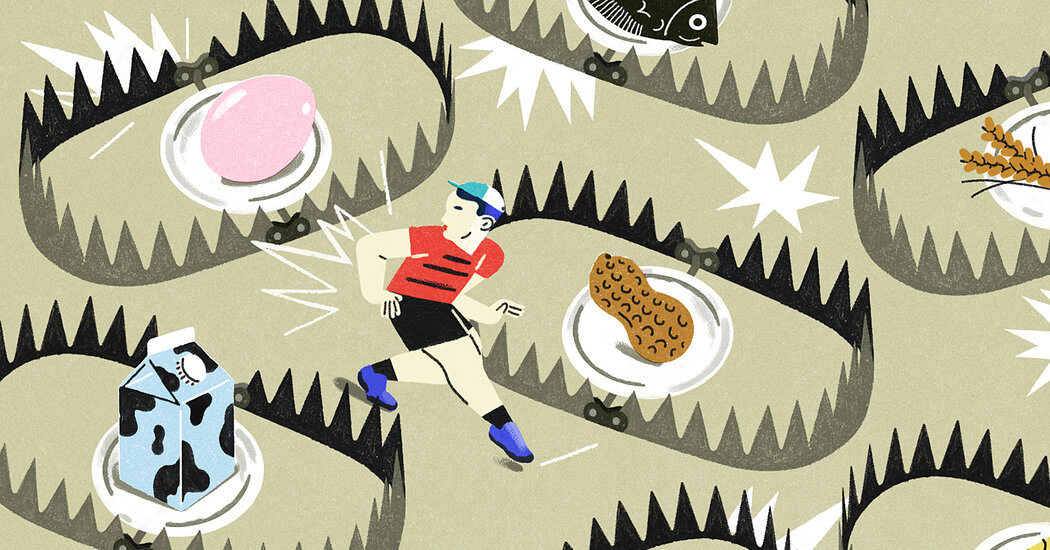
Pollen-food reactions, adult onset symptoms and cross reactivity are just some of the surprising ways our bodies respond to food.My grandson Tomas first noticed a distressing reaction to hazelnuts at age 8. Whenever he ate Nutella, his mouth and throat felt tingly and swollen, and so this sweet spread was then banned from his diet and the household.A few years later, Tomas had the same reaction when he ate raw carrots. In researching this column, I learned that hazelnuts and carrots, although botanically unrelated foods, share a protein with birch pollen, to which Tomas is allergic. However, he can eat cooked carrots safely because cooking denatures the allergenic protein.Now 21, he has not yet reacted to other foods that also contain the birch pollen protein, namely celery, potato, apple and peach, although he could eventually become sensitive to one or more of them. His father said that as an adult he’s developed similar mouth and throat symptoms when he eats apples and peaches, especially during pollen season.I also learned of another common link between pollen and food sensitivities. People allergic to ragweed may also react to bananas and melons. Again, a shared protein is responsible. This type of allergy is believed to start with sensitization to inhalation of the offending pollen that later results in an allergic reaction when the food protein is consumed.Fortunately, pollen-food allergy syndromes, although not pleasant, are nearly always mild and not life-threatening.Unfortunately, a growing number of people can experience severe, potentially fatal reactions to certain foods, most of which are omnipresent in the American diet. The main culprits, the so-called “Big 9” — milk, eggs, peanuts, tree nuts, fish, crustacean shellfish, wheat, soy and sesame, which was recently added to the list — account for about 90 percent of food allergy reactions.Although commercially packaged foods now must label the actual or possible presence of major allergenic foods that can cause fatal reactions, other food allergens are not required to be listed. And sesame, which affects more than a million children and adults in the United States, is not required to be listed on foods until 2023.Changing eating habits are adding to the problem. Today’s growing dependence on foods prepared outside the home by restaurants, stores and factories makes avoiding food allergens more challenging. People with potentially fatal anaphylactic reactions can’t be too careful, even when they have no reason to suspect the presence of a life-threatening allergen. Years ago a college student who knew she was deathly allergic to peanuts died after eating chili that had been thickened with peanut butter.A family I know with a child who is severely allergic to peanuts, tree nuts, sesame seeds and their oils, dines only in Italian restaurants and diners that are least likely to use these ingredients. Still, the venue is always told about the boy’s allergies, and he carries an EpiPen that can be used to avert a fatal reaction in case a slip-up occurs.The prevalence of serious food allergies ranges from 10 percent in 2-year-olds and 7.1 percent in children 14 to 17 to 10.8 percent in adults 18 and older. Although allergies to milk, eggs, wheat and soy in infants and young children are frequently outgrown, others in the Big 9 are nearly always lifelong. And people who were allergy-free as youngsters do not necessarily remain so. New food allergies can develop at any age.According to Dr. Scott H. Sicherer, allergist at the Icahn School of Medicine at Mount Sinai in New York, and co-authors, “Remarkably, approximately half of U.S. food-allergic adults report developing at least one of their food allergies during adulthood, with shellfish allergy responsible for the largest number of such cases.”The only real food allergies are adverse immunological responses, Dr. Sicherer explained. The body reacts to an otherwise innocent food as if it were a life-threatening infection and launches a full-scale offensive. Symptoms may include hives, trouble breathing, vomiting or anaphylaxis — a severe, potentially fatal shock reaction that occurs within seconds or minutes of exposure to an allergen, sometimes in only tiny amounts. That is why most airlines no longer offer peanuts to fliers — a mere sprinkling of peanut dust can prove fatal to some people with peanut allergies.More than 40 percent of food-allergic children and half of food-allergic adults experience at least one severe reaction in the course of their lives. Among those allergic to one or more of the Big 9 allergens, severe reaction rates exceed 27 percent, with peanut allergy leading the list at 59.2 percent among children and 67.8 percent among adults who are allergic to peanuts.Still, many people who think they have a food allergy actually don’t when they’re tested with a blind oral challenge, in which foods are tested under medical supervision to see if a child reacts, the gold standard for diagnosing food allergies. Others incorrectly consider all kinds of adverse reactions to foods — from stomach upset to headache — to be allergies. Food intolerance, for example to lactose, the natural sugar in milk, is not an immune reaction but rather results from deficiency of the enzyme lactase. Many Asians develop redness and flushing when they consume alcohol because they lack an enzyme to digest it. Other people may think they’re allergic because they experience druglike reactions, like extreme jitteriness from the caffeine in coffee and tea.Sometimes, long-term avoidance of a food can result in an allergic reaction when that food is eventually consumed. This can happen to children with skin allergies who avoid milk; they may later experience an allergic reaction when they finally consume it. Occupational exposures, the use of skin care products, even tick bites can sometimes result in adult-onset food allergies if there is cross-reactivity to an allergenic substance in both.And while in years past allergy-prone families were advised to avoid exposing their children to peanuts until age 3 (advice that is likely to have contributed to the current explosion of peanut allergies in children), it now appears that early introduction — at 6 months — of a highly allergenic food is actually protective, diminishing the risk of a later-in-life reaction, Dr. Sicherer said.Further confusing the food-allergy picture is the fact that under different conditions people may respond differently to the same food. Thus, for some, an allergic reaction may occur only when the food is consumed in large amounts or in conjunction with alcohol or intense exercise, which allergists call “augmentation factors.”Recent desensitization studies, which aim to reduce sensitivity to allergic foods by gradually exposing people to minute amounts of allergens over several months, and others underway may make life less terrifying for many people with severe food allergies. Meanwhile, avoiding offending foods offers the best protection against a severe allergic response.

Read more →

Words matter: Language can reduce mental health and addiction stigma

Neuropsychopharmacology, leaders from the National Institutes of Health address how using appropriate language to describe mental illness and addiction can help to reduce stigma and improve how people with these conditions are treated in health care settings and throughout society. The authors define stigma as negative attitudes toward people that are based on certain distinguishing characteristics. More than a decade of research has shown that stigma contributes significantly to negative health outcomes and can pose a barrier to seeking treatment for mental illness or substance use disorders.
Thirty five percent of people with serious mental illness in the U.S., and nearly 90% of people with substance use disorders, do not receive treatment. The perspective authors point to evidence that stigma-related bias among clinicians can contribute to a treatment-averse mindset and to flawed clinical care, including failure to implement proven methods of treatment. Further, when a person with a mental illness or substance use disorder continues to experience stigma, they may begin to internalize it. This “self-stigma” can lead to lower self-esteem and feelings of self-worth and can become an ongoing source of distress that may exacerbate symptoms and create barriers to successful treatment.
Conversely, efforts to reduce stigma may reduce the psychological burden it places on individuals and can be an important component of removing barriers to care. The authors highlight numerous studies showing that using scientifically accurate language and terms that centralize the experience of patients with mental illness and substance use disorders is one key component to reducing stigma. They argue that a shift in language is crucial for mobilizing resources toward mental health and addiction services and eroding the prejudices that keep people who need those services from seeking or receiving them. Though stigma is difficult to eliminate, they contend that changing the language we use to describe these conditions can make a significant and immediate difference for the people experiencing them.
Story Source:
Materials provided by NIH/National Institute on Drug Abuse. Note: Content may be edited for style and length.

Read more →

Covid: Global healthcare workers missing out on jabs

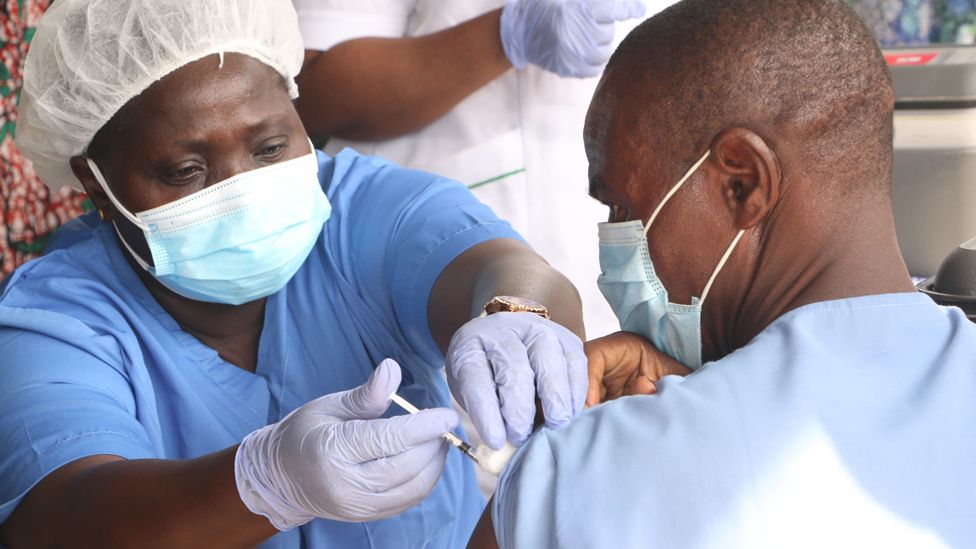
SharecloseShare pageCopy linkAbout sharingimage copyrightGetty ImagesHealth and care workers are being “left behind” in efforts to vaccinate the world against Covid-19, nursing leaders say.There were promises they would be among the first to be jabbed.But the International Council of Nurses (ICN), which represents 27 million professionals, says tens of millions have not even had one dose. The World Health Organization (WHO) estimates around 200 have died each day since the pandemic began. Howard Catton, chief executive of the ICN, says: “If this was an airline going down every day with 200 people on board, there’d be immediate investigations.”You’ve got nurses and healthcare workers knowing that they are at higher risk, knowing that there is a way to protect them… and that people who are far less vulnerable in other countries are getting that protection. But they are being left behind.”It feels that despite all of the warm words of support, nurses and healthcare workers are in some way are dispensable or disposable. Mandy Malambo, a nurse in Lusaka, Zambia, has had one dose of a Covid vaccine and is eagerly awaiting her second. “Things have been very, very difficult during the pandemic,” she says. “We have been short-staffed, and the number of cases we are receiving each and every single day is overwhelming.”The staff are not able to take care of these Covid patients. so work has been very, very stressful, especially when you think, what if today is the day that I contract coronavirus?”It’s really scary. We’re just hoping for the best.”Reporting of infections and deaths among healthcare workers is patchy and the true figure is thought to be far higher than the 6,643 officially reported to the WHO. Many countries are not officially reporting the number of health and care workers who have died of Covid, and the WHO estimates the real figure is at least 115,000 – and potentially much higher. ‘A moral responsibility’The organisation’s Dr Jim Campbell says: “It’s a moral responsibility that we should all be concerned about.” There are around 135 million health and care workers around the world, according to the International Labour Organization.image copyrightGetty ImagesThe latest data reported to the WHO from 140 countries suggests just one in eight is fully vaccinated, the vast majority in richer nations. Dr Phionah Atuhebwe, from the WHO’s Regional Office for Africa, says 2.4 million health workers across 38 countries have had at least one dose of a vaccine – but another 66.2 million doses are needed to ensure all health and care workers in the region are double-jabbed.”We are concerned about the availability of vaccines to healthcare workers and (about) vaccine acceptance among healthcare workers,” she said,In Nigeria, for example, health workers have a range of concerns around safety and supply, but research also found they were unable to take time off work for vaccination.The ICN says it’s essential there is a better record of how many healthcare workers fall ill and die from Covid.”The data will raise some difficult and uncomfortable questions about the level of risk, and whether there could have been more effective policy responses to protect those people,” says Mr Catton. “But I say, don’t be fearful of bringing this data forward because you’re worried about the accountability. Think about how bringing this data forward can better protect healthcare workers and save their lives.”Covid vaccines are scarce internationally, particularly in lower-income countries.It’s also these countries that tend to have precious few health and care workers. The wider concern is that if they are not protected, the communities they serve are also left more vulnerable. Follow @TulipMazumdar on Twitter.You might also be interested in:

Read more →