Study shows why second dose of COVID-19 vaccine shouldn't be skipped

The second dose of a COVID-19 vaccine induces a powerful boost to a part of the immune system that provides broad antiviral protection, according to a study led by investigators at the Stanford University School of Medicine.
The finding strongly supports the view that the second shot should not be skipped.
“Despite their outstanding efficacy, little is known about how exactly RNA vaccines work,” said Bali Pulendran, PhD, professor of pathology and of microbiology and immunology. “So we probed the immune response induced by one of them in exquisite detail.”
The study, published July 12 in Nature, was designed to find out exactly what effects the vaccine, marketed by Pfizer Inc., has on the numerous components of the immune response.
The researchers analyzed blood samples from individuals inoculated with the vaccine. They counted antibodies, measured levels of immune-signaling proteins and characterized the expression of every single gene in the genome of 242,479 separate immune cells’ type and status.
“The world’s attention has recently been fixed on COVID-19 vaccines, particularly on the new RNA vaccines,” said Pulendran, the Violetta L. Horton Professor II.

Read more →

Hundreds of thousands of UK under-18s to get vaccine

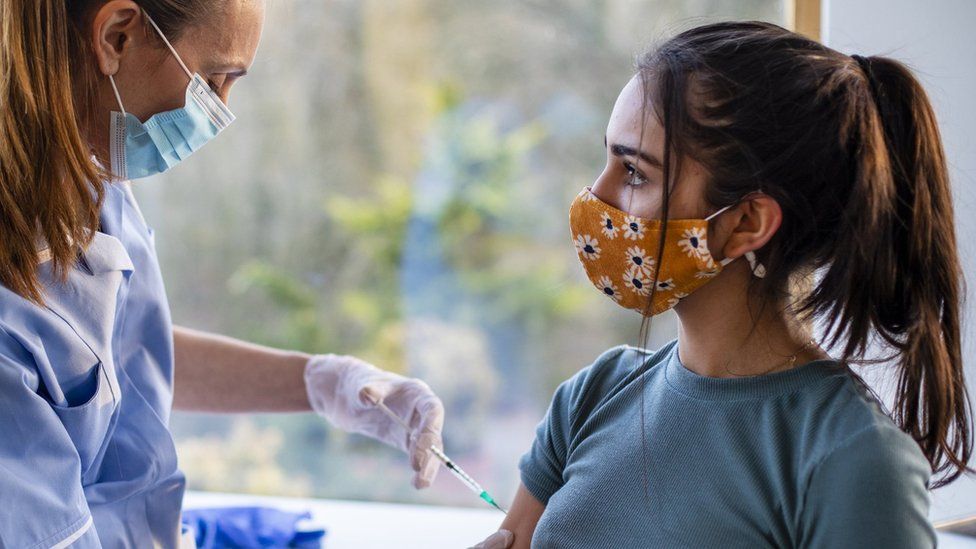
SharecloseShare pageCopy linkAbout sharingimage copyrightGetty ImagesChildren over 12 who are at higher risk of getting ill if they catch Covid will be offered the jab, the vaccines minister Nadhim Zahawi has confirmed. But the vast majority of children in the UK, who are low risk, will not be offered the vaccine for now. However, some healthy children over 12 who live with other vulnerable people can have the vaccine, as well as those on the cusp of turning 18. It means, overall, around 370,000 children will be eligible. The UK is in marked contrast with other countries – such as the US and Canada – which have mass vaccinated children aged 12 to 17.Which children are being vaccinated and why?How can I prove I’m fully vaccinated?Covid rules from 19 July: What has changed?The decision is based on recommendations from the UK’s vaccines experts – the Joint Committee on Vaccination and Immunisation (JCVI). Ministers in England, Wales, Scotland and Northern Ireland each then approve the plans.Those newly eligible include vulnerable children, aged 12 to 15, with:severe neurodisabilityDown’s syndromea severely weakened immune system, including some children with cancerthose with profound and multiple learning difficulties. Vulnerable 16 and 17-year-olds were already able to get the vaccine. Those aged 12 to 17 will also be offered a vaccine if they live with somebody with a weak immune system. Teenagers within three months of their 18th birthday will be offered the jab – the aim is to protect people leaving school before they start work or university. Mr Zahawi said the NHS had been asked to offer the vaccine as soon as possible and that eligible children would be contacted by the health service. Should all children get a vaccine?Heart inflammation link to Pfizer and Moderna jabsThey will all be offered the Pfizer-BioNTech vaccine because it is the only one approved for use in children aged 12 to 17 in the UK.The European Medicines Agency says heart inflammation following the vaccine is a very rare side effect which can be treated with rest and anti-inflammatory drugs such as ibuprofen. Do you have any questions about masks, rule changes and vaccinations?Send your questions to yourquestions@bbc.co.ukWhatsApp us at +44 7756 165803Tweet us @BBC_HaveYourSayPlease read our terms & conditions and privacy policyProf Anthony Harnden, the deputy chairman of the JCVI, said: “The primary aim of the vaccination programme has always been to prevent hospitalisations and deaths. “Based on the fact that previously well children, if they do get Covid-19, are likely to have a very mild form of the disease, the health benefits of vaccinating them are small.”Fewer than 30 children have died with Covid in the UK. The JCVI also says the benefit of vaccinating children to prevent the virus spreading to older age groups is unclear with so many vulnerable adults already fully immunised.Nor is there good evidence that giving children the vaccine could prevent them getting long Covid, says the JCVI. But Prof Lawrence Young, a virologist Warwick Medical School, said: “This is a worrying decision at a time when we are now relying on vaccination and personal responsibility, as opposed to mandated restrictions, to get us through the pandemic. “While infected children mostly get mild symptoms, Covid-19 causes more deaths and hospitalisations in children compared to other viral diseases which have been deemed severe enough to warrant vaccination for example flu.”Follow James on TwitterBEING BRITISH BANGLADESHI: Ali Shahalom, or Ali Official, explores what it’s like to be British-Bangladeshi in the UKTHE SHOCKING FALL OF A SUPER-INFLUENCER: The influencer who claimed she had cancer

Read more →

Researcher's work with flies could be birth control boon

When it comes to making eggs, female flies and female humans are surprisingly similar. And that could be a boon for women seeking better birth control methods, a UConn researcher reports in the July 5 issue of PNAS.
There are about 61 million women of reproductive age in the US, and about 43 million of them are sexually active but don’t want a pregnancy right now, according to the Guttmacher Institute. And while there are a dozen or so different methods of birth control available, most have undesirable side effects for some of the women who try them. Despite the need, pharmaceutical companies are not investing in new birth control research. Private funders such as the Bill and Melinda Gates Foundation have stepped up to fill the gap, and their efforts are bearing fruit in the lab of UConn physiologist and geneticist Jianjun Sun, an associate professor in the Department of Physiology and Neurobiology.
Sun and his colleagues have shown that compounds that stop fruit flies from ovulation (the process of releasing a viable egg) also prevent mice from doing so. And if a drug stops ovulation in both flies and mice, it’s likely to work in humans, too. And that could make it much easier to screen potential birth control drugs quickly and effectively.
Several years ago, Sun’s lab figured out how fruit flies ovulate. In a fly, as in a mouse or a human, many potential eggs mature inside the ovary. But to be fertilized, the eggs need to break out of the little cocoons, called follicles, they’ve been developing inside. Not all the eggs do this successfully; in humans it’s usually just one per cycle. Sun’s lab figured out exactly how successful eggs break out. Then he had a thought: now that we know how they break out, might it be possible to stop them? Stopping the egg from breaking out of the follicle would be a brand new form of birth control.
He applied for the Gates Foundation’s Grand Challenges Explorations Award for birth control research, and won $100,000 in 2016 for a proof of principle experiment: could fruit flies really be used to screen potential birth control drugs?
The answer, Sun found, is yes. He and collaborators at UConn Pharmacy, Northwestern University, University of Rutgers, and Michigan State University put fruit fly follicles in a dish and tested compounds from FDA’s drug library. If the drug inhibited the fruit fly eggs from ovulating, they then tested it on mice follicles. Of the 1,170 drugs they tried, six worked in flies. When they tested four of those in mice, three of them worked! And two seemed to work without affecting hormone levels. And one of those two drugs, chlorpromazine, is classified as a presumed human reproductive toxicant by the Netherlands due to its potential damage to human fertility; all the work so far has involved animal models.
Chlorpromazine, usually used to treat schizophrenia, is not a good candidate for birth control because of its psychoactive effects. But it does prove the concept: fruit fly ovaries can be used effectively to screen compounds for non-hormonal birth control.
Sun went on to win $1 million from the Gates Foundation to broaden his work and test many more candidate compounds. He has also received grants from the Eunice Kennedy Shriver National Institute of Child Health and Human Development (NICHD). His lab is now partnering with Calibr at Scripps Research in San Diego to test 13,000 compounds in their library as potential non-hormonal birth control drugs.
Story Source:
Materials provided by University of Connecticut. Original written by Kim Krieger. Note: Content may be edited for style and length.

Read more →

Abelacimab effective blood clot treatment, study suggests

A potentially game-changing treatment for people with, or at risk of, blood clots has been found effective by an international team of researchers led by McMaster University’s Jeffrey Weitz.
Weitz’s team compared abelacimab with enoxaparin as a control drug in 412 patients undergoing knee replacement surgery. Results showed that just one abelacimab injection prevents blood clots for up to a month after surgery, reducing the risk by about 80% compared with enoxaparin without increasing the risk of bleeding.
Their findings were published in the New England Journal of Medicine today, coinciding with Weitz’s presentation of the research at the International Society on Thrombosis and Hemostasis 2021 Congress.
Weitz, a hematologist, is a professor of medicine and of biochemistry and biomedical sciences at McMaster’s Michael G. DeGroote School of Medicine and executive director of the Thrombosis and Atherosclerosis Research Institute.
“Patients who undergo knee replacement routinely receive anti-clotting treatment with enoxaparin or other anticoagulant medications that require daily administration,” he said.
“With a single injection of abelacimab after surgery, we found much better protection against clots in the veins in the leg compared with enoxaparin, one of the current standards of care.”
Patients enrolled in the study were closely monitored for symptoms or signs of clotting or bleeding and underwent an x-ray of the veins of the operated leg to detect any possible clot formation.

Read more →

For concussion patients, CTs offer window into recovery

CT scans for patients with concussion provide critical information about their risk for long-term impairment and potential to make a complete recovery — findings that underscore the need for physician follow-up.
In a study led by UC San Francisco, researchers looked at the CT scans of 1,935 patients, ages 17 and over, whose neurological exams met criteria for concussion, or mild traumatic brain injury (TBI), at hospitals throughout the nation. While links between CT imaging features and outcome have already been established in moderate and severe TBI, the researchers believe this is the first time the link has been identified in patients with concussion, disputing earlier research that found no prognostic significance of specific types of CT abnormalities.
“Radiologists who routinely read trauma scans know intuitively that patterns of intracranial injury on CT are not random,” said first author, Esther Yuh, MD, PhD, of the UCSF Department of Radiology and Biomedical Imaging. “We showed there are patterns of injury, that some of these are associated with worse outcome than others, and that they provide a window into mechanisms of injury that is reproducible across large studies.”
The study appears online in JAMA Neurology on July 19, 2021.
“Although concussions are referred to as mild traumatic brain injuries, there is nothing mild about some concussions,” said senior author Geoffrey Manley, MD, PhD, professor and vice chair of neurological surgery at UCSF and chief of neurosurgery at Zuckerberg San Francisco General Hospital. “Patients with concussion may suffer from prolonged headache, poor sleep and impaired concentration, and they are at higher risk of self-medicating with drugs and alcohol. Concussion can also contribute to depression and anxiety, and increase the risk for suicide. We need to view concussion not as an event but as a disease requiring physician follow-up after a patient is discharged from the hospital.”
The participants were enrolled by the brain injury research initiative TRACK-TBI, of which Manley is the principal investigator. To enrich the number of so-called complicated concussions, the researchers drew exclusively from patients who had been seen at hospitals with level 1 trauma centers. This meant 37 percent of study participants had a positive CT, significantly more than the 9 percent of positive CTs from patients in U.S. emergency departments.

Read more →

High respiratory efforts in COVID-19 patients could result in self-inflicted lung injury, study shows

The impact of high breathing efforts on the lungs of patients suffering with acute respiratory failure due to COVID-19 has been investigated by researchers at the University of Warwick, who assessed the likelihood of resulting lung injury.
Although mechanical ventilation is a life-saving intervention, the potential for mechanical ventilators to further damage already diseased lungs by applying excessive pressures and forces is now well recognised among intensive care clinicians, who implement specific protocols to minimise the risk of so-called ventilator-induced-lung-injury.
Since the start of the current pandemic, some clinicians have argued that similar injuries could potentially be produced by heightened respiratory efforts in spontaneously breathing COVID-19 patients.
So-called patient self-inflicted lung injury is a controversial concept in the intensive care community, with some clinicians insisting there is no evidence for its existence, while others argue that patients should, if necessary, be placed on mechanical ventilators to avoid it.
There is an ongoing debate about the potential for increased respiratory efforts to generate patient self-inflicted lung injury in spontaneously breathing patients with COVID-19 acute hypoxaemic respiratory failure, however direct clinical evidence linking increased inspiratory effort to lung injury is scarce.
In the paper, ‘High risk of patient self-inflicted lung injury in COVID-19 with frequently encountered spontaneous breathing patterns: a computational modelling study’, published in the journal Annals of Intensive Care, researchers from the University of Warwick have adapted a computational simulator of cardiopulmonary pathophysiology to quantify the mechanical forces that could lead to patient self-inflicted lung injury, at different levels of respiratory effort.
The simulator was set up to represent a population of 10 COVID-19 patients, being treated with supplemental oxygen.
For each of these patients, simulations across a range of tidal volumes (depth of breathing) and respiratory rates were tested, from a tidal volume of 7 ml/kg and respiratory rate of 14 breaths per minute (representing normal breathing), up to a tidal volume of 10 ml/kg and respiratory rate of 30 breaths per minute (representing high respiratory effort).
The results of the simulations indicated that potentially injurious pressures and strains could be generated at levels of respiratory effort that clinicians are frequently seeing in COVID-19 patients.
Professor Declan Bates, from the School of Engineering at the University of Warwick comments:
“Our modelling has found that patients who experience COVID-19 acute hypoxaemic respiratory failure may be at significant risk of patient self-inflicted lung injury due to increased respiratory efforts. These efforts need to be carefully monitored and controlled during their care.”
“Patients should always follow the advice of their clinicians regarding timing of initiation of oxygen support, non-invasive ventilation, or mechanical ventilation.”
Story Source:
Materials provided by University of Warwick. Note: Content may be edited for style and length.

Read more →

A small molecule induces readthrough of cystic fibrosis CFTR nonsense mutations

An experimental drug reported in Nature Communications suggests that a “path is clearly achievable” to treat currently untreatable cases of cystic fibrosis disease caused by nonsense mutations. This includes about 11 percent of cystic fibrosis patients, as well as patients with other genetic diseases, including Duchenne muscular dystrophy, β-thalassemia and numerous types of cancers, that are also caused by nonsense mutations.
The drug is a small molecule with a novel mechanism of action, say David Bedwell, Ph.D., and Steven Rowe, M.D., MSPH, co-senior authors. Bedwell is professor and chair of the University of Alabama at Birmingham Department of Biochemistry and Molecular Genetics, and Rowe is a professor in the UAB Department of Medicine.
To understand how a nonsense mutation causes disease — and how the experimental drug works to suppress the mutation — requires a close look at the biological machinery that makes proteins inside a cell.
A protein is a chain of hundreds of amino acids that then folds to its proper shape and moves to its proper place to perform its function. The chain is made, link by link, by ribosomes that read a sequence for the protein carried on messenger RNA. That sequence instructs which of the 20 different amino acids to add at each link, one by one.
In the disease cystic fibrosis, mutations affect the protein CFTR that functions at the surface of lung cells to regulate the flow of water to the mucus. A malfunctioning or absent CFTR creates very sticky mucus that allows infections in the lungs. A gene mutation that changes one of the nucleotide bases on the messenger RNA may cause an incorrect amino acid to be placed in the protein chain, altering its function. The nonsense premature termination codons that Bedwell and Rowe study cause a different problem — the mutation forces the ribosome to stop protein synthesis in mid-course, yielding an incomplete protein. It also causes nonsense-mediated mRNA decay.
Thus, Bedwell, Rowe and colleagues wanted to find small-molecule compounds that would make the ribosome skip through the nonsense premature stop mutation, permitting the ribosome to continue full synthesis of the protein. They hoped to find readthrough agents that have a novel mechanism and function better than current ones, such as aminoglycoside antibiotics, which have poor efficacy.

Read more →

Firefighters found to have persistent lung damage from Fort McMurray wildfire

Firefighters at the centre of the battle against the massive Fort McMurray wildfire in 2016 have persistent lung damage, according to new findings published by a University of Alberta occupational health research team.
“Those who were dealing with burning organic matter were exposed to a barrage of small particles in the smoke, and the ones with the highest exposure have long-term consequences,” said principal investigator Nicola Cherry, an occupational epidemiologist, professor of medicine and Tripartite Chair of Occupational Health in the Faculty of Medicine & Dentistry.
The firefighters had more than double the risk of developing asthma compared with the general population. They also exhibited a number of changes in lung function tests supportive of an effect on the lungs, including greater lung hyperreactivity and increased thickening of the bronchial wall.
“The impact was correlated to exposure — those who had more exposure had more effects,” said Cherry.
For three years after the fire, Cherry’s team followed 1,234 Alberta firefighters.The firefighters’ exposure to fire-related particles was estimated based on the hours they worked on the blaze, the dates they were there, the firefighting tasks they were performing, and Alberta Environment estimates of particulate matter at different locations.
The Fort McMurray fire broke out in May 2016 and was under control by the fall, but it was not officially declared out until the following year. The highest exposure to particulate matter happened during the first week, Cherry said. Firefighters were deployed from across Alberta from crews that specialize in structural fires (i.e., buildings), oil and gas industry fires and wildland fires.

Read more →

Novel approach for developing new antibiotics

Researchers at Children’s Hospital of Philadelphia (CHOP) have developed a novel method for producing new antibiotics to combat resistant bacteria. Through an approach that would target bacteria with an antibiotic that is masked by a prodrug, which the bacteria would themselves remove, the researchers identified a method that would allow for development of new, effective antibiotics that could overcome issues of resistance. The findings were published today in eLife.
“We’ve created a sort of ‘Trojan Horse’ that would allow antibiotics to reach desired tissues undisturbed, until the bacteria itself activates the drug, effectively releasing an ‘army’ of antibiotics,” said senior author Audrey R. Odom John, MD, PhD, Chief of the Division of Pediatric Infectious Diseases at CHOP. “Using structure-guided design, we have developed a new way to design better antibiotics. Given the growing concern over antimicrobial resistance, we think this is an important step forward.”
Antimicrobial resistance poses a serious threat to public health, with some estimates suggesting that antimicrobial-resistant infections will cause as many as 10 million deaths per year by 2050. To combat this public health threat, scientists will need to develop new, chemically distinct antibiotics that can circumvent antimicrobial resistance, but most attempts to do so have either failed in animal or human models or have been unable to get sufficient levels of treatment to the desired tissues.
To tackle this problem, the researchers took a new approach that relied on exploiting bacterial metabolism, processes that are essential for bacteria to thrive. Drugs that inhibit these processes could eradicate the bacteria, but the chemical group that would inhibit those enzymes has a negative charge, which prevents the drugs from entering cells, creating a challenge.
One way to overcome that challenge is to chemically mask the undesirable negative charge with another chemical group. This strategy, known as prodrugging, adds a sort of shield — the “Trojan Horse” — that masks the negative charge, allows the drug to enter the cell, and then is removed during absorption to allow the original antibiotic to be taken up. However, the prodrug must also be resistant to host enzymes; otherwise, the prodrug mask will be removed too early, and the drug will never reach the desired tissue.
Focusing on Staphylococcus aureus, since methicillin-resistant S. aureus (MRSA) has been labeled a “serious threat” by the Centers for Disease Control and Prevention, the researchers looked for bacterial enzymes that interacted with specific targets that would not interact with host enzymes. Doing so, they were able to characterize two enzymes — GloB and FrmB — that each have defined substrate specificities — that is, highly specific molecules with which they will interact — and, importantly, those specificities are different than those of human enzymes. Thus, these enzymes could remove prodrug additions, activating the antibiotic, without the prodrugs first being degraded by the host.
Having determined GloB and FrmB were suitable bacterial enzyme targets, the researchers characterized the three-dimensional structures of GloB and FrmB, which confirmed their active sites and will enable ongoing structure-guided design of FrmB- and GloB-targeted prodrugs.
“This work paves the way for structure-guided development of S. aureus-specific prodrugs and establishes a pipeline for the identification of additional microbial prodrug activating enzymes,” John said. “We anticipate that these approaches will both guide the development of novel antimicrobials and lead to a more robust arsenal of anti-infective compounds with targeted specificity for the microbe over the human host.”
Story Source:
Materials provided by Children’s Hospital of Philadelphia. Note: Content may be edited for style and length.

Read more →

Novel coronavirus discovered in British bats

A coronavirus related to the virus that causes Covid-19 in humans has been found in UK horseshoe bats, according to new collaborative research from the University of East Anglia, ZSL (Zoological Society of London), and Public Health England (PHE).
However, there is no evidence that this novel virus has been transmitted to humans, or that it could in future, unless it mutates.
UEA researchers collected faecal samples from more than 50 lesser horseshoe bats in Somerset, Gloucestershire and Wales and sent them for viral analysis at Public Health England.
Genome sequencing found a novel coronavirus in one of the bat samples, which the team have named ‘RhGB01’.
It is the first time that a sarbecovirus (SARS-related coronavirus) has been found in a lesser horseshoe bat and the first to be discovered in the UK.
The research team say that these bats will almost certainly have harboured the virus for a very long time. And it has been found now, because this is the first time that they have been tested.

Read more →