Covid: Anger as half of Australians in lockdown again

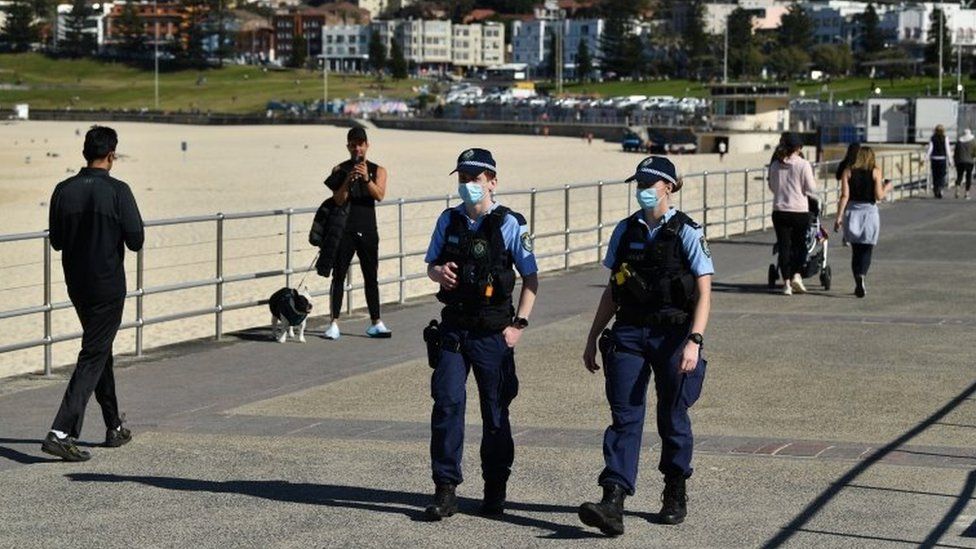
SharecloseShare pageCopy linkAbout sharingimage copyrightEPAAnger is growing in Australia as 13 million people – about half the population – endure fresh lockdowns to quash Covid outbreaks.A third state, South Australia, joined Victoria and parts of New South Wales in lockdown on Tuesday.Fewer than 14% of Australians are vaccinated – the worst rating among OECD nations.Australia’s two biggest cities, Sydney and Melbourne, are among places facing uncertainty over when to re-open.Many people have expressed frustration at being back in highly policed lockdowns 18 months into the pandemic.Re-openings in the UK and the US have increased pressure on the federal government.Prime Minister Scott Morrison has been heavily criticised over the slow vaccination rate, but has resisted calls to apologise. “No country has got their pandemic response 100%. I think Australians understand that,” he told reporters on Wednesday.He again cited Australia’s success in keeping overall infections well below many nations. It has recorded 915 deaths.Mr Morrison noted that the UK had seen over 90 deaths in a single day on Tuesday. But Labor frontbencher Jim Chalmers said: “This is a prime minister who hides while people hurt.”Until recently, Australia had been largely praised for its strategy of border closures, quarantine programmes and snap lockdowns.But the highly contagious Delta variant has challenged these defences in the past month.The outbreak in Sydney – Australia’s largest city – has infected more than 1,500 people.Officials reported 110 new cases on Wednesday, despite the city’s fourth week of lockdown.Residents must not leave their homes except for grocery shopping, exercise and other essential reasons.There are fears Sydney’s lockdown could extend into September, after modelling showed the city may be months from eliminating cases.South Australians will endure seven days at home after five cases of the Delta variant were found.Victoria – which saw 22 new infections on Wednesday – will keep its lockdown until at least Tuesday.How Delta burst Australia’s Covid bubbleWhat’s gone wrong with Australia’s vaccine rollout?Australia halves arrivals as a result of Delta Last month, a total of seven cities were in lockdown for a brief period.Australian authorities are committed to eliminating local cases altogether until a majority of people are vaccinated. Critics say flawed publicity about the AstraZeneca vaccine’s rare clotting risk has made many Australians reluctant to take it.Australia only has limited supplies of its other authorised vaccine, from Pfizer.

Read more →

Covid: France rolls out health pass as cases soar

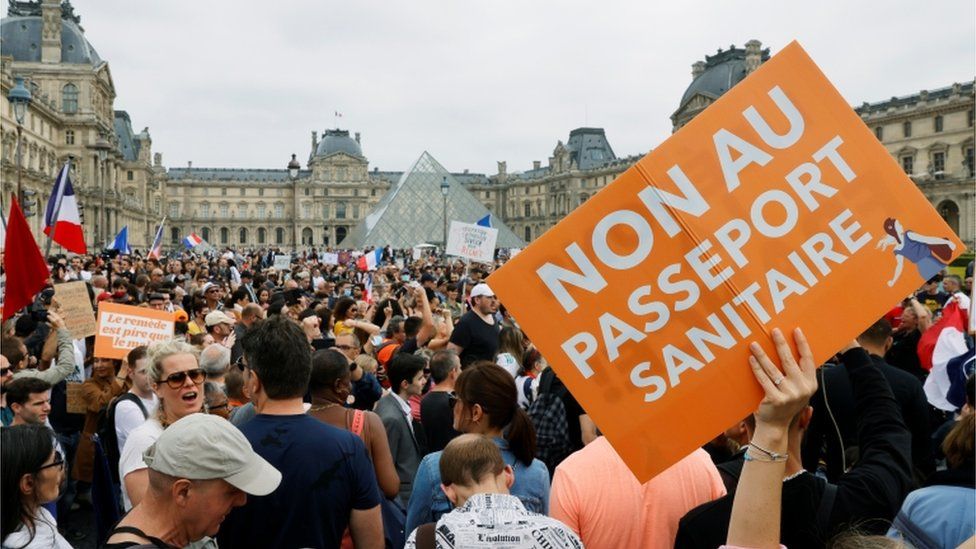
SharecloseShare pageCopy linkAbout sharingimage copyrightReutersA new Covid health pass has come into effect in France amid a surge of new infections.From Wednesday, people need proof of vaccination, a negative test or recent recovery from Covid to enter most museums and cinemas.Later lawmakers will debate whether to extend its use in August for entry to cafes, restaurants and shopping malls.It comes the day after Health Minister Olivier Véran announced 18,000 new infections in just 24 hours.This was compared to fewer than 7,000 cases a day last week, a surge of 150%, as the highly contagious Delta variant spreads throughout the country.”We have never seen this before,” he told the National Assembly, saying Delta had led to far larger rises in cases than previous variants, like those first spotted in the UK or South Africa.President Emmanuel Macron announced the plans for a health pass earlier this month, as well as compulsory vaccination for all health workers by September. Surveys suggest there is widespread vaccine hesitancy in France.Mr Macron’s plans have proved controversial. Protests against new coronavirus rules in France saw demonstrators vandalising two vaccination centres this week.”Health Dictatorship” is what protesters here are calling it.If the government has its way, in a few short weeks, you won’t be able to sit down for a coffee at a Paris café – or board a train – without proof that you’re Covid-free, vaccinated or immune.This so-called Health Pass is the government’s answer to infection rates that are rising faster than France has ever seen in this pandemic.Already, from today, there’ll be no routine access to cinemas, theatres, museums – no trips to Disneyland Paris – without it.But it’s the plan to extend that restriction to everyday public places – cafes, shopping centres and public transport – that’s causing the biggest backlash.Some MPs have reported receiving death threats ahead of the debate today.And some protesters sparked fury last week by comparing these government restrictions to the singling out of Jews during France’s war-time Nazi occupation.A majority of French people appear to support the plan, with many believing it’s the only way to avoid yet another lockdown.

Read more →

As Virus Resurges, G.O.P. Lawmakers Allow Vaccine Skepticism to Flourish

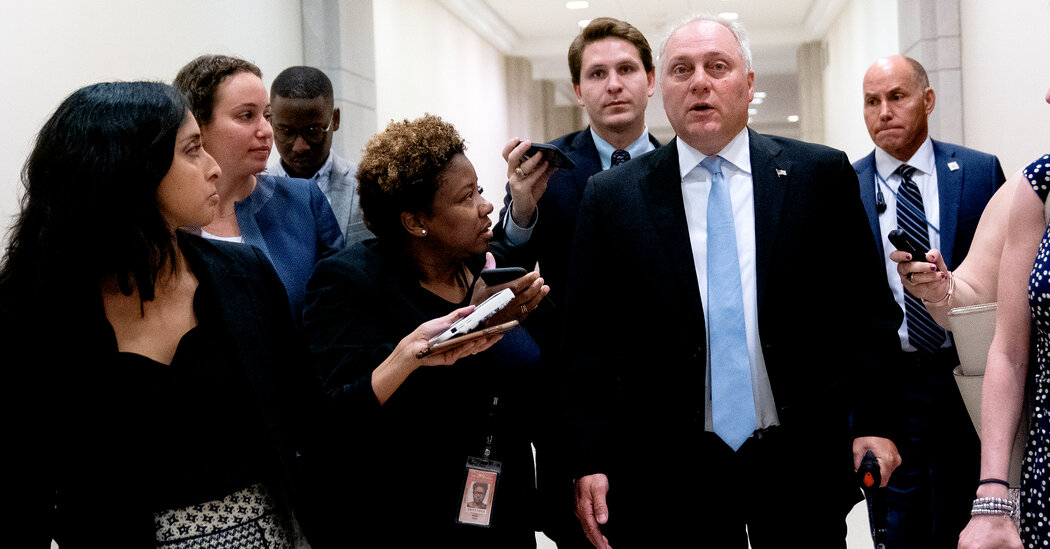
As the coronavirus’s Delta variant rips through conservative communities, most Republicans remain reluctant to confront vaccine misinformation and skepticism in their midst.WASHINGTON — As the coronavirus surges in their states and districts, fanned by a more contagious variant exploiting paltry vaccination rates, many congressional Republicans have declined to push back against vaccine skeptics in their party who are sowing mistrust about the shots’ safety and effectiveness.Amid a widening partisan divide over coronavirus vaccination, most Republicans have either stoked or ignored the flood of misinformation reaching their constituents and instead focused their message about the vaccine on disparaging President Biden, characterizing his drive to inoculate Americans as politically motivated and heavy-handed.On Tuesday, Representative Steve Scalise of Louisiana, the No. 2 House Republican who said he had received his first Pfizer vaccine shot only on Sunday, blamed the hesitance on Mr. Biden and his criticism of Donald J. Trump’s vaccine drive last year. Senator Tommy Tuberville, Republican of Alabama, said skeptics would not get their shots until “this administration acknowledges the efforts of the last one.”And Senator Roger Marshall of Kansas pointed the finger at the White House press secretary, Jen Psaki, and the director of the National Institute of Allergy and Infectious Diseases, Dr. Anthony S. Fauci.“Every time Jen Psaki opens her mouth or Dr. Fauci opens his mouth,” he said, “10,000 more people say I’m never going to take the vaccine.”Some elected Republicans are the ones spreading the falsehoods. Representative Jason Smith of Missouri, a Senate candidate, warned on Twitter of “KGB-style” agents knocking on the doors of unvaccinated Americans — a reference to Mr. Biden’s door-to-door vaccine outreach campaign.Such statements, and the widespread silence by Republicans in the face of vaccine skepticism, are beginning to alarm some strategists and party leaders.“The way to avoid getting back into the hospital is to get vaccinated,” Senator Mitch McConnell of Kentucky, the Republican leader and a polio survivor, pleaded on Tuesday, one of the few members of his party to take a different approach. “And I want to encourage everybody to do that and to ignore all of these other voices that are giving demonstrably bad advice.”Nationally, the average of new coronavirus infections has surged nearly 200 percent in 14 days, to more than 35,000 on Monday, and deaths — a lagging number — are up 44 percent from two weeks ago. The director of the Centers for Disease Control and Prevention estimated on Tuesday that the Delta variant accounted for 83 percent of all new cases.The political disparity in vaccine hesitancy is stark. The Kaiser Family Foundation reported at the end of June that 86 percent of Democrats had at least one shot, compared with 52 percent of Republicans. An analysis by The New York Times in April found that the least vaccinated counties in the country had one thing in common: They voted for Mr. Trump.“There’s a big gap, and it’s growing,” said Jen Kates, a senior vice president of the Kaiser Family Foundation. “We know that more of the unvaccinated are self-identified Republicans, so they are much more at risk of illness, death and continued spread than fully vaccinated people.”A teenager received his first shot of the Pfizer vaccine in Laplace, La., last month. The C.D.C. has said everyone over 12 should be vaccinated.Emily Kask for The New York TimesConservative swaths of the country are being hit particularly hard. Intensive care units in southwestern Missouri and northern Arkansas are filled or filling fast, while 40 percent of new cases are cropping up in Florida.At the Capitol on Tuesday, where a vaccinated aide to Speaker Nancy Pelosi tested positive for the coronavirus, the in-house physician warned lawmakers and staff members that the Delta variant is now present. He begged unvaccinated lawmakers to get their shots, and warned that a mask mandate may have to be reimposed.Amid those troubling trends, Representative Marjorie Taylor Greene of Georgia was suspended from Twitter temporarily for writing that Covid-19 was not dangerous for people unless they were obese or over age 65. On Tuesday, she refused to answer a reporter’s question about whether she had been vaccinated, calling it a violation of the federal law governing the privacy of health care information. (The law does not bar an individual from speaking about her own medical status, or prohibit anyone from inquiring.)Representative Madison Cawthorn, Republican of North Carolina, suggested that the Biden administration’s door-knocking effort was just a first step. Next, he said in an interview with Right Side Broadcasting Network, they would “go door to door to take your guns.”“They could then go door to door to take your Bibles,” he added.Yet many leading Republicans are paying little heed to the resurgence. At a hearing before the Senate health committee, there was scant mention among Republicans about how to confront vaccine hesitancy, save for the comments of Senator Mitt Romney of Utah, who lamented “spurious conspiracy theories” and wondered whether “enemies of our country” were putting out misinformation.At a news conference by House Republican leaders on Tuesday, the coronavirus was nowhere to be heard amid the “crises” of inflation, the southwestern border and out-of-control spending by the “socialist” Democrats.Dr. Anthony S. Fauci, the director of the National Institute of Allergy and Infectious Diseases, testified during a Senate hearing on Tuesday.Stefani Reynolds for The New York TimesEven those lawmakers who expressed concern said there was little politicians could do.“I’m tracking it daily, and it’s not good,” said Senator Josh Hawley, whose home state, Missouri, is now a Covid hot spot. But he flatly ruled out mandates to get more Missourians inoculated, saying it would only backfire with conservative voters.“Where you run into problems is where they say, ‘You must do the following,’” Mr. Hawley said. “That is why the president’s language about going door to door is so alarming to people that it has the opposite effect.”Mr. Marshall, a physician who organized other elected Republican doctors to encourage constituents to get vaccinated, concluded that “there’s nothing that anyone can say up here that’s going to convince somebody to take the vaccine.”Off Capitol Hill, some conservatives have become considerably more forceful. Utah’s Republican governor, Spencer Cox, accused conservative “talking heads” of “literally killing their supporters” with their vaccine skepticism.The conservative personality Sean Hannity told viewers on Monday night to take the virus seriously and get vaccinated. Steve Doocy, the co-host of Mr. Trump’s favorite news program, “Fox & Friends,” had a similar message on Tuesday morning.But the messages on Fox remain mixed, as do the Republican Party’s.Senator Rand Paul, Republican of Kentucky and a doctor, is trying to change the subject. At Tuesday’s health committee hearing, he escalated his long-running attacks on Dr. Fauci over whether the National Institutes of Health funded “gain of function” research — experiments devised to identify genetic mutations that could make a virus more powerful — at a laboratory in Wuhan, China, where the pandemic began.Mr. Paul accused Dr. Fauci of lying to Congress when he testified in May that the N.I.H. did not fund such work. Dr. Fauci shot back that he was not lying, and accused the senator of spreading falsehoods by implying American scientists were to blame for the pandemic.Mr. Marshall used the hearing to raise questions about whether children should be vaccinated. He said afterward that he would encourage anybody over 50 to get the vaccine, but added that there were “pluses and minuses” for anyone younger than that, directly contradicting guidance from the C.D.C., which has said everyone over 12 should be vaccinated.The senator added that those not yet vaccinated should get tested to see if they had antibodies from a previous infection, and if they did, they might not need a shot. That, too, goes against the C.D.C., which recommends vaccination for those who have recovered from Covid-19.Senator Rand Paul, Republican of Kentucky, accused Dr. Fauci of lying to Congress, and Dr. Fauci in turn accused the senator of spreading falsehoods.Stefani Reynolds for The New York TimesBut Republican concerns are still focused mainly on the tactics of those trying to get more people inoculated.“You’re seeing some people try to bully people into doing things instead of just encouraging them,” Mr. Scalise said. “There’s even talk of putting mask mandates back on people in certain states when the vaccine is widely available, it’s safe and effective.“We should be encouraging people to get it,” he added, “but not trying to threaten people.”

Read more →

Covid: The Mexican villages refusing to vaccinate

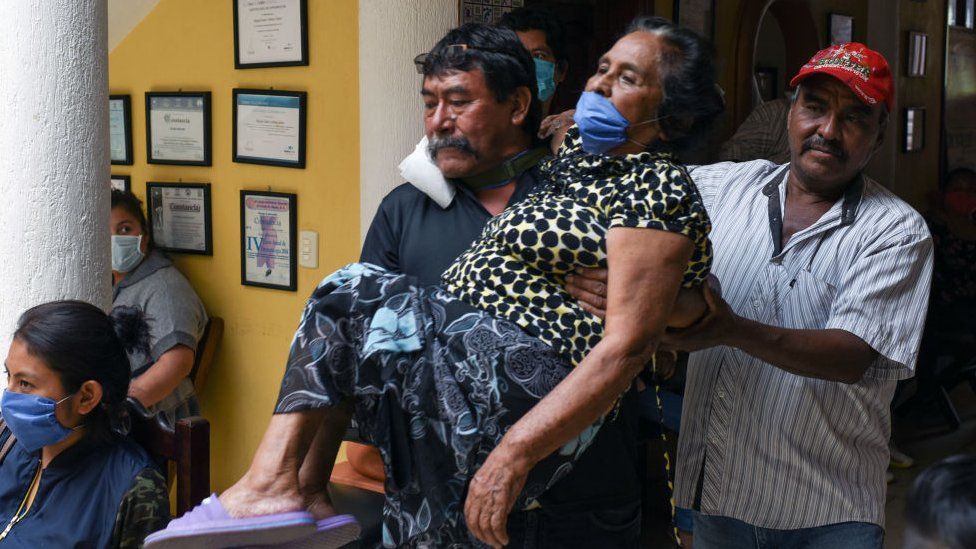
SharecloseShare pageCopy linkAbout sharingimage copyrightAFPIn November Pascuala Vázquez Aguilar had a strange dream about her village Coquilteel, nestled among the trees in the mountains of southern Mexico. A plague had come to the village and everyone ran to the forest. They hid in a hut under a tall canopy of oak trees.”The plague couldn’t reach us there,” Pascuala says. “That’s what I saw in my dream.”A few months later the pandemic had engulfed Mexico and thousands of people were dying every week. But Coquilteel and many small, indigenous towns in the state of Chiapas were left relatively unscathed. This has been a blessing but it also presents a problem.Almost 30% of Mexicans have received one vaccine against Covid-19 so far but in the state of Chiapas the take-up rate is less than half of that. In Coquilteel, and many remote villages in the state, it’s likely to be closer to 2%. Last week Mexico’s President Andrés Manuel López Obrador remarked on the low vaccination rate in Chiapas and said the government needed to do more.Covid map: Where are cases the highest? Covid vaccines: How fast is worldwide progress?Pascuala is a community health leader for 364 communities in the area and she has been vaccinated. She travels in and out of the village and worries about bringing Covid back to her family and friends who, like most of their neighbours are not vaccinated.They’re influenced by lies and rumours swirling around on WhatsApp. Pascuala has seen messages saying the vaccine will kill people after two years, that it’s a government plot to reduce the population or that it’s a sign of the devil that curses anyone who receives it.image copyrightAFPThis kind of disinformation is everywhere but in villages like Coquilteel, it can be particularly potent. “People don’t trust the government. They don’t see the government doing anything good, they just see a lot of corruption,” Pascuala says.The community in Chilón are predominantly indigenous descendants of the Mayan civilisation. In Chiapas there are over 12 official traditional languages spoken. The first language in Coquilteel is Tzeltal and few people speak much Spanish.The indigenous community in this part of Mexico has a history of resistance to the central authorities, culminating in the Zapatista uprising in 1994. “The government doesn’t consult people on how they want to be helped or how to govern,” says Pascuala. “The majority don’t believe that Covid exists.”This isn’t just a problem in Mexico or in Latin America, it’s happening all over the world. In northern Nigeria in the early 2000s and later in parts of Pakistan, distrust of the authorities led to boycotts of the polio vaccine. Some of these communities believed a lie that the vaccine was sent by the US as part of the “War on Terror”, to cause infertility and reduce their Muslim population.”There is fertile ground for rumours and misinformation where there’s already a lack of trust in authorities and maybe even in science,” says Lisa Menning, a social scientist at the World Health Organization (WHO) who researches barriers to vaccine uptake. “There are information gaps and perhaps poorly designed communications campaigns that have targeted these communities historically.”image copyrightGerardo GonzálezNicolasa Guzmán García spends much of her day in Coquilteel tending to her chickens and growing fresh vegetable for her family. She does believe Covid is real but doesn’t feel the need to be vaccinated. “I don’t leave my home very much. I don’t travel to the city, I’m focused on looking after my animals,” she says.She also believes that their traditional lifestyle protects the community – they eat healthy, fresh food and get a lot of fresh air and exercise. And like a lot of indigenous communities across Latin America, the Tzeltal practise a mix of Catholicism and their ancient spiritual religion.”I can’t say if this vaccine is bad or good because I don’t know how it was made, who made it and what’s in it,” says Nicolasa. “But I prepare my traditional medicine myself so I have more confidence in it.”She uses a mixture of cured tobacco, home-made alcohol and garlic to help with breathing problems, and tinctures made from Mexican marigold flowers or water of the rue plant for fever.Colombia bets on privately funded vaccinationsSecond doses run dry in Brazil’s scramble to vaccinateMedical doctor Gerardo González Figueroa has been treating indigenous communities in Chiapas for 15 years and says trust in herbal medicine is not just out of tradition but necessity – because medical facilities are often far away.He believes there are some protective benefits from traditional diet, lifestyle and healing practices but he is extremely worried about low vaccination rates.”I don’t think the efforts of the Mexican government have been strong enough in getting all of society involved,” he says. “These institutions have been acting in a paternalistic manner. It’s ‘go and get your vaccines’.”image copyrightAFPThe federal government has said its vaccination programme is a success, with mortality declining by 80% amidst the third wave of Covid sweeping across Mexico’s more densely populated urban areas.Pascuala believes the authorities gave up too easily when they saw that people were rejecting getting vaccinated in the village.”It’s a false binary to think of supply and demand as separate things,” says Lisa Menning of the WHO. She points to the US, where polling in March showed communities of colour had also been hesitant to get vaccinated until authorities put a major effort into making vaccination accessible. Vaccination rates in these communities are now much higher.”Having easy, convenient and really affordable access to good services, where there’s a health worker who’s really well-trained and able to respond to any concerns and responds in a very caring and kind respectful way – that is what makes the difference.”It can’t be a top-down approach, she says. “What works best is listening to communities, partnering with them, working with them.”Coquilteel is one of millions of small, rural communities around the world where this is sorely lacking. For now, all Pascuala can do is keep trying to convince people to get vaccinated and she’s focusing her efforts on those who leave the village, like truck drivers. But until everyone is vaccinated, she can only put her trust in other powers.”Thanks to God we live in a community where there are still trees, and where the air is still clean,” she says. “I think in some way, Mother Earth is protecting us.”You may also be interested in

Read more →

More than 1.5 million children lost a primary or secondary caregiver due to the COVID-19 pandemic

More than 1.5 million children around the world are estimated to have lost at least one parent, custodial grandparent, or grandparent who lived with them due to death related to COVID-19 during the first 14 months of the pandemic, according to a study published today in The Lancet. The study highlights orphanhood as an urgent and overlooked consequence of the pandemic and emphasizes that providing evidence-based psychosocial and economic support to children who have lost a caregiver must be a key part of responding to the pandemic.
The analysis used mortality and fertility data to model rates of COVID-19-associated orphanhood (death of one or both parents) and deaths of custodial and co-residing grandparents (ages 60-84) from March 1, 2020 to April 30, 2021, across 21 countries. This study was funded in part by the National Institute on Drug Abuse (NIDA), part of the National Institutes of Health.
In the paper, “COVID-19-associated deaths” referred to the combination of deaths caused directly by COVID-19 and those caused indirectly by other associated causes, such as lockdowns, restrictions on gatherings and movement, decreased access or acceptability of health care and of treatment for chronic diseases.
Traumatic experiences, such as the loss of a parent or caregiver, are associated with increases in substance use, mental health conditions, and other behavioral and chronic health conditions. NIDA supports research aimed at understanding the impact of trauma on young people, preventing substance use after experiencing hardship, and treating substance use in populations that experience trauma.
“Studies like this play a crucial role in illuminating the COVID-19 pandemic’s long-lasting consequences for families and the future mental health and wellbeing of children across the globe,” said NIDA Director Nora D. Volkow, M.D. “Though the trauma a child experiences after the loss of a parent or caregiver can be devastating, there are evidence-based interventions that can prevent further adverse consequences, such as substance use, and we must ensure that children have access to these interventions.”
To estimate pandemic-associated orphanhood and caregiver deaths, the study used excess mortality and COVID-19 mortality data for 21 countries that accounted for 77% of global COVID-19 deaths during 2020 and early 2021. These include Argentina, Brazil, Colombia, England and Wales, France, Germany, India, Iran, Italy, Kenya, Malawi, Mexico, Nigeria, Peru, Philippines, Poland, Russian Federation, South Africa, Spain, United States, and Zimbabwe.
The authors estimate that 1,134,000 children lost a parent or custodial grandparent due to COVID-19-associated death. Of these, 1,042,000 children were orphaned of a mother, father, or both — most lost one, not both parents. Overall, 1,562,000 children are estimated to have experienced the death of at least one parent or a custodial or other co-residing grandparent (or other older relative).
The countries with the highest numbers of children who lost primary caregivers (parents or custodial grandparents) included South Africa, Peru, United States, India, Brazil, and Mexico. The countries with rates of COVID-19-associated deaths among primary caregivers ( >1/1000 children) included Peru, South Africa, Mexico, Brazil, Colombia, Iran, United States, Argentina, and Russia.
The study found that for every country, COVID-19 associated deaths were greater in men than women, particularly in middle- and older-ages. Overall, there were up to five times more children who lost a father than who lost a mother.
“We know from our research that loss of a parent or caregiver can upend children’s lives and potentially affect their development if they are not in a stable home setting. If we take into consideration variants of concern or possible severity of illness among youth, we must not forget that the pandemic continues to pose a threat to parents and caregivers — and their children,” said Chuck A. Nelson, III, Ph.D., study author, Boston Children’s Hospital.
While research on the science of substance use and addiction remains the primary focus of NIDA’s work, NIDA is supporting COVID-19 research, and has issued over $15 million in funding for COVID-19-related projects since the start of the pandemic that could leverage current infrastructure, projects, or scientific knowledge and resources.

Read more →

PEPFAR Is Still Without a Leader. H.I.V. Activists Want to Know Why.

“Can we not think and act on two pandemics at a time?” asked one epidemiologist.The Biden administration has not yet nominated a leader for the President’s Emergency Plan for Aids Relief, a $7 billion program that sets priorities for AIDS care worldwide — leaving countries that receive funding from the program without guidance during a pandemic that is particularly dire for those with H.I.V.Pepfar is led by a global AIDS coordinator, a cabinet-level position that was last held by Dr. Deborah Birx. Dr. Birx served from April 2014 to February 2020, when she left to join the White House coronavirus task force. Dr. Angeli Achrekar, a deputy, has acted as PEPFAR’s interim leader since President Biden took office.Global health experts sharply criticized the delay in nominating a permanent chief. “Can we not think and act on two pandemics at a time?,” asked Gregg Gonsalves, a longtime H.I.V. activist and an epidemiologist at the Yale School of Public Health.PEPFAR was launched in 2003 by President George W. Bush and has had bipartisan support ever since. Funds distributed by PEPFAR are used to support prevention and treatment programs, including offering voluntary male circumcision, as well as testing for H.I.V. and providing antiretroviral therapy to people of all ages.It is widely regarded as the most successful global health program. Since its inception, the U.S. government has invested more than $85 billion in more than 60 countries, saving an estimated 20 million lives.“PEPFAR is an example of what can be done when you combine diplomacy and global health,” said Dr. Carlos del Rio, an infectious-disease expert at Emory University in Atlanta and chair of PEPFAR’s scientific advisory board. “Throughout Africa, they love and they respect the U.S. because of PEPFAR.”Dr. Angeli Achrekar, the acting U.S. Global AIDS Coordinator.U.S. Department of StateLast week, a group of more than 50 advocacy organizations sent a letter to Mr. Biden, urging him to “immediately appoint a bold, creative, and qualified” leader for PEPFAR. “This is unacceptable, particularly during a time of the dueling pandemics of H.I.V. and Covid-19,” they wrote.The White House did not respond to a request for comment.The coronavirus pandemic has disrupted access to H.I.V. prevention, diagnosis and treatment, as well as supply chains for condoms, lubricants and antiretroviral drugs, according to a recent report from UNAIDS.And the pandemic has reversed hard-gained progress on ending H.I.V., including a 23 percent annual decrease in new infections since 2010.The inertia on naming a leader is particularly damaging “when more leadership, ambition and governance is sorely needed to guide global efforts to make up lost ground on the H.I.V. response,” said Suraj Madoori, a director of the Treatment Action Group, an advocacy organization based in New York.A new study released last week showed that people living with H.I.V. have a heightened risk of serious illness and death from Covid-19. The coronavirus pandemic could also benefit from the health care infrastructure set up to provide services for H.I.V., experts noted.“There’s a lot that can happen now, using the PEPFAR structure to confront Covid in those countries,” Dr. del Rio said.“Not leveraging the Pepfar infrastructure — I think it’s crazy, it’s a huge missed opportunity,” he added. “This administration has been around for six months. Why have we not appointed them?”Dr. del Rio said PEPFAR’s chief has been noticeably absent from global conversations, including a recent U.N. resolution to end AIDS by 2030, and efforts to enable PEPFAR sites to respond to the coronavirus pandemic. It’s also important for PEPFAR’s chief to speak up for the program when budget dollars are allocated, Dr. del Rio added: “I almost feel like the program is basically at a standstill.”The absence of a U.S. voice is also having ripple effects on many issues in African countries, said Richard Lusimbo, a program manager at Pan Africa ILGA in Uganda. Core programs for key populations like L.G.B.T.Q. people have been cut in several countries since the start of the Biden administration. In Ivory Coast, for example, the budget for key population services was cut by half.In Kenya, a dispute between its government and the U.S. Agency for International Development has led to a shortage of antiretroviral drugs. A permanent PEPFAR leader with political power would have been able to resolve that dispute, Mr. Lusimbo said.Mr. Biden named Samantha Power to lead USAID on Jan. 13, even before he took office. And last week, the White House announced nominees for seven other positions.For weeks, the H.I.V. community has heard that the administration is considering five widely known global health experts to lead PEPFAR: Shannon Hader, Charles Holmes, Chris Beyrer, Vanessa Kerry and Paul Farmer. But no candidate has emerged as the front-runner.“Unfortunately, we are watching as global support for the Covid-19 response in Africa is missing, the AIDS response is being weakened, and it is not clear who the U.S. government’s leader is on this,” Mr. Lusimbo said. “Does the administration not understand that, for our communities, the AIDS response and the Covid-19 response are critically interlinked?”

Read more →

States and Cities Near Tentative $26 Billion Deal in Opioids Cases

The agreement would end thousands of lawsuits against the three largest distributors and Johnson & Johnson and require them to pay billions for addiction treatment and prevention.The three largest pharmaceutical distributors and Johnson & Johnson are on the verge of a $26 billion deal with states and municipalities that would settle thousands of lawsuits over their role in the opioid epidemic and pay for addiction and prevention services nationwide.An agreement could be announced later this week, although several people with direct knowledge of the talks cautioned that there were still details being negotiated.The settlement would not conclude all of the multifaceted nationwide opioid litigation but would end legal action against some of the companies with the deepest pockets in the pharmaceutical supply chain: the country’s major medical distributors, Cardinal Health, McKesson and AmerisourceBergen, along with the pharmaceutical giant Johnson & Johnson.The distributors, which by law are supposed to monitor quantities of prescription drug shipments, have been accused of turning a blind eye for two decades while pharmacies across the country ordered millions of pills for their communities. Plaintiffs also allege that Johnson & Johnson, which used to contract with poppy growers in Tasmania to supply opioid materials to manufacturers and made its own fentanyl patches for pain patients, downplayed addictive properties to doctors as well as patients.Negotiations, which began more than two years ago, intensified this summer as trials opened in several states and overdose rates reached record levels.Unlike earlier settlement proposals, this one appears to have the critical backing of more than 40 states and a sweetener of $2 billion for plaintiffs’ attorneys. In recent weeks, many terms were nailed down and the fees for private lawyers in the cases — a previous sticking point — bumped up, prompting enthusiasm that an announcement was imminent, lawyers involved in the talks said.In a briefing with several reporters on Tuesday morning, lawyers for thousands of cities and counties were careful to use words like “optimistic” to describe the talks, saying that states had to agree first before local governments could even vote on the settlement. A statement from attorneys general of 10 states, including Pennsylvania, North Carolina and Tennessee, said the negotiations were “progressing well and potentially nearing their completion.”Cardinal Health declined to discuss the negotiations. The other distributors did not reply to requests for comment.Johnson & Johnson said in a statement, “There continues to be progress toward finalizing this agreement and we remain committed to providing certainty for involved parties and critical assistance for families and communities in need.”The company said the agreement would not be an admission of liability or wrongdoing and that it would continue to defend in cases brought by plaintiffs who were not part of the settlement.In court proceedings, the distributors have repeatedly argued that they were participants in the supply chain for drugs that were federally approved.A separate agreement between Native American tribes and the companies is still being negotiated.Even if the negotiators reach a deal, numerous steps are required before formal agreement, including voting by all of the thousands of plaintiffs. It includes carrot-stick incentives to induce more parties to come on board.The deal is contingent on agreement by a large majority of states. People involved in the talks say that eight or so states are still not on board, because they believe the amount of money the companies would pay is insufficient.“Their proposal can be described in three words — not good enough,” said Bob Ferguson, the attorney general of Washington, which has a September trial scheduled against the distributors. “It does not represent real accountability, and will not provide a transformative amount of money to help communities respond to the crisis they helped cause.”Another contentious issue in the proposed deal is what is known as “global peace” — the companies want assurance that a settlement would mean that plaintiffs would put down their litigating swords for good. They are asking that states ensure that local governments that have not brought cases against the companies, as well as those that have cases pending, refrain from future legal action against the companies over opioids.Once a state agrees to the deal, it would ask all of its local governments — even municipalities that have not filed lawsuits — to back it. Reimbursement would work on a tier: full payment is conditional on a state’s local governments signing on.For example, said Mr. Ferguson, most of the money that would be apportioned to his state would be contingent on Washington’s 39 counties and 281 cities signing on — a very high bar.Many major players in the prescription opioid industry have yet to settle cases against them. Some manufacturers, like Purdue Pharma and Mallinckrodt, have sought bankruptcy protection. Teva, Allergan and Endo are on trial. Cases against pharmaceutical chains, such as CVS Health, Walgreens and Walmart, are even further from resolution.According to lawyers familiar with negotiations, Johnson & Johnson, which ended its relationship with poppy growers and stopped making its fentanyl patch and other opioids, would pay $3.7 billion in the first three years and $1.3 billion over the next six years.Collectively the distributors would pay $21 billion over 17 years. The fees of lawyers, who pursued and financed the costly litigation for years, would be deducted from the total figure and are expected to be paid more quickly than some funds for addiction treatment.The distributors would establish a third-party monitor to track their own and their competitors’ drug shipments, intended to quickly alert red-flag pill sales.“It will provide an entirely new method of tracking narcotic drugs at a national level and will make data instantaneously available,” said Joe Rice, a lawyer for many local governments who is on the negotiating team.The negotiations for the states have been led by New York, North Carolina, Pennsylvania, Tennessee, Florida, Texas and California, among others.The negotiations were stalled for months over attorneys’ fees. Innumerable lawyers have contributed different amounts of work and have fought over who should get paid how much. Now, about $1.6 billion in fees and costs would be paid to private lawyers representing thousands of counties and municipalities, $50 million in costs and about $350 million to private lawyers who worked for states. (Many states are represented by their own salaried, government lawyers.)Another critical lever in advancing settlement terms has been the high-stakes gamble of a trial. The distributors have been locked in trial in a West Virginia federal court and in a New York state court. The West Virginia case is ongoing but on Tuesday, Letitia James, the attorney general for New York, announced a $1.179 billion settlement with the distributors that releases them from the case. That money would be deducted from the overall $26 billion settlement. Payments to New York could begin in two months, Ms. James said.A persistent tension in the talks has been over the division of funds among states and small governments, including cities and counties.The new settlement envisions a national formula for disbursing money to states and flexibility within each state to broker a deal with localities, so that the bulk of the funds is aimed at alleviating the opioid epidemic and preventing its recurrence.For months, states and counties elbowed each other, even as they fought with defendants. The distribution to each state now relies on extensive federal data and includes metrics like a state’s population, overdose deaths, opioid pill sales and disorders related to pain pill abuse.Most states will most likely work up their own disbursement plans. Ohio, North Carolina, Arizona, Texas, Florida and others have already brokered internal, state-specific formulas. Last month, the New York legislature passed bills that would ensure that all funds from the opioid litigation settlement would go into a “locked box,” to be used only to address the crisis.Johnson & Johnson is widely known as a company willing to try cases rather than settle, but it has faced rivers of adverse publicity recently: litigation over asbestos deaths related to its talcum powder, a recall of some sunscreens, and reports of rare adverse neurological events associated with its single-dose Covid vaccine. The company remains on trial in California state court but settled with the state of New York and two New York counties last month, on the eve of trial.The money for the New York settlement, $230 million, will be paid over nine years with an additional $33 million for lawyers’ costs and fees, and will be deducted from the national amount.

Read more →

One Dose of J.&J. Vaccine Is Ineffective Against Delta, Study Suggests

Many who received the shot may need to consider boosters, the authors said. But federal health officials do not recommend second doses. The coronavirus vaccine made by Johnson & Johnson is much less effective against the Delta and Lambda variants than against the original virus, according to a new study posted online on Tuesday. The findings add to evidence that the 13 million people inoculated with the J.&J. vaccine may need to receive a second dose — ideally of one of the mRNA vaccines made by Pfizer-BioNTech or Moderna, the authors said. But the conclusions are at odds with those from smaller studies published by Johnson & Johnson earlier this month suggesting that a single dose of the vaccine is effective against the variant even eight months after inoculation. The new study has not yet been peer reviewed nor published in a scientific journal, and relied on laboratory experiments. But it is consistent with observations that a single dose of the AstraZeneca vaccine — which has a similar architecture to the J.&J. vaccine — shows only about 33 percent efficacy against symptomatic disease caused by the Delta variant.“The message that we wanted to give was not that people shouldn’t get the J.&J. vaccine, but we hope that in the future, it will be boosted with either another dose of J.&J. or a boost with Pfizer or Moderna,” said Nathaniel Landau, a virologist at N.Y.U.’s Grossman School of Medicine, who led the study. Other experts said the results are what they would have expected, because all of the vaccines seem to work better when given in two doses. “I have always thought, and often said, that the J.&J. vaccine is a two-dose vaccine,” said John Moore, a virologist at Weill Cornell Medicine in New York. Dr. Moore pointed to several studies in monkeys and people that have shown greater efficacy with two doses of the J.&J. vaccine, compared with one dose. He said the new study was particularly credible because it was published by a team with no ties to any of the vaccine manufacturers. But the data from the new study “do not speak to the full nature of immune protection,” said Seema Kumar, a spokeswoman for J.&J. Studies sponsored by the company indicate that the vaccine “generated strong, persistent activity against the rapidly spreading Delta variant,” she said.The Delta variant is the most contagious version yet of the coronavirus. It accounts for 83 percent of infections in the United States, Dr. Rochelle Walensky, director of the Centers for Disease Control and Prevention, said at a Senate hearing on Tuesday. The variant may also be mainly responsible for a recent rise in infections: Although they are still low relative to last winter, cases are rising in all 50 states, and hospitalizations are increasing in nearly all of them. In the two weeks ending on Tuesday, the nation averaged 268 deaths per day.Experts said the results align with what they would have expected: All of the vaccines seem to work better when given in two doses.Bryan Anselm for The New York TimesDelta may cause more breakthrough infections than earlier forms of the virus, but more than 99 percent of the hospitalizations and deaths are occurring among unvaccinated people. Rates of immunization in the country have stalled, with just under 60 percent of adults fully protected against the virus. Several studies have suggested that the mRNA vaccines made by Pfizer-BioNTech and Moderna will maintain their efficacy against the coronavirus, including all variants identified so far. One recent study showed, for example, that the vaccines trigger a persistent immune reaction in the body that may protect against the coronavirus for years.But evidence on the J.&J. vaccine has been limited, because it was rolled out later than the mRNA vaccines. Most studies of effectiveness of the coronavirus vaccines were conducted at medical centers and hospitals that relied on samples from staff members who received the mRNA vaccines.The J.&J. vaccine has also been dogged by reports of blood clots and a rare neurological syndrome, as well as problems with contamination at a manufacturing plant in Baltimore.Small studies published by researchers affiliated with J.&J. suggested that the vaccine was only slightly less effective against the Delta variant than against the original virus, and that antibodies stimulated by the vaccine grew in strength over eight months.Dr. Landau’s team would probably have seen a similar increase in the vaccine’s potency if they had looked at the data over time, said Dr. Dan Barouch, a virologist at Beth Israel Deaconess Medical Center in Boston. The data on the J.&J. vaccine’s strength against the Delta variant at Day 29 is not much different from those reported in his own study, Dr. Barouch said. “Fundamentally I don’t see that there’s any discordance,” he said. “The question is that of kinetics, it’s not just magnitude, because immune responses are not static over time.” The new study also did not consider other components of immune defense, he added.Dr. Landau and his colleagues looked at blood samples taken from 17 people who had been immunized with two doses of an mRNA vaccine and 10 people with one dose of the J.&J. vaccine. The J.&J. vaccine started out with a lower efficacy than the mRNA vaccines and showed a bigger drop in efficacy against the Delta and Lambda variants. “The lower baseline means that what’s left to counter Delta is very weak,” Dr. Moore said. “That is a substantial concern.”Very few vaccines are given as a single dose, because the second dose is needed to amp up antibody levels, noted Akiko Iwasaki, an immunologist at Yale University. People who were inoculated with the J.&J. vaccine “are relying on that primary response to maintain high levels of antibodies, which is difficult, especially against the variants,” she said.Boosting immunity with a second dose should raise the antibody levels high enough to counter the variants, she said. Turning to an mRNA vaccine for the second shot, rather than another J.&J. shot, may be better: Several studies have shown that combining one dose of the AstraZeneca vaccine with a dose of the Pfizer-BioNTech or Moderna vaccines kicks up the immune response more effectively than two doses of AstraZeneca. The Food and Drug Administration has said “Americans who have been fully vaccinated do not need a booster shot at this time,” and the agency is unlikely to change its recommendations based on laboratory studies. But the new data should prompt the F.D.A. to revisit its recommendations, Dr. Landau said: “I hope that they read our paper and think about it.”

Read more →

Novel method for glucagon delivery

For children with Type 1 diabetes, the risk of experiencing a severe hypoglycemic episode is especially common — and for parents, the threat of that happening in the middle of the night is especially frightening. Sudden and critical drops in blood sugar can go undetected overnight when the child is asleep, resulting in coma and death — an event known as “dead in bed syndrome.”
“A parent can check their child’s glucose levels right before they go to bed and everything looks fine, then around 2 a.m. their blood sugar is dangerously low — near comatose level,” said Matthew Webber, associate professor of chemical and biomolecular engineering at the University of Notre Dame.
Webber has listened to parents of diabetic children describe the fear of such an episode — waking up several times a night to check glucose levels and the panic of emergency situations and rushing children to the hospital in the middle of the night.
In severe situations, glucagon injections can stabilize blood glucose levels long enough for parents to get their child medical attention. But in a new study, published in the Journal of the American Chemical Society, Webber is rethinking the traditional use of glucagon as an emergency response by administering it as a preventive measure.
In the research, Webber and his team illustrate how they successfully developed hydrogels that remain intact in the presence of glucose but slowly destabilize as levels drop, releasing glucagon into the system, raising glucose levels.
“In the field of glucose-responsive materials, the focus has typically been on managing insulin delivery to control spikes in blood sugar,” Webber said. “There are two elements to blood glucose control. You don’t want your blood sugar to be too high and you don’t want it to be too low. We’ve essentially engineered a control cycle using a hydrogel that breaks down when glucose levels drop to release glucagon as needed.”
The gels are water-based with a three-dimensional structure. Webber describes them as having a mesh-like architecture resembling a pile of spaghetti noodles with glucagon “sprinkled” throughout. According to the study, in animal models the gels dissolved as glucose levels dropped, eventually breaking down to release their glucagon contents.

Read more →

COVID-19 shutdowns reveal racial disparities in exposure to air pollution

A new study of COVID-19 shutdowns in the United States reveals pronounced disparities in air pollution — with disenfranchised, minority neighborhoods still experiencing more exposure to a harmful air pollutant compared to wealthier, white communities. This first-of-a-kind study published today by researchers at the George Washington University looks at how air pollution changed after schools and businesses shut down in March 2020 in attempts to curb the spread of COVID-19.
“New York and other major urban areas had cleaner air as many commuters and others stayed off the roads,” Gaige Kerr, the lead researcher on the study and a research scientist at the GW Milken Institute School of Public Health, said. “At the same time, our study shows that an air pollutant called nitrogen dioxide was still disproportionately higher in marginalized, mostly Latino and Black neighborhoods.”
Nitrogen dioxide is formed when fossil fuels such as coal, oil, gas or diesel are burned at high temperatures. Cars, trucks and buses are the largest source of nitrogen dioxide emissions in urban areas followed by stationary sources, including power plants and factories.
With support from NASA, the researchers used data from a recently launched satellite orbiting the earth called the TROPOspheric Monitoring Instrument, along with ground measurements of pollution, to estimate nitrogen dioxide levels both before and after COVID-19 shutdowns. This method allowed the researchers to zoom in and compare one neighborhood’s pollution level to another in urban areas throughout the U.S. They then used demographic data to compare how nitrogen dioxide levels changed for different population sub-groups.
While previous studies have documented the inequity in air pollution exposure using models or spatially limited networks of ground monitors, this study relied on both observational and spatially complete satellite data to reveal how these inequities persisted during the unparalleled changes in human activity during COVID-19, the authors said.
The team found that changes in human activity during the COVID-19 pandemic, largely less passenger vehicle traffic, resulted in lower nitrogen dioxide levels among the vast majority of urban areas.

Read more →