Unleashing Treg cells may lead to treatments for multiple sclerosis

In a new University of California, Irvine-led study, researchers found that a certain protein prevented regulatory T cells (Tregs) from effectively doing their job in controlling the damaging effects of inflammation in a model of multiple sclerosis (MS), a devastating autoimmune disease of the nervous system.
Published this month in Science Advances, the new study illuminates the important role of Piezo1, a specialized protein called an ion channel, in immunity and T cell function related to autoimmune neuroinflammatory disorders.
“We found that Piezo1 selectively restrains Treg cells, limiting their potential to mitigate autoimmune neuroinflammation,” said Michael D. Cahalan, PhD, distinguished professor and chair in the Department of Physiology & Biophysics at the UCI School of Medicine. “Genetically deleting Piezo1 in transgenic mice, resulted in an expanded pool of Treg cells, which were more capable of effectively reducing neuroinflammation and with it the severity of the disease.”
T cells rely on specialized proteins, like Piezo1, to detect and respond to various diseases and conditions including bacterial infections, wound healing, and even cancer. Uncontrolled T cell activity, however, can give rise to autoimmune disorders in which the immune system attacks normal cells in the body. Tregs constantly curate immune responses and play a critical role in preventing autoimmunity.
“Given the demonstrated ability of Piezo1 to restrain Treg cells, we believe that inhibiting Piezo1 could lead to new treatments for neuroinflammatory disorders, like MS,” explained Amit Jairaman, PhD, and Shivashankar Othy, PhD, lead authors of the study, both project scientists in the Department of Physiology & Biophysics.
Piezo1 conducts ions when cells are subjected to mechanical forces. Research over the last decade has shed light on the role of Piezo1 in regulating vital physiological functions including red blood cell (RBC) volume, blood pressure, vascular development, bone formation, and differentiation of neural stem cells. However, its role in modulating immune response has not been appreciated before. And, while it was known that calcium conducting ion channels, like Piezo1, direct various aspects of T cell function, researchers were surprised to find that Piezo1 was not essential for a whole host of T cell functions that rely on calcium, such as lymph node homing, interstitial motility, activation, proliferation, or differentiation into effector T cells.
“We found the role of Piezo1 appears to be quite specific to Tregs. Therefore, targeting Piezo1 might be a new and ideal strategy to cure MS while preserving the immune system’s ability to fight new infections,” added Othy, whose research over last 12 years has focused on finding ways to harness the therapeutic potential of Treg cells.
Further investigation of the function of Piezo1 is needed to understand therapeutic potential, and to more fully understand the processes through which cells sense and respond to mechanical stimuli during immune responses.
Story Source:
Materials provided by University of California – Irvine. Note: Content may be edited for style and length.
Read more →

Long-term prognosis for some patients with severe brain injury better than expected, study finds

New research adds to a body of evidence indicating decisions about withdrawing life-sustaining treatment for patients with moderate-to-severe traumatic brain injury (TBI) should not be made in the early days following injury.
In a July 6, 2021, study published in JAMA Neurology, researchers led by UC San Francisco, Medical College of Wisconsin and Spaulding Rehabilitation Hospital followed 484 patients with moderate-to-severe TBI. They found that among the patients in a vegetative state, 1 in 4 “regained orientation” — meaning they knew who they were, their location and the date — within 12 months of their injury.
“Withdrawal of life-sustaining treatment based on early prediction of poor outcome accounts for most deaths in patients hospitalized with severe TBI,” said senior author Geoffrey Manley, MD, PhD, professor and vice chair of neurological surgery at UCSF and chief of neurosurgery at Zuckerberg San Francisco General Hospital, noting that 64 of the 92 fatalities in the study occurred within two weeks of injury.
“TBI is a life-changing event that can produce significant, lasting disability, and there are cases when it is very clear early on that a patient will not recover,” he said. “But results from this study show a significant proportion of our participants experienced major improvements in life functioning, with many regaining independence between two weeks and 12 months after injury.”
The patients in the study were enrolled by the brain injury research initiative TRACK-TBI, of which Manley is the principal investigator. All patients were 17 and older and had presented to hospitals with level 1 trauma centers within 24 hours of injury. Their exams met criteria for either moderate TBI (approximately one third of patients) or severe TBI.
In both groups, the most common causes of injury were falls, assault and primarily car and motorcycle crashes in which the patient had been a driver/passenger, pedestrian or cyclist.

Read more →

'Springing forward' affects early birds less than night owls

Every spring, the Daylight Saving Time shift robs people of an hour of sleep — and a new study shows that DNA plays a role in how much the “spring forward” time change affects individuals.
People whose genetic profile makes them more likely to be “early birds” the rest of the year can adjust to the time change in a few days, the study shows. But those who tend to be “night owls” could take more than a week to get back on track with sleep schedule, according to new data published in Scientific Reports by a team from the University of Michigan.
The study uses data from continuous sleep tracking of 831 doctors in the first year of post-medical school training when the time shift occurred in spring 2019. All were first-year residents or “interns” in medical parlance, and taking part in the Intern Health Study based at the Michigan Neuroscience Institute.
From the large UK Biobank dataset, the researchers calculated genomic “chronotype” predisposition information, also known as the Objective Sleep Midpoint polygenic score. People with low scores were genomically predisposed to be “early birds” and those with high scores were genomically “night owls.”
The team then applied these genomic scores in the intern sample and focused on the two groups of about 130 physicians each that had the strongest tendencies to be “early birds” and “night owls” based on their scores. The researchers looked at how their sleep patterns changed from the week before DST to the weekend after it.
In general, the difference in post-DST weekday wakeup times between the two groups was not large — probably because first-year medical residents have very strict work schedules.

Read more →

Heatwaves: What do they do to the body and who is at risk?

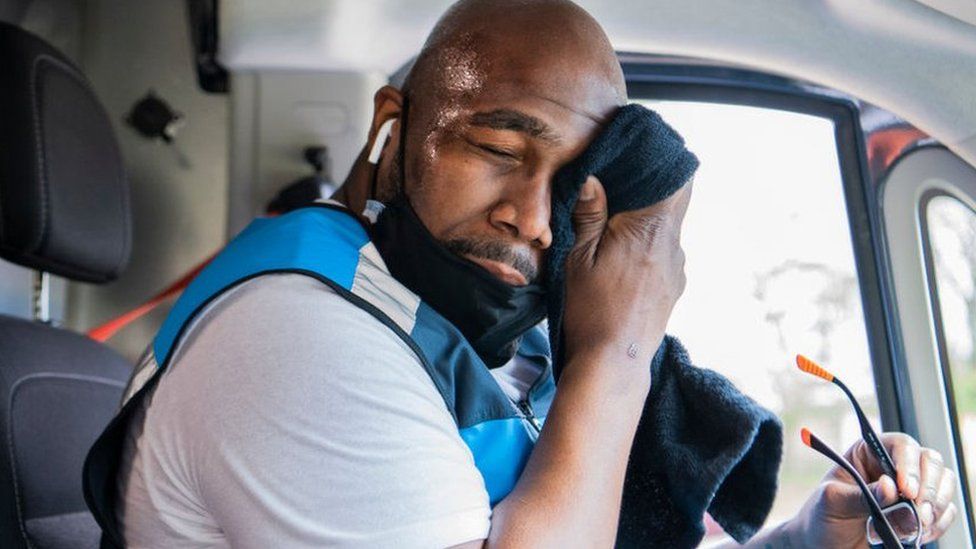
SharecloseShare pageCopy linkAbout sharingimage copyrightGetty ImagesPeople have been told to watch out for sunburn and heat exhaustion after the Met Office issued two new-style extreme heat weather warnings.With the hot weather set to last until Friday, here’s what you need to know about its effects on the body.What does extreme heat do to our bodies?As the body gets hotter, blood vessels open up. This leads to lower blood pressure and makes the heart work harder to push the blood around the body.This can cause mild symptoms such as an itchy heat rash or swollen feet as blood vessels become leaky. At the same time, sweating leads to the loss of fluids and salt and, crucially, the balance between them in the body changes. This, combined with the lowered blood pressure, can lead to heat exhaustion. Symptoms include:dizzinessnausea faintingconfusionmuscle crampsheadaches heavy sweating tirednessIf blood pressure drops too far, the risk of heart attacks rises.Why do our bodies react this way?Our bodies strive to keep a core temperature of about 37.5C whether we’re in a snowstorm or a heatwave.It is the temperature our bodies have evolved to work at. But as the weather gets hotter, the body has to work harder to keep its core temperature down.It opens more blood vessels near the skin to lose heat to our surroundings and starts sweating.As the sweat evaporates, it dramatically increases the heat lost from the skin.What should I do if I see someone with heat exhaustion?If they can be cooled down within half an hour, then heat exhaustion is not normally serious.The NHS advice is to: Move them to a cool place.Get them to lie down and raise their feet slightlyGet them to drink plenty of water – sports or rehydration drinks are also OKCool their skin – spray or sponge them with cool water and fan them. Cold packs around the armpits or neck are good tooHowever, if they do not recover within 30 minutes, then what follows is heat stroke.It is a medical emergency and you should call 999.People with heat stroke may stop sweating even though they are too hot, their temperature may pass 40C and they may have seizures or lose consciousness. image copyrightGetty ImagesWho is more at risk?Old age or some long-term conditions, such as heart disease, can leave people less able to cope with the strain heat puts on the body.Diabetes can make the body lose water more quickly and some complications of the disease can alter blood vessels and the ability to sweat. Children and those who are less mobile may also be more vulnerable. Brain diseases, such as dementia, can also leave people unaware of the heat or unable to do anything about it.People who are homeless will also be more exposed to the sun. Those living in top-floor flats will also face higher temperatures.How to sleep in the heat?Is tea and coffee dehydrating?Sun cream: How much to use and what to do if you burnDo some drugs increase the risk?Yes – but people should keep taking their medication as normal and need to make more effort to stay cool and hydrated.Diuretics – sometimes called “water pills” – increase the amount of water the body expels. They are taken widely, including for heart failure. In high temperatures, they increase the dangers of dehydration and imbalances in key minerals in the body.Antihypertensives – which lower blood pressure – can combine with the blood vessels that are dilating to cope with the heat and cause dangerous drops in blood pressure.Some drugs for epilepsy and Parkinson’s can block sweating and make it harder for the body to cool itself.And other drugs such as lithium or statins can become more concentrated and problematic in the blood if there is too much fluid loss. Does heat kill?Yes.There are about 2,000 deaths caused by high temperatures in England every year.Most of these will be heart attacks and strokes caused by the strain of trying to keep body temperatures stable.The higher death rate starts to kick in once the thermometer passes 25C-26C.However, the evidence suggests the deaths tend to be caused by higher temperatures in spring or early summer rather than “peak summer”.This could be because we start to change our day-to-day behaviour as summer progresses and we get more used to dealing with the heat.The evidence from previous heatwaves is the increase in deaths happens very quickly – within the first 24 hours of the heatwave. How do I keep cool?Make sure you’re drinking enough water or milk. Tea and coffee are also fine. The one to watch out for is excessive alcohol as it can increase the risk of dehydration. If it’s hotter outside than inside your home, then you might be better off keeping the windows closed and the curtains drawn. Follow James on Twitter.

Read more →

Spinal fluid biomarkers detect neurodegeneration, Alzheimer's disease in living patients

Alzheimer’s disease and related diseases can still only be confirmed in deceased patients’ brains via autopsy. Even so, the development of biomarkers can give patients and their families answers during life: Alzheimer’s disease can be accurately detected via peptides and proteins in a patient’s cerebrospinal fluids (CSF), which can be collected through a lumbar puncture and tested while the patient is alive. In 2018, a new framework suggested combining three Alzheimer’s disease biomarkers in CSF — pathologic amyloid plaques (A), tangles (T), and neurodegeneration (N), collectively called ATN. According to recent research from the Perelman School of Medicine at the University of Pennsylvania, the ATN framework can be extended to detect another neurodegenerative condition: frontotemporal degeneration.
Patients with frontotemporal degeneration can experience a range of symptoms, including behavioral changes, executive dysfunction, and language impairments. Distinguishing frontotemporal degeneration from Alzheimer’s disease can be a challenge for clinicians: the symptoms of frontotemporal degeneration can sometimes overlap with Alzheimer’s disease, and a subset of patients can even have both pathologies. Biomarkers can fill the gap by providing evidence of whether Alzheimer’s pathology underlies a patient’s symptoms.
“CSF biomarkers work similarly to a pregnancy test, offering a simple positive or negative result when enough of a substance is detected. But like a pregnancy test, biomarkers for Alzheimer’s disease can provide false negatives or positives,” said lead investigator Katheryn A.Q. Cousins, PhD, a research associate in the Frontotemporal Degeneration Center in the Department of Neurology at Penn Medicine. “Alzheimer’s is a diverse disease, and it is common for other conditions to also be present in the brain. The ATN framework may provide a more complete look at a person’s diagnosis and give us a much richer understanding of not only Alzheimer’s disease, but other co-occurring neurodegenerative conditions. However, to accomplish this, additional biomarkers that can detect other neurodegenerative conditions are critically needed.”
The findings, published in Alzheimer’s and Dementia: The Journal of the Alzheimer’s Association, show that ATN incorporating neurofilament light chain (NfL) may provide a more accurate and precise diagnosis for patients with frontotemporal degeneration. NfL is a protein abundant in the brain, whose levels increase as degeneration progresses. Cousins’ work shows that CSF NfL may be a more accurate marker of neurodegeneration for patients with frontotemporal degeneration, including for Alzheimer’s disease.
“While the ATN framework is very exciting and offers much opportunity for patients with Alzheimer’s disease, these biomarkers don’t capture every case of the disease. We want to be able to detect and treat every patient with neurodegenerative disease as early as possible, and more research is needed to fully understand how biofluids track with the disease process,” said Cousins. “I am eager to conduct additional research into which patients might be missed by these markers, what they have in common, and what causes the pathological and clinical differences in the disease.”
This study was funded by the Swedish Research Council (2018-02532); the European Research Council, (681712); Swedish State Support for Clinical Research (ALFGBG-720931); the Alzheimer Drug Discovery Foundation (201809-2016862); the Swedish Alzheimer Foundation, (AF-742881); European Union Joint Program for Neurodegenerative Disorders (JPND2019-466-236); and the Alzheimer’s Association Research Fellowship (AARF-16-44368).
Story Source:
Materials provided by University of Pennsylvania School of Medicine. Note: Content may be edited for style and length.

Read more →

The environmental toll of disposable masks

Since the Covid-19 pandemic began last year, face masks and other personal protective equipment have become essential for health care workers. Disposable N95 masks have been in especially high demand to help prevent the spread of SARS-CoV-2, the virus that causes Covid-19.
All of those masks carry both financial and environmental costs. The Covid-19 pandemic is estimated to generate up to 7,200 tons of medical waste every day, much of which is disposable masks. And even as the pandemic slows down in some parts of the world, health care workers are expected to continue wearing masks most of the time.
That toll could be dramatically cut by adopting reusable masks, according to a new study from MIT that has calculated the financial and environmental cost of several different mask usage scenarios. Decontaminating regular N95 masks so that health care workers can wear them for more than one day drops costs and environmental waste by at least 75 percent, compared to using a new mask for every encounter with a patient.
“Perhaps unsurprisingly, the approaches that incorporate reusable aspects stand to have not only the greatest cost savings, but also significant reduction in waste,” says Giovanni Traverso, an MIT assistant professor of mechanical engineering, a gastroenterologist at Brigham and Women’s Hospital, and the senior author of the study.
The study also found that fully reusable silicone N95 masks could offer an even greater reduction in waste. Traverso and his colleagues are now working on developing such masks, which are not yet commercially available.
Jacqueline Chu, a physician at Massachusetts General Hospital, is the lead author of the study, which appears in BMJ Open.

Read more →

SARS-CoV-2: Achilles' heel of viral RNA

Certain regions of the SARS-CoV-2 genome might be a suitable target for future drugs. This is what researchers at Goethe University, together with their collaborators in the international COVID-19-NMR consortium, have now discovered. With the help of dedicated substance libraries, they have identified several small molecules that bind to certain areas of the SARS-CoV-2 genome that are almost never altered by mutations.
When SARS-CoV-2 infects a cell, it introduces its RNA into it and re-programmes it in such a way that the cell first produces viral proteins and then whole viral particles. In the search for active substances against SARS-CoV-2, researchers have so far mostly concentrated on the viral proteins and on blocking them, since this promises to prevent, or at least slow down, replication. But attacking the viral genome, a long RNA molecule, might also stop or slow down viral replication.
The scientists in the COVID-19-NMR consortium, which is coordinated by Professor Harald Schwalbe from the Institute of Organic Chemistry and Chemical Biology at Goethe University, have now completed an important first step in the development of such a new class of SARS-CoV-2 drugs. They have identified 15 short segments of the SARS-CoV-2 genome that are very similar in various coronaviruses and are known to perform essential regulatory functions. In the course of 2020 too, these segments were very rarely affected by mutations.
The researchers let a substance library of 768 small, chemically simple molecules interact with the 15 RNA segments and analysed the result by means of NMR spectroscopy. In NMR spectroscopy, molecules are first labelled with special types of atoms (stable isotopes) and then exposed to a strong magnetic field. The atomic nuclei are excited by means of a short radio frequency pulse and emit a frequency spectrum, with the help of which it is possible to determine the RNA and protein structure and how and where small molecules bind.
This enabled the research team led by Professor Schwalbe to identify 69 small molecules that bound to 13 of the 15 RNA segments. Professor Harald Schwalbe: “Three of the molecules even bind specifically to just one RNA segment. Through this, we were able to show that the SARS-CoV-2 RNA is highly suitable as a potential target structure for drugs. In view of the large number of SARS-CoV-2 mutations, such conservative RNA segments, like the ones we’ve identified, are particularly interesting for developing potential inhibitors. And since the viral RNA accounts for up to two thirds of all RNA in an infected cell, we should be able to disrupt viral replication on a considerable scale by using suitable molecules.” Against this background, Schwalbe continues, the researchers have now already started follow-up trials with readily available substances that are chemically similar to the binding partners from the substance library.
Story Source:
Materials provided by Goethe University Frankfurt. Note: Content may be edited for style and length.

Read more →

Scientists uncover how a molecule improves appearance of surgery scars

Surgical scars treated with a molecule called alphaCT1 showed a long-term improvement in appearance when compared to control scars, according to multicenter, controlled Phase II clinical trials — a finding that could help surgeons improve patient outcomes.
Now, a public-private research team led by Rob Gourdie, professor and director of the Center for Vascular and Heart Research at the Fralin Biomedical Research Institute at VTC, has revealed clues about why and how it improves the appearance of scars.
The study, to be published in the August issue of the Federation of American Societies for Experimental Biology (FASEB) Journal, describes how the drug influences the behavior of collagen-producing cells called fibroblasts.
The findings reveal a previously unreported feature of scar formation, and could help advance wound healing treatments for patients undergoing surgical procedures.
The researchers analyzed scars from 49 healthy volunteers in a randomized, double-blind Phase I clinical study. Each volunteer had 5-milimeter punches of skin biopsied from each of their inner biceps. One arm’s wound was treated with the alphaCT1 molecule in a gel, and the other received a non-medicated control gel. The wounds healed for 29 days, at which point the scars were photographed and biopsied again.
Under the microscope, the untreated scars’ collagen — a protein produced by cells called fibroblasts — formed parallel strips, which makes the tissue less pliable. By contrast, scars that were applied with the drug had a collagen matrix resembling unwounded skin. Related experiments were repeated using guinea pig and rat models and yielded similar results.

Read more →

Is bacterial acidity a key to tackle antimicrobial resistance?

Decreasing bacterial acidity could help reduce antimicrobial resistance by eliminating bacteria that can survive being treated with antibiotics.
Scientists at the University of Exeter have developed a novel method, which allows users to measure the pH of individual bacteria before, during and after treatment with antibiotics.
The research, published in the journal mBio, lays the foundation for understanding the special properties of bacteria that survive being treated with antibiotics, so that new ways of targeting them can be developed.
The Exeter University research team found that even before antibiotic treatment, common infection causing Escherichia coli cells that can survive treatment have a more acidic intracellular pH compared to clonal cells that are eliminated by the antibiotic treatment. These surviving cells are called persisters because they are responsible for persistent bacterial infections and contribute to antibiotic resistance.
Antibiotic resistance is one of the most pressing public health challenges and threatens the ability to effectively fight infectious diseases, with around 10 million people predicted to die annually of infections by 2050.
The University of Exeter research team has discovered the mechanisms that permit persisters to have an acidic pH. By measuring the genetic properties of these cells, they found that two cellular processes, namely tryptophan metabolism and carboxylic acid catabolism, are responsible for the low pH measured in persister bacteria.
Dr Stefano Pagliara, a biophysicist in the Living Systems Institute, leading this research at the University of Exeter, said: “Our findings indicate that the manipulation of the intracellular pH represents a bacterial strategy for surviving antibiotic treatment. Our new data suggest a strategy for developing antibiotics that interfere with key cellular components of persisters and decrease their acidity.”
The team is now working on expanding this research to find out whether cell acidity is key for antibiotic resistance in other critical bacterial pathogens such as Pseudomonas aeruginosa and Burkholderia pseudomallei and to identify drug molecules that can alter the pH of persister cells before antibiotic treatment.
Story Source:
Materials provided by University of Exeter. Note: Content may be edited for style and length.

Read more →

Research provides insights into high-risk younger demographics for severe COVID-19

Using data from 9,859 COVID-19 infections, Mayo Clinic researchers have new insights into risk factors for younger populations, some of which differ significantly from their older counterparts. People younger than 45 had a greater than threefold increased risk of severe infection if they had cancer or heart disease, or blood, neurologic or endocrine disorders, the research found. These associations were weaker in older age groups. The study was published in Mayo Clinic Proceedings.
The research team studied people living in a 27-county region of Southeast Minnesota and West Central Wisconsin surrounding Mayo Clinic in Rochester diagnosed with COVID-19 between March and September 2020. The study used the Rochester Epidemiology Project, a linkage of 1.7 million medical records from multiple health care systems that provides a full picture of risks for an entire geographical region.
“Medical care is really fragmented in our country, so someone diagnosed with COVID-19 at one health care provider might end up at a totally different hospital for their severe case. If those records are not linked together, there’s really not a good way for us to understand that that is even the same patient,” says Jennifer St. Sauver, Ph.D., a Mayo Clinic epidemiologist and the study’s first author. “By contrast, the Rochester Epidemiology Project allowed us to follow patients from the time they were diagnosed through their use of health care after that diagnosis, even if they were taken care of at different places. In addition, we could look back in their medical records to better understand all of the chronic diseases this population had even before getting diagnosed with COVID-19 and how those diseases might have contributed to more severe infections.”
Among study participants, cancer was the biggest difference in risk comparing people younger and older than 45. For people younger than 45, cancer was a strong risk factor. It was not a significant factor for the older age group.
The researchers also found that people with developmental disorders, personality disorders, schizophrenia and other psychoses had the highest adjusted risk for severe COVID-19 among all chronic conditions.
Like many other studies on risk factors for COVID-19, the researchers found some races and ethnicities were at a higher risk than others. Though only 4.1% of the study population, Asian Americans had the highest risk of severe COVID-19, followed by Black Americans, who made up 11.5% of the severe cases. Hispanic ethnicity also was associated with a higher risk of severe infection.
The team studied positive PCR (polymerase chain reaction) tests for COVID-19 between March 1 and Sept. 30, 2020.
The COVID in our Community Research Study is being conducted by Mayo Clinic, Olmsted County Public Health Services, Olmsted Medical Center, and Zumbro Valley Health Center. The researchers say the project would not have been possible without the Rochester Epidemiology Project.
“The Rochester Epidemiology Project allows us to study diseases, such as COVID-19, in a defined population, which provides the ability to translate our results to all people with COVID-19, not just those with the most severe disease requiring medical care,” says senior author Celine Vachon, Ph.D., Chair of the Mayo Clinic Division of Epidemiology. “This type of infrastructure will allow us to follow patients who had COVID-19 in the 27-county region over time to better understand any future links to disease.”
The project also was supported by the Mayo Clinic Robert D. and Patricia E. Kern Center for the Science of Health Care Delivery and the Mayo Clinic COVID-19 Research Fund.
Co-authors are Guilherme Lopes, Ph.D., Mayo Clinic; Walter Rocca, M.D., Mayo Clinic; Kavita Prasad, M.D., Zumbro Valley Health Center; Michelle Majerus, Olmsted Medical Center; Andrew Limper, M.D., Mayo Clinic; Debra J. Jacobson, Mayo Clinic; Chun Fan, Mayo Clinic; Robert Jacobson, M.D., Mayo Clinic; Lila Rutten, Ph.D., Mayo Clinic; and Aaron Norman, Mayo Clinic.
Story Source:
Materials provided by Mayo Clinic. Original written by Adam Harringa. Note: Content may be edited for style and length.

Read more →