Better healthcare management can reduce the risk of delirium among older adults

Elderly patients with neurological conditions are significantly more likely to develop delirium shortly after they are hospitalised.
A new study has discovered that a delayed transfer to a hospital floor is associated with greater short-term risk of delirium among patients aged 65 and over, and for those who arrive to the Emergency Department (ED) on days with higher risk of prolonged lengths of stay — found to be Sunday and Tuesday.
Delirium is an acute cognitive disorder characterised by altered awareness, attentional deficits, confusion, and disorientation. Current estimates of new-onset delirium highlight the fact that delirium overwhelmingly develops in medical settings (as high as 82 per cent in intensive care settings) compared to the community at large (between one per cent and two per cent). Research has shown that between 30 per cent and 40 per cent of all delirium cases are preventable.
Authored by Valdery Moura Junior, an Executive PhD Research student at the Business School (formerly Cass), the study explores whether a combination of the care experienced at the ED and the delayed implementation of delirium prevention measures contribute to an increased risk of the disorder. For example, it is possible that the bright lights and high ambient noise level of the ED for 24 hours a day will contribute to increased short-term risk.
The findings showed that of the 858 patients who presented to the ED with a neurological emergency, delirium was documented in 234 (30 per cent) patients within the first 72 hours from ED arrival.
This study also found that there was a connection between the onset of delirium and the day in which the patient arrived in the ED. Those arriving on Sundays and Tuesdays were more likely to demonstrate symptoms in a shorter time. Casual factors suggested include fewer hospital beds, delayed floor admission — a waiting time greater than 13 hours — and a greater proportion of elective pre-surgical admissions.
Mr. Moura has outlined several measures which can be taken to help prevent the likelihood of the onset of delirium in these settings, as well as reduce spending. These include an earlier initiation of delirium prevention measures; a quicker transfer from the ED to the hospital bed; and improving communication across healthcare managers in primary care, emergency rooms, operating rooms, and post-acute services.
Valdery Moura Junior, who is also computer scientist and technical leader at the Mass General Brigham, a Boston-based non-profit hospital and physicians network that includes Brigham and Women’s Hospital (BWH) and Massachusetts General Hospital (MGH), two of the Harvard Medical School’s most prestigious teaching hospitals, said:
“New-onset delirium in older patients alone will mean a high price for the health care system and poses a global challenge for healthcare managers, providers, and payors. Managing hospital capacity has been an enormous challenge throughout the pandemic, with many admission processes reviewed as a result with the goal of improving patient outcomes. Our study may help to identify feasible targets to improve processes between ED and the rest of the hospital.”
Professor Feng Li, Chair of Information Management at the Business School, said: “This is an excellent example where routine operational data in a hospital can be used to identify anomaly and improve patient outcomes. Valdery’s research demonstrated that more systematic use of such data can lead to significant improvement in the management of hospital capacity and operational processes, and most of all, quality of patient care.”
Story Source:
Materials provided by City University London. Original written by Luke Lambert. Note: Content may be edited for style and length.

Read more →

What's riskier for young soccer players, practice or game time?

For young soccer players, participating in repetitive technical training activities involving heading during practice may result in more total head impacts but playing in scrimmages or actual soccer games may result in greater magnitude head impacts. That’s according to a small, preliminary study released today that will be presented at the American Academy of Neurology’s Sports Concussion Conference, July 30-31, 2021.
“Headers are a fundamental component to the sport of soccer. Therefore, it is important to understand differences in header frequency and magnitude across practice and game settings,” said study author Jillian Urban, PhD, MPH, of Wake Forest School of Medicine in Winston-Salem, N.C. “Practices are more amenable to change than games. Therefore, understanding how we can restructure practice to reduce head impact exposure while teaching fundamental skills needed to safely play the sport is critical to improving head impact safety in the sport.”
The study followed eight soccer players who were ages 14 and 15 for two seasons. Players wore a custom-fitted mouthpiece sensor during all practices and games. Researchers recorded all activities on the field with a time-synchronized camera, and identified each time head contact was made.
Head impact exposure was quantified in terms of peak head motion and impacts per player per hour, or impact rate. The amount of time an athlete was exposed to an activity was also evaluated. Researchers then compared impact rates across activity types which ranged from 0.5 head impacts per player hour to 13.7 head impacts per player hour.
Researchers saw a similar number of player-to-player contacts happening during technical drills, team interaction and game play. Technical training activities like heading the ball and practicing ball-control and dribbling were associated with an average impact rate of 13.7 head impacts per player hour. Team interaction activities such as small-sided games in practice were associated with an average impact rate of 0.5 head impacts per player per hour, which was slightly lower than the 1.3 head impacts per player hour observed during games.
Researchers also looked at average rotational head motion, which ranged from 500 radians per second squared (rad/s2) to 1,560 rad/s2, with higher numbers signifying greater magnitude head impacts. Technical training was associated with an average magnitude of 550 rad/s2, while team interaction and games were associated with an average rotational head motion of 910 rad/s2 and 1,490 rad/s2, respectively.
“If the goal is to reduce the number of head impacts a young soccer player may get on the field, our findings suggest the best way may be to target technical training drills and how they are distributed within a season,” said Urban. “However, if the goal is to reduce the likelihood of players sustaining head impacts of greater magnitude, then the best bet may be to look at factors associated with high-magnitude head impacts that can occur during scrimmages and games.”
A limitation of the study is the small number of players involved.
The study was supported in part by the Childress Institute for Pediatric Trauma.
Story Source:
Materials provided by American Academy of Neurology. Note: Content may be edited for style and length.

Read more →

Reverse optogenetic tool developed

A new optogenetic tool, a protein that can be controlled by light, has been characterized by researchers at Ruhr-Universität Bochum (RUB). They used an opsin — a protein that occurs in the brain and eyes — from zebrafish and introduced it into the brain of mice. Unlike other optogenetic tools, this opsin is not switched on but rather switched off by light. Experiments also showed that the tool could be suitable for investigating changes in the brain that are responsible for the development of epilepsy.
The teams led by Professor Melanie Mark from the Behavioural Neurobiology Research Group and Professor Stefan Herlitze from the Department of General Zoology and Neurobiology describe the experiments and results in the journal Nature Communications, published online on 23 July 2021.
Role assumed in various conditions
The opsin Opn7b is a G protein-coupled receptor which is found in zebrafish. Unlike many other light-activated G protein-coupled receptors, it can be activated without a light stimulus and is thus permanently active; researchers call this constitutively active. Normally, activation of G protein-coupled receptors leads to an opening of certain ion channels and thus to the influx of ions into the cell as well as to further signalling processes in the cell. In the case of Opn7b, light deactivates this permanently active signalling chain.
Little research has so far been conducted on G protein-coupled receptors that are activated without stimulation, although it is presumed that they play a role in various neuropsychiatric conditions and night blindness. They also appear to be involved in the development of virally induced cancers.
Receptor characterized more precisely
Dr. Raziye Karapinar, Dr. Ida Siveke and Dr. Dennis Eickelbeck characterized the function of Opn7b in detail and, to their surprise, identified that the receptor is deactivated by light. In contrast, conventional optogenetic tools are switched on by light.
The researchers consider Opn7b well-suited to gain further insights into the function of G protein-coupled receptors that are constitutively active — and obtain new knowledge of their role in the development of diseases in which the receptors can be examined in a time-controlled manner in specific cell types.
Epileptic seizures
The Bochum researchers Dr. Jan Claudius Schwitalla and Johanna Pakusch changed certain cells in the cerebral cortex of mice in such a way that they produced Opn7b. If they deactivated the receptor with light, it triggered epileptiform activity in the animals, which could be specifically controlled with light and interrupted with the help of other light-controlled proteins. The researchers hope that it will be possible to use this optogenetic tool to understand more precisely both the underlying mechanisms and the timescales in the development of epileptic seizures.
Story Source:
Materials provided by Ruhr-University Bochum. Original written by Julia Weiler. Note: Content may be edited for style and length.

Read more →

Brain-repair discovery could lead to new epilepsy treatments

University of Virginia School of Medicine researchers have discovered a previously unknown repair process in the brain that they hope could be harnessed and enhanced to treat seizure-related brain injuries.
Common seizure-preventing drugs do not work for approximately a third of epilepsy patients, so new and better treatments for such brain injuries are much needed. UVA’s discovery identifies a potential avenue, one inspired by the brain’s natural immune response.
Using high-powered imaging, the researchers were able to see, for the first time, that immune cells called microglia were not just removing damaged material after experimental seizures but actually appeared to be healing damaged neurons.
“There has been mounting generic support for the idea that microglia could be used to ameliorate seizures, but direct, visualized evidence for how they could do this has been lacking,” said researcher Ukpong B. Eyo, PhD, of UVA’s Department of Neuroscience, the UVA Brain Institute and UVA’s Center for Brain Immunology and Glia (BIG). “Our results indicate that microglia may not be simply clearing debris but providing structural support for neuronal integrity that may have implications even beyond the scope of seizures and epilepsy.”
A Surprising Response to Seizures
The new findings come from a collaboration of scientists at UVA, Mayo Clinic and Rutgers University. They used an advanced imaging technique called two-photon microscopy to examine what happened in the brains of lab mice after severe seizures. What they saw was strange and unexpected.
Rather than simply cleaning up debris, the microglia began forming pouches. These pouches didn’t swallow up damaged material, as many immune cells do. Instead, they began tending to swollen dendrites — the branches of nerve cells that transmit nerve impulses. They weren’t removing, the scientists realized; they appeared to be healing.
These odd little pouches — the scientists named them “microglial process pouches” — stuck around for hours. They often shrank, but they were clearly doing something beneficial because the dendrites they targeted ended up looking better and healthier than those they didn’t.
“We did not find microglia to be ‘eating’ the neuronal elements in this context,” Eyo said. “Rather, we saw a strong correlation between these interactions and a structural resolution of injured neurons suggestive of a ‘healing’ process.”
The new insights into the brain’s immune response points scientists in promising new directions. “Although these findings are exciting, there is yet a lot to follow-up on them. For example, the precise mechanisms that regulate the interactions remain to be identified. Moreover, at present, the ‘healing’ feature is suggested from correlational results and more definitive studies are required to certify the nature of the ‘healing,'” Eyo said. “If these questions can be answered, they will provide a rationale for developing approaches to enhance this process … in seizure contexts.”
Eyo has already received two grants totaling almost $5 million from the National Institutes of Health to continue his study of microglia. The funding will allow him to study how the immune cells help regulate vascular function, which could be important in diseases such as Alzheimer’s, and their role in brain-hyperactivity disorders such as febrile seizures that can trigger epilepsy.
“With this new funding, we are eager to clarify roles for microglia in seizure disorders and vascular function,” he said. “UVA’s continued investment is neuroscience research provides a suitable home for our lab’s research.”

Read more →

Potential role of 'junk DNA' sequence in aging, cancer

The human body is essentially made up of trillions of living cells. It ages as its cells age, which happens when those cells eventually stop replicating and dividing. Scientists have long known that genes influence how cells age and how long humans live, but how that works exactly remains unclear. Findings from a new study led by researchers at Washington State University have solved a small piece of that puzzle, bringing scientists one step closer to solving the mystery of aging.
A research team headed by Jiyue Zhu, a professor in the College of Pharmacy and Pharmaceutical Sciences, recently identified a DNA region known as VNTR2-1 that appears to drive the activity of the telomerase gene, which has been shown to prevent aging in certain types of cells. The study was published in the journal Proceedings of the National Academy of Sciences (PNAS).
The telomerase gene controls the activity of the telomerase enzyme, which helps produce telomeres, the caps at the end of each strand of DNA that protect the chromosomes within our cells. In normal cells, the length of telomeres gets a little bit shorter every time cells duplicate their DNA before they divide. When telomeres get too short, cells can no longer reproduce, causing them to age and die. However, in certain cell types — including reproductive cells and cancer cells — the activity of the telomerase gene ensures that telomeres are reset to the same length when DNA is copied. This is essentially what restarts the aging clock in new offspring but is also the reason why cancer cells can continue to multiply and form tumors.
Knowing how the telomerase gene is regulated and activated and why it is only active in certain types of cells could someday be the key to understanding how humans age, as well as how to stop the spread of cancer. That is why Zhu has focused the past 20 years of his career as a scientist solely on the study of this gene.
Zhu said that his team’s latest finding that VNTR2-1 helps to drive the activity of the telomerase gene is especially notable because of the type of DNA sequence it represents.
“Almost 50% of our genome consists of repetitive DNA that does not code for protein,” Zhu said. “These DNA sequences tend to be considered as ‘junk DNA’ or dark matters in our genome, and they are difficult to study. Our study describes that one of those units actually has a function in that it enhances the activity of the telomerase gene.”
Their finding is based on a series of experiments that found that deleting the DNA sequence from cancer cells — both in a human cell line and in mice — caused telomeres to shorten, cells to age, and tumors to stop growing. Subsequently, they conducted a study that looked at the length of the sequence in DNA samples taken from Caucasian and African American centenarians and control participants in the Georgia Centenarian Study, a study that followed a group of people aged 100 or above between 1988 and 2008. The researchers found that the length of the sequence ranged from as short as 53 repeats — or copies — of the DNA to as long as 160 repeats.
“It varies a lot, and our study actually shows that the telomerase gene is more active in people with a longer sequence,” Zhu said.
Since very short sequences were found only in African American participants, they looked more closely at that group and found that there were relatively few centenarians with a short VNTR2-1 sequence as compared to control participants. However, Zhu said it was worth noting that having a shorter sequence does not necessarily mean your lifespan will be shorter, because it means the telomerase gene is less active and your telomere length may be shorter, which could make you less likely to develop cancer.
“Our findings are telling us that this VNTR2-1 sequence contributes to the genetic diversity of how we age and how we get cancer,” Zhu said. “We know that oncogenes — or cancer genes — and tumor suppressor genes don’t account for all the reasons why we get cancer. Our research shows that the picture is a lot more complicated than a mutation of an oncogene and makes a strong case for expanding our research to look more closely at this so-called junk DNA.”
Zhu noted that since African Americans have been in the United States for generations, many of them have Caucasian ancestors from whom they may have inherited some of this sequence. So as a next step, he and his team hope to be able to study the sequence in an African population.
Funding for this study came from the National Institutes of Health’s National Institute of General Medical Sciences, the Melanoma Research Alliance, and the Health Sciences and Services Authority of Spokane County.
Story Source:
Materials provided by Washington State University. Original written by Judith Van Dongen. Note: Content may be edited for style and length.

Read more →

New insights into immune responses to malaria

Advanced technologies have been used to solve a long-standing mystery about why some people develop serious illness when they are infected with the malaria parasite, while others carry the infection asymptomatically.
An international team used mass cytometry — an in-depth way of characterising individual cells — and machine learning to discover ‘immune signatures’ associated with symptomatic or asymptomatic infections in people infected with the Plasmodium vivax parasite. This uncovered an unexpected role for immune T cells in protection against malaria, a finding that could help to improve the development of much-needed malaria vaccines.
The research, which was published in the journal JCI Insight was led by WEHI’s Dr Lisa Ioannidis and Associate Professor Diana Hansen, in collaboration with Professor Ric Price from the Menzies School of Health Research, Darwin, and Dr Rintis Noviyanti from the Eijkman Institute for Molecular Biology, Indonesia.
Variable immune responses
Malaria is a parasitic disease impacting hundreds of millions of people each year. After infection, people develop immunity to the Plasmodium parasite that causes malaria — but this immunity only reduces the disease severity rather than preventing infection altogether. Despite the immense global impact of malaria, there are not yet vaccines in clinical use to prevent this disease.
The immune response to malaria is a ‘double-edged sword’, Associate Professor Hansen said. “While an immune response to the parasite can prevent severe disease, in some people it is an excessive immune response — driving severe inflammation — that exacerbates malaria, causing the most severe, and potentially fatal, symptoms,” she said.

Read more →

DeepMind and EMBL release the most complete database of predicted 3D structures of human proteins

DeepMind today announced its partnership with the European Molecular Biology Laboratory (EMBL), Europe’s flagship laboratory for the life sciences, to make the most complete and accurate database yet of predicted protein structure models for the human proteome. This will cover all ~20,000 proteins expressed by the human genome, and the data will be freely and openly available to the scientific community. The database and artificial intelligence system provide structural biologists with powerful new tools for examining a protein’s three-dimensional structure, and offer a treasure trove of data that could unlock future advances and herald a new era for AI-enabled biology.
AlphaFold’s recognition in December 2020 by the organisers of the Critical Assessment of protein Structure Prediction (CASP) benchmark as a solution to the 50-year-old grand challenge of protein structure prediction was a stunning breakthrough for the field. The AlphaFold Protein Structure Database builds on this innovation and the discoveries of generations of scientists, from the early pioneers of protein imaging and crystallography, to the thousands of prediction specialists and structural biologists who’ve spent years experimenting with proteins since. The database dramatically expands the accumulated knowledge of protein structures, more than doubling the number of high-accuracy human protein structures available to researchers. Advancing the understanding of these building blocks of life, which underpin every biological process in every living thing, will help enable researchers across a huge variety of fields to accelerate their work.
Last week, the methodology behind the latest highly innovative version of AlphaFold, the sophisticated AI system announced last December that powers these structure predictions, and its open source code were published in Nature. Today’s announcement coincides with a second Nature paper that provides the fullest picture of proteins that make up the human proteome, and the release of 20 additional organisms that are important for biological research.
“Our goal at DeepMind has always been to build AI and then use it as a tool to help accelerate the pace of scientific discovery itself, thereby advancing our understanding of the world around us,” said DeepMind Founder and CEO Demis Hassabis, PhD. “We used AlphaFold to generate the most complete and accurate picture of the human proteome. We believe this represents the most significant contribution AI has made to advancing scientific knowledge to date, and is a great illustration of the sorts of benefits AI can bring to society.”
AlphaFold is already helping scientists to accelerate discovery
The ability to predict a protein’s shape computationally from its amino acid sequence — rather than determining it experimentally through years of painstaking, laborious and often costly techniques — is already helping scientists to achieve in months what previously took years.

Read more →

Testing Britney Spears: Restoring Rights Can Be Rare and Difficult

To get out of conservatorship, the pop star will likely have to undergo a psychiatric evaluation, an uneasy melding of legal standards and mental health criteria.Her voice quaking with anger and despair, the pop star Britney Spears has asked repeatedly in court to be freed from the conservatorship that has controlled her money and personal life for 13 years. What’s more, she asked the judge to sever the arrangement without making her undergo a psychological evaluation.It’s a demand that legal experts say is unlikely to be granted. The mental health assessment is usually the pole star in a constellation of evidence that a judge considers in deciding whether to restore independence.Its underlying purpose is to determine whether the conditions that led to the imposition of the conservatorship have stabilized or been resolved.The evaluation process, which uneasily melds mental health criteria with legal standards, illustrates why the exit from strict oversight is difficult and rare. State laws are often ambiguous. And their application can vary from county to county, judge to judge, case to case.Isn’t Ms. Spears’s artistic and financial success proof she is self-sufficient?Yes and no. A judge looks for what, in law, is called “capacity.” The term generally refers to benchmarks in a person’s functional and cognitive ability as well as their vulnerability to harm or coercion.Under California law, which governs Ms. Spears’s case, a person deemed to have capacity can articulate risks and benefits in making decisions about medical care, wills, marriage and contracts (such as hiring a lawyer), and can feed, clothe and shelter themselves.Annette Swain, a Los Angeles psychologist who does neuropsychological assessments, said that because someone doesn’t always show good judgment, it doesn’t mean they lack capacity. “We all can make bad decisions at many points in our lives,” she said. “But that doesn’t mean that we should have our rights taken away.”Even so, Ms. Spears’s professional and financial successes do not directly speak to whether she has regained “legal mental capacity,” which she was found to lack in 2008, after a series of public breakdowns, breathlessly captured by the media. At that time, a judge ruled that Ms. Spears, who did not appear in court, was so fragile that a conservatorship was warranted.Judges authorize conservatorships usually for one of three broad categories: a severe psychiatric breakdown; a chronic, worsening condition like dementia; or an intellectual or physical disability that critically impairs function.Markers indicating a person has regained capacity appear to set a low bar. But in practice, the bar can be quite high.“‘Restored to capacity’ before the psychotic break? Or the age the person is now? That expression is fraught with importing value judgment,” said Robert Dinerstein, a disability rights law professor at American University.Records detailing grounds for the petition from Ms. Spears’s father, Jamie Spears, to become his daughter’s conservator are sealed. A few factors suggest the judge at the outset regarded the situation as serious. She appointed conservators to oversee Ms. Spears’s personal life as well as finances. She also ruled that Ms. Spears could not hire her own lawyer, though a lawyer the singer consulted at the time said he thought she was capable of that.Earlier this month, Los Angeles Superior Court Judge Brenda Penny said Ms. Spears could retain her own counsel.Does “capacity” differ among states?Yes. Some states, like California, detail basic functional abilities. Others do not. Colorado acknowledges modern advances like “appropriate and reasonably available technological assistance.” Illinois looks for “mental deterioration, physical incapacity, mental illness, developmental disability, gambling, idleness, debauchery, excessive use of intoxicants or drugs.”Sally Hurme of the National Guardianship Association noted: “You could be found to be incapacitated in one state but not in another.”Who performs the psychological assessment?Ideally, a forensic psychiatrist or a psychologist with expertise in neuropsychological assessments. But some states just specify “physician.” Psychiatrists tend to place greater weight on diagnoses; psychologists emphasize tests that measure cognitive abilities. Each reviews medical records and interview family, friends and others.Assessments can extend over several days. They range widely in depth and duration.Eric Freitag, who conducts neuropsychological assessments in the Bay Area, said he prefers interviewing people at home where they are often more at ease, and where he can evaluate the environment. He asks about financial literacy: bill-paying, health insurance, even counting out change.Assessing safety is key. Dr. Freitag will ask what the person would do if a fire broke out. “I’d call my daughter,” one of his subjects replied.Who chooses the evaluator?Ms. Spears has not been able to choose her evaluators in the past because the conservator has the power to make those decisions. However, if she moves to dissolve the conservatorship, she can select the evaluator, to help build her case. If the conservator, her father, opposes her petition and objects to her selection, he could nominate a candidate to perform an additional assessment. Ms. Spears would likely pick up both tabs as costs of the conservatorship.To avoid a bitter battle of experts and the appearance that an assessor hired by either camp would be inherently biased — plus the strain of two evaluations on Ms. Spears — the judge could try to get both sides to agree to an independent, court-appointed doctor.What impact does a mental health diagnosis have on an evaluation?Many states explicitly say that a diagnosis of a severe mental health disorder is not, on its own, evidence that a person should remain in conservatorship.Stuart Zimring, an attorney in Los Angeles County who specializes in elderlaw and special needs trusts, noted that he once represented a physician with schizophrenia and bipolar disorder who was under a conservatorship. The doctor’s rights were eventually restored after he proved he was attending counseling sessions and taking medication.“It was a joyous day when the conservatorship was terminated,” said Mr. Zimring. “He got to practice medicine again, under supervision.”The association between the diagnosis of a severe mental disorder and a determination of incapacity troubles Dr. Swain, the Los Angeles psychologist.“Whatever they ended up diagnosing Britney Spears with, was it of such severity that she did not understand the decisions that she had to make, that she could not provide adequate self-care?” she asked. “Where do you draw that line? It’s a moving target.”Does the judge have to accept an evaluator’s findings?No, but judges usually do.What standard does a probate judge apply to reach a decision?In most states, when a judge approves a conservatorship, which constrains a person’s autonomy, the evidence has to be “clear and convincing,” a rigorous standard just below the standard of “beyond a reasonable doubt.”But when a conservatee wants those rights restored, many experts believe the standard should be more lenient.Some states indeed apply a lower standard to end a conservatorship. In California, a judge can do so by finding it is more likely than not (“preponderance of evidence”) that the conservatee has capacity. But some states say that the evidence to earn a ticket out still has to be “clear and convincing.”Most states do not even set a standard.“There’s an underlying assumption that if you can get the process right, everything would be fine and we wouldn’t be depriving people of rights,” said Jennifer Mathis, deputy director of the Bazelon Center for Mental Health Law. “Our take is that the process is fundamentally broken and that we shouldn’t be using guardianship in so many cases.”If someone is doing well, isn’t the conservatorship no longer necessary?Yes and no. “Judges are haunted by people they have had in front of them who have been released and disaster happens,” said Victoria Haneman, a trusts and estates law professor at Creighton University. “So they take a conservative approach to freedom.”Describing the Kafkaesque conundrum of conservatorship, Zoe Brennan-Krohn, a disabilities rights lawyer with the American Civil Liberties Union, said: “If she’s doing great, the system is working and should continue. If she is making choices others disagree with, then she’s unreliable and she needs the system.”Or, as Kristin Booth Glen, a former New York State judge who oversaw such cases and now works to reform the system, put it, “Conservatorship and guardianship are like roach motels: you can check in but you can’t check out.”Can an evaluator recommend a less restrictive approach than a conservatorship?At times. Judge Glen once approved the termination of a guardianship of a young woman originally deemed to have the mental acuity of a 7-year-old. After three years of thoughtful interventions, the woman, since married and raising two children, had become able to participate fully in her life. She relied on a team for “supported decision making,” which Judge Glen called “a less restrictive alternate to the Draconian loss of liberty” of guardianship.A supported decision-making approach has been hailed by the Uniform Law Commission, which drafts model statutes. It has said judges should seek “the least restrictive alternative” to conservatorship.To date, only Washington and Maine have fully adopted the commission’s recommended model.Samantha Stark contributed reporting.

Read more →

‘Not Out of the Woods’: C.D.C. Issues Warning to the Unvaccinated

The renewed sense of urgency was aimed at millions of people who have not yet been vaccinated and therefore are most likely to be infected.WASHINGTON — The director of the Centers for Disease Control and Prevention warned on Thursday that the United States was “not out of the woods yet” on the pandemic and was once again at a “pivotal point” as the highly infectious Delta variant ripped through unvaccinated communities.Just weeks after President Biden threw a Fourth of July party on the South Lawn of the White House to declare independence from the virus, the director, Dr. Rochelle P. Walensky, called the now dominant variant “one of the most infectious respiratory viruses” known to scientists.The renewed sense of urgency inside the administration was aimed at tens of millions of people who have not yet been vaccinated and therefore are most likely to be infected and become sick. Her grim message came at a time of growing anxiety and confusion, especially among parents of young children who are still not eligible to take the shot. And it underscored how quickly the pandemic’s latest surge had unsettled Americans who had begun to believe the worst was over, sending politicians and public health officials scrambling to recalibrate their responses.“This is like the moment in the horror movie when you think the horror is over and the credits are about to roll,” said Representative Jamie Raskin, Democrat of Maryland. “And it all starts back up again.”The choice by millions to reject the vaccine has had the consequences that public health officials predicted: The number of new cases in the country has shot up almost 250 percent since the beginning of the month, with an average of more than 41,000 infections being diagnosed each day during the past week — up from 12,000.The disease caused by the virus is claiming about 250 lives each day — far fewer than during the peaks last year, but still 42 percent higher than two weeks ago. More than 97 percent of those hospitalized are unvaccinated, Dr. Walensky said last week.The public health crisis is particularly acute in parts of the country where vaccination rates are the lowest. In Louisiana, Mississippi, Alabama and Florida, the number of daily new cases is up more than 200 percent in the past two weeks, driving new hospitalizations and deaths almost exclusively among the unvaccinated. Intensive care units are filled or filling in southern Missouri and northern Arkansas.The turnabout is forcing both political parties in Washington to grapple — so far in halting and tentative ways — with questions about what tone they should strike, what guidance they should provide and what changes they need to make to confront the latest iteration of the worst public health crisis in a century.The White House announced new grants on Thursday to local health offices for vaccines and increased testing in rural communities, even as administration officials said they were “making continued progress in our fight against the virus” and insisted that there was no need to reconsider their basic strategy. Although reports of so-called breakthrough infections in vaccinated people are growing, they remain relatively uncommon, and those that cause severe illness, hospitalization or death are especially so.But the surge in infections and hospitalizations in some parts of the country, even if limited mostly to people who have chosen not to be vaccinated, has presented Mr. Biden with an evolving challenge that could threaten the economic recovery and his own political standing.The stock market is wobbly. His administration is under new pressure to reimpose mask mandates, as Los Angeles County did this week. And the president’s top aides are on the defensive about their strategy to get the pandemic back in check.“It’s frustrating,” Mr. Biden acknowledged Wednesday night during a town hall event on CNN.The rise of the variant may also be changing the equation for some Republicans, who are seeing many of their own voters hospitalized — or worse. Representative Steve Scalise of Louisiana, the No. 2 House Republican, received his first shot on Sunday, noting “another spike” in the pandemic. The Fox News host Sean Hannity declared on his show, “I believe in the science of vaccinations.”On Capitol Hill on Thursday, House Republican leaders and elected doctors only grudgingly signaled their support for vaccinations, though even that support was mixed.Dr. Rochelle P. Walensky, the director of the Centers for Disease Control and Prevention, said that the United States was “not out of the woods yet” on the pandemic and was once again at a “pivotal point.” Stefani Reynolds for The New York Times“If you are at risk, you should be getting this vaccine,” said Representative Andy Harris of Maryland, a physician, adding, “We urge all Americans to talk to their doctors about the risks of Covid, talk to their doctors about the benefits of getting vaccinated and then come to a decision.”Representative Greg Murphy, Republican of North Carolina, said, “This vaccine is a medicine, and just like with any other medicines, there are side effects and this is a personal decision.”Their news conference was advertised as an attempt to “discuss the need for individuals to get vaccinated.” But it was dominated by efforts to promote an unproven theory that the Chinese released a virulent, human-made virus on the world and accusations that Democrats covered it up.The vaccines are working to keep those who have received shots out of serious danger, but charts tracking the pandemic that had been declining for months — heralded by Mr. Biden as proof that his approach was working — are heading sharply upward.The rapid sweep of the new variant has people questioning whether they need to retreat again from restaurants, movie theaters, bars, sporting events and their offices. What seemed like clear — and mostly positive — choices only days ago now seem muddy.White House officials deflected questions on Thursday about whether people who were vaccinated should begin wearing masks indoors again, as health officials in Los Angeles County ordered days ago. Jeffrey D. Zients, the coronavirus coordinator for the White House, said only that current C.D.C. guidance did not require it.“It’s up to each and every single American to do their own part,” he said. “We know everyone’s vaccination journey is different. We are ready to get more Americans vaccinated whenever, wherever they’re ready.”Amid the concern, one thing is clear: The variant has again upended hopes for an end to the pandemic and raised a new fear on the horizon — that a much-anticipated return to work and school could be disrupted after most of the country has spent nearly 18 months in stay-at-home seclusion.“I am worried about the fall,” said Representative Lauren Underwood, Democrat of Illinois and a registered nurse. “August is going to be rough. Back to school is going to be rough. We’re going to see more illness and more death.”Senator Roger Marshall of Kansas was among the Republicans signaling their refusal to go backward. “You don’t need to shut things down,” he said.  Stefani Reynolds for The New York TimesAndy Slavitt, a public health expert who recently left the Biden White House’s coronavirus response team, said the administration would not consider mandating vaccinations on the military or federal work force until the Food and Drug Administration gave permanent approval to the coronavirus vaccines, which are now under emergency use authorization.But, he said, final approval to the Pfizer vaccine is “within weeks to a short number of months.” Once that happens, he said, “everything should be on the table, and I can tell you that’s the attitude inside the White House.”Public school systems could also mandate vaccination at that point, just as they mandate vaccines for polio, measles, mumps and rubella — with some exceptions for religious or health reasons. That would quickly drive up vaccination rates.Beyond mandates, there are few obvious policy changes, since Congress has already showered the health authorities with funding for vaccination campaigns and made vaccines widely available. Representative Ami Bera, Democrat of California, who is a physician, suggested the Biden administration mount a public advertising campaign along the lines of smoking cessation campaigns that once featured a dying man smoking through his tracheotomy.“Let’s have an ad with a 20-year-old guy saying: ‘I didn’t take it seriously. I got it and I killed my grandmother,’” he said.President Biden now faces a more fragile public health reality that could threaten the country’s economic recovery and his own political legacy.Sarahbeth Maney/The New York TimesRepublicans have emphasized their refusal to go backward.“You don’t need to shut things down,” said Senator Roger Marshall of Kansas, a doctor. “Look, as far as I know, not one child under the age of 18 has died from Covid, unless they had some type of a serious health condition as well.”Deaths in American children are exceedingly low — 346 as of July 15 — but some of them most likely did not have underlying health conditions.So far, Republicans have also resisted raising alarm bells in conservative populations. The Kaiser Family Foundation reported at the end of June that 86 percent of Democrats had at least one shot, compared with 52 percent of Republicans.Policymakers feel hamstrung, in large part because once Americans resume life without masks and other restrictions, it will be difficult to go back. Vaccine and mask mandates would almost certainly prompt a fierce backlash, but they could also save lives.“We’ve all got this psychology, well it’s over, but intellectually we know it ain’t over,” said Representative Steny H. Hoyer of Maryland, the majority leader. He asked, “How do we get a society that had a tremendous sense of being locked up in a mask, then got free, to go back?”

Read more →

Daily contact testing in schools cuts absences, study finds

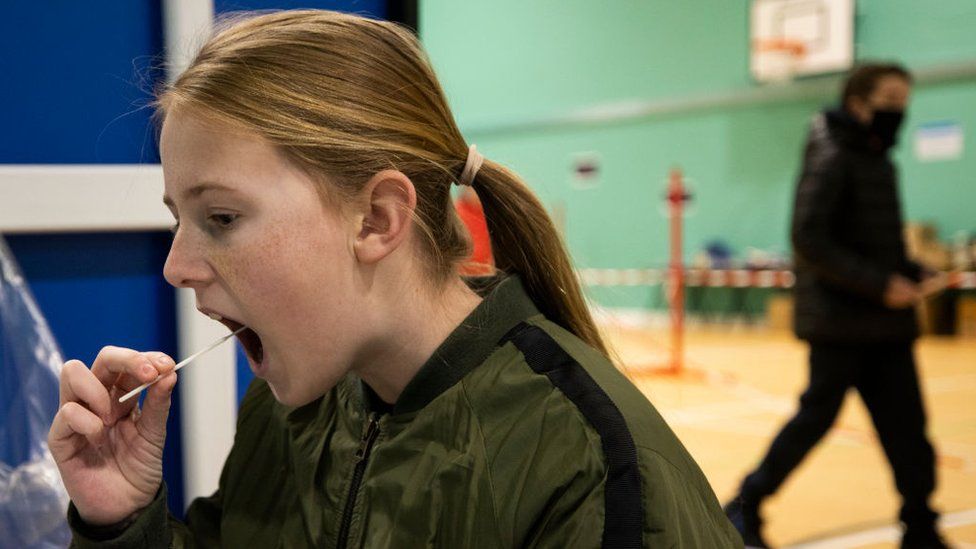
SharecloseShare pageCopy linkAbout sharingimage copyrightGetty ImagesDaily rapid testing of school pupils who are close contacts of a Covid case is a safe alternative to home isolation and doesn’t lead to more virus spread, a study in schools has found.Daily testing could reduce school absences by up to 39%, the Oxford researchers said.Covid rules in many UK schools will be different for the new school year.But the policy has created huge disruption to children’s education since September.Any requirement for children and adults to self-isolate as close contacts will be removed in England from mid-August, as already announced by the government. The Scottish government is reviewing its approach to self-isolation for school children, who return to lessons in August. In Wales, the education minister has said he wants to minimise the number of pupils self-isolating.Almost a quarter of England’s pupils out of schoolHow will school be different next term?Hundreds of thousands of under-18s to get vaccineSince March, schools have offered twice weekly rapid tests to all pupils, with those testing positive having to self-isolate, along with close contacts, for 10 days. They replaced PCR tests, which were sent away to a lab for results, when students had symptoms.But that’s meant growing numbers of pupils absent from school – around one million were off due to Covid in England last week. The large majority were close contacts and only 47,000 actually had Covid.This pre-print study, in 200 secondary schools and colleges in England, between April and June 2021, suggests there is another way, with less than 2% of children exposed to Covid-19 in schools ending up infected.’Breakthrough’Susan Hopkins, chief medical adviser for NHS Test and Trace said the study was “a major breakthrough””Children and parents have made enormous personal sacrifices throughout this pandemic by isolating when needed, and we all know the disruption it has caused in their lives,” she said.”We’ve been trying to find safe alternatives, and this study gives us evidence of safe alternatives to isolation for school contacts.” image copyrightGetty ImagesThe University of Oxford study asked half of the schools to continue with the current policy while the other half invited close contacts of positive cases to take lateral flow tests every day at school. If they tested negative, they were allowed to attend school as normal.Involving more than 200,000 students and 20,000 staff, the study found no evidence that the rate of students and staff developing Covid symptoms was different in the group doing daily testing compared with the group of close contacts isolating at home.And the researchers estimate daily contact testing could reduce school absences by up to 39%.Overall, the study found:daily testing of students and staff who were exposed to Covid was as effective as isolation at controlling spreadaround 98% of contacts in the trial did not develop Covid during the isolation periodrates of Covid in school staff were lower than in students and mirrored community levelsthere were 4% fewer infections with daily testing – but this could be as high as 14% 1.5% of close contacts doing daily testing tested positive compared with 1.6% staying at homeThe researchers said pupils and staff were more likely to take daily tests because there was no social penalty to doing them, as there was with isolation when friends had to be named as close contacts.Although they admit lateral flow tests aren’t perfect, they say the tests are good at identifying people who are most infectious, who can then be withdrawn from school.’Good news’David Eyre, study author and associate professor at the University of Oxford, said the findings were “good news for students, parents and teachers”. “The study supports earlier findings from Test and Trace data showing that most children who are in contact with Covid-19 in schools don’t go on to get infected. “Daily testing was able to identify most of the small number that do, which allowed them to safely isolate at home, while allowing the large majority of other students and staff to remain in school.” Prof James Hargreaves, from the London School of Hygiene & Tropical Medicine, said there were some limitations with the study, and better follow-up in the schools studied would have been reassuring.Prof Paul Hunter, from the University of East Anglia, said schools would probably still need some controls on their return.”At least daily testing… will have less harm on children’s education than the current exclusion policy, whether or not it has real benefit in controlling the epidemic,” he said.The researchers said they were now doing whole genome sequencing to understand whether coronavirus cases in the study were linked to each other. This will help them understand how the virus is spread in schools and colleges.

Read more →