Child winter respiratory illness on rise in summer
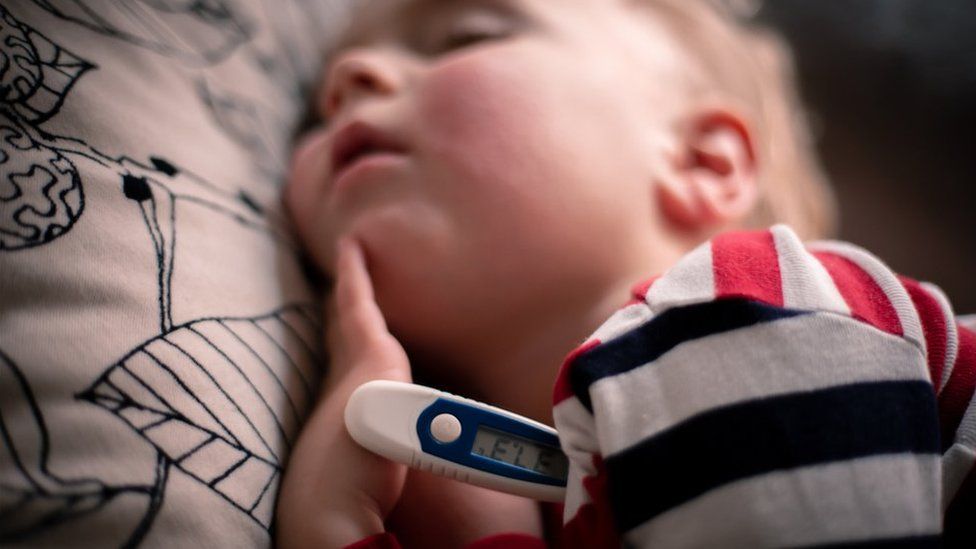
SharecloseShare pageCopy linkAbout sharingimage copyrightGetty ImagesParents are being warned to look out for the signs of a common childhood respiratory illness, RSV, cases of which unusually appear to be rising rapidly in the summer .RSV is a very common winter virus – but social distancing and lockdowns have kept it at bay until now.And this means young children have not been exposed and developed immunity.Public Health England said it would just cause mild illness for most but some under-twos were at higher risk.These can include infants born prematurely or with a heart condition. And they can be at risk of more serious complications, including breathing difficulties caused by bronchiolitis.PHE said parents should contact their GP or call NHS 111 if their child:has taken less than half their usual amount during the past two or three feedshas had a dry nappy for 12 hours or morehas a persistent temperature of 37.8C or aboveseems very tired or irritableThey should dial 999 for an ambulance if:the child is having difficult breathingthe child’s tongue or lips are bluethere are long pauses in the child’s breathingPHE medical director Dr Yvonne Doyle said: “This winter, we expect levels of common seasonal illnesses such as cold and flu to increase, as people mix more and given that fewer people will have built up natural immunity during the pandemic.”Children under two are at a particular risk of severe infections from common seasonal illnesses.”PHE has raised the alarm after its surveillance programme, from samples taken by GPs and hospitals, found the positivity rate for RSV had risen from 1.2% to 8.9% in the past five weeks.It comes just weeks after the Royal College of Paediatrics and Child Health said accident and emergency units were seeing a rise in young children being brought in with what seemed to be winter viruses.Related Internet LinksRCPCH – The Royal College of Paediatrics and Child HealthThe BBC is not responsible for the content of external sites.

Read more →
Eight-week gap seen as sweet spot for Pfizer jab antibodies

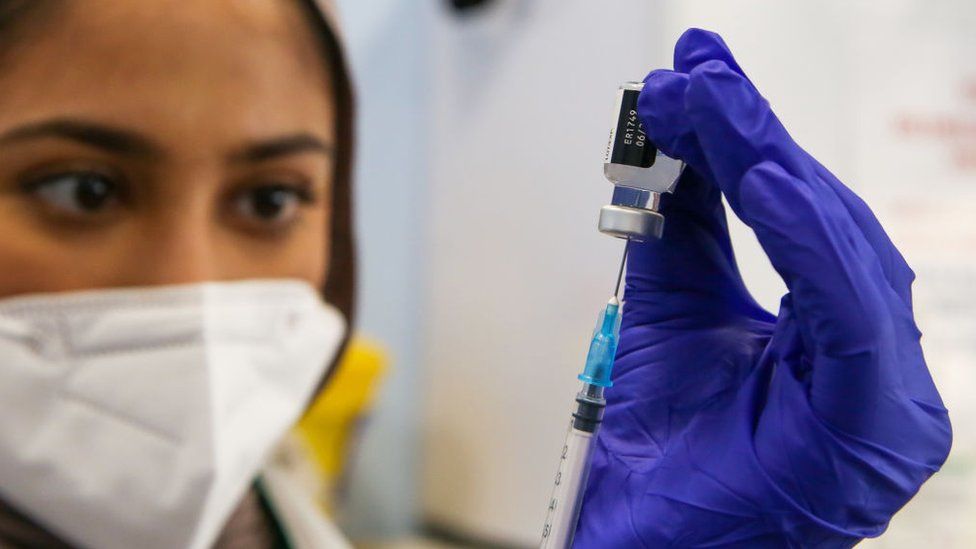
SharecloseShare pageCopy linkAbout sharingimage copyrightGetty ImagesA longer gap between first and second doses of the Pfizer-BioNTech Covid vaccine makes the body’s immune system produce more infection-fighting antibodies, UK researchers have found.The government-funded work is published in a pre-print paper not yet peer reviewed.Experts say the findings support Britain’s decision on dosing intervals. And an eight-week gap may be the sweet spot for tackling the Delta variant of Covid now dominating the UK.Rising infectionsThe vaccine was originally authorised for a three-to-four-week gap between doses – but the UK extended it up to 12 weeks at the end of 2020. It was a pragmatic move by government to get more of the population quickly jabbed with at least one dose.At the time, the UK was experiencing a second wave of Covid and, with limited vaccine stocks, was in a race against the virus. More recently, because of rising infections caused by the new Delta variant, first identified in India, the interval changed to eight weeks, to hasten second jabs that offer people the best protection against Covid-19. For the study, the researchers compared the immune responses of 503 NHS staff who received their two shots at different intervals in late 2020 and early 2021, when the Alpha Covid variant, first identified in Kent, was rapidly spreading. Antibody levels in their blood were measured a month after the second vaccine dose. The findings suggest: both short and long dosing intervals of the Pfizer vaccine generated strong immune responses overallbut a three-week schedule generated fewer of the neutralising antibodies that can bind the virus and stop it infecting cells than a 10-week intervalwhile antibody levels dipped after the first dose, levels of T-cells – a different type of immune cell – remained highthe longer schedule led to fewer T-cells overall but a higher proportion of a specific type or subset, called helper T-cells, which according to the researchers, supports immune memoryProf Susanna Duanchie, the joint chief investigator in the Pitch study, at Oxford University, said two doses were better than one but the timing of the second was somewhat flexible depending on the circumstances.For the UK’s current situation, she said: “Eight weeks is about the sweet spot for me, because people do want to get the two vaccine [doses] and there is a lot of Delta out there right now.”Unfortunately, I can’t see this virus disappearing, so you want to balance that against getting the best protection that you can.”Dr Rebecca Payne, one of the study authors, from Newcastle University, said: “Our study provides reassuring evidence that both dosing schedules generate robust immune responses against Sars-CoV-2 after two doses.”We now need to carry out more follow-up studies to understand the full clinical significance of our findings.”Real-world data from Public Health England shows the Pfizer vaccine is effective at reducing levels of serious disease, hospital admissions and death, even after one dose. ‘Protect yourself’Vaccines Minister Nadhim Zahawi said: “The findings from this latest Pitch study are hugely significant not just for the UK but for the world, helping us better understand the mechanics behind our immune response to Covid-19 and the importance of getting both doses of the vaccine. “As we raced to offer a vaccine to all adults, we took the [Joint Committee on Vaccination and Immunisation] JCVI’s advice to shorten the dosing interval from 12 to eight weeks, to help protect more people against the Delta variant. “This latest study provides further evidence that this interval results in a strong immune response and supports our decision. “I urge every adult to get both doses of the vaccine, protect yourself and those around you, and we are looking to offer millions of the most vulnerable a booster jab from September to ensure this protection is maintained.”

Read more →

New dietary treatment for epilepsy well tolerated and reduced seizures, study finds

The first clinical trial of a new dietary treatment for children and adults with severe forms of epilepsy, co-developed by UCL researchers and based on the ketogenic diet, has been successfully completed.
For the study, published in Brain Communications, clinicians evaluated the use of K.Vita®, (also known as Betashot), an oral liquid dietary supplement developed by UCL in collaboration with Royal Holloway, University of London, and Vitaflo International Ltd.
The ketogenic diet (KD) consists of high-fat, low-carbohydrate and adequate protein consumption and mimics the fasting state, altering the metabolism to use body fat as the primary fuel source. This switch from carbohydrates to fat for body fuel is known as ketosis.
It is widely used to treat drug resistant epilepsies. However, the highly restrictive diet, which can cause constipation, low blood sugar, and stomach problems, can have poor compliance and is not suitable for everyone. Some KD supplements are also known to be unappetising.
K.Vita is based on novel findings by UCL researchers*, who discovered a different underlying mechanism to explain why the KD is effective against epilepsy; in developing a new treatment, researchers also sought to reduce the adverse side effects caused by KD.
Corresponding author Professor Matthew Walker (UCL Queen Square Institute of Neurology) said: “The ketogenic diet has been used for 100 years to treat epilepsy, helping reduce seizures in both children and adults.

Read more →

Advanced bladder cancers respond to immunotherapy regardless of gene mutation status

A new study has demonstrated that patients with advanced bladder cancers whose tumors have a mutated FGFR3 gene respond to immunotherapy treatment in a manner that is similar to patients without that mutation, a discovery that runs counter to previous assumptions. This research, led by scientists at the University of North Carolina Lineberger Comprehensive Cancer Center, has important implications for patients who have not been offered immunotherapy because of their genetic profiles.
The findings are published in the British Journal of Cancer.
The National Cancer Institute estimates that 83,730 people in the United States will be diagnosed with bladder cancer in 2021, and the disease will cause 17,200 deaths. While the cancer is treatable when diagnosed early, the five-year survival rate is approximately 6 percent in advanced cases where the cancer has spread to other parts of the body. Within that low survival group of patients, about 15 percent of their tumors have mutations in the FGFR3 gene, making the gene overactive and contributing to high mortality for the disease.
“Despite prior work suggesting that FGFR3-mutated bladder cancers should not be treated with immunotherapy, our study demonstrates the opposite, so we believe that immunotherapy should be offered without hesitation,” said UNC Lineberger’s William Y. Kim, MD, Rush S. Dickson Distinguished Professor of Medicine and professor of Genetics and the paper’s corresponding author.
There have been several recent significant treatment advances for bladder cancer. In 2019, the FDA approved a drug, erdafitinib (Balversa), that targets FGFR3 and prolongs survival. Additionally, immune checkpoint blockade drugs, commonly known as immunotherapies, have recently been approved for advanced bladder cancer. Prior to this decade, treatment was primarily limited to systemic, platinum-based chemotherapy.
“Clinical trials have shown that bladder cancers with FGFR3 mutations have fewer immune cells, primarily T cells, than cancers without the mutation. Because tumors with low levels of immune cells tend to respond poorly to immune checkpoint blockades, it has been hypothesized that those patients would have low response rates to immunotherapy,” said UNC Lineberger’s Tracy Rose, MD, MPH, assistant professor at the UNC School of Medicine and the paper’s co-first author.

Read more →

Coronavirus: Italy brings in Covid certificate amid spike in infections

SharecloseShare pageCopy linkAbout sharingimage copyrightReutersItaly is introducing a mandatory Covid vaccination certificate from 6 August, the latest country in Europe to announce such a scheme.The move will allow those aged 12 and over who have received at least one jab to access a range of venues, including indoor restaurants, cinemas and gyms.However, after disagreements within the governing coalition, the pass will not be needed for transport.The virus is surging again in Italy, driven by the delta variant. The number of new cases doubled over the past week, with more than 5,000 infections reported on Thursday.About half of Italians are now fully vaccinated – but the summer holiday season is dissuading some to turn up for their appointments, says the BBC’s Mark Lowen, in Rome. Italy has confirmed more than 4.3 million infections since the start of the outbreak, with nearly 128,000 Covid-related deaths.Italian Prime Minister Mario Draghi has condemned right-wing politicians who have discouraged young people from being jabbed.He said it was as “a call for people to die”.

Read more →

The West Is Burning. Covid Is Surging. U.S. Politics Are Stagnant.

Despite raging crises, the gears of government seem as stuck as ever, partly because Americans interpret the events “from the framework they started with,” as one political scientist put it.The sirens have gotten pretty hard to ignore.Wildfires are raging across the Western United States and Canada, spreading smoke so widely that the sun turned red and people’s eyes and throats stung as far east as New York. One of the fires is so large that it’s generating its own weather. The West has been suffering through its fourth heat wave in less than two months. Coronavirus case numbers are rising again nationally, mostly among unvaccinated people, and states like Florida and Missouri are experiencing devastating and deadly surges.But, despite the raging crises, the gears of American government seem as stuck as ever — partly because of the intensity of Americans’ polarization, and partly because Republican members of Congress have remained opposed even to some measures that polls show bipartisan majorities of voters support, like stricter limits on power plant and vehicle emissions.Significant action on climate change is imaginable only through executive action by President Biden and a party-line budget reconciliation bill, as Coral Davenport, a climate reporter for The Times, told me this month, and even such measures may not be ambitious enough to meet the nation’s climate goals.Many millions of Republicans are still declining to get coronavirus vaccines, and condemning the Biden administration’s vaccination push. They have done so even as vivid accounts from medical workers in the hardest-hit states make clear how terrible a toll the Delta variant is taking on unvaccinated people.The trouble is that, in a polarized era, “political elites have every incentive to politicize these things early on, and so people who are paying attention to politics pick up on the frame elected officials and the media are using,” said Jaime E. Settle, an associate professor of government and director of the Social Networks and Political Psychology Lab at the College of William & Mary.Even catastrophic and highly visible events like the wildfires and the heat waves don’t necessarily move the needle, because “what happens is that people interpret these events from the framework they started with,” Settle said. So if a person starts out disbelieving the established science of human-driven climate change, they are likely to look at the recent evidence of climate change “and say, ‘Well, that’s not evidence’ or, ‘It is evidence but humans are not to blame for it.’”Joanne Freeman, a professor of history and American studies at Yale who studies political polarization and political violence, said today’s environment felt reminiscent of previous eras of extreme division, including the 1790s, the 1850s and the 1960s.“Something those periods share is when things are that polarized, there’s a lack of trust in pretty much anything — a lack of trust in information, a lack of trust of each side in the other, a lack of trust in national institutions and their ability to handle things,” Freeman said. “Even though these things are happening right in front of us, so many people are distrustful of the information they get. You can’t get past that fundamental distrust to get to facts or even to get to things of extreme urgency.”She added, “If you don’t trust lawmakers and you don’t trust the press and you don’t trust people in positions of authority outside of the little sphere in which they’re acting, how in the world can you pull people together to address something bigger?”As my colleague Alex Burns wrote this month, seismic events that would almost certainly have changed American politics in past eras are simply not making a dent now. We may soon find out “whether the American electorate is still capable of large-scale shifts in opinion.”As for the possibility of changing a person’s views — or acceptance of facts — through personal conversations, Settle said the challenge is that we tend to base our arguments on what would change our minds, not on what would change someone else’s. And we don’t even have good forums in which to have these conversations.“There’s a small but growing body of research on how you might be able to set up online interactions to make them better,” she said, “but the kind of organic options we currently have on social media and comment threads are just a disaster.”New York Times EventsClimate Hub: Ideas with the power to change the futureAs world leaders gather for consequential climate change negotiations, join us at The New York Times Climate Hub in Glasgow for nine days of live journalism and ideas to inspire action, in person and online.Understand the science; learn about the challenges and innovations; engage with live talks, debates and exhibitions; and find out how you can create real change.Be the first to find out about speakers, tickets and programming by visiting our Climate Hub page.On Politics is also available as a newsletter. Sign up here to get it delivered to your inbox.Is there anything you think we’re missing? Anything you want to see more of? We’d love to hear from you. Email us at onpolitics@nytimes.com.

Read more →

'Missing self' contributes to organ rejection after transplantation

Immune cells called natural killer cells contribute to organ rejection after transplantation because they miss “self” proteins on donor cells, according to a study appearing in an upcoming issue of JASN. A better understanding of this process may help clinicians prevent and treat organ rejection.
Transplanted organs are recognized by the immune system of the recipient as foreign or non-self, which leads to rejection of the organs. Rejection is prevented or treated with drugs that suppress the immune system, mostly targeting T immune cells; however, rejection can still occur despite such treatment, not only because T cells may not be completely suppressed by the therapy, but also because of antibodies and “natural killer cells” that target the donor tissue.
Natural killer cells play an important role in the human immune system, as they are involved in recognizing and killing harmful cells such as tumor cells. These harmful cells sometimes attempt to escape immune detection by decreasing MHC proteins, which are proteins expressed on cells that allow T cells to bind to, recognize, and tolerate itself. This mechanism renders the harmful cells invisible to T cells, but not to natural killer cells. Through their KIR receptors, natural killer cells can detect the absence of these MHC proteins and therefore kill the harmful cells. This constitutes a very important defense mechanism.
In transplantation, the donor cells in the transplanted organ are not escaping immune detection by decreasing MHC expression, but these donor cells express different MHC proteins than the recipient. The natural killer cells of the recipient therefore miss the “self” MHC on these donor cells and become active.
“This is exactly what we found in our study of 924 kidney transplantations: that the ‘missing self’ predicted by genetic analyses of the MHC molecules of donors and recipients, and the genetically determined KIR repertoire of the recipients, is predictive of rejection in kidney transplant biopsies,” said senior author Maarten Naesens, MD, PhD, of KU Leuven, in Belgium. “Therefore, our study shows that genotyping the donors and recipients not only for MHC (as is done in routine clinical practice), but also for KIR, will enable us to assess the presence or absence of ‘missing self,’ and improve the risk assessment of kidney transplant rejection.
“Furthermore, our findings demonstrate the importance of these natural killer cells after transplantation and suggest new ways to prevent or treat kidney transplant rejection,” added lead author Jasper Callemeyn, MD, also of KU Leuven.
Study co-authors include Aleksandar Senev, MD, PhD, Maarten Coemans, PhD, Evelyne Lerut, MD, PhD, Ben Sprangers, MD, PhD, Dirk Kuypers, MD, PhD, Alice Koenig, MD, PhD, Olivier Thaunat, MD, PhD, and Marie-Paule Emonds, MD, PhD.
Disclosures: This work was supported by a project grant from the Research Foundation Flanders.
Story Source:
Materials provided by American Society of Nephrology. Note: Content may be edited for style and length.

Read more →

'Good cholesterol' may protect liver

The body’s so-called good cholesterol may be even better than we realize. New research from Washington University School of Medicine in St. Louis suggests that one type of high-density lipoprotein (HDL) has a previously unknown role in protecting the liver from injury. This HDL protects the liver by blocking inflammatory signals produced by common gut bacteria.
The study is published July 23 in the journal Science.
HDL is mostly known for mopping up cholesterol in the body and delivering it to the liver for disposal. But in the new study, the researchers identified a special type of HDL called HDL3 that, when produced by the intestine, blocks gut bacterial signals that cause liver inflammation. If not blocked, these bacterial signals travel from the intestine to the liver, where they activate immune cells that trigger an inflammatory state, which leads to liver damage.
“Even though HDL has been considered ‘good cholesterol,’ drugs that increase overall HDL levels have fallen out of favor in recent years because of clinical trials that showed no benefit in cardiovascular disease,” said senior author Gwendalyn J. Randolph, PhD, the Emil R. Unanue Distinguished Professor of Immunology. “But our study suggests that raising levels of this specific type of HDL, and specifically raising it in the intestine, may hold promise for protecting against liver disease, which, like heart disease, also is a major chronic health problem.” In the study, the researchers showed that HDL3 from the intestine protects the liver from inflammation in mice.
Any sort of intestinal damage can impact how a group of microbes called Gram-negative bacteria can affect the body. Such microbes produce an inflammatory molecule called lipopolysaccharide that can travel to the liver via the portal vein. The portal vein is the major vessel that supplies blood to the liver, and it carries most nutrients to the liver after food is absorbed in the intestine. Substances from gut microbes may travel along with nutrients from food to activate immune cells that trigger inflammation. In this way, elements of the gut microbiome may drive liver disease, including fatty liver disease and liver fibrosis, in which the liver develops scar tissue.
Randolph became interested in this topic through a collaboration with two Washington University surgeons, Emily J. Onufer, MD, a surgical resident, and Brad W. Warner, MD, the Jessie L. Ternberg PhD, MD, Distinguished Professor of Pediatric Surgery and chief surgeon at St. Louis Children’s Hospital, both co-authors on the study. Some premature infants develop a life-threatening condition called necrotizing enterocolitis, an inflammation of the intestine that can require a portion of the intestine to be surgically removed. Even after a successful bowel surgery, such babies often develop liver disease, and Onufer and Warner wanted to understand why.

Read more →

AI built to find anti-aging chemical compounds

The University of Surrey has built an artificial intelligence (AI) model that identifies chemical compounds that promote healthy ageing — paving the way towards pharmaceutical innovations that extend a person’s lifespan.
In a paper published by Nature Communication’s Scientific Reports, a team of chemists from Surrey built a machine learning model based on the information from the DrugAge database to predict whether a compound can extend the life of Caenorhabditis elegans — a translucent worm that shares a similar metabolism to humans. The worm’s shorter lifespan gave the researchers the opportunity to see the impact of the chemical compounds.
The AI singled out three compounds that have an 80 per cent chance of increasing the lifespan of elegans: flavonoids (anti-oxidant pigments found in plants that promote cardiovascular health), fatty acids (such as omega 3), and Organooxygens (compounds that contain carbon to oxygen bonds, such as alcohol).Sofia Kapsiani, co-author of the study and final year undergraduate student at the University of Surrey, said:
“Ageing is increasingly being recognised as a set of diseases in modern medicine, and we can apply the tools of the digital world, such as AI, to help slow down or protect against ageing and age-related diseases. Our study demonstrates the revolutionary ability of AI to aid the identification of compounds with anti-ageing properties.”
Dr Brendan Howlin, lead author of the study and Senior Lecturer in Computational Chemistry at the University of Surrey, said:
“This research shows the power and potential of AI, which is a speciality of the University of Surrey, to drive significant benefits in human health.”
Story Source:
Materials provided by University of Surrey. Note: Content may be edited for style and length.

Read more →

Investigational magnetic device shrinks glioblastoma in human test

Houston Methodist Neurological Institute researchers from the department of neurosurgery shrunk a deadly glioblastoma tumor by more than a third using a helmet generating a noninvasive oscillating magnetic field that the patient wore on his head while administering the therapy in his own home. The 53-year-old patient died from an unrelated injury about a month into the treatment, but during that short time, 31% of the tumor mass disappeared. The autopsy of his brain confirmed the rapid response to the treatment.
“Thanks to the courage of this patient and his family, we were able to test and verify the potential effectiveness of the first noninvasive therapy for glioblastoma in the world,” said David S. Baskin, M.D., FACS, FAANS, corresponding author and director of the Kenneth R. Peak Center for Brain and Pituitary Tumor Treatment in the Department of Neurosurgery at Houston Methodist. “The family’s generous agreement to allow an autopsy after their loved ones’ untimely death made an invaluable contribution to the further study and development of this potentially powerful therapy.”
In a case study published in Frontiers in Oncology Baskin and his colleagues detailed the journey of their pioneering patient who suffered from end-stage recurrent glioblastoma, despite a radical surgical excision, chemoradiotherapy and experimental gene therapy.
Glioblastoma is the deadliest of brain cancers in adults, nearly always fatal, with a life expectancy of a few months to two years. When the patient’s glioblastoma recurred in August 2019, Baskin and his team, already working on the OMF treatment in mouse models, received FDA approval for compassionate use treatment of the patient with their newly invented Oncomagnetic Device under an Expanded Access Program (EAP). The protocol also was approved by the Houston Methodist Research Institute Institutional Review Board.
The treatment consisted of intermittent application of an oscillating magnetic field generated by rotating permanent magnets in a specific frequency profile and timing pattern. First administered for two hours under supervision in the Peak Clinic, ensuing treatments were given at home with help from the patient’s wife, with increasing treatment times up to a maximum of only six hours per day.
The Oncomagnetic Device looks deceptively simple: three oncoscillators securely attached to a helmet and connected to a microprocessor-based electronic controller operated by a rechargeable battery, an invention by case study co-author Dr. Santosh Helekar. During the patient’s five weeks of treatment, the magnetic therapy was well-tolerated and the tumor mass and volume shrunk by nearly a third, with shrinkage appearing to correlate with the treatment dose.
The ongoing research is supported by the Translational Research Initiative of the Houston Methodist Research Institute, Donna and Kenneth Peak, the Kenneth R. Peak Foundation, the John S. Dunn Foundation, the Taub Foundation, the Blanche Green Fund of the Pauline Sterne Wolff Memorial Foundation, the Kelly Kicking Center Foundation, the Gary and Marlee Swarz Foundation, the Methodist Hospital Foundation and the Veralan Foundation.
“Imagine treating brain cancer without radiation therapy or chemotherapy,” said Baskin. “Our results in the laboratory and with this patient open a new world of non-invasive and nontoxic therapy for brain cancer, with many exciting possibilities for the future.”
Story Source:
Materials provided by Houston Methodist. Note: Content may be edited for style and length.

Read more →