Covid-19 pandemic: Japan widens emergency over 'frightening' spike

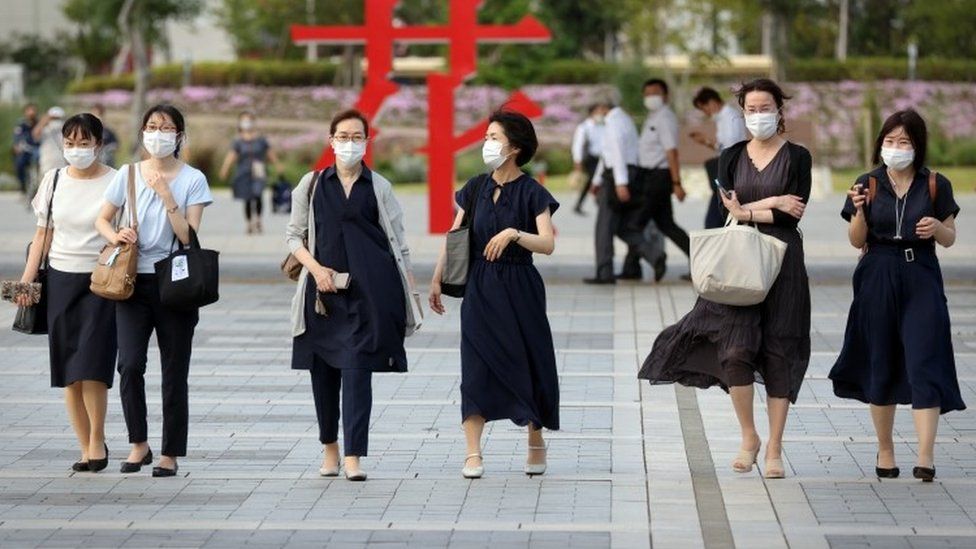
SharecloseShare pageCopy linkAbout sharingimage sourceReutersJapan is extending a state of emergency in Tokyo and expanding it to new regions as the Olympic Games host faces a surge in Covid-19 cases. The restrictions are being imposed in areas surrounding the capital as well as in the city of Osaka.Japan has had some success fighting Covid-19 but is now seeing record cases fuelled by the virulent Delta strain.Daily cases nationwide topped 10,000 for the first time on Thursday, more than a third of them in the capital.Tokyo – where the Olympics are mainly taking place – has seen three straight days of record cases and logged another 3,300 on Friday, even though it is already under a state of emergency. More than 60% of the city’s hospital beds available for serious cases have been filled.Olympic organisers reported 27 new cases at the Games on Friday, bringing the total since the start of July to more than 200. But with strict rules in place, including a ban on spectators, organisers deny the event is driving the rise in cases.Despite this, some experts worry that holding the Olympics in such circumstances sends a confusing message to the public about the need to limit daily life.Does Japan have Covid under control?LIVE: Latest from the Tokyo Olympics Japan’s Health Minister, Norihisa Tamura warned that the country had entered a new, “extremely frightening”, stage of the pandemic.”I think that people cannot see ahead and, worrying how long this situation will last, they find it unbearable that they cannot return to normal daily life,” Reuters quoted him as saying.Under the state of emergency, bars and restaurants must stop serving alcohol and close early.Three regions, known in Japan as prefectures, along with Osaka, will go under the restrictions from 2-31 August, with the measures in place in Tokyo are being extended to the end of the month.While other countries have imposed legal restrictions on residents, in Japan people are only advised to work from home, so questions have been raised as to how effective the new measures will be.Tokyo’s Governor Yuriko Koike has said the key to controlling the outbreak is young people, urging them to get vaccinated, but the BBC’s Mariko Oi says this is a little unfair given the low availability of doses.Less than 30% of the population has been fully vaccinated, with officials aiming to vaccinate all those who want a dose by October or November.Speaking to the BBC, some young Japanese people were sceptical about whether the new measures would work.”I can sense that we are getting too used to the state of emergency, so it’s not stopping people from going out,” said one.”If the government really wants to stop the spread of the virus, they have to lock us down and offer financial support,” said another.Other countries in the region have also tightened rules to halt the spread of the more transmissible Delta variant, with China halting flights in Nanjing and Australia deploying troops in Sydney.

Read more →

Nanjing: New virus outbreak worst after Wuhan, say Chinese state media

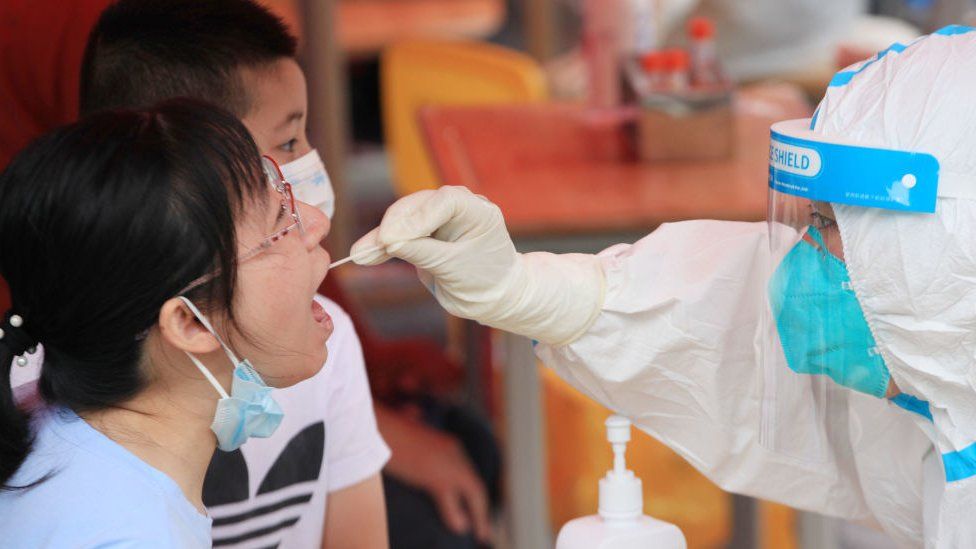
SharecloseShare pageCopy linkAbout sharingimage sourceGetty ImagesA Covid outbreak first discovered in the Chinese city of Nanjing has spread to five provinces and Beijing, with state media calling it the most extensive contagion after Wuhan.Almost 200 people have been infected since the virus was first detected at the city’s busy airport on 20 July.All flights from Nanjing airport will be suspended until 11 August, according to local media. Officials also began city-wide testing amid criticism for their “failure”.All 9.3 million of the city’s residents – including those visiting – will be tested, said state-controlled Xinhua news. Posts on social media show long lines of people queuing, and authorities have reportedly urged people to wear masks, stand one metre apart and avoid talking while they wait.Officials said the highly contagious Delta variant of the virus was behind the infections, adding that cases had spread further because of how busy the airport is.Ding Jie, a health official in Nanjing, told reporters the cases were linked to cleaners who worked on a flight from Russia that arrived in the city on 10 July. The cleaners did not follow strict hygiene measures, Xinhua News reported. The airport management has been rebuked, with a senior disciplinary body of the Communist Party saying it had “problems such as lack of supervision and unprofessional management”.Testing has shown that the virus has now spread to at least 13 cities including Chengdu and the capital Beijing. However, experts quoted by the Global Times said they believed the outbreak was still at an early stage and could be controlled. Local officials in Nanjing said that seven of those infected were in critical condition. The new spike in cases has led some on Chinese social media to speculate about whether the Chinese vaccines were working against the Delta variant.It is unclear if those infected were vaccinated. A number of South East Asian countries relying on Chinese vaccines have recently announced they will use other jabs.China has so far managed to keep the virus largely under control by closing borders and moving quickly to stamp out local outbreaks.

Read more →

Is Nose Hair Essential to Fighting Off Colds and Other Viral Illnesses?

Expert advice on whether trimming or waxing your nose hairs might increase the risk of respiratory infections.Is nose hair essential to fighting off colds and other viral illnesses? I ask this as a woman who, before the pandemic, used to get my eyebrows waxed. The person performing the wax would always recommend waxing my nose hair.A medical “truism” holds that nose hair filters the air we breathe and therefore protects us from infection by airborne viruses, bacteria and other pathogens. But, as is often the case with truisms, its history may be more venerable than verified.The idea that our nose hairs, known medically as vibrissae, might offer protection against infectious germs goes back more than a century. In 1896, a pair of English doctors, writing in the prestigious medical journal The Lancet, noted that:The interior of the great majority of normal nasal cavities is perfectly aseptic [sterile]. On the other hand, the vestibules of the nares [nostrils], the vibrissae lining them, and all crusts formed there are generally swarming with bacteria. These two facts seem to demonstrate that the vibrissae act as a filter and that a large number of microbes meet their fate in the moist meshes of the hair which fringes the vestibule.The English doctors’ conclusion might sound logical, but at that point, nobody had actually studied whether trimming nose hairs might make it easier for germs to penetrate deeper into the respiratory tract.It was not until 2011 that the density of nose hair was rigorously studied as a possible correlate of disease. In a study of 233 patients published in the International Archives of Allergy and Immunology, a team of researchers from Turkey found that people with denser nose hair were less likely to have asthma. The researchers attributed this finding to the filtration function of nose hair.Their observation was interesting, but it was an observational study that cannot prove cause and effect, and asthma is not an infection. The researchers also did not do any follow-up studies to assess how trimming the nose hair might affect the risk of asthma — or infection.It took until 2015 for doctors at the Mayo Clinic to perform the first, and so far only, study to look at the effects of trimming nose hairs. The researchers measured nasal air flow in 30 patients before and after cutting their nose hairs and found that trimming led to improvements in both subjective and objective measures of nasal air flow. Improvements were greatest in those who had the most nose hair to begin with. The results were published in the American Journal of Rhinology and Allergy.Again, an interesting conclusion, but does better nasal airflow correlate with a higher risk of infection?Neither study addressed this question directly. But Dr. David Stoddard, the lead author of the Mayo study, noted that if someone works with drywall, for example, “I can tell whether they just got off work by the white dust trapped in their nose hairs. But it’s the larger particles that get trapped in the nose hairs. Viruses are much smaller. They are so small that they will probably pass through the nose either way. I don’t think trimming one’s nose hair would put them at increased risk for respiratory infection.”Based on the limited study of nose hairs, there’s no evidence that trimming or waxing them increases the risk of respiratory infections. And as at least one expert who has worked in the field speculated, it probably doesn’t.

Read more →

C.D.C. Internal Report Calls Delta Variant as Contagious as Chickenpox

Infections in vaccinated Americans also may be as transmissible as those in unvaccinated people, the document said, and lead more often to severe illness.The Delta variant is much more contagious, more likely to break through protections afforded by the vaccines and may cause more severe disease than all other known versions of the virus, according to an internal presentation circulated within the Centers for Disease Control and Prevention.Dr. Rochelle P. Walensky, the director of the agency, acknowledged on Tuesday that vaccinated people with so-called breakthrough infections of the Delta variant carry just as much virus in the nose and throat as unvaccinated people, and may spread it just as readily, if less often.But the internal document lays out a broader and even grimmer view of the variant.The Delta variant is more transmissible than the viruses that cause MERS, SARS, Ebola, the common cold, the seasonal flu and smallpox, and it is as contagious as chickenpox, according to the document, a copy of which was obtained by The New York Times.The immediate next step for the agency is to “acknowledge the war has changed,” the document said. Its contents were first reported by The Washington Post on Thursday evening.The document’s tone reflects alarm among C.D.C. scientists about Delta’s spread across the country, said a federal official who has seen the research described in the document. The agency is expected to publish additional data on the variant on Friday.“The C.D.C. is very concerned with the data coming in that Delta is a very serious threat that requires action now,” the official said.There were 71,000 new cases per day on average in the United States, as of Thursday. The new data suggest that vaccinated people are spreading the virus and contributing to those numbers — although probably to a far lesser degree than the unvaccinated.Dr. Walensky has called transmission by vaccinated people a rare event, but other scientists have suggested it may be more common than once thought.The agency’s new masking guidelines for vaccinated people, introduced on Tuesday, were based on the information presented in the document. The C.D.C. recommended that vaccinated people wear masks indoors in public settings in communities with high transmission of the virus.But the internal document hints that even that recommendation may not go far enough. “Given higher transmissibility and current vaccine coverage, universal masking is essential,” the document said.The agency’s data suggest that people with weak immune systems should wear masks even in places that do not have high transmission of the virus. So should vaccinated Americans who are in contact with young children, older adults, or otherwise vulnerable people.There are roughly 35,000 symptomatic infections per week among 162 million vaccinated Americans, according to data collected by the C.D.C. as of July 24 that was cited in the internal presentation. But the agency does not track all mild or asymptomatic infections, so the actual incidence may be higher.Infection with the Delta variant produces virus amounts in the airways that are tenfold higher than what is seen in people infected with the Alpha variant, which is also highly contagious, the document noted..css-1xzcza9{list-style-type:disc;padding-inline-start:1em;}.css-3btd0c{font-family:nyt-franklin,helvetica,arial,sans-serif;font-size:1rem;line-height:1.375rem;color:#333;margin-bottom:0.78125rem;}@media (min-width:740px){.css-3btd0c{font-size:1.0625rem;line-height:1.5rem;margin-bottom:0.9375rem;}}.css-3btd0c strong{font-weight:600;}.css-3btd0c em{font-style:italic;}.css-w739ur{margin:0 auto 5px;font-family:nyt-franklin,helvetica,arial,sans-serif;font-weight:700;font-size:1.125rem;line-height:1.3125rem;color:#121212;}#NYT_BELOW_MAIN_CONTENT_REGION .css-w739ur{font-family:nyt-cheltenham,georgia,’times new roman’,times,serif;font-weight:700;font-size:1.375rem;line-height:1.625rem;}@media (min-width:740px){#NYT_BELOW_MAIN_CONTENT_REGION .css-w739ur{font-size:1.6875rem;line-height:1.875rem;}}@media (min-width:740px){.css-w739ur{font-size:1.25rem;line-height:1.4375rem;}}.css-9s9ecg{margin-bottom:15px;}.css-uf1ume{display:-webkit-box;display:-webkit-flex;display:-ms-flexbox;display:flex;-webkit-box-pack:justify;-webkit-justify-content:space-between;-ms-flex-pack:justify;justify-content:space-between;}.css-wxi1cx{display:-webkit-box;display:-webkit-flex;display:-ms-flexbox;display:flex;-webkit-flex-direction:column;-ms-flex-direction:column;flex-direction:column;-webkit-align-self:flex-end;-ms-flex-item-align:end;align-self:flex-end;}.css-12vbvwq{background-color:white;border:1px solid #e2e2e2;width:calc(100% – 40px);max-width:600px;margin:1.5rem auto 1.9rem;padding:15px;box-sizing:border-box;}@media (min-width:740px){.css-12vbvwq{padding:20px;width:100%;}}.css-12vbvwq:focus{outline:1px solid #e2e2e2;}#NYT_BELOW_MAIN_CONTENT_REGION .css-12vbvwq{border:none;padding:10px 0 0;border-top:2px solid #121212;}.css-12vbvwq[data-truncated] .css-rdoyk0{-webkit-transform:rotate(0deg);-ms-transform:rotate(0deg);transform:rotate(0deg);}.css-12vbvwq[data-truncated] .css-eb027h{max-height:300px;overflow:hidden;-webkit-transition:none;transition:none;}.css-12vbvwq[data-truncated] .css-5gimkt:after{content:’See more’;}.css-12vbvwq[data-truncated] .css-6mllg9{opacity:1;}.css-qjk116{margin:0 auto;overflow:hidden;}.css-qjk116 strong{font-weight:700;}.css-qjk116 em{font-style:italic;}.css-qjk116 a{color:#326891;-webkit-text-decoration:underline;text-decoration:underline;text-underline-offset:1px;-webkit-text-decoration-thickness:1px;text-decoration-thickness:1px;-webkit-text-decoration-color:#326891;text-decoration-color:#326891;}.css-qjk116 a:visited{color:#326891;-webkit-text-decoration-color:#326891;text-decoration-color:#326891;}.css-qjk116 a:hover{-webkit-text-decoration:none;text-decoration:none;}The amount of virus in a person infected with Delta is a thousandfold more than what is seen in people infected with the original version of the virus, according to one recent study.The C.D.C. document relies on data from multiple studies, including an analysis of a recent outbreak in Provincetown, Mass., which began after the town’s Fourth of July festivities. By Thursday, that cluster had grown to 882 cases. About 74 percent were vaccinated, local health officials have said.Detailed analysis of the spread of cases showed that people infected with Delta carry enormous amounts of virus in their nose and throat, regardless of vaccination status, according to the C.D.C. document.“This is one of the most impressive examples of citizen science I have seen,” said Dr. Celine Gounder, an infectious disease specialist at Bellevue Hospital Center in New York. “The people involved in the Provincetown outbreak were meticulous in making lists of their contacts and exposures.”Infection with the Delta variant may be more likely to lead to severe illness, the document noted. Studies from Canada and Scotland found that people infected with the variant are more likely to be hospitalized, while research in Singapore indicated that they are more likely to require oxygen.Still, the C.D.C.’s figures show that the vaccines are highly effective in preventing serious illness, hospitalization and death in vaccinated people, experts said.“Overall, Delta is the troubling variant we already knew it was,” said John Moore, a virologist at Weill Cornell Medicine in New York. “But the sky isn’t falling and vaccination still protects strongly against the worse outcomes.”

Read more →

Biden Seeks to Revive Vaccine Effort With New Rules and Incentives

The president said those refusing to get a coronavirus shot should expect inconveniences as long as they decline a vaccine.WASHINGTON — President Biden on Thursday sought to revive the nation’s stalled push to vaccinate Americans against the surging Delta variant of the coronavirus, announcing new requirements for federal workers to be vaccinated and urging local and state governments to offer $100 to anyone willing to get a shot voluntarily.His announcement included only federal civilian employees, but hours later the Pentagon said members of the military would also be subject to the same rules: Get vaccinated or face regular testing, social distancing, mask wearing and limits on official travel.Although those steps fall short of a mandate, Mr. Biden also ordered the Defense Department to move rapidly toward one for all members of the military, a step that would affect almost 1.5 million troops, many of whom have resisted taking a shot that is highly effective against a disease that has claimed the lives of more than 600,000 Americans.The announcement marked the first time he has suggested that a mandate could come for active-duty members of the military before any of the three federally authorized vaccines receives full approval from the Food and Drug Administration.In a speech from the East Room of the White House, Mr. Biden effectively conceded that the worst-in-a-century viral scourge he once thought was under control had come roaring back, threatening public health and the economic recovery that is central to the promise of his presidency.But after months of trying to persuade and cajole, the president on Thursday cast the crisis as one that pits the vaccinated against the unvaccinated, and said those refusing to get a coronavirus shot should expect inconveniences as long as they decline a vaccine that protects them and others from illness and death.“This is a pandemic of the unvaccinated,” Mr. Biden said, calling it an “American tragedy” and talking directly to the 90 million Americans who are eligible for a vaccine but have not gotten one. “People are dying and will die who don’t have to die. If you’re out there unvaccinated, you don’t have to die. Read the news.”Mr. Biden said that federal workers who remained unvaccinated would have to submit to the extra inconveniences — essentially creating a two-tier system for the government’s more than four million employees and hundreds of thousands of private contractors who work at federal facilities around the world.The president’s move stopped short of a vaccine mandate for federal workers. But the president said he hoped that by imposing new requirements on daily work life, more unvaccinated federal employees will choose to get a shot.Mr. Biden said he was ordering agencies to find ways to ensure that all federal contractors — even those working for private businesses out of their own offices — could be required to be vaccinated as a condition of their work with the federal government. That could extend the president’s plan to millions more workers, including those in places where vaccination rates are stubbornly low.“If you want to do business with the federal government, get your workers vaccinated,” the president said bluntly.Mr. Biden urged companies and local governments to mimic his new vaccine requirements for federal employees, which he noted had the support of the U.S. Chamber of Commerce. The group said on Thursday that the president’s new rules were “prudent steps to protect public health.”But the administration’s move quickly sparked consternation from some of the federal government’s largest unions representing teachers, police officers and postal workers, who called for negotiations on the subject.“Forcing people to undertake a medical procedure is not the American way and is a clear civil rights violation no matter how proponents may seek to justify it,” Larry Cosme, the president of the Federal Law Enforcement Officers Association, said in a statement.An advertisement for coronavirus vaccines in Queens. Mayor Bill de Blasio of New York announced this week that hundreds of thousands of government workers would be required to get inoculations or face weekly testing.Desiree Rios for The New York TimesThe president also announced that small and medium-size businesses would be reimbursed for providing paid leave so employees and their families could get vaccinated. He called on school districts to host a “pop-up vaccination clinic” to get children vaccinated before the start of school. And he urged private businesses, sport leagues and other institutions to get their employees vaccinated.Appealing directly to Americans who are “unvaccinated, unbothered and unconvinced,” Mr. Biden asked them to recall the depths of the lockdowns during 2020 and to “really remember just how dark that winter was.”“With incentives and mandates, we can make a huge difference and save a lot of lives,” he said.Coronavirus vaccines are available to Americans ages 12 and older. But as of Thursday, just 57.7 percent of those eligible were fully vaccinated, according to data collected by the Centers for Disease Control and Prevention. The figure is much higher among the oldest Americans; nearly 80 percent of Americans 65 or older are fully vaccinated.During his campaign against former President Donald J. Trump, Mr. Biden promised that he could vanquish the virus despite the polarized politics of the country he inherited. Just weeks ago, Mr. Biden hosted a Fourth of July party at the White House to declare “independence” from the virus. Now, he must reckon with rising caseloads and hospitalizations that are threatening a return to work and school in the fall.Behind the scenes, Mr. Biden’s top public health officials have been deliberating for weeks, including in daily calls, about the best way to push more people to get vaccinated without prompting legal challenges or an anti-vaccine backlash.A July 27 internal assessment for the senior leadership of the Department of Health and Human Services delivered the grim news about the trajectory of the pandemic: deaths up 45 percent from the previous week, hospitalizations up 46 percent and cases surging. “Since the lowest value observed on June 19, 2021, cases have increased 440 percent,” the assessment concluded.Aides said the president hoped his solution could become a model for state and local governments and businesses around the country. But his announcement on Thursday lagged the efforts of many of those very institutions, which moved more quickly than the Biden administration to grapple with the issue.Mayor Bill de Blasio of New York and Gov. Gavin Newsom of California both announced on Monday that they would require hundreds of thousands of government workers to get inoculations or face weekly testing. Gov. Andrew M. Cuomo of New York soon followed suit.Numerous businesses — including Netflix, Saks Fifth Avenue, The Washington Post, Ascension Health, Lyft, Google and Morgan Stanley — all announced get-tough policies that require their workers to get shots as a condition of employment. Unvaccinated workers at MGM casinos will be tested regularly, at their own cost, and if they test positive they will be required to quarantine.Mr. Biden previously declared “independence” from the virus during a Fourth of July party at the White House.Tom Brenner for The New York TimesIn a joint statement this week, dozens of medical groups, including the American Medical Association and the American Academy of Pediatrics, called for all health care and long-term care workers to be vaccinated. The Department of Veterans Affairs became the first federal agency to require many of its employees to get a shot. The Centers for Disease Control and Prevention revised its earlier stance and recommended that vaccinated people wear masks indoors in areas where rates of transmission are high..css-1xzcza9{list-style-type:disc;padding-inline-start:1em;}.css-3btd0c{font-family:nyt-franklin,helvetica,arial,sans-serif;font-size:1rem;line-height:1.375rem;color:#333;margin-bottom:0.78125rem;}@media (min-width:740px){.css-3btd0c{font-size:1.0625rem;line-height:1.5rem;margin-bottom:0.9375rem;}}.css-3btd0c strong{font-weight:600;}.css-3btd0c em{font-style:italic;}.css-w739ur{margin:0 auto 5px;font-family:nyt-franklin,helvetica,arial,sans-serif;font-weight:700;font-size:1.125rem;line-height:1.3125rem;color:#121212;}#NYT_BELOW_MAIN_CONTENT_REGION .css-w739ur{font-family:nyt-cheltenham,georgia,’times new roman’,times,serif;font-weight:700;font-size:1.375rem;line-height:1.625rem;}@media (min-width:740px){#NYT_BELOW_MAIN_CONTENT_REGION .css-w739ur{font-size:1.6875rem;line-height:1.875rem;}}@media (min-width:740px){.css-w739ur{font-size:1.25rem;line-height:1.4375rem;}}.css-9s9ecg{margin-bottom:15px;}.css-uf1ume{display:-webkit-box;display:-webkit-flex;display:-ms-flexbox;display:flex;-webkit-box-pack:justify;-webkit-justify-content:space-between;-ms-flex-pack:justify;justify-content:space-between;}.css-wxi1cx{display:-webkit-box;display:-webkit-flex;display:-ms-flexbox;display:flex;-webkit-flex-direction:column;-ms-flex-direction:column;flex-direction:column;-webkit-align-self:flex-end;-ms-flex-item-align:end;align-self:flex-end;}.css-12vbvwq{background-color:white;border:1px solid #e2e2e2;width:calc(100% – 40px);max-width:600px;margin:1.5rem auto 1.9rem;padding:15px;box-sizing:border-box;}@media (min-width:740px){.css-12vbvwq{padding:20px;width:100%;}}.css-12vbvwq:focus{outline:1px solid #e2e2e2;}#NYT_BELOW_MAIN_CONTENT_REGION .css-12vbvwq{border:none;padding:10px 0 0;border-top:2px solid #121212;}.css-12vbvwq[data-truncated] .css-rdoyk0{-webkit-transform:rotate(0deg);-ms-transform:rotate(0deg);transform:rotate(0deg);}.css-12vbvwq[data-truncated] .css-eb027h{max-height:300px;overflow:hidden;-webkit-transition:none;transition:none;}.css-12vbvwq[data-truncated] .css-5gimkt:after{content:’See more’;}.css-12vbvwq[data-truncated] .css-6mllg9{opacity:1;}.css-qjk116{margin:0 auto;overflow:hidden;}.css-qjk116 strong{font-weight:700;}.css-qjk116 em{font-style:italic;}.css-qjk116 a{color:#326891;-webkit-text-decoration:underline;text-decoration:underline;text-underline-offset:1px;-webkit-text-decoration-thickness:1px;text-decoration-thickness:1px;-webkit-text-decoration-color:#326891;text-decoration-color:#326891;}.css-qjk116 a:visited{color:#326891;-webkit-text-decoration-color:#326891;text-decoration-color:#326891;}.css-qjk116 a:hover{-webkit-text-decoration:none;text-decoration:none;}“This is a very fluid situation,” said Dr. Richard E. Besser, the chief executive of the Robert Wood Johnson Foundation and a former acting director of the C.D.C. “There’s a lot of uncertainty and change.”Few in Mr. Biden’s administration doubted that the president could force federal employees to take the vaccine as a condition of employment. But a heavy-handed mandate was more likely to backfire, most argued.The solution Mr. Biden announced on Thursday is aimed at sidestepping accusations that the president is using the power of his office to force shots in people’s arms. Instead, officials hope the new workplace rules will make employees want to become vaccinated.When it comes to the military, Mr. Biden signaled that he could take a tougher stance, placing the armed forces firmly at the center of an escalating debate over vaccine mandates.As commander in chief, the president has the authority to order the troops to take an experimental vaccine — a move that would have a deep reach into areas of the country with low rates of vaccination. The bulk of federal workers live in the Washington region, including the Maryland and Virginia suburbs, where rates of vaccination are already high.“I think it would have a much bigger impact in parts of the country that have low vaccination rates and also get into populations that have been reluctant and hopefully show them that getting a vaccine is not problematic,” said Dr. Ezekiel J. Emanuel, a bioethicist at the University of Pennsylvania who advised Mr. Biden during his transition.Members of the military are regularly given vaccines, and unvaccinated service members are sometimes not allowed to deploy abroad and face other restrictions. But as a political matter, forcing vaccines on the military would be all but certain to set off a firestorm among Mr. Biden’s critics.Many members of the military have been reluctant to take coronavirus vaccines. Dr. Besser said he was surprised the administration has not required them to do so sooner. Military leaders cannot require the shots because they are currently authorized on an emergency basis. Mr. Biden could order them, but has been reluctant to exercise that authority.The White House was already taken aback, some military officials said, by the blowback to its door-to-door vaccine information campaign and has since treaded carefully on mandates, especially for troops.Younger troops have been most hesitant to get the shot, calculating that their symptoms would be mild if they caught virus. But the Delta variant has been hitting younger patients, and with more force.Dr. Besser said Mr. Biden’s move “makes sense,” adding, “It’s highly contagious, people in the military are in very close quarters with each other, and in terms of force readiness you wouldn’t want to see Covid ripping through unvaccinated soldiers.”Senator Mitch McConnell of Kentucky, the Republican leader and a polio survivor, encouraged people to get the vaccine. With the virus on the rise in conservative swaths of the country, Mr. McConnell is among a handful of Republican leaders who are now explicitly calling for vaccination.“Honestly, it never occurred to me we’d have difficulty getting people to take the vaccine,” he said.Dr. Patrick Godbey, the president of the College of American Pathologists, which is advocating for greater use of Covid-19 testing, said even before Mr. Biden spoke that the events of this week had changed the discussion. His own medical institution, in Brunswick, Ga., has not yet required workers to get vaccinated, he said.“People are now looking at it; they are evaluating it in their own institutions, and that’s an important step forward,” he said, adding, “It’s a real line in the sand when the federal government comes out and does it.”Jennifer Steinhauer

Read more →

Differentiating strong antibiotic producers from weaker ones

An untapped trove of desirable drug-like molecules is hidden in the genomes of Streptomyces bacteria — the same bacteria responsible for the first bacterial antibiotics to treat tuberculosis back in the 1940s.
Isolating them, however, has proved challenging. Now, biologists at Washington University in St. Louis are using comparative metabologenomics to try to uncover what may be “silencing” Streptomyces and preventing it from producing desirable compounds encoded by its genes.
“We examined genetic differences across the genomes of Streptomyces while at the same time looking at antibiotic outputs,” said Joshua Blodgett, assistant professor of biology in Arts & Sciences, the corresponding author of research published in the Proceedings of the National Academy of Sciences (PNAS). “This study highlights comparative metabologenomics as a powerful approach to expose the features that differentiate strong antibiotic producers from weaker ones.”
Blodgett’s team, including recent PhD graduate Yunci Qi and postdoctoral research associate Keshav Nepal, compared a group of antibiotic-producing strains of Streptomyces and other nonproducing or poor-producing strains to reveal genomic differences that could affect drug production.
The researchers found a few key differences between the strains. Notably, the good producers of polycyclic tetramate macrolactam (PTM) antibiotics seemed to benefit from griseorhodin production, which the researchers did not anticipate and originally had tried to eliminate.
But a handful of nucleotides matter, too. Metabologenomics revealed that the presence or absence of two to three nucleotides — essentially letters that make up a genetic message — can tune the switches that drive PTM antibiotic production. This type of fine control previously had been found in certain bacteria that cause disease, but largely had been overlooked in bacteria that produce drugs.
“Our work highlights the problem of silent gene clusters and the need to understand them for next-generation drug discovery,” Blodgett said. “Comparative metabologenomics is a generally adoptable strategy, and we hope that others might use it to examine their own strains and drug pathways.”
Story Source:
Materials provided by Washington University in St. Louis. Note: Content may be edited for style and length.

Read more →

Researchers film human viruses in liquid droplets at near-atomic detail

A pond in summer can reveal more about a fish than a pond in winter. The fish living in icy conditions might remain still enough to study its scales, but to understand how the fish swims and behaves, it needs to freely move in three dimensions. The same holds true for analyzing how biological items, such as viruses, move in the human body, according to a research team led by Deb Kelly, Huck Chair in Molecular Biophysics and professor of biomedical engineering at Penn State, who has used advanced electron microscopy (EM) technology to see how human viruses move in high resolution in a near-native environment. The visualization technique could lead to improved understanding of how vaccine candidates and treatments behave and function as they interact with target cells, Kelly said.
In an effort to expand the tools scientists have to study the microscopic world, researchers recorded live, 20-second-long movies of human viruses floating in liquid at near-atomic detail in an electron microscope. The same degree of information, immediately available as they record, may take up to 24 hours to acquire using traditional static imaging methods. Their approach and results were made available online July 24 in Advanced Materials.
“The challenge remained to view biological materials in dynamic systems that reflects their authentic performance in the body,” said Kelly, who also directs the Penn State Center for Structural Oncology. “Our results show new structures and active insights of human viruses contained in minute volumes of liquid — the same size as respiratory droplets that spread SARS-CoV-2.”
Cryogenic electron microscopy (cryo-EM) is becoming the field’s gold standard for observing samples at or beyond atomic resolution, according to Kelly. The technique involves flash freezing the sample and focusing a beam of electrons through it. The electrons and the sample’s components interact, which is captured by detectors embedded in the instrument. Thousands of images can be processed to calculate what the item looks like in 3D — but more is needed to fully understand how the item functions in a more natural setting.
“While cryo-EM can tell us a lot of information, it still produces a static image,” said GM Jonaid, the paper’s first author and a student in the Bioinformatics and Genomics Graduate Program in the Huck Institutes of the Life Sciences. Jonaid is conducting his doctoral dissertation research in Kelly’s lab. “With improved chips and a powerful direct detector on the microscope, we can accumulate a lot of movie frames to view how the sample acts in real time. We can see things how they exist — not just how we prepared them.”
The researchers used adeno-associated virus (AAV) as a model system to demonstrate their approach. AAV is a biological nanoparticle that can be used to help deliver vaccines or treatments directly to cells. The platform is based on a hijacked adenovirus, which can easily enter several kinds of cells. The ease with which it interacts with cells makes it a useful capsule to transport its engineered payload.

Read more →

Amygdala found to have role in important pre-attentive mechanism in the brain

We’re all familiar with the startle reflex — that sudden, uncontrollable jerk that occurs when we’re surprised by a noise or other unexpected stimulus. But the brain also has an important pre-attentive mechanism to tamp down that response and tune out irrelevant sounds so you can mind the task in front of you.
This pre-attentive mechanism is called sensorimotor gating and normally prevents cognitive overload. However, sensorimotor gating is commonly impaired in people with schizophrenia and other neurological and psychiatric conditions, including post-traumatic stress disorder (PTSD) and obsessive-compulsive disorder (OCD).
“Reduced sensorimotor gating is a hallmark of schizophrenia, and this is often associated with attention impairments and can predict other cognitive deficits,” explains neurologist Karine Fénelon, assistant professor of biology at the University of Massachusetts Amherst. “While the reversal of sensorimotor gating deficits in rodents is a gold standard for antipsychotic drug screening, the neuronal pathways and cellular mechanisms involved are still not completely understood, even under normal conditions.”
To assess sensorimotor gating, neuroscientists measure prepulse inhibition (PPI) of the acoustic startle reflex. PPI occurs when a weak stimulus is presented before a startle stimulus, which inhibits the startle response.
For the first time, Fénelon and her UMass Amherst team — then-Ph.D. student Jose Cano (now a postdoctoral researcher at the University of Rochester Medical Center) and Ph.D. student Wanyun Huang — have shown how the amygdala, a brain region typically associated with fear, contributes to PPI by activating small inhibitory neurons in the mouse brain stem. This discovery, published in the journal BMC Biology, advances understanding of the systems underlying PPI and efforts to ultimately develop medical therapies for schizophrenia and other disorders by reversing pre-attentive deficits.
“Until recently, prepulse inhibition was thought to depend on midbrain neurons that release the transmitter acetylcholine,” Fénelon explains. “That was because studies of schizophrenia patients involved deficits in the cholinergic system.”
But there exists a “super cool neuroscience tool” — optogenetics — which allows scientists to use light to pinpoint and control genetically modified neurons in various experimental systems. “It is very specific,” Fénelon says. “Before this, we couldn’t pick and choose which neurons to manipulate.”
Their challenge was to use optogenetics to identify which circuits in which parts of the brain were involved in PPI. “We wanted to know what brain region connects to the core of the startle inhibition circuit in the brain stem, so we put tracers or dye to visualize those neurons,” Fénelon says. “With this approach we were able to identify amygdala neurons connected to the brain stem area in the center of the startle inhibition circuit.”
Next, they tested with optogenetic tools whether this connection between the amygdala and the brain stem was important for startle inhibition. “We know that in the brain of schizophrenia patients the function of the amygdala is also altered, so it made sense to us that this brain region was relevant to disease,” Fénelon says.
By photo-manipulating amygdala neurons in mice, they showed that the amygdala appeared to contribute to PPI by activating brain stem inhibitory, or glycinergic, neurons. Specifically, PPI was reduced by either shutting down the excitatory synapses between the amygdala and the brain stem or by silencing the brain stem inhibitory neurons themselves. “Interestingly, the PPI reduction measured as a result of these photo manipulations mimicked the PPI reduction observed in humans with schizophrenia and in mouse models of schizophrenia,” Fénelon says.
To better detail this connection, Fénelon and team used electrophysiology along with optogenetics to record the electrical activity of individual neurons taken from thin brain sections, in vitro. “This very precise yet technically challenging recording method allowed us to confirm without any doubt that amygdala excitatory inputs activate those glycinergic neurons in the brain stem,” Fénelon says.
She calls this finding “a piece of the puzzle” that pinpoints the prepulse inhibition circuit. Now she’s working in her lab using this new information to identify other brain pathways and attempt to reverse pre-attentive deficits in a mouse model of schizophrenia. Such a breakthrough would allow researchers to begin to develop drugs that can more precisely target treatment of pre-attentive problems.

Read more →

A sleep study’s eye-opening findings

Subjectively, getting more sleep seems to provide big benefits: Many people find it gives them increased energy, emotional control, and an improved sense of well-being. But a new study co-authored by MIT economists complicates this picture, suggesting that more sleep, by itself, isn’t necessarily sufficient to bring about those kinds of appealing improvements.
The study is based on a distinctive field experiment of low-income workers in Chennai, India, where the researchers studied residents at home during their normal everyday routines — and managed to increase participants’ sleep by about half an hour per night, a very substantial gain. And yet, sleeping more at night did not improve people’s work productivity, earnings, financial choices, sense of well-being, or even their blood pressure. The only thing it did, apparently, was to lower the number of hours they worked.
“To our surprise, these night-sleep interventions had no positive effects whatsoever on any of the outcomes we measured,” says Frank Schilbach, an MIT economist and co-author of a new paper detailing the study’s findings.
There is more to the matter: For one thing, the researchers found, short daytime naps do help productivity and well-being. For another thing, participants tended to sleep at night in difficult circumstances, with many interruptions. The findings leave open the possibility that helping people sleep more soundly, rather than just adding to their total amount of low-grade sleep, could be useful.
“People’s sleep quality is so low in these circumstances in Chennai that adding sleep of poor quality may not have the benefits that another half hour of sleep would have if it’s of higher quality,” Schilbach suggests.
The paper, “The Economic Consequences of Increasing Sleep Among the Urban Poor,” is published in the August issue of The Quarterly Journal of Economics. The authors of the paper are Pedro Bessone PhD ’21, a recent graduate from MIT’s Department of Economics; Gautam Rao, an associate professor of economics at Harvard University; Schilbach, who is the Gary Loveman Career Development Associate Professor of Economics at MIT; Heather Schofield, an assistant professor in the Perelman School of Medicine and the Wharton School at the University of Pennsylvania; and Mattie Toma, a PhD candidate in economics at Harvard University.

Read more →

Tiny wireless device illuminates neuron activity in the brain

Everything that happens in the brain is a result of neurons sending and receiving signals in complex networks that are not completely understood by scientists. These networks are what allow us to pick up a cup of coffee, laugh at a joke or stand up from a chair. When some neurons do not send and receive and signals properly, it can lead to problems such as epilepsy, depression, addiction and chronic pain.
University of Arizona engineering researchers, led by biomedical engineering professor and Craig M. Berge Faculty Fellow Philipp Gutruf, are creating new tools for a method called optogenetics, which shines light at specific neurons in the brain to excite or suppress activity. Optogenetics experiments are aimed at increasing understanding of how the brain works, allowing scientists to develop and test potential cures for illnesses such as neurodegenerative diseases.
In a new paper published in PNAS, UArizona researchers collaborated with researchers at Northwestern University to demonstrate an untethered light delivery tool to enable seamless optogenetics in the brain.
“This technique means we can use optogenetics without having to penetrate the skull or brain tissue, making it much less invasive,” said Jokubas Ausra, a biomedical engineering doctoral student in the Gutruf Lab and first author of the paper.
Tiny Device, Big Results
Current optogenetics experiments, done in animal models, involve introducing a light-sensitive protein, which attaches to specific neurons in the brain.

Read more →