Those Virus Sequences That Were Suddenly Deleted? They’re Back

Chinese researchers have uploaded genetic sequences of coronaviruses to a scientific database more than a year after they took them offline.A batch of early coronavirus data that went missing for a year has emerged from hiding.In June, an American scientist discovered that more than 200 genetic sequences from Covid-19 patient samples isolated in China early in the pandemic had puzzlingly been removed from an online database. With some digital sleuthing, Jesse Bloom, a virologist at the Fred Hutchinson Cancer Center in Seattle, managed to track down 13 of the sequences on Google Cloud.When Dr. Bloom shared his experience in a report posted online, he wrote that it “seems likely that the sequences were deleted to obscure their existence.”But now an odd explanation has emerged, stemming from an editorial oversight by a scientific journal. And the sequences have been uploaded into a different database, overseen by the Chinese government.The story began in early 2020, when researchers at Wuhan University investigated a new way to test for the deadly coronavirus sweeping the country. They sequenced a short stretch of genetic material from virus samples taken from 34 patients at a Wuhan hospital.The researchers posted their findings online in March 2020. That month, they also uploaded the sequences to an online database called the Sequence Read Archive, which is maintained by the National Institutes of Health, and submitted a paper describing their results to a scientific journal called Small. The paper was published in June 2020.Dr. Bloom became aware of the Wuhan sequences this spring while researching the origin of Covid-19. Reading a May 2020 review about early genetic sequences of coronaviruses, he came across a spreadsheet that noted their presence in the Sequence Read Archive.But Dr. Bloom could not find them in the database. He emailed the Chinese scientists on June 6 to ask where the data went but did not get a response. On June 22, he posted his report, which was covered by The New York Times and other media outlets.At the time, a spokeswoman for the N.I.H. said that the authors of the study had requested in June 2020 that the sequences be withdrawn from the database. The authors informed the agency that the sequences were being updated and would be added to a different database. (The authors did not respond to inquiries from The Times.)But a year later, Dr. Bloom could not find the sequences on any database.On July 5, more than a year after the researchers withdrew the sequences from the Sequence Read Archive and two weeks after Dr. Bloom’s report was published online, the sequences were quietly uploaded to a database maintained by China National Center for Bioinformation by Ben Hu, a researcher at Wuhan University and a co-author of the Small paper.On July 21, the disappearance of the sequences was brought up during a news conference in Beijing, where Chinese officials rejected claims that the pandemic started as a lab leak.According to a translation of the news conference by a journalist at the state-controlled Xinhua News Agency, the vice minister of China’s National Health Commission, Dr. Zeng Yixin, said that the trouble arose when editors at Small deleted a paragraph in which the scientists described the sequences in the Sequence Read Archive.“Therefore, the researchers thought it was no longer necessary to store the data in the N.C.B.I. database,” Dr. Zeng said, referring to the Sequence Read Archive, which is run by the N.I.H.An editor at Small, which specializes in science at the micro and nano scale and is based in Germany, confirmed his account. “The data availability statement was mistakenly deleted,” the editor, Plamena Dogandzhiyski, wrote in an email. “We will issue a correction very shortly, which will clarify the error and include a link to the depository where the data is now hosted.”The journal posted a formal correction to that effect on Thursday.It is not clear why the authors did not mention the journal’s error when they requested that the sequences be removed from the Sequence Read Archive, or why they told the N.I.H. that the sequences were being updated. Nor is it clear why they waited a year to upload them to another database. Dr. Hu did not respond to an email asking for comment.Dr. Bloom could not offer an explanation for the conflicting accounts, either. “I’m not in a position to adjudicate among them,” he said in an interview.On their own, these sequences can’t resolve the open questions about how the pandemic originated, whether through a contact with a wild animal, a leak from a lab or some other route.In their initial reports, the Wuhan researchers wrote that they extracted genetic material from “samples from outpatients with suspected Covid-19 early in the epidemic.” But the entries in the Chinese database now indicate that they were taken from Renmin Hospital of Wuhan University on January 30 — almost two months after the earliest reports of Covid-19 in China.While the disappearance of the sequences appears to be the result of an editorial error, Dr. Bloom felt that it was still worthwhile looking for other sequences of coronaviruses that might be lurking online. “It definitely means we should keep looking,” he said.

Read more →
Source of DNA mutations in melanoma

The mutations that give rise to melanoma result from a chemical conversion in DNA fueled by sunlight — not just a DNA copying error as previously believed, reports a study by Van Andel Institute scientists published today in Science Advances.
The findings upend long-held beliefs about the mechanisms underlying the disease, reinforce the importance of prevention efforts and offer a path forward for investigating the origins of other cancer types.
“Cancers result from DNA mutations that allow defective cells to survive and invade other tissues. However, in most cases, the source of these mutations is not clear, which complicates development of therapies and prevention methods,” said Gerd Pfeifer, Ph.D., a VAI professor and the study’s corresponding author. “In melanoma, we’ve now shown that damage from sunlight primes the DNA by creating ‘premutations’ that then give way to full mutations during DNA replication.”
Melanoma is a serious type of skin cancer that begins in pigment-producing skin cells. Although less common than other types of skin cancer, melanoma is more likely to spread and invade other tissues, which significantly reduces patient survival. Previous large-scale sequencing studies have shown that melanoma has the most DNA mutations of any cancer. Like other skin cancers, melanoma is linked to sun exposure, specifically a type of radiation called UVB. Exposure to UVB damages skin cells as well as the DNA within cells.
Most cancers are thought to begin when DNA damage directly causes a mutation that is then copied into subsequent generations of cells during normal cellular replication. In the case of melanoma, however, Pfeifer and his team found a different mechanism that produces disease-causing mutations — the introduction of a chemical base not normally found in DNA that makes it prone to mutation.
DNA comprises four chemical bases that exist in pairs — adenine (A) and thymine (T), and cytosine (C) and guanine (G). Different sequences of these pairs encode all of the instructions for life. In melanoma, the problem occurs when UVB radiation from the sun hits certain sequences of bases — CC, TT, TC and CT — causing them to chemically link together and become unstable. The resulting instability causes a chemical change to cytosine that transforms it into uracil, a chemical base found in the messenger molecule RNA but not in DNA. This change, called a “premutation,” primes the DNA to mutate during normal cell replication, thereby causing alterations that underlie melanoma.
These mutations may not cause disease right away; instead, they may lay dormant for years. They also can accumulate as time goes on and a person’s lifetime exposure to sunlight increases, resulting in a tough-to-treat cancer that evades many therapeutic options.
“Safe sun practices are very important. In our study, 10-15 minutes of exposure to UVB light was equivalent to what a person would experience at high noon, and was sufficient to cause premutations,” Pfeifer said. “While our cells have built-in safeguards to repair DNA damage, this process occasionally lets something slip by. Protecting the skin is generally the best bet when it comes to melanoma prevention.”
The findings were made possible using a method developed by Pfeifer’s lab called Circle Damage Sequencing, which allows scientists to “break” DNA at each point where damage occurs. They then coax the DNA into circles, which are replicated thousands of times using a technology called PCR. Once they have enough DNA, they use next-generation sequencing to identify which DNA bases are present at the breaks. Going forward, Pfeifer and colleagues plan to use this powerful technique to investigate other types of DNA damage in different kinds of cancer.
Other authors include Seung-Gi Jin, Ph.D., Dean Pettinga, Jennifer Johnson and Peipei Li, Ph.D., of VAI.
Story Source:
Materials provided by Van Andel Research Institute. Note: Content may be edited for style and length.

Read more →

Crucial new molecular mechanisms and biomarkers in ovarian cancer

UT Southwestern faculty have discovered what appears to be an Achilles’ heel in ovarian cancers, as well as new biomarkers that could point to which patients are the best candidates for possible new treatments.
The finding, published in the journal Cell, was made in part using a research tool invented in a UT Southwestern lab in the Cecil H. and Ida Green Center for Reproductive Biology Sciences.
The research was led by W. Lee Kraus, Ph.D., Professor of Obstetrics and Gynecology and Pharmacology and a member of the Harold C. Simmons Comprehensive Cancer Center.
“Many researchers are trying to find dependencies in cancers by asking why a cancer cell amplifies a gene, increases the levels of a protein, or upregulates a critical cellular pathway. These changes give that cancer a selective advantage, but at the same time they can become an Achilles’ heel — something that, if the alteration was blocked, would kill the cancer or stop its growth,” he said.
Dr. Kraus and his team, including lead author Sridevi Challa, Ph.D., a postdoctoral researcher in the lab, found that ovarian cancers massively amplify an enzyme, NMNAT-2, that makes NAD+. NAD+ is the substrate for a family of enzymes called PARPs, which chemically modify proteins with ADP-ribose from NAD+. In this study, the team found that one PARP family member, PARP-16, uses NAD+ to modify ribosomes, the protein synthesizing machines of the cell.
A challenge for this work was that a single ADP-ribose group attached to a protein is difficult to detect. Dr. Kraus and his team overcame this problem by developing a synthetic mono(ADP-ribose) detection reagent made up of natural protein domains fused together, which can be used to detect ADP-ribosylated proteins in cells and patient samples.

Read more →

How Disabled Americans Are Pushing to Overhaul a Key Benefits Program

Many older, blind and disabled Americans receive benefits from the Supplemental Security Income program. But it has been essentially unchanged since 1972, and its rules mean that many recipients must remain in poverty.When Congress created Supplemental Security Income in 1972, it left no question about its intentions. The program, lawmakers wrote, was “designed to provide a positive assurance that the nation’s aged, blind and disabled people would no longer have to subsist on below-poverty-level incomes.”Today, it helps ensure the opposite.The maximum annual benefit is $9,528, three-quarters of the federal poverty level. Payments decrease if recipients have more than $85 a month in outside income, and are revoked if they exceed $2,000 in savings. There are penalties for accepting groceries or even shelter from loved ones. The result is that it is structurally difficult to be on S.S.I. and not live in poverty.The shift happened over nearly five decades in which Congress made no major changes to the program, which is run by the Social Security Administration and serves about eight million Americans. The outside income limits, for instance, have never been updated for inflation.Now, as Democrats hash out the details of trillions of dollars in spending that they hope to pass through budget reconciliation with no need for Republican support, S.S.I. recipients and advocates see a rare opportunity to overhaul the program.It is far from a guarantee. Just this Wednesday, Senator Kyrsten Sinema, Democrat of Arizona, said she would not support the full $3.5 trillion package that top members of her party have proposed — and because her support, and that of Senator Joe Manchin III, Democrat of West Virginia, is essential, what is cut from the package and what stays in will depend on what the two of them are willing to accept. Whether the S.S.I. proposal is ultimately included in the bill may depend partly on its cost; the Congressional Budget Office has not released an estimate.But “there is a shot,” Representative Jamaal Bowman, Democrat of New York, said in a virtual forum with advocates last week, calling the current state of the S.S.I. program “a national scandal” and urging supporters to call the White House and congressional leaders “every single day.”Mr. Bowman is a sponsor of the Supplemental Security Income Restoration Act, which advocates want included in the reconciliation bill. Among other things, it would increase S.S.I. payments to the federal poverty level and index them to inflation; allow more than $500 per month in outside income with no penalty; raise the asset limit to $10,000; and remove penalties for “in-kind support,” like a friend offering shelter.In one sense, the bill is just another example of a measure that stopped being a nonstarter when Democrats took control. But it is also a culmination of years of work by people with disabilities, who have sought to establish themselves as a voting bloc capable of influencing elections and making demands of elected officials.“We were agitating from the inside, but it was outside groups that really got it on the mainstream Democratic agenda,” said Senator Sherrod Brown, Democrat of Ohio, who has sponsored S.S.I. legislation for years alongside Representative Raúl Grijalva, Democrat of Arizona, and others. “They were less active when it was a Republican Senate and a president like Trump because they knew there wasn’t much at the end of the rainbow.”Representative Jamaal Bowman, Democrat of New York, right, is a sponsor of the Supplemental Security Income Restoration Act.Stefani Reynolds for The New York TimesThe inclusion of the S.S.I. measure in the budget reconciliation bill is by no means a sure thing. There have, however, been tangible signs of momentum.Last month, advocacy groups helped organize what they said was the first bicameral briefing on S.S.I. — essentially a presentation to congressional staff members — in more than 30 years. Senator Bernie Sanders of Vermont included an S.S.I. overhaul on a draft list of Democratic priorities. Mr. Bowman said that he had spoken with White House officials and that “all signs point to the president being supportive.”The White House did not respond to a request for comment, but President Biden endorsed changes to S.S.I. during his election campaign, a move without which “I don’t think what we’ve seen on the Hill would have been possible,” said Matthew Cortland, a senior fellow at Data for Progress and leader of a campaign called #DemolishDisabledPoverty, of which the S.S.I. push is one part.Other factors may be the pandemic’s outsize impact on disabled and aging Americans and a growing collaboration between advocates for those groups.Rebecca Vallas, a senior fellow at the Century Foundation and a leader of #DemolishDisabledPoverty, called the current push “the logical next step of what we saw in 2017 and 2018, when the disability community and the senior community came together to fight in lock step to protect the Affordable Care Act and Medicaid.”A Century Foundation/Data for Progress poll in May found bipartisan support for increasing S.S.I. payments to the poverty level (91 percent support among Democrats, 70 percent among Republicans, with a margin of error of plus or minus three percentage points).Beyond organizers like Ms. Vallas and Mr. Cortland, himself a former S.S.I. recipient, many current beneficiaries have begun speaking about how the program’s restrictions affect them.Felix Guzman, an S.S.I. recipient with autism and schizoaffective disorder, said higher payments could cover speech therapy or communication devices for his 7-year-old son, who is autistic and nonverbal.“The difference between waiting a month to two months for an item that might help him communicate can make the difference between him meeting a milestone for his disability or not,” Mr. Guzman, 39, said.Other recipients say they can’t pursue meaningful work because it could cost them their S.S.I. and accompanying Medicaid coverage without providing enough income or insurance to compensate. Some want to test their ability to hold a job, but don’t want to risk having nothing to fall back on if they can’t.“It can be very hard to get your S.S.I. or your Medicaid back once you do lose those benefits,” said Mia Ives-Rublee, the director of the Disability Justice Initiative at the Center for American Progress, who uses a wheelchair and relied on S.S.I. in college. “There’s a real trap of having to balance your health needs versus your willingness and ability to work.”The program also discourages marriage for many recipients, because a spouse’s assets — even a few thousand dollars in a retirement account — would count toward the asset limit ($2,000 for individuals and $3,000 for couples).“The amount of benefits that we lose is thousands — it’s not anything that a normal spouse can afford,” said a disabled S.S.I. recipient who spoke on the condition of anonymity because she fears retaliation for speaking against the rules of the program she relies on. “Most of us, myself included, are not getting married because I literally would die. I would lose everything.”Melanie Waldman, 30, who has lupus, Ehlers-Danlos syndrome and an amputated arm, receives about $800 a month from Social Security Disability Insurance.Michelle V. Agins/The New York TimesOnce, that recipient said, she was too sick to leave her home for two months, and because her daily expenses fell, her bank account balance increased to $2,135 from just under $2,000 without her noticing. When the Social Security Administration found out, she had to repay her entire S.S.I. benefit for those months, which took two years.Organizers of #DemolishDisabledPoverty also want Congress to increase funding for home- and community-based services; eliminate a law that lets companies pay some disabled employees far less than minimum wage; and update Social Security Disability Insurance, or S.S.D.I, which is distinct from S.S.I. but has many similar limitations.Melanie Waldman, 30, who has lupus, Ehlers-Danlos syndrome and an amputated arm, has been unemployed since leaving a job that was, she said, “wrecking my body.” She receives about $800 a month from S.S.D.I.She has a background in theater and said she wanted to pursue roles, but would have to ask for lower pay. She is allowed $10,000 per year in outside income and, before she was on S.S.D.I., earned about $13,000 from acting. Even though S.S.D.I. pays less, she can’t afford to lose it because that would mean losing health care.Mr. Cortland said the current legislative push focused on S.S.I. because it can be changed through budget reconciliation, whereas S.S.D.I., by law, cannot. But he emphasized at the virtual forum last week that advocates would also work to improve S.S.D.I.The forum, organized by the Century Foundation, included Mr. Bowman and Representative Ayanna Pressley, Democrat of Massachusetts, both of whom urged the roughly 17,000 people watching to pressure Congress and the White House.“I know I’m preaching to the choir, and as the granddaughter of a Baptist preacher, there’s a reason why,” Ms. Pressley said. “It’s because I need the choir to sing.”

Read more →

Some in Missouri Seek Covid-19 Shots in Secret, Doctor Says

As cases surge, a doctor says that some people are pleading for discretion when they receive the vaccine, worried about what their friends and families will think.Even as the more contagious Delta variant drives a surge in infections, the Covid-19 vaccination effort has become so polarized in Missouri that some people are trying to get shots in secret to avoid conflicts with friends and relatives, a doctor there said.In a video circulated by her employer, Dr. Priscilla A. Frase, a hospitalist and the chief medical information officer at Ozarks Healthcare in West Plains, Mo., said this month that several people had pleaded for anonymity when they came in to be vaccinated, and that some appeared to have made an effort to disguise themselves.“I work closely with our pharmacists who are leading our vaccine efforts through our organization,” she said, “and one of them told me the other day that they had several people come in to get vaccinated who have tried to sort of disguise their appearance and even went so far as to say, ‘Please, please please, don’t let anyone know that I got this vaccine.’”It was not clear how many people had tried to alter their appearance to avoid recognition, or how they had done so. Dr. Frase, who wore a mask in the video, did not immediately respond to a request for comment.Some people, she said in the video, were “very concerned about how their people that they love, within their family and within their friendship circles and their work circles, are going to react if they found out that they got the vaccine.”“Nobody should have to feel that kind of pressure to get something that they want, you know,” she added. “We should all be able to be free to do what we want to do, and that includes people who don’t want to get the vaccine as well as people who do want to get the vaccine. But we’ve got to stop ridiculing people that do or don’t want to get the vaccine.”The video was circulating online as public health officials in Missouri were confronting a resurgent outbreak, driven by the Delta variant and concentrated in the state’s south and southwest.The state’s vaccination rate lags that of most other states and the nation as a whole. According to a New York Times database, 41 percent of Missouri residents have been fully vaccinated against Covid-19, compared with more than 49 percent nationwide. In Howell County, Mo., where Ozarks Healthcare and Dr. Frase are based, only 20 percent of residents are fully vaccinated.Nearly 2,500 new cases of Covid-19 were reported in Missouri on Wednesday, an increase of 54 percent over the previous two weeks. Hospitalizations were up 38 percent over the same period.Studies suggest that the approved vaccines remain effective against the Delta variant, but public health experts say Delta poses a serious threat to unvaccinated populations..css-1xzcza9{list-style-type:disc;padding-inline-start:1em;}.css-3btd0c{font-family:nyt-franklin,helvetica,arial,sans-serif;font-size:1rem;line-height:1.375rem;color:#333;margin-bottom:0.78125rem;}@media (min-width:740px){.css-3btd0c{font-size:1.0625rem;line-height:1.5rem;margin-bottom:0.9375rem;}}.css-3btd0c strong{font-weight:600;}.css-3btd0c em{font-style:italic;}.css-w739ur{margin:0 auto 5px;font-family:nyt-franklin,helvetica,arial,sans-serif;font-weight:700;font-size:1.125rem;line-height:1.3125rem;color:#121212;}#NYT_BELOW_MAIN_CONTENT_REGION .css-w739ur{font-family:nyt-cheltenham,georgia,’times new roman’,times,serif;font-weight:700;font-size:1.375rem;line-height:1.625rem;}@media (min-width:740px){#NYT_BELOW_MAIN_CONTENT_REGION .css-w739ur{font-size:1.6875rem;line-height:1.875rem;}}@media (min-width:740px){.css-w739ur{font-size:1.25rem;line-height:1.4375rem;}}.css-9s9ecg{margin-bottom:15px;}.css-uf1ume{display:-webkit-box;display:-webkit-flex;display:-ms-flexbox;display:flex;-webkit-box-pack:justify;-webkit-justify-content:space-between;-ms-flex-pack:justify;justify-content:space-between;}.css-wxi1cx{display:-webkit-box;display:-webkit-flex;display:-ms-flexbox;display:flex;-webkit-flex-direction:column;-ms-flex-direction:column;flex-direction:column;-webkit-align-self:flex-end;-ms-flex-item-align:end;align-self:flex-end;}.css-12vbvwq{background-color:white;border:1px solid #e2e2e2;width:calc(100% – 40px);max-width:600px;margin:1.5rem auto 1.9rem;padding:15px;box-sizing:border-box;}@media (min-width:740px){.css-12vbvwq{padding:20px;width:100%;}}.css-12vbvwq:focus{outline:1px solid #e2e2e2;}#NYT_BELOW_MAIN_CONTENT_REGION .css-12vbvwq{border:none;padding:10px 0 0;border-top:2px solid #121212;}.css-12vbvwq[data-truncated] .css-rdoyk0{-webkit-transform:rotate(0deg);-ms-transform:rotate(0deg);transform:rotate(0deg);}.css-12vbvwq[data-truncated] .css-eb027h{max-height:300px;overflow:hidden;-webkit-transition:none;transition:none;}.css-12vbvwq[data-truncated] .css-5gimkt:after{content:’See more’;}.css-12vbvwq[data-truncated] .css-6mllg9{opacity:1;}.css-qjk116{margin:0 auto;overflow:hidden;}.css-qjk116 strong{font-weight:700;}.css-qjk116 em{font-style:italic;}.css-qjk116 a{color:#326891;-webkit-text-decoration:underline;text-decoration:underline;text-underline-offset:1px;-webkit-text-decoration-thickness:1px;text-decoration-thickness:1px;-webkit-text-decoration-color:#326891;text-decoration-color:#326891;}.css-qjk116 a:visited{color:#326891;-webkit-text-decoration-color:#326891;text-decoration-color:#326891;}.css-qjk116 a:hover{-webkit-text-decoration:none;text-decoration:none;}Despite that evidence, public health measures to slow the spread of the coronavirus, including vaccinations, have been politicized across much of the country. In some places, including in parts of Missouri, being unvaccinated has become a point of pride for some people. In a Politico report this week, few people who were interviewed at Lake of the Ozarks, a popular tourist destination, acknowledged that they had been vaccinated, and some said that they had been shamed by friends or relatives.In the video, Dr. Frase said she was particularly troubled by the increased spread of misinformation about the vaccines.“My fear is that people are getting information from the wrong sources and therefore actually making uninformed decisions rather than informed decisions,” she said.“I want people to ask medical people,” she added, “or ask somebody that they trust who has good knowledge — not rely on the stuff that’s out there on social media, not rely on people who have opinions not based on facts.”It was “disheartening,” she said, “to have gotten to that place where we, as health care providers, thought that maybe things were finally back to whatever our new normal is going to be after this pandemic.”

Read more →

Scientists explore the latent regenerative potential of the inner ear

Scientists from the USC Stem Cell laboratory of Neil Segil have identified a natural barrier to the regeneration of the inner ear’s sensory cells, which are lost in hearing and balance disorders. Overcoming this barrier may be a first step in returning inner ear cells to a newborn-like state that’s primed for regeneration, as described in a new study published in Developmental Cell.
“Permanent hearing loss affects more than 60 percent of the population that reaches retirement age,” said Segil, who is a Professor in the Department of Stem Cell Biology and Regenerative Medicine, and the USC Tina and Rick Caruso Department of Otolaryngology — Head and Neck Surgery. “Our study suggests new gene engineering approaches that could be used to channel some of the same regenerative capability present in embryonic inner ear cells.”
In the inner ear, the hearing organ, which is the cochlea, contains two major types of sensory cells: “hair cells” that have hair-like cellular projections that receive sound vibrations; and so-called “supporting cells” that play important structural and functional roles.
When the delicate hair cells incur damage from loud noises, certain prescription drugs, or other harmful agents, the resulting hearing loss is permanent in older mammals. However, for the first few days of life, lab mice retain an ability for supporting cells to transform into hair cells through a process known as “transdifferentiation,” allowing recovery from hearing loss. By one week of age, mice lose this regenerative capacity — also lost in humans, probably before birth.
Based on these observations, postdoctoral scholar Litao Tao, PhD, graduate student Haoze (Vincent) Yu, and their colleagues took a closer look at neonatal changes that cause supporting cells to lose their potential for transdifferentiation.
In supporting cells, the hundreds of genes that instruct transdifferentiation into hair cells are normally turned off. To turn genes on and off, the body relies on activating and repressive molecules that decorate the proteins known as histones. In response to these decorations known as “epigenetic modifications,” the histone proteins wrap the DNA into each cell nucleus, controlling which genes are turned “on” by being loosely wrapped and accessible, and which are turned “off” by being tightly wrapped and inaccessible. In this way, epigenetic modifications regulate gene activity and control the emergent properties of the genome.
In the supporting cells of the newborn mouse cochlea, the scientists found that hair cell genes were suppressed by both the lack of an activating molecule, H3K27ac, and the presence of the repressive molecule, H3K27me3. However, at the same time, in the newborn mouse supporting cells, the hair cell genes were kept “primed” to activate by the presence of yet a different histone decoration, H3K4me1. During transdifferentiation of a supporting cell to a hair cell, the presence of H3K4me1 is crucial to activate the correct genes for hair cell development.
Unfortunately with age, the supporting cells of the cochlea gradually lost H3K4me1, causing them to exit the primed state. However, if the scientists added a drug to prevent the loss of H3K4me1, the supporting cells remained temporarily primed for transdifferentiation. Likewise, supporting cells from the vestibular system, which naturally maintained H3K4me1, were still primed for transdifferentiation into adulthood.
“Our study raises the possibility of using therapeutic drugs, gene editing, or other strategies to make epigenetic modifications that tap into the latent regenerative capacity of inner ear cells as a way to restore hearing,” said Segil. “Similar epigenetic modifications may also prove useful in other non-regenerating tissues, such as the retina, kidney, lung, and heart.”
Story Source:
Materials provided by Keck School of Medicine of USC. Original written by Cristy Lytal. Note: Content may be edited for style and length.

Read more →

New research infuses equity principles into the algorithm development process

In the U.S., the place where one was born, one’s social and economic background, the neighborhoods in which one spends one’s formative years, and where one grows old are factors that account for a quarter to 60% of deaths in any given year, partly because these forces play a significant role in occurrence and outcomes for heart disease, cancer, unintentional injuries, chronic lower respiratory diseases, and cerebrovascular diseases — the five leading causes of death.
While data on such “macro” factors is critical to tracking and predicting health outcomes for individuals and communities, analysts who apply machine-learning tools to health outcomes tend to rely on “micro” data constrained to purely clinical settings and driven by healthcare data and processes inside the hospital, leaving factors that could shed light on healthcare disparities in the dark.
Researchers at the NYU Tandon School of Engineering and NYU School of Global Public Health (NYU GPH), in a new perspective, “Machine learning and algorithmic fairness in public and population health,” in Nature Machine Intelligence, aim to activate the machine learning community to account for “macro” factors and their impact on health. Thinking outside the clinical “box” and beyond the strict limits of individual factors, Rumi Chunara, associate professor of computer science and engineering at NYU Tandon and of biostatistics at the NYU GPH, found a new approach to incorporating the larger web of relevant data for predictive modeling for individual and community health outcomes.
“Research of what causes and reduces equity shows that to avoid creating more disparities it is essential to consider upstream factors as well,” explained Chunara. She noted, on the one hand, the large body of work on AI and machine learning implementation in healthcare in areas like image analysis, radiography, and pathology, and on the other the strong awareness and advocacy focused on such areas as structural racism, police brutality, and healthcare disparities that came to light around the COVID-19 pandemic.
“Our goal is to take that work and the explosion of data-rich machine learning in healthcare, and create a holistic view beyond the clinical setting, incorporating data about communities and the environment.”
Chunara, along with her doctoral students Vishwali Mhasawade and Yuan Zhao, at NYU Tandon and NYU GPH, respectively, leveraged the Social Ecological Model, a framework for understanding how the health, habits and behavior of an individual are affected by factors such as public policies at the national and international level and availability of health resources within a community and neighborhood. The team shows how principles of this model can be used in algorithm development to show how algorithms can be designed and used more equitably.
The researchers organized existing work into a taxonomy of the types of tasks for which machine learning and AI are used that span prediction, interventions, identifying effects and allocations, to show examples of how a multi-level perspective can be leveraged. In the piece, the authors also show how the same framework is applicable to considerations of data privacy, governance, and best practices to move the healthcare burden from individuals, toward improving equity.
As an example of such approaches, members of the same team recently presented at the AAAI/ACM Conference on Artificial Intelligence, Ethics and Society a new approach to using “causal multi-level fairness,” the larger web of relevant data for assessing fairness of algorithms. This work builds on the field of “algorithmic fairness,” which, to date, is limited by its exclusive focus on individual-level attributes such as gender and race.
In this work Mhasawade and Chunara formalized a novel approach to understanding fairness relationships using tools from causal inference, synthesizing a means by which an investigator could assess and account for effects of sensitive macro attributes and not merely individual factors. They developed the algorithm for their approach and provided the settings under which it is applicable. They also illustrated their method on data showing how predictions based merely on data points associated with labels like race, income and gender are of limited value if sensitive attributes are not accounted for, or are accounted for without proper context.
“As in healthcare, algorithmic fairness tends to be focused on labels — men and women, Black versus white, etc. — without considering multiple layers of influence from a causal perspective to decide what is fair and unfair in predictions,” said Chunara. “Our work presents a framework for thinking not only about equity in algorithms but also what types of data we use in them.”

Read more →

World Trade Center responders with the greatest exposure to toxic dust have a higher likelihood of liver disease, study finds

Mount Sinai researchers have found evidence for the first time that World Trade Center responders had a higher likelihood of developing liver disease if they arrived at the site right after the attacks as opposed to working at Ground Zero later in the rescue and recovery efforts. Their study links the increase in liver disease risk to the quantity of toxic dust the workers were exposed to, which was greatest immediately after the September 11, 2001, attacks.
The study was published in the American Journal of Industrial Medicine in July.
The liver is often affected by chemical exposures due to its role in detoxifying foreign substances, and the liver disease whose early signs were detected in this study, hepatic steatosis, is associated with chemical exposures. Steatosis means that the liver contains abnormally high levels of fat.
In the aftermath of the 2001 attack, more than 20,000 responders were exposed to dust, airborne particulates, and chemicals known to cause liver toxicity, increasing their risk for toxicant-associated fatty liver disease, including the most serious form — toxicant-associated steatohepatitis — which can lead to liver failure and liver cancer. Mount Sinai monitors these responders as part of a federal World Trade Center Health Program under the direction of Michael Crane, MD.
“Our study showed that continued monitoring for liver disease is warranted in World Trade Center responders — such as law enforcement, fire, and recovery workers in any field at the site — particularly those who arrived at or shortly after the attacks and had a higher exposure to the toxic dust,” said the study’s senior author, Claudia Henschke, MD, PhD, Professor of Diagnostic, Molecular and Interventional Radiology at the Icahn School of Medicine at Mount Sinai. “At the moment, there are no protocols to monitor responders for liver disease, so this study points to the need to further study this issue in this at-risk population.”
Researchers discovered the liver disease by analyzing lung scans of 1,788 World Trade Center responders being monitored by Mount Sinai’s World Trade Center Health Program Clinical Center of Excellence. While the scans were given to monitor the responders for lung disease that has been well established as a health issue related to exposure at Ground Zero, researchers developed an algorithm that found evidence of liver disease in the portion of the liver visible in the scans.
The algorithm was able to find lower density in the liver, which is evidence of hepatic steatosis, in slightly more than 14 percent of the responders. Researchers later found that responders who arrived earlier — within about two weeks of the attack — and had a higher exposure to the toxic dust at the World Trade Center site had more evidence of liver disease in their scans. Responders with particularly low density are being evaluated for possible referral to liver specialists for diagnosis and treatment.
“Our previous work found evidence of liver disease was three times higher in the lung scans of World Trade Center responders compared to other patients’ lung scans, so this new study suggests that responders who arrived at Ground Zero earlier should receive enhanced monitoring for liver disease,” said the study’s first author, Artit Jirapatnakul, PhD, Assistant Professor of Diagnostic, Molecular and Interventional Radiology at Icahn Mount Sinai. “Now that we have this link, the next step is to understand why or how the toxic dust actually causes liver damage.”
It is also critical to further define the characteristics and prevalence of liver damage in World Trade Center responders and to educate the responders and their providers about the potential benefits of liver cancer screening for those at high risk, according to another author, Andrea D. Branch, PhD, Professor of Medicine (Liver Diseases) at Icahn Mount Sinai and the director of an ongoing study sponsored by the National Institute for Occupational Safety and Health that is investigating evidence of toxicant-associated steatohepatitis in responders to the World Trade Center attack.

Read more →

How Often Do the Vaccinated Spread Covid-19?

The C.D.C.’s new masking advice was based in part on data showing that the virus can thrive in the airways of vaccinated people. The findings are expected on Friday. The recommendation that vaccinated people in some parts of the country dust off their masks was based largely on one troublesome finding, according to Dr. Rochelle Walensky, director of the Centers for Disease Control and Prevention.New research showed that vaccinated people infected with the Delta variant carry tremendous amounts of the virus in the nose and throat, she said in an email responding to questions from The New York Times. The finding contradicts what scientists had observed in vaccinated people infected with previous versions of the virus, who mostly seemed incapable of infecting others.That conclusion dealt Americans a heavy blow: People with so-called breakthrough infections — cases that occur despite full vaccination — of the Delta variant may be just as contagious as unvaccinated people, even if they have no symptoms.That means fully immunized people with young children, aging parents, or friends and family with weak immune systems will need to renew vigilance, particularly in high-transmission communities. Vaccinated Americans may need to wear masks not just to protect themselves, but everyone in their orbit.There are 67,000 new cases per day on average in the United States, as of Thursday. If vaccinated people are transmitting the Delta variant, they may be contributing to the increases — although probably to a far lesser degree than the unvaccinated.The C.D.C. has not yet published its data, frustrating experts who want to understand the basis for the change of heart on masks. Four scientists familiar with the research said it was compelling and justified the C.D.C.’s advice that the vaccinated wear masks again in public indoor spaces.The research was conducted by people outside the C.D.C., the scientists said, and the agency is working quickly to analyze and publish the results. The agency expects to publish the research on Friday, one official said. Some of the research may be related in part to an outbreak in Provincetown, Mass., where Fourth of July festivities have led to 882 cases as of Thursday. Nearly three-quarters of those people were fully vaccinated. The agency also has tracked data from the Covid-19 Sports and Society Workgroup, a coalition of professional sports leagues that is testing more than 10,000 people at least daily and sequencing all infections.It’s still unclear how common breakthrough infections are and how long the virus persists in the body in those cases. Breakthroughs are rare, and unvaccinated people account for the bulk of virus transmission, Dr. Walensky said.Dr. Rochelle Walensky, the C.D.C. director, appearing before a Senate committee last week.Stefani Reynolds for The New York TimesRegardless, the data that the C.D.C. is reviewing suggest that even fully immunized people can be unwilling vectors for the virus. “We believe at individual level they might, which is why we updated our recommendation,” Dr. Walensky said in her email to The Times.The conclusion also suggests that vaccinated people who are exposed to the virus should get tested, even if they feel fine. (In Britain, vaccinated people who are contacts of a known case are required to isolate for 10 days.)The new data do not mean that the vaccines are ineffective. The vaccines still powerfully prevent severe illness and death, as they were meant to, and people with breakthrough infections very rarely end up in a hospital.About 97 percent of people hospitalized with Covid-19 are unvaccinated, according to data from the C.D.C. But scientists warned even last year that the vaccines might not completely prevent infection or transmission. (Immunity from natural infection may offer even less protection.)Previous versions of the virus rarely broke through the immunization barrier, which prompted the C.D.C. to advise in May that vaccinated people could go mask-free indoors. But the usual rules don’t seem to apply to the Delta variant.The variant is twice as contagious as the original virus, and one study suggested that the amount of virus in unvaccinated people infected with Delta might be a thousand times higher than seen in people infected with the original version of the virus. The C.D.C. data support that finding, said one expert familiar with the results.Anecdotes of clusters of breakthrough infections have become increasingly frequent, with groups of vaccinated people reporting sniffles, headache, sore throat, or a loss of taste or smell — symptoms of an infection in the upper respiratory tract..css-1xzcza9{list-style-type:disc;padding-inline-start:1em;}.css-3btd0c{font-family:nyt-franklin,helvetica,arial,sans-serif;font-size:1rem;line-height:1.375rem;color:#333;margin-bottom:0.78125rem;}@media (min-width:740px){.css-3btd0c{font-size:1.0625rem;line-height:1.5rem;margin-bottom:0.9375rem;}}.css-3btd0c strong{font-weight:600;}.css-3btd0c em{font-style:italic;}.css-w739ur{margin:0 auto 5px;font-family:nyt-franklin,helvetica,arial,sans-serif;font-weight:700;font-size:1.125rem;line-height:1.3125rem;color:#121212;}#NYT_BELOW_MAIN_CONTENT_REGION .css-w739ur{font-family:nyt-cheltenham,georgia,’times new roman’,times,serif;font-weight:700;font-size:1.375rem;line-height:1.625rem;}@media (min-width:740px){#NYT_BELOW_MAIN_CONTENT_REGION .css-w739ur{font-size:1.6875rem;line-height:1.875rem;}}@media (min-width:740px){.css-w739ur{font-size:1.25rem;line-height:1.4375rem;}}.css-9s9ecg{margin-bottom:15px;}.css-uf1ume{display:-webkit-box;display:-webkit-flex;display:-ms-flexbox;display:flex;-webkit-box-pack:justify;-webkit-justify-content:space-between;-ms-flex-pack:justify;justify-content:space-between;}.css-wxi1cx{display:-webkit-box;display:-webkit-flex;display:-ms-flexbox;display:flex;-webkit-flex-direction:column;-ms-flex-direction:column;flex-direction:column;-webkit-align-self:flex-end;-ms-flex-item-align:end;align-self:flex-end;}.css-12vbvwq{background-color:white;border:1px solid #e2e2e2;width:calc(100% – 40px);max-width:600px;margin:1.5rem auto 1.9rem;padding:15px;box-sizing:border-box;}@media (min-width:740px){.css-12vbvwq{padding:20px;width:100%;}}.css-12vbvwq:focus{outline:1px solid #e2e2e2;}#NYT_BELOW_MAIN_CONTENT_REGION .css-12vbvwq{border:none;padding:10px 0 0;border-top:2px solid #121212;}.css-12vbvwq[data-truncated] .css-rdoyk0{-webkit-transform:rotate(0deg);-ms-transform:rotate(0deg);transform:rotate(0deg);}.css-12vbvwq[data-truncated] .css-eb027h{max-height:300px;overflow:hidden;-webkit-transition:none;transition:none;}.css-12vbvwq[data-truncated] .css-5gimkt:after{content:’See more’;}.css-12vbvwq[data-truncated] .css-6mllg9{opacity:1;}.css-qjk116{margin:0 auto;overflow:hidden;}.css-qjk116 strong{font-weight:700;}.css-qjk116 em{font-style:italic;}.css-qjk116 a{color:#326891;-webkit-text-decoration:underline;text-decoration:underline;text-underline-offset:1px;-webkit-text-decoration-thickness:1px;text-decoration-thickness:1px;-webkit-text-decoration-color:#326891;text-decoration-color:#326891;}.css-qjk116 a:visited{color:#326891;-webkit-text-decoration-color:#326891;text-decoration-color:#326891;}.css-qjk116 a:hover{-webkit-text-decoration:none;text-decoration:none;}But the overwhelming majority do not end up needing intensive medical care, because the immune defenses produced by the vaccine destroy the virus before it can get to the lungs.“We’re still going to see a huge, huge, huge impact on severity of disease and hospitalization,” said Michal Tal, an immunologist at Stanford University. “That’s really what the vaccine was made to do.”The Delta variant seems to flourish in the nose, and its abundance may explain why more people with breakthrough infections are experiencing cold-like symptoms.Jim Wilson/The New York TimesThe coronavirus vaccines are injected into muscle, and the antibodies produced in response mostly remain in the blood. Some antibodies may make their way to the nose, the main port of entry for the virus, but not enough to block it.“The vaccines — they’re beautiful, they work, they’re amazing,” said Frances Lund, a viral immunologist at the University of Alabama at Birmingham. “But they’re not going to give you that local immunity.”When people are exposed to any respiratory pathogen, it may find a foothold in the mucosal lining of the nose — without causing any harm beyond that. “If you walked down the street and swabbed people, you would find people that had viruses in their mucosa who were asymptomatic,” said Dr. Michael Marks, an epidemiologist at the London School of Hygiene and Tropical Medicine. “Our immune system is mostly fighting these things off most of the time.”But the Delta variant seems to flourish in the nose, and its abundance may explain why more people than scientists expected are experiencing breakthrough infections and cold-like symptoms.Still, when the virus tries to snake down into the lungs, immune cells in vaccinated people ramp up and rapidly clear the infection before it wreaks much havoc. That means vaccinated people should be infected and contagious for a much shorter period of time than unvaccinated people, Dr. Lund said.“But that doesn’t mean that in those first couple of days, when they’re infected, they can’t transmit it to somebody else,” she added.To stop the virus right where it enters, some experts have advocated nasal spray vaccines that would prevent the invader from gaining purchase in the upper airway. “Vaccine 1.0 should prevent death and hospitalization. Vaccine 2.0 should prevent transmission,” Dr. Tal said. “We just need another iteration.”

Read more →

Coronavirus: Israel to give third jab to people aged over 60

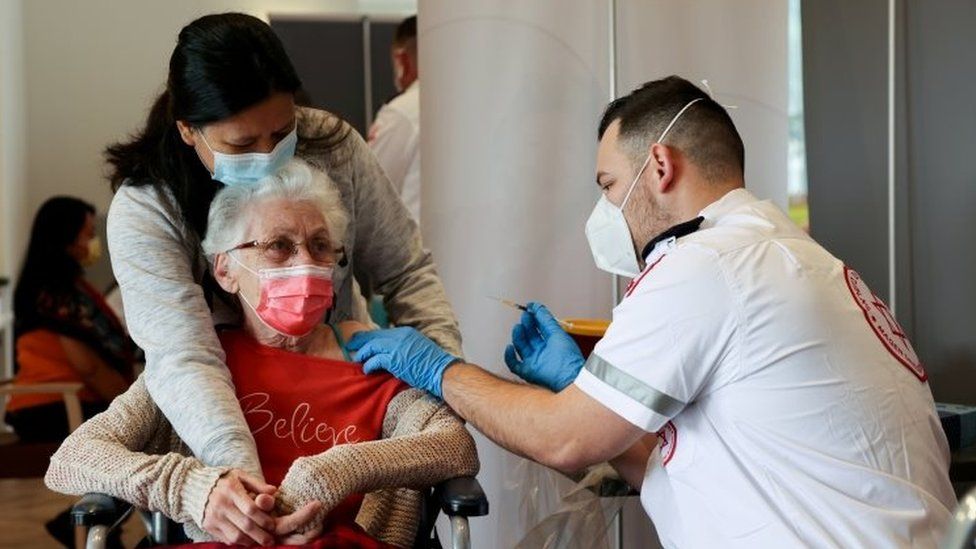
SharecloseShare pageCopy linkAbout sharingimage sourceReutersIsrael will offer a third dose of Covid vaccines to people aged over 60, Prime Minister Naftali Bennett has said.Those who got their second jab at least five months ago would be eligible for a Pfizer booster from Sunday, he said.President Isaac Herzog, who turns 61 in September, was the first to get the booster on Friday. This comes amid a surge in infections in Israel, and concern in many countries over the highly contagious Delta variant.”Findings show that there is a decline in the body’s immunity over time,” Mr Bennett said at a briefing on Thursday.”The aim of the supplementary dose is to build it up again, and thus reduce the chances of infection and serious illness significantly.”The prime minister added that 2,000 people with weakened immune systems had already received a third dose with no severe side effects.Experts say it is not yet clear whether a third dose will reduce Covid cases.Last month, the Israeli authorities reintroduced a requirement to wear masks indoors amid a rise in cases.Israel has been one of the most successful countries in the world in tackling the pandemic.It carried out the fastest vaccination programme, under which well over half the population of 9.3 million has been partly or fully immunised.Israel has reported nearly 870,000 infections since the start of the outbreak, with nearly 6,500 deaths, according to America’s Johns Hopkins University.

Read more →