Sky News Australia barred for week by YouTube over Covid misinformation

SharecloseShare pageCopy linkAbout sharingimage sourceReutersYouTube has barred Sky News Australia from uploading new content for a week, saying it had breached rules on spreading Covid-19 misinformation.It issued a “strike” under its three-strike policy, the last of which means permanent removal.YouTube did not point to specific items but said it opposed material that “could cause real-world harm”.The TV channel’s digital editor said the decision was a disturbing attack on the ability to think freely.Sky News Australia is owned by a subsidiary of Rupert Murdoch’s News Corp and has 1.85 million YouTube subscribers. The ban could affect its revenue stream from Google.A YouTube statement said it had “clear and established Covid-19 medical misinformation policies based on local and global health authority guidance”.A spokesperson told the Guardian it “did not allow content that denies the existence of Covid-19” or which encouraged people “to use hydroxychloroquine or ivermectin to treat or prevent the virus”. Neither has been proven to be effective against Covid.The videos in question “did not provide sufficient countervailing context”, the spokesperson said.Sky News Australia said it had found old videos that did not comply with YouTube’s policies and took its “commitment to meeting editorial and community expectations seriously”.But it denied any of its hosts had ever denied the existence of Covid-19.Millions of Australians are currently in lockdown to prevent the spread of the contagious Delta variant, while fewer than 15% of the population are fully vaccinated.Comments by veteran Sky presenter Alan Jones have triggered debate in Australia.In one 12 July broadcast with MP Craig Kelly, both men claimed Delta was not as dangerous as the original and vaccines would not help.The Sky News website issued an apology.Sydney radio host Ray Hadley said Jones’s performances had “allowed conspiracy theorists, anti-vaxers… to gain support from a minority who think the virus is nothing more than a dose of flu”.Australia’s Daily Telegraph last week ended the column Jones wrote for it.In an article on the Sky News Australia website, digital editor Jack Houghton said that if conversation about Australia’s Covid-19 policies were stifled “our political leaders will be free to act with immunity, without justification and lacking any sufficient scrutiny from the public”.YouTube has issued dozens of bans over the past two years, several over Covid but most for hate speech.

Read more →

The autistic-friendly toy shop: 'We have got this'

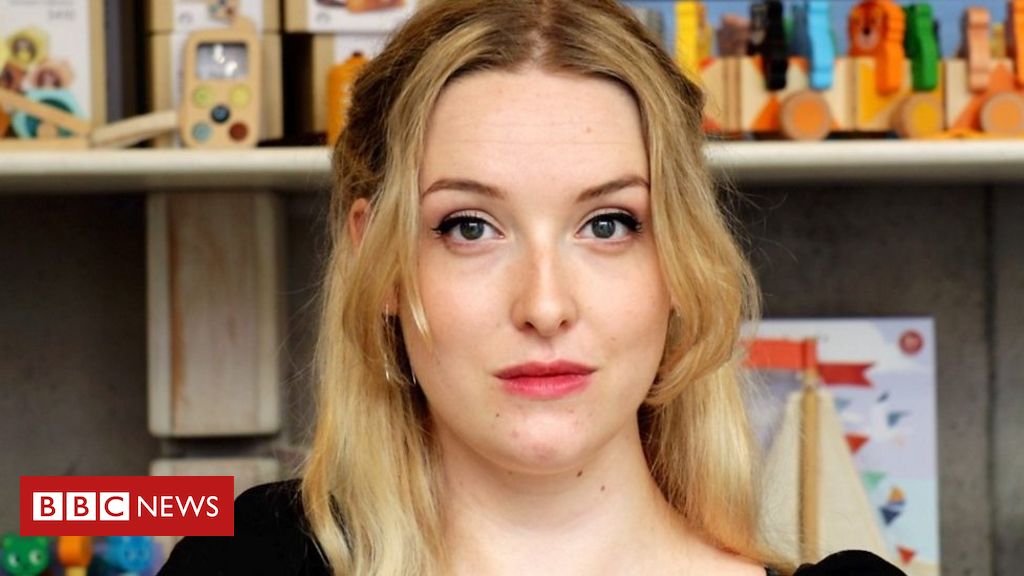
Shopping can be overwhelming when you’re autistic but a toy shop in Bristol is trying to take the anxiety away for parents and children with their ‘A-board’ outside to show it can be a safe space.The board details what the shop can do to help with sensory overload and make shoppers feel comfortable. Shop worker Romilly, who is autistic, says she wishes places like this had been around 17 years ago when she was a child.

Read more →

Mourning Families Seek Solace From the ‘Grief Purgatory’ of Covid-19

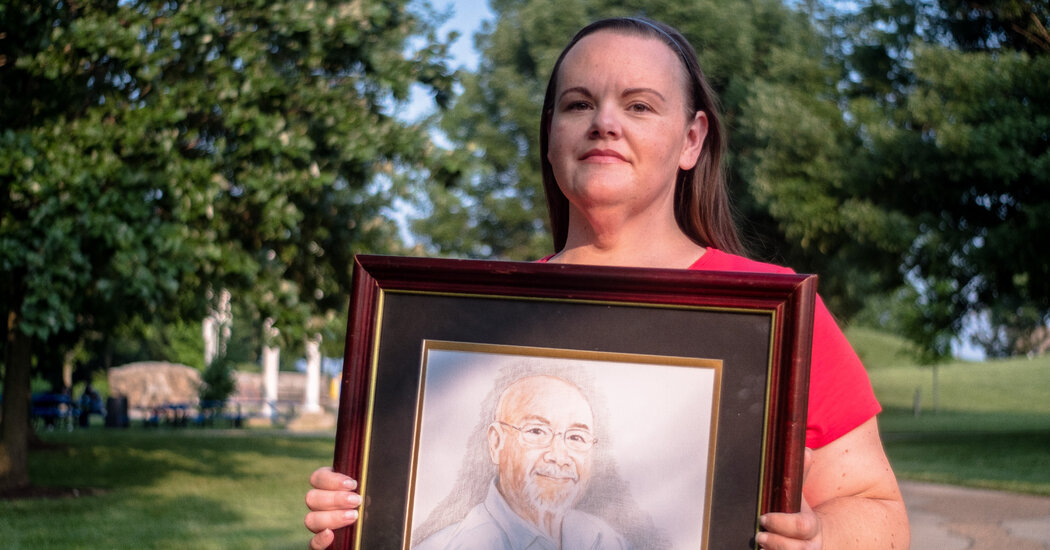
The pandemic has left hundreds of thousands of Americans alone in bereavement, unable to plan proper funerals for their loved ones. Now, they’re planning larger celebrations of life.The obituary had promised memorial services at a later date, so in May, Jessica Zimmerman-Selvidge sifted through photos of her father, trying to find the best ones for a celebration of his life.Time had moved quickly since last November, when her father, Ralph Zimmerman, died from Covid-19 in Springfield, Mo.But what had remained a constant source of pain, even months after his death, was the lack of a proper funeral. Seven months later, there was finally a chance to gather with loved ones at the local church, where they could share stories of him.The coronavirus pandemic, which brought social-distancing measures that included restrictions on gatherings, denied thousands of people the opportunity to grieve with others.Covid-19, which has led to the deaths of more than 600,000 people in the United States as of July, has left millions of Americans bereaved. The authors of an ongoing study from The Journal of Affective Disorders predict that severe grief “will become a worldwide public health concern.”Sheltering at home during the pandemic left many without a communal release of grief. Others felt cheated by online ceremonies devoid of touch, embraces and social connection. Postponed funerals, memorials and celebrations of life are being held, with hopes that the gatherings will ease feelings of guilt and, at last, open a path for solace. And surging cases of the coronavirus, driven by the more contagious Delta variant, raised the prospect of further postponements.“It feels really weird that he’s been gone for so long, and we’re just now doing all of this,” Mrs. Zimmerman-Selvidge said. “Normally, once a funeral is over, you kind of feel like you’re moving forward. But we haven’t been able to pivot in that way.”Jessica Zimmerman-Selvidge holding a photograph showing, from left, her father, Ralph Zimmerman, her husband, Bryan Selvidge, and herself. Her father liked attending games of the Springfield Cardinals, a minor league team of the St. Louis Cardinals.Joseph Rushmore for The New York TimesThis resolve to still have a funeral is a testament to people’s resilience, said Dr. Katherine Shear, a psychiatrist and the founder and director of the Center for Complicated Grief at Columbia University.“Everyone’s trying to celebrate right now, but these people are saying, ‘No, it’s also sad,’” Dr. Shear said. “They’re willing to stay with the pain and the sadness if it means they get a chance to acknowledge the person they lost.”The effect that end-of-life rituals have on those grieving has not been comprehensively researched but for many cultures, “funerals are a place to release pain,” said Dr. Leela Magavi, a psychiatrist in Newport Beach, Calif.Rabia Khan of Chicago said that not being able to carry out someone’s vision for their funeral had been frustrating. Before Ms. Khan’s 80-year-old father, Hameed Ullah Khan, died in November last year, he had pictured friends united at the mosque, praying from the Quran and reminiscing about the Pakistani newspaper he created. “It’s amazing we get a second chance at that now,” she said.For Jeneffer Haynes of Gaithersburg, Md., losing her 30-year-old brother, John Estampador, to Covid-19 in January and having to be alone with her grief was “absolutely indescribable,” she said.“He was born with Down syndrome, and he was just this big kid, lovable, an absolute joy,” she said.Jeneffer Haynes touching a pendant molded from the thumbprint of her brother John. “He loved giving us a thumbs-up,” she said. “That was his thing.”Rosem Morton for The New York TimesAt the funeral in June, she had been asked to stand 10 feet away from his coffin and not embrace the few people there, including her mother, who cried: “Bye, John John. Bye, John John.”As friends and family got vaccinated, Ms. Haynes planned a larger celebration of her brother’s life on what would have been his 31st birthday.She bought cupcakes and placed a candle on each. She tied blue balloons to framed photos of her brother. And on the day of the celebration, she wrote to him on Facebook: “Today we would’ve hugged and kissed you, and taken goofy selfies. Instead, we will gather and we will celebrate your life, and we will cry today, John John.”After singing “Happy Birthday” and blowing out the candles, they did.John Estampador’s room has been kept as he left it, with his photos, religious items and a fishing rod.Rosem Morton for The New York TimesBarbara Sabat said she needed to have a ceremony for her mother, Meryl, this summer in Bensalem, Pa., because if she did not, her feelings of regret would never subside. “I’m in grief purgatory,” she said.Those who lost someone to Covid-19 are at an increased risk of developing prolonged grief disorder, in which a person’s bereavement is so intense that it disrupts day-to-day activities, experts said. The disorder, they added, affects about 10 percent of people who lose someone close to them.Because the pandemic disproportionately killed Black people, Indigenous people and other people of color, prolonged grief disorder is likely to become more prevalent in those communities, which already lack adequate mental health resources, experts said.“When you don’t have that process of a funeral, it can stunt your grieving,” said Kenneth Fowler, a traumatologist based in Tallahassee, Fla.Religious leaders and funeral directors of various faiths have described the postponed memorials they have presided over this summer as more celebratory than usual.“For us Native Americans, we need to be together, sharing food, stories, praying so our loved ones who are dead can reach the creator,” said Robert Gill, a funeral director from Buffalo, Minn., and a citizen of the Sisseton Wahpeton Oyate tribe.Mr. Gill said he preserved some bodies for months to give people a chance to organize a larger burial service. When those gatherings finally happen, “spirit plates” — with the ancestors’ favorite foods, such as fried ribs, chokeberry jams and roasted buffalo — are served for attendees.Many families are using the extended planning periods to create detailed remembrances.Frederick Harris, a Vietnam War veteran, loved Smirnoff vodka with grapefruit juice and Motown music, so that’s what his daughter, Nicole Elizabeth, 34, will serve and play at his memorial in Hadley, Mass., later this year.“It’s daunting to plan because I want to make it fun and want to be able to share memories with so many people,” she said. “But I’m hoping it’ll bring me some peace because for a lot of us, it’s just been this limbo.”About 60 people were at the church in June to honor Mrs. Zimmerman-Selvidge’s father. Those attending passed a microphone across the pews and shared memories of him.Finally, it was his daughter’s turn. Mrs. Zimmerman-Selvidge sighed. “He just loved us all so much,” she said, and then paused.Her father’s urn was on a table in front of her. In her purse was a letter she had forced herself to write after his death.It began with words that were sometimes too painful to speak aloud: “I miss you.”

Read more →

New Rule Raises Question: Who’ll Pay for All the Covid Tests?

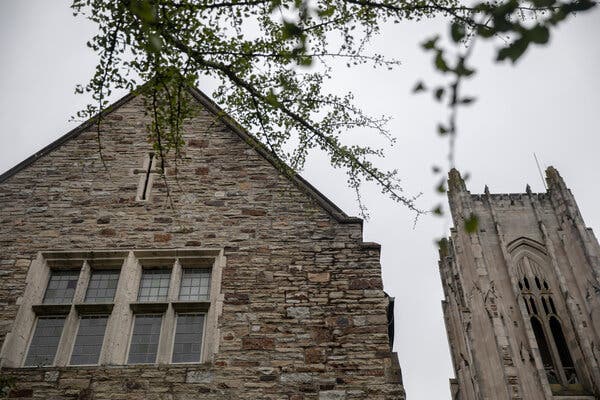
With the Delta variant surging, many companies decide that unvaccinated workers will need to get regular testing.Rhodes College, in Memphis, will start charging the unvaccinated students, faculty and staff an extra $1,500 per semester to cover the extra cost of covid testing.Andrea Morales for The New York TimesSpurred by rising Covid cases and the Delta variant’s spread, a wave of major employers announced the same rule for unvaccinated workers this week: They will need to submit to regular surveillance testing. The new requirement raises a thorny question: Who pays for those coronavirus tests?Doctors typically charge about $50 to $100 for the tests, so the costs of weekly testing could add up quickly. Federal law requires insurers to fully cover the tests when ordered by a health care provider, but routine workplace tests are exempt from that provision.“It’s really up to the employer,” said Sabrina Corlette, a research professor at Georgetown University’s Center on Health Insurance Reforms. “They can require employees to pick up the tab.”Employers have so far taken a range of approaches, from fully covering the costs to having unvaccinated workers pay full freight.The U.S. government will pay for its unvaccinated workers’ coronavirus testing, Karine Jean-Pierre, the deputy White House press secretary, said at a news briefing Friday.President Biden announced rules on Thursday that amount to a two-tier system for the country’s four million federal employees. Those who do not get vaccinated will have to social-distance, wear face coverings and comply with limits on official travel. Those who do get vaccinated will have no such requirements.The unvaccinated will also have to submit to regular coronavirus testing. Each federal agency will come up with a plan for testing its unvaccinated work force. The costs and procedures of each agency’s testing protocols will depend on the number of unvaccinated people they need to monitor.“The agencies are going to be implementing this program themselves, so they’ll be in charge of how that moves forward,” Ms. Jean-Pierre said.Among the employers taking a different approach is Rhodes College in Tennessee: It will have unvaccinated students, faculty and staff pay a $1,500 fee per semester to cover the costs associated with a weekly coronavirus testing program.Rhodes, a small liberal-arts college, estimates that three-quarters of its employees are vaccinated. It is still collecting information about the vaccination rate among its 2,000 students, and it strongly encourages vaccination. But it is waiting until full Food and Drug Administration approval of the vaccines before mandating them.“This is not a punishment,” said Meghan Harte Weyant, the college’s vice president for student life. “For students who choose to return to campus unvaccinated, they will have to cover their costs. This is intended to ensure that students who are vaccinated do not have to bear that cost.”Other employers are having workers chip in for the costs of coronavirus testing. MGM Resorts, which owns many hotels and casinos in Las Vegas, will charge a $15 co-pay for the testing at an on-site clinic for unvaccinated workers, multiple news outlets reported last week. Workers will also have the option to be tested at an outside provider.MGM Resorts did not respond to a New York Times request for comment on the new policy.These disparate approaches could provide a menu of options for workplaces still deciding who will pay for unvaccinated workers’ coronavirus tests, and how much.New York and California started testing requirements for unvaccinated state workers this week, but neither has specified who will pay for the service. Neither governor’s press office responded to a Times request for comment.Many states and cities still have free coronavirus testing sites that they started earlier in the pandemic. Long Beach, Calif., announced this week that it would require testing for unvaccinated city workers. In a statement to The Times on the new rule, the city said that workers “will have the option to do their mandated testing for free at the Long Beach Health Department” when the requirement takes effect in mid-August.But many Americans also get tests at doctor’s offices and pharmacies, which will typically bill patients and their insurance for the service..css-1xzcza9{list-style-type:disc;padding-inline-start:1em;}.css-3btd0c{font-family:nyt-franklin,helvetica,arial,sans-serif;font-size:1rem;line-height:1.375rem;color:#333;margin-bottom:0.78125rem;}@media (min-width:740px){.css-3btd0c{font-size:1.0625rem;line-height:1.5rem;margin-bottom:0.9375rem;}}.css-3btd0c strong{font-weight:600;}.css-3btd0c em{font-style:italic;}.css-w739ur{margin:0 auto 5px;font-family:nyt-franklin,helvetica,arial,sans-serif;font-weight:700;font-size:1.125rem;line-height:1.3125rem;color:#121212;}#NYT_BELOW_MAIN_CONTENT_REGION .css-w739ur{font-family:nyt-cheltenham,georgia,’times new roman’,times,serif;font-weight:700;font-size:1.375rem;line-height:1.625rem;}@media (min-width:740px){#NYT_BELOW_MAIN_CONTENT_REGION .css-w739ur{font-size:1.6875rem;line-height:1.875rem;}}@media (min-width:740px){.css-w739ur{font-size:1.25rem;line-height:1.4375rem;}}.css-9s9ecg{margin-bottom:15px;}.css-uf1ume{display:-webkit-box;display:-webkit-flex;display:-ms-flexbox;display:flex;-webkit-box-pack:justify;-webkit-justify-content:space-between;-ms-flex-pack:justify;justify-content:space-between;}.css-wxi1cx{display:-webkit-box;display:-webkit-flex;display:-ms-flexbox;display:flex;-webkit-flex-direction:column;-ms-flex-direction:column;flex-direction:column;-webkit-align-self:flex-end;-ms-flex-item-align:end;align-self:flex-end;}.css-12vbvwq{background-color:white;border:1px solid #e2e2e2;width:calc(100% – 40px);max-width:600px;margin:1.5rem auto 1.9rem;padding:15px;box-sizing:border-box;}@media (min-width:740px){.css-12vbvwq{padding:20px;width:100%;}}.css-12vbvwq:focus{outline:1px solid #e2e2e2;}#NYT_BELOW_MAIN_CONTENT_REGION .css-12vbvwq{border:none;padding:10px 0 0;border-top:2px solid #121212;}.css-12vbvwq[data-truncated] .css-rdoyk0{-webkit-transform:rotate(0deg);-ms-transform:rotate(0deg);transform:rotate(0deg);}.css-12vbvwq[data-truncated] .css-eb027h{max-height:300px;overflow:hidden;-webkit-transition:none;transition:none;}.css-12vbvwq[data-truncated] .css-5gimkt:after{content:’See more’;}.css-12vbvwq[data-truncated] .css-6mllg9{opacity:1;}.css-qjk116{margin:0 auto;overflow:hidden;}.css-qjk116 strong{font-weight:700;}.css-qjk116 em{font-style:italic;}.css-qjk116 a{color:#326891;-webkit-text-decoration:underline;text-decoration:underline;text-underline-offset:1px;-webkit-text-decoration-thickness:1px;text-decoration-thickness:1px;-webkit-text-decoration-color:#326891;text-decoration-color:#326891;}.css-qjk116 a:visited{color:#326891;-webkit-text-decoration-color:#326891;text-decoration-color:#326891;}.css-qjk116 a:hover{-webkit-text-decoration:none;text-decoration:none;}Federal law requires insurers to fully cover coronavirus tests ordered by health care providers, meaning the doctor cannot apply a deductible or co-payment to the service. Rules written by the Trump administration, and continued into the Biden administration, excluded routine workplace testing from that requirement.In practice, insurers do often end up covering employer-mandated tests — it’s hard to tell from a doctor’s bill whether a workplace ordered the care — but they could start reviewing cases of patients who suddenly have claims every week for the same service.“If they are starting to see a significant number of people who have these tests submitted every week, or twice a week, under federal law they would be within their authority to say this looks like routine workplace testing and not cover it,” said Professor Corlette of Georgetown.This means unvaccinated workers who have to obtain their own coronavirus testing could have to pay their own fees. Some patients have faced surprise medical bills for coronavirus tests, which can range from a few dollars to over $1,000.Some of those bills were the result of an employer-mandated test. In the last year, The Times has asked readers to send in their medical bills for coronavirus testing and treatment, and reviewed multiple cases of surprise charges for a workplace-required test.That includes Marta Bartan, who needed a coronavirus test to return to a job last summer working as a hair colorist in Brooklyn. As The Times reported, she received a $1,394 bill from a hospital running a drive-through site.“I was so confused,” she said at the time. “You go in to get a Covid test expecting it to be free. What could they have possibly charged me $1,400 for?”

Read more →

Biden, Republicans and the Pandemic Blame Game

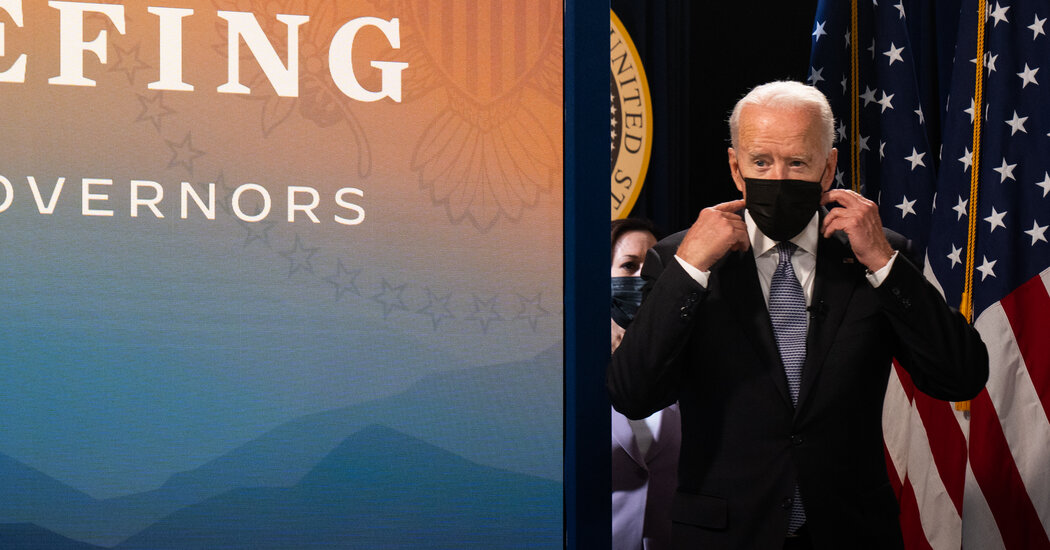
G.O.P. resistance to public health measures has helped fuel Covid’s resurgence. But the president will be left to clean up the mess.President Biden is in a tough spot: He campaigned on the ideas that he had the team to manage a pandemic and that his five-decade career as a Washington deal maker was just the ticket to overcome the country’s political polarization.That’s not happening, not even a little.Not only are Republicans resisting Mr. Biden’s push to end the pandemic, some of them are actively hampering it. Republican governors slow-walked vaccination efforts and lifted mask mandates early. In Washington, G.O.P. leaders like Steve Scalise, the second-ranking House Republican — who himself didn’t get vaccinated until about two weeks ago — mocked public health guidance that even vaccinated people should wear masks indoors as “government control.”There’s little Mr. Biden can do. Nearly a year and a half of pandemic living has revealed precisely who will and won’t abide by public health guidelines.Just in the last week, in my Washington neighborhood, which has among the highest vaccination rates in the city and voted 92 percent for Mr. Biden, people began re-masking at supermarkets and even outdoors in parks.In places like Arkansas, hospitals are over capacity with Covid patients and vaccination rates remain stubbornly low. The anti-mask sentiment is so strong that the state’s General Assembly passed legislation forbidding any mandate requiring them. On Thursday, Gov. Asa Hutchinson, a Republican, declared a special session of the legislature to amend that anti-mandate law he signed in April so that schools would be allowed to require masks for students too young to receive a vaccine. Good luck with that, his fellow Republicans in the legislature replied.That leaves the president in a pickle. As the Delta variant shows itself to be far more contagious and dangerous than previous iterations of the virus, the people he most needs to hear his message on vaccines and masks are least likely to.Six years of Donald J. Trump largely blocking out all other voices in his party have left Republicans without a credible messenger to push vaccines, even if they wanted to. Senator Mitch McConnell, the minority leader, may be using his campaign money to air pro-vaccine ads in his native Kentucky, but he is hardly a beloved figure within the party and is viewed by its base as just another member of the Washington establishment.There are certainly other communities of vaccine resisters, including demographics of people who have historically been mistreated by the federal government (and also a small-but-vocal minority of professional athletes and Olympians), but it is Republicans and Republican-run states that have emerged as the biggest hurdle in America’s vaccination efforts.With little ability to persuade the vaccine-hesitant and little help from the party he had pledged to work with, Mr. Biden and the federal government were left with a move he had resisted for weeks: make life more difficult for the unvaccinated, to try to force them to change their minds.Which brings us to the president’s news conference on Thursday. Mr. Biden said that, for the first time, all federal employees would have to show proof that they’ve been vaccinated (or else wear a mask at work), submit to weekly testing and maintain social distance.He stopped short of a vaccine mandate, saying such a requirement was a decision for local governments, school districts and companies. He said that if things got worse, and those resisting vaccines were denied entry from jobs and public spaces, maybe then things would get better.“My guess is, if we don’t start to make more progress, a lot of businesses and a lot of enterprises are going to require proof for you to be able to participate,” Mr. Biden said.This maneuver — essentially a shifting of responsibility away from the federal government — is consistent with the way that Mr. Biden often tries to project a hopeful tone while airbrushing the reality of a starkly divided nation.The market for disinformation in America is larger than ever, with Mr. Trump, despite starting the program that has led to the full vaccination of 164 million Americans, leading the charge to discredit the same program during the Biden administration.But it wasn’t Mr. Trump and Republicans who ran last year on ending the pandemic — it was Mr. Biden and Democrats who successfully made the election a referendum on managing a once-in-a-century global public health crisis.Now, just weeks after he celebrated the great progress made against the pandemic, Mr. Biden faces a new wave. And it probably won’t be long before Republicans who have done all they could to resist measures to combat it start to blame the president for not getting the country out of the crisis he pledged to solve.Drop us a line!We want to hear from our readers. Have a question? We’ll try to answer it. Have a comment? We’re all ears. Email us at onpolitics@nytimes.com..css-1xzcza9{list-style-type:disc;padding-inline-start:1em;}.css-3btd0c{font-family:nyt-franklin,helvetica,arial,sans-serif;font-size:1rem;line-height:1.375rem;color:#333;margin-bottom:0.78125rem;}@media (min-width:740px){.css-3btd0c{font-size:1.0625rem;line-height:1.5rem;margin-bottom:0.9375rem;}}.css-3btd0c strong{font-weight:600;}.css-3btd0c em{font-style:italic;}.css-w739ur{margin:0 auto 5px;font-family:nyt-franklin,helvetica,arial,sans-serif;font-weight:700;font-size:1.125rem;line-height:1.3125rem;color:#121212;}#NYT_BELOW_MAIN_CONTENT_REGION .css-w739ur{font-family:nyt-cheltenham,georgia,’times new roman’,times,serif;font-weight:700;font-size:1.375rem;line-height:1.625rem;}@media (min-width:740px){#NYT_BELOW_MAIN_CONTENT_REGION .css-w739ur{font-size:1.6875rem;line-height:1.875rem;}}@media (min-width:740px){.css-w739ur{font-size:1.25rem;line-height:1.4375rem;}}.css-9s9ecg{margin-bottom:15px;}.css-uf1ume{display:-webkit-box;display:-webkit-flex;display:-ms-flexbox;display:flex;-webkit-box-pack:justify;-webkit-justify-content:space-between;-ms-flex-pack:justify;justify-content:space-between;}.css-wxi1cx{display:-webkit-box;display:-webkit-flex;display:-ms-flexbox;display:flex;-webkit-flex-direction:column;-ms-flex-direction:column;flex-direction:column;-webkit-align-self:flex-end;-ms-flex-item-align:end;align-self:flex-end;}.css-12vbvwq{background-color:white;border:1px solid #e2e2e2;width:calc(100% – 40px);max-width:600px;margin:1.5rem auto 1.9rem;padding:15px;box-sizing:border-box;}@media (min-width:740px){.css-12vbvwq{padding:20px;width:100%;}}.css-12vbvwq:focus{outline:1px solid #e2e2e2;}#NYT_BELOW_MAIN_CONTENT_REGION .css-12vbvwq{border:none;padding:10px 0 0;border-top:2px solid #121212;}.css-12vbvwq[data-truncated] .css-rdoyk0{-webkit-transform:rotate(0deg);-ms-transform:rotate(0deg);transform:rotate(0deg);}.css-12vbvwq[data-truncated] .css-eb027h{max-height:300px;overflow:hidden;-webkit-transition:none;transition:none;}.css-12vbvwq[data-truncated] .css-5gimkt:after{content:’See more’;}.css-12vbvwq[data-truncated] .css-6mllg9{opacity:1;}.css-qjk116{margin:0 auto;overflow:hidden;}.css-qjk116 strong{font-weight:700;}.css-qjk116 em{font-style:italic;}.css-qjk116 a{color:#326891;-webkit-text-decoration:underline;text-decoration:underline;text-underline-offset:1px;-webkit-text-decoration-thickness:1px;text-decoration-thickness:1px;-webkit-text-decoration-color:#326891;text-decoration-color:#326891;}.css-qjk116 a:visited{color:#326891;-webkit-text-decoration-color:#326891;text-decoration-color:#326891;}.css-qjk116 a:hover{-webkit-text-decoration:none;text-decoration:none;}Sunisa Lee’s Olympic gold is a triumph for Hmong AmericansWhen I traveled to Wisconsin in May to write about a dispute over whether Marathon County should declare itself “A Community for All,” the overwhelming sentiment from members of the Hmong community at the center of the dispute was whether they were accepted and seen as equal citizens.So this week when Sunisa Lee, a Hmong gymnast from nearby St. Paul, Minn., won the gold medal in the women’s gymnastics all-around competition, she not only became America’s latest Olympic hero but also catapulted herself to become the country’s most famous Hmong person.“SO EXCITED. SO PROUD,” Ka Lo, a Marathon County Board member, wrote in a series of jubilant text messages on Thursday. “IT’S SOOOOOO GOOD!!!”How much of a boost Ms. Lee’s triumph gives to local efforts for Hmong recognition in Wisconsin remains to be seen. Both Marathon County and Wausau’s City Council have rejected “Community for All” resolutions, leading to a proliferation of “Community for All” yard signs and yet another effort to pass the measure at the county board.The next vote of the county board’s executive committee is scheduled for Aug. 12.… SeriouslySometimes even presidents get some schmutz on their chin.Thanks for reading. On Politics is your guide to the political news cycle, delivering clarity from the chaos.On Politics is also available as a newsletter. Sign up here to get it delivered to your inbox.Is there anything you think we’re missing? Anything you want to see more of? We’d love to hear from you. Email us at onpolitics@nytimes.com.

Read more →

U.S. Authorities Seek Documents From Troubled Covid Vaccine Manufacturer

Emergent BioSolutions, which ruined 75 million vaccine doses at its Baltimore plant, disclosed records requests from Congress and federal and state law enforcement agencies.Troubles continued to mount on Friday for a Maryland vaccine manufacturer as it disclosed publicly for the first time that federal and state law enforcement and regulatory agencies were seeking information from the company.Emergent BioSolutions, the Maryland manufacturer that ruined 75 million doses of Johnson & Johnson’s Covid-19 vaccine, has received records requests related to its pandemic-related work from a host of investigators, regulatory documents filed on Friday show.Emergent said that it had received “preliminary inquiries and subpoenas to produce documents” from the Justice Department, the Securities and Exchange Commission, the Financial Industry Regulatory Authority, the attorneys general of Maryland and New York and committees in both houses of Congress.The disclosure reflects the growing spotlight on the politically connected company, which received a $628 million federal deal to be the primary domestic manufacturer of the Johnson & Johnson and AstraZeneca vaccines. Production at a company facility in Baltimore was halted for more than three months after a batch of Johnson & Johnson’s vaccine was found to be contaminated and a subsequent inspection by regulators uncovered serious quality-control problems.Emergent is already facing a House committee investigation and multiple shareholder lawsuits related to its manufacturing troubles. In its disclosure, the company provided no further detail on the previously unknown requests, but said it was “producing and has produced documents as required in response and will continue to cooperate with these government inquiries.”Officials with the state and federal agencies either declined to comment or did not respond. A person with knowledge of the matter said that some of the investigative interest stemmed from suspicion of insider trading of Emergent stock, the subject of one of the lawsuits.A Senate aide confirmed that the committee overseeing health issues was also looking into Emergent’s manufacturing troubles, adding to the previously known scrutiny from Capitol Hill.An Emergent spokesman, Matt Hartwig, said he could not provide detail on the records requests beyond what was in the filing. “All of the inquiries and litigation matters relate to the same subject matter — our capabilities to manufacture Covid-19 vaccine bulk drug substance,” he said.The disclosure comes a day after Emergent announced that the Food and Drug Administration had given the go-ahead to resume manufacturing at the Baltimore site, which had been shuttered since April as the company worked to address deficiencies cited by inspectors.That decision does not mean the F.D.A. has broadly authorized Johnson & Johnson to distribute doses made by Emergent on an emergency basis. The F.D.A. signed off on previous batches of vaccine made at the Baltimore factory but with a warning that it could not guarantee the company had followed good manufacturing practices. The agency has cleared the equivalent of up to 75 million doses, but tens of millions remain in limbo.In a conference call with investors on Thursday, Emergent executives announced a $41.5 million hit from being forced to discard doses the F.D.A. had deemed unusable, and said the company had spent another $12.4 million to address manufacturing issues in Baltimore.The newly disclosed inquiries from federal and state agencies underscore a dramatic reversal of fortune for a company that has spent much of the last two decades effectively cornering the market for biodefense, becoming the government’s go-to contractor for products to protect against bioterrorism and infectious disease outbreaks.For most of the last decade, the government has spent nearly half of the annual budget of the nation’s emergency medical reserve, the Strategic National Stockpile, on Emergent’s anthrax vaccine alone, crowding out investments in products such as masks that were in short supply during the pandemic, a New York Times investigation found..css-1xzcza9{list-style-type:disc;padding-inline-start:1em;}.css-3btd0c{font-family:nyt-franklin,helvetica,arial,sans-serif;font-size:1rem;line-height:1.375rem;color:#333;margin-bottom:0.78125rem;}@media (min-width:740px){.css-3btd0c{font-size:1.0625rem;line-height:1.5rem;margin-bottom:0.9375rem;}}.css-3btd0c strong{font-weight:600;}.css-3btd0c em{font-style:italic;}.css-w739ur{margin:0 auto 5px;font-family:nyt-franklin,helvetica,arial,sans-serif;font-weight:700;font-size:1.125rem;line-height:1.3125rem;color:#121212;}#NYT_BELOW_MAIN_CONTENT_REGION .css-w739ur{font-family:nyt-cheltenham,georgia,’times new roman’,times,serif;font-weight:700;font-size:1.375rem;line-height:1.625rem;}@media (min-width:740px){#NYT_BELOW_MAIN_CONTENT_REGION .css-w739ur{font-size:1.6875rem;line-height:1.875rem;}}@media (min-width:740px){.css-w739ur{font-size:1.25rem;line-height:1.4375rem;}}.css-9s9ecg{margin-bottom:15px;}.css-uf1ume{display:-webkit-box;display:-webkit-flex;display:-ms-flexbox;display:flex;-webkit-box-pack:justify;-webkit-justify-content:space-between;-ms-flex-pack:justify;justify-content:space-between;}.css-wxi1cx{display:-webkit-box;display:-webkit-flex;display:-ms-flexbox;display:flex;-webkit-flex-direction:column;-ms-flex-direction:column;flex-direction:column;-webkit-align-self:flex-end;-ms-flex-item-align:end;align-self:flex-end;}.css-12vbvwq{background-color:white;border:1px solid #e2e2e2;width:calc(100% – 40px);max-width:600px;margin:1.5rem auto 1.9rem;padding:15px;box-sizing:border-box;}@media (min-width:740px){.css-12vbvwq{padding:20px;width:100%;}}.css-12vbvwq:focus{outline:1px solid #e2e2e2;}#NYT_BELOW_MAIN_CONTENT_REGION .css-12vbvwq{border:none;padding:10px 0 0;border-top:2px solid #121212;}.css-12vbvwq[data-truncated] .css-rdoyk0{-webkit-transform:rotate(0deg);-ms-transform:rotate(0deg);transform:rotate(0deg);}.css-12vbvwq[data-truncated] .css-eb027h{max-height:300px;overflow:hidden;-webkit-transition:none;transition:none;}.css-12vbvwq[data-truncated] .css-5gimkt:after{content:’See more’;}.css-12vbvwq[data-truncated] .css-6mllg9{opacity:1;}.css-qjk116{margin:0 auto;overflow:hidden;}.css-qjk116 strong{font-weight:700;}.css-qjk116 em{font-style:italic;}.css-qjk116 a{color:#326891;-webkit-text-decoration:underline;text-decoration:underline;text-underline-offset:1px;-webkit-text-decoration-thickness:1px;text-decoration-thickness:1px;-webkit-text-decoration-color:#326891;text-decoration-color:#326891;}.css-qjk116 a:visited{color:#326891;-webkit-text-decoration-color:#326891;text-decoration-color:#326891;}.css-qjk116 a:hover{-webkit-text-decoration:none;text-decoration:none;}When the coronavirus pandemic hit, the government turned to Emergent to produce vaccines and treatments. Thanks to a lucrative deal struck in May 2020, Emergent earned record profits and awarded executives record bonuses.Out of public view, however, concern about the company’s ability to deliver was mounting, as The Times has reported. A series of audits by customers, federal officials and the company’s own evaluators found repeated shortcomings in efforts to disinfect and prevent contamination, and a top federal official warned that the company would have to be “monitored closely.”After it was discovered in late March that a batch of the Johnson & Johnson vaccine had been cross-contaminated with material from the AstraZeneca vaccine, federal inspectors descended on the factory, and members of Congress launched an investigation into both the company’s Covid-19 manufacturing work and its contracts with the stockpile.With Emergent’s stock price cut in half, shareholders filed lawsuits accusing the company of committing securities fraud by publicly assuring investors that manufacturing in Baltimore was on track even as evidence of significant setbacks accumulated. In a separate suit, a pension fund claimed that some executives and board members had engaged in insider trading by unloading more than $20 million worth of stock over 15 months.While Emergent’s regulatory filing on Friday does not describe the nature of the document requests from the law enforcement agencies, the disclosure follows a description of the shareholder lawsuits in a section of the report titled “Securities Litigation.”The shareholder lawsuits allege a range of misconduct, including deceptive public statements that “artificially inflated” the company’s stock price, corporate mismanagement and unjust enrichment. In the regulatory filing, Emergent said that the allegations were false and that the company, its executives and board members “intend to defend the matter vigorously.”Ben Protess contributed reporting.

Read more →

Radio-wave therapy is safe for liver cancer patients and shows improvement in overall survival, study suggests

Researchers at Wake Forest School of Medicine have shown that a targeted therapy using non-thermal radio waves is safe to use in the treatment of hepatocellular carcinoma (HCC), the most common type of liver cancer. The therapy also showed a benefit in overall survival.
The study findings appear online in 4Open, a journal published by EDP Sciences.
“HCC accounts for nearly 90% of all liver cancers, and current survival rates are between six and 20 months,” said Boris Pasche, M.D., Ph.D., chair of cancer biology and director of Wake Forest Baptist’s Comprehensive Cancer Center. “Currently, there are limited treatment options for patients with this advanced liver cancer.”
For the study researchers used a device called TheraBionic P1, invented by Pasche and Alexandre Barbault of TheraBionic GmbH in Ettlingen, Germany, that works by delivering cancer-specific, amplitude-modulated radiofrequency electromagnetic fields (AM RF EMF) programmed specifically for HCC.
The frequencies used are specific to the patient’s type of cancer as identified through tumor biopsies or blood work, Pasche said.
Pasche and Barbault discovered radio frequencies for 15 different types of cancer, as previously reported in a study published in 2009 in the Journal of Experimental & Clinical Cancer Research.

Read more →

'Greening' biomaterials and scaffolds used in regenerative medicine

Green manufacturing is becoming an increasingly critical process across industries, propelled by a growing awareness of the negative environmental and health impacts associated with traditional practices. In the biomaterials industry, electrospinning is a universal fabrication method used around the world to produce nano- to microscale fibrous meshes that closely resemble native tissue architecture. The process, however, has traditionally used solvents that not only are environmentally hazardous but also pose a significant barrier to industrial scale-up, clinical translation, and, ultimately, widespread use.
Researchers at Columbia Engineering report that they have developed a “green electrospinning” process that addresses many of the challenges to scaling up this fabrication method, from managing the environmental risks of volatile solvent storage and disposal at large volumes to meeting health and safety standards during both fabrication and implementation. The team’s new study, published June 28, 2021, by Biofabrication, details how they have modernized the nanofiber fabrication of widely utilized biological and synthetic polymers (e.g. poly-α-hydroxyesters, collagen), polymer blends, and polymer-ceramic composites.
The study also underscores the superiority of green manufacturing. The group’s “green” fibers exhibited exceptional mechanical properties and preserved growth factor bioactivity relative to traditional fiber counterparts, which is essential for drug delivery and tissue engineering applications.
Regenerative medicine is a $156 billion global industry, one that is growing exponentially. The team of researchers, led by Helen H. Lu, Percy K. and Vida L.W. Hudson Professor of Biomedical Engineering, wanted to address the challenge of establishing scalable green manufacturing practices for biomimetic biomaterials and scaffolds used in regenerative medicine.
“We think this is a paradigm shift in biofabrication, and will accelerate the translation of scalable biomaterials and biomimetic scaffolds for tissue engineering and regenerative medicine,” said Lu, a leader in research on tissue interfaces, particularly the design of biomaterials and therapeutic strategies for recreating the body’s natural synchrony between tissues. “Green electrospinning not only preserves the composition, chemistry, architecture, and biocompatibility of traditionally electrospun fibers, but it also improves their mechanical properties by doubling the ductility of traditional fibers without compromising yield or ultimate tensile strength. Our work provides both a more biocompatible and sustainable solution for scalable nanomaterial fabrication.”
The team, which included several BME doctoral students from Lu’s group, Christopher Mosher PhD’20 and Philip Brudnicki, as well as Theanne Schiros, an expert in eco-conscious textile synthesis who is also a research scientist at Columbia MRSEC and assistant professor at FIT, applied sustainability principles to biomaterial production, and developed a green electrospinning process by systematically testing what the FDA considers as biologically benign solvents (Q3C Class 3).
They identified acetic acid as a green solvent that exhibits low ecological impact (Sustainable Minds® Life Cycle Assessment) and supports a stable electrospinning jet under routine fabrication conditions. By tuning electrospinning parameters, such as needle-plate distance and flow rate, the researchers were able to ameliorate the fabrication of research and industry-standard biomedical polymers, cutting the detrimental manufacturing impacts of the electrospinning process by three to six times.
Green electrospun materials can be used in a broad range of applications. Lu’s team is currently working on further innovating these materials for orthopaedic and dental applications, and expanding this eco-conscious fabrication process for scalable production of regenerative materials.
“Biofabrication has been referred to as the ‘fourth industrial revolution’ following steam engines, electrical power, and the digital age for automating mass production,” noted Mosher, the study’s first author. “This work is an important step towards developing sustainable practices in the next generation of biomaterials manufacturing, which has become paramount amidst the global climate crisis.”

Read more →

Early COVID-19 symptoms differ among age groups, research finds

Symptoms for early COVID-19 infection differ among age groups and between men and women, new research has found. These differences are most notable between younger age groups (16 to 59 years) compared to older age groups (60 to 80 years and over), and men have different symptoms compared to women in the early stages of COVID-19 infection.
The paper, published today in The Lancet Digital Health, and led by researchers from King’s College London analyses data from the ZOE COVID Symptom Study app between April 20th to 15th October 2020. App contributors are invited to get tested as soon as they report any new symptoms, thanks to a joint initiative with the Department of Health and Social Care. The researchers modelled the early signs of COVID-19 infection and successfully detected 80% of cases when using three days of self-reported symptoms.
Researchers compared the ability to predict early signs of COVID-19 infection using current National Health Service UK diagnostic criteria and a Hierarchical Gaussian Process model, a type of machine learning.
This machine learning model was able to incorporate some characteristics about the person affected, such as age, sex, and health conditions, and showed that symptoms of early COVID-19 infection are different among various groups.
18 symptoms were examined, which had different relevance for early detection in different groups. The most important symptoms for earliest detection of COVID-19 overall included loss of smell, chest pain, persistent cough, abdominal pain, blisters on the feet, eye soreness and unusual muscle pain. However, loss of smell lost significance in people over 60 years of age and was not relevant for subjects over 80. Other early symptoms such as diarrhoea were key in older age groups (60-79 and >80). Fever, while a known symptom of disease, was not an early feature of the disease in any age group.
Men were more likely to report shortness of breath, fatigue, chills and shivers, whereas women were more likely to report loss of smell, chest pain and a persistent cough.
While these models were generated in the COVID Symptom study app, models were replicated across time suggesting they would also apply to non-app contributors. Although the models were used on the first strain of the virus and Alpha variants, the key findings suggest the symptoms of the Delta variant and subsequent variants will also differ across population groups.
Lead author, Claire Steves, Reader at King’s College London said: “Its important people know the earliest symptoms are wide-ranging and may look different for each member of a family or household. Testing guidance could be updated to enable cases to be picked up earlier, especially in the face of new variants which are highly transmissible. This could include using widely available lateral flow tests for people with any of these non-core symptoms.”
Dr Liane dos Santos Canas, first author from King’s College London, said: “Currently, in the UK, only a few symptoms are used to recommend self-isolation and further testing. Using a larger number of symptoms and only after a few days of being unwell, using AI, we can better detect COVID-19 positive cases. We hope such a method is used to encourage more people to get tested as early as possible to minimise the risk of spread.”
Dr Marc Modat, Senior Lecturer at King’s College London, said: “As part of our study, we have been able to identify that the profile of symptoms due to COVID-19 differs from one group to another. This suggests that the criteria to encourage people to get tested should be personalised using individuals’ information such as age. Alternatively, a larger set of symptoms could be considered, so the different manifestations of the disease across different groups are taken into account.”
Story Source:
Materials provided by King’s College London. Note: Content may be edited for style and length.

Read more →