Hunting for TB's most vulnerable genes

Developing drugs to combat tuberculosis, or TB, can be frustrating business. A gene essential to the bacteria’s lifecycle is discovered, scientists rush to develop drugs that inhibit the target, and then — disappointment. Volleys of compounds hurled at the essential gene target have little impact on microbial growth. The bacteria live on. The scientists return to the drawing board.
Now, a new study in Cell helps explain why target-based antibiotics have had so much trouble getting off the ground. One answer is that essential gene targets differ in their degree of vulnerability to antibiotics. An ideal target, the researchers found, is so vulnerable to attack that the cell cannot survive when it is even slightly inhibited. Invulnerable genes, on the other hand, can weather nearly total inhibition, eking out just enough target activity to keep the cell alive while beset with antibiotics. Further, the authors quantified vulnerability in a pathogen for the first time, producing an index that ranks almost every essential gene in Mycobacterium tuberculosis by the amount of inhibition necessary to disable the gene and cripple the cell.
“The failures of target-based drug discovery are often ascribed to problems with the compound, like its inability to cross the bacterial envelope,” says Jeremy Rock, head of The Rockefeller University’s Laboratory of Host-Pathogen Biology. “This is the other side of that coin. If you pick a gene target that is highly invulnerable, you’re just not setting yourself up for success.”
Essential, but not vulnerable
New antimicrobial drugs typically come from broad screening tests. Researchers dump libraries of compounds onto bacteria in the lab, and see which ones prevent further growth. It’s quick, dirty, and incredibly effective — every drug approved to treat TB was discovered in this manner.
A less celebrated method involves identifying essential genes that the bacteria cannot live without, and then developing compounds that inhibit those targets. Known as target-based drug discovery, this method has given us a number of potent anticancer and antiviral drugs. But, to date, it hasn’t panned out for antibiotics. Rock and his team wondered why not.

Read more →

Researchers uncover a way to harness the power of immunotherapy for advanced prostate cancer

It’s a scientific riddle tangled up in a complex web. How do you turn an immune cold cancer into one that responds to immunotherapy?
Researchers led by the University of Michigan Rogel Cancer Center started with a simple thread: an inhibitor that showed promise against metastatic castration-resistant prostate cancer cells. This is the most challenging type of prostate cancer — advanced disease that has become resistant to hormone-based treatment.
From there, they continued to untangle the web to discover multiple levels of cellular processes that were preventing the immune system from mounting a response. Break past them with this inhibitor and suddenly what’s considered an immune cold tumor turns red hot.
“Immunotherapy has dramatically improved outcomes for some types of cancer. But prostate cancers are typically immune cold, which means these patients have benefited little from immunotherapies. Finding a way to rev up the immune response would create tremendous opportunity to improve patient outcomes,” says Arul M. Chinnaiyan, M.D., Ph.D., director of the Michigan Center for Translational Pathology and S.P. Hicks Professor of Pathology at Michigan Medicine. Chinnaiyan is senior author of the paper published in Nature Cancer.
Researchers started by screening a library of 167 inhibitors against prostate cancer cells. They found one, ESK981, had the most impact.
ESK981 is a class of drugs called multi-tyrosine kinase inhibitors, which are designed to hit multiple targets. This means it functions like a combination therapy, able to block cancer on more than one front. It was originally developed to check blood vessel growth and has already been tested in phase 1 clinical trials, which found it to be safe and well-tolerated.

Read more →

Why Migraine Sufferers May Want to Eat More Fish

A diet high in omega-3s, the fats found in fish, and low in omega-6s, found in many vegetable oils, led to fewer headaches. For most of her life, Tanya Kamka suffered migraine headaches on a weekly basis.The headaches would usually come on gradually and then build, causing excruciating pain and pressure behind her left eye that would culminate in her vomiting or visiting the emergency room. The ordeal would often leave her feeling weak and exhausted for days afterward.“Anytime I had a migraine I’d be wiped out for three or four days,” said Ms. Kamka, 58, a post office clerk who lives near Fort Bragg, N.C. “I missed a lot of work because of migraines.”But a few years ago, Ms. Kamka and 181 other people who routinely experience migraine headaches joined a clinical trial, sponsored by the National Institutes of Health, which was designed to test whether a special diet could alleviate their frequent headaches. The diet that Ms. Kamka was assigned to follow emphasized foods that contain large amounts of omega-3 fatty acids, the oils found in some fish, while limiting foods that are rich sources of omega-6 fatty acids, such as many vegetable oils.Omega-3s and omega-6s are both considered essential fatty acids — critical for health, and because our bodies can’t make them, they must be obtained from foods. Historically humans consumed roughly equivalent amounts of both fatty acids. But the typical American diet today tends to contain a much larger proportion of omega-6 fats. Some health authorities see this as a good thing: Vegetable oils and other rich sources of omega-6 fats have been found in many studies to be beneficial for cardiovascular health. But others argue that this could be problematic because omega-6 fats have been shown to promote pain and inflammation, while omega-3 fats tend to have the opposite effect in studies, helping to reduce pain and inflammation.The authors of the new study wanted to know: Could a diet that boosts omega-3 fats while lowering omega-6 fats make life easier for people burdened by frequent migraine headaches?For Ms. Kamka, the benefits of a change in diet were striking: After a few months of increasing her fish intake and avoiding many common vegetable oils, she noticed that her headaches had all but disappeared. Other people on the new diet also reported fewer headaches. Although the trial ended after 16 weeks, Ms. Kamka has remained on it ever since. Gone are the days when she ate foods like fried chicken, French fries and potato chips that were cooked in vegetables oils rich in omega-6 fats. She now makes a point of eating foods like cod, tuna, sardines, spinach salads, hummus and avocados, and she cooks with olive oil instead of corn, soybean and canola oils.“I haven’t had a migraine, not even a mild one, in over two years,” she said. “Going from having one a week to not having any was just amazing to me.”Migraine headaches are one of the most common causes of chronic pain, affecting about 12 percent of all Americans, most of them women. For many people, the condition can be debilitating, causing intense pain, nausea and other symptoms and sharply increasing the likelihood of developing depression and anxiety. Studies have found that migraine attacks can take a toll on workplace productivity, too, causing people to lose, on average, about four work days per year.But the new study provides evidence that the right diet could provide relief to some people who experience frequent migraine attacks, helping them reduce the number and severity of their headaches. Similar studies are underway to assess whether dietary changes could help ease other kinds of painful chronic ailments, such as low back pain.Dr. Christopher E. Ramsden, the lead author of the study, said the findings suggest that dietary changes could be a useful complement to existing treatments for chronic pain. “Many people with chronic pain continue to suffer despite taking medication,” said Dr. Ramsden, a clinical investigator in the National Institute on Aging Intramural Research Program. “I think this is something that could be integrated with other treatments to enhance their quality of life and reduce their pain.”Margeaux Walter for The New York TimesFor the new trial, published in the BMJ in July, participants were randomly split into three groups and followed for 16 weeks. One group, which included Ms. Kamka, followed a diet that was high in omega-3 fats and relatively low in omega-6 fats: They ate plenty of foods like wild salmon, albacore tuna and trout, while trying to minimize rich sources of omega-6 fats such as corn, soybean and canola oils. To make it easier to follow the diet, all of the subjects were given meals, snacks and recipes prepared by a dietitian throughout the course of the study.Vegetable oils high in omega-6s are abundant in the American diet. They are often used for cooking and found in many packaged foods and restaurant meals. To see whether reducing these fats could have an impact on migraine headaches, the researchers had a second group of people add more fish and other rich sources of omega-3s to their diets without decreasing their intake of omega-6s. A third group of people, serving as controls, consumed typical amounts of both types of fats.At the start of the study, the participants experienced, on average, about 16 “headache days” per month. But after 16 weeks, the group that had increased their fish intake and avoided vegetable oils had an average of four fewer “headache days” each month compared to the control group, as well as a 30 to 40 percent reduction in “headache hours” each day. The group that increased their omega-3 intake without reducing their omega-6 consumption benefited as well, though they had a smaller improvement of two fewer days without headaches each month. Both of these groups reported shorter and less severe headaches than people in the control group. They also used fewer pain relievers like acetaminophen.The researchers also noticed differences in important blood biomarkers. The two groups that increased their fish intake had greater levels of compounds known as oxylipins, which are involved in soothing pain. They had particularly high levels of 17-HDHA, an oxylipin that in other studies has been shown to reduce pain in people with arthritis.Dr. Rebecca Burch, a neurologist who was not involved in the new study, said that the findings were striking. She wrote an editorial in the BMJ pointing out that recently approved migraine medications have been shown in studies to produce two to two and a half fewer “headache days” per month compared to placebo, which is less than the four-day reduction caused by the high omega-3, low omega-6 diet.“Four days per month really outperforms anything we’ve seen from a pharmacological preventive,” said Dr. Burch, a headache medicine specialist at Brigham and Women’s Hospital and an assistant professor of neurology at Harvard Medical School.Dr. Burch said that people who struggle with migraine headaches are often motivated to follow restrictive diets to try to find some relief for their condition. But until now there has not been much evidence that any particular diet works. “This is the first time that we’ve had a robust, solid diet that we can recommend to patients,” she added.For people who want to try the diet on their own, the researchers said that the simplest way to increase omega-3 intake is to eat more fatty fish, such as sardines, anchovies, mackerel, salmon, albacore tuna and trout. Some of the best and most affordable options are canned and pouched fish. For vegetarians, good plant sources of omega-3 fats are ground flaxseeds, chia seeds and walnuts.Another important component of the diet is avoiding fried, processed and fast foods, which are typically made with oils that are low in omega-3s and high in omega-6s. Beth MacIntosh, a co-author of the new study, said that extra virgin olive oil, avocado oil, macadamia oil, coconut oil and butter tend to contain low amounts of omega-6 fats.You can use these oils to cook meals or to make your own snack foods, like popcorn, hummus and granola. The researchers also encouraged people in the study to eat at least five servings of fruits and vegetables per day.“Fruits and vegetables are naturally low in omega-6 fatty acids — and they’re just healthy,” said Ms. MacIntosh, the clinical nutrition manager of the Metabolic & Nutrition Research Core at UNC Health in Chapel Hill.

Read more →

Football: Dementia risk greatest for defenders

Defenders are more likely to have dementia in later life compared with other playing positions in football, says new research. But his new research says the risk is highest among defenders, who are five times more likely to have dementia than non-footballers.That compared with three times the risk for forwards, and almost no extra risk for goalkeepers compared with the population.Outfield players were four times more likely to have brain disease such as dementia. The research by the University of Glasgow, which was funded by the Football Association and players’ union the Professional Footballers’ Association, also found that risk increased the longer a player’s football career was. And despite changes in football technology and head-injury management in recent years, there was no evidence that neurodegenerative disease risk changed for footballers in this study, whose careers spanned from about 1930 to the late 1990s.’Footballs should be sold with a health warning about heading’Study author and consultant neuropathologist Dr Stewart said that it was time for football to eliminate the risk of heading, which he said could also cause short-term impairment of brain function.”I think footballs should be sold with a health warning saying repeated heading in football may lead to increased risks of dementia,” he said. “Unlike other dementias and degenerative diseases, where we have no idea what causes them, we know the risk factor [with football] and it’s entirely preventable. “We can stop this now and to do that we have to reduce, if not eliminate, unnecessary head impacts. Is heading absolutely necessary for football to continue? Or to put it another way: is exposure to the risk of dementia necessary for football?”I’ve yet to see any evidence that heading a ball is good for you. Football is great for you, there is less cancer and cardiovascular problems for players, but there are dreadful levels of dementia and I can’t see the benefit of that.” New heading guidance ‘unscientific guesswork’The research comes a week after English football published recommended limits on heading for professional and amateur players in training. It follows previous restrictions across England, Scotland, Wales and Northern Ireland for heading in youth teams. From next season professional players will be limited to 10 ‘higher-force’ headers in training from long passes, corners or free-kicks, whereas in the amateur game players should be limited to 10 headers per week. But Stewart was critical of those guidelines saying they were based on “unscientific guesswork” and cited the Scottish Football Association, who waited for the latest FIELD (Football’s Influence on Lifelong Health and Dementia Risk) study before publishing its heading advice. He added: “There is no basis to say 10 headers of a certain level will necessarily make a great difference to the risk. The FA based their recommendations on analysis of matches, estimated what the forces might be and then used that for training guidance. “That’s like being stood on the edge of the motorway and guessing cars’ speeds and talking about road traffic measures in a city. It’s not entirely relevant. “To assess whether 10 high-force head impacts might make a difference, we have to wait 30 to 40 years.” The FA said it “welcomed” the new research and said new heading guidelines were supported by research and expertise in the game. Stewart said that the research, which looked at health records data for about 8,000 Scottish former male professional footballers and matched them against 23,000 men from the general population, put football at the forefront of dementia research in sport.But he said it was a “global issue” and suggested that it was time for the game to change its formats. “Maybe professionals with all the support and medical knowledge of the risks can continue to play full-contact heading football,” he said. “But maybe at community and youth level, we can start talking about a game without heading. Do we wait 30 to 40 years? Or do we say the evidence is sufficiently strong where we should consider a sport without unnecessary head impact?”I think we are well past this point.” AnalysisHugh Pym, BBC health editorResearch on head injuries in elite level football and rugby is widening amidst some concerns about longer-term consequences for player health.The debate has intensified after a long-running campaign by Dawn Astle, whose father Jeff died with dementia after a career involving frequent heading of the ball.Professor Willie Stewart is one of the leading experts in this area and was commissioned by the Football Association and Professional Footballers’ Association in 2017 to carry out research on brain health among players. Two years later his team published preliminary findings on the increased dementia risk amongst former professionals.This latest study goes much further in identifying defenders and those with the longest careers as being at most risk among players with the conclusion that heading is a key factor.Professor Stewart is adamant that action is needed now on heading to protect the health of current players. From an expert of his stature and a team funded by the football authorities in England, that amounts to a significant wake-up call for the game.

Read more →

Host proteins that impair Ebola virus infection identified

Several proteins have been identified in hosts that interact with Ebola virus and primarily function to inhibit the production of viral genetic material in cells and prevent Ebola virus infection, according to a study led by the Institute for Biomedical Sciences at Georgia State University.
Zaire ebolavirus or Ebola virus, an RNA virus pathogen that belongs to the filovirus family, causes outbreaks of severe disease in humans. This public health threat has produced outbreaks where reported case fatality rates ranged up to 90 percent.
The West Africa Ebola virus epidemic from 2013-2016 resulted in more than 28,000 infections and more than 11,000 deaths. Four outbreaks occurred in the Democratic Republic of Congo from 2017-2021 and Ebola virus reemerged in Guinea in 2021.
The study identified several host proteins that interact with the Ebola virus protein VP30, which plays a critical role in initiating viral transcription. The host proteins RBBP6, hnRNP L and PEG10 inhibit viral RNA synthesis and Ebola virus infection. Another host protein, hnRNPUL1, has the opposite effect and enhances viral RNA synthesis and Ebola virus infection.
The findings are published in The EMBO Journal.
“These findings are remarkable because we typically think of Ebola virus as growing uncontrolled in infected people. Our data show that our cells contain multiple proteins that target the same viral interface to slow virus gene expression and replication,” said Dr. Christopher Basler, corresponding author of the study, professor and director of the Center for Microbial Pathogenesis in the Institute for Biomedical Sciences and a Georgia Research Alliance Eminent Scholar in Microbial Pathogenesis. “We hope that these findings will enable us to develop new ways to prevent or treat Ebola virus infections.”
The study was supported by grants from the National Institutes of Health and the Department of Defense.
Co-authors of the paper include Jyoti Batra and Nevan J. Krogan of J. David Gladstone Institutes and the University of California, San Francisco; Hiroyuki Mori and Robert A. Davey of Boston University School of Medicine; Gabriel I. Small, Nawneet Mishra, Dandan Liu, Daisy W. Leung, Gaya K. Amarasinghe, Mengru Zhang and Michael L. Gross of Washington University School of Medicine; Manu Anantpadma of the National Institute of Allergy and Infectious Diseases; Olena Shtanko of Texas Biomedical Research Institute; Caroline G. Williams and Basler of the Institute for Biomedical Sciences; and Nadine Biedenkopf and Stephan Becker of Philipps University of Marburg.
Story Source:
Materials provided by Georgia State University. Note: Content may be edited for style and length.

Read more →

What Causes I.B.S.?

Experts are starting to untangle the biological underpinnings of this common yet perplexing disorder. What they’re finding could offer clues on how to treat it.No one with debilitating symptoms likes to be told “it’s all in your head.” Yet, this is often what distressed patients with irritable bowel syndrome hear, implicitly or explicitly, when a medical work-up reveals no apparent explanation for their repeated bouts of abdominal pain, bloating, diarrhea or constipation.In fact, irritable bowel syndrome, or I.B.S., is a real problem causing real symptoms, no matter how hard its sufferers may wish it gone. But unlike an infection or tumor, I.B.S. is what medicine calls a functional disorder: a condition with no identifiable cause. Patients have no visible signs of damage or disease in their digestive tracts. Rather, the prevailing theory holds that overly sensitive nerves in the patient’s gastrointestinal tract send distress signals to the brain that result in pain and malfunction.However, as medical science progresses, experts are beginning to find physical explanations for disorders that previously had no known biological cause. For example, conditions like epilepsy, Alzheimer’s disease and migraine were once considered functional disorders, but are now known to have measurable physical or biochemical underpinnings.And recent research has revealed at least one likely explanation for the symptoms of I.B.S.: an infection in the digestive tract that triggers a localized allergic reaction in the gut. As Dr. Marc E. Rothenberg wrote in The New England Journal of Medicine in June, “Patients with I.B.S. often report that their symptoms started at the time of a gastrointestinal infection.”Dr. Rothenberg, who is the director of the division of allergy and immunology at Cincinnati Children’s Hospital Medical Center, explained in an interview that the infection can temporarily disrupt the layer of cells that normally lines the bowel. These cells form a barrier that prevents allergy-inducing proteins in foods from being absorbed. When that barrier is penetrated, people can become intolerant to foods that previously caused them no issue.A study in mice published in the journal Nature in January showed how this might happen. After infecting the rodents’ guts with bacteria, researchers found that the microbes released toxins that initiated an allergic reaction in the intestines, sparking the immune system to create antibodies against specific dietary proteins. When those specific proteins were ingested from foods, an immune reaction caused the rodents’ stomach muscles to contract, mimicking the symptoms of I.B.S., including diarrhea and abdominal pain.The researchers then showed that a similar immune response occurred in 12 patients with I.B.S. when common food allergens like gluten, wheat, soy or milk were injected into the rectum. Every patient with I.B.S. had a localized reaction to one or more of the allergens, but only two of eight people without I.B.S. reacted to any allergen. Unlike classic food allergies that can produce hives, swelling and other body-wide immune responses, the reaction to allergens in the study was detectable only in the colon.In describing this intriguing research, Dr. Rothenberg noted that “a great deal remains to be elucidated.” But he added that this and other related research suggests that “common gastrointestinal ailments, such as I.B.S. and functional abdominal pain, may instead be food-induced allergic disorders.” Such findings, the researchers wrote in the January study, hint at “new possibilities for the treatment of irritable bowel syndrome and related abdominal pain disorders,” offering hope that people with I.B.S. may one day find lasting relief.Such remedies would be a godsend for the 10 to15 percent of adults in the United States with I.B.S. or other food sensitivities who experience gastrointestinal distress following a meal. Therapeutic possibilities include high doses of antihistamines to counter patients’ sensitivities, as well as targeted treatments that block allergic pathways, Dr. Rothenberg said. He added that there are now drugs in Phase 3 trials — the step before approval — that eliminate the immune cells, known as mast cells, that are responsible for initiating an allergic response in the gut.How common is I.B.S.?I.B.S. is the most frequently diagnosed gastrointestinal disorder. Although symptoms can vary from patient to patient, they commonly include cramping, abdominal pain, bloating, intestinal gas, and diarrhea or constipation, or both. The disorder affects more women than men and is most common in people under 50. The annual medical costs of the condition exceed $1 billion in the United States alone.It’s a chronic condition that requires continual management strategies, like always knowing the location of the nearest bathroom or having to wear diapers when restroom access is limited. The emotional distress it can cause often results in depression and anxiety and may prompt others to think incorrectly that the bowel disorder is self-inflicted.Can calming therapies help?There is a known connection between the brain and the gut, and undue stress can certainly aggravate the symptoms of I.B.S. Cognitive behavioral therapy may benefit some patients, and many find it helpful to practice relaxation techniques like positive imagery, progressive muscle relaxation or meditation.Yoga and other types of physical activity may also diminish symptoms of I.B.S. and improve patients’ quality of life. One clinical trial involving 102 patients found that those who engaged in vigorous physical activity three to five days a week experienced reduced physical and psychological symptoms.Another soothing technique that can be done anywhere, anytime, to help relieve pain and stress is diaphragmatic breathing, the opposite of sucking in your gut. Instead of pushing out the chest as the lungs fill with air, the diaphragm is pushed down toward the stomach, causing the belly to rise. Practice by placing one hand above your navel to feel your abdomen rise as you inhale slowly through your nose, and then retract as you exhale through your mouth.Which foods should be avoided if I have I.B.S.?Patients can also minimize their symptoms by avoiding the foods or drinks that seem to trigger them. Common troublemakers include wheat and other gluten-containing foods, dairy products, citrus fruits, beans, cabbage and related gas-causing vegetables, and carbonated drinks. People may also react badly to spicy or fatty foods, coffee or alcohol.Some patients find dramatic relief from adopting a strict FODMAP diet that eliminates all fermentable starches and sugars, then gradually adding back one food at a time to determine which ones cause symptoms and are best avoided. The FODMAP diet favorably alters the population of microbes that live in the intestines, reducing gas-producing bacteria that thrive on fermentable foods. (Details of the diet can be found at this website.)Some evidence suggests that prebiotics or probiotics may be another therapeutic option to manipulate the bacteria that dwell in the intestinal tract, though the findings are limited. In a recent review in JAMA Network, Dr. Michael Camilleri, a gastroenterologist at the Mayo Clinic, reported that the probiotic Bifidobacterium longum reduced depression and improved quality of life for patients with I.B.S.

Read more →

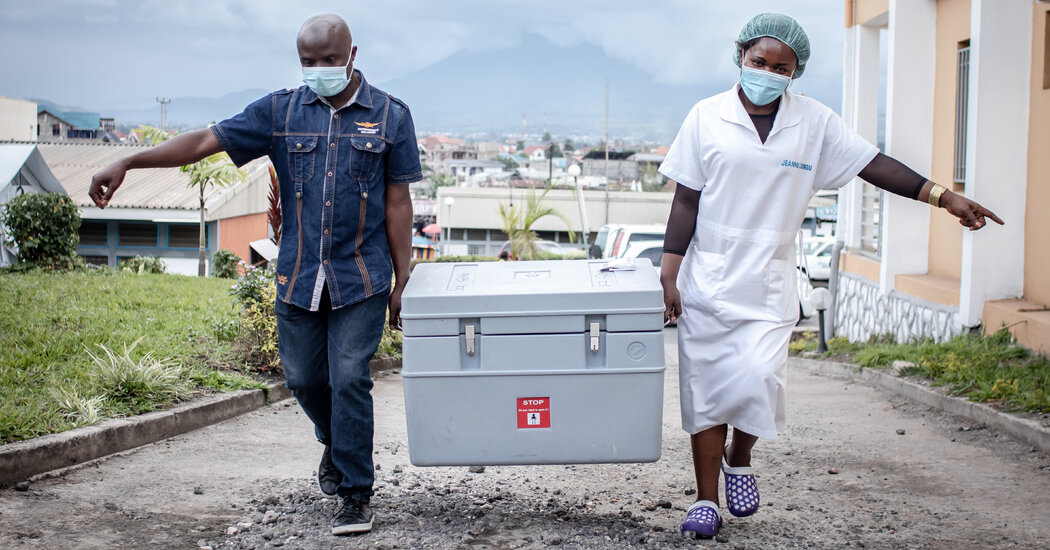
Where Covax, the Vast Global Vaccine Program, Went Wrong

After months of struggle, the U.N.-backed Covax alliance will soon have many more doses, promising relief for vaccine shortages in poorer countries. But it faces a deepening crisis: difficulties getting shots into arms as the Delta variant spreads.Deaths from Covid-19 were surging across Africa in June when 100,000 doses of the Pfizer-BioNTech vaccine arrived in Chad. The delivery seemed proof that the United Nations-backed program to immunize the world could get the most desirable vaccines to the least developed nations. Yet five weeks later, Chad’s health minister said, 94,000 doses remained unused.Nearby in Benin, only 267 shots were being given each day, a pace so slow that 110,000 of the program’s AstraZeneca doses expired. Across Africa, confidential documents from July indicated, the program was monitoring at least nine countries where it said doses intended for the poor were at risk of spoiling this summer.The vaccine pileup illustrates one of the most serious but largely unrecognized problems facing the immunization program as it tries to recover from months of missteps and disappointments: difficulty getting doses from airport tarmacs into people’s arms.Known as Covax, the program was supposed to be a global powerhouse, a multibillion-dollar alliance of international health bodies and nonprofits that would ensure through sheer buying power that poor countries received vaccines as quickly as the rich.Instead, Covax has struggled to acquire doses: It stands half a billion short of its goal. Poor countries are dangerously unprotected as the Delta variant runs rampant, just the scenario that Covax was created to prevent.The urgent need to vaccinate the world goes far beyond protecting people in poor nations. The longer the virus circulates, the more dangerous it can become, even for vaccinated people in wealthy countries.Without billions more shots, experts warn, new variants could keep emerging, endangering all nations.A Covax-provided vaccine shipment in El Salvador in March. The program has delivered 163 million doses worldwide but had planned to have at least 640 million available by now.Marvin Recinos/Agence France-Presse — Getty Images“Covax hasn’t failed, but it is failing,” said Dr. Ayoade Alakija, a co-chair of the African Union’s vaccine delivery program. “We really have no other options. For the sake of humanity, Covax must work.”More supplies are finally on the way, courtesy of the Biden administration, which is buying 500 million Pfizer doses and delivering them through Covax, the centerpiece of a larger pledge by wealthy democracies. The donated doses should begin shipping this month.But the Biden donation, worth $3.5 billion, comes with a caveat: To help fund it, the administration is diverting hundreds of millions of dollars promised for vaccination drives in poorer countries, according to notes from a meeting between Covax and American officials. Short on funding, those countries have had a hard time buying fuel to transport doses to clinics, training people to administer shots or persuading people to get them.Even as Covax officials scramble to fill that funding gap, the overriding question is whether the program can move beyond its mistakes, and beyond an imbalance of power that has left it at the mercy of wealthy countries and pharmaceutical companies. Pfizer, for example, balked at a direct deal with Covax this spring, interviews reveal, instead reaching an agreement through the Biden administration, an arrangement that hurt Covax’s credibility as an independent vaccine purchaser.Covax deliveries have fallen below forecasts, lowering expectations for the rest of 2021

Read more →

How Local Media Spreads Misinformation From Vaccine Skeptics

Facebook and other social media have been under scrutiny for vaccine misinformation, but local outlets have also sometimes been active.The Freedom’s Phoenix, a local news site in Phoenix, and the Atlanta Business Journal, a news site in Atlanta, both published the same article about coronavirus vaccines in March.The author was Joseph Mercola, who researchers and regulators have said is a top spreader of misleading Covid-19 information. In the article, Dr. Mercola inaccurately likened the vaccines to “gene therapy” and argued against their usefulness.A month later, The Freedom’s Phoenix and the Atlanta Business Journal also published another article by Dr. Mercola. This time, he blamed the billionaire Bill Gates for the pandemic, claiming Mr. Gates had “shadow control” of the World Health Organization.Facebook and other social platforms have in recent weeks attracted attention for vaccine misinformation, as Covid cases surge from the infectious Delta variant and vaccination rates slow. But The Freedom’s Phoenix and the Atlanta Business Journal are two small publications — along with dozens of radio and television stations, and podcasts aimed at local audiences — that have also become powerful conduits for anti-vaccine messaging, researchers said.Dr. Mercola and other superspreaders of anti-vaccine content, who have been listed by the nonprofit Center for Countering Digital Hate as the “Disinformation Dozen,” have appeared in articles in local publications or as guests on local radio shows and podcasts, according to a review by The New York Times. Some of their articles are regularly published by small-town newspapers or they are quoted as experts, The Times found.Sherri Tenpenny, an osteopathic physician and vaccine skeptic, was recently on Coach Dave Live, a podcast in Ohio aimed at local audiences, misleadingly claiming that coronavirus vaccines disrupt people’s fertility. Christiane Northrup, a physician and anti-vaccine activist, showed up on the Lillian McDermott radio show in Florida and inaccurately said the vaccines would “change human DNA.” Ty Bollinger, another vaccine skeptic, was featured on News4 WSMV Nashville, an NBC-affiliated station in Tennessee, where he discussed why people should not get vaccinated.Their appearances on local media can have an impact since Americans are more likely to believe what they read and hear from local news outlets. A 2019 Knight-Gallup study found that 45 percent of Americans trust reporting by local news organizations “a great deal” or “quite a lot,” compared with 31 percent for national news organizations..css-1xzcza9{list-style-type:disc;padding-inline-start:1em;}.css-3btd0c{font-family:nyt-franklin,helvetica,arial,sans-serif;font-size:1rem;line-height:1.375rem;color:#333;margin-bottom:0.78125rem;}@media (min-width:740px){.css-3btd0c{font-size:1.0625rem;line-height:1.5rem;margin-bottom:0.9375rem;}}.css-3btd0c strong{font-weight:600;}.css-3btd0c em{font-style:italic;}.css-w739ur{margin:0 auto 5px;font-family:nyt-franklin,helvetica,arial,sans-serif;font-weight:700;font-size:1.125rem;line-height:1.3125rem;color:#121212;}#NYT_BELOW_MAIN_CONTENT_REGION .css-w739ur{font-family:nyt-cheltenham,georgia,’times new roman’,times,serif;font-weight:700;font-size:1.375rem;line-height:1.625rem;}@media (min-width:740px){#NYT_BELOW_MAIN_CONTENT_REGION .css-w739ur{font-size:1.6875rem;line-height:1.875rem;}}@media (min-width:740px){.css-w739ur{font-size:1.25rem;line-height:1.4375rem;}}.css-9s9ecg{margin-bottom:15px;}.css-uf1ume{display:-webkit-box;display:-webkit-flex;display:-ms-flexbox;display:flex;-webkit-box-pack:justify;-webkit-justify-content:space-between;-ms-flex-pack:justify;justify-content:space-between;}.css-wxi1cx{display:-webkit-box;display:-webkit-flex;display:-ms-flexbox;display:flex;-webkit-flex-direction:column;-ms-flex-direction:column;flex-direction:column;-webkit-align-self:flex-end;-ms-flex-item-align:end;align-self:flex-end;}.css-12vbvwq{background-color:white;border:1px solid #e2e2e2;width:calc(100% – 40px);max-width:600px;margin:1.5rem auto 1.9rem;padding:15px;box-sizing:border-box;}@media (min-width:740px){.css-12vbvwq{padding:20px;width:100%;}}.css-12vbvwq:focus{outline:1px solid #e2e2e2;}#NYT_BELOW_MAIN_CONTENT_REGION .css-12vbvwq{border:none;padding:10px 0 0;border-top:2px solid #121212;}.css-12vbvwq[data-truncated] .css-rdoyk0{-webkit-transform:rotate(0deg);-ms-transform:rotate(0deg);transform:rotate(0deg);}.css-12vbvwq[data-truncated] .css-eb027h{max-height:300px;overflow:hidden;-webkit-transition:none;transition:none;}.css-12vbvwq[data-truncated] .css-5gimkt:after{content:’See more’;}.css-12vbvwq[data-truncated] .css-6mllg9{opacity:1;}.css-qjk116{margin:0 auto;overflow:hidden;}.css-qjk116 strong{font-weight:700;}.css-qjk116 em{font-style:italic;}.css-qjk116 a{color:#326891;-webkit-text-decoration:underline;text-decoration:underline;text-underline-offset:1px;-webkit-text-decoration-thickness:1px;text-decoration-thickness:1px;-webkit-text-decoration-color:#326891;text-decoration-color:#326891;}.css-qjk116 a:visited{color:#326891;-webkit-text-decoration-color:#326891;text-decoration-color:#326891;}.css-qjk116 a:hover{-webkit-text-decoration:none;text-decoration:none;}“People think they are trusting their local news, something reliable and familiar, when in fact they are trusting misinformation,” said Rachel Moran, a fellow at the Center for an Informed Public at the University of Washington. “It is a huge problem and growing.”The Freedom’s Phoenix, the Atlanta Business Journal, Coach Dave Live, Lillian McDermott show and News4 WSMV did not return requests for comment.In an email, Dr. Mercola wrote, “Local communities must come together when the federal health agencies and mainstream media are under the influence of the pharmaceutical industry.”Dr. Tenpenny, Dr. Northrup and Mr. Bollinger didn’t respond to requests for comment.Many local media publications and stations have reported responsibly and factually on the pandemic. Gannett, the publisher with 100 daily newspapers and nearly 1,000 weekly publications across 43 states, has dedicated resources to fact-checking and teaching journalists that accuracy matters more than speed, said Amalie Nash, senior vice president for local news and audience development at USA Today, which is owned by Gannett.The investment was crucial because in the pandemic, “people turned to us in record numbers to get information about lockdowns, mask policies and vaccines,” Ms. Nash said.But as the local news industry has been hit by declining advertising revenues and cuts, some outlets have sometimes unknowingly run vaccine misinformation because they have fewer employees or less oversight than in the past, said Ken Doctor, a news industry analyst. Without the resources to publish original, independent journalism, they may also rely on whatever can be freely repurposed from online material, he said.In total, local media remains a significant force. There were 1,762 local television stations and 3,379 radio stations operating in the United States last year, according to the Radio Television Digital News Association and Syracuse University. While print publications have been decimated, there are still about 1,300 daily papers and 5,800 weekly publications, with roughly half located in small rural communities, according to research from the University of North Carolina.Jo Lukito, an assistant journalism professor who studies disinformation at the University of Texas at Austin, said local media is often a starting point that creates a “trading up the chain” effect.It starts when a rumor is covered or published in local media, she said, where it can gain a sheen of credibility. Then “when you pitch it to a Fox News or a larger news platform, you can say that this other outlet covered it, so it must be real,” she said.George Noory, host of the radio talk show Coast to Coast AM, in his studio in 2017.Ivan Kashinsky for The New York TimesOne radio show that appears to have been part of that effect is Coast to Coast AM, which is syndicated on 640 local stations and reaches nearly three million weekly listeners. Its host, George Noory, has in recent years interviewed Dr. Tenpenny, Robert Kennedy Jr., a lawyer and anti-vaccine activist, and Erin Elizabeth, the founder of the website Health Nut News and a vaccine skeptic..css-1xzcza9{list-style-type:disc;padding-inline-start:1em;}.css-3btd0c{font-family:nyt-franklin,helvetica,arial,sans-serif;font-size:1rem;line-height:1.375rem;color:#333;margin-bottom:0.78125rem;}@media (min-width:740px){.css-3btd0c{font-size:1.0625rem;line-height:1.5rem;margin-bottom:0.9375rem;}}.css-3btd0c strong{font-weight:600;}.css-3btd0c em{font-style:italic;}.css-w739ur{margin:0 auto 5px;font-family:nyt-franklin,helvetica,arial,sans-serif;font-weight:700;font-size:1.125rem;line-height:1.3125rem;color:#121212;}#NYT_BELOW_MAIN_CONTENT_REGION .css-w739ur{font-family:nyt-cheltenham,georgia,’times new roman’,times,serif;font-weight:700;font-size:1.375rem;line-height:1.625rem;}@media (min-width:740px){#NYT_BELOW_MAIN_CONTENT_REGION .css-w739ur{font-size:1.6875rem;line-height:1.875rem;}}@media (min-width:740px){.css-w739ur{font-size:1.25rem;line-height:1.4375rem;}}.css-9s9ecg{margin-bottom:15px;}.css-uf1ume{display:-webkit-box;display:-webkit-flex;display:-ms-flexbox;display:flex;-webkit-box-pack:justify;-webkit-justify-content:space-between;-ms-flex-pack:justify;justify-content:space-between;}.css-wxi1cx{display:-webkit-box;display:-webkit-flex;display:-ms-flexbox;display:flex;-webkit-flex-direction:column;-ms-flex-direction:column;flex-direction:column;-webkit-align-self:flex-end;-ms-flex-item-align:end;align-self:flex-end;}.css-12vbvwq{background-color:white;border:1px solid #e2e2e2;width:calc(100% – 40px);max-width:600px;margin:1.5rem auto 1.9rem;padding:15px;box-sizing:border-box;}@media (min-width:740px){.css-12vbvwq{padding:20px;width:100%;}}.css-12vbvwq:focus{outline:1px solid #e2e2e2;}#NYT_BELOW_MAIN_CONTENT_REGION .css-12vbvwq{border:none;padding:10px 0 0;border-top:2px solid #121212;}.css-12vbvwq[data-truncated] .css-rdoyk0{-webkit-transform:rotate(0deg);-ms-transform:rotate(0deg);transform:rotate(0deg);}.css-12vbvwq[data-truncated] .css-eb027h{max-height:300px;overflow:hidden;-webkit-transition:none;transition:none;}.css-12vbvwq[data-truncated] .css-5gimkt:after{content:’See more’;}.css-12vbvwq[data-truncated] .css-6mllg9{opacity:1;}.css-qjk116{margin:0 auto;overflow:hidden;}.css-qjk116 strong{font-weight:700;}.css-qjk116 em{font-style:italic;}.css-qjk116 a{color:#326891;-webkit-text-decoration:underline;text-decoration:underline;text-underline-offset:1px;-webkit-text-decoration-thickness:1px;text-decoration-thickness:1px;-webkit-text-decoration-color:#326891;text-decoration-color:#326891;}.css-qjk116 a:visited{color:#326891;-webkit-text-decoration-color:#326891;text-decoration-color:#326891;}.css-qjk116 a:hover{-webkit-text-decoration:none;text-decoration:none;}The activists have used their segments on the show to reinforce their messages. In a promotion for Dr. Tenpenny’s appearance to discuss the coronavirus in April 2020, for example, Coast to Coast AM’s website said, “She contends that there are so many unknowns in regards to testing, tracking, symptoms, and other factors, that the information we’re being told about the disease is meaningless.”That line was shared on Dr. Tenpenny’s social media accounts and tweeted by some of her followers.In a statement, Mr. Noory said, “We give all views on my program and that includes people who are opposed to vaccines.”Vaccine misinformation has also been published on sites that purport to be local news, but which are pay-for-play content websites. These sites, where articles are ordered up and paid for by conservative think tanks, political operatives, corporate executives and public-relations professionals, have sprung up to fill the vacuum left by the loss of local publications.Recent articles on some of those sites, such as Last Frontier News in Alaska and Bowling Green Today in Kentucky, highlighted people who died after receiving the Covid vaccines without saying that it was unclear if the vaccines were responsible, according to a review by The Times. The stories followed a pattern established on anti-vaccine blogs of pulling data from a national database of post-vaccine deaths without explaining the limitations of the data.Last Frontier News and Bowling Green Today did not respond to requests for comment.At least one local radio host has recently recanted his anti-vaccine stance. Phil Valentine, a conservative radio host in Tennessee, had declared in a blog post in December that he would not get the vaccine because his chances of dying from the virus were “way less than one percent.”But Mr. Valentine was diagnosed with Covid-19 in July and has been hospitalized in critical condition. He has since issued a statement advising others to get vaccinated.“Phil would like for his listeners to know that while he has never been an ‘anti-vaxxer’ he regrets not being more vehemently ‘pro-vaccine’, and looks forward to being able to more vigorously advocate that position as soon as he is back on the air, which we all hope will be soon,” his station, 99.7 WTN, said on July 23.Last Wednesday, Mr. Valentine was put on a ventilator, 99.7 WTN said. The station has added a hashtag to its posts about the host: #prayforphil.

Read more →

To Fight Vaccine Lies, Authorities Recruit an ‘Influencer Army’

LOS ANGELES — Ellie Zeiler, 17, a TikTok creator with over 10 million followers, received an email in June from Village Marketing, an influencer marketing agency. It said it was reaching out on behalf of another party: the White House.Would Ms. Zeiler, a high school senior who usually posts short fashion and lifestyle videos, be willing, the agency wondered, to participate in a White House-backed campaign encouraging her audience to get vaccinated against the coronavirus?“There is a massive need to grow awareness within the 12-18 age range,” Village Marketing wrote to Ms. Zeiler’s business email. “We’re moving fast and have only a few available slots to fill, so please let us know ASAP.”Ms. Zeiler quickly agreed, joining a broad, personality-driven campaign to confront an increasingly urgent challenge in the fight against the pandemic: vaccinating the youthful masses, who have the lowest inoculation rates of any eligible age group in the United States.Fewer than half of all Americans age 18 to 39 are fully vaccinated, compared with more than two-thirds of those over 50, according to the Centers for Disease Control and Prevention. And about 58 percent of those age 12 through 17 have yet to receive a shot at all.To reach these young people, the White House has enlisted an eclectic army of more than 50 Twitch streamers, YouTubers, TikTokers and the 18-year-old pop star Olivia Rodrigo, all of them with enormous online audiences. State and local governments have begun similar campaigns, in some cases paying “local micro influencers” — those with 5,000 to 100,000 followers — up to $1,000 a month to promote Covid-19 vaccines to their fans.The efforts are in part a counterattack against a rising tide of vaccine misinformation that has flooded the internet, where anti-vaccine activists can be so vociferous that some young creators say they have chosen to remain silent on vaccines to avoid a politicized backlash.“I didn’t worry about the backlash,” said Christina Najjar, 30, a TikTok star known online as Tinx.Alyson Aliano for The New York Times“The anti-vaccine side of the internet is still set on all this vaccine news,” said Samir Mezrahi, the administrator of several “meme pages” such as Kale Salad, which has nearly 4 million followers on Instagram and posts viral videos and other content. “We’re posting about J. Lo and Ben Affleck.”Renee DiResta, a researcher who studies misinformation at the Stanford Internet Observatory, said that while influencer campaigns can be useful, they may be no match for mass, organic online movements. She noted the contrast between creators who have been asked to spread pro-vaccine messaging versus vaccine skeptics, who have made it a personal mission to question the injections..css-1xzcza9{list-style-type:disc;padding-inline-start:1em;}.css-3btd0c{font-family:nyt-franklin,helvetica,arial,sans-serif;font-size:1rem;line-height:1.375rem;color:#333;margin-bottom:0.78125rem;}@media (min-width:740px){.css-3btd0c{font-size:1.0625rem;line-height:1.5rem;margin-bottom:0.9375rem;}}.css-3btd0c strong{font-weight:600;}.css-3btd0c em{font-style:italic;}.css-w739ur{margin:0 auto 5px;font-family:nyt-franklin,helvetica,arial,sans-serif;font-weight:700;font-size:1.125rem;line-height:1.3125rem;color:#121212;}#NYT_BELOW_MAIN_CONTENT_REGION .css-w739ur{font-family:nyt-cheltenham,georgia,’times new roman’,times,serif;font-weight:700;font-size:1.375rem;line-height:1.625rem;}@media (min-width:740px){#NYT_BELOW_MAIN_CONTENT_REGION .css-w739ur{font-size:1.6875rem;line-height:1.875rem;}}@media (min-width:740px){.css-w739ur{font-size:1.25rem;line-height:1.4375rem;}}.css-9s9ecg{margin-bottom:15px;}.css-uf1ume{display:-webkit-box;display:-webkit-flex;display:-ms-flexbox;display:flex;-webkit-box-pack:justify;-webkit-justify-content:space-between;-ms-flex-pack:justify;justify-content:space-between;}.css-wxi1cx{display:-webkit-box;display:-webkit-flex;display:-ms-flexbox;display:flex;-webkit-flex-direction:column;-ms-flex-direction:column;flex-direction:column;-webkit-align-self:flex-end;-ms-flex-item-align:end;align-self:flex-end;}.css-12vbvwq{background-color:white;border:1px solid #e2e2e2;width:calc(100% – 40px);max-width:600px;margin:1.5rem auto 1.9rem;padding:15px;box-sizing:border-box;}@media (min-width:740px){.css-12vbvwq{padding:20px;width:100%;}}.css-12vbvwq:focus{outline:1px solid #e2e2e2;}#NYT_BELOW_MAIN_CONTENT_REGION .css-12vbvwq{border:none;padding:10px 0 0;border-top:2px solid #121212;}.css-12vbvwq[data-truncated] .css-rdoyk0{-webkit-transform:rotate(0deg);-ms-transform:rotate(0deg);transform:rotate(0deg);}.css-12vbvwq[data-truncated] .css-eb027h{max-height:300px;overflow:hidden;-webkit-transition:none;transition:none;}.css-12vbvwq[data-truncated] .css-5gimkt:after{content:’See more’;}.css-12vbvwq[data-truncated] .css-6mllg9{opacity:1;}.css-qjk116{margin:0 auto;overflow:hidden;}.css-qjk116 strong{font-weight:700;}.css-qjk116 em{font-style:italic;}.css-qjk116 a{color:#326891;-webkit-text-decoration:underline;text-decoration:underline;text-underline-offset:1px;-webkit-text-decoration-thickness:1px;text-decoration-thickness:1px;-webkit-text-decoration-color:#326891;text-decoration-color:#326891;}.css-qjk116 a:visited{color:#326891;-webkit-text-decoration-color:#326891;text-decoration-color:#326891;}.css-qjk116 a:hover{-webkit-text-decoration:none;text-decoration:none;}“That’s the asymmetric passion,” she said. “People who believe it’s going to hurt you are out there talking about it everyday. They’re driving hashtags and pushing content and doing everything they can do.”But even if the influencer campaigns amount to a sprinkler in a wildfire, some creators said, they felt compelled to join in.“I didn’t worry about the backlash,” said Christina Najjar, 30, a TikTok star known online as Tinx. “Helping spread the word about the importance of getting vaccinated was the right thing to do.”Ms. Najjar said she was thrilled when the White House reached out to her through her manager in June. She soon posted a question-and-answer video about the vaccines with Dr. Anthony S. Fauci, director of the National Institute of Allergy and Infectious Diseases, on Instagram.Their banter was light. Discussing what she called a “happy vaxx girl summer,” Ms. Najjar peppered Dr. Fauci with questions: Was it safe to go out for a drink? Should we be concerned about getting pregnant after getting the vaccine? Do I look 26? “You have an ageless look to you,” he replied.“I’ll tell my Botox doctor that,” she said.Ms. Najjar called the session “a great time,” adding, “I think I flirted with Dr. Fauci, but in a respectful way.” A White House official said Dr. Fauci was not available for comment.Public health officials have used celebrities to reach people since Elvis Presley rolled up his sleeve on “The Ed Sullivan Show” in 1956 to get the polio vaccine. These days, young people are more likely to trust the advice of their favorite content creator than a mainstream celebrity, according to a 2018 study by the marketing agency MuseFind.As a result, “we need to get an influencer army to push the pro-vaccine message out there,” said Jason Harris, chief executive of the advertising agency Mekanism, which is an authority on influencer marketing. “That’s the only way we’re going to have loud enough voices on social to drown out all the misinfo that’s happening.”The White House began considering the power of online creators in January, repurposing the influencer marketing tactics that Mr. Biden had used on the campaign trail toward promoting vaccinations, said Rob Flaherty, the White House director of digital strategy.Mr. Flaherty said he and Clarke Humphrey, the White House’s Covid-19 digital director, teamed up with Village Marketing and Made to Save, a national campaign aimed at promoting access to coronavirus vaccines. In June, they hosted several off-the-record briefings over Zoom so online creators could ask questions about the vaccines and how they worked.Since then, the Biden administration has rolled out influencer discussions with Dr. Fauci and brought Ms. Rodrigo to the White House, where she urged people to “actually get to a vaccination site.”The 18-year-old pop star Olivia Rodrigo was recently tapped by the White House to persuade the youthful masses to get vaccinated.White House, via ReutersIn March, the White House also orchestrated an Instagram Live chat between Dr. Fauci and Eugenio Derbez, a Mexican actor with over 16.6 million Instagram followers who had been openly doubtful of the vaccines. During their 37-minute discussion, Mr. Derbez was upfront about his concerns.“What if I get the vaccine, but it doesn’t protect me against the new variant?” he asked. Dr. Fauci acknowledged that the vaccines might not completely shield people from variants, but said, “It’s very, very good at protecting you from getting seriously ill.”.css-1xzcza9{list-style-type:disc;padding-inline-start:1em;}.css-3btd0c{font-family:nyt-franklin,helvetica,arial,sans-serif;font-size:1rem;line-height:1.375rem;color:#333;margin-bottom:0.78125rem;}@media (min-width:740px){.css-3btd0c{font-size:1.0625rem;line-height:1.5rem;margin-bottom:0.9375rem;}}.css-3btd0c strong{font-weight:600;}.css-3btd0c em{font-style:italic;}.css-w739ur{margin:0 auto 5px;font-family:nyt-franklin,helvetica,arial,sans-serif;font-weight:700;font-size:1.125rem;line-height:1.3125rem;color:#121212;}#NYT_BELOW_MAIN_CONTENT_REGION .css-w739ur{font-family:nyt-cheltenham,georgia,’times new roman’,times,serif;font-weight:700;font-size:1.375rem;line-height:1.625rem;}@media (min-width:740px){#NYT_BELOW_MAIN_CONTENT_REGION .css-w739ur{font-size:1.6875rem;line-height:1.875rem;}}@media (min-width:740px){.css-w739ur{font-size:1.25rem;line-height:1.4375rem;}}.css-9s9ecg{margin-bottom:15px;}.css-uf1ume{display:-webkit-box;display:-webkit-flex;display:-ms-flexbox;display:flex;-webkit-box-pack:justify;-webkit-justify-content:space-between;-ms-flex-pack:justify;justify-content:space-between;}.css-wxi1cx{display:-webkit-box;display:-webkit-flex;display:-ms-flexbox;display:flex;-webkit-flex-direction:column;-ms-flex-direction:column;flex-direction:column;-webkit-align-self:flex-end;-ms-flex-item-align:end;align-self:flex-end;}.css-12vbvwq{background-color:white;border:1px solid #e2e2e2;width:calc(100% – 40px);max-width:600px;margin:1.5rem auto 1.9rem;padding:15px;box-sizing:border-box;}@media (min-width:740px){.css-12vbvwq{padding:20px;width:100%;}}.css-12vbvwq:focus{outline:1px solid #e2e2e2;}#NYT_BELOW_MAIN_CONTENT_REGION .css-12vbvwq{border:none;padding:10px 0 0;border-top:2px solid #121212;}.css-12vbvwq[data-truncated] .css-rdoyk0{-webkit-transform:rotate(0deg);-ms-transform:rotate(0deg);transform:rotate(0deg);}.css-12vbvwq[data-truncated] .css-eb027h{max-height:300px;overflow:hidden;-webkit-transition:none;transition:none;}.css-12vbvwq[data-truncated] .css-5gimkt:after{content:’See more’;}.css-12vbvwq[data-truncated] .css-6mllg9{opacity:1;}.css-qjk116{margin:0 auto;overflow:hidden;}.css-qjk116 strong{font-weight:700;}.css-qjk116 em{font-style:italic;}.css-qjk116 a{color:#326891;-webkit-text-decoration:underline;text-decoration:underline;text-underline-offset:1px;-webkit-text-decoration-thickness:1px;text-decoration-thickness:1px;-webkit-text-decoration-color:#326891;text-decoration-color:#326891;}.css-qjk116 a:visited{color:#326891;-webkit-text-decoration-color:#326891;text-decoration-color:#326891;}.css-qjk116 a:hover{-webkit-text-decoration:none;text-decoration:none;}Mr. Flaherty said the whole point of the campaign was to be “a positive information effort.” State and local governments have taken the same approach, though on a smaller scale and sometimes with financial incentives.In February, Colorado awarded a contract worth up to $16.4 million to the Denver-based Idea Marketing, which includes a program to pay creators in the state $400 to $1,000 a month to promote the vaccines.Jessica Bralish, the communications director at Colorado’s public health department, said influencers were being paid because “all too often, diverse communities are asked to reach out to their communities for free. And to be equitable, we know we must compensate people for their work.”As part of the effort, influencers have showed off where on their arms they were injected, using emojis and selfies to punctuate the achievement. “I joined the Pfizer club,” Ashley Cummins, a fashion and style influencer in Boulder, Colo., recently announced in a smiling selfie while holding her vaccine card. She added a mask emoji and an applause emoji.“Woohoo! This is so exciting!” one fan commented.Posts by creators in the campaign carry a disclosure that reads “paid partnership with Colorado Dept. of Public Health and Environment.”Patricia Lepiani, president of Idea Marketing, said local micro influencers are in demand because they can seem more authentic than national social media stars. “Vaccination campaigns will only be effective if you know your community,” she said.Colorado officials recently said the state has just two months left to use 350,000 doses of stockpiled Covid-19 vaccines before they expire.Other places, including New Jersey, Oklahoma City County and Guildford County, N.C., as well as cities like San Jose, Calif., have worked with the digital marketing agency XOMAD, which identifies local influencers who can help broadcast public health information about the vaccines.Governments’ interest in the campaigns has spiked sharply in the past week, said Rob Perry, chief executive of XOMAD, as concerns have grown about the spread of the Delta variant of the virus. He added that “when large numbers of influencers post in the same time period, vaccination rates go up.”Ms. Zeiler, who signed on to the White House-backed campaign, also had an online conversation with Dr. Anthony S. Fauci in June.Maggie Shannon for The New York TimesFor Ms. Zeiler, the TikTok star, things moved quickly after she signed on to the White House-backed vaccination campaign. In June, she held an online conversation with Dr. Fauci, using the time to squash the false rumor that vaccines cause infertility. It was a conspiracy theory that she had heard from friends and that she had seen videos of on her TikTok “For You” page.“When I saw that I was like, OK, I need to ask him about it,” she said. “It was kind of sad to see him be like, no, that’s not true.”Ms. Zeiler has since used her footage with Dr. Fauci for other platforms, including Instagram, and created original content for YouTube promoting the vaccines. In one 47-second video, she spoke directly into the camera, ticking through the reasons she had gotten vaccinated and why others should too. “Reason one,” she declared, was “you can go wherever you want.”Ms. Zeiler said in an interview that her work was not done. “I know I won’t stop until all my followers are safe and vaccinated,” she said.

Read more →

‘X’ Marks the Spot: Officials Map a Route Out of the Pandemic

Governments and organizations around the world are using geospatial data and digital mapping tools to guide their vaccination campaigns.At their regular pandemic response meetings over the past year, officials in Suffolk County, N.Y., found themselves returning, again and again, to questions of geography.“One of the common questions I used to get was, ‘Where is it bad?” said Dr. Harsha Rajashekharaiah, the senior project coordinator for the county’s Covid-19 response. “Where is the Covid transmission bad? Where is the testing bad? Where should we improve? Where should we invest our resources?”To find answers, Dr. Rajashekharaiah used geospatial data, brandishing brightly colored maps that pinpointed the exact neighborhoods where cases were rising or where testing rates were lagging.And after inoculations began, he started using digital mapping tools — commonly known as geographic information system, or G.I.S., software — to explore how vaccination rates varied across the county and how they correlated with a variety of demographic factors.Several patterns soon emerged on the color-coded maps. In March, for instance, a magenta splotches on the western side of the county made it clear that vaccination rates were low in neighborhoods with a high share of residents who did not speak English well. After he presented the map to his colleagues, they quickly added Spanish and Haitian Creole language assistance to their county vaccine hotline.Maps produced by Suffolk County show vaccinations rates in late March, left, and early June. Dark pink areas show lower vaccination rates and a higher percentage of residents who do not speak English well.Suffolk CountyOver the next few months, as vaccination rates rose in these neighborhoods, portions of the map turned to yellow or even green. “I cannot sit here and conclude that our G.I.S. system is the reason that this has happened,” Dr. Rajashekharaiah said. But, he added, “G.I.S. has been a very, very powerful tool for us to communicate these barriers.”Amid the highly uneven rollout of Covid-19 vaccines, many health officials and community organizations are drawing upon geospatial data to plan their vaccination campaigns and track their progress in fine-grained detail. Esri, a California-based company that makes widely used G.I.S. software, says that hundreds of organizations around the world — including many U.S. states and more than 20 national governments — are using its digital mapping tools to help them get shots into arms.“G.I.S. and mapping tools have been really important to helping these health departments get people vaccinated — to be more organized in the process, more streamlined and strategic and even tactical,” said Dr. Este Geraghty, the chief medical officer of Esri.By allowing officials to quickly spot vaccine deserts, pinpoint high-risk populations and target their resources more efficiently, digital maps have become crucial tools in the effort to ensure that vaccination campaigns leave no neighborhood behind..css-1xzcza9{list-style-type:disc;padding-inline-start:1em;}.css-3btd0c{font-family:nyt-franklin,helvetica,arial,sans-serif;font-size:1rem;line-height:1.375rem;color:#333;margin-bottom:0.78125rem;}@media (min-width:740px){.css-3btd0c{font-size:1.0625rem;line-height:1.5rem;margin-bottom:0.9375rem;}}.css-3btd0c strong{font-weight:600;}.css-3btd0c em{font-style:italic;}.css-w739ur{margin:0 auto 5px;font-family:nyt-franklin,helvetica,arial,sans-serif;font-weight:700;font-size:1.125rem;line-height:1.3125rem;color:#121212;}#NYT_BELOW_MAIN_CONTENT_REGION .css-w739ur{font-family:nyt-cheltenham,georgia,’times new roman’,times,serif;font-weight:700;font-size:1.375rem;line-height:1.625rem;}@media (min-width:740px){#NYT_BELOW_MAIN_CONTENT_REGION .css-w739ur{font-size:1.6875rem;line-height:1.875rem;}}@media (min-width:740px){.css-w739ur{font-size:1.25rem;line-height:1.4375rem;}}.css-9s9ecg{margin-bottom:15px;}.css-uf1ume{display:-webkit-box;display:-webkit-flex;display:-ms-flexbox;display:flex;-webkit-box-pack:justify;-webkit-justify-content:space-between;-ms-flex-pack:justify;justify-content:space-between;}.css-wxi1cx{display:-webkit-box;display:-webkit-flex;display:-ms-flexbox;display:flex;-webkit-flex-direction:column;-ms-flex-direction:column;flex-direction:column;-webkit-align-self:flex-end;-ms-flex-item-align:end;align-self:flex-end;}.css-12vbvwq{background-color:white;border:1px solid #e2e2e2;width:calc(100% – 40px);max-width:600px;margin:1.5rem auto 1.9rem;padding:15px;box-sizing:border-box;}@media (min-width:740px){.css-12vbvwq{padding:20px;width:100%;}}.css-12vbvwq:focus{outline:1px solid #e2e2e2;}#NYT_BELOW_MAIN_CONTENT_REGION .css-12vbvwq{border:none;padding:10px 0 0;border-top:2px solid #121212;}.css-12vbvwq[data-truncated] .css-rdoyk0{-webkit-transform:rotate(0deg);-ms-transform:rotate(0deg);transform:rotate(0deg);}.css-12vbvwq[data-truncated] .css-eb027h{max-height:300px;overflow:hidden;-webkit-transition:none;transition:none;}.css-12vbvwq[data-truncated] .css-5gimkt:after{content:’See more’;}.css-12vbvwq[data-truncated] .css-6mllg9{opacity:1;}.css-qjk116{margin:0 auto;overflow:hidden;}.css-qjk116 strong{font-weight:700;}.css-qjk116 em{font-style:italic;}.css-qjk116 a{color:#326891;-webkit-text-decoration:underline;text-decoration:underline;text-underline-offset:1px;-webkit-text-decoration-thickness:1px;text-decoration-thickness:1px;-webkit-text-decoration-color:#326891;text-decoration-color:#326891;}.css-qjk116 a:visited{color:#326891;-webkit-text-decoration-color:#326891;text-decoration-color:#326891;}.css-qjk116 a:hover{-webkit-text-decoration:none;text-decoration:none;}Location, location, locationAs the virus raced across Wisconsin in the spring of 2020, officials in Milwaukee County became concerned about its unequal toll. In late March and early April, for instance, Black residents accounted for 69 percent of the Covid deaths in the county despite making up just 27 percent of its population, according to a University of Wisconsin-Milwaukee report.These disparities were front of mind when the Covid-19 vaccines were finally authorized. “We wanted to make sure that we were equitably distributing this vaccine,” said David Crowley, the Milwaukee County executive.They began categorizing census tracts according to their vaccination rates and their scores on a national “social vulnerability index.” The index uses data on 15 different social, economic and demographic factors — including the age, minority status and education levels of residents, as well as local poverty and unemployment rates — to calculate how susceptible a given community would be in the event of some kind of disaster, like a hurricane or a pandemic.Then the officials displayed the results online on a color-coded map. In mid-March, when the county first released it, much of the city of Milwaukee was colored dark orange, signaling that the area had high levels of social vulnerability but low vaccination rates.On the other hand, the suburbs, where the population is wealthier and whiter, were shaded a pale yellow, indicating that they had low scores on the vulnerability index but climbing vaccination rates. “And so there was this story of the haves and have-nots, or two different cities,” said Dr. Ben Weston, who oversees the medical aspects of the county’s Covid-19 response.Maps produced by Milwaukee County show vaccinations rates in mid-March, left, and late July. Orange areas show higher levels of social vulnerability and lower vaccination rates.Milwaukee CountyCounty and city officials began pouring resources into deep orange neighborhoods, prioritizing those residents for vaccine appointments, adding more vaccination sites in those areas and creating pop-up sites and events at churches, food pantries, libraries, schools and cultural centers. They also started a community ambassador program — the Crush Covid Crew — to train volunteers from those deep orange census tracts to talk to their neighbors about the vaccines and dispel misinformation about them.Although vaccination rates in the most vulnerable areas still lag behind, they have more than tripled since mid-March. “The darkest orange communities are now gone,” Dr. Weston said. “So we’re making progress.”Delivering dosesThe Count Me In initiative in Georgia — which was created by Stacey Abrams, the former Georgia Democratic candidate for governor — has taken a similar approach. But instead of focusing on vaccination rates, it mapped vaccination sites across the state and then overlaid data on potential barriers to vaccination, including a lack of computer access and low rates of car ownership.The map revealed numerous potential trouble spots, particularly in rural, southwest Georgia. “We saw this very large concentration of folks that had very limited vaccine access,” said Ali Bustamante, a senior research associate at the Southern Economic Advancement Project, which runs the initiative with the nonprofit organization Fair Count. “There were very few vaccination sites, while at the same time they were facing huge access constraints.”The Southern Economic Advancement Project and Fair Count mapped vaccination sites in Georgia along with different types of demographic information.SEAP, via TableauThe groups partnered with vaccine providers to send mobile clinics to some of these vaccine deserts and began an all-out canvassing effort, borrowing the tools of a political campaign to encourage people to get shots. Volunteers ultimately made 79,000 phone calls, delivered vaccine information to 17,000 doors and helped book 4,500 vaccine appointments. “Particularly in rural areas, we have seen the vaccination gap close considerably,” Dr. Bustamante said.Geospatial data is also critical for logistics. Carto, a cloud-based platform for analyzing geospatial data, has helped dozens of logistics companies around the world optimize their vaccine storage and transportation networks to get the shots distributed more quickly and efficiently, said Luis Sanz, the company’s chief executive.A Carto map of Spain shows the optimal layout of vaccine distribution centers and delivery locations.Miguel Álvarez and Dan Rushton, CartoAnd in Clackamas County in Oregon, G.I.S. data has become the backbone of efforts to vaccinate people who are homebound. “Because we are a large county with somewhat rural areas, we do have some transportation issues and access is a challenge for many of our residents,” said Kim La Croix, a public health program manager for the county. “Those mass vaccination sites were just not accessible to homebound seniors and homebound people with mental, developmental or physical disabilities.”.css-1xzcza9{list-style-type:disc;padding-inline-start:1em;}.css-3btd0c{font-family:nyt-franklin,helvetica,arial,sans-serif;font-size:1rem;line-height:1.375rem;color:#333;margin-bottom:0.78125rem;}@media (min-width:740px){.css-3btd0c{font-size:1.0625rem;line-height:1.5rem;margin-bottom:0.9375rem;}}.css-3btd0c strong{font-weight:600;}.css-3btd0c em{font-style:italic;}.css-w739ur{margin:0 auto 5px;font-family:nyt-franklin,helvetica,arial,sans-serif;font-weight:700;font-size:1.125rem;line-height:1.3125rem;color:#121212;}#NYT_BELOW_MAIN_CONTENT_REGION .css-w739ur{font-family:nyt-cheltenham,georgia,’times new roman’,times,serif;font-weight:700;font-size:1.375rem;line-height:1.625rem;}@media (min-width:740px){#NYT_BELOW_MAIN_CONTENT_REGION .css-w739ur{font-size:1.6875rem;line-height:1.875rem;}}@media (min-width:740px){.css-w739ur{font-size:1.25rem;line-height:1.4375rem;}}.css-9s9ecg{margin-bottom:15px;}.css-uf1ume{display:-webkit-box;display:-webkit-flex;display:-ms-flexbox;display:flex;-webkit-box-pack:justify;-webkit-justify-content:space-between;-ms-flex-pack:justify;justify-content:space-between;}.css-wxi1cx{display:-webkit-box;display:-webkit-flex;display:-ms-flexbox;display:flex;-webkit-flex-direction:column;-ms-flex-direction:column;flex-direction:column;-webkit-align-self:flex-end;-ms-flex-item-align:end;align-self:flex-end;}.css-12vbvwq{background-color:white;border:1px solid #e2e2e2;width:calc(100% – 40px);max-width:600px;margin:1.5rem auto 1.9rem;padding:15px;box-sizing:border-box;}@media (min-width:740px){.css-12vbvwq{padding:20px;width:100%;}}.css-12vbvwq:focus{outline:1px solid #e2e2e2;}#NYT_BELOW_MAIN_CONTENT_REGION .css-12vbvwq{border:none;padding:10px 0 0;border-top:2px solid #121212;}.css-12vbvwq[data-truncated] .css-rdoyk0{-webkit-transform:rotate(0deg);-ms-transform:rotate(0deg);transform:rotate(0deg);}.css-12vbvwq[data-truncated] .css-eb027h{max-height:300px;overflow:hidden;-webkit-transition:none;transition:none;}.css-12vbvwq[data-truncated] .css-5gimkt:after{content:’See more’;}.css-12vbvwq[data-truncated] .css-6mllg9{opacity:1;}.css-qjk116{margin:0 auto;overflow:hidden;}.css-qjk116 strong{font-weight:700;}.css-qjk116 em{font-style:italic;}.css-qjk116 a{color:#326891;-webkit-text-decoration:underline;text-decoration:underline;text-underline-offset:1px;-webkit-text-decoration-thickness:1px;text-decoration-thickness:1px;-webkit-text-decoration-color:#326891;text-decoration-color:#326891;}.css-qjk116 a:visited{color:#326891;-webkit-text-decoration-color:#326891;text-decoration-color:#326891;}.css-qjk116 a:hover{-webkit-text-decoration:none;text-decoration:none;}When residents call or email the county to request an at-home vaccination, staff members log their location, which pops up on a digital map. Then, when assigning specific appointment slots, they review the map, which displays the number and type of vaccines that have been requested across the county. The goal is to reduce nurses’ travel time, maximize the number of shots they give in a day and to minimize waste, by ensuring that the number of doses a nurse gives in a shift matches the number of doses in a vial.Following directionsHealth officials examined a GRID3 map for Kuje, Nigeria.GRID3In low and middle-income countries, basic geospatial data — about how many people need to be vaccinated and where they live — has been critical to the success of prior mass vaccination campaigns. About a decade ago, for instance, government officials and global health experts realized that polio vaccination teams in northern Nigeria were using inaccurate, hand-drawn maps.“There were missing settlements, wrong settlement names,” said Emilie Schnarr, the Nigeria project manager for the Geo-Referenced Infrastructure and Demographic Data for Development, or GRID3, program. “And that was one of the reasons children were being missed.”A hand-drawn map used by polio vaccination teams shows settlements, health care facilities, mosques and roads near Dundubus, Nigeria.Inuwa Barau et al., Journal of Infectious DiseasesWithout reaching these children, the highly contagious polio virus was likely to continue circulating. So in the years that followed, the Nigerian government, in partnership with several global health organizations, used satellite imagery and local field teams to create detailed, high resolution maps, filling in missing buildings, settlements, and local points of interest.The maps helped Nigeria eradicate polio, which the country finally achieved last year. And GRID3, which grew out of these efforts, recently distributed updated maps to local officials across Nigeria, who are using them to help plan and track their Covid-19 vaccination campaigns.A detail from a map of Kaltungo, Nigeria, shows estimated population density and distances to Covid-19 vaccination sites.National Primary Health Care Development AgencyThey’re not alone. In March, five organizations that specialize in geographic data and information management — Alcis, CartONG, Humanitarian OpenStreetMap Team, iMMAP and MapAction — joined forces to launch the Geographic Information Management Initiative for Covid-19 Vaccine Delivery. Their goal is to help 15 low-income countries, including Haiti, Sudan and Bangladesh, fill gaps in their geospatial data and then harness that information to get vaccines out to their residents.The work, the say, will be of use not just for this pandemic, but for the delivery of all sorts of essential services, ensuring that local health authorities know where their citizens live and can help them meet their needs.“To be on the map is to be acknowledged,” said Ivan Gayton, the senior humanitarian adviser to the Humanitarian OpenStreetMap Team. “Every community in the world should be able to put themselves on the map.”

Read more →