Australian capital Canberra goes into snap lockdown

SharecloseShare pageCopy linkAbout sharingimage sourceEPAThe Australian capital Canberra is going into a snap one-week lockdown after recording its first case of Covid-19 in more than a year. It will come into effect at 17:00 local time on Thursday (07:00 GMT).The lockdown was called for the whole of the Australian Capital Territory – home to around 400,000 people – because authorities do not know how the infected person caught the virus. Residents will only be able to leave home for essential reasons. Queues were reported at supermarkets as the lockdown approached.Australia is struggling to get on top of the highly infectious Delta strain, which has resulted in two of its largest cities – Sydney and Melbourne – going into strict lockdowns.Large parts of New South Wales are locked down, and in Victoria there are similar restrictions on Melbourne for at least another week.Extra military reinforcements could be called upon to ensure compliance with lockdown rules in Sydney, the New South Wales state government said.”We are making sure that we do not leave any stone unturned in relation to extra (military) resources,” state Premier Gladys Berejiklian told a media conference.Some 580 unarmed army personnel are already assisting police in enforcing quarantine orders in areas of Sydney.How Delta burst Australia’s Covid bubbleWhat’s gone wrong with Australia’s vaccine rollout?Despite seven weeks of lockdown in Sydney, infections remain near their highest. A total of 345 new locally acquired cases were recorded in New South Wales on Thursday, while two men in their 90s died.Fewer than a quarter of Australians are vaccinated. Despite avoiding the worst of the pandemic, frustration over restrictions has led to several large anti-lockdown protests.

Read more →

C.D.C. Recommends Covid Vaccines During Pregnancy

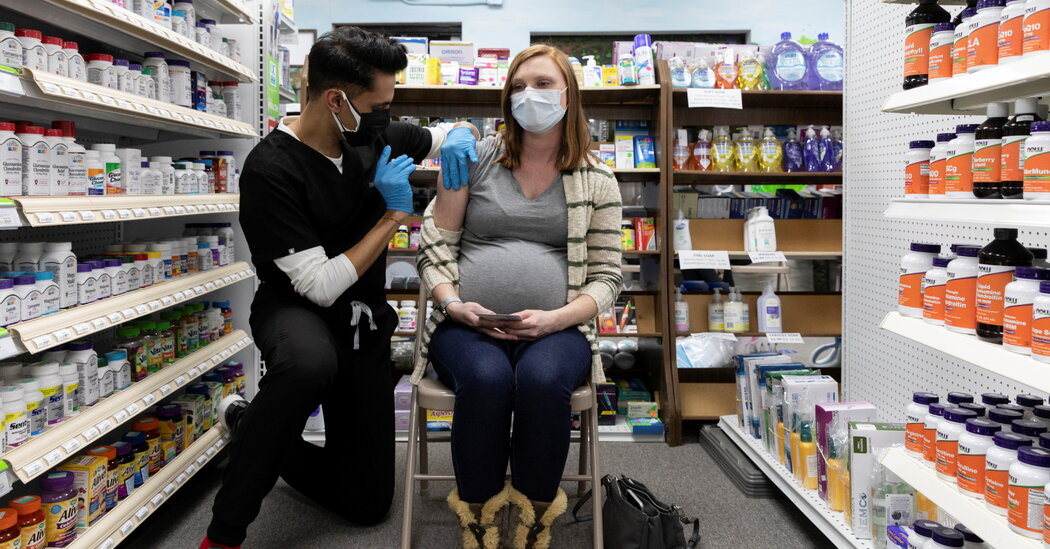
New research shows the shots do not increase risk of miscarriage, the agency said, but the risks of severe disease from a coronavirus infection while pregnant are serious.The Centers for Disease Control and Prevention on Wednesday strongly recommended that pregnant and breastfeeding women be vaccinated against Covid-19, pointing to new safety data that officials hope will sway the many who have resisted despite mounting evidence that the coronavirus can pose grave risks to their health and increase the chance of a preterm birth.The new guidance marked the first time the agency gave strong, unambiguous support to vaccination during pregnancy, bringing it in line with the advice of the American College of Obstetricians and Gynecologists and other medical specialty groups.It comes amid a surge in Covid infections across the nation, driven by the highly contagious Delta variant, and renewed efforts by the Biden administration to push up vaccination rates to stem the virus’s spread. The Food and Drug Administration is expected to authorize a third vaccine dose for certain immunocompromised people as soon as Thursday.“CDC encourages all pregnant people or people who are thinking about becoming pregnant and those breastfeeding to get vaccinated to protect themselves from Covid-19,” the C.D.C. director, Dr. Rochelle Walensky, said. “The vaccines are safe and effective, and it has never been more urgent to increase vaccinations.”Only 23 percent of pregnant women have received even one dose of Covid vaccine in the United States, and, in recent weeks, physicians have reported seeing more pregnant patients becoming infected, C.D.C. officials said.The C.D.C. said its new guidance applies not only to pregnant women but also to pregnant individuals who do not identify as female. (The surveillance data it reviewed, however, is based on participants who self reported as female.)Pregnancy is on the C.D.C.’s list of health conditions that increase the risk of severe disease for people infected with the coronavirus. They are significantly more likely than patients who are not pregnant to require intensive care, to be connected to a heart-lung bypass machine, and to require mechanical ventilation, and they face a 70 percent increased risk of dying.Contracting Covid can also increase the risk of the mother developing a dangerous condition called pre-eclampsia, and raise the risk of preterm births and stillbirths; severe Covid disease further elevates these risks, and has been linked to gestational diabetes and low birth weight. In rare cases, the virus can be transmitted to the fetus during gestation.Dr. Walensky pointed to new safety data that found no increased risk of miscarriage in a study of nearly 2,500 pregnant people who were immunized with one of the mRNA vaccines (the shots by Moderna or Pfizer and BioNTech) during the first 20 weeks of gestation. Earlier research found similarly reassuring data for those vaccinated later in pregnancy.Some women remained conflicted about the decision.“I’m highly considering getting vaccinated, I feel like it’s the more responsible thing to do,” said Raeshel Contreras, 29, who lives in the Bay Area. She is 28 weeks pregnant and worries that the vaccine could disrupt fetal development, though there is no scientific evidence of this. “I don’t know what I would do if I got vaccinated and something happened to the baby.”She has given herself two weeks to make a decision, she said, but the timing of the new C.D.C. directive, during a surge, concerned her.“Why was this not recommended before?” she asked. “Now there’s this new variant, and now the C.D.C. is jumping, but it wasn’t recommended, I’m like ‘Why is that?’”The data on birth outcomes is limited, considering the vaccine has only been available since December, but the small number of pregnancies of immunized obstetric patients followed to term have not identified any safety issues, according to Sascha R. Ellington, an epidemiologist who leads the emergency preparedness response team in the division of reproductive health at the C.D.C.A study of 827 people who gave birth after being vaccinated found the rates of adverse events and poor outcomes were similar to prepandemic rates, but called for more long-term follow-up of such pregnancies. The study was published in April in the New England Journal of Medicine..css-1xzcza9{list-style-type:disc;padding-inline-start:1em;}.css-3btd0c{font-family:nyt-franklin,helvetica,arial,sans-serif;font-size:1rem;line-height:1.375rem;color:#333;margin-bottom:0.78125rem;}@media (min-width:740px){.css-3btd0c{font-size:1.0625rem;line-height:1.5rem;margin-bottom:0.9375rem;}}.css-3btd0c strong{font-weight:600;}.css-3btd0c em{font-style:italic;}.css-w739ur{margin:0 auto 5px;font-family:nyt-franklin,helvetica,arial,sans-serif;font-weight:700;font-size:1.125rem;line-height:1.3125rem;color:#121212;}#NYT_BELOW_MAIN_CONTENT_REGION .css-w739ur{font-family:nyt-cheltenham,georgia,’times new roman’,times,serif;font-weight:700;font-size:1.375rem;line-height:1.625rem;}@media (min-width:740px){#NYT_BELOW_MAIN_CONTENT_REGION .css-w739ur{font-size:1.6875rem;line-height:1.875rem;}}@media (min-width:740px){.css-w739ur{font-size:1.25rem;line-height:1.4375rem;}}.css-9s9ecg{margin-bottom:15px;}.css-16ed7iq{width:100%;display:-webkit-box;display:-webkit-flex;display:-ms-flexbox;display:flex;-webkit-align-items:center;-webkit-box-align:center;-ms-flex-align:center;align-items:center;-webkit-box-pack:center;-webkit-justify-content:center;-ms-flex-pack:center;justify-content:center;padding:10px 0;background-color:white;}.css-pmm6ed{display:-webkit-box;display:-webkit-flex;display:-ms-flexbox;display:flex;-webkit-align-items:center;-webkit-box-align:center;-ms-flex-align:center;align-items:center;}.css-pmm6ed > :not(:first-child){margin-left:5px;}.css-5gimkt{font-family:nyt-franklin,helvetica,arial,sans-serif;font-size:0.8125rem;font-weight:700;-webkit-letter-spacing:0.03em;-moz-letter-spacing:0.03em;-ms-letter-spacing:0.03em;letter-spacing:0.03em;text-transform:uppercase;color:#333;}.css-5gimkt:after{content:’Collapse’;}.css-rdoyk0{-webkit-transition:all 0.5s ease;transition:all 0.5s ease;-webkit-transform:rotate(180deg);-ms-transform:rotate(180deg);transform:rotate(180deg);}.css-eb027h{max-height:5000px;-webkit-transition:max-height 0.5s ease;transition:max-height 0.5s ease;}.css-6mllg9{-webkit-transition:all 0.5s ease;transition:all 0.5s ease;position:relative;opacity:0;}.css-6mllg9:before{content:”;background-image:linear-gradient(180deg,transparent,#ffffff);background-image:-webkit-linear-gradient(270deg,rgba(255,255,255,0),#ffffff);height:80px;width:100%;position:absolute;bottom:0px;pointer-events:none;}.css-uf1ume{display:-webkit-box;display:-webkit-flex;display:-ms-flexbox;display:flex;-webkit-box-pack:justify;-webkit-justify-content:space-between;-ms-flex-pack:justify;justify-content:space-between;}.css-wxi1cx{display:-webkit-box;display:-webkit-flex;display:-ms-flexbox;display:flex;-webkit-flex-direction:column;-ms-flex-direction:column;flex-direction:column;-webkit-align-self:flex-end;-ms-flex-item-align:end;align-self:flex-end;}.css-12vbvwq{background-color:white;border:1px solid #e2e2e2;width:calc(100% – 40px);max-width:600px;margin:1.5rem auto 1.9rem;padding:15px;box-sizing:border-box;}@media (min-width:740px){.css-12vbvwq{padding:20px;width:100%;}}.css-12vbvwq:focus{outline:1px solid #e2e2e2;}#NYT_BELOW_MAIN_CONTENT_REGION .css-12vbvwq{border:none;padding:10px 0 0;border-top:2px solid #121212;}.css-12vbvwq[data-truncated] .css-rdoyk0{-webkit-transform:rotate(0deg);-ms-transform:rotate(0deg);transform:rotate(0deg);}.css-12vbvwq[data-truncated] .css-eb027h{max-height:300px;overflow:hidden;-webkit-transition:none;transition:none;}.css-12vbvwq[data-truncated] .css-5gimkt:after{content:’See more’;}.css-12vbvwq[data-truncated] .css-6mllg9{opacity:1;}.css-qjk116{margin:0 auto;overflow:hidden;}.css-qjk116 strong{font-weight:700;}.css-qjk116 em{font-style:italic;}.css-qjk116 a{color:#326891;-webkit-text-decoration:underline;text-decoration:underline;text-underline-offset:1px;-webkit-text-decoration-thickness:1px;text-decoration-thickness:1px;-webkit-text-decoration-color:#326891;text-decoration-color:#326891;}.css-qjk116 a:visited{color:#326891;-webkit-text-decoration-color:#326891;text-decoration-color:#326891;}.css-qjk116 a:hover{-webkit-text-decoration:none;text-decoration:none;}“At this time, the benefits of vaccination, and the known risks of Covid during pregnancy and the high rates of transmission right now, outweigh any theoretical risks of the vaccine,” Dr. Ellington said.“I think it’s pretty clear with everything we’ve learned that you do have more severe disease in pregnancy, and there is concerning data from other countries that pregnant women are being more severely affected with the Delta variant, compared with the earlier strains,” said Dr. Denise Jamieson, an obstetrician at Emory University in Atlanta.Still, many pregnant patients, reluctant to put any foreign substance in their bodies, want more long-term data and scientific evidence that the vaccines will not have an effect on the development of the fetus, said Dr. Adam Urato, a maternal-fetal medicine specialist in Framingham, Mass., who counsels patients about the vaccine.“The one question my patients ask me all the time is, ‘Are we absolutely sure that these vaccines won’t affect my baby?’” he said.Tista Banerjee, 32, who gave birth to twins at the end of June, said she chose not to be vaccinated until after her pregnancy.“During pregnancy they say that if you don’t have to take external medicines, don’t, and that you should be particular about what you put in your body,” Ms. Banerjee said. The vaccine was still quite new in April when she was considering vaccination, she said, and she was fortunate that she was able to work remotely and avoid unnecessary exposure to the virus.She was fully vaccinated in July, soon after she gave birth, she said.Pregnant women, often excluded from medical studies, were not included in the clinical trials of the Covid vaccines, and the World Health Organization has been ambiguous in its guidance about vaccines, both for breastfeeding women, for whom it says there is no safety data, and for pregnant women.In interim recommendations, issued in June, the global health organization said that it recommends vaccination “when the benefits of vaccination to the pregnant woman outweigh the potential risks.” The examples given were women who are at a high risk of being exposed to Covid, and those with chronic health conditions, like obesity or diabetes, that place them at higher risk for severe illness.Sabrina Imbler contributed reporting.

Read more →

Do some diabetes drugs reduce the risk of Alzheimer’s?

People taking certain drugs to lower blood sugar for type 2 diabetes had less amyloid in the brain, a biomarker of Alzheimer’s disease, when compared to both people with type 2 diabetes not taking the drugs and people without diabetes. The new study, published in the August 11, 2021, online issue of Neurology, the medical journal of the American Academy of Neurology, also found people taking these drugs, called dipeptidyl peptidase-4 inhibitors, showed slower cognitive decline than people in the other two groups.
In people with type 2 diabetes, the body no longer efficiently uses insulin to control blood sugar. Dipeptidyl peptidase-4 inhibitors, also known as gliptins, can be prescribed when other diabetes drugs do not work. They help control blood sugar when combined with diet and exercise.
“People with diabetes have been shown to have a higher risk of Alzheimer’s disease, possibly due to high blood sugar levels, which have been linked to the buildup of amyloid beta in the brain,” said study author Phil Hyu Lee, MD, PhD, of Yonsei University College of Medicine in Seoul, South Korea. “Not only did our study show that people taking dipeptidyl peptidase-4 inhibitors to lower blood sugar levels had less amyloid in their brains overall, it also showed lower levels in areas of the brain involved in Alzheimer’s disease.”
The study involved 282 people with an average age of 76 who were followed up to six years. All had been diagnosed with either pre-clinical, early or probable Alzheimer’s disease. Of the group, 70 people had diabetes and were being treated with dipeptidyl peptidase-4 inhibitors, 71 had diabetes but were not being treated with the drugs and 141 did not have diabetes. Those without diabetes were matched to those with diabetes for age, sex, and education levels. All had similar scores on cognitive tests at the start of the study.
Participants had brain scans to measure the amount of amyloid in the brain.
Researchers found that people with diabetes who took the drugs had lower average amounts of amyloid plaques in the brain compared to people with diabetes who did not take the drugs and compared to people who did not have diabetes.
All participants took a common thinking and memory test called the Mini-Mental State Exam (MMSE) on average, every 12 months for 2.5 years. Questions include asking a person to count backward from 100 by sevens or copying a picture on a piece of paper. Scores on the test range from zero to 30.
Researchers found that people with diabetes who took the drugs had an average annual decline of 0.87 points on their MMSE score, while people with diabetes who did not take the drugs had an average annual decline of 1.65 points. People without diabetes scored an average annual decline of 1.48 points.
When researchers adjusted for other factors that could affect test scores, they found that the scores of the people taking the drug declined by 0.77 points per year more slowly than the people who did not take the drug.
“Our results showing less amyloid in the brains of people taking these medications and less cognitive decline, when compared to people without diabetes raises the possibility that these medications may also be beneficial for people without diabetes who have thinking and memory problems,” said Lee. “More research is needed to demonstrate whether these drugs may have neuroprotective properties in all people.”
A limitation of the study was that data were not available to show the accumulation of amyloid in participants’ brains over time. This study does not show cause and effect. It only shows an association.
The study was supported by the Korean Healthy Industry Development Institute and the Korean Ministry of Health & Welfare.
Story Source:
Materials provided by American Academy of Neurology. Note: Content may be edited for style and length.

Read more →

17-year study of children associates poverty with smaller, slower-growing subcortical regions

Children in poverty are more likely to have cognitive and behavioral difficulties than their better-off peers. Plenty of past research has looked into the physical effects of childhood poverty, or documented mental health disparities between socioeconomic classes. But Deanna Barch, chair and professor in the Department of Psychological & Brain Sciences in Arts & Sciences at Washington University in St. Louis, and her colleague Joan Luby, MD, the Samuel and Mae S. Ludwig Professor of Child Psychiatry in the School of Medicine, wanted to look at a suite of outcomes to determine whether poverty continues to affect people as they enter adulthood.
And if so, how?
To answer these questions, Luby and Barch, who is also a professor of radiology? and the Gregory B. Couch Professor of Psychiatry in the School of Medicine, and colleagues collected data for 17 years from families who agreed to participate, including 216 preschoolers who were followed through early adulthood. During the course of the study, the young participants underwent brain imaging to help tease out the relationships among their socioeconomic status in preschool, and provided information on a host of outcomes — including cognitive, social and psychiatric — in early adulthood.
The results were published July 14 in the journal Biological Psychiatry: Cognitive Neuroscience and Neuroimaging.
“First and foremost: yes,” Barch said, “Early poverty sadly continues to predict worse outcomes in all of these domains.” That holds true even if a child’s socioeconomic status changes before adulthood.
The risks for these outcomes, the research showed, are mediated through brain development.

Read more →

Monoclonal antibody may prevent malaria

One dose of a new monoclonal antibody discovered and developed at the National Institutes of Health safely prevented malaria for up to nine months in people who were exposed to the malaria parasite. The small, carefully monitored clinical trial is the first to demonstrate that a monoclonal antibody can prevent malaria in people. The trial was sponsored and conducted by scientists from the Vaccine Research Center (VRC) of the National Institute of Allergy and Infectious Diseases (NIAID), part of NIH, and was funded by NIAID. The findings were published today in the New England Journal of Medicine.
“Malaria continues to be a major cause of illness and death in many regions of the world, especially in infants and young children; therefore, new tools are needed to prevent this deadly disease,” said NIAID Director Anthony S. Fauci, M.D. “The results reported today suggest that a single infusion of a monoclonal antibody can protect people from malaria for at least 9 months. Additional research is needed, however, to confirm and extend this finding.”
According to the World Health Organization, an estimated 229 million cases of malaria occurred worldwide in 2019, resulting in an estimated 409,000 deaths, mostly in children in sub-Saharan Africa. So far, no licensed or experimental malaria vaccines provide more than 50% protection from the disease over the course of a year or longer.
Malaria is caused by Plasmodium parasites, which are transmitted to people through the bite of an infected mosquito. The mosquito injects the parasites in a form called sporozoites into the skin and bloodstream. These travel to the liver, where they mature and multiply. Then the mature parasite spreads throughout the body via the bloodstream to cause illness. P. falciparum is the Plasmodium species most likely to result in severe malaria infections, which, if not promptly treated, may lead to death.
Laboratory and animal studies have demonstrated that antibodies can prevent malaria by neutralizing the sporozoites of P. falciparum in the skin and blood before they can infect liver cells. The NIAID trial tested whether a neutralizing monoclonal antibody called CIS43LS could safely provide a high level of protection from malaria in adults following careful, voluntary, laboratory-based exposure to infected mosquitos in the United States.
CIS43LS was derived from a naturally occurring neutralizing antibody called CIS43. Researchers led by Robert A. Seder, M.D., chief of the Cellular Immunology Section of the VRC Immunology Laboratory, isolated CIS43 from the blood of a volunteer who had received an investigational malaria vaccine. The scientists found that CIS43 binds to a unique site on a parasite surface protein that is important for facilitating malaria infection and is the same on all variants of P. falciparum sporozoites worldwide. The researchers subsequently modified this antibody to extend the amount of time it would remain in the bloodstream, creating CIS43LS.

Read more →

COVID vaccine booster randomized clinical trial in transplant patients proves third shot is very effective

Scientists with the Ajmera Transplant Centre at UHN have conducted a first-in-the-world randomized placebo-controlled trial of third dose COVID-19 booster vaccine for transplant patients that shows substantially improved protection.
“We knew from previous studies, that two doses were not enough to produce a good immune response against COVID-19 in transplant patients,” says Dr. Deepali Kumar, Director of Transplant Infectious Diseases, UHN and joint-Senior Author of the study published today in the New England Journal of Medicine.
“Based on our study, a third dose of COVID vaccine is definitely the best way to increase protection in transplant recipients.”
The study enrolled 120 transplant patients between May 25th and June 3rd. None of them had COVID previously and all of them had received two doses of the Moderna vaccine. Half of the participants received a third shot of the vaccine (at the 2-month mark after their second dose) and the other half received placebo.
The primary outcome was based on antibody level greater than 100 U/ml against the spike protein of the virus. In the placebo group — after three doses (where the third dose was placebo), the response rate was only 18% whereas in the Moderna three-dose group, the response rate was 55%.
“This is an important win for our patients because the results are quite conclusive,” says Dr. Atul Humar, Medical Director of the Ajmera Transplant Centre, UHN and the joint-Senior Author of the clinical trial. “The third dose was safe and well tolerated and should lead to a change in practice of giving third doses to this vulnerable population.”
Neutralizing antibodies and T-cell response

Read more →

People with stroke who walk 30 minutes per day may have 54% lower risk of early death

A new study shows that people who walk or garden at least three to four hours per week, or bike at least two to three hours per week, or the equivalent after having a stroke may have a 54% lower risk of death from any cause. The research is published in the August 11, 2021, online issue of Neurology, the medical journal of the American Academy of Neurology. The study found the most benefit for younger stroke survivors. When people under the age of 75 exercised at least that amount, their risk of death was reduced by 80%.
“A better understanding of the role of physical activity in the health of people who survive stroke is needed to design better exercise therapies and public health campaigns so we can help these individuals live longer,” said study author Raed A. Joundi, MD, DPhil, of the University of Calgary in Canada and a member of the American Academy of Neurology. “Our results are exciting, because just three to four hours a week of walking was associated with big reductions in mortality, and that may be attainable for many community members with prior stroke. In addition, we found people achieved even greater benefit with walking six to seven hours per week. These results might have implications for guidelines for stroke survivors in the future.”
The study looked at 895 people with an average age of 72 who had a prior stroke and 97,805 people with an average age of 63 who had never had a stroke.
Average weekly physical activity was evaluated from questions about activities such as walking, running, gardening, weight training, bicycling and swimming. For example, people were asked, “In the past three months, how many times did you walk for exercise? About how much time did you spend on each occasion?” Researchers used the frequency and duration of each type of physical activity to calculate the amount of exercise.
Researchers followed participants for an average of about four and a half years. After accounting for other factors that could affect risk of death, like age and smoking, researchers found that 25% of the people who had previous strokes died from any cause, compared to 6% of the people who had never had a stroke.
In the stroke group, 15% of the people who exercised at least the equivalent of three to four hours of walking each week died during follow up, compared to 33%, who did not exercise that minimum amount. In the group of people who had never had strokes, 4% of the people who exercised that amount died, compared to 8% who did not.
Researchers found the largest reduction in death rate among people who had a previous stroke but were under 75 years of age. In that group, 11% of those who exercised at least the minimum amount died, compared to 29% who did not. People with previous stroke who were under 75 years of age and met the minimum level of physical activity were about 80% less likely to die during study follow-up than those who did not. People over 75 years of age who exercised the minimum experienced less of a benefit, but were still 32% less likely to die.
“Our results suggest that getting a minimum amount of physical activity may reduce long-term mortality from any cause in stroke survivors,” Joundi said. “We should particularly emphasize this to stroke survivors who are younger in age, as they may gain the greatest health benefits from walking just thirty minutes each day.”
A limitation of the study is that people may not have accurately reported their amount of exercise.
Story Source:
Materials provided by American Academy of Neurology. Note: Content may be edited for style and length.

Read more →

Study shows differences in rapidly processing sensory feedback among people with autism spectrum disorder

Sensorimotor issues aren’t well understood in people with autism spectrum disorder, or ASD, yet they are important because they can be observed before social and communication indicators for the disorder, and they can predict worse functional outcomes. Such skills can affect everything from handwriting to zipping up a coat to language development, with implications for education and independence over a person’s lifetime.
In an effort to better characterize — and quantify — sensorimotor abilities and their impact on the development of people with ASD, a group of University of Kansas scientists has published research that compared the fine motor control and eye movements of more than 200 people from age 5 to 29. The study showed key differences in the ways that individuals with ASD processed or reacted to stimuli compared to those who were more neurotypical, with implications for future research across age range, intelligence and setting.
The research included a precision grip force test that prompted individuals to squeeze their thumb and forefinger together while reacting to objects on a monitor, and tests that measured eye movements in response to dots appearing on the screen. Data collected included reaction time, accuracy, variability and consistency.
The research was as significant for what it documented as well as how, compared to other studies that look at sensorimotor issues in isolation, said lead author Kathryn Unruh, assistant research professor at the Kansas Center for Autism Research and Treatment at the KU Life Span Institute. It included individuals across a broad age range, allowing the team to take a more fine-grained approach to examining sensorimotor behaviors and how they are affected across development.
“Precision grip and eye movement are supported by separate brain systems that utilize sensory and motor information in different ways,” she said. “By measuring features of motor behavior across both of these systems, we’re able to develop a more complete picture of what sensorimotor deficits look like in ASD and how those may vary across individuals.”
The study confirmed previous KU and other findings showing that ASD can affect the ability to rapidly process sensory feedback and translate changes in information into a precise motor movement. To do so, the study explored two systems that interact to produce sensorimotor behaviors: feedback and feed-forward systems. Feedback systems are involved in perceiving and using sensory information, like visual or tactile information, to produce motor movements that can be dynamically adjusted over time. Feed-forward systems are responsible for carrying out actions that are very rapid and happen too quickly for sensory feedback to be processed in the brain.
“For example, when you reach out to grab a cup of coffee, a feed-forward situation, you don’t think about it,” Unruh said. “The brain initiates this movement based on the many times you reached for the coffee before. Conversely, feedback systems are responsible for monitoring to see if any adjustments needed to be made to that plan — maybe it’s a little further away than you thought, or the mug is heavier than you expected. Both of these systems work together to make precise, accurate, and effective movements that allow you to pick up your coffee without spilling it.”
A primary finding from the study is that timing seems to matter when it comes to sensorimotor deficits in ASD. When motor adjustments needed to be made very rapidly, deficits were more pronounced in people with ASD, while when motor processes occurred over a relatively longer period of time, smaller differences were seen between ASD and age-matched neurotypical peers. One interpretation for these findings is that people with ASD may rely more heavily on slower feedback processes than neurotypical peers.
The results also indicated that precision motor deficits in ASD vary across ages and contexts. For example, the study found that precision grip movements at very low force, similar to the degree of movement that a person uses to perform daily living tasks such as holding a pencil or buttoning a shirt, were profoundly affected in very young children with ASD relative to their neurotypical peers. That data in turn suggests that measuring precision grip variability at a low force level could help reliably differentiate children with ASD from typically developing children, with potential for early intervention.
Additional observations in the study focused on differences in force across “handedness,” or from dominant hand to non-dominant hand. In typically developing individuals, scientists expect to see stronger force exerted from a dominant hand, but in people with ASD, they observed less difference between the dominant and non-dominant hand, which suggests reduced specialization between hemispheres of the brain. Reduced hemispheric specialization can impact development of other key cognitive and behavioral abilities associated with ASD, such as language.
The research reflects that scientists need to look across multiple systems to understand sensorimotor issues in people with ASD, Unruh said.
The research was published in the journal Molecular Autism and was co-written by Walker McKinney, Erin Bojanek, Kandace Fleming and Matt Mosconi, all from KU, and John Sweeney of the University of Cincinnati.

Read more →

Treating the ‘root’ cause of baldness with a dissolvable microneedle patch

Although some people say that baldness is the “new sexy,” for those losing their hair, it can be distressing. An array of over-the-counter remedies are available, but most of them don’t focus on the primary causes: oxidative stress and insufficient circulation. Now, researchers reporting in ACS Nano have designed a preliminary microneedle patch containing cerium nanoparticles to combat both problems, regrowing hair in a mouse model faster than a leading treatment.
The most common hair loss condition is called androgenic alopecia, also known as male- or female- pattern baldness. Hair loss is permanent for people with the condition because there aren’t enough blood vessels surrounding the follicles to deliver nutrients, cytokines and other essential molecules. In addition, an accumulation of reactive oxygen species in the scalp can trigger the untimely death of the cells that form and grow new hair. Previously, Fangyuan Li, Jianqing Gao and colleagues determined that cerium-containing nanoparticles can mimic enzymes that remove excess reactive oxygen species, which reduced oxidative stress in liver injuries, wounds and Alzheimer’s disease. However, these nanoparticles cannot cross the outermost layer of skin. So, the researchers wanted to design a minimally invasive way to deliver cerium-containing nanoparticles near hair roots deep under the skin to promote hair regrowth.
As a first step, the researchers coated cerium nanoparticles with a biodegradable polyethylene glycol-lipid compound. Then they made the dissolvable microneedle patch by pouring a mixture of hyaluronic acid — a substance that is naturally abundant in human skin — and cerium-containing nanoparticles into a mold. The team tested control patches and the cerium-containing ones on male mice with bald spots formed by a hair removal cream. Both applications stimulated the formation of new blood vessels around the mice’s hair follicles. However, those treated with the nanoparticle patch showed faster signs of hair undergoing a transition in the root, such as earlier skin pigmentation and higher levels of a compound found only at the onset of new hair development. These mice also had fewer oxidative stress compounds in their skin. Finally, the researchers found that the cerium-containing microneedle patches resulted in faster mouse hair regrowth with similar coverage, density and diameter compared with a leading topical treatment and could be applied less frequently. Microneedle patches that introduce cerium nanoparticles into the skin are a promising strategy to reverse balding for androgenetic alopecia patients, the researchers say.
The authors acknowledge funding from the Ten-thousand Talents Program of Zhejiang Province, National Key R&D Program of China, National Natural Science Foundation of China, One Belt and One Road International Cooperation Project from the Key Research and Development Program of Zhejiang Province, Fundamental Research Funds for the Central Universities and Zhejiang Provincial Natural Science Foundation of China.
Story Source:
Materials provided by American Chemical Society. Note: Content may be edited for style and length.

Read more →

Understanding lung damage in patients with COVID-19

A severe course of COVID-19 disease is not caused by the direct destruction of the lung due to the multiplication of the virus. As researchers from Berlin report in the journal Nature Communications, inflammatory processes and the endothelium of the lung are involved.
Researchers from around the globe have spent the past 18 months trying to understand COVID-19, the disease caused by the SARS-CoV-2 coronavirus. Capable of causing acute lung failure, the disease is known to wreak havoc on both the lungs and other organs and organ systems. Unfortunately, drug-based treatment options remain limited. One of the difficulties has been the fact that COVID-19 is caused by an errant and sometimes exaggerated immune response. In order to identify therapeutic targets, researchers need to gain a detailed understanding of the underlying mechanisms, both in terms of how they work and where in the body they occur. Patient-centered approaches are rather limited in their scope. This particularly applies to the study of disease mechanisms during the early phase of infection. Biomaterials, which are needed for this type of research, can usually be harvested only after a patient has been admitted to hospital. Furthermore, it is virtually impossible to obtain lung tissue samples from patients with mild or moderate disease and pneumonia, as the harvesting procedure would place these patients at too great a risk. What is left, then, is the analysis of tissues harvested from COVID-19 patients after their death.
Under the leadership of Prof. Dr. Martin Witzenrath, Deputy Head of Charité’s Department of Infectious Diseases and Respiratory Medicine, the researchers used available patient samples to obtain valuable information on both disease mechanisms and disease progression. The researchers searched for a suitable model which might enable them to also study compartments of the lungs not easily accessible in patients but necessary in order to study the early phase of the disease. Hamster models have proven extremely useful, both as part of international research efforts into COVID-19 and research pertaining to SARS-CoV-1. “We wanted to know whether we could use these models to develop new treatment options and tried to replicate findings from patient samples. We were remarkably successful in this regard,” says Prof. Witzenrath, the study’s co-last author. “We were primarily interested in the lung’s endothelial cells, which line the pulmonary blood vessels and form a barrier there. In severe COVID-19 cases, this barrier becomes dysfunctional, a development which eventually results in lung failure.”
Syrian hamster is most important animal model for COVID
Working alongside researchers from the MDC’s Berlin Institute for Medical Systems Biology (BIMSB), virologists and veterinary surgeons from Freie Universität Berlin, as well as data experts from the Berlin Institute of Health (BIH), the researchers were able to describe the detailed characteristics of SARS-CoV-2 infection in an animal model. They subsequently corroborated their findings using data sets pertaining to patient samples. The purpose of this analysis is to make what is currently the most important, non-transgenic animal model for the study of COVID-19 available for research aimed at developing future treatments. Hamsters contract the same virus variants as humans. They also develop similar disease symptoms, and severe disease will result in damage to the lungs. Symptoms and progression of COVID-19, however, vary between different species of hamster. While symptoms usually remain moderate in Syrian hamsters, Roborovski hamsters will develop severe disease.
The reasons for this and the processes which take place in the cells of the lungs were demonstrated as part of experiments conducted at the BIMSB. These included single-cell analyses during which individual cells obtained from a particular sample were loaded onto a chip, where they were first barcoded and then encapsulated into minute droplets of aqueous fluid. Once prepared, single cells can undergo RNA sequencing, a process used to establish the sequence of genetic building blocks which a cell has just read. Thanks to barcoding, this RNA was later identifiable as originating from a particular cell, enabling the researchers to determine cellular function at the single-cell level with a high degree of accuracy. “We were able to observe how certain cells involved in lung immunity — namely monocytes and monocyte-derived macrophages — ingest the virus and subsequently show a very pronounced response. They send out biological messengers which then elicit a very strong inflammatory response. In our model, this is quickly brought under control by T cells, another type of immune cell which is dispatched for this very purpose. In severe COVID-19, however, this does not happen,” explains the study’s co-first author Dr. Geraldine Nouailles, a researcher at Charité’s Department of Infectious Diseases and Respiratory Medicine. She adds: “A fast and efficient T cell response is crucial to successful recovery from COVID-19.”
While COVID-19 prompts the immune system to go into overdrive, SARS-CoV-2 initially displays a low rate of replication in the lungs and respiratory tract. “The destruction of lung tissue seen in severe COVID-19 is not a direct result of viral propagation inside cells, but of the strong inflammatory response,” explains fellow co-first author Dr. Emanuel Wyler, a researcher at the MDC. He adds: “This also appears to apply to the cells of the vasculature, in particular the lung’s endothelial cells. They show a very strong response to the virus but are neither infected by it nor destroyed in the process.” If the disease is severe, blood vessels can become obstructed and vessel walls unstable, resulting in acute lung failure. It does not appear likely, however, that this blood vessel damage also plays a part in moderate COVID-19. “That COVID-19 activates the endothelium — a type of protective barrier lining blood vessels which, amongst other things, also controls a range of processes in the lung’s micro blood vessels — did not come as a surprise. What did come as a surprise, however, was that these cells are also the active driver of inflammation,” says Prof. Witzenrath. “Given their key role in disease progression, these cells could be targeted using one of two therapeutic strategies. One is to use substances which are capable of sealing the endothelial barrier. The other is to use substances which calm the endothelium. One of these is already the target of research conducted in our Collaborative Research Center SFB-TR84, where we were able to show that it is effective in pneumonia and ventilated patients.” Other anti-inflammatory drugs currently being tested as treatments for COVID-19 target the immune response itself. They are also effective against monocytes and macrophages and temper their activity.
Now that their model has been validated, the researchers hope to use it to help develop safe and effective treatments for patients with COVID-19. The aim is to reduce the number of patients who develop severe lung injury. The multidisciplinary team of researchers are currently analyzing the responses of different cell types observed in Roborovski dwarf hamsters. The researchers want to establish why the infection produces severe disease in these animals, and why it is not self-limiting as is the case in Syrian hamsters. “We hope this will guide us to a possible explanation for why some people develop severe COVID-19 but others do not,” says Dr. Nouailles. As a first step, the researchers will need to decipher the dwarf hamster’s genome. The fact that hamsters have traditionally been regarded as somewhat exotic by the animal research community explains the existence of numerous knowledge gaps. “Information from our current study has enabled us to close some of these gaps. This represents major progress, including in terms of a more conscious and targeted approach to the use of animals in medical research,” explains co-last author Dr. Jakob Trimpert, a virologist and veterinary surgeon from Freie Universität Berlin. In addition to developing the COVID-19 hamster models, Dr. Trimpert and his team also worked with Freie Universität Berlin’s Department of Veterinary Pathology. Performing the necessary histopathological analyses (microscopic examination of infected lung tissue) under the leadership of Prof. Dr. Achim Gruber, the team’s work represents a crucial contribution to the study’s published findings.
About this study
Funding for this study was provided by: the German Research Foundation (DFG) — via the SFB-TR84 Collaborative Research Center; the Federal Ministry of Education and Research (BMBF) — via the CAPSyS-COVID, PROVID, and NAPKON (National Pandemic Cohort Network of the Network University Medicine/ Nationales Forschungsnetzwerk der Universitätsmedizin zu Covid-19, NUM) projects; and the Berlin Institute of Health (BIH) at Charité — via the CM-COVID project.

Read more →