Genetic histories and social organization in Neolithic and Bronze Age Croatia

Present-day Croatia was an important crossroads for migrating peoples along the Danubian corridor and the Adriatic coast, linking east and west. “While this region is important for understanding population and cultural transitions in Europe, limited availability of human remains means that in-depth knowledge about the genetic ancestry and social complexity of prehistoric populations here remains sparse,” says first author Suzanne Freilich, a researcher at the Max Planck Institute for the Science of Human History and the University of Vienna.
To this aim, an international team of researchers set out to fill the gap. They studied two archaeological sites in eastern Croatia — one containing predominantly Middle Neolithic burials from within the settlement site, the other a Middle Bronze Age necropolis containing cremations and inhumations — and sequenced whole genomes of 28 individuals from these two sites. The researchers’ goal was to understand both the genetic ancestry as well as social organisation within each community — in particular, to study local residency patterns, kinship relations and to learn more about the varied burial rites observed.
Middle Neolithic settlement at Popova zemlja
Dated to around 4,700-4,300 BCE the Middle Neolithic settlement at Beli-Manastir Popova zemlja belongs to the Sopot culture. Many children, especially girls, were buried here, in particular along the walls of pit houses. “One question was whether individuals buried in the same buildings were biologically related to each other,” says Suzanne Freilich.
“We found that individuals with different burial rites did not differ in their genetic ancestry, which was similar to Early Neolithic people. We also found a high degree of haplotype diversity and, despite the size of the site, no very closely related individuals,” Freilich adds. This suggests that this community was part of a large, mainly exogamous population where people marry outside their kin group. Interestingly, however, the researchers also identified a few cases of endogamous mating practices, including two individuals who would have been the children of first cousins or equivalent, something rarely found in the ancient DNA record.
Middle Bronze Age necropolis at Jagodnjak-Krčevine
The second site the researchers studied was the Middle Bronze Age necropolis of Jagodnjak-Krčevine that belongs to the Transdanubian Encrusted Pottery Culture and dates to around 1,800-1,600 BCE. “This site contains burials that are broadly contemporaneous with some individuals from the Dalmatian coast, and we wanted to find out whether individuals from these different ecoregions carried similar ancestry,” says Stephan Schiffels.
The researchers found that the people from Jagodnjak actually carried very distinct ancestry due to the presence of significantly more western European hunter-gatherer-related ancestry. This ancestry profile is present in a small number of other studied genomes from further north in the Carpathian Basin. These new genetic results support archaeological evidence that suggests a shared population history for these groups as well as the presence of trade and exchange networks.
“We also found that all male individuals at the site had identical Y chromosome haplotypes,” says Freilich. “We identified two male first degree relatives, second degree and more distantly related males, while the one woman in our sample was unrelated. This points to a patrilocal social organisation where women leave their own home to join their husband’s home.” Contrary to the Middle Neolithic site at Popova zemlja, biological kinship was a factor for selection to be buried at this site. In addition the authors found evidence of rich infant graves that suggests they likely inherited their status or wealth from their families.
Filling the gap in the archaeogenetic record
This study helps to fill the gap in the archaeogenetic record for this region, characterising the diverse genetic ancestries and social organisations that were present in Neolithic and Bronze Age eastern Croatia. It highlights the heterogeneous population histories of broadly contemporaneous coastal and inland Bronze Age groups, and connections with communities further north in the Carpathian Basin. Furthermore, it sheds light on the subject of Neolithic intramural burials — burials within a settlement — that has been debated among archaeologists and anthropologists for some time. The authors show that at the site of Popova zemlja, this burial rite was not associated with biological kinship, but more likely represented age and sex selection related to Neolithic community belief systems.
So far, few archaeogenetic studies have focused on within-community patterns of genetic diversity and social organisation. “While large-scale studies are invaluable in characterising patterns of genetic diversity on a broader temporal and spatial scale, more regional and single-site studies, such as this one, are necessary to gain insights into community and social organisation which vary regionally and even within a site,” says Freilich. “By looking into the past with a narrower lens, archaeogenetics can shed more light on how communities and families were organised.”

Read more →

New evidence that fetal membranes can repair themselves after injury

Scientists from Queen Mary University of London and UCL have shown that fetal membranes are able to heal after injury in a new study published today in Scientific Reports.
The integrity of the fetal membranes that surround the baby in the womb during pregnancy is vital for normal development. But fetal membranes can become damaged as a result of infection, bleeding, or after fetal surgery and even diagnostic tests during pregnancy, such as amniocentesis, which require doctors to make a hole with a needle in the fetal membrane sac.
Currently there are no clinical approaches available to repair or improve healing in the fetal membranes, and until now it was unclear if small holes in the membranes were able to heal themselves.
The international research team, which also includes scientists and clinicians from Nanyang Technological University, Singapore and University Hospitals Leuven, Belgium, created small defects using a needle in donated human fetal membrane tissue, to mimic damage caused during fetal surgery. A few days after injury, the researchers discovered a population of cells called myofibroblasts (MFs), which play an important role in wound healing, and found that these cells crawled towards the edges of the wound and into the defect site. This cell population produced collagen and started to pull the edges of the wound, contracting the tissues together and repairing the wound.
The findings follow on from the team’s previous work that highlighted the importance of a protein called Connexin 43 (Cx43) in the process of wound healing and repair. Whilst in this study, the researchers show that Cx43 was expressed by two cell populations, amniotic mesenchymal cells (AMCs) and MFs, the localisation and levels of Cx43 measured were different. They also found that overexpression of this protein affected the ability of cells to migrate into the defect site and close the wound.
Dr Tina Chowdhury, Senior Lecturer in Regenerative Medicine at Queen Mary, said: “We have always thought that small diameter wounds created in human fetal membranes rarely heal by themselves but here we show that the tissues have the potential to do this. We found that Cx43 has different effects on cell populations found in the membranes and promotes transformation of AMCs into MFs, triggering them to move, repair and heal defects in the fetal membranes.”
The premature rupture of fetal membranes, known as preterm prelabour rupture of the membranes (PPROM), is a major cause of preterm birth accounting for around 40 per cent of early infant death. Therefore, the successful repair of fetal membranes could help reduce the risk of birth complications.
Anna David, UCLH Consultant and Professor in Obstetrics and Maternal Fetal Medicine and Director at the UCL Elizabeth Garrett Anderson Institute for Women’s Health and a co-author of the study, said: “Finding that the fetal membranes have this potential to heal is a huge step towards developing treatments for women with PPROM. It holds out hope that we may be able to delay or even prevent preterm birth, which will significantly improve baby outcomes.”
This research was funded by Great Ormond Street Hospital Children’s Charity (17QMU01), Rosetrees Trust (M808), KU Leuven University Fund, Little Heartbeats and the Prenatal Therapy Fund, University College London Hospital Charity.
Story Source:
Materials provided by Queen Mary University of London. Note: Content may be edited for style and length.

Read more →

Will You Have to Pay for a Coronavirus Test? Here's How to Avoid a Surprise Bill

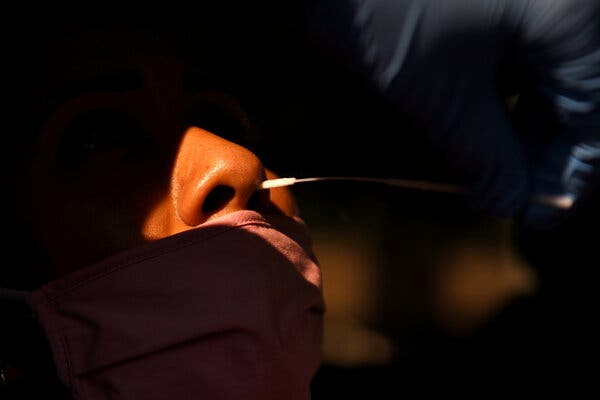
Get tested at a public facility. Question what services are being provided. And know your rights under federal law.Having a covid test in Houston this week.Callaghan O’Hare/ReutersThis is an updated version of an article first published on Nov. 13, 2020.The Delta-variant-driven wave of coronavirus infections is driving a new surge in testing — and that could mean more surprise medical bills.Congress wrote rules last spring to make most coronavirus testing free for all Americans. But patients, with or without insurance, have found holes in those new coverage programs.Federal law does not, for example, require insurers to cover the routine testing that a growing number of workplaces and schools are mandating. Some doctors and hospitals have tacked unexpected fees onto coronavirus testing bills, leaving patients with surprise charges ranging from a few dollars to over $1,000.In the past year, I’ve collected patients’ bills related to coronavirus. As part of that project, I’ve read through more than 100 patient stories about coronavirus tests. Many patients are happy to report no charge at all, while others have been billed large unexpected fees or denied claims related to coronavirus tests.[Have a bill you want to share? Submit it here.]The surprise bills have hit uninsured Americans as well as those with robust coverage. The health data firm Castlight estimates that 2.4 percent of coronavirus test bills leave some share of the charge to consumers, which means there could be millions of patients facing fees they did not expect.These are some simple steps you can take to lower your chances of becoming one of them.If you can, get tested at a public siteMany states, counties and cities/towns now have public testing facilities. Very few patients have reported surprise medical bills from those testing sites (although it’s not impossible). You can typically use your state health department website to find public testing options.If a public test site isn’t an option where you live, you might consider your primary care doctor or a federally qualified health clinic. The largest surprise coronavirus test bills I’ve reviewed tend to come from patients who are tested in hospitals and free-standing emergency rooms. Those places often bill patients for something called a facility fee, which is the charge for stepping into the room and seeking service.Patients are finding that these fees can pop up even when they don’t actually set foot in the facility. Multiple patients at one Texas emergency room had $1,684 facility fees tacked onto their drive-through coronavirus tests. A patient in New York faced a $1,394 charge for her test at a tent outside a hospital. The majority of the bill was the facility fee. The investigative news site ProPublica has reported on how facility fees can sometimes cost as much as 10 times the coronavirus test itself.If you get your test at a primary care provider, or at a public test site, you shouldn’t have to worry about that type of billing. They typically do not charge facility fees for coronavirus tests or any other types of care.Ask your provider what they’ll bill you forWhen patients receive a surprise medical bill related to a coronavirus test, often the charges they face are not for the test itself, but instead for other services that the patient may not have known about.Some of these make sense: Many bills for coronavirus tests have fees for the doctor visit that went along with it. Others make less sense, like the bills that include screenings for sexually transmitted diseases. Those extra fees appear to be a bit more common in emergency rooms, or when health providers send their samples to outside laboratories. But they can happen at public testing sites, too: One Connecticut doctor regularly tested patients for dozens of illnesses at a town drive-through. The patients thought they were simply getting coronavirus tests.To avoid those extra charges, ask your provider what diseases they will screen for. It can be as simple as saying: “I understand I’m having a coronavirus test. Are there any other services you’ll bill me for?” Having a better understanding of that up front can save you a headache later, and you can make an informed decision about what care is actually needed. If your providers can’t tell you what they’ll bill for, that may be a signal you want to seek care elsewhere.Uninsured? Ask your doctor to bill the government, not youUninsured patients have faced coronavirus bills upward of $1,000, according to billing documents reviewed by The New York Times.That type of billing is legal: Health care providers are not required to provide free coronavirus tests to Americans who lack health insurance. But they do not necessarily have to bill patients directly. The federal government has set up a provider relief fund: Health providers can seek reimbursement for coronavirus testing and treatment provided to those without coverage. Once again, it pays to ask ahead of time how providers handle uninsured patients and whether they submit to the fund. Unfortunately, they are not required to do so — and could continue to pursue the debt.You should also be aware that 17 states have authorized their state Medicaid plans to cover coronavirus test costs for uninsured Americans. This means your state government can pay the bill instead of you. You can find out if you live in one of these states here.To challenge a surprise bill, know your rights under federal lawNew federal laws regulate how health providers and insurers can bill patients for coronavirus tests. Understanding how they work can help you push back on charges that may not be allowed.The new laws state that health insurers must cover coronavirus tests ordered by a doctor without any cost to the patients. This means that standard deductibles and co-payments you’d face for other services do not apply.There is one important exception in those laws: Insurers do not have to cover routine coronavirus testing ordered by a school or workplace. If your job mandates that you get tested each week, for example, it is up to your health plan whether it wants to pay those bills.For that type of testing, you’ll want to be especially careful about where you get tested, and ask more questions about the fees you may have to pay. Some employers are already directing their workers to be tested at public sites, in part to reduce the possibility of surprise charges.For the coronavirus tests that insurers do have to cover, there is still a bit of a gray area. The law requires insurers to cover any other services that are necessary to get the coronavirus test, but doesn’t define what makes the cut. Most experts agree that a doctor visit fee is a pretty clear example of a service that ought to qualify, and that patients facing those types of bills ought to appeal to their insurer for coverage. Other services, like a flu test or even an X-ray conducted alongside a coronavirus test, present a murkier situation. If you’re facing fees like those, you might want to enlist your doctor to tell the insurer why the additional care was needed.One last thing to know about the federal laws is that they require insurers to fully cover out-of-network coronavirus tests. This can be especially important for patients who go to an in-network doctor but unknowingly have their sample sent to an out-of-network laboratory, a situation I’ve seen many times. Your health plan’s typical rules for out-of-network care should not apply to the coronavirus test. They can, however, be applied to other parts of the test experience (the doctor visit fee, for example), so it is safer to stick with in-network providers whenever possible.Receive an unexpected bill? Medical codes could be the culpritOne other issue to look for is what billing codes your doctor used for the test visit. Many of the surprise bills I’ve reviewed involve a doctor charging a visit fee, then sending the test to an outside laboratory that submits its own claim. The health plan might apply a co-pay to the doctor’s visit because it’s not clearly linked in billing records to the coronavirus test. In this case, you may need to work with your health provider to get your visit recoded to show a coronavirus test occurred.Tell us what happened to you. It helps our journalism.Nearly everything I know about coronavirus test billing comes from reading the bills that hundreds of Times readers have sent describing their experiences. If you receive a bill related to coronavirus testing and treatment, we ask that you take a moment to submit it here. It will help me continue to report on the types of fees patients face, and can help identify areas of the country where patients are facing unusually high fees.

Read more →

Put Your Smartphone to Work for Your Return to the Office

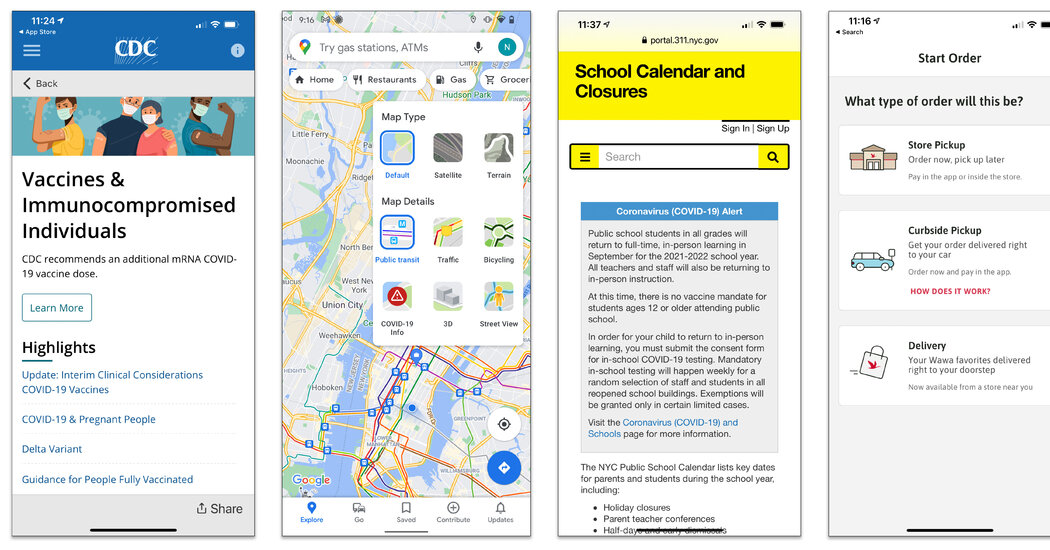
Contactless bagel orders and finding new routes can help you keep social distance in your commute. And don’t forget your vaccination card.As some people head back to the office or classroom after more than 18 months of Covid-19 disruption, maintaining social distance remains a concern, especially with the highly contagious Delta variant spreading nationwide. Here are a few simple suggestions for using your smartphone to help stay informed and safe if you’re returning to the office or school.Stay InformedRegular checks of school, municipal and state websites can keep you up-to-date about mask mandates, vaccine requirements, quarantines and other Covid-related news. Get your facts faster by making bookmarks for these sites that you can tap open right from your home screen.From left, Google’s Android and Apple’s iOS systems allow you to save a webpage bookmark as an icon on your phone’s hone screen for quick access.Google; AppleOpen the page you want to bookmark. Steps will vary based on browser and phone, but if you’re using the Chrome browser on an Android device, tap the More menu in the upper-right corner and choose “Add to Home Screen.” On an iOS device using the Safari browser, tap the Action menu icon at the bottom-center of the screen and choose “Add to Home Screen.”Many states have their own Covid-tracking apps to keep local residents informed.Google; COVID Alert NYAlong with its informative website, the Centers for Disease Control and Prevention has its own mobile app. For local virus news, check your app store, as many states have their own apps for tracking outbreaks, providing personal exposure notifications, supplying vaccine information and offering general news alerts.Carry Your CardCertain institutions, venues and employers now have a vaccine requirement, and many New York City businesses require proof and will enforce it next month. While your paper vaccination card serves as proof, you can keep it safe at home and go digital. Some states have electronic vaccination passports you can store in your phone’s digital wallet and display when asked; New York’s Excelsior Pass program is one example.New York state has its digital Excelsior Pass vaccine passport, left, which can also be printed. Built-in tools like Android’s Locked Folder option, right, add a security layer to vaccine-card photos.Apple; GooglePhotos of your paper vaccination card can also serve as a digital backup, and some employers may accept the images as proof of inoculation, especially in apps like NYC Covid Safe. The card contains personal information, though, so keep your phone locked when not in use. Apple’s iOS software settings offers a passcode, Face ID or Touch ID to secure the device.Android users can also set up a screen lock in the system settings. In addition to PIN or passcode, some phone models (including those from Google and Samsung) use biometric keys, like facial recognition. For additional protection, Android users can store vaccine-card pictures in a locked folder within Google Photos — just open the card image, tap the More menu and choose “Move to Locked Folder.”Modify Your CommuteA socially distanced commute is more of a challenge for people who don’t drive and walk or use mass transit to get around. Last year, both Apple and Google added coronavirus-related business information to their maps apps, and a more recent Google Maps update now shows busy areas so you can better avoid crowds.From left: Google Maps for Android and iOS shows you when business might be busier at the moment. The app, along with Apple Maps and Citymapper, let you plot multiple ways and means to get to your destination.Google; Apple; CitymapperIf you want to ride off-peak trains or stroll the less-traveled path, Apple Maps and Google Maps both offer real-time transit schedules and optional walking routes. Specialized apps like Citymapper cover multiple forms of transportation including bike share and ferry. And localized transit apps (like the New York City’s MYmta for Android and iOS) can also be useful for service status and updates.Google’s “Heads Up” feature for the Pixel and other Android phones reminds you to pay attention to your surroundings when you’re walking.GoogleAnd if you’re walking to work with your face in your Android phone, the “Heads Up” notifications on some models remind you to watch where you’re going. Enable the feature in the Digital Wellbeing settings.Fuel UpWhen a drive-through window isn’t an option for picking up your breakfast or lunch from a distance, there are other ways to minimize your exposure, like phoning in a pickup order to your local diner or bodega. Loyalty apps from convenience stores like 7-Eleven and Wawa, or restaurants (McDonald’s, Panera Bread and Starbucks to name a few) offer online ordering and mobile checkout to zip things along with minimal contact.Many convenience stores and coffee shops offer their own apps for mobile ordering and payment so you can minimize time and contact in the shop.7Eleven; Wawa; StarbucksAnd don’t forget contactless payment systems like Apple Pay, Google Pay or Samsung Pay to keep you from fumbling with physical cash and speed you through at the register or subway turnstile. (A contactless credit card from your financial institution is another option and lets you pay by tapping the card on the checkout reader.)Video to GoNow that you’ve actually made it out of the house, consider a couple more apps to help deal with the transition. The mobile version of your company’s preferred videoconference app lets you ditch a conference room and take a meeting anywhere, even without your computer.The mobile versions of your company’s preferred video-conference app gives you the freedom to join a meeting wherever you happen to be — even stuck in traffic or taking an outdoor break.Google; ZoomAfter more than a year of working remotely, it may be extra hard to leave your fuzzy home-office mate as you return to the world. If the separation makes you anxious, consider an inexpensive streaming web camera that lets you use your phone to check on your pet in real time. The Wirecutter site has recommendations for camera options to keep you virtually in the house until you get back home.

Read more →

How to Avoid a Surprise Bill for Your Coronavirus Test

Get tested at a public facility. Question what services are being provided. And know your rights under federal law.Having a covid test in Houston this week.Callaghan O’Hare/ReutersThis is an updated version of an article first published on Nov. 13, 2020.The Delta-variant-driven wave of coronavirus infections is driving a new surge in testing — and that could mean more surprise medical bills.Congress wrote rules last spring to make most coronavirus testing free for all Americans. But patients, with or without insurance, have found holes in those new coverage programs.Federal law does not, for example, require insurers to cover the routine testing that a growing number of workplaces and schools are mandating. Some doctors and hospitals have tacked unexpected fees onto coronavirus testing bills, leaving patients with surprise charges ranging from a few dollars to over $1,000.In the past year, I’ve collected patients’ bills related to coronavirus. As part of that project, I’ve read through more than 100 patient stories about coronavirus tests. Many patients are happy to report no charge at all, while others have been billed large unexpected fees or denied claims related to coronavirus tests.[Have a bill you want to share? Submit it here.]The surprise bills have hit uninsured Americans as well as those with robust coverage. The health data firm Castlight estimates that 2.4 percent of coronavirus test bills leave some share of the charge to consumers, which means there could be millions of patients facing fees they did not expect.These are some simple steps you can take to lower your chances of becoming one of them.If you can, get tested at a public siteMany states, counties and cities/towns now have public testing facilities. Very few patients have reported surprise medical bills from those testing sites (although it’s not impossible). You can typically use your state health department website to find public testing options.If a public test site isn’t an option where you live, you might consider your primary care doctor or a federally qualified health clinic. The largest surprise coronavirus test bills I’ve reviewed tend to come from patients who are tested in hospitals and free-standing emergency rooms. Those places often bill patients for something called a facility fee, which is the charge for stepping into the room and seeking service.Patients are finding that these fees can pop up even when they don’t actually set foot in the facility. Multiple patients at one Texas emergency room had $1,684 facility fees tacked onto their drive-through coronavirus tests. A patient in New York faced a $1,394 charge for her test at a tent outside a hospital. The majority of the bill was the facility fee. The investigative news site ProPublica has reported on how facility fees can sometimes cost as much as 10 times the coronavirus test itself.If you get your test at a primary care provider, or at a public test site, you shouldn’t have to worry about that type of billing. They typically do not charge facility fees for coronavirus tests or any other types of care.Ask your provider what they’ll bill you forWhen patients receive a surprise medical bill related to a coronavirus test, often the charges they face are not for the test itself, but instead for other services that the patient may not have known about.Some of these make sense: Many bills for coronavirus tests have fees for the doctor visit that went along with it. Others make less sense, like the bills that include screenings for sexually transmitted diseases. Those extra fees appear to be a bit more common in emergency rooms, or when health providers send their samples to outside laboratories. But they can happen at public testing sites, too: One Connecticut doctor regularly tested patients for dozens of illnesses at a town drive-through. The patients thought they were simply getting coronavirus tests.To avoid those extra charges, ask your provider what diseases they will screen for. It can be as simple as saying: “I understand I’m having a coronavirus test. Are there any other services you’ll bill me for?” Having a better understanding of that up front can save you a headache later, and you can make an informed decision about what care is actually needed. If your providers can’t tell you what they’ll bill for, that may be a signal you want to seek care elsewhere.Uninsured? Ask your doctor to bill the government, not youUninsured patients have faced coronavirus bills upward of $1,000, according to billing documents reviewed by The New York Times.That type of billing is legal: Health care providers are not required to provide free coronavirus tests to Americans who lack health insurance. But they do not necessarily have to bill patients directly. The federal government has set up a provider relief fund: Health providers can seek reimbursement for coronavirus testing and treatment provided to those without coverage. Once again, it pays to ask ahead of time how providers handle uninsured patients and whether they submit to the fund. Unfortunately, they are not required to do so — and could continue to pursue the debt.You should also be aware that 17 states have authorized their state Medicaid plans to cover coronavirus test costs for uninsured Americans. This means your state government can pay the bill instead of you. You can find out if you live in one of these states here.To challenge a surprise bill, know your rights under federal lawNew federal laws regulate how health providers and insurers can bill patients for coronavirus tests. Understanding how they work can help you push back on charges that may not be allowed.The new laws state that health insurers must cover coronavirus tests ordered by a doctor without any cost to the patients. This means that standard deductibles and co-payments you’d face for other services do not apply.There is one important exception in those laws: Insurers do not have to cover routine coronavirus testing ordered by a school or workplace. If your job mandates that you get tested each week, for example, it is up to your health plan whether it wants to pay those bills.For that type of testing, you’ll want to be especially careful about where you get tested, and ask more questions about the fees you may have to pay. Some employers are already directing their workers to be tested at public sites, in part to reduce the possibility of surprise charges.For the coronavirus tests that insurers do have to cover, there is still a bit of a gray area. The law requires insurers to cover any other services that are necessary to get the coronavirus test, but doesn’t define what makes the cut. Most experts agree that a doctor visit fee is a pretty clear example of a service that ought to qualify, and that patients facing those types of bills ought to appeal to their insurer for coverage. Other services, like a flu test or even an X-ray conducted alongside a coronavirus test, present a murkier situation. If you’re facing fees like those, you might want to enlist your doctor to tell the insurer why the additional care was needed.One last thing to know about the federal laws is that they require insurers to fully cover out-of-network coronavirus tests. This can be especially important for patients who go to an in-network doctor but unknowingly have their sample sent to an out-of-network laboratory, a situation I’ve seen many times. Your health plan’s typical rules for out-of-network care should not apply to the coronavirus test. They can, however, be applied to other parts of the test experience (the doctor visit fee, for example), so it is safer to stick with in-network providers whenever possible.Receive an unexpected bill? Medical codes could be the culpritOne other issue to look for is what billing codes your doctor used for the test visit. Many of the surprise bills I’ve reviewed involve a doctor charging a visit fee, then sending the test to an outside laboratory that submits its own claim. The health plan might apply a co-pay to the doctor’s visit because it’s not clearly linked in billing records to the coronavirus test. In this case, you may need to work with your health provider to get your visit recoded to show a coronavirus test occurred.Tell us what happened to you. It helps our journalism.Nearly everything I know about coronavirus test billing comes from reading the bills that hundreds of Times readers have sent describing their experiences. If you receive a bill related to coronavirus testing and treatment, we ask that you take a moment to submit it here. It will help me continue to report on the types of fees patients face, and can help identify areas of the country where patients are facing unusually high fees.

Read more →

We Need to Understand the Difference Between Isolation and Loneliness

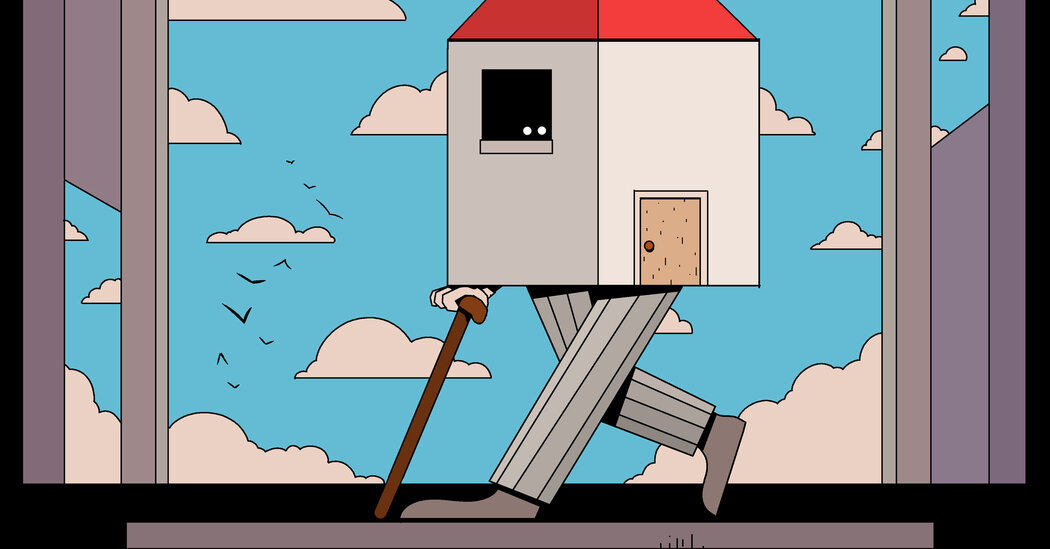
Both can pose distinct dangers to our mental and physical health.How many close friends and relatives do you have with whom you feel at ease and can discuss private matters? How many of them do you see at least once a month? Do you participate in any groups? These are among the questions on a survey called the Berkman-Syme Social Network Index, which physicians use to determine whether someone is “socially isolated.” People are considered isolated if they have fewer than six confidants, no spouse and no group affiliations. Those conditions make them less likely to report that they have someone they can count on to listen if they need to talk, give advice about a problem or show them love and affection.But you can have plenty of connections, even close connections, and still feel lonely. To assess that subjective state, clinicians may use the three-item U.C.L.A. Loneliness Scale, which asks: How often do you feel you lack companionship? How often do you feel left out? How often do you feel isolated?Social isolation and loneliness tend to go together. Researchers have become increasingly aware, though, that you can experience one but not the other. That means these states of being may have different causes, different impacts on health and different potential solutions. In February 2020, a report from the National Academies of Sciences, Engineering and Medicine noted that a third of Americans over 45 feel lonely; a quarter of those over 65 are socially isolated. Each condition increases a person’s risk of premature death from any cause — as much as or more than smoking or a lack of physical activity do — as well as the risk of heart disease and stroke. Social isolation increased the risk of dementia 50 percent, and loneliness correlated with higher rates of depression, anxiety and suicide. Older adults, along with people in marginalized groups, are at heightened risk of both isolation and loneliness.And that was the situation before the pandemic forced so many people to remain physically distant from others, which almost certainly exacerbated both isolation and loneliness in unpredictable ways. “The reality is that to some extent we are in a data-free zone,” Carla Perissinotto, one of the report’s authors and a professor of medicine at the University of California, San Francisco, told the Senate Special Committee on Aging in June 2020. “We do not know how long we have to be lonely or isolated, or how severe this must be for us to have lasting negative consequences.”More than a year later, a complicated picture has begun to emerge. In July, researchers at Northeastern University and elsewhere reported the results of an ongoing national survey that started in April 2020. They asked respondents how many people they had in their social circle whom they could depend on to care for them if they fell ill; to lend them money; to talk to them if they had a problem or felt depressed; or to help them find a job. The number of people who reported having one person or no one in each group tended to be highest last fall, a period when participants also reported decreases in the amount of time spent with nonhousehold members in person. Support and proximity with others increased roughly in tandem between December and April, as vaccines were rolled out and restrictions began to be lifted. But at that point, respondents increasingly began to say that they again lacked all four kinds of support, even though their amount of in-person contact continued to grow. Seeing other people again can be “a bit of a reality check,” says Louise Hawkley, a principal research scientist at NORC at the University of Chicago. You might discover that someone you thought could support you can’t — perhaps because of that person’s own pandemic struggles. Katherine Ognyanova, an associate professor of communication and information at Rutgers University and an author of the study, says: “There isn’t research on an event of that magnitude before. We’re just learning about what happened and how to deal with it.”Before the pandemic, few studies tried to assess both social isolation and loneliness in the same group of participants to directly compare their effects. (Researchers also often use conflicting definitions of, and metrics to measure, concepts like “support,” “isolation” and “loneliness.”) In 2015, an analysis of existing studies published in the journal Perspectives on Psychological Science by Julianne Holt-Lunstad, a professor of psychology and neuroscience at Brigham Young University, and her colleagues found that social isolation increased the risk of mortality by 29 percent on average; loneliness increased it by 26 percent and living alone by 32 percent. In 2018, a report in the journal Health Psychology saw evidence that social isolation exacerbated the impact of loneliness on mortality and vice versa. Holt-Lunstad says we tend to imagine that being isolated by choice is fine if you’re happy. “But what the evidence suggests is that might be a faulty assumption,” she adds. “We shouldn’t be so quick to dismiss isolation alone.”Illustration by Ori ToorYet how exactly each condition causes its associated health effects is still an open question. Loneliness could increase stress and inflammation, but it can also impair sleep and drive unhealthful behaviors like drinking and smoking, says Lis Nielsen, director of the division of behavioral and social research at the National Institute on Aging. Isolation, on the other hand, might make it harder to access medical care or nutritious foods or to exercise, which could in turn create stress. Men tend to have a greater risk of being socially isolated, whereas women have more risk of being lonely. Being unmarried, widowed or divorced are associated with both; so are having a low income and less education. A study of incarcerated people published in the journal JAMA Network Open in 2019 noted that the longer someone spends in solitary confinement, the greater their mortality risk. (Over the past 18 months, many prisons have essentially used solitary confinement as a means of quarantining inmates.) “It’s a form of trauma,” says the lead author Lauren Brinkley-Rubinstein, an associate professor of social medicine at the University of North Carolina at Chapel Hill. Afterward, people “can’t just step back into the way things were.”Figuring out how to mitigate the effects of social isolation and loneliness on those most at risk has taken on new importance as cases of Covid-19 surge again. “We may not be able to do much about the isolation piece if we are forced into more restriction,” Perissinotto says, “but we may be able to target loneliness.” Existing technological solutions, though, appear to have had mixed results. A survey of adults 55 and older conducted during the pandemic and published this month by the Journal of the American Geriatrics Society by Hawkley and colleagues found higher rates of loneliness, depression and reductions in happiness despite increases in remote contact compared with before; another survey using different criteria and published in April in The Journals of Gerontology: Series B found increased physical isolation among adults over 50, stable levels of digital contact and no increase in loneliness. “It’s complex,” Holt-Lunstad says. “There’s some evidence to suggest that technology helped preserve social connections, and some evidence to suggest that it actually increased loneliness.” Indeed, young people, often assumed to be more digitally savvy than the general population, have reported particularly high rates of loneliness as well as related conditions like depression. And surveys often fail to reach highly vulnerable groups, including those without internet access and people living with dementia.Because the causes of social isolation and loneliness vary so much — from mobility problems that keep someone housebound to grief over the loss of a spouse — alleviating them demands “an individualized approach,” Perissinotto says. There is no single proven intervention; instead, she suggests thinking about what kinds of connections you feel are missing and looking for ways to forge them. To the extent that the pandemic disrupted our social lives, it has also primed us to develop new relationships. Being lonely or isolated is now “an experience that all of us are all familiar with on some level,” Hawkley says. “I think that will help drive more research and attempts to resolve it.”

Read more →

Blindsided Abroad: Vaccinated But Testing Positive on a Trip to Europe

The prevalence of the Delta variant means many travelers, including those who are vaccinated, are facing sickness, quarantines and delayed returns.April DeMuth and her partner, Warren Watson, had just finished what they described as the perfect vacation in Greece when they took a coronavirus test at the Athens airport. They had spent their days sipping coffee on their hotel balcony overlooking the Venetian windmills in Mykonos; driving buggies across red sand beaches in Santorini; watching the Parthenon turn shades of gold at sunset; and eating gyros at midnight.Every detail of their trip ran seamlessly until they were waiting in line for their flight home to South Carolina on Aug. 3, when Mr. Watson, 51 — who, along with Ms. DeMuth, is fully vaccinated — received an email saying he had tested positive for the coronavirus.“We were in total shock and didn’t know what to do,” Mr. Watson recalled. “Then 10 minutes later we received a call from the Greek authorities telling us they were going to get a van and take us to a quarantine hotel.”When Europe reopened its borders to Americans in June after a 15-month ban, the highly contagious Delta coronavirus variant was not as prevalent as it is today, and breakthrough infections for the fully vaccinated were rare. But now, with the Delta strain making up more than 90 percent of the cases in Europe and the United States, stories of travelers catching the virus abroad — including those who are fully vaccinated — are beginning to surface. Their plans have been upended by mandatory quarantine requirements in different countries.The Times spoke with 11 people who got sick with Covid-19 during recent vacations to Europe and were forced to extend their trips to recover. Among them were adults and children between 12 and 62 years old, who traveled to Britain, France, Italy, Spain, Greece and Cyprus.‘We’re going a little stir-crazy…’In Athens, Ms. DeMuth and Mr. Watson were required to spend a minimum of seven days in a quarantine hotel that was paid for and provided by the Greek government. They were not allowed to leave their room until the seventh day and after they both tested negative for the virus.“It was very well organized, and they were extremely nice to us,” Ms. DeMuth said of the first days of their quarantine. “They brought us three meals a day and anything we ordered on the internet was delivered to our door.”“I mean we’re going a little stir-crazy,” Mr. Watson added during a recent telephone interview from the hotel where they were quarantining. “We aren’t allowed to leave our room and there is a major heat wave and fires in the area, but we can still poke our heads out the window.”The couple suspect they caught the virus in South Carolina in July before they traveled to Greece. Ms. DeMuth had mild coldlike symptoms that passed quickly, and Mr. Watson said he felt some drainage at the back of his throat on the way to the airport, but he assumed it was allergy symptoms, which are common for him around this time of year.“We had our vaccinations cards, we felt healthy, we’re in our 50s, it really didn’t occur to us that we had Covid,” Ms. DeMuth said.Greece does not require fully vaccinated visitors to provide a coronavirus test before entering the country; therefore, Mr. Watson did not realize he was probably carrying the virus until the end of their trip. In hindsight, Ms. DeMuth, who is a travel associate for Valerie Wilson Travel, a FROSCH Company, said that because of the highly transmissible nature of the Delta variant, she would recommend getting a test before departure as an extra precaution, even if it is not required by the destination.“Even if you don’t have any symptoms and don’t feel sick you don’t want to put other communities at risk,” she said.And, of course, there is also the risk that American travelers will get infected at their destination. Although most European countries are open to American travelers, the Centers for Disease Control and Prevention has added several to its list of level 4 or very high risk destinations, including France, Iceland and Britain, because of the high infection rates in those countries.Skylor Bee-Latty and her boyfriend, Alex Camp, outside the Manchester, England, property where they were quarantined. Days into their trip, they received a notification on a government tracing app, asking them to self-isolate for 10 days because of possible exposure to the virus.Andy Haslam for The New York Times‘It all escalated pretty quickly …’When Skylor Bee-Latty, a 28-year-old search engine optimization manager, flew from Washington, D.C., to London in early June to visit her boyfriend, Alex Camp, she had to take four coronavirus tests within 10 days and quarantine for five days before she was free to travel across Britain. Even then, the vaccinated couple proceeded with caution, choosing an isolated location in Wales for their first vacation together in a year.Days into their trip, they received a notification on a government tracing app, asking them to self-isolate for 10 days because of possible exposure to the virus. They cut their trip short and went back to the city of Manchester, where Mr. Camp lives.“We were really surprised when we got the notification because we were already self-isolating in a cottage and only really came into contact with a few people when we went to a pub or restaurant,” she said.After 10 days of isolation at home and multiple negative virus tests, the two were once again free to travel, but this time they decided to stay in Manchester and enjoy the Euro 2020 championship soccer games at pubs. Three weeks later, around July 10, when the Delta variant was surging across Britain, Ms. Bee-Latty and Mr. Camp started to feel unwell.“For the first few days I felt nauseous, but then I woke up one day and my head was completely stuffed up, it was difficult to open my eyes and then my boyfriend started to get a tickle in his throat, and I got aches and pains in my body,” she said. “It all escalated pretty quickly and before we knew it, we tested positive and were back into isolation.”By August, Ms. Bee-Latty had spent more than four weeks of her trip in quarantine and even after she recovered it took a long time to stop feeling so lethargic and foggy-headed.“I’m still not feeling great so I’m just taking it day by day,” she said. “I had plans to go and see my family in Italy, but right now I’m just watching to see how the numbers go because even though I’m traveling and I’ve recently recovered from Covid, I still want to be smart about it.”“My sister had Covid three times, so there’s always a chance I could get it again,” she added.Many travelers who booked their summer vacations to Europe in June said they had not considered the consequences of what would happen if they fell sick while on vacation, including the financial setback of having to pay for additional accommodations, food, flight change fees and taking extra time off work.Most European countries do not cover quarantine accommodations, which can add between seven to 21 extra days to a trip, depending on a country’s quarantine mandate. Last month, Louise Little, a 42-year-old personal trainer, spent $1,800 to extend her Airbnb in Spain after she tested positive for the virus a day before she was scheduled to fly from Barcelona back home to New York.“When I saw the result, I wanted to die,” recalled Ms. Little, who was fully vaccinated. “I had no symptoms and just to think of all the people I had come into contact with in all the places I had been during my 10 days’ vacation. I truly feel awful.”When Ms. Little booked travel insurance for her trip, she assumed it would cover all coronavirus expenses, but when she made a claim for the extension of her accommodations it was rejected on the basis that only medical treatment and hospitalizations were covered.“To be honest, back then I didn’t think to read the small print because I was fully vaccinated and it didn’t occur to me that I would catch the virus,” she said. “I think a lot of people like me who are young, healthy and vaccinated felt invincible at the beginning of summer, but that’s changed now with the Delta. Traveling has become quite risky again.”Follow New York Times Travel on Instagram, Twitter and Facebook. And sign up for our weekly Travel Dispatch newsletter to receive expert tips on traveling smarter and inspiration for your next vacation.

Read more →

Exoskeleton Suits: A New Device to Help You Walk and Run Better

Scientists are developing devices and clothing that make running and walking easier and more enjoyable.Those of us who are slow or reluctant runners or walkers might soon be able to slip on a lightweight, lower-body exoskeleton and up the speed and ease of our exercise, according to several new studies examining the effects of these high-tech robotic devices Personal, or wearable, exoskeletons, usually amalgamated from motors, cables, straps, springs and ingenuity, can shoulder a substantial portion of the work when we walk or run, the new studies show, potentially allowing us to move much faster or farther. They can even harvest energy from the movement — almost enough to power a cellphone.But the latest exoskeleton research also raises provocative questions about what we want from exercise and whether making it easier necessarily makes it better.Exoskeletons have been staples of science fiction for eons, enabling fictional soldiers, cops, everymen and Avengers to outgun, out-sprint and outlive their nemeses. In these stories, exoskeletons tend to be full-body, armored, stylish and indestructible.Real world exoskeletons under development at most human-mobility labs today are none of those things. Some modern exoskeletons encase much of the body with the goal of helping people paralyzed by illness or spinal injury to stand and walk. But most are abbreviated devices, centered around either the legs or upper body. Some include motors; others are self powered, usually by springs; and some, known as exosuits, are made of soft, pliable materials that resemble clothing. All provide assistance to muscles and joints.In some rehabilitation facilities and laboratories, lower-body exoskeletons and exosuits already are being used to improve walking ability in stroke patients, the elderly and young people with cerebral palsy or other disabilities. But perhaps the most tantalizing and vexing current science involves exoskeletons for the rest of us, including people who are young and healthy. In this area of research, scientists are developing exoskeletons to reduce the energy costs of running and walking, making those activities less fatiguing, more physiologically efficient and possibly more enjoyable.So far, early results seem promising. In a series of studies conducted last year at Stanford University’s Biomechatronics Lab (and funded in part by Nike, Inc.), researchers found that college students could run about 15 percent more efficiently than normal on a treadmill when they wore a customizable, prototype version of a lower-leg exoskeleton. These exoskeletons feature a motor-powered lightweight frame strapped around the runners’ shins and ankles and a carbon-fiber bar inserted into the soles of their shoes. Together, these elements reduce the amount of force runners’ leg muscles need to produce to propel them forward. On real-world paths and trails, the devices might allow us to run at least 10 percent faster than on our own, the study’s authors estimate.A slightly tweaked device likewise boosted the speed of young people while walking, according to a separate experiment from the Stanford lab, published in April. In that study, students walked about 40 percent faster, on average, when they wore a powered exoskeleton prototype, while incinerating about 2 percent less energy.In essence, the exoskeleton technology could be considered “analogous to e-bikes,” but for striding, not pedaling, said Steven Collins, a professor of mechanical engineering at Stanford and senior author of the new studies. By reducing the effort needed to move, the powered machines theoretically could encourage us to move more, perhaps commute by foot, hang with or pass naturally speedier spouses or friends, and reach locales that might otherwise seem dauntingly hilly or far away.They might even permit our muscles to power our cellphones, according to one of the more surprising of the new exoskeleton studies. In that experiment, published in May in Science, healthy, young volunteers at Queen’s University in Kingston, Ontario, wore an exoskeleton that included a backpack containing a small generator, which was attached to cables running down to their ankles.While the volunteers walked for 10 minutes, the device collected some of the mechanical energy created by their leg muscles and transmitted it to the generator, which transformed it into a quarter of a watt of energy. (Most cellphones require several watts of energy to charge their battery.) At the same time, the exoskeleton reduced the physical effort involved in taking each step by about 2.5 percent.“We foresee our device serving as a meaningful source of energy to power small electronic devices,” said Michael Shepertycky, a recent Ph.D. graduate at Queen’s University, who led the new study, making them handy during off-grid hikes, wildland firefighting or while ambling to the office.None of the exoskeletons that are designed to better jogging or strolling are available outside of labs yet, although researchers expect that to change. “There is no doubt in my mind that within 10 years, exoskeletons and soft, wearable exosuits to improve mobility will be commercially available,” said Gregory Sawicki, a professor who directs the Human Physiology of Wearable Robotics lab at Georgia Tech University in Atlanta and wrote a commentary accompanying the study of electricity-generating exoskeletons.It is still uncertain, though, whether off-the-shelf exoskeletons can be made affordable, comfortable or modish enough for most of us to wish to wear one. Even more fundamentally, we do not know if the devices, by lessening the effort involved in being active, might also diminish some of the usual health benefits of exercise.“That is a concern,” Dr. Collins said. “But we hope people might run or walk more” while wearing the devices than without them, leading, over time, to greater cumulative amounts of activity. “The primary goal” of his and many other researchers’ exoskeleton research, he concluded, “is to try to make sure that if people want to be up and moving, they can be.”

Read more →

Early Data Hints at a Rise in Breakthrough Infections

With the arrival of the contagious Delta variant, Covid hospitalizations and deaths among vaccinated Americans also may have increased, according to preliminary figures.Since Americans first began rolling up their sleeves for coronavirus vaccines, health officials have said that those who are immunized are very unlikely to become infected, or to suffer serious illness or death. But preliminary data from seven states hint that the arrival of the Delta variant in July may have altered the calculus.Breakthrough infections in vaccinated people accounted for at least one in five newly diagnosed cases in six of these states and higher percentages of total hospitalizations and deaths than had been previously observed in all of them, according to figures gathered by The New York Times.The absolute numbers remain very low, however, and there is little doubt that the vaccines remain powerfully protective. This continues to be “a pandemic of the unvaccinated,” as federal health officials have often said.Still, the rise indicates a change in how vaccinated Americans might regard their risks.“Remember when the early vaccine studies came out, it was like nobody gets hospitalized, nobody dies,” said Dr. Robert Wachter, chairman of the department of medicine at the University of California, San Francisco. “That clearly is not true.”The figures lend support to the view, widely held by officials in the Biden administration, that some Americans may benefit from booster shots in the coming months. Federal officials plan to authorize additional shots as early as mid-September, although it is not clear who will receive them.“If the chances of a breakthrough infection have gone up considerably, and I think the evidence is clear that they have, and the level of protection against severe illness is no longer as robust as it was, I think the case for boosters goes up pretty quickly,” Dr. Wachter said.The seven states — California, Colorado, Massachusetts, Oregon, Utah, Vermont and Virginia — were examined because they are keeping the most detailed data. It is not certain that the trends in these states hold throughout the country.In any event, scientists have always expected that as the population of vaccinated people grows, they will be represented more frequently in tallies of the severely ill and dead.“We don’t want to dilute the message that the vaccine is tremendously successful and protective, more so than we ever hoped initially,” said Dr. Scott Dryden-Peterson, an infectious disease physician and epidemiologist at Brigham & Women’s Hospital in Boston.“The fact that we’re seeing breakthrough cases and breakthrough hospitalizations and deaths doesn’t diminish that it still saves many people’s lives,” he added.The C.D.C. declined to comment on the states’ numbers. The agency is expected to discuss breakthrough infections, hospitalizations and vaccine efficacy at a news briefing on Wednesday.Most analyses of breakthrough infections have included figures collected through the end of June. Based on the cumulative figures, the C.D.C. and public health experts had concluded that breakthrough infections were extremely rare, and that vaccinated people were highly unlikely to become severely ill.The states’ data do affirm that vaccinated people are far less likely to become severely ill or to die from Covid-19. In California, for example, the 1,615 hospitalizations of people with breakthrough infections as of Aug. 8 represents just 0.007 percent of nearly 22 million fully immunized residents, and breakthrough deaths an even smaller percentage.But in six of the states, breakthrough infections accounted for 18 percent to 28 percent of recorded cases in recent weeks. (In Virginia, the outlier, 6.4 percent of the cases were in vaccinated people.) These numbers are likely to be underestimates, because most fully immunized people who become infected may not be taking careful precautions, or may not feel ill enough to seek a test.“There’s just a lot more virus circulating, and there’s something uniquely infectious about the variant,” said Natalie Dean, a biostatistician at Emory University in Atlanta.Breakthrough infections accounted for 12 percent to 24 percent of Covid-related hospitalizations in the states, The Times found. The number of deaths was small, so the proportion among vaccinated people is too variable to be useful, although it does appear to be higher than the C.D.C. estimate of 0.5 percent.If breakthrough infections are becoming common, “it’s also going to demonstrate how well these vaccines are working, and that they’re preventing hospitalization and death, which is really what we asked our vaccines to do,” said Anne Rimoin, an epidemiologist at the University of California, Los Angeles.A vast majority of vaccinated people who are hospitalized for Covid-19 are likely to be older adults or those who have weakened immune systems for other reasons. C.D.C. data show that 74 percent of breakthrough cases are among adults 65 or older.Most states do not compile the numbers by age, sex or the presence of other conditions. But in Oregon, which does, the median age for a breakthrough-associated death is 83 years.Workers set up overflow tents outside a hospital in Houston. Godofredo A. Vásquez/Houston Chronicle, via Associated PressThe numbers suggest that people who are at higher risk for complications from Covid-19, and anyone who lives with someone in that group, “really needs to seriously consider the risks that they’re taking now,” said Dr. Dean Sidelinger, a state epidemiologist and state health officer for Oregon.Especially for high-risk groups, “the most important message is that if you do get Covid, then take it seriously,” Dr. Dryden-Petersen said. “Don’t assume that it’s going to be mild. And seek out therapies like monoclonal antibodies if you’re high-risk, to try to prevent the need for hospitalization.”The figures also underscore the urgency of vaccinating all nursing home residents and staff members.The states’ numbers come with many caveats. Immunized adults greatly outnumber unvaccinated adults in most states, and their ranks are growing by the day. So the proportional representation of the vaccinated among cases, hospitalizations and deaths would also be expected to rise.Breakthrough infections are also likely to be most severe among older adults or those who have conditions like obesity or diabetes. These individuals have the highest rates of vaccination, and yet the highest risk of weak or waning immunity.Their representation among the hospitalized may skew the percentages, making it seem that vaccinated Americans overall are hospitalized more often than is really the case..css-1xzcza9{list-style-type:disc;padding-inline-start:1em;}.css-3btd0c{font-family:nyt-franklin,helvetica,arial,sans-serif;font-size:1rem;line-height:1.375rem;color:#333;margin-bottom:0.78125rem;}@media (min-width:740px){.css-3btd0c{font-size:1.0625rem;line-height:1.5rem;margin-bottom:0.9375rem;}}.css-3btd0c strong{font-weight:600;}.css-3btd0c em{font-style:italic;}.css-w739ur{margin:0 auto 5px;font-family:nyt-franklin,helvetica,arial,sans-serif;font-weight:700;font-size:1.125rem;line-height:1.3125rem;color:#121212;}#NYT_BELOW_MAIN_CONTENT_REGION .css-w739ur{font-family:nyt-cheltenham,georgia,’times new roman’,times,serif;font-weight:700;font-size:1.375rem;line-height:1.625rem;}@media (min-width:740px){#NYT_BELOW_MAIN_CONTENT_REGION .css-w739ur{font-size:1.6875rem;line-height:1.875rem;}}@media (min-width:740px){.css-w739ur{font-size:1.25rem;line-height:1.4375rem;}}.css-9s9ecg{margin-bottom:15px;}.css-16ed7iq{width:100%;display:-webkit-box;display:-webkit-flex;display:-ms-flexbox;display:flex;-webkit-align-items:center;-webkit-box-align:center;-ms-flex-align:center;align-items:center;-webkit-box-pack:center;-webkit-justify-content:center;-ms-flex-pack:center;justify-content:center;padding:10px 0;background-color:white;}.css-pmm6ed{display:-webkit-box;display:-webkit-flex;display:-ms-flexbox;display:flex;-webkit-align-items:center;-webkit-box-align:center;-ms-flex-align:center;align-items:center;}.css-pmm6ed > :not(:first-child){margin-left:5px;}.css-5gimkt{font-family:nyt-franklin,helvetica,arial,sans-serif;font-size:0.8125rem;font-weight:700;-webkit-letter-spacing:0.03em;-moz-letter-spacing:0.03em;-ms-letter-spacing:0.03em;letter-spacing:0.03em;text-transform:uppercase;color:#333;}.css-5gimkt:after{content:’Collapse’;}.css-rdoyk0{-webkit-transition:all 0.5s ease;transition:all 0.5s ease;-webkit-transform:rotate(180deg);-ms-transform:rotate(180deg);transform:rotate(180deg);}.css-eb027h{max-height:5000px;-webkit-transition:max-height 0.5s ease;transition:max-height 0.5s ease;}.css-6mllg9{-webkit-transition:all 0.5s ease;transition:all 0.5s ease;position:relative;opacity:0;}.css-6mllg9:before{content:”;background-image:linear-gradient(180deg,transparent,#ffffff);background-image:-webkit-linear-gradient(270deg,rgba(255,255,255,0),#ffffff);height:80px;width:100%;position:absolute;bottom:0px;pointer-events:none;}.css-uf1ume{display:-webkit-box;display:-webkit-flex;display:-ms-flexbox;display:flex;-webkit-box-pack:justify;-webkit-justify-content:space-between;-ms-flex-pack:justify;justify-content:space-between;}.css-wxi1cx{display:-webkit-box;display:-webkit-flex;display:-ms-flexbox;display:flex;-webkit-flex-direction:column;-ms-flex-direction:column;flex-direction:column;-webkit-align-self:flex-end;-ms-flex-item-align:end;align-self:flex-end;}.css-12vbvwq{background-color:white;border:1px solid #e2e2e2;width:calc(100% – 40px);max-width:600px;margin:1.5rem auto 1.9rem;padding:15px;box-sizing:border-box;}@media (min-width:740px){.css-12vbvwq{padding:20px;width:100%;}}.css-12vbvwq:focus{outline:1px solid #e2e2e2;}#NYT_BELOW_MAIN_CONTENT_REGION .css-12vbvwq{border:none;padding:10px 0 0;border-top:2px solid #121212;}.css-12vbvwq[data-truncated] .css-rdoyk0{-webkit-transform:rotate(0deg);-ms-transform:rotate(0deg);transform:rotate(0deg);}.css-12vbvwq[data-truncated] .css-eb027h{max-height:300px;overflow:hidden;-webkit-transition:none;transition:none;}.css-12vbvwq[data-truncated] .css-5gimkt:after{content:’See more’;}.css-12vbvwq[data-truncated] .css-6mllg9{opacity:1;}.css-qjk116{margin:0 auto;overflow:hidden;}.css-qjk116 strong{font-weight:700;}.css-qjk116 em{font-style:italic;}.css-qjk116 a{color:#326891;-webkit-text-decoration:underline;text-decoration:underline;text-underline-offset:1px;-webkit-text-decoration-thickness:1px;text-decoration-thickness:1px;-webkit-text-decoration-color:#326891;text-decoration-color:#326891;}.css-qjk116 a:visited{color:#326891;-webkit-text-decoration-color:#326891;text-decoration-color:#326891;}.css-qjk116 a:hover{-webkit-text-decoration:none;text-decoration:none;}“People who are older are both more likely to be vaccinated and more likely to be hospitalized given a breakthrough,” Dr. Dean noted.Registering for a vaccination at a church in the Bronx. C.D.C. data show that 74 percent of breakthrough cases are among adults 65 or older.James Estrin/The New York TimesTo draw more direct conclusions about breakthrough infections, she and other experts noted, states would need to collect and report timely and consistent data to the C.D.C.Instead, each state slices its data set differently, in different time frames, and many still don’t record mild breakthrough cases because of a directive from the C.D.C. in May. “This is a microcosm of the larger challenges that we’ve had getting data together,” Dr. Dean said.Studies are also needed on how often people with breakthrough infections spread the virus to others, including to unvaccinated children, and how many of them have persistent symptoms for months after the active infection has resolved, Dr. Rimoin said.Some scientists noted that while the vaccines are highly effective, people ought to be more cautious, including wearing masks in public indoor spaces, than they were earlier this summer. As more vaccinated people comply, the incidence of cases and hospitalizations may decrease.In the meantime, the trend in breakthrough infections, if it holds up nationwide, is likely to intensify the debate around boosters.Most experts still say that boosters are unlikely to be needed in the near future for the general population. But a rise in hospitalizations among the vaccinated may indicate that the boosters are required for some high-risk groups.Data from Israel and from a handful of studies have suggested that immunity to the virus may wane after the first few months in some groups and may need to be supplemented with booster shots.Among vaccinated Americans, 72 percent of those who are 65 or older already say they want a booster shot, according to one recent survey.“When boosters become available, barring arguments about ethics about global supply of vaccines, you should go and get a vaccine,” said Dr. Michael Mina, an epidemiologist at the Harvard T.H. Chan School of Public Health.Ideally, Dr. Mina said, doctors would track their patients’ antibody levels over time to assess who needed a booster shot, much as they do for measles and rubella vaccines in health care workers. But the C.D.C. and the Food and Drug Administration have said that available antibody tests are not accurate enough for that purpose.Dr. Dryden-Peterson said it was hard for him to reconcile the idea of boosters for Americans with his work in Botswana, where vaccines are mostly unavailable.“Even just one dose helps a lot in terms of preventing death,” he said. “We have done an incomplete job of vaccinating the United States, and that should probably be our focus rather than moving on to boosters.”

Read more →

Cancer therapy breakthrough in vitro using self-assembled drugs

One of the most challenging aspects of cancer treatment is the huge variety of different tumours that can occur with each one potentially requiring a different solution because unfortunately, one drug does NOT fit all. In addition, another major issue of many current drugs is their poor selectivity towards cancers resulting in problems such as normal tissue toxicity, severe side effects and the development of drug resistance.
Now, a team of scientists at the University of Huddersfield is researching how to combat these challenges by using “self-assembled” drugs and although the research is in its very early stages, they’ve already had a breakthrough.
The science behind self-assembly
Self-assembly is the ability to instruct chemical systems with specific information so in the correct environment they will spontaneously generate biologically active compounds. Using this process many different compounds can be rapidly and easily formed with each different self-assembled drug having different chemotherapy properties.
In an article published by the journal Nature Communications, the University’s Professor Roger Phillips, Dr Simon Allison and Professor Craig Rice demonstrate chemical systems that self-assemble into molecular capsules which are highly toxic towards human cancer cells of a range of different tumour types.
More importantly, they show unprecedented cancer selectivity in the laboratory that, in some cases, are many thousands of times more toxic to the cancer cells compared to healthy, normal cells.

Read more →