Does Alzheimer’s disease start inside nerve cells?

An experimental study from Lund University in Sweden has revealed that the Alzheimer’s protein amyloid-beta accumulates inside nerve cells, and that the misfolded protein may then spread from cell to cell via nerve fibres. This happens at an earlier stage than the formation of amyloid-beta plaques in the brain, something that is associated with the progression of Alzheimer’s disease.
The study in question builds on previous research based on amyloid-beta’s prion-like properties. This means that the protein adopts a misfolded form that acts as a template for spreading in the brain, where it accumulates and develops plaques. “The plaques of amyloid-beta outside the nerve cells have long been a target for treatment of Alzheimer’s disease. But as treatments to remove plaque have not helped against dementia, we must develop and investigate other hypotheses in order to find other targets for treatment. Our results indicate that amyloid-beta is highly relevant, but that we must focus on misfolded amyloid-beta inside the nerve cells that arise far earlier than the visible plaques,” says the first author of the study Tomas Roos, doctoral student at Lund University and resident physician at Skåne University Hospital’s neurological clinic.
Amyloid-beta is present in the brain of healthy individuals, but the mechanisms that are disrupted and cause the misfolding remain unclear. The plaques are extracellular, but the results of this study indicate that a misfolding can occur within the cells. Furthermore, the researchers show that there is a continuous exchange of amyloid-beta between the outside and inside of nerve cells, a kind of equilibrium, that is disturbed when misfolded amyloid-beta accumulates both inside and outside nerve cells.
In the study, which was conducted using a mouse model for Alzheimer’s and cell culture, the researchers also noted that misfolded amyloid-beta inside the nerve cells leads to increased amyloid-beta production.
“The increased amyloid-beta caused by misfolded amyloid-beta inside cells can bring about a vicious circle of more and more amyloid-beta production. This could explain the enormous amounts of amyloid-beta that accumulate in the brain of Alzheimer’s patients. First and foremost, the study results are to be replicated in a different Alzheimer’s model. However, our results indicate that many of amyloid-beta’s damaging effects may be caused by what is happening within the cells, independent of plaques. This may explain why so many experimental treatments targeting plaques outside the nerve cells have failed and that we should focus our attention inwards,” concludes Tomas Roos.
Story Source:
Materials provided by Lund University. Note: Content may be edited for style and length.

Read more →

Progress continues in ensuring safety for nation’s high school athletes

Starting in 2017, UConn’s Korey Stringer Institute (KSI), a part of the College of Agriculture, Health, and Natural Resources, began publishing annual reports and bi-annual updates examining the health and safety policies for secondary schools for each individual state and Washington, D.C. The evaluations are based on safety measures states can implement, including emergency action plans, having automatic external defibrillators on site, training coaches to look for signs of concussion, treatment of exertional heat stroke and others. Since KSI began this process three years ago, 38 states have adopted legislative or state high school athletic association changes that improve safety for student athletes, according to its latest findings.
The paper detailing nationwide updates and progress was published this week in the American Journal of Sports Medicine.
The report illustrates the progress made since 2017, and it also helps Team Up for Sports Safety (TUFFS) zero in on ways to help decision makers take steps toward further improvements to safeguard athlete safety.
KSI and the TUFFS initiative has a mission to travel state-to-state to meet with policymakers to ensure life-saving policies are adopted nationwide, explains Rebecca Stearns Assistant Professor, Department of Kinesiology, Chief Operating Officer of the Korey Stringer Institute, and Director of TUFFS.
“We decided to do a state-based approach and make it a really targeted, individualized approach for the states,” she says.
Policies take time to be implemented, but TUFFS strives to make the process smoother by meeting with key individuals from each state to help identify areas for swift and impactful change. The process involves scheduling meetings with representatives from each state to present policies and measures tailored to that state, which address areas for improvement.

Read more →

Inhibitor drug entinostat ‘primes’ the body to better respond to anti-cancer treatment with immunotherapy

Combining a histone deacetylase inhibitor drug with immunotherapy agents is safe, and may benefit some patients with advanced cancers that have not responded to traditional therapy, according to results of a phase 1 clinical trial led by researchers at the Johns Hopkins Kimmel Cancer Center, Bloomberg~Kimmel Institute for Cancer Immunotherapy and several other centers including University of Pittsburgh Cancer Institute, Yale Cancer Center and City of Hope in Los Angeles, which participated in study enrollment, and the University of Southern California and University College Cork in Ireland, which collaborated on analysis of the data.
During the study, 33 patients with advanced solid tumors received the histone deacetylase inhibitor drug entinostat for two weeks. Then, some patients received the immunotherapy agent nivolumab, a checkpoint inhibitor, in combination with the entinostat, while others received both nivolumab and a second checkpoint inhibitor agent, ipilimumab, after the initial dosing with entinostat.
Checkpoint inhibitors, such as nivolumab and ipilimumab, release important “brakes” that permit the immune system to fight the cancer cells. The epigenetic inhibitor drug entinostat has been shown in preclinical models and laboratory studies (which led to this current clinical trial) to drive changes in the chemical environment of cells to make them more amenable to immunotherapy, says Vered Stearns, M.D., director of the Women’s Malignancies Disease Group at the Johns Hopkins Kimmel Cancer Center.
The authors found that the objective response rate, or percentage of patients whose cancer responded to therapy, was 16%. One patient with triple-negative breast cancer had a complete response, meaning a total shrinkage of the cancer. Because the cancer types included in the study are not felt to have high response rates to immune checkpoint therapy, these preliminary results are very promising. Treatment-related adverse events were mostly low grade, and included fatigue, nausea, anemia and diarrhea.
These results were published online in the June 16 issue of Clinical Cancer Research.
Study co-author Evanthia T. Roussos Torres, M.D., Ph.D., an adjunct professor at Johns Hopkins and assistant professor of medicine at the University of Southern California’s Norris Comprehensive Cancer Center in Los Angeles, says the entinostat functioned as an immune system-priming agent prior to using immunotherapy in solid tumors that traditionally are nonresponsive to checkpoint inhibition therapy.

Read more →

Prior training can accelerate muscle growth even after extended idleness

According to a report by the American Psychological Association published in February 2021, 42% of American adults reported unintended weight gain since the COVID-19 pandemic began, averaging about 29 pounds.
For those who are still struggling to get back on track with their exercise routine, there is encouraging news: new research from the University of Arkansas indicates that prior training of muscles can accelerate muscle growth and response even after extended idleness. Getting back what was lost is likely easier than most people realize.
Kevin Murach, an assistant professor in the Department of Health, Human Performance, and Recreation, recently conducted research that supports this. In “Nucleus Type-Specific DNA Methylomics Reveals Epigenetic ‘Memory’ of Prior Adaptation in Skeletal Muscle,” published in the American Physiological Society’s flagship journal Function, Murach and his colleagues found that previously trained muscles in mice responded with more sensitivity, and grew more rapidly, than previously untrained muscles.
Further analysis revealed that the muscles, and specifically the DNA of the muscle cells themselves, retained a kind of cellular memory of previous adaptation to exercise. More technically stated, “Muscle nuclei have a methylation epi-memory of prior training that may augment muscle adaptability to retraining.”
Muscle Memory in Cells
Murach and his team studied the skeletal muscles of mice, which were trained on a progressively weighted wheel over a period of 8 weeks to build muscles, then taken off the wheel for 12 weeks, or “detrained.”
This was followed by a four-week period of retraining. These mice were then compared against a control group that was only trained for four weeks. Findings indicated that the previously trained cohort saw accelerated gains in muscle growth after retraining when compared to the control group, and that specific epigenetic changes to DNA methylation persisted after the original training.

Read more →

How a Parkinson’s disease-linked protein attacks a cell’s powerhouses

Inside cells, organelles called mitochondria carry out a medley of vital tasks. These structures generate energy and help to keep the cells’ interior environment in a state of healthy equilibrium, among other functions.
Now, scientists show how a protein associated with Parkinson’s disease can damage these cellular powerhouses.
The findings come from experiments in which fruit fly larvae were genetically engineered to produce unusually high amounts of the protein, called alpha-synuclein.
“When fruit fly larvae expressed alpha-synuclein at elevated levels similar to what is seen in Parkinson’s disease, many of the mitochondria we observed became unhealthy, and many became fragmented. Through detailed experiments, we also showed that different parts of the alpha-synuclein protein seem to be responsible for these two problems, and that fragmented mitochondria can actually be healthy. This is a key finding, because before, people thought fragmented mitochondria were unhealthy mitochondria,” says Shermali Gunawardena, PhD, associate professor of biological sciences in the University at Buffalo College of Arts and Sciences.
The results could be of interest in the context of drug development, as abnormal aggregates of alpha-synuclein in brain cells are a hallmark of Parkinson’s disease, and mitochondrial damage has also been observed in patients.
“This research showcases the advantage of using fruit fly larvae as a model organism to study how neurons become damaged during devastating diseases such as Parkinson’s disease,” says TJ Krzystek, UB PhD candidate in biological sciences. “Through this approach, we pieced together a new understanding for how the Parkinson’s disease-related protein alpha-synuclein disrupts the health and movement of mitochondria — the epicenter for energy production in cells. We believe this work emphasizes a promising path that can be explored for potential therapeutics aimed at improving mitochondrial health in Parkinson’s disease patients.”
The study was published on Aug. 17 in the journal Cell Death and Disease.

Read more →

Thanking NIH’s Call Center and Contact Investigation Teams

With the leader of NIH’s Occupational Medical Service, Dr. Heike Bailin, at my side, I recently met with the NIH Call Center and Contact Investigation teams to express my gratitude for the vital role they play in keeping our community safe from COVID-19. This screenshot of our virtual meeting on August 11 shows some of the more than 100 people that make up these important teams. At the same event, I also thanked the Positive Results and Return to Work teams for providing compassionate, knowledgeable guidance to NIH staff facing uncertainty and stress at home and at work. Credit: NIH

Post Link

Thanking NIH’s Call Center and Contact Investigation Teams

NIH Blog Post Date

Wednesday, August 18, 2021

Read more →

Vaccines’ protection against virus infection is waning, C.D.C. studies suggest.

The Centers for Disease Control and Prevention released three studies on Wednesday that federal officials said provided evidence that booster shots of the Pfizer-BioNTech and Moderna coronavirus vaccines would be needed by all Americans in the coming months.But some experts said the new research did not support the decision to recommend booster shots for all Americans.Taken together, the studies show that although the vaccines remain highly effective against hospitalizations, the bulwark they provide against infection with the virus has weakened in the past few months.It’s unclear whether the decline in protection against infection is the result of waning immunity, a drop in precautions like wearing masks, or the rise of the highly contagious Delta variant — or a combination of all three.“We are concerned that this pattern of decline we are seeing will continue in the months ahead, which could lead to reduced protection against severe disease hospitalization and death,” Dr. Vivek Murthy, the surgeon general, said at a White House news briefing on Wednesday.Citing the data, federal health officials outlined a plan for Americans who received the two vaccines to get booster shots eight months after receiving their second doses, starting Sept. 20.Some scientists were deeply skeptical of the new plan.“These data support giving additional doses of vaccine to highly immunocompromised persons and nursing home residents, not to the general public,” said Dr. Celine Gounder, an infectious disease specialist at Bellevue Hospital Center and a former adviser on the pandemic to the administration.Boosters would only be warranted if the vaccines were failing to prevent people from ending up hospitalized with Covid-19, she said.“Feeling sick like a dog and laid up in bed, but not in the hospital with severe Covid, is not a good enough reason,” Dr. Gounder said. “We’ll be better protected by vaccinating the unvaccinated here and around the world.”It’s unclear whether a third dose would help people who did not produce a robust response to the first two doses, said Bill Hanage, an epidemiologist at the Harvard T.H. Chan School of Public Health.The recommendation for boosters may also end up undermining confidence in vaccines, he warned: “A third shot will add to skepticism among people yet to receive one dose that the vaccines help them.”Together, the new studies indicate overall that vaccines have an effectiveness of roughly 55 percent against infections, 80 percent against symptomatic infection, and 90 percent or higher against hospitalization, noted Ellie Murray, an epidemiologist at Boston University.“Those numbers are actually very good,” Dr. Murray said. “The only group that these data would suggest boosters for, to me, is the immunocompromised.”The drop in protection against infection could be the result of increased exposure to a highly contagious variant during a period of unfettered social interactions, she added: “This seems to me like a real possibility, since many early vaccinated were motivated by a desire to see friends and family and get back to normal.”Dr. Murray said boosters would undoubtedly boost immunity in an individual, but the benefit may be minimal — and obtained just as easily by wearing a mask, or avoiding indoor dining and crowded bars.The administration’s emphasis on vaccines has undermined the importance of building other precautions into people’s lives in ways that are comfortable and sustainable, and on building capacity for testing, she and other experts said.“This is part of why I think the administration’s focus on vaccines is so damaging to morale,” she added. “We probably won’t be going back to normal anytime soon.”Before people can begin to receive boosters, the Food and Drug Administration must first authorize a third dose of the mRNA vaccines made by Pfizer-BioNTech and Moderna, and an advisory committee of the C.D.C. must review the evidence and make recommendations.One of the new C.D.C. studies analyzed the effectiveness of vaccines among residents of nearly 4,000 nursing homes from March 1 to May 9, before the Delta variant’s emergence, and nearly 15,000 nursing homes from June 21 to Aug. 1, when the variant dominated new infections in the country.The vaccines’ effectiveness at preventing infections dropped from about 75 percent to 53 percent between those dates, the study found. It did not evaluate the vaccines’ protection against severe illness.Nursing homes were required to report the number of immunized residents only after June 6, which “makes comparisons over time very challenging,” Dr. Murray said. “It’s fully possible that the vaccine effectiveness reported here hasn’t actually declined over time.”.css-1xzcza9{list-style-type:disc;padding-inline-start:1em;}.css-3btd0c{font-family:nyt-franklin,helvetica,arial,sans-serif;font-size:1rem;line-height:1.375rem;color:#333;margin-bottom:0.78125rem;}@media (min-width:740px){.css-3btd0c{font-size:1.0625rem;line-height:1.5rem;margin-bottom:0.9375rem;}}.css-3btd0c strong{font-weight:600;}.css-3btd0c em{font-style:italic;}.css-w739ur{margin:0 auto 5px;font-family:nyt-franklin,helvetica,arial,sans-serif;font-weight:700;font-size:1.125rem;line-height:1.3125rem;color:#121212;}#NYT_BELOW_MAIN_CONTENT_REGION .css-w739ur{font-family:nyt-cheltenham,georgia,’times new roman’,times,serif;font-weight:700;font-size:1.375rem;line-height:1.625rem;}@media (min-width:740px){#NYT_BELOW_MAIN_CONTENT_REGION .css-w739ur{font-size:1.6875rem;line-height:1.875rem;}}@media (min-width:740px){.css-w739ur{font-size:1.25rem;line-height:1.4375rem;}}.css-9s9ecg{margin-bottom:15px;}.css-16ed7iq{width:100%;display:-webkit-box;display:-webkit-flex;display:-ms-flexbox;display:flex;-webkit-align-items:center;-webkit-box-align:center;-ms-flex-align:center;align-items:center;-webkit-box-pack:center;-webkit-justify-content:center;-ms-flex-pack:center;justify-content:center;padding:10px 0;background-color:white;}.css-pmm6ed{display:-webkit-box;display:-webkit-flex;display:-ms-flexbox;display:flex;-webkit-align-items:center;-webkit-box-align:center;-ms-flex-align:center;align-items:center;}.css-pmm6ed > :not(:first-child){margin-left:5px;}.css-5gimkt{font-family:nyt-franklin,helvetica,arial,sans-serif;font-size:0.8125rem;font-weight:700;-webkit-letter-spacing:0.03em;-moz-letter-spacing:0.03em;-ms-letter-spacing:0.03em;letter-spacing:0.03em;text-transform:uppercase;color:#333;}.css-5gimkt:after{content:’Collapse’;}.css-rdoyk0{-webkit-transition:all 0.5s ease;transition:all 0.5s ease;-webkit-transform:rotate(180deg);-ms-transform:rotate(180deg);transform:rotate(180deg);}.css-eb027h{max-height:5000px;-webkit-transition:max-height 0.5s ease;transition:max-height 0.5s ease;}.css-6mllg9{-webkit-transition:all 0.5s ease;transition:all 0.5s ease;position:relative;opacity:0;}.css-6mllg9:before{content:”;background-image:linear-gradient(180deg,transparent,#ffffff);background-image:-webkit-linear-gradient(270deg,rgba(255,255,255,0),#ffffff);height:80px;width:100%;position:absolute;bottom:0px;pointer-events:none;}.css-uf1ume{display:-webkit-box;display:-webkit-flex;display:-ms-flexbox;display:flex;-webkit-box-pack:justify;-webkit-justify-content:space-between;-ms-flex-pack:justify;justify-content:space-between;}.css-wxi1cx{display:-webkit-box;display:-webkit-flex;display:-ms-flexbox;display:flex;-webkit-flex-direction:column;-ms-flex-direction:column;flex-direction:column;-webkit-align-self:flex-end;-ms-flex-item-align:end;align-self:flex-end;}.css-12vbvwq{background-color:white;border:1px solid #e2e2e2;width:calc(100% – 40px);max-width:600px;margin:1.5rem auto 1.9rem;padding:15px;box-sizing:border-box;}@media (min-width:740px){.css-12vbvwq{padding:20px;width:100%;}}.css-12vbvwq:focus{outline:1px solid #e2e2e2;}#NYT_BELOW_MAIN_CONTENT_REGION .css-12vbvwq{border:none;padding:10px 0 0;border-top:2px solid #121212;}.css-12vbvwq[data-truncated] .css-rdoyk0{-webkit-transform:rotate(0deg);-ms-transform:rotate(0deg);transform:rotate(0deg);}.css-12vbvwq[data-truncated] .css-eb027h{max-height:300px;overflow:hidden;-webkit-transition:none;transition:none;}.css-12vbvwq[data-truncated] .css-5gimkt:after{content:’See more’;}.css-12vbvwq[data-truncated] .css-6mllg9{opacity:1;}.css-qjk116{margin:0 auto;overflow:hidden;}.css-qjk116 strong{font-weight:700;}.css-qjk116 em{font-style:italic;}.css-qjk116 a{color:#326891;-webkit-text-decoration:underline;text-decoration:underline;text-underline-offset:1px;-webkit-text-decoration-thickness:1px;text-decoration-thickness:1px;-webkit-text-decoration-color:#326891;text-decoration-color:#326891;}.css-qjk116 a:visited{color:#326891;-webkit-text-decoration-color:#326891;text-decoration-color:#326891;}.css-qjk116 a:hover{-webkit-text-decoration:none;text-decoration:none;}The decline in effectiveness also could have resulted from the spread of the Delta variant, Dr. Gounder said.“It makes sense to give an extra dose of vaccine to vaccinated nursing home residents, but what will have an even bigger impact on protecting those nursing home residents is to vaccinate their caregivers,” she said. Many heath aides in long-term care facilities remain unvaccinated.A second study evaluated data from New York State from May 3 to July 25, when the Delta variant grew to represent more than 80 percent of new cases. The effectiveness of vaccines in preventing cases in adults declined from 91.7 percent to 79.8 percent during that time, the study found. But the vaccines remained just as effective at preventing hospitalizations.During those weeks, New York recorded 9,675 breakthrough infections — roughly 20 percent of total cases in the state — and 1,271 hospitalizations in vaccinated people, which accounted for 15 percent of all Covid-19 hospitalizations.Although fully immunized people of all ages got infected with the virus, vaccine effectiveness showed the sharpest drop, from 90.6 percent to 74.6 percent, in people aged 18 through 49 years — who are often the least likely to take precautions and the most likely to socialize.Data from Israel has suggested that immunity against infection has waned among in vaccinated adults who are 65 or older. But in the New York data, the effectiveness of the vaccines in that group barely budged.Adults ages 65 or older were more likely to be hospitalized than other age groups, regardless of vaccination status. But the vaccines did not show a decline in effectiveness against hospitalizations in any of the age groups.The third study from the C.D.C. found that the vaccines showed 90 percent effectiveness against hospitalizations in the country, “which is excellent,” Dr. Gounder noted.The vaccines were less protective against hospitalization in immunocompromised people. “But not all immunocompromised persons will respond to an additional dose of vaccine,” Dr. Gounder noted.To protect these vulnerable individuals, everyone around them should be vaccinated and should continue to wear masks, she added.The vaccines may appear to be less effective than they did in the clinical trials because the trials were conducted before the emergence of the highly contagious Delta variant. The vaccines can also seem to lose effectiveness as more unvaccinated people become infected with the virus and gain natural immunity.If preventing infection is the goal, it would be wiser to offer a booster of a nasal spray vaccine, which is better at inducing immunity in the nose and throat, where the virus enters, Dr. Gounder said.

Read more →

Vaccine Booster Shot Distribution to Begin Next Month in US

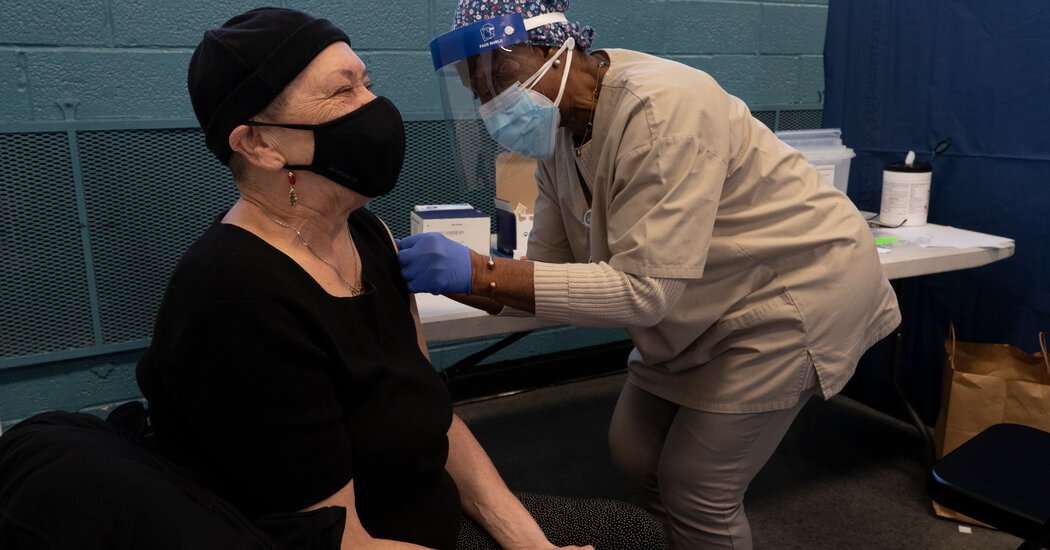
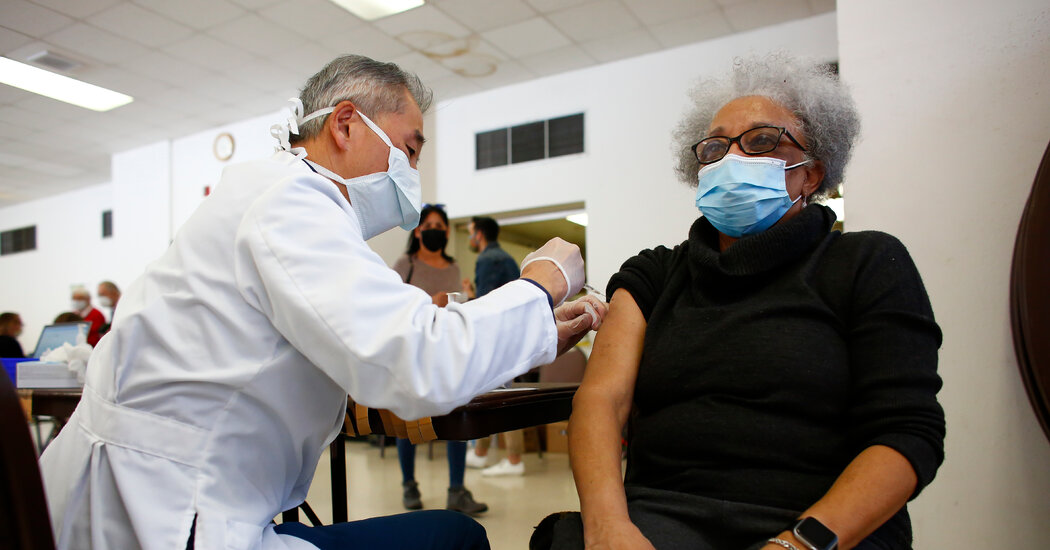
The Biden administration on Wednesday outlined a plan for Americans who received the Pfizer-BioNTech and Moderna coronavirus vaccines to get a booster shot eight months after receiving their second doses, starting Sept. 20.Health care workers, nursing home residents and other older adults who were vaccinated early will be first in line, starting then, contingent on authorization by federal regulators. “We are starting to see evidence of reduced protection against mild and moderate disease,” officials of several federal agencies said in a prepared statement.“Here’s what you need to know: If you are fully vaccinated, you still have a high degree of protection from the worst outcomes of Covid-19, severe disease hospitalization and death,” Dr. Vivek Murthy, the surgeon general, said at a White House briefing.“We are not recommending that you go out and get a booster today. Instead, starting the week of Sept. 20,” he added, but that fully vaccinated adults should “begin getting their booster shots eight months after their second shot of an mRNA vaccine.”Protection conferred by the vaccines against severe disease, hospitalization and death could diminish in the months ahead, especially among high-risk groups who were vaccinated early, the officials said. “For that reason, we conclude that a booster shot will be needed to maximize vaccine-induced protection and prolong its durability.”The Centers for Disease Control and Prevention also released three studies on Wednesday that federal officials said provided evidence that booster shots of the two mRNA vaccines would be needed in the coming months. But some scientists pushed back, saying the new research does not indicate that all Americans need boosters.Taken together, the studies show that although the vaccines remain highly effective against hospitalizations, the bulwark they provide against infection with the virus has weakened in the past few months.It’s unclear whether the decline in protection against infection is the result of waning immunity, a drop in precautions like wearing masks, or the rise of the Delta variant — or a combination of all three.One of the new C.D.C. studies analyzed the effectiveness of vaccines among residents of nearly 4,000 nursing homes before the Delta variant’s U.S. emergence, and nearly 15,000 nursing homes when the variant dominated new infections in the country.The vaccines’ effectiveness at preventing infections dropped from about 75 percent to 53 percent between those dates, the study found. It did not evaluate the vaccines’ protection against severe illness.Still, Dr. Rochelle Walensky, the director of the Centers for Disease Control and Prevention, sought to be reassuring. “These data confirm that while protection against infection may decrease over time, protection against severe disease and hospitalization is currently holding up pretty well,” she said.People who received the Johnson & Johnson vaccine may also require additional doses. But that vaccine was not rolled out until March 2021, and a plan to provide boosters for those individuals will be made after reviewing new data expected over next few weeks, officials said.Some experts immediately pushed back against the decision, saying only some older adults and people with weakened immune systems needed extra protection. The World Health Organization has asked that wealthy countries defer distributing booster shots until the end of September..css-1xzcza9{list-style-type:disc;padding-inline-start:1em;}.css-3btd0c{font-family:nyt-franklin,helvetica,arial,sans-serif;font-size:1rem;line-height:1.375rem;color:#333;margin-bottom:0.78125rem;}@media (min-width:740px){.css-3btd0c{font-size:1.0625rem;line-height:1.5rem;margin-bottom:0.9375rem;}}.css-3btd0c strong{font-weight:600;}.css-3btd0c em{font-style:italic;}.css-w739ur{margin:0 auto 5px;font-family:nyt-franklin,helvetica,arial,sans-serif;font-weight:700;font-size:1.125rem;line-height:1.3125rem;color:#121212;}#NYT_BELOW_MAIN_CONTENT_REGION .css-w739ur{font-family:nyt-cheltenham,georgia,’times new roman’,times,serif;font-weight:700;font-size:1.375rem;line-height:1.625rem;}@media (min-width:740px){#NYT_BELOW_MAIN_CONTENT_REGION .css-w739ur{font-size:1.6875rem;line-height:1.875rem;}}@media (min-width:740px){.css-w739ur{font-size:1.25rem;line-height:1.4375rem;}}.css-9s9ecg{margin-bottom:15px;}.css-16ed7iq{width:100%;display:-webkit-box;display:-webkit-flex;display:-ms-flexbox;display:flex;-webkit-align-items:center;-webkit-box-align:center;-ms-flex-align:center;align-items:center;-webkit-box-pack:center;-webkit-justify-content:center;-ms-flex-pack:center;justify-content:center;padding:10px 0;background-color:white;}.css-pmm6ed{display:-webkit-box;display:-webkit-flex;display:-ms-flexbox;display:flex;-webkit-align-items:center;-webkit-box-align:center;-ms-flex-align:center;align-items:center;}.css-pmm6ed > :not(:first-child){margin-left:5px;}.css-5gimkt{font-family:nyt-franklin,helvetica,arial,sans-serif;font-size:0.8125rem;font-weight:700;-webkit-letter-spacing:0.03em;-moz-letter-spacing:0.03em;-ms-letter-spacing:0.03em;letter-spacing:0.03em;text-transform:uppercase;color:#333;}.css-5gimkt:after{content:’Collapse’;}.css-rdoyk0{-webkit-transition:all 0.5s ease;transition:all 0.5s ease;-webkit-transform:rotate(180deg);-ms-transform:rotate(180deg);transform:rotate(180deg);}.css-eb027h{max-height:5000px;-webkit-transition:max-height 0.5s ease;transition:max-height 0.5s ease;}.css-6mllg9{-webkit-transition:all 0.5s ease;transition:all 0.5s ease;position:relative;opacity:0;}.css-6mllg9:before{content:”;background-image:linear-gradient(180deg,transparent,#ffffff);background-image:-webkit-linear-gradient(270deg,rgba(255,255,255,0),#ffffff);height:80px;width:100%;position:absolute;bottom:0px;pointer-events:none;}.css-uf1ume{display:-webkit-box;display:-webkit-flex;display:-ms-flexbox;display:flex;-webkit-box-pack:justify;-webkit-justify-content:space-between;-ms-flex-pack:justify;justify-content:space-between;}.css-wxi1cx{display:-webkit-box;display:-webkit-flex;display:-ms-flexbox;display:flex;-webkit-flex-direction:column;-ms-flex-direction:column;flex-direction:column;-webkit-align-self:flex-end;-ms-flex-item-align:end;align-self:flex-end;}.css-12vbvwq{background-color:white;border:1px solid #e2e2e2;width:calc(100% – 40px);max-width:600px;margin:1.5rem auto 1.9rem;padding:15px;box-sizing:border-box;}@media (min-width:740px){.css-12vbvwq{padding:20px;width:100%;}}.css-12vbvwq:focus{outline:1px solid #e2e2e2;}#NYT_BELOW_MAIN_CONTENT_REGION .css-12vbvwq{border:none;padding:10px 0 0;border-top:2px solid #121212;}.css-12vbvwq[data-truncated] .css-rdoyk0{-webkit-transform:rotate(0deg);-ms-transform:rotate(0deg);transform:rotate(0deg);}.css-12vbvwq[data-truncated] .css-eb027h{max-height:300px;overflow:hidden;-webkit-transition:none;transition:none;}.css-12vbvwq[data-truncated] .css-5gimkt:after{content:’See more’;}.css-12vbvwq[data-truncated] .css-6mllg9{opacity:1;}.css-qjk116{margin:0 auto;overflow:hidden;}.css-qjk116 strong{font-weight:700;}.css-qjk116 em{font-style:italic;}.css-qjk116 a{color:#326891;-webkit-text-decoration:underline;text-decoration:underline;text-underline-offset:1px;-webkit-text-decoration-thickness:1px;text-decoration-thickness:1px;-webkit-text-decoration-color:#326891;text-decoration-color:#326891;}.css-qjk116 a:visited{color:#326891;-webkit-text-decoration-color:#326891;text-decoration-color:#326891;}.css-qjk116 a:hover{-webkit-text-decoration:none;text-decoration:none;}Jeff Zients, the White House pandemic coordinator, said at the briefing on Wednesday that the administration is on its way to donating more than 600 million doses of vaccines to other countries.“We’re going to do both,” he said. “We’re going to both protect the American people and we’re going to do more and more to help vaccinate the world. ”Before Americans can begin to receive boosters, the Food and Drug Administration must first authorize a third dose of the mRNA vaccines made by Pfizer-BioNTech and Moderna, and an advisory committee of the C.D.C. must review the evidence and make recommendations.Federal officials plan to begin by offering booster shots directly to residents of long-term care facilities, since the vaccines were distributed to this population early in the rollout and the virus poses a particular threat to the elderly.“We will continue to follow the science on a daily basis, and we are prepared to modify this plan should new data emerge that requires it,” federal officials said.Still, “there’s nothing magical about this number,” Dr. Murthy said, referring to the recommendation to get a booster eight months after the second dose. “This is where judgment comes in.”

Read more →

Covid vaccine: US plans to offer booster Covid jabs in September

SharecloseShare pageCopy linkAbout sharingimage sourceGetty/PATRICK T. FALLONCovid-19 vaccine booster jabs will be offered to “all Americans” from 20 September, according to US officials.The jabs will first be given to healthcare workers, nursing home residents and older people who were vaccinated at least eight months ago.The White House says the initiative is a response to rising infections from the Delta variant and evidence that the protectiveness of the vaccines fades.A final decision still requires approval and a formal recommendation.Daily cases in the United States have soared since early July. At the time, there were fewer than 10,000 cases and now there are more than 150,000 across the nation.Hospitals are stretched thin and the death rates in many states have led officials to re-instate mask mandates and social distancing protocols.The heads of the Centers for Disease Control and Prevention, the Food and Drug Administration, the National Institutes of Health and President Joe Biden’s chief medical adviser, Dr Anthony Fauci, are all in agreement on the need for a booster vaccine. It will be up to these groups to approve the White House’s plan.The effectiveness of the Covid vaccine is now known to decrease over time, officials say, “and in association with the dominance of the Delta variant, we are starting to see evidence of reduced protection against mild and moderate disease”.”We conclude that a booster shot will be needed to maximize vaccine-induced protection and prolong its durability.” The booster will be made available to Americans who received their second shot of the Pfizer or Moderna vaccine eight months ago. The White House said they anticipate that people who received Johnson & Johnson’s single-dose Covid vaccine will also need boosters, but more research is needed.In recent weeks, several other countries such as Israel, France and Germany have decided to offer boosters to older adults as well as people with weak immune systems.However, the World Health Organization recently called for a pause on booster jabs until at least the end of September – or when more of the populations in lower-income nations receive at least their first round of vaccines.WHO calls for booster pause to jab poorer nationsMore than one million Americans had independently sought an extra vaccine dose before the official decision on boosters was announced, according to federal data.

Read more →

Some Americans to Be Eligible for Boosters in Late September, Officials Say

Americans who got the Pfizer-BioNTech and Moderna coronavirus vaccines will be able to obtain booster shots eight months after receiving their second doses, the Biden administration announced on Wednesday.Health care workers, nursing home residents and other older adults who were vaccinated early will be first in line, starting Sept. 20. “We are starting to see evidence of reduced protection against mild and moderate disease,” officials of several federal agencies said in a prepared statement.Protection conferred by the vaccines against severe disease, hospitalization and death could diminish in the months ahead, especially among high-risk groups who were vaccinated early, the officials said. “For that reason, we conclude that a booster shot will be needed to maximize vaccine-induced protection and prolong its durability.”People who received the Johnson & Johnson vaccine may also require additional doses. But that vaccine was not rolled out until March 2021, and a plan to provide boosters for those individuals will be made after reviewing new data expected over next few weeks, officials said.Some experts immediately pushed back against the decision, saying only some older adults and people with weakened immune systems needed extra protection. The World Health Organization has asked that wealthy countries defer distributing booster shots until the end of September.“We will also continue to expand our efforts to increase the supply of vaccines for other countries, building further on the more than 600 million doses we have already committed to donate globally,” federal officials said.Before Americans can begin to receive boosters, the Food and Drug Administration must first authorize a third dose of the mRNA vaccines made by Pfizer-BioNTech and Moderna, and an advisory committee of the Centers for Disease Control and Prevention must review the evidence and make recommendations.Federal officials plan to begin by offering booster shots directly to residents of long-term care facilities, since the vaccines were distributed to this population early in the rollout and the virus poses a particular threat to the elderly.“We will continue to follow the science on a daily basis, and we are prepared to modify this plan should new data emerge that requires it,” federal officials said.

Read more →