COVID-19 pandemic linked to an increase in intimate partner aggression, study shows

Rates of physical and psychological aggression among couples increased significantly after the implementation of shelter-in-place restrictions at the outset of the COVID-19 pandemic, according to a new study led by Georgia State University researchers.
The study found that the pandemic resulted in a six-to-eightfold increase in rates of intimate partner aggression across the U.S. Physical aggression increased from two acts per year before the pandemic to 15 acts per year once shelter-in-place restrictions began. Psychological aggression increased from 16 acts per year to 96 acts per year.
The findings indicate that stress related to the pandemic was strongly associated with perpetration of intimate partner aggression, even among individuals considered at low risk.
“If you think about it, that [increase] represents an enormous shift in people’s day-to-day lives,” said the study’s lead author Dominic Parrott, professor of psychology and director of the Center for Research on Interpersonal Violence. “It’s the difference between having a bad fight with your partner once a month versus twice a week.”
The study, published in the journal Psychology of Violence, is among the first to document increases in perpetration of intimate partner aggression following the onset of the pandemic in local communities.
Researchers recruited 510 participants in April 2020 — during the height of shelter-in-place restrictions across the U.S. — and asked them questions related to the period prior to and after the onset of the COVID-19 in their community. Participants answered questions about COVID-19 stressors, perpetration of physical and psychological aggression towards their partner and heavy drinking, which is known to facilitate aggression. About half of the participants identified as a sexual or gender minority.

Read more →

New study reveals that children of mothers with diabetes during pregnancy have an increased risk of eye problems

A new study published in Diabetologia (the journal of the European Association for the Study of Diabetes [EASD]) finds that mothers who have diabetes before or during their pregnancy are more likely to have children who go on to develop eye problems.
The research is by Dr Jiangbo Du, State Key Laboratory of Reproductive Medicine, Nanjing Medical University, Nanjing, China, and Dr Jiong Li, Aarhus University, Aarhus, Denmark, and colleagues. It analysed the associations between maternal diabetes before or during pregnancy and the risk of high refractive error (RE): conditions in which there is a failure of the eye to properly focus images on the retina.
RE is one of the most common forms of visual impairment and includes both long and short-sightedness as well as astigmatism. Collectively these conditions are the second most common form of disability globally, and while low-degree REs can be corrected optically using spectacles or contact lenses, more serious high-degree REs can develop into severe and irreversible visual impairment that can reduce an individual’s quality of life.
In recent decades there has been a rapid increase in the prevalence of RE, indicating that non-genetic factors may play an important role in its development. An increased tendency to perform close-up work such as using computers for long periods, as well as a lack of outdoor activity has been established as the main acquired risk factors for low and moderate RE development in school-age children and young adults. The causes of high RE defects, however, are still not fully understood.
Earlier research has shown that individuals with severe RE may have congenital eye defects before birth, suggesting that the conditions to which the fetus is exposed in the uterus may play a role in the development of more serious RE in later life. Maternal hyperglycaemia (high blood sugar) during pregnancy may lead to elevated fetal blood glucose levels, which can damage the retina and optic nerve and may lead to changes in the shape of the eyes that ultimately cause RE.
The authors believed that exposure to the effects of maternal diabetes while in the uterus could negatively affect the development of the fetus and lead to high RE in later life. They also anticipated that the most pronounced associations would be observed among mothers with diabetic complications since they usually represent more severe cases of the disease.

Read more →

'I make art out of discarded face masks'

A man who creates artwork out of discarded face masks said he has become “addicted” to litter picking.After five years working at a brewery, Thomas Yates, 45, from West Bridgford, Nottinghamshire, was made redundant at the start of the coronavirus pandemic and uses the extra time clearing the streets.He has collected more than 2,800 abandoned face masks while out running and cycling and posts his creations on social media, where he has attracted hundreds of followers.”I have questioned myself, ‘Why am I making art out of litter? And then when you see the end results, I think they’re quite good,” he said.A spokesman for Rushcliffe Borough Council said: “We would like to thank Thomas for his excellent work and all the many volunteers who already litter pick in their local communities regularly and help keep our streets, parks and open spaces even tidier.”Video journalist: Chris Waring Follow BBC East Midlands on Facebook, Twitter, or Instagram. Send your story ideas to eastmidsnews@bbc.co.uk.

Read more →

Covid: 'I'm pregnant, should I have the vaccine?'

Vaccine uptake by pregnant women is causing concern among doctors and midwives, as 98% of pregnant women in hospital with Covid-19 are unvaccinated, according to NHS England.BBC London reporter Victoria Cook is pregnant and has reservations about getting the Covid vaccination. She met other expectant mums who say mixed messaging from doctors and politicians has left them feeling unsure about how best to protect their babies.Victoria also spoke to experts who told her why pregnant women are now being encouraged to have the jab.Read more here: Pregnant women urged to get jabFilmed by David PerellaProduced by Alpa Patel

Read more →

Sacklers Threaten to Pull Out of Purdue Pharma Opioids Settlement

In a rare court appearance, David Sackler said he and his family would withdraw their pledge to pay $4.5 billion, unless they are granted broad legal immunity.A scion of the Sackler family, the billionaire owners of Purdue Pharma, vowed in court on Tuesday that the family would walk away from a $4.5 billion pledge to help communities nationwide that have been devastated by the opioid epidemic, unless a judge grants it immunity from all current and future civil claims associated with the company.Absent that broad release from liability, said David Sackler, 41, a former board member and grandson of one of the founders, the family would no longer support the deal that the parties have painstakingly negotiated over two years to settle thousands of opioids lawsuits brought by states, cities, tribes and other plaintiffs.“We need a release that is sufficient to get our goals accomplished, and if the release fails to do that, then we will not support it,” Mr. Sackler declared during the fourth day of fractious testimony in the confirmation hearing for the bankruptcy plan of Purdue Pharma, whose misleading marketing of the prescription painkiller OxyContin is widely seen as igniting the opioid epidemic.Instead, he said he believed the Sacklers would resume fighting all the cases “to their final outcomes” — a process that would be inordinately costly and protracted for everyone involved.The Sackler’s $4.5 billion pledge is the centerpiece of the settlement plan and, without it, the deal will almost certainly collapse. The money is to be paid over nine or ten years, to begin to cover the extraordinary costs of an addiction crisis that has contributed to the deaths of more than a half-million Americans since the late 1990s. Under the plan’s other major terms, Purdue would be remade into a new public benefit company, whose profits would almost all go to the settlement, and the Sacklers would renounce all involvement.They will, however, be allowed to remain involved in their considerable international pharmaceutical companies, through which they can continue to produce and market opioids for up to seven years, until the companies are sold, to seed the litigation payments.Another signature feature would be a public repository for more than 30 million documents from Purdue and the Sacklers “so that academics and scholars and families of victims and everyone can look at those documents and understand what can happen when there is a fraud and how intense and how long that fraud can go on,” said Jayne Conroy, a lawyer who began pursuing Purdue in 2002, and who testified on Monday in favor of the plan.A federal bankruptcy judge had been expected to confirm the plan at the end of these hearings, particularly after a majority of states that had earlier opposed the deal expressed support for it last month. But objections to the legal shield for the Sacklers have become the sharp focus of much of the testimony. The details of the Sacklers’ liability releases are so far-reaching that last week Judge Robert Drain himself said he had “some concerns about the breadth.”Mr. Sackler testified by video before Judge Drain, who sits in White Plains, N.Y. It is believed to be the first time that a member of the family has appeared in open court on a matter related to OxyContin, though some Sacklers have given depositions in cases over the years.He said the family anticipated that the liability shield would cover him, other members of his extensive family, and about 1,000 other individuals, including contractors and consultants, and protect them from lawsuits that had nothing to do with opioids. That means they would be forever immunized from any current and future lawsuits worldwide related not only directly to Purdue’s opioids but to other drugs the company makes, including drugs for addiction reversal, high cholesterol and even constipation as a result of taking prescription opioids.Purdue and the actions of Sackler family members, who as hands-on board members took a keen interest in the marketing of the company’s prescription opioids as nonaddictive, have been widely implicated in the opioid epidemic.The company has pleaded guilty to federal criminal charges twice, most recently in 2021, during which the Sacklers themselves paid related civil penalties.In his court appearance, Mr. Sackler refused to be pinned down by lawyers who sought to elicit an acknowledgment of family responsibility in the continuing tragedy, which saw a record-breaking number of overdose deaths last year during the pandemic. He continued to stoutly defend the company’s opioid medications as federally approved drugs to alleviate pain.The balance between “risk and societal benefit is, I think, beyond question,” Mr. Sackler said. “So I bristle at the notion that people are dying as the only barometer of these medications.”But at another moment during cross-examination, Mr. Sackler said, “I think because of the product we produced that has helped millions of people has also been associated with the opioid epidemic, we bear moral responsibility to try and help, and that’s what this settlement is designed to do.”At least 2,700 lawsuits and hundreds of thousands of claims have been registered against Purdue, beginning in 2014, when the opioid epidemic began to crest. The plaintiffs span a vast array including 48 states, local governments, tribes, hospitals, individuals and monitors of infants born with symptoms of withdrawal to opioids, all of whom have been ravaged and financially depleted by opioids.In more recent years, individual Sacklers themselves have been named in a growing number of the cases.Nearly two years ago, Purdue filed for bankruptcy restructuring, which put an automatic stay on those lawsuits. But the Sacklers themselves did not file for bankruptcy, although they insisted that they, too, benefit from the liability releases expected to be given to their company.The issue of releases for the Sacklers and other third parties is at the heart of the resistance to the bankruptcy plan now pursued by nine states, including Maryland, Washington and Connecticut. The District of Columbia, the federal Justice Department and U.S. Trustee, a program in the Justice Department that monitors bankruptcy cases, as well as some Canadian local governments and First Nations, have joined in the objections.According to current law in the First Circuit Court of Appeals, in which Judge Drain’s court is located, the judge can grant releases to the Sacklers and other third-party individuals who have not filed for bankruptcy. But, broadly speaking, the issue is unsettled.Other federal circuits prohibit it. The question has been taken up by members of Congress, and may well drive an appeal by the objectors, should Judge Drain confirm the plan. The hammering questions by objecting lawyers have so far been intended not only to raise questions about the plan, but to lay a foundation for such appeals.Alain Delaqueriere contributed research.

Read more →

Vaccine stockpiling by nations could lead to increase in COVID-19 cases, novel variant emergence, study finds

The allocation of COVID-19 vaccine between countries has thus far tended toward vaccine nationalism, wherein countries stockpile vaccines to prioritize access for their citizenry over equitable vaccine sharing. The extent of vaccine nationalism, however, may strongly impact global trajectories of COVID-19 case numbers and increase the potential emergence of novel variants, according to a Princeton University and McGill University study published Aug. 17 in the journal Science.
“Certain countries such as Peru and South Africa that have had severe COVID-19 outbreaks have received few vaccines, while many doses have gone to countries experiencing comparatively milder pandemic impacts, either in terms of mortality or economic dislocation,” said co-first author Caroline Wagner, an assistant professor of bioengineering at McGill University who previously served as a postdoctoral research associate in Princeton’s High Meadows Environmental Institute (HMEI).
“As expected, we have seen large decreases in case numbers in many regions with high vaccine access, yet infections are resurging in areas with low availability,” said co-first author Chadi Saad-Roy, a Princeton graduate student in ecology and evolutionary biology and the Lewis-Sigler Institute for Integrative Genomics.
“Our goal was to explore the effects of different vaccine-sharing schemes on the global persistence of COVID-19 infections — as well as the possibility for the evolution of novel variants — using mathematical models,” Saad-Roy said.
The researchers projected forward the incidence of COVID-19 cases under a range of vaccine dosing regimes, vaccination rates, and assumptions related to immune responses. They did so in two model regions: One with high access to vaccines — a high-access region (HAR) — and a low-access region (LAR). The models also allowed for the regions to be coupled either through case importation, or the evolution of a novel variant in one of the regions.
“In this way, we could assess the dependence of our epidemiological projections on different immunological parameters, regional characteristics such as population size and local transmission rate, and our assumptions related to vaccine allocation,” Wagner said.

Read more →

Racial Inequities Persist in Health Care Despite Expanded Insurance

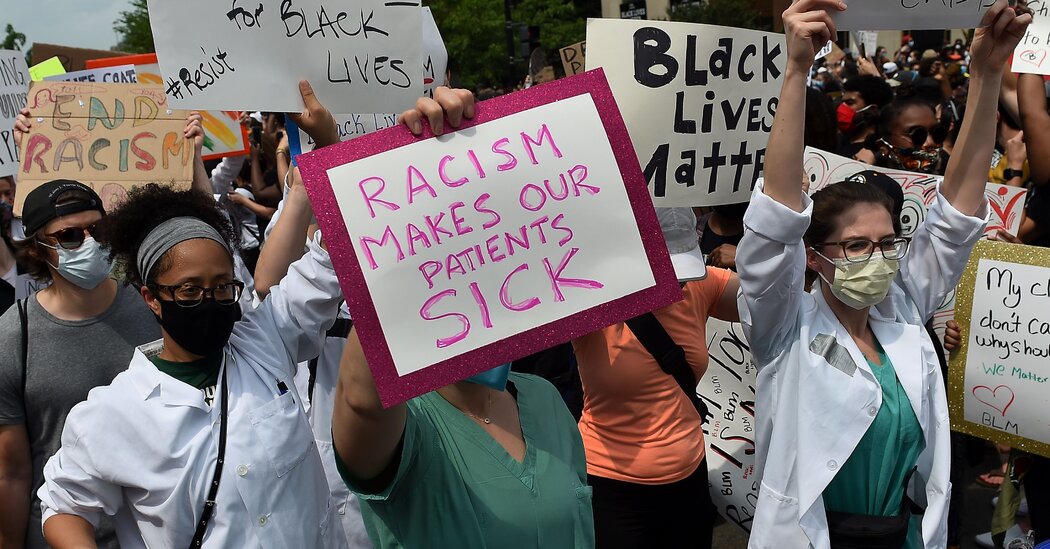
A series of studies in an influential medical journal takes a close look at longstanding gaps in medical care.Two decades ago, only 9 percent of white Americans rated their health as fair or poor. But 14 percent of Hispanic Americans characterized their health in those terms, as did nearly 18 percent of Black Americans.In recent years, access to care has improved in the wake of the Affordable Care Act, which reduced the number of uninsured Americans across all racial and ethnic groups. But the racial health gap has remained, according to a series of studies published on Tuesday in the journal JAMA.A dismal picture of persistent health disparities in America was described in an issue devoted entirely to inequities in medicine. The wide-ranging issue included research on spending and patterns of care, comparative rates of gestational diabetes and the proportion of Black physicians at medical schools.The journal’s editors committed to a sharper focus on racism in medicine after a controversy in June, in which a staff member seemed to suggest that racism was not a problem in health care. The ensuing criticism led to the resignation of the top editor and culminated with a pledge to increase staff diversity and publish a more inclusive array of papers.“The topics of racial and ethnic disparities and inequities in medicine and health care are of critical importance,” Dr. Phil B. Fontanarosa, interim editor in chief of JAMA, said in a statement. He noted that JAMA has published more than 850 articles on racial and ethnic disparities and inequities in the past.The new issue offers studies on disparities in the utilization of health care services and in overall health spending. Together, the findings paint a portrait of a nation still plagued by medical haves and have-nots whose ability to benefit from scientific advances varies by race and ethnicity, despite the fact that the A.C.A. greatly expanded insurance.The racial health gap did not significantly narrow from 1999 to 2018, according to one study whose author said it was tantamount to “a comprehensive national report card.”“We’re failing,” added Dr. Harlan Krumholz, the study’s senior author.“If our national goals are to improve the population’s health and promote more health equity, then we have to admit that whatever we’re doing now is not doing the trick,” he said. “This should wake us up, and spark us to think of new and better approaches.”Other studies in the journal teased apart factors that may be contributing to the gap, including different patterns of care-seeking. White Americans, for example, are more likely than members of minority groups to visit primary care physicians and specialists in the community, rather than in a hospital or emergency room.The disparity was seen even when Americans from various racial and ethnic backgrounds shared the same insurance, like Medicare, the government health plan for seniors.“Access to primary care physicians and specialists in the outpatient setting is really important, because they’re managing chronic conditions like diabetes, heart failure, asthma and chronic obstructive pulmonary disease,” said Kenton J. Johnston, an associate professor of health management at Saint Louis University and the lead author of the study.“If you don’t get in to see the specialist or primary care doctor, you’re going to have complications and problems downstream.”Eye exams at a temporary medical clinic in Knoxville, Tenn., in 2019. The study found that white Americans are more likely to seek primary care in the community, rather than in a hospital or emergency room.Spencer Platt/Getty ImagesDr. Johnston’s study found that minority patients on Medicare have more limited access than white individuals to outpatient health care services.Despite innovations like Medicare Advantage, which increased access to health care overall, Medicare beneficiaries who are minorities — defined as Black, Hispanic, Native American or Asian-Pacific Islander — still have less access than white or multiracial individuals to a physician who is a regular source of care.They are also less likely to have influenza and pneumonia vaccinations, and they have more limited access to specialists, the study found.In Dr. Johnston’s hometown St. Louis, as in other cities, fewer health care providers and specialists are found in low-income and minority neighborhoods, which is a function of structural racism and a legacy of residential segregation, Dr. Johnston said.“It’s not a question of insurance — it has more to do with the supply side,” he added. “If you want to access a good specialist, your choice of cardiologists is going to be different if you live out in the counties that are more affluent versus if you live in the poor areas in northern St. Louis.”Another study in the journal compared health care spending by race and ethnicity, finding that at $8,141 per year, spending for white individuals is higher than for Americans of other races and ethnicities, and the portion of it spent on outpatient care is higher than the average.Health care spending for Black individuals is $7,361 per year, and a smaller proportion of the funds are spent on outpatient care. The amounts that go to pay for care of Black people in an emergency room and hospital are 12 percent and 19 percent higher, respectively, than the nationwide averages.“This is about poverty, geography and where people live and where primary care clinics are located, and it is about health insurance,” said Joseph Dieleman, an associate professor at the Institute for Health Metrics and Evaluation at the University of Washington in Seattle and an author of the study.But the difference also reflects patient behavior. “It is also about people’s past experiences with the health care system and the quality of care they or their loved ones have received, which leads to hesitation or resistance to accessing health care early,” Dr. Dieleman said.The findings may explain some of the disparities in health outcomes, though social and economic factors also play a role, among them poverty, so-called food deserts and neighborhoods that expose residents to pollution and offer few opportunities for physical exercise and recreation.Another study compared rates of gestational diabetes, finding that it became more prevalent in pregnant women of all ages and across all races and ethnic groups from 2011 to 2019, with the highest rates reported in Asian Indian women.Overall, Black women face a much higher risk of dying from pregnancy complications than white women, with maternal mortality rates of 41.7 per 100,000 live births for Black women, compared with 13.4 per 100,000 live births for white women.The disparity persists even when adjusted for factors like age and income, according to an editorial elsewhere in the journal. Black infant mortality rates are also higher, with death rates of 10.62 per 1,000 live births for Black newborns, compared with 4.68 per 1,000 live births for white babies.Black patients opt for more preventive care when their physician is Black, according to the editorial, and mortality rates for newborns drop sharply when they are cared for by Black physicians.The proportion of faculty physicians at American medical schools who identified as Black or African American has only slightly increased over the past 30 years, from 2.6 percent of faculty in 1990 to 3.8 percent of faculty in 2020, still far less than their proportion of the general population, the editorial said.The pandemic has highlighted longstanding inequities, taking a greater toll on Black and Hispanic communities. An editorial in the journal noted that the health care system has a long history of racism. Hospitals only desegregated when they were threatened with the loss of federal funds from the Medicaid and Medicare programs, which were enacted in 1966.While the A.C.A. and the expansion of Medicaid in many states has improved access to medical care, the inequities persist. The editorial, written by Alexander N. Ortega and Dylan H. Roby of Drexel University in Philadelphia, called for more investment in research, training, clinical practice and community engagement.“Ending structural racism and inequities in the U.S. health care system has proved to be a challenge,” the authors wrote.

Read more →

Covid-vaccine scientists begin plague-jab trial

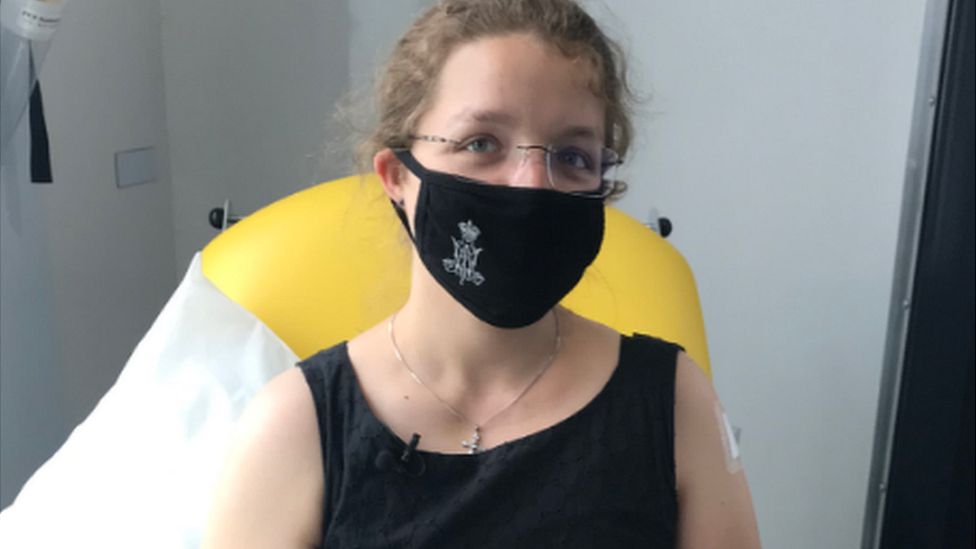
SharecloseShare pageCopy linkAbout sharingimage sourceOxford UniversityUK scientists behind the AstraZeneca Covid jab have given the first trial volunteers a new plague vaccine. One of them, Larissa, 26, hopes she can help save lives by volunteering for the research, at the University of Oxford, where she studies genetics.The phase-one trial will see at least 40 healthy 18- to 55-year-olds test the vaccine, which uses the same technology as the coronavirus jab. Its target is a centuries-old bacterial threat, not the new pandemic virus. For much of the world plague is a history lesson – the most infamous plague pandemic, the Black Death that swept through Europe in the 1300s, killed as much as half of the population. But there are still cases in some rural areas of Africa, Asia and America. And in 2017, an outbreak killed 171 people in Madagascar.Protect livesAntibiotics can now be used to treat plague, if given early, But many of the regions at risk of outbreaks are very remote. An effective vaccine could offer a new way to protect lives. And the trial will check how well the body recognises and learns to fight the plague after vaccination. Killed millionsLarissa said: “I’m lucky enough to live in a time where vaccines are being developed.”And so, when I saw that there was a study aiming at developing a vaccine against a disease that’s been around for 2000 years and has killed millions and millions of people, I didn’t hesitate, I just wanted to do my bit.”Asked if she was worried about side-effects, Larissa said: “I’m not too concerned.”The vaccine that’s being assessed today is using the same platform as the Covid vaccine, which has literally been administered to millions of people around the world.”Added genesLike the Oxford-AstraZeneca coronavirus vaccine, the jab uses a weakened version of a common-cold virus – adenovirus – from chimpanzees that has been genetically altered so it cannot cause an infection in people. This vaccine does not contain plague bacterium and so cannot cause plague. But it does include added genes that make proteins from the plague bacterium Yersinia pestis. And this should teach the body’s immune system how to fend off the real infection, should it ever need to. Emerging diseasesThe same approach could be used for other diseases too, the investigators say.”We’ve already done clinical trials using similar technology against a bacterium, meningitis B, and a virus, Zika,” Oxford Vaccine Group senior clinical researcher Dr Maheshi Ramasamy said.”But we’re also looking to develop vaccines against new and emerging diseases such as Lassa fever or the Marburg virusThe trial, which will run for at least a year, is funded by Innovate UK, part of UK Research and Innovation, the national funding agency investing in science and research in the UK.Related Internet LinksOxford Vaccine GroupThe BBC is not responsible for the content of external sites.

Read more →

Dieting: Villain or scapegoat?

For decades, there has been an accepted definition of dieting in academia, and in society as a whole. Michael Lowe, PhD, a professor in Drexel University’s College of Arts and Sciences, has recently reevaluated the decades of dieting research to redefine the way researchers and the public define — and therefore understand — dieting and the culture of weight loss.
According to Lowe, the most pressing problem is not dieting itself, but the collision of the modern food environment with our immutable evolutionary heritage that drives us to find and consume food when it is available. In today’s food environment, this combination makes lasting control of food intake (and, usually, body mass) exceptionally difficult. These challenges are further magnified if there is a genetic predisposition toward excessive weight gain. Lowe, along with doctoral students Joanna Chen and Simar Singh, explain the relation of this background to dieting in two recently published papers in Appetite and Physiology & Behavior.
“Research regarding the definition and consequences of dieting has generated controversy for years. This controversy has spilled over into the public domain, especially as eating disorders and obesity have become more prevalent,” said Lowe. “One of the earliest and longest-lasting controversies involves the restrained eating framework created by University of Toronto professors Peter Herman and Janet Polivy in the mid-1970s.”
Lowe and colleagues suggest that historical trends impacted the development of the Restraint Theory in ways that inappropriately impugned of the practice of dieting for weight control. In the 1970s and 1980s, two worrisome health problems started to increase substantially: obesity and eating disorders involving binge eating (bulimia nervosa and binge eating disorder). Though obesity and binge eating sometimes co-exist, one often occurs without the other, Lowe explained.
The fundamental problem is that restraint theorists’ measure of what they call “chronic dieting” (or “restrained eating”) actually measures weight fluctuations and emotional over-involvement with food, according to Lowe. Herman and Polivy attributed the latter characteristics to chronic dieting but at the time (the mid-1970s) they couldn’t know that western societies were on the brink of dual epidemics of obesity and binge eating. They therefore didn’t realize that dieting was not usually the cause of eating and weight problems but a consequence and symptom of an emerging, toxic food environment.
“Stated differently, asking whether dieting is ‘good or bad’ is analogous to asking if taking methadone is good or bad,” Lowe said. “If someone goes on a weight loss diet because of unwanted weight gain or loss of control eating, then dieting will at least temporarily improve these conditions. Just as taking methadone is a consequence of a pre-existing susceptibility to drug addiction, dieting is usually a consequence of a pre-existing susceptibility to obesity or loss of control eating.”
He added, the single best way to curb dieting is to make widespread changes to the food environment, both societally and within the home. Helping individuals understand that dieting is more a scapegoat than a villain should refocus people’s concerns on the true source of our obsessions with eating, weight and dieting: a food environment that is as unhealthy as the “tobacco environment” was in the 1950s.
Lowe’s final distinction is that there is a small proportion of the population for whom weight loss dieting truly is pernicious, which is those with anorexia or bulimia nervosa. At least among those eating disordered individuals who come to clinical attention, they also tend to reach elevated BMIs before engaging in radical dieting and extreme weight loss. This results in a state Lowe and colleagues call weight suppression, which paradoxically helps perpetuate their eating disorder. For these individuals, weight loss dieting was indeed dangerous. But again, an unhealthy food environment is the likely culprit that caused them to gain weight in the first place, thereby prompting them to engage in unhealthy dieting to find a solution.
Story Source:
Materials provided by Drexel University. Note: Content may be edited for style and length.

Read more →

Antibodies elicited by COVID-19 vaccination effective against delta variant

Despite causing a surge in infections this summer that has resulted in thousands of hospitalizations and deaths, the delta variant of the virus that causes COVID-19 is not particularly good at evading the antibodies generated by vaccination, according to a study by researchers at Washington University School of Medicine in St. Louis.
The researchers analyzed a panel of antibodies generated by people in response to the Pfizer COVID-19 vaccine and found that delta was unable to evade all but one of the antibodies they tested. Other variants of concern, such as beta, avoided recognition and neutralization by several of the antibodies.
The findings, published Aug. 16 in the journal Immunity, help explain why vaccinated people have largely escaped the worst of the delta surge.
In previous studies, co-senior author Ali Ellebedy, PhD, an associate professor of pathology & immunology, of medicine and of molecular microbiology, had shown that both natural infection and vaccination elicit lasting antibody production. But the length of the antibody response is only one aspect of protection. The breadth matters, too. An ideal antibody response includes a diverse set of antibodies with the flexibility to recognize many slightly different variants of the virus. Breadth confers resilience. Even if a few antibodies lose the ability to recognize a new variant, other antibodies in the arsenal should remain capable of neutralizing it.
“The fact that delta has outcompeted other variants does not mean that it’s more resistant to our antibodies compared to other variants,” said co-senior author Jacco Boon, PhD, an associate professor of medicine, of molecular microbiology and of pathology & immunology. “The ability of a variant to spread is the sum of many factors. Resistance to antibodies is just one factor. Another one is how well the variant replicates. A variant that replicates better is likely to spread faster, independent of its ability to evade our immune response. So delta is surging, yes, but there’s no evidence that it is better at overcoming vaccine-induced immunity compared to other variants.”
To assess the breadth of the antibody response to SARS-CoV-2, the virus that causes COVID-19, Ellebedy and colleagues — including co-first authors Aaron Schmitz, PhD, a research specialist; Jackson S. Turner, PhD, an instructor in pathology & immunology; and Zhuoming Liu, PhD, a staff scientist — extracted antibody-producing cells from three people who had received the Pfizer vaccine. They grew the cells in the laboratory and obtained from them a set of 13 antibodies that target the original strain that began circulating last year.

Read more →