Over 200 health journals call on world leaders to address 'catastrophic harm to health' from climate change

Over 200 health journals across the world have come together to simultaneously publish an editorial calling on world leaders to take emergency action to limit global temperature increases, halt the destruction of nature, and protect health.
While recent targets to reduce emissions and conserve biodiversity are welcome, they are not enough and are yet to be matched with credible short and longer term plans, it warns.
The editorial is published in leading titles from every continent including The BMJ, The Lancet, the New England Journal of Medicine, the East African Medical Journal, the Chinese Science Bulletin, the National Medical Journal of India, the Medical Journal of Australia, and 50 BMJ specialist journals including BMJ Global Health and Thorax.
Never have so many journals come together to make the same statement, reflecting the severity of the climate change emergency now facing the world.
The editorial is being published ahead of the UN General Assembly next week, one of the last international meetings taking place before the (COP26) climate conference in Glasgow, UK in November. This is a crucial moment to urge all countries to deliver enhanced and ambitious climate plans to honour the goals of the Paris Agreement, the international treaty on climate change adopted by 195 countries in 2015.
For decades, health professionals and health journals have been warning of the severe and growing impacts on health from climate change and the destruction of nature .

Read more →

Sarah Harding death: How to do a breast cancer self-examination

A GP has explained the simple breast cancer check people can do themselves following the death of Girls Aloud star Sarah Harding at the age of 39.Dr Nighat Arif told BBC Breakfast’s Dan Walker how to do a basic self-examination – and to not hesitate to call your doctor if you find a lump.Read more: Girls Aloud star Sarah Harding dies aged 39

Read more →

Twins conjoined at head separated after rare surgery in Israel

SharecloseShare pageCopy linkAbout sharingimage sourceSoroka Medical Centre via ReutersOne-year-old twin girls who were born conjoined at the back of their heads have seen each other for the first time after undergoing rare separation surgery in Israel.The 12-hour operation at the Soroka Medical Centre in the city of Beersheba last week took months of preparation, and included the scalp grafts for both.Dozens of experts from Israel and abroad were involved.The girls, who have not been named, are said to be recovering well.”They are breathing and eating on their own,” Eldad Silberstein, the head of Soroka’s plastic surgery department, told Israel’s Channel 12 news.It is the first time such an operation, which has only been conducted 20 times worldwide, has been performed in Israel.image sourceReutersMonths before the surgery, inflatable silicone bags were inserted into their heads and periodically expanded to stretch skin. The new skin was then used to seal their heads after the skulls were reconstructed.Preparation also included the creation of a 3D virtual reality model of the twins, said Mickey Gideon, Soroka’s chief neurosurgeon. “To our delight, everything went as we had hoped,” he added.The girls, who were born in August 2020, are expected to lead completely normal lives.FROM THE ARCHIVE: The battle to separate Safa and Marwa

Read more →

Study: Ventilation Helps Reduce Covid Levels in Dorms

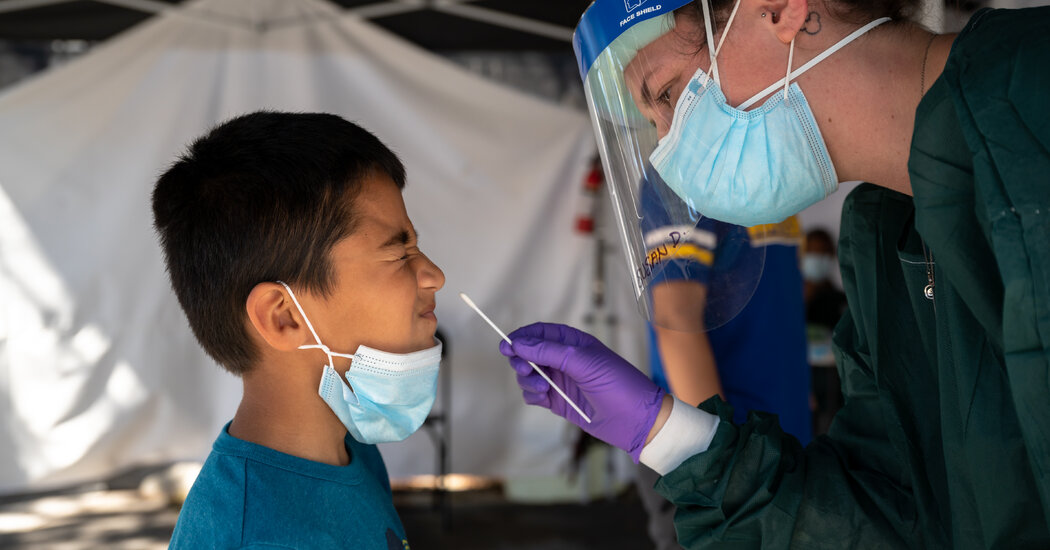
Opening a window could reduce the amount of coronavirus in a room by half, according to a new observational study of infected college students in an isolation dormitory at the University of Oregon.The study, which was posted online, is small and has not yet been published in a scientific journal. But it provides real-world evidence for several important principles, demonstrating that the virus spreads from infected people into the air in a room; that the more virus they’re carrying, the more virus builds up indoors; and that both natural and mechanical ventilation appear to reduce this environmental viral load.“Ventilation is one of the most important mitigation strategies that we have at our disposal,” said Kevin Van Den Wymelenberg, who led the research and directs the Institute for Health in the Built Environment.The researchers studied 35 University of Oregon students who tested positive for the coronavirus between January and May. All students subsequently moved into single rooms in a Covid isolation dormitory for a 10-day isolation period.The scientists placed Petri dishes in each room and used an active air sampler to trap aerosols floating around the air. Several times a day, they also swabbed various surfaces in the room, as well as students’ noses and mouths.Then they used P.C.R., or polymerase chain reaction, testing to determine whether the virus was present in each sample and, if so, at what levels.The data confirmed that there was a clear link between the amount of virus that students were carrying and the environmental viral load. As the amount of virus in students’ noses and mouths decreased over their isolation period, so did the amount of airborne virus.“There was a significant correlation between the nasal samples and the air samples in the room,” Dr. Van Den Wymelenberg said.The viral loads in the rooms were higher, on average, when the students were symptomatic than when they were symptom-free, although the scientists stressed that even asymptomatic students emitted plenty of virus. Several self-reported symptoms, including coughing, were specifically associated with higher environmental viral loads.The researchers also calculated the mechanical ventilation rate for each room, and asked students to report how often the windows were open. They found that viral loads were about twice as high, on average, in rooms that had the window closed more than half the time.“Ventilation is really important, and I think we’re just starting to realize how important it is,” said Leslie Dietz, a study co-author and researcher at the University of Oregon.The study had several limitations, including the fact that it included only young adults and that symptoms and window data were self-reported. The researchers also noted that they did not measure how much of the virus present in the room was viable, or capable of infecting other people.

Read more →

NHS wait times: 'I’m not half the man I was'

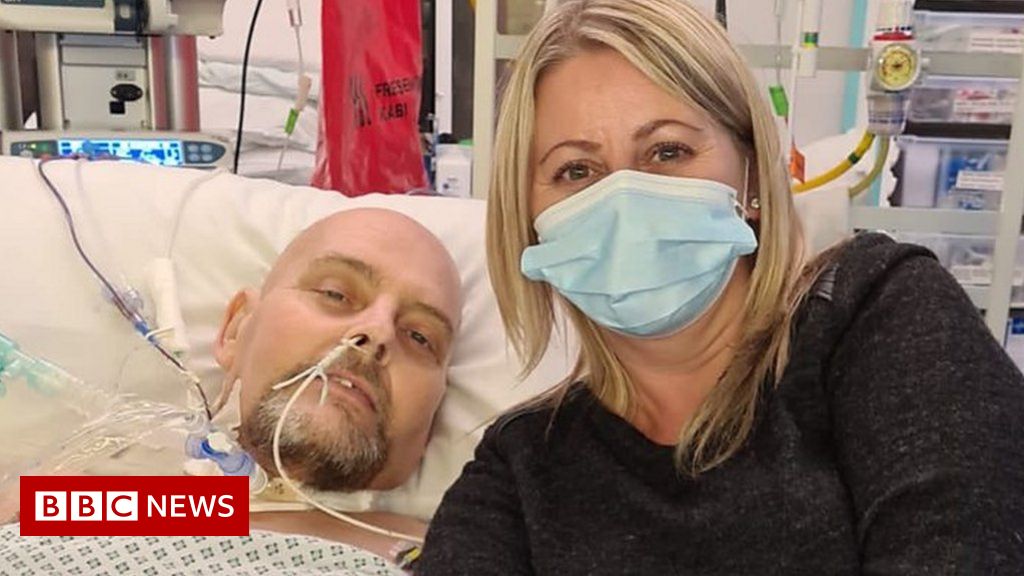
Wayne Dennis, aged 50, from Derbyshire was diagnosed with gallstones in June 2019 and has been on a waiting list to have gallbladder surgery for more than a year.He was due to have an operation in spring 2020, but the procedure was delayed because of the pandemic. In August last year Wayne developed acute pancreatitis and spent 197 days in hospital including 145 days in intensive care. Wayne’s wife Terri kept a video diary documenting her husband’s health battle.A record number of people – more than 5.45 million – are waiting for NHS hospital treatment in England, according to the latest figures from NHS England.A spokesperson for the University Hospitals of Derby and Burton, who are treating Wayne, said: “Tackling the backlog of planned operations caused by Covid-19 is a challenge, but despite a really busy summer our staff have made good progress in almost halving the number of patients waiting over a year for a routine procedure.”Wayne has now been contacted about medical checks ahead of an operation – but no date for surgery has yet been given.He spoke to BBC health editor, Hugh Pym.Producer: Bernadette Kitterick Camera: Steve Lammiman

Read more →

Covid: Decision to jab children 'entirely up to parents'

The decision to vaccinate healthy 12-15 year-olds should be “entirely up to parents”, Prof Anthony Harnden has said.The deputy chairman of the JVCI (Joint Committee on Vaccination and Immunisation), told BBC Breakfast that parents needed to understand the risks and benefits and “make up their own minds whether they offer consent or not”.He said the issue was not “black and white” unlike adults getting the coronavirus vaccine.His comments came after the JVCI said it would not recommend a rollout for 12-15 year-olds, as the benefits on health grounds alone were “marginal”.

Read more →

New AI algorithm to improve brain stimulation devices to treat disease

For millions of people with epilepsy and movement disorders such as Parkinson’s disease, electrical stimulation of the brain already is widening treatment possibilities. In the future, electrical stimulation may help people with psychiatric illness and direct brain injuries, such as stroke.
However, studying how brain networks interact with each other is complicated. Brain networks can be explored by delivering brief pulses of electrical current in one area of a patient’s brain while measuring voltage responses in other areas. In principle, one should be able to infer the structure of brain networks from these data. However, with real-world data, the problem is difficult because the recorded signals are complex, and a limited amount of measurements can be made.
To make the problem manageable, Mayo Clinic researchers developed a set of paradigms, or viewpoints, that simplify comparisons between effects of electrical stimulation on the brain. Because a mathematical technique to characterize how assemblies of inputs converge in human brain regions did not exist in the scientific literature, the Mayo team collaborated with an international expert in artificial intelligence (AI) algorithms to develop a new type of algorithm called “basis profile curve identification.”
In a study published in PLOS Computational Biology, a patient with a brain tumor underwent placement of an electrocorticographic electrode array to locate seizures and map brain function before a tumor was removed. Every electrode interaction resulted in hundreds to thousands of time points to be studied using the new algorithm.
“Our findings show that this new type of algorithm may help us understand which brain regions directly interact with one another, which in turn may help guide placement of electrodes for stimulating devices to treat network brain diseases,” says Kai Miller, M.D., Ph.D., a Mayo Clinic neurosurgeon and first author of the study. “As new technology emerges, this type of algorithm may help us to better treat patients with epilepsy, movement disorders like Parkinson’s disease, and psychiatric illnesses like obsessive compulsive disorder and depression.”
“Neurologic data to date is perhaps the most challenging and exciting data to model for AI researchers,” says Klaus-Robert Mueller, Ph.D., study co-author and member of the Google Research Brain Team. Dr. Mueller is co-director of the Berlin Institute for the Foundations of Learning and Data and director of the Machine Learning Group — both at Technical University of Berlin.
In the study, the authors provide a downloadable code package so others may explore the technique. “Sharing the developed code is a core part of our efforts to help reproducibility of research,” says Dora Hermes, Ph.D., a Mayo Clinic biomedical engineer and senior author.
This research was supported by National Institutes of Health’s National Center for Advancing Translational Science Clinical and Translational Science Award, National Institute of Mental Health Collaborative Research in Computational Neuroscience, and the Federal Ministry of Education and Research.
Story Source:
Materials provided by Mayo Clinic. Original written by Susan Barber Lindquist. Note: Content may be edited for style and length.

Read more →

White House Seeks $65 Billion to Prepare for Future Pandemics

The plan calls for an initial investment of at least $15 billion — half of what President Biden initially proposed.WASHINGTON — The White House, stepping into delicate negotiations on Capitol Hill over funding to prevent future pandemics, unveiled on Friday a $65.3 billion preparedness plan that it likened to the Apollo missions to the moon, and called on Congress to immediately invest at least $15 billion for the effort.But the $15 billion figure is only half of what Mr. Biden initially proposed, and the announcement on Friday drew complaints from health experts who warned lawmakers not to squander an opportunity to use the lessons of the coronavirus pandemic to fully prepare the nation for the next one.The plan, drafted by President Biden’s science adviser, Eric S. Lander, and his National Security Council, would establish a full-time “Mission Control” office to coordinate the work of agencies across the government to spot emerging threats and ready the nation to fight them. It calls for $65.3 billion to be spent over the next seven to 10 years.Roughly a third of the total investment, $24 billion, would be allocated to developing, testing and manufacturing new vaccines for a broad range of viral threats. Nearly $12 billion would be for developing therapeutics, and $5 billion for diagnostic tests; the rest would help develop early warning systems, improve the nation’s pandemic preparedness stockpile and build capacity for manufacturing vital supplies.“We’ve got to seize the unique opportunity to transform our scientific capabilities so we’re prepared for the increasing frequency of biological threats on the horizon,” Dr. Lander said, adding, “And it’s vital that we start with an initial outlay of $15 to $20 billion to jump start these efforts.”.css-1xzcza9{list-style-type:disc;padding-inline-start:1em;}.css-3btd0c{font-family:nyt-franklin,helvetica,arial,sans-serif;font-size:1rem;line-height:1.375rem;color:#333;margin-bottom:0.78125rem;}@media (min-width:740px){.css-3btd0c{font-size:1.0625rem;line-height:1.5rem;margin-bottom:0.9375rem;}}.css-3btd0c strong{font-weight:600;}.css-3btd0c em{font-style:italic;}.css-w739ur{margin:0 auto 5px;font-family:nyt-franklin,helvetica,arial,sans-serif;font-weight:700;font-size:1.125rem;line-height:1.3125rem;color:#121212;}#NYT_BELOW_MAIN_CONTENT_REGION .css-w739ur{font-family:nyt-cheltenham,georgia,’times new roman’,times,serif;font-weight:700;font-size:1.375rem;line-height:1.625rem;}@media (min-width:740px){#NYT_BELOW_MAIN_CONTENT_REGION .css-w739ur{font-size:1.6875rem;line-height:1.875rem;}}@media (min-width:740px){.css-w739ur{font-size:1.25rem;line-height:1.4375rem;}}.css-9s9ecg{margin-bottom:15px;}.css-uf1ume{display:-webkit-box;display:-webkit-flex;display:-ms-flexbox;display:flex;-webkit-box-pack:justify;-webkit-justify-content:space-between;-ms-flex-pack:justify;justify-content:space-between;}.css-wxi1cx{display:-webkit-box;display:-webkit-flex;display:-ms-flexbox;display:flex;-webkit-flex-direction:column;-ms-flex-direction:column;flex-direction:column;-webkit-align-self:flex-end;-ms-flex-item-align:end;align-self:flex-end;}.css-12vbvwq{background-color:white;border:1px solid #e2e2e2;width:calc(100% – 40px);max-width:600px;margin:1.5rem auto 1.9rem;padding:15px;box-sizing:border-box;}@media (min-width:740px){.css-12vbvwq{padding:20px;width:100%;}}.css-12vbvwq:focus{outline:1px solid #e2e2e2;}#NYT_BELOW_MAIN_CONTENT_REGION .css-12vbvwq{border:none;padding:10px 0 0;border-top:2px solid #121212;}.css-12vbvwq[data-truncated] .css-rdoyk0{-webkit-transform:rotate(0deg);-ms-transform:rotate(0deg);transform:rotate(0deg);}.css-12vbvwq[data-truncated] .css-eb027h{max-height:300px;overflow:hidden;-webkit-transition:none;transition:none;}.css-12vbvwq[data-truncated] .css-5gimkt:after{content:’See more’;}.css-12vbvwq[data-truncated] .css-6mllg9{opacity:1;}.css-qjk116{margin:0 auto;overflow:hidden;}.css-qjk116 strong{font-weight:700;}.css-qjk116 em{font-style:italic;}.css-qjk116 a{color:#326891;-webkit-text-decoration:underline;text-decoration:underline;text-underline-offset:1px;-webkit-text-decoration-thickness:1px;text-decoration-thickness:1px;-webkit-text-decoration-color:#326891;text-decoration-color:#326891;}.css-qjk116 a:visited{color:#326891;-webkit-text-decoration-color:#326891;text-decoration-color:#326891;}.css-qjk116 a:hover{-webkit-text-decoration:none;text-decoration:none;}Mr. Biden’s request for $15 billion to be included in a sweeping budget bill Democrats intend to pass in the coming weeks represents a significant compromise. In March, the White House announced that its American Jobs Plan would include $30 billion for pandemic preparedness. But on Capitol Hill, where moderate Democrats are pushing to lower the price tag of the $3.5 trillion package, lawmakers have considered spending $8 billion on pandemic preparedness.“It would be a travesty if, in this time of the worst pandemic in a century, the administration and Congress, both sides of the aisle, didn’t get together and provide substantial funding to greatly reduce the risk of future pandemics,” said Dr. Tom Frieden, who ran the Centers for Disease Control and Prevention in the Obama administration.In July, when it looked like Democrats on Capitol Hill might slash the president’s $30 billion request to $5 billion, Dr. Frieden and Tom Daschle, a former Senate Democratic leader who made health care his signature issue, wrote an opinion essay in The Hill that argued such a cut was unthinkable after the worst public health crisis in a century.Mr. Daschle said Friday that both $15 billion and $65 billion were “a fraction of what is needed now.” The Bipartisan Commission on Biodefense, a private organization of which he is a member, has proposed $100 billion over 10 years, he said.“I am very concerned that if we don’t commit the resources now, it will only get harder, and less likely, in the years ahead,” Mr. Daschle wrote in an email. “Now is the time to apply lessons learned.”Some Democrats have repeatedly called for the initial $30 billion to be included in the budget package. Among them are Senator Patty Murray, Democrat of Washington and the chairwoman of the Senate health committee, and Senator Elizabeth Warren, Democrat of Massachusetts. Ms. Warren and six of her Democratic colleagues recently wrote to the House and Senate leaders of both parties, calling on them to include $30 billion in the budget package “to prevent and prepare for future pandemics.”.css-1xzcza9{list-style-type:disc;padding-inline-start:1em;}.css-3btd0c{font-family:nyt-franklin,helvetica,arial,sans-serif;font-size:1rem;line-height:1.375rem;color:#333;margin-bottom:0.78125rem;}@media (min-width:740px){.css-3btd0c{font-size:1.0625rem;line-height:1.5rem;margin-bottom:0.9375rem;}}.css-3btd0c strong{font-weight:600;}.css-3btd0c em{font-style:italic;}.css-w739ur{margin:0 auto 5px;font-family:nyt-franklin,helvetica,arial,sans-serif;font-weight:700;font-size:1.125rem;line-height:1.3125rem;color:#121212;}#NYT_BELOW_MAIN_CONTENT_REGION .css-w739ur{font-family:nyt-cheltenham,georgia,’times new roman’,times,serif;font-weight:700;font-size:1.375rem;line-height:1.625rem;}@media (min-width:740px){#NYT_BELOW_MAIN_CONTENT_REGION .css-w739ur{font-size:1.6875rem;line-height:1.875rem;}}@media (min-width:740px){.css-w739ur{font-size:1.25rem;line-height:1.4375rem;}}.css-9s9ecg{margin-bottom:15px;}.css-16ed7iq{width:100%;display:-webkit-box;display:-webkit-flex;display:-ms-flexbox;display:flex;-webkit-align-items:center;-webkit-box-align:center;-ms-flex-align:center;align-items:center;-webkit-box-pack:center;-webkit-justify-content:center;-ms-flex-pack:center;justify-content:center;padding:10px 0;background-color:white;}.css-pmm6ed{display:-webkit-box;display:-webkit-flex;display:-ms-flexbox;display:flex;-webkit-align-items:center;-webkit-box-align:center;-ms-flex-align:center;align-items:center;}.css-pmm6ed > :not(:first-child){margin-left:5px;}.css-5gimkt{font-family:nyt-franklin,helvetica,arial,sans-serif;font-size:0.8125rem;font-weight:700;-webkit-letter-spacing:0.03em;-moz-letter-spacing:0.03em;-ms-letter-spacing:0.03em;letter-spacing:0.03em;text-transform:uppercase;color:#333;}.css-5gimkt:after{content:’Collapse’;}.css-rdoyk0{-webkit-transition:all 0.5s ease;transition:all 0.5s ease;-webkit-transform:rotate(180deg);-ms-transform:rotate(180deg);transform:rotate(180deg);}.css-eb027h{max-height:5000px;-webkit-transition:max-height 0.5s ease;transition:max-height 0.5s ease;}.css-6mllg9{-webkit-transition:all 0.5s ease;transition:all 0.5s ease;position:relative;opacity:0;}.css-6mllg9:before{content:”;background-image:linear-gradient(180deg,transparent,#ffffff);background-image:-webkit-linear-gradient(270deg,rgba(255,255,255,0),#ffffff);height:80px;width:100%;position:absolute;bottom:0px;pointer-events:none;}.css-uf1ume{display:-webkit-box;display:-webkit-flex;display:-ms-flexbox;display:flex;-webkit-box-pack:justify;-webkit-justify-content:space-between;-ms-flex-pack:justify;justify-content:space-between;}.css-wxi1cx{display:-webkit-box;display:-webkit-flex;display:-ms-flexbox;display:flex;-webkit-flex-direction:column;-ms-flex-direction:column;flex-direction:column;-webkit-align-self:flex-end;-ms-flex-item-align:end;align-self:flex-end;}.css-12vbvwq{background-color:white;border:1px solid #e2e2e2;width:calc(100% – 40px);max-width:600px;margin:1.5rem auto 1.9rem;padding:15px;box-sizing:border-box;}@media (min-width:740px){.css-12vbvwq{padding:20px;width:100%;}}.css-12vbvwq:focus{outline:1px solid #e2e2e2;}#NYT_BELOW_MAIN_CONTENT_REGION .css-12vbvwq{border:none;padding:10px 0 0;border-top:2px solid #121212;}.css-12vbvwq[data-truncated] .css-rdoyk0{-webkit-transform:rotate(0deg);-ms-transform:rotate(0deg);transform:rotate(0deg);}.css-12vbvwq[data-truncated] .css-eb027h{max-height:300px;overflow:hidden;-webkit-transition:none;transition:none;}.css-12vbvwq[data-truncated] .css-5gimkt:after{content:’See more’;}.css-12vbvwq[data-truncated] .css-6mllg9{opacity:1;}.css-qjk116{margin:0 auto;overflow:hidden;}.css-qjk116 strong{font-weight:700;}.css-qjk116 em{font-style:italic;}.css-qjk116 a{color:#326891;-webkit-text-decoration:underline;text-decoration:underline;text-underline-offset:1px;-webkit-text-decoration-thickness:1px;text-decoration-thickness:1px;-webkit-text-decoration-color:#326891;text-decoration-color:#326891;}.css-qjk116 a:visited{color:#326891;-webkit-text-decoration-color:#326891;text-decoration-color:#326891;}.css-qjk116 a:hover{-webkit-text-decoration:none;text-decoration:none;}“The Covid-19 pandemic has made clear that underinvesting in our public health infrastructure, our biomedical research pipeline and our medical supply chain has disastrous consequences,” the senators wrote.Committees are still negotiating the details of the budget package, and several people familiar with the plan said the White House announcement on Friday might be an effort to press leaders on Capitol Hill — especially Senator Chuck Schumer, Democrat of New York and the majority leader — to get behind the administration’s full $65.3 billion plan and to commit to at least $15 billion in the budget measure.Mr. Schumer has so far been noncommittal. “I’ve been working and I’ll keep working to make the investments needed to ensure we are fully prepared for future pandemics,” he wrote last month on Twitter.Dr. Lander was joined on Friday by Elizabeth Cameron, the senior director for global health security and biodefense on the National Security Council — a job she also held in the Obama White House, where she drafted a preparedness document known as the pandemic playbook. She said the Biden plan “very much draws on those efforts,” as well as “on lessons from this pandemic.”According to documents released by the White House, the plan has five central goals: improving and expanding the nation’s arsenal of vaccines, therapeutics and diagnostics; improving surveillance of infectious disease threats; strengthening the public health system, with a “particular focus on reducing inequities”; building up the supply chain and the stockpile for personal protective gear and other items; and “managing the mission,” by creating a new Mission Control office — a task Dr. Lander likened to the Apollo missions to send astronauts to the moon in the 1960s.“If you’re getting to the moon, and you have a great booster rocket but you haven’t got a capsule capable of landing or computers capable of directing, it’s not going to work,” he said.

Read more →

Companies Stay Quiet on Texas’ New Abortion Law

Businesses that expressed opposition to restrictive voting laws are declining to take a similar stand on the abortion measure.When Texas lawmakers advanced a restrictive voting rights bill this year, American Airlines and Dell Technologies, two of the state’s biggest employers, were early and vocal critics of the effort.But this week, as a law that prohibits most abortions after about six weeks took effect in Texas, both companies declined to comment on the measure.American Airlines and Dell were representative of the business community at large. While many corporations are taking stands on voting rights, climate change, immigration and other important matters, few companies would comment on the abortion law.Abortion is one of the country’s most politically and emotionally charged issues, and as much as 40 percent of the American public supports outlawing or severely restricting it, according to the Pew Research Center. Opposition to abortion often cuts across demographic groups, and most executives would be reluctant to take a public stand that was likely to anger or alienate a large group of customers and employees whatever they said.“No one is going to walk willingly through this door,” said Sandra Sucher, a professor of management at Harvard Business School. “If I’m a business making a political calculus, it’s just a matter of who I’m going to piss off.”Two dozen major companies contacted by The New York Times on Friday either did not reply or declined to comment. Among those that would not say something were McDonald’s, a sponsor of International Women’s Day; PwC, a major supporter of diversity and inclusion efforts; and Coca-Cola and Delta Air Lines, which led a corporate backlash last year against a restrictive voting bill in Georgia, where they have their headquarters.Many of the biggest employers in Texas, including AT&T, Oracle, McKesson and Phillips 66, declined to comment. Even companies that are quick to speak up on social issues, including Patagonia and Levi’s, did not say anything about the new law. And Catalyst, a nonprofit organization that teams up with big companies to “build workplaces that work for women,” declined to comment.“When all of these companies who participate in things like International Women’s Day won’t speak out on reproductive health care, it shows that they care about the bottom line, not what women need and want,” said Lindsey Taylor Wood, chief executive of The Helm, a venture capital firm that funds female founders. But Elizabeth Graham, a vice president of Texas Right to Life, a group that backs the law, said it would be good for business in the state, claiming that a majority of people there are “conservative and pro-life.”“Many of our supporters are small and medium-sized business owners,” she said. “They are very much in favor of it.”Joe Pojman, executive director for Texas Alliance for Life, another group that supports the new law, said he had seen scant evidence of any pushback from the businesses.“We just haven’t seen any evidence of that, and we frankly are grateful for that,” he said.Before the law, known as Senate Bill 8, went into effect on Wednesday, some legal experts had argued it would face legal challenges that would postpone its enforcement or ultimately strike it down. The law empowers private citizens to sue anyone who performs an abortion or “aids and abets” such a procedure, a broad definition that could include a driver for a ride-hailing company who takes a woman to a health clinic.But the Supreme Court declined on Wednesday night to block the law, which rules out abortion as an option before most women even know they are pregnant in the second-most-populous state, while the legal challenge to it continues in court.“Companies were caught off guard,” said Jen Stark, an executive at the Tara Health Foundation, which has organized companies in support of reproductive issues. “Usually the courts have stepped in.”Over the past few days, companies have been scrambling to decide what, if anything, they would say about the new law.Abortion is an issue that is closely associated with religious views, an area where businesses are exceedingly cautious.“Keeping religion out of business has been one of the ways that companies try to create a safe space for everyone,” Professor Sucher said. “This marches squarely into the realm of religious views.”The governor of Texas, Greg Abbott, who championed the law, has said it would not hurt the state economically, including its longstanding efforts to get businesses to move there from higher-cost and more liberal parts of the country like California and New York. He argued that some employers would be drawn to the state because of its conservative laws, citing Elon Musk, who runs Tesla and SpaceX, as one such executive.“This is not slowing down businesses coming to the state of Texas at all,” Mr. Abbott, a Republican, told CNBC on Thursday. “In fact, it is accelerating the process of businesses coming to Texas.”But while most executives have stayed quiet, a few have spoken out.Whitney Wolfe Herd, the founder of Bumble in Austin, said it was donating funds to organizations that supported Texas women seeking abortions.Richard Drew/Associated PressBumble, the dating app company founded by Whitney Wolfe Herd and based in Austin, said it was donating funds to organizations that supported women in Texas seeking abortions.“Bumble is woman-founded and women-led, and from day one we’ve stood up for the most vulnerable,” the company said in an Instagram post. “We’ll keep fighting against regressive laws like #SB8.”Understand the Texas Abortion LawCard 1 of 4The most restrictive in the country.

Read more →

'My parents won't let me get the Covid vaccine'

In the US, France and Australia, the Covid-19 vaccine can be given to all teenagers over the age of 12.On Friday, vaccine experts in the UK recommended not to give the jab to all 12-15 year olds, though its chief medical officers may take a different approach.It comes as the support group Teens for Vaccines – which is run by teenagers for teenagers – says young people around the world are being left out of discussions that affect their own health. The group, which is based in the US, says it’s seeing more people from the UK getting in touch for advice on the vaccine and support on how to talk to vaccine-hesitant and anti-vaccine parents.The BBC’s Laura Foster speaks to one teenager whose parents are stopping her from getting the jab, and finds out more about the work Teens for Vaccines does and what all this could mean for teenagers in the UK.

Read more →