Hospitalizations for Children Sharply Increase as Delta Surges
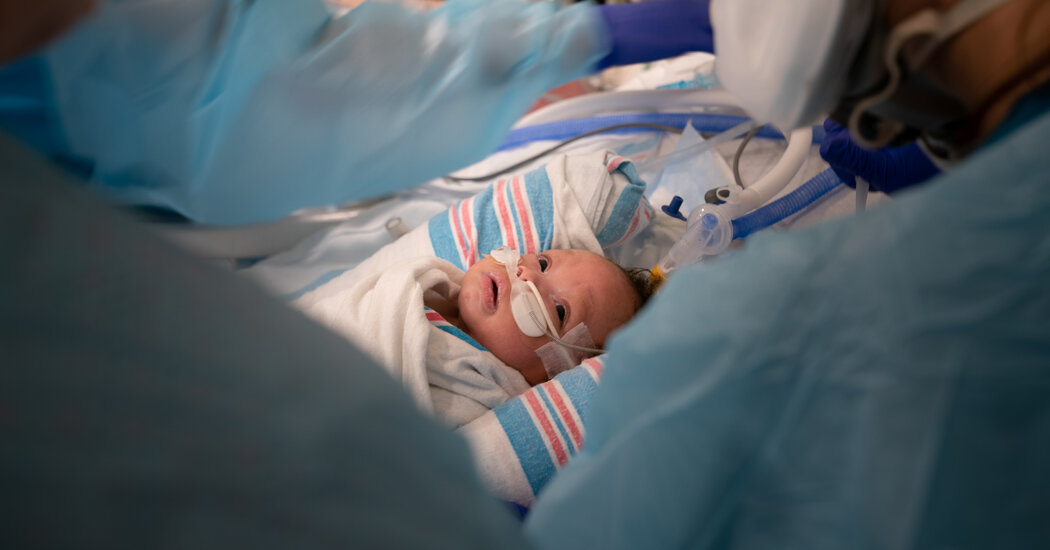
Pediatric hospitalizations for Covid-19 have soared over the summer as the highly contagious Delta variant spread across the country, according to two new studies from the Centers for Disease Control and Prevention.From late June to mid-August, hospitalization rates in the United States for children and teenagers increased nearly fivefold, although they remain slightly below January’s peak, one new study found.But vaccination has made a difference. During this summer’s wave, the hospitalization rate was 10 times as high in unvaccinated adolescents as in those who were vaccinated, researchers found. Pediatric hospital admissions were nearly four times as high in states with the lowest vaccination rates as in those with the highest rates, according to a second study.The studies, released on Friday, do not provide clear answers about whether Delta causes more severe disease in children than earlier versions of the virus. The rise in pediatric hospitalizations could also be due to the variant’s high infectiousness.Indeed, one study concluded that the proportion of hospitalized children with severe disease had not changed in late June and July, when the Delta variant became dominant in the United States.The rates reported in the C.D.C. studies are based on data from two national surveillance systems, including hospitals in 49 states and Washington, D.C.In one C.D.C. study, researchers found that since July, when the Delta variant became predominant, the rate of new Covid cases increased for children 17 and younger, as did Covid-related emergency room visits and hospital admissions.“We saw that E.R. visits, cases and hospital admissions are rising,” said Dr. David Siegel, lieutenant commander in the U.S. Public Health Service and the lead author of the paper. “It could be that Delta is more severe or that Delta is more transmissible, and it could be related to other factors such as masking.”The study also found that Covid-related emergency room visits and hospital admissions among children were more than three times higher in states with the lowest vaccination coverage compared to states with high vaccination rates, underscoring the importance of communitywide vaccination to protect children. Other important factors that might affect regional differences included masking and social distancing measures, the study noted.Last month, as Delta surged, the incidence of Covid in children rose from earlier in the summer — reaching 16.2 cases per 100,000 children ages 4 and under; 28.5 cases per 100,000 children ages 5 to 11; and 32.7 cases per 100,000 children ages 12 through 17.That rate represented a sharp spike from a June low of 1.7 per 100,000 children ages 4 and under; 1.9 cases per 100,000 children ages 5 to 11; and 2.9 per 100,000 children between ages 12 and 17. It was still below the peak incidence of cases among children last January.The proportion of Covid patients under 17 who were admitted to intensive care units ranged from 10 to 25 percent from August 2020 through last June, and hovered at 20 percent by July 2021, according to the C.D.C. study.In a second study, researchers analyzed data from the Covid-Net surveillance network, which includes information on hospitalizations in 99 counties across 14 states.Over the course of the pandemic — or from March 1, 2020, to Aug. 14, 2021 — there were 49.7 Covid-related hospitalizations per 100,000 children and adolescents, the researchers found.But the weekly rates have been climbing since July. During the week ending Aug. 14, there were 1.4 Covid-related hospitalizations for every 100,000 children, compared to 0.3 in late June and early July. (That remains slightly below the peak weekly rate of 1.5 hospitalizations per 100,000 children, in early January 2021, in the post-holiday wave of cases.)Hospitalization rates have increased most sharply for children who are 4 or younger. In the week ending Aug. 14, there were 1.9 hospitalizations per 100,000 children in that age group, nearly 10 times as many as in late June.But based on the limited data available so far, it does not appear that the Delta variant is affecting the incidence of severe disease or deaths among children, which have been somewhat steady and relatively low throughout the pandemic.Among the children and adolescents hospitalized from June 20 to July 31, 23.2 percent were admitted to the I.C.U., 9.8 percent required mechanical ventilation and 1.8 percent died. Those figures were roughly the same as those for children who were hospitalized before the Delta variant became widespread.

Read more →
Gut bacteria influence brain development

Extremely premature infants are at a high risk for brain damage. Researchers have now found possible targets for the early treatment of such damage outside the brain: Bacteria in the gut of premature infants may play a key role. The research team found that the overgrowth of the gastrointestinal tract with the bacterium Klebsiella is associated with an increased presence of certain immune cells and the development of neurological damage in premature babies.
Complex interplay: the gut-immune-brain axis
The early development of the gut, the brain and the immune system are closely interrelated. Researchers refer to this as the gut-immune-brain axis. Bacteria in the gut cooperate with the immune system, which in turn monitors gut microbes and develops appropriate responses to them. In addition, the gut is in contact with the brain via the vagus nerve as well as via the immune system. “We investigated the role this axis plays in the brain development of extreme preterm infants,” says the first author of the study, David Seki. “The microorganisms of the gut microbiome — which is a vital collection of hundreds of species of bacteria, fungi, viruses and other microbes — are in equilibrium in healthy people. However, especially in premature babies, whose immune system and microbiome have not been able to develop fully, shifts are quite likely to occur. These shifts may result in negative effects on the brain,” explains the microbiologist and immunologist.
Patterns in the microbiome provide clues to brain damage
“In fact, we have been able to identify certain patterns in the microbiome and immune response that are clearly linked to the progression and severity of brain injury,” adds David Berry, microbiologist and head of the research group at the Centre for Microbiology and Environmental Systems Science (CMESS) at the University of Vienna as well as Operational Director of the Joint Microbiome Facility of the Medical University of Vienna and University of Vienna. “Crucially, such patterns often show up prior to changes in the brain. This suggests a critical time window during which brain damage of extremely premature infants may be prevented from worsening or even avoided.”
Comprehensive study of the development of extremely premature infants
Starting points for the development of appropriate therapies are provided by the biomarkers that the interdisciplinary team was able to identify. “Our data show that excessive growth of the bacterium Klebsiella and the associated elevated ??-T-cell levels can apparently exacerbate brain damage,” explains Lukas Wisgrill, Neonatologist from the Division of Neonatology, Pediatric Intensive Care Medicine and Neuropediatrics at the Department of Pediatric and Adolescent Medicine at the Medical University of Vienna. “We were able to track down these patterns because, for a very specific group of newborns, for the first time we explored in detail how the gut microbiome, the immune system and the brain develop and how they interact in this process,” he adds. The study monitored a total of 60 premature infants, born before 28 weeks gestation and weighing less than 1 kilogram, for several weeks or even months. Using state-of-the-art methods — the team examined the microbiome using 16S rRNA gene sequencing, among other methods — the researchers analysed blood and stool samples, brain wave recordings (e.g. aEEG) and MRI images of the infants’ brains.
Research continues with two studies
The study, which is an inter-university clusterproject under the joint leadership by Angelika Berger (Medical University of Vienna) and David Berry (University of Vienna), is the starting point for a research project that will investigate the microbiome and its significance for the neurological development of prematurely born children even more thoroughly. In addition, the researchers will continue to follow the children of the initial study. “How the children’s motoric and cognitive skills develop only becomes apparent over several years,” explains Angelika Berger. “We aim to understand how this very early development of the gut-immune-brain axis plays out in the long term. ” The most important cooperation partners for the project are already on board: “The children’s parents have supported us in the study with great interest and openness,” says David Seki. “Ultimately, this is the only reason we were able to gain these important insights. We are very grateful for that.”
Story Source:
Materials provided by University of Vienna. Note: Content may be edited for style and length.

Read more →

Severe infections during pregnancy associated with complications around childbirth

Individuals who are hospitalized during pregnancy due to sepsis have higher odds of complications surrounding childbirth, according to a study led by researchers at UC San Francisco. The study found that pregnancies complicated by sepsis were associated with an increased risk of cesarean delivery, postpartum hemorrhage and preterm delivery, highlighting the risk of any severe infection during pregnancy.
“If pregnant women were admitted for severe infection, even after they’re discharged and they recover from that infection, there was an increased risk of complications related to pregnancy that are associated with core placental dysfunction,” said Stephanie Gaw, MD, PhD, assistant professor of Obstetrics, Gynecology & Reproductive Sciences at UCSF, and senior author of the paper, which appears September 3, 2021, in JAMA Network Open.
Sepsis is a life-threatening condition caused by an unusually severe response to an infection, which leads to widespread inflammation in the body and, potentially, organ failure and death. Maternal sepsis is the second leading cause of maternal mortality in the United States, according to the Centers for Disease Control and Prevention (CDC).
The timing of infection also impacts outcomes for mother and baby. The cohort study found that patients with sepsis before delivery were twice as likely to have placental dysfunction compared to pregnant patients without sepsis.
During the study, the mean gestational age at the time of infection was 24.6 weeks. Early infection, at less than 24 weeks of gestation, was associated with the greatest risk of placental dysfunction, maternal hypertensive disorder, and newborns who were small for gestational age.
Downstream Consequences of COVID or Other Infections
Although the study used pre-pandemic data, Gaw says the findings are an important reflection of the potential long-term consequences of any acute infection.

Read more →

Predicting possible Alzheimer’s with nearly 100 percent accuracy

Researchers from Kaunas universities, Lithuania developed a deep learning-based method that can predict the possible onset of Alzheimer’s disease from brain images with an accuracy of over 99 per cent. The method was developed while analysing functional MRI images obtained from 138 subjects and performed better in terms of accuracy, sensitivity and specificity than previously developed methods.
According to World Health Organisation, Alzheimer’s disease is the most frequent cause of dementia, contributing to up to 70 per cent of dementia cases. Worldwide, approximately 24 million people are affected, and this number is expected to double every 20 years. Owing to societal ageing, the disease will become a costly public health burden in the years to come.
“Medical professionals all over the world attempt to raise awareness of an early Alzheimer’s diagnosis, which provides the affected with a better chance of benefiting from treatment. This was one of the most important issues for choosing a topic for Modupe Odusami, a PhD student from Nigeria,” says Rytis Maskeli?nas, a researcher at the Department of Multimedia Engineering, Faculty of Informatics, Kaunas University of Technology (KTU), Odusami’s PhD supervisor.
Image processing delegated to the machine
One of the possible Alzheimer’s first signs is mild cognitive impairment (MCI), which is the stage between the expected cognitive decline of normal ageing and dementia. Based on the previous research, functional magnetic resonance imaging (fMRI) can be used to identify the regions in the brain which can be associated with the onset of Alzheimer’s disease, according to Maskeli?nas. The earliest stages of MCI often have almost no clear symptoms, but in quite a few cases can be detected by neuroimaging.
However, although theoretically possible, manual analysing of fMRI images attempting to identify the changes associated with Alzheimer’s not only requires specific knowledge but is also time-consuming — application of Deep learning and other AI methods can speed this up by a significant time margin. Finding MCI features does not necessarily mean the presence of illness, as it can also be a symptom of other related diseases, but it is more of an indicator and possible helper to steer toward an evaluation by a medical professional.

Read more →

Statistical model defines ketamine anesthesia’s effects on the brain

By developing the first statistical model to finely characterize how ketamine anesthesia affects the brain, a team of researchers at MIT’s Picower Institute for Learning and Memory and Massachusetts General Hospital have laid new groundwork for three advances: understanding how ketamine induces anesthesia; monitoring the unconsciousness of patients in surgery; and applying a new method of analyzing brain activity.
Based on brain rhythm measurements from nine human and two animal subjects, the new model published in PLOS Computational Biologydefines the distinct, characteristic states of brain activity that occur during ketamine-induced anesthesia, including how long each lasts. It also tracks patterns of how the states switch from one to the next. The “beta-hidden Markov model” therefore provides anesthesiologists, neuroscientists, and data scientists alike with a principled guide to how ketamine anesthesia affects the brain and what patients will experience.
In parallel work the lab of senior author Emery N. Brown, an anesthesiologist at MGH and Edward Hood Taplin Professor of Computational Neuroscience at MIT, has developed statistical analyses to characterize brain activity under propofol anesthesia, but as the new study makes clear, ketamine produces entirely different effects. Efforts to better understand the drug and to improve patient outcomes therefore depend on having a ketamine-specific model.
“Now we have an extremely solid statistical stake in the ground regarding ketamine and its dynamics,” said Brown, a professor in MIT’s Department of Brain and Cognitive Sciences and Institute for Medical Engineering & Science, as well as at Harvard Medical School.
Making a model
After colleagues at MGH showed alternating patterns of high-frequency gamma rhythms and very low-frequency delta rhythms in patients under ketamine anesthesia, Brown’s team, led by graduate student Indie Garwood and postdoc Sourish Chakravarty set out to conduct a rigorous analysis. Chakravarty suggested to Garwood that a hidden Markov model might fit the data well because it is suited to describing systems that switch among discrete states.

Read more →

Subscription-based payment models may improve access to hepatitis C medications

The development of direct-acting antiviral (DAA) agents revolutionized treatment for the hepatitis C virus (HCV) in 2013, changing the disease from one that can be controlled to one that can be cured. But with a list price of $25,000 to $95,000 per prescription, state Medicaid programs — which insure a disproportionate number of people with HCV — have imposed strict limitations on who can qualify for these medications.
Subscription-based payment models (SBPM), a novel approach in which states contract exclusively with a single manufacturer to supply prescriptions at a reduced price, could increase access to these life-saving treatments, according to a new School of Public Health study. In a SBPM, states pay reduced per prescription prices for medications until a certain utilization threshold. After this threshold, the cost of additional prescriptions is essentially zero.
Published in the journal JAMA Health Forum, the study examined changes in Medicaid-covered HCV prescription fills in Louisiana and Washington after the two states implemented SBPMs in July 2019. While Washington did not experience a significant change in quarterly HCV prescription fills, Louisiana’s prescription fills increased by 534 percent.
“With subscription-based payment models, there’s no incentive to ration access because there is almost no cost of additional prescriptions after the threshold,” says study lead author Samantha Auty, a doctoral candidate in the Department of Health Law, Policy & Management. “This model actually incentivizes states to treat as many individuals who would benefit from HCV treatment as possible, which improves population health in a group of individuals who face structural barriers to care and aligns with the goals of the WHO to eradicate this virus by 2030.”
For the study, Auty and colleagues used publicly available Medicaid data from all 50 states and Washington, DC to compare changes in HCV prescription fills between the two states that implemented SBPMs and those that did not. The average rate of HCV prescription fills per 100,000 Medicaid enrollees rose from 43.1 to 206.0 in Louisiana and from 50.1 to 53.9 in Washington.
The researchers say the differences in increased medication use between the two states may be explained by state variation in SBPM implementation, differences in the populations that qualified for HCV medication coverage prior to SBPMs in each state, and screening and treatment delays as a result of the COVID-19 pandemic. Louisiana lifted its liver damage and sobriety restrictions for HCV medication access simultaneously with SBPM adoption, while Washington removed these restrictions in 2016. Even when accounting for this change, Louisiana experienced an 180.2% increase in HCV prescription use following SBPM adoption.
SBPMs are similar to the advance market commitment that the US adopted for its COVID vaccination strategy, in which the country pledged to purchase high-cost vaccines from select manufacturers, says Auty. The SBPM model appears to be a scalable solution that other states could apply to multiple public health issues, she says.
“Our results are evidence that SBPMs can work, and there are other epidemics in the US that could benefit from this type of model,” Auty says. “Medications for opioid use disorder saves many lives, as they reduce risk of overdose, death, and other comorbidities related to use. My hope is that these results provide support for the use of SBPMs not just for HCV, but for other high-value medications as well.”
The study was co-authored by Paul Shafer, assistant professor of health law, policy & management, and Kevin Griffith, SPH alum and assistant professor of policy at Vanderbilt University Medical Center.
Story Source:
Materials provided by Boston University School of Medicine. Original written by Jillian McKoy. Note: Content may be edited for style and length.

Read more →

Analyzing successful Judo throws

Scientists from the Faculty of Engineering, Information, and Systems at the University of Tsukuba analyzed video from top-level judo matches to systematically determine the aspects of posture, just before executing a throw, that lead to success. This work may help in quantitative measurements of other biomechanical processes, as well as improving coaching methods.
Many athletic training regimens use repetition to perfect technique. However, seeing the difference between correct and improper form can often require the keen eye of an experienced coach or trainer. Having an automated method that can detect the body movements that correlate with successful outcomes would be of great assistance to newcomers and professionals alike. Now, scientists from the University of Tsukuba have developed a computer method that uses video from real competitions, including the Judo World Championships, to better understand the key aspects of grabbing and throwing one’s opponent. Using this approach, the critical factors of the body positioning just before a successful throw can be identified.
“We can develop a new training method for athletes to master the most successful throwing techniques if we can find the correlations among the postures right before initiating a throw,” author Professor Shinichi Yamagiwa says. This process had two main phases, the measurement phase and analysis phase. First, the team collected video from 781 successful judo throws. Then, they used a χ2 statistical test to identify the aspects of the situation that correlated with success. To explain the results of the paper, the authors describe two judoka, or judo practitioners, named Tori and Uke. In these illustrations, Tori is executing a throw of Uke. “We found that Uke’s distance from Tori’s shoulders and legs is key to correct throwing technique,” Professor Shinichi Yamagiwa says.
Future training systems using the method may include graphical interfaces to work with videos.This is particularly useful for self-training systems for martial arts.
Story Source:
Materials provided by University of Tsukuba. Note: Content may be edited for style and length.

Read more →

Engineered ‘mini’ CRISPR genome editing system developed

The common analogy for CRISPR gene editing is that it works like molecular scissors, cutting out select sections of DNA. Stanley Qi, assistant professor of bioengineering at Stanford University, likes that analogy, but he thinks it’s time to reimagine CRISPR as a Swiss Army knife.
“CRISPR can be as simple as a cutter, or more advanced as a regulator, an editor, a labeler or imager. Many applications are emerging from this exciting field,” said Qi, who is also an assistant professor of chemical and systems biology in the Stanford School of Medicine and a Stanford ChEM-H institute scholar.
The many different CRISPR systems in use or being clinically tested for gene therapy of diseases in the eye, liver and brain, however, remain limited in their scope because they all suffer from the same flaw: they’re too large and, therefore, too hard to deliver into cells, tissues or living organisms.
In a paper published Sept. 3 in Molecular Cell, Qi and his collaborators announce what they believe is a major step forward for CRISPR: An efficient, multi-purpose, mini CRISPR system. Whereas the commonly used CRISPR systems — with names like Cas9 and Cas12a denoting various versions of CRISPR-associated (Cas) proteins — are made of about 1000 to 1500 amino acids, their “CasMINI” has 529.
The researchers confirmed in experiments that CasMINI could delete, activate and edit genetic code just like its beefier counterparts. Its smaller size means it should be easier to deliver into human cells and the human body, making it a potential tool for treating diverse ailments, including eye disease, organ degeneration and genetic diseases generally.
Persistent effort
To make the system as small as possible, the researchers decided to start with the CRISPR protein Cas12f (also known as Cas14), because it contains only about 400 to 700 amino acids. However, like other CRISPR proteins, Cas12f naturally originates from Archaea — single-celled organisms — which means it is not well-suited to mammalian cells, let alone human cells or bodies. Only a few CRISPR proteins are known to work in mammalian cells without modification. Unfortunately, CAS12f is not one of them. This makes it an enticing challenge for bioengineers like Qi.

Read more →

Covid: What Israel tells us about the way out of the pandemic

SharecloseShare pageCopy linkAbout sharingimage sourceGetty ImagesIsrael’s booster vaccination programme – offering a third shot to over-40s – has begun to show signs of success.But the country’s recent spike in cases has ignited debate about the future of the vaccination programme and the ongoing pandemic.It had virtually returned to normal life by this spring, cases stayed low and it looked like vaccination had more or less quashed Covid. From July, though, cases started to rise again. Since Israel surged ahead in immunising its population last winter, the rest of the vaccinated world has turned to it to understand what might be in store in the coming weeks and months. The country’s own health leaders will be keeping a watchful eye on cases after schools reopened on 1 September, while next week, Rosh Hashanah, the Jewish new year, will see groups gathering. Unvaccinated peopleAlthough the country rolled out jabs quickly and take-up was relatively high, there are still a million people out of its roughly nine million overall population who are eligible for the vaccine and haven’t taken it up.Israel is also a relatively young country, with about a third of its population under the age of 14. Under-12s are not eligible for the vaccine unless they have particular health conditions. That means, despite high take-up, only 60% of the total population is fully vaccinated with two doses.But even without these groups being vaccinated, back in spring the level of coverage appeared to be enough to keep a lid on cases – so what changed?Waning immunityThe more infectious Delta variant seems to have evaded part of the vaccine’s protection against infection, although it is still highly effective against severe illness. But scientists monitoring the data believe a major factor in the recent spike in cases is waning immunity from the Pfizer vaccine, which was initially the only one given in the country. Prof Eran Segal, who advises the Israeli government on Covid matters, said by month five or six after vaccination, people are probably only 30-40% protected, compared with more than 90% when protection first kicks in. “That’s what was driving the wave,” he said – a conclusion drawn from careful analysis of the rates of infection in people vaccinated in different months. Despite this fall, vaccination still prevents a substantial amount of sickness, with the unvaccinated becoming severely ill with Covid about nine times as often in over-60s, and twice as often in younger people. A third vaccination?Israel is responding to the dip in protection against infection by rolling out a booster programme, offering a third jab first to over-60s and more recently to the over-40s. The boosters for older people began to be offered just over a month ago, and they appear to be now taking effect, with hospital admissions levelling off in that group.”This is leading to a halt in the Delta wave,” Prof Segal said. Early data suggests a tenfold increase in protection from infection and severe disease after the third jab, compared with after two. Dr Anat Ekka Zohar, who is leading the booster programme study, said three doses were “highly protective, against both infection and severe illness”. She added: “The triple dose is the solution to curbing the current infection outbreak.” So what’s next?There are fierce debates over whether booster programmes should be rolled out when so many people around the world haven’t even had one vaccine.And some have questioned whether it is sustainable to top up the vaccines every six months, or once a year as is the case with the flu jab. While we’ve built up a large amount of evidence to show the Covid vaccines are safe and effective for almost everyone, there are still areas where we need more information. One of those areas is exactly how long immunity lasts, and whether a third booster shot will provide much more durable protection. It could be that a three-shot schedule is what’s needed, as in the case of the hepatitis B vaccine, where three doses result in more or less lifelong protection for most.Or it could be that two jabs plus natural immunity will be enough. People can get good natural protection after catching the virus, but, without a vaccine, that comes with the risk of becoming very ill, developing long-term complications or dying. With the vaccines now protecting against most of the worst disease, people may still catch milder versions of Covid and boost their vaccine-derived immunity that way. Scientists have hypothesised that repeated exposure to the Covid infection, now with the protection of the vaccine and natural immunity from past infection rendering it less risky, could over time turn the virus into a potentially recurring, but relatively untroublesome illness.What’s the best way to top up our Covid immunity?But others fear there may be a high cost to this, as breakthrough infections can still reach the most vulnerable and the eventual toll of “long Covid” remains unknown. At the least, Israel’s booster programme might provide more answers to some of these remaining questions.

Read more →

What to Know: Purdue Pharma Settlement

What to Know: Purdue Pharma SettlementJan HoffmanReporting on the opioid epidemicAbout 130,485 people who can prove they were harmed by OxyContin will each get between $3,500 and $48,000. Guardians of 6,550 children born with symptoms of opioid withdrawal will receive about $7,000. Over the past 20 years, more than 500,000 people in the U.S. died from prescription and illicit opioids. Federal economists said that the true cost of the epidemic — including law enforcement, healthcare and treatment — could run into trillions of dollars. During the pandemic, overdose deaths soared.

Read more →
