Why Does Coffee Sometimes Make Me Tired?

Lethargy, blood sugar and dehydration explain in part the paradoxical effects of coffee on our energy levels.Caffeine, the main active ingredient in coffee, has a well-justified reputation for being an energy booster. But caffeine is also a drug, which means that it can affect each of us differently, depending on our consumption habits and our genes.“The paradox of caffeine is that in the short term, it helps with attention and alertness. It helps with some cognitive tasks, and it helps with energy levels,” said Mark Stein, a professor in the Department of Psychiatry and Behavioral Sciences at the University of Washington, who has studied the impact of caffeine on people with A.D.H.D. “But the cumulative effect — or the long-term impact — has the opposite effect.”Part of the paradoxical effects of caffeine result from its effects on what researchers refer to as “sleep pressure,” which fuels how sleepy we become as the day wears on. From the moment we wake up, our bodies have a biological clock that drives us to go back to sleep later in the day.Seth Blackshaw, a neuroscientist at Johns Hopkins University who studies sleep, said that researchers are still learning about how sleep pressure builds up in the body, but that over the course of the day, our cells and tissues use and burn energy in the form of a molecule called adenosine triphosphate, or ATP. As that ATP gets expended — as we think, exercise, run errands or sit on conference calls — our cells generate a chemical called adenosine as a byproduct. That adenosine goes on to bind to receptors in the brain, making us more sleepy.Chemically, caffeine looks similar enough to adenosine on the molecular level that it occupies those binding sites, preventing adenosine from binding to those brain receptors. As a result, caffeine works to temporarily suppress sleep pressure, making us feel more awake. Meanwhile, adenosine continues to build up in the body.“Once caffeine wears off, you get a very high level of sleep pressure, and you have to pay it back,” Dr. Bradshaw said. In fact, the only way to relieve and reset an elevated level of sleep pressure is with sleep.Compounding the issue is that the more we drink caffeine, the more we build up our body’s tolerance to it. Our liver adapts by making proteins that break down caffeine faster, and the adenosine receptors in our brain multiply, so that they can continue to be sensitive to adenosine levels to regulate our sleep cycle..css-1xzcza9{list-style-type:disc;padding-inline-start:1em;}.css-rqynmc{font-family:nyt-franklin,helvetica,arial,sans-serif;font-size:0.9375rem;line-height:1.25rem;color:#333;margin-bottom:0.78125rem;}@media (min-width:740px){.css-rqynmc{font-size:1.0625rem;line-height:1.5rem;margin-bottom:0.9375rem;}}.css-rqynmc strong{font-weight:600;}.css-rqynmc em{font-style:italic;}.css-yoay6m{margin:0 auto 5px;font-family:nyt-franklin,helvetica,arial,sans-serif;font-weight:700;font-size:1.125rem;line-height:1.3125rem;color:#121212;}@media (min-width:740px){.css-yoay6m{font-size:1.25rem;line-height:1.4375rem;}}.css-1dg6kl4{margin-top:5px;margin-bottom:15px;}#masthead-bar-one{display:none;}#masthead-bar-one{display:none;}.css-1pxllx6 header h4{font-family:nyt-cheltenham,georgia,’times new roman’,times,serif;font-weight:500;font-size:1.25rem;line-height:1.5625rem;margin-bottom:5px;}@media (min-width:740px){.css-1pxllx6 header h4{font-size:1.5625rem;line-height:1.875rem;}}.css-1pd7fgo{background-color:white;border:1px solid #e2e2e2;width:calc(100% – 40px);max-width:600px;margin:1.5rem auto 1.9rem;padding:15px;box-sizing:border-box;}@media (min-width:740px){.css-1pd7fgo{padding:20px;width:100%;}}.css-1pd7fgo:focus{outline:1px solid #e2e2e2;}#NYT_BELOW_MAIN_CONTENT_REGION .css-1pd7fgo{border:none;padding:20px 0 0;border-top:1px solid #121212;}.css-1pd7fgo[data-truncated] .css-rdoyk0{-webkit-transform:rotate(0deg);-ms-transform:rotate(0deg);transform:rotate(0deg);}.css-1pd7fgo[data-truncated] .css-eb027h{max-height:300px;overflow:hidden;-webkit-transition:none;transition:none;}.css-1pd7fgo[data-truncated] .css-5gimkt:after{content:’See more’;}.css-1pd7fgo[data-truncated] .css-6mllg9{opacity:1;}.css-1rh1sk1{margin:0 auto;overflow:hidden;}.css-1rh1sk1 strong{font-weight:700;}.css-1rh1sk1 em{font-style:italic;}.css-1rh1sk1 a{color:#326891;-webkit-text-decoration:underline;text-decoration:underline;text-underline-offset:1px;-webkit-text-decoration-thickness:1px;text-decoration-thickness:1px;-webkit-text-decoration-color:#ccd9e3;text-decoration-color:#ccd9e3;}.css-1rh1sk1 a:visited{color:#333;-webkit-text-decoration-color:#ccc;text-decoration-color:#ccc;}.css-1rh1sk1 a:hover{-webkit-text-decoration:none;text-decoration:none;}Ultimately, continued or increased caffeine consumption negatively impacts sleep, which will also make us feel more tired, said Dr. Stein.“If you’re sleeping less and you’re stressed, and you rely on caffeine to improve it, it’s just a perfect storm for a short-term solution that’s going to make things much worse in the long term,” he said. “You’re going to be adding more shots to your espresso, but the negative impact on your sleep is going to continue, and that is cumulative.”Caffeine may also cause spikes in blood sugar or lead to dehydration — both of which can make us feel more tired, said Christina Pierpaoli Parker, a clinical researcher studying sleep at the University of Alabama at Birmingham.If you’re feeling an afternoon slump even after a cup of coffee, the solution may be to consume less of it, scientists say. Don’t drink it every day, or go cold turkey for a few days so that your body can clear any caffeine in your system, and then gradually add it back to your routine. Ideally, drinking coffee “should be fun and useful, and really give you a boost when you need it,” Dr. Bradshaw said.In the meantime, if you feel like caffeine is no longer giving you an energy spurt, experts recommend taking a nap, getting some exercise or sitting outside and getting some exposure to natural light, which can add a boost of energy — naturally.“Monitor your sleep and make sure you’re sleeping well,” Dr. Stein said. “Adequate sleep and physical activity are the first-line interventions for attention problems and sleepiness. Caffeine is a useful adjunct, but you don’t want to become dependent on it.”Wudan Yan is an independent journalist in Seattle, covering science and society.Ask WellYour health questions answered by Times journalists and experts. You can review previously answered questions by visiting the Ask Well Archive.

Read more →

These fridge-free COVID-19 vaccines are grown in plants and bacteria

Nanoengineers at the University of California San Diego have developed COVID-19 vaccine candidates that can take the heat. Their key ingredients? Viruses from plants or bacteria.
The new fridge-free COVID-19 vaccines are still in the early stage of development. In mice, the vaccine candidates triggered high production of neutralizing antibodies against SARS-CoV-2, the virus that causes COVID-19. If they prove to be safe and effective in people, the vaccines could be a big game changer for global distribution efforts, including those in rural areas or resource-poor communities.
“What’s exciting about our vaccine technology is that is thermally stable, so it could easily reach places where setting up ultra-low temperature freezers, or having trucks drive around with these freezers, is not going to be possible,” said Nicole Steinmetz, a professor of nanoengineering and the director of the Center for Nano-ImmunoEngineering at the UC San Diego Jacobs School of Engineering.
The vaccines are detailed in a paper published Sept. 7 in the Journal of the American Chemical Society.
The researchers created two COVID-19 vaccine candidates. One is made from a plant virus, called cowpea mosaic virus. The other is made from a bacterial virus, or bacteriophage, called Q beta.
Both vaccines were made using similar recipes. The researchers used cowpea plants and E. coli bacteria to grow millions of copies of the plant virus and bacteriophage, respectively, in the form of ball-shaped nanoparticles. The researchers harvested these nanoparticles and then attached a small piece of the SARS-CoV-2 spike protein to the surface. The finished products look like an infectious virus so the immune system can recognize them, but they are not infectious in animals and humans. The small piece of the spike protein attached to the surface is what stimulates the body to generate an immune response against the coronavirus.

Read more →

Sexually transmitted infections fall during pandemic

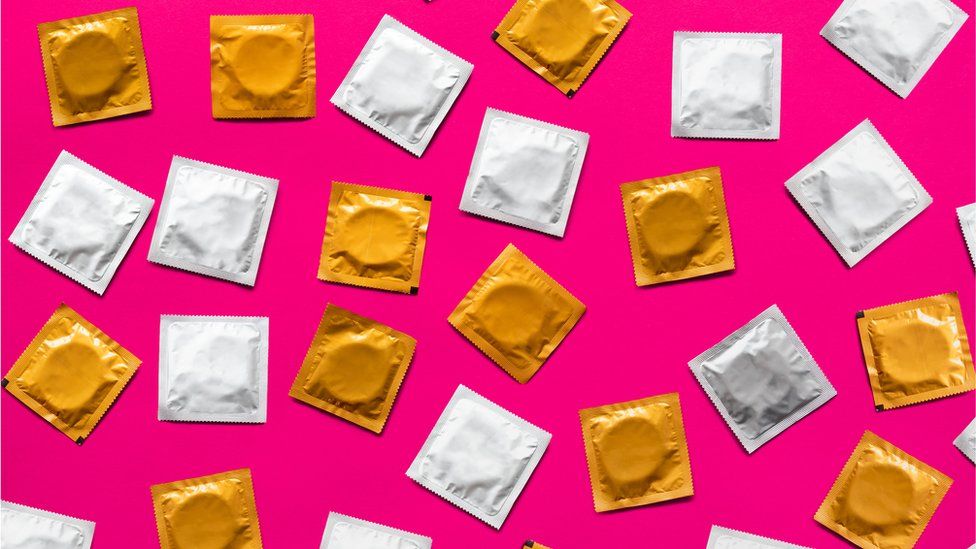
SharecloseShare pageCopy linkAbout sharingimage sourceGetty ImagesCases of newly diagnosed sexually transmitted infections (STIs) are down by a third in England, data reveals. Experts say the drop is partly due to people changing their behaviour during the pandemic but also because fewer tests have been done. With few Covid restrictions remaining, people are now being warned not to swap social distancing for an STI – and to get checked if they have risky sex. STIs may be symptomless but can be avoided by using condoms.Genital wartsNearly 318,000 STIs were recorded in 2020 compared with 467,096 in 2019, the latest figures show. Public Health England said infections requiring an in-person assessment, such as genital warts or herpes, saw a greater drop in diagnoses.But cases of chlamydia and gonorrhoea – which can be diagnosed with self-sampling kits – were also down. Compared with 2019:consultations at sexual-health services decreased by 10%. face-to-face consultations fell by 35% – but internet consultations doubled As in recent years, the highest rates of new STIs were recorded among people who were:aged 15-24blackmen who have sex with menDebbie Laycock, from the Terrence Higgins Trust, said the drop in new cases was good news but rates could creep up again. Lockdown ‘once in a lifetime opportunity’ for sexual health’I can’t tell my mum I’m having sex'”Sexually transmitted infections are still circulating,” she said.”That means it’s as important as ever to regularly test for STIs if you’re having sex and for everyone to know that sexual-health services are open for business – both face-to-face and online.”Public Health England sexually transmitted infections section head Dr Katy Sinka said: “If you are having sex with new or casual partners, use a condom and get tested – STIs can pose serious consequences to your own health and that of your current or future sexual partners.”

Read more →

Vietnam: Man gets 5 years jail for spreading Covid

SharecloseShare pageCopy linkAbout sharingimage sourceThanh NienA Vietnamese man has been sentenced to jail for five years for flouting Covid-19 rules and spreading the virus.A court found Le Van Tri guilty of “transmitting dangerous infectious diseases” to eight people, one of whom eventually died.Until recently Vietnam had been largely successful in keeping Covid out with tight restrictions.But infections have surged since June, with an outbreak fuelled by the more contagious Delta variant.The country has seen more than 530,000 cases with more than 13,300 deaths, many of which have occurred the last few months. Many of those cases have been found in the capital Ho Chi Minh City.In early July, Tri, 28, had reportedly travelled by motorcycle from Ho Chi Minh City to his home province Ca Mau in the south of the country. At Ca Mau, Tri was found to have lied on a health declaration form which asked about his recent travel history, and also failed to comply with isolation rules.Local authorities at the time had made it mandatory that anyone travelling from other provinces into Ca Mau had to immediately isolate themselves for 21 days.Tri later tested positive for Covid, and was found to have transmitted the virus to members of his family as well as staff at a welfare centre which he visited.Tri was sentenced to jail at the end of a one-day trial, and was also fined the equivalent of $880 (£630).

Read more →

Lawsuits Over ‘Misleading’ Food Labels Surge as Groups Cite Lax U.S. Oversight

A flurry of litigation by advocacy groups seeks to combat what they say is a rise in deceptive marketing by food giants.Shoppers drawn to sustainable, humanely raised meat and dairy products could be forgiven for thinking the nation’s big food companies have turned away from the industrial farming practices that have long dominated American agriculture.Consider the package labels and marketing claims for some of the country’s best known brands: Cargill turkeys are sourced from “independent family farmers,” Sargento cheeses contain “no antibiotics” and Tyson uses “humane and environmentally responsible production” to raise its chickens while providing workers “a safe work environment.”But some claims may not be what they seem, according to a flurry of litigation by advocacy groups seeking to combat what they describe as a surge in deceptive marketing by food giants. The misleading labels, the plaintiffs say, seek to profit off consumers’ growing interest in clean eating, animal welfare and environmentally friendly agriculture — but without making meaningful changes to their farming and production practices.Class-action litigation against food and beverage companies hit a record high last year, with 220 lawsuits filed in 2020, up from 45 a decade ago, according to a tally by the law firm Perkins Coie.The mounting wave of legal activism in part reflects the frustration of advocates who have made little headway in recent years convincing federal regulators to increase their oversight of the nation’s food supply — or even to provide definitions for words like “healthy” or “all natural.” Big Food, advocates say, has eagerly exploited the regulatory vacuum.A recent lawsuit and complaint filed with the Federal Trade Commission questions Tyson’s “all natural” claims on its chickens, as well as its “safe work environment” claims.Kaiti Sullivan for The New York TimesAccording to the lawsuits and complaints, Cargill turkeys are actually produced by contract farmers who have no say in the way the birds are raised — and who often become mired in debt complying with Cargill’s strict husbandry requirements. Tyson’s “all natural” chickens, claims a lawsuit and a complaint filed with the Federal Trade Commission, are mass-produced in crowded sheds contaminated with antibiotic-resistant pathogens, and after slaughter, they are bathed in chemical disinfectants. The federal complaint also questioned Tyson’s “safe work environment” claims, noting that 39 Tyson processing plant employees have died of Covid-19 and 12,500 others had become infected, four times more cases than its biggest competitors.In a statement, Tyson said it complied with all labeling regulations, and was transparent about environmental, animal welfare and workplace safety efforts.Farmed versus wild salmon is another category with nebulous definitions that consumers find hard to parse.And that antibiotic-free Sargento cheese? One of the two recently filed lawsuits against the company included lab tests that found trace amounts of antibiotics. Sargento declined to comment, but in court filings, it said the amount of antibiotics the plaintiffs claimed to have detected are so minute that it “represents the equivalent of less than half a teaspoon of water in an Olympic-sized swimming pool.”The Organic Consumers Association, the Family Farm Action Alliance and the Animal Welfare Institute, among the nonprofit organizations behind some of the litigation, say that misleading and exaggerated marketing dupes consumers into believing they are supporting companies whose practices align with their values. But deceptive marketing, they contend, has a more pernicious effect: It ensures the continued mistreatment of millions of cows, pigs and chickens raised by Big Agriculture while harming the livelihoods of small farmers committed to more humane animal husbandry.“We don’t believe that companies should be able to profit from deceiving consumers about their practices,” said Jay Shooster, a lawyer whose firm, Richman Law & Policy, has filed several cases on behalf of advocacy groups. “Even if we can’t sue Tyson for abusing their chickens, at least we can sue them for misleading about how their chickens are treated.”The companies say the complaints are meritless, noting that a number of cases have been dismissed. Pooja S. Nair, a corporate food lawyer with the firm Ervin Cohen & Jessup, said many are patently frivolous, among them some four dozen cut-and-paste lawsuits filed last year against vanilla flavored products.The lawsuits, most of which were dismissed, claimed consumers were misled into thinking the flavoring comes from vanilla beans or vanilla extract “The landscape for businesses has become increasingly hostile,” she said. “It’s forcing companies to be more creative, and careful, in how they advertise their products.”The legal fight over package labels represents a new front in the effort by environmental and animal welfare groups to increase corporate transparency and to prod large food companies to embrace less harmful practices. The litigation also seeks to harness consumers’ growing interest in sustainability by naming and shaming companies they accuse of “greenwashing” their brands.“My family tries to eat as sustainably as possible, and we don’t mind paying a premium for products that are advertised as such, but it really raises my hackles when companies are dishonest about what they are selling,” said Dezzi Rae Marshall, a career counselor from Los Angeles who is the lead plaintiff in a lawsuit filed in June in California against Red Lobster. The lawsuit contends that much of the company’s shrimp and lobster are sourced from suppliers employing fishing practices that are not environmentally sustainable.Red Lobster declined to comment on the litigation, but said it is committed to sustainability “to ensure there’s seafood to enjoy, now and for generations.”Although many of the recently filed lawsuits are still winding their way through federal and state courts, the plaintiffs have been encouraged by a handful of favorable rulings. Other deceptive advertising cases have been settled before trial or through adjudication by the National Advertising Division of the Better Business Bureau.Last year, Ben & Jerry’s stopped describing the cows that provide the milk for their ice cream as “happy” after the company was sued by an advocacy group. In 2018, General Mills agreed to no longer promote its Nature Valley granola bars as “made with 100 percent natural whole grain oats,” bowing to plaintiffs who claimed the snack bars contained trace amounts of the herbicide glyphosate. And last month, the N.A.D. recommended that Butterball modify or drop the phrase “farmers humanely raise our turkeys every day” from its labels — although it said it was acceptable for the company to continue saying it has a “zero-tolerance policy against any form of animal mistreatment.”Advocates say much of the litigation could be avoided through more stringent federal oversight. While they have been heartened by the Biden administration’s efforts to address exaggerated food marketing claims through the F.T.C. and the F.D.A., they say more systemic change is needed.A bill introduced in Congress last month would overhaul front-of-package food labeling through a standardized system of symbols to convey whether a product is truly healthy. The measure also directs federal regulators to specifically define terms like “healthy,” and it would require companies to clearly explain how much “whole grain” is in a loaf of highly processed bread. The measure has the backing of nutritionists and healthy food advocates, but opposition from industry lobbyists is likely to complicate its passage in a narrowly divided Congress.For now, advocates are trying to prod federal regulators through legal activism and public pressure. The Animal Welfare Institute, for instance, has been trying to draw attention to the U.S.D.A.’s role in approving the label descriptions for meat and egg products, which it does by reviewing documents submitted by companies seeking its approval. Inspectors with the Food Safety and Inspection Service, the U.S.D.A. agency charged with verifying labeling claims, only have jurisdiction over slaughterhouses and meat processing plants, not the farms where the animals are raised.Kaiti Sullivan for The New York TimesSince 2013, the institute has requested documentation from the F.S.I.S. for nearly 100 package label claims. In more than half of these cases, the agency has been unable to find any documentation to back up its decisions, according to a report. In its review of the files provided, the institute found that 28 percent of label claims lacked adequate substantiation.The F.S.I.S. disputed the group’s findings, citing flaws in the institute’s requests submitted under the Freedom of Information Act.Food marketing can be notoriously fuzzy. Without clear-cut definitions for words like “sustainable,” “humane” or “natural,” food companies have been using claims they know will resonate with Americans concerned with the environment, animal welfare and worker safety.But companies that have been targeted by litigants say advocates and plaintiffs are sometimes seeking to forge definitions for words that no reasonable consumer would recognize.Ivan Wasserman, a food lawyer in Washington D.C., said some of the demands can border on extortion. For every case that makes its way to court, he said dozens of others are quietly settled with monetary compensation — often without making changes to the contested label. Even cases that end up in court can strain credulity, he said, citing lawsuits claiming Kellogg’s Froot Loops and Quaker Oats’ Cap’n Crunch’s Crunchberries cereals deceived consumers into believing they contained actual fruit.The lawsuits were dismissed.“These cases can really have a chilling effect on speech,” Mr. Wasserman said. “And I think that’s damaging not only to the company, but also potentially for consumers, if companies are afraid of giving truthful and accurate information for a fear of being roped into a meritless lawsuit.”Still, he acknowledged that some of the recent litigation was not entirely outlandish, and said he had become increasingly emphatic in advising clients to avoid words like “natural” or “sustainable” on their labels. The flood of litigation has become so intense that Mr. Wasserman’s firm, Amin Talati Wasserman, recently opened an office in California, which has some of the country’s most stringent consumer protection regulations.Jennifer Jacquet, an associate professor of environmental studies at New York University, said legal activism has become the single-most effective tool for holding companies accountable for questionable marketing claims. Professor Jacquet, an expert on seafood production, said the labeling rules for farmed salmon, for example, are so weak that companies do not have to disclose whether their fish are wild caught or raised with antibiotics in vast, tightly packed coastal enclosures that can have devastating effects on the surrounding ecosystems.“Many of these sustainability claims are dubious and wildly overblown,” she said. “And given that labeling requirements are so pathetic, there really is little way for consumers to determine their truthfulness.”The deceptive advertising claims against Cargill are typical of many recent cases. In a petition filed with the F.T.C., six advocacy groups took issue with the company’s prominent use of “independent family farmers” to describe the sourcing of the company’s turkey products. The phrase appears on the shrink-wrapped poultry marketed through its Shady Brook Farms and Honest Turkey brands, and cheery claims about the environment are a regular feature of the company’s advertising campaigns.Critics say production practices, however, can be less than idyllic. “Far from the bucolic family farms portrayed by Cargill’s marketing, Cargill’s actual production methods exploit contract farmers and slaughterhouse workers, systematically abuse animals and cause grave harms to the environment,” the complaint said.In a statement, Cargill said the allegations were without merit, noting that the company’s marketing claims are vetted by the U.S.D.A. “Cargill conducts business in a legal, ethical and responsible manner,” it said.The F.T.C. said it does not comment on pending complaints.From a regulatory standpoint, the meaning of “family farmer” is far from clear. The U.S.D.A. says the words can describe any farm in which the operator, or their relatives, own at least half of the business — a category that includes more than 97 percent of the nation’s farms. But in 2018, the Small Business Administration said the contract farming arrangements that Cargill and other big poultry companies employ should be considered subsidiaries, not independent farming operations, when it comes to federal lending decisions.Angela Huffman, a co-founder of the Family Farm Action Alliance, one of the complainants against Cargill, said contract farmers are often bound by mandates that dictate every step of production, from the breed of birds and feed they receive from Cargill to the type of equipment they must buy — requirements that she contended could saddle farm operators with crushing debts. Because Cargill and a handful of other companies dominate the turkey market, many contract farmers have few alternatives. “They are under the thumb of Cargill, and then customers who see the red barn and green grass on the label are duped into thinking they are supporting family farms,” she said.Greg Gunthorp at his farm in Indiana.Kaiti Sullivan for The New York TimesFor the nation’s dwindling band of independent poultry growers, the marketing strategies of corporate behemoths can have real-life implications. Greg Gunthorp, a fourth-generation farmer in northeast Indiana, prides himself on raising his turkeys in ways that resonate with consumers focused on sustainability. The birds spend much of their lives on pasture, where they can peck at grass and insects, and the Gunthorp family processes the turkeys themselves, without the use of disinfectants like chlorine.But last Thanksgiving, one of Mr. Gunthorp’s longtime retail clients said they would no longer buy his turkeys. Shoppers, the retailer told him, were increasingly drawn to cheaper, brand-name turkeys making similar sustainability claims.“Big Ag has co-opted and bastardized every one of our messages,” he said. “When they use a fancy label with absolutely meaningless adjectives, there’s just no way we can compete.”

Read more →

Texas abortion clinics will be protected, Justice Department says

SharecloseShare pageCopy linkAbout sharingimage sourceGetty ImagesThe US Justice Department says it will protect clinics that perform abortions in Texas, a state with a near-total ban on voluntary pregnancy terminations.The department said it would “provide support from federal law enforcement” when a clinic, reproductive health centre or patient was “under attack”.A new Texas law bans abortions from as early as six weeks into pregnancy. Doctors and women’s rights groups have criticised the legislation, known as SB8, that took effect last week.The so-called “Heartbeat Act” was signed into law by Texas Governor Greg Abbott in May. The law, one of the most restrictive in the country, bans abortions after the detection of what anti-abortion campaigners call a foetal heartbeat, something medical authorities say is misleading.It also gives any individual the right to sue doctors who perform an abortion past the six-week point.The law took effect after the Supreme Court did not respond to an emergency appeal by abortion providers.What Texas women make of six-week abortion banThe implications of Supreme Court’s abortion rulingWhat is Texas’ new abortion law?”We will not tolerate violence against those seeking to obtain or provide reproductive health services, physical obstruction or property damage in violation of the FACE Act,” US Attorney General Merrick Garland said in a statement on Monday. The FACE (Freedom of Access to Clinic Entrances) Act took effect in 1994. It prohibits any form of threatening or violent behaviour towards anyone obtaining reproductive health services, typically an abortion.In the statement, Mr Garland said his department would enforce FACE, while it “urgently explores all options to challenge Texas SB8 in order to protect the constitutional rights of women and other persons”.How do Americans feel about abortion rights?Abortion has long been one of the country’s most contentious social issues. However, polls from the Pew Research Center indicate nearly six in 10 Americans believe abortion should be legal in all or most cases.This number has remained relatively stable over the past two decades, but masks a partisan divide: only 35% of Republicans support that position.In conservative Texas, an April poll found nearly half of the state’s voters support a six-week ban on abortions.You might be interested in watching:

Read more →

High fat diets break the body clock in rats, and this might be the underlying cause of obesity

When rats are fed a high fat diet, this disturbs the body clock in their brain that normally controls satiety, leading to over-eating and obesity. That’s according to new research published in The Journal of Physiology.
The number of people with obesity has nearly tripled worldwide since 1975. In England alone, 28% of adults are obese and another 36% are overweight. Obesity can lead to several other diseases such as Type 2 diabetes, heart disease, stroke, and some types of cancer.
This new research may be a cornerstone for future clinical studies that could restore the proper functioning of the body clock in the brain, to avoid overeating.
Historically, it was believed that the master body clock was only located in a part of the brain called the hypothalamus. However, further research over the years has clarified that some control of our body’s daily rhythms (hormone levels, appetite, etc.) lies in several other parts of the brain and body, including a group of neurons in the evolutionary ancient brainstem, called the dorsal vagal complex (DVC).
Specifically, the DVC has been shown to control food intake by inducing satiety.
Research has also shown that in obesity, daily rhythms in food intake and the release of hormones related to eating, are blunted or eliminated.

Read more →

Study illuminates origins of lung cancer in never smokers

A genomic analysis of lung cancer in people with no history of smoking has found that a majority of these tumors arise from the accumulation of mutations caused by natural processes in the body. This study was conducted by an international team led by researchers at the National Cancer Institute (NCI), part of the National Institutes of Health (NIH), and describes for the first time three molecular subtypes of lung cancer in people who have never smoked.
These insights will help unlock the mystery of how lung cancer arises in people who have no history of smoking and may guide the development of more precise clinical treatments. The findings were published September 6, 2021, in Nature Genetics.
“What we’re seeing is that there are different subtypes of lung cancer in never smokers that have distinct molecular characteristics and evolutionary processes,” said epidemiologist Maria Teresa Landi, M.D., Ph.D., of the Integrative Tumor Epidemiology Branch in NCI’s Division of Cancer Epidemiology and Genetics, who led the study, which was done in collaboration with researchers at the National Institute of Environmental Health Sciences, another part of NIH, and other institutions. “In the future we may be able to have different treatments based on these subtypes.”
Lung cancer is the leading cause of cancer-related deaths worldwide. Every year, more than 2 million people around the world are diagnosed with the disease. Most people who develop lung cancer have a history of tobacco smoking, but 10% to 20% of people who develop lung cancer have never smoked. Lung cancer in never smokers occurs more frequently in women and at an earlier age than lung cancer in smokers.
Environmental risk factors, such as exposure to secondhand tobacco smoke, radon, air pollution, and asbestos, or having had previous lung diseases, may explain some lung cancers among never smokers, but scientists still don’t know what causes the majority of these cancers.
In this large epidemiologic study, the researchers used whole-genome sequencing to characterize the genomic changes in tumor tissue and matched normal tissue from 232 never smokers, predominantly of European descent, who had been diagnosed with non-small cell lung cancer. The tumors included 189 adenocarcinomas (the most common type of lung cancer), 36 carcinoids, and seven other tumors of various types. The patients had not yet undergone treatment for their cancer.

Read more →

Metabolic changes in plasma and immune cells associated with COVID-19 severity, can predict patient survival

COVID-19 patients have differing immune responses that lead to disease outcomes ranging from asymptomatic SARS-CoV-2 infection to death. After examining the blood samples from nearly 200 COVID-19 patients, researchers have uncovered underlying metabolic changes that regulate how immune cells react to the disease. These changes are associated with disease severity and could be used to predict patient survival. The findings were published in the journal Nature Biotechnology.
“We know that there are a range of immune responses to COVID-19, and the biological processes underlying those responses are not well understood,” said co-first author Jihoon Lee, a graduate student at Fred Hutchinson Cancer Research Center. “We analyzed thousands of biological markers linked to metabolic pathways that underlie the immune system and found some clues as to what immune-metabolic changes may be pivotal in severe disease. Our hope is that these observations of immune function will help others piece together the body’s response to COVID-19. The deeper understanding gained here may eventually lead to better therapies that can more precisely target the most problematic immune or metabolic changes.”
The researchers collected 374 blood samples — two draws per patient during the first week after being diagnosed with SARS-CoV-2 infection — and analyzed their plasma and single immune cells. The analysis included 1,387 genes involved in metabolic pathways and 1,050 plasma metabolites.
In plasma samples, the team found that increased COVID-19 severity is associated with metabolite alterations, suggesting increased immune-related activity. Furthermore, through single-cell sequencing, researchers found that each major immune cell type has a distinct metabolic signature.
“We have found metabolic reprogramming that is highly specific to individual immune cell classes (e.g. “killer” CD8+ T cells, “helper” CD4+ T cells, antibody-secreting B cells, etc.) and even cell subtypes, and the complex metabolic reprogramming of the immune system is associated with the plasma global metabolome and are predictive of disease severity and even patient death,” said co-first and co-corresponding author Dr. Yapeng Su, a research scientist at Institute for Systems Biology. “Such deep and clinically relevant insights on sophisticated metabolic reprogramming within our heterogeneous immune systems are otherwise impossible to gain without advanced single-cell multi-omic analysis.”
“This work provides significant insights for developing more effective treatments against COVID-19. It also represents a major technological hurdle,” said Dr. Jim Heath, president and professor of ISB and co-corresponding author on the paper. “Many of the data sets that are collected from these patients tend to measure very different aspects of the disease, and are analyzed in isolation. Of course, one would like these different views to contribute to an overall picture of the patient. The approach described here allows for the sum of the different data sets to be much greater than the parts, and provides for a much richer interpretation of the disease.”
The research was conducted by scientists from ISB, Fred Hutchinson Cancer Research Center, Stanford University, Swedish Medical Center St. John’s Cancer Institute at Saint John’s Health Center, the University of Washington, the Howard Hughes Medical Institute.
Funding for this project comes from Merck and the Biomedical Advanced Research and Development Authority (BARDA), the Wilke Family Foundation, the MJ Murdock Charitable Trust, the Swedish Medical Center Foundation, the Parker Institute for Cancer Immunotherapy, Gilead, Amazon Web Services, and the National Institutes of Health.
Story Source:
Materials provided by Institute for Systems Biology. Note: Content may be edited for style and length.

Read more →

Schizophrenia study suggests advanced genetic scorecard cannot predict a patient’s fate

With the help of cutting-edge computer programs, researchers at the Icahn School of Medicine at Mount Sinai went through the genetic and medical records of more than 8,000 schizophrenia patients. They found that a tool commonly used in research for evaluating a person’s genetic risk for a disease, called a polygenic risk score, was no better at predicting the outcome of a patient’s disease over time than written reports. The results raise important questions about the use of polygenic risk scores in real-world, clinical situations, and also suggest that a doctor’s written report may be an untapped source of predictive information.
“Treating schizophrenia patients is a heart-wrenching experience. One of the hardest parts about taking care of patients is trying to determine whether each patient’s condition will worsen or improve. If we could do that, then we might help relieve the suffering that the patients and their loved ones experience,” said Alexander W. Charney, MD, PhD, Assistant Professor in the Departments of Psychiatry and Genetics and Genomic Sciences at Icahn Mount Sinai and the senior author of the study published in Nature Medicine. “Our results show that for the mental illnesses most deeply characterized at the genetic level, the current state of genetics research cannot solve this problem just yet.”
Affecting about 20 million people worldwide, schizophrenia is a life-shortening mental disorder that alters the way a person thinks, acts, and perceives reality. Typically, symptoms appear in the late teens to early thirties and can last a lifetime. While some patients may respond well to treatment, others do not at all.
Although it is a highly inherited disease, the majority of cases cannot be linked to a single gene. Instead, scientists have found that the risk of suffering from schizophrenia is influenced by a complex combination of normal genetic variants, none of which on their own contribute a great amount to risk but together account for many cases. Currently, nearly 300 such variants have been associated with schizophrenia.
The polygenic risk score is a commonly used method for summarizing the genetic component of a person’s risk for a disease. Over the past decade, many large studies have shown that the risk scores of schizophrenia patients are significantly higher than that of healthy controls. Similar results have been seen in studies on other disorders such as hypertension and diabetes.
“The polygenic risk score basically adds up all of the traits that are associated with a complex disorder. Initially it was designed to be descriptive tool. More recently, scientists have proposed that it could be an effective tool for precision medicine wherein a person’s genetics is used to diagnose disease and predict outcomes,” said Isotta Landi, PhD, a post-doctoral fellow in Dr. Charney’s lab and the lead author of the study. “In this study we wanted to rigorously test out whether the polygenic risk score could also be a predictive tool.”
At first, the researchers compared the genetic and medical records of 762 schizophrenia patients stored in the Mount Sinai Health System’s BioMe™ BioBank program. Specifically, they tested whether a patient’s polygenic risk score for schizophrenia could predict six poor outcomes of each patient any better than the information derived from the medical reports written by doctors.

Read more →