Health Care in Afghanistan Is Crumbling, Aid Groups Warn
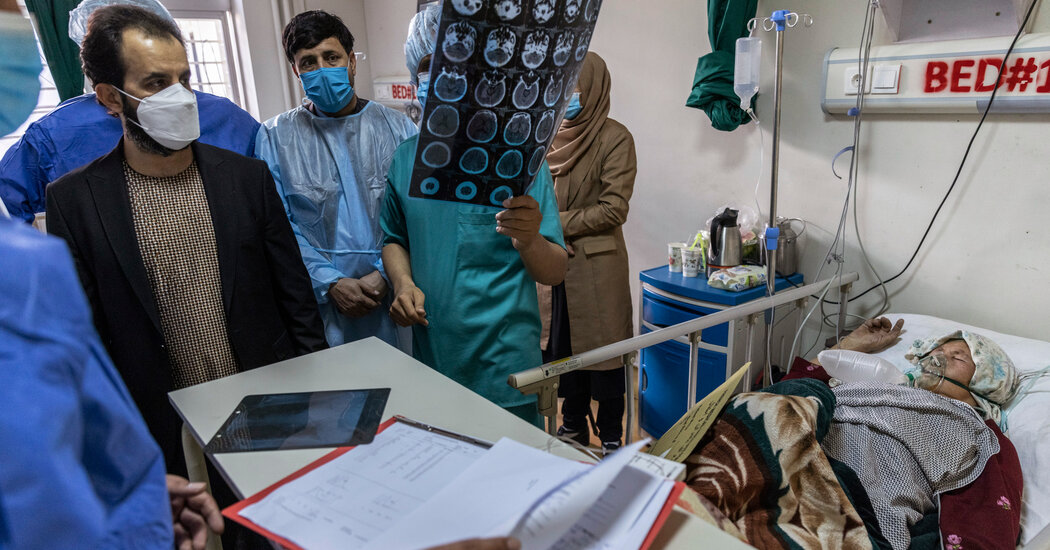
After the Taliban’s takeover, international donors withdrew funds that hospitals and clinics depended on. Now a fourth wave of Covid looms.The health care system in Afghanistan is teetering on the edge of collapse, endangering the lives of millions and compounding a deepening humanitarian crisis, public health experts warn.The country’s health care has been propped up by aid from international donors. But after the Taliban seized power, the World Bank and other organizations froze $600 million in health care aid. The Biden administration, too, is struggling with how to dispense donor money to a country now being run by several senior Taliban leaders whom the United States has designated to be terrorists.If World Bank funding is not restored quickly, an exodus of health care workers may result. Many have remained on the job despite significant personal risks; already some have not been paid for months. Along with the loss of supplies, the cutoff would effectively end health care services in 31 of the nation’s 34 provinces, humanitarian groups say.Afghanistan is already on the brink of universal poverty, according to a United Nations report on Thursday, and only its richest citizens will be able to afford health care. Assuming that health care coverage is cut by half because of the funding loss, deaths among women and children will increase by at least 33 percent over the next year — nearly 2,000 women and more than 26,000 children per year — according to one analysis.“There have been massive improvements in many metrics of health, like maternal mortality, tuberculosis and malaria,” said Peter Sands, executive director of the Global Fund, an advocacy group that funds campaigns against H.I.V., malaria and tuberculosis.“There’s a real question as to how those are sustained, and what a tragedy it would be if that was reversed.”In recent years, Afghanistan had made big strides in reducing maternal and child deaths by more than 50 percent, and increasing life expectancy for men and women by 10 years. Even so, most Afghans have had access to only rudimentary health care. The loss of humanitarian aid, and the looming fourth wave of the coronavirus, could devastate the nation.“We are losing personnel, we are losing lives, and the morale and momentum we had,” said Dr. Wahid Majrooh, who was health minister under the previous government and has stayed on. “The crisis is very, very extensive.”Afghanistan emerged from a third wave of virus infections just a few weeks ago, but it is already seeing a small uptick in cases, this time of the highly contagious Delta variant. Only 5 percent of the population have received at least one dose of a Covid-19 vaccine.“It’s terrible timing that this would happen, when right now we’re faced with a situation where humanitarian needs are escalating,” said Dr. Richard Brennan, the regional emergency director for the World Health Organization’s Eastern Mediterranean region.Cesarean sections, immunizations for polio, tuberculosis, tetanus and measles, diagnoses and treatment of TB, malaria, H.I.V., childhood nutrition, surgeries and routine health services, including family planning — all are at risk. The loss in aid is also constricting supply chains for medicines, oxygen and food for hospitals.Roughly two-thirds of the country’s health facilities are part of Sehatmandi, a three-year, $600 million project administered by the World Bank and funded by the U.S. Agency for International Development, the European Union, the World Bank and others. Because funds were put in effect through the Afghanistan Ministry of Public Health, the donors withdrew their support after the Taliban’s ouster of the previous administration.Dr. Majrooh, who studied global health policy at the London School of Hygiene & Tropical Medicine, said he appreciated the precarious situation of donor organizations but argued that the health of the population should supersede political considerations.Dr. Majrooh and humanitarian aid experts accused the funding organizations of abandoning Afghans when they most needed help.“I’m so surprised that at the time where they are the most needed, and where they can have the highest impact ever — it is at that time they have decided to pull out,” said Karl Blanchet, an expert in humanitarian studies at the University of Geneva who has worked closely with the Afghan health ministry.But others noted that the World Bank is hamstrung by limits set by its shareholders, and it had no choice but to withdraw financial support when similar upheavals unfolded in Yemen and Myanmar.“They have rules and regulations that don’t allow them to contribute funding to a government run by the Taliban,” Dr. Brennan said. “So they’ve got to find an alternate funding mechanism to channel those funds to ensure those health facilities continue to operate.”The shuttering of Sehatmandi clinics in Afghanistan is likely to overwhelm those funded by other means, aid workers said. In Herat, a hospital supported by Doctors Without Borders is among the few to remain open, according to Dr. Tankred Stoebe, the organization’s medical coordinator for the region.The 40-bed health care center is treating nearly three times as many children as usual, many of whom had to travel for hours for treatment, he said, and staff members have not had a day off in weeks. “We are totally stretched at the moment,” Dr. Stoebe said.One pediatric doctor at a Sehatmandi hospital has not been paid for three months, Dr. Stoebe said. The doctor already worked 250 hours a week, but had tacked on more hours at a private clinic to make ends meet.When no commercial flights were allowed into the country, medical supplies at many hospitals dwindled. Insurance costs for flights have skyrocketed, and funds don’t go as far. Trauma and emergency health kits, and testing kits for the coronavirus, are in particularly short supply.The Sehatmandi program contracts out the delivery of health services to more than 30 nongovernmental organizations. On Aug. 31, a week after the funding pause, an alliance of some of the NGOs warned that absent of immediate solutions, the organizations could not continue their work after Sept. 5.Without money for salaries or supplies, “we will be unable to offer our commitment for the continuation of services,” the organizations said in a letter to Dr. Majrooh. They urged the new regime to “take over all health facilities effective 10 September.”Dr. Majrooh said that he had communicated the urgency and scale of the crisis to Taliban leaders, but that no plan had yet materialized for assuming control of the country’s health care system.The NGOs also plan to appeal directly to the World Bank and other donors to resume support. But a sustainable solution may take time.In the short term, the W.H.O. plans to spend $66 million to keep 538 health care facilities afloat through the end of the year, Dr. Brennan said. In the meantime, representatives from the World Bank and global health organizations are working closely to come up with alternative funding mechanisms, according to several people familiar with the discussions.“We are deeply concerned about the situation in Afghanistan and the impact on the country’s development prospects, especially for women,” said David Theis, a spokesman for the World Bank. “We will continue to consult closely with the international community and development partners.”Dr. Majrooh said he had sent several emails and messages to representatives of the major donors, asking to discuss options for funding Sehatmandi, but he had not received an official response.“The ministry is left out of the communication chain, and somehow sidelined,” he said.The donors could fund the NGOs directly, set up an independent organization to manage the money, or route the money through the W.H.O. and other arms of the United Nations. The W.H.O. already funds health programs in many countries.Based on observations by its polio workers, the W.H.O. estimated last week that more than 90 percent of 2,200 health facilities for which they have information remained operational to some limited extent, and more than 90 percent of female health care workers — needed to to ensure that women can receive health services — were still showing up to work.“While this data is encouraging for the moment, we are obviously worried,” Dr. Brennan said. “It would be irresponsible not to plan for this and not to raise the alert.”

Read more →

FDA Again Warns Parents Not to Get Children Under 12 Vaccinated Yet

The U.S. Food and Drug Administration is “working around the clock” to make Covid vaccines available to young children, it said in a statement on Friday. In the meantime, however, the agency urged parents not to seek out the shots for children who are under 12, and therefore not yet eligible for vaccination.The agency said that it hoped vaccines would be available for young children “in the coming months,” but that it could not offer a more specific timeline. However, once it has applications from the vaccine manufacturers in hand, it will “be prepared to complete its review as quickly as possible, likely in a matter of weeks rather than months,” Dr. Janet Woodcock, the acting F.D.A. commissioner, and Dr. Peter Marks, of the agency’s Center for Biologics Research and Evaluation, said in the statement.The available vaccines, none of which have been cleared for children under 12, may not be a safe or effective dose for young children, the agency noted. Pediatric clinical trials, which will help determine the right vaccine dose for children under 12, are still underway.“Children are not small adults — and issues that may be addressed in pediatric vaccine trials can include whether there is a need for different doses or different strength formulations of vaccines already used for adults,” Dr. Woodcock and Dr. Marks.Health officials have previously expressed concern that full approval of the Pfizer-BioNTech vaccine for people 16 and up might prompt parents to seek, or doctors to give, the shots off-label to young children, specifically warning against the move. Children younger than 12 make up a sizable unvaccinated population in the United States.Some vaccine manufacturers are still enrolling children in their trials and others are still giving the shots and monitoring children for potential side effects, the F.D.A. noted in its statement. The trials will follow participants for at least two months to ensure that the researchers are able to detect any adverse events. Vaccine manufacturers then have to analyze the data and then formally apply for authorization or approval from the F.D.A.Then, the agency “will carefully, thoroughly and independently examine the data to evaluate benefits and risks,” Dr. Woodcock and Dr. Marks said.They added, “Just like every vaccine decision we’ve made during this pandemic, our evaluation of data on the use of Covid-19 vaccines in children will not cut any corners.”In an interview published on Friday, Ozlem Tureci, the co-founder of BioNTech and its chief medical officer, told Der Spiegel, a German news site, that “we will be presenting the results from our study on five- to 11-year-olds to authorities around the world in the coming weeks.”Initially reluctant to enact mandates, President Biden is now moving more aggressively than any other president in modern history to require vaccination, including in schools..css-1xzcza9{list-style-type:disc;padding-inline-start:1em;}.css-3btd0c{font-family:nyt-franklin,helvetica,arial,sans-serif;font-size:1rem;line-height:1.375rem;color:#333;margin-bottom:0.78125rem;}@media (min-width:740px){.css-3btd0c{font-size:1.0625rem;line-height:1.5rem;margin-bottom:0.9375rem;}}.css-3btd0c strong{font-weight:600;}.css-3btd0c em{font-style:italic;}.css-w739ur{margin:0 auto 5px;font-family:nyt-franklin,helvetica,arial,sans-serif;font-weight:700;font-size:1.125rem;line-height:1.3125rem;color:#121212;}#NYT_BELOW_MAIN_CONTENT_REGION .css-w739ur{font-family:nyt-cheltenham,georgia,’times new roman’,times,serif;font-weight:700;font-size:1.375rem;line-height:1.625rem;}@media (min-width:740px){#NYT_BELOW_MAIN_CONTENT_REGION .css-w739ur{font-size:1.6875rem;line-height:1.875rem;}}@media (min-width:740px){.css-w739ur{font-size:1.25rem;line-height:1.4375rem;}}.css-9s9ecg{margin-bottom:15px;}.css-16ed7iq{width:100%;display:-webkit-box;display:-webkit-flex;display:-ms-flexbox;display:flex;-webkit-align-items:center;-webkit-box-align:center;-ms-flex-align:center;align-items:center;-webkit-box-pack:center;-webkit-justify-content:center;-ms-flex-pack:center;justify-content:center;padding:10px 0;background-color:white;}.css-pmm6ed{display:-webkit-box;display:-webkit-flex;display:-ms-flexbox;display:flex;-webkit-align-items:center;-webkit-box-align:center;-ms-flex-align:center;align-items:center;}.css-pmm6ed > :not(:first-child){margin-left:5px;}.css-5gimkt{font-family:nyt-franklin,helvetica,arial,sans-serif;font-size:0.8125rem;font-weight:700;-webkit-letter-spacing:0.03em;-moz-letter-spacing:0.03em;-ms-letter-spacing:0.03em;letter-spacing:0.03em;text-transform:uppercase;color:#333;}.css-5gimkt:after{content:’Collapse’;}.css-rdoyk0{-webkit-transition:all 0.5s ease;transition:all 0.5s ease;-webkit-transform:rotate(180deg);-ms-transform:rotate(180deg);transform:rotate(180deg);}.css-eb027h{max-height:5000px;-webkit-transition:max-height 0.5s ease;transition:max-height 0.5s ease;}.css-6mllg9{-webkit-transition:all 0.5s ease;transition:all 0.5s ease;position:relative;opacity:0;}.css-6mllg9:before{content:”;background-image:linear-gradient(180deg,transparent,#ffffff);background-image:-webkit-linear-gradient(270deg,rgba(255,255,255,0),#ffffff);height:80px;width:100%;position:absolute;bottom:0px;pointer-events:none;}.css-uf1ume{display:-webkit-box;display:-webkit-flex;display:-ms-flexbox;display:flex;-webkit-box-pack:justify;-webkit-justify-content:space-between;-ms-flex-pack:justify;justify-content:space-between;}.css-wxi1cx{display:-webkit-box;display:-webkit-flex;display:-ms-flexbox;display:flex;-webkit-flex-direction:column;-ms-flex-direction:column;flex-direction:column;-webkit-align-self:flex-end;-ms-flex-item-align:end;align-self:flex-end;}.css-12vbvwq{background-color:white;border:1px solid #e2e2e2;width:calc(100% – 40px);max-width:600px;margin:1.5rem auto 1.9rem;padding:15px;box-sizing:border-box;}@media (min-width:740px){.css-12vbvwq{padding:20px;width:100%;}}.css-12vbvwq:focus{outline:1px solid #e2e2e2;}#NYT_BELOW_MAIN_CONTENT_REGION .css-12vbvwq{border:none;padding:10px 0 0;border-top:2px solid #121212;}.css-12vbvwq[data-truncated] .css-rdoyk0{-webkit-transform:rotate(0deg);-ms-transform:rotate(0deg);transform:rotate(0deg);}.css-12vbvwq[data-truncated] .css-eb027h{max-height:300px;overflow:hidden;-webkit-transition:none;transition:none;}.css-12vbvwq[data-truncated] .css-5gimkt:after{content:’See more’;}.css-12vbvwq[data-truncated] .css-6mllg9{opacity:1;}.css-qjk116{margin:0 auto;overflow:hidden;}.css-qjk116 strong{font-weight:700;}.css-qjk116 em{font-style:italic;}.css-qjk116 a{color:#326891;-webkit-text-decoration:underline;text-decoration:underline;text-underline-offset:1px;-webkit-text-decoration-thickness:1px;text-decoration-thickness:1px;-webkit-text-decoration-color:#326891;text-decoration-color:#326891;}.css-qjk116 a:visited{color:#326891;-webkit-text-decoration-color:#326891;text-decoration-color:#326891;}.css-qjk116 a:hover{-webkit-text-decoration:none;text-decoration:none;}The president traveled to Brookland Middle School in Washington on Friday with Jill Biden, the first lady, a college professor who returned to the classroom this week. In his remarks, Mr. Biden urged parents to get eligible children vaccinated, and promised a White House visit to the school once every student received a vaccine.“The safest thing you can do for your child 12 and older is get them vaccinated,” the president told the crowd. “You’ve got them vaccinated for all kinds of other things — measles mumps rubella — for them to go to school, to be able to play sports, they’ve had to have these vaccinations. Get them vaccinated.”A slate of new requirements announced this week would apply to those who teach in Head Start programs, Department of Defense Schools, and schools operated by the Bureau of Indian Education. Collectively, those schools serve more than 1 million children and employ nearly 300,000 staff, according to the plan released by administration officials.“We cannot always know what the future holds, but we do know what we owe our children,” Dr. Biden said on Friday. “We owe them a promise to keep their schools open as safe as possible. We owe them a commitment to follow the science.”The surge of new cases, driven by the more contagious Delta variant, ripping through unvaccinated communities has also impacted children, who are currently being hospitalized at the highest levels reported to date, with nearly 30,000 entering hospitals in August.Children still remain markedly less likely to be hospitalized or die from Covid-19 than adults, especially older adults. But experts say that the growing number of hospitalized children, however small compared with adults, should not be an afterthought, and should instead encourage communities to work harder to protect their youngest residents.Christopher F. Schuetze contributed reporting.

Read more →

Hysterectomy can be avoided for common gynecological condition

Adenomyosis — an abnormal tissue growth into the muscular wall of the uterus that causes painful cramps and heavy or prolonged menstrual bleeding — is more common than generally appreciated, a review of the literature by gynecologists at UT Southwestern Medical Center revealed.
Up to 1 in 3 women have adenomyosis, which should be considered in the differential diagnosis of abnormal uterine bleeding and/or pelvic pain, the researchers noted. Considered a common uterine condition, the syndrome often goes undiagnosed until it results in a hysterectomy, although surgery may be preventable for some women, according to the findings published in JAMA Network. The researchers identify several medical therapies and uterine-sparing procedures that can effectively improve symptoms without need for a hysterectomy.
“Many women come to me and say the only solution they’ve ever been offered is a hysterectomy. Other low-cost, low-risk options such as medical management or less invasive options have existed for more than 20 years,” said lead author Kimberly A. Kho, M.D., Associate Chief of Gynecology at UTSW’s William P. Clements Jr. University Hospital and member of the Lowe Foundation Center for Women’s Preventative Health Care at UT Southwestern.
Modern ultrasound and MRI imaging, combined with a pelvic examination, can often spot the condition, said Dr. Kho. She and her colleagues encouraged greater awareness of this condition — as well as a related condition, endometriosis — including among school nurses, who are frequently the first contact for young women who begin menstruating. Social traditions can inaccurately teach women from a young age that heavy bleeding and pain during periods are normal, but these symptoms if left untreated can intensify over time, leading to lower quality of life, pain during sexual intercourse, and issues with fertility.
“Physicians often consider adenomyosis to be a condition of women in their 40s and 50s because that’s when they have their uteruses removed and receive a diagnosis, but it develops much earlier,” said Dr. Kho, a former National Institutes of Health-supported clinical scholar who serves as an expert for several national organizations, including the American College of Obstetricians and Gynecologists (ACOG), the Food and Drug Administration (FDA), and the Centers for Disease Control and Prevention (CDC). “Improved clinical awareness is needed to ensure appropriate patient care and encourage additional studies to improve the understanding of adenomyosis.”
No FDA-approved medical therapies are specifically indicated for treating adenomyosis, but the condition can be managed by using medications developed for contraception, or for symptoms of other gynecologic conditions such as fibroids or endometriosis. Further clinical and pathological studies are needed, the authors noted, including what ages and ethnicities are most commonly affected, and what the condition can inform us about uterine cancers.
Dr. Kho holds the Helen J. and Robert S. Strauss and Diana K. and Richard C. Strauss Chair in Women’s Health.
Story Source:
Materials provided by UT Southwestern Medical Center. Note: Content may be edited for style and length.

Read more →

Biden’s Covid-19 Vaccine Push Aligns Him With a Fed-Up, Vaccinated Majority

As the president took forceful new steps to pressure Americans to get inoculated, he argued that they were urgently needed health measures. In his allies’ view, they were also good politics.FAIRFAX, Va. — Terry Orie, a 61-year-old real estate agent, has skipped vacations because of the pandemic. She has canceled plans with friends. She has bristled at the frustrations of communicating with clients when everybody is wearing masks.Ms. Orie is fed up with the coronavirus’s effects on her life. And she knows exactly whom to blame. “I don’t get it, I don’t get why they don’t wear masks and why they won’t get vaccinated,” she said Friday, sitting outside a Whole Foods in Fairfax with her 14-year-old toy poodle, Tootsie. “People think it’s their God-given right to put everybody else’s health at risk.”After he resisted comprehensive vaccine mandates for months, President Biden’s forceful steps on Thursday to pressure the 80 million unvaccinated Americans to get their shots put him squarely on the side of what had been a fairly quiet but increasingly frustrated majority: vaccinated Americans who see the unvaccinated as selfishly endangering others and holding the country back.The new federal rules — including a requirement that private-sector businesses with more than 100 workers require vaccinations or frequent testing — are a sharp pivot for the administration, which had feared that a heavy-handed approach would be viewed as government overreach and be met with even fiercer opposition from those leery of getting the shot. But with the Delta variant surging, overwhelming I.C.U.s and creating a fresh drag on the still-fragile economic recovery, failing to take more aggressive action was even riskier, both to public health and to Mr. Biden’s political standing, White House allies said.Already, there were signs that voters were unhappy with Mr. Biden’s initial response. Since the administration heralded its progress overcoming the pandemic on July 4, the unchecked spread of the virus this summer, and the chaotic withdrawal from Afghanistan, contributed to a notable drop in the president’s approval rating.Now, by taking direct aim at the unvaccinated and Republican officials who encourage or condone their refusal, Mr. Biden is returning to a central posture of his campaign, casting himself as a sober voice on behalf of science and reason standing up to an angry and conspiratorial minority.The approach has already been road-tested by other Democrats on the ballot this fall.In California, Gov. Gavin Newsom surged in the polls after pivoting to a message that highlighted his support for masking and vaccine mandates while raising alarms that Republicans would undo those public health measures, linking those vying to replace him to Gov. Greg Abbott of Texas and Gov. Ron DeSantis of Florida, among others.In New Jersey, Gov. Phil Murphy, a Democrat, has attacked his Republican opponent for opposing vaccine mandates and ripped into a group of anti-vaccine protesters as “knuckleheads” who have “lost their minds.” And in Virginia, Terry McAuliffe, the former governor trying to win back his old job in November, is leaning hard into a message that he would be a stronger champion for widespread vaccinations than his Republican counterpart, Glenn Youngkin, a former private-equity executive.Polling from across the country shows that broad numbers of Americans support tightening vaccine requirements for schools, hospitals and workplaces. Majorities favor showing proof of vaccination to travel by airplane, attend a concert, eat at a restaurant or stay in a hotel. And most vaccinated voters blame the unvaccinated — not the administration — for the skyrocketing resurgence of the virus.“People are frustrated,” Mr. McAuliffe said in an interview. “They’re frustrated because people won’t get vaccinated. I’m running against a guy who has told college students: ‘You don’t want to get it? Don’t get it.’”The potency of vaccines as a wedge issue can be seen in Mr. Youngkin’s needle-threading response: While he is running an advertisement urging Virginians to join him in getting vaccinated, he remains opposed to the state or the federal government mandating one.“We have to just respect people’s ability to express their liberty to say, ‘No, I’m not going to get this vaccine for whatever reason,’” Mr. Youngkin said last month on a conservative talk-radio show. Through an aide, Mr. Youngkin declined an interview request.Other Republicans have gone even further, with governors in states including Nebraska, Texas and Georgia pledging to sue to stop the new rules. “See you in court,” Gov. Kristi Noem of South Dakota wrote on Twitter.Republicans are not the only Americans hesitant to get vaccinated, a group that includes a broad range of people driven by a variety of fears, including concerns about safety — often heightened by misinformation on the internet falsely claiming that vaccines cause dangerous side effects — and distrust of the pharmaceutical industry and the federal government. Others are motivated by religious beliefs; some merely lack access to health care.And a significant number of Republicans have become more willing to be inoculated since the spring, polling shows: Vaccine hesitancy declined among Republicans and Republican-leaning independent voters from 40 percent in April to 29 percent in early September, a recent Washington Post-ABC News poll found.That doesn’t mean they embrace mandates.Renee Watson, 57, an information-technology security engineer, said she was anxious before getting the vaccine and did not believe mandates would work.“The unvaccinated are beginning to feel discriminated against,” she said while eating a salad outside the Fairfax Whole Foods. “When you start to mandate people put something in their body, people get upset about limiting their personal choice and freedoms.”Some Republican strategists say that Mr. Biden’s push will only prompt their voters to dig in their heels and become even more resistant to vaccination.“The right thing healthwise is to get more people vaccinated of their own volition,” said Brad Todd, a consultant whose clients include Senators Josh Hawley of Missouri and Rick Scott of Florida. “The right of the country wants to make its own decisions and will do a lot of things to prove that.”But Democrats believe that mandates are necessary to slow the spread of the pandemic, and are also good politics. How Mr. Biden handles the pandemic now, they argue, will set the tone for the midterm elections, which many party strategists believe will be won or lost over how Americans feel about the lingering impact of the virus on their pocketbooks, schools and jobs.Democrats also see a political advantage in running against Republican governors who rejected public-health measures like masking and vaccine mandates — much as they sought to depict Republicans as extreme and unreasonable during the Trump administration and came away from the 2020 election with control of the White House and Congress.“Have at it,” Mr. Biden said on Friday when asked about Republican threats to sue his administration over the mandates. “I am so disappointed that particularly some of the Republican governors have been so cavalier with the health of these kids — so cavalier for the health of their communities.”For some voters, Mr. Biden is simply channeling their own exasperation.“I spent the first year of Covid scared that we were going to kill my dad. Now that he’s fully vaccinated, I’m scared that I’m going to hurt my kids,” said Ravi Grivois-Shah, a family physician and school board member in Tucson, Ariz., who lives with his 74-year-old father and three children. “I’m sick of being scared. I’m sick of having to go through this again.”Those frustrations resonate even in some of the most heavily vaccinated corners of the country.Fairfax, where 86 percent of adults have had at least one vaccine shot and 80 percent are fully vaccinated, holds the highest vaccination rate in Virginia. It sits at the heart of the wealthy Washington suburbs and is home to thousands of federal government employees and contractors who will be required to get vaccinated under Mr. Biden’s new rules.Some have already imposed a version of their own personal vaccine mandates.Chris Gibson, a former Department of National Intelligence employee, described an ordeal this summer in which he had disinvited friends from a group vacation because they had chosen not to get vaccinated. Like so much of life during the pandemic, Mr. Gibson said, it was a frustrating demonstration of the futility of trying to persuade some people to make choices that benefit both themselves and the public’s health.“I feel we have to deprogram these people who refuse to get vaccinated,” he said. “In cults, you can’t just tell people what you’re doing is not right.”Reporting was contributed by

Read more →

Memory killer T cells are primed in the spleen during influenza infection

CD8+ T cells — known as “killer” T cells — are the assassins of the immune system. Once they are primed, they seek out and destroy other cells that are infected with virus or cells that are cancerous.
Priming involves dendritic cells — sentinels of the immune system. In an influenza infection in the lungs, for example, lung-migratory dendritic cells capture a piece of the viral antigen, and then migrate out of the lung to the place where naïve T cells reside, to present that antigen to the CD8+ T cells. This primes the T cells to know which cells to attack.
The place for the priming in influenza had long been thought to be restricted to a single anatomical site — the lung-draining, mediastinal lymph nodes that lie between the lungs and the spine. This lymph node-centric paradigm now has been challenged in a paper published in the journal Science Immunology.
Researchers led by André Ballesteros-Tato, Ph.D., associate professor in the University of Alabama at Birmingham Department of Medicine Division of Clinical Immunology and Rheumatology, have found an unnoticed additional site for priming of CD8+ T cells — the spleen.
This is surprising and important. Surprising because there is no lymph vasculature connection between the lungs and the spleen. Important, says Ballesteros-Tato, because CD8+ T cells primed there are transcriptionally distinct and become destined for an alternative fate compared to the T cells in the lymph nodes. CD8+ T cells primed in the lymph nodes are poised to become T effector cells that will return to the lungs to fight infection.
But those primed in the spleen generate precursors with an enhanced ability to differentiate into long-lived, stem-like memory T cells. Such memory cells are capable of a quick response to a future infection by the flu virus, thus providing enduring protective immunity.

Read more →

Caught in a web: Study reveals that immune cells cooperate to trap and kill bacteria

Like a spider trapping its prey, our immune system cells cooperate to capture and “eat” bacteria.
The newly identified antibacterial mechanism, reported Sept. 10 in Science Advances, could inspire novel strategies for combating Staphylococcus aureus (staph) and other extracellular bacterial pathogens.
It was known that neutrophils — first responder immune cells that migrate to sites of infection — can self-destruct and release their protein and DNA contents to generate neutrophil extracellular traps (NETs). Now, Vanderbilt researchers led by postdoctoral fellow Andrew Monteith, PhD, have discovered that NETs boost the bacterial killing power of another type of immune cell: macrophages.
“Neutrophils produce the spider webs that immobilize the bacteria, and macrophages are the spiders that engulf and kill the bacteria,” said Eric Skaar, PhD, MPH, Ernest W. Goodpasture Professor of Pathology, Microbiology and Immunology and director of the Vanderbilt Institute for Infection, Immunology and Inflammation.
Staph bacteria — particularly antibiotic-resistant forms — are a leading cause of hospital-acquired infections, infectious heart disease and pus-forming skin and soft tissue infections.
Neutrophils and macrophages are both phagocytic cells known for ingesting bacteria and producing antimicrobial peptides, reactive oxygen species and other enzymes to fight infection. NET generation (NETosis), thought to be a form of programmed cell death, is a more recently discovered neutrophil antibacterial strategy, Skaar said. The released neutrophil DNA creates a sticky trap that is also studded with antimicrobial peptides.

Read more →

‘What’s Going on With Our Black Girls?’ Experts Warn of Rising Suicide Rates.

Researchers have uncovered worrisome trends among Black youth.For more than a decade, suicide rates have been increasing in Black children and adolescents, and a new study says the sharpest rise occurred among young girls.The study, published on Thursday in the Journal of the American Academy of Child and Adolescent Psychiatry, found that just over 1,800 Black children died by suicide between 2003 and 2017, and while most of the deaths were among boys, especially those ages 15 to 17, the gender gap is narrowing. The suicide rate of the girls increased an average of 6.6 percent each year — more than twice the increase for boys, the study said. Nearly 40 percent of the girls were 12 to 14 years old, indicating that this age group may need additional attention or different types of interventions.“That was just like, ‘Whoa’ — what’s going on with our Black girls?” said Arielle H. Sheftall, the lead author of the study. “It caught me a little off guard.”Mortality data shows that suicide rates of U.S. teenagers and young adults remain highest in boys, particularly whites, Native Americans and Alaskan Natives. But in recent years researchers have found that the suicide rate of Black youth is increasing. A study published in May, for example, found that the suicide rate of Black males ages 15 to 24 years old rose by 47 percent between 2013 and 2019 — and by 59 percent for Black females of the same age — but it decreased in white youth.“I think in the past suicide — or suicidal behavior — was just thought of as a white thing,” said Dr. Sheftall, a principal investigator at the Center for Suicide Prevention and Research at the Abigail Wexner Research Institute at Nationwide Children’s Hospital in Columbus, Ohio. “And that’s not the case.”Another study, also published this year, said that over the last two decades, the biggest increase in self-reported suicide attempts was among Black adolescents. And in 2018 Dr. Sheftall and other researchers revealed that Black children under 13 are dying by suicide at nearly twice the rate of white children the same age.Why is this happening? There are no definitive answers. Dr. Sheftall and her colleagues pulled data from a state-based surveillance system to better understand the characteristics of those who died and factors that may have led to their deaths.They found that most of the Black children who died by suicide did not have a current mental health concern, but of those who did, the younger children were far more likely than the older kids to have been diagnosed with attention deficit hyperactivity disorder, or A.D.H.D. The younger kids were also more likely to have experienced problems in school or within their families.For the girls, a diagnosis of depression or anxiety was more common than for the boys. About 9 percent of the older girls experienced a relationship crisis before the suicide and nearly 20 percent had an argument within 24 hours of their death, suggesting that conflict resolution skills and coping mechanisms might be possible interventions for Black girls, the authors wrote.The most common methods of suicide among youth are hanging, strangulation and suffocation, which is reflected in this study as well, Dr. Sheftall said. Earlier examinations of suicide methodology have suggested that females are more likely to attempt suicide using less lethal means, but “that may not be the case anymore,” she added.A limitation of the study was that one of the data sets contained only 35 states and did not include information on potential risk factors like poverty, exposure to trauma, difficulties accessing mental health care, or L.G.B.T.Q. status and experiences with racism.“The experiences of the African American child are like none other in the United States,” said LaVome Robinson, a clinical psychologist and professor of psychology in Chicago who has studied suicidality in Black adolescents. “We live in a society that marginalizes us — more so probably than any other group — and has historically for years.”In the Black community, suicide as we typically define it remains rare, Dr. Robinson added, but the numbers may be higher than we think because of indirect suicide, she said, where adolescents deliberately put themselves in harm’s way.“The question you should ask is, ‘Why is it that their will to live was so weak, or not strong enough, to prohibit them from engaging in those very risky behaviors that could in fact be deadly?’” Dr. Robinson said.Certain protective factors, like positive messaging and a sense of pride about one’s racial and ethnic group, can reduce the effects of racism on mental health, said Kate Keenan, a clinical psychologist at the University of Chicago whose research includes racial disparities in health.“If experiences with racism and discrimination are increasing at a faster rate than we are increasing protective factors, then that might be related to the reported increase in suicidality among Black youth,” she said.Suicide is rare in young children, but it remains the second leading cause of death among all adolescents.If your child is having thoughts of suicide, call the National Suicide Prevention Lifeline: 1-800-273-8255 (TALK) or text TALK to 741741.

Read more →

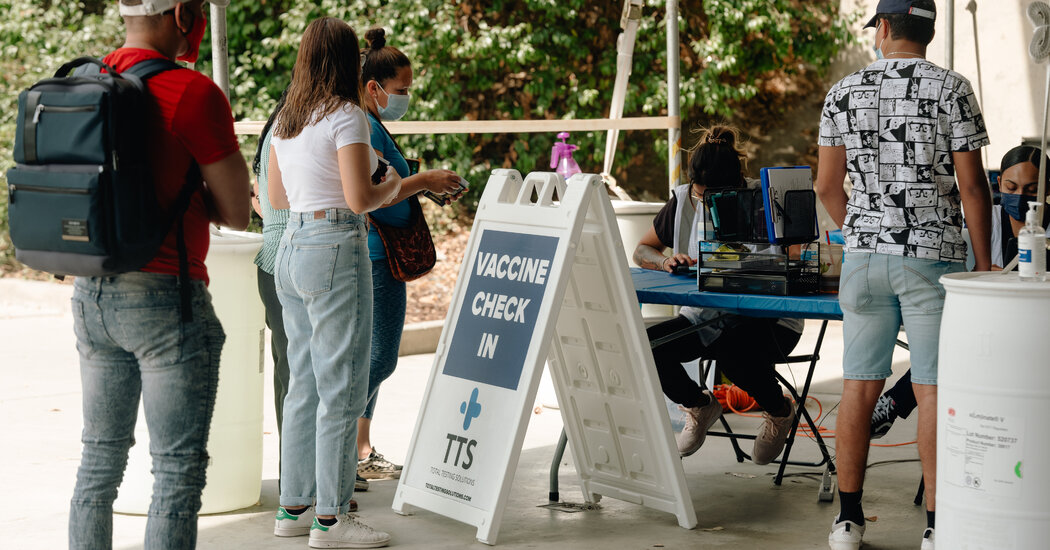
Unvaccinated Americans Are 11 Times More Likely to Die of Covid, C.D.C. Reports

A day after President Biden issued broad vaccine mandates aimed at propelling American workers to get vaccinated against the coronavirus, federal health officials released a handful of studies highlighting how effective the shots are at preventing infections, hospitalizations and deaths — even while the highly contagious Delta variant has been dominant.Three studies that drew data from different U.S. regions evaluated the protective power of the vaccines. One looked at more than 600,000 virus cases in 13 states, representing about one quarter of the U.S. population, between April and July, and concluded that individuals who were not fully vaccinated were far more susceptible to infection and death from the virus.They were 4.5 times more likely than vaccinated individuals to become infected, 10 times more likely to be hospitalized, and 11 times more likely to die from the coronavirus, the study found.Vaccine protection against hospitalization and death remained strong even when the Delta variant was the dominant form of infection. But the vaccines’ effectiveness in preventing infection dropped from 91 percent to 78 percent, the study found.The studies underscore a series of similar findings in recent weeks.“As we have shown, study after study, vaccination works,” said Dr. Rochelle Walensky, the director of the Centers for Disease Control and Prevention, at a White House Covid briefing on Friday.As more and more Americans become vaccinated, experts always expected that immunized people would represent a greater percentage of hospitalized patients. “What I want to reiterate here is it’s still well over 90 percent of people who are in the hospital who are unvaccinated,” Dr. Walensky said.“We still have more than 10 times the number of people in the hospital who are unvaccinated, compared to vaccinated,” she added.Two other studies published on Friday detected waning protection from the vaccines among older adults.One study, conducted at five Veterans Affairs Medical Centers, found that protection against hospitalization declined with age, to 80 percent for those aged 66 and older, down from 95 percent for adults aged 18 to 64. A second study found vaccine effectiveness dropped off at age 75.The findings could help identify populations who may be in need of additional doses or booster shots. In August, the Food and Drug Administration authorized giving third doses of Pfizer-BioNTech’s and Moderna’s coronavirus vaccines for some people with weakened immune systems, including organ transplant patients.But officials have said there is insufficient data on whether the vaccines’ effectiveness declines over time to recommend boosters for healthy adults.The data also suggests that the Moderna vaccine may be slightly more effective at preventing infections and hospitalizations with the Delta variant, compared with the Pfizer-BioNTech vaccine. Both of the mRNA vaccines had higher efficacy rates than the Johnson & Johnson shot, but the studies were not originally designed to evaluate the comparative effectiveness of different vaccinations.In the study of 33,000 medical encounters in nine states between June and August, the Moderna vaccine had an effectiveness rate of 92 percent against infection, compared with 77 percent for the Pfizer-BioNTech shot.Sharon LaFraniere contributed reporting from Washington.

Read more →

F.D.A. Again Warns Parents Not to Get Children Under 12 Vaccinated Yet

The U.S. Food and Drug Administration is “working around the clock” to make coronavirus vaccines available to young children, it said in a statement on Friday. In the meantime, however, the agency urged parents not to seek out the shots for children who are under 12, and therefore not yet eligible for vaccination.The agency said that it hoped vaccines would be available for young children “in the coming months,” but that it could not offer a more specific timeline. However, once it has applications from the vaccine manufacturers in hand, it will “be prepared to complete its review as quickly as possible, likely in a matter of weeks rather than months,” Dr. Janet Woodcock, the acting F.D.A. commissioner, and Dr. Peter Marks, of the agency’s Center for Biologics Research and Evaluation, said in the statement.The currently available vaccines, none of which have been cleared for children under 12, may not be a safe or effective dose for young children, the agency noted. Pediatric clinical trials, which will help determine the right vaccine dose for children under 12, are still underway.“Children are not small adults — and issues that may be addressed in pediatric vaccine trials can include whether there is a need for different doses or different strength formulations of vaccines already used for adults,” Dr. Woodcock and Dr. Marks.Health officials have previously expressed concern that full approval of the Pfizer-BioNTech vaccine for people 16 and up might prompt parents to seek, or doctors to give, the shots off-label to young children, specifically warning against the move. Children younger than 12 make up a sizable unvaccinated population in the United States.Some vaccine manufacturers are still enrolling children in their trials and others are still giving the shots and monitoring children for potential side effects, the F.D.A. noted in its statement. The trials will follow participants for at least two months to ensure that the researchers are able to detect any adverse events. Vaccine manufacturers then have to analyze the data and then formally apply for authorization or approval from the F.D.A.Then, the agency “will carefully, thoroughly and independently examine the data to evaluate benefits and risks,” Dr. Woodcock and Dr. Marks said.They added, “Just like every vaccine decision we’ve made during this pandemic, our evaluation of data on the use of Covid-19 vaccines in children will not cut any corners.”In an interview published on Friday, Ozlem Tureci, the co-founder of BioNTech and its chief medical officer, told Der Spiegel, a German news site, that “we will be presenting the results from our study on five- to 11-year-olds to authorities around the world in the coming weeks.”Initially reluctant to enact mandates, President Biden is now moving more aggressively than any other president in modern history to require vaccination, including in schools..css-1xzcza9{list-style-type:disc;padding-inline-start:1em;}.css-3btd0c{font-family:nyt-franklin,helvetica,arial,sans-serif;font-size:1rem;line-height:1.375rem;color:#333;margin-bottom:0.78125rem;}@media (min-width:740px){.css-3btd0c{font-size:1.0625rem;line-height:1.5rem;margin-bottom:0.9375rem;}}.css-3btd0c strong{font-weight:600;}.css-3btd0c em{font-style:italic;}.css-w739ur{margin:0 auto 5px;font-family:nyt-franklin,helvetica,arial,sans-serif;font-weight:700;font-size:1.125rem;line-height:1.3125rem;color:#121212;}#NYT_BELOW_MAIN_CONTENT_REGION .css-w739ur{font-family:nyt-cheltenham,georgia,’times new roman’,times,serif;font-weight:700;font-size:1.375rem;line-height:1.625rem;}@media (min-width:740px){#NYT_BELOW_MAIN_CONTENT_REGION .css-w739ur{font-size:1.6875rem;line-height:1.875rem;}}@media (min-width:740px){.css-w739ur{font-size:1.25rem;line-height:1.4375rem;}}.css-9s9ecg{margin-bottom:15px;}.css-16ed7iq{width:100%;display:-webkit-box;display:-webkit-flex;display:-ms-flexbox;display:flex;-webkit-align-items:center;-webkit-box-align:center;-ms-flex-align:center;align-items:center;-webkit-box-pack:center;-webkit-justify-content:center;-ms-flex-pack:center;justify-content:center;padding:10px 0;background-color:white;}.css-pmm6ed{display:-webkit-box;display:-webkit-flex;display:-ms-flexbox;display:flex;-webkit-align-items:center;-webkit-box-align:center;-ms-flex-align:center;align-items:center;}.css-pmm6ed > :not(:first-child){margin-left:5px;}.css-5gimkt{font-family:nyt-franklin,helvetica,arial,sans-serif;font-size:0.8125rem;font-weight:700;-webkit-letter-spacing:0.03em;-moz-letter-spacing:0.03em;-ms-letter-spacing:0.03em;letter-spacing:0.03em;text-transform:uppercase;color:#333;}.css-5gimkt:after{content:’Collapse’;}.css-rdoyk0{-webkit-transition:all 0.5s ease;transition:all 0.5s ease;-webkit-transform:rotate(180deg);-ms-transform:rotate(180deg);transform:rotate(180deg);}.css-eb027h{max-height:5000px;-webkit-transition:max-height 0.5s ease;transition:max-height 0.5s ease;}.css-6mllg9{-webkit-transition:all 0.5s ease;transition:all 0.5s ease;position:relative;opacity:0;}.css-6mllg9:before{content:”;background-image:linear-gradient(180deg,transparent,#ffffff);background-image:-webkit-linear-gradient(270deg,rgba(255,255,255,0),#ffffff);height:80px;width:100%;position:absolute;bottom:0px;pointer-events:none;}.css-uf1ume{display:-webkit-box;display:-webkit-flex;display:-ms-flexbox;display:flex;-webkit-box-pack:justify;-webkit-justify-content:space-between;-ms-flex-pack:justify;justify-content:space-between;}.css-wxi1cx{display:-webkit-box;display:-webkit-flex;display:-ms-flexbox;display:flex;-webkit-flex-direction:column;-ms-flex-direction:column;flex-direction:column;-webkit-align-self:flex-end;-ms-flex-item-align:end;align-self:flex-end;}.css-12vbvwq{background-color:white;border:1px solid #e2e2e2;width:calc(100% – 40px);max-width:600px;margin:1.5rem auto 1.9rem;padding:15px;box-sizing:border-box;}@media (min-width:740px){.css-12vbvwq{padding:20px;width:100%;}}.css-12vbvwq:focus{outline:1px solid #e2e2e2;}#NYT_BELOW_MAIN_CONTENT_REGION .css-12vbvwq{border:none;padding:10px 0 0;border-top:2px solid #121212;}.css-12vbvwq[data-truncated] .css-rdoyk0{-webkit-transform:rotate(0deg);-ms-transform:rotate(0deg);transform:rotate(0deg);}.css-12vbvwq[data-truncated] .css-eb027h{max-height:300px;overflow:hidden;-webkit-transition:none;transition:none;}.css-12vbvwq[data-truncated] .css-5gimkt:after{content:’See more’;}.css-12vbvwq[data-truncated] .css-6mllg9{opacity:1;}.css-qjk116{margin:0 auto;overflow:hidden;}.css-qjk116 strong{font-weight:700;}.css-qjk116 em{font-style:italic;}.css-qjk116 a{color:#326891;-webkit-text-decoration:underline;text-decoration:underline;text-underline-offset:1px;-webkit-text-decoration-thickness:1px;text-decoration-thickness:1px;-webkit-text-decoration-color:#326891;text-decoration-color:#326891;}.css-qjk116 a:visited{color:#326891;-webkit-text-decoration-color:#326891;text-decoration-color:#326891;}.css-qjk116 a:hover{-webkit-text-decoration:none;text-decoration:none;}The president traveled to Brookland Middle School on Friday with Jill Biden, the first lady, a college professor who returned to the classroom this week. In his remarks, Mr. Biden urged parents to get eligible children vaccinated, and promised a White House visit to the school once every student received a vaccine.“The safest thing you can do for your child 12 and older is get them vaccinated,” the president told the crowd. “You’ve got them vaccinated for all kinds of other things — measles mumps rubella — for them to go to school, to be able to play sports, they’ve had to have these vaccinations. Get them vaccinated.”A slate of new requirements announced this week would apply to those who teach in Head Start programs, Department of Defense Schools, and schools operated by the Bureau of Indian Education. Collectively, those schools serve more than 1 million children and employ nearly 300,000 staff, according to the plan released by administration officials.“We cannot always know what the future holds, but we do know what we owe our children,” Dr. Biden said on Friday. “We owe them a promise to keep their schools open as safe as possible. We owe them a commitment to follow the science.”The surge of new cases, driven by the more contagious Delta variant, ripping through unvaccinated communities has also impacted children, who are currently being hospitalized at the highest levels reported to date, with nearly 30,000 entering hospitals in August.Children still remain markedly less likely to be hospitalized or die from Covid-19 than adults, especially older adults. But experts say that the growing number of hospitalized children, however small compared with adults, should not be an afterthought, and should instead encourage communities to work harder to protect their youngest residents.Christopher F. Schuetze contributed reporting.

Read more →

AI can make better clinical decisions than humans: Study

It’s an old adage: there’s no harm in getting a second opinion. But what if that second opinion could be generated by a computer, using artificial intelligence? Would it come up with better treatment recommendations than your professional proposes?
A pair of Canadian mental-health researchers believe it can. In a study published in the Journal of Applied Behavior Analysis, Marc Lanovaz of Université de Montréal and Kieva Hranchuk of St. Lawrence College, in Ontario, make a case for using AI in treating behavioural problems.
“Medical and educational professionals frequently disagree on the effectiveness of behavioral interventions, which may cause people to receive inadequate treatment,” said Lanovaz, an associate professor who heads the Applied Behavioural Research Lab at UdeM’s School of Psychoeducation.
To find a better way, Lanovaz and Hranchuk, a professor of behavioural science and behavioural psychology at St. Lawrence, compiled simulated data from 1,024 individuals receiving treatment for behavioral issues.
The researchers then compared the treatment conclusions drawn in each case by five doctoral-level behavior analysts with those produced by a computer model the two academics developed using machine learning.
“The five professionals only came to the same conclusions approximately 75 per cent of the time,” said Lanovaz. “More importantly, machine learning produced fewer decision-making errors than did all the professionals.”
Given these very positive results, the next step would be to “integrate our models in an app that could automatically make decisions or provide feedback about how treatment is progressing,” he added.
The goal, the researchers believe, should be to use machine learning to facilitate the work of professionals, not actually replace them, while also making treatment decisions more consistent and predictable.
“For example, doctors could someday use the technology to help them decide whether to continue or terminate the treatment of people with disorders as varied as autism, ADHD, anxiety and depression,” Lanovaz said.
“Individualized clinical and educational decision-making is one of the cornerstones of psychological and behavioral treatment. Our study may thus lead to better treatment options for the millions of individuals who receive these types of services worldwide.”
Story Source:
Materials provided by University of Montreal. Note: Content may be edited for style and length.

Read more →