Medical officers recommend Covid vaccines for older children

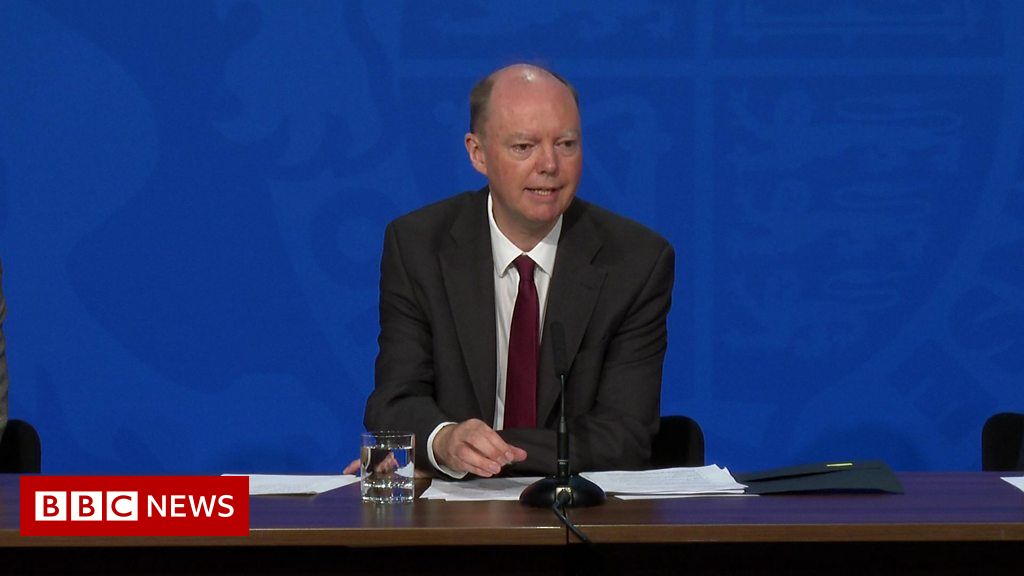
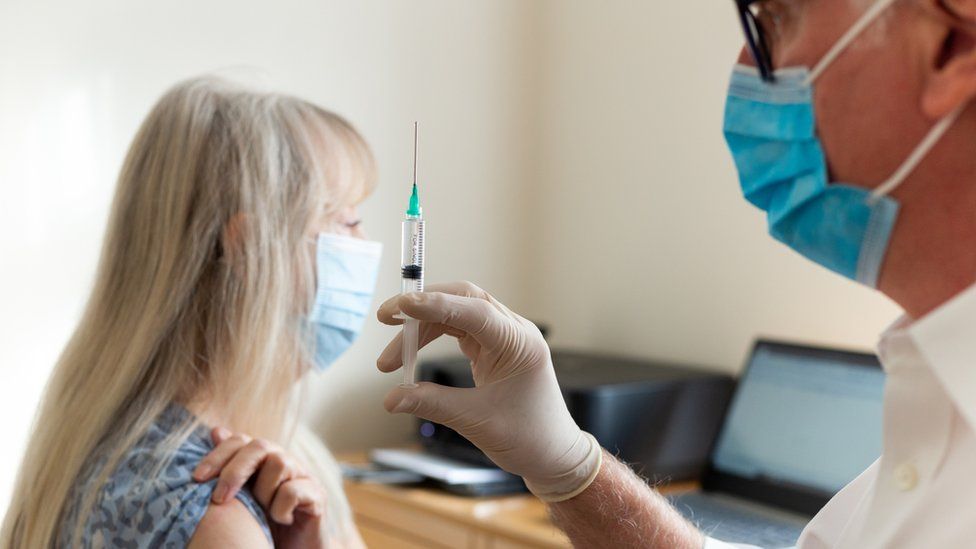
The benefit of vaccinating younger people was an “important and potentially useful additional tool” England’s chief medical officer has announced.Chris Whitty said it was not a “silver bullet” but would help reduce the impact on the disruption to education, and on their physical and mental health.He was addressing a news conference with the devolved medical offers as they recommended a “universal offer” to give Covid vaccines to the 12 to 15-year-olds who have not been offered the jab so far.It is up to the four nations to decide if they would follow this advice.

Read more →

Most People Don't Need a Covid Vaccine Booster, New Review Says

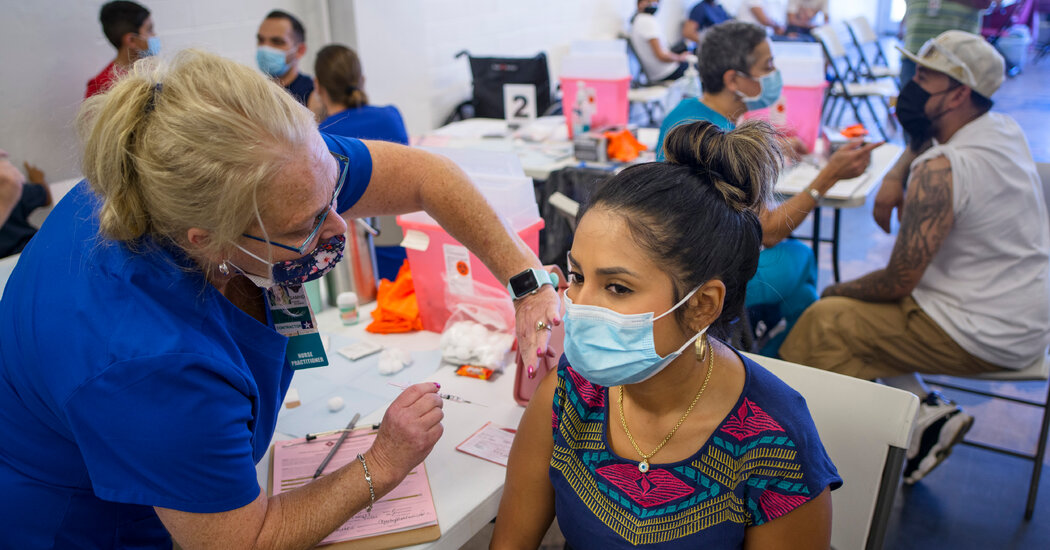
None of the data on coronavirus vaccines so far provides credible evidence in support of boosters for the general population, according to a review published on Monday by an international group of scientists, including some at the Food and Drug Administration and the World Health Organization.The Biden administration has proposed administering vaccine boosters eight months after the initial shots. But many scientists have opposed the plan, saying the vaccines continue to be powerfully protective against severe illness and hospitalization. A committee of advisers to the F.D.A. is scheduled to meet on Friday to review the data.In the new review, published in The Lancet, experts said that whatever advantage boosters provide would not outweigh the benefit of using those doses to protect the billions of people who remain unvaccinated worldwide. Boosters may be useful in some people with weak immune systems, they said, but are not yet needed for the general population.The 18 authors include Philip Krause and Marion Gruber, F.D.A. scientists who resigned from the agency, at least in part because they disagreed with the Biden administration’s push for boosters before federal scientists could review the evidence and make recommendations.Several studies published by the Centers for Disease Control and Prevention, including three on Friday, suggest that while efficacy against infection with the Delta variant seems to wane slightly over time, the vaccines hold steady against severe illness in all age groups. Only in older adults over 75 do the vaccines show some weakening in protection against hospitalization.Immunity conferred by vaccines relies on protection both from antibodies and from immune cells. Although the levels of antibodies may wane over time — and raise the risk of infection — the body’s memory of the virus is long-lived.The vaccines are slightly less effective against infection with the Delta variant than with the Alpha variant, but the virus has not yet evolved to evade the sustained responses from immune cells, the experts said. Boosters may eventually be needed even for the general population if a variant emerges that sidesteps the immune response.The experts cautioned that promoting boosters before they are needed, as well as any reports of side effects from booster shots such as heart problems or Guillain-Barre syndrome, may undermine confidence in the primary vaccination.Data from Israel suggest that booster doses enhance protection against infection. But that evidence was collected just a week or so after the third dose and may not hold up over time, the experts said.

Read more →

Covid: Vaccine should be given to 12 to 15-year-olds

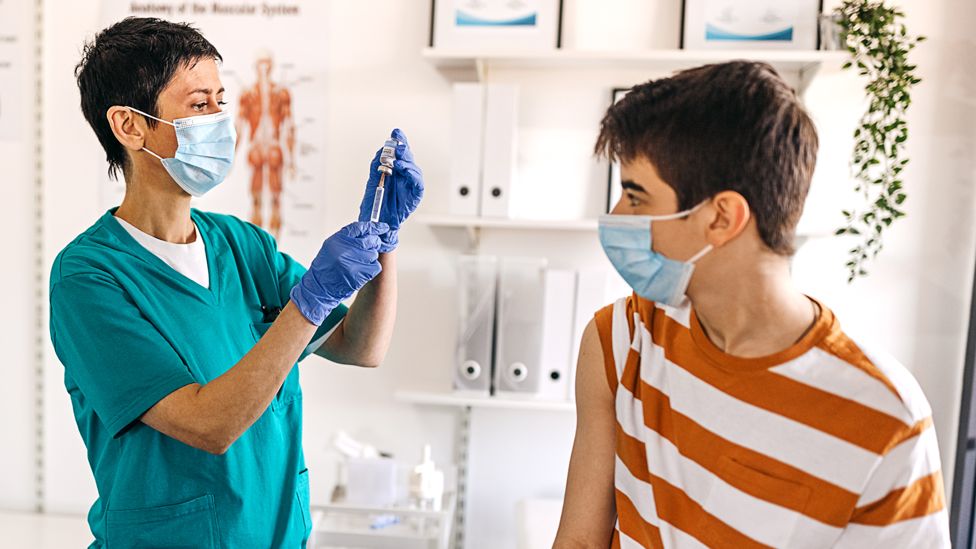
SharecloseShare pageCopy linkAbout sharingimage source, Getty ImagesHealthy children aged 12 to 15 should be offered one dose of aCovid vaccine, the UK’s chief medical officers say.The CMOs said it would help reduce disruption to education.It comes after the government’s vaccine committee said there was not enough benefit to warrant it on health grounds alone – but they said ministers could take into account other factors.The CMOs concluded this tipped the balance given the virus was going to keep spreading over winter.They said closures of schools was unlikely, but disruption to face-to-face education was likely given people who test positive have to isolate for 10 days.It will now be up to ministers whether to accept the recommendation of the four CMOs.If they agree, children will be offered the Pfizer jab.It is likely to be given in schools and parental consent will not be needed if the child is considered competent to give consent themselves.In a letter to ministers, the CMOs warned missing face-to-face school had a “massive impact” on children, both physically, emotional and in terms of their life chances.The CMOs said it was not possible to quantify to what extent vaccination would help reduce this – the vaccines are less effective at prevention infection against the Delta variant of coronavirus than they were previously.But they said it would be a useful tool.Children with health conditions and those living with clinically vulnerable people have already been told they can get the vaccine.This accounts for around one in 10 of the three million children in this age group.The decision by the government’s vaccine committee, the JCVI, came amid concerns about a small, but increased risk of heart inflammation after vaccination.They said vaccination still offered a marginal benefit, but not sufficient enough to convince them a vaccination programme should be rolled out.Why vaccinating all teens is a difficult decisionNHS England prepares jabs plan for 12-15-year-oldsThird Covid jab advised for most vulnerable 1%Related Internet LinksMyocarditis and Pericarditis Following mRNA COVID-19 Vaccination – CDCMyocarditis With COVID-19 mRNA Vaccines – CirculationCOVID-19 mRNA vaccines in adolescents and young adults- Benefit-risk discussionCDC COVID Data TrackerThe BBC is not responsible for the content of external sites.

Read more →

Singer who lost her voice sings again

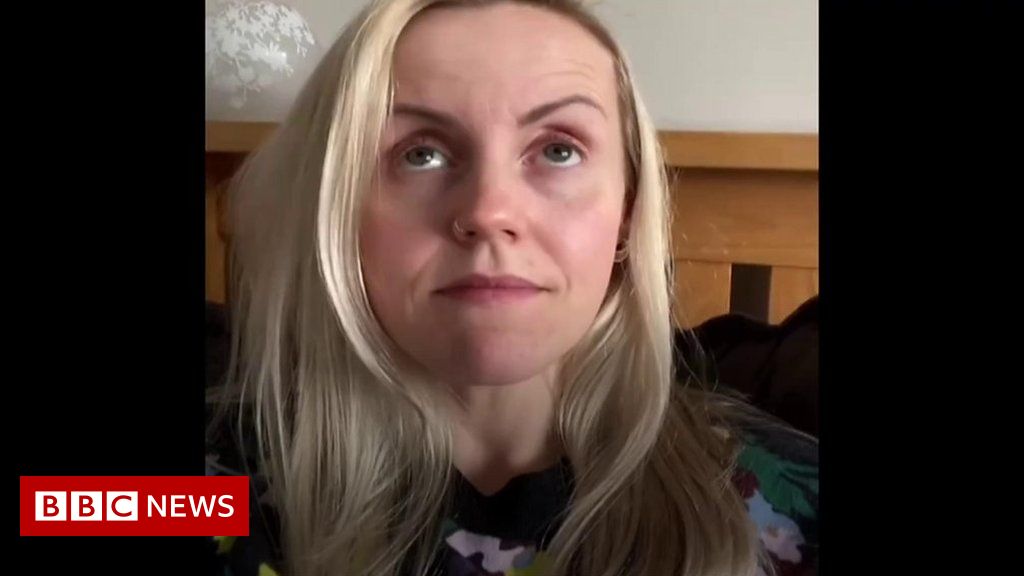
When former singer Tanja Bage was told she would lose her voice to throat cancer, she immediately began to create a video diary.Now, thanks to a special project, she’s able to do something she never thought would be possible again – perform live on stage.

Read more →

Covid deaths rare among fully vaccinated – ONS

SharecloseShare pageCopy linkAbout sharingimage source, Getty ImagesFully vaccinated people are much less likely to die with Covid-19 than those who aren’t, or have had only one dose, figures from the Office for National Statistics (ONS) show.Out of more than 51,000 Covid deaths in England between January and July 2021, only 256 occurred after two doses.They were mostly people at very high risk from illness from Covid-19.The figures show the high degree of protection from the vaccines against illness and death, the ONS said.Some deaths after vaccination were always expected because vaccines are not 100% effective – but this analysis shows they are rare.”Breakthrough” deaths tend to happen in the most vulnerable, men and those with weakened immune systems, with the average age being 84.But overall numbers were very small – they accounted for only 0.5% of all deaths from Covid-19 over the first six months of the year.A “breakthrough death” is defined as one involving Covid-19 that occurred in someone who had received both vaccine doses, and had a first positive coronavirus test at least 14 days after the second jab.Julie Stanborough, from the ONS, said: “Our new analysis shows that, sadly, there have been deaths of people involving Covid-19 despite them being fully vaccinated.”However, we’ve also found that the risk of a death involving Covid-19 is much lower among people who are fully vaccinated than those who are unvaccinated.” Among those who died after two doses, 13% were immunocompromised, 61% were male and more than 75% were clinically extremely vulnerable.In the UK, 80% of people aged 16 and over have had two doses and nearly 90% have had one dose.Since vaccinations were offered to priority, high-risk groups first – as advised by the UK’s vaccine advisory body – comparing the number of deaths in vaccinated and unvaccinated groups over time is not useful.As more and more people are vaccinated, the numbers of fully vaccinated people infected with Covid who then die from it will also grow – although Covid deaths are much lower now than they were before vaccines.Related Internet LinksDeaths involving COVID-19 by vaccination status, England – Office for National StatisticsThe BBC is not responsible for the content of external sites.

Read more →

A Medical Career, at a Cost: Infertility

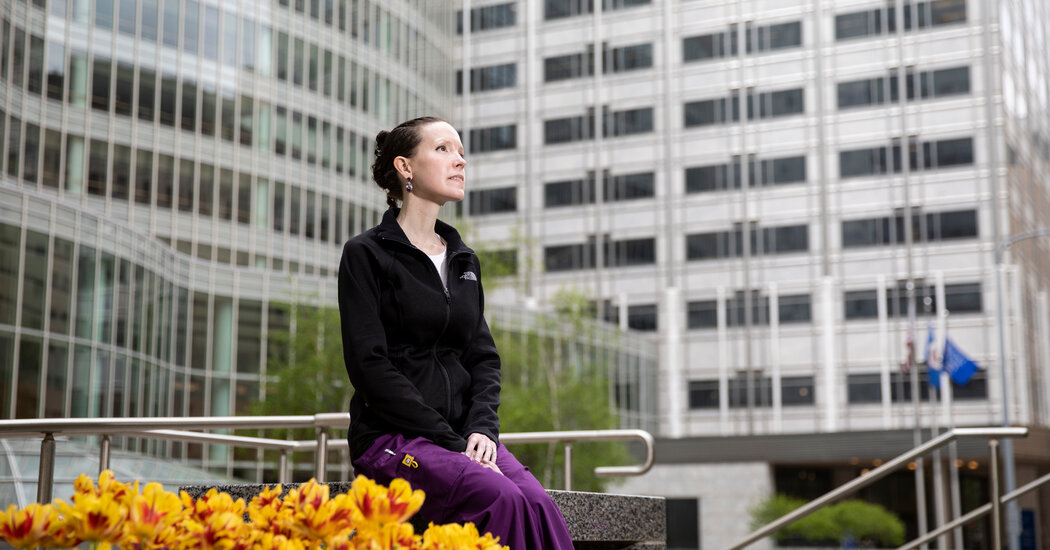
Physicians are raising awareness of the reproductive toll that work stress, long hours, sleep deprivation and years of training can exact.From the start, Dr. Ariela Marshall, a hematologist at the Mayo Clinic in Minnesota, proceeded with the conviction that if she worked harder, longer and better, she would succeed. And she did: She graduated as high school valedictorian, attended an elite university and was accepted into a top medical school.But one achievement eluded her: having a baby. She had postponed getting pregnant until she was solidly established in her career, but when she finally decided to try to have children, at 34, she was surprised to find that she could not, even with fertility drugs. Dr. Marshall attributed it to having worked frequent night shifts, as well as to stress and lack of sleep, which can affect reproductive cycles.When she reached out to other female physicians to share her story, she learned that she was far from alone; many women in her line of work were also struggling with infertility or with carrying a baby to term.In fact, a 2016 survey of female physicians in the Journal of Women’s Health found that nearly one in four of those who had tried to have a baby had been diagnosed with infertility — almost double the rate of the general public.In 2020, Dr. Marshall and several colleagues published an article in the journal American Medicine calling for more fertility education and awareness among aspiring doctors, starting at the undergraduate level. Jenn Ackerman for The New York Times“For many physicians like me, everything is so planned,” Dr. Marshall said. “Many of us decide to wait until we’re done with our training and are financially independent to have kids, and that doesn’t happen until we’re in our mid to late 30s.”To raise awareness of the issue, Dr. Marshall helped to create an infertility task force with the American Medical Women’s Association. In June, the association held its first national physician fertility summit, with sessions on egg freezing, benefits and insurance coverage for fertility treatment, and infertility and mental health. The association plans to hold another summit next year.The high rate of infertility holds for female surgeons as well. A survey of 692 female surgeons, published in JAMA Surgery in July, found that 42 percent had suffered a pregnancy loss — more than twice the rate of the general population. Nearly half had experienced pregnancy complications.Like other female physicians, many surgeons delay pregnancy until after their residency, making them more susceptible to health problems and infertility issues.Often, doctors must navigate 10 years of medical school, residencies and fellowships. The average age for women to complete their medical training is 31, and most female physicians first give birth at 32, on average, according to a 2021 study. The median age for nonphysicians to give birth is 27.Through social media, Dr. Marshall connected with two other female physicians who also struggled with infertility, and last year they wrote about the issue in the journal Academic Medicine, calling for more fertility education and awareness among aspiring doctors, starting at the undergraduate level. They also proposed providing insurance coverage for, and access to, fertility assessment and management, and offering support for people undergoing fertility treatments. (In December, Dr. Marshall gave birth to a healthy baby boy after completing a successful I.V.F. cycle.)For a year, Dr. Arghavan Salles, 41, tried to freeze her eggs, but none were viable. Dr. Salles, an author of the article and a surgeon at Stanford, is also struggling with the expense of the procedure, which can cost up to $15,000 per attempt. She is looking into intrauterine insemination, which is more affordable but has a lower likelihood of success.In 2019, she wrote an essay in Time about having spent her most fertile years training to be a surgeon only to discover that it might be too late for her to have a baby. Afterward, many female physicians contacted her to say that they had also dealt with infertility.“They all felt so alone,” Dr. Salles said. “They had all gone through this roller coaster ride of dealing with infertility on their own, because people just don’t talk about it. We need to change the culture of med school and residencies. We have to do a better job of urging leaders in the field to say, ‘Please, go and take care of what you need to do.’”Dr. Arghavan Salles, a surgeon at Stanford, has written about how she spent her most fertile years in medical training and now struggles with few pregnancy options. Preston Gannaway for The New York TimesSleep deprivation, poor diet and lack of exercise — inherent to the demands of medical training and the medical profession — take a toll on women seeking to become pregnant.Even finding a partner can be a challenge, given the demanding work hours, including nights and weekends.“The problem is you have to spend a lot of time in the hospital and it’s very unpredictable,” Dr. Salles said. “One could look back and say, ‘I should have frozen eggs in my early 20s,’ but the technology wasn’t very good then. We see older women who are celebrities in the news having babies, and we think it will be fine, but it’s not. Now we’re all having this realization that we don’t have control over our lives.”Dr. Vineet Arora, dean of medical education at the University of Chicago Pritzker School of Medicine and another author of the paper, is weighing how she and other educators can best advise leaders in medicine to address these issues.“The thing that surprised me the most is that infertility is a silent struggle for many of these women, but when you see the data, you realize that it’s not uncommon,” said Dr. Arora, who underwent many I.V.F. cycles in her 40s and finally had her second child last March.She and Dr. Salles are analyzing data from a large study they conducted asking physicians and medical students about their experiences building families and accessing infertility treatments.Female residents who do manage to get pregnant must also contend with poor health outcomes; many go into early labor or experience miscarriages as a result of the long hours and stress of the job. Yet pregnant female residents are still expected to work 28-hour shifts, without sleeping. Dr. Arora and others would like to see that change.Dr. Roberta Gebhard, who is governance chair and former president of the American Medical Women’s Association, said the group is advocating for more accommodations for pregnant physicians, such as allowing women doctors to complete their heavy workloads at the beginning of their residency if they know they want to try to have a baby later on in their training.“We’re educating med students and pre-med students about fertility issues so that they are aware of them,” she said. “People say you can’t be a mom and a physician, and we’re telling you that you can, but you need to keep your options open. A lot of it isn’t just being able to get pregnant. Some of these women are so focused on their careers that they don’t get into a relationship.”For female physicians with babies, even finding the time and a private place to pump breast milk while on the job can be a challenge. Dr. Gebhard said that one doctor who asked for time to pump was instructed to go behind a potted plant in a public area to do so.She’s optimistic that things will start to change in the near future, as more than 50 percent of all medical school students are now women, although there are still more male physicians than women.Dr. Racquel Carranza-Chahal, an OB-GYN in Tucson, Ariz. “When I became a resident, someone told me that I needed to divorce my husband and lose custody of my child if I wanted a fellowship,” she said.Kristen Zeis for The New York TimesDr. Racquel Carranza-Chahal, 30, recently completed her OB-GYN residency and is now in private practice in Tucson, Ariz. She has a son, to whom she gave birth while in medical school, and a daughter.“When I became a resident, someone told me that I needed to divorce my husband and lose custody of my child if I wanted a fellowship,” Dr. Carranza-Chahal said.The day she spoke, she was on-call and had just completed her second 24-hour shift in seven days while eight and a half months pregnant with her second child.In 2019, she founded a nonprofit called Mothers in Medicine, which she hopes will increase visibility and community outreach for female physicians who are pregnant or are mothers.“I want moms in training to know that they should take up space, that they do belong and that there are resources at their disposal, including legal ones,” Dr. Carranza-Chahal said. “A lot of residents end up delivering early and having complications. One day I’ll change that.”

Read more →

stupid-things-I-won't-do-when-get

Inspired by a new book, “Stupid Things I Won’t Do When I Get Old,” I’m taking stock of my life and deciding what I need to reconsider.The day after my 80th birthday, which overflowed with good wishes, surprises and Covid-safe celebrations, I awoke feeling fulfilled and thinking that whatever happens going forward, I’m OK with it. My life has been rewarding, my bucket list is empty, my family is thriving, and if everything ends tomorrow, so be it.Not that I expect to do anything to hasten my demise. I will continue to exercise regularly, eat healthfully and strive to minimize stress. But I’m also now taking stock of the many common hallmarks of aging and deciding what I need to reconsider.I found considerable inspiration and guidance in a new book, “Stupid Things I Won’t Do When I Get Old,” by Steven Petrow, written with Roseann Foley Henry. Mr. Petrow, who is also a columnist but is nearly two decades younger than I, began thinking ahead after watching the missteps of his aging parents, like waiting too long to get hearing aids. I took a similar inventory of my life and started at the top, with my hair. I’d been coloring it for decades, lighter and lighter as I got older. But I noticed that during the pandemic, many people (men as well as women of all ages) had stopped covering their gray. And they looked just fine, sometimes better than they did with hair dyed dark above a wrinkled facade. Today, I too am gray and loving it, although I can no longer blame my dog for the white hairs on the couch!I’ve also resisted the common temptation to cover up other cosmetic issues. I now rarely use makeup, and my usual summer costume remains short-shorts and tank tops. Wrinkles be damned. I’m proud to have them.But I will continue to be irritated by bad grammar, like the sentence recently in this newspaper that ended … “to we mortals,” and correct misuse of the language whenever I can.And I will stubbornly resist altering my habits to avert potential tragedies that others foresee. I walk my dog in the woods over slippery rocks, roots and fallen logs so I can enjoy his fearless energy and athleticism and improve my own balance and self-confidence. The doctor who monitors my bone health ends every consult with an order, “Do not fall,” and the treacherous woods walk is part of my response. As Mr. Petrow emphasized, fear of falling “can actually lead to more falls” by making you unduly anxious, hesitant and focused on your feet instead of what’s in front of you.My kitchen was built for a five-foot-tall cook who, thanks to scoliosis and shrinkage, is now several inches shorter. That means I often climb to reach items that I can’t store on a lower shelf. But I always use a sturdy stepstool, unlike a 78-year-old friend who foolishly climbed on a chair (a big no-no), fell and injured his back.When I asked a woman my age how she was feeling, she said, “I have issues,” and I said, “We all have issues. The secret to successful aging is to recognize one’s issues and adapt accordingly.” I’m constantly learning what I can and can’t do and asking or paying for help when needed.Sooner or later, we all must recognize what is no longer possible and find alternatives. Years ago, body mechanics forced me to give up tennis and ice skating and now strenuous gardening. I continue to do 10-mile bike rides several times a week in good weather, but two-week cycling trips up and down hills are now history.A dear friend in her 90s is my role model and serves as a reality check. When I asked if she’d accompany me on a trip abroad, she said, “Thanks, but I’m no longer up to the level of activity it involves.”I’ve vowed to stop talking to whoever will listen about my aches, pains and ailments, what Mr. Petrow called the “organ recital.” It doesn’t provide relief — in fact, it might even make the pain worse. Rather than instill empathy, the “organ recital” likely turns most people off, especially young ones.And I do cherish my young friends who keep me youthful in spirit and focused on issues important to my children and grandchildren and the world they will inherit. They, in turn, say they value the information and wisdom I can offer.I also strive to say something flattering or cheerful to a stranger every day. It brightens both of our lives and helps me focus on the beauty around me. But my most valuable advice: Live each day as if it’s your last, with an eye on the future in case it’s not, a lesson I learned as a teen when my mother died of cancer at 49. Her death inured me to catastrophic loss, which I handle better than little ones.The stickiest wicket going forward will be driving. When I was in my mid-70s, my sons started urging me to stop driving simply based on my age. I hadn’t had any accidents or even almost-accidents or gotten a ticket for a moving violation. Still, they upped my liability insurance (OK, I said, if it makes you feel better). And, to get them off my back, I gave up my 10-year-old minivan and I replaced it with one of the safest cars on the road, a Subaru Outback.Like many other cars now on the market, the Subaru has several protective bells and whistles that compensate for the declining senses and slower reactions that accompany aging. It warns me when there’s a car, bicycle or pedestrian approaching when I’m backing out of a parking spot. It stops dead when anything suddenly appears or stops in front of me. If I should turn my head to see something, it flashes “Keep Eyes on Road.”I’m also beginning to tackle another burdensome issue especially common among those who have lived long in one place: clutter. I have a latent fear of “running out” of things and so I chronically buy and save more than enough of everything. My late husband called our house an air raid shelter that could sustain us for a year. I’m also terrible at parting with objects that may one day be useful. He told me I reminded him of an elderly woman he knew who kept pieces of string “too small to use.” I’m taking his advice to heart. Wish me luck.

Read more →

Covid: More than 300,000 suspected of breaking quarantine rules

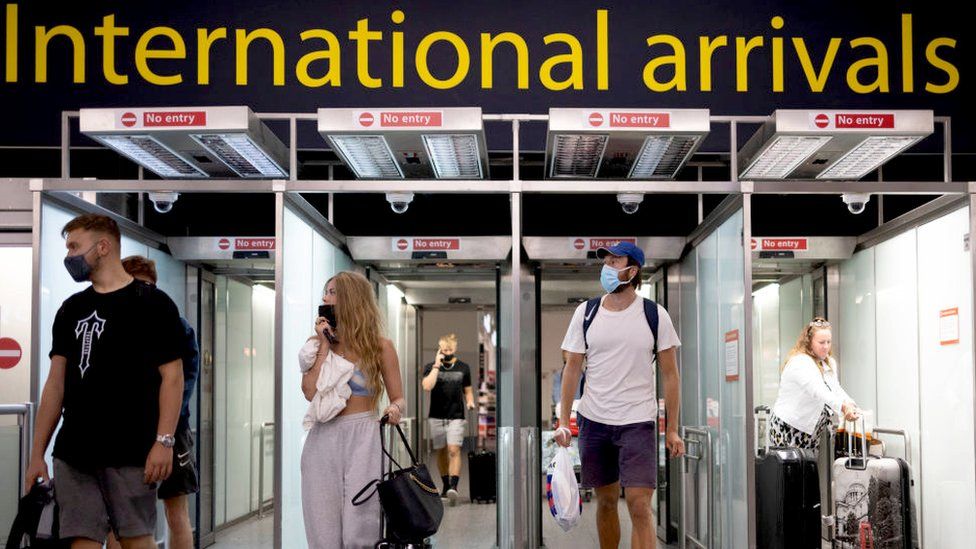
SharecloseShare pageCopy linkAbout sharingimage source, Getty ImagesNearly a third of people arriving in England and Northern Ireland as the coronavirus Delta variant took off may have broken quarantine rules.More than 300,000 cases were passed to investigators between March and May, according to figures seen by the BBC.The government was not able to say how many of these were found to have broken the rules or could not be traced. The Home Office has said it aims to pay home visits to all travellers suspected of not following the rules.But Labour’s shadow home secretary Nick Thomas-Symonds said the figures obtained by the BBC “confirm our worst fears” about the government’s “lax border policy”.And he accused the Home Office of “gross negligence”.Which countries have been added to the green list?What is the Delta variant and is it more dangerous?It comes as the prime minister is about to announce his winter Covid-19 plan, along with plans to get rid of coronavirus powers the government no longer needs – including the legal authority to shut down schools and some businesses.Boris Johnson is expected to emphasise the importance of vaccines in allowing a return to nearly normal life and to set out plans for a third dose as a booster, which will be offered to older people first.But final decisions are still awaited on vaccinating healthy 12- to 15-year-olds and on measures to make it easier to travel abroad.Earlier this year, the government introduced new rules for people arriving from abroad in an effort to slow the spread of coronavirus and stop new variants arriving in the country. People arriving from high-risk countries – deemed “red list” – had to quarantine in a hotel.Those coming from “amber list” – or medium-risk areas – were required to self-isolate for 10 days and provide evidence of negative Covid tests. From 17 March to 31 May more than a million people arrived in England and Northern Ireland from amber list countries. Figures for this period obtained under Freedom of Information laws show a total of 301,076 cases were referred to investigators for checks on whether they were self-isolating.During this time, the highly contagious Delta variant of coronavirus – first detected in India – was spreading rapidly through the country. image source, PA MediaCall handlers employed by the Department of Health and Social Care were tasked with contacting arrivals to check they were obeying the self-isolation and testing rules. Cases where the contact ended the call, refused to co-operate, indicated they would break the quarantine or testing rules, or could not be contacted after three attempts were referred to investigators at the Border Force Criminal Justice Unit and the police. Officers would then attempt to visit the contact at home to check they were following the rules. After 26 April, the Home Office hired private contractor Mitie to carry out home visits to international travellers required to isolate, from contacts supplied by NHS Test and Trace.”We visit over 99% of the cases referred to this service by NHS Test and Trace,” a government spokesman said.In Wales, the Arriving Travellers Team is responsible for monitoring compliance with the rules – including escalating cases to regional teams to undertake doorstep visits if deemed necessary.And in Scotland, quarantine measures are monitored by Public Health Scotland through the National Contact Tracing Centre. PHS has the ability to refer to cases to Police Scotland.’It was taken on trust’On 1 April, Henrik Pakula began 10 days of isolation at home after returning to England from Poland, where he had been visiting relatives.”On day one I received a phone call just asking me if I knew the rules on self-isolation, and informing me that there could be random phone calls over the next 10 days just to check I was still at home, but none of those calls materialised,” he said.”I could have nipped out to the supermarket if I had so desired – no-one would have checked, no-one would have known.”I got a text message saying these were the rules but there was no contact with anybody at all.”I knew I had to isolate for 10 days, which I did, but it was taken on trust.”Lucy Moreton, of the Immigration Services Union, said the quarantine system “very much relied on the honesty of people to do the right thing, rather than any type of meaningful enforcement”. “There’s limited point in putting rules in place if you don’t enforce them,” she added.Yvette Cooper, Labour MP and chair of the Home Affairs Committee, said: “We’ve been concerned throughout that there just weren’t proper follow-ups on the checks that were done, and as a result you just had these huge gaps in the home quarantine system and that’s what made it easier for the Delta variant to spread.”But Conservative MP Huw Merriman, chair of the Transport Committee, said: “There was a balancing act from government… would we have had the resources to check every single person who was quarantining at home? Of course not – so we always knew those risks were in the system”. Have you broken quarantine rules? Please share your experiences. Email haveyoursay@bbc.co.uk.Please include a contact number if you are willing to speak to a BBC journalist. You can also get in touch in the following ways:WhatsApp: +44 7756 165803Tweet: @BBC_HaveYourSayUpload pictures or videoPlease read our terms & conditions and privacy policy

If you are reading this page and can’t see the form you will need to visit the mobile version of the BBC website to submit your question or comment or you can email us at HaveYourSay@bbc.co.uk. Please include your name, age and location with any submission.

Read more →

How Outrage Over Vaccine Mandates Became a Mainstream G.O.P. Stance

Resistance to vaccine mandates, once a fringe position, has entered the Republican mainstream. But the governors fighting President Biden’s Covid-19 vaccine requirements impose mandates of their own.WASHINGTON — Like other Republican governors around the country, Tate Reeves of Mississippi reacted angrily to the coronavirus vaccine mandates President Biden imposed on private businesses. Declaring the move “terrifying,” he wrote on Twitter: “This is still America, and we still believe in freedom from tyrants.”There is a deep inconsistency in that argument. Mississippi has some of the strictest vaccine mandates in the nation, which have not drawn opposition from most of its elected officials. Not only does it require children to be vaccinated against measles, mumps and seven other diseases to attend school, but it goes a step further than most states by barring parents from claiming “religious, philosophical or conscientious” exemptions.Resistance to vaccine mandates was once a fringe position in both parties, more the realm of misinformed celebrities than mainstream political thought. But the fury over Mr. Biden’s mandates shows how a once-extreme stance has moved to the center of the Republican Party. The governors’ opposition reflects the anger and fear about the vaccine among constituents now central to their base, while ignoring longstanding policy and legal precedent in favor of similar vaccination requirements.“Republicans care about getting beyond this pandemic every bit as much as Democrats do,” said Dr. Ashish Jha, the dean of the Brown University School of Public Health. But, he added, “politicians are certainly happy to exploit this issue for political gain, which is why I think the Republican governors are up in arms.”Mr. Biden also imposed vaccine mandates on federal workers and many health care workers. But Republican outrage is really boiling over his plan to require all private-sector businesses with more than 100 employees to mandate vaccines or weekly testing for their work forces.Gov. Greg Abbott of Texas called the president’s move “a power grab.” Gov. Henry McMaster of South Carolina promised to fight Mr. Biden in court, to “the gates of hell.” Gov. Greg Gianforte of Montana called it “unlawful and un-American.” Gov. Kay Ivey of Alabama called the move “outrageous” and “overreaching.”But each of these states — indeed every state in the country — already mandates certain vaccinations for children, and sometimes for adults, including health care workers and patients in certain facilities.President Biden announcing the vaccine mandate at the White House on Thursday. Experts in public health law agree that he is on solid legal footing.Al Drago for The New York TimesMississippi, which has one of the lowest coronavirus vaccination rates in the nation, has consistently led the United States in childhood vaccinations — a point of pride for its health officials and many of its lawmakers. Alabama, similar to Mississippi, also refuses to acknowledge “philosophical, moral or ethical” exemptions to mandatory childhood vaccinations.Experts in public health law agree that Mr. Biden is on solid legal footing, because his actions are grounded in federal workplace safety laws. They say Republican governors who insist that vaccine mandates are an intrusion on personal liberty need a refresher on their own state policies.“That is pure hypocrisy,” Lawrence O. Gostin, a public health law expert at Georgetown University, said of Mr. Reeves’s remarks. “Even religious exemptions are swept away in the state of Mississippi, so how can he say that an order that a president makes to keep workers safe, with authorization by Congress, is an overreach or in any way unconstitutional?”A spokeswoman for Mr. Reeves, Bailey Martin, rejected Mr. Gostin’s assertion. “The only people being hypocritical are President Biden and his administration, who for months have said they would not mandate the vaccine,” she said in an email, adding that Mr. Reeves would use “every tool at his disposal” to block the mandates.Republican suspicion of vaccines was building before the pandemic; when Donald J. Trump was running for president in 2016, he rejected established science by raising the debunked claims that vaccines cause autism. Now, some of the governors argue that given the country’s outsize divisions, and widespread suspicion of Washington, federal intervention would be counterproductive. It would be best, they say, to let state officials continue making the case that the vaccines are safe and effective, and to allow people to make decisions themselves.“I’m trying to overcome resistance, but the president’s actions in a mandate hardens the resistance,” Gov. Asa Hutchinson, Republican of Arkansas, said Sunday on NBC’s “Meet the Press.” School mandates, he said, “have always come at the state level, never at the national level. And so this is an unprecedented assumption of federal mandate authority that really disrupts and divides the country.”Dr. Jha said Mr. Biden had in fact done Republicans a favor.“What the president does is he creates political cover for Republican leaders, who will scream loudly because it’s politically expedient,” he said. “But I think many of them are actually feeling relieved, because now they don’t have to do the hard work of convincing their constituents.”Indeed, when the highly infectious Delta variant began ripping through their communities and overwhelming their hospitals, many elected Republicans — notably Senator Mitch McConnell of Kentucky, the minority leader — started pleading with people to get vaccinated. Most of the Republican governors criticizing Mr. Biden have said much the same.Even as Mr. Reeves blasted Mr. Biden on Twitter, he took care to declare the vaccine itself “lifesaving.” Mr. McMaster held a news conference last month to encourage South Carolinians to take the shots, saying, “Now is a great time to do it while we’re getting ready for the fall.” In Alabama, Ms. Ivey has adopted the same stance as Mr. Biden: “It’s time to start blaming the unvaccinated folks” for the deadly coronavirus surge, she said recently.Three-quarters of American adults have had at least one Covid-19 shot, which suggests growing acceptance of the vaccine. Mr. Biden’s move is aimed at the roughly 80 million Americans who are eligible but remain unvaccinated. Experts call it an unprecedented exercise of presidential authority to encourage vaccination.“It’s really uncharted waters,” said Claire Hannan, the executive director of the Association of Immunization Managers, which represents state immunization officials.Mr. Biden is pointing to childhood vaccine mandates to make his case.“Parents, get your teenagers vaccinated,” he said on Friday during a visit to a middle school in Washington. “You got them vaccinated for all kinds of other things. Measles, mumps, rubella. To go to school and play sports, they have had those vaccinations.”The Supreme Court has twice upheld vaccine mandates, beginning more than a century ago in the 1905 case of Jacobson v. Massachusetts, in which Justice John Marshall Harlan reasoned that a “community has the right to protect itself against an epidemic of disease” — in that case, smallpox — “which threatens the safety of its members.”Even as Gov. Tate Reeves of Mississippi blasted Mr. Biden on Twitter, he took care to declare the vaccine itself “lifesaving.”Rogelio V. Solis/Associated PressBoth cases upheld state or city mandates, and do not apply to Mr. Biden’s actions, according to Mr. Gostin. Because public health powers are reserved to the states under the Constitution, he said, the Supreme Court would almost certainly strike down a national mandate.But Mr. Biden did not impose a national mandate. He took a series of specific, limited actions that legal experts agree are within his purview as president. The mandates he announced — for the federal work force and federal contractors, for employees of health care facilities and Head Start programs that accept federal funding, and for large businesses — are grounded in powers that Congress has granted to the president, including the authority to ensure a safe workplace under the law that established the Occupational Safety and Health Administration.And Mr. Biden gave businesses an out. Employees who do not want to get vaccinated can undergo weekly testing — a fact that his critics fail to note. Mr. Reeves, for instance, asserted that the president had “no authority to require that Americans inject themselves because of their employment at a private business,” without mentioning testing as an option..css-1xzcza9{list-style-type:disc;padding-inline-start:1em;}.css-3btd0c{font-family:nyt-franklin,helvetica,arial,sans-serif;font-size:1rem;line-height:1.375rem;color:#333;margin-bottom:0.78125rem;}@media (min-width:740px){.css-3btd0c{font-size:1.0625rem;line-height:1.5rem;margin-bottom:0.9375rem;}}.css-3btd0c strong{font-weight:600;}.css-3btd0c em{font-style:italic;}.css-w739ur{margin:0 auto 5px;font-family:nyt-franklin,helvetica,arial,sans-serif;font-weight:700;font-size:1.125rem;line-height:1.3125rem;color:#121212;}#NYT_BELOW_MAIN_CONTENT_REGION .css-w739ur{font-family:nyt-cheltenham,georgia,’times new roman’,times,serif;font-weight:700;font-size:1.375rem;line-height:1.625rem;}@media (min-width:740px){#NYT_BELOW_MAIN_CONTENT_REGION .css-w739ur{font-size:1.6875rem;line-height:1.875rem;}}@media (min-width:740px){.css-w739ur{font-size:1.25rem;line-height:1.4375rem;}}.css-9s9ecg{margin-bottom:15px;}.css-16ed7iq{width:100%;display:-webkit-box;display:-webkit-flex;display:-ms-flexbox;display:flex;-webkit-align-items:center;-webkit-box-align:center;-ms-flex-align:center;align-items:center;-webkit-box-pack:center;-webkit-justify-content:center;-ms-flex-pack:center;justify-content:center;padding:10px 0;background-color:white;}.css-pmm6ed{display:-webkit-box;display:-webkit-flex;display:-ms-flexbox;display:flex;-webkit-align-items:center;-webkit-box-align:center;-ms-flex-align:center;align-items:center;}.css-pmm6ed > :not(:first-child){margin-left:5px;}.css-5gimkt{font-family:nyt-franklin,helvetica,arial,sans-serif;font-size:0.8125rem;font-weight:700;-webkit-letter-spacing:0.03em;-moz-letter-spacing:0.03em;-ms-letter-spacing:0.03em;letter-spacing:0.03em;text-transform:uppercase;color:#333;}.css-5gimkt:after{content:’Collapse’;}.css-rdoyk0{-webkit-transition:all 0.5s ease;transition:all 0.5s ease;-webkit-transform:rotate(180deg);-ms-transform:rotate(180deg);transform:rotate(180deg);}.css-eb027h{max-height:5000px;-webkit-transition:max-height 0.5s ease;transition:max-height 0.5s ease;}.css-6mllg9{-webkit-transition:all 0.5s ease;transition:all 0.5s ease;position:relative;opacity:0;}.css-6mllg9:before{content:”;background-image:linear-gradient(180deg,transparent,#ffffff);background-image:-webkit-linear-gradient(270deg,rgba(255,255,255,0),#ffffff);height:80px;width:100%;position:absolute;bottom:0px;pointer-events:none;}.css-uf1ume{display:-webkit-box;display:-webkit-flex;display:-ms-flexbox;display:flex;-webkit-box-pack:justify;-webkit-justify-content:space-between;-ms-flex-pack:justify;justify-content:space-between;}.css-wxi1cx{display:-webkit-box;display:-webkit-flex;display:-ms-flexbox;display:flex;-webkit-flex-direction:column;-ms-flex-direction:column;flex-direction:column;-webkit-align-self:flex-end;-ms-flex-item-align:end;align-self:flex-end;}.css-12vbvwq{background-color:white;border:1px solid #e2e2e2;width:calc(100% – 40px);max-width:600px;margin:1.5rem auto 1.9rem;padding:15px;box-sizing:border-box;}@media (min-width:740px){.css-12vbvwq{padding:20px;width:100%;}}.css-12vbvwq:focus{outline:1px solid #e2e2e2;}#NYT_BELOW_MAIN_CONTENT_REGION .css-12vbvwq{border:none;padding:10px 0 0;border-top:2px solid #121212;}.css-12vbvwq[data-truncated] .css-rdoyk0{-webkit-transform:rotate(0deg);-ms-transform:rotate(0deg);transform:rotate(0deg);}.css-12vbvwq[data-truncated] .css-eb027h{max-height:300px;overflow:hidden;-webkit-transition:none;transition:none;}.css-12vbvwq[data-truncated] .css-5gimkt:after{content:’See more’;}.css-12vbvwq[data-truncated] .css-6mllg9{opacity:1;}.css-qjk116{margin:0 auto;overflow:hidden;}.css-qjk116 strong{font-weight:700;}.css-qjk116 em{font-style:italic;}.css-qjk116 a{color:#326891;-webkit-text-decoration:underline;text-decoration:underline;text-underline-offset:1px;-webkit-text-decoration-thickness:1px;text-decoration-thickness:1px;-webkit-text-decoration-color:#326891;text-decoration-color:#326891;}.css-qjk116 a:visited{color:#326891;-webkit-text-decoration-color:#326891;text-decoration-color:#326891;}.css-qjk116 a:hover{-webkit-text-decoration:none;text-decoration:none;}Vaccine mandates are not new, nor is resistance to vaccination. As far back as 1721 in Boston, a vaccine opponent threw a small bomb through the window of Cotton Mather, who was promoting inoculation against smallpox during a deadly outbreak. By the early 1900s, smallpox vaccination again emerged as a contentious issue in Massachusetts, giving rise to the Jacobson case.By the 1920s, many schools in the United States required vaccination against smallpox, according to the History of Vaccines, a project of the College of Physicians of Philadelphia. When vaccines for diseases like pertussis, polio and measles became widely available in the 1940s and ’50s, the American public, inclined to have faith in science and government, voluntarily accepted them, said David Rosner, a Columbia University historian who specializes in the intersection of politics and public health.The 1960s brought social upheaval and an anti-establishment mood — and with it, the beginnings of the antivaccine movement, which led many states to enact mandates, Mr. Rosner said. Often, there is pushback, especially with newly developed vaccines.When the varicella vaccine was developed to combat chickenpox in 1995, for instance, Idaho refused to mandate it. But it was ultimately added to the state’s list of required vaccinations for children born after Sept. 1, 2005.Administering a Covid-19 vaccine in Moultrie, Ga., in July. Gov. Brian Kemp of Georgia said Mr. Biden’s move “is blatantly unlawful, and Georgia will not stand for it.”Matthew Odom for The New York TimesOne Republican governor, Pete Ricketts of Nebraska, drew a distinction between Covid-19 shots and childhood vaccines, insisting in an appearance on “Fox News Sunday” that childhood vaccine mandates do not violate personal freedoms because parents have had “a long history” with them. Of Covid-19 shots, he said, “This is a process that’s going to take time to bring people along, and that’s why it should be a personal choice.”But public health experts say the safety of the community supersedes personal liberty when everyone is at risk from a communicable disease.“It’s always a little noisy and uncomfortable” when vaccine requirements are first imposed, said Dr. Jha of Brown University. But over time, he said, “people get vaccinated and whatever infectious disease you are trying to deal with fades into the background and people move on, and that’s what I expect to happen here.”Still, never before has a vaccine been so caught up in partisan politics. Dr. Rosner sees something deeper at work.“This is part of a much larger dissolution of American society,” he said. “It is part and parcel of the resistance to all forms of social harmony and sense of social purpose that the country is undergoing right now.”Eleven states, including Arizona, Florida and Texas, have already expressly banned Covid-19 vaccine mandates, either through legislation or a governor’s order, and questions are bound to emerge over whether the president’s mandates will trump those state policies or laws. (The answer is yes, Mr. Gostin said.)Dr. Marcus Plescia, the chief medical officer of the Association of State and Territorial Health Officials, warned in an interview last month that the backlash against Covid-19 vaccine mandates could prompt state legislatures to “also tinker with the idea that maybe all of these childhood vaccines are an overreach of government.”So far, at least, there is no indication of that. And even in Republican-led states where Mr. Biden’s mandates are inciting outrage, the Delta variant is making the case for him. In Mississippi, one of the hardest-hit states, hospitals were so overwhelmed last month that the University of Mississippi Medical Center put up a field hospital in its parking garage.Today, the state is no longer last in the nation for Covid-19 vaccination, as it was throughout the spring and into early July. More than half of Mississippi adults are fully protected against the coronavirus.

Read more →

Surgeon General Defends Legality of Biden Vaccine Mandates

Dr. Vivek Murthy, the surgeon general, made the rounds on Sunday television shows to defend the Biden administration’s new Covid vaccine mandates, portraying them as narrow directives that apply only to specific professions where the federal government “hs legal authority to act” — a direct counter to Republican accusations of unconstitutional federal overreach. Dr. Murthy called the plan “ambitious and thoughtful” on the ABC program “This Week,” saying, “These kinds of requirements actually work to improve our vaccination rates.” He said they were part of “a serious of steps that have to be taken in order to protect our country from Covid-19, and help us get through this pandemic.”He cited Tyson Foods, one of the nation’s top meat processors. In August, it said it would require Covid vaccinations for its employees. The surgeon general said the company’s vaccination rate had shot up “from 45 percent to more than 70 percent in a very short period of time. And they’re not even at their deadline yet.”The mandates — for either vaccination or weekly testing — cover 17 million health care workers in institutions that get Medicare and Medicaid funds, as well as roughly 80 million employees in private companies with more than 100 workers. Asked about the administration’s novel use of the Occupational Safety and Health Administration’s powers over private workplaces to put the mandates in place, Dr. Murthy said the administration believed it was “appropriate” and “legal.”O.S.H.A.’s foundational legislation, he said, gives the agency a responsibility “to ensure that the workplace is safe for workers, and that’s what this measure does.”Republican governors in several states have pledged to file suit to prevent the rules from taking effect, opposition that reflects anger and fear Covid vaccines have stirred among a significant portion of G.O.P. voters. Asked if the new mandates would harden calls for civil disobedience and opposition to Covid vaccinations, Dr. Murthy said it was entirely understandable that people were fatigued by the waves of viral illness and that some had lost patience with safety precautions. But he pointed to the commemoration of the 20th anniversary of the Sept. 11 attacks a day earlier as a model for of how the nation could unify around crisis. “This has been a long, difficult pandemic — I know it has generated a lot of anger and a lot of fatigue, a lot of impatience,” he said. “But what we cannot allow,” he added, “is for this pandemic to turn us on each other. Our enemy is the virus. It is not one another.”On CNN’s “State of the Union,” Dr. Murthy acknowledged that people would seek to sidestep the mandates with religious exemptions or other means, but noted that the nation had learned over the decades how to, for instance, enforce childhood vaccinations as a requirement for school attendance.“We have experience in dealing with exemptions,” he said, “but have to be vigilant there and make sure people are using them in the spirit that they’re intended and not, as you know, abusing them or asking for exemptions when they don’t apply.”

Read more →