Mechanism behind ineffective psoriasis drugs identified

Interleukin-12 — a messenger molecule of immune cells — was long considered to trigger the development of psoriasis. Now, researchers have shown that interleukin-12 does not actually cause the skin disease but protects against it. This also explains why common psoriasis drugs that block the messenger show insufficient treatment efficacy.
Psoriasis is a chronic inflammatory autoimmune disease that manifests as red, scaly skin patches. There is no causal treatment for the disease, but the symptoms can be significantly alleviated with modern therapies. Complex changes in the networks of immune cells and the messengers they use to communicate with each other are responsible for the development of the skin disease. Clinical trials revealed that newly developed drugs blocking only the messenger interleukin-23 are more effective than previous treatments targeting both interleukin-23 and interleukin-12 in psoriasis patients. The responsible mechanism has so far remained unknown. Now, researchers at the University of Zurich (UZH) have uncovered the underlying molecular mechanisms.
Role of interleukin-12 in psoriasis decoded
The research teams of immunology professor Burkhard Becher and group leader Sarah Mundt from the Institute of Experimental Immunology at UZH have systematically investigated the function of interleukin-12 in psoriasis. They show that the messenger does not contribute to the disease — on the contrary, it protects against it. “These results surprised us, because so far drugs for the treatment of psoriasis also aim at blocking interleukin-12,” says Becher.
Interleukin-12 maintains normal function of skin cells
Detailed studies in mice and with human tissue now show that various cell types in the skin are also equipped with receptors for interleukin-12. Not only the T cells of the immune system, but also keratinocytes, horn-forming skin cells that build up the epidermis, can thus recognize the messenger. In fact, the recognition of interleukin-12 by these skin cells was responsible for the protective effect of the messenger, as the researchers found out. “Interleukin-12 is essential for the normal, physiological function of keratinocytes. For example, it prevents the increased cell division observed in psoriasis,” explains Mundt.
Improving psoriasis treatment
“Our findings indicate that blocking interleukin-12 is not advisable, and such drugs should therefore no longer be used to treat psoriasis patients,” says Pascale Zwicky, PhD student and first author of the study. Accordingly, psoriasis drugs should only block the messenger substance interleukin-23, but no longer interleukin-23 and -12 together.
The UZH researchers’ findings could be important for the treatment of other diseases. “The combined blocking of interleukin-23 and -12 is also used in the treatment of chronic inflammatory bowel diseases and psoriatic arthritis,” says Burkhard Becher. “In these diseases, the role of interleukin-12 has not yet been sufficiently studied. But here, too, a protective role of the messenger substance is possible.”
Story Source:
Materials provided by University of Zurich. Note: Content may be edited for style and length.

Read more →

Mixing and Matching Covid Vaccines

Mixing and Matching Covid VaccinesApoorva MandavilliReporting on the coronavirusWhen am I considered fully vaccinated?People who have received two mRNA vaccine doses or a single J. & J. dose should still consider themselves fully vaccinated.Research indicates that, with the exception of adults over 65, the vaccines remain highly protective against severe illness and death in the vast majority of people.

Read more →

Seeing a Future for Astronauts With Disabilities on a Zero-Gravity Airplane Flight

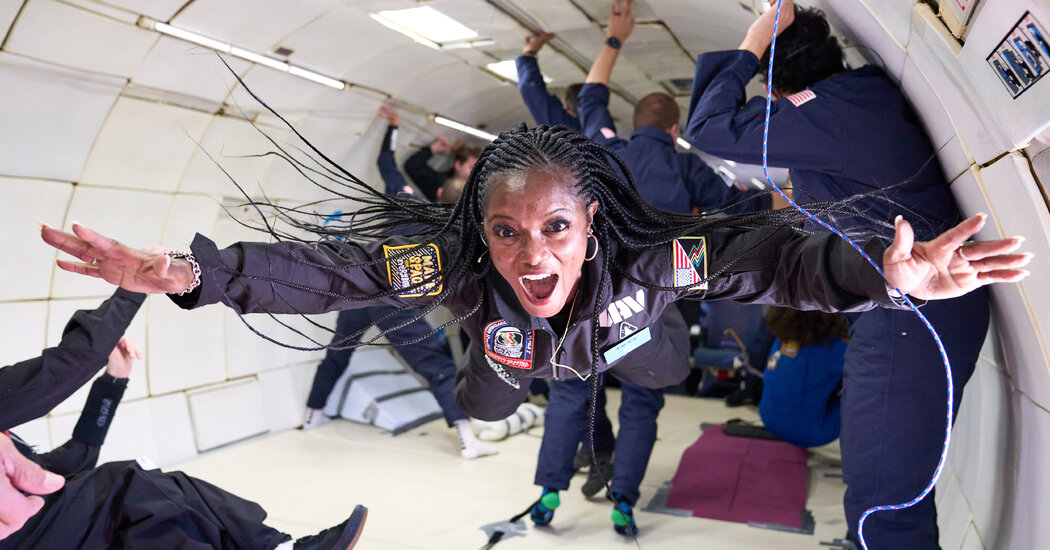
People with different types of disabilities tested their skills and technologies on a research flight with the goal of proving that they can safely go to space.Eric Ingram typically moves through the world on his wheelchair. The 31-year-old chief executive of SCOUT Inc., a smart satellite components company, was born with Freeman-Sheldon Syndrome, a rare condition that affects his joints and blocked him from his dream of becoming an astronaut. He applied and was rejected, twice.But onboard a special airplane flight this week, he spun effortlessly through the air, touching nothing. Moving around, he found, was easier in the simulated zero-gravity environment where he needed so few tools to help.While simulating lunar gravity on the flight — which is about one-sixth of Earth’s — he discovered something even more surprising: for the first time in his life, he could stand up.“It was legitimately weird,” he said. “Just the act of standing was probably almost as alien to me as floating in zero gravity.”He was one of 12 disabled passengers who swam through the air aboard a parabolic flight in Southern California last Sunday in an experiment testing how people with disabilities fare in a zero-gravity environment. Parabolic flights, which fly within Earth’s atmosphere in alternating arcs, allow passengers to experience zero gravity on the upward arcs for repeated short bursts, and are a regular part of training for astronauts.The flight was organized by AstroAccess, a nonprofit initiative that aims to make spaceflight accessible to to all. Although about 600 people have been to space since the beginning of human spaceflight in the 1960s, NASA and other space agencies have long restricted the job of astronaut to a minuscule slice of humanity. The American agency initially only selected white, physically fit men to be astronauts and even when the agency broadened its criteria, it still only chose people that met certain physical requirements.This blocked the path to space for many with disabilities, overlooking arguments that disabled people could make excellent astronauts in some cases.But the rise of private spaceflight, funded by billionaires with the support of government space agencies, is creating the possibility of allowing a much wider and more diverse pool of people to make trips to the edge of space and beyond. And those with disabilities are aiming to be included.Eric Ingram, who typically gets around in a wheelchair and who has a condition that has prevented him from becoming an astronaut, on the flight. “It was legitimately weird,” he said.Al Powers/AstroAccess/Zero G CorporationThe flight’s passengers, from left to right, back row, Mary Cooper, Cheri Wells-Jensen, Eric Shear, Apurva Varia, Sina Bahram, Zuby Onwuta, Mona Minkara, Viktoria Modesta; and front row, Sawyer Rosenstein, Dana Bolles, Mr. Ingram and Ms. Mazyck.Al Powers/AstroAccess/Zero G CorporationThe participants in Sunday’s AstroAccess flight argue that accessibility issues must be considered now — at the advent of private space travel — rather than later, because retrofitting equipment to be accessible would take more time and money.The Federal Aviation Administration is prohibited from creating safety regulations for private spaceflights until October 2023. Initiatives like AstroAccess are aiming to guide the way that government agencies think about accessibility on spaceflights.“It’s crucial that we’re able to get out ahead of that regulatory process and prevent misinformation or lack of information or lack of data from making bad regulation that would prevent someone with disability flying on one of these trips,” Mr. Ingram said.The group also hopes that making everything accessible from the get-go could lead to new space innovations that are helpful for everyone, regardless of disability.For example, Sawyer Rosenstein, another AstroAccess passenger, is quick to point out how the lightweight metal alloys used in his wheelchair are a byproduct of NASA innovations. Mr. Rosenstein, 27, has been paralyzed from the waist down since an injury in middle school.Barred from space itself, Mr. Rosenstein became a journalist who often reports on space, including for a podcast, Talking Space.During Sunday’s flight. Mr. Rosenstein wore a specially modified flight suit with a strap he could grab to bend his knees and maneuver his legs.“I was in control of myself and my whole body,” Mr. Rosenstein said. “It’s almost indescribable to have that freedom after having it taken away for so long.”He also found he was more flexible in zero gravity, where he could finally test his full range of motion. And the chronic pain he usually experiences throughout his body disappeared during the flight, he said. Like Mr. Ingram, he also could stand up on his own. They both suggested that their experiences signal that zero gravity or reduced gravity could have potential therapeutic applications.With just a few modifications for each type of disability, Ann Kapusta, AstroAccess’s mission and communications director, said the dozen participants in the flight had a roughly 90 percent success rate getting back to their seats after 15 tests — 12 in zero gravity, two that mimicked lunar gravity and one that mimicked Martian gravity.AstroAccess conducted these tests — each lasting 20 to 30 seconds — to ensure that people with disabilities can go on a suborbital flight, like the one Jeff Bezos took in October, and safely get into their seats in the limited time before re-entry. This is typical training for suborbital flights, but not for orbital flights, which don’t have the same time crunch before re-entry.The physicist Stephen Hawking during a parabolic flight by the Zero Gravity Corporation in 2007.Steve Boxall/Zero Gravity CorporationHayley Arceneaux, upside-down, with the rest of the SpaceX Inspiration4 crew, became the first person to travel into orbit with a prosthetic last month.Spacex, via ReutersThe relative ease of the flight surprised some on the team, including Tim Bailey, the executive director of Yuri’s Night, a nonprofit organization focused on space education that sponsors AstroAccess. At first, he said he was concerned that people with disabilities were more fragile and would require extra medical precautions.“My biggest takeaway from this is my initial reaction of, ‘Oh my goodness, this is going to be hard,’ was wrong,” he said. “They didn’t need a lot of extra stuff.”But moving around the plane was not without some challenges, said Centra Mazyck, 45, who was injured and became partially paralyzed while serving as a member of the U.S. Army’s 82nd Airborne Division.“It’s very hard because it’s like you’re floating, you’re light as a feather,” she said. “You don’t know your strengths or your weaknesses.”Sunday’s parabolic flight was reminiscent of one in 2007 with Stephen Hawking, the physicist, who had amyotrophic lateral sclerosis, or A.L.S. But unlike Dr. Hawking’s flight, this one was geared toward researching the ability of disabled people to function independently in space and developing tools they could use to do so.In addition to modified spacesuits for mobility impaired passengers, researchers tested special lighting systems for deaf passengers and Braille and navigational devices for blind passengers.To navigate the shuttle as a blind person, Mona Minkara, 33, tested an ultrasonic device and a haptic, or vibrating, device, both of which signaled her as she approached the plane’s walls and other objects. But the most helpful device, she said, was the simplest: an extendable cane.“What was surprising to me is at some points, I knew exactly where I was and how I was facing,” she said.Dr. Minkara, a bioengineer at Northeastern University in Boston, pointed out that making spacecraft navigable for blind people would also help keep other astronauts safe if the lights go out during a spacecraft emergency.Some on Sunday’s flight once dreamed of becoming professional astronauts, and hope this research could open the door for other disabled people to get the job.The European Space Agency announced this year that it is accepting astronaut applications from those with leg amputations or who are especially short, and hopes to expand to include more types of disabilities in the future. Courtney Beasley, a spokeswoman for NASA, said the American agency is not currently considering changing its selection criteria.Some private space companies’ rules are more forgiving than those of government agencies. Although SpaceX did not respond to requests for comment, Hayley Arceneaux became the first person with a prosthetic to travel to orbit in September during the Inspiration4 flight aboard the company’s Crew Dragon capsule.Axiom Space, which is booking flights on SpaceX’s vehicle to the International Space Station, and Virgin Galactic, which flies a suborbital space plane, do not have a list of disqualifying conditions for astronauts, and say they consider accommodations on a case-by-case basis.Dr. Tarah Castleberry, the chief medical officer of Virgin Galactic, said the company will conduct medical screenings for each astronaut to ensure safety and is currently considering flying people who have prosthetics, hearing impairments, paralysis and other medical conditions and physical disabilities.Mona Minkara, who is blind, in zero gravity. She tested an ultrasonic device and a haptic, or vibrating, device, both of which signaled her as she approached the plane’s walls and certain objects.Al Powers/AstroAccess/Zero G CorporationDazzled by a space shuttle launch when he was in high school, Apurva Varia wrote to NASA to ask to apply to be an astronaut. NASA wrote back to say he could not, because he was deaf.Al Powers/AstroAccess/Zero G CorporationBlue Origin, the company owned by Jeff Bezos, the founder of Amazon, said in a statement that passengers must meet its own list of functional requirements that may exclude blind, deaf or mobility-impaired individuals from flying.Apurva Varia, 48, is deaf and one of the people who would continue to be excluded by such rules.“Space organizations told us that we can’t go to space, but why? Show me proof,” he said.In ninth grade, Mr. Varia recalls watching a space shuttle launch on TV. The channel didn’t have closed captions, so Mr. Varia didn’t understand what the shuttle was, or why people were sitting inside wearing orange suits. When the countdown hit zero, he said he was amazed to see it blast into the sky and disappear.Soon afterward, Mr. Varia wrote a letter to NASA asking if he could apply to be an astronaut. He got a reply saying that NASA couldn’t accept deaf astronauts at the time.Mr. Varia went on to earn advanced engineering degrees and has worked for NASA for two decades to direct space missions and help design propulsion systems for satellites.On Sunday’s flight, he got a little closer to his dream. He found himself bumping into the walls and ceilings as he tried to sign in American Sign Language and attempted drinking a big, floating bubble of water, which splashed on his face.“It was an out-of-this-world experience,” he said. “I hope to go to space someday.”

Read more →

Shape of virus may determine RSV infection outcomes

Respiratory syncytial virus, more commonly known as RSV, is a highly contagious respiratory virus that can be very serious and even fatal for young children and the elderly. In summer of 2021, health-care providers saw an unseasonable spike in the virus, which typically causes illness from October through March. While the virus has been recognized since the 1950s, there is no vaccine available.
Michael D. Vahey, a biomedical engineer at the McKelvey School of Engineering at Washington University in St. Louis, along with Jessica Kuppan and Margaret Mitrovich, both doctoral students in his lab and co-first authors of the paper, has developed a fluorescent system allowing him and his lab members to monitor the interactions between the virus particles and the proteins in the immune system that help to defend against infections, known as complement proteins. Through this system, they found that the viruses produced during RSV infection change shape — converting from long, rod-shaped particles to more rounded ones — and this makes a difference in whether the complement proteins are activated or not. Results of the work are published online in the journal eLife.
For RSV viruses to infect a cell, the membranes surrounding each of them have to fuse together through the action of the RSV F protein. Antibodies that bind to the F protein can prevent the virus from infecting cells. But the F protein is a well-known shape shifter, making it notoriously unstable, said Vahey, assistant professor of biomedical engineering, who studies infectious diseases.
“Ideally, we would like the immune system to target the form of F that can cause infection, but this doesn’t always happen,” Vahey said. “We found that when RSV changes shape from rods to spheres, the F protein tends to change shape, too. What we end up with is a situation where the virus particles that activate the complement system frequently have the wrong form of F on their surface. This may instruct the immune system to go after the wrong target.”
Vahey said the findings show that the biophysical properties of a virus, including its size and shape, matter in terms of how it is recognized by the immune system and may be important to consider when developing potential treatments or vaccines.
Story Source:
Materials provided by Washington University in St. Louis. Original written by Beth Miller. Note: Content may be edited for style and length.

Read more →

Fighting multiple sclerosis with cold

In evolutionary biology, the “Life History Theory,” first proposed in the 1950s, postulates that when the environment is favourable, the resources used by any organism are devoted for growth and reproduction. Conversely, in a hostile environment, resources are transferred to so-called maintenance programmes, such as energy conservation and defence against external attacks. Scientists at the University of Geneva (UNIGE) developed this idea to a specific field of medicine: the erroneous activation of the immune system that causes autoimmune diseases. By studying mice suffering from a model of multiple sclerosis, the research team succeeded in deciphering how exposure to cold pushed the organism to divert its resources from the immune system towards maintaining body heat. Indeed, during cold, the immune system decreased its harmful activity which considerably attenuated the course of the autoimmune disease. These results, highlighted on the cover of the journal Cell Metabolism, pave the way for a fundamental biological concept on the allocation of energy resources.
Autoimmune diseases occur when the immune system attacks the body own organs. Type 1 diabetes, for example, is caused by the erroneous destruction of insulin-producing pancreatic cells. Multiple sclerosis is the most common autoimmune disease of the central nervous system (consisting of the brain and spinal cord). The disease is characterised by the destruction of the myelin, which is a protective insulation of nerve cells and is important for the correct and fast transmission of electrical signals. Its destruction thus leads to neurological disability, including paralysis.
“The defence mechanisms of our body against the hostile environment are energetically expensive and can be constrained by trade-offs when several of those are activated. The organism may therefore have to prioritise resource allocation into different defence programmes depending on their survival values,” explains Mirko Trajkovski, professor in the Department of Cellular Physiology and Metabolism and the Diabetes Centre at the Faculty of Medicine of the UNIGE, and lead author of the study. “We hypothesised that this can be of particular interest for autoimmunity, where introducing an additional energy-costly program may result in milder immune response and disease outcome. In other words, could we divert the energy expended by the body when the immune system goes awry?”
A drastic reduction in symptoms
To test their hypothesis, the scientists placed mice suffering from experimental autoimmune encephalomyelitis, a model of human multiple sclerosis, in a relatively colder living environment — about 10°C — following an acclimatisation period of gradually decreasing the environmental temperature. “After a few days, we observed a clear improvement in the clinical severity of the disease as well as in the extent of demyelination observed in the central nervous system,” explains Doron Merkler, professor at the Department of Pathology and Immunology and the Centre for Inflammation Research at the UNIGE Faculty of Medicine and co-corresponding author of the work. “The animals did not have any difficulty in maintaining their body temperature at a normal level, but, singularly, the symptoms of locomotor impairments dramatically decreased, from not being able to walk on their hind paws to only a slight paralysis of the tail.”
The immune response is based, among other things, on the ability of so-called antigen-presenting monocytes to instruct T cells how to recognise the “non-self” elements that must be fought. In autoimmune diseases, however, the antigens of the “self” are confused with those of the “non-self.” “We show that cold modulates the activity of inflammatory monocytes by decreasing their antigen presenting capacity, which rendered the T cells, a cell type with critical role in autoimmunity, less activated,” explains Mirko Trajkovski. By forcing the body to increase its metabolism to maintain body heat, cold takes resources away from the immune system. This leads to a decrease in harmful immune cells and therefore improves the symptoms of the disease.
“While the concept of prioritising the thermogenic over the immune response is evidently protective against autoimmunity, it is worth noting that cold exposure increases susceptibility to certain infections. Thus, our work could be relevant not only for neuroinflammation, but also other immune-mediated or infectious diseases, which warrants further investigation,” adds Mirko Trajkovski.
Autoimmune diseases on the rise
The improvement in living conditions in Western countries, which has been noticeable over the past decades, has gone hand in hand with an increase in cases of autoimmune diseases. “While this increase is undoubtedly multifactorial, the fact that we have an abundance of energy resources at our disposal may play an important but as yet poorly understood role in autoimmune disease development,” concludes Doron Merkler.
The researchers will now pursue their research to better understand whether their discovery could be developed in clinical applications.
Story Source:
Materials provided by Université de Genève. Note: Content may be edited for style and length.

Read more →

Gene therapy shows early promise as angelman syndrome treatment

Scientists at the UNC School of Medicine have reported in the journal JCI Insight encouraging early tests of a gene therapy strategy against Angelman syndrome, a neurodevelopmental disorder that features poor muscle control and balance, hard-to-treat epilepsy, and intellectual disabilities.
Angelman syndrome affects roughly one in every 20,000 children, and in the US alone it is thought that there are more than 15,000 people with the condition. There is no specific treatment, but scientists led by Ben Philpot, PhD, Kenan Distinguished Professor of Cell Biology and Physiology at UNC School of Medicine and Associate Director of the UNC Neuroscience Center, previously suggested that the best way to treat the disorder would be to restore function of the UBE3A gene in neurons, which has been lost in the brains of people with Angelman syndrome.
The genetics of Angelman syndrome are more complicated than classic single-gene disorders such as cystic fibrosis and sickle-cell anemia. Humans inherit one maternal and one paternal copy of most genes. Angelman syndrome arises in children whose maternal UBE3A copy has somehow been mutated or deleted. For reasons that aren’t fully clear, mature neurons normally express only the maternal copy of UBE3A; the paternal copy is effectively silenced. Thus, when the maternal copy is lost, the gene’s function is absent in neurons. Because UBE3A encodes a protein that helps regulate the levels of other important proteins, its absence severely disrupts brain development.
Compounding the complexity, neurons express two different variants or “isoforms” of UBE3A that vary slightly in length — a short form and a long form — in a ratio of about three short forms for every one long form.
Philpot’s team was able to craft a version of UBE3A that, when expressed by neurons, yields short and long forms of the UBE3A protein at a near-normal ratio. The scientists inserted their therapeutic UBE3A gene into a virus-derived carrier, or “vector,” engineered for reliable delivery to neurons. They injected a solution of this vector into hollow spaces, called ventricles, in the brains of newborn Angelman syndrome model mice, which lack the maternal copy of the mouse Ube3a gene. Like humans with Angelman syndrome, these mice fail to express UBE3A protein in their neurons and develop motor deficits, seizures, and other neurological symptoms in the first months of life.
Philpot and colleagues verified that vector-borne UBE3A became active in neurons throughout the Angelman model mouse brain just days after injection, at a level similar to that of the normal gene. This treatment restored motor skill-learning and the essential mouse behaviors of digging, burrowing, and nest-building. Untreated mice developed the usual Angelman-like impairments. The treated mice also did not become as susceptible as their untreated counterparts to experimentally induced epileptic seizures, and importantly, did not suffer any obvious negative side effects.
“This was a proof-of-concept study, but if these early results were translated to the clinic, they would represent big improvements in the quality of life for individuals with Angelman syndrome,” said study lead author Matt Judson, PhD, a research associate in the Philpot Lab, who performed most of the experiments.
The researchers plan to further develop their strategy, first with more tests in mice and monkeys to optimize dose and delivery methods, and ultimately, pending promising safety results, human clinical trials. If such a therapy were available, the researchers expect it might be able to deliver benefits to individuals of any age, but perhaps with varying benefits.
“The range from birth to four years is probably ideal, but we think that whenever we can reinstate this gene’s function in the brain, we’re likely to see some improvements,” Philpot said.

Read more →

Federal Provider Relief Fund Benefited Richer Hospitals, Study Shows

A new analysis underscores concerns about how federal aid was allocated to health care institutions under the Provider Relief Fund, a $175-billion program that has drawn sharp criticism for giving so much money to the wealthiest U.S. hospitals.The study, published Friday in JAMA Health Forum, shows that more money flowed to hospitals that were in a strong financial position before the pandemic than went to hospitals with weaker balance sheets and smaller endowments.Small rural hospitals, called critical access hospitals, received lower levels of funding, according to the study, by researchers at the RAND Corporation, a nonprofit group. Those rural facilities often operate under extremely tight budget constraints, and some have closed or been acquired over the course of the pandemic.More aid also flowed to those hospitals caring for the greatest number of Covid patients, many of which were large academic medical centers and big hospitals.“There were large differences in how much each hospital got in funding,” Christopher M. Whaley, one of the study’s authors, said in an interview.The analysis of 952 hospitals found that 24 percent received less than $5 million, while 8 percent got more than $50 million. Overall, the small rural hospitals received 40 percent less funding than their larger and more prosperous counterparts.The researchers did not take into account $24 billion that was specifically targeted to rural and safety-net hospitals in underserved areas, which may have helped these organizations.Congress authorized the aid to cushion losses sustained by hospitals during the pandemic, as patients stayed away and facilities could not perform lucrative surgeries and procedures.But some of the hospitals that received hundreds of millions of dollars in federal funds went on buying sprees during the Covid crisis, gobbling up weaker hospitals and physician groups. A few large chains, including HCA Healthcare and the Mayo Clinic, chose to return at least some of the money.The havoc caused by the Delta variant has further strained many hospitals, overwhelming intensive care units and forcing some to renew delays in elective treatments.A September report commissioned by the American Hospital Association predicted a third of will have operating losses in 2021. Hospitals say they are treating sicker patients, many of whom delayed care earlier in the pandemic, and are paying more for staff, supplies and drugs.Dr. Whaley said the larger flow of money to hospitals in strong financial shape calls into question “the purpose of having these financial resources,” noting some institutions have massive endowments and sizable assets. In contrast, rural hospitals receiving the least aid were already under financial strain when the pandemic hit.“Policymakers should continue to ensure that these types of hospitals are sufficiently funded, potentially with additional rounds of funding,” the researchers wrote.

Read more →

U.S. Warns of Efforts by China to Collect Genetic Data

The National Counterintelligence and Security Center said American companies need to better secure critical technologies as Beijing seeks to dominate the so-called bioeconomy.BETHESDA, Md. — Chinese firms are collecting genetic data from around the world, part of an effort by the Chinese government and companies to develop the world’s largest bio-database, American intelligence officials reported on Friday.The National Counterintelligence and Security Center said in a new paper that the United States needs to better secure critical technologies including artificial intelligence, quantum computing, semiconductors and other technologies related to the so-called bioeconomy.China and other countries are trying to dominate these technologies, and are using both legal and illegal means to acquire American know how, said Michael Orlando, the acting director of the counterintelligence center, an arm of the Office of the Director of National Intelligence.The American private sector has long been in the cross hairs of China and other countries trying to steal American technology and intellectual property. Other countries like Russia also remain a threat, but the economic might of China makes it the biggest threat, officials said.China believes dominating these areas will give it an economic edge, and American companies are also investing heavily. Artificial intelligence and machine learning hold the promise to revolutionize many aspects of life, including military operations. Quantum computing will allow countries to break the toughest encryption that exists today, and semiconductors are vital not just for computers but many consumer products.But officials are now also stressing the intersection of technology and genetic and biological research as an area of competition and espionage. Edward You, who is the national counterintelligence officer for emerging and disruptive technologies, said the Chinese government is collecting medical, health and genetic data around the world. The country that builds the best database of information will have an edge on developing cures for future pandemics, and China already has an advantage, he said.Beijing has a track record of misusing genetic data, the counterintelligence center said, citing a 2019 New York Times report on how China uses genetic tests to track members of the Uyghurs, a predominantly Muslim minority group.Citing a Reuters report, Mr. You said a Chinese company, BGI, had developed a neonatal genetic test with the Chinese military that had enabled it to collect information from millions of people around the world. The firm gained a foothold in the United States in 2013, when it purchased an American genomics firm.The counterintelligence center also highlighted investments by WuXi, which bought a Pfizer manufacturing plant in China, announced a production facility in Massachusetts and made an investment in 2015 in 23andMe, the consumer genetics company.“They are developing the world’s largest bio database,” Mr. You said of the Chinese government efforts. “Once they have access to your genetic data, it’s not something you can change like a pin code.”People purchasing DNA kits at the 23andMe booth at the RootsTech annual genealogical event in Salt Lake City in 2019.George Frey/ReutersBut 23andMe said that fears of China stealing its data are misplaced.WuXi has a less than 1 percent investment in 23andMe and has never received any customer data, Jacquie Cooke Haggarty, the company’s deputy general counsel, said in a statement. No data has ever been shared with a Chinese-owned company and no investor has access to the data, she said.“All of our testing is performed and has always been performed in U.S.-based laboratories,” she said.The company also said it stores information about names and contact information separate from its genetic data. The company follows the highest encryption standards and tests its defenses daily, she said.Mr. Orlando said he was not arguing for decoupling the Chinese and American economies, but said the center was trying to warn companies of the risks of working with Chinese firms under the strict control of the government in Beijing.“We aren’t telling people to decouple, but if you are going to do business in China, be smart about it,” Mr. Orlando said.Though China is seeking a broad array of commercial data, the biggest threat is to the high tech industries Beijing has said it wants to dominate in the decades to come.American and European officials have long said China steals intellectual property, makes cheaper versions of products, puts western competitors out of business then dominates the market. That is a pattern China has followed in solar panels, for example.“These technologies are critical and we cannot let what happened to other industries happen here,” Mr. Orlando said.In recent years the F.B.I. and the counterintelligence center have stepped up broad warnings to businesses and universities about Chinese attempts to steal American technology. Some of those overtures have been greeted skeptically, particularly at universities who believe the U.S. government may be trying to limit the number of Chinese students that study at American universities.While the U.S. government can review many acquisitions of American companies by Chinese ones, other Chinese investments are harder to regulate. Mr. Orlando said an American company partnering with a Chinese one should take steps to protect its data.“It’s all about the data,” Mr. You said. “There are national security implications we have to understand.”

Read more →

Delta 'Plus' Covid variant may be more transmissible

SharecloseShare pageCopy linkAbout sharingImage source, Getty ImagesA new mutated form of coronavirus that some are calling “Delta Plus” may spread more easily than regular Delta, UK experts now say. The UK Health Security Agency (UKHSA) has moved it up into the “variant under investigation” category, to reflect this possible risk. There is no evidence yet that it causes worse illness. And scientists are confident that existing vaccines should still work well to protect people. Although regular Delta still accounts for most Covid infections in the UK, cases of “Delta Plus” or AY.4.2 have been increasing. Latest official data suggests 6% of Covid cases are of this type.Experts say it is unlikely to take off in a big way or escape current vaccines. But officials say there is some early evidence that it may have an increased growth rate in the UK compared to Delta. “This sub-lineage has become increasingly common in the UK in recent months, and there is some early evidence that it may have an increased growth rate in the UK compared to Delta,” the UKHSA said.Unlike Delta, however, it is not yet considered a “variant of concern” – the highest category assigned to variants according to their level of risk. There are thousands of different types – or variants – of Covid circulating across the world. Viruses mutate all the time, so it is not surprising to see new versions emerge.AY.4.2 is an offshoot of Delta that includes some new mutations affecting the spike protein, which the virus uses to penetrate our cells. The mutations – Y145H and A222V – have been found in various other coronavirus lineages since the beginning of the pandemic.What are the Delta, Gamma, Beta and Alpha Covid variants?A few cases have also been identified in the US. There had been some in Denmark, but new infections with AY.4.2 have since gone down there.The UK is already offering booster doses of Covid vaccine to higher risk people ahead of winter, to make sure they have the fullest protection against coronavirus. There is no suggestion that a new update of the vaccine will be needed to protect against any of the existing variants of the pandemic virus. Dr Jenny Harries, Chief Executive of the UKHSA, said: “The public health advice is the same for all current variants. Get vaccinated and, for those eligible, come forward for your third or booster dose as appropriate as soon as you are called. “Continue to exercise caution. Wear a mask in crowded spaces and, when meeting people indoors, open windows and doors to ventilate the room. If you have symptoms take a PCR test and isolate at home until you receive a negative result.”

Read more →

VR experiment with rats offers new insights about how neurons enable learning

Scientists have long understood that the region of the brain called the hippocampus is important for memory, learning and navigation.
Now, scientists in a UCLA lab led by neurophysicist Mayank Mehta are gaining a deeper understanding of how the hippocampus works on a circuit level — that is, functions involving networks of millions of neurons. That knowledge could be an important step toward the development of treatments for neurological disorders such as Alzheimer’s disease, schizophrenia and epilepsy, all of which are related to dysfunction in the hippocampus.
In their latest study, published in the journal Nature, the scientists studied rats in a virtual reality maze. While observing the activities of large numbers of individual neurons in each animal’s hippocampus, the scientists discovered responses in those neurons that revealed a specific mechanism for navigation.
“The hippocampus is one of the first regions to be affected in memory-based diseases like Alzheimer’s,” said the study’s lead author, Jason Moore, a former UCLA postdoctoral scholar who is now at New York University. “So it is crucial to understand its functionality, flexibility and limits.”
The study could help explain why people with damage to the hippocampus struggle not just with so-called spatial tasks, like finding their way home or locating a lost set of keys, but also with memory tasks, such as recalling what they had for lunch or whether they took their daily medication.
The experiment used a type of virtual reality system that was developed in Mehta’s lab. The technology is intended to keep the animals comfortable and avoid causing dizziness and other symptoms that other VR systems can trigger.

Read more →