Coronavirus Vaccines Should Begin Soon for Children 5 and Up
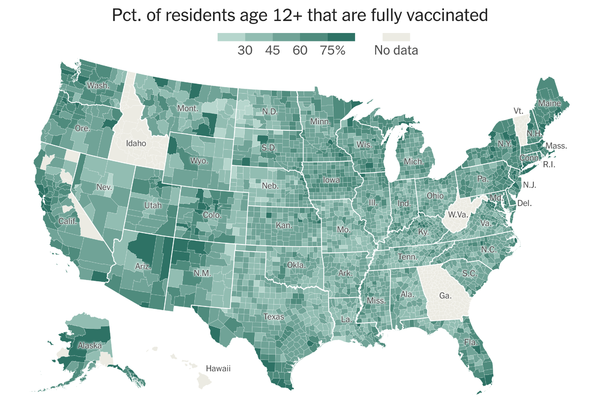
Children ages 5 to 11 may be eligible for Covid vaccines by early next month, according to Dr. Anthony Fauci, the nation’s top infectious disease expert. He projected a timetable for young Americans to be vaccinated with at least one dose by Thanksgiving, and to be fully immunized by the holidays.Food and Drug Administration regulators on Friday released their evaluation of data from the Pfizer-BioNTech submission for emergency authorization of a lower-dose vaccine for young children. An advisory panel to the F.D.A. will consider Pfizer’s application for those ages 5-to-11 on Tuesday. Children 12 and up have been eligible for vaccination since May.Pfizer’s data, “look good as to the efficacy and safety,” Dr. Fauci said on ABC’s news program, “This Week.”According to Pfizer and BioNTech, the children who were vaccinated as part of the trial, who received doses that were one-third the size of the adult doses, developed robust immune responses after receiving the regimen of two shots three weeks apart. The companies have said the efficacy rate of the vaccine in children reduced the risk of developing a symptomatic infection by 91 percent.The most common side effects in children were fatigue, headache, muscle pain and chills. According to the F.D.A., the data submitted indicated no cases of myocarditis inflammation of the heart muscle, or pericarditis, inflammation of the outer lining of the heart, rare complications that have been reported among young boys and men receiving the vaccine in other trials and in real-world applications.Dr. Rochelle Walensky, the director of the Centers for Disease Control and Prevention, was also interviewed about the upcoming decisions on child vaccines on two Sunday news shows, and seemed to promise that decisions would not be delayed. “We know how many parents are interested in getting their children vaccinated, and we intend to work as quickly as you can,” Dr. Walensky said on “Fox News Sunday.”Asked whether Covid vaccines should be required for school attendance, as other childhood vaccines against polio, measles and tetanus are, Dr. Walensky said that the Covid vaccines are being considered for emergency use authorization now. Full F.D.A. approval will come later, she said.“I think we need to get children vaccinated through this authorization and to get to approval before we can make a judgment there,” she said.The last week has produced a lot of regulatory guidance for those who can receive booster or additional doses of Covid vaccines, giving a large segment of the U.S. population access to more protection.Both Dr. Walensky and Dr. Fauci sought to dispel confusion about booster shots and explain the option of “mixing and matching” initial vaccines and boosters..css-1kpebx{margin:0 auto;font-family:nyt-franklin,helvetica,arial,sans-serif;font-weight:700;font-size:1.125rem;line-height:1.3125rem;color:#121212;}#NYT_BELOW_MAIN_CONTENT_REGION .css-1kpebx{font-family:nyt-cheltenham,georgia,’times new roman’,times,serif;font-weight:700;font-size:1.375rem;line-height:1.625rem;}@media (min-width:740px){#NYT_BELOW_MAIN_CONTENT_REGION .css-1kpebx{font-size:1.6875rem;line-height:1.875rem;}}@media (min-width:740px){.css-1kpebx{font-size:1.25rem;line-height:1.4375rem;}}.css-1gtxqqv{margin-bottom:0;}.css-k59gj9{display:-webkit-box;display:-webkit-flex;display:-ms-flexbox;display:flex;-webkit-flex-direction:column;-ms-flex-direction:column;flex-direction:column;width:100%;}.css-1e2usoh{font-family:inherit;display:-webkit-box;display:-webkit-flex;display:-ms-flexbox;display:flex;-webkit-box-pack:justify;-webkit-justify-content:space-between;-ms-flex-pack:justify;justify-content:space-between;border-top:1px solid #ccc;padding:10px 0px 10px 0px;background-color:#fff;}.css-1jz6h6z{font-family:inherit;font-weight:bold;font-size:1rem;line-height:1.5rem;text-align:left;}.css-1t412wb{box-sizing:border-box;margin:8px 15px 0px 15px;cursor:pointer;}.css-hhzar2{-webkit-transition:-webkit-transform ease 0.5s;-webkit-transition:transform ease 0.5s;transition:transform ease 0.5s;}.css-t54hv4{-webkit-transform:rotate(180deg);-ms-transform:rotate(180deg);transform:rotate(180deg);}.css-1r2j9qz{-webkit-transform:rotate(0deg);-ms-transform:rotate(0deg);transform:rotate(0deg);}.css-e1ipqs{font-size:1rem;line-height:1.5rem;padding:0px 30px 0px 0px;}.css-e1ipqs a{color:#326891;-webkit-text-decoration:underline;text-decoration:underline;}.css-e1ipqs a:hover{-webkit-text-decoration:none;text-decoration:none;}.css-1o76pdf{visibility:show;height:100%;padding-bottom:20px;}.css-1sw9s96{visibility:hidden;height:0px;}.css-1in8jot{background-color:white;border:1px solid #e2e2e2;width:calc(100% – 40px);max-width:600px;margin:1.5rem auto 1.9rem;padding:15px;box-sizing:border-box;font-family:’nyt-franklin’,arial,helvetica,sans-serif;text-align:left;}@media (min-width:740px){.css-1in8jot{padding:20px;width:100%;}}.css-1in8jot:focus{outline:1px solid #e2e2e2;}#NYT_BELOW_MAIN_CONTENT_REGION .css-1in8jot{border:none;padding:10px 0 0;border-top:2px solid #121212;}What to Know About Covid-19 Booster ShotsThe F.D.A. has authorized booster shots for millions of recipients of the Pfizer-BioNTech, Moderna and Johnson & Johnson vaccines. Pfizer and Moderna recipients who are eligible for a booster include people 65 and older, and younger adults at high risk of severe Covid-19 because of medical conditions or where they work. Eligible Pfizer and Moderna recipients can get a booster at least six months after their second dose. All Johnson & Johnson recipients will be eligible for a second shot at least two months after the first.Yes. The F.D.A. has updated its authorizations to allow medical providers to boost people with a different vaccine than the one they initially received, a strategy known as “mix and match.” Whether you received Moderna, Johnson & Johnson or Pfizer-BioNTech, you may receive a booster of any other vaccine. Regulators have not recommended any one vaccine over another as a booster. They have also remained silent on whether it is preferable to stick with the same vaccine when possible.The C.D.C. has said the conditions that qualify a person for a booster shot include: hypertension and heart disease; diabetes or obesity; cancer or blood disorders; weakened immune system; chronic lung, kidney or liver disease; dementia and certain disabilities. Pregnant women and current and former smokers are also eligible.The F.D.A. authorized boosters for workers whose jobs put them at high risk of exposure to potentially infectious people. The C.D.C. says that group includes: emergency medical workers; education workers; food and agriculture workers; manufacturing workers; corrections workers; U.S. Postal Service workers; public transit workers; grocery store workers.Yes. The C.D.C. says the Covid vaccine may be administered without regard to the timing of other vaccines, and many pharmacy sites are allowing people to schedule a flu shot at the same time as a booster dose.Boosters of all three vaccines available in the United States have been authorized. Additional shots of Pfizer and Moderna mRNA vaccines have been approved for people aged 65 and older, those with underlying health conditions and all adults whose living or working conditions place them at high risk of exposure to the virus. Anyone over the age of 18 who received the single-dose Johnson & Johnson vaccine at least two months ago is also eligible for a booster shot.People can receive a booster shot that is different from the initial vaccine they first received, experts said.“If you were originally vaccinated with one product, could you and would it be appropriate and safe and effective to get boosted in the third shot for the mRNA and the second shot for J.&.J. by another product?” Dr. Fauci said. “The answer is, it’s perfectly fine.”See How Vaccinations Are Going in Your County and StateSee where doses have gone, and who is eligible for a shot in each state.

Read more →
New study suggests that breastfeeding may help prevent cognitive decline

A new study led by researchers at UCLA Health has found that women over the age of 50 who had breastfed their babies performed better on cognitive tests compared to women who had never breastfed. The findings, published in Evolution, Medicine and Public Health, suggest that breastfeeding may have a positive impact on postmenopausal women’s cognitive performance and could have long-term benefits for the mother’s brain.
“While many studies have found that breastfeeding improves a child’s long-term health and well-being, our study is one of very few that has looked at the long-term health effects for women who had breastfed their babies,” said Molly Fox, PhD, lead author of the study and an Assistant Professor in the UCLA Department of Anthropology and the Department of Psychiatry and Biobehavioral Sciences. “Our findings, which show superior cognitive performance among women over 50 who had breastfed, suggest that breastfeeding may be ‘neuroprotective’ later in life.”
Cognitive health is critical for wellbeing in aging adults. Yet, when cognition becomes impaired after the age of 50, it can be a strong predictor of Alzheimer’s Disease (AD), the leading form of dementia and cause of disability among the elderly — with women comprising nearly two-thirds of Americans living with the disease.
Many studies also show that phases of a woman’s reproductive life-history, such as menstruation, pregnancy, breastfeeding and menopause can be linked to a higher or lower risk for developing various health conditions like depression or breast cancer, yet few studies have examined breastfeeding and its impact on women’s long-term cognition. Of those that have, there has been conflicting evidence as to whether breastfeeding might be linked to better cognitive performance or Alzheimer’s risk among post-menopausal women.
“What we do know is that there is a positive correlation between breastfeeding and a lower risk of other diseases such as type-2 diabetes and heart disease, and that these conditions are strongly connected to a higher risk for AD,” said Helen Lavretsky, MD, the senior author of the study and a professor in the Department of Psychiatry and Biobehavioral Sciences at the Semel Institute for Neuroscience and Human Behavior at UCLA.
“Because breastfeeding has also been found to help regulate stress, promote infant bonding and lower the risk of post-partum depression, which suggest acute neurocognitive benefits for the mother, we suspected that it could also be associated with long-term superior cognitive performance for the mother as well,” added Dr. Fox.

Read more →

Slow release of a drug, TT-10, improves heart attack recovery in a mouse model

A heart attack kills heart muscle cells, leading to a scar that weakens the heart, often leading to eventual heart failure. The lack of muscle repair is due to the very limited ability of mammalian heart muscle cells to proliferate, except for a brief period around birth.
Thus, a pharmaceutical product called TT-10, which acts through components of the Hippo-Yap signaling pathway to spur proliferation of heart muscle cells, was thought to offer promise to treat heart attacks. Intraperitoneal injections of TT-10 in a mouse heart-attack model several years ago at first promoted proliferation of heart muscle cells and showed declines in the size of the dead area of heart muscle, known as an infarct, one week after administration. However, those early improvements were followed by worsened cardiac function at later time points.
So, Jianyi “Jay” Zhang, M.D., Ph.D., and his University of Alabama at Birmingham Department of Biomedical Engineering colleagues asked a simple question: What would happen if TT-10 were loaded into nanoparticles made of poly-lactic-co-glycolic-acid, or PLGA, which would then allow the slow release of TT-10?
Slow release indeed turned out to be beneficial, as Zhang and UAB colleagues report in the journal JCI Insight. Nanoparticle-mediated, slow-release delivery of TT-10 enhanced the potency and durability of TT-10 treatment for repair of heart muscle in the mouse heart-attack model.
Injection of the TT-10 nanoparticles into the infarcted heart muscle improved heart function — as measured by significantly improved ejection fractions and functional shortening, and significant decreases in end-systolic diameters and end-diastolic diameters — as compared with groups of mice treated with saline, empty nanoparticles or direct TT-10 solution. Also, the TT-10 nanoparticle-treated hearts had significantly lower infarct sizes and lower heart-weight/body-weight ratios compared to the other three groups, which all had similar measurements. All these measures indicated improved heart function for the TT-10 nanoparticle group.
The researchers also measured the effects of TT-10 on the biology of heart muscle cells, known as cardiomyocytes, and on several markers of cell reproduction, both in culture and in the mouse heart-attack model.

Read more →

Long Covid forces Norfolk nurse of 25 years to quit beloved job

A former nurse said Covid-19 had left her with badly-damaged lungs, a possible heart condition and forced her to change jobs.Kathryn Crofts, 48, worked at a hospital in Norfolk during the pandemic and ended up with pneumonia when she caught the virus.She said: “After 25 years doing a job that I’ve absolutely loved, I’ve had to change jobs. It’s left me quite upset.”She has been supported by a counselling service dedicated to NHS staff.If you are suffering with lasting effects from a Covid-19 infection, you can find more information on the NHS website.Find BBC News: East of England on Facebook, Instagram and Twitter. If you have a story suggestion email eastofenglandnews@bbc.co.uk

Read more →

Limited C.D.C. Study Finds Delta Wave Didn't Alter Hospitalization Outcomes

Scientists from the Centers for Disease Control and Prevention on Friday took aim at the question of whether the Delta variant of the coronavirus causes more severe disease, finding no significant differences in the course of hospitalized patients’ illnesses during the Delta wave compared to earlier in the pandemic.But larger and more detailed studies from a number of other countries have found that people with Delta infections were considerably more likely to be hospitalized in the first place — a trend that the C.D.C. study was unable to address because of limitations in its data. The C.D.C. study also said that the proportion of older hospitalized patients needing intensive care or dying had shown some signs of increasing during the Delta wave.Delta’s higher level of infectiousness has made it a far greater challenge than earlier versions of the virus, but the question of whether it also causes more serious disease has loomed as it swept around the world. The Alpha variant, an earlier version first detected in Britain, appeared to be linked to a higher risk of death, though scientists have also tried to understand whether factors besides the variant were playing a role.Studies in England, Scotland, Canada and Singapore suggested that the Delta variant was associated with more severe illness, a finding that scientists have said raises the risk that outbreaks of the variant in unvaccinated areas may put a bigger burden on health systems. Unlike the C.D.C. study, those studies drew on genomic sequencing, allowing researchers to distinguish infections with the Delta variant and to track patients from before they enter a hospital.Without access to sequencing data, the C.D.C. researchers could not determine which variants the patients may have been infected with. It also examined patients already admitted to hospitals, making it impossible to determine whether they were at higher risk of needing hospital care in the first place.The study, released on Friday, examined roughly 7,600 Covid hospitalizations, comparing July and August — when Delta dominated — to earlier months this year, and found no significant change in hospitalized patients’ outcomes.The study said that the proportion of hospitalized patients aged 50 and older who died or were admitted to intensive care “generally trended upward in the Delta period,” though the differences were not statistically significant and further work was needed. At the hospitals included in the study, roughly 70 percent of Covid patients were unvaccinated.The researchers said the findings matched those of other C.D.C. studies using similar methods that showed no significant differences in the outcomes of younger people hospitalized before and during the Delta surge.Outside scientists questioned the reliability of the study. Dr. David Fisman, an epidemiologist at the University of Toronto, ran a larger study that found that people infected with the Delta variant had roughly twice the risk of hospitalization as people infected with variants that had not been labeled a concern. He said that such analyses needed to control for the range of factors that affect the course of Covid patients’ illnesses, and that the availability of vaccines, testing and treatments had all been changing during the pandemic.“As this is the U.S. C.D.C., I’m really surprised at the small sample sizes for individuals with more detailed clinical information, as well as the use of such rudimentary statistical methods to deal with these data,” he said.Dr. Fisman’s study, drawing on 200,000 cases and published this month, also showed significantly increased risks of intensive care admission and death among those infected with the Delta variant, after accounting for their age, sex, vaccination status and other factors. Roughly 70 percent of people with Delta infections in the study were unvaccinated, and 28 percent were partially vaccinated. Fully vaccinated people are heavily protected from Covid.Similarly, a study in Scotland from June based on 20,000 Covid cases showed that Delta infections were associated with an 85 percent higher risk of hospitalization, though it allowed for a wide degree of uncertainty about the precise figure.And data from England, drawn from 43,000 cases and published in August, found that people infected with the Delta variant were just over twice as likely to be hospitalized as people with the Alpha variant, though the researchers in that study, too, were unsure of the precise figure.Roughly three-quarters of the patients in that study were unvaccinated, and most of the rest were only partially vaccinated.

Read more →

'I. Am. So. Sorry': Talking about my pregnancy losses

SharecloseShare pageCopy linkAbout sharingThe BBC’s Tulip Mazumdar has reported on maternal health and the issues women face across the world. Here she reflects on her own experiences of pregnancy and baby loss.You never think it will happen to you. But then you’re sitting in scan room 9, you’re staring at your bright blue socks as you wriggle your toes against the white hospital sheets, waiting for the sonographer to say something.But they don’t. Instead they call someone else in. And in the split second before she speaks, you realise that your world is about to go into freefall.I. Am. So. Sorry.I have had four miscarriages in the last two years. Two losses in the first trimester, known as an early miscarriage, and two late losses in the second trimester.It’s estimated that at least one in four pregnancies end in miscarriage in the UK. Around 50% of the time it’s down to a chromosomal abnormality, where the baby would never have been able to survive, and most women do go on to have a healthy pregnancy.But like me, 1 in 100 women will experience recurrent miscarriage, which is defined in the UK as three miscarriages in a row, and the more losses we experience, the less likely a successful pregnancy becomes.Around half of these losses are attributed to known causes, such as problems with clotting or the lining of the womb. But for many couples, the reasons remain unknown, simply because the research hasn’t been funded and undertaken yet. Women’s health issues are notoriously under-researched.My losses went from bad to worse. The first was an early pregnancy test, followed by a late and long period, that’s known as a chemical pregnancy. The second was what’s called a “blighted ovum” where a gestational sac was found, but no embryo was developing. I lost that pregnancy while on an assignment for work, reporting on maternal health in a Greek refugee camp.As I popped in and out of the camp’s filthy portable loos, I just had to focus on the task at hand. I was acutely aware that – with thousands of women packed into the camp – I wouldn’t be the only one in the process of losing a pregnancy. But – unlike the other women – I would get to fly home and be properly cared for.Then there was Rivah. My tiny little boy. He was born without a heartbeat. Born sleeping as some people prefer to describe it.Rivah arrived in a perfect amniotic bubble, after a strangely beautiful labour. I’ve felt so bizarre admitting I “enjoyed” the birth. But it was the only thing we were able to do together. My husband holding my hand, and my baby being born.The next few weeks are a blur. I have snippets of memories: agonising over whether to have a post-mortem, dressing my toddler son up as a bear for world book day, sitting in a funeral home being shown a catalogue of tiny coffins, meeting my beautiful nephew for the first time.I know how intense it might feel to read this. Horrific even. But so many women and families have had similar experiences, and so few feel able to talk about it openly. I’ve ended up apologising to others for my sad news making them feel bad, when I see their faces inevitably drop. It’s hard for either of us to know what to say. Like me, millions of women do not get answers to why their baby died. But I consider myself one of the “lucky” ones with the excellent care I received here in the UK. I have reported on maternal health from many parts of the world, and I’ve seen first hand how so many women – particularly in some developing countries – don’t see a medical professional before, during or after losing their babies. I remember meeting 17-year-old Sulaina in central Uganda. She was in labour on the floor of her small hut for two days before she was able to get to the nearest hospital two hours away. Her baby girl was stillborn. Sulaina told me she didn’t even get to hold her, and when she returned home, she was shunned by her community. Second trimester losses are described as rare, also around 1 in 100 pregnancies. If a baby is born after 24 weeks in the UK (or after 20 in the US), it’s described as a stillbirth and the baby is officially recognised in a stillbirth register. If a baby is born before that, it’s called a miscarriage and it is not officially recognised – and in many countries, including the UK, it isn’t even officially counted. So, I was just “unlucky” I was told. All my investigative tests came back normal and we were advised to simply try again.So we did, and we got pregnant again the same year. I was terrified, depressed, and exhausted with grief. But I was fast approaching 40, and waiting didn’t feel like a good option.I did what you’re strongly advised not to do, and listened to my baby’s heartbeat from home regularly. It was beautiful and precious and fragile. I had a number of reassurance scans, supported by Sarah, the amazing bereavement midwife at my local hospital. I returned to work and tried to get through the days, weeks and months.Then, again well into my second trimester, I was back in scanning room 9. I’d had a scan just four days earlier – my baby’s heartbeat was strong. Everything was normal. Everything was going to be ok, despite the tears streaming down my face as they applied the cold gel. This reaction had been pretty standard for all of my scans since losing Rivah.There was silence as she moved the device across my belly.I.Am.So.Sorry.Rae was born four days later. The birth was traumatic. I lost a lot of blood and ended up having to go into theatre.Like I had done with Rivah, I spent the night with Rae. He lay beside me, wrapped in a tiny yellow gown and placed in a special cot that’s kept cold. I had brought leaves from the myrtle tree we had planted for Rivah, and rose petals which I placed beneath him.I had experience this time, and knew how to try and make our brief time together special. I bought LED candles, a book to read him, and decorated the little white box they placed him in, with metallic felt-tip pens. I lay the little knitted blue teddy we were given in our memory box by his side.I know how terribly sad all of this sounds, and it was. But it was also beautiful and loving and important for me to do. I know many women, and their partners, can’t or don’t want to do this. My husband chose not to. But I mention it here to try and remove some of the horror from this situation, and replace it with love. The love a mother has for the baby she carried.If you have lost a pregnancy, I am so sorry.If you know someone who has experienced the loss of a much wanted pregnancy, consider asking them about it.It’s so hard to know what to say, and everyone is different. When Rivah was born, all I wanted to do for months afterwards was tell everyone every single detail about him. With Rae, it was the opposite. I was stunned into silence.But for me, it’s feeling like I can talk about my losses if I need or want to, and that it doesn’t need to be this dark sad secret that can only be discussed in hushed, soft tones.It is acknowledgement of the cherished lives that have been lost. If you or someone you know has been affected by issues with pregnancy, you can find advice and support at bbc.co.uk/actionline.Follow @TulipMazumdar on Twitter.

Read more →

Machine learning predicts antibiotic resistance spread

Genes aren’t only inherited through birth. Bacteria have the ability to pass genes to each other, or pick them up from their environment, through a process called horizonal gene transfer, which is a major culprit in the spread of antibiotic resistance.
Cornell researchers used machine learning to sort organisms by their functions and use this information to predict with near-perfect accuracy how genes are transferred between them, an approach that could potentially be used to stop the spread of antibiotic resistance.
The team’s paper, “Functions Predict Horizontal Gene Transfer and the Emergence of Antibiotic Resistance,” published Oct. 22 in Science Advances. The lead author is doctoral student Hao Zhou.
“Organisms basically can acquire resistance genes from other organisms. And so it would help if we knew which organisms bacteria were exchanging with, and not only that, but we could figure out what are the driving factors that implicate organisms in this transfer,” said Ilana Brito, assistant professor and the Mong Family Sesquicentennial Faculty Fellow in Biomedical Engineering in the College of Engineering, and the paper’s senior author. “If we can figure out who is exchanging genes with who, then maybe it would give insight into how this actually happens and possibly even control these processes.”
Many novel traits are shared through gene transfer. But scientists haven’t been able to determine why some bacteria engage in gene transfer while others do not.
Instead of testing individual hypotheses, Brito’s team looked to bacteria genomes and their various functions — which can range from DNA replication to metabolizing carbohydrates — in order to identify signatures that indicate “who” were swapping genes and what was driving these networks of exchange.

Read more →

Specific molecular mechanism that controls the transition from acute to chronic pain

A new study led by University of California, Irvine researchers is the first to reveal the specific molecular mechanism that controls the transition from acute to chronic pain, and identifies this mechanism as a critical target for disease-modifying medicines.
Findings from the study, titled “NAAA-regulated lipid signaling governs the transition from acute to chronic pain,” published today in Science Advances, show that disabling N-acylethanolamine acid amidase (NAAA) — an intracellular enzyme-in the spinal cord during a 72-hour time window following peripheral tissue injury halts chronic pain development in male and female mice.
“Delineating the nature, localization and timing of the events involved in pain chronicity is necessary to pinpointing control nodes in the process that can be targeted by new classes of disease-modifying medicines beyond analgesics,” said Daniele Piomelli, Distinguished Professor in the UCI School of Medicine Department of Anatomy & Neurobiology. “This study is the first to identify that NAAA, a previously unrecognized control node, can be effectively targeted by small-molecule therapeutics that inhibit this enzyme, and block the transition from acute to chronic pain.”
Chronic pain evolves from acute pain caused by the physical trauma of tissue damage due to surgery or injury and is a massive problem, affecting more than 1.5 billion people worldwide. Chronic pain continues long past tissue healing, is often resistant to therapy, and remains seriously undertreated. Treatment is largely dependent on a handful of analgesic drug classes such as opioids, which may lose effectiveness over time and can also lead to addiction. Nerve damage is considered to be a critical factor in the transition to chronic pain, but the underlying molecular events leading to its emergence have been poorly understood.
“Our findings suggest a new class of drugs — NAAA inhibitors — can be used to treat various forms of chronic pain and in preventing incisional and inflammatory injuries following surgery,” Piomelli said.
This work was funded by grants R41NS106999, R42DA033683 and DA041229 from the National Institutes of Health.
Story Source:
Materials provided by University of California, Irvine. Note: Content may be edited for style and length.

Read more →

A diet of essential amino acids could keep dementia at bay

Dementia — a condition involving the extreme loss of cognitive function — is caused by a variety of disorders, including Alzheimer’s disease. According to World Health Organization estimates, approximately 10 million individuals worldwide develop dementia every year, indicating the high psychological and social impact of this condition. Dementia mainly affects older people, and so far, simple and effective strategies for preventing this condition have remained elusive.
In a recent study published in Science Advances, Japanese researchers showed that a low protein diet can accelerate brain degeneration in mouse models of Alzheimer’s disease. More importantly, they found that Amino LP7 — a supplement containing seven specific amino acids — can slow down brain degeneration and dementia development in these animals. Their work expands on previous studies, which have demonstrated the effectiveness of Amino LP7 in improving cognitive function.
Dr. Makoto Higuchi from the National Institutes for Quantum Sciences and Technology, one of the lead scientists on the study, explains, “In older individuals, low protein diets are linked to poor maintenance of brain function. Amino acids are the building blocks of proteins. So, we wanted to understand whether supplementation with essential amino acids can protect the brains of older people from dementia, and if yes, what mechanisms would contribute to this protective effect.”
First, the researchers studied how a low protein diet affects the brain in mouse models of Alzheimer’s disease, which generally demonstrate neurodegeneration and abnormal protein aggregates called “Tau” aggregates in the brain. They found that mice consuming a low protein diet not only showed accelerated brain degeneration but also had signs of poor neuronal connectivity. Interestingly, these effects were reversed after supplementation with Amino LP7, indicating that the combination of seven specific amino acids could inhibit brain damage.
Next, the research team examined how Amino LP7 affects different signs of brain degeneration in the Alzheimer’s model. Untreated mice showed high levels of progressive brain degeneration, but Amino LP7 treatment suppressed neuronal death and thereby reduced brain degeneration, even though the Tau aggregates remained. According to Dr. Akihiko Kitamura, who also led this study, “Tau plaques in the brain are characteristic of Alzheimer’s and most treatments target them. However, we have shown that it is possible to overcome this Tau deposition and prevent brain atrophy via supplementation with Amino LP7.”
Next, to understand how Amino LP7 protects the brain, the researchers comprehensively analyzed the gene-level changes induced by Amino LP7. Their findings were quite encouraging. They observed that Amino LP7 reduces brain inflammation and also prevents kynurenine, an inflammation inducer, from entering the brain, thereby preventing inflammatory immune cells from attacking neurons. They also found that Amino LP7 reduces neuronal death and improves neuronal connectivity, improving brain function.
“These results suggest that essential amino acids can help maintain balance in the brain and prevent brain deterioration. Our study is the first to report that specific amino acids can hinder the development of dementia,” say Dr. Hideaki Sato and Dr. Yuhei Takado, both of whom majorly contributed to the study. “Although our study was performed in mice, it brings hope that amino acid intake could also modify the development of dementias in humans, including Alzheimer’s disease,” they add.
The study by this research group throws open several avenues for better understanding how dementias occur and how they can be prevented. Given that Amino LP7 improves brain function in older people without cognitive impairment, their findings suggest that it could also be effective in people with cognitive dysfunction.
Indeed, this patent-pending supplement could one day help millions worldwide live an improved, dementia-free life.

Read more →