Covid vaccines: Paediatricians on frontlines of child jab plan

SharecloseShare pageCopy linkAbout sharingImage source, Getty ImagesPaediatric doctors could soon find themselves on the front lines of a US government plan to get some 28 million school-aged children in line for their coronavirus jabs.Advisory boards to the Food and Drug Administration (FDA) and the Centers for Disease Control and Prevention (CDC) will meet in the coming days to discuss authorising the Pfizer vaccine for children between five and 11 years old.Data from the company’s clinical trials found that a paediatric dose of the vaccine – one third of that given to adults and adolescents – was safe and 90% effective.If health officials approve the jab, 15 million doses will go out to paediatric offices, children’s hospitals and pharmacies around the country.When could jabs for young children be approved?The Pfizer vaccine is already approved for American adults and adolescents, but it has not yet been approved for most school-aged children.Among those between five and 11 years old, there have been about 1.8 million cases confirmed in the US, according to the CDC. Fewer than two hundred have died, and most of those had underlying medical conditions.Some medical experts say that, given the persistence of the Delta variant and the return to in-person schooling, vaccinating children is a crucial next step in fighting the pandemic.”Parents need to understand the urgency of vaccination because the pandemic is not over,” said Dr James Versalovic, pathologist in chief at Texas Children’s Hospital (TCH).Dr Versalovic estimates at least 1,500 children have been diagnosed since the beginning of the pandemic with the virus at TCH, the largest children’s hospital in the US. “No age group has been spared,” he said.On Tuesday, an independent advisory committee to the FDA will vote on whether to recommend an emergency use authorisation for the Pfizer jab for children between five and 11 years old.The CDC will follow suit on 2 November.What kind of opposition does it face?Vaccine hesitancy remains a challenge for US medical authorities. Uptake in the adult population has stalled below 60% over the past several months. Only a third of parents in a poll last month by the Kaiser Family Foundation said they would get their children vaccinated “right away”. Another third said they would like to “wait and see”.Some parents have expressed concern about hundreds of cases of myocarditis, an inflammation of the heart muscle, that have been reported predominantly in young adults who took the vaccine, mostly after the second jab.Heart inflammation link to Pfizer and Moderna jabsDr Liz Mumper, chief executive of the Rimland Center for Integrative Medicine, thinks “children should not be given treatments they do not need”, pointing to their low risk of contracting Covid and to the lack of long-term data on Covid vaccines.”I am opposed to rolling these vaccines out to all children in a one size fits all model,” she said. “The vast majority of children already have mild cases.”In an interview with the BBC World News America programme, an FDA advisory board member acknowledged it would be a tough decision to make.”It’ll be somewhat hard. We’ll be looking at data on several thousand children and then making decisions for millions of children,” said Dr Paul Offit.What would a rollout look like?The federal government has indicated that, once the vaccine is approved, it will ship paediatric doses to states almost immediately.Last week, it announced plans to distribute the jabs via more than 25,000 paediatric offices and 100 children’s hospitals, as well as through pharmacies, school-based clinics and community health centres.The plan is designed to take into account that, for this age group, everything from dosing to counselling support from clinicians to the post-jab waiting period looks different than for other age groups, and parents will need a trusted voice in the room.”It’s one thing to have Dr Fauci on the national news say you should get your kid vaccinated, but it’s another thing for a trusted physician in the community to have that direct conversation with families,” says Amy Wimpey Knight, president of the Children’s Hospital Association.Long Covid in children ‘nowhere near scale feared’Children’s very low Covid risk confirmed by studyMass vaccination sites are not good settings for jabbing young children, Ms Knight tells the BBC, so state and local health officials will need to quickly link up with schools, community centres and doctors’ offices instead.”All plans are local. That’s what we learned the first time,” she says. Image source, Getty ImagesDo doctors support the plan?Patients at Texas Children’s Hospital participated in Pfizer’s clinical trials for children. Any side effects were “easily treatable and monitored”, said Dr Versalovic.”We are fully confident in the paediatric Covid vaccines. It’s been tailored to children,” he said, referring to the reduced dosage.For a large provider like TCH, ensuring adequate supply at multiple care locations will be of primary concern, he said.At smaller paediatric practices, physicians are a bit more circumspect.Dr Robert Dracker, medical director of Summerwood Pediatrics in upstate New York, warned that a vaccine rollout for kids will collide with other realities: the onset of flu season, the mental health crisis of school children, and staffing shortages.”Paediatricians’ offices have been struggling terribly over the last few years,” he said.Dr Dracker says state health officials have set out guidelines and plan to dispense 300-dose allotments to his office. But he is frustrated by the lack of co-ordination.This video can not be playedTo play this video you need to enable JavaScript in your browser.”We have to try and contact all of our parents to find out how many of them might want their child vaccinated, and then set up separate clinic times,” he explained.”Instead of dictating what we have to do, [government officials] really need to listen to the input of practising physicians,” he said.

Read more →


Covid vaccine: 'I saved lives here, now I'm back for Comic Con'

Neely Mozawala, a specialist diabetes podiatrist, vaccinated people against Covid-19 inside London’s ExCel centre during the pandemic.Now the 29-year-old from Hillingdon, west London, has returned to the former field hospital for pop culture exhibition MCM Comic Con.Visitors had to show their vaccination or test status to enter the venue, where crowd numbers had been reduced and masks recommended.The building became a temporary NHS Nightingale Hospital to treat coronavirus patients during the first wave of infections, before acting as a vaccination centre.The event space has now fully returned to hosting conferences and conventions.Reporter: Jamie MorelandCamera: Eric Anderson

Read more →

‘Nanozyme’ therapy prevents harmful dental plaque build-up

A growing body of evidence points to a link between iron-deficiency anemia and severe tooth decay. Whether the connection is correlative or causative is unknown, though both conditions are associated with poor diets and are more common in people living in impoverished environments and with underlying medical conditions.
Now, research from the University of Pennsylvania, in collaboration with Indiana University, suggests that an FDA-approved therapy for iron-deficiency anemia also holds promise for treating, preventing, and even diagnosing dental decay. The therapeutic, a combination of an iron-oxide nanoparticle-containing solution called ferumoxytol and hydrogen peroxide, was applied to real tooth enamel placed in a denture-like appliance and worn by the study subjects.
The study, published in the journal Nano Letters, found that a twice daily application of ferumoxytol, which activated hydrogen peroxide contained in a follow-up rinse, significantly reduced the buildup of harmful dental plaque and had a targeted effect on the bacteria largely responsible for tooth decay. These types of nanoparticles with enzyme-like properties are sometimes known as “nanozymes” and are increasingly being explored for their potential in biomedical and environmental applications.
“We found that this approach is both precise and effective,” says Hyun (Michel) Koo, a professor in the University of Pennsylvania School of Dental Medicine. “It disrupts biofilms, particularly those formed by Streptococcus mutans, which cause caries, and it also reduced the extent of enamel decay. This is the first study we know of done in a clinical setting that demonstrates the therapeutic value of nanozymes against an infectious disease.”
The work is an extension of a 2018 paper published in Nature Communications, in which Koo and colleagues, including David Cormode of Penn’s Perelman School of Medicine, showed that the iron oxide nanoparticle-hydrogen peroxide treatment could prevent biofilm accumulation and tooth-decay in an experimental model and an animal model.
In the current work, the scientists wanted to take the next logical step, working in humans. In a randomized study, they had 15 participants use a removable, denture-like device with real tooth enamel attached, a method developed and extensively tested by Domenick T. Zero of Indiana University, a co-corresponding author on the current paper.

Read more →

Call-and-response circuit tells neurons when to grow synapses

Brain cells called astrocytes play a key role in helping neurons develop and function properly, but there’s still a lot scientists don’t understand about how astrocytes perform these important jobs. Now, a team of scientists led by Associate Professor Nicola Allen has found one way that neurons and astrocytes work together to form healthy connections called synapses. This insight into normal astrocyte function could help scientists better understand disorders linked to problems with neuronal development, including autism spectrum disorders. The study was published September 8, 2021, in the journal eLife.
“We know that astrocytes could play a role in neurodevelopmental disorders, so we wanted to ask: How are they playing a role in typical development?” says Allen, a member of the Molecular Neurobiology Laboratory. “In order to better understand the disorders, we first have to understand what happens normally.”
Synapses form critical connections between neurons, allowing neurons to send signals and information throughout the body. Astrocyte cells play a role in synapse development by giving neurons directions, such as telling them when to start growing a synapse, when to stop, when to prune it back, and when to stabilize the connection.
Allen and her team took a closer look at how this process plays out in the visual cortex of the mouse brain. They sequenced the RNA of astrocytes at different stages of brain development to assess gene activity and compared it with neuronal synapse development. They found that astrocyte signaling was directly related to each stage of neuronal development. The researchers then wanted to know how the astrocytes knew to make these signals at the right time.
First, the researchers looked at what happened to the astrocytes when they changed the neurons’ activity. To do this, they stopped neurons from releasing a neurotransmitter called glutamate that can signal to astrocytes, and this stopped the astrocytes from showing the typical developmental changes. Next, the scientists stopped the astrocytes from responding to neurotransmitters, and found this stopped the astrocytes from expressing the right signals. With both these manipulations, the development of synapses was also disrupted, in line with the changes observed in the astrocytes.
Collectively, the findings suggest that astrocytes are responding to neurotransmitters produced by neurons to control the timing of when astrocytes produce signals to instruct neuronal development, according to Allen.
“It makes sense that you have this constant feedback going on between the neuron and the astrocyte,” says Allen. “They are sending signals to each other: ‘Am I in the right place?’ ‘Yes, you are.’ ‘I’ve made a connection now — do I keep it?’ ‘Yes, you do.’ And they keep going back and forth.”
Next, Allen and her team are studying whether these signals can be manipulated — for example, to stimulate neurons to repair synapses or form new ones in disorders of aging, such as Alzheimer’s disease.
Other authors included Isabella Farhy-Tselnicker, Matthew M. Boisvert, Hanqing Liu, Cari Dowling, Galina A. Erickson, Elena Blanco-Suarez, Maxim N. Shokhirev and Joseph R. Ecker from Salk; and Chen Farhy from Sanford Burnham Prebys.
The research was supported by the National Institutes of Health, the Pew Charitable Trusts, the Chan Zuckerberg Initiative, the Howard Hughes Medical Institute and the Hearst Foundations.
Story Source:
Materials provided by Salk Institute. Note: Content may be edited for style and length.

Read more →

Tiny microscopic hunters could be a crystal ball for climate change

It’s hard to know what climate change will mean for Earth’s interconnected and interdependent webs of life. But one team of researchers at Duke University says we might begin to get a glimpse of the future from just a few ounces of microbial soup.
Every drop of pond water and teaspoon of soil is teeming with tens of thousands of tiny unicellular creatures called protists. They’re so abundant that they are estimated to weigh twice as much as all the animals on Earth combined.
Neither animals nor plants nor fungi, the more than 200,000 known species of protists are often overlooked. But as temperatures warm, they could play a big role in buffering the effects of climate change, said Jean Philippe Gibert, an assistant professor of biology at Duke.
That’s because of what protists like to eat. They gobble up bacteria, which release carbon dioxide into the air when they respire, just like we do when we breathe out. But because bacteria account for more of the planet’s biomass than any other living thing besides plants, they are among the largest natural emitters of carbon dioxide — the greenhouse gas most responsible for global warming.
In a study published Oct. 19 in Proceedings of the National Academy of Sciences, Gibert, postdoctoral researcher Dan Wieczynski and colleagues tested the effects of warming on bacteria-eating protists by creating mini ecosystems — glass flasks each containing 10 different species of protists going about the business of eating and competing and reproducing.
The flasks were kept at five temperatures ranging from 60 degrees to 95 degrees Fahrenheit. Two weeks later, the researchers looked to see which species had survived at each temperature and measured how much CO2 they gave off during respiration.
“To me, the question was a simple one in nature,” Gibert said. “Is there something to be measured on living organisms, today, that may allow us to predict their response to increasing temperature, tomorrow?”
The answer was yes. The researchers were surprised to find that each species’ response to temperature could be predicted from just a few simple measurements of their size, shape and cell contents. And together, these factors in turn influenced respiration rates for the community as a whole.
They also found that by taking measurements such as cell size and shape and plugging them into a mathematical model, they could get very close to how things played out in their mini ecosystems in reality.
“We can actually use what we know about the relationship between traits and temperature responses at the species level, and scale it all the way up to a whole ecosystem level,” Wieczynski said.
The work is important because it sheds light on “how climate change will alter microbial communities and how this will feed back to influence the pace of climate change,” Wieczynski said.
This research was supported by a grant from the U.S. Department of Energy (DE-SC0020362).
Story Source:
Materials provided by Duke University. Original written by Robin A. Smith. Note: Content may be edited for style and length.

Read more →

'I don’t want to live, my mental health’s that bad'

There were nearly 400,000 mental health referrals in June – 25% more than in June 2019 – according to NHS England figures. Analysis shared with BBC from the University of Manchester has revealed that the number of people suffering an acute mental health crisis in some of the most deprived areas has also risen sharply. In East Lancashire, urgent and emergency mental health referrals have almost quadrupled between July 2019 and July this year. The Lancashire and South Cumbria NHS Foundation Trust has told the BBC the use of mental health urgent assessment centres over the past three months is 75% higher than compared to last year. Our special correspondent Ed Thomas went to Burnley to follow the work of Church on the Street’s Pastor Mick Fleming, who supports some of the area’s most vulnerable. If you’re affected by any of the issues raised in this video, please visit BBC Action Line.Filmed and edited by: Phill EdwardsAdditional research: Dr Luke Munford, lecturer in health economics, University of Manchester

Read more →

The Emotional Toll of Adult Acne

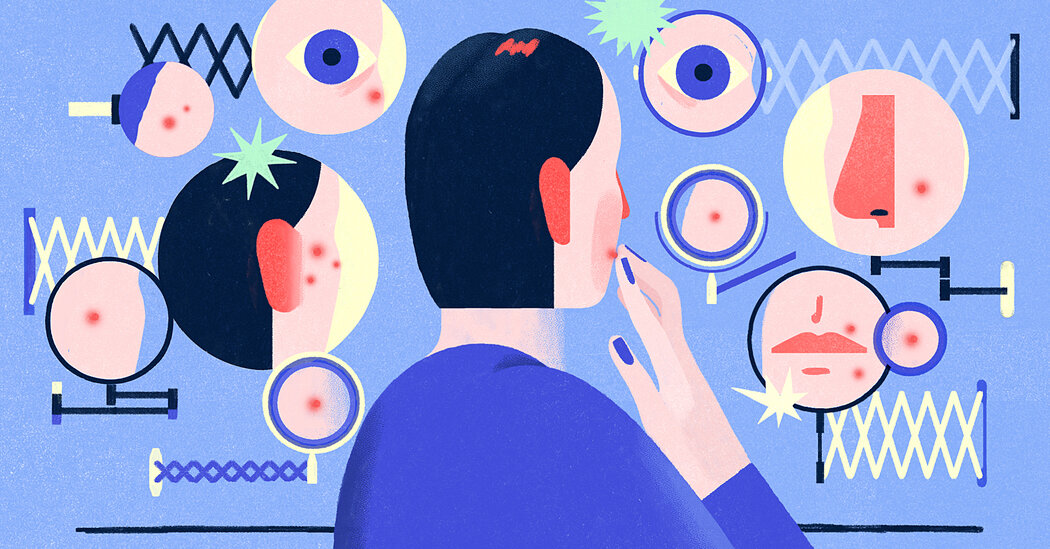
The skin blemishes can affect people in their 30s, 40s and beyond and lead to depression, anxiety and social isolation.No matter how much we claim to value people’s inner worth over their outward appearance, what we see upon meeting someone for the first time can color our assessment of the person’s value. At least, that’s what many adults with acne fear, prompting them to shun social or professional encounters lest their facial blemishes result in a bad impression or even rejection.Acne is usually considered an adolescent problem that should diminish by the college years and become history when it’s time to find a job. Yet, according to a survey published in 2008 of 1,013 adults aged 20 and older, 35 percent of women and 20 percent of men said they were troubled by facial acne in their 30s. Even among those 50 and older, 15 percent of women and 7 percent of men said they still struggled with these blemishes. And experts say acne has become an increasingly prevalent problem among adult women in recent years. In some cases, problems with acne that began in adolescence persisted well past their teen years, but others developed acne for the first time as adults. “Because fewer of their peers have it, adult acne is more socially isolating than teenage acne, and it can have a tremendous impact on a person’s life,” said Dr. John S. Barbieri, an acne specialist at Brigham and Women’s Hospital in Boston.Natalie Kretzing, a 27-year-old medical student in Philadelphia, had only moderate acne in her teens that became severe cystic acne around age 22. “I wanted to be respected as a young professional, but my acne made me feel like I was not an adult,” she told me. “I had to spend so much time on my appearance and makeup that it was exhausting, and I often ended up canceling plans. I couldn’t be spontaneous because it would take me so long to get ready.”Modern diets may play a roleThough it may seem to be a superficial skin problem, acne is really a complex disorder that results from an interaction between various components of the skin and people’s hormones. Acne lesions result when hair follicles in the skin become plugged with oil and dead skin cells that together provide fodder for bacteria. An imbalance of hormones and emotional stress can make the problem worse.Diet has long been blamed, and there is now growing evidence that modern diets may indeed influence the incidence and severity of acne, Dr. Barbieri reported last year. While some people react adversely to a particular food, more generally there’s often an association with milk consumption and foods rich in added sugars and refined starches. These foods increase insulin and insulinlike growth factor, hormones that can foster acne development.In a study of 50 adult women with moderate to severe acne recently published in JAMA Dermatology, Dr. Barbieri and his colleagues revealed the toll the condition can take on mental and emotional well-being. The women often experienced problems with depression, anxiety and social isolation. Like Ms. Kretzing, they felt less confident at work and when dating, and often took obsessive measures to hide their acne from others. British dermatologists similarly noted that many of their adult patients who had visible acne summed up their feelings as: “Nobody likes damaged goods.”Yet the lesions need not be extensive or especially severe for acne to be bothersome to those who have it. “The problem is defined by the patient. Someone with just two or three pimples can be very distraught,” said Dr. Emmy Graber, president of the Dermatology Institute of Boston. “If people are bothered enough to seek my care, their acne is serious enough to be treated. They may be embarrassed at work or when meeting new clients. Even on Zoom calls, they may try to position the camera so that their acne is less obvious.”A range of treatmentsMost people with acne try treating it first with over-the-counter products, like topical retinoids, which can be very helpful for those with mild and sporadic outbreaks. Topical retinoids can make the skin more prone to sunburn, so those who use them should be careful in the sun.More severe cases of acne may require a combination of over-the-counter products and a prescription oral treatment, like Accutane (isotretinoin), a derivative of vitamin A that reduces the amount of oils released by glands in the skin. Because retinoids can cause severe birth defects, women who use Accutane must participate in a program to guarantee that they do not become pregnant.Doctors have also long prescribed oral antibiotics, which may have to be taken for years to keep acne under control, but that regimen risks contributing to the rise of drug-resistant bacteria. More recently, for women with hormone-related acne, long-term antibiotics have been replaced by spironolactone, a prescription oral blood pressure medication. This drug has proved highly effective for women like Ms. Kretzing, who no longer worries about how people perceive her. “It’s made a huge difference in my attitude,” she said, “I’m more carefree and spontaneous and confident.”In fact, the now-successful treatment for her acne inspired her to go to medical school and, she hopes, to eventually help patients like her get the right treatment for their acne as quickly as possible. Delayed resolution of cystic acne like she’s had can result in permanent scarring.Whatever the treatment used, patience is required; it can take six to eight weeks to see the desired results.Tips for managing problem acneDiet. Limit consumption of sweets, refined starches and fast foods, and rely primarily on a nutrient-rich diet with lots of vegetables and fruits. If you suspect you break out after eating a particular food, eliminate it for several weeks to see if that helps.Minimize stress. It doesn’t cause acne, but can make it worse. Lowering your stress with calming activities like yoga, tai chi, meditation and relaxing hobbies might help.Try cover-ups. Outbreaks can often be made less obvious by using water-based makeup and tinted moisturizers and sunscreens. Choose products that are labeled noncomedogenic, meaning they won’t clog your pores. Men with acne can often hide blemishes under facial hair.Boost your spirits. Know that you’re not alone. Many adults have acne. Build resilience by reminding yourself that you are much more than an outer shell; try to present a positive outlook to the world.Get good professional help. If after several months a doctor-recommended treatment has not helped significantly, consider seeing another professional.

Read more →

Men, women ride the same emotional roller coaster

Contrary to widely held gender stereotypes, women are not more emotional than men, researchers say.
Feelings such as enthusiasm, nervousness or strength are often interpreted differently between the two genders. It’s what being “emotional” means to men vs. women that is part of a new University of Michigan study that dispels these biases.
For instance, a man whose emotions fluctuate during a sporting event is described as “passionate.” But a woman whose emotions change due to any event, even if provoked, is considered “irrational,” says the study’s senior author Adriene Beltz, U-M assistant professor of psychology.
Beltz and colleagues Alexander Weigard, U-M assistant professor of psychiatry, and Amy Loviska, a graduate student at Purdue University, followed 142 men and women over 75 days to learn more about their daily emotions, both positive and negative. The women were divided into four groups: one naturally cycling and three others using different forms of oral contraceptives.
The researchers detected fluctuations in emotions three different ways, and then compared the sexes. They found little-to-no differences between the men and the various groups of women, suggesting that men’s emotions fluctuate to the same extent as women’s do (although likely for different reasons).
“We also didn’t find meaningful differences between the groups of women, making clear that emotional highs and lows are due to many influences — not only hormones,” she said.
The findings have implications beyond everyday people, the researchers say. Women have historically been excluded from research participation in part due to the assumption that ovarian hormone fluctuations lead to variation, especially in emotion, that can’t be experimentally controlled, they say.
“Our study uniquely provides psychological data to show that the justifications for excluding women in the first place (because fluctuating ovarian hormones, and consequently emotions, confounded experiments) were misguided,” Beltz said.
Story Source:
Materials provided by University of Michigan. Note: Content may be edited for style and length.

Read more →

Antibiotics for appendicitis

Antibiotics are now an accepted first-line treatment for most people with appendicitis, according to final results of the Comparing Outcomes of antibiotic Drugs and Appendectomy (CODA) trial, and an updated treatment guideline for appendicitis from the American College of Surgeons.
The CODA study findings were to be reported Monday, Oct. 26, 2021, in the New England Journal of Medicine.
“In the first three months after taking antibiotics for the condition, nearly 7 in 10 patients in the antibiotic group avoided an appendectomy. By four years, just under 50% had the surgery,” said Dr. David Flum, co-principal investigator and professor and associate chair of surgery at the University of Washington (UW) School of Medicine. “Other outcomes favored either antibiotics or surgery. Putting it all together, antibiotics look to be the right treatment for many, but probably not all, patients with appendicitis.”
CODA is the largest-ever randomized clinical trial of appendicitis treatment. At 25 hospitals across 14 states, 1,552 patients with appendicitis consented to participate and were randomized to receive antibiotics or to undergo an appendectomy.
“While there were advantages and disadvantages to each treatment, we found that both treatments are safe, and patients will likely value these outcomes differently based on their unique symptoms, concerns and circumstances,” Flum said.
Patients with an appendicolith, a calcified deposit found in about 25% of cases of acute appendicitis, were associated with more complications and a higher chance of appendectomy in the first 30 days. At 90 days out, however, there was no greater chance of appendectomy in patients with an appendicolith.
“Given these results and new treatment guidelines, it is important for surgeons and patients to discuss the pros and cons of both surgery and antibiotics in deciding on the treatment that’s best for that person at that time,” said Dr. Giana Davidson. She is a UW associate professor of surgery and director of the CODA trial’s clinical coordinating center.
To foster those conversations, CODA investigators created an online decision-making tool for patients (http://www.appyornot.org). It includes a video (currently in English and Spanish, with other languages to come) and a mechanism to help patients choose a direction that may better suit their individual circumstances.
“In the emergency setting, patients with appendicitis can make a treatment decision hurriedly,” Davidson said. “This online tool was built to help communicate the CODA results in laymen’s terms, and to spur a conversation between patients and surgeons about potential benefits and harms of each approach.”

Read more →