Fermented soybeans suppress asthma-induced airway inflammation

Bronchial asthma causes symptoms such as wheezing and cough due to chronic airway inflammation, but there is no fundamental treatment for it, leaving a desire for new prevention and treatment methods. Now a new study reveals that a fermented soy product called ImmuBalance suppresses airway inflammation in animal models of asthma.
Researchers from the Department of Respiratory Medicine, Osaka City University Graduate School of Medicine have found that in a ImmuBalance-treated group of asthma model mice, white blood cells associated with asthma called eosinophils were significantly reduced in the bronchoalveolar lavage fluid (BALF). Also, in addition to a decrease in inflammation and mucus around the bronchi, the team found a suppression of proteins that induce eosinophilic inflammation.
“The relationship between soy intake and allergic diseases has been epidemiologically reported in the past,” explained Hideaki Kadotani, first author of the study, “suggesting that the components of soy may have some anti-allergic effects”
“It was reported that imbalances in the gut microbiota may be involved in immune system and allergic diseases, and fermented dietary fiber, like that found in soy, might have beneficial effects in allergic asthma models.” continues Associate Professor Kazuhisa Asai, supporting author of the study.
In the study, the effects of such an imbalance on asthma were examined by giving ImmuBalance-enriched feed to asthma model mice. In the ImmuBalance-treated group, the number of eosinophils in BALF was significantly reduced, and inflammation around the bronchi and mucus production in the bronchial epithelium was suppressed. Also, the expression of Th2 cytokines and the immunoglobulin serum IgE that induce eosinophilic inflammation in BALF were measured and found to be significantly suppressed when compared to mice fed a normal diet.
“In clinical practice, steroid inhalants are the basis of asthma treatments, yet they are known to have adverse side effects,” states Professor Tomoya Kawaguchi, lead advisor to the study. “Our results suggest that the intake of fermented soybean products should be recommended as a complementary coping strategy to asthma with fewer side effects”
These findings appear in the journal Nutrients.
Story Source:
Materials provided by Osaka City University. Note: Content may be edited for style and length.

Read more →

Unprecedented look at the health status of a diverse patient population

Researchers in the health and wellness space have typically relied on people to report their personal health data, like activity levels, heart rate or blood pressure, during brief snapshots in time.
Wearable health devices, such as the popular Apple Watch, have changed the game, surfacing meaningful data that can paint a more complete picture of daily life and resulting health and disease for clinicians.
Early results from a landmark, three-year observational study called MIPACT, short for Michigan Predictive Activity & Clinical Trajectories, provide insight into the baseline health status of a representative group of thousands of people, as reported in a paper published in The Lancet Digital Health.
“From both a research and clinical standpoint, as we design digital health interventions or make recommendations for our patients, it’s important to understand patients’ baseline activity levels,” said Jessica Golbus, M.D., of University of Michigan Health’s Division of Cardiovascular Medicine, and co-investigator on the study.
The University of Michigan Health study is led by Sachin Kheterpal M.D., the associate dean for Research Information Technology and professor of Anesthesiology and launched in 2018 as a collaboration with Apple. The study aims to enroll a diverse set of participants across a range of ages, races, ethnicities and underlying health conditions.
Golbus notes that one of the biggest successes of the study so far was their ability to recruit from groups that have largely been underrepresented or unrepresented in digital health research. For example, 18% of the more than 6,700 participants were 65 or older, 17% were Black, and 17% were Asian.

Read more →

Breakthrough Infections Occur in Those with Lower Antibody Levels, Israeli Study Shows

To see how COVID-19 vaccines are working in the real world, Israel has provided particularly compelling data. The fact that Israel is relatively small, keeps comprehensive medical records, and has a high vaccination rate with a single vaccine (Pfizer) has contributed to its robust data collection. Now, a new Israeli study offers some insight into those relatively uncommon breakthrough infections. It confirms that breakthrough cases, as might be expected, arise most often in individuals with lower levels of neutralizing antibodies.

The findings reported in The New England Journal of Medicine focused on nearly 1,500 of about 11,500 fully vaccinated health care workers at Sheba Medical Center, Ramat Gan, Israel [1]. All had received two doses of the Pfizer mRNA vaccine. But, from December 19, 2020 to April 28, 2021, they were tested for a breakthrough infection due to a known exposure to someone with COVID-19 or possible symptoms of the disease.

Just 39 confirmed breakthrough cases were found, indicating a breakthrough infection rate of just 0.4 percent. That’s consistent with rates reported in previous studies. Most in the Israeli study who tested positive for COVID-19 had mild or no symptoms and none required hospitalization.

In the new study, researchers led by Gili Regev-Yochay at Sheba Medical Center’s Infection Control and Prevention Unit, characterized as many breakthrough infections as possible among the health care workers. Almost half of the infections involved members of the hospital nursing staff. But breakthrough cases also were found in hospital administration, maintenance workers, doctors, and other health professionals.

The average age of someone with a breakthrough infection was 42, and it’s notable that only one person was known to have a weakened immune system. The most common symptoms were respiratory congestion, muscle aches (myalgia), and loss of smell or taste. Most didn’t develop a fever. At six weeks after diagnosis, 19 percent reported having symptoms of Long COVID syndrome, including prolonged loss of smell, persistent cough, weakness, and fatigue. About a quarter stayed home from work for longer than the required 10 days, and one had yet to return to work at six weeks.

For 22 of the 39 people with a breakthrough infection, the researchers had results of neutralizing antibody tests from the week leading up to their positive COVID-19 test result. To look for patterns in the antibody data, they matched those individuals to 104 uninfected people for whom they also had antibody test results. These data showed that those with a breakthrough infection had consistently lower levels of neutralizing antibodies circulating in their bloodstream to SARS-CoV-2, the coronavirus that causes COVID-19. In general, higher levels of neutralizing antibodies are associated with greater protection and lower infectivity—though other aspects of the immune system (memory B cells and cell-mediated immunity) also contribute.

Importantly, in all cases for which there were relevant data, the source of the breakthrough infection was thought to be an unvaccinated person. In fact, more than half of those who developed a breakthrough infection appeared to have become infected from an unvaccinated member of their own household.

Other cases were suspected to arise from exposure to an unvaccinated coworker or patient. Contact tracing found no evidence that any of the 39 health care workers with a breakthrough infection passed it on to anyone else.

The findings add to evidence that full vaccination and associated immunity offer good protection against SARS-CoV-2 infection and severe illness. Understanding how SARS-CoV-2 immunity changes over time is key for charting the course of this pandemic and making important decisions about COVID-19 vaccine boosters.

Many questions remain. For instance, it’s not clear from the study whether lower neutralizing antibodies in those with breakthrough cases reflect waning immunity or, for reasons we don’t yet understand, those individuals may have had a more limited immune response to the vaccine. Also, this study was conducted before the Delta variant became dominant in Israel (and now in the whole world).

Overall, these findings provide more reassurance that these vaccines are extremely effective. Breakthrough infections, while they can and do occur, are a relatively uncommon event. Here in the U.S., the Centers for Disease Control and Prevention (CDC) has recently estimated that infection is six times less likely for vaccinated than unvaccinated persons [2]. That those with immunity tend to have mild or no symptoms if they do develop a breakthrough case, however, is a reminder that these cases could easily be missed, and they could put vulnerable populations at greater risk. It’s yet another reason for all those who can to get themselves vaccinated as soon as possible or consider a booster shot when they become eligible.

References:

[1] Covid-19 breakthrough infections in vaccinated health care workers. Bergwerk M, Gonen T, Lustig Y, Amit S, Lipsitch M, Cohen C, Mandelboim M, Levin EG, Rubin C, Indenbaum V, Tal I, Zavitan M, Zuckerman N, Bar-Chaim A, Kreiss Y, Regev-Yochay G. N Engl J Med. 2021 Oct 14;385(16):1474-1484.

[2] Rates of COVID-19 cases and deaths by vaccination status, COVID Data Tracker, Centers for Disease and Prevention. Accessed October 25, 2021.

Links:

COVID-19 Research (NIH)

Sheba Medical Center (Ramat Gan, Israel)

Read more →

Many new college students report pet separation anxiety

Pets are not the only ones who experience separation anxiety; their people do too.
Washington State University researchers surveyed a sample of new first-year college students leaving pets at home and found that 75% experienced some level of pet separation anxiety — with one in four reporting moderate to severe symptoms.
“Students who are struggling with missing their pets should know that they’re not alone,” said Alexa Carr, the lead author of the study which is part of her WSU doctoral dissertation. “There’s nothing necessarily wrong with them if they are experiencing a lot of distress from leaving their pets. It can be an isolating experience to lose that coping resource.”
The students who had higher anxiety tended to be those who treated their pets more like people, identifying them as friends, sleeping in the same room and generally spending a lot of time with them. Interestingly, students who had dogs at home also tended to report more attachment to their pets — and more separation anxiety — than those with cats and other types of pets.
While there are many anecdotal accounts of students missing their pets, the study published in Anthrozoos, is the first known research investigating this kind of pet separation anxiety in humans.
Carr and co-author Patricia Pendry, a WSU associate professor of human development, surveyed a sample of about 150 incoming first-year students who had pets at home. The vast majority of respondents, 81%, were women — which is a limitation of the study but also consistent with trends in college enrollment. In 2020, 60% of enrolled college students were women, according to National Center for Education Statistics.
The researchers surveyed the group before they arrived on campus and after their first two weeks of the semester in fall 2019 before the pandemic forced many universities online. The students answered questions related to their mental health, attachment to their pets and feelings about leaving them behind.
Even after controlling for pre-existing mental health issues, the researchers found that pet-related separation anxiety was very strong in the group during the transition to college, especially among students who were closely attached to their pets.
The findings indicate this is an issue for many students and should be taken seriously by campus counselors, Carr said. It also has implications for pet visitation programs now popular at many U.S. universities which bring animals to campus to help stressed students. A previous WSU study found that petting dogs or cats for just 10 minutes lowers levels of the stress hormone cortisol.
The authors said more research is needed to understand the implications of pet separation anxiety. For example, whether students’ symptoms are stable or become less severe over the course of the semester; or whether pet visitation programs might have some unintended effects, such as potentially exacerbating separation anxiety for students missing their specific pets back home.
The researchers also cautioned that this study should not be used as justification for students to bring their pets with them when they go to college, particularly if they would be their sole caregivers.
“It’s a big responsibility to take care of an animal, and would a student then able to balance their school responsibilities, social lives and jobs?” Carr said. “There are more things to take into consideration and explore before we could advocate for more pets on campus.”
Story Source:
Materials provided by Washington State University. Original written by Sara Zaske. Note: Content may be edited for style and length.

Read more →

Dragging your feet? Lack of sleep affects your walk

Good sleep can be hard to come by. But a new study finds that if you can make up for lost sleep, even for just a few weekend hours, the extra zzz’s could help reduce fatigue-induced clumsiness, at least in how you walk.
There’s plenty of evidence to show sleep, and how much we get of it, can affect how well we do on cognitive tasks such as solving a math problem, holding a conversation, or even reading this article. Less explored is the question of whether sleep influences the way we walk or carry out other activities that are assumed to be less mentally taxing.
The new study, by researchers at MIT and the University of São Paulo in Brazil, reports that walking — and specifically, how well we can control our stride, or gait — can indeed be affected by lack of sleep.
In experiments with student volunteers, the team found that overall, the less sleep students got, the less control they had when walking during a treadmill test. For students who pulled an all-nighter before the test, this gait control plummeted even further.
Interestingly, for those who didn’t stay up all night before the test, but who generally had less-than-ideal sleep during the week, those who slept in on weekends performed better than those who didn’t.
“Scientifically, it wasn’t clear that almost automatic activities like walking would be influenced by lack of sleep,” says Hermano Krebs, principal research scientist in MIT’s Department of Mechanical Engineering. “We also find that compensating for sleep could be an important strategy. For instance, for those who are chronically sleep-deprived, like shift workers, clinicians, and some military personnel, if they build in regular sleep compensation, they might have better control over their gait.”
Krebs and his co-authors, including lead author Arturo Forner-Cordero of the University of São Paulo, have published the study in the journal Scientific Reports.

Read more →

Liverpool dancer takes up nursing after Covid care work

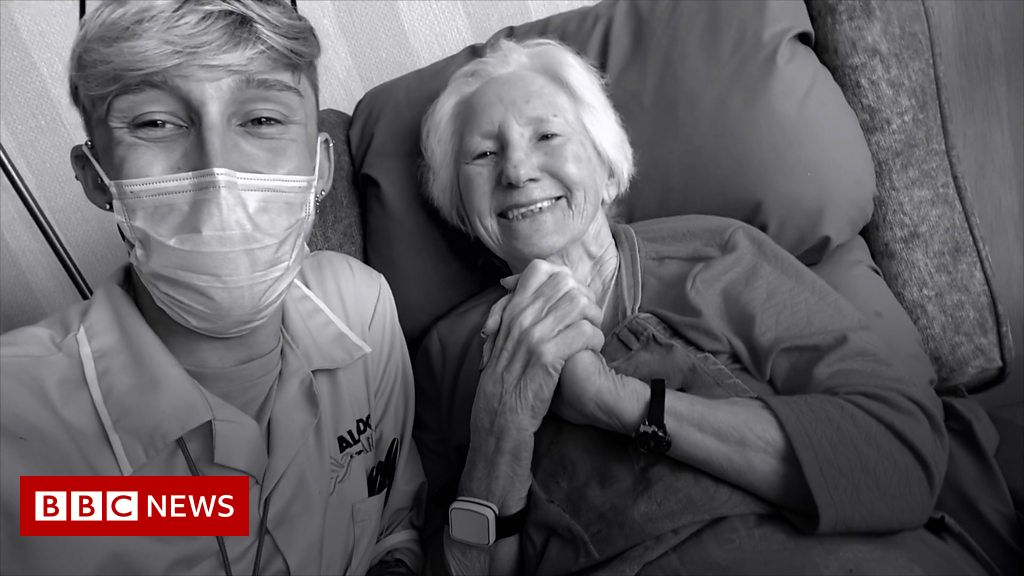
A student from Liverpool who took up care work during the coronavirus pandemic has decided to don scrubs instead of dancing shoes in a change of career. Paul Wilson, a dance graduate from Edge Hill University, worked in a home during the lockdowns to help fund his degree. “I quickly realised I had a massive passion and love for the profession. Nothing gave me the satisfaction I get from care,” Mr Wilson said.The 22-year-old has now chosen to begin a degree in nursing at the same university in January. Why not follow BBC North West on Facebook, Twitter and Instagram? You can also send story ideas to northwest.newsonline@bbc.co.uk

Read more →

She Climbed Yosemite's El Capitan to Celebrate Turning 70

“It’s Never Too Late” is a series that tells the stories of people who decide to pursue their dreams on their own terms.In her 40s, Dierdre Wolownick taught herself to swim. In her 50s, she took up running. Then, at 60, she became a rock climber — and not just any rock climber. Four years ago, at 66, Ms. Wolownick made a record-breaking ascent up El Capitan, Yosemite National Park’s granite monolith that has some of the longest, most challenging rock climbing routes in the world. And she did it in style. The route she tackled then, Lurking Fear, typically takes four days to complete. Ms. Wolownick did it in one.Of course, it helped that the author and now-sponsored athlete had one of the most accomplished rock climbers in the world to guide her: her famous son, Alex Honnold, the star of the 2018 Oscar-winning documentary “Free Solo.” The film chronicles her son’s breathtaking journey to become the first person to climb “El Cap” with no rope or safety equipment whatsoever. Her own effort — which did use ropes — was “by far” the most demanding thing she had ever done, Ms. Wolownick said.Reaching the summit of El Capitan in 2017, she became the oldest woman to make that ascent, according to Hans Florine, an American rock climber with a record 179 climbs of the vertical rock formation.And she has not slowed down. In late September, Ms. Wolownick returned to El Cap without her son to climb it again, this time to celebrate her 70th birthday with a small group of friends and guides. On that adventure she went up an easier route that climbers typically use to descend. It took her six hours to reach the summit, and after camping there overnight, came down in six and a half hours the next day.The grueling climbs were a departure from the first half of Ms. Wolownick’s sedentary and cerebral life. Growing up in New York, she painted and played the piano in Jackson Heights, Queens. As an adult she taught five languages and wrote books, including a 2019 memoir, “The Sharp End of Life: a Mother’s Story,” in part about her first El Cap ascent. In 1990, a few years after moving to suburban Sacramento, where her husband grew up, she founded an orchestra in West Sacramento and conducted it.“These were wonderful, greatly satisfying things but nothing was really physical. There certainly was no danger,” she said. “I never in a million years thought that I could climb El Cap.” (The following interview has been edited and condensed.)El Capitan is known around the world for its massive, sheer rock faces.Aubrey Trinnaman for The New York TimesUnlike her son, Ms. Wolownick used ropes on her vertical adventure.Aubrey Trinnaman for The New York TimesWhy did you start climbing?Alex has always loved it. He was often very quiet, even morose as a child, but he would talk about climbing. The sport has real jargon — they say things like “jugging” and “rapping” — and I had no clue what he was saying. It pained me that I couldn’t relate to him over this. I figured I would try it so at least we could talk.How did you try it?About 10 years ago, Alex was home with an injury so I asked him to take me to the climbing gym. I figured I’d get to know the equipment and climb halfway up the wall and come home and be happy. I got on the first climb and went all the way up, about 45 feet, and I was totally surprised I had no fear whatsoever. So I did 12 more climbs that day and loved it.What was your life like before that?Total turmoil. My husband, Charles, fell over dead at 55 in the Phoenix airport one month after I had divorced him and I became the executor of his estate. My father had just died and I was dealing with his estate, too. Alex had almost died while snowshoeing in 2004 when he was 19. So I started running, little by little, and wound up becoming a runner. There was nothing in life I was doing for me and running was for me. Climbing turned out to be the same, an escape, but it took courage.“Just being on El Cap is a mind-bender. Your life changes,” Ms. Wolownick said, pictured on her climb up the granite monolith.Aubrey Trinnaman for The New York TimesHow did you overcome the challenges to climb?Climbing is very physical and there’s so much to learn about the equipment, the physics, the angles — everything.I was just a lumpy old middle age woman completely taken with jobs and chores. I was scared, too, and sometimes you need a little help to do something totally new and alien to you. But after a month or two I had had enough conversations with myself and so I said, OK, today, you’re not going home after work. You’re going to go straight to the climbing gym. And I did. It became a routine. Climbing was like a key opening this lifelong door. It was wonderful.“Climbing is very physical and there’s so much to learn about the equipment, the physics, the angles — everything.”Aubrey Trinnaman for The New York Times“I learned how to suffer through all kinds of discomfort because what you get from it makes it worthwhile.”Aubrey Trinnaman for The New York TimesHow did you prepare for El Capitan?I went to Yosemite to train three days a week for 18 weeks in a row. I would hike and climb. I’ve never been able to do push-ups or pull-ups so I got one of those pull-up bars you can put in a doorway and started working on it. Every time I walk by it, I do 10 pull-ups. I’m up to about 50 pull-ups a day now. They’re not pull-up-from-the-ground pull-ups, but nonetheless, for me, they’re extraordinary. Climbing Lurking Fear was still the hardest thing I’ve ever done by far but just being on El Cap is a mind-bender. Your life changes.How has climbing changed your life?I learned how to suffer through all kinds of discomfort because what you get from it makes it worthwhile. It’s the same for anybody who wants to follow a path of bliss. There’s a lot of suffering. With climbing, you just have to deal. It’s not like you can say, ‘oh, it’s raining, let’s go back to the car’ when you’re 2,500 feet up. It’s such a privilege to be up there. Climbers get to go to the most unimaginable, beautiful, inspiring places, and the only way to experience them is to put in the hard work.What would you tell people who are stuck or scared to make changes that might be good for them?You first have to figure out why you think you can’t do something and ask yourself if that’s a valid point. Look, there’s somebody telling you every step of your life what to eat, what to wear, that you can’t sleep without this drug, and it’s all nonsense. You can decide for yourself what you think you’re capable of. It’s just so sad when people say, oh, I’m 50, I can’t … fill in the blank. Try it anyway! Who cares! You might be surprised.We’re looking for people who decide that it’s never too late to switch gears, change their life and pursue dreams. Should we talk to you or someone you know? Share your story here.

Read more →

How to Remember What Your Doctor Says

Assert yourself, particularly if you’re confused. Try repeating what you’re hearing.“Don’t let the doctor cut you off,” says M. Barton Laws, a medical sociologist at Brown University who researches provider-patient relationships. What researchers call “verbal dominance” is a known issue in the medical field, and Laws has established that the more of the talking the physician does, the fewer things a person remembers. When faced with someone in a white coat, don’t go mute. Assert yourself, particularly if you’re confused. Try repeating what you’re hearing (“Wait, I think I heard you say … ”).In a study of 189 outpatient encounters, Laws and his colleagues found that people recalled less than half of what their doctors told them a week earlier. There are many reasons a doctor’s words might slip your mind. “People who are under stress don’t remember,” Laws says. What is said after a traumatic diagnosis might disappear altogether. Laws says that patients are most likely to recall directives (“Get your blood drawn down the hall”) and least likely to recollect explainers (“This is how diabetes can damage your liver”). There can also be a kind of motivated forgetting when a doctor suggests behavior changes (“Eat less sugar”).Many appointments are allotted just 15 minutes, during which medical providers often home in on what they think is “the chief complaint.” In practice, though, patients bring up as many as 15 different issues during a visit. Show up with a list of the three main things you want to talk about, and go over all three before your doctor starts talking. “Avoid doorknob questions,” Laws says — what doctors call inquiries they get when the appointment is already over. You can always ask to see your medical records and doctor’s notes; you’re legally entitled to them.Some 20 years ago, Laws was hired to investigate how people living with H.I.V. were taking, and sometimes skipping, their prescribed antiretroviral medications. Those accounts made him realize that what patients understand is just as vital to care as what doctors say. He believes the communication onus should be on medical providers. Still, as a patient, you have agency. “When people participate, they remember better,” Laws says.

Read more →

How to Map a Fly Brain in 20 Million Easy Steps

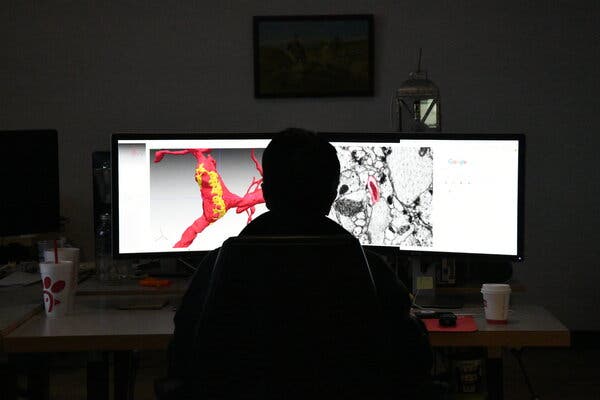
The brain of a fruit fly is the size of a poppy seed and about as easy to overlook.“Most people, I think, don’t even think of the fly as having a brain,” said Vivek Jayaraman, a neuroscientist at the Janelia Research Campus of the Howard Hughes Medical Institute in Virginia. “But, of course, flies lead quite rich lives.”Flies are capable of sophisticated behaviors, including navigating diverse landscapes, tussling with rivals and serenading potential mates. And their speck-size brains are tremendously complex, containing some 100,000 neurons and tens of millions of connections, or synapses, between them.Since 2014, a team of scientists at Janelia, in collaboration with researchers at Google, have been mapping these neurons and synapses in an effort to create a comprehensive wiring diagram, also known as a connectome, of the fruit fly brain.The work, which is continuing, is time-consuming and expensive, even with the help of state-of-the-art machine-learning algorithms. But the data they have released so far is stunning in its detail, composing an atlas of tens of thousands of gnarled neurons in many crucial areas of the fly brain.And now, in an enormous new paper, being published on Tuesday in the journal eLife, neuroscientists are beginning to show what they can do with it.By analyzing the connectome of just a small part of the fly brain — the central complex, which plays an important role in navigation — Dr. Jayaraman and his colleagues identified dozens of new neuron types and pinpointed neural circuits that appear to help flies make their way through the world. The work could ultimately help provide insight into how all kinds of animal brains, including our own, process a flood of sensory information and translate it into appropriate action.It is also a proof of principle for the young field of modern connectomics, which was built on the promise that constructing detailed diagrams of the brain’s wiring would pay scientific dividends.“It’s really extraordinary,” Dr. Clay Reid, a senior investigator at the Allen Institute for Brain Science in Seattle, said of the new paper. “I think anyone who looks at it will say connectomics is a tool that we need in neuroscience — full stop.”Electron microscope imagery of fly neurons. Computer algorithms were used to pinpoint where individual neurons connect, then researchers checked the computer’s work and filled in missing pieces.Matt Staley, Janelia Research Campus‘Your fly brain is cooked’The only complete connectome in the animal kingdom belongs to the humble roundworm, C. elegans. The pioneering biologist Sydney Brenner, who would later go on to win a Nobel Prize, started the project in the 1960s. His small team spent years on it, using colored pens to trace all 302 neurons by hand.“Brenner realized that to understand the nervous system you had to know its structure,” said Scott Emmons, a neuroscientist and geneticist at Albert Einstein College of Medicine, who later used digital techniques to create new C. elegans connectomes. “And that’s true across biology. Structure is so important.”Brenner and his colleagues published their landmark paper, which clocked in at 340 pages, in 1986.But the field of modern connectomics did not take off until the 2000s, when advances in imaging and computing finally made it feasible to map the connections in larger brains. In recent years, research teams around the world have started assembling connectomes of zebrafish, songbirds, mice, humans and more.When the Janelia Research Campus opened in 2006, Gerald Rubin, its founding director, set his sights on the fruit fly. “I don’t want to offend any of my worm colleagues, but I think flies are the simplest brain that actually does interesting, complex behavior,” Dr. Rubin said.Several different teams at Janelia have embarked on fly connectome projects in the years since, but the work that led to the new paper began in 2014, with the brain of a single, five-day-old female fruit fly.Researchers cut the fly brain into slabs and then used a technique known as focused-ion beam scanning electron microscopy to image them, layer by painstaking layer. The microscope essentially functioned like a very tiny, very precise nail file, filing away an exceedingly thin layer of the brain, snapping a picture of the exposed tissue and then repeating the process until nothing remained.Researchers cut a fly brain into exceptionally thin slabs, imaged each with an electron microscope, then stitched the images together to allow scientists to trace each neuron’s path through the brain.FlyEM/Janelia Research Campus“You’re simultaneously imaging and cutting off little slices of the fly brain, so they don’t exist after you’re done,” Dr. Jayaraman said. “So if you screw something up, you’re done. Your goose is cooked — or your fly brain is cooked.”The team then used computer vision software to stitch the millions of resulting images back together into a single, three-dimensional volume and sent it off to Google. There, researchers used advanced machine-learning algorithms to identify each individual neuron and trace its twisting branches.Finally, the Janelia team used additional computational tools to pinpoint the synapses, and human researchers proofread the computers’ work, correcting errors and refining the wiring diagrams.Last year, the researchers published the connectome for what they called the “hemibrain,” a large portion of the central fly brain, which includes regions and structures that are crucial for sleep, learning and navigation.The connectome, which is accessible free online, includes about 25,000 neurons and 20 million synapses, far more than the C. elegans connectome.“It’s a dramatic scaling up,” said Cori Bargmann, a neuroscientist at the Rockefeller University in New York. “This is a tremendous step toward the goal of working out the connectivity of the brain.”Welcome to orientationA population of neurons that is responsible for updating the fly’s internal compass.FlyEM/Janelia Research CampusOnce the hemibrain connectome was ready, Dr. Jayaraman, an expert on the neuroscience of fly navigation, was eager to dive into the data on the central complex.The brain region, which contains nearly 3,000 neurons and is present in all insects, helps flies build an internal model of their spatial relationship to the world and then select and execute behaviors appropriate for their circumstances, such as searching for food when they are hungry.“You’re telling me you can give me the wiring diagram for something like this?” Dr. Jayaraman said. “This is better industrial espionage than you could get by getting insights into the Apple iPhone.”He and his colleagues pored over the connectome data, studying how the region’s neural circuits were put together.For instance, Hannah Haberkern, a postdoctoral associate in Dr. Jayaraman’s lab, analyzed the neurons that send sensory information to the ellipsoid body, a doughnut-shape structure that acts as the fly’s internal compass.Dr. Haberkern found that neurons that are known to transmit information about the polarization of light — a global environmental cue that many animals use for navigation — made more connections to the compass neurons than did neurons that transmit information about other visual features and landmarks.The neurons dedicated to polarization of light also connect to — and are capable of strongly inhibiting — brain cells that provide information about other navigational cues.The researchers hypothesize that fly brains may be wired to prioritize information about the global environment when they are navigating — but also that these circuits are flexible, so that when such information is inadequate, they can pay more attention to local features of the landscape. “They have all these fallback strategies,” Dr. Haberkern said.Fruit fly phone homeOther members of the research team identified specific neural pathways that seem well suited to helping the fly keep track of its head and body orientation, anticipate its future orientation and traveling direction, calculate its current orientation relative to another desired location and then move in that direction.Imagine, for instance, that a hungry fly temporarily abandons a rotting banana to see whether it can rustle up something better. But after a (literally) fruitless few minutes of exploration, it wants to return to its previous meal.The connectome data suggests that certain brain cells, technically known as PFL3 neurons, help the fly pull off this maneuver. These neurons receive two critical inputs: They get signals from neurons that track the direction the fly is facing as well as from neurons that may be keeping tabs on the direction of the banana.After receiving those signals, the PFL3 neurons then send out their own message to a set of turning neurons that prompt the fly to veer off in the correct direction. Dinner is served, again.Compass neurons, which help flies stay oriented, are part of a neural pathway that may help modulate the insects’ turning actions.FlyEM/Janelia Research Campus“Being able to trace that activity through that circuit — from sensory back to motor through this complex intermediate circuit — is really amazing,” said Brad Hulse, a research scientist in Dr. Jayaraman’s lab who led this part of the analysis. The connectome, he added, “showed us a lot more than we thought it was going to.”And the group’s paper — a draft of which includes 75 figures and stretches to 360 pages — is just the beginning.“It just really provides this ground truth for exploring this brain region further,” said Stanley Heinze, an expert on insect neuroscience at Lund University in Sweden. “It’s just enormously impressive.”And just plain enormous. “I wouldn’t really treat it as a paper but more as a book,” Dr. Heinze said.In fact, the paper is so large that the preprint server bioRxiv initially declined to publish it, perhaps because the administrators — understandably — thought it actually was a book, Dr. Jayaraman said. (The server ultimately did post the study, after a few extra days of processing, he noted.)The paper’s publication in the journal eLife “required some special permissions and back-and-forth with editorial staff,” Dr. Jayaraman added.Fly-ing lessonsThere are limitations to what a snapshot of a single brain at a single moment in time can reveal, and connectomes do not capture everything of interest in an animal brain. (Janelia’s hemibrain connectome omits glial cells, for instance, which perform all sorts of important tasks in the brain.)Dr. Jayaraman and his colleagues stressed that they would not have been able to infer so much from the connectome if not for decades of prior research, by many other scientists, into fruit fly behavior and basic neuron physiology and function, as well as theoretical neuroscience work.But the wiring diagrams can help researchers investigate existing theories and generate better hypotheses, figuring out what questions to ask and which experiments to conduct.“Most people, I think, don’t even think of the fly as having a brain,” said Vivek Jayaraman, a neuroscientist at the Janelia Research Campus of the Howard Hughes Medical Institute in Virginia. “But, of course, flies lead quite rich lives.”Peter Yeeles/Alamy “Now what we’re really excited about is taking those ideas that the connectome inspired and going back to the microscope, going back to our electrodes and actually recording the brain and seeing if those ideas are true,” Dr. Hulse said.Of course, one could — and some have — asked why a fruit fly’s brain circuitry matters.“I get asked this at the holidays a lot,” Dr. Hulse said.Flies are not mice or chimps or humans, but their brains perform some of the same basic tasks. Understanding the basic neural circuitry in an insect could provide important clues to how other animal brains approach similar problems, said David Van Essen, a neuroscientist at Washington University in St. Louis.Gaining a deep understanding of the fly’s brain “also gives us insights that are very relevant to the understanding of mammalian, and even human, brains and behavior,” he said.Creating connectomes of larger, more complex brains will be enormously challenging. The mouse brain contains roughly 70 million neurons, the human brain a whopping 86 billion.But the central complex paper is decidedly not a one-off; detailed studies of regional mouse and human connectomes are currently in the pipeline, Dr. Reid said: “There’s a lot more to come.”Journal editors, consider yourselves warned.

Read more →

Why women may wait decades for an ADHD diagnosis

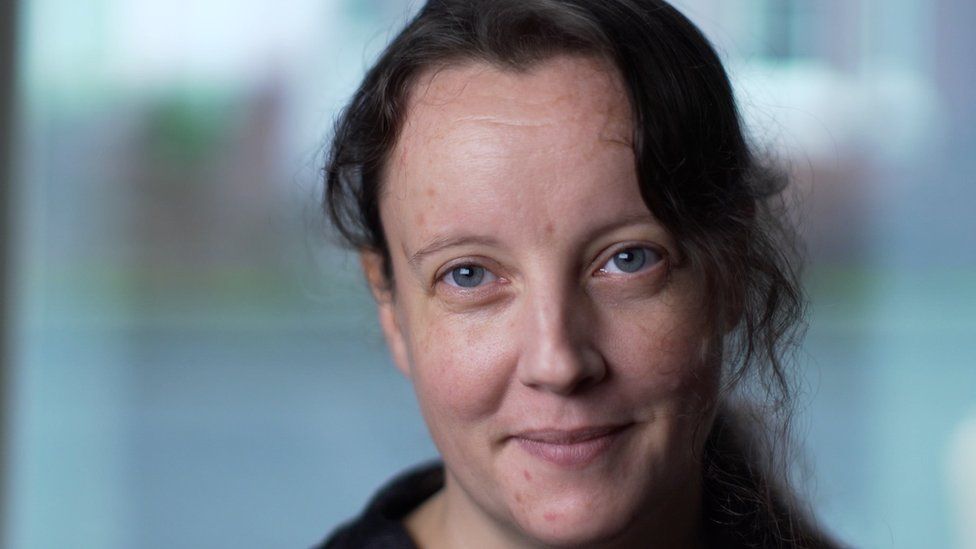
SharecloseShare pageCopy linkAbout sharingGender bias is leaving many women with attention deficit hyperactivity disorder undiagnosed, leading psychologists are warning.The prevailing stereotype ADHD affects only “naughty boys” means at least tens of thousands in the UK, it is estimated, are unaware they have the condition and not receiving the help they need.”I used to tell doctors and therapists all the time, ‘You’ve got to make this constant noise in my head stop. I can’t think. I can’t sleep. I can’t get any peace,’ but this was always dismissed as anxiety or women’s problems,” Hester says.Diagnosed with depression at 16, she spent much of her 20s unsuccessfully battling to be referred to a psychiatrist.And she constantly felt she was not reaching her true potential.Make mistakes”I studied history at university and could write an essay on an academic subject – but when I worked as a sales assistant, I couldn’t fill out an order form,” Hester says. “My mind would wander off and I would make mistakes.”I would get a lot of criticism for that.”I was always thinking, ‘Why am I not able to manage things that other people can do so easily – like keep their house tidy or remember deadlines?'”Nervous breakdownThe anti-depressants and anti-anxiety pills Hester was encouraged to take were not helping but she learned to hide her struggle.”You suppress who you are, so you can look like a normal person – but it’s exhausting,” she says. “Then, I had a baby – suddenly, that extra pressure, the sleep deprivation, all the wheels fell off. “When he was three-years-old, I had a nervous breakdown.” Doctor’s radarHester was finally diagnosed with ADHD in 2015, aged 34, and only, she says, because her husband had discovered he had the condition, a year earlier.His diagnosis took 12 months. “At no point did anyone say to Chris, ‘This sounds like anxiety,’ or ‘Have some tablets,'” Hester says.”He was taken seriously. “Whereas with me, I was on the doctor’s radar from the age of 16. “Bluntly, it took so long for me to be diagnosed because I’m a woman.”Disruptive behavioursA late diagnosis can have a negative impact on relationships and careers, as well as increase the risk of mental-health problems such as anxiety, depression and eating disorders. Clinical and forensic psychologist Dr Susan Young says childhood is where the bias starts – with boys three to four times more likely to be diagnosed.Research suggests boys tend to display more disruptive behaviours, such as rule-breaking or fighting, while girls’ symptoms are likely to be more subtle.”It’s the boisterous boys who are causing problems in the classroom who are going to be referred for help, not the quieter girls who are criticised for daydreaming or not paying attention – but those girls are also struggling,” Dr Young says.”Women haven’t just woken up with ADHD – there have been signposts all the way along their life.”This video can not be playedTo play this video you need to enable JavaScript in your browser.Twiggy, 27, says the signs she had ADHD were clear at school.”I loved English and drama,” she says. “If we were learning about Shakespeare, oh my gosh, I was on fire. “But if it was anything else, like maths, I just wasn’t interested.”If I was a boy, I think my behaviour would have been looked into – but I was just labelled a disruption.”Cried tearsTwiggy’s struggles with focus often left her feeling “stupid”. But, with the support of her family and friends, she went on to study law at university and become a beauty journalist for a prominent magazine.Twiggy first heard about ADHD in women on social media but then had to persuade her GP to refer her to a psychiatrist. When her diagnosis was confirmed, last August, she cried tears of happiness.”It was a huge relief knowing I’m not hyperactive because I’m annoying, I don’t daydream because I don’t care about what the person is saying, it is just the way my brain works,” she says.Blame myselfADHD is a neurodevelopmental condition that comes in three types: inattentive, hyperactive/impulsive, or a combination of both, which is what Twiggy has.All the women say their ADHD diagnosis has improved their lives. For some, medication and therapy has helped. For others, including Twiggy, all they needed were answers.”My ADHD is part of who I am – but now, I’m able to manage it, I don’t blame myself anymore,” she says.Underlying difficultiesExperts say females often learn to “camouflage” their symptoms.They may be viewed as having anxiety or depression.They may have another condition alongside their ADHD, such as autism.And this can lead to an incomplete or incorrect diagnosis that masks their underlying difficulties.Car crashesLeading experts say the diagnosis gap between males and females shrinks in adulthood.But while NHS Digital data suggests diagnoses have been on the rise for both genders in recent years in England, in 2019-20, 33,000 women were diagnosed compared with more than 100,000 men.As a teenager, Sheelagh battled suicidal thoughts.As an adult, she exhibited risky behaviour – including being involved in six car crashes.And her life was “chaos”, the 66-year-old says, until her ADHD was confirmed, three years ago. “I do think about what it would have been like if I had been told earlier,” she says. “My kids have turned out amazingly well – but I’m sad they’ve done it in spite of me not because of me. “I could have had a career – I trained as a dispensing optician but I never managed to hold down a job long enough to progress.”I would just walk out because I would get frustrated with people not understanding me.”I’m quite fond of who I am now. “Before, I was like a volcano, ready to go off. “Now I’m like a mountain – gentler, quieter, smoother.”Mental-health servicesA Department of Health and Social Care official for England says guidance has been updated.to make it easier for doctors to diagnose ADHD in women and girls.There are currently no dedicated services for adults with ADHD in Northern Ireland, according to a departmental official. Patients’ needs are met via “generic mental-health services”.The Scottish government says it is carrying out a pilot project to improve the diagnoses of adults with neurodevelopmental disorders.A review by the Welsh government of all-age neurodevelopmental services is due to be completed by March. For more information, psychologists advise completing online ADHD questionnaires and speaking to a GP.Attention deficit hyperactivity disorder – NHSThe BBC is not responsible for the content of external sites.

Read more →