F.D.A. Panel Recommends Vaccine for Children 5 to 11
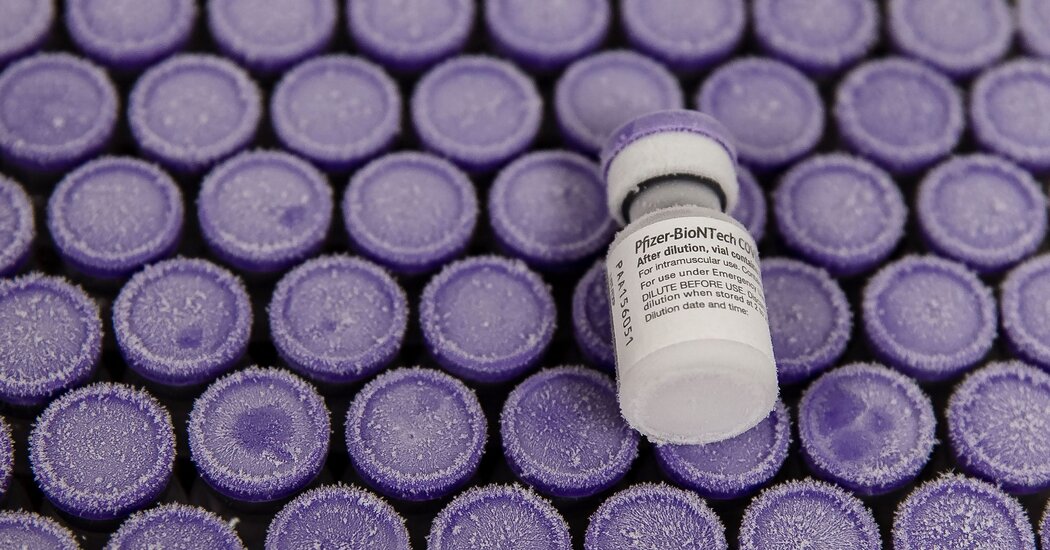
Covid-19 was “the eighth-highest killer of kids in this age group over the past year,” said a C.D.C. official in favor of broader authorization.WASHINGTON — An expert committee advising the Food and Drug Administration on Tuesday recommended that regulators authorize Pfizer-BioNTech’s coronavirus vaccine for 5- to 11-year-olds, bringing about 28 million children a major step closer to becoming eligible for shots.If the F.D.A. follows the panel’s advice in the coming days, as is expected, the Biden administration will have expanded vaccine access to all but the youngest Americans, while providing booster shots for many as well.Biden administration officials see the pediatric dose as crucial to keeping schools open and restoring a sense of normalcy to family and work life as the pandemic hurtles toward the end of its second year. The administration wants to be seen as doing everything possible to combat the virus and build upon positive trends, as the Delta variant ebbs and the daily drumbeat of infections and deaths fades.Younger children would start getting their shots at a time when coronavirus cases are dropping sharply. But public demand for a pediatric vaccine has been high, and some panel members said that even though young children are less likely to get severely ill from Covid-19, parents and doctors alike are anxious to protect them.Dr. Jay Portnoy, a medical director at Children’s Mercy Hospital in Kansas City, Mo., said he had seen critically ill children in the intensive care unit and “terrified” parents. “I’m looking forward to being able to actually do something to prevent that,” he said.The vote was 17-0 in favor, with one abstention. Federal regulators and scientists made a strong push, arguing that 8,300 children between 5 and 11 had been hospitalized with Covid-19 and nearly 100 had died over the course of the pandemic.Covid-19 is “the eighth-highest killer of kids in this age group over the past year,” said Dr. Amanda Cohn, a top C.D.C. vaccine official. “Use of this vaccine will prevent deaths, will prevent I.C.U. admissions and will prevent significant long-term adverse outcomes in children.”Data from Pfizer showed that the vaccine had a 90.7 percent efficacy rate in preventing symptomatic Covid-19 in a clinical trial of 5- to 11-year-olds. Still, many advisory committee members expressed concern about limited safety data, turning repeatedly to the risk of myocarditis, a rare condition involving inflammation of the heart muscle, in young vaccine recipients. Myocarditis and pericarditis, inflammation of the lining around the heart, have been tied to the Pfizer-BioNTech and Moderna vaccines, particularly in younger men.The Pfizer dose for younger children would be one-third of the strength given to people 12 and older, with two shots given three weeks apart. Experts have said that could diminish the risk of the heart-related side effects.If F.D.A. regulators follow the committee’s advice, as they typically do, an authorization could come within days. The Centers for Disease Control and Prevention’s own panel of outside experts is scheduled to meet Tuesday and Wednesday, and is also expected to endorse a pediatric dose. The C.D.C., which sets vaccine policy, would likely then quickly recommend the rollout of shots.During a long debate before the vote, some committee members questioned whether every child in the age group really needed the vaccine or whether it should be limited to those at high risk of severe Covid-19 — an easily identifiable group, with underlying conditions such as obesity or other risk factors.Dr. James E.K. Hildreth, the president and chief executive of Meharry Medical College, said that since many children between 5 and 11 may already have some immunity after contracting the virus, the need to vaccinate broadly in the age group might be less urgent.“It just seems to me that in some ways we’re vaccinating children to protect the adults, and it should be the other way around,” he said. “I do believe that children at highest risk do need to be vaccinated. But vaccinating all of the children to achieve that just seems a bit much for me.”Dr. Hildreth also bemoaned the fact that Pfizer’s pediatric trial included few children from minority groups, who are particularly at risk of bad outcomes from Covid-19.While some committee members said they wished to recommend the vaccine for a more narrow group of children, they were asked to decide simply whether the benefits of a pediatric shot outweigh the risks. “We decided to go for it with a lot of heavy conscience,” said Dr. Eric Rubin, an infectious diseases expert at the Harvard T.H. Chan School of Public Health.Dr. Paul Offit, a panel member who heads the Vaccine Education Center at Children’s Hospital of Philadelphia, said it was “nerve-racking” to make public health decisions affecting millions of children based on studies involving just a few thousand participants.But he said: “The question is, when do you know enough? And I think we certainly know that there are many children between 5 and 11 years of age who are susceptible to this disease who could very well be sick and or hospitalized, or die from it.”Dr. Peter Marks, who heads the agency’s division that oversees vaccine approvals, told the committee that nearly two million in that age group have been infected, and that a third of those hospitalized have needed intensive care.Committee members said they hoped a pediatric dose would not only keep elementary schoolers out of the hospital, but would reduce transmission of the virus and cases of long Covid.Dr. Fiona Havers, a viral disease specialist at the C.D.C., told the panel that more than 2,000 schools had been forced to close, affecting more than a million students, between early August and October because of outbreaks.Children have higher levels than adults of the neutralizing antibodies that are essential for preventing infection, she said, but are at least as likely as adults to be infected, she said. She said there appear to be many more cases of child infection than are publicly recorded.Covid-19 hospitalization rates in the 5 to 11 age group are three times as high for Black, Hispanic and Native American children as for white children, Dr. Havers added.The C.D.C. also presented blood test data indicating that 42 percent of young children had coronavirus antibodies, eliciting questions about whether many had been infected with no symptoms and developed natural immunity. Dr. Havers cautioned that the children tested were already under clinical care and may not represent the general population.It is unclear how many parents would quickly vaccinate their elementary schoolers if given the chance. Polling has showed that roughly a third are eager to do so right away, while a third prefer to wait. Since federal regulators cleared Pfizer shots for adolescents ages 12 to 15 in May, 46 percent have been fully vaccinated, compared with about 69 percent of adults.Many panel members said the data on safety and efficacy was compelling enough for government to offer shots and give parents a choice. .css-1kpebx{margin:0 auto;font-family:nyt-franklin,helvetica,arial,sans-serif;font-weight:700;font-size:1.125rem;line-height:1.3125rem;color:#121212;}#NYT_BELOW_MAIN_CONTENT_REGION .css-1kpebx{font-family:nyt-cheltenham,georgia,’times new roman’,times,serif;font-weight:700;font-size:1.375rem;line-height:1.625rem;}@media (min-width:740px){#NYT_BELOW_MAIN_CONTENT_REGION .css-1kpebx{font-size:1.6875rem;line-height:1.875rem;}}@media (min-width:740px){.css-1kpebx{font-size:1.25rem;line-height:1.4375rem;}}.css-1gtxqqv{margin-bottom:0;}.css-k59gj9{display:-webkit-box;display:-webkit-flex;display:-ms-flexbox;display:flex;-webkit-flex-direction:column;-ms-flex-direction:column;flex-direction:column;width:100%;}.css-1e2usoh{font-family:inherit;display:-webkit-box;display:-webkit-flex;display:-ms-flexbox;display:flex;-webkit-box-pack:justify;-webkit-justify-content:space-between;-ms-flex-pack:justify;justify-content:space-between;border-top:1px solid #ccc;padding:10px 0px 10px 0px;background-color:#fff;}.css-1jz6h6z{font-family:inherit;font-weight:bold;font-size:1rem;line-height:1.5rem;text-align:left;}.css-1t412wb{box-sizing:border-box;margin:8px 15px 0px 15px;cursor:pointer;}.css-hhzar2{-webkit-transition:-webkit-transform ease 0.5s;-webkit-transition:transform ease 0.5s;transition:transform ease 0.5s;}.css-t54hv4{-webkit-transform:rotate(180deg);-ms-transform:rotate(180deg);transform:rotate(180deg);}.css-1r2j9qz{-webkit-transform:rotate(0deg);-ms-transform:rotate(0deg);transform:rotate(0deg);}.css-e1ipqs{font-size:1rem;line-height:1.5rem;padding:0px 30px 0px 0px;}.css-e1ipqs a{color:#326891;-webkit-text-decoration:underline;text-decoration:underline;}.css-e1ipqs a:hover{-webkit-text-decoration:none;text-decoration:none;}.css-1o76pdf{visibility:show;height:100%;padding-bottom:20px;}.css-1sw9s96{visibility:hidden;height:0px;}.css-1in8jot{background-color:white;border:1px solid #e2e2e2;width:calc(100% – 40px);max-width:600px;margin:1.5rem auto 1.9rem;padding:15px;box-sizing:border-box;font-family:’nyt-franklin’,arial,helvetica,sans-serif;text-align:left;}@media (min-width:740px){.css-1in8jot{padding:20px;width:100%;}}.css-1in8jot:focus{outline:1px solid #e2e2e2;}#NYT_BELOW_MAIN_CONTENT_REGION .css-1in8jot{border:none;padding:10px 0 0;border-top:2px solid #121212;}What to Know About Covid-19 Booster ShotsThe F.D.A. has authorized booster shots for millions of recipients of the Pfizer-BioNTech, Moderna and Johnson & Johnson vaccines. Pfizer and Moderna recipients who are eligible for a booster include people 65 and older, and younger adults at high risk of severe Covid-19 because of medical conditions or where they work. Eligible Pfizer and Moderna recipients can get a booster at least six months after their second dose. All Johnson & Johnson recipients will be eligible for a second shot at least two months after the first.Yes. The F.D.A. has updated its authorizations to allow medical providers to boost people with a different vaccine than the one they initially received, a strategy known as “mix and match.” Whether you received Moderna, Johnson & Johnson or Pfizer-BioNTech, you may receive a booster of any other vaccine. Regulators have not recommended any one vaccine over another as a booster. They have also remained silent on whether it is preferable to stick with the same vaccine when possible.The C.D.C. has said the conditions that qualify a person for a booster shot include: hypertension and heart disease; diabetes or obesity; cancer or blood disorders; weakened immune system; chronic lung, kidney or liver disease; dementia and certain disabilities. Pregnant women and current and former smokers are also eligible.The F.D.A. authorized boosters for workers whose jobs put them at high risk of exposure to potentially infectious people. The C.D.C. says that group includes: emergency medical workers; education workers; food and agriculture workers; manufacturing workers; corrections workers; U.S. Postal Service workers; public transit workers; grocery store workers.Yes. The C.D.C. says the Covid vaccine may be administered without regard to the timing of other vaccines, and many pharmacy sites are allowing people to schedule a flu shot at the same time as a booster dose.But Dr. Michael G. Kurilla, an official at the National Institutes of Health who abstained from the vote, said the government was embracing a “one-size-fits-all” approach.“I think for many children who have experienced Covid already, they’re probably more than adequately protected. One dose may be sufficient,” he said. “I think for the high-risk children, it’s very different.”The vote took place in a highly charged atmosphere. As of early Tuesday, nearly 140,000 public comments had been formally submitted to the agency on the issue. By contrast, only 66 comments were submitted before the panel recommended boosters for adult recipients of the Moderna and Johnson & Johnson vaccines.Over the weekend, panel members were deluged with messages in an organized email campaign urging them to vote against recommending authorization. The C.D.C. warned members of its own expert panel Tuesday afternoon that they might be targeted by a similar “misinformation campaign.”The agency said that “individuals posing as reporters may attempt to contact you and record conversations without your knowledge,” and described how committee members should report threats.Dr. Marks said that while the public had “strong feelings,” the committee was only being asked whether to allow shots, not whether to mandate them.But Dr. H. Cody Meissner, a panelist and chief of the pediatric infectious diseases division at Tufts Children’s Hospital, said he feared that state-level mandates would quickly follow, before sufficient safety data could be gathered.A. Oveta Fuller, an infectious disease expert at the University of Michigan, questioned how well the government tracks adverse side effects, asking: “Can we feel confident that should something come up, it will be detected?”Dr. Marks and Dr. Cohn, the C.D.C. official, both said the government’s safety monitoring systems would detect even rare side effects.Pfizer officials described safety data on about 4,500 children ages 5 to 11 divided into two cohorts of roughly equal size. The first group was followed for about two months, the second for about two and a half weeks. None of the children involved in Pfizer’s clinical trial developed myocarditis or pericarditis, but that was expected given the small size of the clinical trial and the rarity of those conditions.Federal health officials have said that cases of the heart conditions tend to be mild and resolve quickly, and that younger people can also develop myocarditis from the virus itself.Pfizer tried to reassure the panel that pharmacists and other providers would be able to handle children’s shots. Pediatric doses would be in vials with orange caps instead of purple, and the vials would come in orange-colored packages in order to reduce the risk that providers would mistakenly give young children doses meant for those 12 and older, officials said.Apoorva Mandavilli contributed reporting from New York and Carl Zimmer from New Haven, Conn.

Read more →

F.D.A. Panel Endorses Pfizer-BioNTech Shots for Young Children

Whether it’s reporting on conflicts abroad and political divisions at home, or covering the latest style trends and scientific developments, Times Video journalists provide a revealing and unforgettable view of the world.Whether it’s reporting on conflicts abroad and political divisions at home, or covering the latest style trends and scientific developments, Times Video journalists provide a revealing and unforgettable view of the world.

Read more →

The path from pollutants in food to a heightened allergic response

Exposure to the heavy metal cadmium is known to irritate the stomach and lungs or cause kidney disease, but new research links another health issue to inadvertently ingesting low doses of the pollutant: high activation of the antibodies that cause an allergic response.
Researchers traced this link in mice to gut bacteria that, after exposure to ingested cadmium, over-produced an enzyme that degrades vitamin D — effectively creating conditions that mimic vitamin D deficiency. In terms of clinical effects, the mice sensitized to a specific allergen that consumed cadmium produced high levels of antibodies against the allergen as well as immune cells that increased their respiratory symptoms.
Separate epidemiological research has shown an association in children between vitamin D deficiency and higher susceptibility to asthma and other allergy symptoms. And a Congressional report released on Sept. 29 disclosed an unexpected source of cadmium in kids, announcing that dangerous levels of toxic heavy metals, including cadmium, had been detected in several brands of baby food.
“The problem is, because cadmium doesn’t degrade easily — it has a half-life in the body of at least 15 years — if you are chronically exposed to low doses, it accumulates over time,” said Prosper Boyaka, professor and chair of veterinary biosciences at The Ohio State University and senior author of the study. “It’s also not something we can easily avoid being exposed to because it can remain in air, soil and water.”
Most people ingest the natural element cadmium, a heavy metal used for batteries and making pigments, by eating plant and animal foods that have absorbed the pollutant or drinking contaminated water. The Environmental Protection Agency lists cadmium among eight metals considered extremely toxic at small concentrations.
Boyaka and colleagues found that an experimental compound that inhibits the activated enzymes reduced the allergic response in mice that ingested cadmium.

Read more →

Gene crucial to sperm cell production revealed

Scientists at Cincinnati Children’s appear to have flipped another piece in the underexplored puzzle of male infertility.
In findings published Oct. 26, 2021, in Cell Reports, a team led by co-first authors Anna Heinrich, BS, Bidur Bhandary, PhD, and senior author Tony De Falco, PhD, sheds new light on how sperm production can go wrong when a certain gene fails to function at the right time.
“Gaining more understanding about how Cdc42 acts within the male reproductive system provides key information for using this gene as a potential biomarker for infertility or reduced testicular function,” De Falco says.
What’s a Sertoli cell?
The study focuses on the function of Sertoli cells, which line up along the inside walls of long narrow tubes in the testes called seminiferous tubules, in which sperm production takes place. Sertoli cells, sometimes called “nurse cells,” act as docking stations that provide nutrients to developing sperm cells.
In experiments with mouse models, the team found that when the gene Cdc42 is missing or not functioning, it disrupts the polarity of Sertoli cells, meaning that some might be attached or oriented improperly inside the seminiferous tubules. The misaligned cells become less capable of supporting sperm cells, and some of the misaligned Sertoli cells die off themselves, all of which reduces the ability of the testes to produce an ongoing supply of sperm.

Read more →

Your Questions About Covid Vaccine Dosage for Children, Answered

We turned to five experts to answer these frequently-asked questions.Children ages 5 to 11 may be eligible for the Pfizer-BioNTech Covid vaccine by early next month: two shots spaced three weeks apart. But unlike kids 12 and older, who get the same dosage as adults, the kids in the younger age group will receive 10 micrograms of vaccine per dose, or one-third the amount that a 12-year-old would get.This has created some confusion for parents of 11-year-olds on the cusp of turning 12. Is it best to hold out for the larger dose? Or is it better to get the smaller dose right away? Does the weight or height of the child make any difference?Five experts in immunology and infectious diseases agreed: The appropriate dosage is best determined by a child’s age — not their size. So if your 11-year-old is able to get the shot starting in November, do it right away rather than waiting for your child to turn 12.The virus isn’t going away anytime soon, they said. And different variants could potentially make the virus more infectious or dangerous, said Donna L. Farber, a professor of microbiology and immunology at the Columbia University College of Physicians and Surgeons.The sooner your child can be vaccinated the better, the experts said. The shot greatly reduces the chance of becoming severely ill from Covid and curbs the likelihood of getting infected in the first place and then passing that infection to others.“Just do it,” Dr. Farber said.Although many children who contract the virus will recover easily, “we cannot predict who is going to be very sick,” said Dr. Octavio Ramilo, chief of infectious diseases at Nationwide Children’s Hospital and a professor of pediatrics at Ohio State University.More than 1,000 kids were hospitalized from Covid at Nationwide over the last year and a half, he added, and approximately half of them had been previously healthy.Dr. Monica Gandhi, a professor of medicine and an infectious diseases expert at the University of California, San Francisco, said her younger son, who is turning 12 in February, will get vaccinated as soon as possible.“Since the 10 microgram dose is so effective, I would stick with that dose for an 11-year-old,” she advised.The two-dose 10 microgram shot in the vaccine trial of 5- to 11-year-olds had a nearly 91 percent efficacy rate, indicating it is very effective at preventing symptomatic infection in young children. In addition, there were not any new or unexpected side effects or safety concerns, according to a Food and Drug Administration review of Pfizer’s vaccine data.It doesn’t matter whether your child is smaller or larger than other kids their age when it comes to vaccines, the experts said.Weight is an important factor when you give a young child medication like Tylenol because there is a wide variation in weight from infancy throughout childhood and too much of the drug could be toxic.The optimal vaccine dose, however, is dependent on age and tailored to minimize potential side effects. A small 5-year-old and a large 5-year-old will have immune systems that are “functionally similar,” said Dr. David J. Rawlings, chief of the division of immunology at Seattle Children’s Hospital and director of the Center for Immunity Immunotherapies at Seattle Children’s Research Institute.And children in the 5 to 11 age group “have a really robust immune system,” he added. That means they can get a lower vaccine dose than those in the 12 to 17 age group and still produce the same number of antibodies..css-1kpebx{margin:0 auto;font-family:nyt-franklin,helvetica,arial,sans-serif;font-weight:700;font-size:1.125rem;line-height:1.3125rem;color:#121212;}#NYT_BELOW_MAIN_CONTENT_REGION .css-1kpebx{font-family:nyt-cheltenham,georgia,’times new roman’,times,serif;font-weight:700;font-size:1.375rem;line-height:1.625rem;}@media (min-width:740px){#NYT_BELOW_MAIN_CONTENT_REGION .css-1kpebx{font-size:1.6875rem;line-height:1.875rem;}}@media (min-width:740px){.css-1kpebx{font-size:1.25rem;line-height:1.4375rem;}}.css-1gtxqqv{margin-bottom:0;}.css-k59gj9{display:-webkit-box;display:-webkit-flex;display:-ms-flexbox;display:flex;-webkit-flex-direction:column;-ms-flex-direction:column;flex-direction:column;width:100%;}.css-1e2usoh{font-family:inherit;display:-webkit-box;display:-webkit-flex;display:-ms-flexbox;display:flex;-webkit-box-pack:justify;-webkit-justify-content:space-between;-ms-flex-pack:justify;justify-content:space-between;border-top:1px solid #ccc;padding:10px 0px 10px 0px;background-color:#fff;}.css-1jz6h6z{font-family:inherit;font-weight:bold;font-size:1rem;line-height:1.5rem;text-align:left;}.css-1t412wb{box-sizing:border-box;margin:8px 15px 0px 15px;cursor:pointer;}.css-hhzar2{-webkit-transition:-webkit-transform ease 0.5s;-webkit-transition:transform ease 0.5s;transition:transform ease 0.5s;}.css-t54hv4{-webkit-transform:rotate(180deg);-ms-transform:rotate(180deg);transform:rotate(180deg);}.css-1r2j9qz{-webkit-transform:rotate(0deg);-ms-transform:rotate(0deg);transform:rotate(0deg);}.css-e1ipqs{font-size:1rem;line-height:1.5rem;padding:0px 30px 0px 0px;}.css-e1ipqs a{color:#326891;-webkit-text-decoration:underline;text-decoration:underline;}.css-e1ipqs a:hover{-webkit-text-decoration:none;text-decoration:none;}.css-1o76pdf{visibility:show;height:100%;padding-bottom:20px;}.css-1sw9s96{visibility:hidden;height:0px;}.css-1in8jot{background-color:white;border:1px solid #e2e2e2;width:calc(100% – 40px);max-width:600px;margin:1.5rem auto 1.9rem;padding:15px;box-sizing:border-box;font-family:’nyt-franklin’,arial,helvetica,sans-serif;text-align:left;}@media (min-width:740px){.css-1in8jot{padding:20px;width:100%;}}.css-1in8jot:focus{outline:1px solid #e2e2e2;}#NYT_BELOW_MAIN_CONTENT_REGION .css-1in8jot{border:none;padding:10px 0 0;border-top:2px solid #121212;}What to Know About Covid-19 Booster ShotsThe F.D.A. has authorized booster shots for millions of recipients of the Pfizer-BioNTech, Moderna and Johnson & Johnson vaccines. Pfizer and Moderna recipients who are eligible for a booster include people 65 and older, and younger adults at high risk of severe Covid-19 because of medical conditions or where they work. Eligible Pfizer and Moderna recipients can get a booster at least six months after their second dose. All Johnson & Johnson recipients will be eligible for a second shot at least two months after the first.Yes. The F.D.A. has updated its authorizations to allow medical providers to boost people with a different vaccine than the one they initially received, a strategy known as “mix and match.” Whether you received Moderna, Johnson & Johnson or Pfizer-BioNTech, you may receive a booster of any other vaccine. Regulators have not recommended any one vaccine over another as a booster. They have also remained silent on whether it is preferable to stick with the same vaccine when possible.The C.D.C. has said the conditions that qualify a person for a booster shot include: hypertension and heart disease; diabetes or obesity; cancer or blood disorders; weakened immune system; chronic lung, kidney or liver disease; dementia and certain disabilities. Pregnant women and current and former smokers are also eligible.The F.D.A. authorized boosters for workers whose jobs put them at high risk of exposure to potentially infectious people. The C.D.C. says that group includes: emergency medical workers; education workers; food and agriculture workers; manufacturing workers; corrections workers; U.S. Postal Service workers; public transit workers; grocery store workers.Yes. The C.D.C. says the Covid vaccine may be administered without regard to the timing of other vaccines, and many pharmacy sites are allowing people to schedule a flu shot at the same time as a booster dose.As an added bonus, with the 10-microgram dose researchers saw less fever and chills after the second dose among the 5- to 11-year-olds than they saw in the older kids who received higher doses.At higher doses, the researchers observed more side effects in the younger children.The bottom line: The appropriate vaccine dose is not determined by weight and “there are no patient weight requirements for Covid-19 vaccination,” the Centers for Disease Control says.Once a child enters puberty, “there are changes in the immune response,” Dr. Rawlings said, and their immune system becomes more like that of an adult. The cutoff of 12 was somewhat arbitrary, he added, but in general, as kids get older they have an immune system that becomes less efficient than that of younger children, hence the need for a bigger dose.“From our studies in immune development, your immunological adulthood is much earlier than 18,” Dr. Farber said.Another important consideration: Vaccine doses are spaced three weeks apart and it takes two weeks for the protection to fully set in after getting the second dose. So if you planned to wait, say, two months for your child to turn 12, you would need to factor in an additional five weeks before your child was fully protected.It’s a gamble that is not worth taking, said Dr. Matthew P. Kronman, the associate medical director of infection prevention at Seattle Children’s Hospital.“That would be like saying: OK, we’re going to drive to Grandma’s house and I’m going to wait 50 miles before putting my seatbelt on and I’ll just wear it for the last 50 miles. It doesn’t make a lot of logical sense,” Dr. Kronman said. “It’s better to get the protection now that we know will work, based on the age.”

Read more →

A gut feeling: Understanding how our gut microbiome communicates with our immune system

An international team of scientists has identified a new connection between certain molecules produced by the microbiome and the function of a protein that impacts gut inflammation.
This finding takes researchers from the University of Bath and the University of Massachusetts Chan Medical School (UMass Chan) closer to understanding how a good balance of microbes in our guts is linked to the body’s immune system and intestinal health. It also raises the possibility of new treatments being found to manage debilitating inflammatory diseases of the gut, such as Ulcerative colitis and Crohn’s disease.
The two classes of molecules identified by the study’s authors are short-chain fatty acids and secondary bile acids. The researchers have not established exactly how these molecules influence the production of P-gp. They plan to examine the role these molecules play in gene and protein regulation in future work.
Both molecules exist in the gut in healthy quantities only when certain microbes are given the right conditions to thrive in the microbiome. These microbes contribute to the digestion of food elements, such as fibre and green leafy vegetables. The researchers’ findings support the growing bank of evidence that the health of a person’s microbiome, and therefore their overall wellbeing, is closely linked to diet.
The intestinal microbiome differs from person-to-person, but overall, an appropriate balance of key microbes is known to be linked to a healthy intestine. This balance can be disturbed by changes to the diet. In particular, a western diet high in simple sugars and fats, and low in plant-based protein, has been associated with a decrease in the quantities of bacteria in the gut that produce short-chain fatty acids and secondary bile acids.
The protein that gets the gut speaking to the immune system
P-glycoprotein (P-gp) — the protein studied in this work — allows the intestine to communicate with the immune system through the gut wall.

Read more →

Psychologists create body-maps of hallucinations

Leicester psychologists have, for the first time, created body-maps of the sensations which arise during hallucinations in people experiencing psychosis.
The study, published in The Lancet’s EClinicalMedicine, provides the most extensive descriptive data to date on the feelings which arise during hallucinations and where individuals reported sensations in the body. University of Leicester researchers also studied the emotions reported during hallucinations, with confusion, fear and frustration being the most common.
Although there was great variation in the localisation of feelings across participants, for each individual feelings were recurrently concentrated in particular body areas. Areas of concentration often held repeated sources of feelings like pain, heat, or tension.
Dr Katie Melvin, of the Department of Neuroscience, Psychology and Behaviour at the University of Leicester and corresponding author for the study, said:
“During a systematic review of existing research, we found indicators of the contributions that multiple senses, emotions and feelings may make to hallucinations.
“We designed a study and developed the novel but simple multimodal unusual sensory experience (MUSE) map method to investigate these features further. MUSE maps involve documenting hallucinations in daily life and include body-mapping. The article shares new insights through body-maps and data on the immediate feeling of hallucinations.

Read more →

Release of chemical dopamine in infant brains may help control early social development

Changing levels of the chemical dopamine, a chemical most associated with motivation, may help explain why stressful experiences during infancy can lead to lasting behavioral issues, a new study in rodents shows.
Experts have long understood that negative experiences early in life among rodents and other mammals, including humans, can affect later social development. Past studies in rats, for example, have found that limited bedding causes mother rats to roughly handle pups, impacting pups’ social behavior throughout their lives. However, exactly what changes occurred in the brain as a result of such adversity remained unclear.
In a study led by researchers at NYU Grossman School of Medicine, investigators tied repeated stress during infancy to increased dopamine levels in the basolateral amygdala, (BLA), a brain region that plays a role in memory formation. When they housed mother rats and their new pups in stressful conditions while rearing their young, the stressed pups had about twice as much BLA activity compared with those raised in a more comfortable nest. In turn, the former group spent at least 90 percent less time near their mothers and over 30 percent less time near other pups compared with the latter group.
“Our findings suggest that repeated dopamine release in the basolateral amygdala plays a key role in infant social development,” says study lead author Maya Opendak, PhD. “As a result, this region of the brain may be a promising target for understanding or even treating psychiatric disorders that can interfere with social interaction, such as autism, anxiety, and depression.”
As part of the study, the study authors artificially blocked dopamine release in the BLA in the distressed infants and found that social behavior returned to normal. By contrast, increasing dopamine levels in pups raised in non-stressful conditions impaired their social behavior.
Opendak, a postdoctoral research fellow in the Department of Child and Adolescent Psychiatry at NYU Langone Health, notes that elevated BLA activity and social impairment only occurred in pups that were stressed in their mother’s presence. If they experienced stress alone, they showed no sign of these issues. Opendak suggests that the repeated activation of the BLA, already known to play a key role in learning about threats, prompts infants to associate their mother with danger.

Read more →

Modeling improvements promise increased accuracy for epidemic forecasting

Accurate forecasting of epidemic scenarios is critical to implementing effective public health intervention policies. While much progress has been made in predicting the general magnitude and timing of epidemics, there’s still room for improvement in forecasting peak times, as unfortunately evidenced with H1N1 and COVID-19, when peak times occurred later than predicted.
In Chaos, by AIP Publishing, researchers from France and Italy use dynamical stochastic modeling techniques to reveal that infection and recovery rate fluctuations play a critical role in determining peak times for epidemics.
“Some averaged quantities, like infection and recovery rates, are highly sensitive to parameter fluctuations, which means that the latter must be understood, even when average behavior is the only focus of interest,” said co-author Maxence Arutkin. “Our work shows that epidemic peak timing depends on these fluctuations, and neglecting them in epidemiological models can lead to inaccurate epidemic scenarios and unsuitable mitigation policies, not to mention enable viruses to evolve into new variants.”
Using a susceptible-infected-recovered epidemic model that incorporates daily fluctuations on control parameters, the study applies probability theory calculations to infection counts at the beginning of an epidemic wave and at peak times for populations in Italy. While previous works using standard epidemiological models have suggested there is a delay between the epidemic peak date and its prediction (without fluctuations), the researchers suggest the epidemic peak time depends not only on the mean value of the infection and recovery rates but also on their fluctuations.
To predict epidemic trajectory, an important parameter is the basic reproduction number, R0, which describes the average number of infections transmitted from an individual. Infection and recovery rate fluctuations lead to lognormal probability distribution of the number of infected people, similar in its analytical form to price distributions for financial assets.
“In the short term, even when average infections transmitted from a single individual are less than one, we can observe epidemic resurgence due to parameter fluctuations,” said Arutkin. “Also, a dispersion of the epidemic peak time can be quantified showing that, without taking these fluctuations into account, the peak time estimates are biased.”
The study reveals that improved prediction depends on both R0 levels and fluctuations in infection and recovery rates and may provide policymakers with a tool to assess the consequences of parameter fluctuations based on different R0 levels.
“Our findings suggest we must introduce parameter fluctuations in epidemiological models going forward,” said Arutkin.
Story Source:
Materials provided by American Institute of Physics. Note: Content may be edited for style and length.

Read more →

Brain circuitry for both positive and negative 'valence' affected by trauma

For many people, a traumatic experience can leave an indelible impression on the brain in the form of post-traumatic stress disorder (PTSD). PTSD is characterized by hyperarousal and avoidance of risky, potentially aversive behaviors.
Research has revealed that the brain employs distinct circuitries that mediate positive, or rewarding, behaviors and negative, or aversive, ones. PTSD has long been thought to arise from overactivity in the negative valence system, however a new study shows that people with PTSD also displayed a deficit in activation of positive valence processing soon after the trauma, suggesting it plays a role in resilience to PTSD.
The work appears in Biological Psychiatry: Cognitive Neuroscience and Neuroimaging, published by Elsevier.
Led by Talma Hendler, MD, PhD, and Ziv Ben-Zion, PhD, both at Tel Aviv University, Israel, the researchers identified 171 people who had been treated in a hospital emergency department for a trauma (such as a car accident) and who, within two weeks of the traumatic event, were experiencing symptoms of PTSD. One month after the trauma, survivors were assessed in the lab by a trained clinical interviewer in more detail, and underwent brain scans by functional magnetic resonance imaging (fMRI). The same assessments were made at six months and 14 months post-trauma.
While undergoing fMRI, participants played a competitive electronic gambling game designed to test participants’ sensitivity to risk, reward and punishment. Not surprisingly, participants with more severe PTSD symptoms at the start of the study made fewer risky choices in the game, and fMRI scans showed that they had greater activation in the amygdala — a brain region associated with fear processing and a key part of the negative valence system. But decreased activity at one month in the ventral striatum, a mesolimbic brain region involved in processing positive valence like rewards, predicted more severe PTSD symptoms at 14 months.
Dr. Ben-Zion said the work “provides insights on roles of both the positive and negative valence processing systems in the early development of post-traumatic psychopathology. While most of the research to date on stress and trauma has focused on the hyper-active negative valence system (e.g., increased fear and threat responses), our findings also suggest a critical role for hypo-active positive valence system (e.g., less neural activation towards rewards) in PTSD development and point to its role in resilience to traumatic stress and /or adaptive recovery from it.”
Cameron Carter, MD, Editor of Biological Psychiatry: Cognitive Neuroscience and Neuroimaging, said, “This work provides new insights into the fundamental changes in brain function that follow traumatic experiences and underlie the development of PTSD. The study shows us that these changes go beyond dysregulated threat processing and include brain systems related to reward and motivation that are likely to underlie changes in mood and motivated behavior in PTSD.”
The work could have implications for therapeutic strategies to treat stress- and anxiety-related disorders, Professor Hendler said, adding that “novel therapeutic approaches should address both positive and negative valence systems, as these two are intrinsically linked and both affect the symptom development after experiencing traumatic stress.
“Furthermore, we suggest that specific deficits in each valence system are associated with specific symptoms of PTSD, possibly pointing to distinct underlying mental processes that could guide a more personalized approach in psychiatric treatment.”
Story Source:
Materials provided by Elsevier. Note: Content may be edited for style and length.

Read more →