In the brain’s cerebellum, a new target for suppressing hunger

People with Prader Willi syndrome, a genetic disorder, have an insatiable appetite. They never feel full, even after a hearty meal. The result can be life-threatening overeating and obesity.
According to a new study, their constant hunger results in part to disordered signaling in the brain’s cerebellum, a region of the brain also responsible for motor control and learning. An international research team spanning 12 institutions, led by J. Nicholas Betley, an assistant professor of biology in the School of Arts & Sciences, and Albert I. Chen, an associate professor at the Scintillion Institute, in San Diego, used clues from Prader Willi patients to guide investigations in mice that uncovered a subset of cerebellar neurons that signals satiation after eating.
When the researchers activated these neurons, the magnitude of the effect “was enormous,” accordingly to Betley. The animals ate just as often as typical mice, but each of their meals was 50-75% smaller.
“This was mind-blowing,” he says. “In fact, it was so mind-blowing I thought it had to be wrong.” Betley encouraged Aloysius Low, a postdoctoral researcher in his lab and first author on the study, to conduct a number of other experiments to ensure the effect was real. Over nearly a year, they became convinced.
“It’s amazing that you can still find areas of the brain that are important for basic survival behaviors that we had never before implicated,” Betley says. “And these brain regions are important in robust ways.”
The work, shared in the journal Nature, suggests that neurons in the cerebellum’s anterior deep cerebellar nuclei (aDCN) are involved in helping animals regulate their meal size.

Read more →

Warning over antibiotic-resistant bacteria

Researchers are highlighting the importance of basic personal hygiene, such as hand washing, after finding significant levels of antibiotic-resistant bacteria in wild bird faeces at locations close to the River Cam in Cambridgeshire, England.
Results from the study, carried out by scientists from Anglia Ruskin University (ARU) and published in the journal Ecology and Evolution, show the presence of the potentially dangerous Pseudomonas bacteria in over a fifth of samples collected (21%).
The researchers studied 115 swabs of wild bird faeces taken from around the River Cam over a two-year period. The faecal swabs were collected from locations within half-a-mile of the riverbank along a 10-mile stretch of the river in and around Cambridge.
Of the 115 samples, 24 contained the presence of Pseudomonas bacteria. Pseudomonas are a large group of bacteria which can be naturally present in the environment, and some of which are associated with animal and human disease.
Higher rates of Pseudomonas bacteria are normally associated with disease outbreaks in animal populations, and previous similar studies carried out in Spain and Slovakia have reported rates of between 2-10%. Pseudomonas bacteria may potentially be passed on to humans through cross-contamination.
One of the samples contained Pseudomonas aeruginosa, which is known to cause illnesses ranging from easy-to-treat ear infections to fatal lung infections and typically affects those with a weakened immune system. In the UK, Pseudomonas aeruginosa is the second most common hospital infection and approximately a quarter of people die from the illness.

Read more →

When older couples are close together, their heart rates synchronize

As couples grow old together, their interdependence heightens. Often, they become each other’s primary source of physical and emotional support. Long-term marriages have a profound impact on health and well-being, but benefits depend on relationship quality.
A new study from the University of Illinois examines the dynamics of long-term relationships through spatial proximity. The researchers find that when partners are close to each other, their heart rates synchronize in complex patterns of interaction.
“Relationship researchers typically ask people how they’re doing and assume they can recall properly and give meaningful answers. But as couples age and have been together for a long time, they laugh when we ask them how satisfied or how committed they are. When they have been married for 30 or 40 years, they feel that indicates commitment in itself,” says Brian Ogolsky, associate professor in the Department of Human Development and Family Studies at the U of I and lead author on the study.
“We were looking for more objective ways to measure relationship dynamics, and we know that being around other people has psychological benefits. So, physical proximity seemed liked a strong candidate.”
But just being close to another person isn’t always beneficial; it depends on the nature of the interaction, Ogolsky points out. Closeness in the context of a conflict is very different from closeness in the context of a loving interaction. Similarly, changes in heart rate can be positive or negative.
“We’re not focusing on cause and effect, but on co-regulation, which happens when heart rates move in a synchronous pattern. That is, when the partners are close, their heart rate patterns indicate an interaction that is collectively meaningful in some way.”
The study included 10 heterosexual, married couples, ages 64 to 88, who had been in their relationships from 14 to 65 years. The researchers followed the couples for two weeks, continuously tracking their heart rates and their proximity to each other when at home.

Read more →

One way genetic mutations occur during formation of eggs and sperm

Sometimes the best way to understand a biological process is to disrupt the normal process and analyze the result.
That’s why Sloan Kettering Institute (SKI) researchers used a strain of mutant mice as a means to uncover new clues about the process of meiosis, which forms eggs and sperm (also known as germ cells). The investigators learned how breaks in DNA can lead to unanticipated types of harmful mutations. Understanding how mutations arise in germ cells is important because they can cause miscarriages and genetic diseases. The research was published November 17, 2021, in Cell.
“This research has enabled us to learn more about meiosis at the molecular level,” says first author Agnieszka Lukaszewicz, a senior research scientist working in the lab of Maria Jasin, a member in SKI’s Developmental Biology Program. “We have new insights about what happens when something goes wrong.”
Managing DNA Breaks to Prevent Errors
Thanks to meiosis, children inherit an equal amount of genetic material from each parent. But each sperm or egg cell contains only half of the parent’s DNA. After an egg is fertilized, the two halves come together to create an embryo with a full set of chromosomes.
A crucial part of meiosis occurs when both strands of DNA break in the same place and then are repaired by a process called recombination. About 300 of these double-strand breaks occur around the genome during the normal formation of egg and sperm cells. The breaks ensure that the parents’ DNA can be halved, while also resulting in genetic variation in the offspring.

Read more →

Biden Administration Plans to Expand Covid Vaccine Production

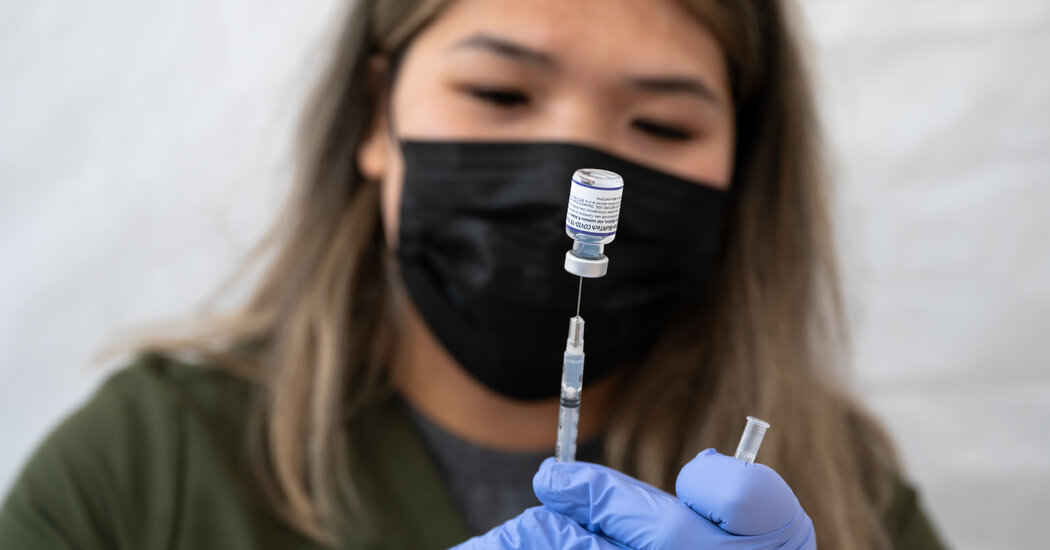
The Biden administration will spend billions of dollars on a new plan to combat the pandemic, investing in antiviral pills, rapid tests and manufacturing.WASHINGTON — The Biden administration, under pressure to increase the supply of coronavirus vaccines to poor nations, plans to spend billions of dollars to expand manufacturing capacity, with the goal of producing at least one billion additional doses a year beginning in the second half of 2022.The investment is part of a new plan, announced Wednesday by White House officials, for the government to partner with industry to address immediate vaccine needs in the United States and overseas and to prepare for future pandemics. It comes on top of recent decisions to buy enough of Pfizer’s new Covid-19 pill for about 10 million courses of treatment, and to spend $3 billion on rapid over-the-counter tests, which are needed to detect the virus early enough for the Pfizer drug to work.Taken together, the moves amount to an expansive new effort to control the pandemic at a time when Americans are desperate for normalcy and caseloads are creeping up with winter’s approach.In another development that the White House hopes will reassure the public, the Food and Drug Administration is likely to approve requests from Pfizer-BioNTech and Moderna to offer booster shots to everyone 18 and older.President Biden has pledged to fight the coronavirus pandemic by making the United States the “arsenal of vaccines” for the world. But national self-interest is also at work; as long as vaccination rates remain low in other parts of the world, allowing the virus to spread, dangerous new variants could arise and plunge the United States into crisis once again.The global need is great. Testifying on Capitol Hill on Wednesday, Loyce Pace, the director of global affairs at the Department of Health and Human Services, said that more than half of the world’s five million coronavirus deaths had occurred in low- and middle-income countries, and that vaccination rates in some of them “are in the single digits.”Less than 10 percent of Africa’s population is vaccinated, she said, compared with more than 50 percent in North America and Europe. In many poor nations, including those struggling to combat other diseases like tuberculosis, malaria and H.I.V., even health care workers on the front lines of the pandemic remain unvaccinated.Expanding vaccine manufacturing through public-private alliances is not without risks. Until recently, the federal government had a manufacturing partnership with Emergent BioSolutions, whose Baltimore facility ruined millions of doses of Johnson & Johnson’s coronavirus vaccine earlier this year. The Biden administration severed its relationship with Emergent earlier this month.Administration officials insist this plan will be different. In interviews, Jeff Zients, President Biden’s coronavirus response coordinator, and Dr. David Kessler, who oversees vaccine distribution as the chief science officer for the Covid-19 response, said the intent is to invest in companies with experience making mRNA vaccines, enabling those companies to expand production to meet the government’s needs.That could include building new plants or production lines, and it might require licensing technology from other vaccine manufacturers.“This is about assuring expanded capacity against Covid variants and also preparing for the next pandemic,” Dr. Kessler said in an interview. “The goal, in the case of a future pandemic, a future virus, is to have vaccine capability within six to nine months of identification of that pandemic pathogen, and to have enough vaccines for all Americans.”Dr. Kessler and Mr. Zients conceded the plan is not fully fleshed out; the Biomedical Advanced Research and Development Agency on Wednesday issued a request for ideas from industry. The price tag is unknown; Dr. Kessler estimated it at several billion, with the money coming from the American Rescue Plan, the $1.9 trillion coronavirus relief package Mr. Biden signed into law earlier this year.Mr. Zients said the government was looking to move quickly, and wanted responses from industry within 30 days. The potential partners appear to be limited; only two major vaccine makers — Pfizer and Moderna — are currently using mRNA technology, although those companies employ contract manufacturers to do the work for them.In a statement on Wednesday, Pfizer commended the administration and pledged to “come to the table with how we can best contribute” to the fight against Covid-19. Officials at Moderna did not respond to an email message seeking comment. But Steve Brozak, an investment banker whose company, WBB Securities, specializes in biotechnology, said engaging industry could prove difficult.“Without a specific commitment of money, without a specific time plan, companies may not be interested,” Mr. Brozak said. If the administration wants to ramp up vaccine manufacturing, he added, it will also have to increase production of resins and other vaccine components.Reaction to the plan was mixed, especially among activists who have been pushing the Biden administration to lean on Pfizer and Moderna to share their technology with manufacturers overseas. (The National Institutes of Health is in a patent dispute with Moderna, which received billions in taxpayer funding, over who deserves credit for inventing the central component of the company’s coronavirus vaccine.)“The idea of making a business plan with two companies rather than a public health plan is disturbing to us,” said Dr. Joia Mukherjee, chief medical officer of Partners In Health, a global public health nonprofit. “We believe that Biden has the power, particularly with Moderna because so much of it was taxpayer funded, to demand the sharing of patents and know-how.”Some activists, furious with what they regard as the administration’s slow progress, turned up at the home of Ron Klain, Mr. Biden’s chief of staff, in September and deposited a fake mountain of bones on the sidewalk in protest. Another group protested outside Mr. Zients’s home on Wednesday morning.Addressing criticism that the Biden plan is not focused on building capacity overseas, Dr. Kessler said that domestic manufacturing “is important not only for the U.S. supply, but for global supply.”At the same time, partnering with big drug makers offers no guarantees. Mr. Biden announced earlier this year that he had brokered a deal with Merck & Co., the pharmaceutical giant, to manufacture Johnson & Johnson’s vaccine, including for other countries. Officials hailed the partnership as historic, saying it fit in with the president’s vision of a manufacturing campaign like the one Franklin D. Roosevelt spearheaded to produce supplies for World War II.But the Merck deal has not panned out as expected. Administration officials initially hoped Merck would begin producing the vaccine’s key ingredient by the end of this year, but that will not happen until April, Dr. Kessler said.Congress put a total of $16.05 billion in the American Rescue Plan this year, in two separate tranches, that could be used to procure and manufacture treatments, vaccines and other tools for ending the pandemic.But in an analysis released this summer, the AIDS advocacy group Prep4All found that all told, the administration had spent $145 million — just $12 million of it from the American Rescue Plan — to expand vaccine manufacturing. Most went to retrofitting Merck’s production lines.James Krellenstein, a founder of Prep4All and the author of the study, pointed to the experience with Emergent and Merck to suggest that simply paying industry to build new production lines will not work. His group has called for the government to build its own vaccine manufacturing facility, and to hire a contract manufacturer to run it.“The Biden administration is at two forks in the road right now,” Mr. Krellenstein said. “We have to commend them in the first place for committing to address seriously the manufacturing and supply issues. But we do need the Biden administration to learn a little bit from history.”The advocacy group Public Citizen has called for a $25 billion government investment to make eight billion doses of mRNA in one year, enough to meet global need. Peter Maybarduk, Public Citizen’s access to medicines director, criticized the administration for not doing more to press Moderna and Pfizer to share their technology with manufacturers in developing nations.“Sharing doses is charity, and desperately needed,” he said. “But sharing knowledge is justice.”

Read more →

Second U.S. Case of Monkeypox This Year Is Discovered in Maryland

Health officials said there was little risk that the virus, which causes a rare but potentially serious illness, would spread. Both cases this year were identified in travelers who had returned from Nigeria.A case of monkeypox, a rare but potentially serious viral illness, was identified in a Maryland resident who had recently returned from Nigeria, making it the second case in the United States this year, health officials said. They said the risk that the virus would spread was low.The person was in isolation with mild symptoms but was not hospitalized, the Maryland Department of Health said in a statement on Tuesday. The agency did not identify the traveler.This is the second confirmed case of monkeypox in the United States within the past few months. The first infection was discovered in July in a Texas resident who had also returned from Nigeria, the Centers for Disease Control and Prevention said at the time.In a statement on Wednesday, the C.D.C. said it was working with an unidentified airline and with health officials to reach anyone who may have been in contact with the Maryland traveler. However, the agency said, fellow passengers had a low chance of having contracted the virus through respiratory droplets because they were required to wear masks to prevent the spread of the coronavirus.“No special precautions are recommended at this time for the general public,” the Maryland health authorities said in the statement, adding that they had identified and are following up with people who may have been in contact with the traveler.Monkeypox — so named because it was first identified in laboratory monkeys — occurs mostly in Central and Western Africa, although it caused an outbreak in the United States in 2003 after it spread from imported African rodents to pet prairie dogs, the C.D.C. said.During that outbreak, 47 confirmed and probable cases of monkeypox were identified in six states, the C.D.C. said. Those who were infected reported symptoms such as fever, headaches, muscle aches and rash. No deaths were reported.Monkeypox is in the same family of viruses as smallpox, but it causes milder symptoms, according to the C.D.C. The illness typically begins with flulike symptoms and swelling of the lymph nodes and develops into a widespread rash on the face and body. Most infections last two to four weeks.In this case, laboratory testing at the C.D.C. showed that the patient had been infected with a strain of monkeypox most commonly seen in parts of West Africa, including Nigeria. Infections with that strain are fatal in about 1 in 100 people, the C.D.C. said, although rates may be higher in people with weakened immune systems.The C.D.C. said it had been supporting Nigeria’s response to monkeypox since 2017, when the disease re-emerged in that country after a period of more than 40 years with no reported cases. Since that time, 218 cases have been identified in Nigeria and eight have been reported in international travelers from the country, including the ones in Texas and Maryland.There are no specific treatments available for monkeypox infections, according to the C.D.C., although one vaccine has been licensed in the United States to prevent monkeypox and smallpox.Monkeypox is commonly found in animals such as rats, mice and rabbits, but it can infect people who are bitten or scratched by an animal; who prepare wild game; or who come in contact with an infected animal or, possibly, animal products, the C.D.C. said.The virus can spread between people through bodily fluids, sores or items contaminated with bodily fluids, but it is generally transmitted through large respiratory droplets that do not travel more than a few feet. As such, prolonged face-to-face contact is generally necessary for the virus to spread, the C.D.C. said.

Read more →

Parental depression is associated with worse childhood mental health, educational attainment, study finds

Children who live with a parent who has depression are more likely to develop depression and to not achieve educational milestones, according to a new study published this week in the open-access journal PLOS ONE by Sinead Brophy of Swansea University, UK, and colleagues.
Maternal depression is a known risk factor for depression in children and is associated with a range of adverse child health and educational outcomes including poorer academic attainment. To date, however, risk factors associated with paternal depression have been less well examined. Understanding the effects of timing of both maternal and paternal depression of offspring outcomes has implications for prevention and early intervention.
In the new study, Brophy and colleagues used data from the Secure Anonymised Information Linkage (SAIL) databank assembled as part of the Born in Wales Study funded by the Welsh Government. Information on children born in Wales from 1987 to 2018, as well as their mothers and fathers — or stable, adult male figure in the same household — was used in the study. Both parental and child diagnosis of depression was attained from general practitioner records in the SAIL databank.
Overall, 34.5% of mothers and 18% of fathers/stable men had a diagnosis of depression. In offspring, 4.34% of all children, 2.85% of boys, and 5.89% of girls were diagnosed with depression. Children were more likely to develop depression if their mother had depression before their birth (HR 1.32, 95% CI 1.21-1.43), after their birth (HR 2.00, 95% CI 1.96-2.05), or both before and after their birth (HR 2.25, 95% CI 2.15-2.35). The risk of depression was also increased when their father/stable man had depression before their birth (HR 1.44, 95% CI 1.18-1.74), after their birth (HR 1.66, 95% CI 1.58-1.74), or both before and after their birth (HR 1.47, 95% CI 1.25-1.73). In addition, the odds of achieving milestones at the end of primary school were significantly decreased if either parent had depression — for instance, the odds of passing Key Stage 3 (KS3) tests was 0.57 (95% CI 0.55-0.60) if a child’s mother had depression both before and after their birth and 0.56 (0.49-0.63) if their father/stable man had depression both before and after their birth. Other risk factors for children’s depression identified in the study included being female, their mother taking antidepressants and having no stable man in the household. The authors conclude that the impact of paternal depression requires more attention than has previously been given, and suggest that holistic approaches to whole family wellbeing and depression will help ensure positive outcomes for children.
The authors add: “Children who live with a parent (mum or dad) who has depression are more likely to also develop depression and not achieve as well in school, compared to children who live with a parent with treated depression. Working with families and treating parental depression (in dads as well as mums) is likely to have long-term benefits for children’s mental health and educational attainment. This has never been more important than after lockdown and COVID, as depression is contagious too.”
Story Source:
Materials provided by PLOS. Note: Content may be edited for style and length.

Read more →

After comparing 17.5 million strategies, researchers validate CDC's vaccine rollout recommendation

A year ago, amid surging COVID-19 cases and a limited supply of newly developed vaccines, the U.S. Centers for Disease Control and Prevention faced a big question: Who should be at the front of the line to get a vaccine? Students living in college dorms or people living with chronic kidney disease? Grandmas or teachers? Along with goals of reducing overall infections and deaths, the CDC aimed to prevent hospitals from getting overwhelmed and ensure equitable access to COVID-19 vaccines.
Iowa State University researchers were part of a team evaluating 17.5 million possible strategies the CDC could have recommended last winter to state, territorial, tribal and local governments for COVID-19 vaccine rollouts. In a newly published paper, the researchers generally validate the CDC’s ultimate recommendation, while the mathematical model the team developed also highlights some minor improvements. The work could help inform the design of future vaccination strategies in the U.S. and abroad.
The CDC recommended four staggered priority groups for COVID-19 vaccines: Phase 1a included health care personnel and residents of long-term care facilities. Phase 1b included non-health care frontline essential workers (e.g. police officers, firefighters, child care workers) and people 75 and older. Phase 1c included other essential workers (e.g. bus drivers, bank tellers), 16-64 year-olds with increased risk of severe COVID-19 disease and 65-74 year-olds. Phase 2 included 16-64 year-olds without high risk conditions or comorbidities.”The CDC strategy did really well when we compared it to all the other possible strategies, especially in preventing deaths across age groups,” said Claus Kadelka, an assistant professor of mathematics and the corresponding author of the paper published in PLOS ONE. “Our research shows the CDC’s higher prioritization of frontline essential workers, people in older age groups and people with underlying health factors was a highly effective strategy for curbing COVID-19 mortality, while keeping overall case numbers at bay.”
To evaluate the CDC’s recommendations, Kadelka and the research team built a mathematical model that incorporated the agency’s four staggered phases for a vaccine rollout and 17 sub-populations based on factors like age, living conditions and occupation. Individuals fell into one of 20 categories, such as “susceptible to the virus,” “fully vaccinated,” “currently infected,” “infected but without COVID-19 symptoms” and “recovered.” The researchers also incorporated several important characteristics of the COVID-19 pandemic, such as vaccine hesitancy, social distancing levels based on current caseloads in the U.S. and different infection rates for different virus variants.
“We ran the model 17.5 million times on the ISU supercomputer, and for each run, we recorded and finally compared several outcome metrics: predicted number of deaths, predicted number of cases, and so on,” Kadelka said.

Read more →

Brief 5:2 diet advice is as effective as traditional GP advice, but people like it better, according to new study

A clinical trial has found people prefer receiving information on the 5:2 diet than standard GP weight management advice despite both interventions achieving similar modest weight loss results.
The trial, funded by the Medical Research Council (MRC) and led by Queen Mary University of London, is the first randomised evaluation of the 5:2 diet, a popular type of intermittent fasting regime. Researchers studied the long-term effects of providing 5:2 diet instructions compared to traditional weight loss advice in 300 UK adults with obesity over a one-year period.
The findings show that long-term weight loss was similar for those who received 5:2 diet or standard weight management advice with 18 per cent and 15 per cent of participants respectively losing at least five per cent of their body weight at one year. However, when asked to rate each intervention, participants in the 5:2 diet group were more likely to recommend the intervention to others or be willing to continue with their diet.
Previous evidence suggests that peer support could be important for encouraging dieters to adhere to and realise the effects of the 5:2 diet. To test this, the researchers studied the impact of a weekly support group in addition to the simple 5:2 diet advice. They found that whilst initially face-to-face support generated better early effects and improved adherence to the 5:2 diet, these effects weakened over time.
Together, the findings suggest that providing brief advice on the 5:2 diet could extend the options clinicians can offer to patients.
Dr Katie Myers Smith, Chartered Health Psychologist and Senior Research Fellow at Queen Mary, said:”Here we’ve been able to provide the first results on the effectiveness of simple 5:2 diet advice in a real-life setting. We found that although the 5:2 diet wasn’t superior to traditional approaches in terms of weight loss, users preferred this approach as it was simpler and more attractive. Based on these findings, GPs may consider recommending the 5:2 diet as part of their standard weight management advice.”
The 5:2 diet is popular intermittent fasting weight loss intervention whereby dieters restrict their caloric intake on two non-consecutive days a week and then apply sensible eating on the remaining days. It first became popular in the UK through a BBC Horizon documentary and follow-up bestselling book.
In the study, traditional weight management advice on diet and exercise consisted of a 20-minute session where patients where an advisor explained the programme and went over key tips provided in supporting materials including the British Heart Foundation guides ‘Facts Not Fads’ and ‘Get Active, Stay Active’, the NHS ‘Change 4 Life’ series of booklets and a leaflet listing local resources for exercise. Participants in the 5:2 group instead received a leaflet on restricting their caloric intake on two non-consecutive days a week, with examples of meals containing the required amount of calories, and pointers to additional online support as part of an individual 20-minute session.
Story Source:
Materials provided by Queen Mary University of London. Note: Content may be edited for style and length.

Read more →

Food scientists create zinc index for human body

Zinc deficiency is prevalent around the world, and among children, these mineral shortfalls can lead to stunting, embryonic malformations and neurobehavioral abnormalities. Over several decades, science has improved understanding of zinc metabolism, but an accurate, comprehensive assessment tool for its physiological status within a human body has remained elusive. Until now.
To accurately calculate from biomarkers the physiological status of a subject, Cornell food scientists have developed a new evaluation method: the Zinc Status Index.
The human body needs zinc to boost immunity, regulate metabolism and to help heal wounds, but more than 1 billion people — or about 17% of the global population — suffer from dietary zinc deficiency. The World Health Organization asked the world’s scientists to create such a robust test to determine — accurately — if someone is zinc deficient.
“With global food insecurity and increasing domestic obesity rates, malnutrition is hitting vulnerable and low-income populations. These issues are a major concern, as they can lead to dietary zinc deficiency,” said Elad Tako, associate professor of food science in the College of Agriculture and Life Sciences, who developed the index with first author Jacquelyn Cheng ’15, doctoral student in food science, and Haim Bar M.S. ’10, Ph.D. ’12, associate professor, University of Connecticut. “Because of the complexity and sophistication of zinc metabolism, it is very difficult to accurately measure zinc status.”
The paper, “Zinc Status Index (ZSI) for Quantification of Zinc Physiological Status,” is reported in the Sept. 27 journal Nutrients.
“This research presents a significant advancement in the field of zinc nutrition and the associated physiological status,” Cheng said. “Using the Zinc Status Index will provide a better understanding of the challenges that are linked to poor zinc nutrition, and improve the ability to quantify the impact of dietary interventions aimed at alleviating zinc deficiency.”
The Zinc Status Index incorporates a statistical model and hinges on three pillars: The ratio of linolenic acid, a fatty acid, to dihomo-gamma-linolenic acid ratio, another fatty acid — known as the LA:DGLA ratio, a Cornell-developed biomarker reported in 2014 by the Tako lab team (Spenser Reed ’14, first author) — indicating the subject’s physiological status; Gene expression of zinc dependent proteins, that are affected by zinc status; and The gut microbiome as an additional tool to reflect zinc physiological status.Further, Tako’s group showed that mild zinc deficiency could alter gene expression in the body, and that the intestine’s microbial environment is crucial for zinc metabolism. A lack of zinc adversely affects the composition of intestinal microbial populations.
It is possible to detect severe zinc deficiency, Tako said. “However, it is difficult to differentiate between mild and moderate cases of zinc deficiency,” he said. “Therefore, relying on only one biomarker may sometimes be an issue, which has led us to think how we could develop an accurate zinc status index, based on a panel of predictive biomarkers.”
Tako is concerned about undernourishment around the world and over nourishment in the United States. Undernourishment can bring about zinc deficiency globally, particularly among vulnerable populations, including children. “Malnutrition is something that is becoming more of an issue in the U.S.,” he said, “particularly the double burden of malnutrition that basically connects obesity and mineral deficiencies, which means zinc and iron.”
Story Source:
Materials provided by Cornell University. Original written by Blaine Friedlander. Note: Content may be edited for style and length.

Read more →