Breakthrough tool to show how much exoskeletons reduce back injury risk

A study led by researchers from Vanderbilt University’s Center for Rehabilitation Engineering and Assistive Technology reveals a breakthrough tool to assess the effect of exoskeletons on injury risk.
The tool, called Exo-LiFFT, is an interactive calculator that will help companies looking for ways to overcome workforces struggling with musculoskeletal injuries, missed work, and accelerated retirement amongst skilled laborers.
The study’s lead author, Karl Zelik, associate professor of mechanical engineering, said this is a major leap forward to help bring relief to overburdened workers.
The study was published online this month in the Journal of Applied Ergonomics, and projected that exoskeletons have the potential to reduce workplace back injuries in material handling by 20% to 60%. This is a critical advancement because work-related injuries to overburdened workers are a major factor contributing to the current dynamics in the labor market.
“If we can identify the right places to deploy exoskeletons, then they can reduce injury risks as well as bodily discomfort, which impacts workers on the job and at home. Exoskeletons may also help improve worker recruitment and retention, which have been costly pain points for employers amidst the labor shortage,” said Zelik, who also is the Chief Scientific Officer at Nashville-based workforce wearable company HeroWear.
Zelik and Ph.D. student Cameron Nurse represented Vanderbilt on the six-person research team, which also featured industrial engineers from Auburn University and an ergonomist from HeroWear. Auburn previously developed foundational ergonomic risk assessment tools, while Vanderbilt and HeroWear have been deeply involved in exoskeleton research, design and translation, as well as the development of industry exoskeleton standards with members of the ASTM International standards committee, which includes companies like Boeing.
“We’ve been exploring exoskeletons at Boeing for the last few years, with encouraging results to date,” said Christopher Reid, Associate Technical Fellow of Human Factors and Ergonomics at Boeing. “It’s incredibly important and encouraging to see academia and industry coming together to develop practical risk assessment tools that can help identify and leverage the benefits of emerging safety technologies like exoskeletons.”
Overexertion is a primary source of lower back pain and injury, which accounts for 38.5% of work-related musculoskeletal disorders, according to the U.S. Bureau of Labor Statistics. Exoskeletons are now being used daily in factories, warehouses, construction sites, and other workplaces around the world to relieve physical strain on overburdened workers.
“At Toyota, we have relied heavily on new ergonomic assessment tools to support our teams in identifying processes on our manufacturing lines that would benefit from shoulder exoskeletons being deployed as personal protective equipment,” said Aaron Sparks, safety project engineer at Toyota North America. “As we begin to investigate and deploy back exoskeletons, it’s incredibly exciting, and a major relief, to see similar tools being developed to support with the identification and deployment.”
Exo-LiFFT empowers safety professionals and researchers to quickly and easily assess the effect of exoskeletons on back injury risk without the need for costly and time-consuming experiments. This reduces biomechanical assessment time for back exoskeletons from months down to minutes, and provides an evidence-based way to estimate injury risk reduction.
“We have over one hundred facilities across the country where workers are lifting and moving products,” said David Brodie, ergonomist lead at Cargill. “New assessment tools like Exo-LiFFT will help us identify where the best opportunities are in our operations to support workers.”
The Exo-LiFFT tool can be used at lab.vanderbilt.edu/zelik/resources/exo-lifft/.
Story Source:
Materials provided by Vanderbilt University. Note: Content may be edited for style and length.
Read more →

Cell types of the iris in mice

Johns Hopkins Medicine researchers report they have genetically mapped the cell types that make up the mouse iris — the thin disc of pigmented tissue that, in humans, gives eyes their distinct colors. The research reveals four new cell types in the iris, maps the genetic changes that occur when the iris dilates, and provides information about how the iris forms during early development.
The report, say the researchers, may help scientists connect genetic similarities between the mouse and human eye, and offer clues to develop new diagnostic tests and treatments for diseases that affect the iris — such as anterior uveitis, an inflammatory condition — and congenital diseases in which all or part of the iris is missing.
“Eyes are a defining characteristic of the human face, and we tend to focus on the eyes when speaking to one another, ,” says Jeremy Nathans, M.D., Ph.D., professor of molecular biology and genetics at the Johns Hopkins University School of Medicine. “The iris has a prominent place, making it an easy access point to diagnose or treat medical conditions, but we need to understand it better.”
A summary of the research was published Nov. 16 in eLife.
A genetic sequencing technology, called single cell RNA sequencing, allowed the researchers to begin deciphering the iris at a cellular level by analyzing which genes were turned on in a cell at a given time. This enabled the researchers to chart out closely related cell types, determined by the activity of their genes.
The technique revealed new distinctions, including two types of iris structural cells called stroma and two types of smooth muscle cells that allow the iris to constrict in response to light.

Read more →

Correcting inherited gene alterations speeds up

Researchers in the University of Helsinki and University Hospital Helsinki have developed a method to precisely and rapidly correct genetic alterations in the cultured patient cells.
The method produces genetically corrected autologous pluripotent stem cells from a 2-3 mm skin biopsy from patients with different genetic diseases. The corrected stem cells are essential in the research and for the development of new therapies for the diseases in question.
The scientists based the new method on previous groundbreaking research in the fields of stem cells and gene editing, including two Nobel-prize awarded techniques. The first technique is the invention of induced pluripotent stem cells, iPSCs from differentiated cells, which won the Nobel in 2012. The other technique is the CRISPR-Cas9 “gene scissors” innovation, which got the prize in 2020. The new method combines these techniques to correct gene alterations that cause inherited diseases and at the same time creates fully functional new stem cells.
New therapeutic possibilities to inherited diseases
The long-term goal of the researchers is to produce autologous cells with therapeutic properties. The use of the patient’s own corrected cells could help in avoiding the immunological challenges hampering the organ and tissue transplantation from a donor. The new method was developed by an Argentinian PhD student Sami Jalil in the Biomedicum Helsinki Stem Cell Center and it is published in the recent Stem Cell Reports, the journal of the International Society of Stem Cell Research.
There are more than 6000 known inherited diseases, which are caused by different gene alterations. Some of them are currently treated with a cell or organ transplant from a healthy donor, if available.
“Our new system is much faster and more precise than the older methods in correcting the DNA errors, and the speed makes it easier and diminishes also the risk of unwanted changes,” says adjunct professor Kirmo Wartiovaara, who has supervised the work.
“In perfect conditions, we have reached up to 100 % efficacy, although one has to remember that the correction of cultured cells is still far away from proven therapeutic applications. But it is a very positive start,” Wartiovaara adds.
Story Source:
Materials provided by University of Helsinki. Note: Content may be edited for style and length.

Read more →

Courting success: Why the 'head' outsmarts the body in basketball

Two decades after his retirement, US basketballer Michael Jordan still holds the record for the highest paid athlete of all time, netting a cool $2 billion, demonstrating his global status in sport.
But what was is it about the star player that put him head and shoulders above his peers?
A new study led by University of South Australia PhD student Michael Rogers reveals why coaches believe ‘game intelligence’, work ethic and competitiveness — traits that Jordan possesses in spades — are far more important than physical fitness in determining success on the basketball court.
Rogers surveyed 90 basketball coaches from 23 countries to find out what factors — other than peak fitness — are used to recruit players for the big league.
“We found 35 performance indicators that coaches considered important and at the top of the list were psychological attributes,” Rogers says.
“Coaches look for players who are competitive, have a strong work ethic, are excellent communicators, good teammates and can ‘read’ the game. Being super fit is a given. It is the other traits that make a difference to the scoreboard.

Read more →

Potential new treatment for Alzheimer’s disease would be relatively cheap

Researchers at the RIKEN Center for Brain Science (CBS) in Japan have discovered that the protein α-endosulfine (ENSA) is involved in the development of Alzheimer’s disease. Studies in mice showed that eliminating this protein entirely or using drugs to block its function reduced physical changes in the brain associated with the disease and improved memory. Drug therapy that aims to block ENSA activity could be a more effective treatment than what is currently available, as well as being cheaper. This study was published in the scientific journal Molecular Psychiatry.
The hallmark of Alzheimer’s disease in the brain is the accumulation of amyloid β peptide (Aβ). For years, researchers have been trying to determine how and why this happens. Takaomi Saido and his team at RIKEN CBS have developed a mouse model of the disease that shows both Aβ accumulation and memory deficits similar to what is seen in humans. Using this model mouse, they have already discovered a series of events in the brain that lead to the formation of Aβ plaques. Key among them is reduced levels of the enzyme neprilysin, which itself is caused by reduced levels of the hormone somatostatin. Levels of both neprilysin and somatostatin go down as we age, which can explain why Alzheimer’s disease usually strikes older people.
The new study focused on treating Alzheimer’s disease in mice by figuring out how somatostatin controls neprilysin levels in the brain. According to first author Naoto Watamura, “the first step in this process was actually the most difficult because we had to develop an in vitro system that could screen for neprilsyin regulators in conditioned medium generated by hippocampal neurons.” Once they accomplished this, they were able to identify ENSA as the regulator. Testing showed that ENSA reduced neprilysin activity and that it rose to abnormally high levels in the brains of mice that lacked somatostatin. This means that somatostatin normally keeps ENSA in check, which in turn keeps neprilsyin levels high, allowing Aβ to be destroyed before it accumulates.
Next the team focused on ENSA in living animals. Using CRISPR technology, they created ENSA knockout mice and then bred them with the Alzheimer’s disease model mice. Aβ accumulation in these new mice was much lower than in the original model mice, indicating that abnormally high levels of ENSA could be an as yet unidentified symptom or biomarker of Alzheimer’s disease. This was confirmed when the researchers detected high level of ENSA in the model mice and in the brains of people with Alzheimer’s disease.
What exactly is ENSA doing in the brain? Tests showed that ENSA blocks a potassium channel in the hippocampus, a part of the brain needed for making and recalling memories. “Because we got the same results from blocking the KATP channel as we did from the ENSA knockout mice,” says Watamura, “we reasoned that helping the channel stay open would combat the excess ENSA that we observed in Alzheimer’s disease.” To test this theory, the researchers fed the model mice with diazoxide — a drug that activates the KATP channel — and tested their memory. They found that while the untreated Alzheimer’s disease model mice exhibited their characteristically poor memory, the treated model mice performed just as well as normal mice. A look at the brains of the treated mice showed that they lacked the hallmark Aβ plaques.
“Our findings point directly to a potential way of preventing and treating Alzheimer’s disease,” says Watamura. “On top of that, compared with Aβ-targeting immunotherapy, such as the drug aducanumab, which was recently approved by the FDA, synthetic agonists for the KATP channel are less expensive and would be more acceptable to aging societies around the world.”
Story Source:
Materials provided by RIKEN. Note: Content may be edited for style and length.

Read more →

Booster Rollout for Nursing Homes Is Sluggish

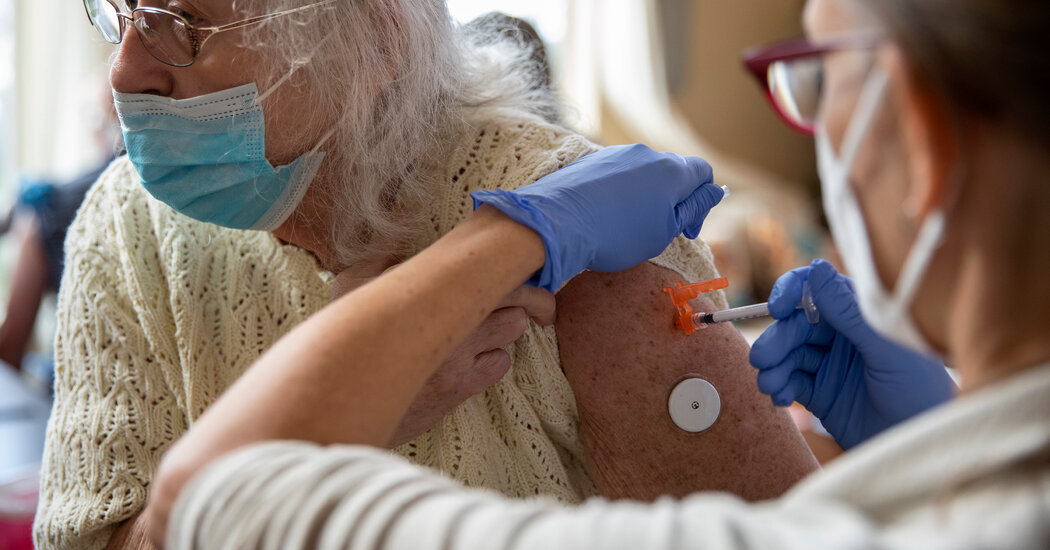
Thousands of new cases have been reported among vulnerable elderly residents in the last several months, as the virulent Delta variant fuels outbreaks.A Connecticut nursing home had planned to roll out Covid booster shots to residents at the beginning of this month.But before it could start the program, the coronavirus swept through the home, the Geer Nursing and Rehabilitation Center in North Canaan, infecting 89 people, including 67 residents. Nearly all were fully vaccinated.Eight of the residents died from Covid, according to the home, which described all as having “serious underlying health issues.”The severity of the outbreak helped spur Connecticut officials to announce recently that the state would set up booster clinics at all of its nursing homes, to cover those facilities that had yet to administer additional doses.Several states are experiencing new surges in Covid cases, especially in the Midwest and the Northeast. And fresh outbreaks have been reported this month at nursing homes in Vermont, Virginia and elsewhere despite a monthslong vaccination rate nationwide of about 86 percent among residents in skilled nursing facilities.Booster programs have taken on more urgency given that nearly 4,000 new Covid cases are reported every week in nursing homes, according to federal data, and experts say many of the case clusters are occurring in homes that have yet to administer the extra doses.“When we compare rates of Covid-19 disease between those who are vaccinated with two doses and those who received a booster dose, the rate of disease is markedly lower for those who received their booster, demonstrating our booster shots are working,” said Dr. Rochelle Walensky, the director of the Centers for Disease Control and Prevention, at a White House briefing this month.And in some places, outbreaks among residents may still be occurring because vaccination rates among nursing home staff members continue to lag behind national averages.Unlike last winter’s concerted federal push to vaccinate residents and staff in nursing homes, the booster rollout has been sluggish and piecemeal, health experts said. Public information is sparse: About 42 percent of Americans over 65 have received a booster shot, according to federal reports, but there is no data available yet on U.S. sites to track nursing home booster programs.Medics transported a man with possible Covid symptoms from a senior living center in Houston to a hospital in August.John Moore/Getty ImagesThe staggering Covid death toll at nursing homes in 2020, steep declines in cases after the successful vaccine campaign and then the steady rise again in late summer and this fall should have made boosters for older Americans a top priority, some experts say.“What’s been surprising is the lack of data and attention on nursing homes this time around,” said Dr. Ashish Jha, a physician and dean of the Brown University School of Public Health. The government should have authorized additional doses as early as July, he noted, especially since nursing home residents were among the first to receive the vaccines 10 or more months ago.“The data was clear at that point,” Dr. Jha said. “We were seeing waning immunity, particularly in the elderly.”In August, third doses of some vaccines were authorized for people with weakened immune systems. But by the time booster shots were approved for the Pfizer-BioNTech vaccine in late September, followed by approvals for the Moderna and Johnson & Johnson vaccines the next month, many nursing home residents had already lost some of their initial protection against infection, experts say. And they were more vulnerable to serious disease because of their age and declining health.“Six months for them was a lot earlier than six months for the general population,” said David Grabowski, a health policy professor at Harvard who studies nursing homes. Residents of assisted living facilities are particularly at risk because there does not appear to be a coherent strategy, he said. New outbreaks complicate matters by putting booster programs on hold until the cases subside.The effort to vaccinate residents last winter was delegated to two large drugstore chains, CVS Health and Walgreens. When the federal contracts ended earlier this year, nursing homes reverted to relying on the pharmacies typically used to help them vaccinate residents against the flu.The Biden administration said it was having success in its efforts to ensure residents receive the additional doses. “We’re seeing really, really strong progress in states across the country,” said Sonya Bernstein, a senior White House adviser on Covid. She singled out programs in West Virginia, Ohio and North Carolina as robust.Other areas have also managed to provide significant booster coverage. For example, Los Angeles County announced in mid-November that nearly all the residents in skilled nursing facilities had received booster shots.Ms. Bernstein said the federal government was also working with facilities that can’t find a pharmacy. “Any long-term care facility that needs help is being matched with one of our partners,” Ms. Bernstein said.Half of those 65 and older who became eligible for booster shots of the Pfizer vaccine in late September have received them, public health officials said in a recent announcement. That’s compared with the nearly three months it took to deliver half of the first doses to this group.The Centers for Medicare and Medicaid Services, which reports vaccination rates nationwide and for individual facilities on its website, said it planned to post data on boosters within the next two weeks and on its website allowing consumers to compare individual nursing homes “in the coming months.”“C.M.S. is working with nursing homes to increase Covid-19 booster uptake,” the agency said.Pharmacies helping nursing homes with these efforts say they have not experienced any particular problems. “From our perspective, we have not heard of any delays or concerns,” said Chad Worz, the chief executive of the American Society of Consultant Pharmacists. “The vaccine is in ample supply.”Booster shots were given to staff members at the Hebrew Home at Riverdale in the Bronx in September.Seth Wenig/Associated PressCVS Health, whose Omnicare unit provides services to nursing homes, said it could not provide any data on the number of booster shots it had delivered to nursing homes. “We’ve seen strong interest from our long-term care customers and continue to meet that demand through several distribution channels,” said T.J. Crawford, a spokesman.But other pandemic-related problems continue to plague nursing homes, some of which still had large numbers of unvaccinated workers, although the average staff vaccination rate has now reached 74 percent. Looming close is the federal mandate to immunize staff, although numerous states are suing to block the rule.The Coronavirus Pandemic: Key Things to KnowCard 1 of 4The Omicron variant.

Read more →

Early interventions could help counteract muscle loss

Weakening muscles are a natural part of the ageing process, but for some people with a condition called sarcopenia the decline is abnormally fast. A new study from Karolinska Institutet in Sweden suggests that the early stages of sarcopenia could be counteracted with timely interventions designed to preserve physical and cognitive function and manage chronic conditions. The results are published in the Journal of Cachexia, Sarcopenia and Muscle.
As we age, we start to lose muscle mass and function. When this decline is more extensive or rapid than expected, it is categorized as sarcopenia, a common condition in the elderly that often lowers their quality of life and increases the risk of falls and bone fractures.
Researchers at Karolinska Institutet have now examined how different factors such as sex, age, educational level, living arrangement, lifestyle and chronic conditions affected the development of sarcopenia in people aged 60 or over across a 12-year period. The study included over 3,200 individuals from the SNAC-K (Swedish National Study on Ageing and Care in Kungsholmen) study.
At the start of the study, almost 10 percent of the participants had sarcopenia, 27 percent had probable sarcopenia and just over 63 percent no sarcopenia. Metrics such as grip strength, walking speed, speed of rising from a chair five times and calf circumference were used to evaluate muscle strength and mass and physical performance.
“Perhaps the most interesting result was that after five years, a roughly equal proportion (just over 10 percent) of the individuals with probable sarcopenia had either improved or deteriorated. This suggests that sarcopenia is a dynamic condition that is modifiable especially in the initial stages, which is a hopeful message,” says the study’s corresponding author Caterina Trevisan, affiliated researcher at the Department of Neurobiology, Care Sciences and Society, Karolinska Institutet.
Factors that could be associated with an increased chance of improvement and lower mortality were physical activity and higher results on cognitive tests, while a higher number of chronic conditions, male sex and older age had the opposite correlation. For individuals initially diagnosed with severe sarcopenia, the likelihood of improvement was low, and many of them died during the follow-up period (almost 71 percent).
“Our results support the need of early interventions to preserve physical and cognitive functions and manage chronic conditions in older individuals,” says the study’s last author Anna-Karin Welmer, senior lecturer at the Department of Neurobiology, Care Sciences and Society, Karolinska Institutet. “With these tools, we could probably counteract muscle deterioration and the impairment in quality of life this entails. We now need intervention studies to find ways to use these tools to counteract sarcopenia.”
The study was financed through the Ministry of Health and Social Affairs, the Swedish Research Council and Swedish Research Council for Health, Working Life and Welfare (Forte).
Story Source:
Materials provided by Karolinska Institutet. Note: Content may be edited for style and length.

Read more →

Researchers model circadian clock neurons in a day-active animal

It’s no secret that jet lag and night-shift work can wreak havoc on the way our body’s internal clock syncs up our daily wake-sleep cycle, known as circadian rhythm, but now researchers say they are a step closer to understanding how the brain creates behavioral rhythms optimized for diurnal, rather than nocturnal, life.
In a new study published Nov. 30 in the journal eLife, researchers have reported the first-ever recording and modeling of the electrical activity of circadian clock neurons in a diurnal species — the four-striped grass mouse, Rhabdomys pumilio.
Until now, brain recording studies of nocturnal species have primarily been used to form an understanding of the mammalian master circadian clock — located in the brain’s hypothalamic suprachiasmatic nucleus (SCN), where nearly 20,000 neurons synchronize with the light-dark cycle via electrical signals to orchestrate circadian rhythms in our physiology and behavior.
Researchers say the study is an advance toward more precisely exploring the connection between circadian rhythms and human health, including the relationship between daytime light exposure and circadian clock-related sleep disorders.
“Almost everything we know about the brain’s circadian clock comes from studies on night-active rodents such as rats and mice, which complicates translating this knowledge to human circadian rhythms,” said Casey Diekman, co-corresponding author of the study and mathematical biologist at New Jersey Institute of Technology. “This work is the first to describe the intricate electrical landscape of the SCN in a diurnal mammal, and it’s highlighted notable differences from nocturnal animals that may be important in adapting clock neuron function to the specific biological demands of a day-active species.”
“We found that the overall day/night pattern of SCN neuron activity in the diurnal rodent R. pumilio is similar to the pattern previously observed in night-active species,” said Beatriz Bano-Otalora, co-first author of the paper and a biologist working with the labs of Robert Lucas and Timothy Brown at the University of Manchester. “We’ve also found unique features in how R. pumilio’s SCN neurons behave that have never been observed before in nocturnal species.”
The team found that like nocturnal rodents, R. pumilio’s SCN neurons spontaneously fired at a higher rate during daytime hours than at night. This day/night rhythm in firing rate is the main signal the SCN sends to the rest of the brain to communicate the time of day.
“However, when we injected currents to inhibit these neurons, some cells exhibited a pronounced delay before resuming to fire after inhibition was released,” explained Mino Belle, co-corresponding author of the paper and a biologist at the University of Exeter. “This delay-to-fire response is not present in the SCN of nocturnal rodents and may affect how R. pumilio clock neurons respond to inputs they receive from other cells.”
To learn more, the team combined the voltage traces recorded from the rodent’s brain with a newly developed data assimilation algorithm. They built computational models simulating the complex interaction of voltage-gated ion channels that produce action potentials. The simulations showed that increased conductivity of a particular ion channel, the transient A- potassium channel, was responsible for the delay-to-fire response.
“The enhanced conductance of this potassium channel that our models pointed out could be advantageous for a diurnal species,” said the paper’s co-first author Matthew Moye, a postdoctoral fellow at Merck & Co. who began developing the team’s data assimilation algorithms as a Ph.D. student in NJIT’s Department of Mathematical Sciences. “Wakefulness results in inhibitory behavioral feedback signals to the SCN, which in nocturnal animals helps keep SCN firing rates low at night. In diurnal animals, this nighttime inhibitory feedback is not present, so enhanced A-type conductance may be needed to silence the SCN at night and preserve the overall day/night firing pattern.”
The team’s research follows separate findings from Diekman and colleagues at Northwestern University recently published Nov. 15 in Proceedings of the National Academy of Sciences, which revealed the role of the gene Tango10 as a critical link between the circadian clock and the production of daily wake-up signals at the cellular level. Diekman says the same data assimilation method developed to study R. pumilio neurons was used to construct mathematical models from voltage traces of the fruit fly Drosophila melanogaster, ultimately showing how Tango10 gene mutations contribute to disruptions in daily rhythms.
“Now that we have this powerful tool for extracting information from voltage traces, we hope to continue collaborating with electrophysiology labs and apply data assimilation to recordings not just from circadian clock neurons, but also from neurons that are associated with neurodegenerative diseases such as Alzheimer’s and Huntington’s,” Diekman said.
Story Source:
Materials provided by New Jersey Institute of Technology. Original written by Jesse Jenkins. Note: Content may be edited for style and length.

Read more →

Covid: Omicron variant in Netherlands earlier than thought

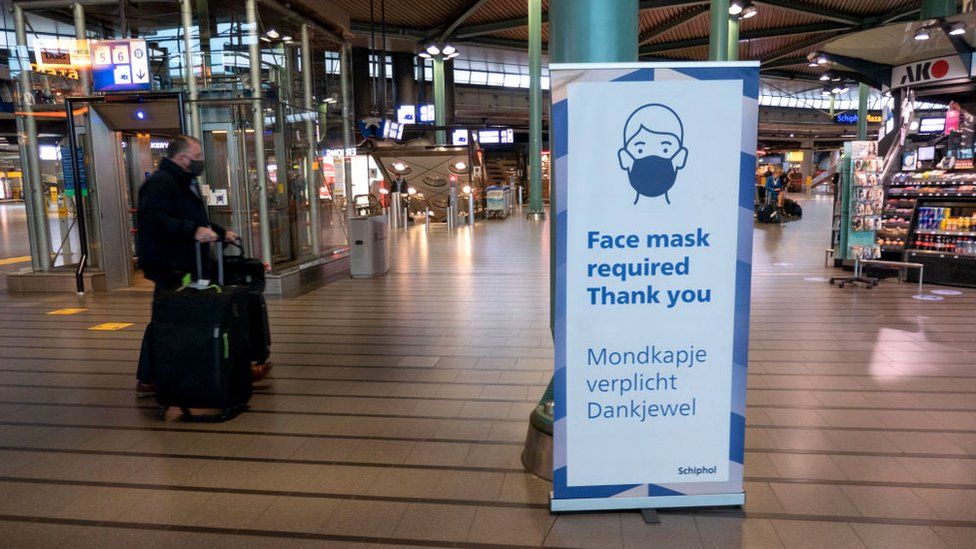
SharecloseShare pageCopy linkAbout sharingImage source, Getty ImagesThe new Covid-19 variant, Omicron, was present in the Netherlands earlier than previously thought, officials say.It was identified in two test samples taken in the country between 19 and 23 November, which is before the variant was first reported by South Africa.It is not clear whether those who took the tests had visited southern Africa.It was previously thought that two flights that arrived from South Africa on Sunday had brought the first cases of the variant to the Netherlands. Fourteen people on the flights to the capital, Amsterdam, tested positive for Omicron, among 61 passengers who were found to have coronavirus.Early evidence suggests Omicron has a higher re-infection risk. But scientists say it will take about three weeks before it is known how the heavily mutated variant impacts on the effectiveness of vaccines.How do you detect Omicron?Escaped couple fight Omicron quarantineHow worrying is the new Covid variant?”In a special PCR test, the samples showed an abnormality in the spike protein,” the National Institute for Public Health (RIVM) which announced the earlier cases, said on Tuesday. “This raised the concern that the Omicron variant… might be involved. [Health officials] will notify the people involved and start source and contact tracing,” it said.The RIVM also said that a number of different strains of Omicron were found among the passengers on board the two flights on Sunday.”This means that the people were very probably infected independently from each other, from different sources and in different locations,” a spokesman said.It’s unlikely we will ever know precisely when or where Omicron first emerged. South Africa alerted the world to the new variant on 24 November after it found its first case. Since then, other countries have been on the lookout for it and more cases have been identified around the globe thanks to gene sequencing tests. Not every nation has the ability, however, to carry out these added checks. Even the UK, which is one of the front-runners using the technology, is unable to screen every positive Covid case to determine which variant is the cause. PCR tests, meanwhile, can hint if a Covid case might be Omicron, but cannot confirm it for sure.Dutch authorities, meanwhile, are also seeking to contact and test thousands of passengers who have travelled from South Africa, Botswana, Eswatini, Lesotho, Mozambique, Namibia and Zimbabwe.The US, Canada, the UK and the EU have all restricted travel from southern Africa amid concern over the new variant.But the UN Secretary General António Guterres said he was “deeply concerned” about the isolation of southern Africa, adding that “the people of Africa cannot be blamed for the immorally low level of vaccinations available”.This video can not be playedTo play this video you need to enable JavaScript in your browser.South Africa’s President Cyril Ramaphosa said the wider region had been the victim of unfair discrimination, adding that the bans would not be effective in preventing the spread of the variant.A foreign ministry statement also said the travel bans were “akin to punishing South Africa for its advanced genomic sequencing and the ability to detect new variants quicker”.”Excellent science should be applauded and not punished,” it said.

Read more →

F.D.A. Advisers Set to Discuss Merck’s Covid Pill

As the world reels from the emergence of the Omicron variant of the coronavirus, a panel of advisers to the Food and Drug Administration will meet on Tuesday to discuss an antiviral pill from Merck, the first in a new class of treatments that could work against a wide range of variants.The expert committee will vote on whether to recommend authorizing the drug, known as molnupiravir, for high-risk patients. The treatment — which has been shown to modestly reduce the risk of hospitalization and death, predominantly from the Delta, Mu and Gamma variants — could be authorized in the United States within days, and available soon after, if the committee endorses the drug and the agency follows the recommendation. The panel’s meeting on Tuesday is scheduled to begin at 9 a.m. Eastern time and can be watched here.In the coming weeks, the F.D.A. may also greenlight a similar pill from Pfizer that appears to be significantly more effective than Merck’s.Health officials around the world have been counting on the new treatments to reduce the number of severe cases and save lives. If Omicron causes a surge in severe infections, it could make them even more important.Scientists have yet to run experiments to see how well the pills block Omicron viruses from replicating. But there are reasons to think they would remain effective even if the variant can sometimes evade vaccines.Omicron has more than 30 mutations on the so-called spike protein that latches on to human cells. Some of those mutations may make it hard for vaccine-produced antibodies to attack the virus.But the pills do not target the spike protein. Instead, they weaken two proteins involved in the virus’s replication machinery. Omicron carries only one mutation in each of those proteins, and neither looks as if it would stop the pills from doing their jobs.Virus cases are rising in many regions of the United States, notably the Upper Midwest and Northeast. Nationwide, cases have risen since the start of November, raising fears about a winter surge fueled by the Omicron variant, indoor holiday gatherings and the refusal of tens of millions of Americans to be vaccinated.In a clinical trial, molnupiravir was found to reduce by 30 percent the risk of hospitalization or death when given to high-risk, unvaccinated volunteers within five days after they started showing symptoms. It appears to be substantially less effective than Pfizer’s pill, which was found to lower risk by 89 percent, and monoclonal antibody treatments, which have been found to cut it by at least 70 percent.If molnupiravir is authorized in the United States, supply is expected to be limited at first, though it will be more abundant than Pfizer’s pill. The Biden administration has ordered enough courses of treatment, at about $700 per person, for 3.1 million people. Merck is expected to supply those pills before February.The Coronavirus Pandemic: Key Things to KnowCard 1 of 4The Omicron variant.

Read more →